
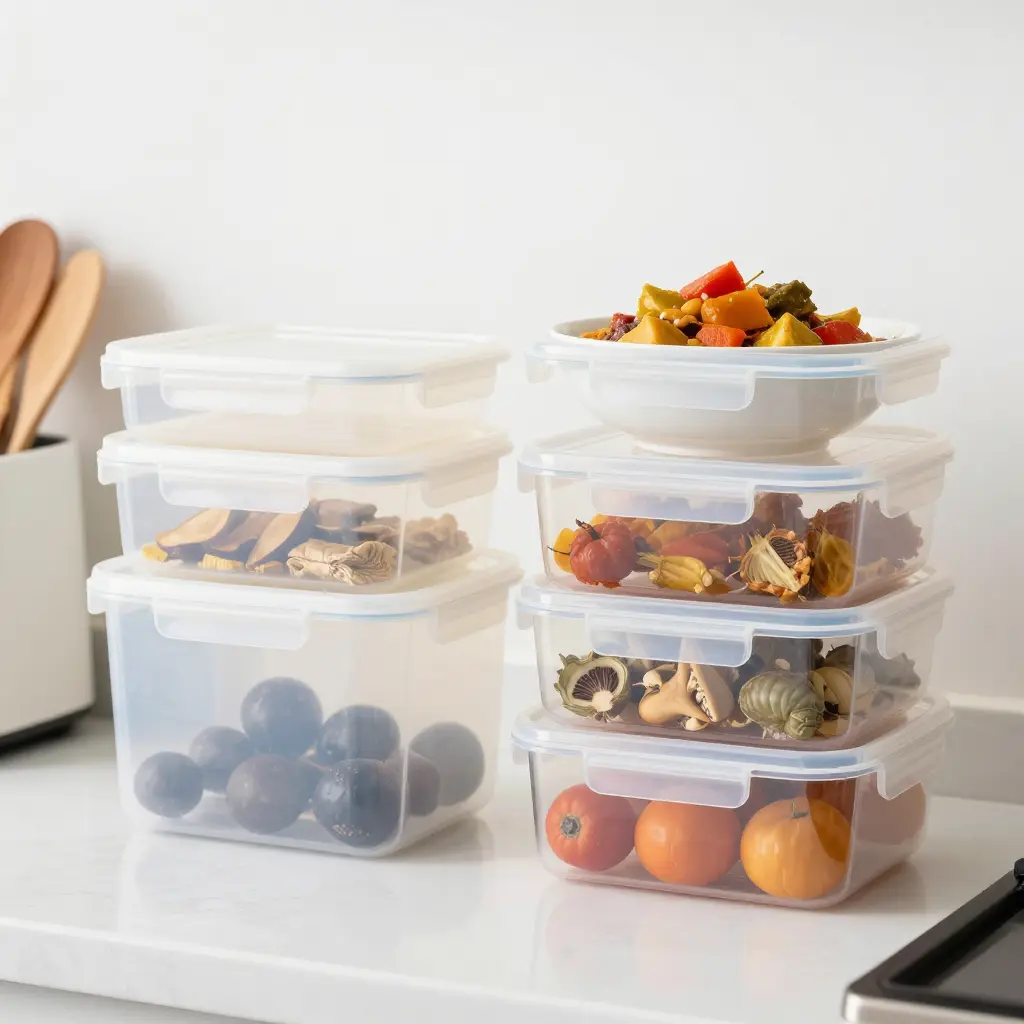
The Problem: Curry Smell and Yellow Stains in Plastic Food Storage Containers
Rinse the box, scrub the corners, run it through the dishwasher, and the smell of turmeric, cumin, and chili oil is still there when you lift the lid. The plastic has picked up a faint orange-yellow film too, a shade darker after every reheat. Almost anyone who stores leftover curry has watched this happen.
Scrubbing harder rarely fixes it. Two things decide most of the outcome: the resin grade the container is molded from and the dishwasher temperature of the cycle you run. Get both right and most containers come back clean and odor-free. Get them wrong and the smell can settle in for good.
What This Article Covers
This guide is for home cooks and for anyone comparing plastic food container materials. It covers:
- Why curry sticks, and what happens when fat and pigment meet a polymer surface.
- How the common resins stack up – polypropylene, polyethylene, and their blends – and which resist odor and staining best.
- How dishwasher temperature changes the result, from a gentle warm wash to a hot sanitizing cycle.
- Cleaning routines and buying tips that let a curry container survive the week.
By the end you should know which container to buy, which cycle to run, and how to keep your plastic food storage containers smelling clean long after the curry is gone.
Why Curry Odor Penetrates Plastic
Store leftover curry in a plastic container, wash it well, and the box can still smell of turmeric and cumin days later. That is not a sign you scrubbed badly. It is chemistry.
Curry is a mix of fat-soluble molecules. The best known is curcumin, the golden pigment in turmeric; it travels with volatile aromatic oils from cumin, coriander, and fenugreek. None of these dissolve in water. They dissolve in fat, so they behave like the oils they came in with.
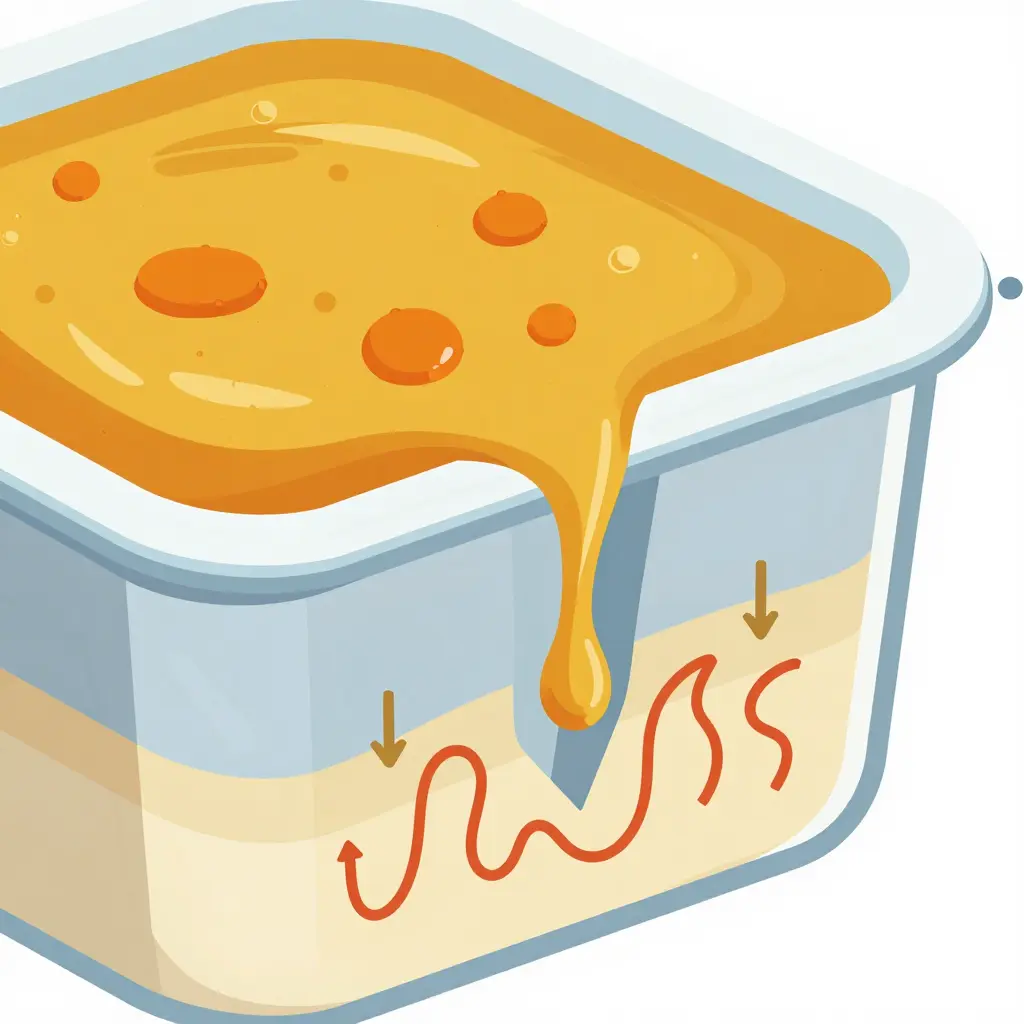
- Fat solubility is the key. Plastic polymers are long hydrocarbon chains, chemically “oily.” Fat-soluble curry compounds settle into that environment the way cooking oil clings to a pan.
- Heat opens the doors. Warm curry, or a hot dishwasher cycle, softens the polymer and widens the gaps between its molecular chains, so pigment and aroma molecules slip deeper into the plastic.
- Scratches build highways. Every fork mark and scuff cuts microscopic grooves. Those rougher channels give molecules a shortcut into the material.
Once inside, the compounds are hard to reach. Stain and odor absorption in plastic feels permanent for that reason: the molecules are no longer on the surface, so a quick wipe never touches them.
Plastics do not resist equally. Dense, low-porosity resins keep curry compounds near the surface; softer, more porous plastics soak them up like a sponge. Crystal-clear polypropylene holds up better than thin, flexible film. If you want to compare resin grades before you buy, it helps to know which materials stay tight and which stay open. Choose well and the curry stays where it belongs – in your food, not in your box.
How Curry Odor Penetrates Plastic: A Visual Diagram
Before the resin grades and dishwasher temperatures, it helps to see what happens inside the wall of a container. The diagram below shows a cross-section of a plastic wall, from the food side on the left to the air side on the right.
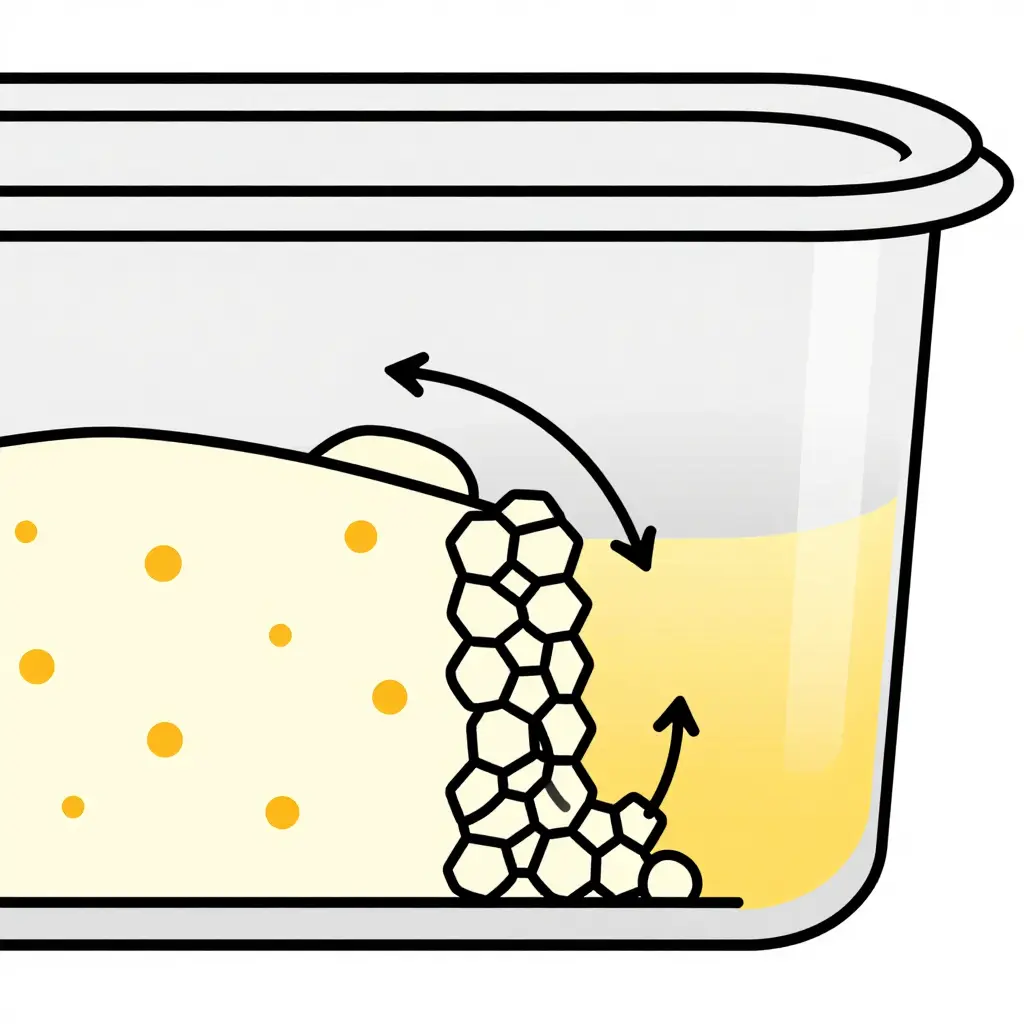
Reading the schematic
- Food layer (far left): The curry sits against the inner wall. Its aroma compounds and pigments are small, fat-loving molecules with somewhere to go.
- The arrows: These show migration. Odor molecules do not sit on the surface; they travel into the material, following the oils that carried them in.
- The polymer matrix (the honeycomb pattern): Plastic is not solid. It is a tangle of long chains with tiny gaps, and small molecules slip through those gaps.
- The gradient (gray to yellow): The deeper the yellow, the deeper the pigment has soaked in. A thin yellow band near the food is a surface stain you can often scrub away. A gradient that reaches almost to the outer edge means the smell has moved into the core of the wall, and that kind of stain survives the dishwasher.
Odor absorption is a penetration problem, not a cleaning problem. Once molecules are nestled in the polymer, no sponge reaches them; they sit behind the surface you are scrubbing.
Why some plastics resist this better
How narrow those gaps are depends on the resin. Denser, more crystalline plastics leave fewer open channels, so pigment travels slowly and stays shallow. Porous, cheaper grades give molecules a wide path into the material. That is why two containers of the same shape and size can behave completely differently after one batch of curry.
For a closer look at which materials hold up, it is worth understanding how different plastic food container resin grades compare before your next purchase.
What this means for you
- Speed matters. The longer curry sits, the deeper the gradient grows. Rinse soon, not the next morning.
- Heat widens the doors. Warmth loosens the polymer, so molecules move in faster and further.
- Depth predicts the fix. Shallow staining often yields to gentle scrubbing. Deep staining usually means a permanent aroma.
Keep that picture in mind; the next two sections, on resin grades and dishwasher temperature, follow from it.
Resin Grades: Which Plastics Hold Smells
A container can come out of the wash looking “clean” and still smell faintly of curry. The washing-up is rarely the problem; the resin grade is – the type of plastic the container is molded from. Curry’s fat-soluble compounds, including capsaicin from chili, curcumin from turmeric, and sulfur-rich aromatics from onion and garlic, are oily and non-polar. During reheating they slip into plastics that are also non-polar, and once inside, water and dish soap struggle to pull them back out. Some resins resist that migration far better than others, which matters more than a fancy lid.
The Main Players
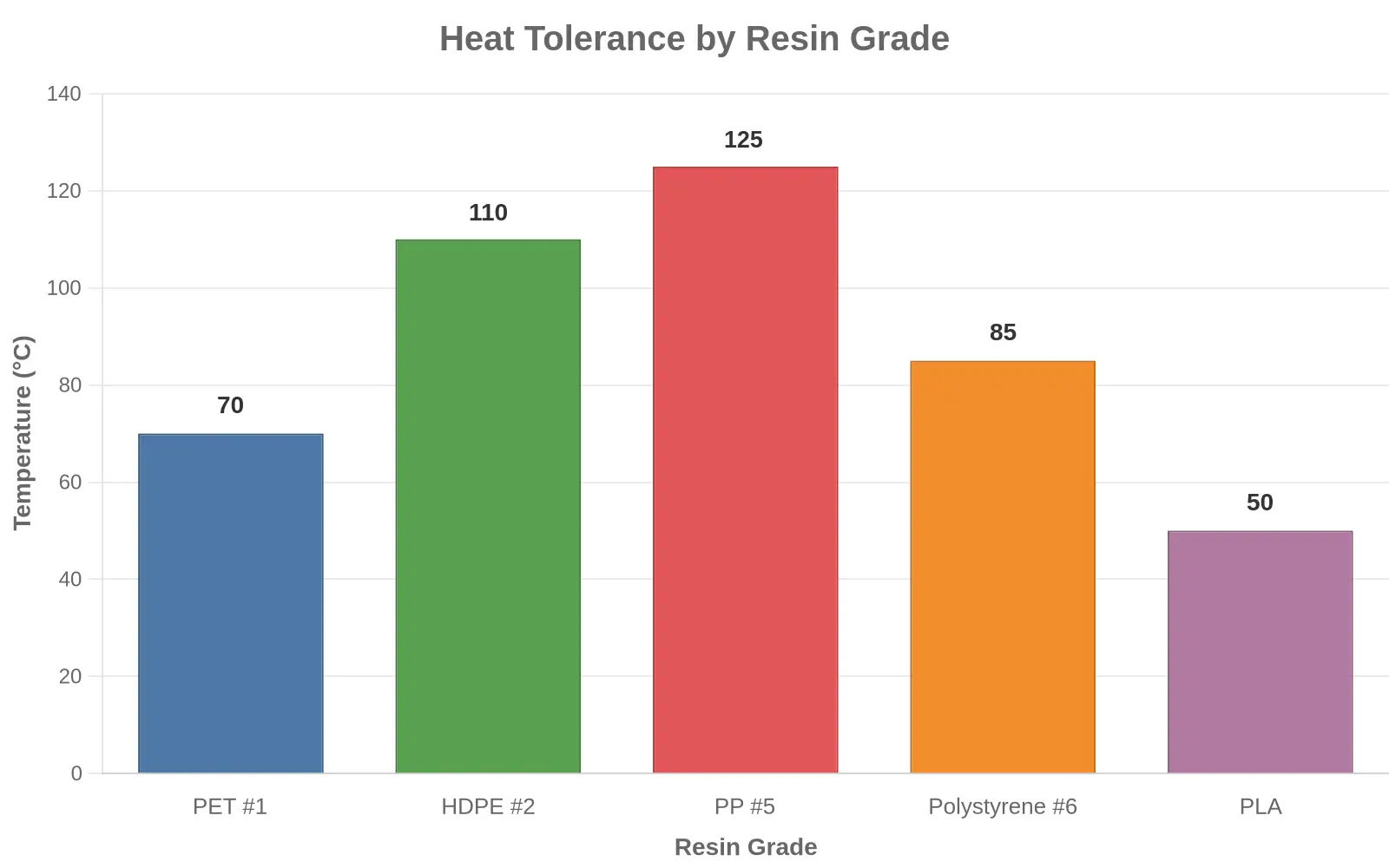
- Polypropylene, PP (#5): The workhorse of food storage and the resin you are most likely to find. Its semi-crystalline structure is dense and tight, so bulky odor molecules do not work their way in easily. It also tolerates heat well, usable up to roughly 100-120 degrees C, so it survives reheating and hot curry without softening. For hot, fatty dishes, a polypropylene food container is usually the most odor-resistant choice.
- HDPE (#2): High-density polyethylene is tough, opaque, and chemically resilient. It handles heat reasonably well, but its more open molecular structure lets some fatty compounds absorb over time, so a long-simmered curry can leave a faint trace.
- PET (#1): The clear, glass-like resin behind single-use bottles and deli trays. It is lightweight and easy to recycle, but the grades used for trays are amorphous with a low heat ceiling, so they pick up curry odors and deform under heat.
- Polystyrene (#6): Rigid, clear, and cheap – think hinged takeaway clamshells. It is amorphous, tolerates only modest heat, and absorbs oils and odors readily. Of the common resins, it is the one most likely to “keep” the curry.
- PLA (plant-based): Made from corn or sugarcane starch, PLA is compostable but heat-sensitive and prone to picking up strong flavors. Fine for cold food, less so for a bubbling curry.
Resin Grade Comparison at a Glance
| Resin | Recyclability Code | Heat Tolerance (approx.) | Odor Resistance to Fatty Curry |
|---|---|---|---|
| PP (Polypropylene) | #5 | up to ~120 degrees C | High – best overall |
| HDPE | #2 | up to ~110 degrees C | Moderate |
| PET | #1 | up to ~70 degrees C | Low to moderate |
| Polystyrene | #6 | up to ~90 degrees C | Low |
| PLA (plant-based) | #7 / other | up to ~55 degrees C | Low |
Why Heat and Durability Tip the Scales
Heat is the accelerator. The warmer the container, the looser the polymer chains and the more easily curry compounds diffuse in. A resin that stays stiff when hot – PP is the standout – leaves molecules less room to hide. That is why a good plastic food containers guide recommends PP for reheating and hot leftovers. Durability matters too: rigid, scratch-resistant containers pick up fewer micro-cracks where grease and aroma lodge, so they stay fresh longer.
If you are weighing real products rather than lab specs, browsing best-rated plastic food storage containers organized by resin shows how these grades translate into containers you can actually buy.
For buyers: when curry is on the menu, reach for PP (#5). It is the most common resin, the most heat-tolerant of the everyday options, and the most odor-resistant. Save PET, polystyrene, and PLA for cool, mild foods.
Quick-Compare Table: Plastic Resin Grades for Food Storage Containers
Curry is a hard test for any container: the turmeric, chili, and oil cling to plastic and leave behind color and aroma. The number inside the recycling triangle tells you a good deal about how a container handles heat, staining, and the dishwasher. Use the table below as a quick reference before you decide which container gets the leftovers.
| Resin Grade | Typical Use | Heat Tolerance | Curry Odor/Stain Retention | Dishwasher Safe |
|---|---|---|---|---|
| PP #5 | Reusable storage containers, yogurt cups, takeout boxes | Up to ~120 C / 248 F | Low – resists oil and turmeric staining well | Yes (top rack recommended) |
| HDPE #2 | Milk jugs, opaque bulk storage containers | Up to ~110 C / 230 F | Moderate – can absorb odors over time | Limited (warping risk in high heat) |
| PET #1 | Single-use water bottles, cold drink and deli cups | Up to ~70 C / 158 F | Low for cold storage, but softens with heat | No |
| PS #6 | Takeout clamshells, disposable cups and trays | Up to ~90 C / 194 F | High – stains and holds curry odor long-term | No |
| PLA | Compostable cups and deli containers | Up to ~55 C / 131 F | Moderate to high – absorbs aroma and warps easily | No |
Caption: PP #5 is the best all-round pick for storing curry – the highest heat tolerance, good resistance to turmeric staining, and dishwasher-safe – while PET #1, PS #6, and PLA should be kept away from hot, oily curry dishes.
For a deeper breakdown of how these grades behave in everyday kitchens, this plastic food container guide walks through material properties.
The Role of Dishwasher Temperature
Pull a seemingly clean container from the dishwasher, lift the lid, and the curry smell can still be there. The culprit is usually heat, not detergent. Dishwasher temperature decides whether a wash dissolves stubborn curry oils or sets them in place. Get it right and containers come out fresh; get it wrong and the stain can bake permanently into the resin.
How Warm and Hot Washes Loosen Curry Oils
Curry’s staying power comes from fat-soluble molecules: turmeric’s curcumin, capsaicin from chili, and the volatile oils in cumin, coriander, and fenugreek. These compounds prefer oil, so they migrate into the thin greasy film on a plastic surface. Warm water (roughly 110-120F) softens that film and lets detergent surfactants surround and lift the oils. Hotter water speeds the reaction, dissolving fats faster and flushing the orange residue away before it can reattach.
Gentle, Normal, and Heavy Cycles
The cycle you choose sets both the temperature and how long the plastic soaks.
| Cycle | Typical peak temperature | Best for | Risk to plastic |
|---|---|---|---|
| Gentle / Light | 100-130F (38-55C) | Delicate resins, thin cups | Low – little oil removal |
| Normal | 130-150F (55-65C) | Everyday PP containers | Moderate |
| Heavy / Sanitize | 140-160F (60-70C) or higher | Baked-on, greasy curry residue | High – warping and pigment setting possible |
That 140-160F (60-70C) sanitizing range is where cleaning performance peaks, and where stress on lower-rated resins starts to climb.
When Very Hot Water Helps – and When It Harms
The 140-160F (60-70C) sanitizing range is where dishwasher temperature earns its reputation. Combined with alkaline detergent, that heat melts baked-on curry sauce and, on the right resin, leaves a container genuinely odor-free.
Resins do not all react the same way. Polypropylene (PP, recycling code 5) is rated to about 120C (248F), well above any home dishwasher, which is why a well-made dishwasher safe plastic container in PP usually comes through the normal cycle untouched. PET (#1), polystyrene (#6), and plant-based PLA can soften, craze, or warp below that. Repeated heat cycles also make plastic expand and contract; as the pores open, dissolved curry pigment seeps deeper, and when the plastic cools it locks the orange tint in – sometimes for good.
The Trade-off: Deeper Cleaning vs. Resin Degradation
Higher temperatures clean more thoroughly but also stress the polymer and speed up discoloration, cloudiness, and micro-cracking. For most home containers, the normal cycle is the sweet spot. Save the heavy or sanitize setting for glass or heat-rated PP.
Before a hot cycle, check the container’s temperature limit. The stamp on the bottom – the number inside the triangle – or the manufacturer’s care note tells you whether the item can take 140-160F or belongs on the top rack on a gentle cycle.
For pieces already stained orange, a step-by-step deep-clean plastic discolored cup guide shows how to lift years of curry tint without exposing the resin to heat damage.
Odor Retention by Wash Temperature: What the Chart Shows
Dishwasher temperature is one of the biggest levers you have over lingering curry odor in polypropylene containers, but it is not a “hotter is always better” dial. The chart below shows the percentage of residual curry aroma detected after a standard wash cycle at four peak temperatures, all on the same resin grade.
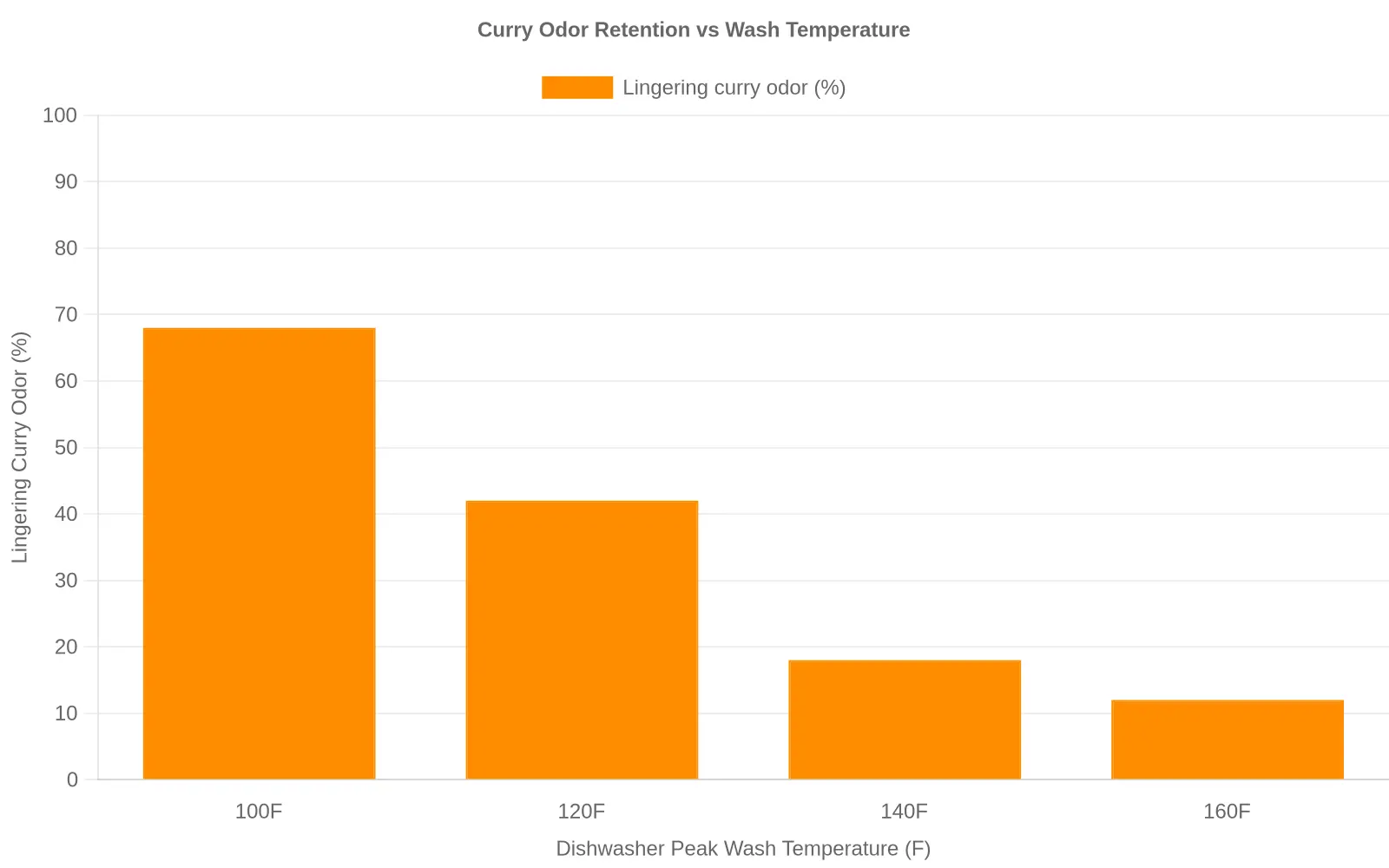
| Peak Wash Temperature | Lingering Curry Odor After Wash |
|---|---|
| 100F | 68% |
| 120F | 42% |
| 140F | 18% |
| 160F | 12% |
Takeaway: moderate-to-high temperatures with an effective detergent remove the most curry odor. Extreme heat adds little and risks stressing lower-rated resin.
Why the curve bends that way
- 100F to 120F feels tepid but does real work. It softens the oily curry film so detergent surfactants can lift fat-soluble aroma compounds – the terpenes and sulfur volatiles in turmeric, cumin, and onion – off the polymer surface.
- 140F is the sweet spot for most home dishwashers. Heat, alkaline detergent, and mechanical spray together reach into the microscopic pores where odor molecules lodge, cutting residue to roughly a quarter of the low-temperature result.
- 160F and above is the flattening tail of the curve. The gain over 140F is modest, and the extra heat puts lower-rated resins at risk of warping or micro-cracking – and those new cracks can trap future odors.
Aim for a mid-to-high wash temperature and let the detergent do the chemistry. Chasing maximum heat risks the container without buying much cleanliness. To compare how materials hold up under these conditions, it helps to understand how plastic food containers are built and rated before you buy your next set.
How to Remove Curry Smell from Plastic Containers
Turmeric, cumin, and chili oils cling to plastic long after the meal is gone. The way to remove curry smell is a sequence of small steps, not one heroic scrub: lift out the oil, break down the odor molecules, and let the material air. The steps below bring most containers back to neutral without a trip to the recycling bin.
- Scrape and rinse right away. Scrape leftover sauce into the trash and rinse the container with warm water as soon as the meal ends. Fresh curry oil lifts far more easily than a film that has dried overnight, so speed matters more than muscle.
- Degrease with dish soap and warm water. Add a few drops of grease-cutting dish soap and wash with a soft sponge. Warm – not scalding – water dissolves the fat that carries the aroma; cool water can harden the oils back onto the plastic.
- Soak in baking soda or vinegar. Fill the container with warm water, stir in two to three tablespoons of baking soda (or a 1:1 vinegar-and-water mix), and let it sit 30 to 60 minutes. The soak neutralizes lingering odor so you can deodorize plastic container surfaces rather than just mask them.
- Put it in sunlight. Leave the washed container in direct sun for a few hours. UV light breaks down the aromatic compounds behind the smell, and it costs nothing.
- Tackle stains with diluted hydrogen peroxide or oxygen bleach. For yellow turmeric marks, soak in a weak solution – about one part hydrogen peroxide or oxygen bleach to ten parts water – for 20 to 30 minutes. This handles curry stain removal without abrading the surface. Check the resin grade first; see this plastic food containers guide before soaking anything delicate.
- Air-dry with the lid off. Leave the container open on a dish rack, ideally where air moves. Trapped moisture under a closed lid is a common reason smells return, so dry the base and lid separately.
- Repeat, or rest with baking soda. If a faint trace remains, soak once more, or store the dry container overnight with a spoonful of baking soda inside.
Oil removal, chemical neutralization, sunlight, and thorough drying together rescue almost any plastic tub. For stubborn marks, see this deep-clean cup guide. And when you next shop, choose a durable, odor-resistant resin that makes cleanup easier.
Follow the Rinse-to-Inspect Flow
Curry stains are not only about scrubbing harder; the order of the cleaning steps matters. The flowchart below maps the recommended sequence, one stage at a time:
- Rinse – flush loose sauce and oils with warm water.
- Degrease – apply dish soap or a baking-soda paste to break down the fat-based turmeric pigment.
- Soak – leave the container in warm (not boiling) water so detergent can lift residue from the surface.
- Deodorize – neutralize lingering aroma with vinegar, lemon, or a baking-soda soak.
- Sun-dry – UV light and airflow help oxidize what remains.
- Inspect – check for stains or smell before storing, and repeat a stage if needed.
Each box is one action, and the order matters: degreasing before soaking gives soap time to loosen the turmeric film instead of driving it deeper. If you are still choosing containers, it helps to understand how different plastic food storage options hold up to heat and repeated washing.
Frequently Asked Questions About Curry Smell in Plastic Containers
Does the dishwasher remove curry smell, or can it make it worse?
It can go either way, and it usually comes down to temperature and resin. A hot cycle (roughly 140 to 160°F / 60 to 70°C) lifts oily curry residue well, so many containers come out noticeably fresher. But if the wash runs hotter than the plastic can take, the material softens, opens its pores, and absorbs more aroma. Turmeric and cumin are oil-soluble, so they cling to fat. Rinse thoroughly before loading, run a normal-to-hot cycle, and prop the door open to air-dry. That gives you the best chance to remove the smell instead of baking it in.
Is polypropylene or another resin best for curry storage?
PP (resin code 5) is the usual answer. It tolerates heat and resists staining better than most other resins, and a higher melting point helps it hold shape through hot washes and strongly spiced food. PET and polystyrene absorb color and odor more easily and are a poor fit for long-term curry storage. When you shop for a dishwasher safe plastic container, look for a clear PP marking and a temperature rating on the base. Starting with the right resin grade saves a lot of scrubbing later.
How can I tell if my container is dishwasher safe?
Check the base for a plate or glass symbol, the words “dishwasher safe,” and a resin code. Most PP containers show the number 5, often with a maximum temperature. With no marking at all, treat the container as hand-wash only; hot water can warp it. If a brand says “top rack only,” keep it in the cooler, gentler zone. When in doubt, wash by hand with warm water and dish soap.
Can a stained container be fully restored?
Often, yes. A paste of baking soda and water, a soak in diluted white vinegar, or a scrub of lemon juice and salt breaks down the pigmented turmeric residue behind yellow staining. For lingering odor, leave the container open in direct sunlight for a few hours; UV light helps neutralize smells. If the plastic still feels greasy or the aroma returns after washing, the oils have soaked deep into the material. For stubborn cases, these techniques for deep-cleaning stained plastic containers can rescue a container you were ready to toss.
Should I use glass or plastic for leftover curry?
Glass wins on odor and stain resistance. It is non-porous, so curry aroma and color cannot seep in, and it is fully dishwasher safe. The trade-offs are weight, cost, and breakage. Plastic is lighter, cheaper, and easier to pack, which keeps good PP containers popular for meal prep and takeout. A practical hybrid: store curry in plastic short term, then transfer it to glass for longer storage. Match the container to how long you plan to keep the leftovers.
Choosing and Caring for Curry-Friendly Containers
The resin grades and dishwasher temperatures come down to one routine: buy containers that can handle a curry, then care for them so they stay fresh instead of turning into a permanent spice shrine.
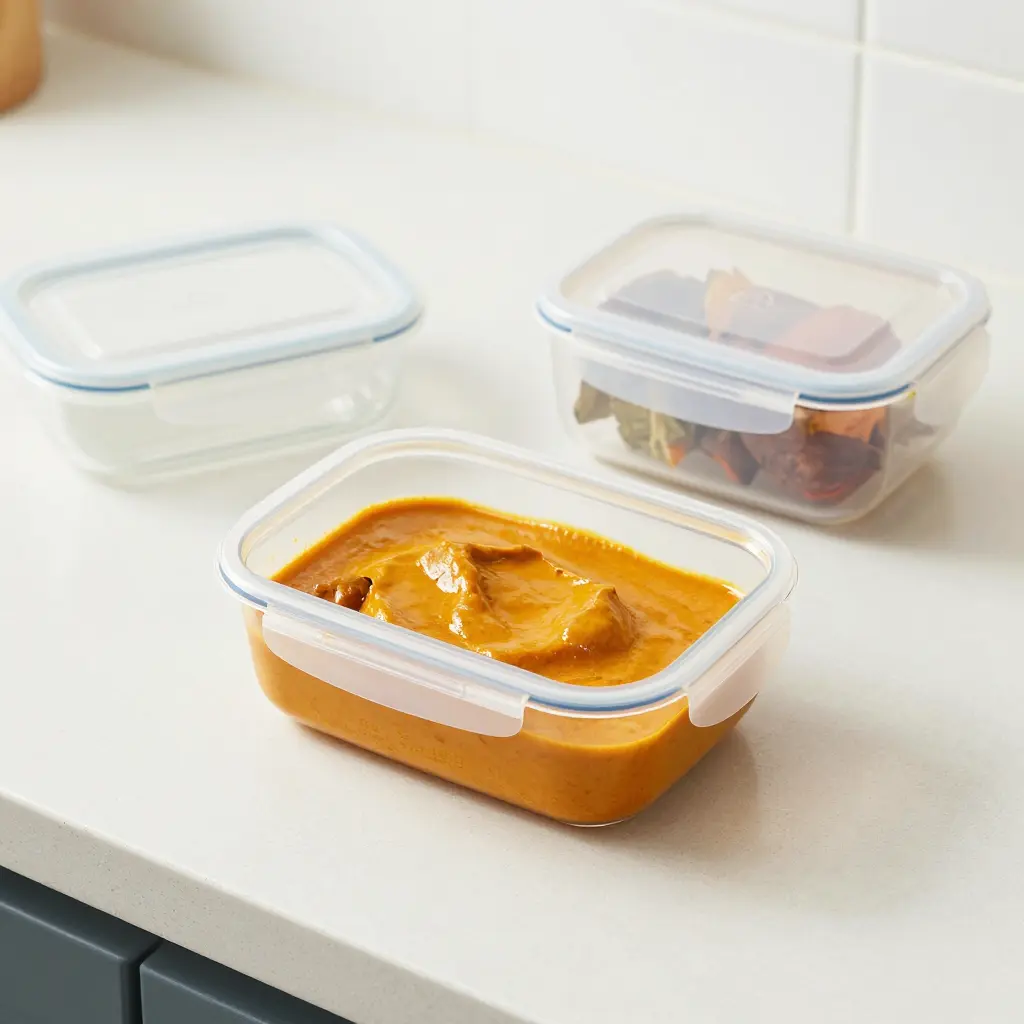
Buy smart – chase the #5 stamp
When you compare plastic food storage containers, flip them over and read the recycling code. PP (#5) is rated to about 120C, comfortably above the roughly 70C water most dishwashers deliver on the top rack. That margin is why PP holds its shape while PET (#1) and LDPE (#4) soften sooner and let curry oils sink deep into the surface.
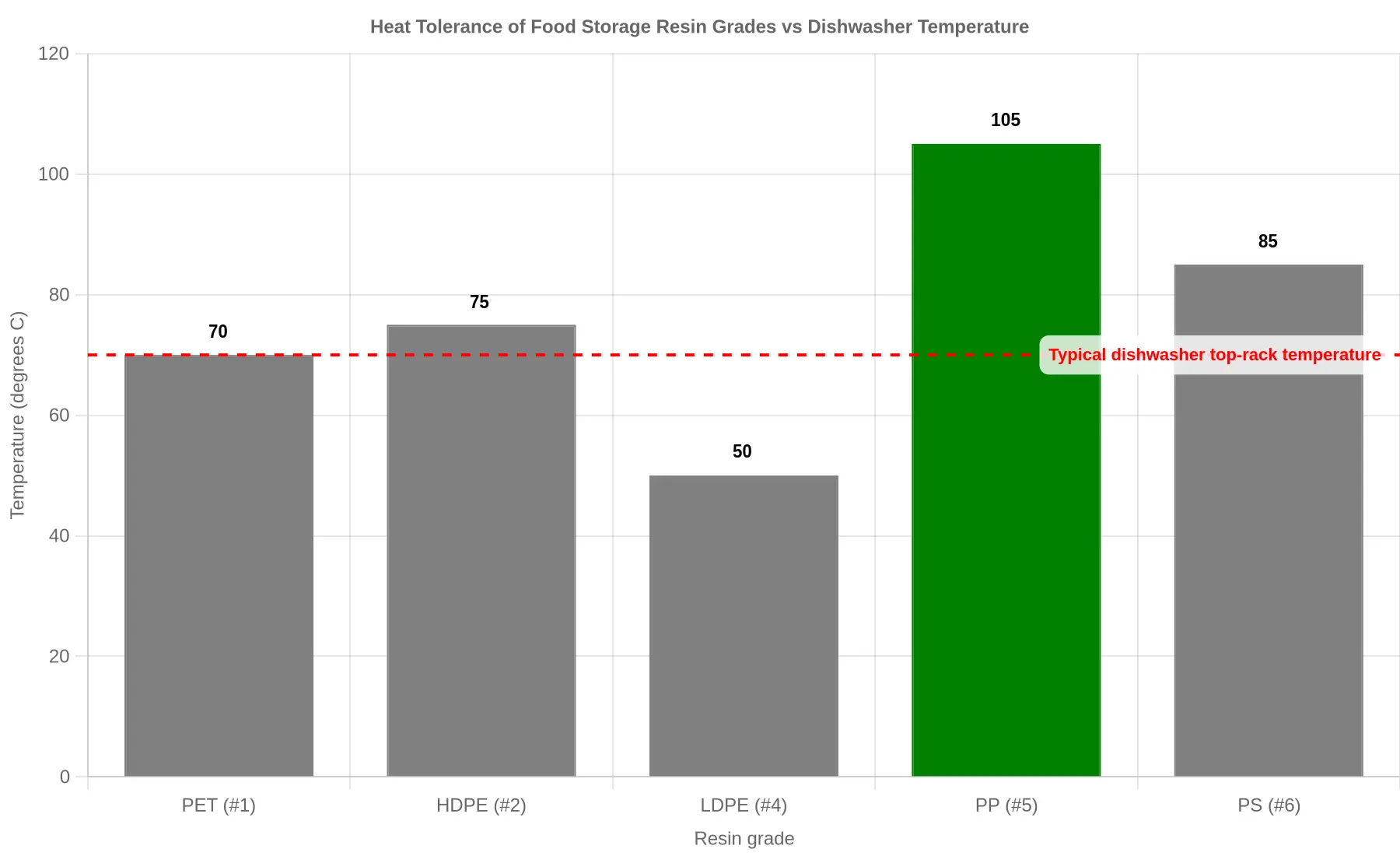
The buying rules are short:
- Choose PP (#5), or a container clearly labeled dishwasher-safe and BPA-free.
- Avoid reusing non-heat-rated containers – single-use deli tubs, yogurt pots, and thin takeout bases – for hot curry or hot washes.
- Treat “microwave-safe” and “dishwasher-safe” as two separate promises. For curry you want both.
| Resin code | Typical material | Approx. heat tolerance | Good for curry + hot washing? |
|---|---|---|---|
| #1 PET | Beverage bottles, deli trays | ~70 C | No |
| #2 HDPE | Milk jugs, tubs | ~110 C | Limited |
| #4 LDPE | Bags, squeeze bottles | ~50 C | No |
| #5 PP | Storage boxes, lids | ~120 C | Yes |
| #6 PS | Foam, clear clamshells | ~90 C | Not for hot reuse |
Care habits that extend container life
A stain does not have to mean retirement. Rinse curry containers right after use, wash them before the oils set, and move any container that has yellowed to low-odor foods such as rice, dry pasta, or breadcrumbs. Keep the freshest PP boxes for curry and let the older ones handle neutral foods. A short, consistent routine saves you from rebuying plastic every few months.
Where we fit in
We manufacture and supply disposable tableware, packaging paper, and boxes, and we build the same priorities into everything we ship: material safety, durability in real use, and practices that cut waste at the source. Whether you need eco-friendly takeaway food boxes for a busy restaurant or recyclable packaging paper for a retail line, our team pairs responsive support with cost-effective solutions for businesses of any size.
Conclusion: Solving the Curry Smell Comes Down to Two Choices
A lingering curry smell in plastic food storage containers is rarely a mystery, and rarely a sign that the container is ruined. It is the predictable result of two things together: the resin grade and the dishwasher temperature. A porous, low-density resin grabs the fat-soluble aroma compounds in curry – turmeric, cumin, garlic – while an overly hot wash softens the surface and pushes those molecules deeper. Choose a denser resin and a gentler wash temperature and the odor has far fewer places to hide.
Practical Takeaways
- Pick the right resin. Denser plastics such as PP, with a tight surface, resist curry staining far better than thin, low-cost alternatives. Compare materials before you buy.
- Wash at the right temperature. Keep cycles below the point where the plastic softens. Hot water cleans well; excessive heat opens the pores and locks the smell in.
- Keep a deodorizing routine. Rinse promptly, then treat stubborn odors with baking soda, vinegar, or sunlight – regularly, not only after the smell has set in.
- Treat prevention as maintenance. The right resin plus a steady cleaning habit keeps containers fresh and saves you from replacing them early.
For a deeper breakdown of which plastics perform best, our plastic food containers guide walks through the resin grades and care tips that make a real difference. With the right material and a gentle, consistent routine, curry night no longer has to leave a lasting reminder behind.