
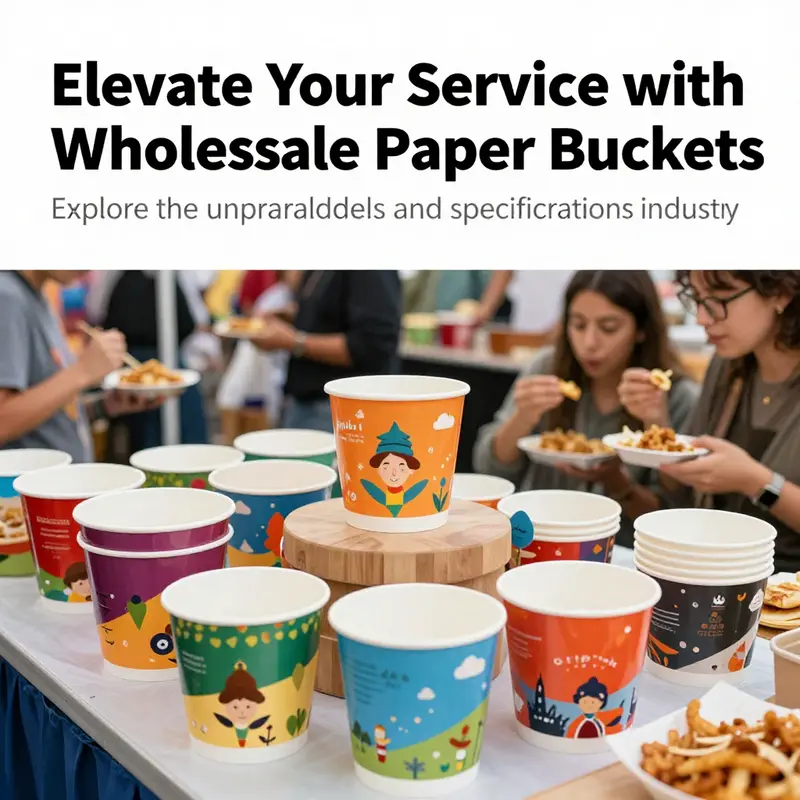
In a world increasingly focused on sustainability and branding, the demand for versatile and environmentally friendly packaging solutions like wholesale paper buckets is on the rise. These containers perfectly cater to various needs, from beverage chains and food trucks to event planners and corporate procurement teams. This article will delve into the multifaceted world of wholesale paper buckets, highlighting their specifications, market availability, emerging trends, and their beneficial impact on the environment. Each chapter will provide insights that can help businesses make informed choices, ensuring they not only meet customer expectations but also contribute to a greener future.
Sourcing at Scale: The Lifecycle and Value of Wholesale Paper Buckets
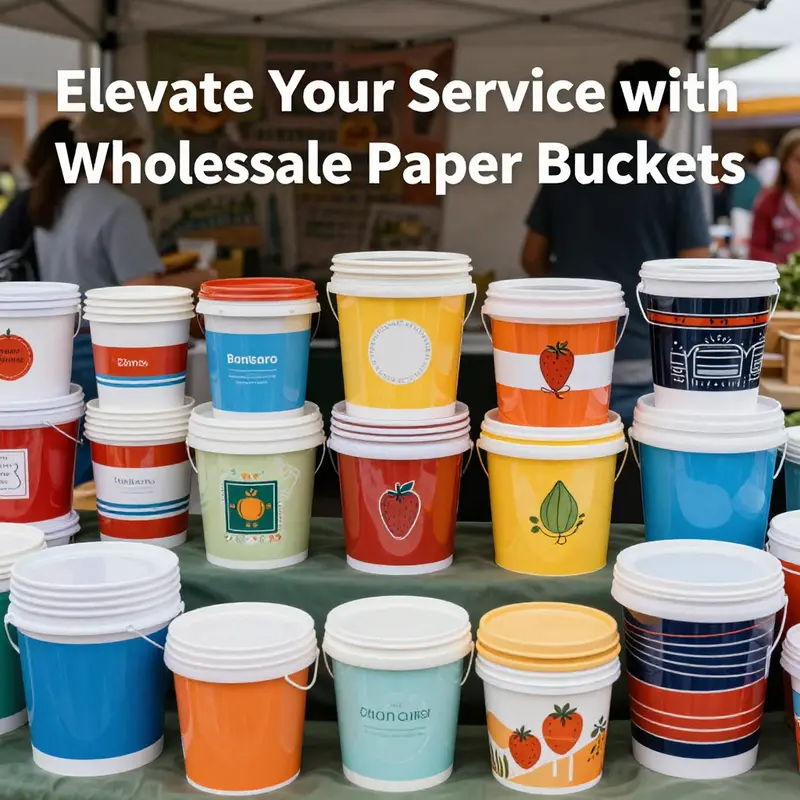
Wholesale paper buckets have evolved from simple vessels into strategic packaging elements that blend practicality and branding across food service, events, and retail. In many operations these containers are not merely vessels for holding content; they function as a low cost touchpoint that communicates a businesses values and reliability to customers. The core of their appeal lies in a balance of material science, manufacturing flexibility, and design potential. A typical bucket is built from food grade paperboard and features a protective polyethylene coating that creates a barrier against moisture and oil, reducing the likelihood of softening or leakage when greasy foods, sauces, or beverages are involved. A single layer of polyethylene, described as liquid resistance, suffices for a broad range of applications. The result is a container that can safely hold popcorn, fried items, soups, or other takeout offerings without compromising grip, structure, or stability during transport. This durability is a prerequisite for the broader value these buckets offer, especially in a wholesale setting where consistency across thousands of units matters as much as performance on the shelf or in the hand of a customer.
The practical versatility of wholesale paper buckets is evident when considering the spectrum of sizes available. From compact portions to high capacity configurations, these buckets are designed to scale with the needs of diverse operations. Small formats fit individual servings for fast casual concepts or concessions, while larger capacities function as bulk containers for family meals, catered events, or demonstrations. The design often incorporates a built in polyethylene coating of sufficient thickness to resist oil transfer and moisture intrusion, preserving the integrity of the container during handling and serving. In many instances this coating acts as a protective layer that helps maintain the bucket shape even when exposed to hot or fatty foods, a critical factor for hygiene and customer satisfaction. The coating strategy also influences stacking performance and transport efficiency, two practical considerations for wholesale buyers who must move tens of thousands of units through complex logistics networks.
One notable strength of wholesale paper buckets is their capacity for customization. Branded printing is widely supported, with flexographic printing enabling up to six colors on the body. This capability unlocks branding opportunities from color consistent logos to promotional patterns and seasonal campaigns. The impact of branding is more than cosmetic; it reinforces customer recognition and memory at the moment of purchase, which in turn can drive repeat business. The capacity to tailor the bucket appearance means businesses can align packaging with overarching marketing strategies, event themes, or storefront aesthetics, turning a practical item into a portable advertisement. However, customization does not come without considerations. MOQs vary widely depending on the scope of customization and the providers production setup. Some suppliers require higher MOQs for fully printed runs, while others accommodate lower volumes for partially printed or unprinted iterations. This pricing and MOQs landscape is a core consideration for buyers planning long term packaging strategies, seasonal campaigns, or pilot programs.
Pricing in this space tends to be highly elastic, reflecting both scale and specification. Bulk rates can be highly favorable, often cited within a broad range when material quality, size, and printing extent are taken into account. It is not unusual for wholesale prices to dip into a low per unit level as orders grow, especially when the design remains simple or the coating is standardized. Yet suppliers also differentiate based on nuances such as the paper weight, the exact thickness and composition of the coating, and the precision of color replication in flexo printing. The economics of customization add another layer of complexity. For example, unprinted buckets may carry a lower MOQs and a lighter price, while fully branded, multi color designs with precise color matching may require more substantial MOQs and a higher per unit cost. Buyers pursuing a balance of cost and impact often adopt a staged approach: begin with a modest set of colors or logos on core sizes, observe performance in real world use, and then expand the branding footprint as demand and confidence grow.
From a sourcing perspective, the wholesale market for these buckets is characterized by a robust ecosystem that enables procurement at scale. Buyers often engage with global manufacturers who can deliver consistent quality, rapid lead times, and reliable pre production sampling. The availability of samples prior to large scale production is particularly valuable for brand teams prioritizing color fidelity, print alignment, and coating durability. The ability to verify that a given design will reproduce accurately on the chosen substrate before committing to a multi thousand unit run reduces the risk of costly rework and misprints. In this context, the role of quality assurance becomes central. Final inspections prior to shipment, pre production samples, and clear quality control criteria help ensure that each batch meets the same standards for performance, safety, and aesthetics. These controls are essential in industries where regulatory compliance and consumer safety are non negotiable, adding another layer of reliability to a product category that is, in essence, a bridge between manufacturing and consumer experience.
For many buyers, the procurement narrative for wholesale paper buckets intersects with broader packaging strategies and sustainability goals. The demand for environmentally conscious packaging continues to shape supplier offerings, with an emphasis on materials that are recyclable or biodegradable when possible. Even where a bucket relies on a PE coating to provide moisture resistance, the overall package can be positioned as an eco friendly alternative to plastic centric solutions. The premium surface and sturdy construction associated with quality paper buckets contribute to a perceived value that extends beyond mere containment. In event driven scenarios from weddings to corporate gatherings these containers serve as both functional packaging and a branding instrument that can elevate the attendee experience. The visual impact of a well branded vessel resonates with guests, signaling care, attention to detail, and a commitment to responsible practices. In food service settings, the practical benefits ease of disposal, reduced cleaning burdens, and hygienic disposal after single servings, align with operational efficiency goals, helping venues streamline throughput and maintain clean, orderly service areas.
The sourcing landscape also includes considerations around compatibility with complementary packaging elements. Many buyers consider lids, sleeves, or nested accessory components that fit a given bucket family, enabling a cohesive packaging system rather than a collection of disparate parts. The ability to coordinate lids designed to seal against moisture or to fit snugly with a particular bucket diameter can enhance customer satisfaction by ensuring spill prevention and heat retention during short trips. While separate product pages may focus on buckets alone, the smarter procurement approach views packaging as an integrated system, where the bucket, lid, and any supporting sleeves function together as a single, reliable unit. In practice, this integration translates to more consistent performance, reduced handling issues, and smoother logistics across the supply chain.
From a storytelling perspective, the chapter on wholesale paper buckets is about more than volumes and coatings. It is about translating a packaging asset into a brand asset. The same container that holds a serving of popcorn at a movie theater can become a canvas for color, typography, and messaging that reinforces a brands identity at the point of sale. This dual utility, plus marketing leverage, makes wholesale paper buckets a compelling option for many operators seeking scalable packaging solutions with measurable branding payoffs. The most successful programs tend to balance practical requirements with creative execution. They select sizes that fit typical service patterns, apply branding that aligns with brand guidelines, and negotiate MOQs that enable iterative experimentation without tying up excessive capital. In the long run, that calibrated approach yields a packaging suite that not only protects contents but also communicates values, signals quality, and fosters customer loyalty.
For buyers who want a tangible example of how design and practicality converge, a real world touchpoint can be found through a representative page that showcases a designed, eco friendly, multi size approach to a kraft based food bowl. The page demonstrates how a single family of containers can span multiple capacities while maintaining consistent branding and dependable performance. It illustrates how design choices such as color, logo placement, and edge finish contribute to a polished, shop ready appearance that supports both retail and events contexts. This kind of reference point is invaluable for teams planning a rollout, as it speaks to the core questions Will the chosen size meet daily demand Will the coating withstand the foods we serve How will the branding translate across screens and print runs And how can we stage production to optimize costs while preserving impact?
In sum, wholesale paper buckets represent a practical intersection of material science, manufacturing efficiency, and strategic marketing. They offer a scalable path to packaging that respects environmental considerations while delivering branding opportunities and reliable performance. As consumer expectations tilt toward sustainability and convenience, these containers position themselves as a viable, versatile choice for a wide array of channels from quick service restaurants to dynamic event experiences and retail promotions. The conversation around these products is ongoing, guided by advances in paperboard technology, coating formulations, and printing capabilities that continually push the envelope on what a disposable vessel can achieve. The lifecycle of these buckets—from raw material selection through production, branding, use, and end of life considerations—reflects a broader shift in how businesses think about packaging not as a single use add on, but as a strategic asset integrated into the customer experience, the brand story, and the sustainability commitments that define modern commerce.
To further ground your sourcing approach, consider reviewing a design specific example that demonstrates how branding can be integrated into a 1300ml kraft container. It illustrates how color, typography, and form can work together to create a cohesive brand impression while preserving the practicality of a single serve or family size packaging solution. It also underscores the flexibility suppliers offer in adjusting size, volume, logo, and printing patterns to fit distinct business needs. In the broader market context, such capabilities translate into a more resilient packaging strategy that supports growth, seasonal campaigns, and cross channel offerings.
External resource: https://www.alibaba.com/product-detail/Wholesale-Printed-Paper-Buckets-1k-Plus_1600458931475.html
Engineering Durability and Brand Expression: Specifications and Variability in Wholesale Paper Buckets
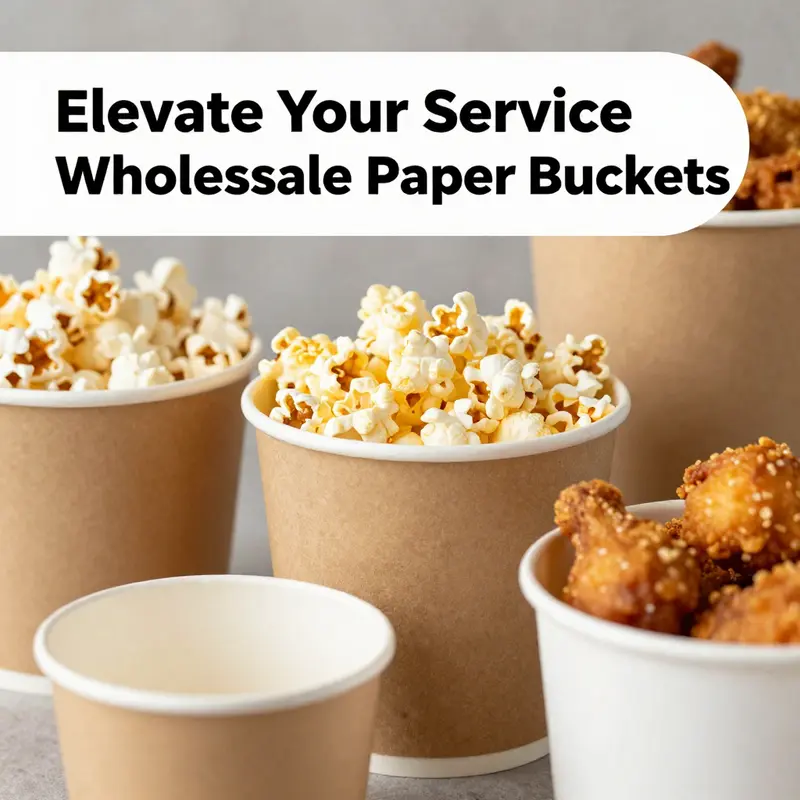
The product specifications and variability of wholesale paper buckets reveal a careful balance between durability, branding, and sustainability. In the wholesale market, these containers are crafted to meet a spectrum of needs across food service, events, and retail, where the exact choices about material, construction, coating, size, and intended use directly shape performance, cost, and customer perception. At the heart of modern paper bucket design lies a deliberate move away from single‑layer paper toward engineered composites. A common approach combines paper fibers with biodegradable polymers to form a multi‑layer material. This hybrid, while still rooted in renewable feedstock, delivers a sturdier structure than traditional paper alone. It resists crushing, maintains its shape under load, and holds its form when filled with heavier or greasier contents. The durability comes not just from thicker walls but from an integrated system where the inner layer, outer layer, and interposed polymers work as a team. This collaboration preserves the bucket’s integrity when faced with hot oils, sauces, or moist foods, which is essential for both a single‑use packing scenario and a controlled takeout experience. The result is a packaging option that can carry a premium branding while fulfilling practical requirements for oil resistance and moisture management, all within a framework that supports environmental responsibility.
Size and capacity are decisive elements that drive not only function but also economics. In practice, buyers navigate a broad spectrum of options. From smaller, snack‑oriented buckets to large volumes intended for bulk food storage or promotional giveaways, the range is wide. Commonly available capacities span from the smaller end around 36oz (approximately 1070ml) to larger options approaching 170oz (about 5000ml). Intermediate needs are covered by 32oz, 46oz, 64oz, and 85oz variants, with a continuum up to a 1000–2100ml bracket and occasional specialized sizes such as 130oz or 170oz. The intent drives the choice: a quick‑service counter may favor mid‑range sizes that balance portion control with efficient use of display space, while a promotional event might leverage oversized buckets to maximize brand exposure and guest engagement. Each size tier often aligns with a target use case, from popcorn and fried contents to soups or mixed bowls, reinforcing the idea that capacity is more than volume—it is a signal of the expected service flow and the corresponding handling requirements.
Coatings and surface protection are the other pillars of specification. An 18‑gauge polyethylene coating is a frequently cited standard because it offers reliable oil resistance and moisture barriers. This coating prevents softening and deformation when buckets encounter greasy or wet contents, which is critical during transit and in front‑of‑house service lines. Beyond the coating, some lines add an inner or outer layer dedicated to moisture control and hygiene. In practice, high‑density polyethylene film can wrap individual buckets, shielding them from dust and minor abrasions during storage and transport while preserving the visual appeal of the printed surface. The protective film and coatings work in concert with the core paper structure to deliver a product that remains sturdy under use and appealing on display. The coatings also influence how branding holds up under heat and moisture, since print fidelity and color vibrancy endure only if the surface remains stable throughout handling and exposure to condensing steam or fatty vapors.
The capacity to customize is a central driver of the wholesale appeal. Modern buyers expect not just functional packaging but an opportunity to imprint logos, patterns, and color accents that align with a brand’s identity. The printing strategy often takes advantage of the smooth surface offered by multi‑layer substrates, enabling high‑quality branding without sacrificing structural integrity. Even where usage is seasonal or event‑driven, the ability to print distinctive artwork—whether a corporate motif, a festive pattern, or a seasonal message—can elevate a bucket from mere containment to a collectible or promotional item. Customization is not merely cosmetic; it supports recall, improves perceived value, and reinforces brand consistency across channels. While the specifics of print methods vary by supplier, the goal remains consistent: durable, vibrant branding that withstands handling, moisture, and the rigors of real‑world service.
Visual and functional design variations extend beyond standard round shapes. Some market segments opt for specialized silhouettes to differentiate offerings, such as buckets with ergonomic grips, squared or octagonal outlines, or decorative forms tied to seasonal campaigns. The Halloween season has popularized stylized buckets—pumpkin shapes or skull motifs—that skew younger audiences toward events and experiential marketing. In such cases, functionality still dominates, but the design prioritizes impact and durability for outdoor use, where wind, rain, and crowd interaction pose additional stresses. This illustrates a broader pattern: design variation is not merely about aesthetics. It is a strategic response to specific environments, use cases, and audience expectations, all while maintaining the core requirements of oil resistance, moisture management, and safe food contact.
The material science underpinning these products is complemented by practical hygiene and handling considerations. A common practice in the supply chain is individual wrapping or protective packaging for each bucket. This measure safeguards against moisture ingress, dust, and minor abrasions during storage and shipping. It helps maintain consistent quality up to the point of sale or use, which matters in sectors where hygiene and shelf life are paramount. The wrapping also supports logistical efficiency, reducing the likelihood of surface damage that could compromise branding or the bucket’s load‑bearing capacity. In the end, these protective measures reinforce the claim that the product is nontoxic, safe for food contact, and aligned with environmental and safety standards that customers increasingly demand.
From a procurement perspective, the variety in material, coating, and size translates into a spectrum of price points and MOQs. Wholesale buyers often weigh initial investment against the expected usage rate, event frequency, or sales volume. A larger order may unlock more favorable unit costs, but even modest quantities can be attractive when customization adds measurable value in brand perception and customer experience. The ability to tailor a bucket to specific volume requirements, including the precise alignment between capacity and the expected portion size, is essential for restaurants, caterers, and event organizers seeking to optimize both waste and efficiency. When buyers map the product to their operational realities, they can achieve a more predictable service flow, fewer spillage incidents, and a more cohesive brand narrative across packaging assets.
The broader market trend toward sustainable packaging shapes many of these decisions. Paper buckets offer a renewable and recyclable alternative to plastic containers, an advantage that resonates with consumers who increasingly consider environmental impact in their purchase choices. Yet sustainability is not a monolith. It hinges on the lifecycle performance of the material, the recyclability of the finished product, and the presence of coatings that may complicate recycling streams. In practice, manufacturers strive to balance performance with environmental attributes, advancing coating technologies and polymer blends that maintain oil resistance while enabling recyclability or compostability where feasible. Buyers interpret these tradeoffs through the lens of their own commitments and regulatory contexts, selecting options that align with corporate responsibility goals and consumer expectations for greener packaging.
In sum, the specifications and variability of wholesale paper buckets form a coherent system. The core material science supports durability and brand expression, while coatings, wraps, and design variations respond to real‑world demands. Size and capacity determine use case and logistics, while customization transforms packaging into a vehicle for messaging and identity. This integrated approach explains why the market remains robust: it offers a flexible toolkit for businesses to match the exact needs of a service flow, a promotional strategy, or an experiential display, all within a framework that prioritizes safety, hygiene, and environmental responsibility. For practitioners evaluating options, the key is to align the bucket’s performance envelope with the practical realities of their operation—volume, handling conditions, and the degree to which branding can influence guest perception. When these elements converge, paper buckets become more than containers; they become components of a brand experience that communicates quality, care for the environment, and attention to the practicalities of everyday food service.
For a concise example of the practical implications of these design choices in the field, consider a scenario where a caterer wants a reliable takeout solution that supports bold branding for a large outdoor event. The choice of a multi‑layer paper bucket with a robust PE coating, wrapped for hygiene, and sized to accommodate the event’s standard portions would minimize the risk of leakage and deformation while delivering a vivid print that catches the eye in an open‑air setting. The same logic applies whether the bucket is used for popcorn at a festival, noodle bowls at a casual wrap station, or a specialty snack served at a themed venue. In every case, the product specifications—material composition, coating, size, and customization—shape both performance and perception, making these buckets a critical touchpoint in the overall customer experience.
To explore related considerations and broader patterns, see this resource on wholesale paper bucket specifications and performance insights. disposable-700ml kraft paper bowl take-out. For a more technical overview of scholarly and industry perspectives on these materials and their applications, an external reference provides additional context: https://www.benjaminross.com/wholesale-paper-buckets-specifications-and-performance-insights
Sourcing at Scale: Navigating Key Suppliers and Marketplaces for Wholesale Paper Buckets
The wholesale market for paper buckets sits at a compelling intersection of practicality, sustainability, and fast-moving consumer needs. As food service, events, and retail sectors increasingly seek packaging that is both sturdy enough to carry hot oil-infused foods and gentle on the planet, the demand for well-structured supplier networks has grown correspondingly. Behind every bulk order lies a complex choreography of regional manufacturing clusters, quality control routines, and the kind of marketplace dynamics that can turn a vague requirement into a reliable, repeatable supply chain. When a business contemplates scaling up, the first consideration is not just price per unit but the reliability of the entire ecosystem that stands behind that price: the factories, the coatings, the printing capabilities, the logistics corridors, and the assurances that the product will meet food-safety standards. In this landscape, the most resilient path to scale involves understanding regional strengths, carefully selecting marketplaces that filter for reliability, and recognizing how customization can translate into stronger brand equity without sacrificing performance at the point of sale.\n\nAt the core of the supplier landscape are regional hubs that translate into tangible benefits on lead times, cost, and the opportunity to innovate quickly. In China, for example, dynamic industrial clusters in provinces like Guangdong, Zhejiang, Jiangsu, and Fujian have evolved into ecosystems that tightly integrate injection molding, paper conversion, and printing. Guangdong stands out as a nerve center for plastic and paper packaging, where proximity to raw material suppliers and robust export channels reduce delays and bolster the efficiency of the supply chain. The pace of development in this belt is matched by a sophisticated logistics spine, with southern ports enabling rapid movement to international markets. Within this broader geography, manufacturers cultivate capabilities that matter to buyers of paper buckets: precise natures of coating, controlled thickness of kraft stock, and the ability to apply oilproof and grease-resistant treatments without compromising print fidelity or environmental compliance.\n\nIn the inland belt, Zhejiang, especially the city of Wenzhou, has earned a reputation for high-volume production of disposable food packaging. The strength here is automation—the kind of continuous, high-capacity printing and forming lines that can handle large orders with consistent quality. An hour’s drive in a well-timed schedule can mean the difference between meeting a peak season demand and risking stockouts. When a business contemplates a large-scale rollout or a multi-location rollout, Zhejiang’s clusters offer a model of how automation coordinates with customization. The ability to execute complex prints, logos, or brand motifs at scale is not a luxury but a capability that translates to lower unit costs in the right volume bands. The same logic applies to Anhui and Fujian, where Anhui’s emerging sustainability focus is transforming production economics. Government-backed green initiatives and lower labor costs create an appealing backdrop for producing eco-friendly packaging at scale. Fujian’s coastal advantage extends beyond the manufacturing floor to the port side, enabling faster shipment cycles that can shave days off delivery timelines for global buyers. Collectively, these regional advantages create a map of capability that buyers can use to align supplier selection with desired outcomes—whether a project requires sharp color fidelity for branding, thicker grease barriers for fried foods, or certifications aligned with FDA and EU standards.\n\nCoupled with these regional strengths are the major marketplaces that connect buyers with the right mix of suppliers. The most prominent B2B platforms act as both marketplaces and gatekeepers, offering verified supplier information, sample programs, and payment protections that are essential when orders scale. Alibaba.com, for example, has built a broad ecosystem of suppliers that range from OEM-focused manufacturers to ODM-oriented converters who can tailor bucket shapes, sizes, and printing schemes. The platform’s scale enables buyers to request samples, compare price bands, and evaluate multiple suppliers side by side. The ability to benchmark pricing starting at very low per-unit costs, while optionally testing branding through personalized prints, makes Alibaba a practical starting point for many wholesale projects. Made-in-China.com functions similarly but with its own verification tools and supplier validation processes, helping buyers identify reputable manufacturers with demonstrated capabilities in paper-based food packaging—from grease-resistant coatings to robust, food-grade interiors.\n\nGlobal Sources, another established platform, often emphasizes verified suppliers and a tighter emphasis on standards compliance, which can be particularly valuable for buyers targeting export markets that demand consistent documentation and process control. Across these platforms, the message is consistent: price is only one axis of value. The most meaningful advantage comes from a supplier network that offers pre-production sampling, clear quality-control milestones, and consistent post-shipment support. That support often includes the ability to scale production across multiple SKUs—different bucket sizes, coating variants, and printing options—without forcing a buyer to renegotiate a new MOQ for every color change or logo adjustment.\n\nTo translate these capabilities into concrete procurement outcomes, buyers should look for a few core indicators. First, assess whether suppliers operate with a grease-resistant, heat-stable coating that remains intact through the life cycle of takeout or event service—even when oils and sauces are involved. The best performers manage a built-in barrier, often via a polyethylene (PE) coating that sustains rigidity and resists softening, while preserving the paper’s compostable or recyclable aspirations. Second, verify that the production line offers adequate tolerances for dimensions and volume accuracy. A 32oz, 46oz, or 64oz bucket that is inconsistent in height or diameter can undermine packaging performance at a crucial moment in service—whether it’s a busy concession line or a catered event where uniformity matters for stacking and branding alignment. Third, scrutinize the reliability of customization capabilities. Printing patterns, logos, and color schemes should align with brand guidelines, and the supplier should be able to provide pre-production proofs and color-matching records before mass production begins. The value of customization extends beyond aesthetics; it becomes a live signal of brand readiness and consistency that customers notice and remember.\n\nFrom a logistics standpoint, the geographic dispersion of these hubs translates into different shipping rhythms. Guangdong’s export machinery benefits from proximate ports, enabling quicker dispatch to overseas markets. Fujian’s coastal advantage similarly supports brisk shipment cycles, especially for time-sensitive campaigns where lead times matter as much as price. For buyers, this means that strategic sourcing should consider not just the unit price but the end-to-end timeline: the stage from order confirmation to production lead time, the period needed for printing proofs, the window for pre-shipment inspection, and the transit time to the destination. A supplier who can harmonize these phases with predictable cadence reduces working capital risk and helps planners align inventory with sales velocity.\n\nThe role of customization as a value driver cannot be overstated. In a market shifting away from plain, plastic-packaged visuals toward premium, feel-good packaging, a well-designed paper bucket becomes a mobile billboard. Brand-conscious operators often court the balance between bold branding and practical packaging performance. The ability to print clear logos, distinctive color blocks, and patterns directly onto the bucket body offers a direct line to customer recognition and perceived value. It is also a lever to differentiate in crowded spaces—from fast-casual dining lines to movie theaters and bustling event venues. However, customization should be approached with a practical lens: ensure the coatings and printing layers do not compromise barrier properties or cause delamination when containers are stacked or exposed to heat. This is where pre-production sampling and final inspections are non-negotiable. A supplier who can connect you with a sample run that mirrors the final production batch becomes a trusted partner rather than a hit-or-miss vendor.\n\nBeyond the technical and logistical considerations, market dynamics shape how buyers approach supply selection. The ongoing shift toward sustainable packaging has elevated the importance of biodegradability and recyclability alongside performance. Paper buckets that rely on kraft paper with approved moisture barriers and oilproof coatings tend to be favored for their premium appearance and compatibility with consumer expectations of responsible packaging. This trend is reinforced by demand from large fast-service networks, event organizers, and retailers who seek to project environmental stewardship without compromising on the user experience. In such a climate, the choice of supplier becomes a strategic decision rather than a simple procurement task. Buyers who cultivate relationships with regional hubs able to deliver both quality and consistency—alongside the ability to adapt quickly to seasonal demand—will sustain competitive advantage.\n\nA practical path through this landscape is to approach supplier selection as a two-tier process. First, establish a shortlist of regions with demonstrated capabilities in grease-resistant paper coatings and food-grade safety compliance. Then, engage the major marketplaces to validate supplier reliability, confirm MOQs, and explore customization options within feasible price bands. The MOQs described in typical sourcing conversations can vary widely by platform and by factory capabilities. Some factories on large marketplaces offer lower MOQs when combined with shared branding programs or standardized template designs, while others require higher volumes to justify automation and print investment. The challenge for buyers is to translate this mosaic of options into a coherent plan that matches the business’s scale, marketing ambitions, and seasonal rhythms.\n\nAs you consider your sourcing map, keep in mind how the packaging’s story aligns with your broader product narrative. The rise of sustainable, premium packaging is not just about material choice; it reflects a deeper consumer expectation that brands take responsibility for their environmental footprint. This connection between product and packaging often becomes a point of differentiation at the point of sale. In practice, that means choosing suppliers who can deliver consistent, customizable, and compliant paper buckets while also offering the durability needed for everyday service. It means selecting marketplaces that provide verification, sample access, and clear pathways to long-term partnerships rather than one-off purchases. And it means recognizing the value in regional manufacturing clusters that combine aggressive cost structures with rapid iteration cycles for new sizes, coatings, and branding techniques.\n\nFor decision-makers evaluating the landscape, a pragmatic approach is to map your needs to the capabilities described above. If your operation requires rapid scaling across multiple markets, lean on the strengths of marketplaces that demonstrate strong supplier verification, robust quality-control processes, and transparent pricing. If your branding program is central to your strategy, prioritize suppliers who can deliver consistent, high-fidelity prints and reliable color management at bulk volumes. If environmental credentials are a driver for your brand promise, seek partners with documented green initiatives and coatings that meet recognized standards for safety and recyclability. In all cases, the aim is to establish a supply chain that is not merely a procurement channel but a collaboration that elevates your product’s presentation, performance, and footprint.\n\nIn practical terms, a buyer can begin by surveying the major marketplaces for a baseline of supplier options, then narrow to a shortlist based on posted certifications, sample availability, and stated capabilities in grease resistance and food contact safety. From there, initiate a pre-production sampling cycle to validate that the selected buckets perform under expected service conditions—hot oils, wet foods, and repeated stacking. Use the proofs to confirm color accuracy and coating integrity before moving into mass production. Finally, align logistics by coordinating port access, transit times, and contingency plans for peak demand periods. This approach ensures that wholesale paper bucket procurement becomes a strategic asset rather than a recurring challenge.\n\nInternal resource considerations can also help smooth the path. A well-maintained supplier dossier with pre-approved QA checklists, batch traceability, and certification documents reduces friction during audits and help desks. A centralized communication channel with suppliers and marketplace reps keeps changes in branding, coating specification, or volume forecasts from slipping through the cracks. The result is a procurement process that not only delivers the right product but also builds toward a scalable, sustainable, and brand-aligned packaging program. When the packaging speaks to the consumer—through a clean, reliable silhouette, a bold logo, and a coating that holds up to the demands of busy serving lines—it helps to cement the perception of quality that consumers carry with them beyond the point of purchase.\n\nFor readers who want to explore one example of packaging options that can be integrated with a brand’s design language, consider a practical case in which a business evaluates a range of shapes and sizes, including what is often described as an octagonal design for a contemporary, premium look. Such formats demonstrate how a combination of form, material, and print can elevate a simple takeout container into a memorable packaging element. To see a tangible example of this concept, you can review a disposable octagonal box kraft paper packaging option here: https://greendispopack.com/product/disposable-octagonal-box-restaurant-food-kraft-paper-packaging/.\n\nAs you finalize your supplier and marketplace strategy, a final thought remains central: the wholesale pathway is as much about relationships as it is about pricing. The most successful buyers cultivate ongoing partnerships with regional manufacturers who can innovate alongside them—whether that means experimenting with new coatings that improve grease resistance, expanding capacity for peak demand, or testing new print methods that enhance brand visibility without compromising sustainability. The global sourcing landscape rewards those who combine rigorous supplier evaluation with the agility to adapt to changing consumer expectations and regulatory standards. By anchoring decisions in regional capability, marketplace reliability, and a well-structured collaboration model, brands can secure a steady stream of paper buckets that meet safety, performance, and environmental criteria while preserving the capacity to scale with confidence.\n\nExternal resource for reference: https://www.alibaba.com/trade/search?catId=0&SearchText=paper+bucket&sortType=bestMatch&n=100&tab=all
Greener Shelves, Stronger Brands: Navigating Market Trends and the Benefits of Wholesale Paper Buckets
The wholesale paper bucket market sits at a quiet crossroads of practicality and principle. In kitchens, at event venues, and along retail counters, these containers do more than hold food; they convey a message about responsibility, reliability, and a brand’s ongoing commitment to the environment. The trajectory of this market mirrors a broader shift toward packaging that blends performance with sustainability. Consumers increasingly expect products and their packaging to tell a constructive story about waste, resources, and future generations, and this expectation is shaping how companies source their takeaway and display packaging. Paper buckets, often crafted from kraft paper and reinforced with moisture and oil resistance, meet these expectations by combining an appetizing presentation with a material that lends itself to recyclability and composting where facilities exist.
The push toward sustainable packaging has grown into a strategic imperative for brands pursuing ESG objectives. As companies articulate their environmental, social, and governance commitments, they turn to packaging that can support those ambitions without compromising efficiency. Paper buckets fit neatly into green marketing narratives because they can be designed for recyclability, biodegradability, or increased recycled content. When a product’s branding appears on the bucket itself, the sustainability story becomes part of the consumer experience, not just an afterthought on the end of the receipt. This alignment isn’t a minor paraphrase of values; it is a differentiator that can influence where a customer chooses to eat, shop, or attend an event. The packaging decision, then, becomes a statement about the brand’s priorities and its willingness to invest in long-term environmental stewardship.
Market fundamentals reinforce this trend. The broader global paper packaging sector, of which paper buckets are a part, has grown into a sizable force. Market analyses point to a global value of roughly USD 479.96 billion in 2026, with a projected expansion to about USD 601.73 billion by 2031, driven by a compound annual growth rate (CAGR) of around 4.62 percent. Those figures illuminate more than sales trajectories; they signal a durable demand for paper-based solutions across food service, hospitality, and retail. The implications for wholesale channels are meaningful. Wholesalers who can deliver on scale, customization, and dependable quality become essential partners for brands seeking to implement a sustainability-forward packaging strategy quickly and consistently. In other words, the growth figures translate into opportunities for flexible supply arrangements, faster time-to-market for new concepts, and the ability to align packaging with sophisticated branding campaigns that emphasize eco-consciousness as a core value proposition.
Innovation continues to expand what paper buckets can do in the kitchen and beyond. In production terms, vendors are increasingly leveraging eco-friendly adhesives and inks that reduce the environmental footprint while maintaining bar-raising print fidelity. Labels and printing can now include recycled-content declarations, further enhancing a product’s sustainability credentials. The coating technology on many buckets—a built-in polyethylene layer, often around 18 microns in practical terms (18G in some supplier descriptions)—is designed to resist oils and moisture, preserving shape and integrity during use with greasy or liquid foods. This coating is a critical feature because it preserves the user experience: a bucket that doesn’t soften or leak during a hot snack run or a hearty soup keeps a brand’s promise intact. At the same time, advances in barrier technologies and coatings are making it possible to balance performance with end-of-life considerations, increasing the probability that a bucket can be recycled or composted in appropriate facilities. The net effect is a more versatile product family whose applications span single-use convenience to multi-service use in catered events and takeout operations.
The breadth of sizes and capacities in the wholesale space supports a wide range of applications. From compact 32-ounce options designed for popcorn or finger-food servings to much larger formats that approach or exceed 2100 milliliters for substantial meals or multi-item bundles, the category accommodates diverse customer needs. The flexibility is particularly valuable for sectors like movie theaters, fast-service restaurants, and event management companies that value a consistent, branded experience across different service contexts. In practice, this means a brand can unify its takeout and dine-in packaging aesthetics while maintaining a coherent waste stream. The same bucket can serve as a lunch box in a conference setting, a party bucket at a casual gathering, or a convenient takeout container for a family-style meal. The design freedom—coupled with functional durability—makes wholesale paper buckets a practical, scalable solution for businesses that want to standardize packaging without sacrificing style or sustainability.
Customization remains a cornerstone of the value proposition in wholesale paper buckets. The opportunity to imprint logos, color schemes, and distinctive patterns directly onto the bucket body enables brands to extend their identity beyond the product itself. In a retail environment, packaging becomes a mobile advertisement, reinforcing recognition as customers move through social and physical spaces. The supply ecosystem supports this demand with options for a broad spectrum of sizes and printing patterns, enabling a brand to tailor packaging to seasonal campaigns, regional preferences, or collaboration events. This level of customization is not merely decorative; it contributes to a premium perception and helps establish consistency across packaging assets, which in turn enhances customer trust and loyalty. From a wholesale standpoint, that means a more strategic inventory approach where a business can offer multiple configurations within a single product family, aligning with the various meal types, occasions, and service models that a client supports.
Of course, the wholesale path is not without considerations. A practical constraint is moisture exposure and oil interaction, which makes coating and barrier performance essential. Suppliers frequently emphasize that the right inner coating—such as a durable PE layer—protects the product and preserves its shape under typical food-service conditions. This protective feature reduces returns and complaints, a key cost of doing business in the rapid-fulfillment world of takeout and catering. There is also a wholesale logistics dimension: MOQs and unit pricing depend on the supplier and the market channel. Global marketplaces such as major sourcing platforms often show a range of MOQs and price points. For example, entry-level options may publish MOQs around a thousand units with unit costs in the cent range, while other suppliers offer larger minimums at different price breaks. The practical takeaway is clear: buyers should evaluate not only the unit price but the total cost of ownership, including packaging performance, customization fees, lead times, and quality control protocols that ensure every batch meets defined standards before shipment.
From the retailer’s vantage point, the sustainability narrative becomes a business advantage. Brands that articulate a credible environmental stance while delivering reliable performance can command customer trust more effectively. The eco-appeal is amplified when packaging carries clear labeling about recycled content and compostability where facilities exist. The capacity to print distinctive designs, combined with the intrinsic premium look of kraft materials, helps balance aesthetics with function. The modern consumer increasingly rewards brands that make responsible choices, and wholesale paper buckets can help meet those expectations without appearing to compromise on convenience or taste. That balance between ecological responsibility and everyday practicality is the sweet spot where wholesalers can differentiate themselves in a crowded supply landscape while enabling clients to meet evolving consumer demands across channels.
While the market presents substantial opportunities, wholesale buyers should pursue a meticulous supplier evaluation approach. Pre-production sampling, final inspection, and clear quality-control milestones reduce risk and ensure consistency across orders. The most effective partnerships are those that offer not only a broad range of capacities and customization options but also transparent communication about material sourcing, coatings, and end-of-life considerations. In short, success in wholesale paper buckets hinges on a combination of performance reliability, sustainability credibility, and branding versatility. The packaging choice becomes less about a singular transaction and more about a long-term alignment with a client’s brand narrative and ESG commitments. For businesses exploring flexible, eco-conscious take-out packaging options, consider disposable 700ml kraft paper bowl (octagonal) as a practical reference point for how design, material choice, and branding can come together in a single, scalable solution. disposable-700ml kraft paper bowl (octagonal).
Ultimately, the wholesale market for paper buckets is poised to continue its ascent as consumer and corporate demand for sustainable packaging becomes more pervasive. The combination of environmental awareness, ESG alignment, and tangible performance benefits makes these containers a compelling choice for businesses seeking to balance responsibility with profitability. As producers innovate with eco-friendly adhesives, inks, and labeling, the buckets become not only functional vessels but also carriers of a brand’s sustainability story. In a landscape where packaging decisions can shape perceptions and influence purchasing behavior, wholesale paper buckets offer a versatile, scalable path toward greener, more memorable packaging that resonates with today’s value-driven consumers. For those who want a deeper look at the broader market context driving these shifts, external industry insights provide additional perspective on the growth and dynamics of paper-based packaging in a rapidly evolving consumer environment. External resource: https://www.marketsandmarkets.com/Market-Reports/paper-packaging-market-2852.html
Sustainability in the Paper Bucket Wholesale Ecosystem: Impact, Innovation, and the Path to Greener Packaging
Sustainability in the paper bucket wholesale ecosystem is not a single policy, nor a single technology. It is a living conversation that spans raw material sourcing, manufacturing discipline, end-of-life management, and the subtle ways a simple container can influence consumer perception and corporate responsibility. In the wholesale context, paper buckets sit at a pivotal crossroads. They promise renewable content, end-of-life recovery, and a premium look that conveys quality. Yet their own lifecycle carries ecological costs that demand thoughtful management across sourcing, production, distribution, and reuse or disposal. A careful read of the lifecycle reveals both undeniable advantages over fossil-based packaging and ongoing challenges that must be addressed if wholesale paper buckets are to fulfill their environmental promise over the long arc of product innovation and market demand.
The discussion begins with materials. Paper buckets are typically rooted in kraft or other paper-based substrates, chosen for their renewability and biodegradability relative to plastics. The presence of coatings, often a polyethylene (PE) layer, is a practical necessity for oil resistance and moisture barrier. This coating enables the containers to perform well with greasy or wet foods, preserving integrity during transport and use. However, coatings complicate recyclability and can limit compostability if not properly managed at the end of life. Lifecycle analyses show that the environmental benefits of paper as a material hinge on how the pulp is sourced, how efficiently the mill operates, and how waste streams are treated downstream. In recent years, the field has moved toward cleaner production practices, with a focus on reducing energy intensity, water use, and chemical emissions. A 2024 study by researchers in the field highlights that while the paper industry’s historical footprint has been substantial, ongoing operational improvements—coupled with cleaner technologies—are gradually shrinking the carbon intensity of pulp and paper products.
For wholesale producers, sustainable practice starts long before the sheet becomes a bucket. Certified pulp sourcing matters. Forest stewardship certifications such as FSC and PEFC are not merely labels; they indicate a chain of custody that helps ensure that wood fiber originates from responsibly managed forests. When a supplier commits to certified pulp, they are signaling investment in a supply chain designed to mitigate deforestation, protect biodiversity, and uphold social standards in the communities that sustain the forests. Yet certification is only one piece of the puzzle. Efficient pulping, closed-loop water systems, and a transition toward energy from renewables are equally essential to reducing ecological harm. In practice, this means brands and wholesalers that pursue sustainability in the paper bucket space seek partners who demonstrate transparent sourcing, robust environmental management systems, and evidence of continuous improvement in water and energy use.
End of life presents another axis where sustainability unfolds in real time. Paper buckets are, in theory, recyclable and compostable under proper conditions. In a highly controlled municipal stream, paper is captured, sorted, and fiber-recovered. But contamination remains a stubborn obstacle. Food residues, oils, or non-paper components introduced during product use can hinder recycling streams, increasing the likelihood of disposal in landfills. This is particularly true in industrial or commercial contexts where buckets may be used for non-food items or where residues are not thoroughly removed. The practical implication for wholesale buyers is clear: to maximize environmental benefits, packaging programs need to be designed with end-of-life in mind. Clear labeling, consumer guidance, and robust post-consumer recovery options help reduce contamination and improve recovery rates. In environments where composting facilities for paper products exist, compostability can offer another pathway, but it must be validated by local composting capabilities and the absence of non-compostable additives.
The design of the buckets themselves can also affect their environmental profile. Space-saving, straight-edged designs are commonly favored because they optimize storage and reduce transport emissions per unit. Lightweighting—achieving the same performance with less material—reduces raw material use and energy requirements in both manufacturing and logistics. At the same time, surface finishes, inks, and adhesives contribute to the life cycle burden. If inks and coatings are not environmentally friendly, they can complicate recycling streams or contaminate compost. The challenge for manufacturers is to balance functional performance with end-of-life compatibility, often exploring alternatives such as water-based inks, adhesive reforms, or coatings that enhance moisture resistance without compromising recyclability.
The wholesale market’s dynamics add another layer to this sustainability narrative. The allure of customization, branding, and minimum order quantities creates a demand environment where the economics of packaging choices can either accelerate or slow down greener options. In the current market, suppliers emphasize that eco-friendly credentials are not merely marketing features; they reflect the capability to deliver products that align with corporate sustainability goals and consumer expectations. A key aspect of this alignment is the flexibility to tailor size, volume, logos, and printing patterns without forcing a sustainability trade-off. Buyers can leverage this by choosing formats that maximize material efficiency, minimize waste, and support robust recovery pathways after use. The resulting lifecycle emissions trade-offs will look very different depending on whether a bucket is used for a one-time takeaway at a busy venue or as a disposable but recyclable container in a high-volume take-out operation.
To maximize the environmental benefits, several practical practices emerge. First, sourcing certified sustainable pulp should be a baseline. Second, manufacturers should pursue closed-loop water and energy systems, coupled with investments in renewable energy sources for production. Third, coating technology should prioritize barrier properties without compromising recyclability or compostability. Fourth, end-of-life strategies should be clearly communicated to consumers and businesses, including labeling that helps sort and process the material correctly. Fifth, innovations in recycled content can lower dependence on virgin fiber while maintaining performance. Finally, collaboration across the supply chain—packaging designers, brand teams, waste managers, and municipal recycling programs—ensures that the entire lifecycle is considered, from forest to bin, and beyond.
The branding impulse also plays a significant role in sustainability. A premium appearance can enhance brand value and consumer perception, creating a market incentive for businesses to invest in higher-quality, more sustainable packaging. Yet the surface area on a bucket is inherently limited, which can constrain branding opportunities and push some teams toward heavier inks or adhesives. The eco-friendly choice, therefore, often hinges on a balance: achieving the desired visual impact while maintaining recyclability and minimizing additives that complicate recovery. In this sense, sustainable packaging is as much about design philosophy as it is about material science. The goal is to deliver packaging that performs under real-world conditions while still enabling high recovery rates and low environmental impact at end of life.
In the wholesale sector, a coherent sustainability strategy also means robust data gathering. Companies are increasingly monitoring the cradle-to-cradle or cradle-to-grave footprints of their packaging, using life-cycle assessment tools to quantify the effects of pulp sourcing, chemical inputs, and energy consumption. This data-driven approach supports continuous improvement and provides a basis for credible communication with customers who are seeking to align procurement with corporate responsibility goals. From a buyer’s perspective, it is essential to request transparency about pulp origin, coating composition, and end-of-life options. It is equally important to verify that waste management partners can actually capture and redirect paper bucket streams into recycling or composting facilities rather than letting residues slip into the general waste stream.
A practical entry point for readers seeking tangible connections between sustainability and packaging design is to consider how close a packaging program can align with responsible recovery systems. For readers seeking a close analogue in sustainable packaging, see the disposable wholesale custom-logo printed kraft paper soup bowl. This reference points to a packaging format that mirrors many of the same sustainability considerations—renewable fiber content, barrier performance, branding flexibility, and recoverability—and helps illustrate how wholesale decisions ripple through supply chains to affect resource use and end-of-life outcomes. (Internal link: disposable wholesale custom-logo printed kraft paper soup bowl. Although product categories differ, the underlying sustainability logic—choose renewables, minimize coatings that hinder recycling, and maximize recovery opportunities—remains consistent across packaging families.)
Beyond the company walls, industry-wide progress relies on policy signals and consumer expectations. Regulatory frameworks increasingly encourage recycled content, improve labeling clarity on recyclability, and promote extended producer responsibility schemes that prompt designers to consider end-of-life outcomes from the outset. Consumer awareness has grown as well, with buyers seeking packaging that communicates ecological stewardship without sacrificing performance or cost. The wholesale sector therefore acts as a conduit for sustainable practice, translating environmental commitments into scalable, affordable packaging solutions that can be deployed across food service, events, and retail settings. The challenge is to sustain momentum as demand intensifies, ensuring that innovations in recycled content, barrier coatings, and lightweight designs continue to reduce overall environmental footprints while supporting business viability and brand integrity.
For readers who want to explore broader context on how paper packaging fits into sustainable waste management, a well-regarded external reference provides a comprehensive overview of recycling systems and their role in mitigating packaging waste. See the Environmental Protection Agency’s resource on paper recycling for additional detail on recycling streams, contamination challenges, and the role of consumer behavior in recovery outcomes. EPA paper recycling resource
Final thoughts
As businesses endeavor to meet evolving consumer preferences, wholesale paper buckets emerge as an excellent solution that combines functionality with sustainability. Whether it’s enhancing brand visibility through customization or addressing the pressing need for eco-friendly alternatives, these paper buckets cater to the demands of modern food service. By making informed choices about packaging, brands can build a positive image while contributing to a healthier environment. The journey to a more responsible future begins with the small yet impactful decisions we make today.