
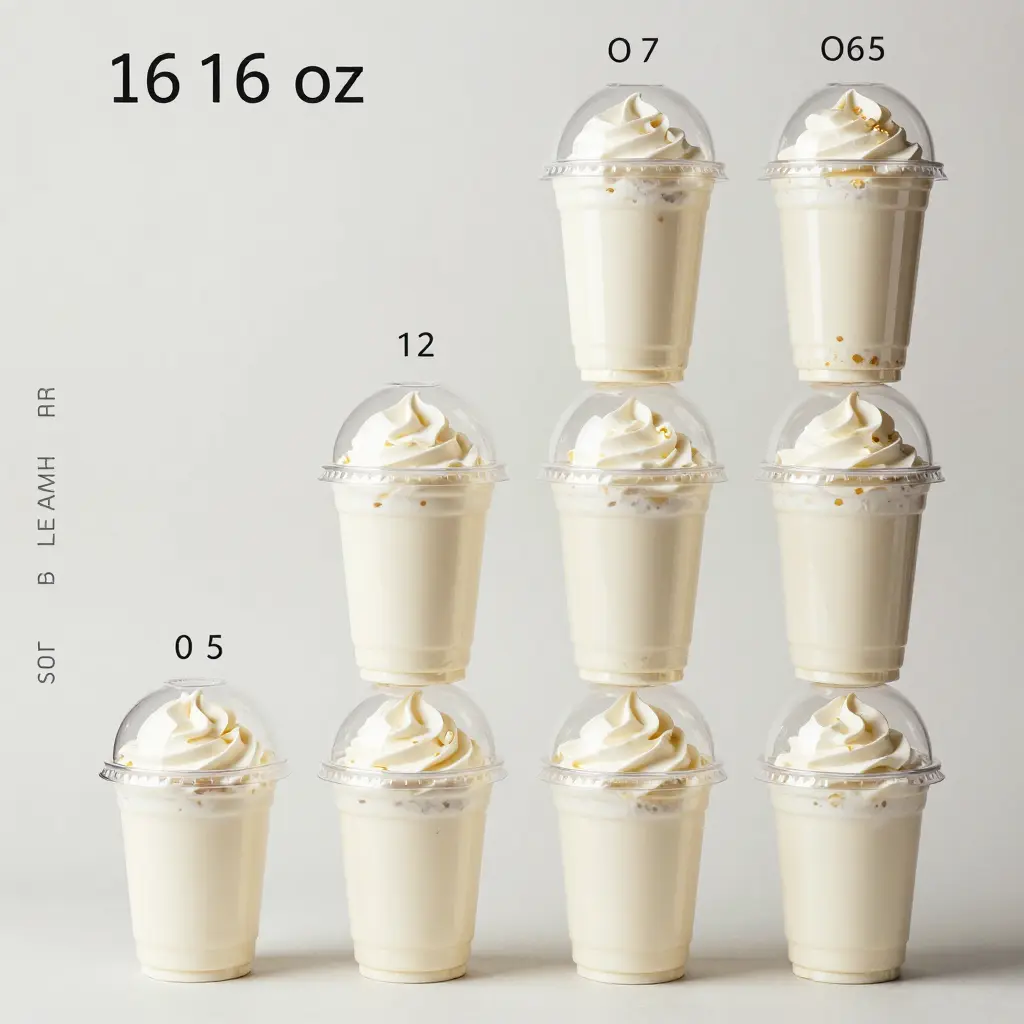
16 oz Clear Plastic Cups With Dome Lids: Cup Height vs Dome Clearance for Whipped Cream Toppings
Whipped cream needs headroom, and the cup on its own does not provide it. On a 16 oz clear plastic cup with a dome lid, whether a tall swirl reaches the counter intact depends on the cup height plus the height of the dome, not on the 16 oz printed on the carton.
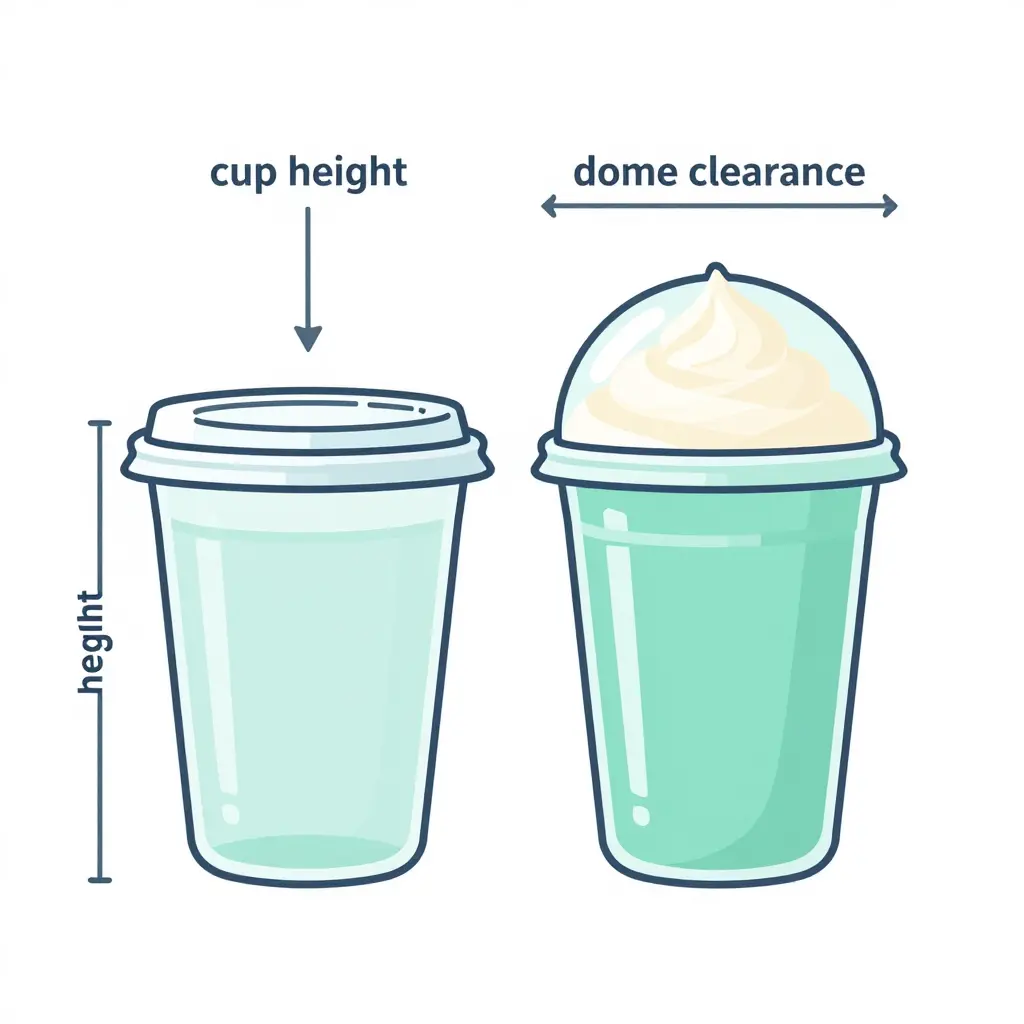
Cup height runs from the base to the rim and sets how much drink sits below the surface. Dome clearance runs from the rim plane to the highest interior point of the lid and sets how much space is left above the drink. Spec sheets quote the two figures separately and rarely reconcile them, but topping volume ties them together: a standard swirl needs a fixed amount of headroom, and the rim diameter sets how wide its base can be, which decides how tall the same portion of cream stacks. The same arithmetic holds across the wider cup range we stock, where rim diameters change and the principle does not.
For a buyer, the question is which cup height and dome clearance combinations keep a 16 oz serve stable in a carrier, stackable in storage, and repeatable from site to site.
What Dome Clearance Actually Measures
Dome clearance is the usable vertical gap between the settled surface of the drink and the inner ceiling of the lid once it is sealed on. Toppings live in that gap. Whether a swirl arrives looking generous or arrives smeared across the plastic is decided there.
The gap belongs to the cup-and-lid pair. Dome height sets the ceiling, the seat inside the lid decides how far that ceiling sinks past the rim, and the fill line sets the floor. Change one of the three and the usable space changes with it. A lid seated on a rim it was not tooled for can lose clearance even when the dome looks tall, which is why buyers comparing dome lid options should check the fit as well as the profile.
The three factors move clearance in a predictable order:
- Lid dome height raises or lowers the inner ceiling. A deeper dome adds clearance across the full rim; a shallow profile subtracts it everywhere.
- Rim seat depth decides where the lid settles on the cup. A deeper seat pulls the dome downward and quietly reduces the gap without the dome shape changing at all.
- Fill line position raises or lowers the base of that gap. Fill closer to the rim and you erode clearance from below, leaving less room for a topping to stand tall.
Cup height and total assembled height are also worth keeping apart. Cup height stops at the rim. Total assembled height includes the lid, so it is always the larger number, and it is the one that matters on a tray, in a carrier or on a shelf.
A taller cup therefore does not automatically add clearance. Wall height adds volume; the lid profile and the fill line decide headroom. A tall cup filled high under a shallow dome protects a swirl less than a shorter cup filled moderately under a deep one. So a spec for 16 oz clear plastic cups with dome lids has to be read as a pair: cup height for the vessel, dome clearance for the topping.
The Two Numbers That Decide Whether Your Whipped Cream Fits
Before comparing brands or price sheets, look at the geometry. A 16 oz cup has a fixed vertical cup height, and a dome lid adds a fixed dome clearance above the rim. Whipped cream, cold foam or a stacked boba topping has to live inside that clearance. If the stack is taller than the gap, the lid presses down, the cream smears across the drink window and the drink leaves the counter looking rushed.
The cross-section below drops branding, printing and photography and leaves three things: the cup body, the liquid line and the dome arc.
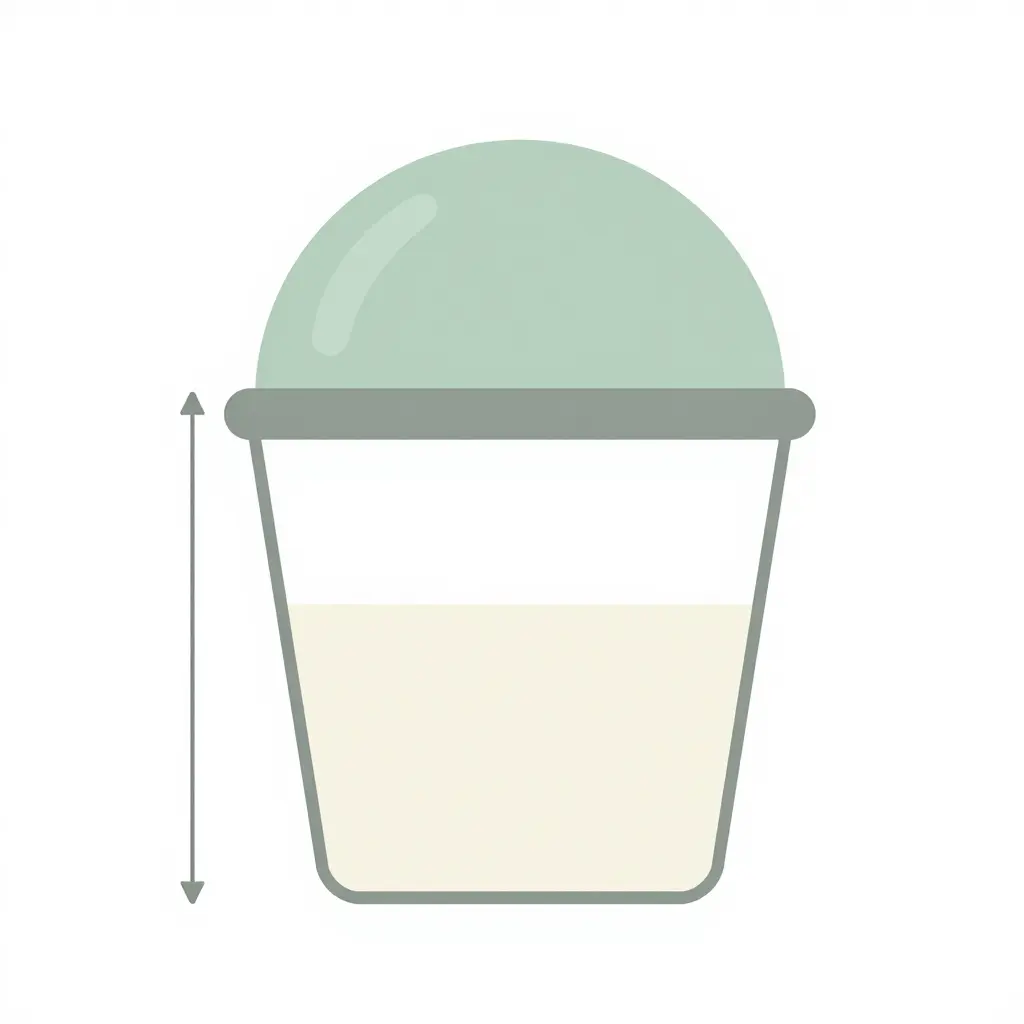
How to read it
- The trapezoid is the cup body. Its vertical side is cup height, measured base to rim.
- The horizontal line is the fill level, the ceiling the drink reaches before the topping zone begins.
- The arc is the dome lid seated on the rim. The space between that line and the top of the arc is the real topping headroom.
Why the gap matters more than the cup size
Two 16 oz cups from different suppliers can hold the same volume and still leave very different headroom once lidded. A shallow dome on a tall cup can leave less usable space than a deeper dome on a shorter one. When you spec a programme, measure the gap, not just the ounce count. Pairing cups with the right dome and flat lid options keeps a build consistent from the first order to the five-hundredth.
One rule operators can use: fix your tallest standard topping build first, then pick the cup and lid that clear it by a comfortable margin. That single decision prevents smeared lids, soggy whipped cream and the complaint that a drink “looked fuller in the photo.”
Measuring 16 oz Cup Height Before You Compare Dome Lids
Before you shortlist dome lids for a 16 oz cup, confirm the dimensions that actually control fit. Buyers who skip this step find that a lid from one supplier clicks onto one cup series but not another, even when both are sold as “16 oz.”
The three measurements that matter
| Measurement | What it tells you | Why procurement cares |
|---|---|---|
| Base to rim height (external) | Overall vertical size of the cup body | Sets how much clearance remains under a dome and how the cup stacks in carriers and dispensers |
| Rim outer diameter | The circle the lid grips | The fit dimension that decides whether a snap-on or press-fit lid will work at all |
| Nominal vs. filled capacity | Stated 16 oz (about 473 ml) versus usable volume below the rim | Affects headspace for whipped cream or toppings and how full your staff can serve without spills |
Why two 16 oz cups can differ in height
Cup height is not fixed by capacity. Wall taper, base diameter, fill-line placement and paper or plastic gauge all shape the finished profile. A straighter wall reaches a given volume in less height; a more tapered cup needs more. Manufacturers also measure from slightly different reference points, so a few millimetres of variation between suppliers is normal and should be expected rather than treated as a defect.
A single programme, where cups and their matching lids are tooled as a pair, removes most of that variation before it reaches your line.
Verifying height from a spec sheet
Ask for a dimensional drawing, not just a catalogue line. Check that base-to-rim height, rim outer diameter and capacity are listed with tolerances, and confirm whether the height is measured to the rim edge or the inner shoulder. Then request a sample from the exact production lot and measure it with calipers at three points around the rim, averaging the readings.
Confirming the lid series matches the cup
Match the lid SKU to the cup series code, not to the stated capacity. Test-fit a sample: the lid should seat with firm, even pressure, with no lifting or gaps at the rim. When ordering cup lids in volume, keep the lid series reference on your purchase order so future reorders stay compatible.
Get the numbers first, then compare dome heights. The lids fit, the toppings clear, and nobody is guessing at the counter.
Before you commit to a lid, check how each profile trades headroom for stackability. If you want to match these profiles against real rim styles, browse our dome and flat lid options and compare them side by side.
Dome clearance quick reference: matching lid profile to whipped cream volume on 16 oz clear cups.
| Lid Profile | Typical Dome Clearance | Typical Whipped Cream Volume Supported | Rim Seal Type | Best Menu Fit |
|---|---|---|---|---|
| Flat Lid | 8 mm | 0-15 ml, skim only | Press-fit snap rim | Straight iced tea and boba |
| Low Dome | 15 mm | 20-30 ml, light foam cap | Snap-on rim | Milk tea with thin foam |
| Standard Dome | 25 mm | 40-55 ml, single soft swirl | Double-lock rim | Classic frappes and floats |
| Deep Dome | 35 mm | 65-80 ml, tall piped swirl | Reinforced snap rim | Thick shakes and sundaes |
| Extra-Deep Dome | 45 mm | 100-120 ml, full dessert peak | Heavy-duty lock rim | Loaded dessert drinks |
| Vented Dome | 32 mm | 50-60 ml, warm toppings | Vented rim with air slots | Hot drinks and cold brew |
Matching Whipped Cream Volume to Dome Clearance
Topping volume, aeration level and settling behaviour together decide how much vertical space a serving truly needs. Cream whipped soft and airy looks generous the moment it leaves the piping bag, then releases air and slumps slightly as it warms against the drink below. Denser, more stable cream holds closer to its original height. Either way, what you pipe will settle, so the figure to plan against is the settled height, not the fresh peak.
Dome clearance has to exceed that settled height with a little left over. When the finished surface presses against the plastic, condensation collects, cream smears across the window, and the guest lifts a lid that looks untidy before the first sip. A few millimetres of open air above the topping protect the presentation and the lid.
Sizing a portion against a clearance figure takes one reading. Read the interior height of the dome above the rim, subtract 3 to 5 mm of safety margin, and treat the remainder as your maximum settled topping height. Pipe one standard portion, let it stand a few minutes, then measure. If it touches the lid, trim the cream weight slightly or lower the piping point rather than changing lids. The lid-profile table above shows where each size lands.
Solid garnishes and syrups change the maths. A cookie, a fruit slice or a cluster of boba adds rigid height that will not settle, so it counts in full and is often part-buried in the cream. Syrups thin the cream, speed up the collapse and add their own liquid pool, so pair them with a slightly smaller cream portion.
For consistent whipped cream toppings, 16 oz clear plastic cups with dome lids taken from one tooling set give predictable dome clearance from order to order. If you are aligning portions with the rest of your menu, our cup and container range makes it easier to match capacity to topping style.
Dome Clearance and Cup Height Checklist for Buyers
Use this checklist to confirm dome clearance and cup height against our dome lid selection range before you approve a purchase order.
- Confirm cup height against the settled topping height your menu actually serves.
- Match rim diameter to the lid spec sheet before approving any sample batch.
- Measure the headroom above expected settled topping height on a filled cup.
- Check lid seat depth so the lid locks firmly below the rolled rim under load.
- Verify venting stays open when whipped cream presses against the dome.
- Require tamper evidence at the rim-to-lid junction that stays visible after sealing.
- Test stacking with loaded cups at the full service height you plan to use.
- Plan for transport distance, and confirm the clearance survives vibration and handling.
- Confirm recycle or compost fit for cup and lid within the same waste stream.
- Record the stated tolerance for height variance between production batches in writing.
Dome Clearance by Lid Profile
The same six profiles as a chart, so the jump in headroom is visible at a glance.
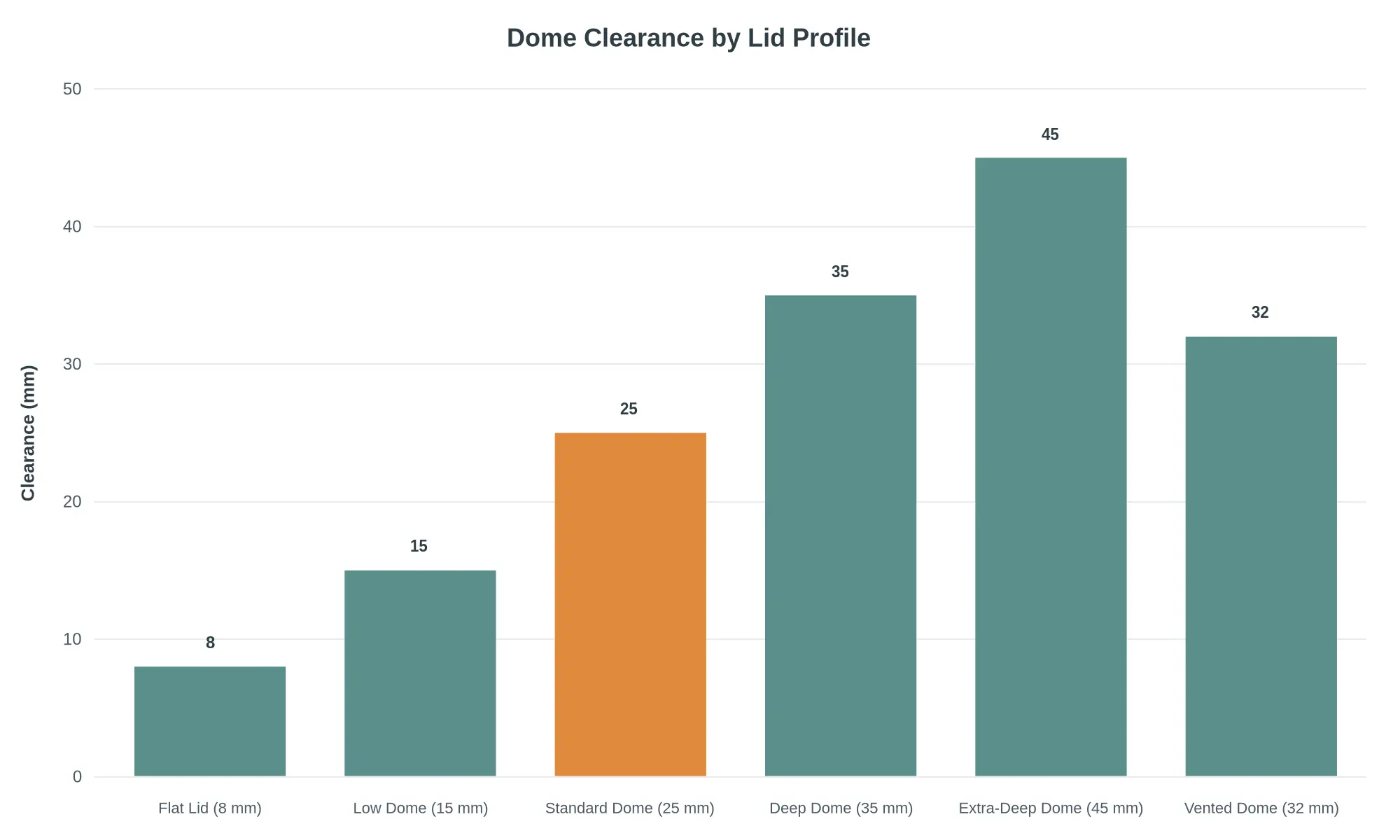
A flat lid leaves 8 mm, which is barely enough for a dust cap, while the standard dome’s highlighted 25 mm is where a normal whipped cream swirl lands. Step up to the deep and extra-deep profiles for tall rosettes or for cookie and boba garnishes, and check our matching dome lid options if you need to pair a specific cup height with the right rim fit. The vented dome sits between standard and deep at 32 mm, adding room and airflow for hot or steam-prone drinks.
Holding Clearance Through Packing and Transport
Dome clearance is worth planning for only if it survives to the counter. A lid that seats perfectly in a quiet packing room can shift, rattle or press down once cartons are stacked in a delivery van, so treat clearance as a delivery specification rather than a filling-station detail.
Road movement does the first damage. Repeated handling makes lids walk, flex and settle a little deeper onto the rim, and a lid that starts with a few millimetres to spare can end up resting on the topping. Weight from cartons above squeezes the dome down, and taller domes have more leverage to flex. Stacking also loads the cup wall, which can distort the rim and change how the lid seats.
Rim geometry is where most of this is won or lost. A defined rim bead with a consistent roll gives the lid a predictable seat, so look for clean, even rims without flat spots or moulding lines that let the lid creep. The lid skirt has to be deep enough to grip the rim fully; a shallow skirt releases under vibration. Lid deflection shows how much the dome gives under load: a firmer lid keeps its shape, while a softer one may absorb the push and sag into the topping.
Unlidded cups nest tightly, and teams often calculate carton counts from that nested height. Once lids go on, the assembled cup is taller, so case packing has to be recalculated rather than assumed. Dividers and layer counts need to suit the assembled height, not the nested one.
Accessories support the same goal: sturdy cup holders keep filled cups upright in multi-cup carriers and limit tilt, while cup sleeves add grip plus a little structural stiffness around the cup body.
How Stacking and Clearance Work Together
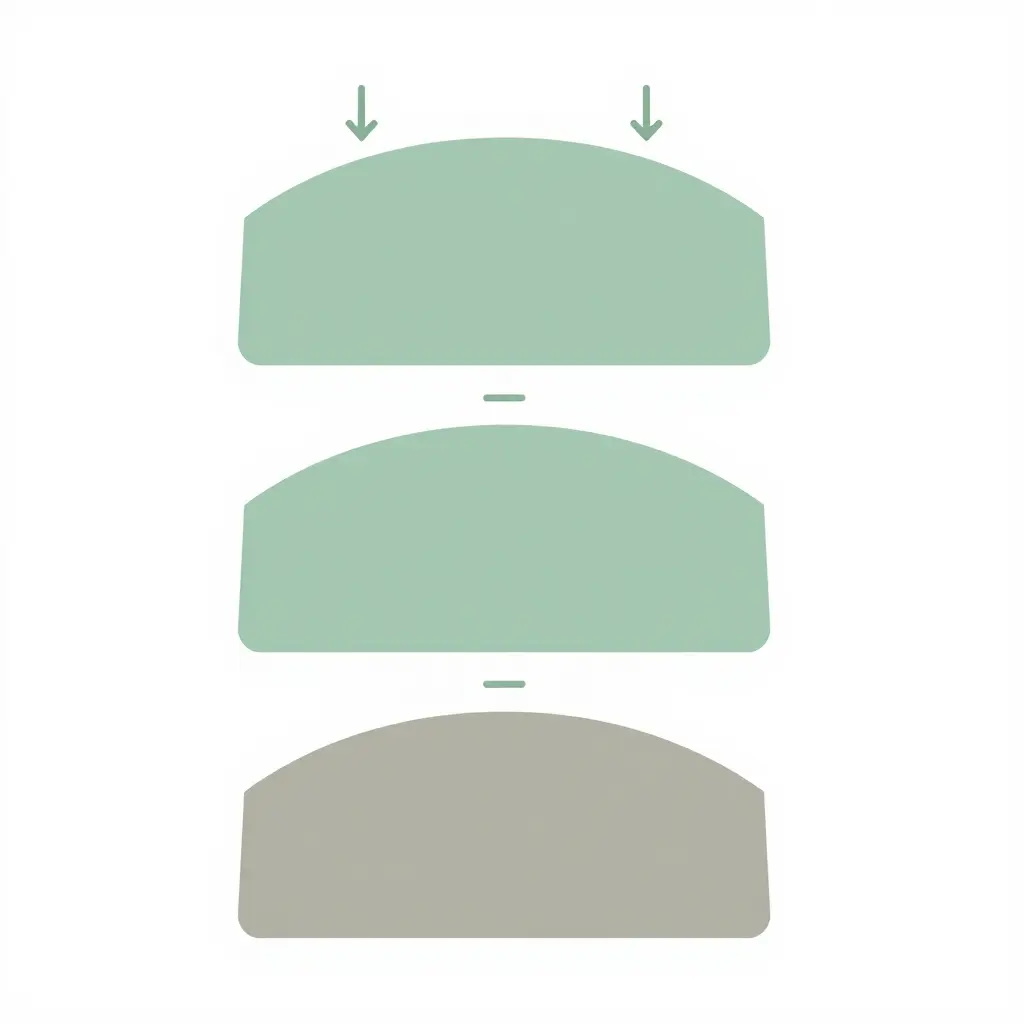
Three cup-and-dome profiles sit one above the other with even spacing, showing how a column of 16 oz cups behaves inside a case. The two arrows at the top mark where downward load travels, and the short horizontal marks between the units show the clearance that survives it.
What the marks mean:
- Even spacing means the domes are not touching. Each unit keeps its breathing room, so whipped cream peaks arrive at the counter the way they left the kitchen.
- Load travels down the sidewalls, not through the dome. Compression lands on the rim and shoulder, which is why a slightly taller dome does not weaken the stack.
- The gaps are the margin of error. That visible clearance is what absorbs a bumpy van ride, a stacked pallet or one extra tray on top.
If you are pairing cups with different lid profiles, it also pays to compare dome and flat lid options so the stack height stays predictable from order to order.
When you brief a supplier or write a packing spec, this diagram works as shared shorthand: clearance preserved, load on the rim, nothing squashed in between.
Choosing Cup and Dome Materials Across a Menu
A beverage programme rarely runs on a single dome profile. A 12 oz iced latte, a 16 oz boba drink and a dessert cup buried under cream need different headspace, yet they should still read as one family of packaging to staff and guests. Most operators settle on two or three dome heights and hold one shared clearance standard, so that wherever rim diameters are shared, a single lid SKU covers more than one cup size.
That standard holds together only if the materials behave alike. Transparent lids are the default for visibility: guests want to see the drink, the pearls and the swirl of syrup, and polypropylene holds its shape well enough for tall dome profiles. Clarity is not decoration here; it is part of the drink.
Paper comes next. Paper cup alternatives give you better heat tolerance, a print-friendly surface and a lighter feel in the hand, at the cost of the see-through look. Many mixed menus keep paper for hot builds and shift cold, topped drinks into our paper cup ranges, where coated stock handles condensation without softening. On the busiest iced lines, 16 oz clear plastic cups with dome lids stay the practical answer, because the extra dome height is exactly what whipped cream toppings and cold foam need to sit above the rim instead of across it.
Moulded sugarcane is the other common route. Sugarcane formats hold their dimensions, keep a firm rim and pair predictably with standard lid diameters, so many teams use them for dessert and frozen builds. Our sugarcane cup options are worth sampling if you want a warm, natural finish across a dessert menu, while ice cream cups cover the smaller-format end where a shallow dome is plenty.
| Material | Clarity | Heat tolerance | End-of-life note |
|---|---|---|---|
| PP dome lid | High | Moderate | Rigid plastic stream |
| PET dome lid | Very high | Low | Rigid plastic stream |
| PE-coated paper cup | Low, opaque | High | Coated-fibre or cup-collection stream; often excluded from mixed paper |
| Sugarcane fibre cup | Low, natural tone | High | Industrial compost where available; check the local fibre stream |
End-of-life is where the menu design shows through. A clear plastic lid on a paper cup means two sorting streams for staff and guests, while a fibre cup with a fibre lid can often go into one. Whichever route you take, keep the clearance standard identical across every material and let the bin signage carry the rest.
Recommended Dome Profile Mix by Menu Type
Once cup heights are mapped to topping builds, the next question is inventory: how many of each dome profile should a menu stock? The chart below splits lid allocation into five profile groups rather than specific products, so it works whether you run a bubble tea bar, a dessert counter or a catering line with rotating specials.
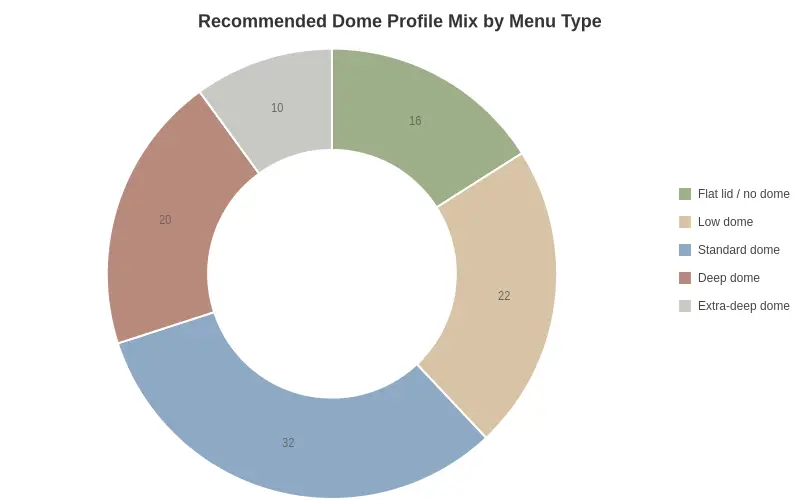
Three things stand out in the mix:
- Standard and deep domes together carry 52% of the recommended allocation, which is where most 16 oz whipped-cream and cold-foam builds land.
- Low dome (22%) and flat lid or no dome (16%) stay meaningful, because not every drink needs headroom. Plain teas, sparkling refreshers and iced coffees usually look better under a lower profile.
- Extra-deep dome is the smallest slice at 10% on purpose. It solves tall soft peaks and loaded boba sundaes, and it costs stack height and freight volume if you over-order it.
Treat the percentages as a starting ratio, then shift a few points toward whichever profile your best-selling drink demands. To pair the chart with actual SKUs, browse our dome lid range and match each slice to a lid that fits your cup rim.
Frequently Asked Questions
Does a taller cup give me more dome clearance?
No. Cup height adds volume, not headspace. Dome clearance comes from the lid profile, so order the two as separate specs.
How much clearance does whipped cream actually need?
Plan for about 20 to 25 mm (3/4 inch to 1 inch) above the rim. That holds a standard swirl without smearing and keeps lids clean in transport.
Do 16 oz cups from different suppliers share the same lids?
Rarely. Rim diameters and rim profiles differ between factories. Buy 16 oz clear plastic cups with dome lids as a matched set, and test one lid on one cup before a full run.
How do I check clearance from a spec sheet?
Look for three numbers: rim diameter, cup height and dome height. Subtract cup height from total assembled height, and the remainder is your dome clearance. Confirm it covers the topping you serve.
Do deep domes affect tray stability?
They can. Taller domes raise the centre of gravity, so stack fewer layers and use flat trays. Wide bases keep carriers steady on uneven surfaces.
How does clearance work with recyclable or fibre lids?
Fibre lids are thicker and often flatter, and their dome clearance usually runs lower than plastic, so add a taller dome or reduce the topping. Match lid type to cup height before finalising an eco line.
For compatible closures, browse our dome lid options and confirm each match against your spec sheet.
Specifying the Right Cup Height and Dome Clearance
The pattern across this page points one way: clearance is not a lid specification at all, it is a property of the system. Cup height, the rim seat the lid snaps onto and the dome profile above it set it jointly, and the figure only means something measured against the settled height of the topping you actually serve. A 16 oz cup with a generous dome still fails if the rim seat sits low, or if the whipped cream is piped taller than the finished product on the day shift.
For a purchase order, four steps keep the specification honest:
- Settle the topping first. Measure finished drink height, cream and garnish included, across at least twenty servings during peak service, then record both the typical and the tallest figure.
- Lock the cup. Get the cup’s height and rim seat dimensions confirmed by the factory in writing, rather than relying on the nominal ounce count on the carton.
- Match the lid to the measured headroom. Ask for a dome profile that clears the tallest serving with a few millimetres to spare, then test it under real carrying and stacking conditions.
- Verify the kit, not the parts. Trial cup, lid and carrier together with filled product, because a stable carrier such as a paper cup holder changes how much tilt a tall dome tolerates.
GreenDispopack is a manufacturer and supplier of disposable tableware, packaging paper and boxes with a focus on safety, durability and eco-friendly practices. Running the trial alongside carrier bags from the same paper bag range lets the whole serve travel as one tested unit.
Ordering cups, lids and holders from a single matched source is the simplest way to keep that system intact from one reorder to the next.