
Rim stiffness is how well the rim of a cup resists bending or collapsing when someone lifts a full cup, presses down on it, or snaps a lid into place. Stack height is the extra height that each nested cup adds to a sleeve, which is what decides how much room a packed stack takes up.
For disposable plastic cups used in airline catering, both requirements have to be met at the same time. A cup with a soft rim feels flimsy in a passenger’s hand and can deform under a lid; a cup that stacks tall eats galley space that isn’t there.
The two pull against each other. Making a rim stiffer usually means more material, or a different wall and lip geometry, and either change tends to hold nested cups further apart, which raises stack height.
Trolley storage is where the conflict stops being theoretical. A taller sleeve means fewer cups fit into each trolley slot, so crew restock more often and each drink served drags more packaging through the cabin. A shorter sleeve wins that room back, but only if the rim still holds its shape when cups are pressed together inside the sleeve.
Where a cup sits between those two points is a procurement decision. Buyers weigh how the cups will be handled and how the trolleys get loaded, then choose a firmer rim or a more compact sleeve, and comparing disposable cup options side by side is how that choice gets made concrete. Suppliers can tune either direction, but no single cup is best at both ends of the range.
What Rim Stiffness Actually Means in Disposable Plastic Cups
Rim stiffness measures how much punishment a cup opening takes before it stops behaving like a circle. In practice it is expressed as the top-load force a rim carries before it ovalizes, meaning the downward pressure the lip absorbs before the circular opening distorts into an ellipse. Above that threshold the cup holds its shape in the hand; below it, the rim folds as soon as weight and grip arrive together.
The Design and Material Drivers Behind It
Where that threshold lands depends on a handful of variables. Rim curl geometry comes first, since a tighter, more evenly formed curl spreads load around the circumference instead of letting it concentrate at one point. Wall thickness adds bending resistance, and the resin grade decides how firmly the material returns to shape after it flexes. Cup diameter and rim width then set the leverage at play, because a wider opening gives the same force more room to work against the lip.
Why It Matters in Trolley Storage
Pack cups for a flight and the rim stops being an abstraction. In trolley storage, nested sleeves put one cup inside another and concentrate weight on the rims of the lowest units, so the rim effectively carries the sleeve. If those rims soften or ovalize, the stack jams and cup de-nesting stops being a one-handed job, usually while staff are moving fast. The rim also has to survive separation and pouring: a rim that holds its shape gives fingers a secure purchase and keeps the opening round while liquid goes in.
How Other Formats Compare
Comparing formats qualitatively, rigid reusable drinkware sits at the stiff end thanks to thick walls and moulded structure, while thin single-use formats sit at the low end and lean on curl quality to compensate. Paper cups work differently again, with stiffness tied closely to board thickness and the tightness of the rolled rim, and moulded fibre options such as sugarcane cups feel denser and hold their shape better when a hand squeezes them. If you are weighing options for your own operation, it is worth benchmarking paper cup alternatives for hot and cold service alongside these plant-fibre sugarcane cup ranges so you can compare rim behaviour against stack height on your own trolleys.
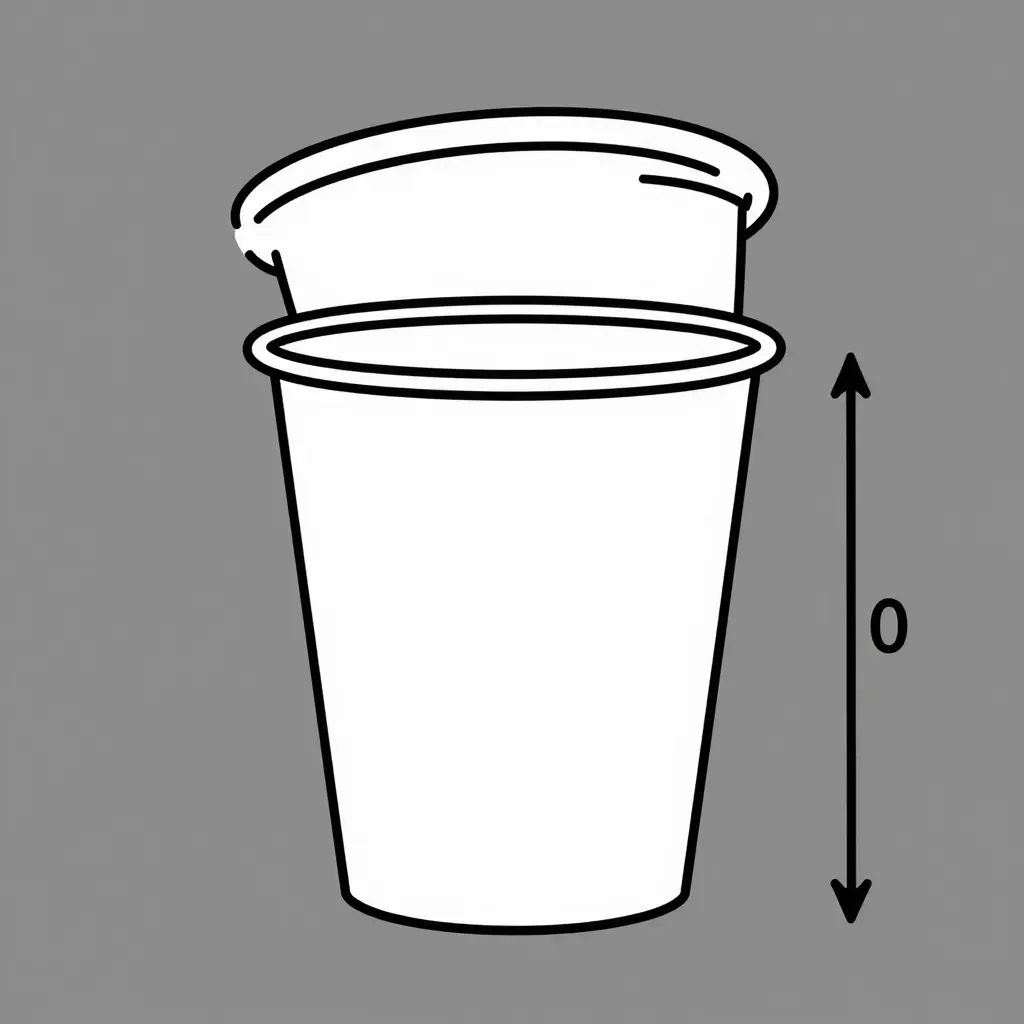
Figure 1: Two nested cups in cross-section. The upper rim seats on the lower rim, the tapered walls leave a thin air gap on each side, and the vertical bracket shows how much height one extra cup adds to a nested stack.
How Stack Height Drives Trolley Capacity
Stack height is the storage-side number that governs how many cups fit in a trolley. It starts with the height increment: the small amount of vertical space a cup adds when it nests over the one below, which rim geometry and cup taper largely set. A stiffer, more substantial rim holds its shape under the weight of the stack and keeps a slightly larger gap between successive bases, while a steeper taper lets each cup settle deeper into its neighbour. One cup’s increment looks like nothing. Multiply it across a sleeve of cups, though, and it becomes the sleeve height, and half-millimetre differences compound quickly.
Sleeve height then has to negotiate hardware the buyer did not design. Galley cart shelves are built to fixed clearances, and trolley compartments are divided around standard drawer heights. A sleeve that clears one shelf comfortably may leave no room for a second layer above it, and a sleeve that sits slightly proud of the compartment can stop a drawer from sliding home. That is why stack height is rarely a free variable: it gets checked against shelf clearance, compartment depth and drawer travel together, not in isolation.
Load planning comes down to division, so a fraction of a millimetre per cup shifts the count for a whole trolley load. Rim design and taper are the two levers that move that fraction, which is why it pays to test the sleeves you actually plan to fly rather than trusting nominal figures.
| Scenario (illustrative only, not a specification) | Increment per cup | Sleeve height, 50 cups | Sleeves per 300 mm clearance |
|---|---|---|---|
| A | 1.0 mm | 50 mm | 6 |
| B | 1.2 mm | 60 mm | 5 |
| C | 1.4 mm | 70 mm | 4 |
The table is purely illustrative arithmetic to show how a small increment change scales; your own measurements will differ.
Stack Height Increment by Rim and Taper Configuration
The chart below puts the same measurement side by side for five rim and taper configurations. Each bar is the extra stacked height a single nested cup adds, so a shorter bar means more cups per trolley column.
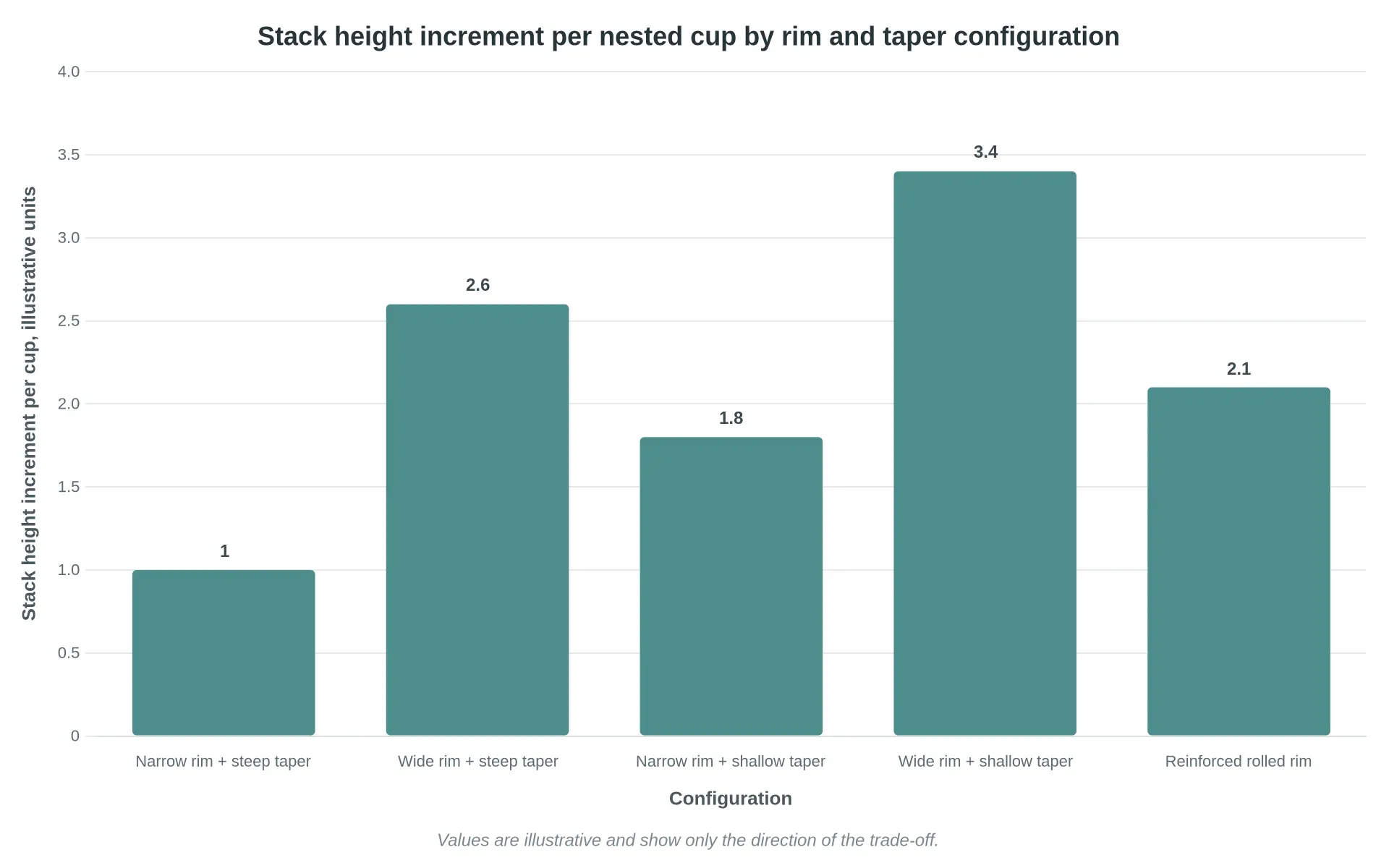
Figure 2: Stack height increment per nested cup across five rim and taper configurations.
Values are illustrative and are used only to show the direction of the trade-off between rim stiffness and stack height.
The pattern runs one way. Narrow rims and steep tapers nest deeply and save vertical space; wider rims and shallow tapers buy stiffness where the cup grip actually matters. A reinforced rolled rim lands in the middle, which is a deliberate compromise: enough structure to stop the rim flexing under a full cup, without giving the trolley away to air. If you are comparing options for your own service setup, it helps to review our disposable paper cup range alongside the trade-off table below.
Goods-In Rim Stiffness Checks: A Five-Minute Audit

Five minutes of hands-on inspection at goods-in will tell you more about a pallet of disposable cups than its spec sheet does. Everything below needs only your hands, one sample cup and a matching lid.
- Rim roundness: Roll the rim between finger and thumb. A true circle with no flat spots, kinks or oval dents points to even wall forming and a rim that will seat squarely in a lid.
- Thumb-pressure feel: Press the rim firmly at four points around the circle. A crisp, springy return is real rim stiffness; spongy give warns of thin, inconsistent resin.
- Even cup de-nesting: Draw ten cups one at a time. Smooth single-cup release, no jamming, no screech, no surprise double drops.
- Sleeve compression squeeze: Compress a full sleeve gently end to end. Minimal give means the stack holds its height in a trolley drawer instead of sagging overnight.
- Cup-to-cup wobble: Nest two cups and twist lightly. Side-to-side play should be barely perceptible, so the column stays straight while the trolley rolls.
- Rim flatness against a lid: Seat a lid on a sample cup and run a fingernail around the seam. A gap, a rock or a click is a route out for liquid during cabin service.
- Lift test with a full cup: Fill a cup to its working line and lift it by the rim alone. No flex, no rim roll, no spill.
- Stack height consistency: Line up five sleeves side by side and compare their tops. Matching heights across a carton show the cups were moulded to a consistent nesting depth.
Log what you find against your receiving sheet, so a batch drifting on rim stiffness, stack height or cup de-nesting gets flagged long before it reaches a passenger tray.
The table below compares common paper cup formats and rim designs on both variables, so you can match stiffness and stack efficiency to a specific service style.
| Cup format and rim design | Relative rim stiffness | Stack height increment per cup | Effect on cups per trolley load | Best-fit use case for catering buyers |
|---|---|---|---|---|
| Thin-wall cup (0.5-0.6 mm), single rolled rim | Medium: thin gauge flexes, roll resists collapse | About 2.0 mm | Reference point for the rows below | High-volume water and cold drink service |
| Heavy-wall cup (1.1-1.2 mm), single rolled rim | High: extra resin stiffens the lip | About 2.8 mm | About 30% fewer cups per load | Premium meal service and branded drinks |
| Standard single-curl rim (2.5 mm curl) | Medium: basic curl handles light stacking pressure | About 2.2 mm | About 10% fewer cups per load | Everyday juice and soft drink service |
| Wide double-curl rim (4 mm curl) | High: two-layer curl locks lip shape | About 3.5 mm | About 40% fewer cups per load, taller inserts needed | Lidded cups and vibration-heavy transport |
| Steep-taper nest cup (10 degree flare), single roll | Medium: wide flare spreads stress, rim holds shape | About 1.8 mm | About 10% more cups per load, but less usable volume | Compact trolley storage on short-haul flights |
*All numeric entries in this table are illustrative only and should be confirmed with measured samples from your supplier. Cups-per-load percentages assume a fixed stack column height divided by the increment per cup, so they follow the increment column.*
Balancing Rim Stiffness and Stack Height
Start with the fill and the lid. A cup carrying a heavier beverage, or one paired with a lid that presses firmly on the rim, needs enough rim stiffness to resist flex during filling, closing and carrying. A rim that is too soft deflects under load, which affects lid fit and makes sleeves feel unstable. A very stiff rim, on the other hand, usually reduces how closely cups nest, so stack height goes up. In airline catering and trolley storage that matters twice over, because stack height sets both cups per sleeve and sleeves per trolley bay.
Taper is the control point for nesting. More taper generally lets cups sit deeper into one another and lowers stack height, but it also changes extraction feel and stack stability. Less taper produces a taller, sometimes more stable stack that may suit automated de-nesting. Test taper together with rim stiffness rather than treating either as a separate specification.
Keep sleeve count and trolley load consistent when comparing disposable plastic cups. If a candidate cup changes the number of cups per sleeve, the number of sleeves per trolley trip changes too, and so does the real handling cost. Compare cost per cup delivered per trolley trip, including cups per sleeve, sleeves per trolley, cube utilization, damage and replenishment labor, rather than cost per carton alone. Where the service format allows alternatives, the paper cup and bowl range and sugarcane food containers can be assessed on the same delivered-cost basis.
Before committing to a bulk order, validate the candidate through sleeve and de-nesting trials. Load sleeves to the intended count, simulate trolley handling, and check rim deformation, lid fit, extraction force, cup separation and stack stability across the fill weights and lid types you actually use. Approve the cup only after it performs consistently in both tests.
How Lids, Sleeves and Holders Shift Both Variables
A lid sits directly on the rim, so every lid you add puts extra load on the same edge that has to survive a full trolley run, and lid design can raise or lower usable stack height by a few millimetres per cup. A snug, well-formed paper lid protects rim stiffness without eating storage space, which counts for something in airline catering, where every millimetre of cart space is already accounted for.
Sleeves push the other way. They have to match cup diameter and rim depth closely, because a tight sleeve pulls the rim out of round while a loose one shifts during handling. Choosing paper sleeves built to your exact cup profile keeps the rim true. Then pair them with the right carriers, since paper cup holders and sugarcane cup holders decide how sleeves are packed and stacked in a trolley rather than tumbling loose. Get these three working together and your cup, sleeve and carrier behave as one stable unit under load.
Frequently Asked Questions: Rim Stiffness and Stack Height in Trolley Storage
Does a Thicker, Stiffer Rim Always Reduce Trolley Capacity?
No. Rim stiffness changes how a cup behaves under load and how cleanly it releases from a nested stack, but it is not the deciding factor for capacity. Usable capacity in trolley storage is driven mainly by overall cup geometry, sleeve dimensions and the internal volume of the cart. A firmer rim can add a little height and alter nesting depth, and that cost shows up only where clearance is already tight.
How Much Does Stack Height Change Matter Compared with Shelf Clearance?
Only in relation to the clearance of the shelf, drawer or compartment it sits in. A small increase in the nested stack of disposable plastic cups is harmless where there is headroom, and the same change can jam a tight-fit drawer or stop a lid from closing where there is none. Measure the clearance first, then treat stack height variation as a tolerance to test against it.
Are Disposable Plastic Cups with Soft Rims Still Usable for Short-Haul Catering?
Yes, under the right conditions. Softer rims suit short sectors where cups are handled gently, lids go on at the point of service and the trolley sees limited vibration. They resist deformation less when a lid is pressed down or cups are packed tightly, so longer sectors and dense loading tend to favour a firmer rim.
What Information Should I Send When Requesting Sample Sleeves for a Rim and Stack Test?
Share the rim diameter, overall cup height and the nested stack height you need to fit, along with the trolley or drawer clearance available. Include the lid type, expected fill temperature and cups per sleeve so samples can be matched to your paper sleeve specification, and photos of the current packing layout help confirm the fit.
Explore the complete drinkware range on our paper cup collection and browse coordinated paper packaging supplies for lids, sleeves and carriers.
Two checks, in this order. Test rim stiffness against the fill you pour and the lid you press on, because a rim that flexes under a full pour or a firm lid will leak in service no matter how neatly the cups nest. Then measure stack height against the trolley bay and the shelf clearance where the cups actually live, since a carton that fits the storeroom can still jam a service trolley halfway down the aisle.
Where both cannot win, take the stiffer rim when lids and full fills are non-negotiable, and the shorter stack when storage and transport space is the tighter constraint. Which one binds depends on how your disposable plastic cups travel and how they are served, so measure both before you commit to a bulk order. We manufacture and supply disposable tableware, packaging paper and boxes with a focus on safety, durability and eco-friendly practice, and our team is glad to help with sample requests and specification questions – start by browsing our paper cup range or explore paper bags for carry-out service.