
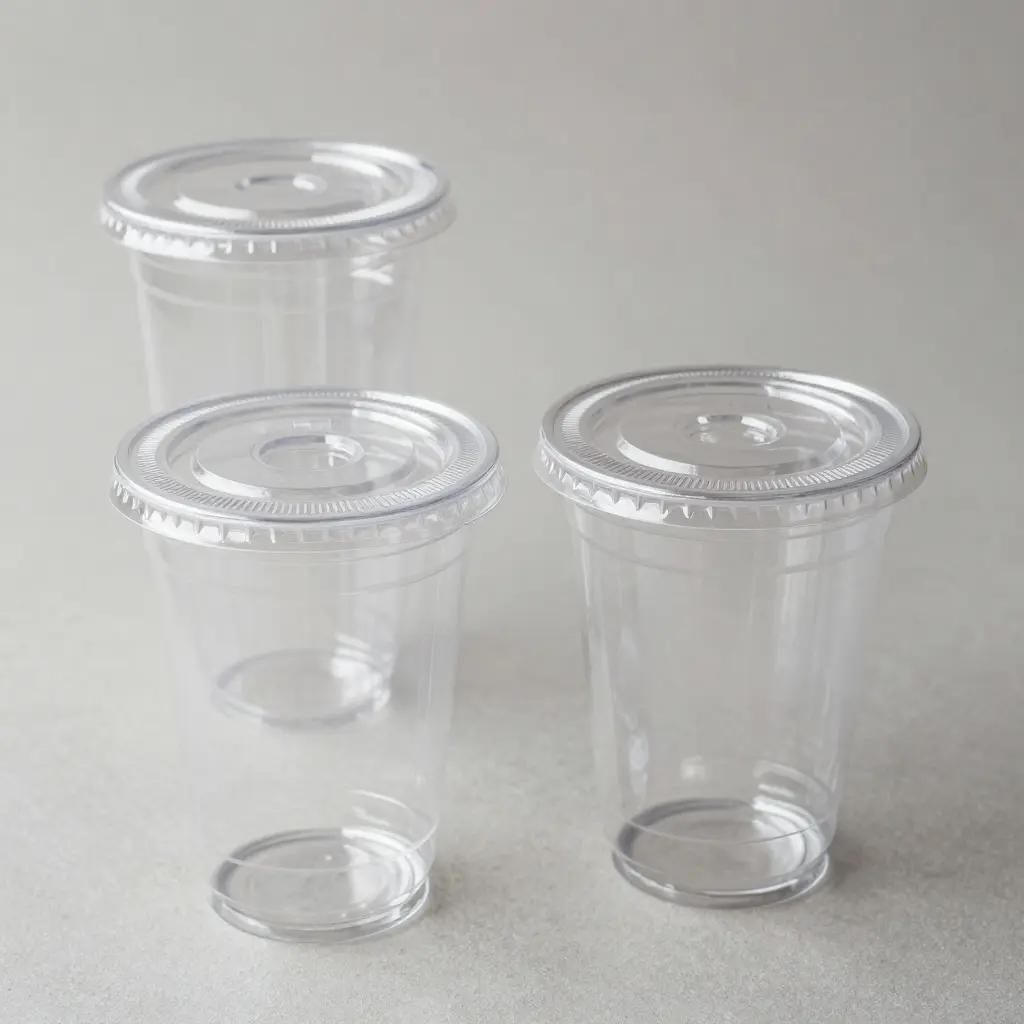
Clear Plastic Cups With Lids From China: Understanding the PET vs PP Choice
Nearly every clear plastic cup with a lid that leaves a Chinese factory is made from one of two resins. PET (polyethylene terephthalate) is rigid and glass-clear. PP (polypropylene) is softer, slightly hazy, and takes heat much better.
For cold drink takeaway and bubble tea, that single choice decides how the drink looks on the counter, whether the cup survives a delivery run, and what you pay per unit. Lid fit and wall thickness sit inside the same decision, because a cup and lid that were never designed as a pair will leak whichever resin you pick.
Both resins are used for food contact, though “food safe” still has to be documented for your market. Each option also changes clarity, crack resistance, cost per unit, and which matching lids will actually seal.
What Cold Drink Takeaway Really Demands From a Cup
Customers judge the cup before they taste the drink. A cloudy or scratched wall makes a fresh pour look like it has been sitting there for hours, so clarity is selling, not decoration.
The rest of the demands are mechanical. Rim dimensions have to hold from cup to cup, not just on the sample someone mailed you, because a lid that clicks onto one cup and fights the next one spills at the hand-off. Walls have to survive squeezing, stacking, and shifting ice without cracking. Condensation makes the outside slick within minutes, which is a grip problem before it is a cosmetic one. And if the cup gets printed, the surface has to take ink cleanly around a curve.
PET and PP answer those demands differently, which is why the right choice depends on your menu rather than on a general winner.
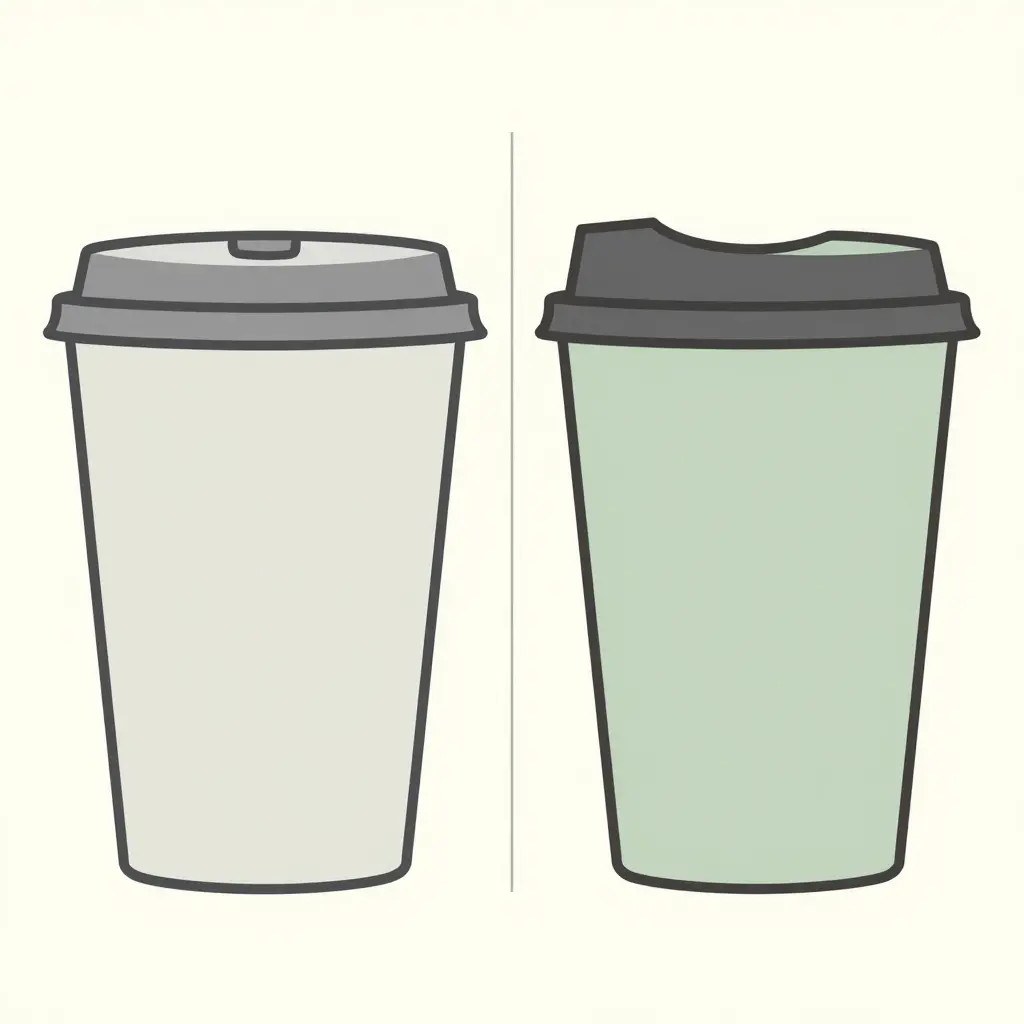
A side-by-side cross-section: the thinner-walled cup relies on a small rim bead that a shallow plug lid snaps under, while the thicker-walled cup needs a taller flange and a deeper channel in the lid to lock down. Same job, two different mechanical solutions. That is why a lid which clicks perfectly onto one cup can sit loose on another.
PET Cups: Maximum Clarity for Cold Drinks
PET, or polyethylene terephthalate, is the resin behind most glass-clear iced cups. Light in the hand, recycling code 1, and the reason a layered milk tea reads the way the shop intended: the gradient, the fruit, the ice line, all visible.
PET belongs in cold service: iced drinks, chilled drinks, nothing hot. It stays rigid in the hand and holds its shape, and when it does fail it tends to craze or split rather than stretch, so staff can spot damage before the drink goes out. Heat is where it gives up: a hot fill softens and distorts it.
In takeaway work PET suits cold brew, smoothies, soda, and fruit-forward drinks. Paired with wholesale clear cups with lids from one source, it keeps contents secure in transit while staying completely visible. Shops that also sell hot drinks usually run a second format for those, such as paper cups for warm menus, rather than pushing PET past what it can take.
PP Cups: Flexibility and Durability Under Pressure
PP is polypropylene, recycling code 5. It is a common food-contact plastic, and it resists staining and chemical absorption, which matters once a cup holds fruit tea, cola, or a dairy drink for an hour.
What it offers over PET is mechanical. A PP cup flexes on impact instead of shattering, so PP clear plastic cups hold up at crowded counters, on delivery bikes, and in stacked cartons. It also takes heat: warm boba, freshly brewed tea, and drinks filled while hot are all within range, where PET would soften and distort.
Clarity is what you trade for that. PP reads as a faint translucency rather than glass, so layers and toppings look slightly muted through the wall. What you get back is a lid that can be molded to seal firmly, which is the part that prevents leaks in transit.
PP works for milk tea, fruit tea, smoothies, iced coffee, and warm drinks, and it is the safer pick for multi-stop routes, events, and anything carried by hand for a while. Buyers weighing compostable options can compare plant-fiber sugarcane cup options instead.
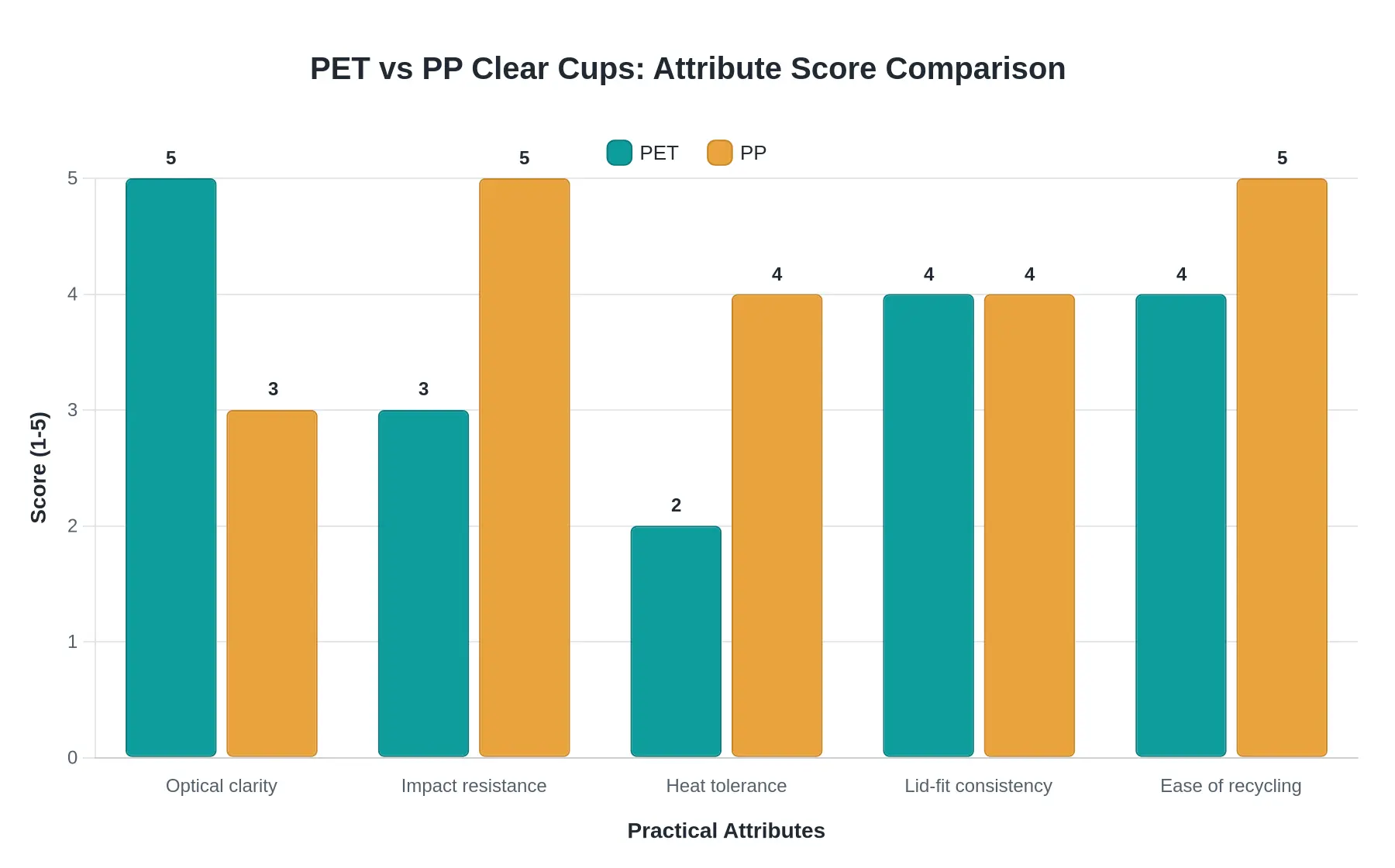
PET vs PP Clear Cups: Attribute Score Comparison
How to Choose: Match the Material to the Drinks Menu and Delivery Model
Start with the drink. Acidic, dairy-based, or alcohol-infused recipes point toward PP and its chemical and heat resistance. Straightforward iced beverages leave PET comfortably viable.
Serving temperature is the second filter. Anything finished warm or held warm belongs in PP, which keeps its shape; PET is built for menus poured cold.
Transport distance comes third. Longer routes and multi-hour delivery windows reward PP’s toughness under stacking and handling. Short local drops let PET’s lighter, clearer walls do the job.
Last comes presentation. If customers photograph the layers before they drink them, PET’s clarity is doing work that a hazy wall cannot, and it belongs with the rest of the serve, simple drink accessories included.
Settle those four before comparing PET vs PP on price, then confirm mold and lid compatibility with the supplier, because that is where a good material decision either holds up or falls apart.
PET vs PP Clear Drink Cups: Specification Comparison
On a shelf the two plastics look alike. Add a drink, a lid, and a delivery bag and they stop being interchangeable. Use this table against your actual menu and shipping setup.
| Attribute | PET | PP | What It Means for Buyers |
|---|---|---|---|
| Material and recycling code | Resin code 1; curbside acceptance varies by market | Resin code 5; recyclable, collected in fewer programs in most markets | Check local recycling access before making any green marketing claim. |
| Typical cold-drink temperature range | Suits 0-40°C; iced and chilled service | Commonly rated to about 90°C; handles warm and hot fills | PP can cover a hot and cold menu with one format; PET suits iced-only menus. |
| Optical clarity | Glass-like, high shine, layers read clearly | Faint haze, translucent, softer surface reflections | Choose PET when boba layers and color are the selling point. |
| Impact and crack behavior | Rigid; can crack or craze after a sharp impact | Flexible; bends and absorbs knocks without shattering | PP survives rough delivery routes and mobile food truck service. |
| Lid fit and leak resistance | Friction-fit lids; tight seal when correctly paired | Softer lids; more forgiving fit, wider tolerance | Leak-test cup and lid pairs sourced from one supplier. |
| Suitable drink categories | Iced tea, soda, smoothies, cold brew, fruit drinks | Bubble tea, hot coffee, soups, warm sauces, desserts | Split the menu by serving temperature, not by purchasing habit. |
| Best-fit printing or branding method | Screen printing, UV offset, clear or matte labels | In-mold labeling, flexo printing, hot stamping | PET holds fine logo detail; PP rewards bold flood-color artwork. |
| Typical relative unit cost | Moderate and stable; competitive at volume | Usually lower, sometimes comparable per unit | Compare landed cost per cup, not the ex-works unit price. |
| Best-fit packaging format for export | Nested sleeves in cartons; strong cube efficiency | Nested stacks; lids take a little more carton space | Ask for carton dimensions early so freight estimates stay honest. |
The short version: PET wins on presentation, PP wins on durability, which is why plenty of beverage chains simply run both.
If you would rather not manage a second supplier, paper straw options can ship in the same container and complete the serve.
Questions to Ask Before You Confirm a Container Order
Run through these before you fix volumes with a clear plastic cups with lids supplier China, so the details surface now rather than after the deposit.
- Which resin grade is used, and does the cup carry food-contact certification for your market?
- Are cups and lids quoted together or separately, and how does that change your unit cost against paper cup options?
- How is lid fit verified, and which leak test runs before shipping: fill, tilt, or drop?
- What mold sizes exist, and what is the MOQ per size and color?
- What carton compression strength is guaranteed, and how are cartons arranged per pallet?
- What are the sample lead time and the production lead time on repeat orders?
- Are print and logo setup costs one-time, and is there a charge for plate or film changes?
- How are transit damage claims handled, and what replacement or credit policy applies?
Evaluating a Supplier: Systems Matter More Than Samples
Samples arrive perfect. They tell you almost nothing about unit ten thousand. What separates a supplier you can reorder from one that got lucky once is the system behind the samples.
Ask where the resin comes from and whether it is documented lot by lot. Confirm that thermoforming and lid molding happen in-house instead of through subcontracted shops. For the lid side, check that rim diameters are specified against your cup, and look at paper lids engineered for a secure seal if paper formats are part of the mix.
Rim diameter tolerance is the number that decides whether lids snap on cleanly or seep under pressure, so ask for it in writing. In-line leak and drop checks should run during production, not only on the final inspection day. Batch traceability means a complaint reaches the resin lot in minutes instead of weeks. Test after-sales response before you order rather than after, because a live filling line is where PET vs PP stops being a theoretical question.
Food-Contact Compliance for Clear Plastic Cups
Before confirming an order, ask for the resin’s food-contact declaration. It confirms the base material is approved for direct contact with beverages in your market.
Then ask for migration test reports on the finished cup, not just the resin, since the results need to reflect real use: acidic fruit tea, milk-based drinks, warm syrup.
Confirm which regulatory framework applies at your destination. Requirements differ across the EU, the US, and Asia, and a food-grade PET resin that clears one set of rules may still need extra testing for another.
Documentation should name the exact resin grade and colorants used on your production run. Records that list only a broad material family say little about the cups you actually receive.
Keep the declaration and test reports on file and check them against each shipment. It is also worth reviewing our full cup range to see how each format is documented.
Cost, Carton Efficiency, and Shipping Practicalities
Landed cost starts before freight. Cups and lids are quoted separately, and the nesting ratio decides how many cups genuinely fit in a master carton. A higher nesting ratio means fewer cartons per container, which pulls down per-unit shipping cost even when the quoted unit price looks identical. Carton compression strength protects that saving: weak board crushes, cracked rims follow, and a pallet gets rejected.
Lids are molded rather than nested the way cup bodies are, so they carry their own carton cube, weight, and minimum order quantity. Folding them into a single cup price hides the real ratio and usually undercounts lids on high-volume cold drink takeaway runs.
Order thresholds for wholesale clear cups with lids rarely line up with lid MOQs, so plan both numbers together. Complementary items such as paper bags and paper straws can go into one shipment to improve container fill.
From Resin Pellets to Loaded Container
Six stages, start to finish, and the same sequence every order runs through: whether that is stackable 16oz PET cups for a bubble tea chain or a heavier PP format headed for hot-fill testing.
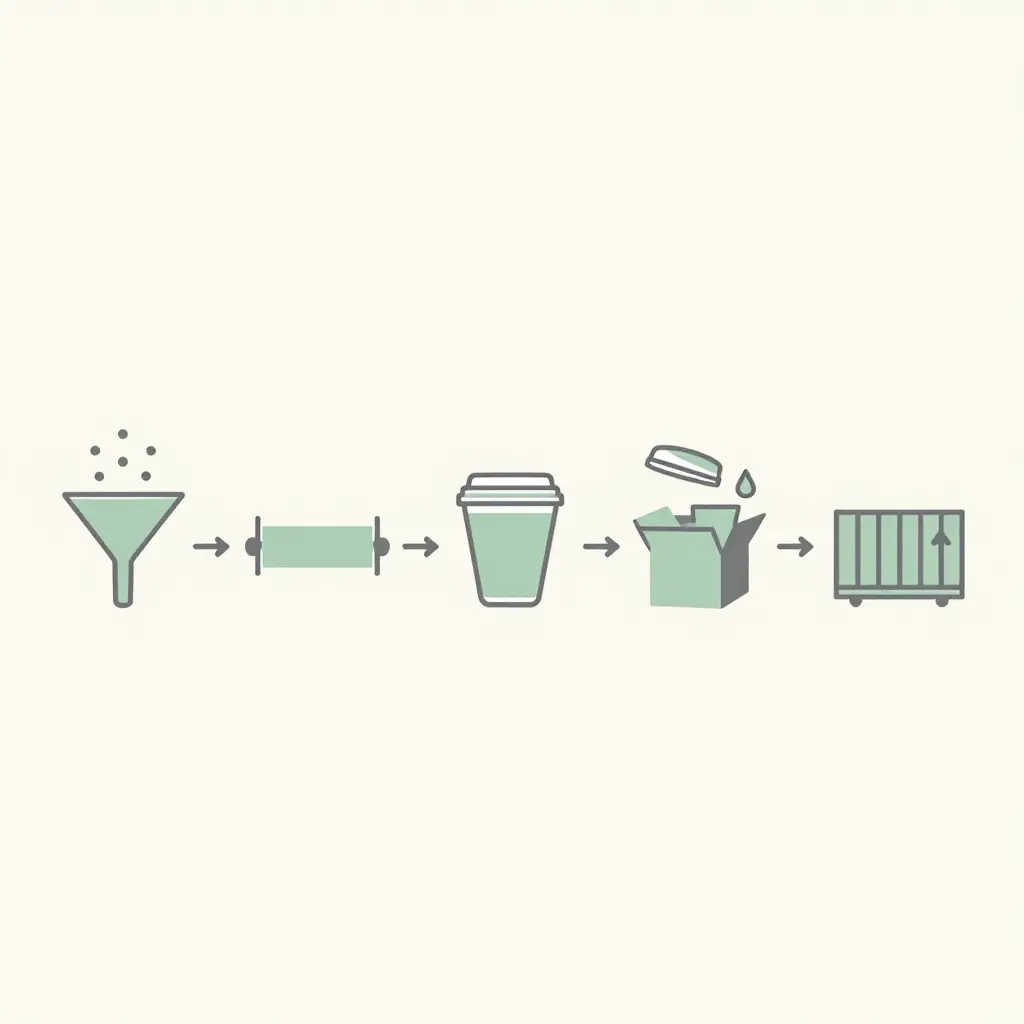
Reading left to right: resin arrives and is inspected, becomes sheet (or skips straight to molding), is thermoformed into cup bodies, is matched with lids and pressure-checked for leaks, is packed into export cartons, and finally is loaded for the sea freight leg.
Frequently Asked Questions
Is PET or PP better for iced drinks and bubble tea takeaway?
Both work; they behave differently. PET is crystal clear and rigid, which makes it a common pick for iced coffee and fruit tea served cold. PP is softer and tolerates heat, and it is often chosen when drinks are film-sealed or filled while still warm. The decision usually comes down to clarity versus temperature tolerance.
Can lids from one supplier fit another supplier’s cups?
Not reliably. Rim diameter, rim profile, and wall thickness vary by mold, so a 90 mm lid from one factory may sit loosely on another factory’s 90 mm cup. Order cups and lids as a matched set, or ask your clear plastic cups with lids supplier China for rim drawings and samples before committing to volume, and explore cup and lid formats for comparison.
What minimum order quantity is typical when sourcing clear plastic cups with lids from China?
Most factories quote MOQs between 10,000 and 50,000 pieces per size and color on stock molds. Custom printing or a new mold pushes that higher, often 50,000 to 100,000 cups. Confirm whether the MOQ applies per carton, per size, or per mixed container load.
How should cups be stored and handled to prevent cracking or deformation?
Keep cartons sealed in a dry, shaded area between 5 and 35 °C, away from sunlight and heat sources. Stack only to the stated carton limit, because top loading crushes and ovalizes rims. Handle sleeves from the base rather than the rim, and never force nested cups apart.
Putting the Comparison to Work
In practice the choice comes down to the job the cup has to do. PET when clarity carries the drink and the trip is short and cold. PP when the cup has to survive heat, handling, and distance. Either way, lock lid compatibility and documentation with the supplier before the first bulk order, so every run matches the sample you approved.
We manufacture disposable tableware, packaging paper, and boxes, and material selection is where safety, durability, and recyclability get decided. Buyers building a full beverage set can add paper cup holders to round out carry and delivery packaging.