
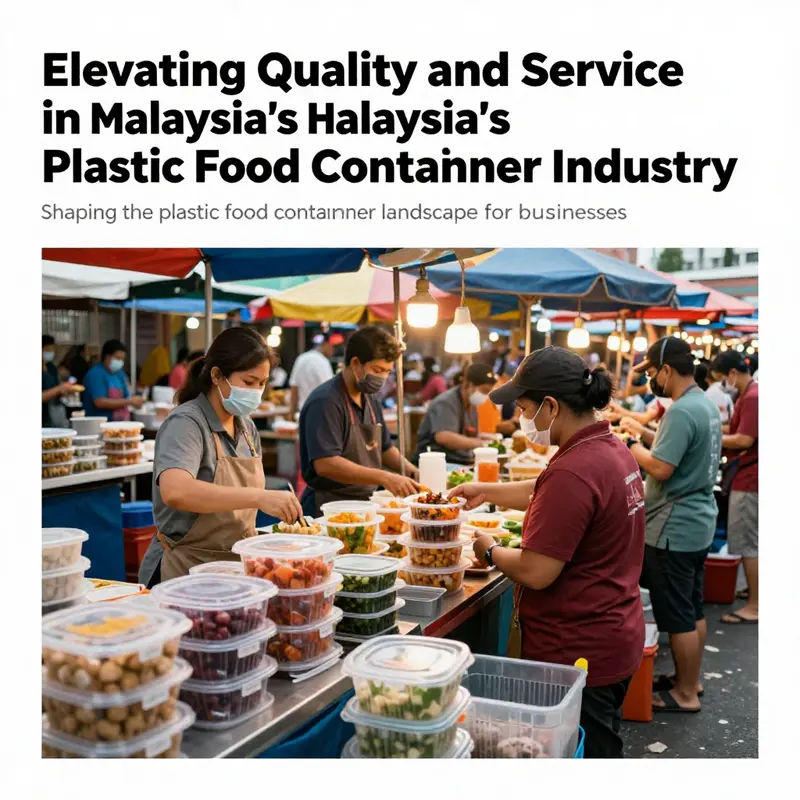
Malaysia’s plastic food container industry is resiliently evolving, driven by the diverse culinary landscape and the increasing need for reliable packaging solutions. This sector not only supports bubble tea shops, restaurants, and catering services with practical storage options but also addresses rising consumer demands for sustainability. As we explore the innovations in materials and technologies, market dynamics shaping demand and supply, and the vital shift towards sustainability, it becomes clear how these elements intertwine to create a robust environment for businesses. Understanding these facets will enable stakeholders to make informed decisions, enhancing their operations within this vital industry.
Polymers, Sensors, and Sustainable Packaging: Innovations Shaping Malaysia’s Plastic Food Containers
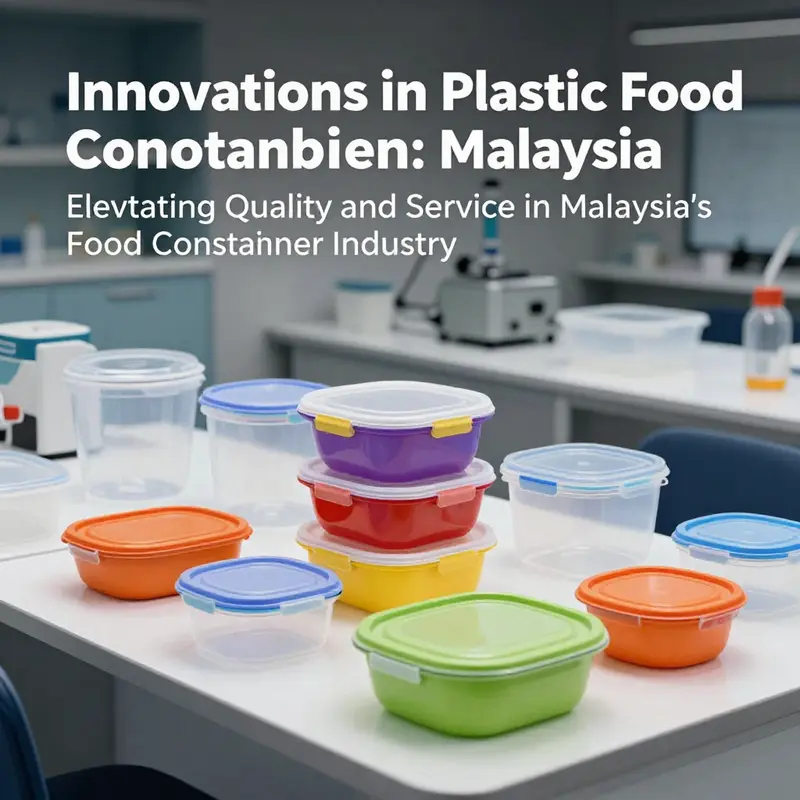
In Malaysia, the landscape of plastic food containers is evolving at a pace that mirrors global shifts in materials science, supply chain resilience, and consumer expectations. The sector has long relied on core thermoplastics that balance affordability with performance, yet the same ecosystems that fuel volume also invite scrutiny from regulators, retailers, and households seeking safer, more sustainable packaging. As demand grows across households, food service providers, and industrial kitchens, the industry is reimagining how a simple container can be a reliable, traceable, and even intelligent participant in the cold chain and beyond. At the heart of this transformation lies a conversation about materials and technologies that can deliver safety, efficiency, and environmental stewardship without compromising today’s needs for durability, heat tolerance, and leak resistance. This convergence turns the everyday act of storing, transporting, and serving food into a case study of how Malaysian manufacturers are navigating performance, cost, and sustainability in real time.
Among the most common materials used in Malaysian plastic food containers are polypropylene and high-density polyethylene. Polypropylene has become a workhorse because of its excellent heat resistance, an attribute that supports hot and cold storage as well as microwave-safe applications. The ability to withstand brief reheating cycles makes PP a practical choice for meal-prep and ready-to-eat offerings that circulate through households, cafés, and institutional kitchens. HDPE, on the other hand, is prized for its toughness, chemical resistance, and versatility when liquids—such as oils and sauces—need to be stored. These two polymers form a broad, dependable basis for the modern supply chain, offering predictable performance and compatibility with automated molding processes that keep production efficient and scalable. The industry also emphasizes safety, with many containers labeled as BPA-free and aligned with recognized food-grade standards to reassure consumers about direct contact with consumables. The practical reality is that the majority of Malaysia’s plastic food containers are designed to meet stringent criteria for temperature variation, mechanical stress, and chemical exposure, all while keeping costs aligned with the price sensitivities of a domestic market that is increasingly conscious of value and safety.
Yet the conversation does not stop at conventional resins. A defining thread across research and development in the region is the growing exploration of biodegradable plastics. These materials are formulated to break down more readily under specific environmental conditions, offering a potential path to mitigate long-term pollution associated with single-use packaging. In the Malaysian context, biodegradable plastics are not merely a niche curiosity; they are part of a broader push to integrate sustainable options into mainstream packaging workflows. The appeal is twofold: they address end-of-life concerns and they can be tuned to match the performance needs of different applications, from rigid containers that maximize shelf life to flexible formats used for portioning or branding. The challenge remains in balancing biodegradability with stability during use, ensuring that a container performs reliably in transit and on shelves before its eventual breakdown in appropriate composting or industrial processing streams. As the regulatory environment evolves and consumer demand for eco-friendly solutions rises, manufacturers are increasingly evaluating life-cycle implications, supplier transparency, and end-of-life scenarios as essential criteria in material selection.
Another important dimension shaping the current wave of innovations is the emergence of smart containers. The idea is simple in concept but powerful in effect: embedding sensors that monitor temperature, humidity, and even freshness indicators to provide real-time data throughout storage and distribution. Real-time monitoring helps prevent quality losses, supports more precise inventory management, and can reduce unnecessary waste by signaling when a perishable product has strayed from ideal conditions. In a country with a bustling food service and delivery culture, these capabilities translate into tangible benefits for operators who need to guarantee safety while minimizing spoilage. The data streams generated by smart containers can feed into logistics planning, enabling more responsive cold-chain strategies and enabling retailers to trace handling conditions back to the source should questions arise about shelf-life or quality. While still a developing field, the integration of sensors and digital interfaces into packaging aligns with broader digitization trends in Malaysia’s manufacturing sector and signals a move toward more transparent, data-driven packaging ecosystems.
The material story also extends to recycled resins, which are becoming more common as the industry moves to close loops and reduce the demand on virgin plastics. Recycled PET, derived from used beverage bottles and other packaging, has emerged as a viable option for certain applications due to its favorable balance of properties and recyclability. PET’s clarity, strength, and impact resistance make it attractive for various packaging formats, and its 100 percent recyclability supports end-of-life circularity. Nevertheless, the chapter is careful about the nuances: recycled PET, while suitable for many uses, encounters challenges in hot-fill applications and in outdoor exposure where UV light can attenuate performance over time. The Malaysian context is particularly attentive to these trade-offs, recognizing that a circular economy requires not only recycling capacity but also robust sorting, cleaning, and processing streams that ensure recycled resin quality remains high across generations of products. In practice, this means ongoing collaboration among resin suppliers, mold makers, and testing laboratories, all aiming to preserve mechanical integrity and safety while gradually increasing the share of recycled content in consumer packaging.
In parallel with these developments, insulating containers—often built from expanded polystyrene, or EPS—remain a mainstay for delivery and storage where lightweight, high-efficiency temperature control is essential. EPS-based solutions deliver excellent thermal performance at low cost, a combination that has entrenched their use in the out-of-home and delivery segments. Yet the trade-offs are clear: odor absorption and sometimes limited durability have prompted researchers to seek improved coatings or alternative materials that preserve insulating performance while reducing downstream waste and odor retention. This ongoing research reflects a broader pattern in Malaysia’s packaging industry, where performance, cost, and sustainability are weighed against the backdrop of consumer expectations for convenience and reliability.
The Malaysian plastic container sector is also defined by its dynamic geography. Production hubs in Penang, Kedah, Melaka, and Selangor host mature industrial zones with integrated supply chains that bring together resin suppliers, mold makers, quality testing laboratories, and a broad ecosystem of small and medium enterprises. Proximity to ports and established logistics networks supports efficient distribution to domestic markets and, increasingly, to regional export markets. This geographic advantage accelerates prototyping, rapid iteration, and cost-effective manufacturing, enabling firms to translate new formulations and process innovations into scalable production with relatively short lead times. The regional ecosystem also fosters a talent pool skilled in polymer science, mold design, and process engineering, creating a feedback loop where innovations can move quickly from lab-scale concepts to in-plant implementation.
In this evolving environment, sustainability sits at the center of capex and strategic decisions. Malaysian manufacturers are racing to strike a balance among performance, cost, environmental impact, and safety. The innovations discussed—biodegradable plastics, smart containers, recycled resins, and advanced insulation options—are not standalone experiments but moves within a broader portfolio of strategies aimed at reducing waste, improving recyclability, and enabling digital monitoring. The push toward recyclability is often paired with design for disassembly and streamlined material streams that ease sorting and processing after use. Innovations in coating technologies and barrier properties aim to extend shelf life while allowing for higher recycled content, reinforcing a circular economy ethos. In practice, this means that materials science, regulatory policy, and consumer demand converge in a way that encourages suppliers to offer more than raw resins; they must provide processability, performance guarantees, and documented environmental performance that stakeholders can verify.
A subtle but important thread in this story is how the packaging ecosystem expands beyond the plastics themselves to include alternatives that still meet the same logistical and branding needs. For instance, biodegradable packaging options such as kraft paper bowls are being scaled by local producers to complement plastics in mixed-material packaging strategies. Such shifts reflect a pragmatic approach to sustainability: where feasible, designers and buyers increasingly consider end-of-life pathways, consumer perception, and operational practicality in tandem. This broader view helps ensure that innovations are not isolated experiments but integrated parts of supply chain optimization and brand stewardship. To explore a tangible example of these biodegradable options and how they are marketed alongside plastic alternatives, see this resource on biodegradable eco-friendly kraft paper bowls. biodegradable eco-friendly kraft paper bowls.
The technological dimension also includes a growing emphasis on standardization and quality assurance. In a sector where small deviations in temperature or moisture can alter product quality, consistent testing and validation become non-negotiable. Malaysia’s mature ecosystem of mold makers, resin suppliers, and testing laboratories supports rapid prototyping and cost-efficient manufacturing while ensuring compliance with food safety standards. This collaborative environment helps reduce time to market for new formulations and enables more aggressive adoption of recycled or biodegradable materials without sacrificing performance. It also means that manufacturers can offer more customized packaging solutions, including branded designs and tailored barrier properties, to meet the unique needs of different food service channels, whether it be high-volume takeout, micro-fulfillment in urban cores, or long-haul delivery that tests a container’s resilience over time.
Against this backdrop, industry dynamics illustrate a delicate equilibrium. The sector must balance the immediacy of demand with the long-term aspirations for sustainability. The push toward recyclability and the integration of digital monitoring are not merely trends but structural shifts in how packaging is designed, produced, and used. For buyers, this translates into a broader set of criteria when selecting suppliers: material choice, end-of-life options, traceability, and the ability to provide scalable, consistent quality across large orders. For manufacturers, the challenge is to align capital investments with tangible environmental benefits and clear business value. The result is a packaging ecosystem that is increasingly circular, data-driven, and capable of adapting to shifting regulations and market preferences while maintaining the core attributes that make plastic containers indispensable: safety, reliability, and practicality in a fast-moving food landscape.
In terms of regional capability, the clustering of advanced molding technology, high-capacity production zones, and proximity to ports supports a robust capacity to respond to both domestic and regional demand. The presence of mold makers, resin suppliers, and quality testing labs within these hubs creates an ecosystem that can rapidly prototype new container designs and scale them efficiently. This proximity reduces both lead times and costs, enabling more frequent iterations and faster incorporation of recycled content or biodegradable materials into mainstream product lines. It also fosters collaboration across disciplines—materials science, mechanical design, process engineering, and quality assurance—so that innovations are validated through multiple lenses before they reach end users.
For buyers seeking reliable supply chains, the lesson is clear. The most effective sourcing approaches integrate a comprehensive view of material performance, processing compatibility, and lifecycle impact. The value proposition is not just about a container that holds food; it is about a container that maintains safety and quality, enables smarter logistics, and aligns with evolving sustainability expectations. In practice, this means working with suppliers who can demonstrate transparency in material specifications, provide consistent quality data, and support process customization when needed. It also means recognizing that the most meaningful advancements often occur at the intersection of material science and digital technology, where sensors, real-time data, and intelligent packaging concepts begin to influence everyday choices about how food is stored, transported, and enjoyed.
As the chapter closes on this snapshot of innovations, it becomes evident that Malaysia’s plastic food container industry is navigating a complex but promising future. The ongoing work with biodegradable materials, recycled resins, smart sensing capabilities, and improved insulation reflects a portfolio approach to packaging that seeks to reduce waste, increase safety, and enhance visibility across the supply chain. It is a future in which containers not only preserve food but also support smarter inventory management, reduce spoilage, and offer clearer signals about storage conditions to stakeholders at every link in the chain. The trajectory suggests more integrated design considerations, where material choice, structural performance, and end-of-life pathways are coordinated from the earliest stages of product development. In such a setting, the function of a plastic container extends beyond containment to become an intelligent participant in a more sustainable, data-informed food system.
External resource: For a broader technical overview of material composition, standards, and best practices in plastic food container delivery, see this resource: https://www.example.com/plastic-food-containers-delivery: Material Composition, Standards, and Best Practices in Industry.
Market Currents: Demand, Supply, and the Turning Tide in Malaysia’s Plastic Food Container Industry
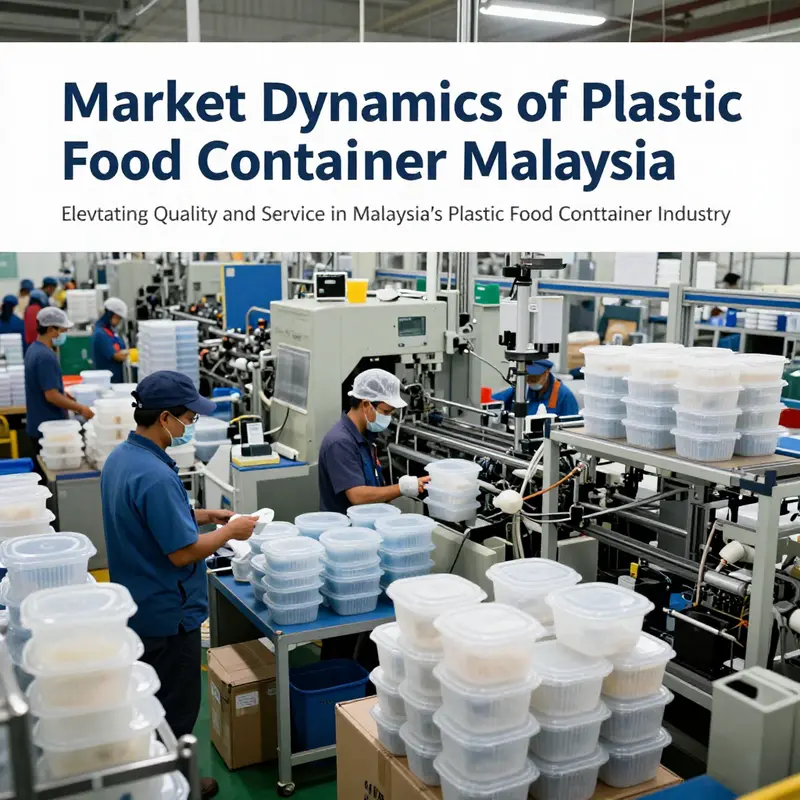
The plastic food container landscape in Malaysia is less a static catalog of products and more a living ecosystem that responds to urban life, evolving dining habits, and the push and pull of sustainability. The market sits at a measurable scale today, with the Malaysia Plastic Food Containers Market valued at about USD 3.9 million in 2024 and forecast to rise to roughly USD 5.6 million by 2032, a growth trajectory marked by a 4.3 percent compound annual growth rate. This appears modest in isolation, but it sits atop a broader plastics value chain that delivered a far larger footprint for Malaysia in 2026, when the overall plastics market reached USD 4.19 billion, growing at about 3.86 percent and aiming toward USD 5.07 billion by 2031. Taken together, these figures sketch a sector that is expanding steadily, anchored by a robust domestic demand thread and supported by a resilient manufacturing base that keeps pace with changing consumer expectations and business models. The dynamics are less about a single decisive shift and more about a constellation of forces aligning to shape demand and supply in ways that are practical, scalable, and increasingly sustainable.\n\nAt the heart of demand is urbanization, a trend that folds convenience into everyday life. As cities expand and daily routine becomes more time-constrained, households, food service providers, and retailers lean on packaging solutions that simplify storage, transport, and consumption. In Malaysia, the takeout and ready-to-eat sectors have grown in parallel with rising disposable incomes and busier urban schedules, boosting the need for containers that are not only functional but also reliable in terms of leak resistance, heat tolerance, and shelf life. Polypropylene and high-density polyethylene remain the materials of choice for many of these applications. PP is favored for its heat resistance, which makes it suitable for hot and cold storage and even microwave-ready uses, while HDPE offers toughness and chemical resistance that suit liquids like oils and sauces. The combination of these resins underpins a wide spectrum of products—from compact, stackable meal-prep boxes to hermetically sealed containers designed to preserve freshness and reduce leakage.\n\nYet the market is not merely a tale of more containers. It is increasingly a story about the type of container and the story it tells about sustainability. Consumers and regulators alike are attentive to the environmental footprint of packaging. In Malaysia, a notable trend is the movement toward BPA-free, food-grade safety standards, reflecting a broader commitment to reducing risk in direct food contact. This safety-conscious framing has nudged manufacturers to invest in better testing, traceability, and quality assurance capabilities. It also nudges the market toward packaging solutions that balance performance with the least environmental impact possible, which is where innovations around bio-based plastics and recyclability enter the conversation. A portion of producers are cautiously exploring alternatives such as biodegradable or recycled-content packaging, guided by evolving regulations and consumer preferences for greener choices. Within this shift, even traditional packaging makers recognize that their next phase hinges on how well they can integrate sustainability into cost-efficient, scalable production.\n\nSupply dynamics in Malaysia reinforce the sense of a resilient, capable ecosystem. The country is not merely a consumer market; it is a manufacturing hub with deep capabilities in plastic packaging materials and finished products. The peninsula hosts high-capacity industrial zones equipped with modern molding technologies, a steady flow of resin suppliers, mold makers, and quality-testing labs, all of which contribute to a mature supply chain that can move quickly from concept to prototype to large-scale production. Regions such as Penang, Kedah, Melaka, and Selangor stand out for their proximity to major seaports and established distribution networks, which helps reduce lead times and logistics costs—critical advantages for the fast-moving demands of takeout and food service. The integrated nature of these ecosystems also supports rapid prototyping, enabling businesses to iterate on container designs with less risk and lower upfront costs. This proximity to the supply chain is a strategic advantage in a market where customization and branding are increasingly valued by hospitality outlets, retailers, and food brands that want a container that reflects identity as much as function.\n\nFrom the manufacturing floor to the consumer table, there is a clear alignment between product type, end-use, and the economics of scale. Stackable and compartmentalized containers, such as two-compartment or multi-compartment boxes with capacities around 750 ml, are popular for meal prep and takeout due to their space efficiency and ease of stacking during transport. Hermetically sealed variants address a critical need in preserving freshness over short to moderate time frames, especially for ready-to-eat meals that may travel across cities before consumption. Disposable food containers continue to be a staple in fast-food chains and catering contexts, where branding and customization can translate into marketing value while meeting the practical demands of high-volume service. The role of branding in packaging is not incidental; it intersects with cost and supply chain considerations, as manufacturers offer customizable designs for bulk orders, enabling businesses to project a consistent brand experience even in disposable formats.\n\nThe demand side is supported by a steady expansion in the broader food service landscape. Malaysia has traditionally been a significant player in Southeast Asia’s plastics value chain, and its packaging sector benefits from a robust ecosystem of suppliers, mold makers, and quality-control facilities that can support varied formats—from rigid, clear plastic boxes intended for precise food portions to durable containers designed to withstand rough handling in takeout logistics. This capability is essential not only for domestic distribution but also for export-oriented production that leverages Malaysia’s strategic port access and manufacturing efficiencies. The combination of a strong manufacturing base and favorable logistics has created a platform where finished containers are readily available for domestic retailers, caterers, and food service businesses, while also supporting cross-border trade within the region.\n\nDespite the positives, the market faces notable challenges that shape strategic decisions across the value chain. Sustainability is now a central axis around which product development and policy revolve. Regulatory scrutiny and rising consumer expectations are pressuring the industry to curb the environmental footprint of single-use plastics. In response, manufacturers are exploring a wider range of options, from biodegradable materials to advanced recycling processes that can introduce higher recycled content into new containers. This shift does not happen in a vacuum. It is reinforced by consumer awareness, which increasingly values packaging that demonstrates responsible sourcing, reduced waste, and lower environmental impact. Within this context, the move toward bio-based plastics and compostable alternatives has begun to influence both product design and supplier networks, prompting firms to rethink material choices, testing protocols, and end-of-life strategies. In the Malaysian market, the challenge and opportunity lie in balancing performance, cost, and sustainability so that packaging remains practical for daily use while moving toward a circular economy.\n\nThe market’s size and trajectory also reflect a broader assemblage of drivers beyond the domestic market. The disposable plastic containers sector, for instance, has generated substantial economic activity, with estimates placing its value at RM 12.79 billion in 2025 and projecting a continued expansion at a double-digit pace through the end of the decade, as reported in industry analyses. This indicates robust demand in the short to medium term, particularly as disposable formats maintain a price-performance advantage in high-volume food service contexts. Yet even with this momentum, the sustainability imperative remains a powerful counterweight, pushing manufacturers to innovate in areas such as recycling compatibility, resin formulation efficiency, and waste management partnerships. The dual reality of strong demand and rising environmental scrutiny creates a dynamic tension—one that encourages efficiency gains and smarter product design while motivating new collaborations across stakeholders in government, industry, and consumer groups.\n\nOn the sourcing side, procurement for plastic containers in Malaysia increasingly involves strategic supplier networks and digital platforms. Business buyers, including food service operators and manufacturers, look for reliable suppliers with clear certifications, consistent quality, and the ability to scale orders up or down with demand. Platforms that connect buyers to certified manufacturers can shorten lead times, reduce procurement risk, and deepen the supply chain’s resilience in the face of disruptions. Within this landscape, there is also room for regional collaboration, given Malaysia’s role as a Southeast Asian hub for plastics and packaging. The supply chain is not a closed loop but a web of cross-border relationships that can be optimized through standardized testing, shared regulatory compliance, and coordinated environmental initiatives. The results are not just cost savings; they are improvements in product safety, performance, and sustainability across the lifecycle of each container—from raw material sourcing to end-of-life disposal.\n\nA pragmatic look at market dynamics must also acknowledge the role of consumer preferences and branding in determining container formats. In a crowded marketplace, containers that blend function with visual impact have a higher chance of capturing attention in a busy retail or food service environment. This dynamic supports a range of product configurations, including customizable designs for branding and promotions that can be delivered at scale. The ability to marry design flexibility with manufacturing efficiency is a key competitive advantage for Malaysian producers, especially as demand for personalized packaging grows. It is a reminder that the market is not simply about mass production; it is about creating packaging solutions that resonate with end users while maintaining the cost discipline that sustains profitability for suppliers and buyers alike.\n\nAs the landscape evolves, the potential for material and process innovation remains a persistent theme. The industry is watching how advances in resin technology, barrier properties, and mechanical performance can unlock new uses for plastic containers in food storage and transport. At the same time, the sustainability agenda invites more aggressive waste management strategies, including better recycling streams and partnerships with municipalities to improve collection and processing outcomes. The result is a market that is gradually transforming, with firms reconfiguring portfolios to emphasize not only the traditional rigid containers but also emerging formats that align with regulatory requirements and consumer expectations for greener packaging. In this transition, the ability to adapt quickly—from product design and testing to scale-up and distribution—will differentiate successful players from those that lag behind.\n\nTo illustrate how the market is moving, consider the ongoing dialogue between convenience and responsibility. Consumers appreciate the convenience of disposable containers, but they increasingly expect packaging that is recyclable, compostable, or derived from renewable sources. This tension is not a barrier to growth; it is a catalyst for rethinking packaging portfolios and investment strategies. Companies that invest in recycling technologies, certified supply chains, and materials with lower environmental footprints position themselves to capture market share as regulations tighten and consumer tastes continue to favor sustainable options. The strategic implication for buyers is clear: seek suppliers who can deliver not only reliable products at scale but also demonstrable progress on environmental performance, product certifications, and clear end-of-life pathways. This is where the market aligns with a broader global shift toward sustainability in packaging, a shift that Malaysia is actively embracing through policy, industry partnerships, and market-led innovations.\n\nWithin this evolving context, one accessible insight for practitioners is the practical importance of supplier certification and quality control. The Malaysian ecosystem has a mature set of standards and testing laboratories that support rigorous product verification, ensuring that containers meet food-grade requirements and safety expectations. This assurance reduces risk for food service operations and retailers, which in turn strengthens demand for consistent, certified packaging solutions. The path to scale, then, is not merely a matter of increasing production capacity; it is about aligning capacity with quality, safety, and sustainability promises that can survive scrutiny from regulators, customers, and the market at large. In this regard, the industry is moving toward a future in which packaging choices reflect a balance between performance, cost, and environmental responsibility, rather than a single metric driving all decisions.\n\nFor those seeking to deepen their understanding of sourcing and supplier reliability, one relevant entry point is a dedicated guide on finding dependable plastic container suppliers in Malaysia. This resource highlights how buyers can identify certified manufacturers, assess capabilities for custom designs, and navigate bulk ordering with confidence. See the disposable kraft paper take-out bowl page for an example of how packaging formats are evolving across materials and use cases. disposable kraft paper take-out bowl page.\n\nIn sum, the market dynamics of Malaysia’s plastic food containers are characterized by steady growth underpinned by a capable supply base, a diverse range of product formats, and a growing emphasis on sustainability. The sector benefits from a well-developed manufacturing footprint that can respond quickly to shifts in demand, regulatory expectations, and consumer preferences. It is a market that rewards efficiency, quality, and innovation, while remaining sensitive to the environmental responsibilities that increasingly govern packaging decisions. As the country continues to expand its plastic packaging ecosystem, the next phase will likely see greater integration of recycled content, more sophisticated material science, and stronger collaborations across suppliers, users, and policymakers to create packaging that serves both the table and the planet. External insights from industry analyses will help contextualize these developments within regional and global trends, illuminating how Malaysia’s plastic food container market may evolve over the coming years. External resource: https://www.mordorintelligence.com/industry-reports/malaysia-plastic-food-containers-market
Shaping a Circular Future: Sustainability Trends Transforming Malaysia’s Plastic Food Container Industry
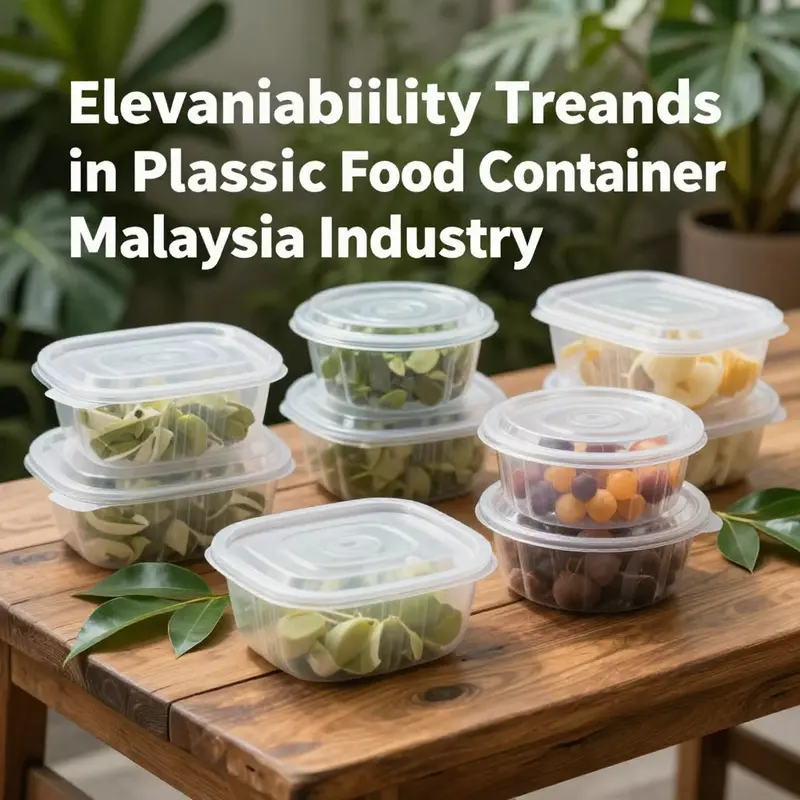
Across Malaysia, the plastic food container sector rests at a pivotal intersection of performance demands and environmental responsibility. Industry players face a dual imperative: keep containers that preserve food safety and freshness, while steadily shrinking the environmental footprint of packaging. A nationwide phase-out of single-use plastics is set to begin in 2025, creating a powerful regulatory nudge that compels brands, manufacturers, and users to rethink packaging choices. This regulatory rhythm does not merely push compliance; it reframes competitive advantage. Companies that anticipate the transition by adopting recyclable and biodegradable solutions can access larger markets, faster product approvals, and stronger brand credibility among increasingly eco-conscious consumers. The trend is not a temporary shift in taste but a structural change in the way packaging materials are sourced, designed, and disposed of. The conversation moves beyond end-of-life disposal to the entire lifecycle, from material selection and design for recycling to the integration of take-back schemes and regional recycling capacity. In this sense, sustainability becomes a strategic lens through which operational decisions, supplier partnerships, and product portfolio choices are evaluated, not just a set of standards to meet.
Within this evolving landscape, the materials that constitute the backbone of plastic food containers are being reimagined while preserving core performance. Polypropylene and high-density polyethylene remain dominant because of their heat resistance, chemical resistance, and general versatility. Yet manufacturers increasingly pair these polymers with recycling-friendly additives and clearer labeling to improve recyclability and transparency for end users. At the same time, researchers and plant managers are accelerating the use of bio-based alternatives such as polylactic acid, polybutylene adipate terephthalate, and starch blends. Derived from palm oil and natural rubber as local feedstocks, these bio-based polymers are chosen not only for their compostability but also for their potential to lower the carbon footprint of packaging. The shift toward biodegradable and recyclable materials aligns with the broader push for a circular economy, where products are designed with their afterlife in mind and waste streams are redirected from landfills to recycling or composting facilities. The challenge lies in balancing performance and cost, ensuring that materials can withstand the rigors of heat, moisture, and repeated handling while still returning value to the system after use.
Design thinking is at the heart of sustainable packaging. Containers are increasingly engineered to optimize stacking, minimize dead space, and facilitate sorting in mixed waste streams. Clear, durable labeling supports accurate recycling, while ongoing innovation in barrier properties helps extend shelf life without adding waste. In this environment, the end-of-life story matters as much as the initial function. Biodegradable options are not a universal solution; they require compatible composting infrastructure and consumer education to ensure they actually break down rather than linger as litter. This is why industry players are collaborating with research institutes and testing laboratories to validate performance claims, confirm food-grade safety, and certify compostability where appropriate. In a market like Malaysia, where raw materials and energy costs influence feasibility, the most successful designs weave together heat resistance, leak prevention, and ease of manufacturing with an eye toward the downstream ecosystem. By adopting modular designs and standardized components, producers can swap materials or adjust thickness without sacrificing compatibility with existing equipment, which matters in high-volume production zones.
Geography matters in the green transition. Penang, Kedah, Melaka, Selangor, and Johor host industry clusters where manufacturers enjoy dense networks of mold makers, resin suppliers, testing labs, and skilled labor. Proximity to ports reduces transit times for imported resins and facilitates timely access to customers across Malaysia and neighboring markets. These hubs enable rapid prototyping, where new material formulations and container geometries can be tested, refined, and scaled with relatively short cycles. The ecosystem supports not only product development but also the upskilling of the workforce in advanced molding technologies and quality assurance protocols. Regulatory compliance and quality assurance become more efficient when a mature supplier network is in place, because third-party certifications can flow more easily through a well-connected supply chain. At the same time, manufacturers in these hubs leverage shared utilities and energy-saving processes, cutting overall production costs and supporting ESG reporting. The result is a resilient production backbone capable of delivering sustainable packaging at scale, meeting domestic demand while keeping export viability on the radar for many players looking to diversify revenue streams.
Policy signals and incentives reinforce the momentum toward green packaging, encouraging investment in sustainable processing, testing, and materials development. The government’s support for green manufacturing and circular economy initiatives helps offset some of the higher upfront costs associated with biodegradable and recyclable solutions. As companies seek to differentiate themselves through eco-friendly branding, incentives also ease the transition to more energy-efficient equipment and waste reduction practices. In practice, this means more reliable access to equipment upgrades, pilot lines for new materials, and faster adoption of recycling-ready designs. The result is a more predictable pathway from concept to commercial production, reducing the risk that novel materials fail to scale or meet stringent food safety standards. Businesses that align with these incentives frequently collaborate with local research institutions, creating a pipeline of innovation that can attract investment and talent to regional clusters. The steady progression of policy support, coupled with rising consumer expectations for greener packaging, creates a reinforcing loop that nudges the industry toward more sustainable options even as it remains mindful of cost, performance, and supply chain resilience.
Consumers are increasingly vocal about the environmental footprint of the products they use, and packaging sits at the center of that conversation. Brands recognize that sustainable packaging communicates values and builds trust, which translates into loyalty and willingness to pay a premium for eco-friendly options. This shift shapes product portfolios, procurement criteria, and the narratives companies share with customers. Packaging that is clearly labeled as recyclable or compostable often carries a premium perception, even when total life-cycle costs are competitive. In response, manufacturers are expanding their repertoire beyond traditional rigid containers to include compostable and recyclable options that still meet the needs of hot and cold foods, carry-out, and meal-prep applications. The emphasis on design for recycling also leads to more modular systems, where components can be upgraded or swapped as materials evolve. For readers exploring the sustainable packaging landscape in Malaysia, one example of biodegradable option is available here: biodegradable kraft paper bowl. This resource illustrates how brands can pair functional performance with responsible materials, offering a tangible path from concept to shelf-ready packaging.
Nonetheless, the road to a fully sustainable packaging system is not without friction. Cost differentials among bio-based polymers, processing requirements, and the need for specialized equipment can slow adoption for price-sensitive segments. In addition, supply chain readiness varies, with some manufacturers facing gaps in local feedstock availability or processing capacity. Regulatory compliance and food-grade certifications add another layer of rigor, while end-of-life infrastructure for composting and recycling remains uneven across regions. Consumer education is essential to prevent misinterpretation of compostability claims and to ensure products are disposed of correctly. Greenwashing risks also exist, making rigorous third-party verification critical to maintaining trust. All of these factors converge to shape project timelines, capital expenditure, and the speed at which new packaging formats can reach market. Yet the risk landscape is not static. As research advances and economies of scale improve, the total cost of ownership for sustainable packaging can become competitive with conventional options, especially when factoring in potential savings from waste reduction, improved shelf life, and strengthened brand equity. The industry learns to navigate trade-offs, balancing performance, cost, and environmental goals in a dynamic market.
Looking ahead, Malaysia’s packaging ecosystem is poised to push the boundaries of material science and circular design. Innovations in barrier properties, compostability, and recyclability will continue to converge with smarter manufacturing, data-driven waste management, and coordinated take-back schemes. Collaborative research programs and cross-industry partnerships can accelerate the scale-up of local bio-based feedstocks, reducing reliance on imports and enhancing energy security. The potential to blend bio-based polymers with conventional plastics offers pathways to maintain performance while improving end-of-life outcomes. Local clusters can become magnets for talent and investment, attracting global brands seeking reliable, sustainable packaging solutions that meet strict food safety standards. In practice, this means more opportunities to standardize packaging formats, streamline recycling streams, and implement labeling that communicates recyclability and compostability to diverse communities. Such progress not only supports domestic consumption but also positions Malaysia as a regional hub for green packaging manufacturing. As brands and manufacturers navigate this transition, the emphasis remains on practical, scalable solutions that deliver real environmental benefits without compromising safety or performance.
This moment of transition is more than a regulatory tick-box; it is a strategic reshaping of how products are designed, produced, and perceived in a market that is increasingly vigilant about sustainability. For the plastic food container sector, the path forward is not a single material fix but a portfolio approach, balancing heat resistance, durability, recyclability, and environmental impact. The interplay between policy signals, consumer expectations, and technical capability will determine which solutions achieve scale first and how quickly the industry can shift toward circular business models. In Malaysia, the story unfolds across busy manufacturing parks, university labs, and supplier networks that link raw material suppliers, mold makers, and packaging convertors into a seamless value chain. The momentum is underscored by a growing demand for compliant biodegradable options, better labeling, and designs that simplify end-of-life processing. As this chapter closes, the field is poised for continued advancement, with ongoing research, investment, and collaboration propelling the sector toward greater resilience and responsibility. For readers seeking further perspective on sourcing sustainable materials and avoiding misinformation, a recent external resource offers thoughtful guidance on establishing credible biodegradable packaging collaborations: https://www.linkedin.com/pulse/how-source-reliable-biodegradable-plastic-bag-suppliers-malaysia-lyc8n/
Final thoughts
The Malaysian plastic food container industry stands at an exciting intersection of innovation, demand, and sustainability. By embracing material advancements and maintaining an adaptive approach to market dynamics, businesses can enhance their offerings while meeting the rising expectations for eco-friendly solutions. The future holds immense potential for those willing to invest in quality and sustainability, positioning themselves as leaders in the packaging realm. Stakeholders are encouraged to stay attuned to these shifts, ensuring that their operations not only thrive but also contribute positively to the environment.