
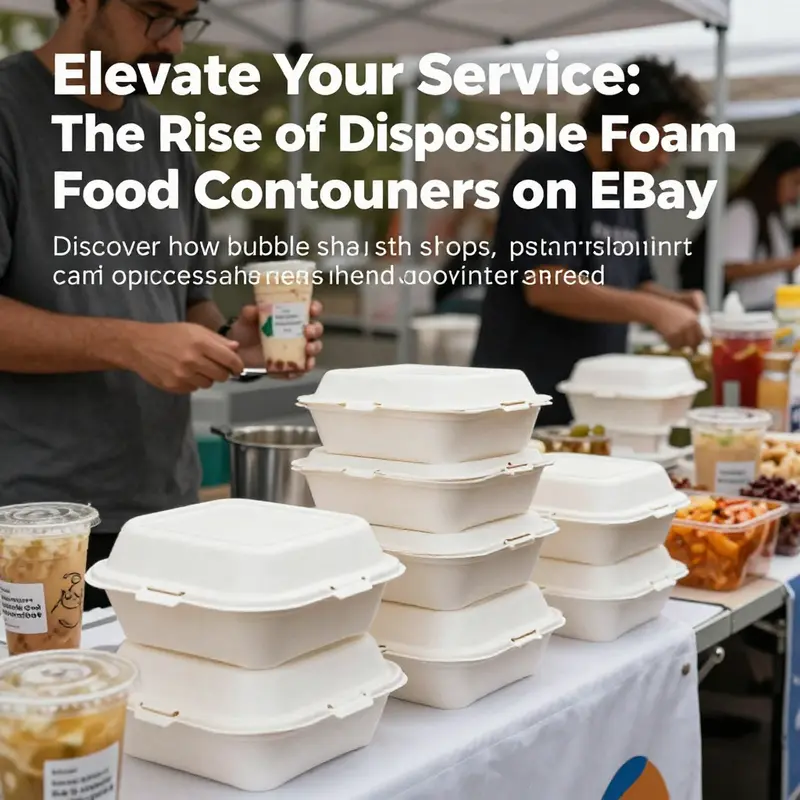
As the demand for efficient and reliable food packaging grows, disposable foam food containers have become a staple for businesses like bubble tea shops, restaurants, food trucks, catering services, and corporate procurement teams. Available on platforms like eBay, these containers offer a variety of benefits, from insulation properties to cost-efficiency. In this article, we will explore the market dynamics around disposable foam food containers, the different types available and their practical applications, and environmental considerations that can play a crucial role in purchasing decisions. Each section will build on your understanding of how these containers can meet your business needs while considering sustainability.
null
null
Foam on the Market: How Disposable Foam Food Containers Proliferate on eBay and What They Reveal About Modern Takeout Packaging
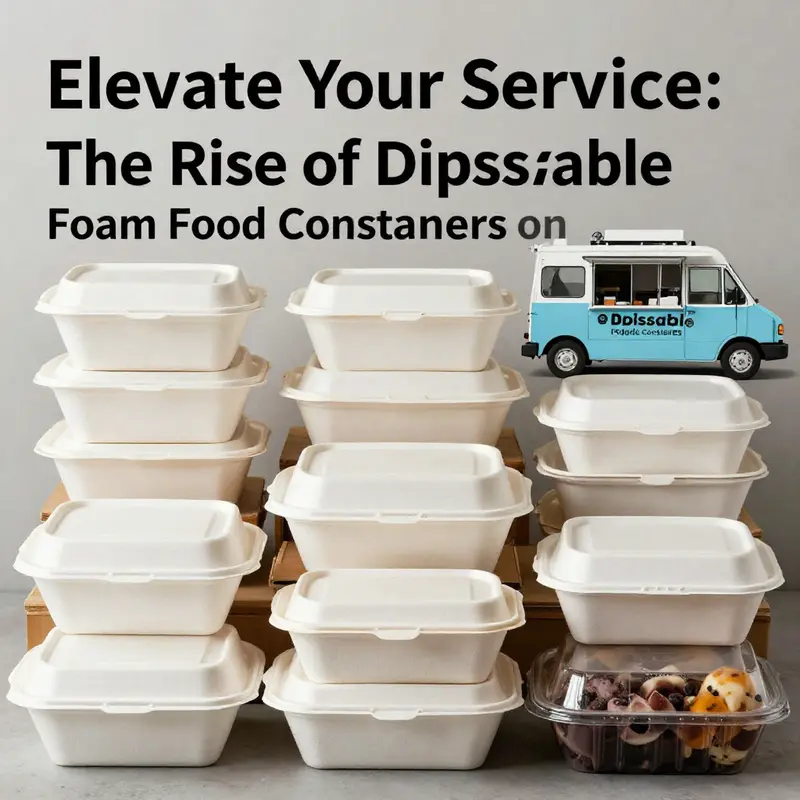
A steady hum runs beneath the surface of online marketplaces, and on platforms like eBay that hum is most audible when it comes to the smallest, most ubiquitous item in the takeout chain: the disposable foam food container. In the listings that surface across the platform, buyers encounter a broad spectrum of options. The core materials are polystyrene and expanded polystyrene, chosen not for beauty but for performance. These containers are light enough to ship without burden, durable enough to survive a short ride in a delivery vehicle, and competent at keeping foods warm or cold during transit. For a consumer buyer, a straightforward 8-ounce foam bowl with a lid designed for hot and cold foods might appear as a simple purchase—an affordable way to hold soup or a small meal with the promise of minimal leakage and straightforward disposal. A single listing might show this small vessel at a price around thirty-two dollars with free shipping, a reminder that even humble packaging on a global marketplace can carry a surprisingly precise price tag. In another corner of the same marketplace, a bulk option appears: a 12-ounce white foam container sold in hundreds, perhaps five hundred per carton, with a price point that hovers in the low-to-mid fifty-dollar range for a fresh shipment. The juxtaposition of single-item convenience and bulk economics highlights a central dynamic of eBay as a marketplace for packaging: it democratizes access to both tiny one-offs and wall-to-wall supply, enabling a neighborhood restaurant, a caterer, or a home cook to negotiate terms with suppliers around the world. The allure here is not only the cost, but the speed, the scale, and the ability to source from multiple continents with relative ease. Foam containers, in this sense, become a lens through which the broader logistics, price competition, and reliability challenges of modern takeout packaging are visible in real time.
There is more beneath the surface than price and size. The typical foam container is designed to offer thermal insulation, moisture resistance, and a degree of structural resilience that reduces the likelihood of crushing during transit. In practical terms, that means a container can keep pasta steaming at the destination or soup hot enough to be enjoyable after a drive home. The insulation, while not perfect, slows heat transfer and helps maintain the integrity of the food’s temperature profile for a window of time that is essential to takeout success. For vendors laying out their menus and delivery windows, this reliability can translate into higher customer satisfaction, which, in turn, translates into repeat orders. Yet the same platform that promises convenience also demands scrutiny from buyers who understand the trade-offs. The energy savings of stockpiling foam containers and the convenience of bulk purchases can be offset by concerns about disposal, environmental impact, and the reputational risk associated with supplying wasteful packaging to customers.
To understand what buyers typically encounter, it helps to consider the primary categories that dominate these offerings on the platform. First, there are hamburger and hot dog style boxes, often with hinged lids and a compartmentalized interior. These designs are engineered to keep greasy items separated, reduce spills, and present a neat appearance in the car or in a bag. Second, there are lunch boxes and meal containers featuring multiple compartments. They are valued for portion control, ability to separate sauces from dry components, and, in some cases, a seal that resists leaks when the package is upright during transit. Third, takeout containers themselves—varying by size and shape—are a staple for restaurants and delivery services, sometimes featuring clear lids or windows so contents are visible at a glance, which can be a small but meaningful advantage in a competitive delivery environment. Fourth, snack trays for fries or chips emphasize ventilation and crumb containment; an air-permeable lid may be used to help preserve crispness, while still offering secure containment. Fifth, cup-and-lid sets address beverages and desserts, with designs meant to minimize leakage, accommodate straws, and survive hot beverages as they travel to the doorstep.
Price and availability on eBay also illustrate how these containers serve multiple audiences. For a small eatery or a home-based catering operation, the ability to purchase in bulk with predictable counts—such as five hundred items in a carton—can stabilize packing costs and reduce per-unit freight. For individuals, the chance to buy a single unit for a one-off project or a contingency kit in a pantry adds a new dimension to how households think about food storage and transport. Shipping terms often become a key factor. Listings that include free shipping or bulk discounts can alter the overall cost of ownership, especially when delivery times and packaging integrity converge to affect a customer’s experience. That experience is not merely about food warmth; it is also about how confidently a customer can reuse or dispose of the container, and what message the packaging sends about the values of the buyer and the seller in a crowded marketplace.
The environmental question inevitably shadows these conversations. Foam is celebrated for its insulating properties and light weight, but it carries a well-known set of caveats. Most of these containers are not biodegradable in the traditional sense, and their end-of-life story tends to end in landfills or, in the best cases, with limited recycling options where protocols exist for separation and processing. Some listings on eBay may advertise materials described as biodegradable or corn-based, yet the claim can be ambiguous. In some cases, the label might refer to a substitution of additive components within the foam or a different manufacturing approach, rather than a material that breaks down in a standard composting environment. The environmental calculus for a buyer then becomes a balancing act: can the container still meet performance needs, while also aligning with sustainability goals or local waste management capabilities? And how should a buyer interpret the marketing language that accompanies a listing when there is variance in regulatory definitions across regions?
For readers who are weighing these concerns against practicality, the market presents a spectrum of solutions, including occasional references to greener options that are not foam-based. The eBay listings themselves illustrate the tension between tradition and innovation: the longstanding foam container remains a staple for warm, quick-service meals, while buyers increasingly encounter posts or listings that explicitly highlight more sustainable or recyclable alternatives. In many cases, the decision is not absolute but contextual. A food service operation in a region with robust curbside recycling for EPS resin may find foam more acceptable for certain high-volume events, while a micro-restaurant in a city with strict waste-diversion policies may opt for compostable or paper-based alternatives for the bulk of its to-go orders. The marketplace, in turn, reflects these regional differences, so a buyer can compare prices, sizes, and packaging features across listings that originate from multiple countries, making it possible to curate a balanced assortment that serves different workflows and customer expectations.
With the logistics of supply in mind, a closer look at the design features reveals decisions that matter in the day-to-day handling of these containers. Lid design is not merely cosmetic; a secure seal reduces leakage during transport and simplifies stacking when a courier picks up multiple orders. Compartmentalization helps manage sauces and toppings, but it can add to the cost and weight of the package. Microwavability is a practical concern for many customers who want to reheat meals directly in their containers, and sellers often test or advertise particular containers as microwave-safe or heat-stable for a particular range of temperatures. The balance of these features—lid integrity, compartment layout, heat tolerance, and stackability—affects both the customer experience and the efficiency of a kitchen’s packing workflow.
In reading these listings, buyers must also consider the implications of reuse versus single-use. On average, foam containers are designed for one-time use, but some households and small businesses reuse containers for batch storage in the short term, which raises questions about hygiene, odor transfer, and the practicality of cleaning versus discarding. The marketplace does not prescribe a single path, and the decision often hinges on local regulations and personal or organizational policy regarding waste. The conversation around foam packaging becomes part of a broader discussion about responsible sourcing, the real costs of disposal, and how a business communicates its packaging choices to customers. A buyer who catalogs the full lifecycle—from procurement to end-of-life—may find that the eBay marketplace is not merely a place to buy a container but a window into how a segment of the food economy navigates trade-offs between performance, cost, and responsibility.
For readers who are curious about alternatives that sit alongside foam on the shelf of ideas, a practical option is to explore the growing family of paper-based or pulp-based containers. These offerings, often marketed as eco-friendly or compostable, appear alongside foam listings in the same search results, inviting buyers to contrast performance and cost. A useful example in this space is the disposable kraft paper bowl take-away with lid, designed for soups, salads, and other menu items. This option embodies a different approach to the same logistical problem: how to keep food intact and presentable from kitchen to customer while meeting environmental considerations. If you’re weighing options between foam and paper, you can explore related packaging choices through one of the long-standing ocean-of-supply pages that offers a range of kraft-based bowls and lids. For readers who want to see a concrete example, the linked product page provides a sense of how an eco-friendly alternative frames its design goals, including lid security, leak-proof performance, and versatility across meals. disposable kraft paper bowl take-away kraft paper salad bowl with pet lid
Beyond the domestic scale and the catering event, the eBay ecosystem also reveals how packaging choices respond to the rhythms of the service industry. Events, protracted tastings, or pop-ups may rely on sturdy, portable containers that can survive hours of transport and a variety of environmental conditions. The right foam option can reduce spoilage and missing items, offering a predictable, cost-effective outcome when time is tight and kitchens are busy. In contrast, a business with a sustainability agenda might favor paper-based options for their veneer of environmental responsibility, even if those choices come with a higher per-unit cost or heavier weight. The marketplace, with its breadth of listings, makes it possible to tailor selections to the particular demands of a day, a venue, or a customer segment. The result is a packaging landscape that is diverse, pragmatic, and highly responsive to the immediate needs of food service operations and individuals alike.
From a buyer’s perspective, the practical guidance that emerges centers on clarity, traceability, and alignment with practical constraints. Clarity means knowing what the container claims to do: heat retention, leak resistance, microwave safety, and suitability for certain food types. Traceability means understanding the sourcing and the bulk packaging terms—how many units come per carton, whether the listing offers free shipping, and how lead times affect a delivery window. Alignment with constraints means choosing the right size, lid type, and internal layout for the menu items that will be packaged; it also means acknowledging the environmental scope of the choice and whether the facility that will receive the packaging can recycle or dispose of it appropriately. The accumulation of these small technical judgments compounds into a single strategic choice: whether foam remains the most appropriate packaging for a given operation or whether a shift toward alternative materials will better serve the business’s objectives, customer expectations, and community standards.
As a final note, the eBay marketplace still represents a crucial junction in the supply chain for disposable foam containers. Its listings illuminate how buyers navigate a broad spectrum of options—single-piece purchases alongside large bulk orders—within a global network of sellers. The decisions made in this space reverberate through food service operations, logistics planning, and even environmental policy at a local level. While foam remains valued for its performance characteristics, the conversations it sparks about sustainability, recycling feasibility, and customer perception reflect a broader shift in how packaging choices are made in real time. In this sense, the eBay foam container listings are more than a catalog of shapes and sizes; they are a living record of how modern takeout packaging negotiates speed, cost, and responsibility in a world that increasingly scrutinizes the footprints of everyday commodities.
External resource: For additional context on how foam container listings are presented on eBay and how buyers assess options in a real-world marketplace, see the external source that surveys Disposable Foam Food Containers on eBay.
External resource link: https://www.ebay.com/b/Disposable-Foam-Food-Containers/106973801/bn_157373347
From Cart to Landfill: The Environmental Realities of Disposable Foam Food Containers on eBay
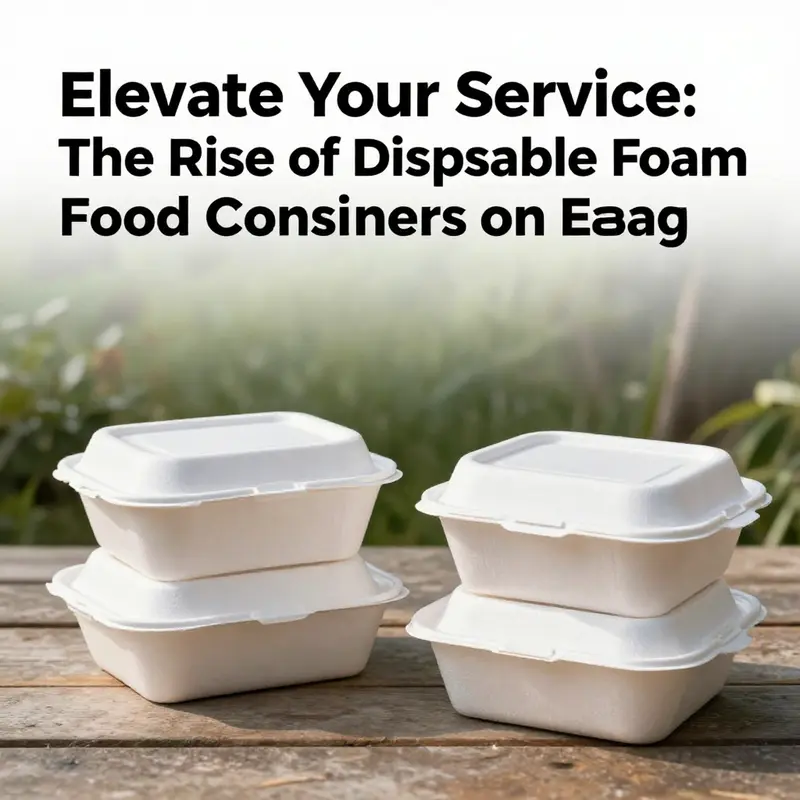
A marketplace as expansive as eBay makes it possible to buy almost anything, including disposable foam food containers in a diversity of shapes, sizes, and configurations. The convenience of finding inexpensive, lightweight, and portable containers for takeout and catering has undeniable appeal. Yet behind the surface of cart-ready checkout lines lies an environmental calculus that buyers seldom see at the speed of a search result. The chapter that follows examines how these foam containers—primarily those made from expanded polystyrene (EPS)—perform not only in the kitchen but in the broader systems of production, consumption, and waste management. The aim is to connect the dots between a familiar, everyday packaging choice and its longer-term implications for ecosystems, climate, and resource use, while keeping sight of the practical realities that shape what is sold and bought on global marketplaces.
EPS foam containers are valued for a combination of attributes that matter to vendors and customers: light weight, low cost, excellent insulation, and a rigidity that resists damage during transit. These properties help keep hot foods hot and cold items cool, which in turn supports service efficiency and customer satisfaction. However, the same attributes that make EPS attractive—low density and a structure engineered for containment with minimal material—also contribute to a stubborn environmental footprint. When such containers are discarded, their journey through the product lifecycle becomes a focal point of concern. They are designed for single use, and their physical form resists rapid breakdown. In most environments, the material persists for extended periods, fragmenting into smaller pieces that can travel far from the original point of disposal. The net result is a durable, pervasive presence of foam particles in landfills, waterways, and urban landscapes—a pattern that is particularly visible when marketplaces do not provide robust end-of-life guidance or when consumer behavior favors convenience over careful disposal.
The environmental impact of EPS begins at the source: its production relies on fossil fuels and energy-intensive processes. The raw material is transformed into foam through a manufacturing sequence that adds air cells to resin, yielding a product that is both buoyant and insulating. This energy intensity translates into greenhouse gas emissions that accumulate across the supply chain. Even if a single item is inexpensive at the point of sale, the cumulative emissions associated with millions of containers—along with the transportation emissions produced by regional and cross-border shipments to sellers and buyers—add up quickly. The lifecycle analysis of foam containers is a reminder that a seemingly modest packaging choice is not isolated; it sits within a network of materials, energy, and logistics whose emissions accumulate long after the food has been consumed.
Recycling presents a particularly stubborn obstacle for EPS. The material’s low density makes continued processing energy-intensive, and contamination from food residues complicates sorting and processing. Because EPS is often composed mostly of air, its value in recycling streams is relatively low, and it tends to be diverted toward landfills or litter rather than into a closed loop. This pattern persists even in environments with advanced recycling infrastructure, where EPS recycling programs may exist but face strict material purity requirements and logistical challenges. The result is a high probability that a large fraction of EPS foam containers ends up in landfills or as roadside litter, where they persist for decades or even centuries. The durability of the material is thus a double-edged sword: it protects food during transport but resists natural degradation once discarded, contributing to long-term environmental burdens that are disproportionately visible in urban and coastal ecosystems.
The narrative around disposal is further complicated by the marketplace context. Platforms like eBay enable a wide array of listings that range from basic disposable foam containers to items marketed with terms such as “biodegradable” or “eco-friendly.” The presence of such labels can be tempting for buyers seeking to align their purchase with sustainability goals. Yet the term “biodegradable” can be ambiguous in practice. Many listings refer to starch-based or otherwise modified materials that may degrade under certain industrial conditions but do not guarantee rapid composting in home or municipal environments. Buyers who assume that a labeling claim equates to easy end-of-life management may be misled if the listing lacks clear specifications about compostability standards, certifications, or the specific disposal conditions under which degradation occurs. In this context, greenwashing becomes a real concern: an apparent sustainability claim may rest on selective interpretations of material science, rather than on verifiable, real-world outcomes.
When evaluating these listings, it helps to distinguish between material types, end-of-life pathways, and the practical realities of consumer behavior. Polystyrene-based foam is not a monolith that can be easily recycled in all municipalities; its fate depends on local recycling policies, consumer disposal habits, and the presence of specialized processing facilities. In many places, curbside programs either do not accept EPS products or accept them only under strict contamination controls. In others, dedicated drop-off points exist, but only a small fraction of the population is aware of or uses them. The upshot is that a large portion of foam food containers sold on marketplaces ends up at landfills or as environmental litter, even when the product has the technical potential to be recycled in a best-case scenario. The mismatch between potential recycling pathways and actual practice underscores the importance of end-of-life planning, frankly acknowledging that production efficiency does not automatically translate into environmental benefit when disposal is not managed responsibly.
If the environmental costs of EPS are clear in principle, the practical path toward improvement involves two parallel tracks: reducing unnecessary use and shifting toward materials and practices that improve end-of-life outcomes. In the supply chain, this means embracing packaging designs that minimize material use, improve stackability, and align with reuse or refill models where feasible. It also means a thoughtful assessment of whether lightweight, cost-efficient foam truly serves a system-level goal if it ultimately ends up as waste. On the consumer side, sustainable choices hinge on informed purchasing and responsible disposal. Shoppers can adopt a critical lens when encountering terms like “biodegradable” or “compostable,” seeking certifications that specify performance in real-world conditions rather than marketing claims alone. They can also support listings that disclose the material composition and end-of-life options clearly, enabling better decision-making about how and where to dispose of the container after use.
The broader policy context reinforces the need for restraint. The U.S. Environmental Protection Agency, along with similar agencies worldwide, has repeatedly emphasized the value of reducing single-use packaging and favoring materials with proven end-of-life management. While marketplaces can play a constructive role by highlighting sustainability attributes and by clarifying disposal requirements, the responsibility also lies with sellers who must communicate accurately about material composition and degradation pathways. Buyers, for their part, can push for greater transparency through questions during the purchase process and by supporting vendors that provide robust lifecycle information. The ideal outcome is a marketplace ecosystem in which convenience does not come at the expense of long-term environmental integrity, and where the available options reflect a genuine commitment to responsible packaging choices rather than superficial messaging.
Within this landscape, it is useful to point to tangible alternatives that capture the spirit of responsible packaging without sacrificing the practical benefits that foam containers offer. For instance, there are packaging options that use paper-based or pulp-based materials designed for take-out contexts. These alternatives can provide similar insulation and containment performance while offering clearer disposal pathways, such as composting or recycling programs that align with municipal capabilities. In considering these options, buyers should look for verifiable evidence of end-of-life management, third-party certifications, and explicit statements about material composition. This level of detail helps separate genuinely sustainable choices from listings that merely imply environmental virtue without substantive support. When in doubt, selecting a store page or product category that emphasizes recyclable or compostable paper-based alternatives can be a prudent step toward aligning purchasing habits with environmental goals. As a concrete example of such a direction, the following take-away option illustrates how a more sustainable packaging choice can be framed and presented in a marketplace context: kraft paper take-away bowls.
Beyond individual purchases, the discussion invites a broader reflection on how marketplaces can influence material selection through search algorithms, filters, and default options. If a platform curates results to emphasize price above all else, the environmental signals embedded in the listing—such as material type, recyclability, and end-of-life guidance—may be buried beneath the hierarchy of convenience. Conversely, a platform that elevates sustainability attributes, provides standardized labeling, and makes end-of-life requirements transparent can nudge buyers toward more responsible choices. The same logic extends to vendors who list their products on these platforms: clear communication about material composition, disposal pathways, and potential certifications can transform a simple purchase into an act of stewardship. In this sense, the environmental realities of disposable foam containers sold on eBay are not only about the physical properties of the containers themselves but also about how information is shared, interpreted, and acted upon by a diverse audience of buyers, sellers, and platform operators.
The complexity of these dynamics invites ongoing dialogue and continuous improvement. It is not merely a matter of whether EPS containers can be recycled in a given locale, or whether a listing claims biodegradability. It is about the entire chain—from raw material sourcing and manufacturing through distribution, consumption, and end-of-life management—that shapes the net environmental impact. Consumers who understand this chain can navigate choices with greater discernment. Retailers and marketplaces can contribute by presenting clear, standardized information about materials and disposal options, by avoiding ambiguous or misleading terms, and by supporting products that demonstrate verifiable performance in real-world conditions. In this way, the environmental realities of disposable foam containers on a global marketplace become a shared responsibility, inviting a collective shift toward packaging systems that are not only functional at the point of sale but sustainable across the entire lifecycle.
To broaden the context for readers who want to explore practical pathways and alternatives, consider the broader spectrum of packaging options that aim to balance performance with environmental responsibility. While foam remains a common, low-cost choice, there is a growing interest in paper-based and compostable solutions that are specifically designed for take-out and delivery contexts. These options often provide clearer disposal routes, whether through municipal recycling streams or local composting programs. When evaluating such listings, buyers can look for explicit declarations about the material basis and the intended end-of-life pathway. A careful reading of product details, certifications, and user guidance can reveal whether a listing genuinely supports a circular approach or merely rebrands conventional packaging with greener-looking terminology. This level of due diligence helps ensure that the environmental promise of a listing matches the actual outcomes in the environment, rather than merely the marketing narrative.
The chapter’s exploration thus returns to a central tension: convenience versus stewardship. On one hand, packaged food, take-out, and catering services rely on containers that protect integrity during transport and keep meals at safe temperatures. On the other hand, the environmental costs associated with single-use foam containers accumulate across communities and ecosystems. Reducing that burden does not require abandoning the marketplace altogether. It requires thoughtful choices, transparent information, and a willingness to prioritize end-of-life outcomes as much as price and speed. By embracing this mindset, buyers, sellers, and platform operators can contribute to a market that values practical performance while remaining accountable to environmental integrity. The shift may be incremental, but it is a meaningful response to a material that, when viewed across its full lifecycle, reveals a footprint that stretches far beyond the kitchen.
For readers who want to delve deeper into the environmental literature surrounding takeaway packaging, a broader, peer-reviewed perspective offers useful context about how different materials compare in real-world life cycle terms. This external research resource provides a scholarly frame for the discussion above and can serve as a guide for readers seeking to connect marketplace observations with established findings: Environmental Impacts of Takeaway Food Containers.
In sum, the environmental realities of disposable foam containers sold on a global marketplace are neither simple nor purely cosmetic. They reflect a complex interplay among material properties, consumer behavior, waste management infrastructure, and policy signals. By foregrounding end-of-life considerations, demanding verifiable information, and exploring sustainable alternatives such as paper-based and compostable options, buyers can help shift demand toward packaging choices that better align with environmental goals. And as platforms and sellers refine how they present and classify these products, the marketplace itself can become a more reliable instrument for ecological responsibility rather than merely a conduit for impulse purchases. The path forward is iterative and collaborative, requiring attention to material truth, lifecycle thinking, and the everyday decisions made by millions of shoppers who turn a simple online click into a real-world environmental outcome.
Final thoughts
In summary, disposable foam food containers are not just practical solutions for various food service businesses; they are also part of a larger conversation regarding sustainability and consumer preferences. As you consider your options on eBay, take into account the variety of products available, their applications, and how they align with your environmental goals. The rise of biodegradable and eco-friendly alternatives can enhance your brand’s reputation while still delivering the quality and efficiency you need.