
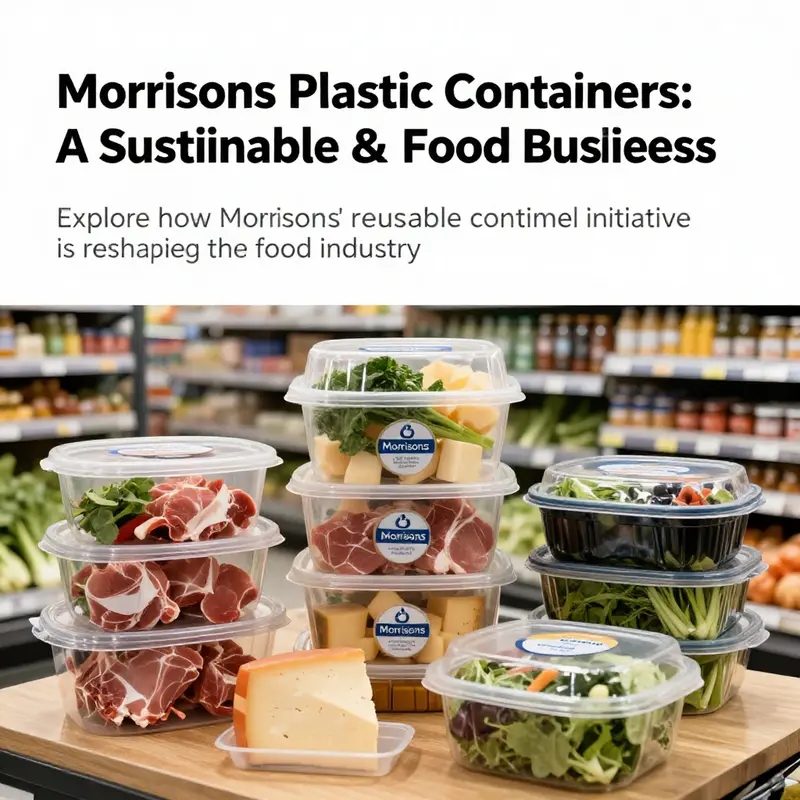
In today’s environmentally conscious market, Morrisons leads the charge with its innovative refillable plastic food containers, aimed at reducing waste and promoting sustainability. As businesses in the food sector—like bubble tea shops, restaurants, and catering services—are increasingly scrutinized for their ecological footprint, understanding the implications of such initiatives becomes essential. This article delves into the sustainability and environmental impacts of Morrisons’ plastic food containers, the economic implications on consumer behavior, technological advancements in reusable packaging, relevant regulatory and geopolitical aspects, and changing societal attitudes towards reusable containers. Each chapter provides insights that can help food service professionals adapt and thrive in a market leaning towards eco-friendliness.
Refill Counter to Circular Economy: Morrisons and the Reimagining of Plastic Food Containers
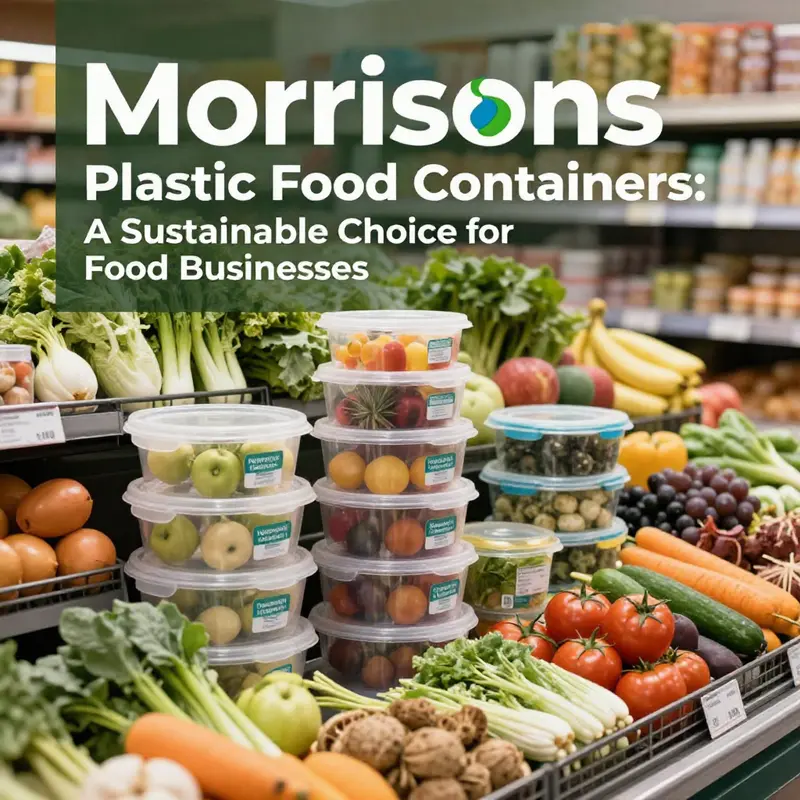
Morrisons has steered its packaging narrative from the immediacy of plastic waste to the longer arc of a circular economy, where plastic becomes a resource rather than a burden. The chapter of its story focused on plastic food containers is not a simple battle against material waste; it is a design-led, system-wide effort to reduce, redesign, and recycle packaging in ways that align with changing shopping habits, regulatory expectations, and the mounting call for corporate accountability on plastic pollution. Across its meat, fish, and deli counters, Morrisons introduced refillable containers in 2021, inviting customers to bring their own vessels or to select from reusable options provided in-store. This initiative is more than a nod to eco-conscious consumerism; it is a practical testing ground for behavior change at the scale of a major retailer. It is difficult to overstate how such a shift can alter the lifecycle of a single plastic container. When customers routinely reuse a container for a fresh slice of meat or a portion of fish, the pathway from production to disposal becomes a shorter, cleaner loop, reducing the volume of disposable packaging entering the waste stream and signaling a cultural shift in how people relate to everyday packaging choices. The refill program reflects Morrisons’ broader ambition to reimagine packaging not as a one-off eco gesture but as an integrated business model that balances price, convenience, and environmental responsibility.
Central to Morrisons’ approach is a quantified commitment: a 50% reduction in its own-brand primary plastic packaging by 2025, baseline set in 2017. This target is not a vague aspiration; it threads through supplier negotiations, packaging redesign, and the ways stores present fresh products to shoppers. It also communicates to the supply chain and to customers that sustainability is measurable, time-bound, and part of the retailer’s core operating ethos. Layered on this reduction objective is a resolute pledge: 100% of its plastic packaging will be recyclable, reusable, or compostable. That phrase—recyclable, reusable, or compostable—frames a spectrum of solutions rather than a single fix. It suggests that Morrisons is pursuing a portfolio of approaches, recognizing that different packaging functions require different end-of-life outcomes. A tray designed for deli counters might be best served by a recyclable option, while a reusable container could be optimal for frequent purchases across the fresh aisle. A compostable alternative might be prioritized for certain on-the-go meals. In practice, the policy requires robust design decisions, clear labeling, and partnerships with waste streams that can actually handle these materials after customers return or dispose of them.
To translate policy into impact, Morrisons has invested in a recycling infrastructure that expands the city-scale benefits of its packaging choices into regional resilience. In partnership with Yes Recycling, a dedicated facility in Chesham has helped center the conversation on hard-to-recycle formats. But the real leap occurs with a second facility in Scotland’s Fife region, engineered to process a broader range of post-consumer plastics—chocolate wrappers, crisp packets, and food films among them. When fully operational, the Fife site is projected to recycle up to 15,000 tonnes per year, converting this material into reusable flake and pellets suitable for downstream manufacturing. This is not merely about diverting waste from landfill; it is about injecting a credible feedstock back into the plastics economy, supporting suppliers who redesign products and packaging to fit a circular lifecycle. The effect is twofold: it closes more loops and it reduces the need to extract virgin plastic, contributing to a lower overall carbon footprint over the lifecycle of Morrisons’ packaging.
The company’s emphasis on recycling infrastructure goes hand in hand with active customer engagement. Morrisons has urged shoppers to participate in soft plastics collection at stores, encouraging the return of used packaging for proper processing. Such consumer participation is essential because the most sophisticated packaging policies can falter if households are reluctant or unsure how to dispose of materials. By making participation straightforward and consistent across locations, Morrisons helps normalize the practice of returning packaging and seeing it transformed into new products. The result is not only a cleaner waste stream but a sense of shared purpose between retailer and consumer. In parallel with these efforts, Morrisons has publicly embraced a zero-food-waste policy, pledging to send no edible surplus to landfill. This component extends beyond packaging to include supply chain controls, product forecasting, and the optimization of in-store practices to minimize waste wherever possible. The alignment of zero-waste goals with packaging reform underscores a broader commitment to environmental stewardship that transcends a single product category or campaign.
The rhetoric surrounding Morrisons’ packaging strategy sits within a wider, ongoing conversation about plastic pollution and the responsibilities of multinational retailers. Reducing plastic usage, increasing recyclability, and investing in advanced recovery facilities sit atop a governance framework that seeks to harmonize corporate goals with public policy and consumer expectations. In this frame, reforming plastic containers is not a standalone project; it is a core component of a global dialogue on pollution control and sustainable production. Designers and buyers alike are tasked with balancing practical considerations—shelf life, product protection, moisture control, and food safety—with environmental outcomes. The result is a culture of packaging that prizes modularity, consistency, and end-of-life clarity. An emerging dimension of this work is the shift toward refillable and reusable packaging paradigms that can be scaled across categories and channels, reinforcing a message that sustainability is feasible within the economics of a modern grocery business.
From a design perspective, the move toward circularity demands more than a policy statement. It requires careful selection of materials, attention to barrier properties, and a willingness to reimagine form factors to suit a circular loop. In practice, this means evaluating whether a given primary package can be sourced from recycled content, whether it can be returned and cleaned for reuse, or whether it should be designed to be easily separated from other materials in a mixed waste stream for recycling. These design choices influence supplier capabilities, the credit terms for packaging innovations, and, ultimately, the degree to which customers perceive real value in sustainable options. The economic logic of these decisions rests on the assumption that packaging improvements can reduce waste management costs, create a more efficient supply chain, and attract a growing segment of customers who actively seek out sustainable choices. The potential upside includes improved reputational strength, differentiation in a crowded grocery landscape, and alignment with broader sustainability goals that resonate with investors and policymakers who increasingly view packaging as a material factor in environmental risk management.
One tangible undercurrent in Morrisons’ strategy is the exploration of alternative packaging ecosystems that can coexist with current operations. The broader packaging market has seen a wave of experimentation in compostable and reusable formats, as well as innovations in recycled-content plastics. The retailer’s openness to these approaches demonstrates a recognition that no single solution fits every scenario. At the meat, fish, and deli counters, customers encounter a live test bed for choosing between conventional packaging and more sustainable options, and for adopting refillable practices. The impact is incremental yet meaningful: as more customers participate in refilling or reusing containers, demand signals begin to shift toward packaging choices that align with the circular economy. It is a subtle but powerful form of market shaping, encouraging suppliers to invest in food-grade recycled content, in more durable reusable designs, and in facile return and cleaning protocols that can withstand high-volume, in-store operations.
For readers tracing the evolution of this topic, it is also useful to recognize how progress in one retailer’s packaging program echoes across the competitive landscape. The shift to 100% recyclable, reusable, or compostable packaging is a benchmark that several peers are watching closely, in part because this framework translates into measurable metrics—recycling rates, residual waste, and the cost profiles associated with packaging materials. The alignment of reduction targets with concrete recycling capabilities helps to anchor these ambitions in reality rather than aspiration. The ongoing collaboration with recycling facilities demonstrates that packaging strategies require more than in-house willpower; they demand reliable external partnerships, clear regulatory guidance, and a robust consumer engagement plan to reach scale. In this sense, Morrisons’ work belongs to a broader movement that sees packaging not as a disposable footprint but as a material loop that can be controlled, measured, and refined over time.
In some ways, the packaging chapter at Morrisons also reveals an implicit narrative about consumer behavior and brand trust. When shoppers understand that a retailer is actively pursuing lower plastic footprints, investing in end-of-life infrastructure, and inviting participation in recycling programs, they are more likely to perceive value in the retailer’s overall environmental stance. This perception can influence shopping choices, even when price or convenience remains important. The sustainability story thus becomes intertwined with everyday decision-making, subtly nudging customers toward buying decisions that align with environmental outcomes. Such dynamics are crucial because the economics of packaging depend not only on material costs and waste management charges but also on consumer willingness to adapt to new practices, such as bringing containers from home or selecting products packaged in more recyclable formats. The net effect can manifest as a virtuous circle: lower packaging waste leads to greater consumer trust and loyalty, which in turn supports higher volumes in fresh categories and the longer-term viability of sustainable packaging investments.
To connect these strands with a concrete example of how packaging ecosystems are evolving, consider the broader shift toward alternatives like kraft paper-based options for certain take-away products and containers. In the context of a larger sustainability conversation, such options signal a parallel trend toward materials that are easier to recycle or repurpose, or that can be integrated into reusable supply chains with proper design and logistics. One could imagine how a future in which more in-store packaging choices rely on lightweight, recyclable, or compostable materials would complement Morrisons’ existing refilling and waste-diversion programs. The transition toward such designs is not merely about substituting one material for another; it is about building a coherent packaging system that supports reuse, recycling, and responsible disposal at scale. In this sense, the packaging strategy becomes a narrative of continuity—keeping products safe and fresh while steadily reducing environmental impact through smarter design, smarter disposal, and smarter consumer participation.
For readers who want to explore how these concepts translate into practical choices, a closer look at emerging packaging formats—such as disposable octagonal boxes made from kraft paper, which illustrate the broader move toward reusable and recyclable paper-based solutions—can be informative. disposable octagonal box for restaurant kraft paper packaging offers a tangible example of how paper-based packaging formats can be engineered for better end-of-life outcomes while still meeting the functional demands of foodservice settings. This link provides a window into how packaging designers are balancing aesthetics, durability, and recyclability in modern take-away options, an area that intersects with Morrisons’ ambitions about reducing plastic dependency and expanding recyclable, reusable, or compostable pathways. While paper-based solutions are not a panacea, they are part of the toolkit that retailers, including Morrisons, are evaluating as they seek to shrink plastic footprints without compromising food protection and shelf life.
Alongside these practical considerations, Morrisons’ packaging journey resonates with the broader geopolitical and global sustainability dialogue about pollution control and resource stewardship. Reducing plastic packaging, expanding recycling infrastructure, and encouraging consumer participation are measures that can contribute to national and international sustainability goals. The company’s environmental policy and its focus on zero waste to landfill reflect a proactive stance toward responsible business conduct in a world where policy signals, circular economy frameworks, and investor expectations increasingly converge on packaging choices. The ambition is not merely to comply with standards but to set new benchmarks that show how a large retailer can operate with a lighter environmental footprint, while maintaining the trust and convenience that customers expect.
In the end, Morrisons’ approach to plastic food containers illustrates a broader truth about sustainability in the retail sector: the most meaningful progress arises when reduction, recovery, and redesign align with real-world behavior and robust infrastructure. By aiming for substantial packaging reductions, committing to recyclability across the board, building dedicated recycling facilities capable of handling hard-to-recycle materials, and inviting customers to participate in the circular process, Morrisons is shaping a future where plastic is more responsibly managed. The chapter remains open to new developments—new materials, new recovery pathways, and new consumer practices—that will either reinforce or recalibrate these ambitions. Yet the core message remains clear: sustainable packaging is a multidimensional effort, requiring design discipline, industrial partnerships, and a shared commitment with shoppers to close the loop on plastic waste.
External resource: https://www.morrisons.com/corporate/environment/plastic-packaging-policy
Refillable Futures: The Economic Ripple and Consumer Shift in Morrisons’ Plastic Container Initiative
A change in how a retailer frames the simple act of buying meat, fish, or deli items can illuminate a broader shift in modern shopping. The move to refillable and returnable containers, introduced at the meat, fish, and deli counters and rolled out with the aim of cutting single-use plastic, is more than a packaging tweak. It is a strategic bet that environmental responsibility can coexist with competitive pricing, enhanced trust, and practical convenience. Since May 2021, customers have had the option to bring their own containers or to use reusable options supplied by the store. The intention is straightforward on the surface—reduce disposable plastic waste—but the implications ripple through cost structures, customer perception, and the retailer’s identity in a crowded market. The numbers tell a telling part of the story: a 40.7 percent reduction in plastic packaging from the 2017 baseline by 2024, a target that translates into the removal of roughly 9,680 tonnes of plastic packaging annually. Those figures matter not only for the environment but for the balance sheet of packaging material costs, waste-management expenses, and the overall efficiency of the supply chain. When a business commits to cutting plastic at this scale, it effects a reallocation of resources that can improve margins, even as it multiplies the strategic value of the brand in the eyes of eco-minded shoppers. This is not a one-off environmental gesture; it is a coherent, ongoing program designed to align material choices with customer expectations and with a broader movement toward responsible consumption. The timing of the initiative matters as well, because it sits inside a longer arc of consumer behavior that increasingly equates sustainability with trust and reliability. A growing share of shoppers now approach packaging decisions with a layered set of expectations: safety, transparency, and demonstrable reductions in waste, alongside the convenience and price that define any modern retail experience. In this framework, the decline in plastic packaging is not simply about fewer plastics on the shelf. It is about reducing the clutter of waste, trimming the hidden costs of disposal, and signaling to customers that the retailer is serious about accountability. The economic implications extend beyond direct cost savings. If customers perceive the retailer as a strong steward of the environment, loyalty can deepen, and repeat visits can become more likely. In a competitive landscape where margins are tight and differentiation increasingly comes from values as much as price, packaging strategy becomes a powerful instrument of brand equity. For consumers, the shift toward reusables and recyclables affects daily choices at the point of sale. A 2020 survey highlighted three top concerns: food safety, plastic packaging reduction, and support for British farmers. Those concerns map closely onto the outcomes a refillable program seeks to achieve. When shoppers see a tangible commitment to reducing disposal and protecting local producers, it fosters a sense of shared purpose. That sense translates into trust, which in retail terms often manifests as increased basket size and longer-term loyalty, particularly among customers who actively seek out brands with credible sustainability credentials. The observable link between ethical packaging and consumer behavior is not merely poetic; it is economically meaningful. Eco-conscious customers may be more willing to pay a small premium for products they believe are produced and packaged with care, while at the same time contributing to a circular system that reduces waste and creates opportunities for collaboration with recycling and reuse partners. The potential for new business models within this framework is real. Deposit-return schemes for refillable containers, for example, can create predictable streams of recyclable or reusable material, enabling cost savings and revenue opportunities through partnerships that extend beyond the initial sale. Such models embrace the principles of a circular economy: designing packaging for durability, facilitating reuse, and channeling waste back into productive use rather than disposing of it. When practiced well, these approaches lower lifecycle costs and reduce the risk of future regulatory constraints. They also reinforce a brand’s narrative: a company that shapes, rather than reacts to, the evolving policy environment around packaging and waste has a competitive advantage in investor and consumer conversations alike. This alignment with consumer values supports a broader strategic purpose. The adoption of refillable containers sits alongside other sustainability commitments that signal long-term intent rather than a short-term marketing push. It helps the retailer satisfy regulatory expectations, anticipate potential carbon-related costs, and position itself as a responsible, forward-thinking actor in the global discussion on plastic pollution. The result is a multi-layered benefit: cost discipline, stronger customer relationships, and a differentiated market stance that makes sustainability an integral part of the shopping experience rather than a separate initiative. In practice, this means the initiative must be embedded within a robust operational framework. It requires reliable supply and maintenance of reusable containers, clear guidelines at the point of service, and a seamless process for customers who choose to participate. The service must be intuitive, with minimal friction during busy periods, and must ensure consistent food safety and quality. It also implies a proactive approach to communication—carefully explaining how the system works, why it matters, and what customers can expect in terms of cleanliness, reuse cycles, and end-of-life handling for the containers. The climate of consumer expectations today adds another layer of complexity. Consumers increasingly demand authenticity: they want to see real reductions, verified numbers, and credible reporting on progress. In this context, the 40.7 percent reduction figure becomes more than a statistic. It becomes a narrative lever that the retailer can deploy in communications with shoppers, investors, and policymakers. By coupling measurable outcomes with a transparent storyline, the retailer strengthens the emotional and rational appeal of its sustainability program. The journey toward a refillable future is not isolated to one retailer or one chain; it is part of a wider geopolitical and cultural dialogue around pollution control, resource stewardship, and sustainable development. The practice speaks to a belief that economic activity and ecological health can advance in tandem, a belief that resonates with a growing cohort of consumers who want to see business play a constructive role in tackling environmental challenges. In a practical sense, the initiative also prompts consideration of the wider ecosystem of packaging materials. As some shoppers opt for reusable containers, others may explore recyclable or compostable options, and still others may seek out paper-based, or kraft-based, packaging alternatives for takeout and display needs. For readers curious about such alternatives, kraft paper packaging options for takeaway offer a compelling contrast to plastic-based systems. They present a path that can be integrated into store operations with careful attention to durability, hygiene, and customer experience. kraft paper packaging options for takeaway is one example of how packaging design can respond to both environmental goals and practical realities at the counter. This cross-pollination of ideas—refillable plastic, recyclable paper, and hybrid approaches—highlights the potential for a more resilient packaging portfolio across the retail ecosystem. Yet any such portfolio must balance cost, convenience, and conscience. The retailer’s progress demonstrates how aligning corporate strategy with consumer values can yield social and financial returns. By reducing plastic, the business not only cuts waste but creates an opportunity to reimagine the customer journey around packaging. If the program continues to deliver tangible savings and measurable environmental benefits, it can catalyze broader acceptance of sustainable practices among a wider audience. The broader takeaway is that consumer demand for responsible packaging has moved from a niche concern to a mainstream criterion that shapes shopping choices, supplier relationships, and corporate strategy. The path forward will likely involve deeper collaboration with suppliers, continued investments in reusable infrastructure, and a persistent focus on safety and quality as the backbone of trust. For readers and practitioners examining this trend, the Morrisons initiative offers a case study in how economic incentives, consumer psychology, and policy pressures can converge to drive durable change in how we package and purchase food. It is not just about reducing waste; it is about creating a more intentional, circular, and resilient retail system that can weather evolving regulations and shifting consumer expectations. External reference: https://www.morrisons.co.uk/about-us/plastics-packaging
Morrisons Plastic Food Containers: Pioneering Reusable Packaging
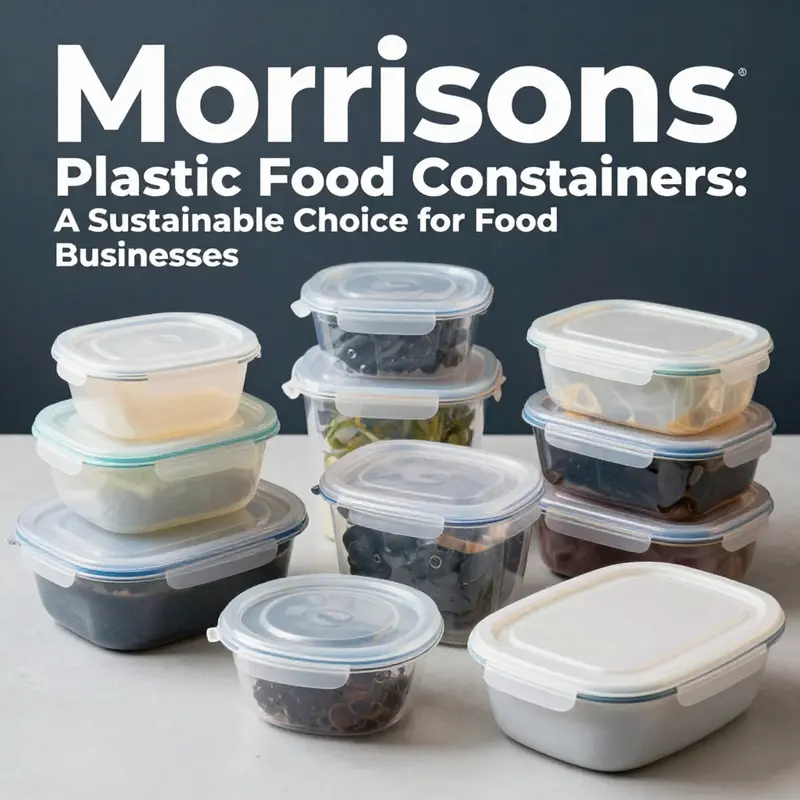
Morrisons has embedded sustainability into everyday store operations by reimagining packaging at the point of sale. Since May 2021, the retailer has introduced refillable containers at select counters—meat, fish, and deli—so customers can bring their own containers or select from durable, reusable options provided by the store. This is not simply swapping plastic bags for a tray; it signals a shift toward a circular system where packaging is reused rather than discarded. The program aims to reduce disposable plastic waste, cut demand for virgin plastics, and invite shoppers to participate in waste reduction in a practical way.
At the heart of Morrisons’ approach is the idea that reuse should be the default. Containers are designed for repeated use, with hygiene and easy cleaning built into the design. The system is scalable across departments and stores, enabling containers to circulate between counters, central cleaning facilities, and shelves. This is a living program that can adapt as consumer habits, cleaning technologies, and logistics capabilities improve. The visible outcome is less clutter from disposable trays and a clearer demonstration that packaging can be part of a sustainable loop.
The program also focuses on reducing plastic weight and density where possible, while maintaining food safety. Down-weighting plastic trays and increasing reuse cycles have led to measurable reductions in single-use plastic in categories such as minced meat and ready-to-eat items. These improvements decrease energy and material use across the supply chain, and they demonstrate that sustainability can be integrated into everyday store operations without sacrificing convenience.
From a technology perspective, the reusable container system relies on a robust workflow: containers are collected after use, sent to cleaning facilities, sanitized to strict food-safety standards, and returned to shelves. Standardized containers, consistent cleaning protocols, and reliable tracking ensure every item can be accounted for across reuse cycles. The result is a cleaner shopping environment, clearer accountability, and a practical path toward plastic reduction that preserves customer choice and convenience.
For readers seeking practical context, Morrisons’ model illustrates how large retailers can pilot, scale, and refine reusable packaging within existing workflows. It also invites suppliers and manufacturers to rethink materials for durability, ease of cleaning, and end-of-life handling. As policy discussions around packaging continue globally, real-world programs like Morrisons’ provide credible, scalable examples of what is feasible and economically sustainable in mass-market settings.
Rewriting the Rules of Packaging: Morrisons, Regulation, and the Global Push toward Reusable Containers
Morrisons has built its packaging story around responsibility, transparency, and a willingness to redefine convenience in the service of sustainability. Since the reintroduction of refillable containers at its meat, fish, and deli counters in 2021, the retailer has tested a practical model that blends everyday shopping with a shared commitment to waste reduction. Customers can bring their own containers or use reusable options provided by the store, a small but meaningful act that reduces single‑use plastic and invites shoppers into a broader conversation about reuse. This initiative sits within a broader corporate ambition to cut its own‑brand plastic packaging by half and to ensure all own‑brand plastic packaging is recyclable or reusable by design. Those targets are not merely aspirational statements; they reflect a deliberate alignment with evolving regulatory expectations and a global push toward packaging that can be recycled, recovered, or reused without compromising safety or affordability. The health of public space, the integrity of food safety, and the long‑term resilience of supply chains all hinge on how packaging evolves, and Morrisons seeks to stay ahead of these interlocking pressures through design, partnerships, and a clear sustainability narrative.
The regulatory landscape is inseparable from the day‑to‑day choices that shape store shelves. In the United Kingdom, the post‑Brexit policy environment continues to refine how packaging is taxed, labeled, and managed at end‑of‑life. The Plastic Packaging Tax, which took effect in April 2022, creates a direct price signal: packaging with low recycled content bears a higher cost than packaging that incorporates more recycled materials. For Morrisons, this tax is a clear economic incentive to shift toward recycled content and to integrate recyclability into packaging design from the outset. The retailer’s stated aim to reduce own‑brand plastic packaging by 50% and to make all own‑brand plastic packaging recyclable or reusable by design is thus anchored in the PPT’s logic. It translates into concrete decisions about material selection, supplier collaboration, and product architecture, encouraging a move away from mixed materials or opaque designs that complicate recycling streams. The UK regime does not exist in isolation; it is part of a broader European framework that also shapes supplier behavior and packaging choices.
Across the Channel, the European Union’s Single‑Use Plastics Directive sets a parallel agenda with substantial implications for packaging design and waste management. The directive bans a spectrum of single‑use plastic items and mandates progress toward higher recycling rates, extended producer responsibility, and clearer recyclability criteria. Although Morrisons operates primarily within the UK, its supply chains extend into Europe, and many suppliers must meet both UK and EU standards to provide compliant materials. This creates a coherent push toward packaging that is easy to recycle, clearly labeled, and traceable through complex supply networks. The regulatory tension between UK and EU regimes does not merely raise compliance costs; it accelerates a shared learning curve about how to design packaging for circularity, how to measure recyclability, and how to minimize contamination in real-world sorting facilities. The consequence for Morrisons is a procurement and design discipline that weighs performance, hygiene, cost, and end‑of‑life outcomes with equal weight, an approach that promises greater resilience in a volatile global market.
Geopolitically, the move toward sustainable packaging is not simply a domestic matter. Major economies are tightening environmental standards, and that tightening reverberates through supply chains that reach far beyond national borders. The availability and price of high‑quality recycled polymers are influenced by international trade dynamics, regional production capabilities, and the evolving mix of public and private sector incentives. Trade tensions, tariffs, and the enforcement of environmental certifications all shape how materials are sourced and verified for food contact. In practical terms, Morrisons must navigate a landscape where recycled content might be costlier or harder to secure consistently, while still delivering on safety, quality, and regulatory compliance. This reality pushes the retailer toward diversified sourcing, longer‑term contracts with recyclers, and closer collaboration with suppliers to ensure that the circular economy aspirations do not stall in the face of price volatility or supply disruption. The geopolitics of packaging thus translates into real business decisions—how to balance cost with sustainability, how to validate material provenance, and how to build a supply chain that can adapt to shifting policy signals and market conditions.
The economics of change also intersect with consumer expectations. A growing segment of shoppers wants packaging to be easier to recycle, to be reusable where possible, and to carry a transparent environmental story. Refillable counters—where hygiene, safety, and convenience are preserved—offer a tangible demonstration of what responsible packaging can look like in practice. They also illuminate a broader tension: the need to maintain product safety and shelf stability while reducing material use and end‑of‑life waste. For Morrisons, the calculation goes beyond the sticker price of plastics. It includes the costs of implementing and maintaining refill infrastructure, training front‑line staff, enforcing sanitation protocols, and communicating clearly with customers about how to participate in refill programs. In exchange, the retailer hopes to build loyalty among environmentally conscious shoppers, attract new customers who are drawn to sustainability credentials, and push the market toward more standardized recycling streams that reduce confusion at the curbside or in materials recovery facilities. The result is a packaging strategy that marries environmental ambition with practical execution, a combination that is likely to influence not only Morrisons’ own operations but also the broader retail ecosystem as peers observe and respond.
The story is not only about policy and price but also about coherence and partnership. Morrisons’ policy documents articulate a clear intention to align packaging with regulatory requirements while driving down environmental impact. A coherent policy framework supports consistent decision‑making across product categories, supplier engagement, and performance measurement. It shapes how new packaging is evaluated for recyclability and how end‑of‑life data is captured and reported. When policy mandates higher recycled content or simpler recycling routes, packaging design must evolve accordingly, and the supply chain must adapt to tighten quality controls and ensure supply reliability. The EU’s SUPD, in concert with the UK PPT, creates a corridor of standards that pushes toward common definitions of recyclability, easier sorting, and standardized labeling. The practical effect is not only compliance, but a more deliberate and auditable approach to how packaging behaves after the consumer discards it. For Morrisons, this means a procurement mindset oriented toward long‑term contracts with recyclers and recyclate producers, coupled with research and development that tests barrier properties, shelf life, and consumer safety for alternative materials.
As regulatory clarity deepens and geopolitical pressures evolve, the packaging agenda becomes less about a single breakthrough and more about systemic, sustained transformation. Refillables at counters serve as a tangible proving ground and a scalable model for expanding reuse into other categories and settings. The challenge remains to balance hygiene and convenience with environmental gains, to communicate clearly with customers about how to participate, and to ensure that transitions do not undermine food safety or affordability. The broader lesson is that packaging standards are converging toward designs that minimize waste without compromising performance, a dynamic that rewards innovations in materials science, waste management, and consumer engagement. In this context, Morrisons positions itself as a facilitator of change: it tests practical solutions, scales what works, shares insights across its operations, and participates in a global dialogue about how retailers can contribute to a cleaner, more circular economy. The result is not merely a set of compliance milestones but a forward‑looking ecosystem in which packaging is treated as an asset—one that enables safer food, better resource use, and a shared, public commitment to reducing plastic pollution.
For readers who want a closer look at how packaging policy is translating into practice, the discussion of paper‑based packaging options offers a useful counterpoint to plastics. Some retailers are exploring paper‑based alternatives that are designed for recyclability and reuse, signaling a broader trend toward packaging that travels well through recycling streams and remains compatible with established waste systems. For further context, see the following example: disposable-700ml kraft paper bowl take-out octagonal rectangle, which illustrates how packaging designers are reimagining containers to minimize mixed materials and misrouting in sorting facilities. This shift does not erase the regulatory challenges, but it does highlight the market’s readiness to experiment with materials and forms that align with a circular economy. The journey toward standardized, recyclable, and reusable packaging is a global conversation, and Morrisons remains a central voice by translating policy into practice, testing new approaches at the point of sale, and informing suppliers about the performance criteria that matter most for food safety and environmental outcomes.
External resource: for a broader understanding of how government policy is shaping packaging costs and decision making, see the UK government’s guidance on Plastic Packaging Tax at https://www.gov.uk/government/publications/plastic-packaging-tax
Refillable Hope: How Morrisons’ Reusable Containers Mirror a Society Moving Toward Smarter Packaging
Across the modern grocery landscape, a quiet revolution is taking place not in the price tags or the aisles of glossy displays, but in the way shoppers think about the act of bringing, buying, and dealing with packaging itself. Morrisons’ decision to reintroduce refillable containers at its meat, fish, and deli counters marks more than a logistics adjustment; it signals a social negotiation with waste, practicality, and personal responsibility. The move sits at the intersection of the circular economy and everyday shopping where customers weigh convenience, hygiene, and cost against the promise of less plastic swirling through kitchens and landfills. It is a case study in how a single retailer’s choice can both reflect and shape public sentiment around sustainability, packaging design, and the everyday rituals of food preparation.
Recent research published in June 2024 underscores that social acceptance of reusable packaging hinges on a trio of perceived benefits: convenience, hygiene, and cost effectiveness. Consumers are increasingly willing to support programs that invite them to participate in sustainable practices, provided those programs are easy to use and clearly beneficial. In other words, the attention and the argument for refillable systems is not just about environmental idealism; it is about converting that idealism into a practical, repeatable habit. When a customer can drop off a container, have it rinsed and ready, and reuse it with minimal friction, the likelihood of sustained participation rises markedly. This insight helps explain why Morrisons has leaned into reintroducing refillable options at counter service where the pace of shopping, the need for quick decisions, and the direct handling of meat, fish, and deli products create a highly visible testing ground for consumer behavior around packaging.
Yet the same body of work also cautions that the path to broad acceptance is uneven. A 2025 study on consumer attitudes highlights a stubborn but real friction: higher upfront costs or a perception that the reusable system imposes more steps can deter a subset of shoppers. The friction is often practical rather than moral. People worry about remembering to bring a container, the potential inconvenience of returning it promptly, or the extra time needed at checkout. Hygienic concerns still linger in some minds, even as retailers implement safeguards and transparent cleaning processes. These concerns are not just about personal comfort; they influence whether reusable options can reach critical mass across diverse store formats and neighborhoods. In the Morrisons context, the counter where meat, fish, and deli items are weighed and prepared becomes a crucible where these concerns are tested, addressed, and, ideally, dissolved through design and communication.
The social dynamics at play are not isolated to the checkout lane. They ripple outward into how customers perceive the store’s brand values and how those values align with their own daily choices. When a shopper sees the store invest in refilling programs, labeled zones for hygiene, staff guidance about how to use refillable containers, and a simple path to return or reuse, a tacit social contract forms. It says: the retailer is not just selling products; it is partnering in a shared effort to reduce waste. In turn, customers who participate may feel a stronger sense of identity with a movement toward sustainable living, which can translate into loyalty, word-of-mouth advocacy, and a willingness to try other eco-friendly options offered by the retailer.
From an economic perspective, refillable programs carry paradoxes worth noting. On one hand, seasoned sustainability strategies recognize that such programs can reduce disposable packaging costs over time and potentially attract customers who want greener choices. On the other hand, there are upfront investments in containers, cleaning infrastructure, staff training, and systems to track returns and cleaning cycles. The Morrisons approach—reintroducing refillable containers at strategic counters—appears to prioritize impact where it matters most for waste reduction while balancing operational complexity. The logic is clear: make it easy for customers to participate at the points in the shopping journey where they most often face single-use packaging decisions. If the program feels seamless, the perceived price of participation declines, and the willingness to embrace reuse grows. Over time, this can contribute to a subtle reshaping of shopping habits, with customers choosing to plan meals around containers they already own or can easily obtain from the store, rather than defaulting to new packaging with every trip.
The broader narrative around packaging and sustainability situates Morrisons’ refillable counters within a larger geopolitical and environmental conversation. Policymakers, industry bodies, and consumer groups increasingly frame packaging waste as a solvable problem when retailers take responsibility for design and reuse-oriented systems. The store’s alignment with this global dialogue—an emphasis on reducing plastic pollution and pursuing circular economy principles—signals a strategic commitment beyond isolated convenience. It also gestures toward a future where packaging is part of a system that values materials management and lifecycle thinking as much as product quality or price. In this frame, the reintroduction of refillable containers becomes a practical lever to demonstrate how consumer behavior can be steered through thoughtful infrastructure, transparent hygiene protocols, and clear communication about the benefits and boundaries of reuse.
A practical lens helps illuminate how this approach can influence shopping behavior. When customers encounter refillable options that are easy to use and clearly safer or cleaner than the alternative, they are more likely to view the option as a normal, even expected part of shopping. Conversely, if the system feels burdensome or opaque, the perceived costs—whether time, effort, or worry about cleanliness—can erode trust and participation. Morrisons’ strategy, thus, hinges on the careful orchestration of three elements: design that minimizes effort, visible hygiene standards that reassure, and transparent messaging that explains the lifecycle of the containers, from washing to reuse to return. These elements are not abstract; they translate into everyday experiences—lines that move quickly, containers that feel pristine, and signage that makes the reuse loop obvious rather than obscure.
This narrative also speaks to design choices in packaging beyond the specific containers used at service counters. Packaging formats matter because they shape expectations about reuse and the value proposition of sustainable choices. The broader sector is experimenting with a spectrum that ranges from clearly reusable systems to refillable options and, in some cases, downcycling alternatives. In practice, the success of Morrisons’ refills depends not only on the quality of the containers themselves but also on how customers perceive them in relation to other packaging formats. Packaging design can influence perceived hygiene, ease of use, and cost, which in turn influence willingness to participate. As such, the retailer’s ongoing communications—signage about cleaning processes, demonstrations by staff, and easy-to-understand return or replacement routines—play a central role in shaping social acceptance and the long-term viability of refillable programs. For readers who want to explore the breadth of packaging formats and their implications for sustainability, a related discussion of disposable octagonal box packaging offers a tangible snapshot of how materials and shapes interact with consumer perceptions and reuse logic. See the linked reference for a deeper look at packaging formats: disposable octagonal box packaging.
Looking ahead, the question remains whether this Morrisons initiative can catalyze broader behavioral change. The social science suggests that the most durable shifts occur when convenience, hygiene assurance, and cost considerations converge in daily routines. Retailers who can deliver a frictionless reuse experience—where containers are readily available, clearly cleaned, and easy to return—stand a greater chance of embedding reusable practices into regular shopping habits. The potential ripple effects extend beyond the meat, fish, and deli counters. A successful refilling ecosystem can normalize reuse across other categories, encourage more efficient supply chains, and stimulate complementary innovations in product design and store layout. In this sense, Morrisons’ action at its counters is more than a sustainability initiative; it is a social experiment in how quickly customers can recalibrate everyday routines around a shared commitment to waste reduction and resource stewardship.
The ongoing dialogue about packaging and consumer behavior would benefit from continued empirical attention. As researchers refine methods to measure acceptance and adoption, retailers like Morrisons provide real-world laboratories where theory meets practice. They offer a glimpse into how public sentiment—shaped by convenience, trust, and perceived value—interacts with corporate strategies aimed at reducing plastic waste. The results will likely inform not just how stores frame refill programs but how they design containers, pilots, and incentives that encourage participation across diverse communities. In the end, the success of refillable containers at Morrisons will depend on whether the social fabric can sustain the rhythm of reuse, the calm assurance of hygiene, and the economic logic that makes sustainable choices both practical and appealing. If these threads hold together, the chapter of single-use dependence may gradually give way to a more circular story where households, retailers, and manufacturers co-create a familiar, durable practice of reuse.
External resource and further reading: For broader insights into consumer attitudes toward refillable and reusable packaging, see the ongoing research discussion at https://www.preprints.org/manuscript/202505.0318/v1.
Final thoughts
Morrisons’ initiative with refillable plastic food containers is not just a trend; it’s a crucial shift towards sustainability that reflects larger consumer values and environmental priorities. As businesses in the food sector navigate these changes, they can learn from Morrisons’ example to enhance their own sustainability efforts. By adopting similar strategies and embracing reusable options, food businesses can thrive while contributing to a healthier planet.