
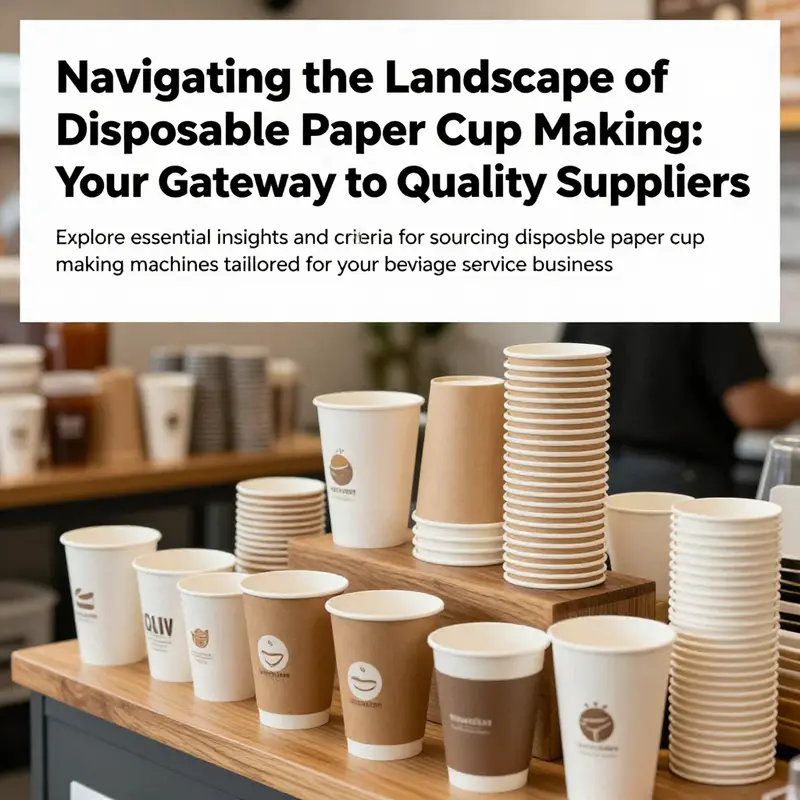
As the demand for disposable paper cups continues to soar globally, particularly in beverage services like bubble tea shops, restaurants, and catering services, understanding how to effectively source the right manufacturing equipment has never been more critical. This article will unravel the geographic distribution of quality suppliers in China, delve into the key standards essential for selecting machinery, and illuminate the evolving trends in the disposable paper cup production market. By the time you finish reading, you’ll be well-equipped to navigate the complexities of procurement and supplier evaluation for your business needs.
null
null
把脉供应商:系统化评估在高效、可持续的一次性纸杯机采购中的作用
在一次性纸杯制造领域,设备并非单纯的生产工具,而是长期经营能力的核心支撑。采购决策若仅以价格或单机产能为唯一指标,往往会在后续几年里以停机、维修和升级成本的形式回击最初的投资矛。真正的竞争力来自于对供应商的系统化评估——从技术底蕴到售后网络、从设备性能到合规资质、再到与自身生产战略的契合度。本文以行业最新实践为基础,围绕六大维度展开,一方面帮助企业建立可复制、可追溯的评估框架,另一方面也提供在全球化采购背景下的落地要点,使采购决策既理性又具前瞻性,确保生产线在市场波动中保持稳定与灵活性。叙述将贯穿一个共同的逻辑:优质供应商不仅能提供符合需求的机器,更能成为长期的生产伙伴,通过持续的升级、完善的服务和透明的协作,共同提升产能、降低单位成本、实现绿色与可持续的发展目标。
首先,技术实力与制造底蕴是供应商最根本的护城河。对设备制造商来说,是否具备自主研发能力、是否拥有稳定的技术团队、以及是否在材料工艺方面有深刻理解,是决定设备极限的关键因素。自主研发能力并非单纯的“有研发团队就行”,而是要有持续的研发投入、系统性的创新路径,以及与高校、研究机构的长期合作。这些因素共同构成一个企业的技术生态,决定其对新材料、不同涂布层、不同杯型和不同封口技术的适应性与改造能力。一个具备良好工艺理解的供应商,能根据杯型(直壁或锥形)、厚度、涂层材料(如聚乙烯或可降解涂层)的差异,提供经过验证的解决方案,甚至实现针对性的小批量定制。这种能力在日常生产中往往能转化为更高的一致性和更低的废品率,进而降低单位成本并提升良品率。
设备制造的可靠性,同样来自于其制造底座的扎实程度。现代化的自有生产基地与严格的质控流程,是保障设备长期稳定运行的核心。ISO9001等质量管理体系认证,通常是对企业流程规范性的一种公开背书,意味着从设计、采购、制造到装配、测试再到最终交付,每一个环节都有可追溯的标准与检验节点。对潜在采购方而言,关注的不仅是最终的设备性能,更是过程中的问题识别、变更控制以及变更后对产线影响的全面评估。技术团队的结构与能力同样重要:研发人员与工艺工程师的比例、是否有从事抛光、模具加工、热封系统调试等关键工艺的资深人员,都会直接影响设备在不同应用场景下的稳定性与复现性。进一步地,真正优秀的供应商会在工艺理解与定制化能力上投入资源。他们能够在标准化产品与个性化需求之间寻求平衡,在保证稳定性的前提下,提供针对材料克重、杯型尺寸、热封强度、抗渗透性等变量的可落地方案。这种能力不仅提升了杯具的实用性,也为后续的材料供应链调整带来更大的弹性。
第二,设备性能与可靠性是生产效益的直接体现。对任何生产线而言,产能只是一个表征,稳定性、良品率、以及能耗同样是衡量长期投资价值的重要维度。产能的评估,若仅以“每分钟多少只”来衡量,容易被表面数据所误导。更关键的是设备在实际运行中的综合效率(OEE)以及可持续的运行速度。只有当设备在高负荷运转时仍能保持低故障率和一致输出,才能实现真正的产能增益。良品率的提升往往来自于机器的高精度定位、自动纠偏、在线缺陷检测以及对工序波动的快速响应。具备这些功能的设备,能显著降低人工干预频次,减少人为因素带来的波动。现代化设备还强调自动化与智能化水平的提升,例如自动换卷、在线视觉检测、生产数据的实时采集与可视化,以及与企业MES系统的对接能力。这些特征不仅提高了生产管理的精细化水平,也为后续的生产优化、过程追溯和质量改进提供了关键数据支撑。在能源与环保方面,节能设计与良好热封效率同样重要。通过优化热封结构、采用高效保温材料、智能温控策略等手段,单位能耗的下降往往能带来显著的长期成本优势。此外,设备的降噪与低油污设计也体现了企业对工作环境与环境保护的关注,这些因素在合规性与社会责任层面往往会成为采购决策的加分项。
在实务层面,智能化程度高的设备将生产线的可控性推向新的水平。它们能够实现生产计划的精确执行、偏差的快速纠正,以及对不同批次、不同杯型的无缝切换。这种能力在面对多品种、小批量的市场需求时尤为重要。企业在评估时,可以通过要求供应商提供真实的试产数据、在现场演示以及对关键参数的监控要求来验证设备在实际工况下的表现。此类数据不仅体现了设备的技术水平,也反映了供应商对长期服务承诺的兑现能力。为了帮助采购方从数据层面做出判断,建议在评估框架中设定可验证的指标,如稳定运行时的良品率、废品率、停机频率、修复时间、备件周转时间、能源消耗等关键指标的基准线和目标值。
第三,售后服务体系是长期无忧生产的保障。设备投资完成并非终点,而是合作的起点。供应商的服务网络、响应速度、备件供应和现场安装调试质量,直接影响到线下生产的可用性与生产节拍。一个健全的服务体系应覆盖7×24小时的远程技术支持、明确的现场响应时间、关键易损件的库存充足程度,以及培训体系的完整性。现场培训不仅要覆盖操作与日常维护,还应包括对初级故障的诊断与排除方法,确保客户在短时间内具备独立排错的能力。此外,持续升级与改造服务,是评估一个供应商长期价值的重要方面。设备在使用中,随着工艺进步、材料更新、环保要求的提升,往往需要软件、控制系统或模块的升级。能够提供清晰升级路径、明确费用、并且按阶段落地执行的供应商,会显著延长设备的使用寿命,降低二次采购的成本压力。
市场口碑与案例验证,是让理论走向现实的关键一环。虽然技术参数在初期筛选中显得不可或缺,但真实世界的运行反馈才是最终的试金石。走访工厂、听取现有用户的第一手使用感受,是获取可信数据的有效方式。重点关注的不是极端案例,而是规模相近、应用场景相似的企业在相同条件下的表现。真实的运行数据——产能、良品率、能耗、故障率、服务满意度——比展厅中的参数更有说服力。行业口碑往往还包括出口记录与国际市场影响力,这些是对设备稳定性、跨区域售后能力与合规性的一种印证。对于正在扩展海外市场的企业,进口与合规的相关经验尤为重要,能够帮助降低跨境采购的风险。
在综合成本与投资回报分析方面,不能忽视全生命周期的成本结构。总拥有成本需囊括初始采购价、安装调试费、后期维护、备件、能耗以及潜在的停产损失等各项费用。只有把这些成本纳入同一张表,才可能准确计算出投资回收期与长期回报。理论上的低初始成本若伴随高维护成本与低良品率,最终对企业的资金占用与现金流都会产生消极影响。相反,若设备在节能、稳定性与维护便利性方面具有显著优势,尽管初始投入略高,但在2-3年内实现回本并进入正向现金流的概率会显著提高。如此,供应商的综合能力就成为评估的核心。专业资质与合规性方面,行业认证如质量管理体系认证、以及环境与安全标准的符合性,构成与客户、监管部门之间的信任基石。合规不仅关系到市场准入,也关系到企业品牌的长期可信度。在全球采购的场景下,供应商的认证与资质更是跨境合作的前提条件之一。
将六大维度整合到实地评估的过程中,企业需要一套清晰的落地流程。第一步,建立以目标产能、杯型范围、材料兼容性为核心的需求蓝图;第二步,筛选出在技术实力、制造底蕴、质量体系等方面接近目标的候选供应商;第三步,通过现场考察、样机试产和数据对比,验证设备在真实工况下的表现;第四步,评估其售后服务网络、备件供应能力和培训体系的完整性;第五步,综合成本分析,测算TCO与回报周期;第六步,结合行业资质、合规性与国际市场经验,完成风险评估并确定长期合作意向。需要强调的是,技术、服务与合规并非彼此独立,而是相互支撑、共同演化的关系。一个在技术与工艺上具备深度理解、并能以高效的服务和清晰的升级路径回应市场变化的供应商,往往更容易成为企业在复杂供应链中稳定的卡位者。
在全球化采购与中国市场的背景下,中国的制造集群提供了强大的供应链生态支持与价格竞争力,但也带来跨区域沟通与验收标准差异的挑战。因此,企业在评估时应结合本土化的资源与国际化的认证要求,制定更透明的验收与绩效指标。为帮助采购人员在信息不对称的环境中做出更稳妥的决策,可以将厂房参观、工艺验证、样机试产和第三方评估作为必经程序;同时,建立一个包含供应商自评、客户评测与独立审计的三层评估体系,使风险点在被揭示前就被控制住。
值得注意的是,采购决策的质量,与信息来源的可信度密切相关。理论研究与行业白皮书给出了一套相对稳定的评估框架,但在实际执行中,向行业内真实案例学习往往更加直接有效。例如,行业内的案例研究表明,当供应商在全球市场中具备稳定的出口记录和合规证书时,设备的跨境使用与维护成本都会显著降低。这一结论不会在单纯的参数表中体现,但在长期生产成本分析中具有决定性意义。对于正在寻求扩大海外市场的企业,选择具备国际化能力、能够提供本地化培训与快速响应的伙伴,将成为降低跨境采购风险、实现全球化产能布局的关键要素。
最后,本文的核心在于强调采购不是一次性的交易,而是建立长期协作关系的起点。选择供应商的过程,需把技术实力、设备性能、售后体系、市场口碑、综合成本与资质合规等多维度有机融合,形成一张全景图。通过对这张图的逐项验证,企业不仅能获得符合当前生产需求的设备,更能获得在未来市场变化中保持竞争力的能力。为了帮助读者将理论落到实处,可以通过访问以下资源,深入了解行业的技术现状与趋势,这些资源将为评估框架提供参考基准。作为进一步的参考,本文附带一个内部资源链接,便于在采购沟通中快速对照与交流:
disposable-700ml Kraft paper bowl product
在全球范围内,采购者应保持对行业白皮书、认证标准及监管要求的持续关注。通过系统化的评估流程,企业能够在不牺牲质量与合规性的前提下,获取更高的产能、稳定的良品率以及更低的全生命周期成本。随着市场对可持续包装需求的不断增长,具备环保设计、低能耗运行和易维护特性的设备,将成为未来采购决策的常态。对企业而言,真正的挑战在于将这套系统化评估融入日常运营的决策流程,使其成为企业文化的一部分,而不仅仅是一次性采购活动的产物。参考资料方面,行业研究与权威机构的公开信息仍然是评估的基准线。通过对这些信息的梳理与交叉验证,采购团队能够在不确定的市场环境中保持清晰的判断力,确保新设备的投入既符合当下的生产目标,又具备应对未来变化的韧性。外部资源方面,参考了行业权威机构的技术白皮书等公开信息,以扩展对设备选型、质量管理与合规要求的理解。你可以在以下外部资源中找到更系统的行业分析和标准框架,帮助你完善内部评估模型。
外部参考资源: https://www.cilma.org.cn/
Rethinking the Disposable Cup Production Landscape: Trends, Strategy, and the Role of Equipment Suppliers
Across the global market for disposable paper cups, the equipment that makes them has become as much a driver of value as the cups themselves. The chapter presented here examines how the landscape for suppliers of cup forming and finishing lines is shifting under pressure from sustainability rules, rising automation, and the demand for customization. In this context, the lesson for buyers in this space is not to chase the lowest upfront price alone. Instead, the focus should be on building a supplier relationship that delivers technical capability, certification, service reach, and a clear path for future upgrade and expansion. The road to responsible growth in this industry passes through a careful alignment of engineering depth, environmental performance, and durable, globally capable after-sales support.
Sustainability shapes both product geometry and process economics. The evolution of coatings and materials used in cups has moved beyond traditional barriers. PLA-based coatings derived from corn starch provide a path to end products that more easily meet European and North American environmental standards. The industry is increasingly turning to post-consumer fiber (PCF) and other recyclable feedstocks, enabling a circular approach that treats waste as a resource rather than a disposal problem. Yet this transition also raises questions about machine compatibility, resin and coating deposition patterns, and drying temperatures. A high-quality cup making line needs to be adaptable to different substrates while preserving throughput and uniform quality. In practical terms, this means the supplier must deliver servo-driven forming, precise feed control, consistent wall thickness, and reliable lamination or coating application with minimal material waste.
The Chinese market illustrates a central dynamic of the global supply chain: clusters such as those in Zhejiang leverage high-speed forming, servo motors, PLC-based control, and integrated heat-air systems to deliver lines that support single-layer or dual-layer coatings for a range of cup sizes from small to medium. Machines in these clusters often handle 4 to 16 ounce cups, providing the performance envelope that international buyers expect. The underlying value propositions extend beyond raw speed. Digitally controlled processes enable tighter quality gates, faster changeovers, and better traceability, all of which reduce rejection rates and improve yield. The ability to adjust coating thickness, drying temperature, and holding times with precision becomes a strategic advantage when brands demand reproducible results across multiple plants and regions. The emphasis on reliability, stability, and ease of maintenance is not incidental; it is essential for global procurement and for keeping operators within a consistent learning curve across sites.
Automation is now the central driver of efficiency. The most compelling cases describe a transition from labor-intensive to highly automated lines that produce more cups per minute with far fewer operators. The gains are not solely about headcount. They include reduced process variability, faster changeovers, and more predictable energy use. A typical scenario involves a multi-shift line that previously required a large team to manage feed, heat curing, quality checks, and packaging. With advanced automation, vision-based defect detection, and remote monitoring, the same line can sustain a high level of throughput while operating with leaner staffing. Suppliers that can bundle hardware, software, and service into an integrated package have a decisive advantage. It is not enough to offer a machine; customers want a living system that can collect performance data, diagnose faults, and adjust parameters in real time. This is why the best offerings emphasize PLC touch screens, fault alarms, auto-counting, inline checks, and modular configurations that can scale with growing demand. The flexibility to upgrade from a mid-range to a full automation solution over time is frequently the deciding factor for buyers who plan to expand capacity without rebuilding their plant.
The market has already begun to reward product diversification and customization. Cups now serve more than a single purpose; brands increasingly demand smart features, variable capacity, and even aesthetic customization. Digital printing enables small run orders and branded patterns that transform the cup into a mobile advertisement, a powerful branding touchpoint. The equipment must keep pace with such demand, enabling rapid changeover without sacrificing quality. For plant owners, the cost of ownership matters as much as initial price. A modular approach, supported by well-documented interfaces, allows manufacturers to swap in new modules as coatings and product formats evolve. When a supplier can demonstrate that a line can handle multiple cup sizes, coatings, and printing profiles, it becomes a strategic partner rather than a one-off vendor.
Green supply chain ideas are no longer theoretical but operational. A supplier who can articulate the environmental attributes of the entire production chain—from pulp sourcing to final cup—finds traction with buyers who must comply with green procurement policies and consumer expectations. Digital traceability across the line and the supply chain helps establish credibility. The capability to document lower energy use, reduced water consumption, and minimal chemical inputs during coating and drying not only improves sustainability metrics but also reduces risk in procurement audits. The role of the equipment supplier thus extends beyond mechanical performance; it encompasses the ability to enable a transparent, verifiable green footprint for the finished product. This holistic view of value explains why buyers increasingly favor suppliers with robust service networks and clearly defined warranty terms. In practice, reputable suppliers offer at least a one-year warranty on critical components, a responsive service desk, and a structured field-service program that can be activated globally. The better players position themselves as design partners, helping customers navigate changes in consumer demand and regulatory landscapes.
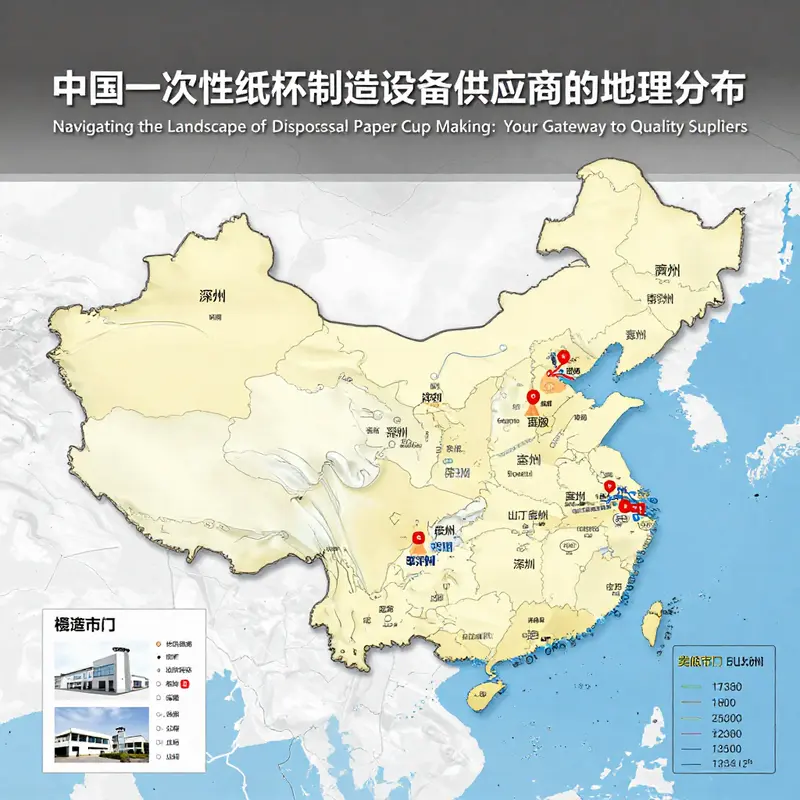
The regional dimensions of the market shape strategic choices for suppliers. China remains the production center, with Zhejiang and its surrounding cities contributing a dense ecosystem of equipment makers. Guangdong builds on its strength in electronics and automation to deliver highly integrated lines for international customers who demand low defect rates and tight process controls. Henan and neighboring provinces provide cost-competitive options for mid-market buyers, enabling smaller plants or new entrants to access high-speed cup machines without overwhelming capital expenditure. For buyers, the geography of supply affects lead times, service coverage, and the ability to sustain uptime. The optimal supplier network often blends a high-end cluster that can deliver advanced automated lines with regional partners that can handle routine maintenance and spare parts supply. The aim is to reduce downtime, shorten the time to scale, and keep energy and material costs predictable across cycles of demand and seasonality. In this context, supplier evaluation should extend to factory visits, an audit of production processes, and a review of the supplier’s post-sales ecosystem, including training, remote diagnostics, and the availability of replacement parts.
From a strategic perspective, the chapter argues for a shift in how buyers frame the value of equipment. The true return on investment rests not solely on the machine’s nominal speed or the initial purchase price. It rests on total cost of ownership, the capacity to support product diversification, and the facility to maintain quality while expanding capacity. This means prioritizing robust automation features, modularity, and the ability to integrate with digital platforms for monitoring and control. It also means acknowledging the need for robust environmental credentials. The most forward-looking buyers demand suppliers who can demonstrate the lifecycle impact of their equipment and offer credible options for upgrading old lines, retrofitting with smarter sensors, or adopting new coatings and drying technologies without a full plant rebuild. The capacity to scale up and adapt is as valuable as peak throughput, especially in markets that experience sudden shifts in demand driven by seasonality or regulatory constraints. A line that can be reconfigured to handle new cup formats or to switch from wax-based to PLA coatings without major downtime is a competitive differentiator.
The expectations placed on suppliers are thus both broad and deep. The best partnerships emerge when suppliers can provide not only a capable forming station but also integrated downstream functionalities: automated cutting, heat sealing, quality inspection, and packaging alignment. When planning a capital investment, corporate buyers seek assurances about energy use, waste disposal, and the end-of-life fate of the machinery itself. In an era where sustainability is not only a regulatory feature but a market differentiator, suppliers that offer transparent performance data and measurable environmental metrics stand out. The procurement decision, in effect, becomes a partnership criterion rather than a single purchase event. The suppliers that win are those who can translate engineering excellence into business outcomes: predictable throughput, consistent product quality, and a lower total cost of operation over the life of the equipment.
As this chapter suggests, the road ahead for the disposable cup production landscape will be defined by the convergence of advanced materials, intelligent manufacturing, and customer-centric service models. It is not enough to churn out cups at high speed; it is necessary to ensure that every cup meets stricter environmental standards, that the production line can adapt quickly to varying formats and coatings, and that the suppliers behind the scenes are capable of sustaining uptime with rapid, global support. In practice, this means that buyer teams should look for equipment partners who can combine technical depth with practical, outcome-focused service. It means evaluating not just the machine’s speed but the entire system’s compatibility with smart manufacturing platforms, the supplier’s ability to offer upgrades and retrofits, and the reliability of their field service. The result is a more resilient supply network, better alignment with sustainability goals, and a clearer path to growth in both established markets and new geographies.
For readers who want to explore a concrete path forward, consider the options in the market that emphasize a balance of cost efficiency and technical capability. A representative approach is to seek lines that can operate at high speeds while accommodating a range of cup sizes and coatings. Such capability supports both standard formats and evolving consumer preferences for eco-friendly materials. The digital backbone should include real-time monitoring dashboards, remote diagnostics, and modular control architectures that allow customization without adding complexity. The conversation with potential suppliers should thus focus on three pillars: flexibility in design, proven environmental performance, and the strength of after-sales support networks. In parallel, the buyer should develop a short list of metrics that matter in practice: line uptime, mean time between failures, energy consumption per produced cup, coating waste rate, and the time required to switch formats. This approach transforms a capital purchase into a strategic enabler of brand resilience, cost competitiveness, and sustainable growth.
Within this framework, the integration of an internal link to practical product examples is helpful for readers who want to deepen their understanding of current market options. For instance, a widely adopted option is available at a supplier listing that emphasizes affordability and maintenance simplicity. Best price 8oz double-wall plastic-free single-wall paper cup. Integrating such options into a broader equipment strategy should be done with care, ensuring compatibility with the chosen coating and drying configurations, as well as the downstream packaging alignment. The right supplier will offer modular expansion paths, enabling a plant to scale capacity through additional lines or through upgrading components within a common control system. The discussion here remains intentionally agnostic about specific brand names so that readers can map the insights to their local suppliers and contexts. The underlying message is clear: the future of disposable cup production will be defined by how well equipment partners can couple technical sophistication with sustainability, service reliability, and strategic flexibility.
The practical implication for procurement teams is that the conversation with potential suppliers should focus on a few core competencies that translate into real-world outcomes. First, technical depth must be demonstrated through clear specifications and the ability to prove performance under a range of substrates and coatings. Second, environmental performance should be quantified, with data on energy use, water consumption, waste generation, and end-of-life management for the equipment and the cups produced. Third, service reliability matters: can the supplier guarantee on-site support within a defined time window, provide remote diagnostics, and deliver spare parts quickly across multiple geographies? Finally, the ability to scale and adapt is essential. Buyers should seek modular lines, upgrade paths that do not require full plant rebuilds, and interfaces that can accommodate new coating chemistries or digital controls as market demands evolve.
In addition to these strategic imperatives, risk management has become a routine part of supplier selection. A due diligence process that includes factory visits, qualification audits, and verification of long-term parts availability can prevent costly interruptions. Buyers should examine the supplier’s supply chain resilience, including the diversity of component sources, back-up production capacities, and contingency plans for geopolitical or logistics disruptions. Another practical consideration is the vendor’s documentation quality. Clear, complete technical manuals, maintenance guides, and commissioning checklists shorten the learning curve for operators and reduce the risk of improper setup that could compromise product quality or safety. Certifications such as CE, ISO, and industry-specific standards are not mere formalities; they signal a disciplined approach to design, manufacturing, and quality assurance that aligns with the demands of global customers and strict markets. For teams operating across borders, the assurance of conformity documents and testing reports is often as important as the base machine performance itself.
An implicit thread running through these observations is the value of a global-minded supplier who can calibrate regional differences in demand with local capabilities. Chinese manufacturing clusters offer scale, cost efficiency, and access to the latest automation technologies. Yet buyers outside of China also require robust after-sales networks, predictable spare parts supply, and language or cultural capabilities that facilitate smooth project execution. The most credible partners can bridge this gap by providing not only equipment but also training, remote monitoring, and a structured process for knowledge transfer to local teams. The resulting collaboration becomes a competitive advantage, enabling faster time-to-market for new cup formats, quicker adoption of environmentally friendly coatings, and stronger brand continuity across multiple production sites.
As this chapter closes, the road ahead for suppliers of disposable cup production equipment remains clear. The intersection of advanced materials, intelligent manufacturing, and customer-centric service models will define who leads in efficiency, sustainability, and market responsiveness. It is not enough to deliver high-speed lines; suppliers must offer an ecosystem that supports a greener footprint, simpler upgrades, and a service backbone that keeps pace with global customers’ evolving needs. The most successful partnerships will be those that combine engineering depth with practical business outcomes: predictable throughput, consistent product quality, and a lower total cost of operation over the life of the equipment. In this sense, the future belongs to equipment partners who can translate technical prowess into tangible value for brands, retailers, and consumers alike.
External resource: https://www.alibaba.com/product-detail/Disposable-High-Speed-Paper-Cup-Machine-130-150PCS_1600798337085.html
Final thoughts
Navigating the world of disposable paper cup production equipment requires a clear understanding of supplier landscapes, evaluation criteria, and market trends. With manufacturers located primarily in China, businesses must focus not only on cost and efficiency but also on technological advances and sustainable practices. As you venture into sourcing, equip yourself with knowledge and diligence to bolster your operational capabilities, ensuring compliance and superior quality in your offerings.