
In the food industry, the choice of packaging plays a crucial role in the overall success of products and services. Plastic containers have become a staple in restaurants, beverage chains, catering services, and food trucks because they offer durability, versatility, and cost efficiency. This article dives deep into the different materials used in plastic containers, illustrating their benefits and applications for bubble tea shops, cafes, and more. It emphasizes the strict safety and hygiene standards essential for maintaining food quality, while also discussing the economic impact of these solutions on businesses. Furthermore, the rising importance of environmental sustainability will be explored, alongside the recycling efforts pivotal to mitigating plastic waste. Finally, it will highlight the technological advances that shape the future of plastic container design, ensuring these products meet the evolving needs of the food industry. Each chapter will enrich your understanding and equip you with knowledge to make informed packaging choices that benefit your business.
Clarity, Compliance, and the Chemistry of Care: Materials that Shape Food-Container Design
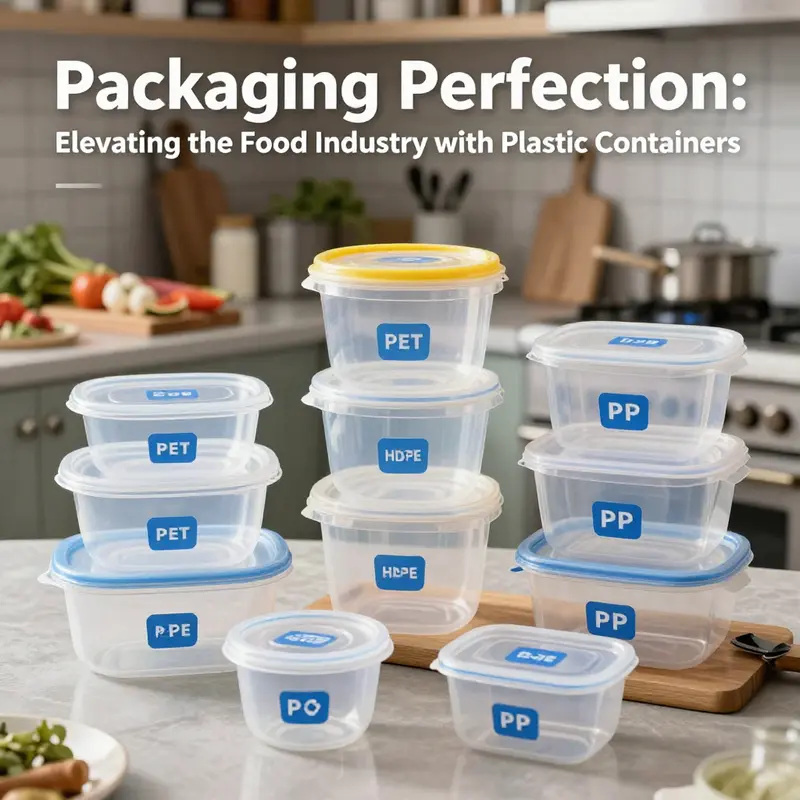
The food industry depends on plastic containers not merely as vessels but as calibrated solutions that protect, present, and preserve what arrives on kitchen shelves and restaurant tables. The materials chosen—primarily PET, HDPE, LDPE, and PP—are selected for distinct properties that align with the chemistry of food, the physics of storage, and the economics of production. In this landscape, a container is a performance system: a carefully engineered interface between product and consumer, between safety and sustainability, and between convenience and regulation. The choices begin withPET, a resin renowned for its exceptional clarity and strength. In beverage packaging and in transparent containers for ready-to-eat meals, PET offers a persuasive combination of visual appeal and barrier performance. Its transparency invites trust, letting the consumer see the product inside, which matters for freshness cues in sauces, jams, beverages, and other cold- or room-temperature applications. Yet clarity carries more than aesthetic appeal. It signals a barrier that slows gas exchange and helps preserve flavors during distribution. PET’s recyclability is a practical asset in a value chain that increasingly prizes circularity; its recyclability streams, though not universally seamless, are among the better-advantaged paths for closing the loop on plastic packaging. The choice of PET is rarely about a single attribute; it is about balancing optical clarity with mechanical robustness and lifecycle considerations. When a brand seeks a see-through carton that doubles as a multipurpose storage unit, PET often becomes the default due to its combination of form-fitting rigidity and light-weight performance. The same material is also leveraged in certain 650-series modular storage concepts where transparency helps operators quickly assess contents and portioning without opening containers. The material’s performance is particularly well suited for cold and ambient applications, where rigidity helps maintain shape during stacking, transport, and shelf display. HDPE, in contrast, starts from a different set of strengths. Known for rigidity and chemical resistance, HDPE protects contents from moisture and light while offering a robust barrier against a wide range of substances. This makes HDPE a common choice for milk jugs, juice bottles, and a broad array of storage containers used in both consumer kitchens and industrial kitchens. HDPE’s resilience to chemical interaction means it can hold dairy products, oils, sauces, and spreads with minimal risk of leaching or interaction that would compromise flavor or safety. It also bears up well under temperature variations, a practical advantage in facilities that require freezing or warm-hot operations without compromising container integrity. In addition, HDPE’s capacity to withstand impact helps reduce breakage during handling in warehouses and delivery fleets, a practical factor that influences total cost and waste streams. LDPE, while perhaps less prominent in heavy-duty storage than PET or HDPE, plays a complementary role in flexibility and processability. Its higher ductility and toughness enable squeeze bottles and a range of flexible wrap films, where the ability to deform without cracking can stretch the performance envelope for sauces, syrups, and condensate-prone products. LDPE’s processing ease translates into thinner gauges in some applications, enabling cost savings and lighter packaging, while its pliability supports a wide spectrum of seal designs that prioritize consumer convenience, especially for single-serve formats. Polypropylene (PP) occupies a distinct niche within hot and dynamic use cases. With a high melting point and solid barrier properties, PP stands out in microwave-safe and dishwasher-safe containers. It is a top choice for meal-prep systems, takeout packaging, and reusable serviceware that are expected to endure repeated heating cycles. PP’s thermal stability makes it reliable for hot meals, keeping contents stable and presenting opportunities for reuse programs that aim to reduce waste. Taken together, these materials create a spectrum of performance options: PET emphasizes clarity and recyclability; HDPE emphasizes rigidity and chemical resistance; LDPE emphasizes flexibility and processing ease; PP emphasizes heat tolerance and reuse potential. In industrial and commercial contexts, the scale and demands shift the emphasis toward large, robust containers designed for bulk storage, meal prep workflows, and systematic fridge organization. Here, HDPE and PP are the default materials of choice because they deliver robustness and stackability that commercial kitchens need for long service life, frequent handling, and efficient space planning. The 650-series concept—modular in design and optimized for portion-control inserts—illustrates how containers can be configured to support pantry organization and bulk storage in a way that minimizes waste and supports predictable inventory. Similarly, larger disposable options, such as 1500ml containers, balance capacity with practicality for catering services, home storage, and meal preparation, enabling operators to meet diverse demand patterns without sacrificing hygiene or food safety. In this tier, the gaps between containers—whether in dimensions, lids, or inserts—become a real constraint on space utilization, stacking efficiency, and workflow. The practical implications ripple through warehouse layouts, delivery routes, and the speed with which meals can be prepared and served. The interplay of material properties and design geometry defines what can be safely stored, how long it can be stored, and how efficiently it can be transported. Safety standards govern these choices with equal gravity. Food-contact materials must be designed to minimize the risk of substance migration into food, and this requires careful material selection, resin stabilization, and compatibility testing. In practice, manufacturers rely on tested formulations and validated processing conditions to ensure that the container, its lids, and any inserts do not interact adversely with food products or with cleaning and sanitization protocols. This is not merely a regulatory formality. It is a core element of product integrity, consumer confidence, and brand reputation. The role of standards extends beyond the factory floor. They shape how containers perform under real-world conditions—during bulk handling, cold-chain storage, microwaving, or freezing—and how they survive repeated cycles of use and washing in the case of reusable systems. While the detailed standards vary by region, the overarching principle remains consistent: the packaging must safeguard the product, be safe for the intended use, and minimize any risk of migration, off-flavor, or contamination. Within this framework, large plastic food storage containers—whether used for bulk prep, fridge organization, or long-term storage—are often engineered with a combination of HDPE or PP substrates to optimize durability and process compatibility. The choice between HDPE and PP in industrial contexts frequently hinges on the expected temperature range, the frequency of heat exposure, the specific cleaning regimes, and the desire for cold tolerance or microwave compatibility. Designers also consider the practical realities of everyday use. For example, the geometry of a container, the precision of its lid seal, and the presence of stacking ribs or lid interlocks all contribute to operational efficiency. In a busy kitchen or a high-volume catering operation, a well-designed system reduces breakage, speeds up restocking, and minimizes the risk of cross-contamination. And yet, as volumes grow and sustainability targets tighten, the conversation shifts toward lifecycle thinking. Recyclability codes, compostability considerations for certain blends, and end-of-life processing all influence material choice and product design. PET’s recyclability shines in post-consumer streams, while HDPE and PP benefit from established mechanical recycling pathways, though the specifics depend on regional infrastructure and market demand. This is where industry best practices converge with environmental stewardship: selecting containers that balance performance with recyclability, keeping packaging simple to reduce material complexity, and promoting reuse where feasible to cut waste without compromising safety or presentation. The conversation also acknowledges that plastic packaging operates within a broader ecosystem of food packaging that includes alternatives such as recyclable Kraft paper bowls or compostable fiber-based options. Even as plastics dominate, examples of sustainable design—like disposable Kraft paper bowls designed for hot and cold foods—demonstrate how the industry is pursuing diversified packaging ecosystems that meet consumer expectations and regulatory requirements. For readers seeking a tangible example of this broader packaging landscape, one can explore widely available disposable items such as a disposable 700ml Kraft Paper Bowl that illustrates how form and function adapt to shifting priorities around waste, energy use, and end-of-life. Disposable 700ml Kraft Paper Bowl. While not a substitute for plastic when the product demands high barrier performance, such options remind designers and operators that a holistic packaging strategy must weigh not only performance and cost but also sustainability goals and consumer perception. In sum, the chapter on materials used in plastic containers for the food industry foregrounds a balance between technical performance and practical viability. PET, HDPE, LDPE, and PP each bring a unique capability to the table, supporting a spectrum of use cases from cold beverages with crystal clarity to hot takeout with robust safety margins. Industrial applications compound these considerations with a need for modular, stackable, and durable systems that can withstand the rigors of high-volume environments while maintaining separation of products and ease of cleaning. Safety standards ensure that these materials perform as intended, without compromising product integrity or consumer health. As the industry evolves, the trajectory toward smarter packaging—where recyclability, reuse, and circular economy principles are integrated into the design from the outset—will continue to shape material selection and container architecture. This requires ongoing collaboration among material scientists, packaging engineers, regulatory bodies, and supply-chain partners to translate properties into practical, reliable, and sustainable packaging solutions. For those who wish to engage with the regulatory context directly, the Centre for Food Safety provides authoritative guidelines that illuminate large plastic container standards, composition, and industrial use, helping practitioners align design choices with current expectations (external reference).
null
null
Packaging as Profit: The Economic Rhythm of Plastic Containers in the Food Industry
Plastic containers have become the quiet but relentless engine of today’s food economy. They sit on grocery shelves, in restaurant kitchens, and inside delivery couriers’ fleets, performing the dual role of safeguard and conduit from supplier to consumer. The argument for plastic is straightforward in the language of business: they are light, durable, versatile, and capable of precise customization. In a sector where margins are tight and demand patterns shift quickly, these attributes translate into tangible bottom-line benefits. But the economics of plastic packaging do not rest on a single virtue. They emerge from a lattice of design choices, manufacturing efficiencies, supply chain dynamics, and evolving regulatory expectations that together shape costs, price, and profitability along the entire value chain. To understand the economic pulse of plastic containers in the food industry, one must trace how material selection, production scale, barrier performance, and end-of-life considerations interact with market demand, safety standards, and environmental sentiment.
At the core of their economic appeal is cost effectiveness. Plastic resists the weight penalties that haunt alternatives like glass or metal and, crucially, can be tailored to perform precisely what a given product requires. PET, HDPE, and PP each offer a different balance of properties—clarity or opacity, barrier strength against moisture and oxygen, temperature tolerance, and chemical resistance—so manufacturers can optimize packaging to protect freshness while controlling material costs. The lightweight nature of plastics reduces transport weight, which lowers fuel consumption and logistics overhead across sprawling supply chains that often extend across regions or even continents. In practice, this translates into lower operating expenditures for producers, distributors, and retailers, enabling more competitive consumer pricing and stretching margins where volume remains high. The economics are not about a single material is best; they are about choosing the right material for the right application and then scaling that decision across thousands or millions of units.
The logic of scale is inseparable from the discussion of cost. Plastic containers are engineered for large‑scale production, which lowers per‑unit costs through automation, standardization, and mass customization. When manufacturers can produce a family of containers with shared tooling and compatible dimensions, they reduce setup times, minimize scrap, and streamline downstream processing such as filling, sealing, and labeling. The same standardization simplifies warehousing and distribution, allowing distributors to optimize pallet configurations and shelf layouts. In a supply chain that increasingly prizes speed and reliability, such efficiencies have measurable monetary value. They support a broader ecosystem in which ready-to-eat meals, meal kits, and bulk ingredient packaging can be moved with fewer touchpoints and shorter lead times, enabling vendors to capitalize on demand spikes and seasonal variations without a costly retooling of the packaging line.
A key economic virtue of plastic packaging is its barrier performance, which directly affects shelf life and waste—two major cost levers in the food sector. Effective barriers against moisture, oxygen, and contaminants help preserve product quality from production to plate. Reducing spoilage translates into fewer recalls, less waste, and improved yield, all of which contribute to lower cost per unit of usable product. In markets where consumer expectations for freshness are rising, this barrier performance becomes a strategic asset. Yet the calculus is nuanced: improving barrier properties often entails tradeoffs with other attributes such as clarity, temperature resistance, or end‑of‑life handling. The most economical solution is typically a hybrid approach—selecting a container type that provides sufficient protection for a given product’s shelf life while keeping total packaging costs in check. The result is a spectrum of packaging options, from highly transparent to more opaque, from the rigid to the flexible, each chosen to balance protection, cost, and compatibility with processing steps like freezing or microwaving.
The adoption of plastic containers is also propelled by the efficiency of the cold chain and the demands of ready-to-eat and delivery formats. Insulating and heat-retaining properties, even in lightweight forms, help maintain quality during transport and shorten the time between production and consumption. In a world where hot meals travel in insulated packaging and cold products ride in controlled environments, plastics support safety and temperature control without imposing heavy energy requirements on the system. This efficiency is a factor not only in direct costs but also in how a business models its services. For example, container choice can influence the frequency of deliveries, the need for temperature-controlled storage, and the energy footprint of transport. In turn, these factors feed into pricing strategies, service levels, and customer satisfaction, all of which shape revenue streams and competitive positioning.
Beyond manufacturing and logistics, the domestic and international regulatory environment adds a layer of cost that businesses cannot ignore. Food-contact materials must meet safety and hygiene standards, a domain where agencies provide guidelines to ensure that materials do not migrate harmful substances into food. While compliance can require investment—testing, certification, and traceability systems—it also protects brands and consumers, reducing the risk of costly recalls. As governments intensify scrutiny of packaging waste and pursue more stringent recycling and disposal regimes, companies face additional costs related to labeling, end-of-life stewardship, and the development of alternative materials or recycling streams. These evolving mandates may narrow some economic advantages of traditional plastics but also stimulate new opportunities in design for recyclability, recyclability claims, and supply chain transparency. In this sense, the long-term economics of plastic packaging hinge on an adaptive balance: preserving core cost benefits while integrating sustainability into the value proposition.
The social and environmental dimensions increasingly ride along with the raw economics. It is no longer enough to demonstrate that plastic packaging is cheap to produce; stakeholders expect packaging to be part of a broader strategy to reduce waste, lower emissions, and support circularity. The shift toward recyclable or reusable plastics, as well as the exploration of compostable variants, introduces new cost structures. Material suppliers, processors, and packaging converters must invest in technologies, process optimization, and end-of-life infrastructure to sustain profitability under these evolving expectations. The commercial calculus therefore often involves scenario planning: assessing different packaging configurations under regulatory changes, market preferences, and recycling performance. In practice, this means cost models that capture not only purchase price but also waste disposal fees, recycling credits, potential fees related to single-use plastics, and the long-run value of improved consumer trust. The challenge is to align immediate reduction in material costs with the longer horizon of environmental accountability and stakeholder perception.
In this complex mosaic, some packaging strategies emphasize disposability and convenience—attributes that support scale in food service and delivery operations. Foam-style insulation and other lightweight, cost-efficient forms have historically served high-volume takeout and delivery scenarios where the priority is speed and temperature retention. Yet these advantages must be weighed against environmental concerns and evolving policy landscapes that encourage alternatives with lower ecological footprints. Simultaneously, other segments favor durable, reusable containers for meal prep and institutional food programs. The economics here reads as a: higher upfront investment in reusable systems, lower long-tail waste, and steady costs through repeated cycles. The direction chosen depends on the product mix, service model, and appetite for capital expenditure, but the overarching pattern is clear: plastic packaging remains a central driver of efficiency and profitability as long as it remains aligned with consumer demand, processing capabilities, and responsible waste management.
Ultimately, the economic narrative around plastic containers in the food industry is not a verdict of good or bad packaging but a continuous balancing act. It is about selecting materials that deliver the right protection, temperature resilience, and form for the product while managing total life-cycle costs across procurement, production, distribution, and end-of-life. It is about leveraging scale to achieve cost discipline, capitalizing on design to unlock efficiency, and embracing innovations that reconcile economic performance with environmental responsibility. In a marketplace that rewards speed, reliability, and freshness, plastic containers have earned their role not as a simple packaging solution but as a strategic lever in the economic playbook of modern food business. The ongoing dialogue between cost, safety, sustainability, and consumer expectations will shape how these containers evolve and how kitchens, grocery floors, and delivery networks plan for tomorrow.
For readers exploring alternatives or complementary packaging strategies, consider options that illustrate the broader spectrum of material choices and their tradeoffs. The comparison between plastic and paper-based packaging reveals how a single shift in material philosophy can ripple through costs, logistics, and lifecycle impacts. Related discussions about paper-based options show how even seemingly nonplastic paths can influence the economics of packaging by altering waste streams, shelf stability, and consumer perception. A practical example within the packaging ecosystem is a disposable kraft paper bowl intended for take-out, which demonstrates how customers and operators weigh cost against reusability, sustainability goals, and performance in serving hot or cold foods. See more on this option here: disposable 700ml kraft paper bowl. This kind of cross-material comparison helps illuminate the broader economic landscape in which plastic containers operate and the decisions food enterprises must navigate to optimize profitability while meeting safety and environmental expectations.
For further reading on trends, innovations, and environmental impact in plastic-based food packaging, see the external resource: Plastics in Food Packaging: Trends, Innovations and Environmental Impact.
Closing the Loop: Building a Circular, Safe, and Sustainable Future for Plastic Food Packaging
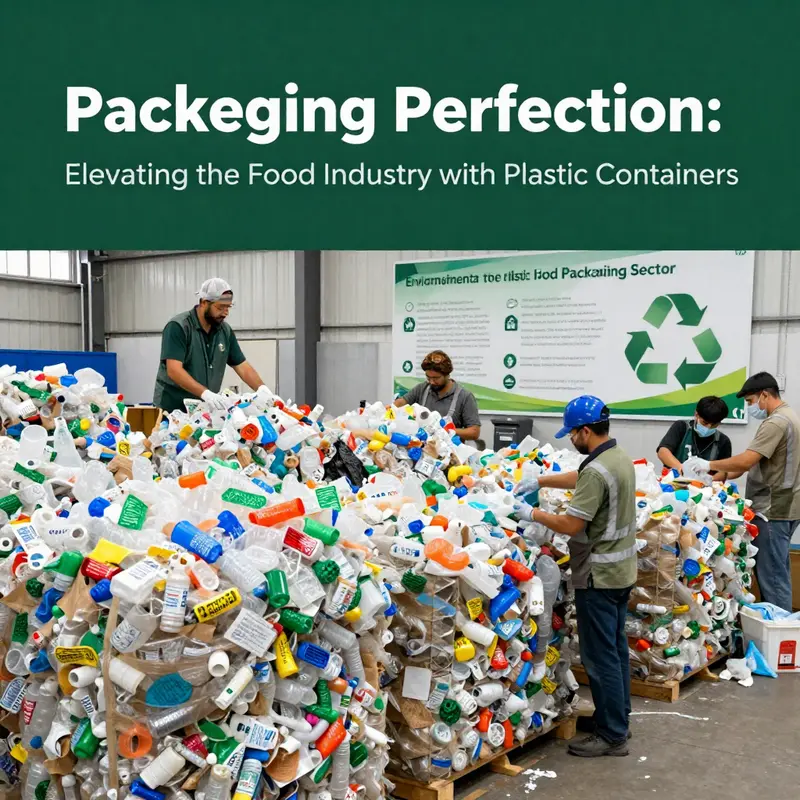
The plastic food packaging sector sits at a pivotal intersection of convenience, safety, and responsibility. Packaging engineers and supply chains have long prized plastics for clarity, strength, barrier performance, and cost efficiency. Yet growing awareness of environmental footprints and the pressure to reduce waste have reframed what success looks like in this field. A chapter in this evolving story examines how sustainability and recycling are redefining the most common packaging tools in the industry, from the familiar containers that hold sauces and ready-to-eat meals to the diverse formats used in bulk storage and takeout service. The aim is not to romanticize a single material but to understand how a holistic approach—one that blends material science, lifecycle thinking, and practical operations—can help the sector move toward a circular economy without compromising food safety or consumer appeal.
At the heart of current progress is a concerted push to reduce virgin plastics. Derived directly from fossil fuels, virgin plastics carry embodied energy and emissions that ripple through manufacturing, transport, and end-of-life processing. Companies are setting ambitious targets to phase out problematic formulations and to prioritize materials that lend themselves to recycling or reuse. In practice, this has meant reexamining the use of materials that complicate recycling streams, such as certain additives or multi-layer constructions that resist separation and sorting. When the industry reduces reliance on these challenging materials, the pathways for collection and processing become more predictable, allowing municipalities and processors to optimize their infrastructure and improve overall recovery rates.
A widely discussed strategy is the shift toward mono-material packaging. By favoring single-material constructions, especially single-layer films made from polyethylene (PE) or polypropylene (PP), brands can simplify sorting and recycling within existing systems. The logic is straightforward: if a package can be readily sorted as a single material during curbside or industrial sorting, it has a higher likelihood of being recovered and reprocessed into useful feedstock. This approach aligns with the practical realities of many recycling facilities that are designed to handle specific streams rather than mixed, multi-material composites. In practice, mono-material designs do not represent a one-size-fits-all solution, but they are increasingly seen as a flexible route to higher circularity for many everyday packaging needs. For instance, the shift toward simpler material profiles resonates with the way common food-service containers are used in takeout and meal-prep contexts, where clarity of purpose and reusability can be balanced with performance demands.
Alongside mono-material shifts, broader material substitutions are gaining traction. Paperboard, aluminum, and glass have regained attention for their high recyclability profiles. Metals and glass, in particular, boast globally meaningful recycling rates—up to about 75%—which is an important point of comparison against the more modest plastic recycling rates reported in many regions. While plastics offer unmatched lightness and formability for food contact applications, these alternative materials remind the industry that a portfolio approach—carefully selecting the right material for the right application and end-of-life pathway—often yields the strongest environmental outcomes. Yet the choice is never purely environmental. Cost, supply stability, consumer convenience, and safety requirements all influence decisions. In practice, manufacturers increasingly map these dimensions against lifecycle outcomes to determine where plastics still make the most sense and where alternatives may offer superior end-of-life performance.
The path forward is not without its challenges. Multi-layered and complex plastic films remain a stubborn obstacle to recycling. When layers combine different polymers or incorporate tricky adhesives and inks, separation becomes difficult or economically unattractive. This fundamental limitation has sparked renewed interest in designing for recyclability from the outset. Packaging is increasingly viewed through a design-for-recycling lens, where minimal inks, adhesives, and material diversity are prioritized. The aspiration is to create packaging that can be recovered as a single material stream or dematerialized into clean, compatible inputs for other products. The practical reality is that improving these streams requires coordinated investments in collection, sorting, and processing infrastructure, as well as clear regulatory guidance that harmonizes labeling with recycling capabilities.
Among the most promising developments are bio-based and biodegradable plastics. Derived from renewable resources such as corn starch, sugarcane, or algae, these materials offer potential reductions in fossil fuel dependence and greenhouse gas emissions. The market outlook has been favorable, with projections suggesting significant growth in biodegradable packaging by the end of the decade. However, lifecycle thinking cautions that the benefits can be uneven. Widespread adoption can shift environmental burdens elsewhere, such as through land-use pressures, higher water consumption, or competition with food crops if not carefully managed. This realization has spurred the development of integrated sustainability frameworks and decision matrices that evaluate environmental, economic, social, and technical impacts across the entire life cycle. In other words, adopting a new material is not just about end-of-life recycling; it is about systemic implications that ripple through agriculture, energy use, and land stewardship.
The industry’s response to these complexities is increasingly collaborative. Circular models require more than better packaging alone; they demand improved collection and sorting infrastructure, standardized materials, and consistent policy support. Pilot programs for reusable packaging systems illustrate how a durable container can cycle through multiple use cases in food-service contexts, provided that hygienic and safety standards are maintained. Design-for-recycling principles are reinforced by practical steps such as minimizing mixed materials and using compatible inks and adhesives. Moreover, smart packaging technologies are moving from novelty to necessity in some markets. QR codes can guide consumers to recycling instructions, while blockchain-based traceability can help track material origins and ensure that recovered plastics are reintegrated into safe, food-grade applications. These technologies do not replace physical infrastructure; they complement it by increasing transparency, efficiency, and consumer trust.
The U.S. FDA continues to provide essential guidance on food-contact materials, underscoring that performance, safety, and hygiene must be maintained even as packaging evolves. Safety standards help ensure that environmental ambitions do not compromise product integrity or consumer health. In practice, this translates into rigorous testing of migration resistance, temperature tolerance, and cleanliness across a wide range of use scenarios—from cold storage to microwave reheating. The broader implication is clear: sustainable packaging must be compatible with the way food is produced, stored, transported, and consumed. When these safeguards are in place, innovation can flourish in ways that protect both people and planet.
Real-world practice also reveals the value of choosing packaging formats that align with end-to-end logistics and pantry management. For example, modular designs and container systems that support portion control, easy stacking, and efficient bulk storage can reduce waste by extending shelf life and simplifying inventory. In some cases, this means rethinking the container shape or size to optimize for a given supply chain, while maintaining the ability to recycle or reuse. Such design choices are not cosmetic; they shape how easily a package can be recovered and reprocessed, how often it is reused, and how much waste it ultimately prevents. The industry increasingly recognizes that a sustainable packaging strategy is a system, not a single decision at the point of sale.
Within this broader spectrum, there are practical opportunities to illustrate how sustainability-minded packaging can manifest in everyday operations. A tangible example can be found in the evolving landscape of takeout and meal-prep packaging, where a move toward simpler, mono-material solutions, coupled with clear labeling and improved collection practices, can yield measurable gains in recoverability. And as brands experiment with formats that balance performance, aesthetics, and recyclability, the conversation naturally gravitates toward options like durable, reusable systems for institutions and commercial kitchens. When a kitchen processes high volumes of food with consistent temperature controls, the precise choice of container material matters not only for safety but for the efficiency of the entire workflow—from cleaning to reusing or recycling.
This chapter’s synthesis is not an argument for abandoning plastics; it is a call for disciplined, systems-level thinking that respects safety, preserves consumer convenience, and advances material circularity. The move toward mono-material and recyclable options should be understood as a stepping stone toward more ambitious goals—bolder design for recyclability, broader adoption of reusable packaging concepts, and smarter, data-driven approaches to end-of-life management. Consumers, regulators, and industry players alike are invited to participate in an ongoing dialogue about what a truly circular plastic food-packaging ecosystem looks like in practice. In this dialogue, an anchor principle remains constant: every packaging decision should be assessed not only for its immediate efficiency or cost but for its full lifecycle implications, including the capacity to recover, reuse, or safely repurpose its materials.
In the spirit of tangible progress, consider how a simple packaging shift—toward a more recyclable format or a more easily reusable system—can ripple through the supply chain. A practical pathway is to pair lightweight, mono-material containers with standardized, recyclable closures and clear, ink-free labeling to minimize contamination and sorting complexity. Another pathway lies in choosing packaging that allows for efficient cold-chain performance, safe handling in busy service environments, and compatibility with existing recycling streams. These choices translate to lower environmental impact, reduced waste generation, and, ultimately, a more resilient packaging ecosystem that still delivers on the consumer promise of freshness, safety, and convenience. And while the industry continues to innovate, it remains essential that sustainability strategies remain aligned with regulatory expectations and with sound lifecycle evaluation that captures trade-offs across materials, energy use, land and water resources, and social outcomes.
As the sector moves forward, it will be important to keep a balanced perspective. Bio-based plastics may offer meaningful opportunities, but their adoption should be guided by robust life-cycle assessments and careful consideration of agricultural resource use. Design-for-recycling principles must remain central, with an emphasis on compatibility across recycling streams and the minimization of contaminants. The goal is a packaging landscape where value is retained within the economy rather than lost to waste, where consumer safety is never compromised, and where the environmental footprint of food containment is continually reduced through smarter materials choices, improved infrastructure, and collaborative action across the supply chain. For practitioners and researchers alike, the message is clear: sustainable plastic food packaging is not a one-off modification; it is a continuous, systems-oriented effort to harmonize safety, performance, and circularity in a dynamic, global market.
External resource: https://www.eesc.europa.eu/publications/recycling-food-packaging-food-waste-plastics-revolution
To see a concrete example of how one form of sustainable packaging is positioned within the industry’s broader shift toward recyclability, consider the growing interest in sturdy, recyclable takeaway packaging that emphasizes mono-material construction and clean design. Such formats illustrate how packaging can balance consumer expectations with end-of-life performance, while remaining compatible with efficient collection and sorting systems. For readers seeking a practical design example and supplier options that align with these principles, a relevant option in the marketplace is the octagonal kraft paper packaging family, which demonstrates how a paper-based approach can fulfill takeout needs without sacrificing functionality or safety. See more here: octagonal kraft paper packaging.
Smart, Sustainable, and Sealed: The New Frontier in Plastic Container Design for Food Packaging
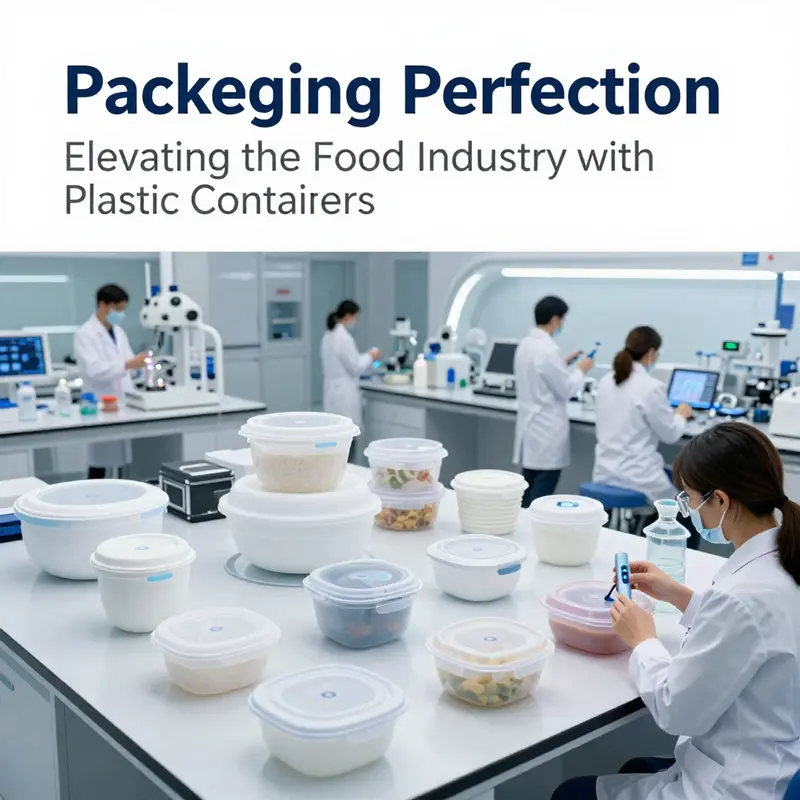
The modern food supply chain rests on a familiar, almost invisible protagonist: the plastic container. Its journey from simple barrier to smart packaging reflects a larger shift in how the industry thinks about safety, efficiency, and responsibility. For decades, materials such as PET, HDPE, and PP have underpinned the sector because they offer clarity, strength, chemical resistance, and cost efficiency. PET’s crystalline lightness makes it the default for 800 g and ready‑to‑eat meal packaging, delivering consumer appeal through visibility while maintaining integrity under typical cold and room temperatures. HDPE stands out for dairy products and spreads, where exceptional chemical resistance and impact resistance are indispensable, even as facilities push freezing and microwave use into daily routine. PP earns its keep in hot‑service contexts, where its high melting point and resilience to heat empower microwave‑safe, dishwasher‑safe containers that stand up to the rigors of busy takeout and meal prep workflows. In practice, the choice among these materials is not merely a matter of compatibility with a product’s temperature profile; it is a careful calculus of barrier properties, motive power for shelf life, and the lifecycle narrative the brand aims to tell. Yet the industry’s ambitions extend well beyond the material science of a single container. They hinge on how containers perform within a system—how they preserve freshness during transit, how they integrate with automated filling and sealing lines, and how they participate in circular economy strategies that aim to reduce waste and energy use across the supply chain. In this sense, technological advances in plastic container design are not just about making a better lid or a clearer wall; they are about redefining the entire packaging ecosystem around safety, sustainability, and efficiency, while aligning with evolving regulatory expectations and consumer values. Within this broader panorama, several convergent threads are shaping tomorrow’s containers: the fusion of smart technology with packaging, breakthroughs in materials science that stretch the boundaries of sustainability without sacrificing performance, and the adoption of automation that elevates precision while shrinking waste. These threads do not exist in isolation. They feed one another, enabling containers that can monitor internal conditions, respond to real-time data, and be produced with a lighter touch on the environment without compromising the trust that food safety requires. The promise of smart packaging, for example, lies in sensors that can track temperature, humidity, and even gas composition inside a package. When integrated into the right container system, these sensors become a dataset as valuable as the product itself. They provide actionable signals to retailers and food service operators, allowing more accurate stock rotation, better demand forecasting, and a meaningful reduction in waste that would otherwise end up in landfills. The consumer, too, gains clarity—both literally and figuratively—about freshness through straightforward indicators that translate complex data into simple, interpretable cues. This capability addresses one of the most stubborn inefficiencies in the food industry: the gap between packaging performance and real-world usage. The sensors embedded in containers can be designed to be robust across typical supply chain bottlenecks, retaining accuracy across temperature excursions that are common in multi-modal transport. The data streams also create a feedback loop for manufacturers, who can use the information to optimize formulations and barrier layers in future designs. In parallel, material science is expanding the palette beyond traditional fossil‑based plastics. Bioplastics and recyclable polymers are no longer theoretical options; they are being integrated into production pipelines with a focus on retaining barrier properties and mechanical strength while reducing life-cycle emissions. The challenge has always been to preserve the protective functions that prevent oxidation, moisture ingress, and contamination, especially for dry goods like cereal, flour, and nuts, whose quality hinges on moisture control and oxygen barriers. Recent material innovations aim to provide these functions with lower environmental impact, including improved recyclability and compatibility with existing end-of-life streams. The improvements in barrier properties are not cosmetic; they translate into meaningful performance gains, extending shelf life and protecting sensory attributes. This is crucial for products that rely on precise texture and aroma profiles, where even small deviations in humidity or oxygen can alter consumer experience. As a result, packaging designers are rethinking wall thickness, multilayer architectures, and the integration of nano- or micro-scale barriers that delay degradation without making the container heavier or less recyclable. At the same time, design optimization is increasingly coupled with automation. Modern production environments leverage robotics and sensor-guided assembly lines that deliver consistent results with tight tolerances. Automation reduces human error during shaping and sealing, increases throughput, and lowers the energy footprint per unit produced. It also enables more complex geometries, better nesting, and minimized gaps between containers, which in turn improves storage efficiency and transport stability. The net effect is a more predictable, scalable manufacturing process that can keep up with rising demand while maintaining high hygienic standards. The automation trend dovetails with advancements in heat resistance that widen the functional envelope of plastic containers. Containers once deemed unsuitable for certain food preparation methods—such as higher-temperature reheating or long-term freezer storage—are now being engineered to withstand these conditions without compromising integrity. This is essential for food service operations that rely on bulk prep, efficient batch cooking, and rapid service during peak demand. For operators, the implications are straightforward: fewer product returns due to container failure, more reliable performance during handling and transport, and the ability to offer a broader menu under a single packaging platform. In practice, these design strides also support broader sustainability goals. The industry’s shift toward circular economy models underscores careful attention to reuse, recycling, and, where appropriate, compostability. Reusable and reconditioned systems are not merely theoretical concepts; they are being vetted through cost analyses that weigh upfront investments against long-term material savings and landfill reduction. The financial calculus becomes favorable when containers are designed for durability, cleanability, and modularity, enabling multiple reuse cycles with predictable performance. In this way, the container is not a disposable afterthought but a strategic asset that contributes to supply chain resilience and environmental stewardship. The FDA and other regulatory bodies provide authoritative guardrails for these developments, anchoring innovations in safety and hygiene standards that protect consumers while enabling experimentation. The safety framework guides material choices, migration limits, and compatibility testing with food products, ensuring that new composites or barrier systems meet or exceed established norms. This regulatory alignment is crucial when designers push into new materials or integrate any form of smart functionality, such as sensors or embedded electronics, because it verifies that added features do not introduce undue risk or contamination pathways. The interplay between safety, performance, and sustainability requires a holistic mindset that treats packaging as an integrated system rather than a standalone component. In practice, that means packaging buyers and manufacturers must evaluate a suite of considerations: how a container performs under real-world temperatures and handling conditions; how it interacts with cleaning regimes and reuse cycles; how much energy, water, and waste are required to produce and recycle it; and how data from smart features aligns with traceability and food safety programs. It means selecting materials and designs that can be reconciled with existing recycling streams, or with emerging feedstock innovations that make recycling more efficient and less costly. It also means recognizing that some applications may still rely on single-use plastic solutions where the performance and value story justify it—always with an eye toward end-of-life options that minimize environmental burden. To illustrate how these ideas come together in practice, consider how modular storage and portion-control inserts in certain container families enable precise pantry organization and bulk storage, reducing waste at the consumer level by facilitating portion control and reducing spoilage. In catering and takeout contexts, disposable yet reliable formats continue to play a critical role, provided they are designed with durability, optical clarity for product appeal, and safe mouthfeel in mind. The ecosystem remains dynamic, with ongoing experimentation and iterative development across materials, sensors, and production processes. As the industry navigates this convergence of smart sensing, advanced materials, and automation, it is clear that the future of plastic containers lies not in a single breakthrough but in a network of coordinated innovations that reinforce one another. The result will be packaging that preserves freshness more effectively, communicates quality more transparently, and uses resources more wisely, all while complying with rigorous safety standards and consumer expectations. For readers seeking a broader perspective on the latest trends in food packaging, including the evolving role of plastic containers, a recent overview from a leading scientific source offers valuable context and technical detail: https://www.sciencedirect.com/science/article/pii/S096386912400357X. And for those exploring how packaging materials can align with sustainability objectives while maintaining performance, a practical glimpse into alternative packaging options can be found at one of the industry’s resource hubs that highlights Kraft paper packaging solutions such as disposable-octagonal-box-restaurant-food-kraft-paper-packaging, illustrating how brands balance function with environmental considerations without compromising on food safety or presentation.
Final thoughts
The plastic container food industry continues to evolve, driven by advancements in materials, safety regulations, economic considerations, and sustainability initiatives. Recognizing the importance of these factors is crucial for stakeholders in food service, from bubble tea shops to catering services. Adopting modern plastic solutions not only enhances food safety and efficiency but also contributes to broader environmental goals through improved recyclability and innovation. As you consider your packaging options, remember that the right container can significantly impact your business operations and customer satisfaction. Embrace the potential of plastic containers to elevate your food service offerings while aligning with modern values.