
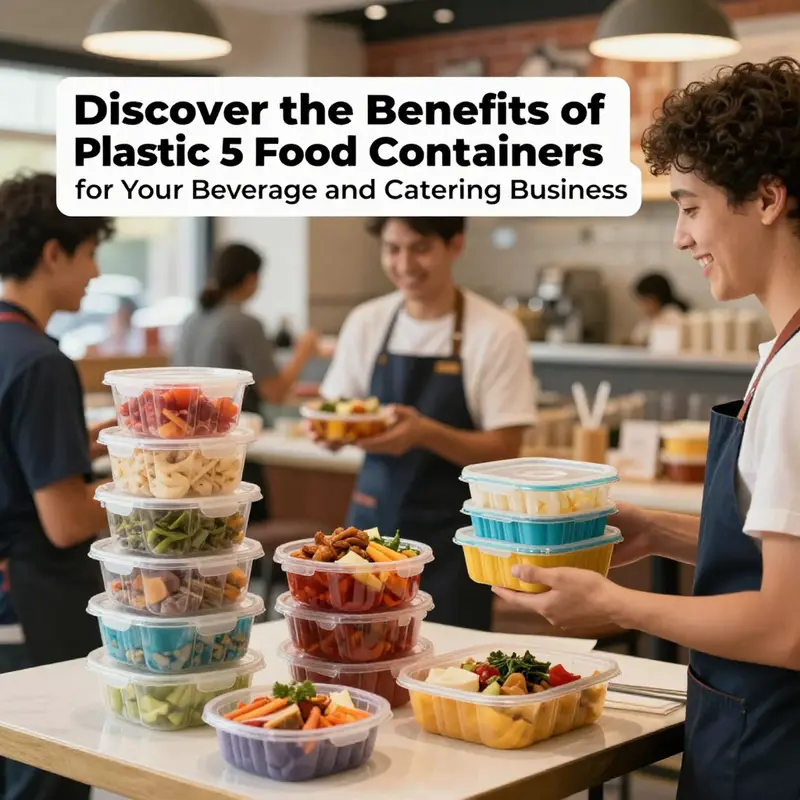
In today’s fast-paced dining and catering industry, maintaining food safety and ensuring efficient operations are paramount. Enter the plastic 5 food container — a practical solution designed for restaurants, food trucks, catering services, and beverage chains. Made from BPA-free polypropylene, these containers offer durability, safety, and versatility. From meal prep in bustling professional kitchens to storage in charming bubble tea shops, these containers cater to a variety of food and beverage needs. Each chapter will delve into the unique characteristics, applications, practical use cases, tips for selection, and the environmental sustainability of these essential tools, shaping a comprehensive understanding of why they are a must-have in your food service arsenal.
Why Polypropylene (#5) Powers the Plastic 5 Food Container: Material Strength and Safety
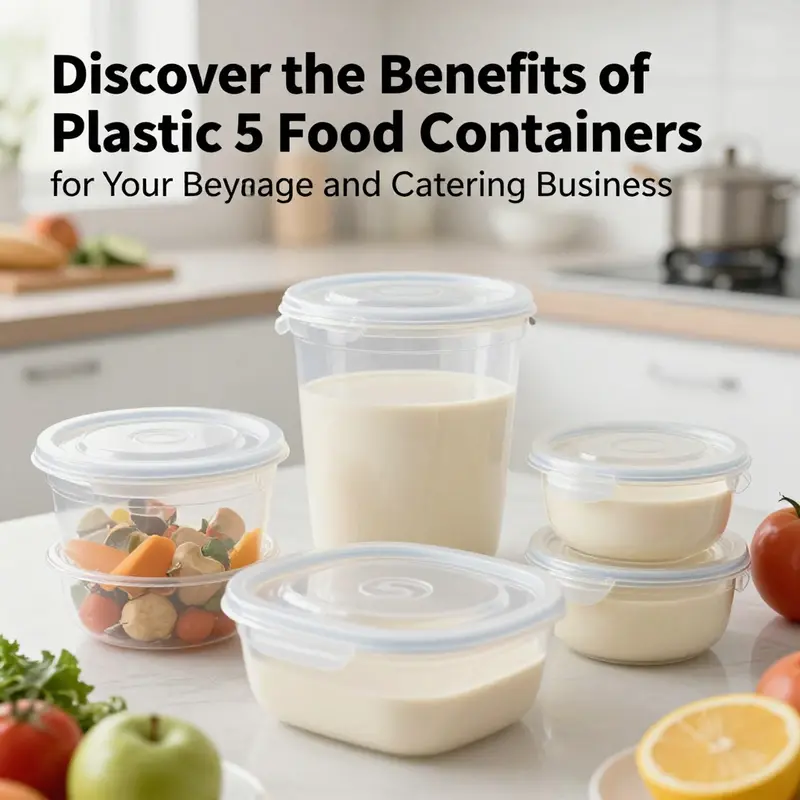
Polypropylene, commonly marked with the recycling code #5 and known as PP, is the material that defines the practical value of the plastic 5 food container. Its combination of heat tolerance, chemical resistance, and mechanical strength allows a single set of five nested containers to serve many kitchen roles. From meal prep and refrigerated storage to microwave reheating and dishwasher cycles, PP supports daily food handling without compromising safety or function.
The intrinsic properties of PP make it a strong candidate for food contact. It has a high melting point, usually near 160°C. This gives PP an edge over many common packaging plastics. Containers resist softening at normal microwave temperatures. They also hold shape when refrigerated or placed in a freezer. Rigidity and stiffness are higher than in low-density polyethylene. That rigidity helps lids seal and containers stack neatly without collapsing. Consumers gain both durable storage and compact organization.
Transparency in PP is adequate for food containers. While not as glass-clear as PET, many PP products allow easy visual inspection of contents. That visibility reduces the need to open containers, which in turn preserves freshness and prevents cross-contamination. For busy kitchens, being able to see sauces, grains, or salads through the plastic speeds meal selection and portion control.
Chemical stability is another defining feature. Polypropylene resists attack from many acids and bases commonly found in foods. It does not react easily with acidic dressings or alkaline cleaning agents. This stability helps maintain food flavor and avoids transfer of unpleasant odors. The risk of chemical migration into food is low when containers are used correctly. Still, care must be taken with extremely fatty or spicy foods stored at high temperatures for prolonged times.
Safety assurances go beyond material chemistry. Polypropylene is recognized by major food-safety authorities as suitable for food contact. Containers labeled as food-grade or BPA-free and marked with the recycling code 5 are produced to meet such regulatory expectations. This designation reduces concern about harmful additives. It is essential, however, to rely on the manufacturer’s labeling. Always check packaging for explicit food-grade confirmation and any manufacturer-specific guidance on temperature limits.
Microwave use is one of the most common tasks for PP containers. Their thermal resistance and low leaching tendency make them preferable for reheating. Most plastic 5 food containers are marketed as microwave-safe. Still, safe practice matters. Use moderate heat settings and avoid heating empty containers. Avoid prolonged, high-power cycles and do not expose lids that are not vented to high steam pressure. If a container shows deformation or discoloration after repeated heating, retire it from microwave use.
Dishwasher durability adds to PP’s convenience. Polypropylene tolerates routine dishwashing, usually on the top rack and with standard detergent. Repeated cycles may, over long periods, cause clouding or slight warping. Inspect lids and seals periodically. Elastic seals or gasket materials may wear faster than the polypropylene body. Replace any lid that fails to hold a tight seal to prevent leaks and spoilage.
Freezer performance is also strong. Polypropylene remains stable at common household freezer temperatures. It resists cracking when chilled, unlike some brittle plastics. Because PP can be used across cold and hot conditions, it supports a full food lifecycle: prepare, chill, reheat, and serve from the same container. Despite this versatility, avoid placing PP containers under direct broiler heat or on stovetops. Open flames or direct contact with heating elements can quickly deform or damage the polymer.
Considerations about food type and storage duration are practical safety points. Acidic foods generally pose little risk to PP, but repeated storage of very oily or fatty foods at elevated temperatures may increase the chance of minor migration. For long-term storage of highly acidic or fatty items, consider glass or certified high-barrier packaging. Short- to medium-term storage in PP remains safe and convenient for most everyday foods.
Recycling and environmental context help complete the safety picture. The #5 code indicates that polypropylene is generally recyclable, though local facilities vary in acceptance. Recycling infrastructure for PP is improving, but it remains less universally collected than PET or HDPE. When recycling options are limited, extending the usable life of the five-piece container set reduces environmental impact. Proper cleaning and careful reuse delay disposal and conserve resources.
Product design also affects safety and performance. Well-designed 5-piece sets pair container bodies with lids that snap or screw securely. A positive latch reduces spills and controls odors. Some lids include vents or removable seals to facilitate microwave use. Look for smooth interior surfaces that clean easily and avoid textured interfaces where food can lodge. Good design reduces microbe harborage and simplifies sanitation.
Storage and maintenance habits matter as much as material choice. Clean containers promptly after use. Allow them to dry fully before nesting for storage. Avoid using abrasive cleaners or scrubbers that can scratch the surface. Scratches create sites where bacteria can persist and can accelerate plastic degradation. If a container retains strong stains or odors after repeated washing, consider replacing it rather than risk cross-contamination.
Choosing the right container capacities within a five-piece set is practical. Typical combinations span small sauce-sized cups to large meal-sized bowls. This flexibility reduces the need for single-use packaging and keeps portions organized. A versatile PP set supports batch cooking, portioning, and safe transport of meals without frequent dish changes.
When selecting a plastic 5 food container, prioritize explicit labeling: food grade PP, BPA-free, and microwave-safe are key marks. Inspect lid designs and sealing systems. Consider the balance between clarity and durability. If sustainability is important, choose reusable sets and verify local recycling options for end-of-life handling. For businesses seeking alternative packaging, comparable paper-based solutions exist that emphasize compostability and recyclability; for example, the disposable kraft paper bowl with lid offers an eco-friendly option for single-use contexts. (See: disposable kraft paper bowl for food package with lid).
In summary, polypropylene #5 gives the plastic 5 food container its practical strengths. Heat tolerance, chemical stability, and structural rigidity combine with regulatory acceptance to create a reliable everyday food storage solution. Mindful use, careful cleaning, and sensible replacement policies maintain safety and extend the life of the set. For authoritative confirmation of PP’s status as a food-contact material, consult regulatory resources such as the U.S. Food and Drug Administration: https://www.fda.gov/food/food-contact-materials/fda-food-contact-substances-notified-and-authorized-for-use
Carving Order Across Kitchens: The Practical Reach of Plastic 5-Container Sets in Homes and Businesses
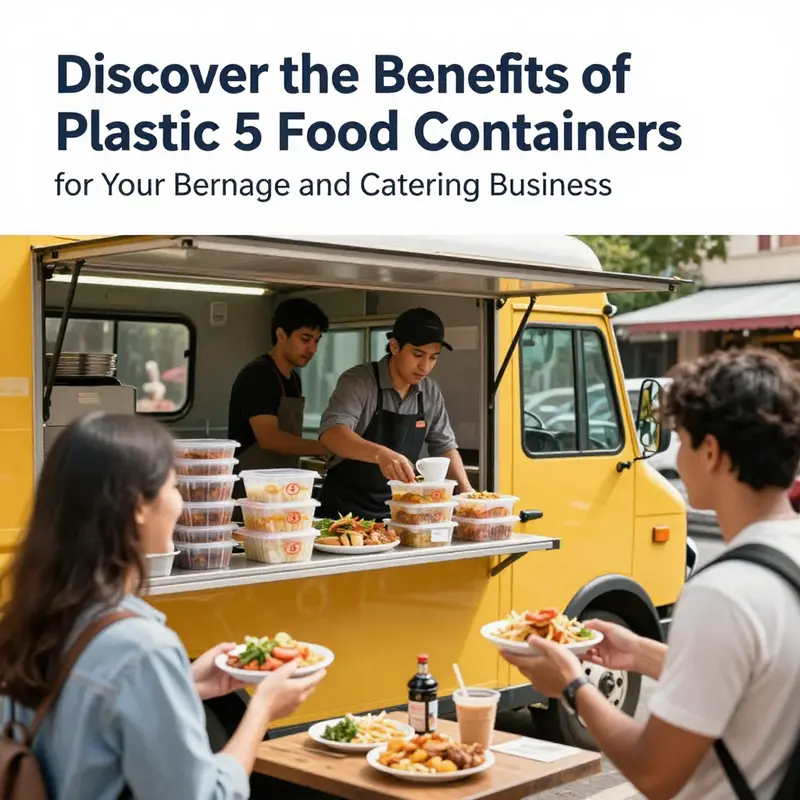
Every kitchen longs for order, predictable portions, and dependable tools. A plastic 5 food container set, crafted in a five-piece configuration from polypropylene, answers those needs with quiet efficiency. The material choice—polypropylene, commonly labeled PP #5—rests at the heart of its versatility and safety. When labels highlight BPA-free construction, they signal more than a promise; they reflect a focus on the integrity of food contact. This is not mere rhetoric. It is a practical assurance that the containers hold flavors rather than introduce concerns, especially when the set is used daily for storage, reheating, and transport. The heat resilience of PP, often accommodating up to 100-120°C, opens a seamless loop of use: the same vessel that stores a hot dinner can also safely emerge from the freezer and slide into the microwave. The result is a simple, reliable workflow that spans the tastes of home cooking and the demands of a busy commercial kitchen. In homes, it translates to a smoother rhythm of meal prep, leftovers, and snack organization; in commercial settings, it translates to consistent portioning, clear presentation, and streamlined logistics.
The five-piece design is more than a convenience; it is a scalable system. Containers come in a spectrum of capacities, typically ranging from small to large, so cooks and homemakers can match the right vessel to the right purpose. One size might cradle a portion of steamed vegetables for a lunch box; another can contain a sauce or a batch of dough ready for refrigeration. The lids, often with snug, airtight seals, are the unsung heroes of freshness and spill prevention. They lock in aromas, keep foods from absorbing other flavors, and permit a tidy stack that saves precious kitchen real estate. In this sense, the kit becomes a compact, portable pantry—an extension of the refrigerator as much as a bridge to the microwave.
In domestic life, the practical impact is immediate. Meal preparation is less a daily scramble and more a practiced routine. Ingredients can be pre-portioned and stored in a range of sizes, then retrieved with minimal fuss. Leftovers gain a second life because the seal is airtight enough to maintain moisture without trapping condensation that reduces texture. Dry goods and snack items find a new home in the mid-range containers, which keep pantry shelves neat and labeled without sacrificing accessibility. For families and individuals seeking healthier routines, these containers become tools for portion control and planning, supporting a calendar of meals rather than ad hoc cooking sessions. And when a picnic, a potluck, or a workday lunch calls, the set travels well—a compact kit that fits into a tote or a compact lunch bag and surfaces with its contents intact and appetizing.
In the fast-paced world of food service and catering, the same five-piece synergy translates into observable advantages. In a restaurant, café, or casual takeout operation, the containers serve multiple roles: portion-control vessels, ready-to-serve packaging for grab-and-go meals, and durable receptacles that withstand repeated cold and hot cycles. Their transparency helps staff and customers alike identify contents at a glance, which reduces handling time and improves service accuracy. The chemical inertness of PP #5 means that sauces, soups, and gravies do not interact with the container material in ways that could alter taste or safety. The ability to withstand both cold storage and microwaving for reheating makes them compatible with day-ahead prep and same-day service, a critical advantage in busy kitchens. In larger facilities, the five-piece set can be integrated into bulk storage systems, with each size assigned to a category of product—sauces, doughs, salads, or ready-to-heat entrées—creating a disciplined, efficient workflow from prep to plate.
Of course, the practical elegance of this system comes with a responsibility to use it wisely. The safety profile benefits from selecting containers clearly labeled as food-grade PP and BPA-free. Even though the materials are stable and inert, it is wise to avoid exposing containers to direct flame or placing them on a heat source without a lid, as such exposure can warp or degrade the seal. Likewise, long, uninterrupted heating in the microwave can lead to uneven heating and potential warping, so using vented lids and stirring when appropriate helps protect both the food and the container. After each use, a thorough cleaning and complete drying extend the life of the set. The lids, in particular, deserve a quick check for cracks or warping, since a compromised seal can undermine freshness and spill protection. In commercial contexts, adherence to safety and sanitation guidelines is even more critical, where consistent product quality, traceability, and batch control are part of daily operations.
From an organizational perspective, the five-piece set embodies a philosophy of efficiency that resonates across households and service environments. Stackability, for example, is not merely a space-saving feature; it enables quick access and rapid cleanup after service windows. The ability to nest containers within one another reduces storage footprints in crowded kitchens and on busy prep lines, where every square foot matters. In warehouses and distribution centers, such containers simplify sorting and transport of semi-solid or viscous ingredients, sauces, and doughs. Even the choice of sizes, whether arranged in ascending capacity or grouped by function, can influence inventory management, reducing waste by enabling precise portioning and proper temperature control through the storage lifecycle.
Beyond the practicality, there is a narrative about sustainability and responsible consumption. Polypropylene is recyclable in many municipal programs, and its durability encourages longer product life, which in turn reduces the need for frequent replacements. The BPA-free attribute aligns with growing consumer expectations for safer materials in food contact. Yet, this is not a story of absolutes; it is a reminder that safe use depends on proper care, appropriate application, and informed disposal. The life of a five-piece set is measured not just in cycles of heating and cooling, but in its resilience against cracks, stains, and odor retention. In daily practice, routine maintenance—gentle washing, careful handling of lids, and dry storage—can sustain clarity, prevent odor transfer, and preserve the pristine appearance that encourages continued use.
As with any storage system, there is a moment of choice when considering alternatives or complements to plastic in the broader packaging ecosystem. While plastic PP #5 containers excel in cost, durability, and convenience, other packaging formats offer different strengths, such as compostability or a reduced environmental footprint in certain applications. For readers exploring packaging landscapes beyond plastic, a practical example is the use of take-out options designed with paper-based materials that emphasize quick-service efficiency and ease of disposal. See a representative option here: disposable-700ml-kraft-paper-bowl-take-out-octagonal-rectangle-paper-bowl.
In sum, the plastic 5 food container set is not just a collection of bowls and lids. It is a small, portable system that supports precise meal planning, reliable storage, and efficient service across domestic and commercial spectra. Its strength lies in the synergy between material science and everyday practice: a safe, heat-tolerant polymer that can withstand the rigors of daily use while preserving food integrity and flavor. The five sizes work in concert to cover a wide range of needs—from a morning prep for one to a batch ready for a catered event—without forcing compromises on either freshness or practicality. The result is a storage and service solution that mirrors the modern kitchen’s demand for reliability, clarity, and speed.
External guidance helps frame this in a broader context. For readers seeking authoritative information about materials that come into contact with food, the U.S. Food and Drug Administration offers comprehensive guidance on food contact materials and related safety considerations. This resource provides foundational context for understanding why certain plastics are specified for food use and how regulatory expectations guide product design and labeling. See the FDA overview here: https://www.fda.gov/food/food-contact-materials/food-contact-materials-101
Enduring Clarity and Everyday Flexibility: The Power of PP #5 Five-Piece Food Container Sets
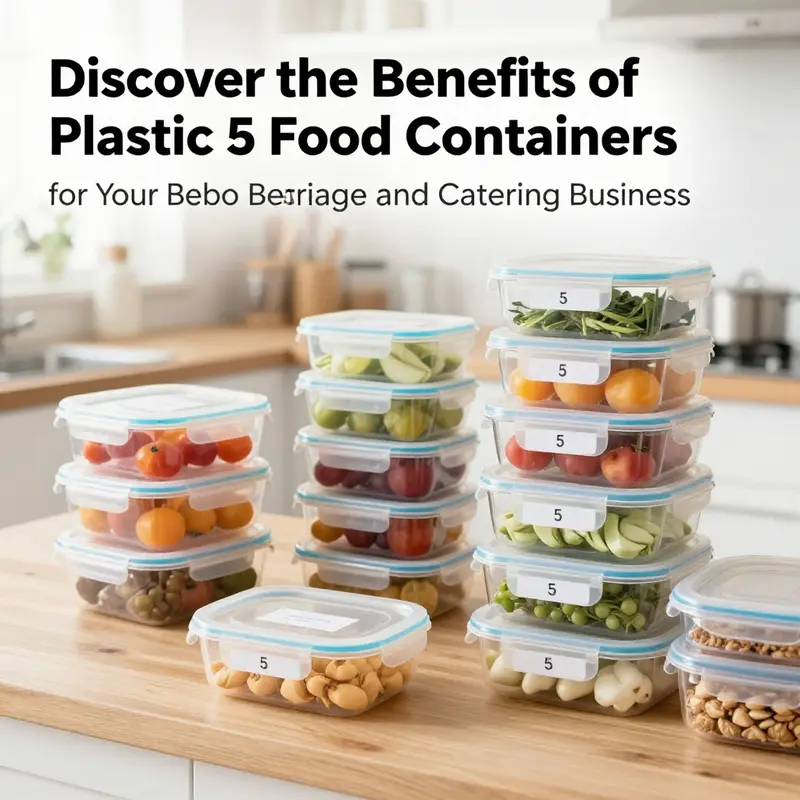
The plastic five-piece food container kit, built around polypropylene (PP #5), embodies a quiet reliability that underpins daily kitchen routines. Its appeal rests not on flashy features but on a coherent blend of safety, resilience, and practical design. PP #5 is marketed for food contact because it resists common chemical interactions with pantry staples, which means sauces, grains, vegetables, and proteins can share the same space without fear of flavor transfer or contamination. In this context, the five-piece set becomes more than a collection of empty vessels; it functions as a modular system for organizing meals, preserving freshness, and enabling a confident, mobile approach to food storage. The material’s inherent heat resistance supports a full cycle from cold storage to reheating, and its chemical stability keeps flavors intact and odors from lingering after a thorough cleaning. In homes, offices, and kitchens that juggle busy schedules, such containers offer a dependable bridge between preparation, storage, and consumption, reducing the friction that often accompanies meal planning and leftovers management.
What makes the PP #5 subset particularly compelling is how its properties translate into everyday use. The material’s safety profile is strengthened by BPA-free labeling, a criterion many households now actively seek. This reassurance matters because it aligns with a broader trend toward transparent, consumer-friendly packaging that prioritizes health and safety without sacrificing convenience. The temperature endurance—commonly cited as a range that spans from refrigerator cold to microwavable warmth—positions these containers as versatile tools for a variety of routines. They can withstand the rigors of daily handling, from being dragged out of a cramped fridge to surviving the bustle of a dishwasher cycle. The capacity spectrum of a typical five-piece set—ranging from compact 170ml portions to larger 2170ml reserves—emphasizes flexibility. These sizes cover a spectrum of storage tasks: portioned lunches, meal-prepped staples, sauces, and even batch-baked items that benefit from clear visibility when stacked in a shelf or cabinet.
Design details reinforce the practical advantages. Clear walls help keep contents identifiable at a glance, reducing the time spent rummaging through a crowded fridge. Lids with well-engineered seals prevent cross-contamination of aromas and guard against leaks, an attribute especially valued by commuters and families who transport soups or sauces. When lids seal tightly, the containers become reliable partners for on-the-go meals, school lunches, or office snacks. The stackable geometry of a compact five-piece set also translates into significant storage efficiency. Nesting and nested storage save space in cabinets and freezers, a feature modern kitchens, cramped apartments, and busy catering setups appreciatively welcome. Moreover, the ability to withstand repeated cycles of washing and handling without warping or performance loss is a practical virtue that extends the product’s life and reduces waste over time.
In practice, the versatility of PP #5 containers unfolds across several common activities. Meal prepping is a natural fit: the rectangular or rounded profiles maximize cabinet and refrigerator space, allowing cooks to parcel out proteins, grains, and vegetables into distinct compartments. This arrangement supports balanced eating patterns, portion control, and prompt mealtime execution during hectic workdays. Reheating leftovers is another strong suit. These containers are designed to tolerate microwaves, enabling you to reheat meals directly in their dedicated vessels without transferring contents to a different dish. The ability to endure heat while maintaining their shape and lid integrity is a practical benefit that reduces the risk of spills during transit or in microwaves. For liquids and semi-liquids, leak-proof variants with silicone gaskets offer confidence when carrying soups, stews, or sauces in backpacks, purses, or lunchboxes. The clarity of the plastic makes it easy to identify contents before opening, a small but meaningful convenience when dealing with multiple containers and a busy morning routine.
Beyond the kitchen, the containers find a natural role in foodservice and hospitality settings. In cafes and fast-casual venues, the transparent design helps staff and customers see portions, which improves order accuracy and reduces waste. In catering and industrial kitchens, the five-piece set can be deployed to store and portion sauces, batters, or doughs, providing clean separation of items that must remain discrete yet accessible. The material’s chemical resistance and stability are especially valuable in environments where ingredients vary in acidity and oil content, reducing potential interactions that can degrade the container’s clarity or strength. The durable nature of PP #5 also contributes to a sustainable narrative. While any single-use mindset is undesirable, many PP #5 containers are recyclable, offering an escape hatch for responsible disposal and circular economy goals when the time comes to upgrade or recycle.
Care and maintenance practices further amplify the long-term value of these containers. Cleaning should be thorough and routine, with attention to removing residual odors or stains promptly. Although PP #5 can tolerate dishwasher cycles, it’s prudent to avoid prolonged exposure to high-heat settings or direct flame contact, which can degrade seals or warp lids over time. Air drying is recommended to prevent moisture from lingering in lids, a factor that supports hygiene and odor control. Over time, repeated cycles of use and washing may lead to minor wear in the gasket or lid; replacing seals or adopting a compatible lid design can help sustain leak-proof performance without sacrificing convenience. When stored, placing containers nested with lids ajar or loosely closed preserves the seal integrity and avoids a false impression of readiness when actually stacked in a crowded space.
The five-piece configuration is not merely about convenience; it’s a practical answer to how households and food businesses manage portions, presentation, and portability. The transparency of the material couples with size variety to enable quick identification of contents and straightforward planning for meals across days or shifts. This is particularly helpful for families who aim to minimize food waste by clearly labeling portions and ensuring leftovers are easily accessible. In a restaurant or bakery setting, the same logic extends to batch preparation and storage of semi-solid products like sauces, fillings, or batters, where stable, non-reactive containers help maintain consistency from prep to service. This adaptability is what makes the PP #5 set a staple in many kitchens and workspaces, a reliable partner in the ongoing effort to streamline food storage, preserve flavor, and support a more organized lifestyle.
External reference for safety standards and material guidelines reinforces this understanding. For a detailed overview of how food-contact materials are regulated and how polypropylene fits within those guidelines, consult the FDA’s guidance on food-contact materials and chemicals. This external resource offers a framework to interpret the robustness of BPA-free, food-grade PP and how it aligns with broader public health objectives.
Five-Pactor Confidence: A Deep Dive into Choosing Safe, Flexible Plastic 5-Container Sets for Everyday Food Storage
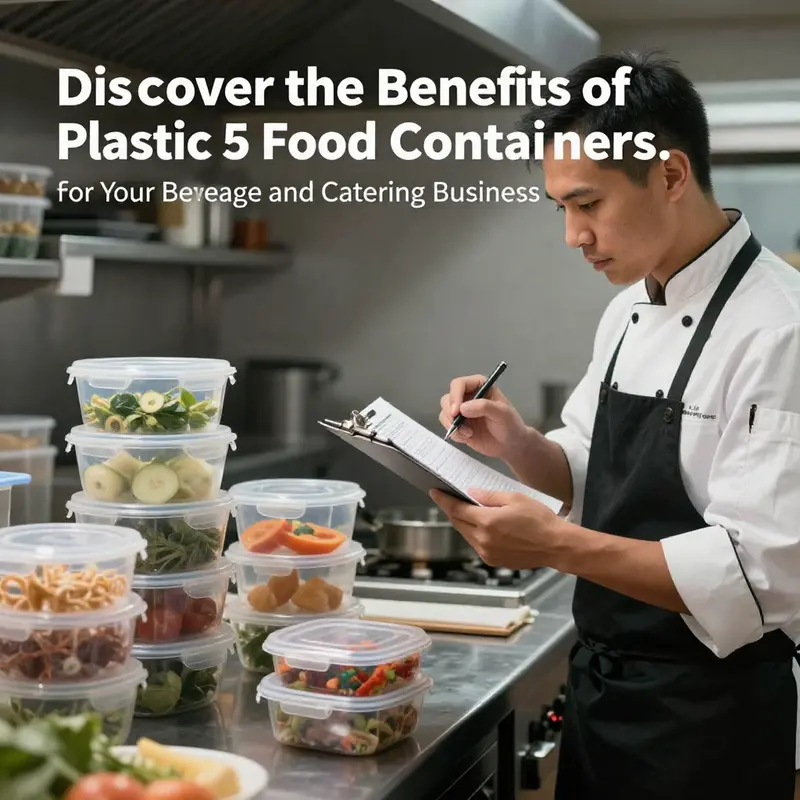
A Plastic 5 food container set is more than a simple kitchen accessory. It acts as a compact system that governs how we store, reheat, and transport meals. When you unlock a five-piece polypropylene ensemble, you glimpse a carefully designed toolkit that adapts from fridge to plate to pantry shelf. Each vessel serves a distinct role, from small portions of sauce to larger meals, and the lids complete the seal, preventing cross-flavor leakage and preserving freshness. But the real value lies not just in the number of pieces, but in the choices that accompany them: the material safety profile, the heat tolerance, and the practical realities of daily use. A well-chosen set aligns safety standards with the rhythms of real life, turning a routine task—storing leftovers—into a dependable, low-friction habit.
Material safety sets the foundation for this system. Polypropylene, commonly labeled PP #5, is at the heart of most food-grade plastic containers. It is widely recognized as one of the safer options for contact with food, especially when compared with other plastics that carry heavier risk profiles or uncertain additives. The BPA-free label has become a baseline expectation in modern kitchens, and for good reason: it reduces one of the most scrutinized chemical concerns in consumer products. Beyond safety, polypropylene offers a remarkable advantage in heat resilience. Containers can typically endure temperatures around 100-120°C, which means reheating leftovers in a microwave is feasible, and dishwasher cycles can be used without fear of immediate deformation. Cold storage remains a straightforward routine as well, so the same set can handle the full lifecycle of a meal—from fridge to plate to re-storage if needed. Yet, even with robust heat tolerance, there are caveats. Repeated dishwashing can create micro-scratches on the interior surface. Those micro-scratches increase the surface area and can subtly influence how materials interact with certain foods during heating, particularly fatty or strongly flavored ones. And while many products bear a microwave-safe claim, some food safety and materials experts advise minimizing heating in plastic when possible. The simplest path to long-term peace of mind is to minimize direct, prolonged heating in plastic and, where feasible, transfer foods to a ceramic or glass plate for reheating.
Placing PP #5 in the broader materials landscape helps illuminate choices that extend beyond a single kitchen. Polyethylene Terephthalate (PET) is a common alternative for short-term storage and clear presentation; it offers excellent barrier properties and a crystal-clear view of contents. However, PET is less forgiving under repeated heating, and its long-term performance in warm environments is less favorable for reheating tasks. Even with BPA-free assurances, the conversation about safer alternatives doesn’t end there. Some containers marketed as BPA-free may still contain other additives that warrant attention, especially when stored for longer periods or heated at higher temperatures. For those who prioritize stability under heat and chemical resistance, PP remains a strong default for everyday reheating and routine storage. In parallel, many households still rotate in glass for specific scenarios—acidic sauces, citrus-heavy dishes, or meals that will sit in contact with food for extended periods. Certifications and transparent labeling, including food-grade marks and clear material identification, provide a reliable narrative about what sits in your cabinet and how it behaves in the kitchen.
The five-piece design itself embodies a philosophy of flexible cooking and practical organization. The five capacities—often ranging from small to large—cover the typical spectrum of daily needs. While exact measurements vary by manufacturer, a common layout includes about 170 milliliters for sauces or tiny portions, 460 milliliters for side dishes, 830 milliliters for reheated leftovers, 1,500 milliliters for bulk meals or dough portions, and roughly 2,170 milliliters for large servings or batch preparations. Each container is paired with a lid that creates an airtight seal, a feature that guards against leaks, preserves aromatics, and supports efficient stacking in a crowded fridge or pantry. The transparent bodies aid quick identification of contents, speeding decisions at mealtime and reducing waste by making portions visible at a glance. In everyday practice, this set becomes a versatile cast of characters—holding yesterday’s dinner, tomorrow’s lunch, or a batch of sauces—so that cooking and eating flow smoothly without rummaging through mismatched containers.
The practical reach of a five-piece PP #5 set spans households, food service, and even some industrial kitchens. In homes, the system simplifies portion control, supports health-conscious meal planning, and provides a convenient reheating workflow that minimizes the number of transfers between containers and plates. In takeout-oriented operations, clear polypropylene containers paired with sturdy lids enable reliable prep, presentation, and portioning while maintaining content integrity during transport. They offer a straightforward way to showcase meals as customers view the contents through the transparent sides, a feature that can support both quality control and consumer trust. In more commercial settings such as bakeries or food manufacturing facilities, these containers can store semi-solid, thick batters, or layered toppings, offering durability that withstands frequent washing and handling. The consistent design—five reliably patterned containers with dependable seals—provides a predictable, scalable approach to storing and portioning diverse food items. The overarching theme is clear: sturdy materials, reliable seals, and thoughtful sizing together enable safe, practical food storage and reheating without unnecessary transfers or waste.
Effective use and maintenance are essential to sustaining performance over time. Even though these PP #5 products often tout dishwasher safety, the best practice is to place them on the upper racks and away from high-heat cycles that can degrade seals or warp lids. Direct flame contact should be avoided. Thorough cleaning and complete air-drying before stacking help prevent odors and residue buildup that can degrade seal integrity between cycles. Gentle scrubbing with non-abrasive sponges protects the interior from micro-scratches that can harbor residues. Keeping track of storage dates and contents helps minimize the risk of keeping leftovers beyond their safe window. For stubborn odors, a light soak in a diluted baking-soda solution or a mild vinegar rinse during a routine wash can refresh the containers without compromising the integrity of the plastic.
Choosing a set also invites contemplation of sustainability and lifecycle. Reusing PP #5 containers aligns with a practical approach to reducing single-use plastics, particularly when the containers are well maintained and not overstressed by heat or abrasive cleaners. Yet, not every application is ideal for long-term reuse. Some users find that glass alternatives offer advantages for especially acidic or oily foods or when a longer heating duration is anticipated. The ability to recycle PP varies by local facilities, so understanding local recycling capabilities remains a key consideration. The compact, stackable design of a five-piece set supports thoughtful storage and efficient cleaning, which in turn reinforces a habit of mindful consumption rather than immediate disposal. In the bigger picture, selecting a robust PP #5 set can be an integral part of creating a kitchen that respects safety standards and environmental realities while preserving convenience.
When selecting, practical checks matter just as much as safety notes. Look for explicit labeling of food-grade PP and BPA-free marks, and confirm the exact capacities and dimensions to ensure a fit for your shelves and refrigerator layout. Heat resistance is valuable, but the caution to avoid direct stove or grill exposure should be part of your routine. If your meals routinely involve fatty sauces or citrus marinades, consider how the container’s interior finish will age with repeated cycles. Brand transparency and certifications also offer important signals about quality and manufacturing practices. A quality five-piece set should feel sturdy, seal tightly, and nest neatly without slipping. The aim is to harmonize safety, everyday practicality, and long-term durability so that leftovers travel safely from kitchen to table and back again, with minimal fuss.
To connect broader packaging options with everyday usage, explore packaging options that complement plastic containers within a larger ecosystem of take-away and storage solutions. For readers curious about sustainable packaging strategies that still support everyday efficiency, this example page on customizable paper-based solutions provides a complementary perspective: disposable-takeaway-paper-cup-custom-logo-kraft-coffee-cup-with-lid.
External resource: For official guidance on materials used for contact with food, consult the FDA’s guidance on food-contact substances at https://www.fda.gov/food/food-contact-materials/fda-food-contact-substances-notifications.
Rethinking Plastic 5 Food Containers: Environmental Trade-offs and Practical Paths Toward Sustainability
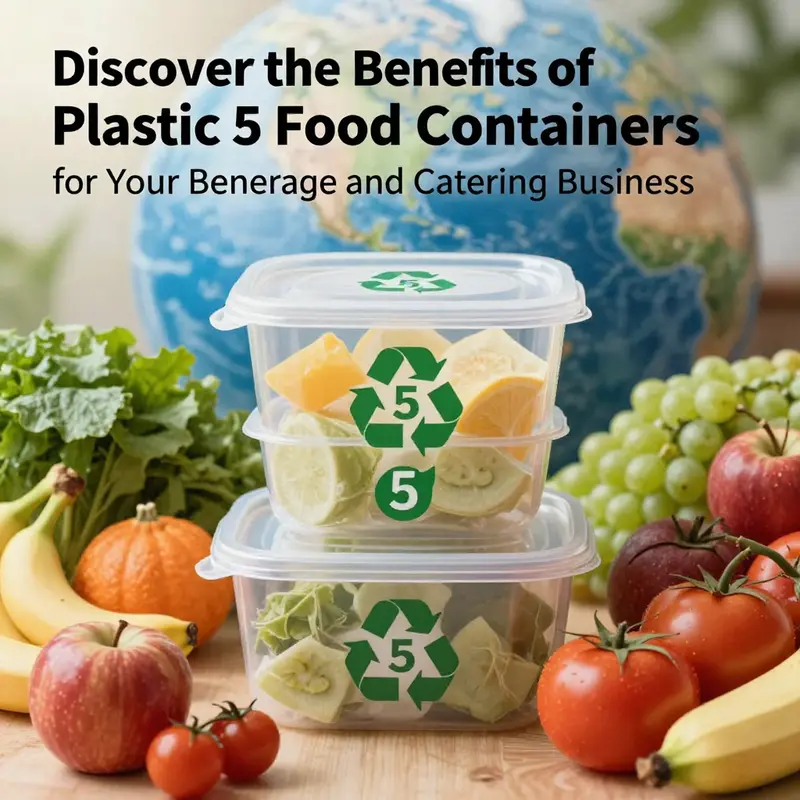
Polypropylene (PP #5) containers occupy a complicated place in food storage. They combine safety, heat tolerance, and affordability. These attributes make them widespread in kitchens and food service. Yet their lifecycle raises real environmental questions. This chapter examines those trade-offs. It also outlines practical steps consumers, businesses, and policymakers can take to reduce harm while preserving the functional benefits of plastic 5 food containers.
Polypropylene’s strengths begin with performance. It resists acids and oils, tolerates high temperatures, and rarely alters flavors under normal use. These traits reduce food spoilage and lower the energy needed to reheat meals. In many settings, PP #5 containers help reduce food waste by keeping dishes fresher for longer. But performance on its own does not equal sustainability. Production of PP relies on fossil feedstocks. Each kilogram produced brings greenhouse gas emissions and upstream extraction impacts. Transportation and packaging add further emissions. When containers reach end of life, the choices made determine whether those earlier benefits are negated.
Recycling is often proposed as the solution. Technically, polypropylene is recyclable. Yet global recovery rates for plastics remain low. Only a fraction of PP actually returns to new products. Contamination, mixed materials, and inconsistent collection systems hamper recycling. Thin lids, food residue, and small components may be rejected at sorting facilities. Economies of scale also matter. Where demand for recycled polypropylene is weak, collected material often goes to landfill or incineration instead of being circularly reused.
Beyond recycling rates, lifecycle assessments reveal deeper burdens. Manufacturing PP consumes energy and emits greenhouse gases. When packaging escapes collection, it contributes to litter and marine harm. Microplastics and long-term persistence in ecosystems are persistent concerns. Even when contained, repeated washing and thermal cycling will gradually wear plastic, raising the question of material longevity versus environmental footprint. A full sustainability picture must weigh the product’s lifespan, its role in preventing food waste, and the end-of-life fate of the material.
Design choices influence sustainability in measurable ways. Thicker-walled containers that last for years may outperform single-use alternatives when considered per use. Transparent, rigid PP makes it easy for users to identify contents, reducing over-purchase and spoilage. Airtight seals extend shelf life and cut food loss, indirectly lowering environmental impact. Yet these same features can complicate recycling. Composite lids, colored plastics, or silicone seals often require separation before processing. Simple, mono-material designs improve recyclability but may sacrifice certain conveniences.
Practical improvements can shift outcomes without abandoning polypropylene entirely. For manufacturers, prioritizing mono-material designs helps. Using PP for both body and lid avoids contamination from mixed polymers. Marking containers clearly with recycling codes and care instructions improves sorting and consumer behavior. Designing for disassembly and for standardized sizes can increase the value of recovered material. On the collection side, better sorting technology and clearer labeling drive higher recovery rates. Policymakers can accelerate this progress by setting material standards and creating markets for recycled resins.
Consumers also have an important role. Choosing reusable PP containers with durable construction spreads the environmental cost over many uses. Proper cleaning before recycling reduces contamination. Avoiding unnecessary single-use plastic items and opting for repeated-use solutions can cut waste. For specific meals, consider whether a high-quality PP container is needed, or whether a compostable or paper-based option is a better choice. For example, many food-service operators now offer recyclable or biodegradable paper bowls and lids for lower-temperature or single-use service. These alternatives perform well for certain foods and reduce reliance on fossil-derived plastics. A practical option to compare is the range of biodegradable kraft paper bowls available from eco-focused suppliers, such as the biodegradable kraft paper bowls commonly used in takeout.
Businesses must balance operational realities with environmental commitments. Reusable PP containers can cut costs for recurring meal programs. Yet logistics for cleaning and returning containers are necessary. For takeaway and delivery, compostable or paper-based packaging reduces post-consumer sorting burdens when properly managed. Investing in partnerships with local recycling or composting providers helps ensure that packaging follows a suitable end-of-life path. Reporting and transparency around packaging choices build consumer trust and can guide better design decisions.
Regulation is shifting in ways that will shape future choices. Governments are implementing stricter labeling and end-of-life requirements. Extended Producer Responsibility (EPR) schemes shift disposal costs back to manufacturers. Standards that favor mono-material, recyclable packaging will make PP #5 containers easier to process. At the same time, policies that restrict certain single-use items will force businesses to consider reusable systems or alternative materials. Effective regulation pairs material standards with investments in collection infrastructure to avoid unintended consequences.
Long-term sustainability requires systems thinking. Improving one part of the chain may move the burden elsewhere. A truly sustainable solution considers raw materials, manufacturing emissions, use-phase benefits like reduced food waste, and final disposal. Circular strategies—designing for longevity, enabling repair or reuse, and creating markets for recycled resins—offer the most promise. Short-term measures, such as promoting consumer care and improving labeling, provide immediate gains. Combining those steps with policy reforms and industry innovation can reduce the environmental footprint of plastic 5 food containers while retaining their practical benefits.
For readers seeking a technical assessment of environmental performance, the peer-reviewed life cycle analysis that quantifies marine ecosystem costs and production impacts offers a rigorous foundation for decision-making. It explores trade-offs and measures hidden costs across material choices. See the detailed study for a data-driven evaluation: https://doi.org/10.1016/j.jclepro.2019.103784
Final thoughts
Plastic 5 food containers have proven to be indispensable tools for any food service establishment. By ensuring safety and efficiency in food storage and transport, they cater to the specific needs of restaurants, catering services, and beverage outlets. Understanding their characteristics, versatile applications, and sustainability considerations enhances not only your operational workflow but your brand’s reputation among environmentally-conscious customers. Embracing these containers as part of your supply chain can elevate your business, ensuring you remain competitive in a rapidly evolving market. Make the transition for a better, safer, and more sustainable food service.