
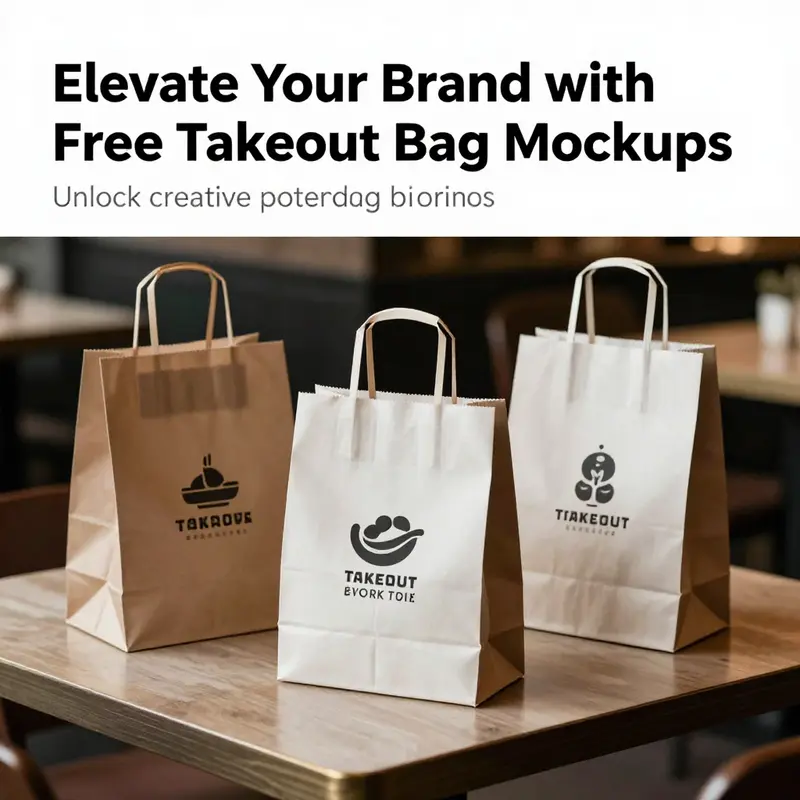
For food-oriented businesses like bubble tea shops, restaurants, and catering services, effective branding through packaging is essential for attracting customers and conveying a professional image. Takeout bag mockups—available for free—allow you to visualize your branding ideas clearly before print production, saving costs and time in the design process. This insightful article will explore the range of free resources available for these mockups, practical tips for their effective usage, the impact of these tools on small business branding, common download formats, and innovative marketing strategies using mockups. By the end, you’ll be equipped with the knowledge to take your food packaging branding to the next level.
Seeing Brand Identity on the Go: Free Takeout Bag Mockups as a Design Accelerator
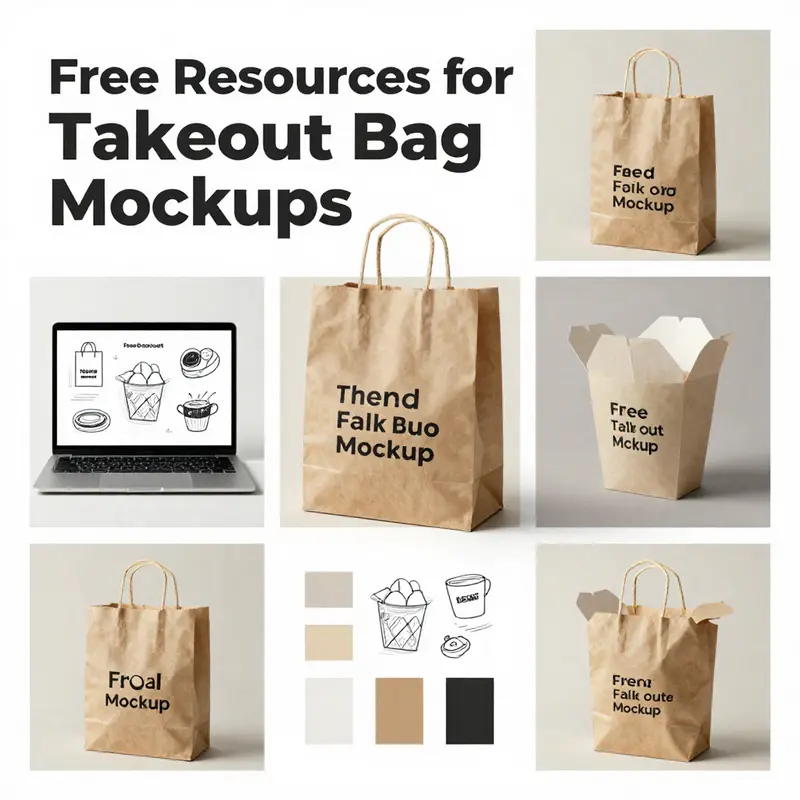
Takeout packaging is a moving canvas; the bag is the first piece a customer encounters when they reach for their order. It carries memory, mood, and messaging long before the first bite. In the realm of branding, designers increasingly rely on free takeout bag mockups to visualize how colors, typography, and logos behave on actual packaging. A family of resources on major stock platforms offers these mockups in vector formats, stock photographs, and layered PSD files. The best of these freebies come with licenses that permit commercial use, which means startups and small businesses can present professional-grade visuals without the financial burden of bespoke mockups. The impact goes beyond pretty pictures: mockups let teams iterate quickly, test different palettes, and confirm that the brand story remains legible and cohesive when scaled to a bag’s real-world surface. When budgets are tight but ambitions are high, free mockups become a quiet engine of confidence.
The resource is not merely pictures but design experiments waiting to happen. A good free bag mockup offers a few core advantages: crisp vector accuracy, realistic shading, and the flexibility to swap in your own logo, slogan, and brand colors. Because many are provided in multiple formats—vector files for crisp scaling, PSD layers for photorealistic composition, and stock photography for authentic textures—the designer can choose the most appropriate entry point. The licensing is a central consideration: commercial use licenses that accompany free mockups allow branding teams to deploy assets in advertising, on websites, and in presentations without legal friction. This is how a tiny café or a new meal-delivery concept can shine in pitches to investors or grocery partners, presenting a consistent face from web page to checkout bag. The mental leap from concept to storefront becomes smaller when the bag itself resembles the brand’s voice, and this is where the mockup layer acts as a bridge between idea and execution.
Process-wise, the path is straightforward yet nuanced. Start with a bag silhouette that matches your material and intended use— kraft for rustic warmth, white or matte finishes for a modern look, color-blocked patterns for a playful twist. Then drop in the brand elements: logo, color palette, typography, and any tagline. That is where the PSD-based mockups earn their keep, because you can place your logo on a simulated surface and adjust lighting to simulate how the bag would look in a hand, on a shelf, or in a social media feed. A vector-based option keeps everything scalable for different bag sizes, while texture libraries provide subtle grain or sheen that can elevate the realism. The balance between accuracy and speed matters; you want a result that reads clearly from a distance in street photography or on a website thumbnail, yet remains faithful when zoomed in for brochure details. In practice, teams often prepare a handful of variations—two or three colorways, a couple of logo placements, and a selection of surfaces—to see which alignment feels most authentic to the brand.
Consider how the bag sits in the broader packaging ecosystem. A well-curated set of visuals extends beyond the bag to cups, bowls, and containers that share a common design language. A page featuring a disposable bowl in kraft paper can illustrate how the same color rules and typography carry through to the tableware, strengthening the consumer’s perception of a cohesive brand experience. This is where a site or pitch deck can benefit from linking the bag mockup with related assets, creating a narrative of care around every touchpoint. To illustrate the broader ecosystem in a concrete way, one may reference individual product pages that showcase complementary items, such as a disposable kraft paper bowl take-out option. This is not a claim of exclusivity; it is an illustration of how a brand can live across containers without losing its visual grammar. Disposable 700ml Kraft Paper Bowl Take-Out Octagonal Rectangle Paper Bowl is a useful exemplar of how such assets can be presented in tandem with bag visuals when discussing packaging systems with partners or investors.
Quality matters as much as quantity. A free mockup should offer clean edges and believable shadows to avoid a sterile look. Perspective is critical: is the bag shown end-on, side-on, or slightly angled? Each angle communicates different brands cues. The lighting should mimic everyday environments—sunlight, storefront glow, or indoor retail lighting—so developers can see how the branding holds up in real-world contexts. When you switch to a different bag size or a different material, the mockup should adapt without requiring a complete rebuild. The best resources provide scalable layers, color-controlled swatches, and organized files so teams can substitute assets with minimal fuss. They also offer variations—for instance, alternate bag textures that reflect glossy versus matte finishes—to help the team decide which texture better carries the logo without competing with legibility. The aim is a quick, reliable preview that translates from a rough pencil sketch to a publishable marketing image without a detour into costly production.
Licensing and ethics deserve close attention. Free resources come with terms that can range from permissive to mildly restrictive. Some assets require attribution in certain contexts, while others provide a broad commercial license with no attribution. When a campaign spans multiple channels—website, social, print—the licensing must cover all uses, including variations and edits. It is prudent to keep a record of license terms and the exact assets used. If a brand team anticipates ongoing work that will generate many new mockups, saving the original PSDs and vector files with fully named layers helps preserve consistency and reduces ambiguity about what is permissible in new campaigns. In that sense, a free asset is not a stopgap but a stepping stone: it unlocks momentum, but responsible use preserves the integrity of the brand and the rights of the asset creators.
From a strategic standpoint, the value of free mockups extends beyond the design studio. They enable rapid experimentation with branding systems before touching a single physical bag. Marketing teams can test which color contrasts perform best in banners, which logo placements are most readable on mobile thumbnails, and how a bag’s silhouette communicates the brand’s story at a glance. For startups, this translates into tangible efficiency: more concepts explored per hour, fewer iterations started from scratch, and a stronger chance of securing stakeholder buy-in. The time saved translates into budget realignment that can be redirected toward material research, supplier negotiations, or user testing of the brand narrative. In practice, the freedom to explore variants without financial risk encourages teams to take bolder creative bets, confident that the visuals can scale across channels when the final production design comes into view.
To weave these mockups into a coherent design process, teams should treat them as living documents. Maintain a small library of base bag templates and a handful of colorways so that any team member can drop in the appropriate elements and generate a consistent set of visuals for a campaign. A strong workflow also includes documenting the decisions behind each variation—why a particular color was chosen, how typography was adjusted for legibility, and which bag angle best communicates the brand’s personality. The aim is not to produce a parade of images but to create a dependable toolkit that speeds up iteration while preserving a single, clear brand narrative. When the toolkit is built with attention to accessibility—ensuring high contrast between type and background and providing alt text for digital assets—the same mockups serve inclusive marketing needs as well. In other words, free resources do not merely fill a page; they help shape a brand’s inclusive, scalable expression across the entire packaging ecosystem.
Ultimately, the promise of free takeout bag mockups lies in its democratizing effect. Startups with modest budgets can compete with established brands by presenting professional, consistent visuals from the first pitch. A well-chosen mockup shows customers that the brand cares about details, even before the product reaches hands or tables. It also demonstrates a level of design discipline that can reassure suppliers and retailers that the brand will maintain its look across packaging and point-of-sale materials. This clarity is not cosmetic; it anchors consumer expectations and reduces the friction of converting interest into purchase. The chapter you are reading now maps that trajectory—from concept to concrete presentation—by underscoring how accessible mockups free up time and mental energy for the work that truly matters: storytelling through packaging. Free resources are not a substitute for design talent; they are a catalyst that helps teams communicate intent with precision, enabling better collaborations with manufacturers, printers, and retailers who must align color, finish, and form in the real world. External resource: https://www.freepik.com/free-photos-vectors/takeaway-bag-mockup
null
null
Branded on the Fly: Elevating Small-Business Packaging Through Free Takeout Bag Mockups
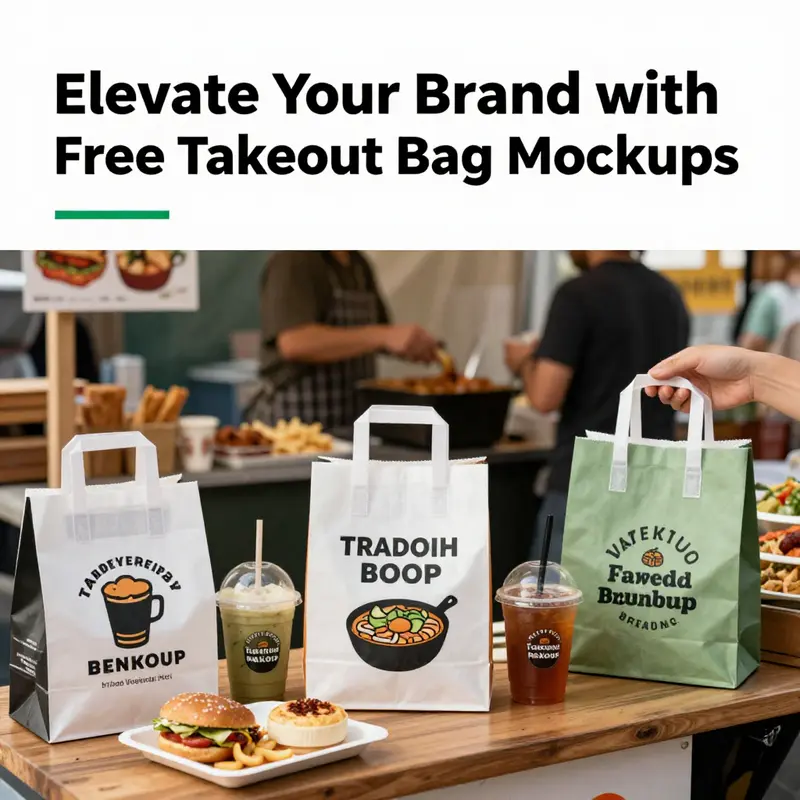
A takeout bag is more than a carrier; it is a moving billboard, a doorway to a brand narrative that travels with every order. For customers, the bag is the first tangible touchpoint after they place an order and the last visual memory before they share their moment of satisfaction with others. For small businesses and startups, that moment can determine whether a moment of need turns into a lasting impression. When budgets are tight and time is scarce, free takeout bag mockups become more than a convenience; they become a strategic tool for shaping how a brand speaks to customers in the crowded space of delivery and dining. These free resources—accessible in formats like vector images, stock photos, and layered PSD files—let teams sketch, test, and refine how logos, color palettes, and messages sit on a realistic, three-dimensional carrier before any physical production takes place. The value is not merely aesthetic. It is about calibrating the brand’s voice to align with the customer’s in-the-mild-matinee moment of receipt, a moment that often involves social sharing, quick glances, and the subtle cues that signal trust and quality. In practical terms, free mockups let founders and designers experiment with the entire packaging system: the bag shape, the handle style, the fold lines, and the surface treatments that interact with lighting, texture, and color in real-world settings. By manipulating these elements in a safe, low-cost environment, a brand can iterate toward a look that is cohesive across digital storefronts, social posts, and in-store pickup experiences. This cohesion matters, because consistency across touchpoints strengthens recognition and recall. A customer who has seen the same color story and typography on a bag, an app, a website, and a storefront feels a quiet, almost subconscious confidence. That confidence translates into higher perceived value and a greater willingness to revisit or recommend the brand, especially when the delivery experience itself is reliable and efficient. The availability of high-quality, free resources lowers the barriers that have historically separated ambitious startups from bigger, resource-rich players. When the mockup is freely accessible, engineers, marketers, and shop owners can collaborate early in the process, aligning technical feasibility with creative ambition. The layered PSD format, in particular, is a game changer because it preserves the structure of the artwork and enables rapid editing through smart objects. Even someone without advanced Photoshop skills can insert a new logo, swap color schemes, or test a revised slogan by simply updating a smart object layer. This democratization of design tools is not about bypassing professional services; it is about enabling a broader group of decision makers to participate in the brand-building process, reducing the risk that a concept remains trapped in a slide deck or a single designer’s head. The chain of benefits extends beyond the design table. A well-executed takeout bag mockup signals that sustainability matters, an increasingly important driver of consumer choice. Kraft paper, with its warm, natural tone and tactile appeal, has emerged as a recognizable indicator of eco-conscious thinking in the packaging world. When a fast-casual concept presents its brand on a kraft-based mockup, the message is simultaneously practical and aspirational: packing materials can be responsibly sourced, recyclable, and visually aligned with a brand that values transparency. The mockup serves as a testing ground for this narrative, allowing the team to examine how the natural texture of kraft interacts with ink color, logo scale, and messaging hierarchy. In an era where consumers scrutinize sustainability claims, the ability to demonstrate environmentally friendly packaging in a credible, visual way contributes to trust and loyalty. Beyond aesthetics and sustainability, free takeout bag mockups support speed and scalability in the early-stage branding workflow. Startups often move quickly from concept to pitch to production, and having ready-to-use assets accelerates the path from idea to presentation. High-resolution mockups provide a near-photographic representation of the final product, enabling teams to create compelling visuals for websites, social channels, and investor pitches without waiting weeks for custom prototypes. The value of time saved here cannot be overstated: rapid iterations mean faster decisions, refined briefs, and fewer miscommunications between brand strategists and production teams. This is particularly meaningful when the design aims to harmonize bag graphics with the broader brand system—logos, typography, color tokens, and messaging that must read clearly at the scale of a small bag in a customer’s hand and a large hero image on a storefront banner. The process is collaborative by design. A sample mockup becomes a shared reference point that can be discussed across departments—marketing, operations, and sales—without the need for expensive production runs. The result is a more disciplined, consistent brand presentation from the first order to the last mile of delivery. As brands navigate an increasingly image-driven marketplace, it is essential to recognize that the takeout bag is also a versatile canvas for storytelling. The bag carries more than the meal; it carries a mood, a promise of flavor and care, and a hint of a brand’s personality. A bold, punchy color palette paired with a minimalist icon can communicate confidence and modernity. A hand-drawn script paired with earthy textures can evoke warmth and artisanal quality. The right combination of elements, tested on a free mockup, helps ensure that the final design resonates with the intended audience and remains legible under varied lighting and in motion during transit. The capacity to explore these choices at a fraction of the cost lowers the stakes of experimentation. It invites brands to be more adventurous in their packaging narrative, testing patterns, surface textures, and messaging hierarchies without fear of overinvesting in a concept that might later be revised. The result is not a single disposable asset but a modular set of visuals that can be reconfigured to respond to seasonal campaigns, menu changes, or new sustainability commitments. In this sense, free takeout bag mockups are not a niche convenience; they are a strategic asset in brand architecture. The broader implication is that the medium of the bag—the practical, everyday vessel—can become a powerful extension of the brand’s voice. When a customer carries a bag that clearly echoes the company’s values, it reinforces trust and invites social sharing. The more recognizable and consistent the packaging, the more likely a customer will remember the brand the next time they order or recommend it to a friend. This is where the digital-to-physical bridge becomes most important. A mockup lets a team translate digital identity into physical form with fidelity, ensuring that the final printed surfaces, embossing, or matte finishes align with the envisioned brand experience. The ability to manipulate and verify these elements in a layered, editable format before any equipment is engaged reduces the risk of costly misalignment in production. It also helps to ensure that any sustainability messaging—whether it relies on ink efficiency, recyclable materials, or forest stewardship—can be represented truthfully and clearly on the actual product. When considering the broader design ecosystem, it is also helpful to view these free resources as part of a holistic toolkit that supports brand coherence across packaging, digital assets, and physical spaces. A brand that uses a consistent bag style, typography, and color story within its packaging carries that consistency into its app icons, website banners, and storefront signage. The continuity reassures customers that the brand is careful, thoughtful, and dependable. To illustrate a practical touchpoint: for a concrete reference to kraft packaging options that aligns with the above logic, a simplified example can be found in the catalog of sustainable takeaway packaging, such as disposable-octagonal-box-restaurant-food-kraft-paper-packaging. This link points to a real-world packaging option that embodies the same principles discussed here: eco-friendly materials, scalable design, and a surface suitable for branded artwork that reads well on the move. The central message, however, remains universal: free takeout bag mockups empower a broad spectrum of brands to experiment, validate, and present their packaging in a way that is affordable, accessible, and practical for real-world use. They enable a brand to test how a artwork reads from the customer’s perspective, how well it holds legibility during transit, and how it integrates with the overall brand story across channels. They encourage an iterative mindset where design decisions are informed by visual testing rather than assumptions. And, perhaps most importantly, they democratize access to professional-grade presentation tools. Small teams can compete more effectively with larger players by presenting packaging concepts with the same level of polish that used to require larger budgets and longer timelines. In the end, the free mockup ecosystem does not replace the need for thoughtful branding; it amplifies it. It offers a practical pathway toward more intentional, consistent, and sustainable packaging design. It invites brands to see the bag not just as packaging but as a moving platform for identity, values, and promise. This shift—where the bag becomes a dynamic element of the brand experience—aligns with how consumers choose, perceive, and remember the meals they take away. External resource: https://www.mockupnest.com/free-delivery-bag-mockup/
The Canvas of Convenience: Free Takeout Bag Mockups as a Budget-Friendly Bridge Between Brand and Plate
A close look at the resources surrounding takeout bag visuals reveals a simple but powerful truth: free mockups are more than just pretty pictures. They are practical tools that translate brand identity into tangible packaging moments without demanding a designer’s entire bill of materials. In many cases, platforms like Freepik have curated a range of free takeout bag mockups that come in vector formats, layered PSDs, and ready-to-use PNGs. For brands and studios balancing time, budget, and ambition, these assets represent a way to prototype, test, and showcase packaging concepts before committing to production. They let a restaurant or a food brand preview how a logo, color palette, or typography choice might read on a bag during a bustling lunch rush or a late-evening delivery window. The result is not merely a static image; it is a rehearsal space where visual strategy meets consumer perception, and where the fear of investing in the wrong direction is softened by the opportunity to explore multiple iterations quickly and affordably.
From a design workflow perspective, the most relied-on formats are PSD and AI files. These layered, editable formats let designers slip new branding elements into the scene with smart objects or straightforward layer adjustments. The smart object workflow is particularly valuable because it preserves realism while enabling rapid changes. A single mockup can host dozens of branding permutations—one where a logo sits on a crisp white bag, another where the same logo is embossed on kraft paper, and a third where the color riff aligns with a seasonal campaign. The ability to swap imagery without rebuilding the entire scene accelerates decision-making in client reviews and internal approvals, making free mockups a practical accelerant rather than a decorative add-on.
Yet the practical needs of web and digital campaigns also demand lighter formats. PNGs and SVGs fill that role, offering quick previews for social feeds, e-commerce product pages, or banner ads. They may lack the editability of PSD or AI files, but they excel at speed and compatibility. A web team can drop a high-resolution PNG into a landing page mockup to demonstrate how a new bag design reads in a product photo, while a designer builds out the scalable, vector-based SVG version for print-ready or large-format uses. The beauty of having multiple formats is the ability to align the asset with the task at hand. For a quick social post, a crisp PNG might suffice. For a packaging proposal presented to a retailer, AI or SVG files enable precise print-ready adjustments without rasterization artifacts.
The licensing landscape accompanying these free resources matters just as much as the formats themselves. In many cases, the accompanying licenses enable commercial use, which makes it feasible for small businesses, startups, and independent designers to present professional-grade visuals without negotiating bespoke rights. It is, however, essential to read the specifics of each resource. Some platforms label assets as free for personal use but require a license for commercial deployment, or they may impose attribution requirements when used in promotional materials. A careful reviewer checks for these constraints before dropping a mockup into a client pitch or a product listing. With this cautioned optimism comes a practical truth: when the license aligns with the project scope, free mockups become a reliable starting point for early-stage branding rather than a one-size-fits-all solution.
What makes takeout bag mockups particularly resonant in the current packaging ecosystem is how well they support narrative building around food presentation. A bag is not just a container; it is a brand touchpoint that travels through the hands of a customer, from pickup to doorstep, and into the social stream when the moment is shared. Realistic lighting, subtle textures, and the tactile cues of kraft or glossy finishes are all visible in high-quality mockups. A designer can test how a matte finish affects legibility of a logo on a curved surface or how a bold color across a bag influences shelf visibility in a photo. The mockup becomes a living tool for dialogue between brand strategy and consumer experience, helping teams decide whether a colorway communicates warmth, sophistication, energy, or eco-consciousness even before a single bag goes to print.
In practical terms, these resources also simplify the alignment between packaging design and broader brand systems. A cohesive system ties together bag, cup, and container graphics so that customers experience a consistent visual language across touchpoints. When a brand considers expanding from cups and bowls to bags, the mockup serves as a bridge to sanity-check the transition. One can imagine testing a single color family across a takeout bag and a beverage cup to see how the two formats reinforce recognition from a distance or in a cluttered social feed. This kind of system thinking is essential for food brands that want to scale without diluting their identity. It is not merely about what looks good in isolation; it is about how the brand feels as a whole when carried, opened, and consumed in real-world contexts.
For brands exploring the broader packaging ecosystem, one option is the disposable-octagonal-box-restaurant-food-kraft-paper-packaging. This internal reference points to a related packaging asset that complements bag-focused visuals with a more formal, box-driven presentation. The idea is not to replace bag mockups but to extend the same design language into other formats that share materials, textures, and color psychology. When viewed together, the bag and the octagonal kraft box can tell a unified story about a brand’s commitment to sustainable packaging, tactile warmth, and practical utility. The anchor in this ecosystem helps designers think beyond a single product and toward a scalable packaging vocabulary that can travel across menus, takeout sleeves, and even shelf displays. This cross-pollination is one of the enduring strengths of freely available mockups: they invite experimentation across formats, materials, and contexts, sparking fresh ideas that keep branding from becoming static.
The takeaway for practitioners is clear. Free takeout bag mockups are not a shortcut that bypasses design rigor. They are a toolkit that accelerates exploration and decision-making. They help teams visualize brand ideas in context, test legibility at different viewing distances, and stage conversations with stakeholders around color, typography, and hierarchy. They also encourage deliberate compromises. A fast, visually compelling mockup might demonstrate how a concept looks online, but a more refined AI or PSD file can reveal how the same concept behaves in print, in packaging specs, or in a pitch deck with real-world lighting. In other words, free mockups are a starting point—an enabling layer that supports the entire design process from concept to execution.
As with any resource, the key is to balance speed with quality. A good workflow uses the free PSDs or AI templates as a foundation, then layers in brand assets, tests alternative colorways, and exports a suite of deliverables tailored to different audiences. A social media editor might rely on PNGs and SVGs for quick posts, while a packaging designer might push a high-resolution, print-ready AI file into a prepress process or a vendor brief. The result is a coherent, adaptable set of visuals that keeps the brand honest while responding nimbly to market feedback. In this light, the availability of free takeout bag mockups becomes a strategic capability rather than a mere convenience.
For teams curious about expanding their visual toolkit, consider engaging with a broader packaging asset stream as part of the design vocabulary. The same attention to texture, lighting, and proportion that makes a bag read well in a photo can translate into sleeve designs, lid treatments, and box surfaces. Building this linguistic consistency pays dividends in how customers perceive the brand when they encounter multiple packaging formats in close sequence. The mockup acts as a rehearsal space for that consistency, a chance to pre-test the visual rhythm before production stages lock in decisions. The result is a more confident brand narrative across the actual physical objects customers touch.
Ultimately, the strategic value of free takeout bag mockups rests in their democratizing effect. They lower the barrier to entry for startups and small teams, enabling them to present professional visuals without an expensive prototyping cycle. They invite experimentation without the risk that a single misstep in early visuals will derail a whole campaign. And they create a shared language among designers, marketers, and business stakeholders that makes branding more responsive and more resilient. In a market where brand moments arrive quickly and packaging can be the deciding factor in a purchase, the ability to spin up credible, on-brand visuals in minutes is not a luxury—it’s a competitive advantage.
External resource: https://www.freepik.com/free-photos-vectors/takeout-bag-mockup
From Preview to Promotion: The Strategic Power of Free Takeout Bag Mockups in Modern Marketing
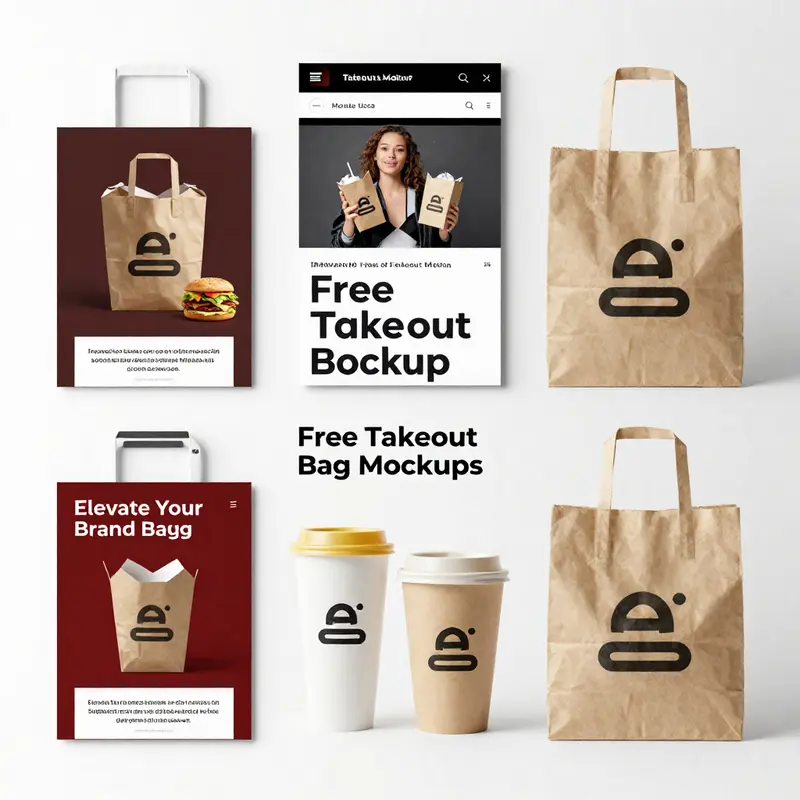
The rise of free takeout bag mockups has quietly reshaped how brands think about packaging as a marketing asset. What began as a practical tool for visualizing a new bag design before a line goes into production has evolved into a flexible platform for storytelling, experimentation, and audience engagement. Free resources, often delivered as vector files, PSD templates, or high-resolution stock images, lower the barrier to entry for small businesses and fledgling brands. They let a team test palette shifts, logo placements, and typography in realistic contexts without the cost of a photo shoot or bespoke production run. The consequence is not merely faster design cycles; it is the potential for iterations that tightly align packaging with consumer expectations, seasonal campaigns, and the brand’s broader narrative. In markets defined by choice and velocity, this democratization of mockups becomes a strategic advantage rather than a convenience feature.
Design practice, in this sense, moves beyond static previews. A takeout bag mockup is a canvas that invites feedback, invites risk-taking, and invites collaboration across departments. Marketing leaders can simulate real-world scenarios—whether a delivery app visual, a website hero, or social media ad—before committing to a single final design. When a mockup is free and readily accessible, it becomes a shared baseline for discussion. This baseline helps align product development with the branding story, ensuring that every customer touchpoint reflects the same voice, tone, and visual language. The result is coherence across channels that strengthens recall and trust, two currencies that matter more as audiences scroll through timelines full of competing messages. In short, free takeout bag mockups do more than preview packaging; they enable marketing to test, tune, and tell a consistent story at scale.
A core strength of free mockups is their adaptability. Modern takeout experiences live in multiple contexts: storefronts, mobile apps, social platforms, and line-of-sight moments in transit. The PSD files and vector formats that providers typically offer let designers unpack a single concept into a family of assets quickly. A color update for a summer transit campaign can live within the same template, preserving layout and spirit while changing mood. This capability is especially valuable for restaurant concepts experimenting with seasonal themes, limited-time offers, or region-specific branding. The ability to swap palettes or add seasonal graphics without reconstructing a design from scratch accelerates decision-making and reduces the fatigue that often accompanies frequent campaigns. It also opens doors to rapid testing—A/B tests for bag visuals that inform which designs drive the highest engagement or fastest click-through rates in digital ads.
Beyond the mechanics of editing and iteration, there is a narrative dimension to how brands deploy takeout bag mockups in marketing. A well-executed mockup does not just show what a bag looks like; it shows what a bag signifies. It communicates values—sustainability, speed, indulgence, or playfulness—through typography, textures, and the feel of the print. When a mockup is used consistently as a storytelling device, it becomes a touchstone for audiences. A reusable color system embedded in the mockups helps ensure brand consistency, too. For teams managing multiple locations or a growing franchise, standardized mockups create a vocabulary that remains stable even as real-world variables shift. The visual language then extends to menus, signage, social posts, and email creative, creating a seamless journey from first impression to post-purchase reflection.
In practice, interactive social campaigns have emerged as one of the most engaging uses of free mockups. Brands invite customers to customize a takeout bag template, then share their creations on platforms like Instagram or short-video channels. This approach taps into a potent feedback loop: the brand gains real-time insights into what resonates, while customers feel a sense of ownership and participation. The sparkle of user-generated content amplifies reach and authenticity—authenticity that paid media often struggles to procure at the same scale. For the participants, personalizing a bag becomes a playful act of brand affinity, a moment of self-expression that still ties back to the business’s core promise. For marketers, it is an inexpensive but powerful lever to expand reach and deepen emotional connection with the audience. The magic lies in the simplicity: a free mockup is transformed into a catalyst for conversation, not merely a design artifact.
A parallel thread runs through the deployment of bag mockups in email marketing and digital advertising. In a cluttered inbox, a photorealistic mockup anchored in a credible scene—perhaps a glossy bag resting beside a steaming bowl or a bag appearing in a clean, modern kitchen setting—carries credibility. Marketers can place offers, QR codes, or dynamic messages directly onto these templates, turning a static image into a canvas for conversion. The high fidelity of these assets matters: in a world where product shots and packaging compete for seconds of attention, realism helps reduce cognitive load and reinforces perceived quality. Moreover, because the assets are pre-approved for commercial use, teams can bypass costly shoots and still deliver promotional material that looks professionally produced. In practice, this means more rapid campaign cycles, more tests, and more opportunities to learn what design cues actually influence consumer behavior.
The strategic implications extend to brand consistency across channels. Free mockups function as a portable brand kit, a centralized visual reference that can be deployed across digital ads, website banners, social avatars, and store signage. When a brand seeks to scale or maintain a coherent story across multiple locations, these templates become part of a formal process: a style guide translated into tangible assets. Team members who work in different departments—creative, digital, and operations—benefit from a shared framework. This alignment reduces the risk of misinterpretation, such as mismatched hues, inconsistent logo placement, or conflicting typographic choices. It also shortens approval cycles, since a familiar, approved template can be rapidly adapted rather than rebuilt. The upshot is a packaging narrative that travels well through the customer’s journey, from online discovery to in-store pickup, without losing its sense of place or purpose.
In this integrated approach, licensing and usage rights play a quiet but essential role. Free mockups commonly come with licenses that accommodate commercial use, which is a boon for small teams with tight budgets and ambitious campaigns. Understanding these terms matters because it affects how broadly the assets can be deployed—from email campaigns to paid social, from website previews to in-store displays. When teams are confident about licensing, they can experiment more freely, knowing they won’t encounter last-minute legal or usage roadblocks. This confidence translates into bolder creative choices, faster validation with stakeholders, and a more iterative culture that treats design as a strategic asset rather than a cost center. The cumulative effect is an accelerated path from concept to market-ready packaging, marketing collateral, and customer experience.
As brands experiment with these free resources, a practical, almost ecological efficiency emerges. Startups and small chains can test multiple concepts in parallel, refining a single cohesive visual system that remains adaptable enough to respond to local tastes or seasonal menus. An economically minded marketing leader recognizes that the real value of a mockup lies not in a single perfect image but in the repeated, scalable use of a flexible toolkit. The toolkit can support social campaigns, email narratives, and landing pages in a way that preserves a consistent identity while allowing for localized flavor. The result is a more resilient brand architecture: one that can endure changes in consumer behavior, shifts in platform algorithms, or fluctuations in promotional calendars without losing its center. In this sense, takeout bag mockups become more than a resource; they are a strategic operating principle that helps a brand stay legible and compelling in a crowded marketplace.
For teams looking to anchor their marketing with tangible, repeatable visuals, a single well-structured mockup library can be transformative. The library does not replace the nuance of original design work; it complements it by providing reliable scaffolding. Designers can introduce new elements—shadows, lighting, texture, micro-interactions—that illuminate how packaging feels in real life. Marketers can then prototype campaigns around these assets, testing different placements, headlines, and call-to-action treatments. The cycle is continuous: test, learn, refine, and deploy. When the library evolves in response to consumer feedback and performance data, it becomes a living asset that grows with the brand. In the end, the Free Takeout Bag Mockup approach is less about nostalgia for a pre-made template and more about shaping a dynamic marketing engine that can respond to an ever-changing consumer landscape.
For readers who want to connect the concept to tangible product ecosystems, consider how these mockups align with broader packaging strategies. A well-designed bag is part of a larger portfolio that includes cups, bowls, lids, and ancillary packaging. The same design system can thread through all these elements, providing a coherent moment of brand contact from the first cup to the last bite. In practice, teams often extend the visual language to related pieces such as kraft bowls and eco-friendly lids, ensuring a seamless narrative from bag to bite. The linked example of sustainable, disposable packaging demonstrates how a cohesive package family can reinforce environmental commitments while maintaining aesthetic consistency. This approach ensures that the brand’s promise—whether efficiency, sustainability, or premium quality—resonates across every consumer touchpoint, including casual moments of takeout as well as planned promotions.
As the channel mix evolves, so too does the potential for collaboration with designers and packaging suppliers who produce the free resources. Suppliers and manufacturers increasingly recognize that marketing-ready mockups can shorten time-to-market while still protecting the integrity of the design. This alignment makes it possible to coordinate supply chain realities with marketing ambitions, ensuring that a design’s intended impact is deliverable in the real world. The result is a more integrated workflow where creative decisions are informed by production feasibility and distribution considerations. Such synergy reduces friction, speeds approvals, and ultimately delivers a more compelling, consistent brand experience for customers who interact with takeout in many places and moments. This is the essence of turning a simple mockup into a trusted marketing instrument that travels with a brand as it grows across channels and geographies.
For teams preparing to implement or expand a free mockup strategy, a practical takeaway is to build a lightweight governance approach around usage, updates, and asset distribution. Establish a baseline color system, logo-safe zones, and a few core layouts that reliably communicate the brand message. Then reserve space in the library for seasonal experiments and regional adaptations. This approach provides stability for day-to-day marketing while preserving room for creative tests that can reveal new resonances with customers. The beauty of the free mockup model is that it invites both discipline and play, ensuring that packaging design remains a driver of business outcomes rather than a passive artifact. In this balance, the bag becomes more than a container; it becomes a vehicle for expression, a touchpoint that connects a brand’s promise with real-world experiences—the moment a customer carries a meal from door to table, and beyond into memory. External resource: https://www.freepik.com/.
Internal linkage note: for those exploring related packaging formats and integrated design options, reference the octagonal box packaging page as a practical example of how free mockups can harmonize with distinctive vessel shapes and eco-conscious materials. See more at octagonal box packaging.
Final thoughts
Utilizing free takeout bag mockups is an incredible opportunity for food business owners to enhance their brand image without the financial strain of professional design costs. By harnessing these resources, your establishment can present professional and appealing packaging that captures the essence of your culinary offerings. The strategies discussed in this article equip you with the tools necessary to effectively implement these mockups into your branding efforts, ensuring your business stands out in a competitive market. Embrace these free resources to foster stronger connections with your customers and elevate your brand’s presence.