
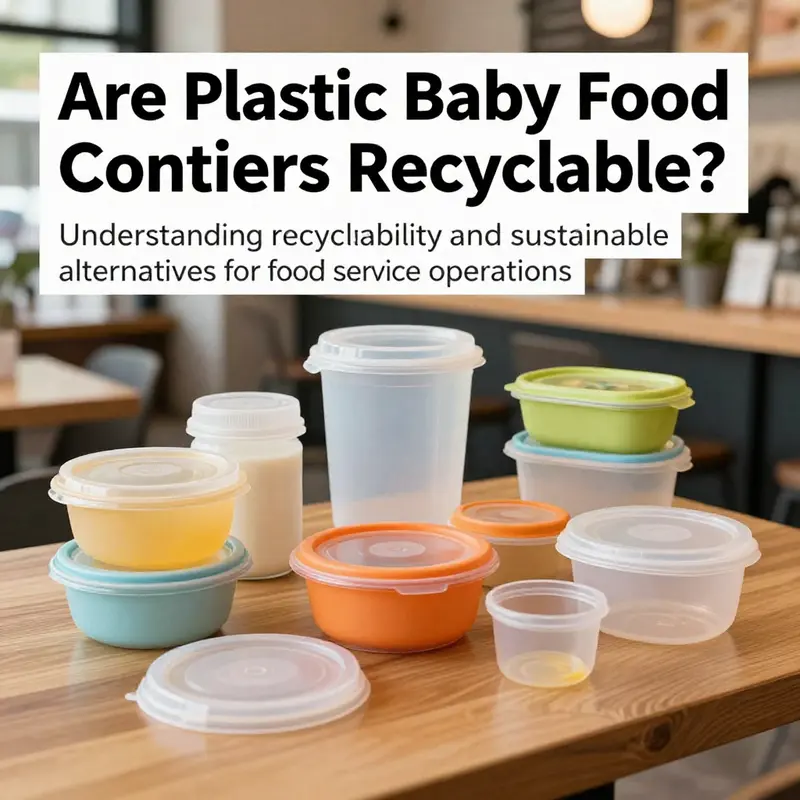
As restaurants, food trucks, and catering services increasingly focus on sustainability, understanding the recyclability of packaging materials, especially plastic baby food containers, has become critical for business operations and consumer relations. These containers often make their way into food service, raising questions about their environmental impact and compliance with recycling guidelines. In this exploration, we delve into the types of plastics used in baby food containers, the essential role of contamination control in their recyclability, and viable alternatives that support sustainability efforts. Furthermore, we guide you through the local recycling guidelines to help you navigate regulations effectively. Together, these insights equip food service professionals to make informed decisions regarding their packaging choices and waste management strategies.
Resin Codes and Real Recycling: A Practical Guide for Plastic Baby Food Containers
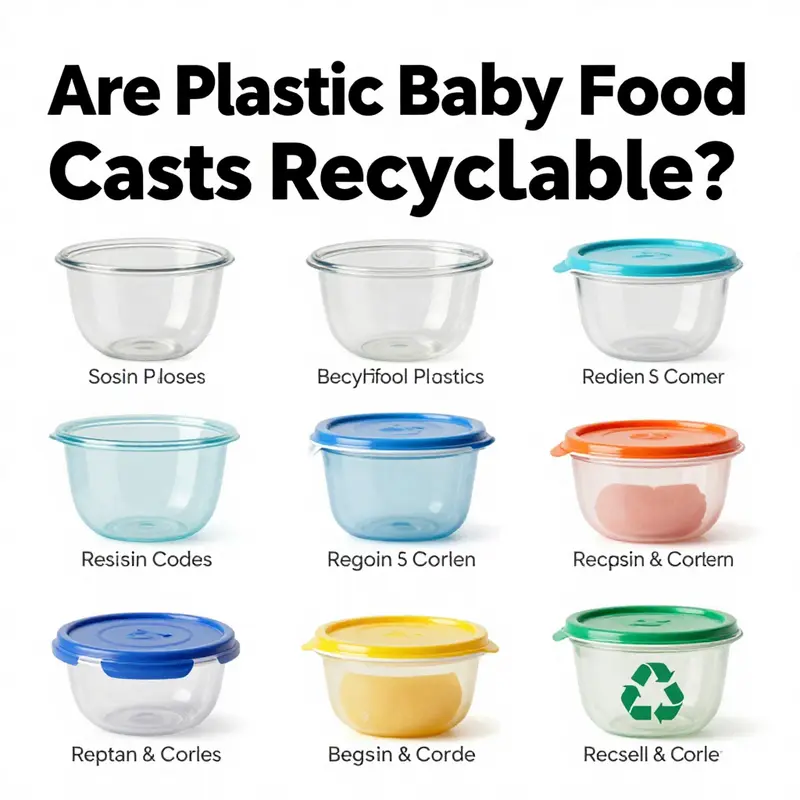
Plastic baby food containers are commonly labeled with resin codes such as #1, #2 and #5. These codes indicate the type of plastic used and often determine local recycling acceptance, heat tolerance, and safety considerations. In many places, #1 PET, #2 HDPE, and #5 PP are accepted when containers are clean and dry, but rules vary and composites or lids can complicate recycling. Contamination and multi material designs frequently derail recycling, so a thorough rinse, removal of caps and liners, and verification of local guidelines are essential steps. For households where the local program accepts these resins, recycling is possible with proper preparation. If acceptance is limited or unclear, alternatives such as paper based packaging, glass, or stainless steel storage can reduce plastic reliance. The key practical takeaway is to identify the resin code, confirm local acceptance, clean the container, and be open to switching to safer or more sustainable packaging when necessary.
Guardians of the Tiny Recyclables: Contamination Control in Plastic Baby Food Containers
In the quiet routine of feeding and caring for infants, the packaging that once carried nourishment now enters a second life as a recyclable. The chain from kitchen to curb to crusher is a fascinating, sometimes fragile journey, and it hinges on a single, often overlooked factor: contamination. These are not just empty plastic shells; they are part of a system that must safeguard health as it tries to reduce waste. The containers that hold infant nutrition are touched by a particular layer of responsibility because they connect directly to something sacred—someone’s first foods. The gravity of this responsibility becomes clear when we recognize how easily the recycling stream can be compromised. A single greasy, dirty container can seed a batch with contaminants, undermining the goal of turning waste back into usable material. The idea that plastic baby food containers are recyclable is true in many places, but it is true only under strict conditions. Those conditions begin with an understanding of what the plastics are, how they are used, and how they are treated after use. When we talk about contamination control, we are talking about a practical, daily discipline that aligns household habits with municipal rules, industrial safeguards, and scientific caution about long-term exposure to chemicals in recycled materials.
The starting point is the plastic itself. Not all plastics are created equal in the recycling stream. Among the most commonly encountered containers for baby foods are materials that carry resin codes indicating their recyclability. In many municipalities, plastics labeled #1 (PET), #2 (HDPE), and sometimes #5 (PP) are accepted in curbside programs. These resin codes signal relatively familiar chemistries and relatively predictable performance in recycling facilities. PET, for instance, is common for clear bottles, while HDPE is often used for opaque, sturdy containers, and polypropylene handles parts like lids or certain packaging components. The practical upshot is that, in the right place, these plastics can re-enter the economy rather than ending up in landfills. Yet even among these plastics, the path to a true loop of recyclability is paved with caveats. The presence of additives, colorants, and multilayer constructions can complicate or even block recycling, turning what looks like a recyclable item into a non-recyclable contaminant at the plant.
Beyond the resin code, there is the murkier truth about plastics commonly used in baby-food packaging that readers should understand. Some plastics, notably polychloroprene or certain composites labeled with a code such as #3 or #7, raise concerns about health risks and are not typically accepted by standard curbside programs. The political and scientific conversation around these plastics has long warned against potential leaching of additives such as phthalates, especially when plastics are heated or in contact with acidic foods. These concerns are not purely theoretical; they have echoed through public health debates for years and have prompted households and regulators to treat certain plastics as high risk, particularly in contexts involving infants and young children. When we couple this risk with the realities of contamination, the issue becomes twofold: even if a container is made from a recyclable plastic, it must enter a recycling stream free of mixed, non-food-grade plastics, and it must be treated with the same seriousness as any other food-contact packaging.
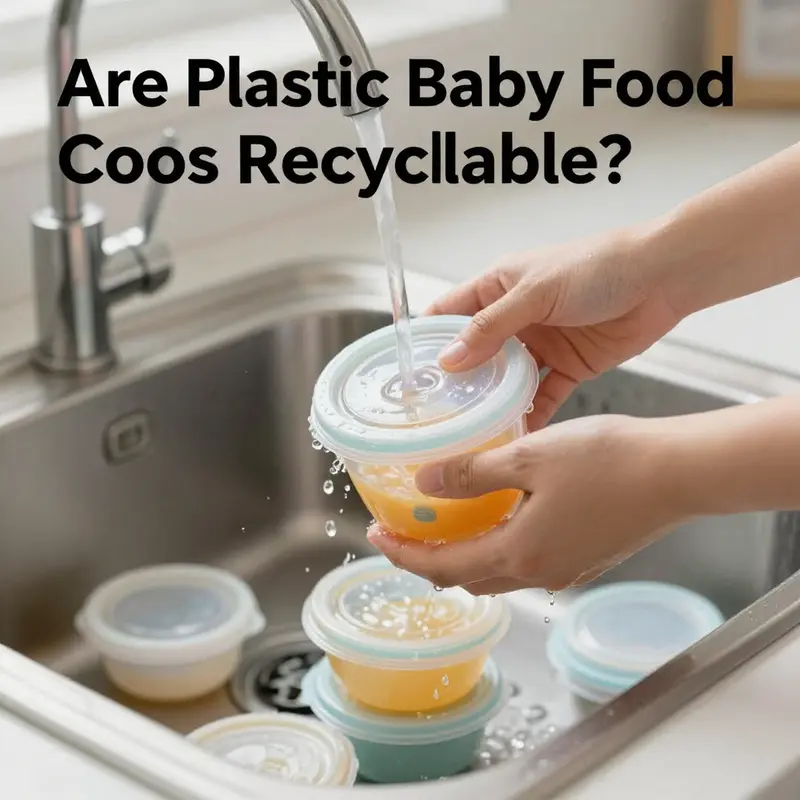
Contamination is the fulcrum on which this entire conversation tilts. The basic rule—clean and dry—reads almost like a mantra in recycling circles. For plastic baby food containers, this means more than a rinse; it means a disciplined preparation: remove any remaining food, ensure all residue is flushed away, and then dry the container as thoroughly as possible before recycling. The reason for the dryness is simple. Moisture can create film and residue that complicates separation at the recycling facility. Grease and oils from the contents can migrate through streams of plastics, and the presence of a contaminated, wet, or oily input makes it harder to produce clean, food-grade recycled material. This problem is magnified when there are additional components—liners, film wraps, or separate caps—every extra non-core piece introduces another potential contaminant into the stream. In an ideal system, the main container would be the only plastic that reaches the sorter; any non-core pieces would be diverted away from the main recycling flow.
Yet there is more to this problem than cleanliness alone. The recycling process itself can magnify contamination in certain circumstances. Mechanical recycling often involves melting and reforming plastics from a mixed stream. When input streams contain contaminated plastics—non-food-grade plastics mixed in with food-contact materials—there is a real risk that residual contaminants concentrate or transfer into the recycled product. This is not a fictional fear; it is a technical reality that has guided regulatory caution and underpinned calls for stricter segregation and purification in recycling facilities. The concern is particularly acute for materials that have a history of contact with infants’ foods, where the consequences of exposure to certain chemical additives could be more significant due to vulnerability.
Regulatory and institutional perspectives add another layer of caution to the conversation. Across borders and disciplines, there is a common thread: recycled plastics intended for food contact should meet stringent standards, especially when infants are involved. Public health advocacy groups and international bodies have underscored the importance of ensuring that recycled plastics do not re-enter the food supply chain, particularly for products designed for babies and young children. The logic is straightforward but demanding: infants are more susceptible to toxic exposures, and the history of chemical additives in plastics—phthalates, bisphenols, and certain plasticizers—heightens the stakes. The discourse has not been purely theoretical; it has been grounded in real-world incidents and regulatory caution. Past episodes described in public discourse have linked plasticizers and other additives to health concerns when they found their way into storage or packaging chains. In this light, the precautionary principle becomes a rational, protective stance rather than a mere political position. The upshot for households is that, while it is possible to recycle many plastic baby food containers, recycled materials intended for food-contact use, especially for baby foods, require a robust, risk-averse approach that prioritizes contamination control and avoids cross-contamination with high-risk plastics.
The practical response to these concerns begins with the idea of minimizing risk at the source. One of the clearest messages from researchers and regulators is to discourage the use of high-risk plastics for food use entirely. This means avoiding plastics known to incorporate additives that could migrate into food—particularly in the oven, microwave, or other heating contexts where migration is more likely. In parallel, households and communities are urged to implement meticulous sorting practices to prevent the mixing of materials from different streams. Sorting is not merely an administrative exercise; it is an essential quality-control step that directly impacts the safety and recyclability of the material. It involves recognizing that a container may be recyclable in general, but if it contains or is contaminated by non-food-grade plastics or by other materials, it could jeopardize an entire batch of recyclables. Practically, this translates into keeping separate streams clean and visible: rinsing containers, removing any liners that do not belong to the main container, and discarding caps and parts not integral to the container itself when they are made from different plastics or materials.
What, then, should households do when faced with a choice between recycling and safer alternatives? The research and policy discourse converge on a simple, if sometimes challenging, guidance. First, prioritize cleaning and drying the container as a non-negotiable step. Second, be mindful of the type of plastic. If the container is made from the common, widely accepted plastics—often labeled with codes #1, #2, or #5—recycling is more straightforward, but it still depends on local guidelines. Third, recognize that not all plastics are equally accepted everywhere. Local recycling rules vary, and the same bottle or lid could be a recyclable item in one city and a non-recyclable item in another, especially when it comes to mixed plastics or ductile composites. In this sense, the best-informed path is to consult the local municipality’s guidelines before assuming a container can be recycled curbside.
There is also a broader sustainability conversation to be had. For families seeking safer, more sustainable packaging options, there are alternatives to plastic packaging that deserve attention. Paper-based aseptic packaging, which relies on renewable materials and certification schemes that ensure responsible sourcing, has gained traction as a recyclable and even heatable alternative. These paper-based solutions are designed to stand up to storage needs and to be compatible with various recycling streams, reducing the risk of contamination that can accompany plastic coatings or multilayered plastics. They are not a perfect solution—weight, durability, and consumer familiarity pose challenges—but they represent a meaningful direction for reducing reliance on plastics in infant nutrition packaging. In this domain, an important distinction is the environmental profile: many paper-based options are designed to be recyclable and to align with sustainability certifications, offering an alternative route that aligns with both health and environmental goals. For households experimenting with packaging choices, it can be helpful to think beyond the single-use cycle and toward what happens after the product is finished. In particular, packaging that is clearly separated from non-food-grade materials, and that can be efficiently recycled in its own stream, reduces the chance of cross-contamination and supports a more reliable recycling system.
The journey toward safe, recyclable packaging for infant foods also points toward a practical, tangible option that keeps families oriented toward responsible waste management without compromising infant safety. There is value in considering packaging that is designed with end-of-life in mind and that uses materials that are easier to recover in a clean, separated stream. In this spirit, households can explore the use of recyclable paper-based alternatives or glass and other durable materials for future packaging needs. While glass and metal offer long-term recyclability without the same risk of chemical migration, they come with their own trade-offs in weight, cost, and practicality for infants’ meals. The aim is not to demonize plastics but to promote a thoughtful approach that minimizes risk to infants while maximizing the chance of true material recovery. This is the essence of contamination control: it is both an ethical obligation and a practical engineering challenge.
To connect these ideas to everyday practice, consider how a household might handle a typical baby-food container after use. Rinse promptly to remove remaining contents, then separate any non-core components such as lids or liners if they are made of different materials. If the local system accepts the resin code on the container (#1, #2, or #5 in many places), place the cleaned container in the recycling stream; otherwise, store it for proper disposal according to local guidance. Heating the container, or letting it sit with residual food for extended periods, increases the risk of chemical migration and complicates both recycling and subsequent safety assessments. By adjusting routines—clean, dry, and properly sorted—the household becomes an active participant in a system that must balance safety with resource conservation.
In the broader context of this chapter, the core takeaway remains clear: many plastic baby food containers are recyclable, but the path to safe, effective recycling relies on material choice, thorough cleaning, and strict adherence to local guidelines. The presence of high-risk plastics such as PVC or other multi-material constructions should be a signal to prefer alternatives or to discard such items in a manner that prevents contamination of the recycling stream. For those seeking to explore safer packaging options, one practical step is to consider paper-based packaging alternatives—packaging that is designed to be recyclable and, where possible, derived from renewable materials and certified for responsible sourcing. To help with practical transitions, one option to consider is the disposable kraft paper bowl for food package with lid, which demonstrates how a consumer-focused product can align with environmental goals while remaining compatible with everyday food-use contexts. This kind of choice illustrates a tangible path toward reduced reliance on plastics in infant nutrition packaging.
From a research and policy perspective, the conversation about contamination control in recycling plastic baby food containers is not merely about whether a container can be recycled; it is about how to maintain the integrity of recycled materials and how to protect the health of the most vulnerable populations. The discourse underscores that recycled plastics should be handled with caution in food-contact applications. It highlights the need for rigorous sorting, avoidance of high-risk plastics, and the ongoing development of advanced purification techniques to remove residual contaminants. The objective is not to stall recycling but to ensure that the recycling process truly closes the loop in a way that is safe for babies and credible for the environment. As readers digest these points, they can appreciate the complexity behind a simple act—recycling a plastic baby food container—and understand why careful contamination control matters at every stage, from the kitchen to the sorting facility, and finally to whatever fate the material may have next.
For readers seeking further context on chemical risks in recycled food-contact plastics, a detailed scientific review offers a comprehensive examination of how contaminants can persist through recycling processes and what safeguards may be necessary to prevent exposure. See the detailed review at Plastic Food Container Safety – PMC for a deeper dive into the chemistry and policy considerations that shape these debates. And as a practical resource for exploring safer packaging options, one can consider the disposable kraft paper bowl for food package with lid, which embodies a move toward recyclable, renewable-material packaging that may reduce contamination concerns in the recycling stream. The broader takeaway remains actionable: in households and communities, contamination control is an essential, ongoing practice that supports both health and environmental stewardship, especially when the packaging around infant foods is involved. The future of recycling plastic baby food containers will depend on clear guidance, vigilant cleaning, prudent material choices, and a willingness to shift toward packaging solutions that minimize risk while maximizing recyclability and sustainability.
Exploring Alternatives: Sustainable Packaging Options Beyond Plastic Baby Food Containers
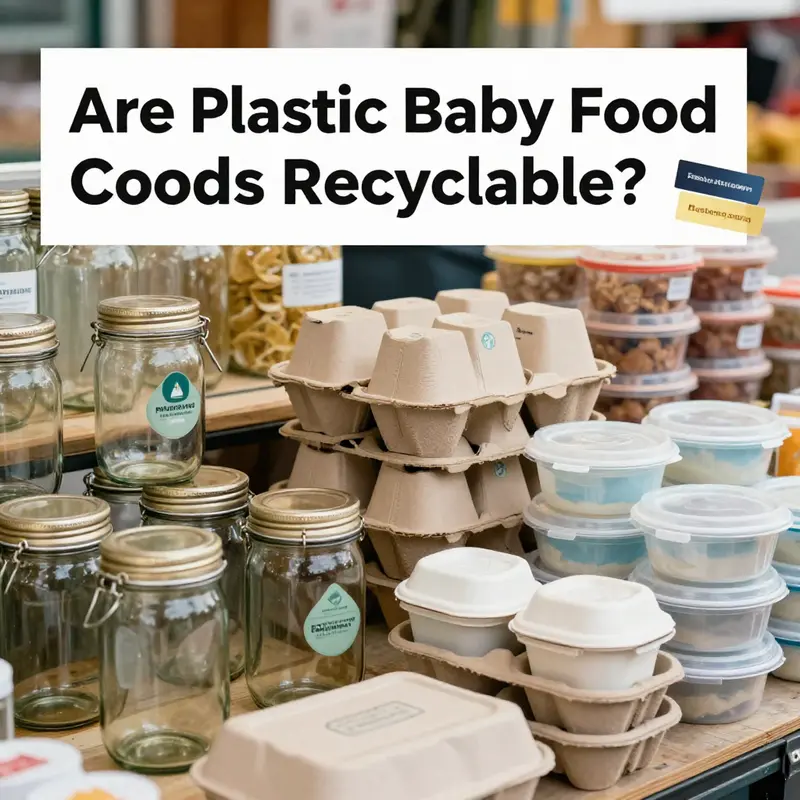
When families consider the journey away from plastic baby food containers, the most promising path is to explore packaging that keeps food safe while reducing environmental impact. The shift isn’t binary; it’s a spectrum where plant-based materials, recycled pulp, and durable metal options each offer tradeoffs in barrier properties, heat tolerance, cost, and end-of-life fate. The central questions remain the same: can the packaging protect the product through storage and transit? can it be disposed of responsibly within the local waste system? and does it avoid health concerns tied to certain plastics? In this landscape, a thoughtfully chosen packaging system can support both infant health and a healthier planet, provided it aligns with real-world waste streams and safety standards.
One of the most notable directions is a pivot toward plant-based materials. Renewable resources such as corn starch, sugarcane bagasse, bamboo fiber, and polylactic acid (PLA) are shaping the next generation of packaging. These materials promise to reduce reliance on fossil fuels and to lower the accumulation of long‑lived plastics in ecosystems. In theory, they offer a path toward compostable packaging that returns nutrients to the soil. In practice, the story is more nuanced. Some plant-based packaging can decompose in home compost bins, but many require industrial facilities with controlled temperature and moisture conditions to break down effectively. Without the right infrastructure, what is marketed as “compostable” may simply persist in landfills, contributing to the same waste burden as conventional plastics. Moreover, even when compostable, barrier properties—such as moisture resistance and oxygen blocking—must meet the exacting standards needed for baby foods, which are often sensitive to temperature and light during storage and transit. Greener materials also encounter cost considerations: the raw materials, processing, and the specialized molds or extrusion techniques can be more expensive than traditional plastics, at least during the scaling phase. Yet, as consumer demand grows and facilities expand, these hurdles tend to diminish, enabling safer, more sustainable packaging that can perform as well as, or better than, conventional options in certain contexts.
A key advantage of plant-based options, when properly implemented, is the potential to limit microplastics—tiny particles that can shed from conventional plastics and end up in the food chain. Even if a plant-based film or container is not perfectly compostable under home conditions, its lifecycle can be cleaner if it remains bio-based and recyclable in the right streams. The critical caveat is transparency about end-of-life handling. If a material is marketed as compostable but is not accepted by local facilities, it risks being treated as waste rather than as a resource. Parents and caregivers increasingly look for clear labeling and third-party certifications that indicate the material’s suitability for food contact, its safety profile for infants, and its compatibility with available recycling or composting streams. The safeguards matter: the packaging should not introduce new risks, such as characters that could be mistaken for baby food labels or that could encourage heating in a non-appropriate container.
In parallel with plant-based materials, recycled paper pulp packaging has surged as a compelling alternative for baby foods. Recycled kraft paper containers, for example, can combine robust sealing and heat resistance with a more favorable end-of-life profile than many single-use plastics. Recycled fiber’s natural properties lend themselves to strong barrier performance when engineered with appropriate coatings or laminates, enabling safe storage from refrigeration to room temperature. The advantages extend beyond performance; recycled paper packaging can deliver impressive thermal stability and reliable sealing, which helps prevent leaks and keeps baby food hygienic during transport. Importantly, many of these paper-based systems are designed with food safety in mind and are engineered to minimize chemical migration. In the European context, packaging innovations often emphasize compliance with strict safety certifications, such as EU food-contact regulations. For instance, packaging concepts that claim full compatibility with EC 1935/2004—an essential framework for materials that contact food—are actively pursued to assure parents that the packaging won’t introduce unwanted substances into infant meals.
The practical story of recycled kraft packaging often centers on a takeout container format that can be suitably adapted for baby foods. These containers are typically made from 2‑millimeter-thick recycled kraft paper, which provides a sturdy base capable of withstanding the rigors of handling, stacking, and occasional reheating, while staying foldable and lightweight. The design usually emphasizes excellent sealing and a stackable profile that optimizes storage space, a feature appreciated by busy households that juggle baby milk, puree, and snack portions. Crucially, these containers are both biodegradable and recyclable, aligning with a circular economy approach. The environmental calculus expands when one considers the sourcing of the paper—preferably from responsibly managed forests with independent certification—and the overall supply chain that values reduced carbon footprint per use. In this sense, recycled kraft packaging can be a pragmatic bridge between safety, convenience, and sustainability.
Certifications and standards play a central role in validating the safety and sustainability claims of packaging choices. When a paper-based option carries EC 1935/2004 compliance, it signals that the material is evaluated for safe contact with food and that migration of substances remains within acceptable limits under defined conditions. An additional certification, such as FSC (Forest Stewardship Council) certification for the recycled content, signals responsible forestry practices and governance around the chain of custody. These certifications are not mere labels; they reflect a rigorous process of risk assessment, testing, and traceability. For parents, certifications offer a language they can trust when choosing a container for their infant’s meals. They provide assurance that the packaging is designed to minimize chemical exposure and to align with recognized environmental stewardship standards. The overall arc of plant-based and paper-based options, therefore, rests on a balance of performance, safety, cost, and end-of-life practicality, together with transparent communication about what happens after disposal.
The practical realities of scaling sustainable packaging also require a close look at supply chains and manufacturing feasibility. The shift to plant-based materials or recycled paper often entails changes in production lines, equipment, and quality control measures. Brands and manufacturers may need to adjust surface coatings to improve moisture resistance or barrier properties, which can influence recyclability and compostability. They may also reconfigure lids, seals, and liners to ensure leak-proof performance without compromising end-of-life options. For families, the result of these innovations should be packaging that preserves freshness, is safe for heating if necessary, and offers clear, honest guidance about how to dispose of or compost the container in their municipality. Importantly, the conversation extends beyond the container itself to the broader context of household waste sorting, municipal facilities, and local policies. In many places, curbside programs readily accept certain recyclable plastics, while paper-based packaging follows different streams. In others, compostable plastics and plant-based films seek dedicated organic streams. These complexities underscore why local guidance matters—consumers should verify what is accepted where they live, rather than assuming a universal rule.
To bring these ideas to a concrete example while staying mindful of the broader aim, consider a high-quality recycled kraft paper takeout container designed for baby food. This kind of container, typically offered in capacities ranging from roughly 760 ml up to 2000 ml, combines robust fibers with a tidy, leak-resistant seal. The thickness and construction are chosen to ensure resilience against rough handling, while its paper basis supports a more favorable end-of-life profile compared with many plastics. Features often highlighted include a reliable seal that minimizes leaks, easy stacking for efficient storage, and a design that supports safe reheating within the limits of the material’s heat tolerance. A container of this type embodies the idea that sustainability does not demand compromise on safety or convenience. It aligns with certifications that help reassure caregivers about food-contact safety and environmental responsibility, and it demonstrates how recycled materials can be engineered to perform in real-world use.
For readers exploring practical avenues to adopt these options, a tangible way to approach the decision is to examine the end-of-life logistics in their community. If local facilities accept recycled paper, a shift toward kraft-based containers can be a straightforward improvement. If composting programs exist and accept plant-based materials, plant-based packaging may offer an even more compelling option, provided the facility supports the necessary processing conditions. In all cases, responsible disposal hinges on clean and dry containers, free of food residue, and free of non-compatible liners or caps that might complicate recycling or composting streams. The rule remains simple and essential: when in doubt, rinse, dry, and educate household members about the appropriate disposal path. The goal is to minimize contamination of recyclables and to maximize the recovery of materials that can re-enter production cycles.
Within this evolving landscape, an important consideration is the availability of consumer-ready packaging that embodies these principles without sacrificing everyday practicality. A growing portion of the market is moving toward packaging systems designed to be heatable, to perform under normal refrigeration and warming conditions, and to be compatible with a variety of food types, including infant meals. In this sense, paper-based and biobased options are not merely niche innovations; they are increasingly mainstream choices that align with the values of many families who seek to balance infant health, safety, and environmental stewardship. The integration of robust barrier layers, food-contact safety certifications, and certified sustainable sourcing forms the backbone of credible options that can genuinely replace plastics in the baby-food segment. The narrative, then, is not about a single alternative but about a spectrum of viable pathways, each with its own distinctive strengths and limitations, calibrated to local waste practices and the needs of infants.
If you are curious about practical examples of these packaging solutions in the market, you can explore kraft-based takeout and storage options that are designed with baby food in mind. For instance, a widely used format emphasizes a 2 mm thick recycled kraft paper construction with excellent sealing capabilities and a leak-proof, stackable design. The emphasis on recycled content reduces the carbon footprint associated with the container, while the packaging remains recyclable and biodegradable where appropriate. Such designs illustrate how a single packaging format can contribute to multiple sustainability goals: reducing reliance on fossil fuel plastics, enabling efficient disposal through recycling streams, and supporting responsible sourcing through certifications. The combination of performance, safety assurances, and end-of-life options makes kraft paper-based solutions a compelling alternative to traditional plastic baby food containers, particularly in regions where curbside recycling and paper streams are well-established.
As this field continues to mature, it is natural to expect further innovation, more precise certifications, and a broader catalog of sizes and configurations tailored to infant meals. Consumers will benefit from clearer labeling about heat tolerance, shelf life, and end-of-life pathways. Regulators and manufacturers will continue to refine safety assessments for new materials and coatings, ensuring that baby food packaging not only protects nutritional integrity but also minimizes environmental impact. In the end, choosing an alternative packaging option means balancing several factors—safety, convenience, cost, and the realities of local waste infrastructure. When every caregiver can identify a feasible path that aligns with both health protections and environmental goals, the cumulative impact becomes meaningful. The journey toward sustainable packaging for baby foods is thus less about a single silver bullet and more about a thoughtful, ongoing process of choosing materials, designs, and disposal practices that together reduce harm while preserving the trust that families place in the safety of infant meals.
For those interested in exploring practical, plant-based and paper-based packaging options further, a handy starting point is to consider kraft paper takeout containers as a viable, recyclable alternative. These packs can offer a familiar form factor for caregivers while aligning with sustainable principles and safe food contact standards. To learn more about a representative option in this category, you can visit a product page such as the kraft paper takeout containers discussed here: kraft paper takeout containers.
External resource: For a broader look at kraft paper takeout and related packaging materials documented in the industry, see the external reference on industrially processed kraft paper takeout containers: https://www.alibaba.com/product-detail/OEM-ODM-HY-FC-Kraft-Paper-Takeout_1600847371171.html?spm=a2700.1.wissu.12.1a9c7f7ePqgZiC
Rules on the Ground: Local Recycling Guidelines for Plastic Baby Food Containers
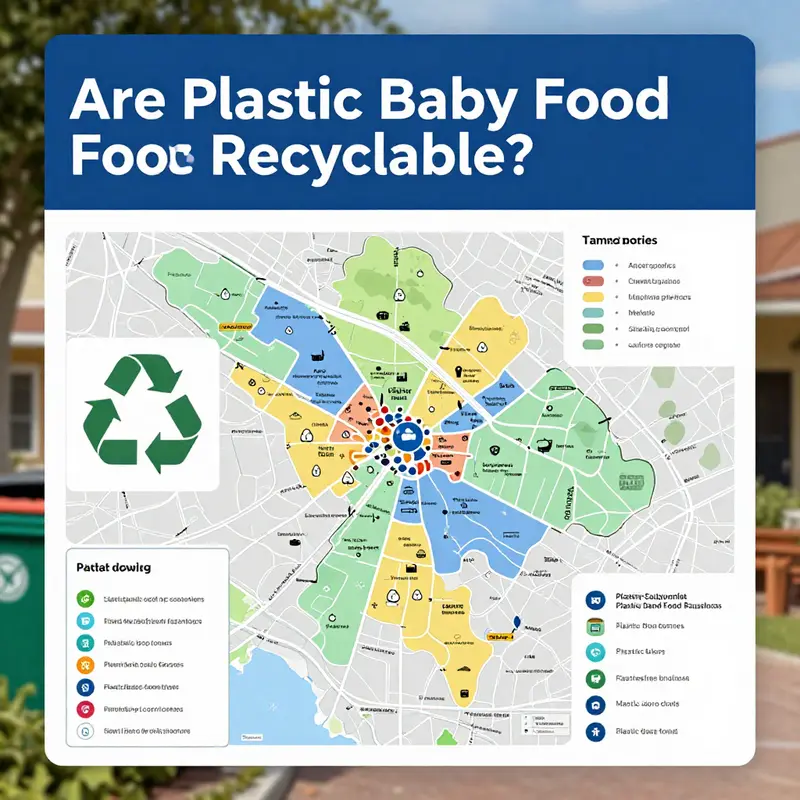
Local recycling guidelines act as gatekeepers for what ends up in the recycling stream. They vary by municipality based on facility capabilities and local markets. In practice, three pillars determine recyclability for plastic baby food containers: resin type, cleanliness, and alignment with local acceptance. When these align, containers can re-enter the circular economy; otherwise they belong in trash. Common plastics in baby food packaging are PET (#1), HDPE (#2), and polypropylene (#5). PET is widely accepted where programs permit, HDPE is common in opaque containers and various tops, and PP is used for lids and certain components. Cleanliness is crucial; rinse to remove residue and dry the container before recycling. Contaminants like food, oil, or moisture reduce value and can lead to disposal. Caps and liners may be considered separate items or not accepted, depending on the program. Some packaging formats such as multi layer pouches or metalized films are not typically curbside recyclable and require alternative disposal or special drop offs. Local variation means a container accepted in one city may be rejected in another. Check the official city or county website and use recycling search tools to confirm what is accepted, whether caps must be removed, and whether containers should be rinsed, dried, or flattened. When unsure, err on the side of caution and separate nonrecyclable components. To align with local realities, consider packaging that can be recycled together, or explore durable reusable storage options. Seek safer alternatives and minimize single use plastic when possible. Always verify with your local resources before discarding any container, and use trusted guides to inform decisions about curbside acceptance or drop off programs.
Final thoughts
Navigating the world of plastic baby food containers and their recyclability may seem daunting, but by understanding the types of plastics involved, the importance of contamination control, and the available alternatives, food service businesses can make meaningful strides toward sustainability. Embracing eco-friendly packaging solutions not only meets growing consumer demand for responsible practices but can also reduce environmental impact significantly. Stay informed about local recycling guidelines to ensure compliance and boost your brand’s commitment to sustainability. Together, we can contribute to a cleaner, greener future.