
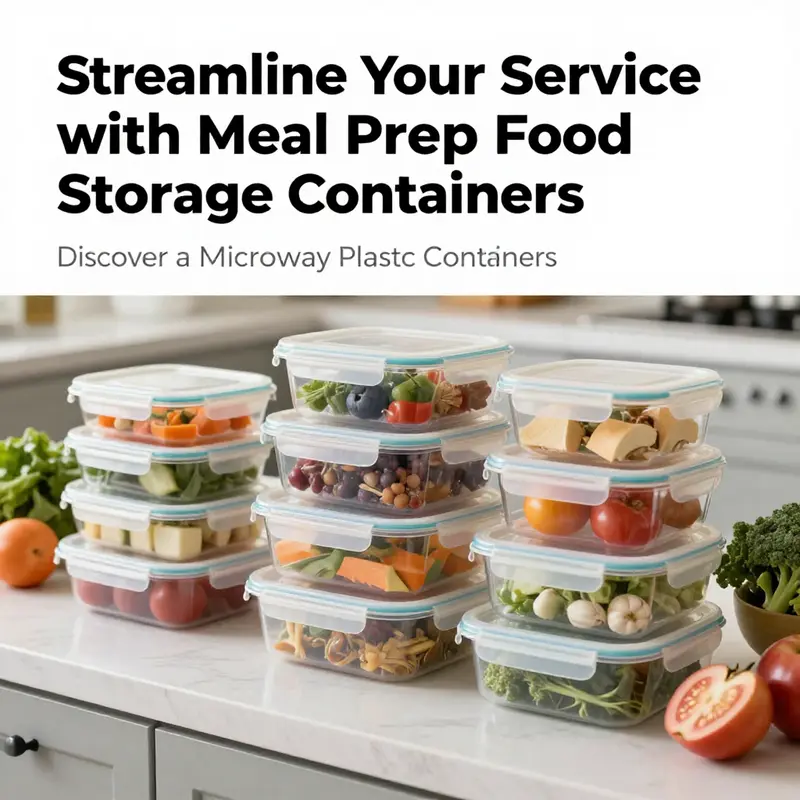
Choosing the right meal prep food storage solutions significantly impacts the efficiency and safety of any food service business. As trends shift towards quick service and meal preparation, using the right containers not only helps in food management but also elevates customer satisfaction. In this article, we will explore the core features and materials commonly used in meal prep containers, highlight popular brands and models that suit your specific needs, and discuss customized purchasing options ideal for larger operations like restaurants, food trucks, and catering services. Each chapter will provide valuable insights that will empower businesses to optimize their food storage practices while adhering to safety standards.
The Quiet Architecture of Meal Prep: How Polypropylene Microwave-Safe Containers with Lids Shape Modern Food Storage
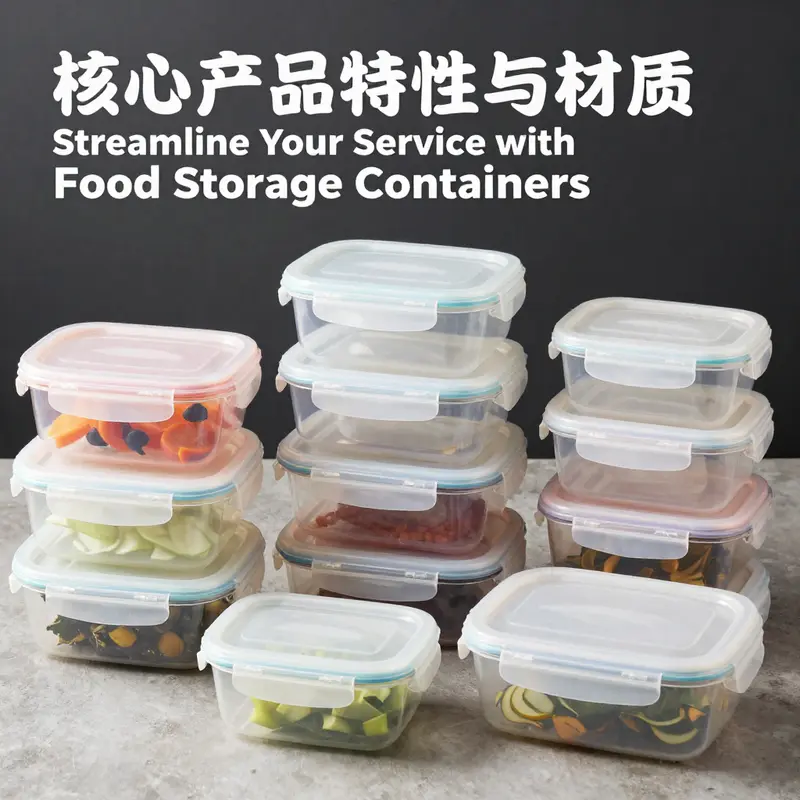
In the world of meal prep, containers are more than receptacles; they are the quiet infrastructure that supports daily health, time management, and reduced waste. The backbone of this infrastructure is a material that merges safety with practicality: polypropylene, often labeled as PP. When we consider plastic storage for meals that are meant to be heated in a microwave, frozen for later use, stacked for space efficiency, and sealed to preserve freshness, PP emerges as the material that makes all these functions possible without compromising safety or performance. What unfolds in kitchens, homes, and even professional kitchens is a story of careful material science translated into everyday design. The significance of PP in this context goes beyond a single attribute. It is the synthesis of heat tolerance, chemical stability, seal integrity, and reusability, all aligned with consumer safety standards. The rationale for turning to PP rests on a precise balance: a polymer that can withstand the temperature demands of reheating, resist the corrosive effects of acidic or fatty foods, and endure repeated cycles of washing and handling without deforming or degrading. It is a choice that helps families plan ahead, chefs scale up meal prep for the week, and individuals reduce single-use waste by transitioning to reusable containers with confidence. At the core of this balance is a set of characteristics that, taken together, define why PP-based meal prep containers with lids are a mainstream solution in homes and small-scale food operations alike.
First, the microwave safety profile of PP is central to its appeal. Containers built from this material are designed to tolerate typical reheating scenarios without releasing harmful substances or imparting off-tastes to foods. The typical temperature range that PP can safely endure is well within the limits encountered during household heating. While temperatures may briefly spike during the heating of oily or concentrated sauces, the material’s inherent stability reduces the risk of melting or warping when used according to manufacturer guidelines. This is not a matter of subjective trust but of test-driven safety standards that frame the consumer experience. A container marked as microwave-safe communicates to the user that the product has undergone evaluations for heat exposure, sealing performance, and food contact safety, including the absence of hazardous leachables during normal use. In practice, this means that reheating a portion of yesterday’s prepared meal should feel ordinary—no special rituals, no fear of releasing odors or substances, just convenient warming that fits into a busy schedule.
This safety is inseparable from the material’s status as a food-grade plastic. PP is commonly identified by the resin code 5, which signals its designation for contact with food and its relatively benign interaction with common cuisines. The absence of BPA—a widely discussed chemical stressed by health advocates—appears as standard labeling on contemporary PP products. BPA-free is not just a marketing note; it reflects an alignment with growing regulations and consumer expectations that emphasize health-conscious manufacturing. This is particularly relevant for people who plan to use containers repeatedly for week-long meal prep, where consistent contact with a variety of ingredients—vegetables, grains, dairy, and oils—requires confidence that the packaging will not contribute unwanted substances to the food over time.
Beyond safety, PP offers durability that complements the practical realities of meal prep. The chemical stability of polypropylene makes it receptive to repeated cleaning in hot water or dishwashers without losing shape or clarity. A well-designed PP container resists cracking under normal handling, remains resilient when stacked for pantry storage, and maintains lid integrity after many cycles opening and closing. This durability translates into tangible benefits: you invest in a set once and can reuse it across months or even years, which aligns with sustainable living goals. It also translates into predictable performance in households with young children or in shared living spaces where containers may be handled by multiple people with varying levels of care. Durability reduces the risk of spills and leaks, a practical necessity when meals travel from refrigerator to lunch box to microwave and back again.
A key facet of modern PP meal prep containers is the lid. The lid is not a mere closing device but a designed system that contributes to freshness, smell containment, and transport convenience. A tightly fitting lid minimizes leakage and prevents flavor transfer between compartments or across containers stored in the same drawer or bag. The design of the seal matters, with many lids featuring a gasket or a raised edge that presses firmly against the rim of the container. This geometry helps prevent steam escape, minimize dehydration of foods that can happen when exposed to air, and keeps contents from drying out during extended storage. A good lid also supports stackability. When lids are designed with flat, uniform profiles, containers stack cleanly—creating precious vertical space in a crowded fridge or freezer. For meal prep enthusiasts or small households juggling several meals, this stacking efficiency translates into more organized shelves and quicker access when planning the week’s menus.
The practical versatility of these PP containers extends to freezers and dishwashers, two realities of modern kitchens that demand resilience. Freezer safety matters because many meal-prep plans involve batch-cooked dishes kept for later consumption. The ability of PP to maintain form and not crack when subjected to low temperatures is essential; it ensures that frozen meals maintain their texture and do not suffer from microcracking or warping when moved in and out of cold storage. Likewise, dishwasher compatibility offers convenience and reduces the manual labor associated with post-cooking cleanups. Containers that tolerate dishwasher heat and chemical detergents without fading, cracking, or staining are particularly valuable for users who prepare meals in large batches and sanitize equipment in a single cycle.
Another dimension worth emphasising is the emphasis on reusability and environmental considerations. The shift toward reusable meal-prep systems reflects broader efforts to minimize disposable waste. Well-constructed PP containers with durable lids are designed to be washed and reused many times without significant loss of functionality. This extends beyond the economics of meal prep to the ecological footprint of daily cooking. When households adopt sturdy, BPA-free PP containers, they reduce reliance on single-use plastics and create a practical habit of reusing containers for future meals. The design philosophy that favors longevity also often yields better value: a well-made set may carry an upfront cost, but the ongoing savings from not purchasing disposable alternatives accumulate over time. In a landscape of constantly changing trends, the appeal of a robust, long-lasting system becomes clear as a pragmatic choice for most families.
The utility of PP containers is not simply about their capacity to hold meals; it is about the intelligibility of their use in real life. A simple, well-annotated container communicates expectations at a glance: is it microwave-safe? is it freezer-safe? is it BPA-free? Does the lid seal tightly? Can the container be stacked securely with the lid on or off? These cues matter. They guide everyday decisions and reduce the cognitive load associated with meal planning. They also support a culture of mindful preparation. When people can confidently reheat in whole portions or divide a family’s meals into separate compartments, they become more likely to maintain a balanced diet, try new recipes, and sustain consistent portion control. The design language is a form of non-verbal communication between product and user, a subtle but powerful feature that nudges households toward healthier routines.
From a consumer education standpoint, the emphasis on labeling—“microwave safe,” “BPA-free,” “freezer safe”—plays a crucial role. It is not only about compliance with regulatory norms; it is about enabling informed decisions. Consumers benefit when the product packaging or manufacturer information makes explicit the conditions under which the container can be used. For example, guidance around heat exposure, venting, and recommended maximum heating duration helps prevent careless use that could lead to warping or leakage. Clear labeling reduces the risk of misapplication, such as heating foil-wrapped foods in containers that are not designed for such heating, or using the containers for prolonged storage of highly acidic or highly fatty meals that might affect the integrity of the seal over time. The bottom line is simple: clear information paired with durable design builds trust and makes meal prep a smoother, safer routine.
The discussion would be incomplete without acknowledging the variety of configurations that PP-based meal prep containers can take. A single family might require a mix of sizes and shapes—rectangular for bulk meals, round for easier access to soups and stews, and modular compartments for balanced portions. The lids may come with single-vent or multi-vent features, depending on whether the plan includes steaming vegetables or reheating various components separately. Some designs incorporate stackable, shallow trays within a larger container to keep elements separate yet easily portable. The ability to customize these features in response to consumer demand has driven both market adoption and ongoing innovation in material science and product engineering. While the core material remains PP, the surrounding design choices—rims, seals, vent systems, and edge geometries—become the differentiators that help a particular set of containers align with a user’s cooking habits, storage constraints, and lifestyle needs.
From a procurement and standardization perspective, PP containers with lids also offer a degree of interchangeability across households and small businesses. In scenarios where meal prep services are scaled to serve multiple customers, a standardized size range and lid type streamline inventory, reduce the risk of cross-contamination, and simplify cleaning schedules. Businesses that require bulk procurement benefit from the predictable performance of PP in both heat and cold environments, the ease of labeling and portioning, and the assurances that come with BPA-free materials. The result is a practical ecosystem where the design, material selection, and consumer use cohere into a reliable workflow. In time, the cumulative benefits of such coherence show up as saved minutes in daily routines, less food waste from poorly sealed containers, and more consistent nutrient preservation across meals.
To connect the material science to the daily routine, consider a typical week of meal prep. A family may prepare a dozen meals on Sunday, storing them in PP containers of several sizes. The larger containers hold entrees like cooked grains and lean proteins, while medium ones accommodate mixed vegetables and side dishes. Smaller containers are perfect for dressings, sauces, or portion-controlled snacks. Each container features a lid with a dependable seal, allowing the family to stack them in the refrigerator or freezer without fear of leaks or odors seeping between containers. On a busy Monday morning, the lid is closed, the container is moved to a lunch bag, and by lunchtime, a quick spin in the microwave delivers a reheated meal that tastes nearly as fresh as when it was first prepared. The ease of transition from cold storage to hot plate, without swapping containers or resorting to disposable alternatives, illustrates how material choice and thoughtful design translate into practical, everyday advantages. The same logic applies to students, professionals who rely on portable meals, and seniors who value simple, safe food storage options. In every case, the PP container becomes a dependable partner rather than a fragile or obscure tool.
That dependable partnership is reinforced by the educational messages that accompany modern PP containers. Consumers are guided to verify microwave safety marks, recognize BPA-free labels, and understand the importance of not heating foods in non-food-grade plastics. The guidance often extends to practical tips: leaving the lid slightly ajar or using a vented lid when reheating to release steam gradually, avoiding heating in high-fat or highly acidic foods for extended periods, and refraining from using damaged containers that show cracks or cloudiness. These recommendations, while straightforward, reflect a cumulative wisdom gained from experience and regulatory standards, ensuring that the containers perform as intended across a broad spectrum of culinary practices. The result is a product category that blends rigorous safety testing with everyday usefulness, a rare combination that makes PP-based meal prep systems both trusted and beloved by users who value efficiency without compromising health.
In a broader sense, the story of PP containers with lids is also a story about how households adapt to the rhythms of modern life. The city dweller, the busy parent, the college student, the small business owner who prepares meals for employees—each one benefits from a storage solution that respects the integrity of food while accommodating the realities of routine. The material, the lid design, and the clear labeling together create an ecosystem in which people feel confident about heating, freezing, and transporting meals. The design does not force a single way of eating; it accommodates diverse culinary practices, dietary restrictions, and family routines. It respects the value of time, the importance of safety, and the pragmatic demand for a system that is both robust and versatile. That is the essence of modern meal prep storage: a well-considered material choice translated into a practical, everyday tool that quietly supports healthier eating habits and less waste without drawing attention to itself.
For readers seeking deeper context, consider a practical link that explores related packaging choices and their implications for everyday use. This resource offers a broader view of how disposable and reusable packaging options intersect with consumer needs, without prescribing a single path. It serves as a companion to understanding why PP containers with lids have become a default for many households and small-scale food operations. By examining the continuum from raw material properties to consumer usage patterns, we glimpse how a seemingly simple product category can influence habits, contribute to sustainability, and shape the pace of modern meal preparation. The journey from resin to reheated meal is, at its core, a narrative about design aligned with human routines, safety, and the modest aspiration to make daily nourishment a little more manageable.
In sum, the utility of polypropylene as a material for meal prep containers with lids rests on its reliable heat tolerance, non-toxicity when properly labeled, and capacity to endure repeated use without compromising form or function. The lids reinforce containment and freshness, while the overall design emphasizes stackability and ease of cleaning. The result is a storage system that supports meal planning, enables healthier eating patterns, and reduces waste in practical, tangible ways. This is the quiet architecture behind daily nourishment: a material choice that quietly enables a higher standard of safety, efficiency, and peace of mind in kitchens around the world. For anyone invested in the practical realities of meal preparation, the PP container with a lid stands as a dependable partner—simple in concept, but powerful in everyday impact.
Internal link for further exploration: Custom Disposable Kraft Paper Bowl with PET Lid
External resource for additional technical context: https://www.fda.gov/food/food-contact-materials
Hot Picks and Practical Truths: Navigating Microwave-Safe Plastic Meal-Prep Containers
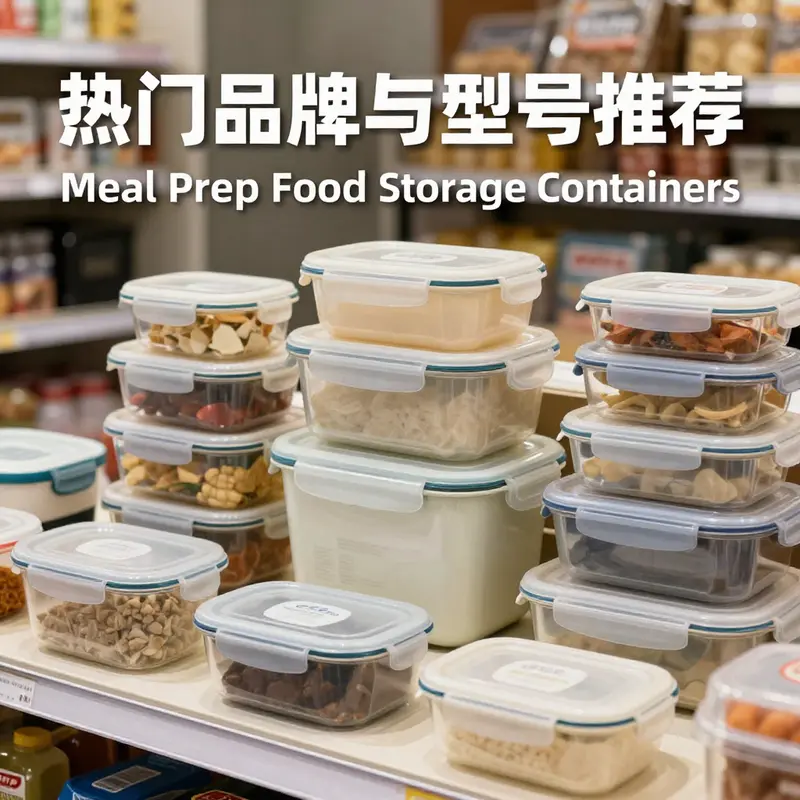
A well-planned meal prep routine hinges on more than just recipes. It rests on the storage system you trust to keep flavors intact, textures stable, and nutritional integrity from the moment you portion meals for the week to the moment you lift a lid and microwave. The modern landscape of meal prep containers centers on microwave safe plastic options that pair convenience with safety, and the best choices disappear into daily life. They save time, reduce waste, and give you confidence that reheated meals will taste close to freshly prepared. To understand why these containers work, start with the core material and the design principles that undergird everyday performance. The most commonly used plastic for meal prep storage is a food grade polymer known for durability, heat tolerance, and light weight. This material is chosen because it can survive temperature shifts from fridge cooling to microwave heating without compromising the food it holds. It is designed to be reused and washed, making it a practical choice for households seeking efficiency and sustainability. The aim is to deliver a product reliable enough for weekly use yet simple enough for a busy person to grab and go. The best versions bear labeling that communicates safety and compatibility with both fridge and microwave, and the phrase BPA free has become a shorthand for consumer trust. Beyond BPA free labeling, the emphasis is on food grade quality and compliance with safety standards governing materials that contact meals. When you look at practical implications, a few core features shape daily use and long term satisfaction. First is microwave safety. A well engineered container is rated for direct heating in the microwave, with a clear maximum heat tolerance indicated by the manufacturer. For most standard meal prep containers, that upper limit sits around a practical threshold suitable for reheating cooked grains, vegetables, proteins, and sauces without warping or leaching. The second cornerstone is freezer compatibility. Lids seal tightly to prevent freezer burn and flavor migration between compartments. A good seal reduces leaks and odor transfer between foods. The third pillar is durability and reuse. The ability to wash containers without compromising integrity is essential; they should withstand dishwasher cycles or careful hand washing while staying serviceable for weeks or months. The fourth pillar is sealing performance. A tight seal around the lid is a practical defense against spills and odor mingling between meals. A good seal keeps soups contained and protects contents from moisture loss that can dull textures. In combination, these features form a system that supports a day to day workflow built around planning, portioning, reheating, and storing. The material itself should be food safe and resilient. The packaging should be easy to clean, with smooth surfaces that resist staining. A thoughtful design considers stacking, since stackability translates to efficient cabinet and fridge organization. When containers nest neatly, you can clear shelf space and access each portion without disturbing others. The lid and base pair is a compact system that rewards batch cooking with faster retrieval and easier portioning. The design language often emphasizes transparency; clear bodies help inspect contents without opening lids, and visual cues aid planning. Labeling is practical; a space on the lid or sidewall for the date and content helps maintain safety for a week of meals. An often overlooked aspect is compatibility with dishwashers. For families who wash containers after dinner, dishwasher safe pieces provide convenience and hygiene, as a robust washing cycle helps keep containers clean after repeated use. Note that you should still follow manufacturer guidelines about rack placement to preserve seals and hinges. The hinge design itself matters for longevity, resisting cracking from heat, friction, and daily use. A good hinge supports easy opening, with a lid that remains snug but simple to lift. Larger rectangular containers are favored for meals with multiple components, while smaller, portion controlled sets work for singles, snacks, or baby meals. Having a mix of sizes helps adapt to a week of varied menus while ensuring storage stacks efficiently. In sourcing containers, consider interchangeability: a collection that supports a few common lid shapes or sealing mechanisms makes it easier to swap pieces and fill gaps in your pantry with minimal cognitive load. The goal is a modular system that can scale from a single person’s weekday lunches to family batch cooking without a rigid lineup of products. When you view the broader market, you encounter configurations such as two compartment lids or a mix of rectangles and rounds to suit different dish profiles. The more adaptable the system, the more it can accommodate leftovers, sauces, and bulk reheating strategies. A heavier wall thickness may add sturdiness for carrying in bags, while a slimmer profile minimizes bulk. Both can be valid if they align with your priorities: durability, compactness, or a blend. A practical step in choosing the right containers is verifying labeling and certifications. Look for clear statements about microwave suitability and temperature ranges, and ensure the product clearly indicates heat tolerance and dishwasher compatibility. This transparency matters because it prevents guesswork during reheating and protects confidence over repeated use. The ultimate goal is how the containers fit into your weekly rhythm. If your schedule includes early mornings and late nights, you want a storage system that responds to urgency and respects meal integrity. The best options minimize cleanup, maximize portion accuracy, and reduce mental load. They enable batch cooking with the assurance that each container will deliver a predictable reheating experience, preserving taste and texture. A practical approach to scouting options begins with a simple criterion checklist: microwave safety and BPA free labeling as a baseline; verify freezer to microwave transitions, tight lids, dishwasher compatibility, and that the material is clearly described as food grade. Also consider whether you need a vented lid for certain reheating scenarios. In practice, these considerations translate into a flexible framework rather than a rigid set of rules. The framework supports a meal prep mindset: plan ahead, portion evenly, and rehearse meals with the same discipline you apply to any routine. The narrative around containers does not depend on brand pedigrees; what matters is the shared experience of better meals through better storage. A well chosen set reduces friction, preserves the appeal of home cooked meals, and makes batch cooking a sustainable habit. As you map your weekly meals, remember that the best containers disappear into your routine, delivering reliable performance and quiet confidence that meals travel from kitchen to fridge to microwave safely. External guidance anchors safety and durability through recognized guidelines and certifications, helping explain why BPA free, food grade polypropylene and related features are standard expectations in modern containers.
Customization and Industrial-Scale Sourcing of Microwave-Safe Plastic Meal-Prep Containers
The growing demand for meal prep has pushed container solutions from simple storage to engineered systems that support scale, safety, and brand continuity. In the world of industrial procurement, the task is not merely to find a box that can hold leftovers; it is to secure a family of containers that can survive daily cycling through heating, chilling, washing, stacking, and transport, while also fitting a range of portion sizes, culinary styles, and service channels. The core challenge is to balance material science with practical logistics. Foodservice operators—from caterers to corporate cafeterias—need containers that tolerate repeated use without losing shape, that seal reliably to prevent leaks and flavor cross-talk, and that withstand the temperature swings of a kitchen workflow. At the same time, each operation seeks to project a coherent brand impression, reduce waste, and optimize labor. Customization and industrial-scale sourcing meet those needs by turning a standard plastic box into a tailored, busines-friendly packaging system that travels from commissary to consumer with predictable performance and cost control. The result is not a luxury feature but a practical backbone of meal prep programs, one that aligns with the safety standards, regulatory expectations, and sustainability goals that drive modern food operations.
Materials are foundational. The mainstream choice for microwave-friendly, durable meal-prep containers is food-grade polypropylene (PP). This polymer offers a reliable fusion of heat resistance, rigidity, and chemical inertness that suits the retail and foodservice environments. In the practical kitchen, PP-based containers endure reheat cycles without deforming, stand up to freezing without becoming brittle, and survive repeated washing. Importantly, many of these containers are marketed as BPA-free, a labeling that resonates with both consumer demand and regulatory emphasis on safer food-contact materials. The scientific rationale rests on PP’s stability under typical microwave temperatures and its compatibility with common cleaning regimens, including dishwashers, which helps restaurants and households alike keep up with high turnover. From a procurement perspective, the material choice translates to stable sourcing channels, predictable molding behavior, and compatibility with a wide range of lid designs, dividers, and branding techniques. It also supports a sustainable narrative when manufacturers emphasize reusability and end-of-life recyclability, even as the packaging economy continues to grapple with waste management challenges. While PP is the workhorse, responsible buyers also watch for margins of safety: certifications, labeling accuracy, and accurate temperature ratings that reflect real-world performance rather than marketing claims.
Customization expands what a container can do beyond simply containing food. In industrial-grade procurement, specifications often extend to a family of sizes—ranging from compact 600–800 milliliters up to 1000–1200 milliliters or more—so kitchens can segment meals, ingredients, or portions with minimal cross-contamination risk. Dividers and sub-compartments become practical tools for portions, sauces, or different sides that travel together without mixing, while vented or semi-vented lids can address steam release during reheating. The lid design matters almost as much as the container itself. A tight seal reduces leaks and preserves moisture, and a well-engineered latch or clip system can endure frequent openings and closings without loosening over time. Color or branding options—ranging from transparent or translucent bases to lightly tinted lids or printed logos—allow organizations to maintain a consistent look across multiple sites, which supports identity while simplifying inventory management. The ability to customize is not purely aesthetic. It also translates into operational efficiency: standardized sizes enable bulk purchasing, uniform stacking reduces storage footprint, and modular dividers cut labor time during portioning. The most successful programs treat customization not as a one-off feature but as a continuum—an evolving set of options that can scale with the organization’s growth, seasonal menus, or changing dietary needs.
The process behind industrial customization typically begins with clear specifications and a conversation about intended use. Buyers describe the expected working conditions: reheating cycles, the types of meals or ingredients, whether the containers will be frozen or refrigerated, and how they will be cleaned. From there, manufacturers translate these needs into material tolerances, wall thickness, and lid geometry. The sampling phase plays a crucial role: 3 to 10 days is a common window for samples to be produced, tested, and iterated. During this phase, practical tests reveal how a container performs in real kitchen routines—whether it can handle a high-volume batch reheating without warping, whether the seal remains intact after multiple cycles, and whether the labeling remains legible after dishwasher runs. Quality control steps then verify dimensional tolerances, seal integrity, and molding consistency across batches. In parallel, branding and customization elements—such as logo printing on lids or subtle color accents on bases—are prototyped, reviewed, and approved. The outcome is a supplier relationship built on a shared language: a specification sheet, a pilot run, a clear sampling timeline, and a plan for transitioning from test to full production.
As with any regulated domain, compliance underpins the credibility of industrial-grade packaging. Buyers seek manufacturers who hold certifications that attest to safe production practices and material honesty. Internationally, ISO standards, SGS testing, and FDA-related conformity statements are common signals of credibility. These attestations cover areas such as material safety, traceability in the supply chain, and the absence of prohibited substances in food-contact products. BPA-free labeling, while a marketing cue, gains real value when it is supported by third-party testing and transparent documentation. The regulatory landscape also shapes how containers are marketed and used. For example, markings indicating microwave safety must align with established symbols and temperature ratings, so operators never misinterpret a container’s heating capabilities. A well-chosen supplier will be able to provide certificates and test results, maintain robust document control, and offer traceability that tracks batches from raw material through finished product. In practice, this reduces risk for operators who rely on stable supply lines and consistency in performance across multiple sites and menus.
From a procurement perspective, quantity and lead times are the practical levers that determine feasibility. Industrial buyers frequently operate with minimum order quantities that align with manufacturing economics, which means the decision to customize may hinge on anticipated demand and the ability to absorb inventory. For some operators, the economics favor larger, recurring orders with a predictable cadence; for others, the preference might be for semi-custom to fully custom items with shorter retooling cycles. In either case, the vendor ecosystem supports this through scalable production capacities, well-established quality assurance programs, and logistics capabilities that include coordinated deliveries to multiple sites or depots. A robust supplier relationship also incorporates risk management—redundant sources for critical components, alternate production runs in case of capacity strain, and contingency plans for port or freight delays. The aim is not simply to procure a container but to create a reliable system whose parts—shell, lid, dividers, and branding—work in concert to deliver predictable performance, even as menus change or service volumes fluctuate.
Logistics and packaging emerge as critical factors when scaling meal prep operations. Industrial procurement often includes considerations beyond the container itself: the way lids nest or stack, whether the base geometry allows compact palletization, and how products are packed for shipment to minimize damage. The optimization problem includes labeling, barcoding, and inventory visibility; consistency in labeling simplifies stock takes and reduces the likelihood of cross-usage errors. For operators who manage multiple kitchens, a standardized set of container formats across locations reduces training time for staff and decreases the risk of mis-sizing or mis-matching containers with meals. Packaging decisions also carry sustainability implications. The best programs weigh not only the immediate cost but also the environmental footprint, seeking designs that minimize packaging layers, use recyclable materials, and facilitate efficient recycling streams after consumer use.
Another dimension to consider is the end-to-end lifecycle design of these containers. Reuse is a guiding principle in many meal prep ecosystems, but it requires careful attention to durability and maintenance. A container should endure a high number of reheats and wash cycles without cracking, warping, or losing lid integrity. The lid closure must resist accidental openings during transport and storage, especially when containers are stacked or transported in bulk. The walls should retain their form after freezing and thawing, avoiding micro-cracks that could harbor bacteria or compromise seal performance. From a sustainability angle, PP’s recyclability matters, but it is not sufficient on its own. The entire product design—how parts fit together, whether there are components that complicate disassembly, and how easily the material can be separated from adhesives or other additives—affects end-of-life outcomes. In responsible procurement, these considerations translate into specifications that favor designs with simple, recyclable construction and clear guidance for disposal.
The practical reality for any kitchen operation considering customization is cost, not just sticker price. Unit costs vary with order size, lead times, and the level of customization. A basic, mass-produced container tends to offer the most favorable unit economics, but it may fall short on features that support brand differentiation or niche workflows. Conversely, a highly customized system can deliver a seamless operational fit and a strong brand impression, but it requires careful forecasting, planning, and inventory management to avoid capital lockups. The most effective approach often combines a core set of standard formats for everyday use with a limited set of customization options that address the most impactful needs—such as a divider configuration for multi-component meals or a branded lid that reinforces the business’s identity. This hybrid strategy preserves the benefits of economies of scale while still enabling differentiation and efficiency. It also enables the procurement team to respond quickly to evolving menus, seasonal offerings, or new service channels, without needing to redesign the entire packaging system.
In the broader ecosystem, suppliers of microwave-safe, PP-based containers present options for a range of client profiles. For some operations, a few thousand units per month suffice, with modest customization and moderate lead times. For larger operators and multi-site enterprises, the relationship may involve larger volumes, longer-term contracts, and more sophisticated supply-chain arrangements. Whatever the scale, the guiding principle remains consistent: the container must perform reliably in the kitchen’s crucible—heat, cold, moisture, and handling—while enabling efficient workflows, consistent branding, and responsible waste management. The ability to tailor size ranges, achieve robust sealing, and select branding modalities—all within the reliability of a known material base—creates a resilient framework for meal prep programs to grow. In this framework, the container ceases to be a mere vessel and becomes a strategic component that supports food safety, operational efficiency, and sustainability commitments across the enterprise.
To illustrate the practical implications of these ideas, consider the welfare of a modern meal-prep operation that ships meals from a central kitchen to multiple satellite locations. In such a system, the container family is expected to be stacked compactly, hold precise portions, tolerate a cycle of micro-heats, and survive repeated washing without degradation. The lids must stay tightly sealed to prevent leaks and scent transfer during transit, while prints or logos on lids should endure repetitive exposure to heat and moisture without fading. A well-chosen supplier will provide test data, pile up data on tolerances, demonstrate consistent performance across batches, and deliver clear documentation for regulatory compliance. They will also offer flexibility—an ability to adjust sizes, add compartments, or adapt branding in response to menu evolution or new service lines. The procurement process becomes a collaborative dialogue rather than a one-off purchase order. The result is a supply chain that not only feeds the meals but also feeds the business’s strategic goals: safety, efficiency, scale, branding, and sustainability.
For operators who want a concrete point of reference while navigating these choices, retailers’ pages often illustrate the essential attributes in practice. A retail page that features microwave-safe, BPA-free containers demonstrates the core value proposition: safe materials, heat-tolerant construction, and practical usability in everyday kitchens. While the consumer market and the industrial market diverge in scale and customization, the underlying physics and material science connect them. The same cautious approach to labeling, temperature ratings, and lifecycle considerations applies across both domains. This alignment between consumer-facing assurances and industrial-grade expectations helps ensure that the standards met in pilot runs can translate to full production without unexpected compromises. When discussing customization, it is helpful to keep in mind that the best industrial decisions anticipate future needs—seasonal menus, varying batch sizes, and the possibility of multi-site orchestration—without overcommitting to expensive options that will never be used to their full potential.
From a governance perspective, it is also important to document expectations, test results, and approvals systematically. A clear specification package that includes material type, temperature range, humidity tolerance, lid-locking performance, and branding requirements reduces ambiguity. It provides a single source of truth for procurement, quality assurance, and facilities teams, enabling smoother onboarding of new suppliers and quicker transitions when a project scales. In practice, this means investing in a concise yet comprehensive spec sheet, a plan for sampling, and a defined acceptance process that sanctions moves from pilot to production only after successful validation. The value of such rigor is a more predictable supply chain, less risk of misalignment between kitchen operations and packaging capabilities, and a more coherent narrative for investors and executives who prioritize reliability, cost control, and sustainability.
Finally, a grounded chapter on customization and industrial procurement would be remiss not to acknowledge the practical realities of sourcing in a global market. Suppliers across regions bring different strengths in terms of capacity, lead times, and customization options. The best path is a deliberate balance: anchor your program on a robust core of standard formats that deliver cost efficiency and interoperability across sites, then layer on targeted customization that yields meaningful gains in workflow or brand coherence. In doing so, you preserve agility, protect margins, and maintain quality across the lifecycle of a meal-prep program. The result is a packaging strategy that is not only technically sound but also operationally resilient and strategically aligned with a business’s broader sustainability and customer-experience objectives.
Internal reference for practical shopping context: Walmart micro-packaged, microwave-safe containers page provides a retail glimpse of how these attributes translate into real-world products. While consumer pages differ in scale and customization potential, they illustrate the same core commitments: safe materials, heating compatibility, leak-proof lids, and the promise of repeat use. For readers who want to see how the market communicates these features in a concrete product listing, this page offers an accessible reference point that complements the more complex, industrial narratives described above.
External resource: For regulatory context and material-safety considerations governing food-contact plastics, see the FDA’s guidance on food-contact materials and substances at https://www.fda.gov/food/food-contact-materials.
Final thoughts
In conclusion, selecting the appropriate meal prep food storage containers is crucial for any food service establishment, whether it be a bustling restaurant or a food truck service. Emphasizing the right features, brands, and customized options ensures not only compliance with safety standards but also operational efficiency. Elevate your business’s meal prep game today by integrating these essential storage solutions into your practices, fostering enhanced customer satisfaction, and supporting your team’s efficiency.