
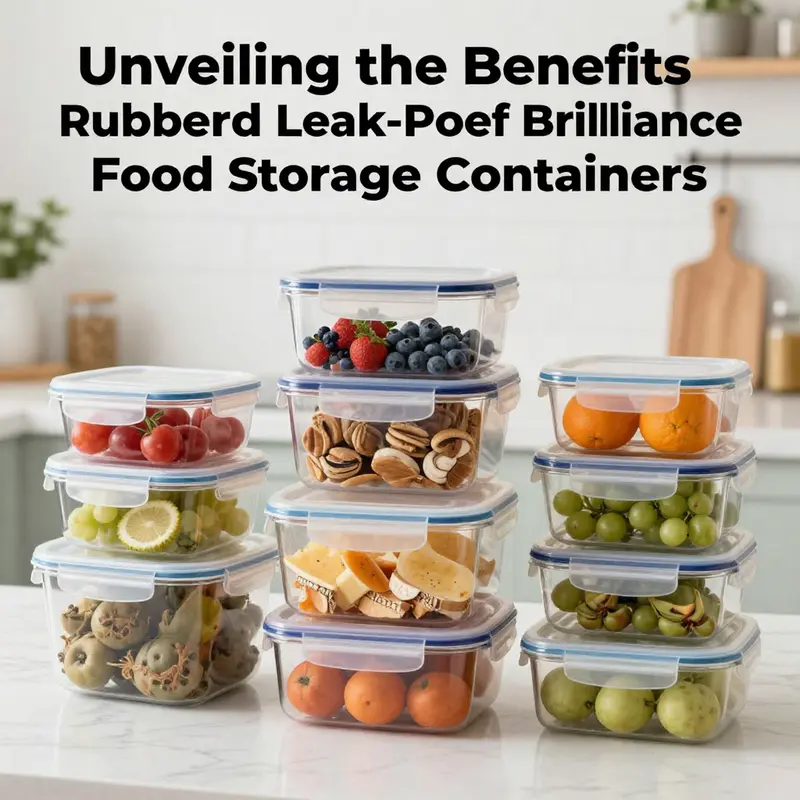
Rubbermaid Leak-Proof Brilliance Food Storage Containers represent a game-changer in food storage solutions, especially for bustling environments like bubble tea shops, restaurants, and catering services. Designed with practicality in mind, these containers excel in providing leak-proof storage that ensures your culinary creations stay fresh and secure during transport. From their innovative airtight seals to versatile designs, each key feature enhances operational efficiency, making them a must-have for any food service establishment. This article explores their standout features, the variety of available options to suit your needs, real user feedback, and insights into pricing and availability. Each section is crafted to give you a comprehensive understanding of why these storage containers are essential for your food business and how they can significantly improve your operational workflow.
Crystal Clarity, Locking Power: Redefining Everyday Food Storage with a Leak-Proof, Clear Plastic Set
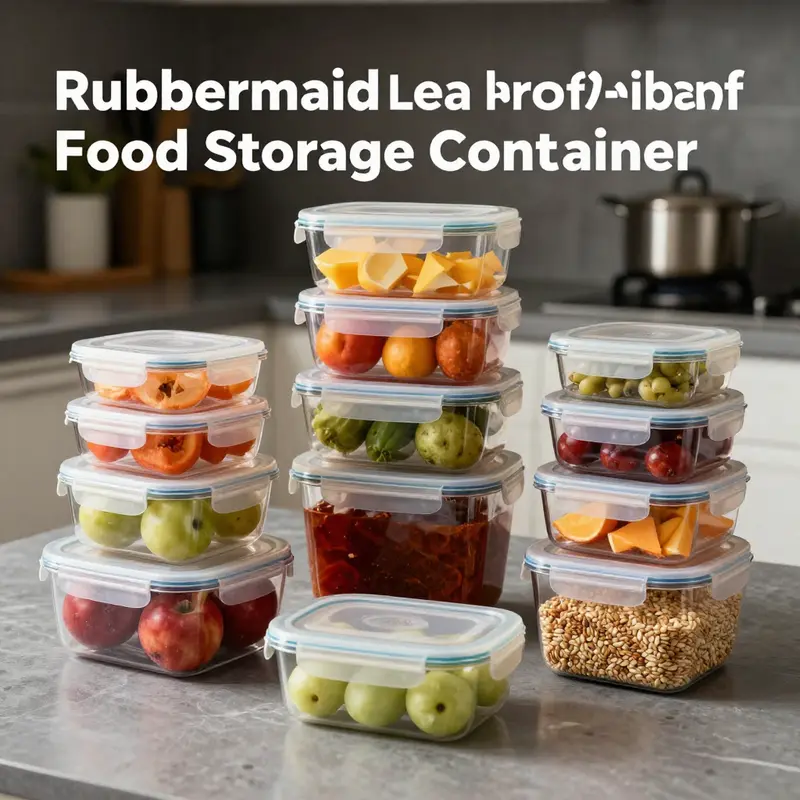
In the rhythm of a busy kitchen, the way we store, transport, and reimagine our meals speaks as much about intention as it does about convenience. A well-designed storage system can turn a jumbled cabinet into a quiet ally, guiding us from frantic meal prep to calm, confident organization. The centerpiece of this transformation is a premium leak-proof, crystal-clear plastic food storage set. It is built not merely to hold food but to reshape how we think about leftovers, weeknight dinners, and batch cooking. At its core lies a material choice, a philosophy of sealing, and a suite of design moves that align with real kitchen life. The result is a collection that feels purposeful from the first lift of the lid and remains dependable long after the last bite is gone.
Material choice matters more than many people assume. A storage system that feels sturdy in the hand and remains transparent over time is rare. This set is crafted from BPA-free Tritan, a durable plastic known for its glass-like clarity, lightweight feel, and impressive resilience. The absence of BPA is a reassurance that echoes through every use, from the moment you pour a hot soup to the instant you snap the container shut for freezing. Tritan’s transparency is not merely cosmetic; it is a practical feature that makes contents instantly identifiable without opening lids or labeling. For anyone who meal-preps, cooks in bulk, or simply hits the fridge with a plan, the visibility translates into reduced guesswork and fewer trips to the trash can when leftovers get older than intended.
The standout attribute of the set is its leak-proof design. In a kitchen where liquids are as common as solids—soups, sauces, dressings, overnight oats—the risk of spills is real and frustrating. Here, the lid and latch system work in harmony to create an airtight seal that clamps securely around the rim. The latch mechanism isn’t a flourish; it’s a purposeful engineering choice designed to minimize the risk of a cap popping loose under pressure or during transit to the office or school. The result is a container that truly contains liquids without drama, enabling a level of confidence when you carry a filled container in a bag or tote. The effect is particularly meaningful for meal-prep enthusiasts who portion out soups, stews, or gravies ahead of time. It’s also a quiet revelation for parents who worry about clumsy refrigeration or car rides with young adventurers’ lunches. In practice, the seal feels like peace of mind made tangible, a small but powerful assurance that a well-sealed container won’t spill and stain and won’t leak into pockets or backpacks.
Beyond the seal, the design accommodates a practical, almost culinary, rhythm of use. The set is built to be versatile, supporting freezer storage, microwave reheating, and dishwasher cleaning—though with important caveats to protect the food and the containers themselves. Freezer compatibility is a practical boon for batch cooking and long-range planning. When you portion meals for the week, the ability to freeze them in a container that can later be thawed and reheated in the same vessel saves both time and washing up. The microwave capability is specifically tuned for reheating rather than cooking from scratch, with built-in venting under the lid that allows steam to escape. This feature is a thoughtful nod to modern cooking habits, where leftovers often need a quick reheat without the mess of splatters or the need to remove a lid entirely to vent. The vented design minimizes condensation on the lid, reduces the risk of splashed sauces popping out of the container, and makes lunchtime reheating a less messy affair.
The set’s practical versatility is complemented by its compatibility with modern kitchen routines. It is top-rack dishwasher safe, which eases weekly cleanup while maintaining the integrity of the seal and the clarity of the plastic. The ability to load containers into the upper rack reduces the labor of washing up after a busy day and helps ensure that these containers are readily available for the next meal-prep cycle. The combination of freezer, microwave (reheat only), and dishwasher compatibility gets at the heart of how a thoughtful kitchen system should function: it should simplify routines, not complicate them with incompatible materials or perplexing care instructions.
Another compelling feature is optical clarity paired with durability. The crystal-clear bases and lids allow for quick inside-viewing, which is a subtle but significant time-saver during meal planning, grocery shopping, and inventory checks. When you can see at a glance what’s in the fridge, you waste less time decoding jars and labels and you’re less likely to forget ingredients that should be used sooner. Over time, the material holds up to daily use without the dulling or staining that sometimes accompanies less resilient plastics. The set’s resistance to staining and lingering odors is not merely a hygiene benefit; it preserves the freshness narrative that drives better food choices. A container that resists staining and odor helps maintain the appearance of newness even after frequent use, which, in turn, reinforces long-term satisfaction with the investment.
An often overlooked but crucial design flourish is the lid’s unique, splatter-free construction. The built-in vents located under the latches are a small engineering triumph that matters in everyday use. When reheating in the microwave, steam can escape through these vents without the need to remove the lid entirely. The result is a safer, cleaner reheating process that minimizes splatter on cabinets, countertops, and the interior of the microwave. At the same time, the sealed environment maintains moisture and flavor inside, ensuring leftovers taste as close to freshly cooked as possible. This attention to steam dynamics reflects a broader design ethos: prioritize user-friendly interactions that feel effortless yet deliver measurable improvements in daily life.
The modular, stackable nature of the collection is another practical advantage that translates into a calmer kitchen, not a cluttered one. Space efficiency in the fridge and pantry is not a cosmetic goal; it’s a functional requirement for homes that juggle multiple meals, snacks, and dietary plans. The containers are designed to nest and stack cleanly, reducing the footprint of a week’s worth of meals. This compactness feeds a virtuous cycle: better storage enables longer shelf life, which in turn supports planning and reduces waste. A neatly organized set also serves as a visual cue for portion control and meal pacing, helping to stabilize a family’s eating routine and prevent double-cooking or forgotten leftovers at the back of the fridge. In practice, the modular design becomes a quiet conductor of daily routines, guiding decisions about what to make, what to store, and what to pull from the freezer when a busy week demands improvisation.
The collection’s configurability deserves emphasis. While many households rely on a handful of containers that cover the basics, this set offers a spectrum of sizes and, in some configurations, removable trays that introduce compartmentalization for snacks, sauces, or small side dishes. The flexibility to reconfigure the interior balance of the set—whether you’re packing a work lunch, portioning a week’s worth of lunches for kids, or separating condiments from main courses—creates an adaptable framework for meal planning. It supports a spectrum of culinary routines, from the dedicated meal-prep enthusiast who wants precise portions to the casual cook who appreciates the convenience of a familiar system that can stretch to cover the occasional party platter or picnic packing.
Care and maintenance are not afterthoughts with this kind of design. The material’s inherent resilience makes it forgiving of daily use, but care habits still matter for longevity and performance. The absence of BPA and the clean lines of the containers make them straightforward to clean, and the top-rack dishwasher option means that maintenance can be low-effort. When hand washing is preferred for any reason, the smooth surfaces and rounded edges make the containers easy to scrub, with fewer crevices where residue can hide. The result is a set that remains visually pristine over time, a tangible reminder that smart material choices can translate into long-term satisfaction and practicality. For families juggling kids’ lunches, this means fewer post-work dramas with sticky containers and more predictable routines that strengthen the week as a whole.
From a value perspective, the appeal lies not only in performance but in the breadth of configurations and the way the set scales with changing needs. A larger collection provides the flexibility for substantial meal prep, weekly bulk cooking, and a steady cadence of take-to-work lunches. A smaller configuration might serve a couple or a single household that values predictability and ease. The ability to mix and match sizes and reallocate trays as life shifts—such as starting a new diet plan, accommodating a growing family, or simply reorganizing a pantry—adds a layer of adaptability that more rigid systems simply can’t offer. In a market that often tests consumer patience with fragile materials or opaque sealing mechanisms, this approach—clear, reliable, and modular—positions a storage system not merely as a container but as a framework for everyday nourishment.
The narrative of practical design here does not live in abstractions. It is grounded in everyday moments—opening the fridge, grabbing a container for a packed lunch, transferring a batch of soup to the freezer, reheating a meal without splatter, washing up, and stacking the set back in place with a neat efficiency that feels almost like a small victory. The emotional payoff is subtle but real: less clutter, less waste, more predictability, and a sense of control over one’s food environment. This is not about a flashy new gadget alone; it is about a thoughtfully engineered system that aligns with how people actually cook, store, and move through meals across a week, a season, or a life stage.
At the junction of science and daily practice, the leak-proof, crystal-clear plastic storage set embodies a quiet promise: that good design can make better eating easier, more organized, and less wasteful. It respects the integrity of the food it houses, honors the time of the cook, and supports the routines that keep a household nourished and reconciled with the realities of modern life. It invites a shift—from rummaging through mismatched containers and uncertain seals to trusting a single, well-made system that adapts as needs evolve. In this sense, the set is less a static collection and more a living toolkit for mindful food management. It doesn’t demand devotion; it invites daily interactions that reinforce simple, effective habits—planning ahead, portioning thoughtfully, reheating with confidence, and cleaning with ease.
As kitchens continue to evolve toward efficiency, sustainability, and clarity, the defining features of this type of storage system—the BPA-free Tritan material, the robust leak-proof seal, the vented, splatter-free lids, the clear, stain- and odor-resistant surfaces, and the modular, stackable form—form a cohesive whole. They translate ambition into practice. They convert a chaotic fridge into a navigable landscape where meals are planned, saved, and enjoyed with less fuss. They allow cooks to move between batches, leftovers, and fresh preparations with a fluidity that once required a different set of tools and a different pace. In the end, the real value of such a system lies not in the sum of its parts but in how those parts support a healthier, more deliberate way of eating. It is about turning everyday routines into reliable rituals, where food stays fresh, flavors stay intact, and the kitchen remains a place of calm progress rather than last-minute scrambling.
For readers who want to explore further practical implications—how a well-chosen storage system can support meal planning, reduce waste, and simplify cleanup—this approach offers a blueprint. It suggests that a core set, thoughtfully designed, can act as a backbone for weekly meals, weekend meal-prepping, and the little daily decisions that shape overall dietary habits. It isn’t just about containment; it’s about fostering a reliable ecosystem that makes healthy choices easier, more consistent, and more enjoyable across the calendar. In such a framework, the kitchen becomes not a space of occasional effort but a reliable partner in everyday life, helping to sustain flavor, nutrition, and balance with fewer headaches and more time for the people and moments that matter most.
For readers seeking a practical, hands-on reference, an external resource provides a deeper dive into how a specific leak-proof, clear-storage system meets the needs of busy households—especially those who value a combination of durability, safety, and ease of use. Discover more about this category and its real-world performance at: https://www.amazon.com/Rubbermaid-Brilliance-Food-Storage-Containers/dp/B07W4X3H9J
Variant Landscape: How a Leak-Proof Brilliance Storage Line Shapes Your Kitchen Organization

The kitchen is a living archive of our daily habits, a place where organization is less a luxury and more a practical philosophy. When a storage system makes that philosophy tangible, the impact ripples through grocery trips, meal-prep routines, and even the quiet rituals of reheating a simple bowl of soup on a busy weeknight. The leak-proof, crystal-clear storage line that many households reach for embodies this philosophy. It delivers more than just containers with lids; it offers a carefully engineered approach to how we see, access, and reuse the food we bring into our homes. In this chapter, we explore the available variants of this storage family, not as a catalog of product names, but as a practical map for choosing the right sizes, combinations, and features to fit diverse lives. The narrative moves beyond a single use case and into how a scalable, modular system can support everything from a lone student’s meal-prep ritual to a family’s weeklong batch cooking, while keeping the kitchen calmer, cleaner, and more efficient.
At the heart of any solid storage system is a committed design ethos: a container that seals securely, preserves flavor, and remains dependable through repeated cycles of freezing, reheating, washing, and stacking. The core materials are chosen for safety and practicality. A high-grade, BPA-free polymer commonly serves as the chassis—clear enough to show content at a glance, durable enough to resist chips and splinters, and light enough to move from fridge to lunch bag without fatigue. The lids, equipped with robust latching mechanisms or precision clasps, serve as the system’s gatekeepers, creating a seal that keeps liquids contained and aromas in place. A truly effective leak-proof experience is not just about keeping a soup from escaping; it’s about preventing any seepage that could fog up the inner shelves of a fridge or contaminate nearby foods during transport.
The everyday value of a leak-proof, airtight set becomes evident when you consider how it aligns with four practical use cases that anchor most kitchens: daily meal-prep, leftovers storage, pantry organization, and portable meals for work or school. For meal prep, the ability to portion out ingredients in a stackable, clear container makes planning both visible and scalable. The crystal-clear bodies let you see what’s inside without labeling every tub, which speeds up decision-making on what to cook or reheat. For leftovers, the airtight seal matters most. When you’re storing sauces, soups, stews, or curry, the certainty of a secure seal means less worry about messy spills in the fridge or a lunch bag. For pantry organization, the stackable design transforms a crowded shelf into a neat, easy-to-navigate landscape. Sizes that nest within one another create a modular skyline where every container has a defined place. And for transport, the combination of a leak-proof seal with a comfortable grip and a lid that won’t pop open in transit turns meal-prep into real-life reliability, whether you’re driving to the office or packing for a weekend road trip.
Among the most compelling attributes of this storage family is the thoughtful assortment of available variants. The variants reflect different household sizes, cooking styles, and organizational priorities. A nine-piece assorted set offers a broad range of volumes to cover everyday tasks: a handful of compact sizes for herbs, sauces, or child-sized portions, mid-sized bowls for leftovers, and larger containers that hold prepped proteins, grains, or soups. This diversity reduces the temptation to overfill a single container or to leave a pantry half-empty while chasing the right fit. For busy homes, a larger configuration—such as a 44-piece or 50-piece set—introduces a comprehensive pantry plan: a defined home for every staple, a labeling system, and room to grow as routines shift with seasons or new dietary needs. The nine-piece assortment can be especially appealing for single households or couples who want a streamlined toolkit without buying multiple, overlapping pieces. The larger sets, though, speak to families or serious meal-prep enthusiasts who value variety, predictability, and the ease of having a container of every compatible size close at hand.
The narrative of these variants would be incomplete without acknowledging the practical features that make them more than just attractive containers. The line’s signature promise is a 100 percent leak-proof seal—an assurance that liquids will stay put and that a container can be stored, stacked, or transported with minimal risk of spills. This is accompanied by an airtight design that minimizes air exposure, helping to preserve flavor and texture while slowing the progression of freezer burn or scent transfer between foods. The BPA-free composition is not merely a bragging point; it is a functional guarantee of safety for repeated contact with food, a point that resonates with households seeking long-term value and peace of mind.
Another standout feature is microwave safety, specifically in reheating contexts. The lids often include built-in vents, a simple yet powerful addition that allows steam to escape during reheating. This design detail reduces splatter and makes quick meals feasible without the need to transfer contents to a separate dish for heating. It also mirrors the broader trend toward convenient, countertop-friendly kitchen practices: containers that transition smoothly from cold storage to microwave-ready servings without requiring a separate prep process. In practice, this means less kitchen fuss and more time for cooking, conversation, and shared meals.
From a durability perspective, the containers are designed for freezer and dishwasher compatibility. Freezer safety is a practical blessing for batch cooking: you can lock in weeks’ worth of meals, keep portions organized, and defrost only what you need. The top-rack dishwasher compatibility simplifies cleanup, which is arguably the most tedious part of kitchen maintenance. The ability to pop lids and bases into the dishwasher in a safe, efficient manner reduces the cognitive load of daily chores and makes full-recipe storage a sustainable habit rather than a chore.
The physical form of these variants is more than a matter of aesthetics. The clear, glass-like appearance of the translucent bodies makes contents legible at a glance, reinforcing the practice of planning meals around what is already stocked. This clarity is an often-underappreciated advantage: when you can quickly see what’s inside, you minimize waste by using items before they pass their prime, and you can coordinate meals more effectively with your weekly shopping list. The transparency also fuels a mindset of mindfulness in consumption, a subtle but meaningful cultural shift toward reducing impulse buys and creating a more intentional kitchen routine.
Beyond the primary features, several sets differentiate themselves through added conveniences. Some variants include removable trays that segment contents into compartments, a feature particularly useful for meal-prep enthusiasts who want to separate proteins, vegetables, and grains within a single footprint. This modular approach can transform how a family plans lunches for school and work, turning a common gripe—the lack of organization during lunch prep—into a streamlined, visually guided routine. The presence or absence of such trays can steer a buyer toward one configuration over another, depending on whether compartmentalization is a priority.
The practical implications of these variants become clearer when you consider the scale of a household’s storage and the cadence of its cooking. A smaller household can benefit from a nine-piece assortment that emphasizes flexibility and compact footprint, allowing for a leaner pantry or fridge. A multi-person household, or a regular batch-cooker, might lean into the 44-piece or 50-piece configurations for comprehensive coverage. The larger collections often come with labeling solutions—sticky labels, erasable markers, and pens—that support quick visual cues about contents, preparation date, and suggested reheating directions. This combination of labeling and variety reduces the cognitive friction of managing a busy kitchen and can improve compliance with leftover guidelines, which in turn helps minimize waste and optimize energy use when reheating.
Of course, choice in this space must align with practical constraints: space, budget, and the rhythm of daily life. The variance in piece counts across sets is not accidental. It reflects a spectrum of consumer needs—from the minimalist cook who wants a compact, reliable ensemble to the proponent of weekly meal prep who wants a well-equipped system that scales up as plans change. The value proposition, then, rests not solely on the number of containers but on how those containers interlock with real-world routines. The ability to stack efficiently, protect contents during transport, and maintain visible content awareness is what turns a storage system from a nice-to-have into an everyday enabler of better cooking, better planning, and less waste.
An additional dimension to consider is the subtle balance between price and practicality. In many households, the first encounter with a leak-proof, airtight set occurs through a mid-range purchase that promises solid performance without a premium price tag. The math behind this balance is straightforward: you trade some modest premium for long-term durability, ease of use, and the flexibility of multiple sizes that minimize the need for impulse buys of mismatched containers. This dynamic can shift as families grow, kids gain independence, or new dietary patterns emerge. In those moments, the investment in a larger variant set—or the decision to add a few modular pieces—becomes a strategic move that pays dividends in reduced waste, easier meal planning, and a calmer kitchen environment.
Maintenance and care are part of the conversation because they determine how long a storage system remains reliable. The resin or polymer in these containers is designed to resist staining and odor absorption, an important attribute for households that frequently store sauces, coffee, or aromatic herbs. Still, practical care—like avoiding harsh abrasives, ensuring lids are not bent or warped, and using the top rack of the dishwasher when recommended—helps maintain the seal’s integrity and the containers’ clarity. A clear body that remains cloudy or a lid that sprouts micro-cracks can undermine trust in the system, making maintenance an invisible but essential partner to the product’s design promises.
In the end, selecting among the available variants is less about chasing the widest feature set and more about curating a cohesive storage ecosystem that matches your life. For a couple who rarely cooks in bulk, a smaller assortment with tray options might deliver the exact mix of flexibility and compact storage. For a family with a weekly meal-prep habit, a larger set with labels and compartments can become the backbone of a weekly routine, guiding what goes on the grocery list and how leftovers are repurposed for lunches. And for anyone who values both presentation and practicality, the transparent, well-sealed containers offer a quiet confidence: you can see content, trust it is preserved, and rely on the system to keep pace with your evolving kitchen needs.
To bring this discussion full circle, consider how these variants align with broader kitchen modernization trends. A well-chosen storage line supports not only immediate needs but also the longer arc of how food is planned, stored, and consumed within a household. It encourages intentional shopping, reduces waste, and fosters a more orderly kitchen dynamic where the act of cooking and eating feels a little less like a chore and a little more like a sustainable practice. The different sets—nine-piece assortments, mid-sized 44-piece bundles, expansive 50-piece configurations, and compact two-packs—offer a practical menu of choices. Each option presents a philosophy of organization tailored to different lifeways while sharing a common backbone: a commitment to leak-proof performance, clear visibility, and a design that respects the everyday rhythms of home life. In that sense, the variant landscape is not merely about choosing containers; it is about shaping how we live with food—more intentionally, more efficiently, and with less waste—through a storage system that stands up to the realities of modern kitchens.
Voices from the Kitchen: Real-World Feedback on a Leak-Proof, Glass-Clarity Storage System
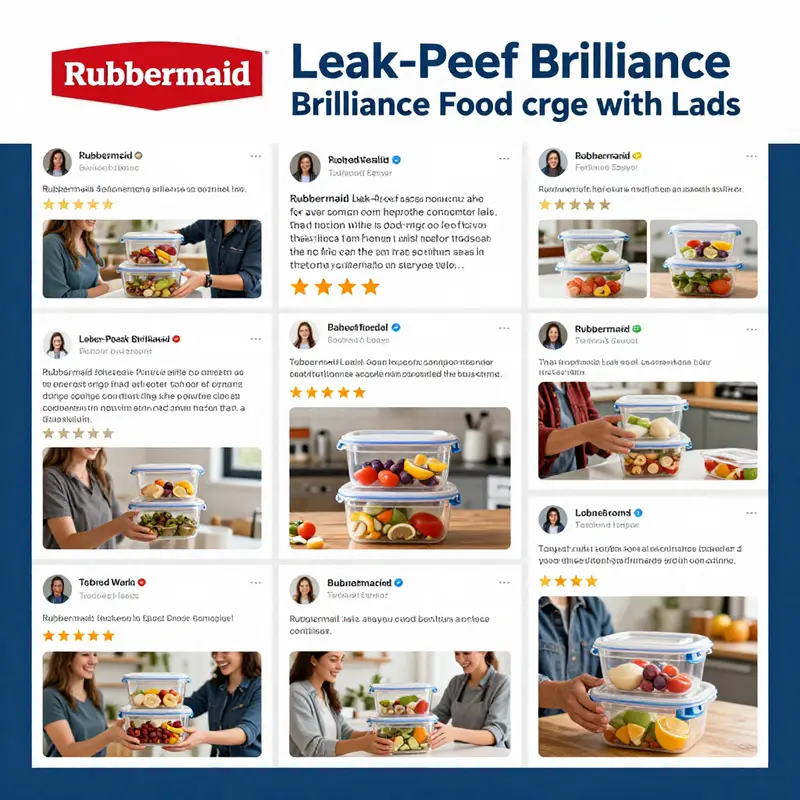
Feedback from real users often reads like a pulse check on how a product actually fits into daily life. In the realm of kitchen storage, a leak-proof, airtight system built from BPA-free Tritan has sparked particular attention for its combination of clarity, durability, and practical design. The chapter that follows weaves together what customers say in their own words with a careful unpacking of why those impressions matter for home cooks, meal preppers, and families who depend on dependable containers to keep leftovers, lunches, and sauces fresh. What emerges is less about a single moment of satisfaction and more about a pattern: a functional, adaptable tool that promises ease of use under a range of everyday pressures. At the heart of this conversation is a simple equation that many users have embraced. A leak-proof seal paired with a transparent body makes it easier to plan meals, monitor portions, and transport food without worrying about messes or surprises on the way to work, school, or the gym.
Consider the first principle many reviewers notice: the seal. The claim of a 100% leak-proof latch system is not merely marketing rhetoric; it translates into tangible outcomes. For anyone who routinely stores soups, stews, or sauces, the reassurance of a secure closure reduces the cognitive load of meal prep and leftovers. The story that repeats in user comments is not just about keeping liquids contained. It is about the confidence to move a container from fridge to bag, or from freezer to microwave, without a second thought about what might happen if the container tips or the lid isn’t properly engaged. The latch-based mechanism is repeatedly described as sturdy and precise, a feature that changes what people are willing to do with their food storage. They are more likely to batch-cook, to portion meals into individual servings, and to trust that a well-sealed container won’t leak in transit or at the bottom of a lunch bag.
Beneath that functional promise lies a second core benefit: the material’s safety profile and visual clarity. The BPA-free Tritan plastic is praised for a glass-like appearance that does not carry the fragility or heaviness associated with actual glass. This combination—clarity without risk of shattering—resonates with households that juggle busy schedules and small kitchens. When you can see what’s inside at a glance, planning becomes intuitive. Leftovers are easier to identify, meals can be coordinated for the week, and the lunchtime ritual becomes less about opening containers to confirm contents and more about quickly selecting what to reheat or pack. Reviewers repeatedly highlight the crisp, crystal-clear look of both the lids and the bases, noting that the transparent design supports quick recognition of contents and helps reduce the energy spent rummaging through a crowded fridge or pantry.
Another aspect that surfaces in user narratives is the practical strength of the plastic. The material’s lightness, paired with a durable, glass-like feel, creates a perception of premium quality. A customer named Lisa, writing from Lewisberry, Pennsylvania, describes the containers as having a “great quality” and a “top notch” feel. She mentions the containers’ ability to stack well whether they are used with lids in place or with lids removed. This kind of feedback matters because it signals that the product performs well in two critical dimensions of everyday use. First, it supports efficient kitchen organization. The modular, stackable design is not just a space saver in theory; it translates into real-world benefits, allowing multiple sets to coexist in a single refrigerator or cabinet without becoming a jumbled jumble of mismatched pieces. Second, it supports durable, long-term use. When users perceive a thick, sturdy plastic—almost a tangible sense of heft without bulk—it reinforces confidence that the containers will withstand repeated cycles of washing, reheating, and stacking.
The ease of maintenance is another thread that runs through user feedback. A recurring theme is that the combination of a clear exterior and a resilient interior minimizes the wear that often comes with regular use. Odor and stain resistance are cited as practical advantages. In kitchens where tomato sauces, curry, or strong spices find their way into containers, the ability to retain a clean appearance after repeated use matters as much as the initial aesthetic. The narrative here aligns with the design philosophy of the storage system: a product that remains visually appealing despite frequent handling, frequent exposure to moist environments, and regular cycling through the dishwasher. The top-rack dishwasher safety and freezer compatibility have even broader implications. They translate into fewer special-care steps and more straightforward, low-effort routines for families that rely on batch cooking and long-term storage. The reassurance of dishwasher-safe cleaning, combined with freezer-friendly performance, broadens the use cases—from thawing a batch of soup overnight to reheating a portion for lunch without creating dishes or drips on the plate.
Microwave use offers a nuanced advantage that many reviewers value. The lids in these designs generally include a built-in vent that allows steam to escape during reheating. This feature is praised for enabling heat to circulate without popping the lid open or spilling. It’s a small but meaningful detail that reduces mess and simplifies the reheating process. It also suggests a thoughtful approach to user behavior: by accommodating the need to reheat without removing the lid, the system supports a smoother workflow from fridge to microwave to table. In real-world kitchens, where time is often the scarcest resource, such conveniences accumulate into a noticeable difference in daily routines. The ability to reheat directly in the storage container without chasing splatters or sacrificing the seal’s integrity is a practical win that many households describe as a quiet improvement to everyday life.
A closer look at the design reveals how these attributes blend into a cohesive storage solution. The lids and bases typically showcase a visual harmony that makes contents instantly recognizable. The materials—clear, durable, and resistant to staining—contribute to the impression of cleanliness and order in the kitchen. This alignment between appearance and function is not just about aesthetics; it reinforces a sense of reliability. When a container looks like it can handle the rigors of a busy week, it invites more frequent use. The more often people store and retrieve food with confidence, the more likely they are to incorporate careful portioning, which, in turn, reduces waste and supports healthier meal planning. This is where feedback begins to reflect broader behavioral patterns beyond immediate satisfaction: the containers become a catalyst for more deliberate cooking, more thoughtful leftovers management, and a calmer, more organized approach to daily nutrition.
The range of available configurations contributes to how different households adopt the system. The set variants—ranging from compact collections to larger assemblies—address both small kitchens and expansive pantries. The modular, stackable design is particularly appealing in spaces where every inch matters. For households that share a refrigerator with roommates or family members, consistent lid designs and predictable shapes help prevent the age-old problem of “who’s got which lid?” The clarity of the shapes and the consistent fit between lids and bases reduce friction and frustration, making it easier to maintain order and reduce the search time when preparing meals. In the feedback landscape, this is often cited as a decisive advantage, especially for families that rotate between members who independently prepare their own meals or who coordinate weekly meal plans with a shared storage strategy.
It is important to acknowledge that the strongest feedback tends to highlight a blend of functionality and value. While the technical performance—seal integrity, material safety, heat tolerance, and ease of cleaning—forms the foundation of user satisfaction, the perceived value emerges through the daily applications. A well-sealed container that is easy to see through, simple to clean, and adaptable to a spectrum of uses—from freezer storage of stock to the weekday lunchbox—becomes more than a product. It becomes a reliable kitchen habit. The recurring sentiment in customer reviews emphasizes more than a single feature; it underscores how a well-executed storage system aligns with practical routines and reduces the cognitive load that often accompanies meal planning and leftovers management.
For instance, Lisa’s note about stacking capabilities reflects a broader appreciation for space efficiency that resonates with urban and small-space living. The ability to nest or stack containers without compromising the seal or accessibility means fewer compromises when reorganizing the fridge, pantry, or even a compact lunch bag. The visual and tactile feedback—the glass-like clarity and the sturdy feel—contributes to a perception of longevity. Reviewers frequently articulate a sense of trust cultivated through repeated use. This trust is not sealed in a vacuum; it has a real impact on shopping behavior and long-term satisfaction. When customers feel confident in a product, they are more likely to repurchase, to recommend to friends and family, and to incorporate the item into a broader routine of meal prep and organization.
The chapter would be incomplete without touching on the broader ecosystem of use. In kitchens where meals are prepared in advance, the combination of airtight sealing and clear interiors fosters a disciplined approach to portion control and meal planning. The ability to see at a glance whether a container is full, partially full, or empty supports a more efficient cooking cadence. It reduces the guesswork that often accompanies meal prep, allowing cooks to adjust portions, evaluate leftover options, and repurpose ingredients before they reach the point of waste. In this way, customer feedback points to a practical philosophy: well-designed storage can act as a quiet amplifier of daily efficiency, rather than merely a container for leftovers. The narrative from real users shows that the product’s design decisions—the choice of material, the sealing mechanism, the vented lids, and the modular shapes—work in concert to deliver a dependable, everyday performance.
In summation, the feedback landscape surrounding this particular storage system is rich with praise for its core strengths. The leak-proof, airtight seals provide reassurance that liquids won’t leak during transit, which is essential for meal prep and on-the-go lunches. The BPA-free Tritan material delivers both safety and performance, combining glass-like clarity with durability and lightness. The built-in venting on the lids offers a pragmatic solution to steam management during reheating, a feature that reduces mess and simplifies the transition from storage to eating. The system’s resilience is reinforced by its stain- and odor-resistance, while its freezer- and dishwasher-safe properties support convenient, low-effort upkeep. The space-saving, stackable design pays dividends in both pantry organization and refrigerator layout, enabling households to maximize available space without sacrificing accessibility. And, as Lisa’s testimonial confirms, the overall quality and stacking performance are not theoretical advantages; they are daily realities that translate into confident use, repeated purchases, and a growing sense that a well-chosen storage system can become a reliable ally in the kitchen.
For readers who are evaluating a leak-proof, clear, and adaptable storage solution, customer feedback like this offers a practical lens. It highlights how features translate into real-world benefits—from simplifying meal prep and transport to easing post-cook cleanup and ongoing organization. The conversation in homes across diverse settings suggests that the right combination of safe materials, robust sealing, and thoughtful design can elevate routine tasks into smoother, more deliberate processes. As kitchens continue to evolve toward more efficient, organized, and health-conscious patterns, the insights from user experiences serve as a reminder that the best products emerge not from a single standout feature, but from the harmony of design, safety, usability, and value. The takeaway for readers and prospective buyers is clear: a durable, glass-clear storage system with airtight seals and practical conveniences can become a quiet engine of everyday efficiency, supporting better meal planning, less waste, and more confidence in the food stored within.
null
null
Final thoughts
Rubbermaid Leak-Proof Brilliance Food Storage Containers stand out as an essential tool for food businesses committed to quality and reliability. Their key features, such as airtight seals and BPA-free materials, not only enhance food safety but also boost organization and transport efficiency. By exploring the various available sets, leveraging genuine customer feedback, and understanding pricing options, food service professionals can make informed decisions that positively impact their operations. Integrating these containers into your workflow means ensuring that your products arrive in perfect condition, enhancing customer satisfaction and reinforcing your brand’s reputation for quality.