
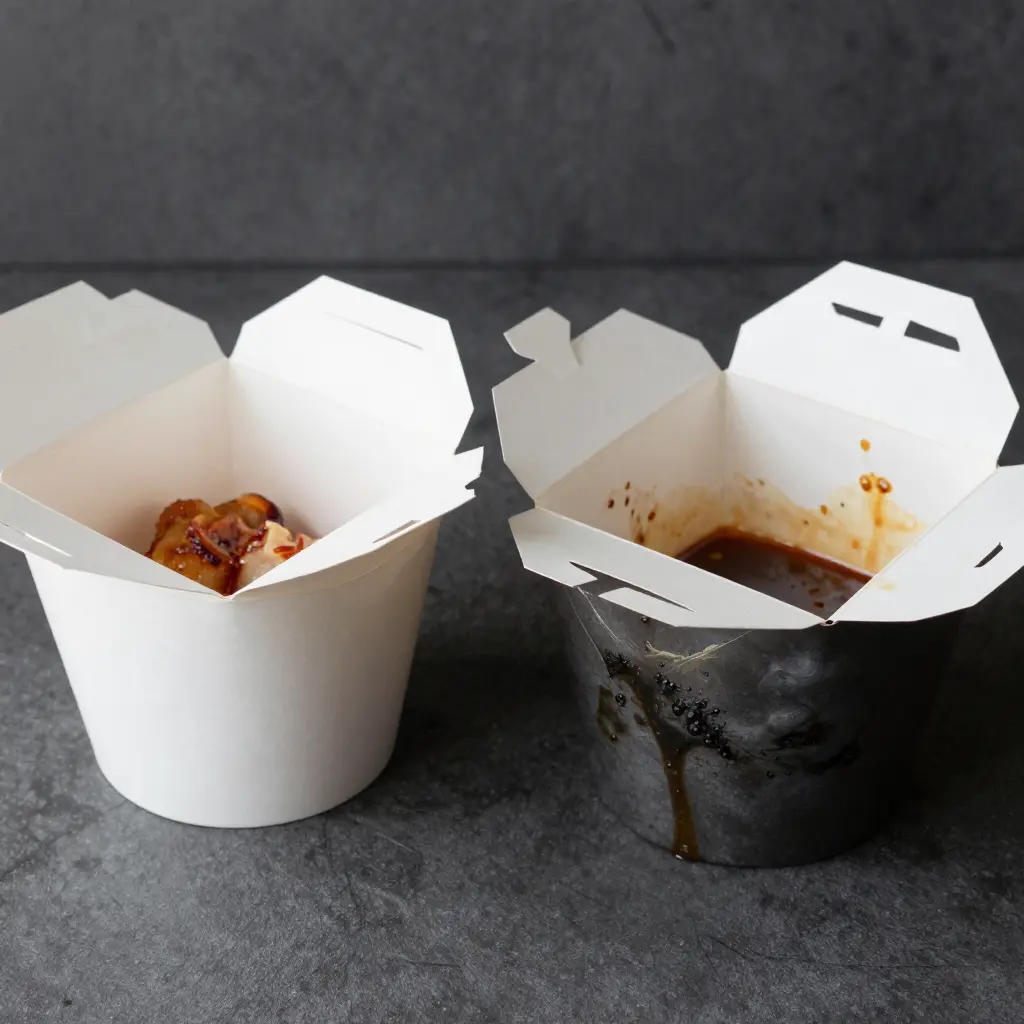
Why Hot Oily Food Leaves Grease Stains on Takeout Boxes
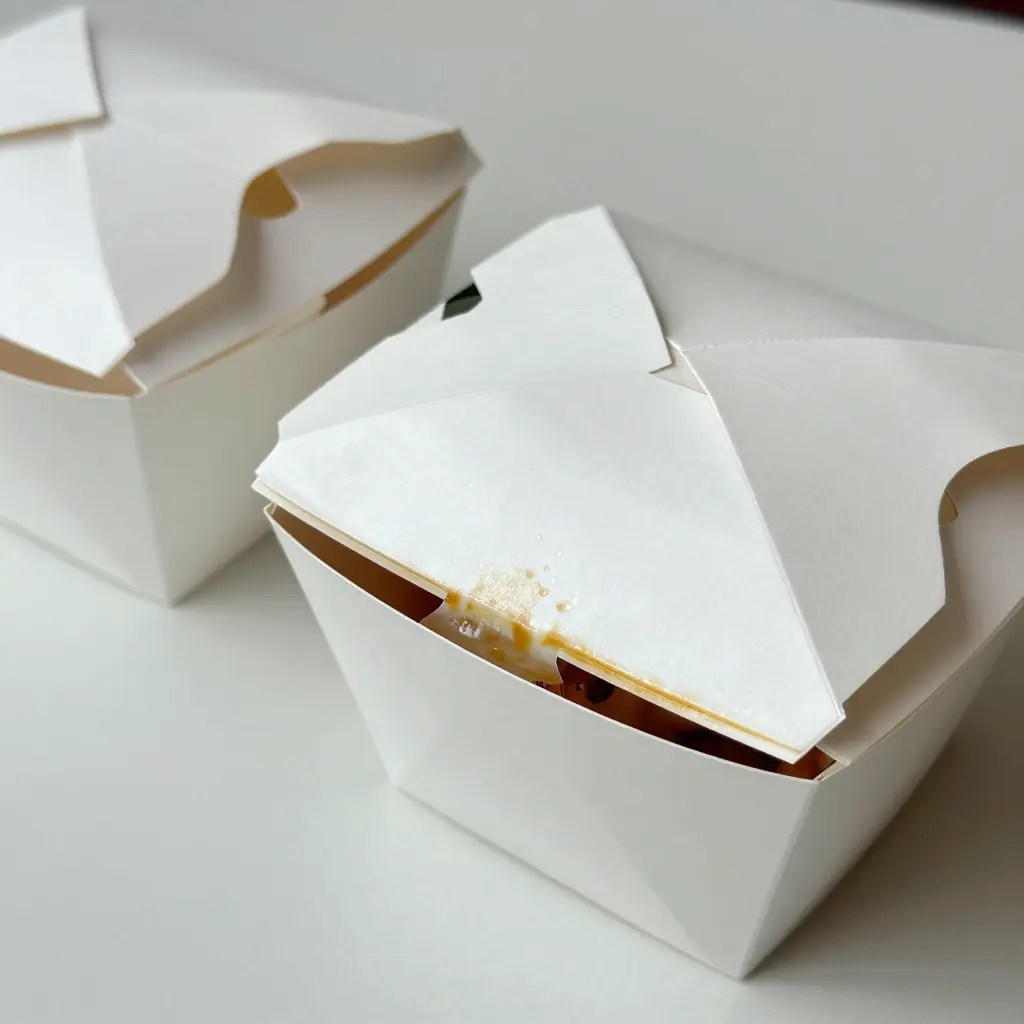
A grease stain on a takeout box usually comes down to one mismatch: a paper coating that cannot hold back the fat in the food it is carrying. The coating is the barrier between the meal and the paper fibers. Choose the wrong barrier for the dish, and oil works through it and leaves the dark, translucent marks customers notice.
For a restaurant owner it is not just a cosmetic problem. A stained or leaking box reads as low quality, sometimes as unsafe food, and that shows up later as complaints, refunds, and customers who do not come back.
It becomes obvious the moment you pick something as visible as an eco takeaway food box. A box that holds heat but shows grease within minutes undoes the details you paid attention to, from plating to how the delivery looks on arrival.
For a food packaging manufacturer the same problem is a spec problem. Recommend a coating that is too thin, or not oil-resistant enough for a particular hot oily dish, and you get returns, rejected shipments, and a reputation for packaging that does not hold.
Matching the coating to the food it will carry is a specification decision, not a cosmetic one. Get the pairing right and the box stays clean and rigid from the kitchen to the customer.
How Grease Migrates Through Paper
Grease migration is fluid movement and surface chemistry; the paper itself is not breaking down. Put a hot oily food against a sheet and three things happen in sequence: heat lowers the oil’s resistance to flow, the oil wets the fibers, and capillary action draws it inward.
Temperature sets the pace. Warm oil has lower viscosity, so it flows more freely and slips into gaps faster. It also wets the cellulose fiber network more effectively, spreading across the surface instead of beading on top.
Wetting opens the door. Once the oil wets the fibers, the porous sheet acts like a bundle of narrow channels. Capillary forces pull the thin oil deeper, the way water creeps up a paper towel, toward the drier interior. On uncoated stock nothing interrupts that climb, so the oil keeps moving until it reaches the far side.
Contact time decides distance. A brief touch leaves a shallow mark; leave the same food sitting and the oil can travel the full thickness of the sheet.
Oil polarity matters too. Nonpolar oils interact with cellulose differently than polar liquids do, which changes how strongly they cling to the fibers and how readily they climb.
A barrier layer interrupts the path. A paper coating is a sealed film that blocks capillary entry, so oil stays on the surface instead of soaking through. That is the whole idea behind grease-resistant packaging: the coating closes off the channels. Without it, the oil finishes the journey and you get a grease stain.
Whether oil stays put or passes through is decided by barrier design, not luck.
How Grease Moves Through Paper Fibers
Think of it as a race. On an uncoated sheet, hot oil does not stay where it lands; it wicks along the channels between overlapping fibers, helped by the same heat that thinned it. The stain then creeps outward through the network, and on a thin board it can reach the outer face of the box well before the meal is finished.
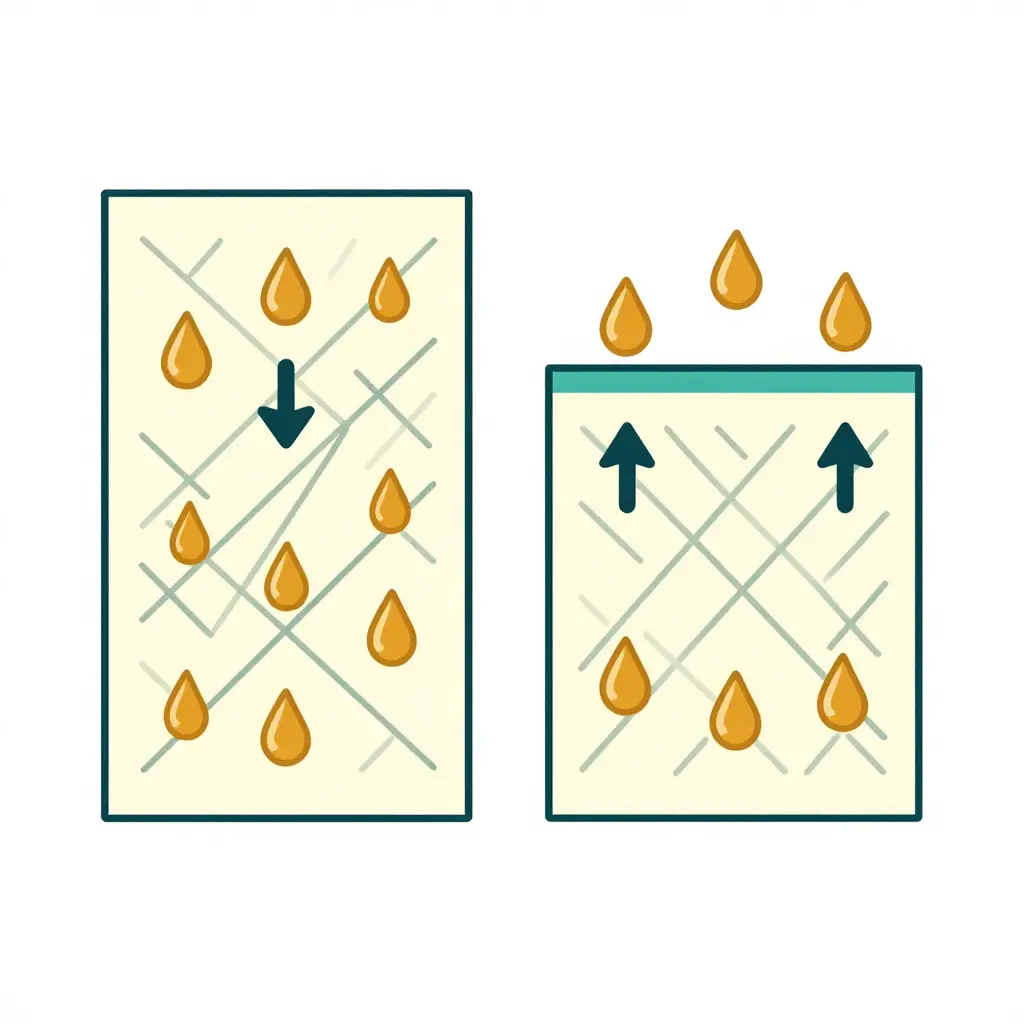
The diagram contrasts two cross-sections. On the left, an uncoated sheet lets oil travel straight through the open fiber network. On the right, a continuous coating interrupts the pathway, so the oil pools on top. That one difference, an open network versus a sealed surface, explains how two boxes made from similar-looking board can behave so differently once hot food goes in.
Why the Barrier Matters
A working grease barrier does more than block liquid. It closes the capillary routes that would pull oil deeper, and it has to survive heat without breaking down. Clay, starch blends, and plant-based polymers each handle that differently, which is why the food and the serving temperature drive the coating choice. Get the match right and the board stays clean, the print stays sharp, and the base does not go soft. Fiber choice plays into this as well, so it is worth looking at recycled kraft paper packaging before you lock a specification.
Paper Coating Options for Takeout Boxes
The coating you choose decides whether boxes come back streaked with grease or stay clean from the counter to the customer. Six coatings dominate grease-resistant packaging today. Here is how each one performs on oil barrier, heat tolerance, coat weight, and end of life.
Polyethylene (PE) extrusion coating. Molten PE is extruded straight onto the board, forming a continuous film at roughly 10-30 gsm that blocks hot oil and moisture very well. It handles up to about 90-100°C, which is why it is a workhorse for burgers and fried chicken. The plastic film is also why the box is hard to recycle and not compostable, and because the PE is bonded to the fiber, most mills reject these boxes from their fiber streams. Save them for high-grease, fast-turnover menus.
PE-laminated board. A pre-made PE film (15-40 gsm) is glued to the paper or board instead of extruded. The result is an even, glossy surface with slightly better puncture resistance than extrusion coating, and it handles hot oil and steam up to about 90°C, which suits saucy noodle bowls and curry. As with extrusion coating, the laminate blocks repulping, so this board is rarely recyclable and never compostable.
Wax coating. Wax (5-15 gsm) is a low-cost, naturally derived barrier that holds up well against cold and warm oil, but it softens and can transfer above roughly 60-70°C. It suits pastries, cold sandwiches, and short-hold items, not piping-hot fried food. The wax also contaminates fiber, so the board is hard to recycle, and it composts only under industrial conditions, so check the rules where you operate.
Silicone release coating. Applied at very light weights (0.5-2 gsm), silicone makes a slick, non-stick surface rather than a thick barrier, so oil slides off instead of soaking in. It takes heat well and is common on bakery liners, burger clamshells, and sticky buns. It does interfere with recycling and composting, so use it where clean release matters more than disposal.
Water-based barrier coatings. These dispersion coatings (3-12 gsm) form a grease-resistant film without plastic lamination, and many are repulpable and recyclable in standard fiber streams. They handle hot oil reasonably well, usually up to about 80-90°C, and fit rice bowls, salads, and moderately greasy meals. For operators who need recycled kraft paper packaging to perform, this class is often the right compromise.
Dispersion and PLA bio-based coatings. These plant-based coatings (5-20 gsm) give solid oil and heat resistance, often up to 90°C, and stay compostable in industrial facilities, sometimes at home. They fit the eco takeaway food box lines restaurants use to signal sustainability, and they work for wraps, bowls, and mixed hot dishes. Expect a premium price, and confirm which certifications your local compost hauler actually accepts.
Every option trades barrier strength against recyclability. Match the coating to your hottest, greasiest item first, then build the rest of the line around that decision.
The table below puts the six side by side.
| Coating type | Grease barrier rating | Heat tolerance | Recyclability | Compostability | Best-fit hot oily foods | Relative cost |
|---|---|---|---|---|---|---|
| PE extrusion | Excellent | High (to ~200°F) | Low (plastic film) | Not compostable | Fried chicken, burgers | Low |
| PE-laminated board | Excellent | High | Low (mixed material) | Not compostable | Pizza, saucy trays | Low-medium |
| Wax | Good (cool items only) | Low (softens ~140°F) | Moderate | Industrial only | Cold or fast food | Low |
| Silicone | Excellent | High (to ~400°F) | Moderate | Not compostable | Heavy fried foods | High |
| Water-based barrier | Good | Moderate-high | High | Often home-compatible | Curry, stir-fry | Medium |
| Dispersion / PLA bio-based | Good-excellent | Moderate | High | Certified compostable | Hot oily noodles, rice bowls | Medium-high |
The next section pairs each coating with specific hot, oily dishes. For greener routes, see compostable paper cups.
Matching Your Paper Coating to Hot Oily Food
Choosing a paper coating for a takeaway box comes down to keeping oil and fat inside the box and off your customer. Every hot dish behaves a little differently, so work through the factors below.
Oil content and fat type. Saturated fats like butter, ghee, and coconut oil tend to sit on the surface; liquid oils like sesame and chili soak in fast. High-fat dishes such as biryani, butter chicken, and fried noodles need a heavier PE or dual-layer coating, not a thin wax film.
Serving temperature. The hotter the food, the faster a coating softens. Dishes served above 70°C push wax past its melting point, so choose a liner rated for high heat.
Expected contact time. A quick lunch pickup is not a 45-minute delivery run. Given long enough, oil migrates through even a weak coating, so delivery-heavy menus should default to heavier film weights.
Weight of the portion. A small side of samosas stresses the packaging far less than a family-size lamb curry. Heavy portions press oil sideways into seams and corners.
Moisture and steam. Steam weakens paper fibers and lifts coatings off the surface. Curries, stews, and saucy noodles need a coating that resists water and oil together, not oil alone.
Box format. In a single-compartment box, one greasy item reaches everything; a three-division tray keeps wet and dry apart. If you serve mixed platters, look at multi-division options such as these three-division takeaway food boxes before you commit.
Which coating suits which food
| Food category | Best coating | Why |
|---|---|---|
| Dry fried snacks (spring rolls) | Light grease-resistant film | Low oil, short contact |
| Saucy curries and stews | Dual oil-and-water resistant | Handles heat, steam, moisture |
| Grilled or roasted meats | Heavy PE or compostable barrier | High fat, long contact |
| Rice and noodle bowls | Medium grease-resistant | Balances cost and performance |
If you mix hot mains with cold sides, a compartmentalized layout keeps flavors and grease apart. It is worth looking at compartmentalized food storage designs when you plan your next order.
Common mismatches to avoid
The most common mistake is pairing wax-coated boxes with wet, oily curries; within minutes you get the classic grease stain. Just as risky is a thin film under high-fat grills, or a heavy portion crammed into a single compartment. When in doubt, spec for the fattiest, wettest, hottest item in the order, because that item sets the real bar.
How Coating Choice Drives Grease Resistance
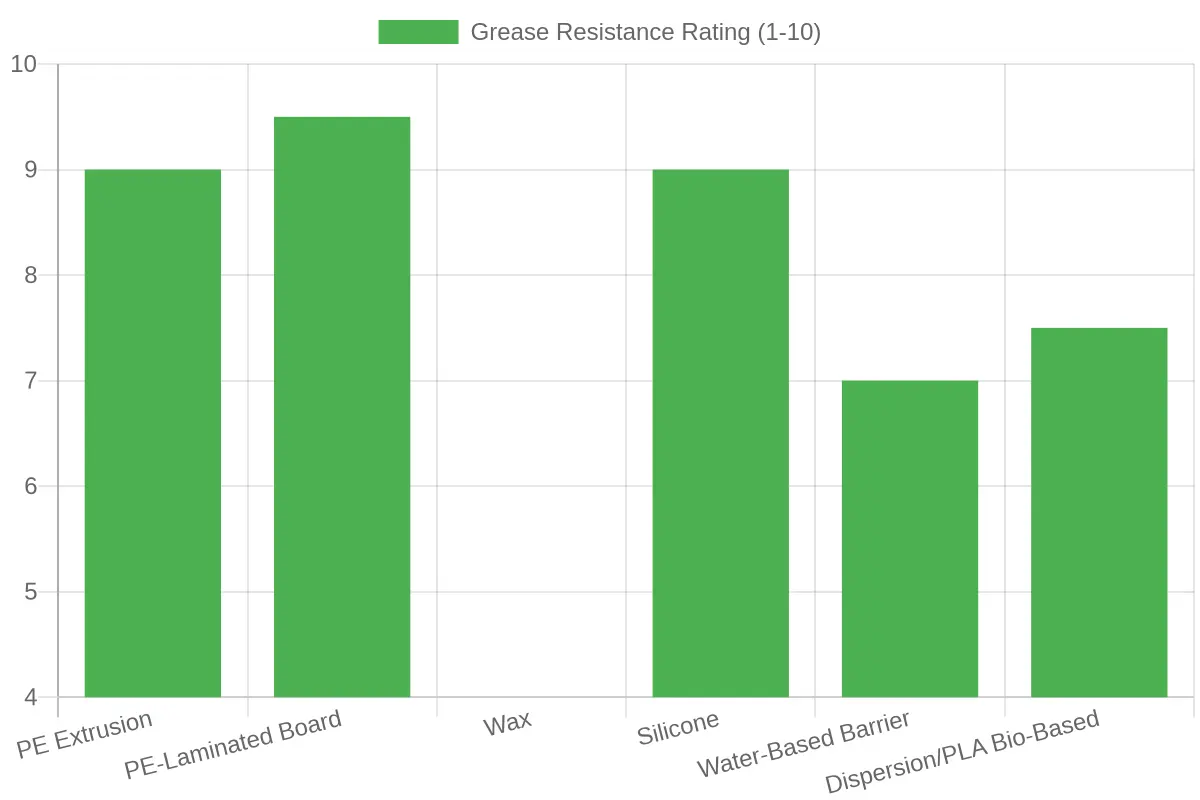
When a hot, oily takeout box comes out of its sleeve with a translucent grease halo soaking through the lid, the culprit is the wrong barrier for the job. The chart below rates each coating on a 1-10 grease resistance scale.
What the Numbers Tell You
- PE-laminated board (9.5) and PE extrusion (9) sit at the top. A continuous polyethylene film is effectively a plastic sheet bonded to paper, and hot oil struggles to get through it.
- Silicone (9) gives strong grease holdout plus easy release, which is why it shows up on premium bakery and deli liners.
- Dispersion/PLA bio-based (7.5) and water-based barrier (7) are the eco-friendly middle ground. They handle moderate grease loads and are repulpable or compostable, but sustained contact with very hot, very oily food can still wick through.
- Wax (4) trails. Natural waxes soften as they warm, so a dripping stir-fry or a curry will win that fight.
The Takeaway for Packaging Buyers
The gap between 4 and 9.5 decides whether the box arrives clean or the customer complains. Match the coating to what you actually serve: PE or silicone for saturated, piping-hot dishes, and water-based or PLA barriers where sustainability matters more than the most extreme heat. Getting that pairing right is the cheapest way to stop grease stains before they start. For the options built around these barriers, see the full line of eco-friendly takeaway food boxes.
Choosing the Right Paper Coating for Hot Oily Food: A Selection Checklist
Work through these before you lock in a coating. Each answer narrows the options and keeps you from over- or under-specifying.
- Oil and fat content. For curries or fried chicken, choose a higher coat weight or a PE/PLA barrier that resists fat migration, not a light wax film.
- Serving temperature. Food above 70°C needs a heat-stable coating such as PET or double-coated kraft; thin waxes soften and lose their barrier as they warm.
- Contact time. Longer hold times let grease soak deeper, so pair a long dwell time with a thicker or multi-layer barrier.
- Moisture and steam exposure. Steamy items need a moisture-resistant layer, or condensation weakens the board and speeds up staining and sogginess.
- Box format and compartment count. Multi-compartment trays have more seams and folds, so specify an evenly applied coating that covers every corner and divider.
- Target shelf and transit time. A longer shelf life and rough transit call for a stronger seal and better edge coverage to survive stacking, vibration, and reheating.
- Recyclability or compostability goals. If sustainability matters, favor water-based or PLA coatings on repulpable board over plastic films that block recycling streams.
- Printing and branding surface needs. Glossy and matte coatings print differently, so confirm the finish you pick holds food-safe inks and your logo without smearing.
- Cost per unit. Price coating weight per box, not just per sheet, and include the cost of waste and failures in the comparison.
Turning the Checklist into One Specification
Combine the answers into one written spec line: coating type, coat weight in gsm, board grade, and box dimensions. For example, “double-coated kraft, 40 gsm PLA, three-compartment, hot-fill.” Check it against every criterion, then confirm with your supplier. If you are weighing compostable options, see how compostable paper cups are made in China and apply the same coating logic to your boxes.
Coating Selection at a Glance
Matching a coating to hot, oily takeout food is a short chain of decisions: how heavy is the grease load, how long does the food sit, and which coating family holds up under those conditions. The flowchart below turns that into a single path you can follow before committing to a specification.

Read it top to bottom. The first node is the decision point, each branch is a condition (light versus heavy grease, short versus extended holding time), and the shapes at the bottom are the coating options. The diagram carries no text, so treat it as a shape-coded checklist: a food that lands on the leftmost path asks something very different of a coating than one on the rightmost path. For the containers these coatings protect, see this guide to eco-friendly takeaway food boxes.
How to Verify Grease Resistance in Paper Packaging
Verifying grease resistance is what separates packaging that still looks premium when it arrives from packaging that shows grease before the lid is even lifted. Because paper coating performance shifts with oil type, temperature, and contact time, testing has to mirror real serving conditions, not just a bench-top guess. The methods below range from fast in-house screens to standardized lab procedures you can cite directly on a spec sheet.
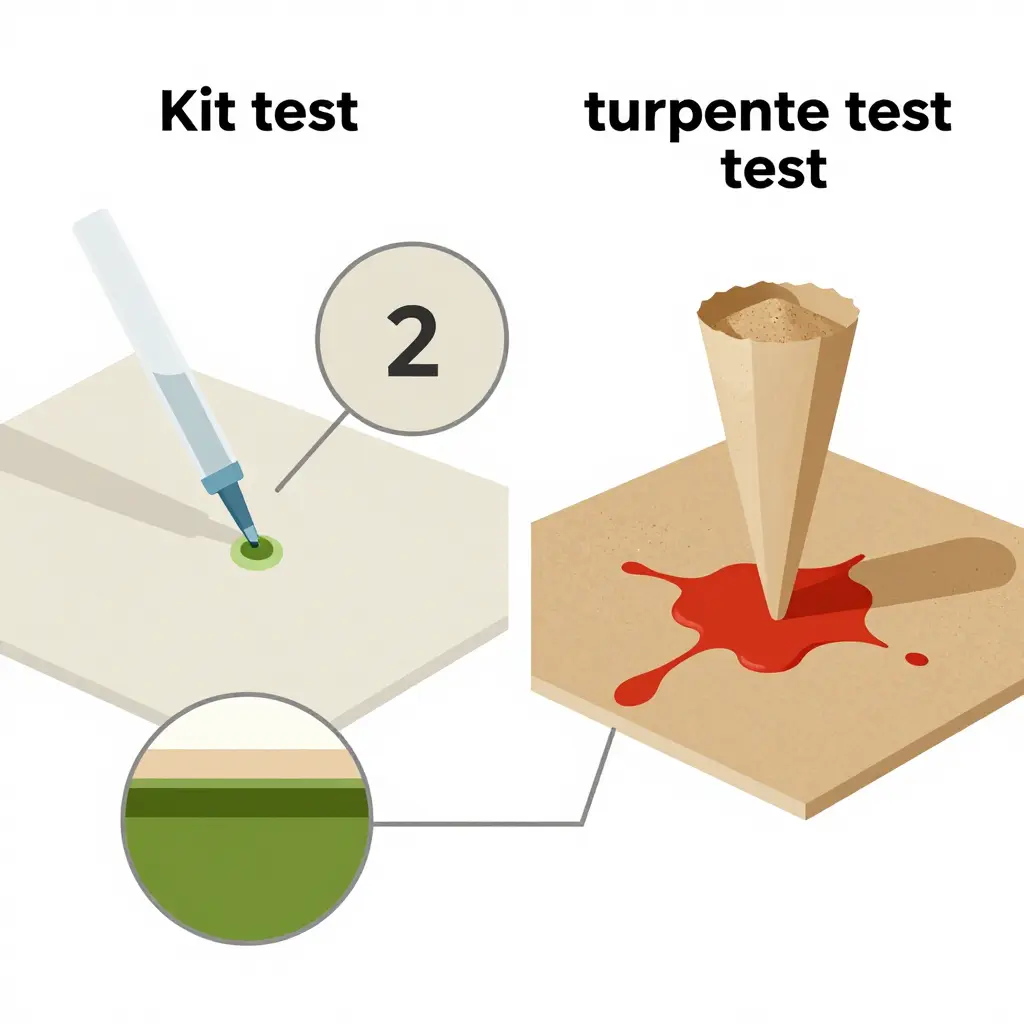
Kit Test (TAPPI T559). This is the industry’s fastest screen for grease-resistant packaging. A graded series of numbered solutions (kit reagents 1 through 12), each with a lower surface tension than the last, is dropped onto the coated surface. After 15 seconds, the highest number that does not darken the sheet becomes the kit rating. Ratings of 8 or higher usually hold up to hot, oily food; 3 or lower almost always fail.
| Kit Rating | Grease Resistance | Typical Use |
|---|---|---|
| 1-3 | Low | Dry foods only |
| 4-6 | Moderate | Light snacks, low oil |
| 7-9 | High | Fried foods, hot takeout boxes |
| 10-12 | Very high | Heavy oil, long contact time |
Turpentine Test (TAPPI T454). This classic method pushes penetration harder than the kit test. The sample is formed into a cone, filled with sand, and set in a dish of dyed turpentine. Technicians time how long the dye takes to wick through to the inside of the cone. Faster breakthrough means a weaker paper coating, and that is what you want to know before a load of greasy cartons ships.
3M Kit Method. Similar in spirit to the TAPPI kit test and widely used by converters, the 3M kit applies its own numbered test liquids and reads the result visually. It is quick, repeatable, and useful for comparing suppliers side by side. When you source stock, work with a supplier that also understands downstream fit and finish, along the lines described for a trusted disposable paper cups wholesaler.
Gravimetric Oil Penetration Checks. For a more quantitative read, a lab weighs the coated sample before and after a set oil exposure and measures how much liquid the sheet absorbs, or tracks the weight of oil that passes through. This low-cost approach catches subtle coating weak spots that a pass/fail kit test can miss.
Food-Contact Compliance and Migration Testing. Grease resistance is only half the story. Any coating touching food has to meet food-contact regulations, so migration testing checks that coating components do not transfer into the meal at the temperatures you actually serve at. Before approving a printed run, ask for documentation showing compliance with the relevant regional rules.
Controlling Temperature and Contact Time. Test conditions have to match the kitchen, not the bench. Oil is pre-conditioned to a fixed temperature (often 60-100°C), the sample sits in a temperature-controlled oven or on a hot plate, and exposure runs from seconds to hours depending on the meal. Holding both variables constant is what makes results comparable across suppliers, batches, and repeat trials, so log them next to every reading.
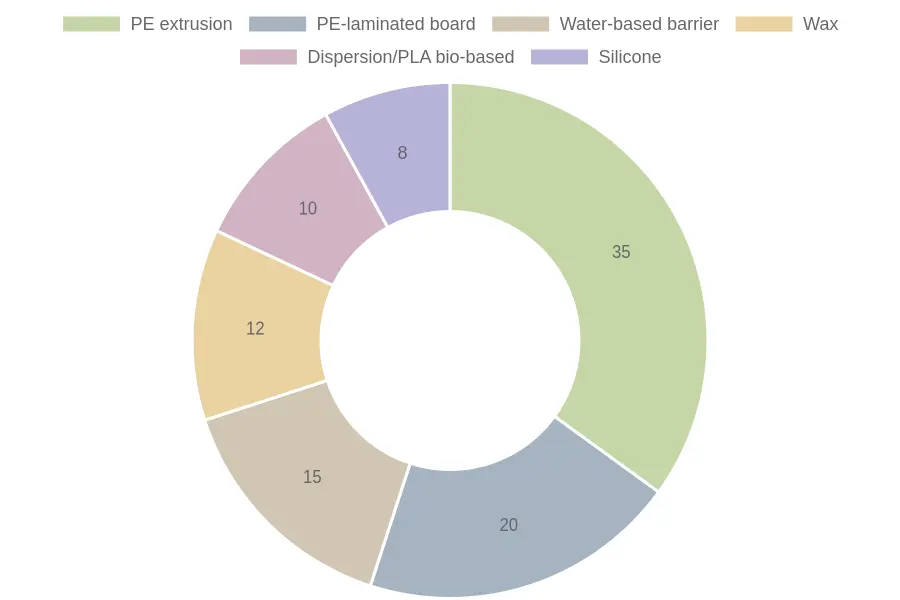
It also helps to see how the market actually splits. The doughnut chart above shows the approximate share of the disposable food packaging market held by each coating type.
The old guard still dominates. PE extrusion (35%) and PE-laminated board (20%) together make up more than half of all coated paper packaging, largely because polyethylene is cheap, heat-sealable, and proven against both grease and moisture. Wax (12%) and silicone (8%) hold their own niches: wax for cold and short-term use, silicone for premium release liners and baking surfaces.
The two fastest-moving slices are water-based barrier coatings (15%) and dispersion or PLA bio-based coatings (10%). Both can be recycled in standard paper streams or composted, and their combined 25% share is the clearest signal of where buyer preference is heading.
Why the Doughnut Shape Tells the Story
The hollow center is a reminder that none of these coatings exists in isolation: a single box or cup is one product, and the market around it is a ring of competing technologies. The practical reading is that recyclable and compostable coatings are no longer niche add-ons. They are where the growth is. Buyers weighing a switch to fiber-based alternatives often start with a familiar category like the best compostable paper cups, then extend the change across the hot-food range.
Reading the Numbers in Practice
Match the material to the job, not to the biggest slice of the chart:
| Coating type | Approx. share | Recycling / composting fit |
|---|---|---|
| PE extrusion | 35% | Hard to recycle, not compostable |
| PE-laminated board | 20% | Hard to recycle, not compostable |
| Water-based barrier | 15% | Recyclable in paper streams |
| Wax | 12% | Limited, cold-use focused |
| Dispersion / PLA bio-based | 10% | Recyclable and compostable |
| Silicone | 8% | Specialty release applications |
The shift is gradual. Legacy PE capacity does not vanish the moment a greener coating arrives. But the direction is clear, and the coatings gaining share are the ones designed for recyclable and compostable end of life.
The Cost and Sustainability Trade-Off in Paper Coating Selection
Every coating decision pulls between unit cost, grease performance, and environmental goals. The cheapest option rarely protects well, and the greenest usually carries a premium. The skill is matching the coating to your actual serving conditions.

A Side-by-Side Look
The chart and table below compare the main coating families on price, order size, and end of life.
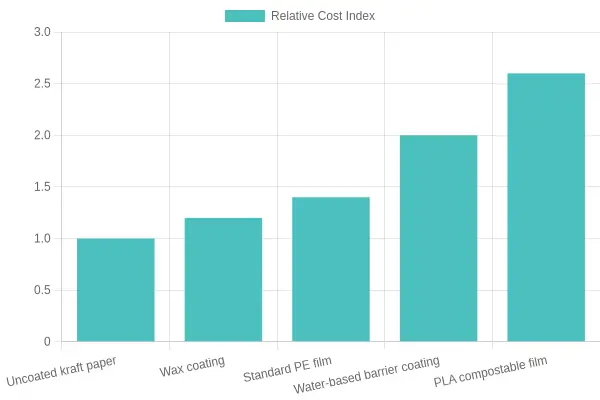
| Coating type | Relative cost index | Typical minimum order | Recyclable? | Compostable? | Grease barrier |
|---|---|---|---|---|---|
| Uncoated kraft paper | 1.0 | Low | Yes | Yes | Poor |
| Wax coating | 1.2 | Low | Difficult | No | Moderate |
| Standard PE film | 1.4 | Medium | Difficult | No | Strong |
| Water-based barrier | 2.0 | Medium-high | Yes | Often | Strong |
| PLA / compostable film | 2.6 | High | Yes | Yes | Strong |
Lower unit cost usually comes with lower minimum order quantities, which matters when you are testing a new menu item before committing.
The Hidden Costs of Going Cheap
A budget coating saves cents per box, but one leak costs more than that. A grease stain annoys the customer, triggers a refund, and erodes the brand quietly.
For a restaurant owner, the real math includes leakage, returns, and review scores, not just the purchase price. A coating that fails during a Friday rush costs far more than the upgrade.
Compliance and Brand Pressure for Manufacturers
For a manufacturer, the calculation shifts toward certifications and brand promises. Buyers increasingly want verified recyclability and compostability, and a coating that breaks an eco-claim can sink a product line.
That is where grease-resistant packaging earns its cost: a barrier you can defend lowers the risk of returns and protects both compliance and reputation.
Finding the Balance
The sensible approach pairs a cost-effective base with a targeted barrier only where the grease actually is. The same logic shows up in compostable paper cups.
Choosing between eco-friendly clear plastic cups and a fiber solution comes down to matching the material to the food inside.
Pay a little more upfront, or pay more later in complaints, refunds, and compliance problems.
Frequently Asked Questions: Paper Coatings and Grease Resistance
Why do grease stains appear on takeout boxes even when they have a coating?
Usually the oil is not passing through the intact film at all. It migrates through microscopic pinholes, thin spots, or areas the coating missed. Paper is porous and absorbs oil readily, so any break in coverage lets grease wick into the fibers and bloom into a visible stain. In most cases the cause is coverage and formulation, not the board by itself.
Can a wax coating handle very hot oily food?
Wax is generally the wrong choice for very hot oily food. It softens and starts to melt at temperatures common in fried dishes, and standard paraffin waxes lose their barrier function somewhere around 60 to 80°C, a range many takeaway items exceed. Once the wax softens it can no longer hold back the oil.
Do bio-based dispersion coatings resist heavy oil?
Yes, when they are formulated correctly and applied at a sufficient coat weight. These water-based dispersions form a continuous film that repels oil while still letting the board be repulped or composted. Their oil holdout is sometimes lower than that of fluorochemical coatings, though, so heavier or hotter loads usually need a higher coat weight.
How does coat weight affect grease resistance?
Coat weight, normally measured in grams per square meter (gsm), is one of the most direct levers on grease resistance. More coat weight closes more of the porous surface and builds a thicker, more continuous barrier that delays or prevents penetration. Below a certain threshold, even a well-formulated coating leaves thin spots that let grease through.
Can grease-resistant boxes be composted?
It depends on the coating, not just the paper base. Boxes with bio-based dispersions or other certified compostable barriers break down in industrial composting; boxes with polyethylene or PFAS-based coatings usually do not. If you are comparing paper with other formats, the guide to plastic food containers covers how the main material families differ on barrier and end of life.
How can I test a coating before placing a bulk order?
Request coated samples and run standardized grease-resistance tests, such as the TAPPI kit test, before committing to volume. Then reproduce real conditions: fill the box with your hottest, oiliest menu item and hold it for the full expected delivery time. If the barrier holds without staining or softening, the specification is ready for a bulk order.
Final Recommendations for Restaurant Owners and Packaging Manufacturers
Grease stains on takeout boxes are not something you have to live with. They are a signal that the coating and the food do not match. When you match your paper coating to the profile of the hot oily food you serve, grease stops bleeding through the board, the box keeps its strength, and the package keeps the clean look customers associate with your brand. A leaking carton makes a $12 meal feel cheap; a dry, intact one makes the same meal feel worth it.
For both restaurant owners and manufacturers, the path runs through four steps:
- Identify the food profile. Look at fat content, serving temperature, moisture, and holding time. A fried-chicken basket behaves nothing like a lightly dressed salad.
- Select a compatible coating. Match the barrier (PE, PLA, water-based, or silicone) to that profile instead of defaulting to one stock option.
- Verify performance with standard tests. Run recognized grease-resistance checks such as the kit and turpentine tests, then confirm the results in real-world holding trials.
- Balance cost against recyclability and compostability. The cheapest coating that passes may not be the most sustainable, so weigh total cost of ownership against your environmental commitments.
As a manufacturer and supplier of disposable tableware, packaging paper, and boxes, we build our product lines around three priorities: safety, durability, and eco-friendly practice. Coating selection is not an afterthought here; it is the foundation of every box we produce. If you are assembling a complete serving system, pair your cartons with well-matched disposables: see our notes on choosing the right disposable cups for your packaging line alongside your box upgrades.
Match the coating to the food, test it properly, and balance performance against sustainability, and you get boxes that stay clean, shipments that arrive intact, and a brand customers trust. That is the difference between packaging that holds food and packaging that sells it.