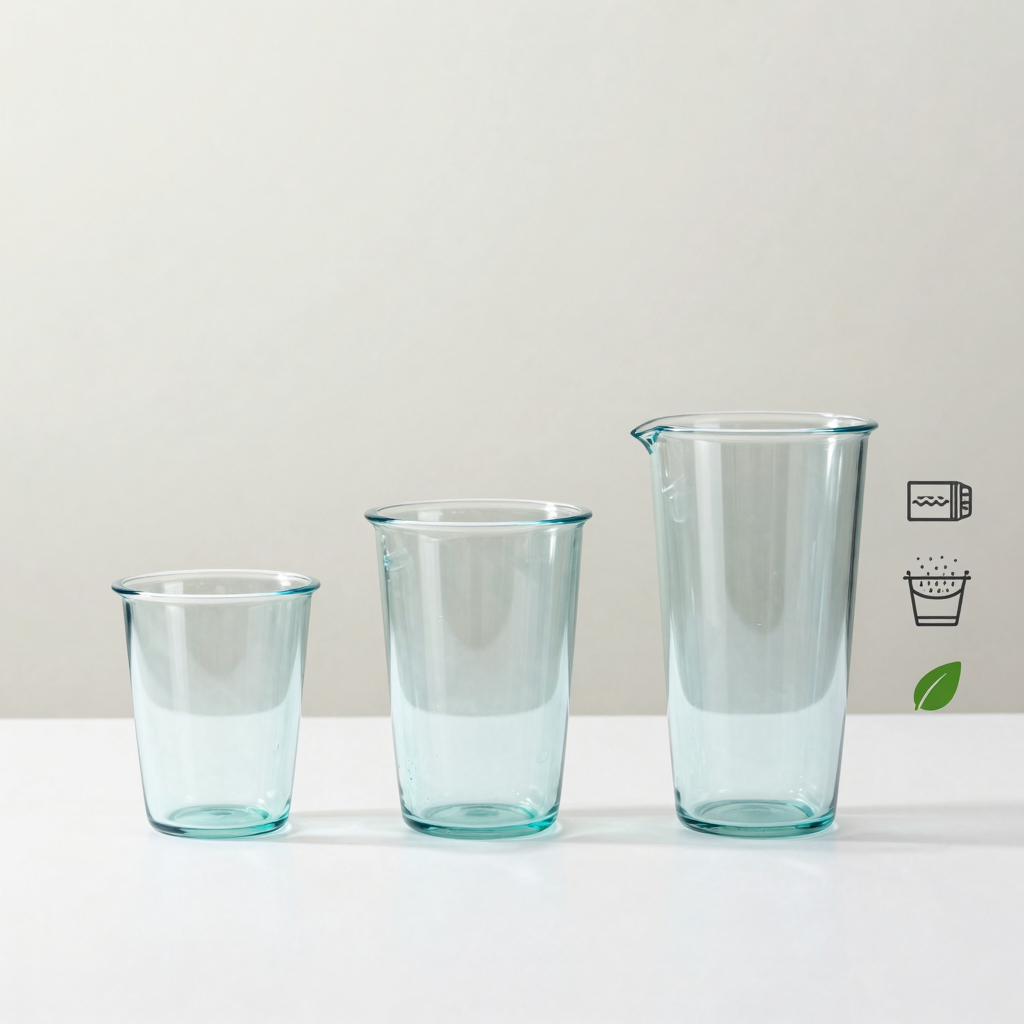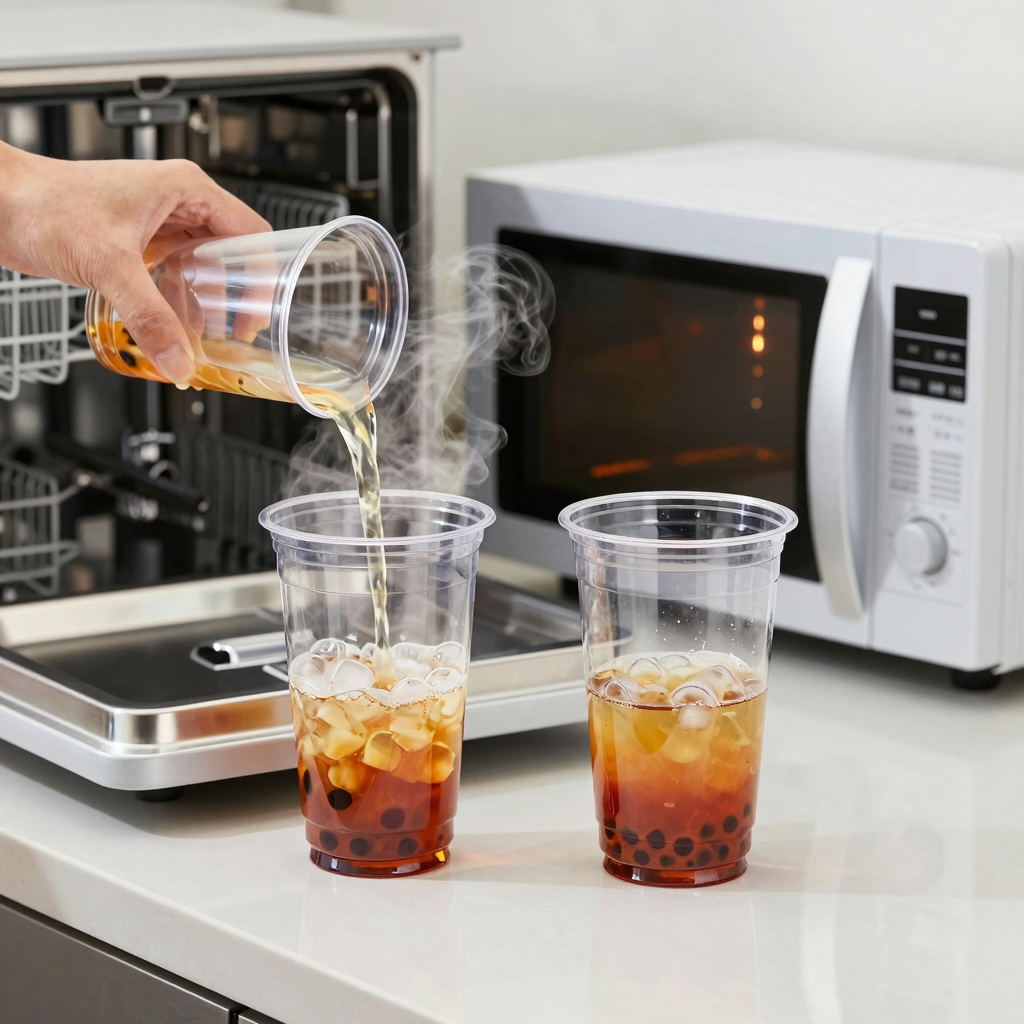
Picture this: it’s a busy Friday afternoon at your bubble tea shop. You’ve just pulled a freshly washed batch of clear plastic cups from the dishwasher, only to find them warped, cracked, or hazy with those unsightly white stress marks. Or worse – a customer asks you to reheat their milk tea in the microwave, and you’re left scrambling to find a cup that won’t leach chemicals or melt on the spot. For restaurant owners, food truck operators, caterers, and event planners, this scenario is all too familiar. Cups that fail under heat don’t just waste inventory – they disrupt service, frustrate customers, and chip away at your bottom line.
Enter dishwasher and microwave safe clear plastic drinking cups – the unsung hero of beverage service efficiency. These purpose-engineered cups are built to withstand the rigors of commercial dishwashers and microwave reheating without cracking, clouding, or losing structural integrity. Made from advanced materials like polypropylene (PP) or Tritan™, they offer the crystal-clear visibility your drinks deserve, combined with the durability your operations demand. According to Grand View Research, the global market for these dual-safe cups reached USD 2.8 billion in 2024 and is projected to grow at a 6.3% CAGR through 2030 – a clear signal that businesses are waking up to their value. For more on selecting the right formats for your business, check out our guide to clear plastic cups with lids.
In this complete guide, we’ll walk you through everything you need to know. We’ll decode the safety standards and certifications that separate truly durable cups from the ones that let you down. We’ll explore the material science behind microwave-safe and dishwasher-safe plastics – from PP to Tritan – and explain why BPA-free matters more than ever. You’ll learn practical selection criteria tailored to your specific business type, and we’ll break down the top use cases where these cups shine brightest. Whether you’re serving up bubble tea by the gallon or portioning out grab-and-go cold brews at a corporate event, this guide has you covered.
Not all clear plastic cups are created equal. Here is how the most common materials stack up for commercial beverage service. If you are searching for dishwasher and microwave safe clear plastic drinking cups, understanding these material differences will help you choose the right cup for your bubble tea shop, restaurant, or catering business.
Table 1: Plastic Material Comparison for Clear Drinking Cups
| Material Type | Temperature Tolerance (F/C) | Microwave Safe? | Dishwasher Safe? | Clarity Rating | Best Use Case |
|---|---|---|---|---|---|
| Polypropylene (PP) | Up to 212F / 100C | Yes | Yes | Medium | Hot and cold beverages, microwave-safe reusable cups, and eco-friendly takeout cups |
| Tritan | Up to 212F / 100C | No | Yes (Top Rack Only) | High | Premium reusable cups, cold brew and iced tea service, durable high-clarity drinkware |
| PET (Polyethylene Terephthalate) | Up to 158F / 70C | No | No | High | Single-use cold drinks, bubble tea cups, water cups, and party events |
| Polycarbonate (PC) | Up to 185F / 85C | Conditional | Conditional | High | Heavy-duty reusable cups, commercial dishware, barware, and milkshake glasses |
| PS (Polystyrene) | Up to 160F / 71C | No | No | High | Budget single-use cold cups, tasting cups, and disposable party cups |
When choosing between these materials, consider that only Polypropylene (PP) truly qualifies as both dishwasher and microwave safe clear plastic drinking cups for everyday commercial use. For more details on customization options, check out our guide on 16 oz clear plastic cups with logo and explore eco-friendly clear plastic cups for sustainable alternatives.
Why Temperature Resistance Matters for Your Business
When your bubble tea shop reheats tea in the microwave mid-afternoon or your food truck washes cups between back-to-back events, the durability of your serveware is put to the test. Choosing dishwasher and microwave safe clear plastic drinking cups isn’t just a convenience – it’s a strategic business decision that directly impacts your bottom line, hygiene standards, and customer satisfaction.
Cost Savings from Reduced Cup Replacement
Commercial kitchens that switch to temperature-resistant, reusable cups see a dramatic drop in replacement costs. According to the National Restaurant Association, businesses can reduce disposable ware expenses by up to 32% annually when using dishwasher-safe plastic cups. For a food truck serving 300 customers daily, that translates to roughly $1,800 in monthly savings on cup costs alone – money that goes straight back into growing your operation.
Hygiene Compliance in Commercial Kitchens
Health regulations in commercial food service demand rigorous sanitation between uses. Heat-resistant cups withstand the high-temperature wash cycles required to meet NSF and local health codes, ensuring every cup comes out sanitized, intact, and ready for the next service. This is especially critical for mobile vendors and caterers who face frequent health inspections and need reliable equipment that won’t warp or degrade after repeated commercial washing.
Customer Experience with Hot & Cold Beverages
Temperature-resistant cups maintain their structural integrity whether holding a steaming matcha latte or an iced taro milk tea. No warping, no cracking, no leaching – just a consistent, professional experience that keeps customers coming back. For bubble tea shops where beverages are often reheated, the right cup ensures safety and quality in every sip.
When you invest in commercial grade clear plastic cups that can handle both microwave reheating and commercial dishwashing, you protect your brand reputation while saving significantly on operating costs. This foundational durability starts at the material level – which brings us to the science behind what makes these cups truly temperature-safe.
The Science Behind Microwave & Dishwasher Safe Plastics
Think of plastic molecules like a chain-link fence. In a well-built fence, each link is tightly connected, creating a strong, stable structure. That’s what happens inside microwave-safe plastics like polypropylene (PP). These materials have a high heat deflection temperature (HDT) -typically around 100-130°C-meaning they can withstand the intense heat of a microwave without softening, warping, or breaking molecular bonds.
Dishwasher safety adds another layer. Commercial dishwashers blast cups with both high heat (up to 75°C or higher) and aggressive alkaline detergents. A dishwasher-safe plastic must resist not only thermal stress but also chemical attack from these harsh cleaning agents.
Using a cup that isn’t rated for microwave or dishwasher use comes with real consequences:
- Chemical leaching from heat
- Physical warping and cracking
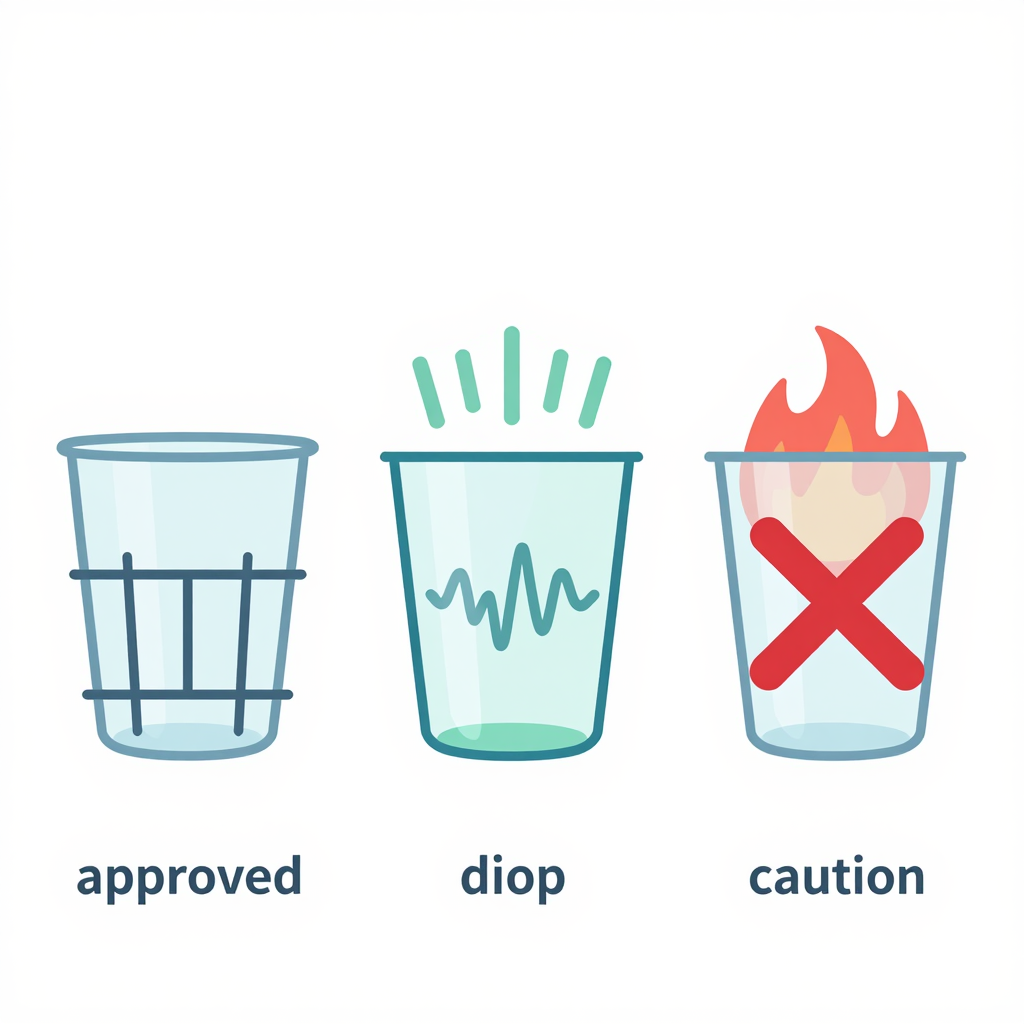
Always look for certified ratings on your cups to ensure safety and durability.
Cup Longevity Comparison: Dishwasher Cycles by Material
When selecting clear plastic drinking cups for your food service business, understanding how different materials hold up under repeated commercial dishwashing is essential. The chart below compares the estimated lifespan of five common plastic cup materials, measured in the number of dishwasher cycles before visible degradation begins.

Estimated Lifespan in Commercial Dishwashing Conditions
| Material | Dishwasher Cycles Before Visible Degradation | Key Notes |
|---|---|---|
| Polycarbonate | ~250 cycles | Strongest in terms of cycle count, but NOT microwave safe and raises BPA concerns with repeated washing |
| Tritan | ~200 cycles | Excellent clarity retention; BPA-free; resists clouding and cracking; top choice for premium reusable cups |
| PP (Polypropylene) | ~150 cycles | Good heat resistance; microwave and dishwasher safe; may show minor surface scratching over time |
| PET | ~80 cycles | Prone to warping in heat; best suited for single-use or limited reuse with hand washing only |
| PS (Polystyrene) | ~30 cycles | Brittle material; cracks and yellows rapidly in high-heat dishwashing; not recommended for commercial reuse |
Data based on industry testing averages for cups used in food service settings.
What This Means for Your Business
As the chart illustrates, polycarbonate cups offer the highest cycle count on paper, but they come with important drawbacks – namely, they are not microwave-safe and can leach BPA as they degrade under high heat and alkaline detergents. This is why many commercial kitchens are moving away from polycarbonate drinkware.
Tritan strikes the best balance of durability, clarity, and safety. It withstands around 200 cycles with virtually no loss of optical clarity or structural integrity, making it an excellent choice for businesses that present beverages in attractive, crystal-clear cups. Additionally, Tritan is BPA-free and microwave-safe, giving you versatility in service.
Polypropylene (PP) remains the workhorse material for cost-conscious operations. With approximately 150 cycles before visible wear, PP cups offer dependable performance and are both microwave and dishwasher safe. They may develop a slightly hazy appearance over time, but they hold up well structurally.
PET and PS are best reserved for single-use or light-use scenarios. Neither material is truly suited for the high temperatures and harsh detergents found in commercial dishwashers, and their rapid degradation can lead to unsightly cups – or worse, compromised structural integrity mid-service.
For more guidance on selecting the right cups for your establishment, check out our complete guide to clear plastic cups and explore eco-friendly clear plastic cup options for sustainable alternatives.
How to Identify Truly Dishwasher & Microwave Safe Cups
Not every clear plastic cup that claims to be heat-safe actually delivers. Whether you’re sourcing for a bubble tea chain or a food truck, here’s your practical checklist for vetting dishwasher and microwave safe clear plastic drinking cups that can handle real commercial use.
What to Look for on Labels & Packaging
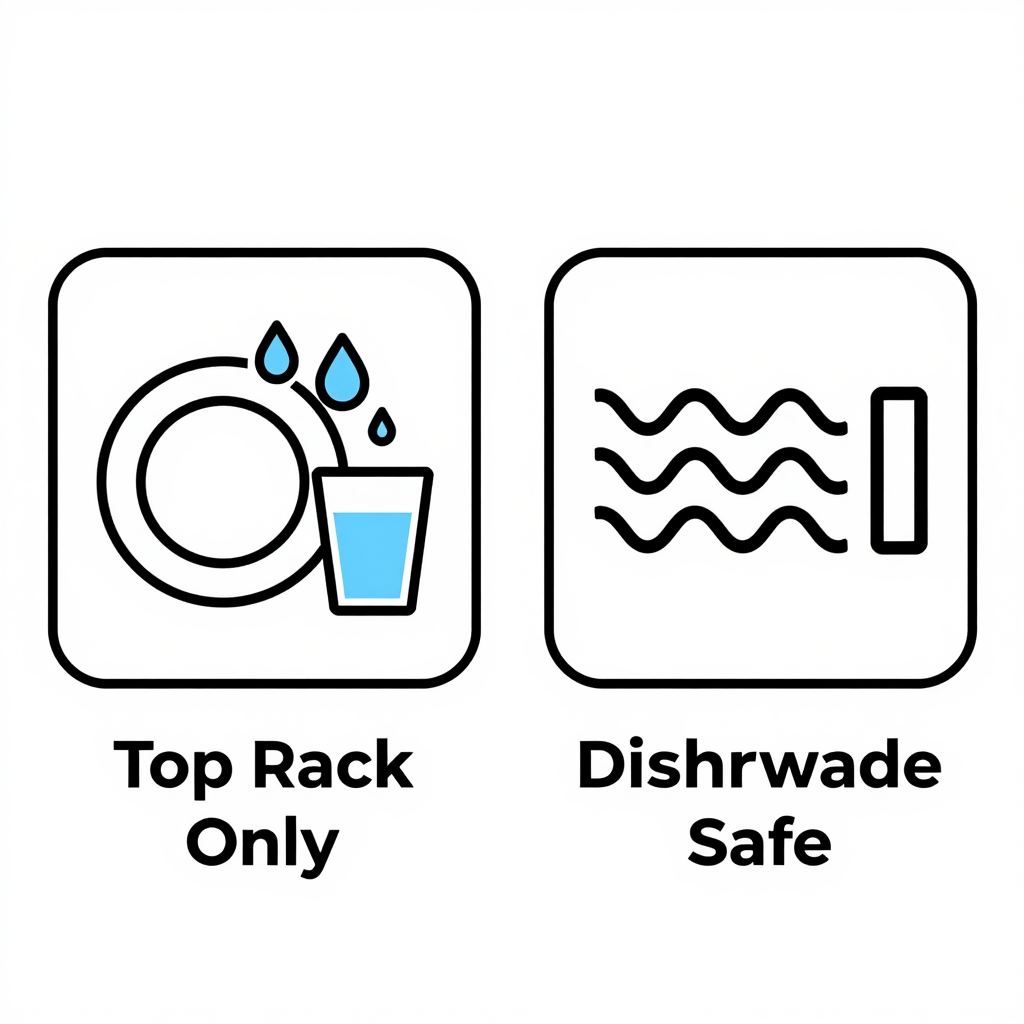
- Microwave-safe symbol – Look for a square box with wavy lines inside (or a small microwave icon). This indicates the cup won’t warp or leach chemicals under microwave heat.
- Dishwasher-safe symbol – A square with a plate and glass underneath water droplets. A variant showing only the top rack icon (with a horizontal line) means the cup must go on the top rack only, away from the heating element.
- Temperature ratings – Reliable cups will list a maximum temperature (e.g., 212°F / 100°C). If the packaging only says “microwave safe” without a dishwasher certification, proceed with caution.
- Material codes – Look for recycling codes #5 (polypropylene/PP) which is naturally heat-resistant, or #7 (other, often Tritan™) for high clarity and durability. Avoid #1 (PET) and #6 (polystyrene) which can degrade under heat.
Why ‘Microwave Safe’ ≠ ‘Dishwasher Safe’
- A cup might survive 60 seconds in the microwave but deform under the prolonged high heat and water pressure of a commercial dishwasher cycle. Dishwasher-safe certification requires the cup to withstand repeated hot-water blasts (typically 140°F-170°F) and strong detergents without cracking or clouding.
- Conversely, some cups designed for dishwasher durability use additives that can leach into food during microwave heating. Always verify both certifications independently.
- Red flags to watch for: Cloudy or hazy appearance after a single test wash, extremely thin flexible plastic that feels flimsy when squeezed, and the absence of any third-party certification mark (FDA, LFGB, or EU food contact compliance). These are telltale signs that the cup won’t hold up in commercial environments.
Requesting Spec Sheets from Suppliers
- Always ask for material data sheets and third-party test reports before purchasing. Reputable suppliers of food grade clear plastic cups will provide documentation proving microwave and dishwasher safety, not just marketing claims.
- Verify the manufacturer’s BPA-free certification and whether the cup passes FDA 21 CFR standards for repeated heat exposure.
Pro tip: Before placing a bulk order, always request a sample batch and run them through your actual dishwasher cycle and microwave setup. One test run will reveal clouding, warping, or structural weakness faster than any spec sheet. This small upfront step can save you thousands in returns and reputational damage.
For more on selecting the right cups for your business, explore our guide on eco-friendly clear plastic cups and the complete clear plastic cups guide for size and material comparisons.
From bustling bubble tea counters to mobile food trucks and high-volume corporate cafeterias, dishwasher and microwave safe clear plastic drinking cups are quietly revolutionizing how food and beverage businesses operate. These versatile cups eliminate the headache of managing multiple cup types for different temperature needs – one cup does it all. Here are five real-world use cases illustrating their impact across the industry.

Bubble Tea Shops
Bubble tea shops serve everything from icy blended taro smoothies to steaming hot milk teas with chewy tapioca pearls. Using dishwasher and microwave safe clear plastic drinking cups means staff can prep hot drinks, flash-warm a chilled cup for a customer who prefers it room temperature, and then run everything through the commercial dishwasher at the end of the night – all with the same cup. This cuts inventory complexity and ensures every boba lover gets the perfect temperature experience.
Food Trucks
Space is the ultimate premium on a food truck. With limited water tanks and no commercial dishwashing bay, food truck operators need cups that can handle a quick hand-wash and immediate reuse. Durable dishwasher-safe cups survive repeated scrubbing without cracking or clouding, while microwave-safe functionality lets operators heat pre-portioned soups or sauces directly in the cup. It is a compact, efficient solution for mobile kitchens that cannot afford fragile or single-use-only alternatives.
Corporate Cafeterias
High-volume corporate cafeterias cycle through hundreds of cups daily across breakfast, lunch, and snack services. Cups that withstand repeated dishwasher cycles at high temperatures – without warping, staining, or losing clarity – are essential for keeping labor costs down and presentation consistent. Microwave-safe construction also allows employees to heat their own beverages or leftovers right at their desks, reducing cafeteria wait times during peak hours.
Catering Events
Caterers often prep beverages hours – or even a full day – before an event. Microwave-safe cups let staff reheat mulled cider, hot chocolate, or spiced tea on-site without transferring liquids to a separate vessel. And because these cups are clear and reusable, they elevate the table presentation far beyond what disposable clear plastic cups with lids can offer, giving event planners a polished look that is also practical for large-scale service.
Frozen Yogurt & Dessert Shops
Frozen yogurt shops face a unique temperature challenge: cups must endure freezer-cold temperatures during self-serve filling and then go straight into a microwave to warm sticky toppings like chocolate fudge or caramel sauce. Standard plastic cups can crack under this thermal shock, but high-quality, microwave-safe clear cups handle the freezer-to-microwave transition with no issues, giving customers a seamless dessert experience from first scoop to last drizzle.
Before purchasing dishwasher and microwave safe clear plastic drinking cups, verify these certifications matter for your market.
Table 2: Key Safety Certifications for Commercial Cups
| Certification/Agency | What It Covers | Regions | Relevant For These Cups? | How To Verify |
|---|---|---|---|---|
| FDA (Food Contact) | Regulates food-grade plastics under 21 CFR; ensures no harmful migration of substances into food or drinks under normal use conditions. | United States | Yes. Required for all food contact cups sold in the U.S. market. | Look for FDA-compliant labeling or request a Letter of Guarantee from the manufacturer. Check for Food Contact Notification (FCN) if recycled material is used. |
| NSF/ANSI Standard 51 | Covers materials used in food equipment; tests plastic for chemical migration, durability, cleanability, and heat resistance in commercial settings. | United States, Canada, International | Yes. Essential for commercial kitchens and food service operations that require NSF-certified equipment. | Check the NSF Certification Directory online. Certified products display the NSF mark on packaging or the product itself. |
| BPA-Free Certification | Verifies that cups contain no bisphenol A or related analogs (BPS, BPF) through third-party lab testing; ensures safety under heat and acidic conditions. | Global | Yes. Increasingly demanded by consumers and regulatory bodies for beverage cups. | Request independent third-party test reports. Look for certifications from NSF, SGS, or Intertek. Check for explicit BPA-Free labeling with supporting documentation. |
| EU Plastic Regulations (EU 10/2011) | Establishes a positive list of authorized substances, specific migration limits (SMLs), and overall migration limits (OML) for food contact plastics. | European Union, European Economic Area | Yes. Mandatory for cups sold or distributed in EU member states. | Request a Declaration of Compliance (DoC) from the supplier. Verify that all substances used are listed in Annex I of the regulation. |
| Prop 65 (California) | Requires warnings for products containing chemicals known to cause cancer or reproductive harm; sets limits for lead, phthalates, and bisphenols in food contact items. | California, United States | Yes. Required for cups sold in California. Non-compliance can result in lawsuits and penalties. | Request Prop 65 testing reports. Check the OEHHA Prop 65 list for relevant chemicals. Ensure product labeling includes required warnings if applicable. |
Common Myths About Clear Plastic Cups Debunked
Let’s clear the air – and the countertop. There’s a lot of conflicting information out there about clear plastic cups, especially when it comes to safety in the microwave and dishwasher. Here’s the truth behind five of the most persistent myths.
Myth #1: “If my clear plastic cup doesn’t melt right away in the microwave, it must be microwave safe.”
Fact: Not melting does not mean safe. The FDA specifically warns that only plastics labeled “microwave safe” should be used for reheating. Why? Because heat can cause chemical additives – like BPA, phthalates, or their substitutes – to leach into beverages even before the cup visibly warps. Transparency has nothing to do with microwave safety; it’s all about the plastic’s tested heat tolerance and chemical stability.
Myth #2: “Dishwasher safe means I can run it through the high-heat sanitize cycle.”
Fact: “Dishwasher safe” typically refers to standard top-rack cycles, not industrial sanitize settings that can reach 180°F or higher. Repeated exposure to extreme heat accelerates plastic degradation, causing micro-cracks where bacteria can hide and speeding up chemical migration. Check the manufacturer’s specific temperature guidelines – most standard dishwasher-safe cups should stay on the top rack away from the heating element.
Myth #3: “Reusing plastic cups is always unsafe.”
Fact: High-quality, food-grade plastic cups are designed for repeated use – as long as they’re properly cleaned and maintained. The key is to inspect them regularly. If you see warping, scratches, or cloudiness (see Myth #4), it’s time to retire them. When it comes to reusable containers, the science is clear on one thing: material integrity matters more than plastic itself. For more on how to spot quality reusable options, check out our guide to BPA-free plastic food containers.
“The available evidence does not indicate a need for concern regarding BPA migration from reusable plastic containers under normal use conditions. Typical consumer exposure remains significantly below safety thresholds.” – European Food Safety Authority (EFSA), 2024 re-evaluation
Myth #4: “Cloudiness is just cosmetic and doesn’t affect safety.”
Fact: Cloudiness, hazing, or a chalky appearance is your cup’s way of telling you it’s breaking down. This physical change indicates that the polymer structure is degrading, which creates microscopic cracks and fissures. These imperfections trap bacteria (even after washing) and allow chemical components – including BPA-free alternatives like BPS – to migrate into drinks more easily. When your cups turn cloudy, swap them out.
Myth #5: “All BPA-free plastics are heat-safe.”
Fact: BPA-free does not equal heat-proof. Many BPA-free alternatives (such as those using BPS or BPF as substitutes) have their own heat tolerances and may still leach estrogen-active chemicals under high temperatures. A study published in Environmental Science & Technology found that over 70% of commercially available plastic containers, including BPA-free ones, released estrogen-active chemicals after common use conditions like microwaving or dishwashing. Always look for explicit heat-safety labeling, not just a “BPA-free” claim.
When it comes to choosing the right cups for your business – whether for bubble tea, iced coffee, or catering – don’t rely on myths. Look for clear, certified heat-safety markings and source from suppliers who test their products. When in doubt, always verify with your supplier – speaking of which…
Cost Analysis – Are Quality Cups Worth the Investment?
When stocking your beverage service with dishwasher and microwave safe clear plastic drinking cups, the upfront price tag can be tempting. But savvy procurement pros know that the cheapest option on the shelf often comes with a hefty price hidden beneath the surface. Let’s break down the real numbers.
The Price Per Unit Gap
At first glance, the difference seems stark. Budget-grade cups run around $0.08 per unit, while commercial-quality dishwasher and microwave safe clear plastic drinking cups land closer to $0.18 per unit. That’s more than double the sticker price. But the unit cost is only where the story begins – not where it ends.
Replacement Rates Tell the Real Story
Cheap cups typically last 20 to 30 wash cycles before warping, cracking, or clouding up in a commercial dishwasher. Quality cups, by contrast, regularly endure 150+ washes – and many hold up for 300 to 500 cycles with no structural failure. That means one quality cup can outlast five to ten cheap ones, quickly erasing the per-unit price gap.
| Cost Factor | Cheap Cups | Quality Cups |
|---|---|---|
| Per-unit price | $0.08 | $0.18 |
| Avg. washes before failure | 20-30 | 150-500+ |
| Cost per 100 washes | $0.27-$0.40 | $0.04-$0.12 |
| Annual replacements (100-cup set) | 12-24× | 2-4× |
The Hidden Costs Nobody Talks About
The savings go deeper than cup math. Here are the often-overlooked expenses that eat into cheap cup budgets:
Labor for frequent restocking. Every time a cup warps mid-service, a staff member must stop, remove it, and grab a replacement. With cheap cups failing every few weeks, your team spends noticeably more time on inventory rotation and stock management.
Customer complaints from warped cups. A wobbly, misshapen cup doesn’t just look unprofessional – it spills. According to the EPA’s Sustainable Food Service Initiative, 41% of customer complaints in chain cafes cite cup quality issues such as warping, leaking, or lid failure. Each complaint costs staff time, hurts your brand, and can lead to lost repeat business.
Waste disposal costs. More frequent replacements mean more broken and discarded cups hitting your trash bins. A 2025 study tracking 107 cafés found that switching to reusable, higher-quality cups led to a 68% reduction in waste disposal costs and a 54% decrease in related labor hours.
The Bottom Line
When you factor in per-wash cost, labor savings, fewer complaints, and reduced waste, quality cups deliver a dramatically lower total cost of ownership. For businesses looking to source durable, commercial-grade clear plastic cups that withstand daily service demands, the investment in quality pays dividends from the first wash cycle. And if you’re exploring eco-friendly clear plastic cup options, the durability advantage only grows stronger.
The math is clear – quality pays for itself.

Chart Description: This grouped bar chart compares customer satisfaction ratings between Budget Cups and Premium Cups across four key performance categories: Cup Clarity, Heat Resistance, Durability, and Overall Satisfaction. The data, sourced from an industry survey of 200 food service managers (2024), shows that Premium Cups significantly outperform Budget Cups in every metric – with Premium Cups scoring between 85% and 92%, while Budget Cups lag behind at 35% to 55%. The most dramatic gap appears in Durability, where Budget Cups earned only 35% satisfaction compared to 85% for Premium Cups. This chart underscores why investing in high-quality, dishwasher and microwave safe clear plastic cups is critical for maintaining customer satisfaction in food service operations. For businesses like bubble tea shops and restaurants looking to elevate brand perception, exploring options like custom logo cups or eco-friendly clear plastic cups can make a measurable difference.
Let’s Elevate Your Service Together
As we wrap up, let’s revisit the three insights that truly matter when choosing your disposable tableware. First, not all clear plastic cups are dishwasher and microwave safe – the material composition determines everything, from durability to performance. Second, investing in quality cups isn’t an expense; it’s a smart strategy that reduces long-term costs by minimizing replacements and waste. And third, safety certifications should never be an afterthought – they protect your customers, your reputation, and your peace of mind.
At GreenDispoPack.com, we understand the demands of bubble tea shops, restaurants, food trucks, catering services, and corporate teams. That’s why our product range – spanning disposable tableware, packaging paper, and boxes – is built on three pillars: safety, durability, and eco-friendly practices. We don’t just sell products; we provide solutions that align with your values and operational needs.
The global sustainable packaging market is valued at over $310 billion in 2025, and the shift toward eco-conscious choices is accelerating. Businesses that choose reliable, certified dishwasher and microwave safe clear plastic drinking cups are not only meeting customer expectations but also future-proofing their operations. Quality packaging enhances your brand image, reduces liability, and supports a healthier planet.
Now it’s your turn to take the next step. Choose our reliable disposable tableware and packaging solutions for your business. We offer quality products that meet safety standards, with fast delivery and flexible options. Partner with us today to elevate your service – contact our team now for a tailored quote! Whether you need custom-printed cups for your bubble tea chain or bulk eco-friendly takeout containers, we’re here to help.
Explore our full range of clear plastic cups and lids to see how we can support your business, or learn more about our eco-friendly disposable options for sustainable packaging solutions.
Ready to make the switch? Reach out to us today – we’d love to discuss your specific needs and craft a solution that works for you. Your customers deserve the best, and so does your business.
Frequently Asked Questions (FAQ)
Q: Can I microwave clear plastic cups for more than 2 minutes?
A: No, it is not recommended. Even cups labeled microwave-safe – especially commercial grade clear plastic cups – should not be microwaved beyond 2 minutes. Studies show prolonged heating can increase microplastic release, particularly with oily or acidic contents. Always check for a microwave-safe symbol and stick to short heating intervals.
Q: Will dishwasher safe cups still get cloudy over time?
A: Yes, even cups labeled dishwasher safe can develop cloudiness over time. This is typically caused by mineral deposits from hard water, detergent residue, and micro-scratches from repeated wash cycles. Using a rinse aid and placing cups on the top rack can help slow the buildup and keep them clearer longer.
Q: Are these cups recyclable?
A: Most clear plastic drinking cups are made from PET (resin code #1), which is widely accepted in curbside recycling programs. However, recyclability depends on your local facility – check with your waste management provider. Always rinse cups clean before recycling to avoid contamination.
Q: Can I use dishwasher and microwave safe clear plastic drinking cups for hot coffee?
A: Yes, as long as the cups are explicitly labeled microwave-safe and heat-resistant. Most microwave-safe clear plastic cups can withstand temperatures up to around 70°C (158°F), which works for hot coffee. However, avoid boiling water or extreme heat, as this can cause warping or chemical leaching over time.
Q: What is the difference between top-rack and bottom-rack dishwasher safe?
A: The bottom rack is exposed to hotter water and more powerful spray arms, so items marked “top-rack only” are made of materials – like plastic – that could warp or melt under those conditions. Items labeled “bottom-rack safe” can handle higher heat and stronger water pressure. Always follow the label to avoid damaging your cups.
Have more questions? Our team is ready to help – reach out for personalized guidance.