
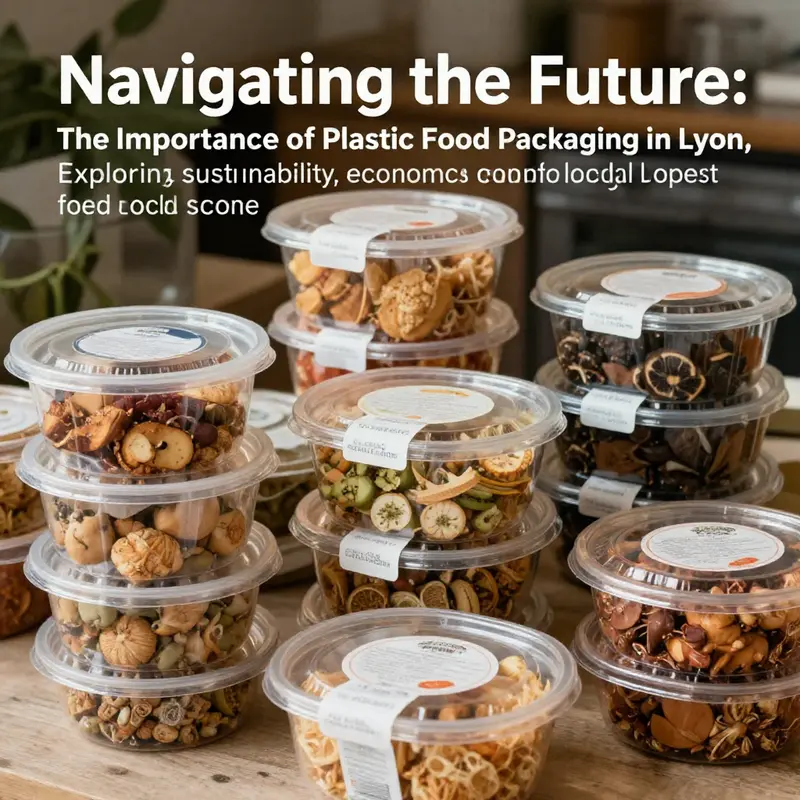
In Lyon, France, the bustling food and beverage sector thrives on innovation and practicality, with plastic packaging food containers playing a pivotal role. From bubble tea shops to catering services, the demand for effective packaging solutions is paramount. As we delve into the four key areas of this theme, we’ll first explore how these containers contribute to operational efficiency and consumer satisfaction. Next, we will examine the critical sustainability trends influencing packaging choices, particularly in an eco-conscious city like Lyon. Understanding the economic impact of these products on local businesses adds another layer to our exploration, while identifying local suppliers provides actionable insights for businesses in the area. Together, these chapters form a comprehensive picture of plastic packaging’s role in Lyon’s culinary landscape.
Lyon at the Crossroads of Convenience and Cleanliness: The Vital, Contested Role of Plastic Food Containers in a City Shaping Its Sustainability
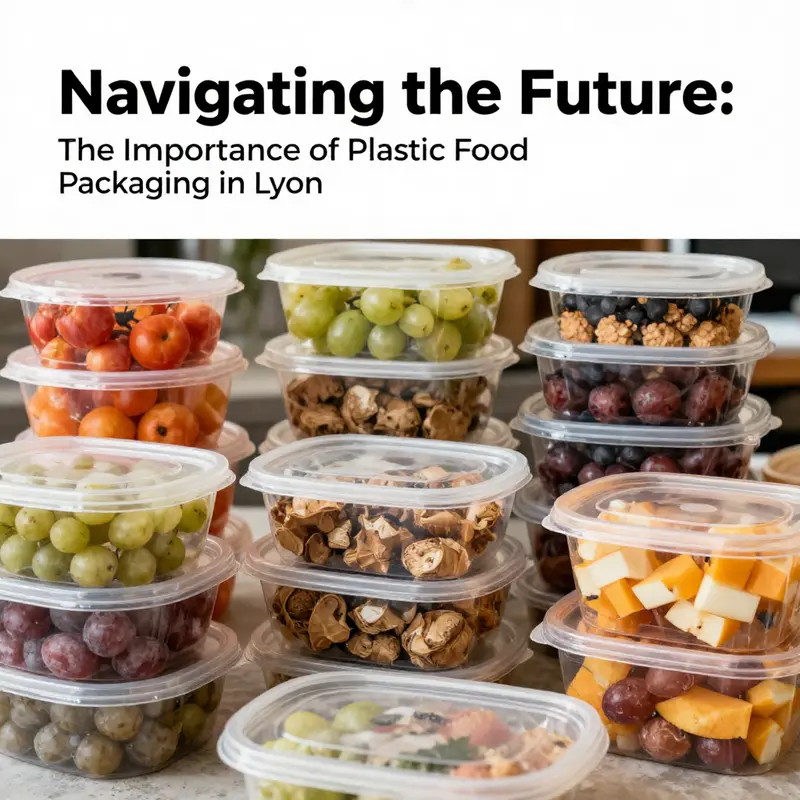
Lyon, famed for its gastronomy and careful city planning, sits at a compelling intersection of appetite and accountability when it comes to plastic food packaging. In the broader French context, plastics have remained a dominant material in packaging because of durability, light weight, and cost efficiency. In Lyon, plastic containers are a practical backbone for daily life—from busy bistros and market stalls to supermarkets stocking ready-to-go meals. The city’s urban rhythms—lunch rushes, late dinners, and street markets—depend on packaging that is light, inexpensive, and effective at preserving freshness and safety. These attributes help explain why plastic containers remain embedded in Lyon’s urban fabric even as sustainability debates intensify.
Beyond convenience, plastic packaging offers durability and predictable costs that help small businesses standardize portions and minimize waste. Most plastics can be tailored to protect food from moisture, oxygen, and contamination, extending shelf life and maintaining flavor—qualities that matter in a city known for culinary standards.
Yet plastic’s omnipresence also sits inside a wider environmental conversation about waste, recycling logistics, and lifecycle impacts. In Lyon, policy makers, researchers, and civic actors are balancing the short-term benefits of plastic with longer-term commitments to cleanliness, resource efficiency, and ecological stewardship. These tensions have accelerated interest in recycling innovations and in consumer practices that improve recovery rates, pushing procurement toward packaging that can be recovered and remade into new products where feasible.
A notable thread in Lyon’s packaging narrative is the emergence of recycling technologies that aim to disrupt the linear take‑make‑dispose model. Carbios, a biotechnology firm focused on enzymatic recycling, has attracted attention for PET plastics. In Lyon, the emphasis is on exploring a larger-scale facility that could test these processes and, potentially, reconfigure the city’s waste streams. While the promise is compelling, stakeholders temper optimism with realism: technology alone cannot solve the challenge. Waste management, collection, sorting, and active consumer participation remain indispensable in achieving meaningful circularity.
Within this context, the local supply landscape includes regional players like Olétal, a supplier of packing materials located in Lyon’s 6th arrondissement. The address—9 rue Pierre Corneille, 69006 Lyon—puts a shop within easy reach for businesses and individuals seeking plastic containers and related packaging. The proximity of such suppliers matters in a city where lead times and reliability influence daily operations. Local procurement can reduce delays, tailor orders to seasonal demand, and support a more responsive packaging system aligned with waste management practices.
Between local storefronts and global platforms, Lyon’s packaging ecosystem reveals a mosaic of strategies. Online platforms show demand for recyclable takeout containers at scale and reveal a market oriented toward efficiency and mass customization. The economics of plastic packaging—low unit costs in high-volume orders, even when containers are simple and stackable—continues to appeal to restaurants, caterers, and food-service operators who need predictable pricing and reliable supply. Some product lines focus on transparent containers for produce and perishables, where visibility and ease of handling support display and freshness.
In Lyon’s retail and food-service environment, containers are not just vessels; they are enablers of safe, convenient dining experiences. They help ensure that meals travel well from vendor to customer and support standards for food safety, leak resistance, and portion control. Yet every use brings attention to end‑of‑life considerations—how containers are disposed of, collected, and reintegrated into production cycles.
The environmental conversation is not only about material choice but about system design. Recycling infrastructure, municipal collection schemes, and consumer habits converge to determine a container’s footprint. Lyon’s commitment to sustainable development translates into calls for clearer labeling, better separation of recyclables, and more accessible recycling options that reduce contamination and improve processing efficiency. The challenge is to retain plastic’s benefits—durability, protection, affordability—while closing the loop through effective collection and reuse.
Looking ahead, the city’s packaging landscape is likely to blend established plastic practices with evolving recycling technologies and growing interest in sustainable options. The decision to pursue recyclable or reusable packaging becomes a question of resilience as waste management policies evolve and consumer expectations shift. When a local business considers a packaging purchase, factors such as cost, reliability, barrier performance, and end-of-life prospects weigh heavily. Partnerships with suppliers who share a commitment to sustainability—whether through design for recyclability or take-back programs—are increasingly attractive in Lyon’s market.
In practical terms, this means designing packaging with recyclability in mind, labeling to aid sorting, and supporting local collection points that enhance recovery rates. It also means acknowledging economic realities—the unit cost, the supply chain, and the need for dependable operations. Lyon’s culinary ecosystem depends on speed and consistency, and plastic containers have long been a quiet facilitator. As the city pursues sustainability goals, the relationship between food and packaging will require ongoing adaptation: upgrading recycling infrastructure, embracing feasible recycling technologies, and encouraging consumer participation. The overarching story is one of balancing nourishment with environmental responsibility.
For readers seeking a tangible entry point into sustainable packaging linked to Lyon’s broader narrative, one path is to diversify packaging portfolios with options that complement plastics—such as kraft paper alternatives that are designed for takeout and storage. These options illustrate how a diversified packaging mix can meet varied needs without sacrificing practicality or presentation.
Looking forward, Lyon’s packaging ecosystem may continue to blend traditional plastics with innovations in recycling and a growing emphasis on circularity. The city’s experience offers a broader insight: the effectiveness of plastic containers comes from well‑designed systems that manage use and end‑of‑life outcomes. When communities invest in efficient waste management, when businesses pursue reliable supply chains, and when consumers participate in sorting and recycling, the benefits of plastic packaging can be realized within a sustainable framework.
External resources can illuminate the trajectory of such innovations. A recent industry update on enzymatic recycling and its potential implications for cities like Lyon can provide additional context on how advances in recycling technologies might reshape end‑of‑life pathways and contribute to a more circular model of urban packaging.
Lyon’s Circular Push: Regulation, Edible Innovation, and the Evolution of Plastic Food Packaging
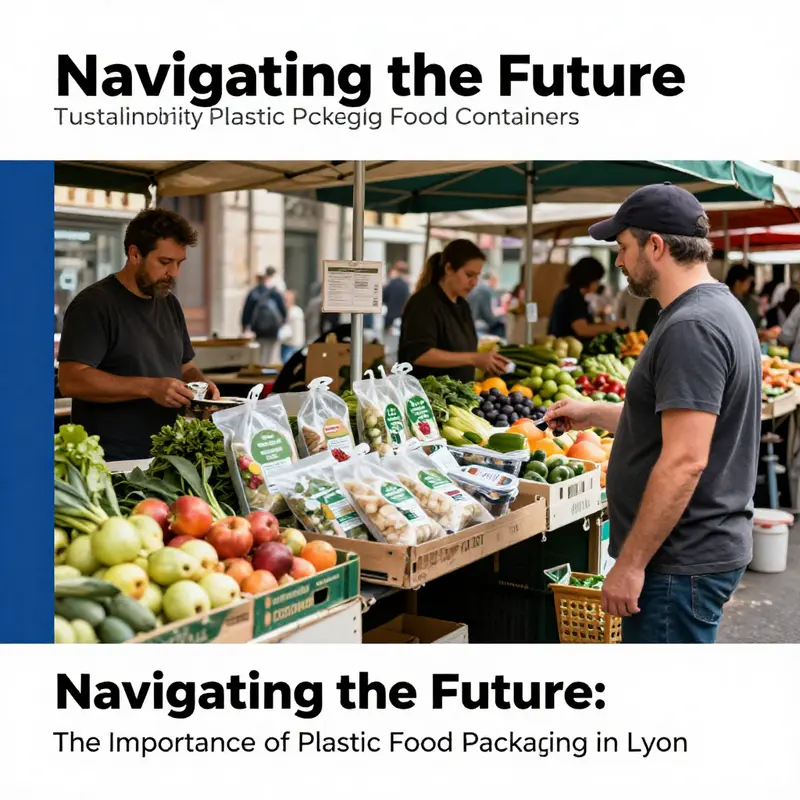
Lyon sits at the intersection of culture, cuisine, and an accelerating move toward circular economy practices that redefine how plastic packaging for food is imagined, produced, and disposed of. In the city’s daily life, from bustling bouchons to modern takeaway outlets, the packaging that holds a dish is more than a vessel; it is a signal about the city’s values and its ambitions for a cleaner and more resilient urban system. Local supply channels, such as Olétal in Lyon’s 6th arrondissement—a practical anchor for cooks, caterers, and retailers seeking packing solutions—illustrate how proximity matters in a landscape increasingly steered by regulation and sustainability metrics. The practical rhythms of sourcing packaging locally in Lyon reinforce a broader truth: while online marketplaces reflect global supply chains and pricing, the city’s rules and its procurement habits determine which packaging formats survive, thrive, or fade away. The current moment, therefore, is less a simple shift in demand for plastic containers and more a nuanced pivot toward recyclable, reusable, or even edible and active packaging that echoes both policy imperatives and evolving consumer expectations.
France’s regulatory frame acts as a powerful catalyst in Lyon and beyond. The 2023 Anti-Waste Law establishes a clear horizon: by 2025, all plastic packaging must be recyclable or reusable. This directive is not a distant target but a living lever shaping decisions at the point of manufacture, in retail settings, and within foodservice operations. In practical terms, designers and producers are compelled to rethink packaging not as an add-on but as an essential component of the product’s lifecycle. In Lyon, this means packaging must be designed for simpler end-of-life pathways, with less material intensity and more modularity to accommodate recycling streams or reuse schemes. It is a shift from mere containment to a system that anticipates how packaging will re-enter the economy rather than accumulate in landfills. Restaurants, takeout shops, and caterers face a dual pressure: strip packaging down to what is truly necessary while preserving food integrity, shelf life, and safety. The city’s urban fabric, with its concentration of restaurants, markets, and gastronomic innovation hubs, becomes a live laboratory where regulators, suppliers, and end-users negotiate constraints and possibilities in real time.
This regulatory push dovetails with a broader sector-wide transition toward minimalist packaging designs. In Lyon, the move away from material-heavy formats translates into practical changes—reduced thickness, simpler shapes, and fewer adhesives or coatings that complicate recycling. It is not a mere aesthetic choice; it is a functional bet on how efficiently materials can be recovered and reused. The emphasis on recyclability and reuse also raises questions about the compatibility of existing sorting facilities with new packaging compounds and coatings. The city’s waste-management ecology must keep pace with product design, ensuring that the post-consumer stream remains navigable for recyclers and that recycled content can re-enter the supply chain with confidence. This alignment between policy and practice echoes the national trajectory but gains a distinct texture in Lyon, where municipal programs and local businesses intersect with the city’s culinary identity and its commitment to sustainable urban living.
Innovation in packaging in the Lyon region has not paused at the edge of the law. It has, instead, blossomed into a suite of ideas that seek to reduce waste while enhancing food safety, quality, and consumer experience. A notable frontier is edible packaging—sustainable, biodegradable materials that can be consumed or break down harmlessly after use. In theoretical and early practical terms, edible coatings and wrappings around foods are being explored as zero-waste alternatives to conventional packaging. This is not just about replacing plastic with something edible; it is about creating packaging that participates in the food’s ecosystem, potentially preserving flavors, protecting nutrients, and offering a fresh dimension to tasting experiences. In France, where culinary tradition intersects with advanced materials research, edible packaging carries a narrative of innovation meeting tradition, with ongoing research into materials that can safely deliver bioactives, antioxidants, or antimicrobials within edible matrices.
The technological horizon extends further into what some researchers describe as active packaging. Nanotechnology is increasingly integrated into edible and nonedible packaging to enable controlled release of beneficial ingredients, improving shelf life and safety. These developments align with a broader policy objective: to minimize waste while maintaining or enhancing the quality and safety of food. The idea of packaging as an active participant in the food system—releasing or absorbing compounds in response to environmental cues—helps to reframe plastic containers from passive wrappers to dynamic interfaces. In Lyon, where gastronomy thrives on reliability and sensory integrity, such innovations promise to reduce spoilage and waste in ways that resonate with both business models and consumer expectations. Yet this potential comes with challenges: regulatory oversight around food-contact materials, consumer acceptance of edible or nanotech-infused packaging, and the need for robust supply chains that can scale these technologies responsibly.
Market dynamics in France reflect a growing appetite for sustainable packaging, with projections that frame Lyon’s opportunities within a national context. The sustainable packaging market is expected to rise from about USD 32.88 billion in 2026 to roughly USD 39.46 billion by 2031, a CAGR of approximately 3.72%. This trajectory signals not only a larger market but a more differentiated one. It suggests that buyers—ranging from large restaurant groups to neighborhood eateries and home consumers—are willing to invest in packaging solutions that meet environmental criteria while delivering performance. The Lyon ecosystem is well positioned to benefit from this trend because of its dense network of food-service operators, strong municipal support for sustainability initiatives, and a growing cadre of designers, material scientists, and packaging professionals who are comfortable operating at the intersection of gastronomy and material science. In practical terms, this means more options for recyclable and reuse-ready packaging on shop shelves and in takeout supply chains, as well as investigative pilots into edible and active options where food safety and waste reduction are aligned with consumer preferences.
The local supply chain—whether through a shop like Olétal, which serves as a conduit for packaging materials in Lyon’s 69006 district, or through regional wholesalers who understand the city’s culinary needs—plays a critical role in translating policy and technology into actual practice. In many cases, the choice of packaging is determined not only by cost or aesthetics but by how easily a container can be integrated into the city’s recycling streams, how reliably it preserves food, and how well it aligns with the city’s public procurement standards. For instance, the availability of recyclable or reusable options is not simply about choosing a product category; it is about ensuring that the chosen packaging works seamlessly with sorting facilities, composting programs, and waste-to-energy networks that the municipality supports or administers. In this ecosystem, a small but meaningful set of local suppliers and distributors can influence the pace at which Lyon’s food-service sector adopts more sustainable packaging pathways. The proximity factor—being able to source packaging materials nearby—helps restaurants and caterers respond quickly to regulatory changes, seasonality, and the distinct demands of Lyon’s diverse gastronomic culture. It also reduces the logistics footprint of packaging materials themselves, a consideration that becomes more pronounced as cities push for lower embedded emissions in supply chains.
The blending of policy timelines, engineering advances, and local market realities creates a dynamic that is uniquely Lyon. The city’s approach to packaging is not a straight line from regulation to recycling; it is a complex, ongoing negotiation among multiple actors with different incentives. Designers must account for packaging that is not only compliant but also practical within the busy rhythms of a restaurant service, the varying storage conditions of businesses, and the needs of households that want convenience without compromising environmental values. Producers and retailers must balance the costs of new materials and processes against the benefits of reduced waste, higher recycling rates, and the possibility of capturing premium value through sustainable branding. In Lyon, this balancing act often takes place at the neighborhood scale—within district-level initiatives or municipal pilots—where public policy and private enterprise test ideas, learn from mistakes, and refine approaches before scaling up regionally or nationally.
An important facet of the local narrative is the user experience itself. Consumers in Lyon appreciate packaging that minimises waste without compromising the sensory experience of the food. They are increasingly aware of the trade-offs involved in packaging, where convenience can come with environmental costs. In response, many food-service operators in the city are adopting circular practices that extend beyond the container. This includes improving return or reuse schemes, encouraging customers to bring their own containers, and highlighting the journey of packaging materials from origin to end-of-life. The aim is to foster a culture where packaging is a transparent part of the food experience—one that signals quality, responsibility, and a respect for the city’s resources. The human dimension of this transition—how people decide what to reuse, recycle, or compost—remains central to whether Lyon’s packaging innovations achieve their potential. It is here that local storytelling, clear labeling, and accessible recycling infrastructure matter as much as advanced materials research.
As Lyon continues to chart its path, the connectedness of local players with global trends becomes clearer. Online platforms reflect global supply chains and price signals, but local actions in Lyon translate those signals into tangible changes on the ground. For example, the city’s procurement ecosystems—public and private—can drive demand for packaging formats that are explicitly designed for recyclability or reuse. The emphasis on minimalism in packaging design aligns with a broader societal goal: to reduce single-use plastics while maintaining the integrity of the dining experience. In this sense, Lyon’s sustainability narrative is not solely about banning or substituting plastics; it is about reimagining the entire packaging lifecycle and the workflows that support it. This involves collaboration across several layers: designers who craft forms and materials suitable for recycling, producers who deploy scalable, safe, and cost-effective processes, retailers who communicate value and ensure proper disposal, and policymakers who create clear, workable rules that stimulate innovation rather than stifling it.
The path forward in Lyon will likely continue to weave together regulatory clarity, technological experimentation, and practical supply-chain arrangements. Initiatives that support the deployment of recyclable and reusable packaging, paired with continued exploration of edible or active packaging concepts, will help balance environmental goals with food safety and consumer expectations. The city’s unique combination of culinary excellence, strong public-minded governance, and a proactive packaging ecosystem positions Lyon to be a notable case study in how urban centers can align policy, innovation, and daily behavior toward a more sustainable future for food packaging. That convergence may also offer a blueprint for other European cities seeking to blend tradition with modern circular economy ambitions, a synthesis that respects local food culture while expanding the horizons of what packaging can do beyond containment. In the near term, businesses in Lyon will likely see continued regulatory nudges, incremental cost considerations, and a growing demand for packaging that performs reliably in the harsh realities of takeout, delivery, and street-level commerce.
For readers seeking a concrete example of how packaging formats may evolve in practice, consider how local retailers and catering operators respond to the dual pressure of compliance and customer expectation. The practical implications hinge on material choice, design simplicity, and logistics. A packaging solution that is too complex to recycle or reuse becomes a liability, even if it offers marginal advantages in preservation or aesthetics. Conversely, a well-considered packaging ecosystem—one that emphasizes material efficiency, compatibility with Lyon’s waste streams, and support for reuse schemes—can help the city realize the regulatory intent without compromising the dining experience. This is not a theoretical exercise; it is an ongoing, collaborative effort across designers, manufacturers, vendors, and end-users who inhabit Lyon’s vibrant urban-scape. The story of Lyon’s plastic food-container landscape thus unfolds as a living example of how cities can translate national policy into local action, how innovation can meet consumer demand, and how a community can steer materials science toward outcomes that are not only technically feasible but also culturally meaningful and environmentally responsible.
Within this evolving context, a single takeaway stands out. The future of plastic packaging for food in Lyon will be shaped by the degree to which design, policy, and practice align to create packaging that is light, safe, recyclable, or reusable, and ideally edible or active in ways that extend food quality rather than undermine it. In that sense, Lyon’s trajectory reflects a broader French and European trend toward packaging that respects the planet while still nourishing its people. The city’s laboratories, markets, and streets are all testing grounds where what seems possible today may become the common standard tomorrow. And as Lyon continues to balance its culinary heritage with a forward-looking environmental agenda, it offers a compelling narrative about how urban centers can transform the materials that carry food into a more sustainable future.
For readers who want to explore practical examples online as part of this broader narrative, one relevant resource highlights the kinds of packaging solutions that align with sustainability goals and local needs. You can explore a widely used example of recyclable, paper-based packaging formats here: disposable-octagonal-box-restaurant-food-kraft-paper-packaging. This link embodies the principle of packaging that reduces complexity in recycling streams while maintaining performance in a busy takeout environment. It is a reminder that the path to sustainability is often incremental, requiring both strategic policy choices and everyday practical adaptations by businesses and consumers alike.
External context that helps frame Lyon’s momentum can be found in broader market analyses. For those seeking deeper insight into the French sustainable packaging landscape, see the latest market projections from Ken Research, which contextualize Lyon’s local developments within national growth trends: https://www.kenresearch.com/industries/sustainable-packaging-market-in-france
Beyond the Shelf: Navigating Lyon’s Economic Currents Through Plastic Food-Container Packaging
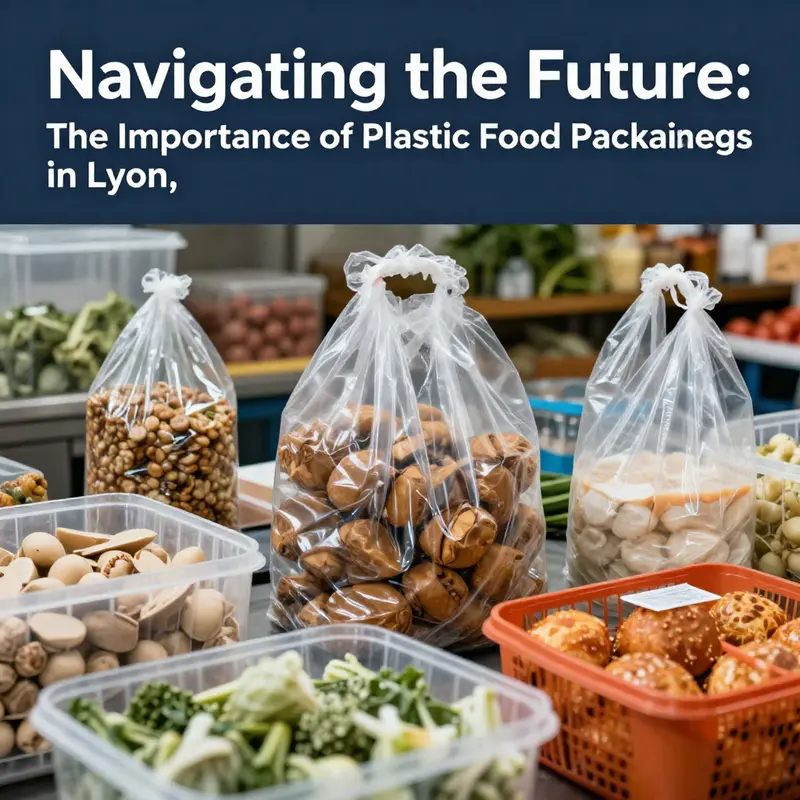
Lyon sits at a crossing of culinary heritage, modern logistics, and a shifting regulatory landscape that together shape how plastic packaging for food containers moves through its markets. The city is not simply a consumer of packaging; it is a hub where food processing, distribution, and retail converge, making the economics of plastic packaging particularly sensitive to policy shifts and innovation cycles. In this environment, the economics of plastic food containers unfold as a story of cost pressures and resilience: a market that remains essential for safety, shelf life, and efficient delivery, even as it undergoes a metamorphosis driven by environmental imperatives and circular economy ambitions. The broader French packaging market, a bedrock for regional suppliers and manufacturers, provides a backdrop for Lyon’s particular dynamics. In 2026, the French market stood at a substantial scale, and projections point to continued growth through 2031, underscoring ongoing demand for plastic packaging alongside regulatory tightening. For Lyon, this means that companies must balance the immediate needs of food safety and logistics with longer-term commitments to recyclability and material efficiency. The city’s businesses pursue this balance not in isolation but as part of a national and European current that increasingly prioritizes waste reduction, higher collection rates, and rewritten expectations for what constitutes responsible packaging. In such a framework, Lyon’s economic vitality in the packaging sector is tethered to how quickly local producers can align with evolving standards while preserving the reliability and cost competitiveness that food businesses depend on.
Regulatory developments at the European and French level are the most consequential forces shaping the economic calculus for Lyon’s plastic packaging sector. The upcoming European Union Packaging and Packaging Waste Regulation, or PPWR, is designed to drive recyclability and reduce single-use plastics across member states, with a full effect anticipated by 2030. The provisions under discussion are not cosmetic; they mandate structural changes in how packaging is designed, how waste is collected, and how packaging is reused or recycled. In practical terms, for Lyon-based manufacturers and distributors, PPWR translates into a requirement to rethink packaging architecture—emphasizing mono-material designs that can be recycled with greater ease and at lower energy costs, as well as lightweighting strategies that reduce raw material use without sacrificing performance. The anticipation of a 90% collection target for disposable plastic bottles and cans under a deposit return scheme beginning in 2029 further elevates the economics of packaging design. If beverage distributors must meet a 10% threshold for reusable packaging by 2030 (excluding wine), the downstream impact is a more complex packaging ecosystem in which reusability, durability, and reuse logistics must be integrated into product and supply chain decisions. In Lyon, where the urban geography concentrates food processing, distribution centers, and large-scale retail, these changes carry tangible implications for capital expenditure, supplier contracts, and even the pace of product innovation.
The Lyonnais response to this regulatory shift has been to accelerate investments in design optimization and material science. Local producers increasingly channel resources into lightweighting—reducing the mass of packaging while maintaining integrity and barrier properties. There is also a growing interest in mono-material solutions that keep recycling streams simpler and more efficient. Such approaches are not mere compliance gambits; they provide a pathway to lower lifecycle costs by reducing material inputs, transportation weight, and the energy intensity of recycling. Studies and guidance from national and regional environmental bodies underscore how optimizing material use translates into tangible environmental and economic benefits: less raw material extraction, lower transport emissions due to lighter loads, and improved end-of-life handling. In Lyon’s logistics corridors, where pallets and truck fleets carry goods across the urban-rural fringe and into neighboring markets, every gram saved in packaging can compound into lower fuel consumption and faster turnaround times. This interplay between regulation, design, and distribution is at the heart of Lyon’s evolving packaging economy and informs how firms plan plant upgrades, supplier diversification, and training for workforce adaptation.
An important nuance in Lyon’s regulatory narrative is the recognition that policy must sometimes accommodate regional cultural and agricultural practices. A notable example, rooted in France’s long-standing packaging traditions, is the permanent exemption for traditional wooden boxes used for Camembert cheese from recycling requirements. While this exemption preserves a heritage packaging method and supports a distinctive local product identity, it also crystallizes the idea that policy must balance sustainability goals with cultural ecosystems and economic niches. In Lyon, such carve-outs remind businesses that successful packaging strategies cannot be built on a one-size-fits-all mandate; they require careful mapping of where plastic packaging adds value and where alternative materials or retention of historical packaging forms makes sense for a given product and supply chain. This nuanced context matters because it illuminates why some segments of the packaging market may experience faster consolidation around recyclable plastics and mono-material designs, while other segments rely on specialized packaging formats that preserve tradition and regional diversity.
From a macroeconomic perspective, the French packaging market’s size and projected growth reflect a resilient demand for packaging solutions that meet safety, hygiene, and distribution needs. The broader market forecast—from a 2026 base extending to 2031—signals that plastic packaging will remain a significant component of the economy, even as the regulatory environment tightens. For Lyon, this implies that rather than retreat from plastics, local firms are intensifying innovation around design and material optimization to maintain competitiveness within a more stringent framework. The city’s status as a gateway for eastern France’s commerce, with proximity to major transport arteries and dense urban consumption, magnifies the importance of packaging that is both economical and capable of protecting perishable goods across long and complex value chains. In practice, this means a dual focus: insistence on high-performance packaging that ensures food safety and shelf life, and parallel investment in recycling infrastructure and sustainable material alternatives to reduce environmental footprint and to comply with evolving European standards.
The economic implications for Lyon are thus not solely about cost per unit. They encompass capital budgeting for new equipment that enables lightweighting and mono-material construction, workforce training to implement design-for-recyclability, and the development of partnerships with recyclers who can process complex streams with high efficiency. Logistics costs, a key part of the city’s economic structure, are sensitive to packaging choices. Lighter containers reduce freight weight, optimize storage space, and improve loading/unloading cycles at distribution centers. Such efficiencies translate into lower operating costs and potentially faster market delivery, advantages that compound across the value chain—from producers to wholesalers to retailers. Moreover, the focus on recyclability and circularity can unlock favorable policy incentives, access to green financing, and collaboration opportunities with research institutions and regional innovation clusters. While the regulatory environment certainly introduces compliance costs and adjustment periods, it also creates a predictable, long-term trajectory toward more sustainable packaging systems. For Lyon’s packaging economy, this convergence of policy rigor, design ingenuity, and logistical efficiency offers a blueprint for maintaining competitiveness while advancing environmental objectives.
To contextualize Lyon’s situation within France’s broader packaging economy, it helps to consider how regional dynamics feed into national supply chains. Lyon’s central role in food processing and distribution means that even incremental improvements in packaging efficiency can cascade into meaningful savings across a vast network. For example, the move toward mono-material solutions reduces the complexity of the recycling stream, which can lower processing costs and improve downstream material circularity. Lightweighting, when executed at scale, decreases transportation emissions and fuel consumption—a critical consideration for a city that serves as a logistic link between agricultural regions and urban markets. The synergy between packaging design, regulatory compliance, and supply chain optimization is visible in the way companies in and around Lyon recalibrate product packaging to meet both the PPWR’s aspirations and the practical realities of day-to-day distribution. The result is a local economy that incentivizes research and development in materials science, encourages supplier diversification to reduce risk, and supports the growth of a workforce skilled in the new generation of packaging architectures.
Within this evolving landscape, businesses are also mindful of consumer expectations and the role packaging plays in perceived product quality, safety, and environmental responsibility. Plastic packaging remains indispensable for certain uses—protecting delicate, perishable foods during transit, providing barrier properties that extend shelf life, and enabling efficient handling in high-volume environments. Yet the push toward recyclability and reuse means that designers increasingly think in terms of cradle-to-cradle systems: packaging that can be returned, cleaned, and reintroduced into the supply chain with minimal degradation. In Lyon, where street food and take-out services are an integral part of the city’s food culture, packaging solutions must balance convenience and safety with the city’s sustainability aims. The practical implication is a packaging ecosystem that favors designs capable of withstanding the rigors of transport and handling while still fitting into a robust end-of-life infrastructure. This means that suppliers, manufacturers, and retailers must coordinate more closely on specifications, testing protocols, and performance metrics, ensuring that every element—from closure integrity to barrier performance—aligns with a holistic view of total cost of ownership.
The economic narrative is not purely industrial or regulatory. It also reflects a dynamic ecosystem of information, collaboration, and market signals. Local buyers increasingly demand packaging that can be integrated with reusable programs or that fits neatly into deposit-return schemes once deployed at scale. This shift spurs innovation in closures, seals, and lightweight supports, as well as in the design of packaging that can be easily cleaned and reused. Real-world implications include the need for updated supplier contracts, revised quality assurance processes, and more rigorous life-cycle assessments across product lines. For Lyon’s packaging sector, the path forward rests on aligning the economics of design and logistics with the ambitions of environmental policy, all while preserving the city’s reputation for culinary excellence and reliable food safety. The outcome is a packaging economy that remains vibrant and adaptable, where cost discipline and sustainability objectives reinforce one another rather than compete for scarce resources.
As a tangible reflection of how this plays out in practice, consider the practical options that communities and businesses explore to meet evolving standards while preserving operational efficiency. One representative catalog page for standard recyclable take-out packaging options can be explored here: disposable-700ml Kraft paper bowl take-out octagonal rectangle. Such resources illustrate how the market continues to offer scalable solutions that support both safety and environmental goals, without sacrificing the reliability that Lyon’s food service and retail sectors rely on daily. This balance—between the need for durable, hygienic packaging and the aspiration toward circularity—remains at the heart of Lyon’s economic narrative around plastic food containers. It is a story of incremental gains through design, a steady stream of investments in recycling-ready materials, and an evolving collaboration among manufacturers, distributors, policymakers, and consumers that together keep Lyon’s food economy resilient in the face of regulatory reform.
To situate Lyon’s experience within a broader national and European context, the ongoing dialogue about packaging, waste, and reusability is not optional; it is fundamental to the future of the industry. The market signals from France’s packaging sector, coupled with the PPWR’s anticipated requirements, suggest a period of heightened activity, experimentation, and regulatory alignment. Firms in Lyon are likely to pursue a dual strategy: optimize current plastic packaging for efficiency and safety while exploring alternative materials and advanced recycling technologies that can withstand the long-term policy demands. In this sense, Lyon can become a focal point for demonstrations of how a major urban economy harmonizes competitive packaging needs with ambitious environmental objectives. The city’s unique blend of culinary culture, strategic location, and active industrial base provides fertile ground for innovations in packaging design, logistics optimization, and end-of-life management that could inform practices across France and beyond.
For readers seeking a broader statistical anchor on the packaging market’s size and trajectory, external market data offer a useful frame. See the broader market statistics for context and comparison: https://www.statista.com/statistics/1475829/france-packaging-market-size-by-value/
null
null
Final thoughts
The exploration of plastic packaging food containers in Lyon paints a comprehensive picture of their significance in the local food industry. These containers are not just practical; they are vital to the sustainability efforts shaping the future of food service in the city. The economic implications further highlight their relevance, showing how businesses can benefit from choosing the right packaging solutions. As you consider enhancing your own operations, keep an eye on local suppliers such as Olétal for quality products that align with your needs. Ultimately, embracing these insights will enable your business to thrive in Lyon’s competitive market while contributing positively to the environment.