
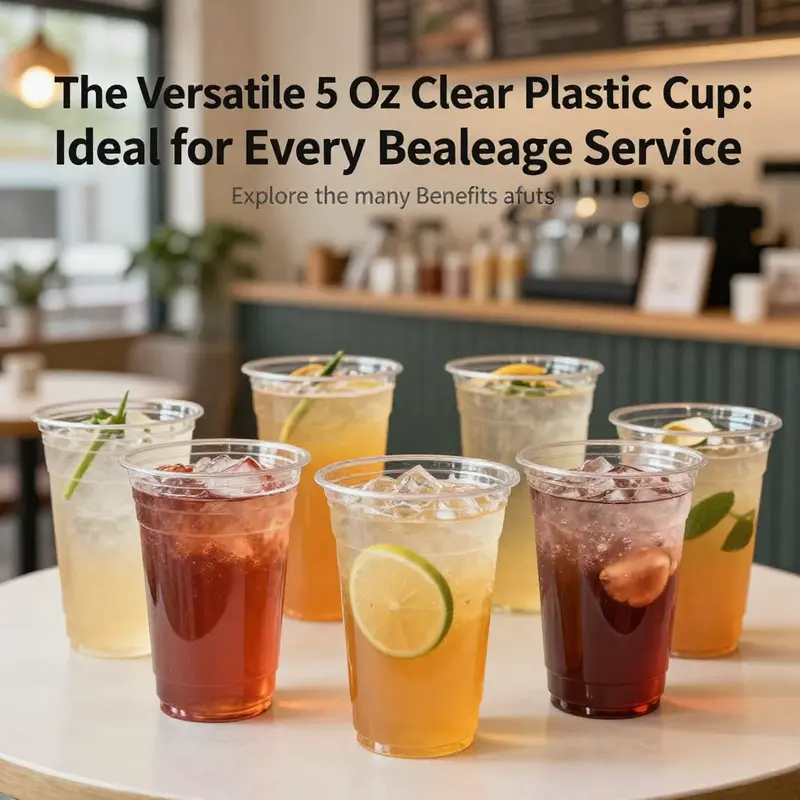
For bubble tea shops, restaurants, catering services, and event planners, the choice of servingware can significantly impact both presentation and practicality. The 5 oz clear plastic cup, especially the popular GUSTO Clear Plastic Cup, stands out for its utility in diverse beverage scenarios. From serving small portions of refreshing bubble teas to cocktail samples at corporate events, these cups offer a blend of aesthetic appeal and user-friendly features. In the chapters ahead, we will delve into their usage and application, examine material safety and sustainability, and assess the economic advantages these cups present for your business.
Clear in Purpose: The 5-Ounce Cup and the Science of Sustainable Beverage Service
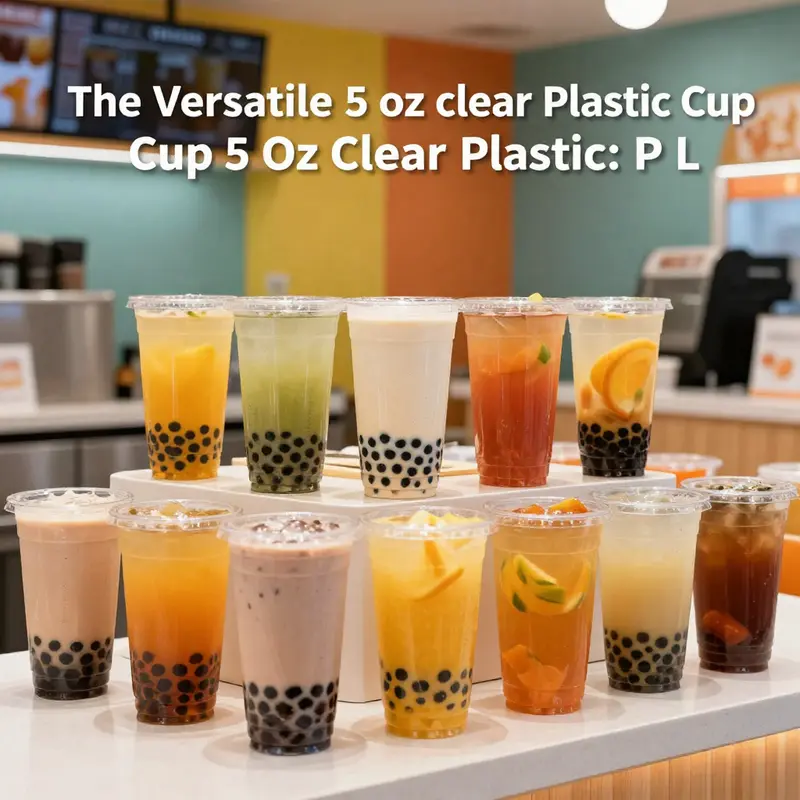
In the rhythm of a crowded café, a deli counter, or a food truck lineup, the small five-ounce clear cup operates as a silent workhorse. It is not merely a vessel; it is a production tool, a presentation device, and a statement about values. The specific variant explored here centers on cups crafted from polylactic acid, a material drawn from renewable resources that aims to thread the needle between performance and responsibility. The promise they carry is rooted in clarity—clarity of the beverage’s appearance, of the sourcing story, and of the service process itself. When customers lean in to admire the color and fizz of a well-made drink, the cup’s transparency becomes part of the sensory appeal. Yet behind that crystal clarity lies a careful orchestration of materials science, manufacturing practicality, and waste realities that shape how, where, and why these cups are chosen for daily use in high-volume settings.
Material choice matters as soon as a server reaches for a cup. Polylactic acid, the polymer often associated with these 5 oz clear cups, is notable for its renewable origins. Corn, sugarcane, or other plant-based feedstocks provide the basic carbon backbone that allows PLA to function as an alternative to petroleum-based plastics. The environmental narrative around PLA emphasizes a reduced reliance on fossil resources and, under the right conditions, a compostable lifecycle. This is not a blanket declaration of universal compostability, however. PLA’s end-of-life performance depends heavily on local waste streams. Industrial composting facilities, equipped to maintain the temperatures and moisture levels necessary for breakdown, play a pivotal role in turning used cups into feedstock for new materials rather than adding to landfill volumes. Home compostability, by contrast, is rarely a reliable outcome for PLA products in ordinary urban or suburban environments. The practical implication is a dual message: the cups are designed to be compostable within appropriate systems, but that potential must be matched with consumer awareness and municipal infrastructure to realize environmental gains. In this way, the five-ounce PLA cup speaks to a broader governance question: sustainability is not only about the material’s properties but also about the networks that handle it after use.
The visual and tactile cues of the cup reinforce its role in service speed and beverage presentation. The cups are designed with a crystal-clear translucence that showcases the drink’s hue—from pale lemon to deep-amber—and this transparency has real strategic value in fast-service operations. Visual visibility of contents helps both staff and customers verify portion integrity and product consistency at a glance. In addition to clarity, the exterior surface often carries a non-slip diamond texture. This texture is more than a grip aid; it is a practical feature that minimizes the awkward slips that can occur when servers handle multiple cups in quick succession, especially while transferring a beverage from a shaker or carafe to a service tray. The tactile pattern also helps conceal minor scuffs that naturally accrue during stacking, transport, and reuse in busy environments, preserving a neat appearance across a shift. The combination of grip, appearance, and concealment of wear contributes to a perception of quality that aligns with the expectations of customers who value both speed and presentation.
Durability, surprisingly, is not at odds with sustainability in this design. The cups are crafted to be stackable, a simple yet powerful feature that reduces breakage risk and storage space requirements in crowded prep rooms and mobile units. Stacking compatibility supports efficient inventory management—operators can stock more cups in a given footprint and deploy them quickly during rush periods. The shatterproof reliability of these cups further reduces the potential spill risk that can accompany fast service, drink handling, or outdoor events where gusts of wind and crowd dynamics add volatility to the environment. Dishwasher safety, when applicable to the operational workflow, adds another layer of convenience for takeout and catering contexts that demand rapid turnover and high reuse rates of cup vessels within a single shift. Taken together, these design choices create a cup that is not only functional but resilient in the kinds of environments where every second counts and waste streams matter.
The five-ounce size, though modest, is a deliberate choice that aligns with portion control, throughput, and consumer expectations for single-serving beverages. In many service models, this size supports a consistent pricing and cup-perception framework. It enables a steady pace of service without over-filling, which can reduce spillage and customer dissatisfaction. Beyond beverages, the same size can accommodate sauces, condiments, or small sample portions offered in tastings or promotional events, highlighting the cup’s versatility while maintaining a compact footprint on prep counters. The small footprint also translates into material efficiency. While a single cup may seem trivial, aggregate usage across high-volume venues can be substantial. The PLA-based cups thus present both a potential environmental advantage—when end-of-life management is aligned with industrial composting—and a cautionary tale about waste if disposal channels are weak or misaligned with the material’s intended post-consumer journey.
The operational implications extend into procurement economics. Bulk packaging remains a central driver of cost-effectiveness for many venues. The appeal of large bundles is not only the per-unit price but also the reduced handling frequency and replenishment time. A pack designed for high-turnover service minimizes interruptions and helps maintain a steady flow from storage to front-line staff. In turn, this stability supports labor efficiency, a crucial consideration in environments where every minute of service can influence customer satisfaction and staff morale. The economic calculus, however, does not exist in a vacuum. It must account for the broader supply chain realities, including sourcing continuity, compatibility with lids and other accessories, and the logistics of waste management. A cup that travels cleanly from prep area to customer hand remains a straightforward emblem of process optimization, yet the ultimate sustainability of that process hinges on what happens after use—whether the cup enters a composting stream, a recycling stream, or a landfill—and how each venue navigates those pathways.
The safety dimension of these cups, particularly the BPA-free claim, contributes to consumer confidence and regulatory alignment. BPA concerns have shaped consumer expectations and legislative frameworks across multiple markets. Although the material in question is PLA, the broader caution about additives and contaminants has shaped how producers formulate and label cups for food contact. For operators, clear labeling about composition and disposal expectations reduces ambiguity for staff and customers alike. This clarity is essential in hospitality environments where staff instruction must be precise and waste segregation straightforward. With PLA-based cups, the messaging often emphasizes that the product is derived from renewable resources and designed for composting in appropriate facilities. The practical reality is that to translate that potential into measurable environmental benefits, venues must invest in education for staff and customers about where to dispose of used cups and how to participate in any local composting programs that accept PLA materials. The responsibility here is shared among manufacturers, distributors, and end users—each playing a role in ensuring the lifecycle aligns with stated sustainability goals.
In operations where sustainability forms part of the brand story, the five-ounce clear PLA cup becomes a tangible symbol of a broader commitment. It embodies a pragmatic balance between performance and responsibility. Staff can rely on its grip and durability to reduce mishaps during service, while managers can point to a recyclable or compostable end-of-life option as part of a broader waste-minimization strategy. Customers, in turn, perceive a coherent narrative: a beverage presented in a cup that looks pristine, feels sturdy, and carries a credible environmental message. This perception matters because it contributes to the overall dining experience, even when the drink itself is simple. The cup’s design thus operates at the intersection of aesthetics, ergonomics, and ethics, a triad that has grown increasingly influential as operators seek to differentiate themselves through responsible practices that do not compromise speed or quality.
The broader contextual landscape includes an ongoing dialogue about alternative disposal pathways and regional capabilities. Some municipalities embrace composting programs that accept PLA, while others rely on recycling streams that handle flexible plastics. In settings where industrial composting is not readily available, operators must weigh the trade-offs between using PLA cups and choosing alternatives that align with local waste management realities. The goal remains to reduce overall environmental impact while preserving the attributes that make the cups appealing in the first place: clarity, grip, durability, and a fit-for-purpose size. In this sense, the five-ounce cup becomes more than a disposable item; it is a component of a system—one that integrates material science, supply chain logistics, customer expectations, and waste management policies into a cohesive practice.
For readers who are curious about the practical implications of choosing PLA clear cups in place of other options, a broader look at the available packaging solutions offers useful context. Disposable eco-friendly custom paper coffee cups with lids provide a contrasting pathway that some operators explore when aiming to minimize plastic use. These paper-based, lid-enabled options can be suitable for certain service models, particularly those emphasizing compostability in municipal programs or the use of paper takes, rather than durable plastic alternatives. The decision to pursue PLA cups versus paper-based cups, or a mix of both, should be informed by local infrastructure, customer perceptions, and operational priorities. For those exploring this dimension, the linked resource presents a perspective on eco-friendly, customizable paper cup options with lids, offering a practical reference point for comparing material choices, branding potential, and disposal considerations across different contexts.
In summarizing the current understanding of five-ounce clear cups made from PLA, several threads emerge. Material origin and end-of-life pathways shape the central sustainability narrative. Design elements—clarity, grip texture, and a stackable, durable form—support efficient service operations while contributing to a favorable user experience. The small size aligns with portion control and throughput goals, helping staff manage lines and maintain consistency in beverage service. Yet the environmental promise rests on the actual waste processing system available to a given venue. Without access to industrial composting or reliable recycling streams for PLA, the perceived sustainability benefits may not be fully realized. This nuance invites a pragmatic approach: adopt the cups where the post-use infrastructure supports their end-of-life goals, and complement with clear consumer guidance about disposal. In this way, the five-ounce clear PLA cup stands not only as a product but as a catalyst for thinking about how foodservice moments become opportunities for responsible practice. For those who want to explore related packaging paths that emphasize sustainability in different materials, see Disposable eco-friendly custom paper coffee cups with lids. This internal reference provides a practical companion perspective while reinforcing the broader conversation about how packaging choices intersect with service design and environmental stewardship.
External resource for further reading on PLA cup options and end-of-life considerations can be found here: https://www.bulksupplies.com/pla-clear-cold-cups-5-oz-plastic-clear-2000-carton-bundle-of-2
Clarity, Compliance, and Carry-Through: The Material Make-Up and Safety of 5-Ounce Clear Plastic Cups in a Modern Consumption Chain
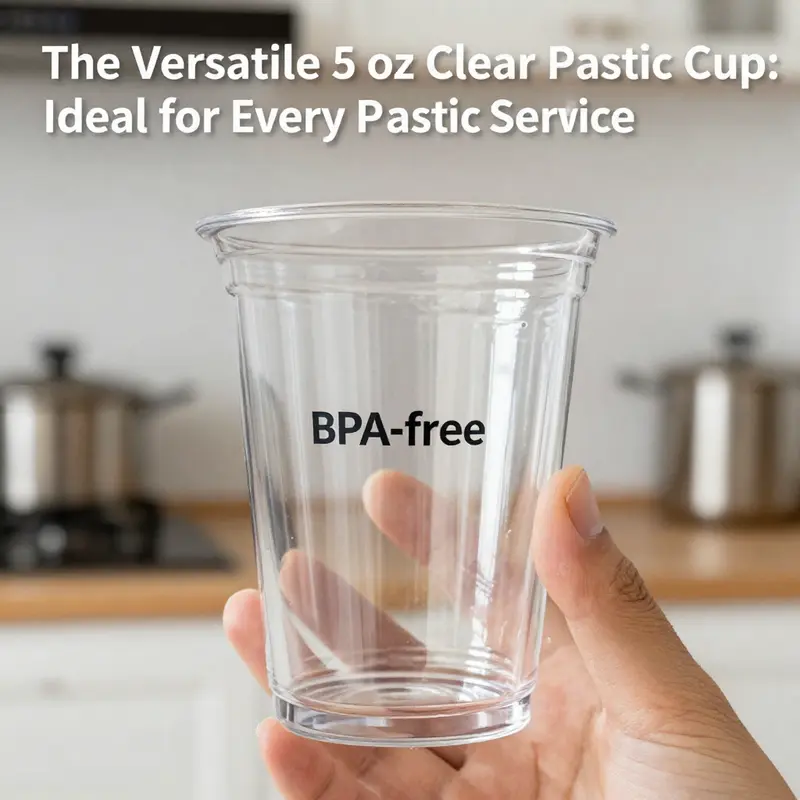
The ubiquity of 5-ounce clear plastic cups in gatherings, catering lines, and daily service settings invites a careful look at what makes these cups work beyond their glassy exterior. This chapter moves through the material choices that determine performance, safety, and end-of-life pathways, revealing how seemingly simple containers balance clarity with chemistry, and convenience with responsibility. At the heart of this exploration lies the recognition that even small vessels—five ounces, clear, disposable—sit at the intersection of material science, consumer health, and environmental stewardship. Understanding the material make-up and safety considerations of these cups helps illuminate why certain plastics prevail in cold-beverage service, how they interact with temperatures and contents, and what that means for vendors and households alike as they evaluate reuse, recycling, or disposal options along the lifecycle of a single-use cup.
In practice, the major plastic families that populate the category of clear beverage cups include thermoplastics such as polypropylene (PP), polystyrene (PS), and polyethylene terephthalate (PET). PET has become especially favored for cold beverages. Its combination of excellent clarity, light weight, and shatter resistance makes it an attractive option for transparent presentation where visibility of the drink and its contents matters. PET cups are typically labeled with a recyclable resin code of #1, signaling their compatibility with many municipal recycling streams and their prevalence in bottled water and ready-to-drink products. The result is a cup that looks pristine, showcases the beverage, and holds its form under the chill of ice and the rigors of transport. Yet PET is just one thread in the material tapestry, and it is worth comparing it with PP and PS to understand the spectrum of performance.
Polypropylene brings a different set of strengths to the table. While not always as crystal-clear as PET, PP offers robust chemical resistance, good fatigue properties, and a relatively high heat tolerance for a disposable cup. In hot-beverage contexts, PP’s resilience helps reduce deformation and odor absorption that can accompany other plastics. In many cases, PP cups occupy the space between rigid PS and translucent PET, delivering a balance of visibility and durability. Their resin code is #5, and like PET, PP is widely accepted by many recycling streams, though local facilities vary in their acceptance criteria. The presence of PP in a 5-ounce clear cup can also reflect a practical compromise: a slightly more opaque finish that can still read the contents clearly while providing a sturdy barrier against interaction with hot-syrups or acidic beverages.
Polystyrene, on the other hand, is historically associated with high-clarity, rigid cups that show beverage contents with a glossy, glass-like appearance. PS cups can be exceptionally clear and stiff, which is advantageous for grip and presentation. However, the environmental and health discussions that accompany PS often emphasize its brittleness under impact and its more challenging end-of-life processing in some regions. PS is labeled with resin code #6, and in some recycling programs it faces lower acceptance rates than PET or PP. This makes PS more likely to be diverted from recycling in certain locales or replaced by PET when the consumer or producer seeks a more universally recyclable option. Still, for cold beverages, PS remains a familiar and familiar-feeling option, offering a crisp, crisp look and a dependable barrier against leakage when the contents are chilled and the rim is well sealed.
With these material options in view, safety becomes the defining thread that binds product design to consumer health. Any cup marketed as food-grade and BPA-free addresses two fundamental concerns. First, food-grade designation signals compliance with standards intended to ensure that the cup’s materials are suitable for contact with edible products, including beverages. This is not a mere formality; it reflects passages of regulatory scrutiny, testing for extractables and leachables, and adherence to conditions that mimic real-world use. Second, BPA-free labeling addresses public apprehension about bisphenol A and related compounds that have historically raised questions about potential hormonal disruption or other health impacts. While the science continues to unfold in nuanced ways, the practical consumer takeaway remains clear: choosing cups that are explicitly labeled BPA-free and food-grade reduces uncertainty about chemical exposure during normal use, especially when the cups may be exposed to temperature fluctuations or prolonged contact with acidic beverages.
Beyond the safety labels, the environmental profile of 5-ounce clear cups emerges as a defining factor for many buyers. A growing array of modern disposable cups is framed as recyclable and, in some cases, dishwasher safe. The notion of dishwasher safety, in particular, invites a nuanced reading. While most single-use cups are designed for one-time consumption, some lines are marketed as compatible with gentle washing cycles to accommodate reduced waste in certain venues or for reuse in controlled settings. In practice, the dishwasher-safety claim tends to be most credible when the cup’s design specifically accommodates repeated handling, top-rack washing, and compatible detergents, while preserving clarity and structural integrity. Still, it is essential to recognize that not all cups withstand repeated cycles nor retain their shape and optical quality after multiple washes. This nuance underscores the importance of aligning expectations with the intended use: bulk, low-cost disposability for rapid turnover versus durable, reusable options for institutions aiming to minimize waste.
The environmental conversation also raises questions about warping under heat, insulation for hot drinks, and the broader waste they generate. Temperature is a decisive variable in performance. Extreme heat can cause some plastics to warp, deform, or become brittle, compromising seal integrity and presentation. Even when a cup remains dimensionally intact, high temperatures can accelerate interactions at the beverage–plastic interface, potentially affecting taste, odor, or perceived safety. Conversely, cold beverages present fewer immediate thermal challenges, though repeated exposure to freezing and thawing cycles can still pose risks to structural stability and clarity. In addition, a lack of insulation in most disposable cups is a practical reminder that these containers are designed for cold or room-temperature beverages; hot drinks often require a sleeve or a double-wall construction if heat management is a priority. The absence of insulation implies that a cup’s surface may become hot to the touch, a factor that influences user experience and handles the risk of burns in hot-drink scenarios.
From a lifecycle perspective, the end-of-life path for a 5-ounce clear plastic cup is as important as its performance in the serving moment. PET and PP cups labeled with recycling codes often enter municipal recycling streams where facilities are equipped to handle, sort, and reprocess them into new products. PS, due to broader recycling challenges and contamination concerns, can be less consistently accepted across programs. The overarching message remains that choosing recyclable materials, and then aligning disposal with local guidelines, reduces the environmental footprint relative to non-recyclable, non-reusable alternatives. This is especially salient when considering the scale of bulk purchases for events and venues, where a single cup can translate into considerable per-event waste if not properly managed. Responsible disposal and recycling practices, therefore, become a practical complement to safety labels, transforming the clear cup from a simple vessel into a component of a larger system that values resource stewardship as much as consumer convenience.
Quality assurance in the supply chain further shapes the safety and reliability of these cups. Buyers are advised to seek products that are clearly labeled as BPA-free and food-grade, with explicit references to recyclability. The bulk-pack economy—where a vendor might purchase hundreds of cups at a time—often hinges on a combination of cost, material choice, and regulatory compliance. Reputable suppliers typically emphasize the dual goals of consumer safety and environmental compatibility, offering cups that meet or exceed relevant food-contact standards while acknowledging the practical realities of disposal and recycling streams. This alignment matters not only for consumer confidence but for the long-term viability of a venue’s packaging strategy, whether it involves a seasonal catering operation or a daily service model.
Sourcing considerations, then, extend beyond the raw materials. They touch on supply chain reliability, consistent labeling, and the integrity of transit packaging. For organizations that need to scale up, bulk packs of BPA-free, food-safe, and recyclable clear cups can provide both cost efficiency and predictability in performance. The economic logic is straightforward: bulk purchases often reduce the cost per unit, while standardized materials reduce the risk of variability in color, clarity, and fit with lids or sleeves. Yet the decision matrix is not solely about price. It also involves aligning the product with local recycling capabilities and with a venue’s waste management strategy. In regions where local programs have strong PET or PP recycling streams, choosing those materials can align with broader sustainability goals and demonstrate a brand’s commitment to responsible consumption.
As readers consider applicability to a wide range of use cases—from festive gatherings to everyday coffee service—attention to material behavior under real-world conditions becomes a guiding principle. The crystal-clear appearance that gives beverages their visual appeal can also mask the subtle chemistry at play. The interaction between beverage acidity, carbonation, and the plastic’s surface can influence everything from flavor perception to odor retention. This is not about alarmist warnings; it is about informed choice. A beverage with citrus or high acidity may interact differently with PS, PET, or PP, and the choice of polymer can influence both taste and safety during typical service durations. In hot drinks, where some cups are not insulated, the user experience—how long a cup remains cool to the touch, how easily a lip can perceive the beverage temperature—becomes part of the consumer’s perception of quality. These sensory dimensions, although often overlooked in procurement checklists, bear on customer satisfaction and repeated use, whether in a bustling event hall or a dining room that prizes a seamless service experience.
For those seeking practical purchasing guidance, the literature emphasizes the convenience and cost-effectiveness of bulk packs for frequent usage, especially in settings with high turnover. The economic calculus weighs the per-unit cost against the waste-management burden and the degree of reuse, if any, that the venue is prepared to embrace. When the goal is to steward resources while preserving the sense of clarity and reliability that customers expect from a beverage service, the decision to favor PET or PP based cups can reflect broader priorities: clarity and rigidity for premium presentation or resilience and heat tolerance for hot or high-traffic applications. The material selection thus becomes a strategic element, aligning product performance with customer expectations, regulatory compliance, and environmental responsibilities.
An important practical note emerges for those who must verify product claims quickly. In many markets, the most credible indicators are explicit labeling of food-grade safety and BPA-free status, alongside clear recycling guidance. The presence of a resin-code symbol (#1 for PET, #5 for PP, and #6 for PS) on the cup can help receivers identify the appropriate recycling streams after service. Vendors are increasingly incorporating this information into their packaging and product labeling to facilitate correct disposal. This transparency underpins consumer trust, particularly in venues that emphasize sustainability alongside service excellence. Yet the consumer and the operator both bear responsibility for understanding local recycling capabilities. A cup that is recyclable in one city may require different handling in another. The onus, therefore, is shared among manufacturers, distributors, and users to ensure that the realities of local infrastructure are reflected in the options presented to customers.
The research material that informs these considerations also points toward the importance of reliable sourcing channels. When evaluating suppliers, buyers are encouraged to review documentation around food safety, material composition, and end-of-life compatibility. In this context, bulk-pack offerings that prioritize BPA-free, food-grade, and recyclable attributes are more aligned with safe and sustainable consumption patterns. If the procurement scope includes venues that require customization or branding, the ability to source cups that preserve clarity while accommodating logos or color treatment without compromising safety adds another layer to the decision matrix. The supply chain must be capable of delivering consistent quality at scale, ensuring uniform clarity, uniform thickness, and consistent performance across tens of thousands of units. In this regard, the material conversation intersects with brand reputation and guest experience, as visible quality in the cup can influence the perceived quality of the beverage itself.
For readers who want a tangible starting point within the broader ecosystem of disposable cup offerings, a practical example from the packaging landscape can be illustrative. Consider consulting a supplier page that highlights disposable take-away cups with custom logo options and lids. This kind of resource can provide a concrete reference point for how packaging families are organized, how materials are described, and how clear-cup options might be positioned within a larger portfolio of single-use or limited-use beverage containers. See the resource linked under the discussion of kraft paper cups with lids for a related packaging category that demonstrates how brands balance visual appeal, labeling clarity, and sustainability across materials. The anchor text for this internal reference is derived from the URL, reflecting how it frames a design and material story within a broader disposable packaging strategy: custom-disposable-kraft-paper-cup-with-lid.
In summary, the material composition of 5-ounce clear plastic cups defines what the consumer experiences—the visual resonance of a crystal-clear cup, the tactile feel of a sturdy rim, and the overall confidence that the cup will perform as expected under standard service conditions. The safety dimension, anchored in food-grade labeling and BPA-free status, provides the assurance that the vessel is appropriate for beverage contact and regular use. The environmental narrative—recyclability, disposal practices, and the potential for re-use in certain contexts—frames the decision-making in terms of responsibility and opportunity. Taken together, these threads illuminate why PET, PP, and PS each occupy a place in the spectrum of clear beverage cups, and why the choices made by manufacturers, distributors, and buyers integrate safety, performance, and sustainability into a coherent packaging strategy that serves both people and the planet. For readers navigating the practicalities of bulk purchasing, this integrated view helps align product attributes with usage patterns and waste-management realities, enabling procurement decisions that respect health, aesthetics, and environmental considerations.
External reference for further technical context: https://www.alibaba.com/product-detail/Clear-5-Oz-Plastic-Cups-Explained_1600397428497.html
Clear, Counted, and Cost-Effective: The Economic Role of 5 oz Clear Plastic Cups in Modern Service
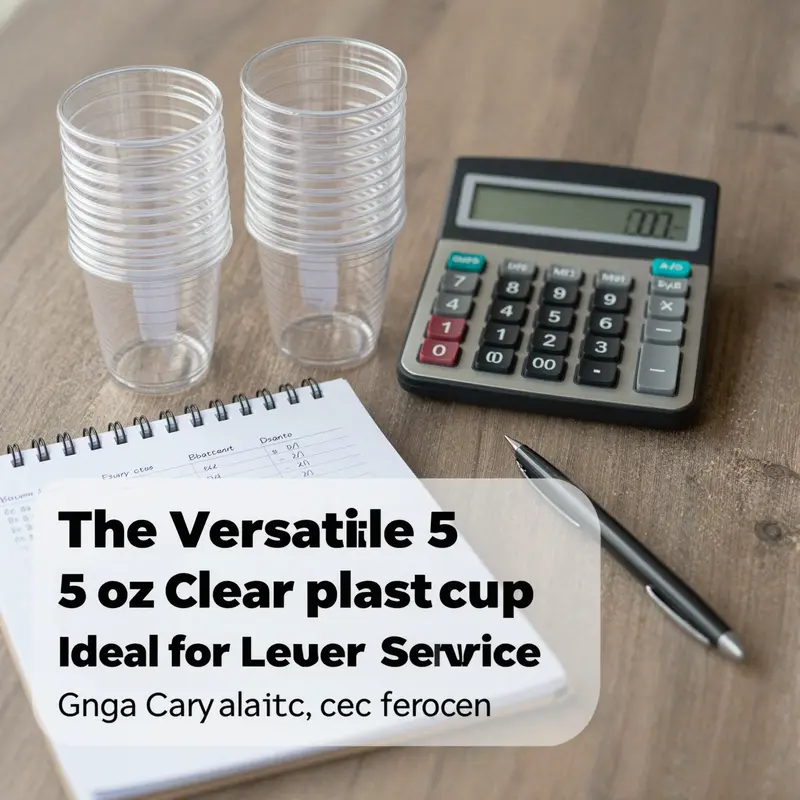
A small cup often does more than hold a drink. In many service contexts, a 5 oz clear plastic cup becomes a visible measure of efficiency, hospitality, and attention to detail. It is the unassuming workhorse of events, cafés, and catering operations where portions are precise, presentation matters, and turnover is constant. The crystal clarity of a 5 oz cup does more than showcase a beverage or dessert; it communicates cleanliness, integrity, and control. In spaces where speed and accuracy mingle with customer expectations, these cups serve as a quiet backbone—simple, reusable in thought but disposable in practice, designed to be picked up, filled, and set aside with minimal friction. The economic value of this seemingly modest item emerges not only from its low unit price but from the way it participates in a larger system of cost containment, speed, and brand presence. The cup’s role travels beyond its physical dimensions; it shapes workflows, inventory decisions, and even perceptions of quality. When a server reaches for a small, transparent vessel that complements a menu’s colors and textures, the impact is more than cosmetic. It helps diners gauge portion sizes, track consumption, and maintain the aesthetic coherence of a service experience. In fast-paced environments, the simplicity of a standard 5 oz cup reduces decision fatigue for staff and guests alike, aligning operational rhythm with customer expectations and creating a seamless continuum from order to presentation to disposal. The value, then, lies in how the cup mediates perception and process in everyday service, turning a disposable item into a strategic tool for efficiency and consistency.
From a materials and safety standpoint, the choice of a BPA-free polypropylene cup matters as much as its economy. Food-contact safety is a baseline requirement, and clear plastic cups designed for beverages or samples must meet stringent standards for leachables and surface residues. The BPA-free composition is a key assurance for health-conscious customers and procurement teams that aim to minimize risk in their supply chains. This emphasis on safety dovetails with the visual clarity of the cup. Clear polypro cups permit immediate visibility of contents, enabling staff to confirm fill levels, confirm beverage accuracy, and ensure that samples or desserts are presented with equal emphasis on appearance and portion control. In practice, clear cups become a practical aid to portioning, inventory control, and customer communication. A transparent vessel invites trust, making customers more confident in what they are receiving and in the hygiene standards of the operation. The combination of safety, clarity, and disposability creates a compelling value proposition for high-volume outlets and events where speed and sanitation are non-negotiable.
The economies of scale associated with 5 oz clear plastic cups are central to their appeal. Bulk purchasing lowers unit costs dramatically, a dynamic that can transform a small margin into a sustainable model for large-scale operations. Bulk packs—whether in hundreds or thousands of units—enable venues to forecast usage more accurately, minimize storage complexity, and reduce the frequency of reorders. In high-volume settings like event catering, this translates into smoother service lines and fewer interruptions caused by stockouts or last-minute purchases. The math behind bulk pricing is straightforward: as the quantity purchased increases, the per-unit cost decreases, and the saving compounds across days, weeks, and months of operation. This price discipline is a critical lever for budgeting and for maintaining competitive menu pricing, particularly in markets where disposable serviceware must balance cost with the ability to present beverages and samples in an appealing way. The bulk model supports predictable expenses and helps operators allocate funds toward other critical needs, such as staff, quality ingredients, or branded components that differentiate the service experience.
The reliability of supply chains is another facet of value that often flies under the radar. Global demand for disposable cups has spurred manufacturers to optimize production processes, driving improvements in quality and cost efficiency. When a batch arrives with consistent thickness, smooth edges, and uniform clarity, operators gain confidence that each service run will adhere to the same standard. Certifications such as SGS and ISO 9000 play a role here, signaling that the manufacturing process adheres to recognized quality-management principles. These standards foster trust among retailers and brands that depend on steady deliveries and predictable performance. In practical terms, a dependable supply chain reduces the risk of wastage due to defective items, minimizes downtime for employees who would otherwise have to deal with unusable stock, and supports longer-term partnerships across the distribution chain. An operation that can count on consistent supply is better positioned to plan promotions, seasonal menus, and event-based campaigns that rely on disposable cups to scale quickly without compromising on presentation or hygiene.
Customization and branding amplify the economic value of 5 oz clear cups without eroding their cost advantages. Even at a low unit cost, a cup can carry a brand’s identity through prints, logos, or color accents. The ability to imprint or label disposable cups enables marketing and customer engagement without the higher price tag of permanent serveware. This adaptability is particularly valuable in catering, hospitality, and events where the opportunity to reinforce a brand’s image complements other marketing channels. The costs associated with customization must be balanced against the benefits of greater brand visibility and the potential for repeat business. A well-executed branding strategy on disposables can extend a brand’s reach and create a memorable takeaway experience, encouraging guests to seek out a particular service with familiarity and trust. The result is a subtle but meaningful enhancement to customer perception, where the disposable item doubles as a portable marketing touchpoint. Yet even as brands add logos or prints, the clarity of the cup remains a vital asset. The design must not compromise the visibility of the beverage or the sense of cleanliness that customers associate with quality. Smart execution preserves the cup’s functional role while leveraging its affordability to maximize the marketing return on investment.
In this broader context, the economic impact of 5 oz clear plastic cups extends into the everyday operations that define a successful service culture. The small size is well matched to sampling programs, tasting events, or dessert flights where portions are meant to be bite-sized and repeatable. For operators who rely on quick turnover, these cups support speed of service, reduce the cognitive load on staff, and help maintain consistent presentation across transactions. They also align with portion-control practices that support cost containment and supplier compliance. When guests receive a uniform cup with a consistent look, it signals a disciplined operation and fosters a sense of reliability. This reliability is not merely about aesthetics; it translates into fewer errors, smoother refills, and clearer communication about what is being served. The combined effect is a simpler, more efficient service model that can scale across multiple locations or events without sacrificing quality or control.
The potential for market expansion rests on the balance between price, quality, and customization. A robust supply of affordable cups enables operators to explore new service formats, from rapid-serve beverage stations to sample-forward tasting menus, without incurring prohibitive overhead. The ability to customize—whether through branding or functional features like lids or sleeve options—adds a dimension of value that resonates with buyers who pay attention to brand consistency and guest experience. At the same time, sustainability considerations increasingly influence purchasing decisions. Operators are more likely to choose solutions that align with environmental goals, such as ensuring compatibility with recycling streams or exploring renewable materials where feasible. The disposable cup can be a platform for responsible practices when accompanied by clear guidance on disposal and recycling and when the packaging itself communicates a commitment to waste reduction. In this way, the economic value of these cups intersects with broader strategic priorities, including customer satisfaction, operational efficiency, and environmental stewardship.
Market dynamics often present a spectrum of price points driven by pack size, vendor relationships, and logistics. For buyers managing multiple outlets or seasonal spikes in demand, the ability to source consistent 5 oz clear plastic cups in bulk translates into a buffer against price volatility and supply disruptions. This resilience is especially important in industries that operate on tight margins and just-in-time inventory. A steady supply of dependable, safe, and aesthetically reliable cups reduces the risk of service interruptions and helps preserve the momentum of daily operations. In turn, that stability supports smarter decisions about staffing, menus, and promotions, allowing operators to focus on guest experience rather than worrying about the basics of serviceware.
As with any disposable product, there is a broader conversation about sustainability and waste management. The lifecycle of a 5 oz clear plastic cup includes production, use, and disposal. While the disposability offers undeniable operational benefits, responsible procurement now often entails weighing recyclability, the availability of recycling streams, and the potential for alternative materials where feasible. This consideration does not diminish the value of the cups but frames it within a larger commitment to reducing waste and improving end-of-life outcomes. Companies increasingly seek consistency across their products, from the cup to the lid to the sleeve, so that standard recycling practices can be applied and waste streams can be streamlined. The cost advantages remain, but they are complemented by a growing emphasis on sustainable supply chains and responsible consumption, a balance that many procurement teams must strike in the years ahead.
In practice, the procurement decision for 5 oz clear cups often hinges on a simple but powerful question: does the combination of safety, clarity, bulk economics, and branding potential align with the organization’s goals for guest experience and cost control? When the answer is yes, the cup becomes more than a disposable option; it becomes a strategic asset that supports consistent service, reinforces brand messaging, and delivers measurable economic value. The decision supports a cycle of reliability and growth: predictable pricing, dependable supply, on-brand presentation, and the capacity to scale. The result is a modern service model where even the smallest component has a deliberate role, and where clarity—both in appearance and in cost accounting—translates into a smoother, more confident operation.
For readers seeking context on current market references while evaluating bulk options, a widely used wholesale listing can provide pricing benchmarks and supplier details. This reference highlights how vendors structure bulk offers, the typical counts per pack, and how such configurations influence procurement planning. It is useful to compare unit costs, understand minimum order quantities, and gauge lead times when planning events or multi-location rollouts. Alibaba listing for 5oz clear plastic cups offers one such benchmark and demonstrates the scale at which these products are produced and distributed globally. While this URL points to an external marketplace, the example helps illustrate the cost curves and supply chain realities that buyers weigh when designing a disposable cup strategy. The broader lesson is that the 5 oz clear cup, though small, participates in a complex ecosystem where safety, efficiency, branding, and sustainability all converge to create real economic value.
As you consider your next procurement cycle, think about how a seemingly modest container can anchor a more resilient, adaptable service model. The 5 oz clear plastic cup embodies a pragmatic blend of utility and economy, a durable answer to the challenges of high-volume service where speed and hygiene are paramount, and where an ability to present contents crisply matters as much as the price per unit. It is in this harmony of visibility, safety, and scale that the true value of the cup reveals itself—and where the practical wisdom of bulk thinking becomes a driver of better guest experiences, steadier margins, and smoother operations for years to come.
External resource: Alibaba listing for 5oz clear plastic cups: https://www.alibaba.com/product-detail/5oz-Clear-Plastic-Cups-999-100_1602879405987.html
Internal reference for related context on disposable serviceware: disposable-takeaway-paper-cup-custom-logo-kraft-coffee-cup-with-lid
Final thoughts
In summary, the 5 oz clear plastic cup is more than just a serving vessel; it’s a versatile tool that enhances the presentation and functionality of beverage services. Its applications span a wide array of industries, from bustling bubble tea shops to upscale catering events. With its BPA-free composition ensuring safety and its economical bulk purchasing options, these cups are an intelligent choice for businesses looking to optimize their operations while maintaining quality and aesthetics. Elevating your beverage experience is easier when you choose the right elements, and these plastic cups are a definite step in the right direction.