
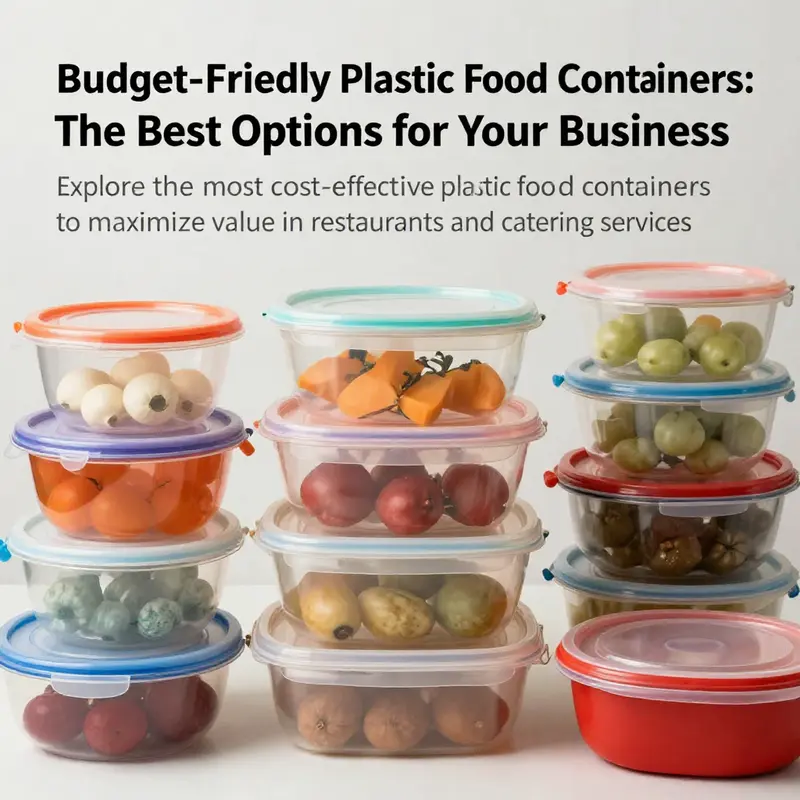
For businesses such as bubble tea shops, restaurants, food trucks, and catering services, effective and budget-friendly packaging solutions are pivotal. With increasing demands for cost management, exploring the array of available plastic food containers can lead to significant savings. This guide dives into the cheapest options, analyzes their durability, shares the latest market trends, uncovers consumer preferences, and provides prudent purchasing advice. From transparent PET jars to disposable boxes, understanding these containers will help streamline your operations without compromising quality.
极致成本效益下的塑料食品容器选项分析:在预算压力下的单元与场景匹配
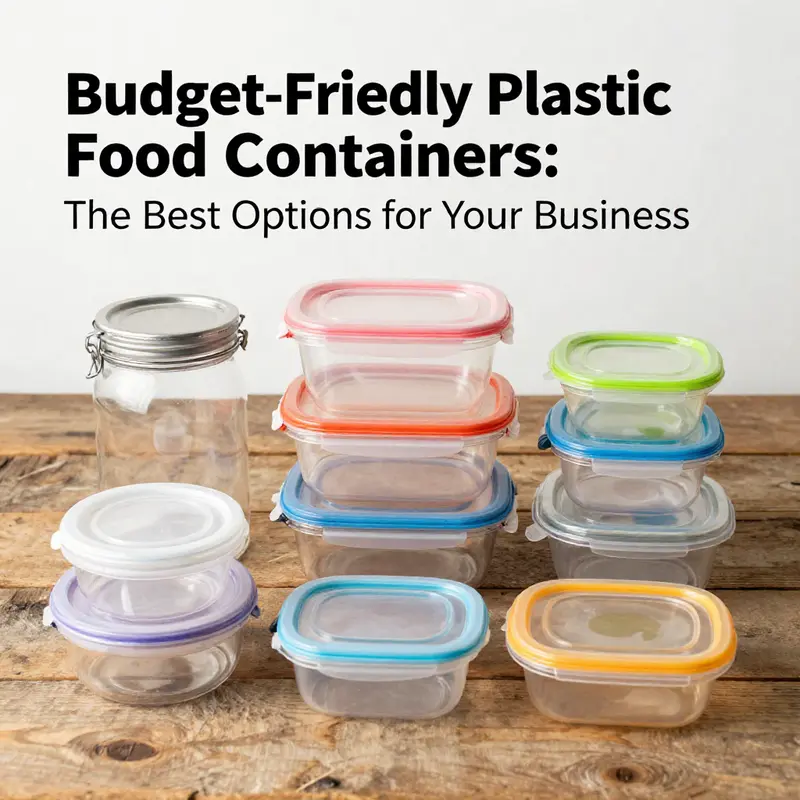
综上所述,极致成本下的塑料食品容器并非单一“最低价”的简单选择,而是一组需要细致权衡的选项集合。核心在于把价格看作一个变量,与使用场景、食品安全、运输与库存管理、以及长期运营成本共同构成一个动态方程。只有在对场景、需求频率、耐用性和品牌要求有清晰认知的前提下,企业才可能在保持质量与合规的同时,实现成本的真正控制与利润最大化。
低价阴影下的价值平衡:在耐用性与成本之间选择便宜塑料食品容器
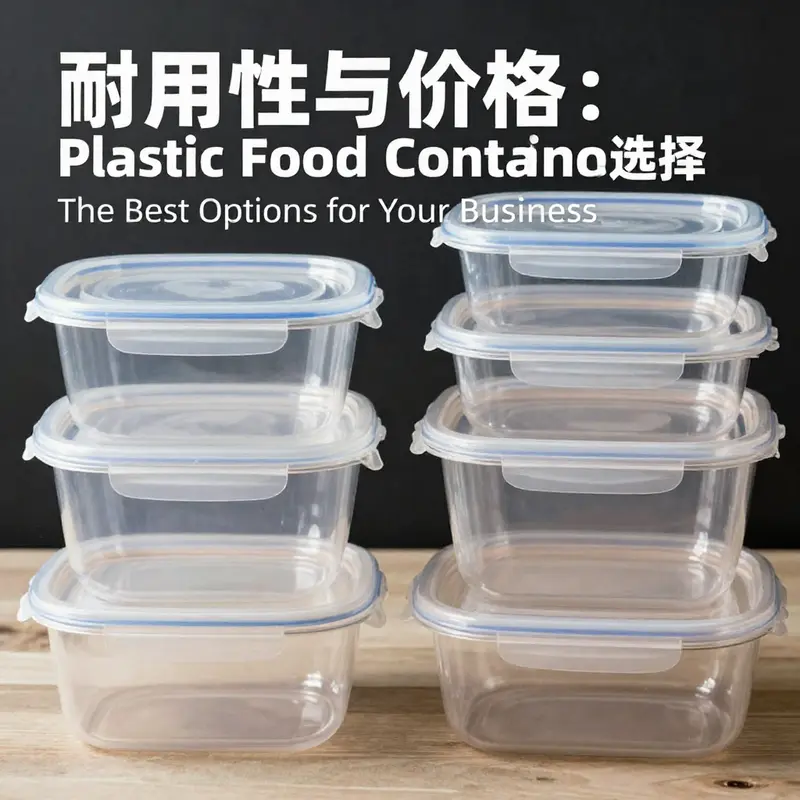
通过上述对比,你可以在同一篇章内直观地看到,极低价塑料容器的存在不是偶然,而是市场需求、生产成本与购买力共同作用的结果。与此同时,耐用性强、结构优化与材料稳定性的容器,往往以更高的初始成本换来更低的长期成本。这一权衡并非简单的“越便宜越好”或“越贵越好”,而是一种基于场景、风险与成本曲线的综合决策艺术。
Cheap by Design: Market Dynamics and Emerging Trends in Ultra-Low-Cost Plastic Food Containers
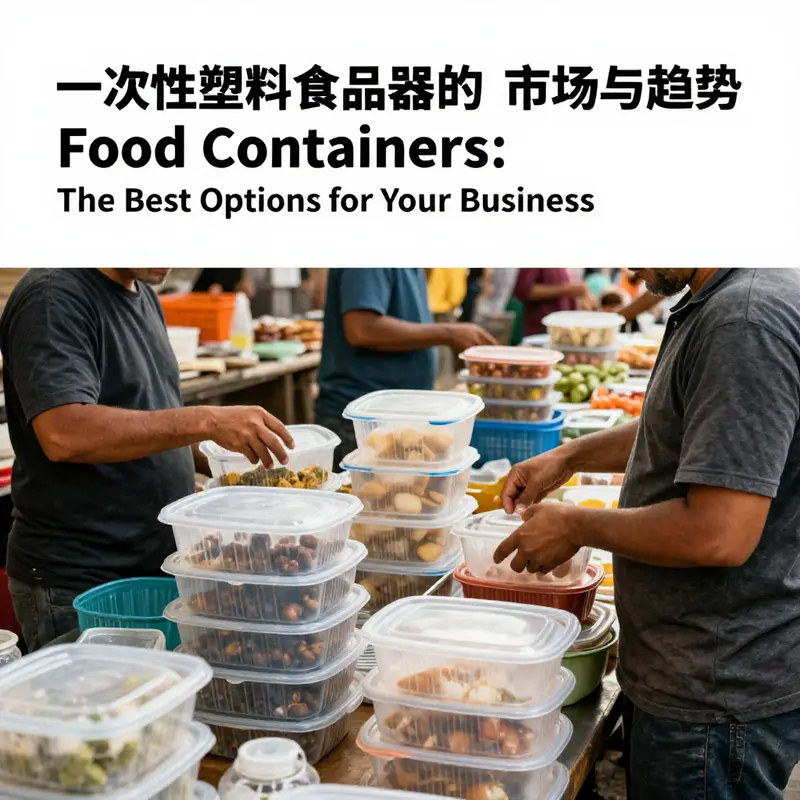
The economics of packaging has always hinged on the delicate balance between cost, practicality, and policy risk. In the arena of plastic food containers, this balance is especially pronounced. The chapter you are reading follows a thread that runs from the hunger for ultra-low prices in mass procurement to the pressures of a cleaner, more sustainable economy. It is not merely a catalog of low-cost options, but a narrative about how affordability becomes a competitive advantage and a strategic liability at the same time. In a market where every yuan saved can translate into a decisive edge for a foodservice operator, the cheapest plastic containers occupy a paradoxical place: they enable scale and speed, yet they also face intensified scrutiny from regulators, consumers, and environmental advocates. Understanding this tension is essential for predicting both the short-term shifts in procurement and the longer arc toward smarter, greener packaging.
Market size and growth in this space are real and measurable, even as they ripple with policy weather. Recent industry analyses peg the Chinese market for disposable plastic food packaging containers at a substantial scale, reaching tens of billions in yuan in a single year. The growth trajectory appears resilient in the near term, driven by the expansion of takeout and quick-delivery services, which demand packaging that is light, stackable, and inexpensive to replace. Yet this growth sits atop a regulatory terrain that has grown markedly more stringent since the late 2010s. The so-called limit-plastic policies, implemented across multiple regions, are not merely about banning items; they are about recalibrating the entire packaging ecosystem. In the medium term, policy shifts are likely to prune the most disposable, least durable options from the market while nudging manufacturers toward materials that, at least, can be recycled or composted under certain conditions. The result is a market that looks like it’s expanding on a map, but with a thinner line of permitted products running through it.
Two forces most visibly energize demand for the cheapest options: the explosion of food delivery and the appetite for convenience. As restaurants, cloud kitchens, and grocery platforms push more meals and goods through delivery channels, they embrace packaging that minimizes cost per unit without sacrificing essential hygiene and containment. The business case is straightforward: lower per-unit packaging costs compress operating expenses and improve margins in a business where the average ticket can be small and the volume large. Consumers benefit in the form of lower prices or enhanced value-adds inside a familiar, disposable shell. Importantly, the affordability narrative extends beyond the restaurant world. In households, households with tight budgets or households stocking up for events and crowds increasingly rely on low-cost disposables to simplify preparation, storage, and cleanup. This democratizes access to packaged food, but it also increases the volume of waste generated per capita—a dynamic that policymakers are watching closely.
The price points that announce the success of ultra-cheap plastic containers are striking and instructive. In the recent material you provided, there are clear demonstrations of how far price competition can go. One example shows a long-box, rectangular disposable tray priced around a few tenths of a yuan per unit. Another example highlights a thick-lid sealable jar at a slightly higher, yet still remarkably low, unit price. A third instance features a transparent, single-use sealable container valued at a modest price. These are not anomalies; they are markers of a price-sensitive segment where volume is king. For procurement managers, the implications are twofold. First, the absolute cost matters, and every fraction of a yuan saved multiplies across thousands or millions of units. Second, there is a need to continually assess tradeoffs between price and performance—durability, barrier properties, sealing reliability, and hygiene standards. The cheapest option may be attractive for dry, non-reactive contents but less suitable for perishable or moisture-sensitive items. The market’s elasticity with respect to these tradeoffs becomes a practical guide for tender design, supplier selection, and quality assurance processes.
Behind the fascination with low unit costs lies a broader structural reality: the packaging supply chain remains highly fragmented. Industry observers point to a mosaic of small and mid-sized manufacturers, clustered in regional hubs that benefit from shared tooling, raw material access, and established logistics networks. In such an environment, price competition can be intense, and the margins for lower-tier products are razor-thin. This fragmentation also means that switching suppliers for marginal price gains can be both feasible and risky, given differences in material composition, compatibility with food-contact regulations, and consistency of performance. Yet the same fragmentation fosters a surprising degree of resilience. When a global or domestic shock appears, a web of alternative suppliers can cushion the impact, preserving supply continuity for essential items. The regional clusters—where producers, converters, and distributors co-locate—become not just an economic engine but a strategic asset during periods of demand volatility.
A more nuanced picture of the market emerges when we examine the policy and environmental dimensions that increasingly shadow cost considerations. The environmental cost of disposables has moved from a peripheral concern to a central risk factor for business strategy. Governments in multiple jurisdictions have tightened regulations around plastic use, with phased-in bans and restrictions on non-recyclable items accelerating. The discourse around white pollution and the carbon footprint of packaging has spilled into procurement policy: buyers now weigh not only upfront price but end-of-life costs, including waste management and potential fees for packaging waste. Materials used to deliver cheap performance—derived from fossil-based feedstocks like polypropylene and polyethylene—face a rising premium as policy shifts push the industry toward recyclability, traceability, and, in some cases, biodegradability. In this framework, even a tiny cost advantage on the factory floor may be offset by higher compliance costs or import duties in foreign markets. The dynamic creates a paradox where ultra-low-cost products may have a finite life in a world that increasingly values circularity and sustainability.
Technology and product development are gradually reconfiguring what cheap means in plastic food containers. The industry’s response to environmental pressure has been to explore lighter, thinner profiles that maintain strength while using less material, paired with better process optimization and waste reduction on the line. There is a parallel push toward materials that can claim biodegradability or higher recyclability, which, in theory, should reduce end-of-life costs and environmental liability. However, real-world performance and feasibility vary across markets, feeding a pragmatic stance among buyers who want to balance price with predictable shelf life, microbial safety, and consumer acceptance. In practice, this combination of light-weighting and material innovation translates into a tiered market: the lowest-cost segment coexists with higher-cost, higher-performance alternatives designed to meet stricter regulatory criteria and brand standards. The result is a market that can deliver cheap solutions now while positioning itself for a cleaner, more resilient packaging future.
This is not simply a tale of off-the-shelf affordability. It is also a story about how regional supply chains, industrial clustering, and the push toward sustainability shape the trajectories of those cheapest options. The literature describes a landscape where price leadership tends to be localized—driven by regional efficiencies, local material availability, and the specific formatting needs of food-service operators. Regional ecosystems—especially in manufacturing powerhouses—continue to push down costs through scale, standardization, and the reuse of tooling. Yet the same ecosystems become the battleground for environmental compliance, because local and export markets require distinct certifications, traceability, and sometimes different end-of-life pathways. For buyers, this means that the cheapest container may be an optimal short-term choice, but its long-term viability depends on the alignment of product specifications with regulatory demands, consumer expectations, and the operational discipline of the supplier.
Looking forward, the cheapest plastic containers will likely evolve into a more selective, segmented choice rather than a blanket category. For some applications where content stability, hygiene, and shelf-life are non-negotiable, the price premium of a slightly more robust container will be justified. In other contexts, there will be steady demand for ultra-cheap disposables that perform adequately in high-volume, low-margin settings. The key will be to align procurement with a broader strategy that includes durability testing, life-cycle analysis, and supplier risk management. Businesses will increasingly prize transparency about materials, production processes, and end-of-life solutions. The emerging business model may feature modular packaging solutions that allow buyers to scale down or up quickly in response to sales velocity, seasonality, or policy changes. In sum, the cheapest option is not going away, but its role will be redefined by a more sophisticated calculus that weighs cost against sustainability, compliance, and total cost of ownership.
To bring this narrative back to practical implications, buyers and policymakers should consider a few guiding questions. What are the minimum performance standards that a ultra-low-cost container must meet to ensure safety and hygiene? How can procurement teams quantify end-of-life costs and carbon footprints in a way that informs decision-making? Which materials and designs offer the best compromise between price and recyclability across major markets? And how can the ecosystem of suppliers, converters, and recyclers work together to reduce waste and unlock savings without compromising safety? These questions help translate the story of cheap plastic containers from a focus on unit price into a more strategic, durable approach to packaging.
For readers seeking a broader context on market sizing and global trends, an external resource offers a comprehensive framing of the global landscape of single-use plastic food packaging. This external reference helps situate the Chinese market within a larger, interconnected system and provides a benchmark for assessing future shifts in policy, consumer behavior, and technology that will inevitably affect the price and availability of the cheapest containers. External resource: Statista: Global Single-Use Plastic Food Packaging Market Size. https://www.statista.com/statistics/1348749/global-single-use-plastic-food-packaging-market-size/
Within the set of internal references, it is also useful to consider packaging options that explore alternatives to plastic while still addressing the same affordability constraints. For example, a disposable 700ml kraft paper bowl take-out octagonal demonstrates that paper-based solutions can offer competitive cost structures in certain use cases, particularly where consumers and regulators favor compostable or recyclable materials. This juxtaposition—plastic at ultra-low cost versus paper-based options—highlights the nuanced decisions faced by procurement teams when formulating a packaging strategy that balances cost, performance, and environmental responsibility. See this option here: disposable 700ml kraft paper bowl take-out octagonal.
As the market continues to evolve under policy pressure and consumer expectations, the cheapest plastic containers will remain a core component of the packaging toolkit for foodservice operators and manufacturers alike. The challenge—and opportunity—lies in managing cost while embracing innovations that reduce waste, improve recyclability, and comply with evolving standards. In doing so, the industry can preserve access to affordable packaging for fast-paced, high-volume consumption while advancing toward a more sustainable and resilient packaging system that serves both business needs and public interest. The balance will not be static; it will shift with policy, technology, and market demand, requiring ongoing analysis, careful supplier relationships, and a willingness to adapt at pace. The chapter of cheapest containers is thus not a end state but a transitional phase in packaging’s broader journey toward smarter, cleaner, and more dependable solutions for food, commerce, and the planet alike.
Beyond the Penny: Understanding Consumer Preference for the Cheapest Plastic Food Containers
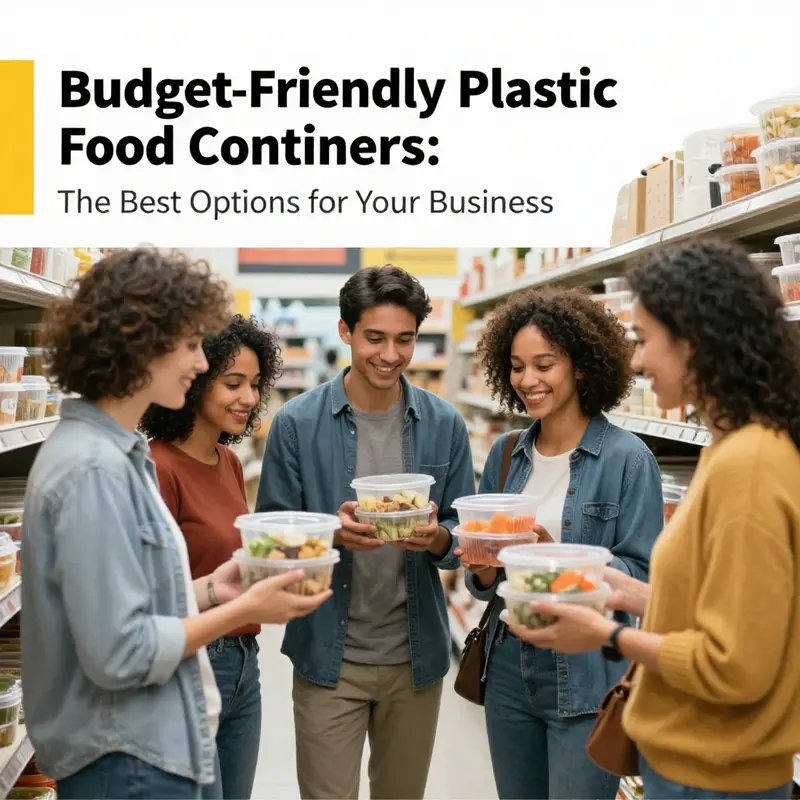
When a shopper reaches for a container to stash leftovers, pack lunch, or portion ingredients for a quick meal, price often decides the first move. The attraction to the cheapest plastic food containers is not merely about saving a few coins; it is about enabling a certain rhythm of daily life. For many households, especially students, single-income families, or individuals who routinely manage small, frequent purchases, the cost per item is a critical determinant. The research snapshot from the materials at hand reveals a tiered landscape of options that weigh low price against practical function. A round-up of typical offerings shows that the least expensive option, a disposable rectangular tray, can be found at roughly 0.23 dollars per unit. This price point is paired with a high volume of monthly sales, reflecting its appeal for fast-food takeout, quick meal prep, and short-term storage needs. The tray’s shape and transparency often make it popular for retail environments where visibility of contents matters and where the container itself is treated as a simple, throwaway vessel. The low per-unit cost makes it feasible to bundle many units into a single purchase, which is precisely the economic logic many households operate by when the goal is to minimize friction and keep daily costs predictable.
Another frequently cited low-cost category is the sealed jar or canister with a thicker lid. While slightly more expensive than the ultra-disposable trays, these containers offer a clean, resealable closure that supports longer storage and the prospect of multiple reuse cycles. The price point sits around 0.29 dollars per piece, presenting a compelling balance between affordability and functional durability. In the context of consumer use, this option often becomes the preferred compromise for households that want a container reliable enough to keep flavors intact for a little longer, yet cheap enough to replace without second thought after extended use or when a loss occurs in routine kitchen activity. Finally, there exists a translucent, cap-enabled jar variant priced around 0.36 dollars. Its appeal lies in a combination of visual appeal and secure sealing, attributes that can reduce the risk of spills and odor transfer during transport or storage. The relative costs across these categories illustrate a clear pattern: the cheapest containers are typically single-use or intended for very short-term reuse, while slightly higher-priced options offer greater sealing integrity and a sense of purpose for longer-term storage. In every case, however, the price is closely tied to the material choices and the complexity of the closure mechanism. The marketplace data also underscores a practical dimension that often shapes consumer behavior: the minimum order quantities and supplier constraints that accompany these low prices. In many cases, the most attractive per-unit price is linked to bulk purchases with significant minimums, which can be a barrier for individual consumers but a boon for small businesses or households that routinely need dozens or hundreds of units at a time. These dynamics help explain why the cheapest options remain dominant in certain segments of the market and why a subset of shoppers is willing to accept trade-offs around design, materials, or end-of-life considerations in exchange for lower upfront spend.
Yet, price is not the sole compass guiding consumer choice. The broader question becomes: what happens when environmental awareness and safety considerations move from abstract ideals to everyday purchasing criteria? The literature and consumer research framed by these materials indicate a slow but steady shift in preference patterns. The traditional assumption—price alone drives behavior—has begun to bend under the weight of growing environmental consciousness and a heightened sensitivity to material quality. On the environmental front, a wave of data from consumer research across markets shows that a notable percentage of buyers now impose a “green premium” on packaging choices. In practical terms, even when a cheaper container is available, some consumers express a willingness to pay more for packaging that is perceived as recycled, recyclable, or produced with lower overall environmental impact. One widely cited US study found that about seventy-two percent of respondents indicated a preference for brands that use recycled materials in their packaging. This reveals a consumer propensity to consider lifecycle and end-of-life outcomes alongside price, signalling that environmental attributes can influence purchase decisions even when price penalties are involved. For packaging professionals, the implication is clear: competing on price alone is unlikely to secure long-term market advantages if the product is perceived as contributing to waste, pollution, or a sense of disposability that clashes with evolving values.
Quality and safety expectations further modulate how consumers evaluate the cheapest options. Across populations, taste, texture, and aroma, while not direct measures of packaging quality, correlate with how well a container preserves or affects food experiences. A container’s integrity—its ability to resist leaks, minimize odor exchange, and maintain shape under temperature variation—turns into a practical signal of value. When a low-cost option fails in these dimensions, dissatisfaction can quickly eclipse any initial savings. In cost-conscious segments, this risk is balanced by the user’s tolerance for occasional compromise in exchange for affordability. The challenge for manufacturers and retailers lies in steering this balance toward a baseline of safe, compliant materials that still cradle the user’s expectations for convenience and economy. Food-contact safety, regulatory compliance, and resistance to deformation under typical handling are not negotiable flaws in the pursuit of the lowest price; rather, they define the lower bound of acceptable performance. Consumers who rely on inexpensive containers frequently report using them for short-term storage, for bulk meal-prep sessions, or for transient transport scenarios where the container’s lifespan aligns with the immediate need. When durability extends beyond a single use, the decision to repurchase or rotate into a reuse cycle becomes part of a broader cost calculus that includes cleaning, maintenance, and the potential consequences of material fatigue.
The interplay among cost, environmental awareness, and safety is reshaping how value is defined in the cheap-container category. While the cheapest option may fulfill an essential need for a baseline function, a growing segment of shoppers wants evidence of responsible packaging, recycled content, or the feasibility of a closed-loop system. They may ask: does this container enable reuse without compromising safety? Is it easy to recycle or recycle-ready at the end of life? Is there a traceable supply chain that can reassure them about the origin of materials and the absence of harmful additives? These questions reflect a broader shift from “can I save money today?” to “can I save money over the life of the product while minimizing environmental impact?” The answers shape not only consumer sentiment but also corporate strategy. In practice, this means that even within a category defined by the cheapest price, there is room to introduce design innovations that improve sealing performance, reduce material usage, and still maintain low per-unit costs. For example, thinner yet sufficiently rigid walls can reduce material costs without sacrificing safety, and improved interface design can enhance lid fit and prevent leaks during transit. These innovations, when scaled, can tilt a retailer’s value proposition toward a sustainable-leaning, cost-conscious choice—an alignment that can appeal to both the frugal shopper and the environmentally aware consumer.
The chapter’s synthesis points to a nuanced consumer psychology. People want to minimize daily spend, but not at the expense of basic reliability. For students juggling groceries and dorm-room meals, for families coordinating weekly meal-prep, or for parts of the population living with limited discretionary income, the cheapest plastic containers remain a practical answer to a recurring need. Yet the research signals that the door to broader appeal is cracked open by a combination of perceived quality, safety assurances, and, increasingly, environmental responsibility. As price remains a critical gatekeeper, a brand or retailer that can demonstrate safe materials, predictable performance, and a credible, simple environmental story will occupy a more enduring space within this budget-driven ecosystem. In other words, the cheapest container is less about a single number and more about a sustainable balance among cost, use-case versatility, and responsible packaging discourse that resonates with a changing consumer base.
For readers exploring alternatives or seeking to understand the broader market, consider this related resource on sustainable packaging options that complements the cheap plastic narrative with paper-based alternatives. For readers curious about more sustainable packaging options, see this resource on disposable kraft paper bowls: disposable-700ml-kraft-paper-bowl-take-out-octagonal-rectangle-paper-bowl.
The conversation does not end with price alone. The larger arc involves lifecycle thinking, packaging performance, and the social and environmental costs embedded in everyday choices. As consumer expectations evolve, the cheapest option must contend with questions of recyclability, material safety, and how it fits into a circular economy. The literature and industry observations converge on a practical takeaway: the most competitive low-cost containers are not merely those that minimize spread of expenses in a single purchase, but those that maximize reliability, minimize waste, and offer a transparent story about how they fit into broader sustainability goals. In the end, the cheapest container will endure only if it proves its usefulness across real-world use cases, while also aligning with a consumer base that increasingly values responsible design and lifecycle stewardship. External research reinforces this trajectory, highlighting that sustainability remains a top-tier consideration in packaging choice, even when affordability is on the table. See the external reference for more context on how consumer priorities are shifting at scale: https://www.beveragedaily.com/industry-news/sustainability-remains-top-priority-for-consumers-in-packaging-choice
Shoestring-Savvy Procurement: Buying the Cheapest Plastic Food Containers Without Sacrificing Safety

When budgets tighten, the temptation to reach for the absolute cheapest plastic food containers grows stronger. A procurement planner in a busy operation under pressure may be tempted to chase the lowest per-item price, especially when the need is for bulk storage, meal prep, or take-out packaging. But the cheapest unit price does not always translate into the best long-term value. In practice, the decision hinges on a careful balance among safety, durability, and total cost of ownership. The research materials you provided offer a concrete backdrop: options priced around the sub-dollar range, with individual items offered as low as roughly 0.03 to 0.05 USD, but with minimum order quantities that push the decision into the bulk realm. One option, priced at about 0.23 yuan per piece, is a disposable long rectangular tray designed for quick-service take-out or fresh-produce packaging; another, around 0.29 yuan, touts a reinforced seal and a thicker lid suitable for honey jars, jams, or dry snacks; a third, near 0.36 yuan, features a transparent lid and an easy-to-seal design that appeals to display and storage needs. The scarcity of single-unit purchases for these items means buyers must weigh not only the sticker price but how the containers perform when used day after day under real conditions. It is precisely this reality that frames the central question: how can a budget-conscious operation secure packaging that is safe, reliable, and cost-effective over time?
The first guiding principle is non-negotiable: safety must not be sacrificed for a lower price tag. In the world of food-contact plastics, certain materials are favored for their stability and suitability for food storage. The core numbers—often found in the triangular recycling symbol on the bottom of a container—signal what material you are really getting. Containers labeled with 2 (HDPE), 4 (LDPE), or 5 (PP) align with better food safety and durability performance. HDPE is notably stable and resistant to oil and light chemicals, making it a sensible choice for liquids and refrigeration alike. LDPE offers flexibility and resilience, frequently used for softer packaging where leakage risk is moderate. PP stands out for heat tolerance and microwave safety, a practical advantage for ready-to-heat meals or reheating foods. In contrast, containers made from PVC (3), PS (6), or “other/unknown” (7) carry greater regulatory and health concerns, particularly around chemical migration and heat exposure. Even when prices are tempting, the risk of migrating substances or accelerated degradation under typical kitchen temperatures makes those choices risky, especially for families or small businesses that rely on repeat use.
The danger of equating low price with real savings becomes clearer when you consider life-cycle cost. A container that is the cheapest in the shop today may be a false economy if it fails to seal after a few uses, warps in the microwave, or becomes yellowed and brittle after a few months. When a product lasts only 12 to 24 months, repeated replacements begin to accumulate, eroding any apparent short-term savings. Industry guidelines and cost-control literature from the procurement sector point to this phenomenon: saving ten percent on raw packaging costs might be offset by higher replacement costs, damaged product claims, or even food safety incidents. A practical takeaway is to select containers from manufacturers with basic safety certifications and a track record of reliable performance, even if the initial price is somewhat higher. The trade-off is not about paying more for a premium label, but about buying through a vendor that can demonstrate consistent material quality, stable sealing, and predictable performance over time.
Another essential dimension is the channel through which you purchase. In a market saturated with options, the risk of hidden defects rises when the price is the sole attribute you consider. Reputable channels—large retailers or established distributors—often impose stricter supplier qualification criteria, endorsements, or basic safety testing that aligns with standards for food-contact materials. These channels also enable more predictable service levels: packaging that ships on time, consistent batch quality, and easier returns or replacements when problems arise. In contrast, low-cost offerings from smaller, uncertified workshops may look attractive at the moment but can lead to unanticipated costs in the form of recalls, nonconformant materials, or variances in wall thickness and seal integrity. If the goal is to keep a kitchen running smoothly and minimize risk, the choice of supplier matters as much as the choice of container material.
From a practical standpoint, the most effective procurement approach blends strategic buying with a disciplined evaluation of needs. The research data highlight a spectrum of options: ultra-cheap disposables for surge demand or pop-up events; sturdier, seal-tight jars for long-term storage; and simple, transparent containers for display and quick re-use. The trick lies in selecting container types that fit the actual use case. If you repeatedly package viscous sauces or liquids, a HDPE or PP container with a robust seal and a secure cap reduces the likelihood of leaks. If the application is dry goods or non-oily foods, LDPE options might suffice, offering flexibility and cost savings without compromising safety. In this context, the total cost of ownership becomes a function of three variables: material safety and compatibility, mechanical durability, and the reliability of the sealing system under typical handling conditions.
A key element of prudent purchasing is the bundling of products into sets that cover common sizes and use cases. Rather than buying a handful of disparate, ultra-cheap items, a buyer can secure a cohesive suite of containers that share compatible lids, seals, and dimensions. This cohesion simplifies operations: standardized inventory reduces the risk of mismatched replacements, speeds up packing lines, and improves the consistency of the customer experience. If a fleet of containers is needed for a single site or business unit, a multi-size set from a single supplier becomes attractive. It can deliver better per-unit pricing while also reducing storage complexity and the administrative burden of managing multiple vendors. In practice, finding the right balance may involve negotiating a package pricing strategy that combines different volumes and lid types into a single purchase, yielding predictable costs and easier forecasting for future procurement cycles.
Careful attention to how containers are used and maintained also yields meaningful savings. The chapter results emphasize a few practical habits that extend lifespan and preserve safety. First, minimize dishwasher exposure. The high temperatures and caustic detergents can accelerate material aging, particularly for certain plastics. If a dishwasher is used, placing containers on the top rack and choosing gentler wash cycles can reduce risk. When possible, hand washing with warm water and mild soap remains a simple, effective alternative. Second, avoid abrasive cleaning tools. Scratches create micro-roughness that can harbor residues and, over time, compromise the container’s barrier properties. Third, resist the urge to reheat directly in a non-microwave-safe container. If reheating is necessary, confirm a microwave-safe label or, better yet, transfer contents to appropriate vessels before heating. These maintenance habits do not cost money; they save it by slowing degradation, minimizing replacement frequency, and preserving the integrity of seals that prevent leaks and cross-contamination.
A practical snapshot of the options in the market helps translate these principles into action. Among the cheapest offerings, one option is a disposable, clear rectangular tray that sells for approximately 0.23 yuan per piece, with high monthly sales. This type of container is well-suited for fresh produce or light-duty take-out packaging, where speed and low unit cost take priority over long reuse. Another option commands about 0.29 yuan per unit and features a reinforced lid and a thicker body designed to resist deformation, making it a plausible choice for items with sticky or viscous contents. A third option comes in around 0.36 yuan per unit and is noted for its transparent seal and lid construction, useful for visible-food displays and quick grab-and-go meals. While these numbers anchor decision-making, it is crucial to attach them to a broader evaluation framework that weighs material safety codes, service life, and total cost of ownership rather than chasing the lowest sticker price alone. The reality is that even at these low price points, the practical cost of ownership can rise quickly if the product fails to perform under real-world conditions.
In the spirit of balanced decision-making, consider a sourcing approach that blends caution with opportunity. When possible, select containers that clearly display a safe material code—2, 4, or 5—and originate from a supplier with basic safety certifications and traceable quality controls. This approach reduces the likelihood of encountering questionable batches that could disrupt operations or raise health concerns. To illustrate the broader context, a 2026 industry guideline on cost control highlights that chasing marginal price reductions can backfire when it leads to frequent replacements or complaints. A wise procurement practice, then, is to secure a baseline of safety and durability while leveraging bulk or multi-size packaging to optimize per-unit costs without compromising reliability.
As a practical closing note, the pursuit of the cheapest plastic containers must not neglect the realities of the kitchen and the brand promise that a business makes to its customers. Packaging sends a message before the first bite: it communicates cleanliness, safety, and care. If the aim is to deliver a consistent, safe, and efficient service, the smartest move is to purchase containers that carry clear safety indicators, come from reputable channels, and align with a cohesive set of sizes and lids. The result is not merely cost savings; it is a steadier operation with fewer disruptions, less waste, and a greater sense of confidence in every meal or preserved product that leaves the kitchen.
To connect these insights to a broader spectrum of packaging options, consider exploring related packaging formats that can offer competitive pricing while reducing risk. For instance, there is value in understanding alternatives such as multi-pack paper-based options for take-away and storage, which may present different cost dynamics and materials considerations. For readers seeking a concrete example of an affordable packaging option in a related category, see this page on a low-cost, multi-size paper cup offering designed for take-away contexts: best-price-8oz-double-plastic-free-single-wall-paper-cup. This linked resource illustrates how bundles and standardized sizing can unlock savings and simplify operations, even when the primary focus remains on plastic containers. The broader takeaway remains consistent: the cheapest option is not the only option, and the best value emerges when price is weighed against safety, durability, and the real costs incurred over time.
External resources that support safe, informed decisions in packaging are essential at every stage of procurement. For a credible overview of food-contact safety standards and how they intersect with packaging choices, consult reputable regulatory guidance such as the U.S. Food and Drug Administration’s pages on food packaging and food-contact materials. This background can help buyers align cost-saving measures with enforceable safety requirements and market expectations: https://www.fda.gov/food-packaging. By anchoring purchasing decisions in safety-focused criteria and lifecycle thinking, budget-conscious buyers can achieve reliable packaging outcomes without compromising health or performance.
In sum, the cheapest containers can serve a purpose, but they must be selected and managed with a disciplined, safety-first mindset. The most cost-effective path combines careful material choice, reliable supplier channels, and a well-considered mix of sizes that reduces waste and simplifies operations. When the focus shifts from piecemeal bargains to holistic value, even modest savings per unit accumulate into meaningful, predictable savings across a business’s entire packaging footprint. The result is a procurement strategy that is not merely frugal but intelligent—and that is the mark of true financial prudence in the kitchen.
Final thoughts
In summary, selecting the right plastic food containers is essential for any business looking to optimize costs while maintaining quality. The analysis of options, from the cheapest jars to sturdy disposable trays, highlights the viability of these solutions for budget-conscious establishments. By staying informed about consumer preferences and market trends, your company can make strategic purchasing decisions that support growth and customer satisfaction. Embrace economical packaging to elevate your services without breaking the bank.