
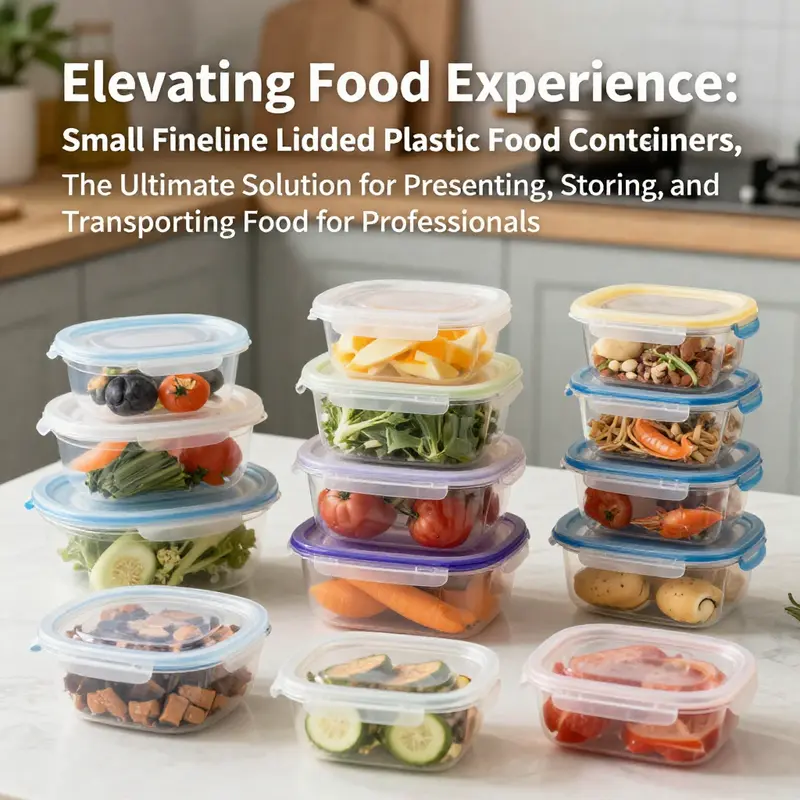
Small fineline lidded plastic food containers are more than mere storage solutions; they embody elegance and efficiency, essential for various food-related businesses. Whether you’re a bubble tea shop, a bustling restaurant, a food truck operator, or planning large-scale events, these containers promise to enhance your service quality while maintaining food integrity. This article explores the distinctive design and functionality of these containers, delves into the materials that ensure safety and durability, and highlights their diverse applications across industries. You’ll also gain insights into the environmental considerations shaping the market and uncover current consumer preferences. Each chapter builds a comprehensive understanding, for stakeholders aiming to optimize their food handling practices.
Slim Seals, Big Function: The Design and Everyday Utility of Small Fineline Lidded Plastic Food Containers
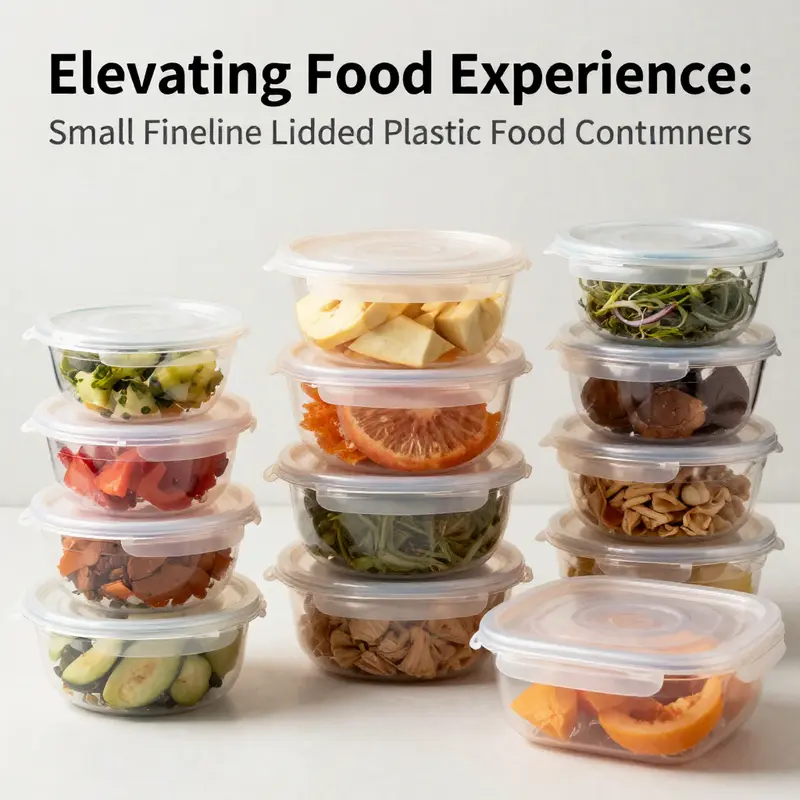
Compact, efficient, and quietly elegant, small fineline lidded plastic food containers are everyday tools that most cooks never pause to praise—until they need them. The design balances form and function, guiding lids to seat evenly around the rim and creating a reliable seal that minimizes air exchange during transit. In this seemingly modest edge, micro-details translate into macro benefits for daily meals. The snap-on lid should feel confident and tactile, signaling that the container is ready for a busy lunch break, a desk drawer, or a service counter. The goal is straightforward: to move food from storage to consumption with minimal effort and maximum appetite.
The materials chosen for these containers—primarily polypropylene (PP) and high-density polyethylene (HDPE)—are selected for safety, durability, and performance. PP offers heat resistance and clarity, making it practical for reheating or quickly checking contents. HDPE emphasizes toughness and chemical stability, resisting cracking under rough handling. The combination of PP where visibility and heat tolerance matter and HDPE where durability is prized yields a practical, recyclable solution suitable for home and professional use. Certifications like BPA-free assurances further alleviate concerns about kitchen safety and consumer trust.
Beyond raw materials, the interaction between lid and body is central. The fineline edge is part of a broader sealing system that favors a precise snap-fit over threaded lids or gaskets. This keeps manufacturing simple and enables one-handed closure. A reliable seal reduces spills during transit, whether the container accompanies a school lunch, a workday meal, or catering samples. Stackability and nestability offer storage advantages, turning a week’s worth of portions into an organized cabinet or drawer.
There is a sensible spectrum of lids tailored to different culinary realities. Some models include vents to release steam when hot foods are heated, trading containment for relief of pressure and moisture. Vent-equipped variants suit dry or semi-solid foods, while sealed, non-vented versions are preferred for liquids that customers want to keep intact. The practical message is clear: choose vented when steam is generated; choose non-vented when maximum containment is required.
Hygiene and practicality round out the picture. The integrity of the seal depends on precise tolerances, clean mating surfaces, and the absence of residual moisture that could foster microbial growth. A well-designed lid minimizes microenvironments where spills could wick into edges or seams, while the snap closure promotes confidence during busy workflows. In short, good design is a quiet facilitator of reliability, portion control, and peace of mind.
From the perspective of a kitchen designer or busy professional, fineline lidded containers deliver a rare blend of efficiency and restraint. They reduce clutter through slim profiles, preserve visibility of contents, and present an orderly professional image. The packaging becomes a practical extension of the food itself, a promise that meals will look as good when they arrive as when they were prepared.
Toward a broader material philosophy, these containers invite consideration of sustainability. The lightweight nature of PP and HDPE reduces transport emissions, and local recycling streams determine end-of-life options. BPA-free status remains a comfort, and users should assess lifecycle considerations, including cleaning energy and replacement rates. In this light, durability becomes an environmental decision: longer lifespans mean less waste. Overall, fineline designs support practical, economical, and responsible food packaging for homes and institutions.
In sum, the small fineline lidded container is a tool that supports portion control, reduces waste, and simplifies the logistics of eating on the go. It is not merely a vessel but a facilitator of reliable storage, transport, and presentation. The end effect is a standard that values clarity, hygiene, and reliability as much as convenience, enabling organized kitchens and efficient routines across home and service settings.
Material Anatomy and Performance: The Science Behind Small Finline Lidded Plastic Food Containers
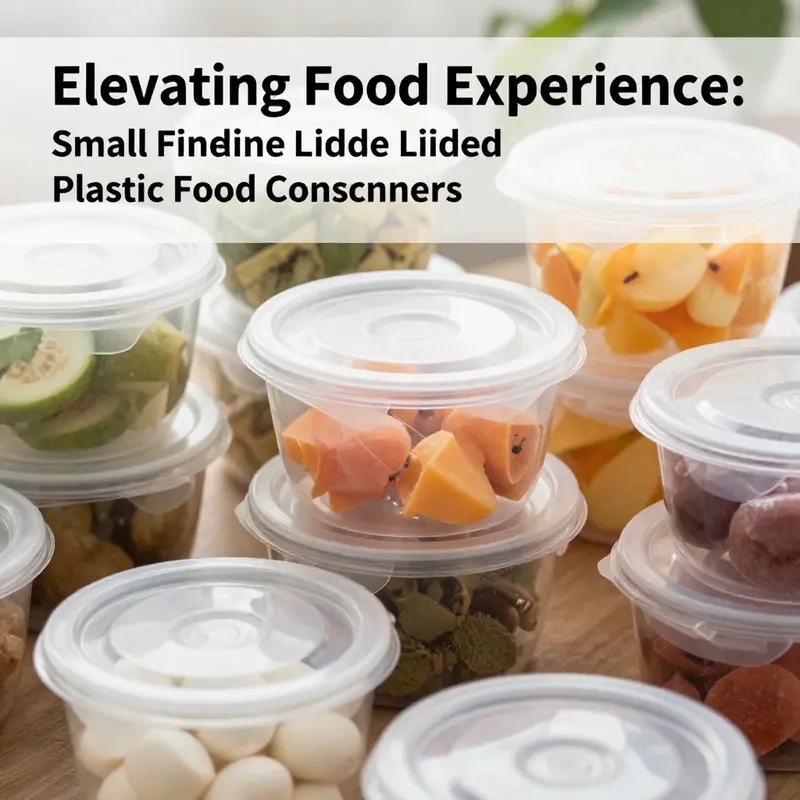
The small finline lidded plastic food container sits at the intersection of precise engineering and everyday practicality. Its compact silhouette is not merely a matter of style; it is a deliberate response to how people shop, transport, and present food in tight spaces. The materials chosen for these containers—principally polypropylene (PP) and high-density polyethylene (HDPE), with occasional use of transparent polymers such as polyethylene terephthalate (PET) for lids—are selected to balance safety, resilience, and ease of use. The result is a family of containers that can keep portions neat, seal securely, and withstand the realities of daily life from freezer to microwave to lunch bag. Delving into the material composition reveals a story of performance that is not always obvious at first glance. It is a story of how chemistry and processing translate into a practical, reliable product that fits into small kitchens and busy routines alike.
Polypropylene, the workhorse of many small plastic food containers, brings a combination of warmth resistance, rigidity, and fatigue resistance that serves both hot and cold food storage. Its crystalline structure gives the material a relatively high melting point, which translates to microwave-safe and, in many cases, dishwasher-safe performance. This is not a universal guarantee across every PP container, but the material’s thermal characteristics make it well suited for repeated cycles of heating and cooling without significant deformation or loss of seal integrity. In this context, the lid’s fineline edge plays a critical role. The fineline is not a cosmetic flourish; it is a design cue that enhances the lid’s contact with the rim of the container. A tighter contact line means more uniform pressure around the seal, which helps resist minor pressure changes during transit and reduces the likelihood of leaks when the container is jostled in a bag or briefcase. The effectiveness of that seal is a direct outgrowth of the material’s surface energy and the geometry of the edge. When the lid snaps into place, the PP’s stiffness keeps the edge from wandering, while the gasket or simple interference fit works to compress any small irregularities along the rim.
HDPE contributes a different but equally important set of properties. Its chemical resistance is a strong ally in handling a range of foods—from fruit to sauces—without interaction that would alter flavor or appearance. HDPE’s impact strength makes the container forgiving in everyday use; it resists dents and cracks when dropped into a bag or knocked against a counter. For solid foods or denser leftovers, HDPE provides a robust housing that protects contents from compression and maintains shape, which in turn supports a stable, visually neat presentation once the lid is closed. Both PP and HDPE are widely regarded as food-safe when manufactured to established standards, and both can be processed to produce containers that meet regulatory expectations for contact substances. In many cases, this alignment with safety standards is reinforced by certifications and guidance that track performance in real-world conditions.
The possibility of using PET or other clear polymers for lids or portions of the container is not incidental. Clear lids offer visibility, enabling a quick assessment of the contents without opening the seal. This capability is particularly valuable in settings like offices, schools, or marketplaces where presentation matters and freshness must be inferred at a glance. PET’s clarity, along with its compatible sealing behavior when paired with PP or HDPE bodies, makes it a natural choice for lid components. The transparency of PET appeals to retailers and home users who want to display baked goods, fruit cups, or layered desserts while still ensuring moisture retention and containment. In practice, the combination of a PP or HDPE body with a PET lid represents a calculated trade-off: you gain visibility and perceived freshness without compromising safety or seal performance.
From a safety and standards perspective, both PP and HDPE containers routinely align with food-contact regulations. The research results emphasize FDA guidance for substances intended for food contact and NSF certification, underscoring a baseline of compliance used by manufacturers to ensure that materials are suitable for repeated handling and diverse culinary applications. This compliance is not merely a box-ticking exercise; it is a practical assurance that residues, additives, or processing aids do not migrate into foods in amounts that would raise concern for consumers. The focus on compliance also informs how designers approach additives such as colorants or small stabilizers, and how manufacturers select processing aids and fillers that do not interfere with the container’s performance, taste, or texture of stored foods.
In practice, the duplication of functional features across PP and HDPE designs is common. The lid’s shape, often snap-on or sliding, is crafted to lock in freshness while accommodating a user’s routine—open, scoop, close, and carry. This means the seam geometry becomes an extension of the container’s material science. The fineline edge’s contact pressure is a product of both the lid’s geometry and the polymer’s modulus of elasticity. If the edge is too rigid, it may cause stresses that lead to micro-damage over repeated cycles; if too lax, the seal can falter under pressure or temperature fluctuations. The designers’ task is to tune these variables so that everyday manipulation—pinching a clip, pressing a lid down, or sliding toward a stack—produces a reliable seal every time.
Another design cue that emerges from material choices is stackability. The ability to nest or stack containers without damaging the lids relies on the interplay between lid geometry and body contours. The materials’ resilience under compression ensures that stacks remain neat in a kitchen drawer or on a catering tray. Clear walls, when used, contribute to the perceived quality by letting light interact with the contents in a way that preserves color and texture. This combination of function and aesthetics supports both domestic use and professional presentation, which is a point often appreciated by users who pack lunches, bake goods, or assemble multi-component meals for events.
The practical implications of material selection extend to the variety of usage scenarios. For cold desserts, mousse-like textures, fruit cups, or yogurt-based items, the container must maintain form and prevent leakage even when a lid is sealed. The PP/HDPE pairing offers a balance between rigidity and toughness that helps maintain a smooth interior surface, which is important for easy cleaning and for keeping delicate foods intact. For solid leftovers or bento-style meals, the durability and chemical resistance of HDPE help prevent staining and odor retention, while the malleability of PP can contribute to a more precise lid fit that resists misalignment over time. When tiny portions are involved, the fineline’s improved seal can feel more reassuring to users who carry meals in a bag or briefcase where temperature swings and movement are common.
From a sustainability perspective, the material choices are not detached from environmental considerations. PP and HDPE are among the most recyclable plastics in many recycling streams, and their codes are widely recognized, which improves the likelihood of proper disposal and reuse. Recyclability, however, is highly dependent on local infrastructure and on how the container is designed for end-of-life processing. Clean separation is essential: containers should be rinsed and, if possible, kept free of food residue before recycling. While polypropylene lends itself to repeated heating and cooling, it is important to recognize that some users may prefer to repurpose rather than discard, a practice that underscores the practical life cycle of these containers in real homes and workplaces.
In terms of consumer information, the presence of a secure-fitting lid and a clear indication of safe usage—such as microwave compatibility being dependent on the specific product line—helps users avoid missteps. The material composition outlined here does not stand alone; it works in concert with product design, process controls, and labeling that together guide safe handling. The interplay between the fineline lid and body material is a case study in how small design decisions, when grounded in material science, yield tangible benefits: reduced spill risk, maintained freshness, and a clearer, more appealing presentation of food. The choices made by manufacturers—whether to emphasize heat resilience with PP, impact resistance with HDPE, or visibility with PET for lids—reflect a philosophy of delivering a reliable tool for daily life that sits quietly in the background, enabling users to focus on the food itself.
For readers who are curious about neighboring packaging formats and how they compare to plastics used in these containers, consider exploring related packaging options that emphasize sustainability and consumer convenience. A useful point of reference in this broader conversation is the availability of eco-friendly, lid-equipped, paper-based alternatives that also aim to balance visibility, usability, and environmental goals. For example, you can learn more about eco-friendly paper coffee cups with lids and how their design challenges are addressed in similar packaging ecosystems. This cross-material perspective helps illuminate the trade-offs that shape material selection in both plastic and paper packaging, reinforcing the idea that the right choice often depends on the specific use case, regulatory requirements, and consumer expectations.
In sum, the material composition of small finline lidded plastic food containers is a careful synthesis of PP’s heat tolerance and rigidity with HDPE’s toughness and chemical resistance, sometimes complemented by PET’s clarity for lids. Each choice supports a secure seal, a reliable level of durability, and a presentation that remains tidy over time. The fineline edge is not merely decorative; it is a functional feature that improves sealing performance and helps preserve freshness during transit. The resulting products are versatile enough for portion-controlled meals, on-the-go consumption, refrigerated storage, and careful handling in work or school settings. They embody a practical application of polymer science where the everyday act of packing lunch becomes a more predictable, satisfying, and visually predictable experience. External standards and certifications offer a safety net, ensuring that these everyday tools meet the expectations of food safety, while recyclability considerations invite ongoing conversations about how to minimize environmental impact throughout their life cycle. For researchers, designers, and everyday users alike, understanding this material anatomy helps demystify how a seemingly simple container can reliably support a broad range of foods and meals.
External resource: For a broader overview of material composition and industry standards, see An Overview of Small Food Grade Plastic Container. https://www.alibaba.com/product-detail/An-Overview-of-Small-Food-Grade-Plastic-Container_1600587294232.html?spm=a2700.189046.0.0.6a5d5f9b3e4d4b
Internal reference: For related packaging insights that touch on sustainability and lid design in other on-the-go formats, you can explore eco-friendly paper coffee cups with lids. https://greendispopack.com/product/eco-friendly-printed-logo-cold-beverage-cup-paper-cup-with-lid/
Fineline Precision: How Small Lidded Plastic Containers Shape Freshness, Portability, and Presentation Across Industries
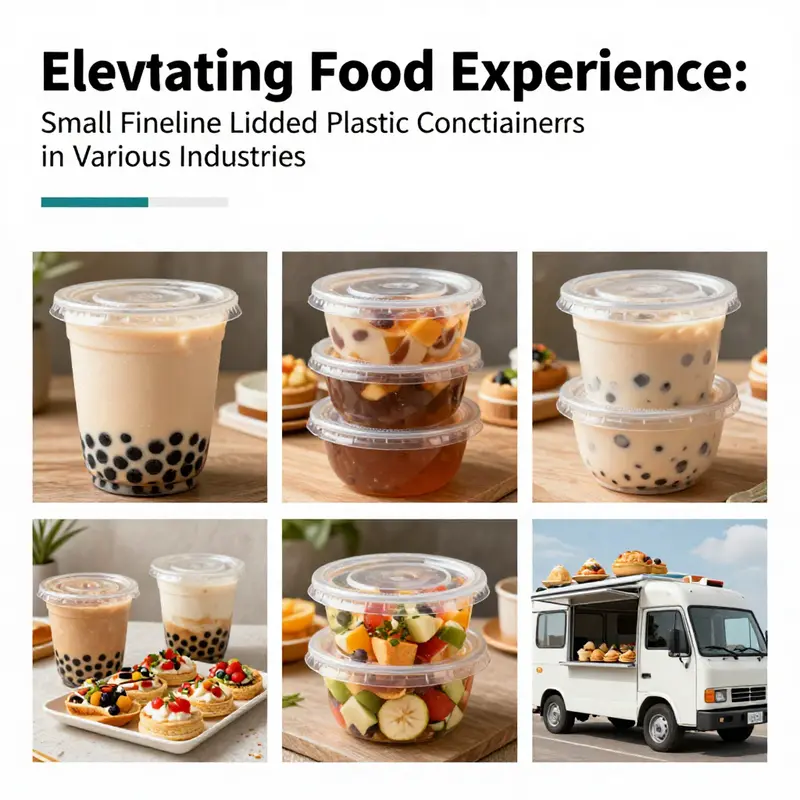
The small fineline lidded plastic food container has quietly become a foundational tool in how we store, transport, and present food in a world that prizes speed, portion control, and visual clarity. Its appeal lies not in flash or novelty, but in a disciplined convergence of form and function. The fineline lid edge, a subtle yet purposeful design feature, provides a tighter seal by guiding the lid to meet the rim with an almost whispered snap. It is this precision that translates into practical advantages: less leakage during transit, greater retention of moisture and aroma, and a consistent portion size that fits into the rhythm of daily routines. When you examine the everyday pantry, office break room, or commercial kitchen through the lens of these small containers, you begin to see a choreography—of air, moisture, temperature, and texture—at work behind every lunch box and take-away tray. The modern container is more than a vessel; it is a facilitator of reliability in busy environments where food safety and presentation matter as much as taste and nutrition.
The materials chosen for these containers—typically food-safe plastics such as PET (polyethylene terephthalate) or PP (polypropylene)—are selected for a practical balance of lightness, strength, and chemistry that respects food integrity. BPA-free formulations are often highlighted to reassure users worried about long-term exposure, even as the realities of refrigeration and microwave use demand a material that can endure cycles of cooling and heating without warping or absorbing flavors. The lightweight nature of these plastics makes them easy to stack, store, and carry, while their relative durability helps minimize breakage in the rough-and-tumble world of school lunches, office deliveries, and retail displays. In scenarios where transparency is prized, clear or translucent lids—frequently made from PET—turn the container into a visual portal. A glance reveals the contents, enabling quick inventory checks or decision-making in a crowded fridge or display case without the risk of opening every box.
Yet the elegance of the fineline design rests on more than a strong seal and a see-through lid. It embodies a philosophy of portion-conscious efficiency. In the food service and catering sector, these compact vessels are indispensable for pre-portioned meals, salads, and sides. They shine in buffet line logistics where guests expect neat presentation and staff rely on predictable, uniform packaging. A bento-inspired approach, with multi-compartment configurations, demonstrates how these small containers can keep flavors distinct while offering a cohesive meal experience. The fineline edge helps keep sauces from wicking into adjacent compartments and minimizes flavor crossover, a feature that resonates with kitchens committed to high-quality, on-trend presentations. In the broader catering ecosystem, this translates into less waste, more predictable plating, and a streamlined workflow from kitchen to service line. The physical footprint matters too; the compact scale aligns with the growing emphasis on portion control and healthier eating patterns, enabling a culture of mindful consumption without sacrificing convenience.
In the retail and grocery landscape, the same small fineline lidded plastic containers perform a different kind of work. They package fresh produce, deli items, and ready-to-eat snacks with a clarity that enhances shelf appeal. Visually, the interaction of translucent lids with the contents creates an invitation—the consumer can assess color, texture, and portion without unpacking the product. At the same time, vented lids offer a pragmatic solution for items that require airflow to stay crisp, such as leafy greens or delicate herbs. Ventilation helps balance humidity and oxygen, slowing condensation that can dull appearance and accelerate spoilage. Packaging engineers increasingly tailor venting patterns to the product type, recognizing that even tiny air gaps can influence shelf life in meaningful ways. The ability to view the contents at a glance supports impulse purchasing while maintaining a sense of trust; the product is exactly as visible, not as imagined behind opaque packaging.
The versatility of these containers also extends beyond food. In pharmaceutical and cosmetic contexts, similarly sealed, compact formats are used for samples, travel-sized products, and kit components. The sealing performance—often airtight and leak-resistant—preserves potency and sterility during transit, a requirement that aligns with the hygiene standards of these industries. While the contents differ, the fundamental design language remains shared: a secure lid, a compact footprint, and reliable performance under transport and handling conditions. This cross-industry compatibility speaks to a core strength of fineline lidded plastics—the ability to scale small solutions into broad utilities without sacrificing the virtues that matter most to users: cleanliness, containment, and clarity.
Within homes and kitchens, the everyday utility of small fineline lidded plastic containers becomes most apparent. For meal prep and organization, these containers support a disciplined approach to leftovers, pre-measured ingredients, and multi-dish preparation. The stackable geometry saves cabinet and refrigerator real estate, while the clear lids support rapid identification of contents—boosting efficiency during busy weeks. Some designs even accommodate reheating within the same vessel, offering a convenient bridge between food preparation and consumption. This capability reduces dish washing and transfer steps, a small but meaningful gesture toward simpler routines. The containers also support clean labeling and hygiene practices. By providing a stable, sealed environment for food, they help maintain freshness, minimize contamination risks, and promote responsible handling from fridge to desk to dining table. It is a quiet, practical sophistication that often goes unnoticed until it resolves a problem—the accidental spill, the soggy lunch, the rushed morning search for a snack—before it even happens.
The durability and reusability profile of these containers is another axis of their practicality. While many households and institutions eventually recycle or repurpose plastics after use, the ongoing benefits lie in their reuse. A well-chosen container can endure dozens of cycles of refrigeration, heating, washing, and stacking if the care guidelines are followed. The lightweight geometry reduces weight-related shipping costs for businesses and lowers the energy profile of everyday operations. The emphasis on food safety—hygienic seals, inert interiors, and non-reactive surfaces—also elevates their value in spaces where multiple users access stored meals, samples, or snacks. In environments such as cafeterias, schools, office kitchens, or catering operations, the predictable, repeatable performance of the fineline lid design reduces variability and enhances reliability across day parts and shifts. When a product is simple to use yet precise in its function, it becomes nearly invisible in daily life, allowing people to focus on food, rather than packaging concerns.
As designers and manufacturers refine these containers, they often balance aesthetics with practical constraints. The lids must be secure but easy to open, the edges must seal without excessive force, and the materials must resist cracking under cold or heat. The lid-edge fineline geometry is just one of several innovations that optimize this balance. Some configurations incorporate vented sections, snap-on mechanisms, or tamper-evident features that reassure users about hygiene and authenticity. Each adjustment can ripple through the product’s performance in ways that touch supply chains, from the speed of production lines to the efficiency of on-site assembly in catering operations. In this broader context, the small fineline lidded plastic container becomes more than a consumer good; it is a modular component of modern logistics, designed to support rapid, reliable, and presentable food service in a world of bustling schedules and heightened expectations.
To bring this into sharper focus, consider a typical day in a mid-sized catering operation. A breakfast service might rely on compact containers to deliver yogurt parfaits, fruit cups, and granola cups in single-serve portions. A lunch window could feature salads, vegetables, and side dishes arranged in clearly separated compartments, preserving texture and flavor while simplifying the plating process for staff. A dessert station might use similar units to enable grab-and-go treats that remain visually appealing through transport. The ability to move a dozen or more such packages in a single trip without compromising security or presentation is not a luxury but a necessity in the logistics of modern food service. In school lunch programs or corporate cafeterias, standardized portioning supports nutrition goals, helps manage inventory, and reduces waste by aligning servings with expected demand. The fineline lid’s reliability translates into fewer complaints about leaks or soggy wrappers, which in turn supports a smoother, more predictable service cycle throughout the day.
The narrative of these containers would be incomplete without addressing sustainability and end-of-life considerations. Lightweight plastic, when used responsibly, offers a relatively efficient material footprint for single-use packaging and can be highly recyclable where local infrastructure supports it. Materials choice—whether PET, PP, or other food-grade resins—often reflects a balance between recyclability, clarity, and barrier properties. In some markets, suppliers emphasize BPA-free formulations to align with consumer safety expectations, while in others the emphasis shifts to ensuring that the packaging can endure the rigors of cold-chain transport without compromising integrity. Across industries, the conversation around reuse versus disposal continues to evolve, with some operators leveraging reusable tray systems and others adopting durable, reusable options that echo broader sustainability targets. The smallest decisions—how tightly a lid seals, how well a container stacks, how clearly a product can be identified at a glance—aggregate into larger outcomes: reduced waste, improved cold-chain reliability, and a packaging experience that feels effortless to the user.
As we think about the future, the ongoing evolution of small fineline lidded plastic containers will likely center on further refinements in seal integrity, clarity, and compatibility with diverse temperature profiles. Emerging lid designs may offer enhanced venting control for sensitive produce, while surface treatments could improve resistance to staining and odors, preserving the container’s appearance even after repeated use. The push toward more sustainable materials, combined with the need for clever aesthetics in display contexts, will shape how these containers balance transparency with durability. In every setting—from hospital corridors delivering portable meals to classrooms distributing nutrition backpacks of snacks, to corporate kitchens orchestrating intricate catering schedules—the small fineline lidded plastic container remains a reliable partner. It is the unspoken guarantee that a well-prepared portion will arrive intact, that freshness will be preserved, and that presentation will invite trust.
For readers seeking a more technical angle on the core product class that underpins these containers, a practical reference offers a structured overview of standards, properties, and applications in the 60 ml range. This resource delves into how small-volume containers balance seal integrity with material performance, and it helps connect the everyday experience of using these containers with the underlying science. You can explore this technical baseline here: https://www.plasticcontainerguide.com/small-plastic-containers-with-lids-60ml/. In addition, a related look at the broader ecosystem of lid-enabled packaging provides complementary perspectives on how design choices influence usability and safety across formats and markets. The fusion of engineering, ergonomics, and consumer expectations continues to drive improvements that make these modest vessels indispensable in a world that values speed, cleanliness, and reliability. If you want to see a broader spectrum of lid-driven packaging options, consider this linked resource that highlights design and material choices shaping modern takeaway systems.”
From Quick Bites to Lifecycles: The Environmental Footprint and Future of Small Fineline Lidded Plastic Food Containers
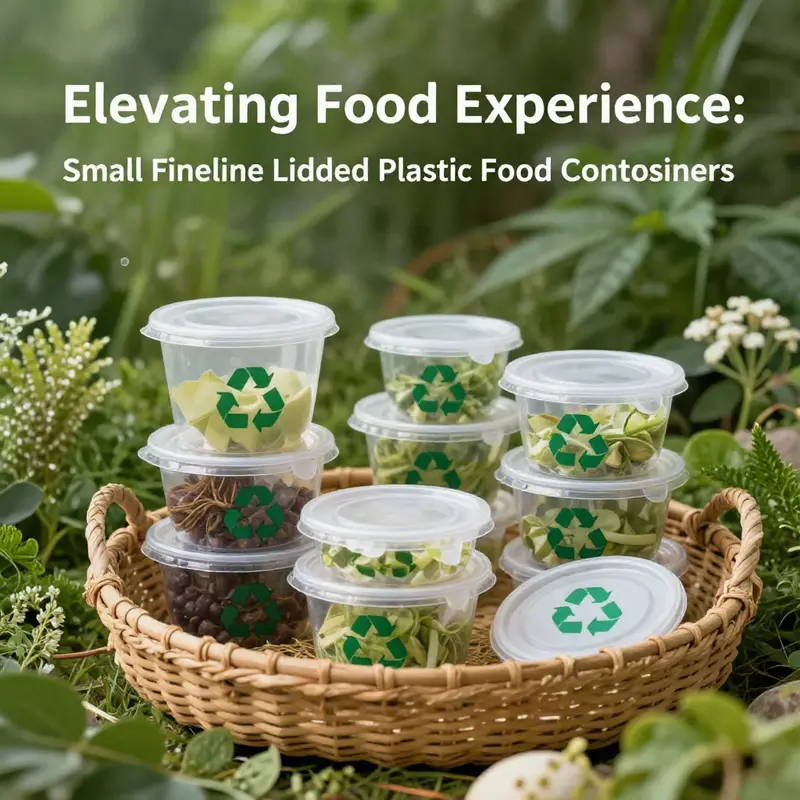
Small fineline lidded plastic food containers have quietly woven themselves into everyday routines and professional operations alike. Their slim, compact silhouette makes them easy to stack in lunch bags, office drawers, and service-line coolers. The lid fits with a distinctive fineline edge that isn’t just a visual cue; it contributes to a tighter seal that helps preserve moisture, keep aromas contained, and minimize leaks during transport. In kitchens and cafeterias that juggle dozens of orders a day, such a design is not merely about aesthetics. It translates into a practical reduction in spillage, a more predictable serving size, and a cleaner, more organized presentation of food for customers who want to see what they’re getting without opening the container. Yet beneath these advantages lies a complex set of environmental questions that are hard to ignore when the containers are designed predominantly for single-use and quick turnover. The tension between convenience and planetary health sits at the heart of any assessment of these small, fineline-lidded vessels.
The most common materials used in these containers are polypropylene (PP) and polystyrene (PS). Each brings its own profile of performance and risk. PP is often praised for its resilience under refrigeration and modest heat exposure, and many PP-based containers are marketed as microwave-safe depending on the exact formulation and lid design. PS, meanwhile, can offer a clear, crisp appearance that showcases food; it is valued for stiffness and clarity but can be more prone to cracking under impact and sometimes to thermal brittleness when heated. The choice of material shapes not only how well a container performs in a busy service environment but also how it behaves in the waste stream. Recycling facilities handle different plastics with varying effectiveness, and the single-use mindset multiplies the potential for contamination, missorting, and ultimately, downcycling rather than true recycling. The fineline lid’s tighter seal can be an ecological blessing for transportation efficiency, yet it does not inherently mitigate the downstream realities of disposal—realities that hinge on local recycling infrastructure and consumer behavior as much as on the design itself.
A key, often overlooked, variable is the lifecycle of these containers from production to disposal. In many regions, less than 9% of all plastic ever produced is recycled, a statistic that underscores the broader challenge of turning packaging waste into a circular flow. The remainder spends time in landfills, incinerators, or natural environments where it can fragment into microplastics. This is not a distant concern; microplastics have found their way into oceans, soils, and even into the food chain, raising concerns about exposure in ways that touch human health and ecosystems. The magnitude of the problem becomes clearer when one considers that estimates routinely place marine plastic input in the millions of tons annually. The combination of tiny containers, large volumes of use, and imperfect recycling yields a stubbornly persistent waste footprint that is not easily offset by the convenience they deliver in everyday life.
The environmental costs extend beyond end-of-life fate. The production of single-use plastics is largely tied to fossil fuels, with associated emissions and energy consumption that contribute to climate change and resource depletion. Even when packaging is labeled as recyclable, the actual rate of recovery is shaped by contamination, the presence of mixed materials, and the robustness of local waste infrastructure. In practice, many PP5 containers may be microwave-safe and durable during transit, but whether they can be gainfully recycled in a given system depends on a mosaic of recycling streams that vary from city to city. These complexities complicate the consumer’s ability to translate a simple act of disposal into a clearly beneficial environmental outcome. The result is a paradox: containers crafted to protect freshness and enable rapid consumption can, over time, accumulate a surprisingly heavy environmental cost when weighted against waste management realities and the life cycles of the materials involved.
Heat exposure compounds health considerations as well. When plastics are heated—especially certain types like PS or PVC—there is potential for chemicals such as benzene, styrene, and various plasticizers to migrate into food. While many consumer-facing products undergo testing and labeling to minimize risk, the reality remains that higher temperatures amplify chemical migration and can raise concerns about hormonal disruption or other long-term health effects. The intersection of safety and convenience is not a fixed boundary; it shifts with how foods are stored, reheated, and consumed. This interplay becomes even more salient in institutional settings where bulk usage, high service volumes, and consumer expectations for rapid, reliable heating collide with broader goals of health-conscious procurement and waste reduction.
Innovation provides some counterpoints to these concerns, though progress is nuanced. There have been advances in using bio-based or recycled content for certain plastic formulations and in-mold labeling (IML) techniques that can improve the appearance and durability of packaging while potentially reducing waste elsewhere in the supply chain. Yet scaling such innovations to meet the demand of fast-paced food service, where cost, performance under heat, and pass-through food safety certifications are non-negotiable, remains challenging. The small-portion logic that underpins “ready-to-eat” and “ready-to-transport” meals can inadvertently push packaging choices toward fragmentation. In practical terms, splitting a single meal into multiple mini-containers with corresponding lids, labels, and perhaps even different materials can increase total plastic usage, despite a consumer-facing narrative that positions the choice as a waste-reducing alternative. This tension is a reminder that ecological benefits cannot be assumed from the smallest unit of packaging alone; they emerge only when packaging systems are designed with end-of-life in mind and aligned with waste-management realities.
A broader, systemic path toward sustainability points beyond individual container choices. Deposit-return schemes for reusable containers have shown promise in certain urban pilots, where customers can return items for cleaning and reuse in exchange for incentives or penalties. In some densely populated markets, policy penalties for improper disposal or mishandling of packaging can be substantial, nudging businesses to rethink their packaging portfolios toward reusable or more easily recyclable options. These are not universal fixes, but they highlight a shift toward treating packaging as part of a closed-loop system rather than a disposable afterthought. Alongside policy levers, material science is pushing toward alternatives that may eventually reduce reliance on conventional plastics. Biodegradable materials, plant-based fibers, and compostable films are areas of active development. They face constraints around heat resistance, shelf life, cost, and institutional acceptance, but they represent a growing frontier in packaging designed with end-of-life in mind. The challenge remains translating laboratory advances into scalable solutions that perform under the rigors of real-world use, especially in high-volume food service contexts where reliability cannot be compromised.
For designers, producers, and operators aiming to improve sustainability without sacrificing function, several practical considerations emerge. First, rethinking the portion strategy can yield meaningful reductions in waste. Encouraging customers to choose fewer, larger containers or promoting reusable options can complement consumer demand for variety and convenience. Second, material selection should be guided by end-of-life realities; where feasible, packaging should be compatible with high-recovery recycling streams or be readily reusable. Third, design for durability in cold and heated environments can extend the life of a container in the hands of users who may reuse or repurpose packaging rather than discard it after a single use. These are not trivial shifts; they involve retooling procurement practices, supplier standards, and even the way foodservice teams train staff to assemble meals with a focus on waste minimization and proper disposal.
Within this landscape, it can be instructive to explore examples of alternatives that emphasize sustainability without sacrificing user experience. The move toward fiber-based packaging has gained traction in some circles, with products designed to maintain heat and freshness while reducing reliance on petrochemical plastics. While such options are not universally available or universally compatible with all microwavable and refrigeration requirements, they point toward a future in which consumers, chefs, and packaging engineers share a common aim: to deliver safe, convenient food while reducing the ecological footprint of the container that carries it. A practical way to illustrate this is the growing emphasis on eco-friendly packaging options that can be used in tandem with or as a substitute for plastic containers in certain applications. For instance, some suppliers now offer fiber-based or compostable alternatives that are designed to perform under typical service conditions, be visually appealing, and align with broader sustainability goals. These options underscore a broader trend toward packaging that treats the environment as a design constraint rather than an afterthought. If readers want to explore a specific example of these eco-friendly fiber-based options, they can discover products such as eco-friendly custom paper coffee cups with lid that illustrate how packaging can balance function, aesthetics, and environmental considerations in a single solution.
Ultimately, the path toward sustainable small fineline lidded plastic containers is not a single pivot but a constellation of changes across design, materials, policy, and consumer behavior. It involves recognizing that the convenience of a tightly sealed, easy-to-carry container comes with responsibilities—from ensuring compatible waste streams to evaluating the trade-offs between heat exposure, health implications, and lifecycle impacts. The dialogue is not about abandoning plastic altogether but about aligning packaging choices with real-world waste management capabilities and the long-term health of ecosystems. Systemic approaches—such as incentives for reuse, better separation at source, and investment in recycling infrastructure—can tilt the balance toward solutions that preserve the benefits of portable meals while reducing the environmental and health costs associated with single-use packaging. The conversation, then, becomes less about a binary good-versus-bad verdict and more about designing and choosing packaging that fits into a sustainable economy where materials circulate, rather than accumulate in landfills and waterways.
For readers who seek a broader, external frame for these concerns, it is helpful to consult established resources that document the scope of plastic waste and the policy landscape surrounding it. The Environmental Protection Agency’s plastics resources provide a baseline of data and standards that inform both industry practice and public understanding. These materials help connect everyday packaging choices to larger questions about waste management, resource use, and environmental health. External resource: https://www.epa.gov/plastics
Fineline Frontiers: Navigating Market Trends and Consumer Preferences for Small Lidded Plastic Food Containers
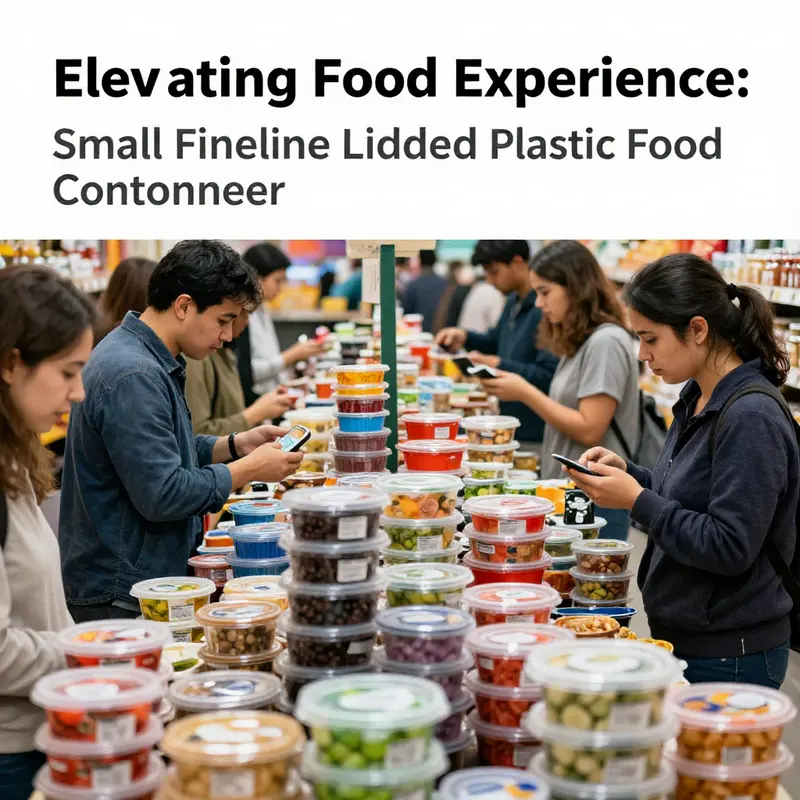
The small fineline lidded plastic food container sits at a crossroads where everyday practicality meets evolving values. Its fineline lid edge is more than a design flourish; it is a tactile promise of a tighter seal, a cleaner pour, and a more confident transit experience. In compact kitchens and crowded office fridges, these containers offer a precise profile that supports portion control, ease of stacking, and a reliable barrier against leaks. The combination of a lightweight body, a secure lid, and a transparent or translucent lid provides a practical toolkit for home cooks, students, and professionals who juggle multiple meals or snacks on a busy day. Yet beneath this everyday usefulness lies a market that is rapidly adjusting to broader concerns: sustainability, regulatory pressure, and shifting consumer expectations that demand not only performance but accountability for the footprint left behind when food is stored, moved, and disposed of. The result is a nuanced landscape where functionality and responsibility must coexist, and where the fineline design is increasingly viewed as a core competency rather than a cosmetic accent.
The market remains dominated by plastic for reasons of cost, robustness, and familiarity. Thin-wall containers, in particular, lean on the inherent advantages of plastic: light weight, clear visibility of contents, resilience in refrigeration, and compatibility with a wide range of temperatures. The appeal of the fineline lid—an edge that seems to cradle the contents more snugly than standard lids—extends beyond mere aesthetics. It translates into practical benefits: reduced spill risk during transport, improved moisture retention for variable meals, and a perceived higher quality when the container is presented to a guest or a coworker. However, the sector is visibly shifting as stakeholders confront the cradle-to-grave implications of plastic use. A three-way split has begun to emerge in the market, with traditional plastic still carving out space for everyday utility, paper-based alternatives gaining traction for their perceived environmental friendliness, and biodegradable options expanding as producers respond to policy changes and consumer demand. This triadic dynamic is reshaping investment priorities, production lines, and the strategic positioning of suppliers who once thrived on plastic alone.
A pivotal driver of change is consumer preference, which is becoming more explicit about environmental impact and lifecycle responsibility. In China, research from the China Consumer Association indicates that more than six in ten consumers favor biodegradable or compostable materials and are willing to pay a premium for them. This willingness to fund sustainability reflects a broader global sentiment that packaging choices cannot be abstracted from their end-of-life outcomes. It also signals a market shift that is accelerating the transition toward plant-based or bio-based materials, even when initial costs are higher. The implications for small fineline lidded containers are profound: manufacturers are pressed to demonstrate that performance—seal integrity, microwave tolerance where applicable, and long-term durability—can coexist with improved biodegradability, recyclability, or compostability. In response, innovators are pushing the envelope across multiple fronts, seeking to balance lightness with strength and to ensure that the finished product satisfies not only regulators but everyday users who expect clean handling and a pleasant unpackaging experience.
Industry players are responding with a multi-pronged strategy that reflects both the demand for sustainability and the realities of mass production. The market is entering what many analysts describe as a three-way split between traditional plastics, paper-based options, and biodegradable or bio-based materials. Demand for biodegradable solutions is growing notably, supported by venture funding, government incentives, and corporate sustainability commitments. Some manufacturers are investing in self-built laboratories to modify bio-based polymers, aiming to tailor performance characteristics such as heat resistance, stiffness, and seal longevity while meeting international standards for safety and environmental impact. This convergence of materials science and quality control is particularly relevant for products intended to travel, stack, and display in front-of-house settings. Labs enabling targeted material modifications are helping to close the gap between the desirable physical properties of plastic and the ecological assurances that new materials must provide. In practice, this often translates into containers that are lighter yet sturdier, with lids that snap securely and lids that stay clear and readable for display purposes, attributes prized by both home users and catering operations that seek to present items with a professional finish.
The practical applications of small fineline lidded containers extend well beyond simple lunch boxes. They remain indispensable in homes, schools, offices, and food-service environments where portability, organization, and presentation intersect. The stackable design minimizes space usage, a critical feature in compact kitchens and break rooms. For some users, the transparent lid offers a window into the contents, enabling quick identification of portions or ingredients without opening the container and potentially compromising freshness. When meals are prepared in advance, the quality of the seal matters as much as the visual appeal. The interplay of lid geometry and edge design helps reduce condensation on the inner walls, which can otherwise lead to soggy residues or uneven cooling. The durability of the container, even after repeated cycles of refrigeration and microwaving (where permitted), fosters trust in households that rely on leftovers and meal-prep routines. In such contexts, efficiency is not merely about how many meals can be stored, but about how consistently those meals maintain texture, color, and aroma from fridge to plate.
The evolution of the fineline lid is also tied to the broader conversation about safety and standards. While plastic continues to deliver unmatched resilience, critics point to its end-of-life consequences, pushing the industry to articulate clearer pathways for recycling or composting. This pressure, paired with consumer insistence on safer materials, has spurred a careful re-examination of resin choices, additives, and barrier properties. The result is a market where the value proposition of a container now hinges on a suite of factors: the robustness of the seal, compatibility with temperatures encountered in typical home or office environments, clarity of the lid for visibility, and the capacity to meet evolving regulatory expectations for food contact materials. The outcome is a more transparent dialogue between manufacturers and purchasers, where claims about sustainability are tested against real-world performance benchmarks and lifecycle analyses rather than marketing rhetoric alone. In this environment, the fineline feature becomes not only a sealing advantage but a symbolic marker of quality assurance and thoughtful design, signaling to customers that their choice is aligned with both practical needs and responsible packaging behavior.
Market structure reinforces these dynamics through its polarization. Large, vertically integrated players often lead in the premium, sustainable segment, leveraging scale to invest in advanced polymers, rigorous testing, and standardized performance across geographies. They can justify higher price points by offering uniformity, traceability, and brand trust that appeals to institutional buyers and global distributors. In contrast, smaller firms are carving out niches by focusing on regional markets, customization capabilities, and product lines tailored to specific dining practices, such as bento-style sets or spice-station kits. For these players, the fineline lid becomes a differentiator—not simply for freshness but for a more refined presentation that supports portioning and meal planning in small spaces. The competitive landscape thus rewards both engineering excellence—where a lid’s fit and edge geometry are optimized—and agile, customer-centric services that can accommodate bespoke sizes, shapes, or branding. This dual pathway preserves a vibrant ecosystem where diverse needs can be met, from mass-market convenience to artisanal or event-driven applications that prize aesthetics as much as function.
Despite the progress, regulatory pressures and carbon neutrality goals continue to shape growth trajectories. Policymaking in some regions is accelerating shifts away from traditional plastics, while incentives and certification programs encourage manufacturers to pursue recyclable or compostable alternatives. The consequence is a more careful, long-horizon planning rhythm for product development and material sourcing. Companies must weigh the cost implications of switching or blending materials against the potential gains in sustainability metrics, customer goodwill, and access to certain markets. For many players, the most viable path lies in a balanced portfolio: maintaining robust plastic options where performance is paramount, while incrementally incorporating greener materials in lines designed for lighter, shorter-term usage or for niche segments that demand a low-carbon footprint. In this sense, the fineline container becomes a versatile platform rather than a single-material commitment—a platform capable of evolving with consumer expectations and regulatory realities without sacrificing the very conveniences that have made small fineline lidded containers indispensable in homes and businesses alike. In this sense, the fusion of precise design, reliable performance, and responsible materials will define the next era of this packaging format, ensuring it remains a practical and appealing option as markets adjust to a more sustainable, interconnected world.
For broader market context, see the industry analysis linked here: https://www.grandviewresearch.com/industry-analysis/plastic-food-container-market. For an example of sustainable packaging alternatives that complements mainstream containers, explore this kraft paper bowl option: custom-disposable-kraft-paper-bowl-take-away-kraft-paper-salad-bowl-with-pet-lid.
Final thoughts
The journey through the features and benefits of small fineline lidded plastic food containers underscores their pivotal role in modern food service practices. Their sleek design, choice of materials, and versatility have transformed them into essential tools for various industries, notably enhancing the experience for both businesses and consumers. By prioritizing environmental sustainability and staying attuned to market trends, stakeholders can make informed choices that align with consumer expectations while contributing positively to the planet. Implementing these containers will not only streamline operations but also elevate the overall presentation and appeal of food offerings.