
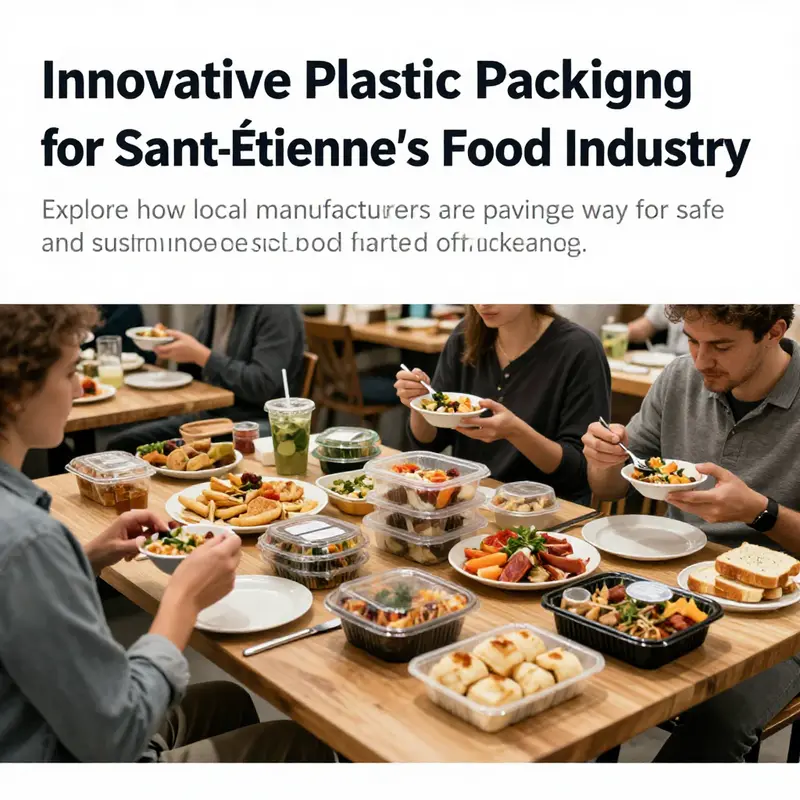
As the culinary landscape in Saint-Étienne evolves, the need for effective and safe plastic packaging solutions has never been more crucial. Local manufacturers like Laboratoires Industriels Pichot play a significant role in catering to the growing demands of the food and beverage industry, from bubble tea shops to catering services. This article delves into the impact of Pichot’s offerings on local businesses, the stringent safety standards that govern food packaging, the environmental regulations shaping the industry, and the market opportunities ripe for exploration. By understanding these aspects, businesses in Saint-Étienne can make informed decisions that enhance their packaging strategies and boost their market positioning.
null

null
Safeguarding Taste and Trust: Safety Standards for Plastic Food Packaging in Saint-Étienne, France

Saint-Étienne sits within a broader European ecosystem where plastic food packaging is a field of safety judgment and regulatory navigation. In practice, every container destined to touch food carries a chain of assurances from materials to manufacturing, testing, labeling, and end-use. In France, compliance aligns with European rules that prevent harmful substances from migrating into food while enabling practical packaging for modern service and retail. This framework emphasizes migration testing, documentation of conformity, and traceability across the supply chain. Testing is integrated into product development and supplier selection, with data generated under realistic use conditions to ensure performance from hot-filled containers to refrigerated storage.
The core is EC No 1935/2004, guiding general safety requirements and the need for declarations of conformity and traceability. Migration testing uses total migration limits (TML) and specific migration limits (SMLs) to cap potential migrants under defined conditions. For hot, fatty, or acidic foods, testing reflects the intended use scenario, including temperature and contact time, with validated data supporting food-contact compatibility.
ISO-based management, notably ISO 22000, complements the EC framework by structuring hazard analysis and critical control points across production. Local Saint-Étienne manufacturers should maintain clear food safety plans, supplier qualifications, and ongoing monitoring. Traceability through batch numbers and supplier documentation supports audits and rapid issue resolution, reinforcing consumer trust in a regional packaging ecosystem.
European regulatory tightening and the ongoing PPWR (Packaging and Packaging Waste Regulation) horizon require proactive compliance planning. Recyclability, end-of-life stewardship, and supply-chain transparency influence material selection and design choices. Packaging strategies emphasize materials with known migration profiles, join forces with regulatory specialists, and communicate compatible use instructions clearly to food-service operators and retailers.
In practice, the result is a dependable, transparent packaging landscape where safety data sheets, migration data, and traceability underpin everyday operations—from bakery counters to takeout windows. Saint-Étienne-based teams that translate regulatory language into practical design and production decisions can respond quickly to customer needs while upholding safety and quality standards. A credible packaging story includes explicit conformity declarations, supported by testing data and traceability records, and a commitment to environmental objectives that matter to today’s industry.
External resources and practical examples help operators navigate choices. For instance, European Commission guidance on Food Contact Materials clarifies migration concepts and regulatory trajectories, while local suppliers illustrate how compliant offerings can deliver reliable performance and clear safety narratives. This integrated approach – legitimate science, robust documentation, and proactive communication – defines how Saint-Étienne and its surrounding region can continue to supply safe, compliant plastic packaging to a diverse and expanding food sector.
Rethinking Plastic Food Packaging in Saint-Étienne: From Regulation to Responsible Design
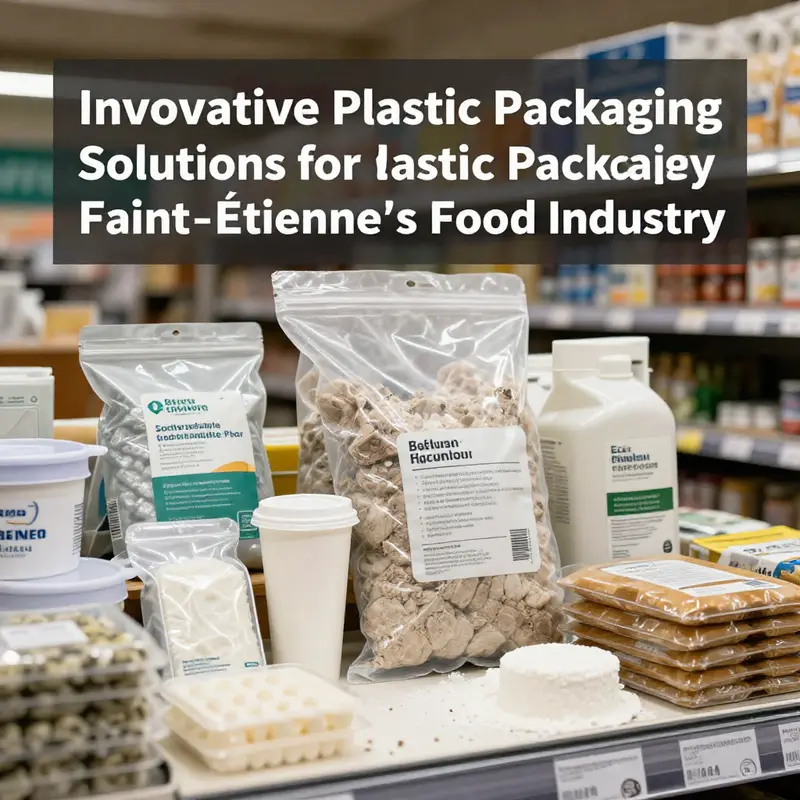
In the Saint-Étienne region, as in much of Europe, the landscape of plastic food packaging is shifting from a focus on utility and cost to a layered framework of responsibility that blends safety, sustainability, and regulatory clarity. The European Union’s Packaging and Packaging Waste Regulation (PPWR) is not merely an abstract policy; it is a set of concrete expectations that will shape every link in the chain—from raw material selection and container design to manufacturing processes, logistics, and end-of-life management. For firms operating in Saint-Étienne or sourcing from its broader network, the PPWR signals a clear turn toward a circular economy approach. By 2026, when the regulation becomes fully effective, every plastic package intended for food contact must meet explicit criteria regarding recycled content, recyclability, and lifecycle performance. This is not about a sudden overhaul; it is about a gradual, integrated transition that aligns product design with a system that rewards reuse, separation, and responsible resource use. In practical terms, the new rules translate into a required baseline of recycled content, sourced from post-consumer plastic waste, and a rising emphasis on single-material constructions and reliable end-of-life pathways. The policy language is precise enough to compel changes in supplier selection, product development, and the way Saint-Étienne manufacturers communicate about packaging throughout the supply chain. The shift is informational as well as operational: it asks producers to document supply chains, verify recycled content, and provide traceability that can be audited by customers and regulators alike. This is a challenge, yes, but it is also an opportunity to redefine the competitive edge of local packaging solutions in a market that increasingly values transparency and environmental stewardship. The region’s robust tradition of manufacturing, combined with a growing demand for compliant, high-quality containers, creates a fertile environment for responsible design that does not compromise on performance or aesthetics. For companies in Saint-Étienne, this era is about balancing safety standards, regulatory compliance, and the evolving expectations of retailers and consumers who increasingly want packaging that tells a credible sustainability story.
The PPWR’s core directive is straightforward in intention, even if its implications are nuanced in practice. It requires all plastic packaging to incorporate a minimum share of recycled material, with the emphasis squarely on post-consumer waste streams. This focus on post-consumer sources aims to close the loop of consumption, ensuring that the packaging used in food applications contributes to a genuine recycling economy rather than becoming a residual stream. While there are narrow exemptions, especially in specialist sectors such as certain pharmaceutical contexts, the food packaging domain bears the lion’s share of this obligation. For Saint-Étienne producers, the practical effect is a redefinition of sourcing strategies: every batch of resin or resin blend must come with verifiable documentation that confirms both provenance and compliance with quality and safety standards for contact with food. The regulatory language also foregrounds adaptability—recognizing that the usable life of a packaging solution is tied to how easily it can be recycled after use. In this sense, the regulation is both a guardrail and a compass: guardrails ensure safety and responsibility, while the compass points toward design choices that favor recyclability, material compatibility, and clear labeling.
Beyond recycled content, the PPWR elevates expectations around recyclability, reusability, and even biodegradability where appropriate. Recyclability is interpreted not as a generic attribute but as a property that must be demonstrable through end-of-life performance. In practice, this means that designs should favor straightforward mechanical recycling pathways, minimize the use of mixed materials that complicate separation, and favor adhesives and coatings that can be cleanly detached or are themselves recyclable. Reusability, where feasible, becomes an alternative to single-use disposal, particularly in contexts such as take-away or multi-use service models. Biodegradability and compostability are acknowledged options for specific segments or regional waste streams, but they are not a blanket substitute for recyclability. The central thrust is to reduce complexity in packaging structures, to promote compatibility with existing municipal recycling streams, and to support standardization across disciplines and supply chains. These considerations put pressure on product developers and procurement teams in Saint-Étienne to think in systems terms: how will a container behave through heat exposure, during transport, and after serving its intended purpose? Will it maintain integrity for the required shelf life while still allowing efficient recovery and sorting at end of life? The answers to these questions are increasingly expected to be documented and verifiable, enabling brands, retailers, and regulators to trace a container’s journey from cradle to cradle.
To support this transformation, the European Commission and national authorities have intensified investments in waste collection infrastructure and harmonized recycling signals across member states. A unified approach to labeling and sorting standards is designed to reduce consumer confusion and improve capture rates for recyclable plastics. The regional and national authorities’ push toward better segmentation and clearer messaging is especially relevant for Saint-Étienne’s diverse packaging ecosystem, which includes manufacturers that serve local bakeries, cafés, and quick-service chains, as well as supermarkets with complex logistics networks. The practical implication is that packaging developers must anticipate not only the material properties and performance during use but also the post-use documentation and the consumer-facing cues that help households separate materials correctly. In effect, compliance becomes a product feature as much as a regulatory requirement. For Saint-Étienne’s forward-looking firms, the opportunity lies in designing containers that naturally align with recycling streams, reduce contamination, and enable reliable post-consumer processing, all while preserving food safety, product visibility, and brand integrity.
In this context, local procurement and supplier relationships acquire new strategic significance. Saint-Étienne has long leveraged a mix of domestic suppliers and regional manufacturing clusters to serve the French market. The PPWR accentuates the value of working with credible, food-grade packaging providers that can demonstrate robust quality control, traceability, and regulatory alignment. A locally trusted source of food-grade plastic containers—one that already operates within Europe’s safety frameworks—offers a practical pathway for smaller producers and portfolio brands that might previously have found compliance financially or technically daunting. Such a partner can help translate the regulatory language into concrete packaging configurations, test protocols, and documentation packages that satisfy auditors and customers alike. Rather than viewing the regulation as a barrier, Saint-Étienne companies can frame it as a catalyst for process improvements, better supplier collaboration, and more transparent product storytelling. In this regard, the regional ecosystem stands to benefit from makers who combine regulatory literacy with engineering discipline, ensuring that packaging remains both safe for use with food and compatible with recycling streams at scale.
A meaningful strand of this transition is the emphasis on traceability and verifiability of recycled content. The law’s appetite for post-consumer inputs requires that supply chains demonstrate the origin of recycled materials, the quality of the recycled stream, and the way those materials are integrated into new food-contact packaging. Companies in Saint-Étienne can build this capability through partnerships with sorting facilities, recyclers, and resin suppliers that can provide chain-of-custody documentation, batch-level testing, and third-party certifications. The outcome is more than regulatory peace of mind; it is a stronger, more resilient supply chain that can weather fluctuations in virgin resin markets and fluctuations in international trade. A side benefit of this emphasis on traceability is improved consumer confidence. If a brand can communicate that its container contains a defined percentage of post-consumer content, and that the entire lifecycle from disposal to recovery is traceable, it strengthens the value proposition for retailers seeking sustainable packaging choices.
The practical design implications of PPWR for Saint-Étienne hinge on a move toward simpler, more recyclable structures. This often means transitioning away from multi-layer, multi-material configurations that are technically superior for barrier properties but difficult to separate and recycle. It also means rethinking how barrier performance is achieved; for some products, the answer lies in smarter single-material solutions or compatible laminates that can be efficiently recovered. It is here that design engineering and material science intersect with policy. The objective is not to sacrifice product quality or shelf life but to deliver performance with materials that can re-enter the recycling system with minimal loss of value. This cultural and technical shift invites a more purposeful use of recycled content, a careful selection of additives and colorants that do not impede sorting, and an emphasis on surface coatings that can be stripped or are themselves recyclable. In Saint-Étienne, such considerations dovetail with the city’s manufacturing strengths and its access to a workforce skilled in plastics processing, injection molding, extrusion, and related processes. The synergy between design discipline and local capability creates a realistic path to compliance that preserves competitiveness.
To illustrate how these shifts can take shape in the region, consider the broader ecosystem of packaging supply that Saint-Étienne can draw upon. A locally anchored yet EU-compliant approach can leverage established sources of food-grade containers that already conform to stringent safety standards and environmental expectations. These suppliers can serve as the baseline for meeting PPWR requirements while enabling experimentation with recycled-content formulations and end-of-life strategies. They also offer practical benefits in terms of lead times, after-sales support, and the capacity to conduct joint pilot programs with food producers in the area. The value of such collaborations is not merely risk reduction; it is the creation of a knowledge-rich environment where packaging design is driven by real-world performance data and regulatory feedback, rather than by isolated specifications. In this sense, Saint-Étienne can become a model of how regional manufacturing centers adapt to European-wide environmental rules while maintaining a strong local identity and supply resilience. A concrete path forward for firms in this city is to secure a trusted local packaging partner who can translate regulatory requirements into concrete, testable packaging concepts and provide ongoing compliance documentation throughout the product’s life cycle. This approach aligns with the broader trend toward closer supplier relationships, shorter value chains, and more transparent product storytelling that today’s consumers increasingly demand. For example, consider a practice in which a packaging solution for ready-to-eat meals is designed to maximize recyclability by using a single polymer family, coupled with a clearly defined percentage of post-consumer content and a straightforward end-of-life pathway. Such a package not only satisfies regulatory criteria but also simplifies sorting for households and boosts the overall recovery rate in Saint-Étienne’s municipal systems. This is the kind of alignment that supports a resilient, future-ready packaging ecosystem in the region.
In parallel with these regulatory and design considerations, Saint-Étienne businesses should also pay attention to the experiential side of packaging. The aesthetics, tactile feel, and display quality of containers influence consumer perception and brand confidence. While the PPWR emphasizes recyclability and recycled content, it does not neglect the importance of packaging that communicates quality and care. Designers must balance performance with visual appeal, ensuring that recycled-content materials still present well on shelves, in digital catalogs, and in consumer hands. The end goal is packaging that is not only compliant but also attractive, functional, and aligned with the brand’s environmental commitments. This broader mandate invites a collaborative culture among packaging engineers, marketing teams, and supply-chain professionals in Saint-Étienne, fostering innovations that can translate into faster time-to-market, improved product differentiation, and stronger relationships with retailers who are increasingly benchmarking sustainability alongside price and performance.
The regulatory horizon also invites regional actors to consider training and upskilling as a core investment. As packaging designs evolve to accommodate higher recycled-content levels and simpler material compositions, the skill sets required to implement, test, and validate these changes grow in importance. Local training programs, partnerships with technical institutes, and on-the-job upskilling can help the workforce adapt to the new standards without eroding productivity. This aligns with the region’s manufacturing heritage, which has long valued practical expertise, precise process control, and continuous improvement. When Saint-Étienne companies invest in their people alongside their processes, they build a competitive advantage that is sustainable beyond regulatory compliance. In addition, the region can cultivate a reputation as a source of reliable, compliant, and innovative packaging solutions for food manufacturers across France and beyond. The result is not only better compliance outcomes but also a more dynamic local economy that supports jobs, skills development, and environmental leadership.
The practical effect of PPWR in Saint-Étienne, therefore, is not a single mandate but a multifaceted invitation to reimagine packaging from cradle to cradle. It encourages suppliers and users to rethink material choices, supply chains, and product life cycles, with a clear emphasis on traceability, recyclability, and post-consumer recyclate integration. In this context, a well-chosen packaging partner becomes more than a supplier; it becomes a partner in risk management, brand storytelling, and sustainability governance. For the Saint-Étienne community, this is an opportunity to demonstrate that local manufacturing can lead in responsible packaging without compromising on quality or availability. It is a chance to align regional strengths with European standards, strengthening the city’s position as a hub where design, engineering, and environmental stewardship converge to produce packaging that serves people, business, and the planet.
To connect these ideas to tangible choices, a practical example is the idea of sourcing from a locally anchored supplier that understands both the food-contact safety landscape and the realities of post-consumer material economies. The goal is to create a packaging portfolio that can adapt to evolving regulations, accommodate a growing share of recycled content, and remain cost-competitive through improved process efficiencies and waste reductions. In Saint-Étienne, small and medium-sized enterprises can harness the advantages of regional collaboration, shared testing facilities, and joint procurement strategies to optimize the transition. The outcome is not merely compliance but a strengthened capacity to innovate, a more resilient supply chain, and a credible environmental narrative that resonates with consumers, retailers, and regulators alike. As these shifts take hold, Saint-Étienne can become a reference point for how a regional packaging ecosystem can evolve to meet ambitious EU goals without compromising performance, aesthetics, or local economic vitality.
For readers seeking concrete resources while navigating this transition, consider exploring industry options that illustrate the direction of travel without tying reflection to a single product line. A useful reference point is the practical packaging options described in the broader packaging blog ecosystem, which highlights flexible solutions, including individual container designs and materials that emphasize recyclability and responsible sourcing. For example, you can examine a widely discussed packaging option that showcases kraft paper-based, take-away packaging with strong performance characteristics and clear end-of-life pathways. This example, while not exhaustive of all possibilities, demonstrates how packaging can be both functional and aligned with circular economy principles. Such references help translate regulatory expectations into tangible design and sourcing decisions in Saint-Étienne.
In sum, the PPWR and related European initiatives place Saint-Étienne at a pivotal juncture. The challenge is to convert regulatory requirements into real-world packaging that protects food safety, preserves product quality, and supports end-of-life recovery. The opportunity is to harness local manufacturing strengths, collaborative supplier relationships, and a culture of continuous improvement to create a packaging ecosystem that is transparent, reusable where feasible, and robust in its recycling performance. The result can be a more sustainable, competitive, and resilient packaging landscape in Saint-Étienne—one that meets the letter of the law while delivering value to brands, retailers, and consumers who increasingly demand responsible design and credible environmental stewardship.
External resource: https://eur-lex.europa.eu/legal-content/EN/TXT/?uri=CELEX:32024R1597
Internal link: For context on practical packaging solutions aligned with sustainable design, see examples of kraft paper packaging options and related designs at this resource: octagonal kraft paper packaging.
Shaping Saint-Étienne’s Food Future: Local Plastic Packaging Opportunities in a Regulating Era
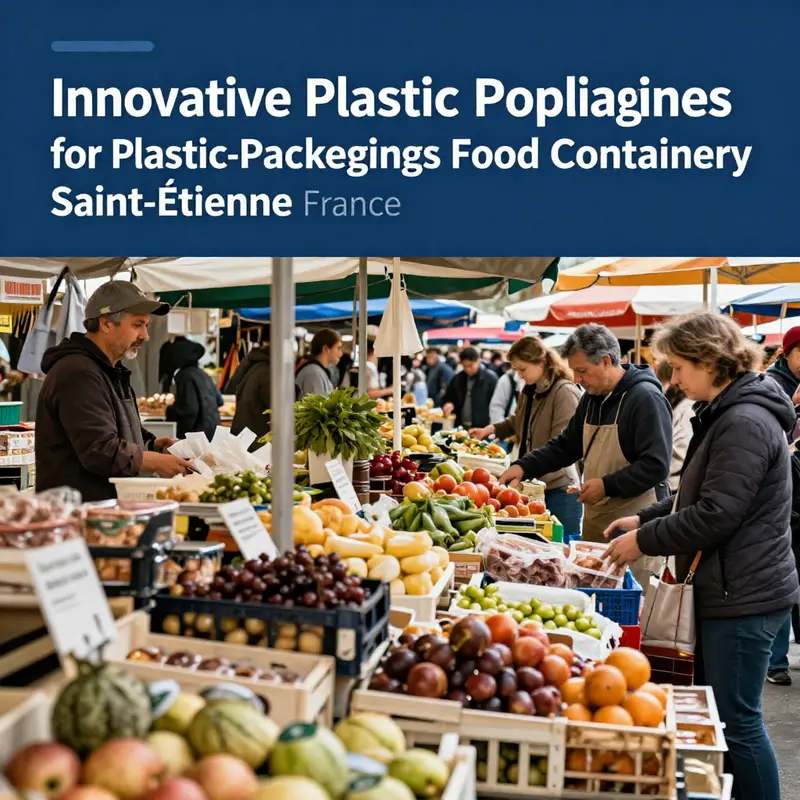
Saint-Étienne sits at a crossroads of tradition and transformation. Nestled in the Auvergne-Rhône-Alpes region, the city has long thrived on manufacturing and logistics, and its food sector mirrors that robust industrial fabric. The market for plastic packaging containers used in food contexts in this part of France is not simply about supplying durable, sealable vessels; it is about aligning with a shifting regulatory landscape, evolving consumer expectations, and a regional ecosystem that values reliability, traceability, and design-savvy solutions. As a local economy organized around small-to-medium food producers, hospitality businesses, and larger retail channels, Saint-Étienne presents a distinctive set of opportunities. The demand is driven less by novelty and more by the practical need for packaging that preserves hygiene, ensures safety in handling and transport, and supports efficient shelf and service operations. In this environment, packaging decisions ripple across the supply chain—from the back of the house in a bustling restaurant kitchen to the in-store display in a regional hypermarket, and onward to the consumer who expects both convenience and responsibility from the products they buy. The market thus rewards solutions that perform reliably under heat and cold exposure, resist leaks and breakage, offer clear product visibility, and, crucially, demonstrate compliance with stringent food-contact safety standards. Even as these requirements intensify, the Saint-Étienne area remains attractive for local manufacturers and distributors who can couple technical capability with a keen understanding of regional logistics and customer needs. The proximity to markets across eastern France and the broader European corridor translates into lower lead times, more predictable replenishment cycles, and greater agility to respond to seasonal demand spikes—whether tied to baking seasons, regional food festivals, or the supply rhythms of supermarkets and catering networks. In this sense, the local packaging sector is less about a static product and more about a dynamic system where materials, processes, and partnerships must harmonize with evolving regulations and consumer consciousness. It is within this context that a robust, compliant supply chain for plastic food containers becomes a strategic asset for Saint-Étienne-based food businesses and their partners, enabling them to navigate an increasingly complex market with confidence while maintaining cost efficiencies that support competitive pricing and sustainable growth.
The regulatory backdrop adds both pressure and opportunity. The European Union’s ongoing push toward more sustainable packaging and stricter end-of-life management, complemented by France’s anti-waste agenda, creates a framework that rewards traceability, recyclability, and safer materials. The looming effects of the EU’s Packaging and Packaging Waste Regulation (PPWR) are shaping supplier capabilities and customer expectations alike. Under these conditions, the value of working with a local, established plastics packaging producer becomes clear. Such a partner can deliver more than just containers; they can provide a cohesive packaging solution that includes material choices, manufacturing controls, quality assurance, and documentation that supports compliance and market access. In particular, Saint-Étienne enterprises stand to gain from suppliers capable of offering food-grade containers designed for reliability across a range of food contexts—from ready meals and bakery products to frozen items and culinary preparations destined for take-out and catering. The emphasis is not only on the container’s performance but also on the supply chain’s resilience and the ability to trace every unit back to a controlled, auditable source. This level of transparency is increasingly demanded by retailers, regulators, and end consumers who want to know that packaging materials meet safety and sustainability standards.
A practical reading of the local landscape points to a credible path forward. There is a well-established local source in the region that has built its reputation on producing plastic containers for food and related products while maintaining strict compliance with food-contact safety norms. This producer’s capabilities cover a broad spectrum of packaging needs, including rigid containers with reliable sealing properties, sturdy forms that guard against leakage during transport, and containers that retain their appearance through multiple handling cycles. In addition, the ability to serve food and health-related applications—areas that require elevated standards for material purity, stability under various temperatures, and robust barrier properties—positions a local supplier as a strategic partner for Saint-Étienne’s diverse food economy. For food businesses, this means access to containers that not only fulfill functional requirements but also align with regulatory expectations and consumer demands for safer, more sustainable packaging options. The importance of such alignment becomes even more pronounced as new environmental rules take hold. With upcoming regulatory milestones and the broader European emphasis on circular economy principles, packaging suppliers are pressed to demonstrate traceability and to offer solutions that can be recycled, repurposed, or composted where feasible, while still performing under the rigors of daily use in kitchens, distribution centers, and retail environments.
In addition to the essential material and regulatory considerations, the Saint-Étienne market benefits from a logistics rationale that supports speed, reliability, and cost control. The city benefits from well-developed distribution networks that connect manufacturing bases with domestic markets and neighboring countries. Proximity to Lyon, a major hub for food trade shows and a gateway to wider European markets, offers a pragmatic route to market access. Participation in regional trade events and collaboration with local distributors can help manufacturers in Saint-Étienne extend their reach beyond the local dimension, reaching restaurateurs, caterers, and retailers who require scalable packaging solutions with consistent quality. For small and mid-size food producers in the area, the ability to secure containers through a local partner reduces lead times, smooths inventory management, and lowers transportation costs—an appealing set of advantages for businesses that operate on tight margins and need predictability in supplier performance.
Within this context, the sustainability opportunity stands out as a defining driver. Consumer expectations are increasingly anchored in the idea that packaging should perform its role without becoming a source of waste and harm to the environment. The market in Saint-Étienne therefore rewards innovation in materials and design that promote recyclability, reusability, or compostability, while still fulfilling core requirements such as shelf stability, product protection, and ease of use. A local packaging supplier can lead in this space by offering solutions that balance performance with environmental responsibility, providing options for containers that are compatible with recycling streams or that incorporate bio-based or compostable alternatives where feasible. The result is a packaging ecosystem that helps food businesses in Saint-Étienne reduce their environmental footprint without sacrificing the practicality needed to run kitchens, catering operations, and retail packaging functions efficiently.
From a strategic perspective, market-entry considerations in Saint-Étienne tend to favor firms that can offer a cohesive value proposition. This includes not only the containers themselves but also the underlying capabilities around design customization, small-batch production, and responsive logistics. Local producers that can adapt to the specific needs of bakeries, fast-casual concepts, or regional delicatessens—where packaging often doubles as a part of the brand’s presentation—are well positioned to capture a segment of the market that seeks both function and aesthetic appeal. The appetite for branded packaging solutions is real, with local operators increasingly looking for partners who can deliver packaging that reinforces product identity, offers a premium look, and integrates seamlessly into existing packaging lines and displays. At the same time, the push toward sustainable credentials means that customers are more than ever interested in the lifecycle of the packaging they choose. They want to know how containers are sourced, what materials they use, and how those materials fit into recycling and waste management strategies. In response, a local supplier can offer a combination of robust performance, regulatory compliance, and clear, auditable documentation that supports sustainability reporting and regulatory filings.
On the practical side of business development, several pathways appear particularly promising for Saint-Étienne’s packaging ecosystem. Partnerships with local distribution networks can provide reliable access to a broad customer base that includes restaurants, caterers, and small-scale producers who require regular, predictable supply. Participation in regional trade fairs and industry events—especially those that bring together food-service operators and packaging suppliers in the broader Lyon area—offers a chance to showcase capabilities and establish personal networks that translate into long-term contracts. Given the logistics advantages of the region, digital channels can complement physical presence by expanding reach into B2B marketplaces, enabling smaller players to discover and evaluate packaging options with minimal overhead. In this sense, the Saint-Étienne market rewards suppliers who can merge physical presence with digital accessibility, delivering a holistic experience that covers product performance, regulatory alignment, and environmental accountability.
For businesses aiming to position themselves effectively in this landscape, collaboration with local distributors and a steady emphasis on regulatory readiness are essential. The packaging solutions must be adaptable to a range of formats and applications—from high-clarity containers that showcase baked goods to rugged, temperature-resistant options for frozen or ready-to-serve meals. The ability to design and manufacture containers with customized features—such as specific lid closures, tamper-evident elements, or branding opportunities—adds a dimension of value that can differentiate a supplier in a competitive market. Yet alongside customization, there is a need for standardization and traceability across the supply chain. In a market where environmental compliance and product safety are non-negotiable, the capacity to provide documented proof of material compatibility with food contact regulations, along with clear information about recyclability or compostability pathways, becomes a decisive factor in supplier selection. The local context thus rewards a balanced approach: the agility to respond to changing customer needs and regulatory expectations, the technical capability to deliver reliable containers across diverse food applications, and the organizational discipline to maintain consistent quality, traceability, and communication.
Looking ahead, the Saint-Étienne opportunity is underpinned by a broader European appetite for responsible packaging that supports both operational efficiency and environmental stewardship. The region’s manufacturing heritage and logistics strength provide a sturdy platform for scaling packaging solutions to meet the demands of restaurants, caterers, and retailers who must navigate a tightening regulatory environment while maintaining margins and brand integrity. The strategic takeaway for local manufacturers and their customers is that success will depend on combining careful material selection with rigorous process controls, while embracing the possibility of integrating recyclable and biodegradable options where they align with performance and cost realities. It is a pragmatic path: one that honors the city’s industrial foundations, responds to the ecological and regulatory currents shaping the future of packaging, and keeps pace with the evolving preferences of consumers who want safe, visually appealing, and responsibly produced food containers.
In this light, it becomes clear that Saint-Étienne’s packaging market is not a static niche but a living system in which the choice of container is part of a larger dialogue about safety, sustainability, and supply chain resilience. A local, capable producer that can ensure food-grade quality, temperature stability, leak resistance, and reliable sealing—while also delivering clear documentation and eco-conscious options—emerges as a pivotal partner for the city’s food economy. This is not merely about replacing one plastic container with another. It is about rethinking the packaging portfolio to harmonize safety, performance, and environmental responsibility within a regional context that values dependable partnerships, efficient logistics, and a future-oriented approach to how food is packaged, transported, and enjoyed. The opportunity lies in building a coherent ecosystem where manufacturers, distributors, and food businesses in Saint-Étienne collaborate to create packaging solutions that meet today’s needs and anticipate tomorrow’s standards. And as the region continues to evolve, the capacity to adapt—while staying anchored in quality and regulatory compliance—will determine which players rise to meet the market’s demands and which drift behind a shifting regulatory tide.
Internal link reference for broader packaging alternatives in the regional context: disposable 700ml kraft paper bowl. This example illustrates how packaging ecosystems are expanding beyond plastics to include compostable and recyclable paper-based options, highlighting the importance of flexible supplier partnerships that can accommodate a spectrum of materials while maintaining standards of safety and sustainability. Such diversification is increasingly relevant in Saint-Étienne as businesses look to balance cost, performance, and environmental impact in a market that prizes practical solutions with a clear regulatory and ethical compass.
For readers seeking a broader regulatory frame, the Ministry of Ecological Transition provides ongoing resources and updates on packaging consumption, waste management, and sustainability initiatives. This external reference offers a broader view of how national policy intersects with regional market dynamics and supplier capabilities, helping to situate Saint-Étienne’s opportunities within a continental trajectory toward more sustainable packaging systems: https://www.ecologie.gouv.fr/.
Final thoughts
In conclusion, the plastic packaging food container market in Saint-Étienne is poised for growth, driven by rising safety standards, environmental regulations, and innovative manufacturers like Laboratoires Industriels Pichot. Businesses that adapt to these dynamics and leverage the available opportunities can enhance their operational efficiency and consumer appeal. Investing in compliant, high-quality, and sustainable packaging solutions not only ensures safety but also aligns with modern consumer expectations, paving the way for a prosperous future in the bustling gastronomic scene of Saint-Étienne.