

One ounce clear plastic cups are more than just small containers; they play a critical role in portion control and presentation across various food service segments. Their lightweight design, clarity, and durability make them an ideal choice for bubble tea shops, restaurants, food trucks, catering services, and corporate events. This article delves into the diverse applications of these cups, explores their material composition, weighs the benefits against potential drawbacks, and addresses the growing environmental considerations associated with their use. Each chapter offers insights that collectively illustrate why these cups can elevate your service while meeting the demands of modern consumers.
Crystal Clarity, Precise Portions: The Subtle Power of One-Ounce Clear Cups in Modern Food Service
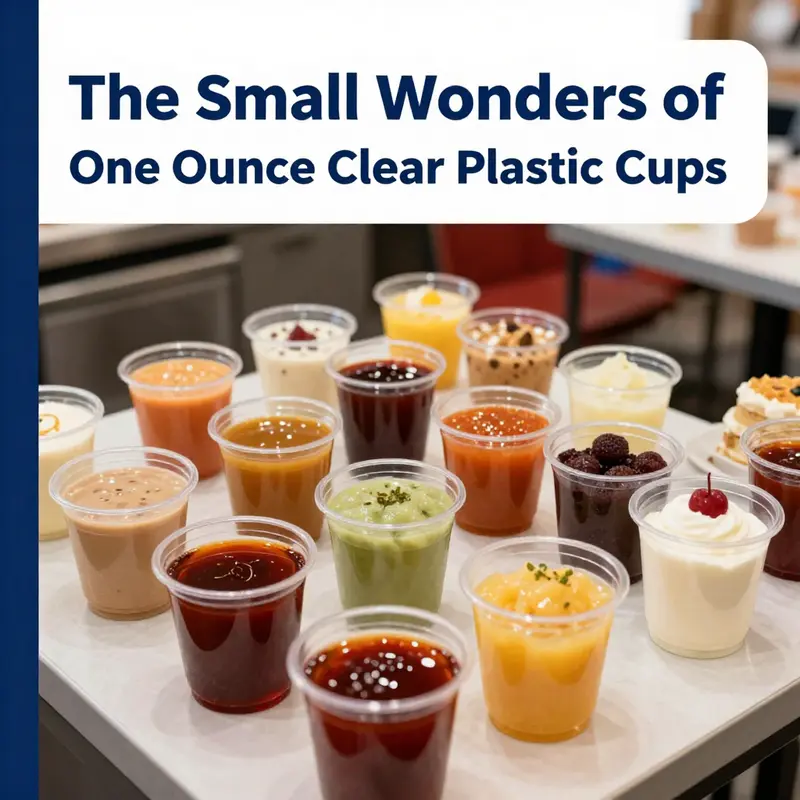
The smallest tools in a busy kitchen often yield the most outsized impact, and one-ounce clear plastic cups are a prime example. Their unassuming, transparent shells carry more than just liquid or garnish; they carry potential—potential to standardize portions, to guide guests through tasting menus, and to streamline operations in a way that is both efficient and visually satisfying. These cups are designed to be seen as much as they are to hold. Their clarity invites the eye to linger on sauces, dressings, and tiny desserts, turning color, texture, and sheen into a quick, intuitive cue for quality. In a service environment where consistency and speed are prized, the value of such a simple tool becomes obvious: it is a small, dependable anchor in a sea of variables. They function within a broader system of portion control, packaging, and presentation that modern food service relies upon to deliver predictable experiences to guests while protecting margins and kitchen workflow alike. The capability to hold a precise amount without overshadowing the product itself makes these cups a staple across a spectrum of service settings, from fast casual counters to catering operations, where every gram and every second counts.
Portion control sits at the heart of these cups’ practical virtue. In any operation that serves multiple items or frequent tasting opportunities, precision matters. The clear, defined capacity of an individual cup helps servers and line cooks deliver uniform portions with minimal variance. When a guest receives a consistent one-ounce portion of a sauce, a dressing, or a topping, expectations are met, and the perception of care is reinforced. This consistency translates into less waste and more reliable inventory planning. A well-calibrated system reduces the back-and-forth that can plague busy shifts—questions about “how much is in there?” or “is this portion right for this guest?”—and shifts them toward smooth, repeatable service. In other words, these cups become an instrument of reliability. They provide a tangible, easy-to-measure standard that mirrors the broader industry push toward precise, data-informed operations, where even the smallest unit is part of a larger discipline.
Another enduring use is condiment dispensing. In fast-casual venues, buffet lines, and catered events, guests expect single-serve portions that keep areas clean and maintain quality control. One-ounce clear cups make it simple to offer a range of sauces, dressings, sambals, or spreads in a way that minimizes cross-contamination and simplifies refill cycles. The transparent wall makes it easy for staff to monitor fill levels at a glance, while the rigid, food-grade material ensures safe handling during restocking. The need for quick restocks and minimal downtime is met by a design that stacks compactly and resists deformation under regular use. For the operator, this translates to a less cluttered prep area, faster replenishment, and a consistent guest experience that supports service pace without sacrificing presentation.
Sampling programs render a different kind of value. Here the clear cup becomes a stage right for color, texture, and aroma to perform for guests amid tastings and product launches. The transparent cup allows color quick reads—a quick, appetizing cue that can entice a guest to try more. In a tasting setting, the one-ounce size is especially apt; it satisfies curiosity without requiring the guest to commit a larger portion, and it protects delicate samples that might otherwise be wasted. The cup’s light weight also supports mobile tasting strategies at outdoor events or in-store demos, where both portability and hygiene are paramount. The combination of portability, visibility, and portion control makes the one-ounce cup a quiet facilitator of sampling success, smoothing the guest journey from first look to first bite.
In medical and laboratory contexts, the same compact, transparent format can serve niche but important roles. Hospitals, clinics, and care facilities often require precise liquid dosing for supplements or controlled portions of nutrition. In these settings, the cups are chosen for their food-grade clarity, BPA-free materials, and compatibility with sterile handling practices. They are built to endure a range of temperatures and to remain inert where accuracy and safety are critical. While this application is more specialized than the restaurant floor, it demonstrates the broader versatility of the format: a single cup design that can move between consumer-facing service and controlled, institutional uses without compromising safety or reliability. This cross-functional utility is a mark of good design in disposable serving ware, where standardization reduces procurement complexity and simplifies training across departments.
Catering and kitchen operations benefit from the cups’ lightness and stackability. In large events, the ability to transport and deploy hundreds or thousands of units efficiently matters as much as the portion control itself. The cups stack neatly, minimize bulk during transport, and pair well with flat lids or minimalist closures that guard hygiene while maintaining quick access for serving stations. The flat-lid option, in particular, supports spill prevention on crowded buffets and during transportation, ensuring that guest experiences stay neat from kitchen to table. In a professional kitchen, where space and speed determine throughput, a simple, predictable item can shave minutes off repetitive tasks every service. The cups become even more valuable when brands extend their visual language through the display of sauces or samples. Transparent walls work as a vehicle for color and consistency, reinforcing quality signals that may otherwise require more elaborate plating. The practical benefits—ease of storage, rapid distribution, dependable performance—combine with a clean, minimal aesthetic that suits diverse menus and service styles.
From a cost and disposal perspective, one-ounce clear cups often emerge as a favorable choice in high-volume operations. The unit cost per cup is low, and the per-use cost remains predictable even as volumes fluctuate. In many settings, this predictability helps operators forecast budgets and plan inventory with less guesswork. On the environmental side, the conversation around disposables has evolved toward responsible use and recycling where possible, as well as exploring alternatives that reduce waste while preserving hygiene and food safety. For establishments weighing options, the trade-off between single-use convenience and the demands of sustainability is not a zero-sum game. Instead, it becomes a decision framework that weighs daily throughput, cold-chain compatibility, and the environmental footprint of the packaging mix. One-ounce clear cups are part of that framework because they deliver consistent, measurable service with a level of simplicity that supports lean operations. They enable fast restocking, straightforward waste streams, and clear labeling that helps keep prep and service aligned with health and safety requirements.
The material makeup of these cups—commonly polypropylene (PP) or polystyrene (PS)—is central to their performance. PP offers a balance of clarity, rigidity, and temperature tolerance, while PS emphasizes transparency and a crisp, glass-like appearance that viewers instinctively associate with freshness. Both materials are chosen to withstand the rigors of a busy service environment and to hold up under both cold storage and hot-fill scenarios, where sauces or toppings might be added while a dish is still hot. The temperature resilience ensures that menus featuring reductions, warm dressings, or hot sauces can be portioned and distributed without fear of deformation or breakage. This reliability matters: when a line runs at full speed, cups that perform consistently under varying temperatures reduce the cognitive load on staff and help maintain guest confidence in the product. Visual clarity, in particular, matters here because it invites trust—the moment a guest can see the sauce’s gloss, the creaminess of a custard, or the sparkle of a gel from the cup, their perception of quality is reinforced even before tasting.
To the trained eye, the role of one-ounce clear cups extends into the realm of branding and workflow design. While the cups themselves are transparent, the surrounding presentation—labels, lids, and the placement of samples—channels how guests experience the product. A clean, uniform set of portions communicates control and consistency, reinforcing a brand’s commitment to repeatable quality. In kitchens that adopt standardized plating or tasting frameworks, such cups become a practical extension of those standards, enabling staff to deliver uniform experiences across shifts and locations. They also simplify the training process for new staff; learning a single, repeatable portion size across condiments and samples reduces the potential for mistakes during peak service. In this way, the cups contribute to a broader system of operational excellence—one that values accuracy, speed, and a reassuring level of predictability in dining experiences.
The broader packaging ecosystem also informs how these cups fit into the daily rhythms of food service. They align with the trend toward modular, single-serve components that streamline prep, service, and cleanup. For operators who manage multiple venues or a rotating menu, such modularity translates into flexibility: the same small cup can house a sauce for a signature dish one week and a dessert topping the next, all while remaining within a familiar hosting framework that guests recognize. When combined with compatible lids and display accessories, the cup becomes part of a cohesive system that supports brand consistency, reduces the risk of cross-contact, and maintains hygienic standards across the supply chain. In short, the one-ounce clear cup is not merely a vessel; it is a conduit for efficiency, presentation, and responsible packaging strategy in a dynamic hospitality landscape.
Ultimately, the appeal of this compact container lies in its unpretentious reliability. It offers a precise, visible, and hygienic way to manage small portions, add color and texture to a dish, and maintain order during busy service periods. Its role in educational tastings, catered events, or hospital cafeterias demonstrates its adaptability beyond a single use-case, while its core characteristics—clarity, strength, and temperature tolerance—anchor its place in everyday practice. In an industry that continually seeks to balance speed, cost, and guest satisfaction, the one-ounce clear cup stands as a quiet but essential enabler of consistent outcomes. It is a reminder that sometimes the most effective innovations are not bold or flashy, but precise and practical, designed to disappear into the rhythm of service while quietly elevating the guest experience. For readers exploring related packaging options, you can explore a representative example of an adaptable take-out container family here: disposable-700ml kraft paper bowl take-out octagonal rectangle paper bowl.
External resource: https://www.alibaba.com/product-detail/1oz-Plastic-Sauce-Cups-with-Flat-Lids_62587093794.html
Clear by Design: The Material Science Behind One-Ounce Clear Plastic Cups
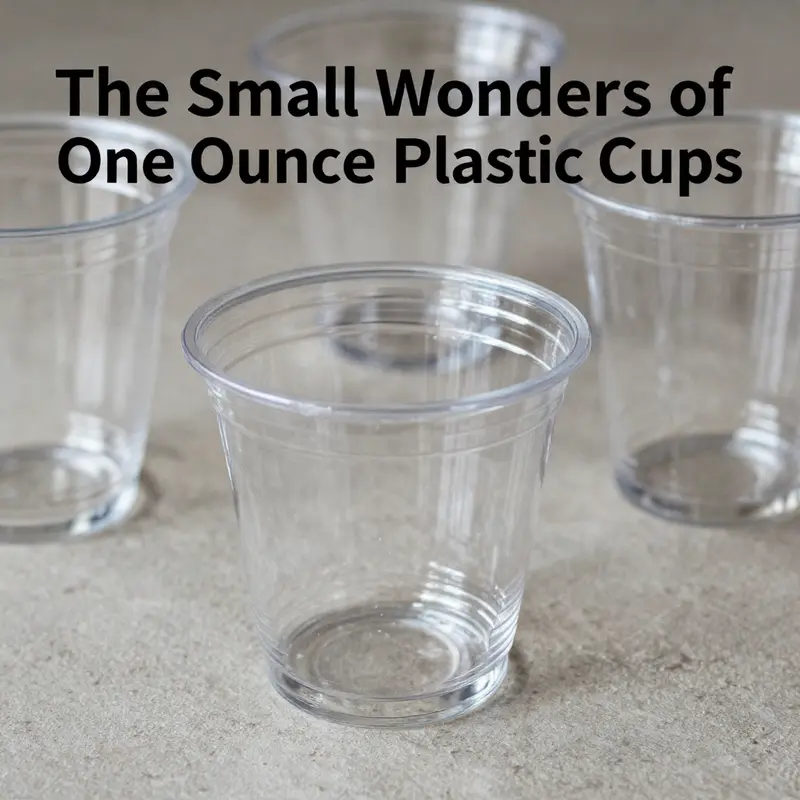
The smallest pieces in a colorfully ordered food service lineup often carry the weight of decision-making that people rarely consider. A one-ounce clear plastic cup is more than a simple vessel; it is a deliberate material choice that balances visibility, strength, temperature tolerance, and safety in a way that supports precise portioning and efficient service. In the fast-paced world of tasting flights, sauces, dressings, or quick desserts, these cups allow the contents to speak for themselves. Their transparency invites the eye to judge the product’s color, texture, and even viscosity before the first bite or sip, while their shape and edge finish protect the contents during handling and transport. This fusion of form and function is not accidental. It rests on a clear understanding of the two common polymer families that typically stand behind these cups: polypropylene and polystyrene. Each brings a distinct set of virtues to the cup’s tiny stage, and together they form a versatile toolkit for portions that must be exact, attractive, and reliable in a range of operating environments.
At first glance, the choice between polypropylene, abbreviated PP, and polystyrene, abbreviated PS, may seem like a matter of taste in aesthetics alone. Yet it is, in fact, a material decision with real consequences for how the cup behaves under load, temperature, and time. Both PP and PS are food-grade plastics, which means they are tested and approved for contact with edible products and for routine handling in kitchens, cafeterias, and catering services. The clear, bright window each cup provides into its contents hinges on the same property that makes these plastics practical for daily use: their transparency. In the world of bite-sized servings and sauces, that clarity is not a cosmetic feature but a functional one. It helps staff and customers quickly identify the portion and its condition, and it supports the presentation that can influence purchasing decisions and perceived freshness. The design intention is to keep the contents front and center while maintaining a barrier against contamination, all in a disposable, convenient form. The result is a tool that blends simplicity with a subtle, technical backbone, and that balance depends on the material’s intrinsic chemistry.
Polypropylene, or PP, stands out for its heat tolerance and its robust performance under a range of temperatures. It remains tougher to crack under impact than many other plastics, which translates into fewer broken cups during busy service times, when cups are filled, passed, stacked, and stored in crowded back-of-house conditions. The resistance to cracking and chipping is not merely a convenience; it reduces waste and the need for replacement stock during a shift, which can be crucial when small portions are being served repeatedly to many guests. More importantly for food safety, PP is BPA-free. In recent years, that BPA-free aspect has been a meaningful reassurance for operators who want to minimize potential health concerns associated with certain bisphenol compounds in plastics. This attribute aligns with broader consumer expectations around safe, food-contact materials, especially in settings where guests may be sensitive to chemical cues and where transparency in practice—literally and figuratively—can become part of a brand’s trust story.
Another feature of polypropylene that bears mention is its general resilience when subjected to hot fill tasks. While not every PP cup is designed for hot beverages, the polymer’s thermal tolerance makes it a credible choice for applications that require some exposure to warmth or heat during handling or serving. In many kitchens, sauces heated in a pot or a warmer might be portioned into cups that then cool, set, or settle before serving. PP cups can hold their shape and integrity under those conditions, maintaining a consistent experience for the customer. This heat resilience is a practical advantage when portion control is paired with temperature-sensitive contents. The combination of heat tolerance, impact strength, and BPA-free status positions polypropylene as a dependable workhorse for many one-ounce clear cup applications, particularly where hot or warm handling is part of the workflow.
Polystyrene, by contrast, earns its reputation through clarity and rigidity. The material’s optical properties are exceptional, producing a crystal-clear appearance that makes the contents look as bright and appealing as possible. That level of clarity is highly valued in settings where the visual appeal of a sauce’s color or a dessert’s tint can influence a guest’s impression. The rigidity of PS supports a stiff edge and a crisp wall profile, which helps the cup hold its shape with light, precise portions. However, PS typically sits a notch below PP in heat resistance. While cold beverages and solid servings often ride well in PS, hot-fill or high-heat exposure is a more limited realm for this polymer. In practice, PS cups are frequently favored for cold or room-temperature servings and for items that benefit from the visual strength of a clear, rigid cup without the demand for high-temperature tolerance.
The decision between PP and PS is rarely about a single factor. It is about how the cup will be used in a real workflow, how long it will hold a product, and what temperature profile the contents will experience from the moment of filling to disposal. When a supplier talks about a 1 oz clear cup, the conversation often centers on whether a slice of sauce, a dollop of dressing, or a small dessert needs a cup that can tolerate brief contact with warmth during plating or a pass through an open warmer. If that use case leans toward hot or warm handling, PP often earns favor for its broader temperature range and durability. If, instead, the priority is maximum transparency and a firm, rigid structure for cold servings that demand an unblemished display, PS can be a compelling option. In all cases, both materials are designed to meet food-grade standards, and each can be produced with a wall thickness and a bottom profile calibrated to ensure reliable stacking, secure lid compatibility, and predictable portion sizes. This is not a matter of chasing the flash of aesthetic perfection alone; it is a matter of engineering the cup to perform consistently across dozens or hundreds of interactions each service period.
The interplay of material properties also echoes in how these cups interact with the people who use them. The eye first notices how clean and clear the cup looks, a feature that is enhanced when the walls are evenly formed and the edges are uniformly finished. A cup with a smooth surface and uniform thickness helps liquids slide in and out with minimal resistance, reducing drips and spills as staff fill, carry, and present portions. The coating or treatment, if any, remains subtle, because the primary objective is to preserve the cup’s simple, transparent profile while offering a safe, reliable experience for the contents. Users appreciate a cup that feels solid in the hand—the kind of tactile assurance that comes with a crisp edge and a steady weight that signals dependable performance rather than a fragile, uncertain tool. This tactile and visual reliability matters in a crowded service environment, where noticeable weakness in a single cup can disrupt a line, slow service, or compromise portion accuracy.
From a design perspective, the walls of these cups are not just about containment. They influence how a product behaves during pouring, mixing, and even when retrieval from a display bin occurs. The wall thickness, the smoothness of the interior surface, and the precision of the bottom contribute to predictable pouring dynamics and uniform portion sizes. The rim or lip finish—whether rounded or slightly chamfered—also plays a role in ease of use, ensuring that customers can seal the contents with a lid without requiring extra effort. For many applications, a snug lid is essential to prevent spillage during transport or mobile service. In such cases, the cup must cooperate with a lid design that complements its geometry, a task that ultimately depends on the tolerances achieved during molding and the consistency of the polymer’s characteristics. In short, the material choice cascades through every phase of the cup’s life—from the moment it leaves the molding line to the final moment a customer enjoys the portion.
The practical implications of these material choices extend into the operational realities of a food service operation. A 1 oz cup is a small unit, but it is a workhorse in concepts like controlled portions and high-turnover service. The precise volume is essential for standardizing dressings and sauces that accompany small bites or tasting menu items. It helps reduce waste because each guest receives a consistent amount, enabling more predictable costs and inventory planning. It also supports portion-control narratives for brand consistency across multiple locations. The transparent body—whether PP or PS—lets the kitchen or waiting staff confirm that the cup is clean and empty before reuse or disposal, a small but meaningful check in a busy environment. The choice between heat tolerance and optical clarity is rarely about aesthetics alone; it translates into how confidently a team can handle a product, how predictable the serving process is, and how efficiently a service can scale across shifts, events, or seasonal peaks.
Even as these clear cups bring value through their material properties, operators increasingly weigh the environmental implications of disposable plastics. PP, being BPA-free, aligns with a long-running consumer concern about chemical safety in food contact materials. Yet environmental stewardship also invites attention to how these cups are managed after use. Recycling programs and local waste streams differ by region, and even among PP and PS, certain streams accept one material more readily than the other. In general terms, polypropylene tends to have broader acceptance in many curbside and industrial recycling programs, while polystyrene recycling can be more limited and variable by locale. The net effect is that the environmental performance of a 1 oz clear cup depends not only on its material properties but also on the end-of-life options available where it is consumed. The design intent remains to maximize safety and performance while providing a straightforward path to responsible disposal where possible, and this is a conversation that increasingly accompanies any brief for a single-use plastic product.
As buyers and operators navigate these material choices, a broader landscape of alternatives begins to appear on the horizon. Clear cups can be part of a larger packaging strategy that includes sustainable, paper-based, or compostable options in certain contexts. The decision to lean toward PP or PS in a given operation can be informed by a mix of factors: the type of contents served, the service speed, the temperature range during handling, the availability of compatible lids, and the specific waste management realities of the venue. In some cases, a restaurant or event may adopt a hybrid approach, using clear plastic cups for certain courses or tastings while also offering paper-based or other eco-friendly options for other menu items. This adaptability, paired with a clear understanding of which material best meets the needs of each use, keeps the chain of decision-making tight and rooted in the practical realities of the kitchen and the dining room. To ground the discussion in a broader packaging ecosystem without losing sight of the cup’s interior logic, operators can explore resource pages and product lines that discuss the spectrum of single-use packaging options beyond clear plastic cups. For a sense of the broader packaging field and to consider sustainable alternatives in context, see the eco-friendly recyclable pulp cup holder options that some suppliers highlight as part of a shift toward greener take-out solutions.
eco-friendly-recyclable-pulp-2-4-cups-coffee-take-away-cup-holder
External resource: https://www.plastimade.com/products/1-oz-clear-disposable-plastic-cups
The Subtle Power and Practical Trade‑Offs of One‑Ounce Clear Plastic Cups
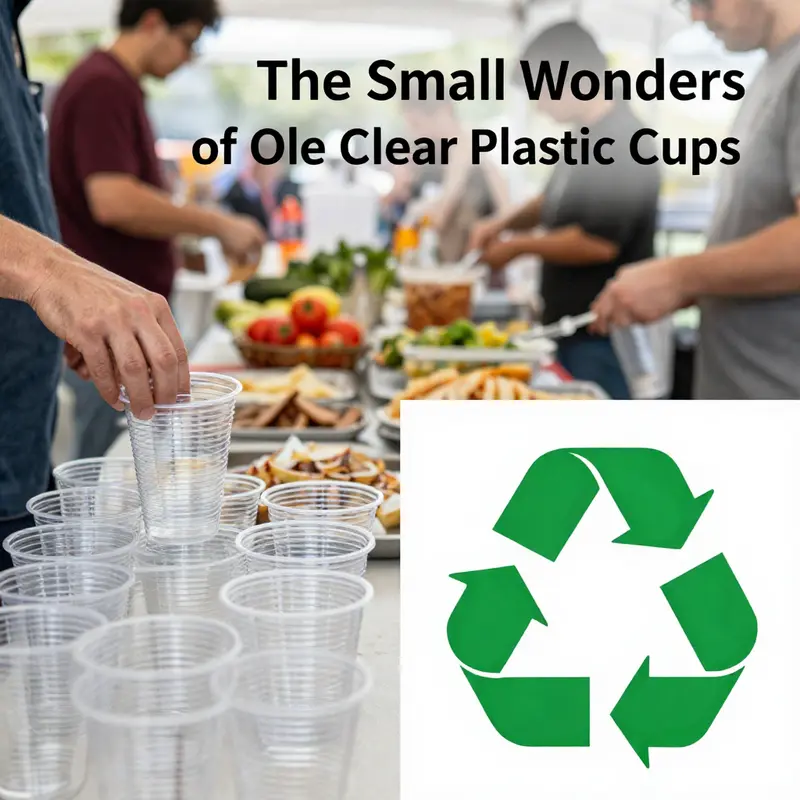
A one‑ounce clear plastic cup may seem like a trivial item, yet it is a purpose‑built tool that balances visibility, precision, and efficiency in modern food‑service environments. Made primarily from food‑grade polypropylene or polystyrene, these cups provide a bright, transparent window that lets staff and guests instantly assess color, texture, and volume without removing the cup from the line. This visual clarity supports portion control, enhances perceived quality, and reduces the steps required for quality checks.
Because the cups are lightweight and compact, they occupy minimal storage space and can be stacked or loaded in bulk, lowering transportation costs. Their low per‑unit price makes them economical for high‑volume sampling programs, condiment stations, and mini‑dessert servings. The material’s rigidity offers shatter resistance—a safety advantage over glass—while still being flexible enough to handle cold and mildly warm liquids. However, extreme heat can cause warping or chemical migration, so hot fillings should be avoided unless a heat‑tolerant variant is selected.
Operationally, the cups can be pre‑filled, lined, or paired with optional lids to extend shelf life or prevent spills. Reusable, dishwasher‑safe designs exist for venues seeking to reduce waste, but many operators prefer single‑use cups to eliminate cross‑contamination and simplify inventory control. The environmental impact of disposable plastics remains a concern; recycling rates for small mixed‑plastic items are low, prompting many businesses to explore reusable mini‑containers or alternative sustainable serviceware.
From a consumer perspective, the clear cup conveys honesty and quality—guests can see exactly what they are about to taste, which builds trust and enhances the overall experience. When used thoughtfully—balancing cost, safety, and sustainability—one‑ounce clear plastic cups become more than a simple vessel; they are a strategic element that supports precision, efficiency, and brand perception in the fast‑paced world of food service.
For further reading on eco‑friendly alternatives, consider exploring recyclable paper cup options such as those offered at https://greendispopack.com/product/disposable-eco-friendly-custom-paper-coffee-cups-with-lid/. Additionally, the United Nations Environment Programme provides a comprehensive overview of plastic pollution at https://www.unep.org/resources/report/plastic-pollution.
null
null
Final thoughts
One ounce clear plastic cups are a practical solution for portion control and presentation in various food service environments. Their versatility caters to restaurants, food trucks, and corporate events while ensuring ease of use and safety. However, as awareness about environmental sustainability rises, it’s critical for businesses to evaluate their disposable products’ ecological impact. By making informed choices about materials and suppliers, food service operators can enjoy the benefits of these cups while contributing to a more sustainable future. In conclusion, choosing the right products not only enhances service quality but also aligns businesses with the evolving consumer expectations regarding sustainability.