
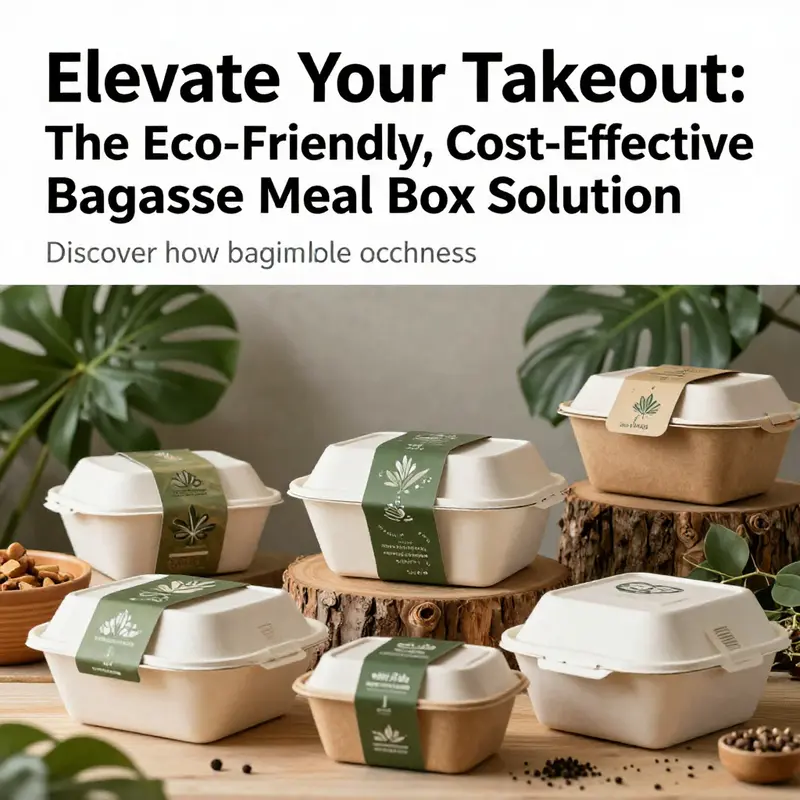
In a world increasingly focused on sustainability, the demand for eco-friendly packaging solutions is on the rise. Bagasse meal boxes, made from sugarcane waste, are paving the way for restaurants, food trucks, beverage chains, and catering services to meet consumer expectations. These meal boxes not only showcase a commitment to the environment but also deliver cost-effective strategies and reliable customization options. Throughout this article, we’ll explore the eco-friendly attributes of bagasse meal boxes, the various pricing structures that can benefit your business, and the importance of supplier reliability and customization in choosing the right packaging for your operations.
From Sugarcane Byproduct to Global Clean Packaging: The Eco-Forward Case for Bagasse Meal Box Wholesale
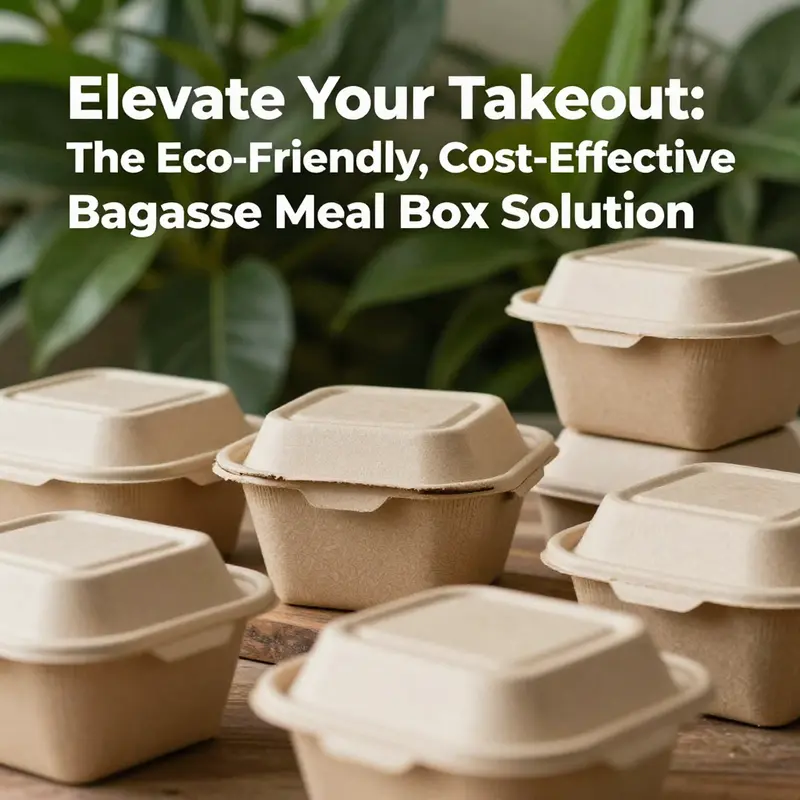
The wholesale landscape for bagasse meal boxes sits at a strategic crossroads where environmental stewardship meets scalable practicality. Businesses that seek to align their operations with sustainability metrics increasingly demand packaging solutions that do more than cradle food; they tell a story of responsible resource use, responsible waste management, and enduring supplier reliability. Bagasse meal boxes, derived from the fibrous residue of sugarcane, offer a compelling narrative in that story. They are not merely an alternative to plastic or virgin-paper packaging; they are a practical embodiment of a circular economy approach, where a byproduct of one process becomes a valuable input for another. This chapter explores how the eco-friendly attributes of bagasse meal boxes inform a robust wholesale market, how their lifecycle supports sustainability goals, and what buyers should consider when sourcing at scale for hospitality, foodservice, and retail operations.
At the heart of bagasse’s appeal is its renewable origin. After sugar has been extracted from the stalk, the remaining fiber—bagasse—retains structural integrity that makes it suitable for forming boxes, bowls, and containers. Using bagasse for packaging diverts this agricultural residue from landfills and reduces the demand for wood pulp and petroleum-based plastics. In markets where forest resources are under pressure or where the environmental costs of fossil-based packaging are increasingly scrutinized, bagasse-based options offer a tangible way to lower the embedded footprint of food-service operations. When wholesale buyers evaluate suppliers, they often weigh not only the material’s origin but the entire lifecycle—how each phase from raw material to end-of-life is managed, and how resilient the supply chain remains under demand fluctuations.
Biodegradability and compostability sit near the core of bagasse’s environmental profile. Bagasse meal boxes are designed to break down naturally in composting environments, typically turning into organic matter within a matter of weeks under industrial composting conditions. Some assessments indicate decomposition within roughly 60 to 90 days, a timeline that aligns well with municipal composting infrastructures in many regions. This accelerated end-of-life pathway offers a meaningful contrast to conventional plastics, which can persist in ecosystems for centuries and leave behind a residue of microplastics. Importantly, the decomposition process for bagasse is intended to leave no toxic residues, a factor that increasingly informs purchasing decisions where consumer safety and environmental justice are prioritized. This non-toxicity also matters for food contact, where regulators and brand owners seek assurance that packaging will not compromise the integrity of meals, sauces, or ingredients.
Recyclability further complements the composting narrative, although local guidelines determine the exact fate of bagasse products after their first life as a meal container. In many jurisdictions, bagasse products are classified as compostable and recyclable under specific municipal or regional frameworks, particularly when they are clean and free of coatings or additives that would hinder composting streams. For wholesale buyers, the practical implication is a packaging portfolio that can ride different waste management ecosystems, depending on local capabilities, rather than a one-size-fits-all disposal path. In turn, this fosters a more flexible logistics and waste-management plan that can adapt to city-by-city requirements as a company expands its market footprint. The safety dimension often surprises first-time buyers: bagasse containers are non-toxic and resistant to leaching, even with hot liquids or fats. Their heat tolerance—well above typical consumer-use temperatures—ensures performance without compromising food safety. This combination of safety and functional durability reduces concerns about food safety incidents tied to packaging, a factor that suppliers and buyers monitor closely in wholesale operations where large volumes are moved daily.
Production efficiency also factors into the wholesale calculus. The manufacture of bagasse meal boxes tends to require less energy and water than traditional plastic packaging production. While each facility differs in process details, the material’s nature and the process of transforming agricultural byproducts into box-form offerings generally yields a favorable energy and water footprint ratio. This efficiency contributes to lower overall carbon emissions per unit of packaging when compared with conventional plastics. Additionally, bagasse boxes are typically compatible with common kitchen workflow environments. They can be heated in microwaves and conventional ovens, and they hold up well in refrigerated settings as well. This makes them viable across multiple stages of food service, from hot entrees to chilled desserts, without compromising structural integrity. For wholesale buyers, the ability to serve a broad range of menu items in a single packaging line reduces the need for multiple packaging formats and simplifies inventory management.
The story of bagasse in wholesale packaging is also intrinsically tied to the circular economy. Sourcing this material supports a model in which resources flow through the economy and repeatedly return to nature with minimal waste. Bagasse is a byproduct of sugar production rather than a primary feedstock that competes with food or consumes additional crop land. When wholesale buyers adopt bagasse-based packaging, they help close the loop by turning an underutilized residue into a packaging solution that, at end of life, reenters composting streams rather than polluting land or sea. This circularity is not a mere theoretical ideal—it translates into tangible business advantages. Inventory planning can leverage the stable availability of bagasse-based inputs in many sugar-producing regions, where mills generate sizable quantities of bagasse annually. For manufacturers, this supply chain stability can translate into more predictable production scheduling, which in turn supports reliable lead times for wholesale orders.
Pricing dynamics in wholesale bagasse packaging reflect the economies of scale that come with mass production and steady demand. While material costs are influenced by agricultural cycles and regional sugar production, buyers frequently see meaningful price advantages at higher order volumes. The economics of bulk orders often place unit costs in the realm of single-digit or sub-dollar figures per piece, especially when the packaging is standardized and produced in large runs. The opportunity for volume-based discounts makes bagasse containers attractive not just from an environmental standpoint but from a cost-control perspective as well. For brands that require custom designs—branding, logos, or color schemes—the price structure can accommodate premium runs, but even with customization, the overall cost per unit can remain competitive when orders are scaled across months or seasons. This alignment of sustainability with financial prudence is a central driver for retailers, caterers, and food-service chains that operate on predictable demand curves and long-term supplier relationships.
Customization plays a crucial role in translating environmental goals into marketable advantage. Wholesale buyers increasingly seek packaging that communicates a brand’s commitment to sustainability while delivering practical functionality. Bagasse boxes can be tailored in several ways: size and shape variants to accommodate different menu items, print-ready surfaces for branding messages, and functional features such as moisture resistance or grease barriers used without compromising compostability. The design dialogue between supplier and buyer often centers on maximizing both performance and lifecycle benefits. For instance, enabling a packaging line that handles a diverse menu while preserving the product’s integrity during transport can reduce returns and waste and improve customer satisfaction. In many markets, suppliers respond with a spectrum of formats—from compact portions to family-style bowls—and offer branding options that align with corporate sustainability pledges without undermining the material’s natural attributes.
Reliability and supplier capabilities are critical for wholesale buyers who depend on consistent quality and predictable delivery. Bagasse-based packaging must meet stringent standards in food contact safety, barrier performance, and stiffness, especially when used for hot or oily dishes. Suppliers that demonstrate clear certification pathways, robust quality control processes, and scalable manufacturing capacity offer a level of risk mitigation essential to wholesale operations. Capacity planning, backup sourcing, and transparent communication about lead times and minimum order quantities help buyers align procurement with kitchen demand, seasonal peaks, and promotional campaigns. In this context, the sustainability story becomes more credible when paired with a dependable service proposition—the ability to deliver consistent size runs with on-time shipping, clear invoicing, and responsive after-sales support.
From a buyer’s perspective, the decision to pursue bagasse-based packaging in wholesale channels is built on a mosaic of factors. Environmental performance, of course, remains a cornerstone. Yet the economics of scale, the flexibility of customization, and the reliability of supply carry equal importance. The future of bagasse meal box wholesale will likely hinge on how suppliers articulate and verify the lifecycle advantages that matter to procurement teams: renewable sourcing, waste-diversion outcomes, energy and water use during production, and the practical pathways for end-of-life management by customers. Forward-looking buyers are increasingly asking for life cycle assessments and third-party certifications that confirm environmental claims. They seek partners who can demonstrate traceability from raw material suppliers through to end-of-life processing. In markets where municipal composting programs are well established, bagasse packaging can populate a sizable share of the take-away packaging landscape. In others, the emphasis shifts toward recyclable streams and better consumer education about disposal options. Either way, the overarching aim is to align packaging choices with broader sustainability commitments, brand promises, and consumer expectations.
Alongside environmental considerations, it is essential to acknowledge market dynamics around customization and design. Economies of scale do not negate the demand for brand-aligned packaging. Rather, they enable brands to invest in personal touches—color, shape, and print—without sacrificing environmental integrity. The possibility of imprinting logos, taglines, or color bands on bagasse boxes helps convert packaging into a marketing channel that reinforces a brand’s green narrative. This convergence of aesthetics and stewardship reinforces consumer trust and can influence purchasing decisions in both B2B and B2C contexts. Importantly, while customization adds value, it should remain compatible with compostability. Coatings and inks that degrade during composting or that leave toxic residues defeat the purpose of choosing bagasse-based options, and responsible suppliers in the space avoid those pitfalls by offering plant-based inks and minimal, inert coatings.
For wholesale buyers who want to connect the dots between sustainability and performance, a practical step is to map the packaging choice to the company’s waste management ecosystem. If a restaurant partner or catering operation has access to an industrial composting facility, bagasse packaging aligns neatly with compostable waste streams. If facilities near a region support curbside composting for compostable materials, bagasse can perform similarly, though the specifics of local guidelines must be followed. When such programs are limited, the recyclable pathway becomes more relevant, underscoring the need for packaging designed to be accepted by local recycling streams and free of barrier layers that would hinder processing. In every case, a transparent dialogue between supplier and buyer about end-of-life outcomes matters just as much as the material’s performance in hot or cold service.
To guide readers toward practical steps, consider this approach: start with a baseline assessment of your current packaging mix and end-of-life outcomes. Identify hot spots where conventional plastics dominate and where waste-stream misalignment causes inefficiencies or environmental concerns. Explore bagasse-based options that fit the most frequently used sizes, ensuring that the baseline performance is robust for standard menus. Incrementally introduce customization aligned with core items, limiting the number of SKUs to maintain supply-chain efficiency while expanding in response to demand. Track metrics such as waste diversion rates, recycling or composting uptake, and any changes in food safety incidents related to packaging. Over time, you can validate improvements through a simple life-cycle lens: inputs, usage, and end-of-life outcomes. This approach helps wholesale buyers demonstrate measurable progress toward sustainability goals while maintaining the reliability and cost controls essential to wholesale operations.
From a practical standpoint, one might also consider the broader ecosystem of packaging offerings that share environmental commitments. While bagasse stands out for its byproduct origin and compostability, it does not operate in isolation from other sustainable materials. A well-balanced supplier portfolio can include complementary options such as recycled-paper boards or plant-based bioplastics for items where bagasse may not be the most suitable fit. In all cases, maintaining alignment with environmental stewardship while meeting operational realities is the objective. A thoughtful blend ensures that the wholesale operation can adapt to shifts in consumer preference, regulatory changes, and advances in composting infrastructure without sacrificing reliability or cost efficiency.
As you navigate these decisions, an internal link to a resource focused on eco-friendly packaging can offer practical context for the broader packaging ecosystem. For instance, one can explore materials and design considerations through a resource that emphasizes sustainable, take-away packaging options. This linkage not only enriches understanding but also anchors the bagasse narrative within a broader, practical framework for decision-makers seeking responsible packaging solutions. eco-friendly take-away packaging provides a real-world illustration of how brands are integrating sustainability with branding in a wholesale context, while remaining mindful of performance and end-of-life outcomes.
In sum, the eco-friendly attributes of bagasse meal boxes resonate across environmental impact, production efficiency, and circular economy considerations. Wholesale buyers benefit from a product that leverages agricultural byproducts, reduces reliance on virgin resources, and supports waste-diversion outcomes. The path to scale involves careful attention to supply reliability, cost dynamics, and the customization needs that help brands translate their sustainability commitments into tangible consumer value. By embracing bagasse as more than a substitute and recognizing it as part of a broader systems approach to packaging, wholesalers can contribute meaningfully to a more sustainable food ecosystem while maintaining the operational agility that modern food-service demands require. An ongoing commitment to transparency, certifications, and lifecycle thinking will further strengthen the alignment between environmental performance and business performance, ensuring bagasse-based packaging remains a viable, scalable option for years to come.
External resource: For a broader context on the material and its role in sustainable packaging, see https://en.wikipedia.org/wiki/Bagasse.
null
null
Reliability and Customization at Scale: Navigating Bagasse Meal Box Wholesale with Confidence
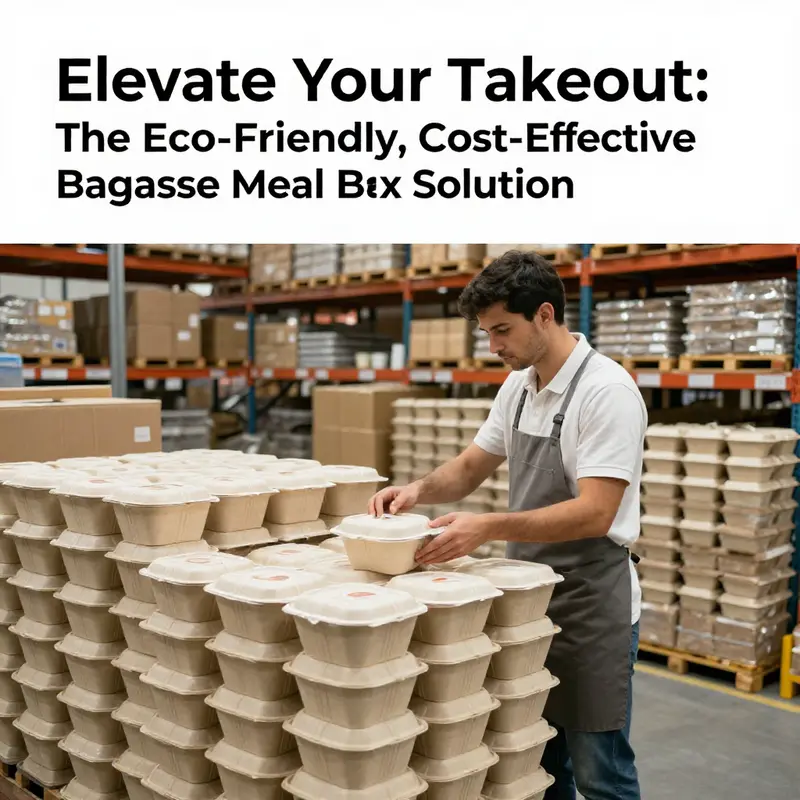
In the evolving landscape of sustainable food packaging, bagasse meal boxes have emerged from niche alternatives to mainstream options for many food-service operations. For buyers who need a stable, scalable supply chain, the twin pillars of supplier reliability and customization sit at the core of successful wholesale engagements. The challenge is not merely to find a supplier who can deliver a few thousand units, but to establish a pipeline that can sustain growth, maintain quality, and reflect a brand’s values through packaging choices. In this chapter, we explore how procurement managers navigate reliability and customization in bagasse meal box wholesale, emphasizing how a well-structured supplier network supports consistent performance, responsible sourcing, and strategic brand differentiation without compromising on cost discipline or timelines. The discussion rests on the premise that bagasse, a fiber derived from sugarcane waste, offers a compostable and robust alternative to traditional plastics and foams. Yet the real value for a wholesale buyer emerges when packaging providers combine material integrity with dependable delivery, clear communication, and flexible design capabilities that scale across markets and changing demand patterns.
To understand reliability in this space, buyers must look beyond unit pricing and superficial samples. A confident supplier relationship is built on verified credentials, transparent production processes, and measurable performance data. In practice, this means engaging with suppliers protected by independent third-party audits and industry-recognized food-safety standards. A supplier with documented traceability—covering raw-material sourcing, manufacturing governance, and end-to-end quality control—offers a lower risk profile for buyers who must meet stringent regulatory and customer expectations. The cost of a slip in delivery or a misalignment in quality can be high, especially when a business relies on packaging to support a critical food-service operation, protect brand reputation, and maintain customer trust. Therefore, buyers often prioritize suppliers who demonstrate a consistent delivery record, short lead times, and a track record of accommodating urgent, large-scale orders when needed. A long-term partnership approach is particularly valuable, because it signals reliability and fosters collaborative problem-solving when market conditions tighten or supply chains bend under pressure.
From a geographic perspective, China has become a central hub for bagasse-based packaging, largely due to its integrated agricultural streams, manufacturing capacity, and experience in green packaging innovations. This ecosystem includes regions with mature vertical integration, where suppliers can manage everything from raw-material procurement to finished-product delivery under one umbrella. The advantage for international buyers is clear: fewer handoffs, greater control over lead times, and the possibility of aligning production cycles with seasonal cane availability and harvest-related fluctuations. When a supplier operates with a vertically integrated model, buyers gain improved predictability in material quality and process consistency. They also benefit from unified documentation, such as pre-shipment inspection reports, product certifications, and audit results, which streamline acceptance and compliance across multiple markets. Reliability, in this sense, becomes less about a singular shipment and more about a recurring pattern of performance that sustains a buyer’s supply chain through cycles of demand variation, seasonal promotions, and expansions into new regions.
Customization, the second leg of the wholesale equation, is equally essential. The value of customization in bagasse meal boxes extends beyond aesthetics. It is about how the container’s design supports operational efficiency, brand storytelling, and user experience. Leading providers offer comprehensive OEM/ODM services that enable buyers to tailor dimensions, configurations, and materials to meet specific needs. Size, shape, and compartment layout are the foundational choices, with options such as 3-, 4-, or 7-compartment designs enabling portion control and meal alignment with varied menus. Material choices can also be adjusted to optimize heat retention, moisture resistance, or stackability. Color options—ranging from classic white and black to brand-specific hues—coupled with printed logos, slogans, or translated packaging instructions, help reinforce brand identity and communicate sustainability commitments to customers. The most capable suppliers extend this customization to functional features such as microwave-safe performance, airtight lids, and liner compatibility, ensuring the box can transition smoothly from counter service to the microwave or steam-reheating phases common in takeout operations.
Beyond the product itself, customization extends to packaging logistics. Carton configurations, shipping cartons, and palletization schemes can be designed to maximize transport efficiency and minimize damage during transit. In wholesale procurement, the ability to tailor packaging packaging—not just the box but the outer containment—translates into improved warehouse handling, reduced returns, and lower total landed costs. A thoughtful supplier will discuss protective packaging, load optimization, and even regional distribution planning, recognizing that the journey from factory to customer often accounts for a substantial portion of risk for fragile, compostable packaging; addressing these details up front yields tangible downstream benefits.
A mature wholesale relationship also relies on a predictable, transparent process for sampling and qualification. Prospective buyers are encouraged to request samples before finalizing agreements. In practice, a well-organized supplier will accommodate sample requests within a few days, enabling buyers to physically inspect material texture, rigidity, and print fidelity. This step is crucial for validating whether the bagasse composition and surface treatment meet expected durability under hot and cold service conditions. For brand teams, print accuracy is not merely a matter of visual appeal; it is a test of alignment between the company’s branding standards and the supplier’s production capabilities. A successful sample phase builds confidence and reduces the likelihood of costly rework or late-stage design changes once large-scale production is underway.
As the conversation moves from reliability and samples to scale, the conversation naturally shifts to capacity. Modern bagasse manufacturers with sizable weekly output can comfortably handle both prototyping and mass production. Production capacities exceeding millions of pieces per week are not merely about volume; they are about the capability to absorb fluctuations in demand, execute large campaigns, and support multi-location rollouts without sacrificing consistency. Scale brings about efficiency economies, allowing negotiating power on unit price as order volumes grow, while still preserving strong quality controls and compliance with international safety and environmental standards. In this context, price structure becomes a function of quantity, lead-time commitments, and the degree of customization. A well-structured wholesale agreement will articulate tiered pricing bands, clear terms for reorders, and fixed or adjustable lead times that reflect seasonality and raw-material availability. For buyers, the goal is to strike a balance between favorable unit economics and the predictability of supply—where neither price volatility nor supply interruptions derail service levels to customers.
Even as reliability and customization drive the core value proposition, a robust supplier network also supports strategic branding and environmental stewardship. Custom bagasse meal boxes are not simply packaging; they are a narrative about the business’s commitment to sustainability. A supplier capable of aligning packaging colors, branding motifs, and lid configurations with a company’s sustainability messaging can help reinforce a retailer’s or restaurant brand as an eco-conscious choice. In practice, this means thoughtful design that reduces waste, supports compostability, and communicates to end-users how to dispose of packaging responsibly. Buyers should assess each supplier’s environmental credentials, including the biodegradability of the finished product, the timeline for decomposition under appropriate composting conditions, and any certifications or audits that substantiate environmental claims.
In the real-world sourcing process, buyers lean on a combination of credentials, communication clarity, and a proven delivery history. A compelling reliability profile includes robust language support for international orders, a dedicated order-management team, and systems that provide visibility into production status, testing results, and shipment tracking. Strong repeat-buyer engagement and long-term partnerships are often the most telling indicators of trust. When a supplier demonstrates consistent performance across multiple orders and maintains open lines of communication about changes in lead times or material specifications, buyers gain confidence that the relationship can withstand supply chain shocks or regulatory shifts. The interplay between reliability and customization is not a trade-off; it is a dual pathway to resilient growth. A well-managed supplier network offers both a dependable baseline supply and the flexibility to evolve packaging designs in response to new menu items, marketing campaigns, or regional preferences.
To illustrate how these principles come together in a wholesale context, consider a hypothetical procurement journey that prioritizes verification, repeatability, and design flexibility. The buyer begins by identifying a shortlist of suppliers with verifiable business credentials, third-party audit results, and evidence of consistent delivery to international markets. The buyer then requests samples of bagasse-based meal boxes in several sizes and configurations to validate physical performance and print quality. With samples approved, the procurement team negotiates a tiered pricing schedule aligned to forecasted volumes, establishing clear lead-time commitments and service-level expectations. The conversation then shifts to customization specifics: selecting the size options that match the menu range, defining a compartment layout that supports popular meal combinations, choosing lid types that ensure airtight sealing for hot foods, and coordinating color branding and logo placement for consistency with the brand identity. The supplier, in turn, presents a packaging logistics plan that includes carton shipping configurations tailored to the buyer’s warehouses and distribution routes, minimizing damage during transit and reducing handling costs. As orders scale, the teams revisit manufacturing capacity, confirming that production runs align with peak periods and promotional campaigns, while maintaining strict adherence to food-safety standards and environmental certifications. Throughout, the buyer maintains a continuous feedback loop, using samples and pilot runs to fine-tune the product and the process, ensuring that the final wholesale arrangement delivers on reliability, customization, and sustainability in a cohesive package.
The opportunity to embed a sense of continuity into the packaging narrative is a critical advantage of a well-planned wholesale strategy. A reliable supplier network provides not only the physical boxes but the operational discipline to align supply with demand, even as menus evolve and consumer expectations shift toward greener choices. In this framework, customization becomes a source of competitive differentiation rather than a risk factor. Operators can introduce colorways aligned with seasonal campaigns, add branding elements that reinforce environmental commitments, and adjust compartment configurations to reflect new meal formats—all while maintaining efficiency and reducing waste. The result is a packaging ecosystem that supports brand storytelling, drives customer engagement, and reinforces a broader sustainability agenda. Buyers who cultivate such ecosystems tend to experience fewer disruptions, smoother launches of new product lines, and a more seamless integration of packaging decisions into overall procurement and supply-chain planning.
From a practical standpoint, it can be helpful to compare the broader packaging landscape to bagasse’s position within it. Bagasse-based boxes compete with other sustainable materials that are similarly compostable or reusable, and buyers often weigh trade-offs among heat tolerance, moisture resistance, and shelf-life preservation. In this context, a reliable supplier should be able to provide data on the performance of the bagasse material under various test conditions, including exposure to heat, moisture, and mechanical stress. Documentation that demonstrates consistent dosing, ageing behavior, and end-of-life disposal guidance is essential for ensuring that customers feel confident in handling and composting these containers. Customization, meanwhile, should not be treated as a luxury feature but as a practical lever to optimize each operation’s workflow, inventory, and customer-facing experience. The most effective suppliers anticipate these needs and structure their capabilities around the realities of restaurant service, quick-serve chains, or catering operations, where fast turnarounds, reliable replenishment, and brand coherence drive outcomes.
An important but often understated facet of reliability is communication. In wholesale arrangements, clear, proactive communication reduces risk and shortens cycle times. Buyers value suppliers who provide regular updates on production milestones, potential delays, and corrective actions. Responsive, multilingual account teams further reduce friction, especially for organizations that operate across borders and time zones. A supplier with robust communication practices can transform a tense moment—such as a backlog caused by supply-chain volatility—into a managed risk event, where stakeholders are informed, options are explored, and contingencies are executed with minimal impact on the customer’s operations. In turn, buyers can maintain service levels, protect margins, and preserve the integrity of their brand experience, even when external conditions pose challenges.
One practical reminder for procurement teams is to view customization as a process, not a one-off event. Custom designs benefit from iterative testing, cost-benefit analyses, and a stage-gated approval process that captures learnings at each milestone. The goal is to establish a repeatable, scalable workflow where new packaging concepts can be prototyped, evaluated, and deployed with predictable outcomes. In this light, a supplier’s readiness to support multiple prototyping cycles, to adjust tooling or dies without prohibitive retooling costs, and to manage documentation for each variant becomes as important as the baseline product’s reliability. The most effective supplier relationships embed these capabilities into a formal program, ensuring that the path from concept to commercial-scale production remains steady and transparent.
To close the loop, buyers should consider the broader ecosystem in which bagasse meal boxes exist. The emphasis on eco-friendly attributes—compostability, heat handling, and lifecycle impact—needs to be matched by supplier reliability and the capacity to tailor packaging to unique brand narratives. A thoughtful wholesale arrangement does not treat sustainability as an add-on; it treats it as an integrated core capability, supported by credible certifications, traceable supply chains, and continuous improvement practices. The best suppliers will articulate a clear value proposition that links material performance, design flexibility, and distribution efficiency into a coherent, scalable solution. In a market that rewards green credentials and brand responsibility, such an integrated approach enables businesses to meet growing demand for sustainable packaging while safeguarding delivery performance and cost discipline.
For readers seeking a point of reference within the broader packaging landscape, consider a partner product line that demonstrates how a manufacturer can extend customization without sacrificing reliability or environmental benefits. A packaging option that combines durable, compostable material with adaptable sizing and branding opportunities can serve as a practical template for wholesale procurement strategies. By engaging with suppliers who can deliver both the core box and the expanded packaging ecosystem—custom cartons, protective inner packaging, and shipment-ready configurations—buyers gain a cohesive platform that supports consistent service levels, brand consistency, and sustainable outcomes across markets. In the end, the smartest wholesale decisions harmonize reliability and customization so that each order not only meets functional requirements but also advances the organization’s broader sustainability and branding objectives.
As a final note, consider how a carefully managed internal link to related packaging resources can support teams across procurement, design, and operations. For instance, a reference to versatile, eco-friendly packaging alternatives can broaden the conversation beyond bagasse alone, offering a practical context for decision-makers weighing different green options. Kraft paper bowl product serves as a concrete example of how packaging teams might explore complementary materials while remaining aligned with a shared objective of responsible disposal and reduced environmental impact. This kind of cross-linking helps teams see the bigger picture—how supplier reliability and customization in one packaging family inform choices across the portfolio. External guidance, too, remains valuable. For those who want deeper insight into bagasse supply networks and OEM dynamics in an international setting, a reputable sourcing guide and industry references can illuminate pathways to compliant, scalable partnerships. External resource: https://www.alibaba.com/suppliers/108962752.html?from=marketplace&searchKey=bagasse+clamshell+box+china
Final thoughts
Embracing bagasse meal boxes is not just a change in packaging; it’s a step towards a more sustainable future. With their eco-friendly features, attractive pricing options, and customizable designs, bagasse meal boxes are perfectly suited for any food service operation seeking to enhance its green credentials. The reliability of suppliers and the flexibility they offer can make integrating these meal boxes into your business easier than ever. As consumers increasingly seek out businesses committed to sustainability, choosing bagasse meal boxes could very well set you apart from the competition.