
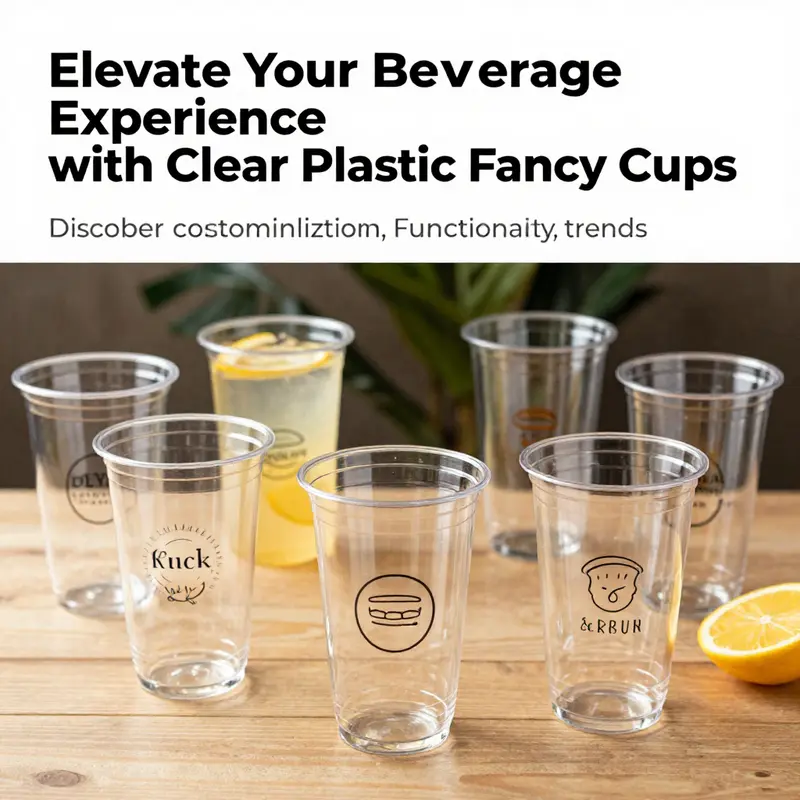
Clear plastic fancy cups are redefining the way beverages are served and enjoyed. For bubble tea shops, restaurants, food trucks, catering services, and event planners, these cups represent a harmonious blend of style and practicality. Not only do they enhance the aesthetic appeal of any beverage, but they also offer versatile customization options to reflect a brand’s identity. As we delve into the specifics, this article will explore four key dimensions: customization options that cater to your branding, the functionality that meets today’s operational demands, market trends and economic impacts that indicate growth and opportunity, and the environmental considerations that define responsible consumption. You’ll discover why clear plastic fancy cups are more than just a container—they’re an essential part of the modern beverage experience.
Crystal Clarity, Custom Flair: Designing Clear Plastic Fancy Cups for Brand Impact and Event Style
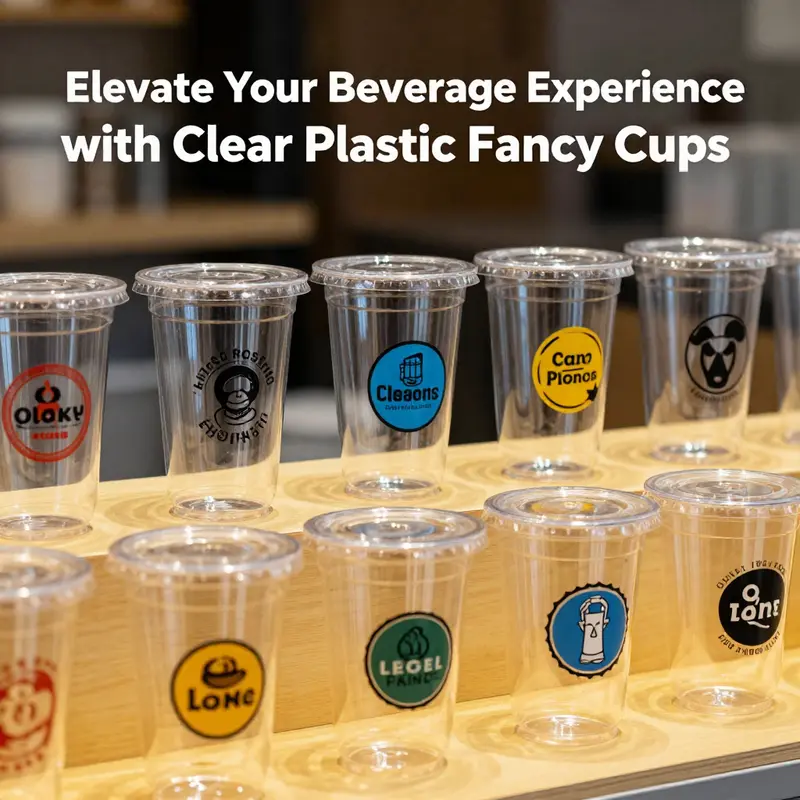
Clear plastic fancy cups sit at a curious crossroads of visibility and versatility. They are not merely vessels for beverages or snacks; they are blank canvases that let content shine while carrying messages of a brand, a theme, or a moment in time. The attraction begins with clarity. A high-clarity, BPA-free plastic pours into the scene with a sleek, almost glass-like sheen that deflects distraction and invites the eye to linger on the color and texture within. This transparency is not accidental. It is a deliberate design choice that transforms ordinary moments into experiences, whether a wedding toast, a corporate reception, or a family celebration. When the contents are vivid—bright smoothies, jewel-toned cocktails, or layered desserts—the cups become part of the display, a transparent frame that elevates color, movement, and presentation without competing with them. It is in this balance between simplicity and possibility that customization becomes not a luxury but a practical necessity for brands and hosts alike.
Customization options for clear plastic fancy cups work together to expand the toolkit available to event organizers, marketers, and everyday hosts. Printing options enable logos, slogans, or intricate designs to be imprinted on the cups, turning a simple vessel into a portable space for branding and storytelling. The prints can range from subtle marks that reinforce a corporate identity to bold, graphic statements that echo event themes. In practice, a single run can deliver a consistent brand message across hundreds of guests or an intimate, personalized touch for a milestone celebration. The color variations available for these cups offer another layer of customization that supports a broad spectrum of aesthetics. A wedding with a silver-and-ice palette may opt for transparent cups with a cool tint, while a summer festival might welcome bold, saturated hues that echo the sun and sea. The color options extend beyond the visible surface; they can influence perceived temperature and mood, guiding guests toward specific drink choices or enhancing the overall atmosphere.
Special finishes add a tactile and visual dimension that turns mundane service into memorable spectacle. Glitter finishes and metallic accents can be applied selectively or across an entire cup for a glamour sweep, such as a glittering rim that catches the light during a twilight reception or a metallic edge that complements a metallic color scheme. These finishes do more than decorate; they create a sense of occasion and elevate the perceived value of the offerings. Yet, even in their extravagance, these options respect the practical realities of a full-service event. The finishes are engineered to endure handling, stacking, and transport, ensuring the cups arrive pristine and do not sacrifice structural integrity for aesthetics. The material itself—a durable, clear plastic—remains the backbone of the customization story. It provides a transparent stage for both design and contents, while its rigidity preserves shape during movement and use. This durability is essential for both style and safety, particularly in environments with high guest turnover, busy service stations, or outdoor celebrations where cups may be picked up, swirled, and transported with a certain degree of hustle.
The range of sizes available—78mm, 89mm, 92mm, 93mm, 95mm, 96mm, 98mm, and 107mm—further reinforces the customization potential by aligning with a variety of beverages and moments. The smaller end accommodates espresso-based drinks, smoothies, or delicate desserts served in parfait-style layers, while the larger end supports cocktails, juice blends, or modest portions of dips and snacks. The size variety is not merely a matter of capacity; it is a design consideration that shapes the user experience. For instance, a coffee gala might leverage 89mm or 92mm cups paired with dome lids to create a polished, spill-resistant service, while a health-conscious event could use 78mm cups with measurements for tracking fluid intake. The ability to tailor the cup to the beverage and the moment reduces waste and enhances efficiency, a practical alignment of form and function that underpins effective customization.
Functionality enhancements are inseparable from aesthetics in this category. Lids and straws, often included or offered as add-ons, address real-world usage patterns—takeaway drinks, busy commutes, and active guests. The domed, flat, and spill-resistant lid variants give hosts flexibility in balancing appearance with practicality, allowing guests to enjoy beverages securely while mingling, walking, or attending a presentation. Straws, when chosen, can complement the design language—color-matched, translucent, or even metallic—creating a cohesive visual experience that carries through from service to consumption. Some models include measurement markings, a feature that resonates with health- and data-conscious users who want to monitor intake or portion control. In a corporate setting or a wellness-focused event, such markings transform a simple cup into a tool for engagement and health awareness, adding value in ways that guests notice and remember.
The material and design philosophy behind these cups centers on a clear, clean aesthetic that does not compete with the event’s theme but rather amplifies it. The transparent plastic is selected for its ability to maintain its crisp appearance under various conditions—coolers, room temperature, or lightly warm beverages—while preserving structural integrity during transport. The result is a reliable balance of elegance and practicality that aligns with the demands of modern events and daily use. Customization, in this sense, is a workflow: it starts with print capability, extends to color and finish selection, moves through size and shape considerations, and culminates in a set of add-ons designed to streamline service and heighten the guest experience.
From a promotional perspective, the ability to imprint messages and logos transforms clear plastic cups into portable marketing vehicles. A simple, well-placed emblem can become a conversation starter, a memory anchor, and a visual cue that reinforces a brand or event theme long after the closing toast. The cost implications of specialty finishes and bespoke prints are real, but they are balanced by the tangible value of brand recall and guest engagement. It is not merely about making cups look attractive; it is about ensuring that each cup carries the right message at the right moment, whether guests are sipping coffee during a conference break or celebrating a milestone with a sparkling finale. The designs must be legible from a reasonable distance and resilient enough to withstand repeated handling, stacking, and transport. In practice, this means choosing print techniques that maintain sharp edges and consistent color across batches, while finishes must resist chipping or dulling with use.
Of course, customization is bound by practical considerations. Certain finishes and color combinations may introduce extra costs, and some designs may not be ideal for hot liquids due to insulation gaps or material limitations. The decision to pursue a glitter finish, for instance, requires a cost-benefit analysis that weighs impact against potential logistical challenges. For hot beverages, double-wall constructions or insulated sleeves might be preferable, even if they alter the visual profile of a clear cup. The design process, therefore, becomes a conversation among aesthetics, temperature considerations, and user experience. It also encompasses lead times, minimum order quantities, and fulfillment logistics, particularly for large-scale events or corporate campaigns where timing can be as crucial as style.
In terms of event-specific applications, customized clear plastic cups function as coordinated elements of a broader visual narrative. They can echo a wedding motif through silver glitter rims and clear bodies that catch light just so, or they can support a corporate theme with a precise color family and a logo executed in a restrained, readable format. The cups can work in tandem with other disposable serveware—parfait cups with inserts and dome lids for desserts, or mini-portion cups for dips and snacks—creating a cohesive, themed presentation across the entire beverage and snack experience. This synergy extends beyond aesthetics. It influences service flow, guest pacing, and the perceived quality of the event, all of which feed back into the overall memory guests carry home.
For buyers, the customization story also includes clear, practical guidance on selection and procurement. Transparent pricing, clear minimums, and reliable fulfillment are essential to turning concept into execution. Bulk buyers, in particular, weigh choices not only on the beauty of the finish but also on the predictability of delivery, the consistency of printing across hundreds of units, and the compatibility of the chosen cup with lids, straws, or inserts. The best options provide flexible configurations that accommodate varying beverage types, portion sizes, and service scenarios while still projecting a unified, purposeful brand or theme. This is where the one-two punch of form and function truly lands: a cup that speaks in a brand voice or event mood while performing impeccably in real-world service conditions. It is the harmony of aesthetics and practicality that makes customization not a luxury but a reliable strategy for elevating ordinary moments to something worth recalling.
From a sustainability lens, there is a growing demand for eco-friendly disposable options and responsibly sourced materials. The customization workflow can accommodate recycled content or compostable alternatives without compromising the clarity and strength of the cup. When used thoughtfully, these options align with corporate social responsibility goals and event sustainability narratives, extending the value of customization beyond visual appeal to broader environmental and community considerations. The result is a holistic approach where the cup is not just a consumable but a communication tool that respects guests, supports organizers, and reflects a commitment to responsible choices. In such scenarios, the interplay between design and stewardship becomes a central theme, guiding decisions about finishes, colors, and the feasibility of long-term reuse or end-of-life disposal.
For readers seeking deeper technical grounding, a detailed exploration of standards and application considerations can be found in industry resources that outline the nuances of plastics, finishes, and safety. This chapter has mapped out the practical pathways for leveraging customization to achieve brand cohesion and event harmony, while recognizing the subtleties that ensure performance remains consistent from the first toast to the final farewell. As the field evolves, new materials, printing techniques, and sustainable options will further enrich the possibilities, inviting designers and organizers to imagine cups that are both transparent canvases and compelling storytellers. The core principle remains simple: when customization is thoughtfully deployed on clear plastic fancy cups, every sip becomes a moment of recognition, every glance toward the table a reminder of a theme, and every guest interaction a small but meaningful extension of a larger narrative. For those who plan, design, or execute events, this is the practical promise of clear cups with customizable power—the chance to turn everyday hospitality into a polished, memorable experience.
External reference for further technical context on fancy plastic cup standards and applications can be found here: Inside Plastics Cups Fancy: Technical Details, Standards, and Applications for Professionals.
Internal reference for practical examples of customized logo integration on disposable drinkware can be explored here: custom-printed-logo-disposable-6oz-8oz-9oz-paper-coffee-cup.
Practical Performance: How Clear Plastic Fancy Cups Meet Real-World Needs

Clear plastic fancy cups bridge the gap between visual elegance and everyday usefulness, delivering a balance that event planners, caterers, and hosts rely on. Their transparency does more than display color; it turns a simple serving vessel into part of the presentation. That visual role is paired with practical design choices that make these cups genuinely fit for multiple purposes, from plated dessert stations to mobile concessions.
Material selection underpins both safety and durability. Most clear fancy cups use high-clarity, BPA-free plastics like PET or food-grade polystyrene. These materials provide rigid walls that resist cracking during normal use. They also allow for thin profiles that keep the cup lightweight without sacrificing strength. The result is a vessel that feels refined in hand and performs under the small impacts and stresses common at parties. Because the plastics are food-safe, they suit cold drinks, chilled desserts, and layered parfaits with no off flavors or staining.
Design choices optimize both handling and appearance. Rim geometry, base width, and wall thickness are tuned to provide stable stacking and comfortable sipping. Lids and closure systems are often available to match the cup profile. Snap-on lids that lock into a secure groove prevent spills during transport. Dome lids with straw ports enable creative presentations while keeping carbonation or foam intact. For events with active movement, leak-resistant sealing and threaded lids convert an elegant cup into a reliable to-go container.
Versatility shows in how these cups are used. They present multi-layered cocktails so each color band reads clearly. They hold fruit-topped soft desserts while leaving space for garnishes. Small portions of appetizers or dips can be served in them, enabling tidy, single-serve distribution. For health-conscious venues, cups with printed measurement markings make tracking fluid or calorie intake straightforward. These markings assist servers and guests alike, turning each cup into a tool for portion control and consistent portioning at a buffet or tasting bar.
Operational practicality is another strength. Clear plastic fancy cups are lightweight, reducing transport weight and the number of staff needed to move supplies. They stack compactly, saving storage space in kitchens and event vans. During service, they speed up assembly lines because servers can quickly fill and cap them. Cleanup is simplified too: many cup models tolerate dishwasher cycles, and single-use options eliminate post-event washing entirely. For venues needing a hybrid approach, reusable-style plastic cups offer the appearance of a reusable without the fragility of glass.
Cost efficiency emerges across purchase, storage, and waste management. Buying in bulk lowers per-unit cost and reduces the frequency of reordering. Because the cups pack tightly, shipping and storage costs fall. On the waste side, portion-control designs and measured servings reduce leftover food and drink. For one-off events, disposable cups remove the labor and water costs associated with washing glassware. For recurring events, a durable, reusable plastic option reduces long-term replacement costs while maintaining a polished aesthetic.
Customization options extend functionality into branding and event cohesion. Printing logos, event names, or custom artwork turns each cup into a branded touchpoint. For festivals and corporate functions, personalized cups reinforce brand recall and create a keepsake for guests. The clear surface can be embellished with metallic inks, glitter bands, or vinyl wraps to match a theme. Custom lids and printed measurement marks allow venues to align operations and guest experience at once.
Practical features also address user comfort and environmental concerns. Condensation control becomes important for chilled drinks; thicker wall sections or ripple-textured sleeves reduce wetness and make the cup easier to hold. For hot-proofing needs, plastic is not ideal. However, removable insulating sleeves or double-wall alternatives are available when a warmer presentation is necessary. On the sustainability front, manufacturers increasingly offer recyclable clear plastics and post-consumer resin blends to reduce landfill impact. Where compostable options are preferred, pairing clear plastic serving pieces with paper-based disposables creates a balanced, eco-friendly service line that still prioritizes presentation.
Catering workflows benefit from design details. Transparent cups let servers verify contents at a glance. This is helpful at self-serve stations, where guests can pick based on appearance. At staffed bars, bartenders can confirm correct layering and portion without removing lids. For plated dessert runs, clear cups speed up plating because items are visually aligned before arrival to the table. Matching lids help prevent spillage during transport between kitchen and venue space, reducing waste and cleanup time.
Event-specific adaptations demonstrate the cups’ practical edge. For weddings, clear tumblers and stemless styles fit tabletop aesthetics while remaining shatterproof. For outdoor festivals, locking lids and straw ports minimize litter and spills. For corporate meetings, subtle printed logos on clear vessels maintain a professional tone while allowing drinks to be served quickly. For food delivery, dome lids and secure seals keep layered items intact in transit, making these cups a strong choice for takeout parfaits or cold desserts.
There are limits to consider. Clear plastic has low thermal insulation, so beverages that must stay hot are not ideal in these cups. Abrasion and scuffs over time can reduce clarity on reusable pieces. Scratch-resistant coatings and thicker-walled variants help, but careful handling remains wise. Another consideration involves waste streams: not all municipal services accept all clear plastics. Selecting widely recyclable resin types or partnering with compostable components helps align service choices with sustainability goals.
Storage and handling practices extend the cups’ service life and maintain their appearance. Store cups in a cool, dry place away from direct sunlight to prevent warping and discoloration. Keep lids and cups separated in bins sized for quick access to prevent crushing during busy service. Train staff to snap lids straight on rather than forcing them at an angle; correct technique preserves the sealing features. For reusable models, follow care instructions to avoid high-heat cycles that could distort shape or clarity.
Portion control and waste reduction are practical outcomes of thoughtful sizing. Offering a selection of cup sizes encourages guests to choose what they will finish. Smaller cups suit tasting flights and desserts, while larger sizes handle refreshments. Clear markings for volume or simple graduated lines help front-of-house teams fill consistently. This reduces overpouring, which lowers cost and prevents unfinished servings from becoming waste.
Finally, clear plastic fancy cups integrate smoothly into broader service ecosystems. Pairing them with paper-based bowls and recyclable carriers creates a flexible, environmentally minded setup. For instance, choosing an eco-friendly paper cup for certain hot items can complement the aesthetic. An example product line of paper servings demonstrates how mixed-material strategies preserve both presentation and sustainability. By combining clear cups with responsibly sourced paper or corrugated containers, venues can achieve a cohesive look while meeting operational goals. best-price-8oz-double-plastic-free-single-wall-paper-cup
For further supplier details and large-scale purchasing options, consult the product listing referenced in the research materials: https://www.alibaba.com/product-detail/Disposable-Plastic-Mason-Jar-Cups-Fancy-Plastic_1600734955825.html?src=1600734955825&scm=1007.17431.1600734955825.0&pvid=1600734955825&spm=a2700.100311.0.0
Crystal Ambitions: Market Trends and the Economic Pulse of Clear Plastic Fancy Cups
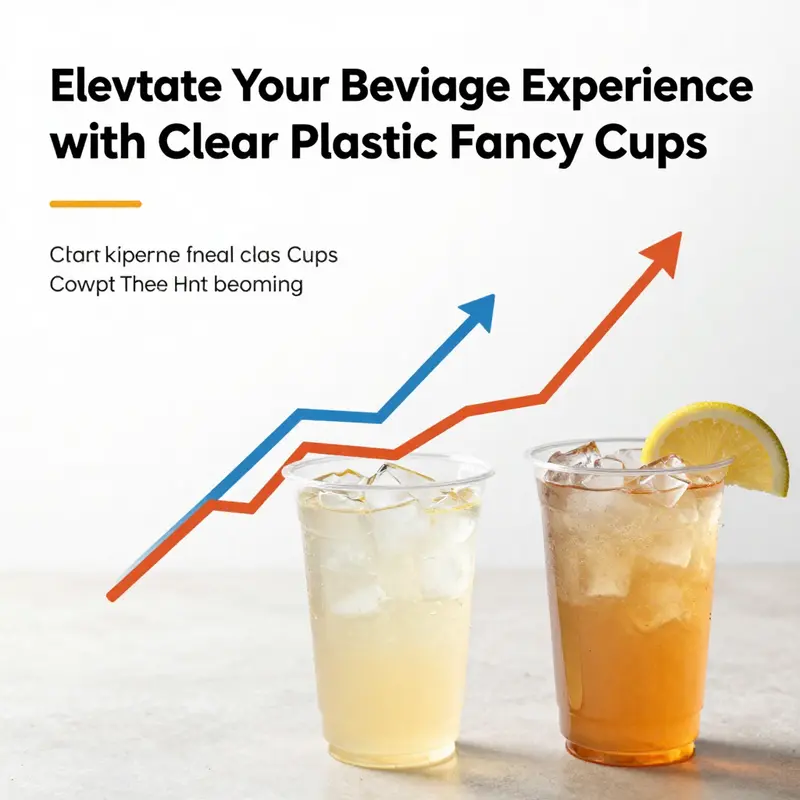
Clear plastic fancy cups have moved beyond a simple disposable option to become a visual and experiential staple in contemporary events and everyday settings. Their transparent surfaces showcase the color and texture of what they hold, turning a functional item into a canvas for branding, mood, and memory. The rapid accumulation of trend-driven features—glitter finishes, metallic accents, and bold prints—has elevated these cups from convenience ware to premium accessories. The result is a market that thrives on the tension between aesthetics and practicality. As consumer expectations evolve, producers and retailers are compelled to deliver products that perform reliably in real-world use while elevating the visual story of any gathering, large or intimate. The narrative of this market is not only about what the cups look like, but about how they fit into broader shifts in consumer choice, sustainability, and event budgeting. The arc is clear: accessibility and elegance merge, and the commercial value of a well-designed cup grows in step with the events it helps to stage and the brands that seek to align with memorable experiences.
The propulsion behind this growth is twofold. First comes demand for aesthetic appeal that does not compromise function. Clear plastic cups, especially those marketed as fancy or premium, must balance clarity and strength with leak resistance and portability. In today’s events landscape, a cup that wobbles, leaks, or fogs up under heat is more than a nuisance; it can disrupt an entire experience and reflect poorly on a brand or host. Advances in material science have enabled plastics to be more robust while remaining light enough to handle easily. The best of these products are BPA-free, robust against temperature variations, and engineered to resist cracking or warping during transport and service. This translates into a tangible value proposition for caterers, venues, and retail outlets that seek to minimize waste, reduce cleanup time, and keep lines moving at busy moments.
Second is the rise of customization as a core selling point. The market recognizes that a cup can be more than a vessel; it can be a portable billboard, a memory marker, and a conversation starter. The trend toward branded, personalized, and themed cups is closely tied to promotional campaigns, weddings, corporate gatherings, and social celebrations. The ability to imprint logos, names, or bespoke designs on clear cups turns ordinary drinkware into discreet ambassadors for a message or event theme. The impact is economic as much as aesthetic: the same cup that holds a beverage can reinforce a brand identity, extend a campaign’s reach, and contribute to the overall event narrative, all while avoiding the burden of heavier, less versatile serveware.
As this market matures, the role of sustainability becomes harder to overlook. Eco-conscious materials and responsible manufacturing practices are increasingly woven into the purchase decision. The broader plastics segment has seen notable shifts toward biodegradable and compostable options, particularly those based on polylactic acid (PLA). The PLA cup market has shown robust growth, with a value around USD 1.05 billion in 2025 and a projection to rise to USD 1.98 billion by 2034, signaling strong demand for more sustainable disposables even in the premium cup category. These numbers are more than abstract metrics; they reflect a consumer base that expects a lower environmental footprint and a supply chain that can deliver on those expectations without sacrificing the clarity, durability, or decorative potential of the product. Public and regulatory scrutiny remains a driver, pushing manufacturers toward BPA-free formulations, recyclable pathways, and lower carbon footprints. The market’s trajectory, therefore, becomes a balancing act: delivering products that are not only beautiful and practical but also aligned with longer-term environmental goals.
The integration of technology into design and manufacturing processes further expands the value proposition of clear plastic fancy cups. Innovations have given rise to measurement markings printed or molded into the cups, enabling consumers to monitor fluid intake or calibrate servings with precision. This feature resonates well with health-conscious users who want to track hydration during intense events or fitness meets. At the same time, improvements in leak resistance have enhanced the on-the-go usability of these cups, a critical factor for commuters, office workers, and travel-minded attendees who want to enjoy a beverage without worrying about spills. The durability of the cups, combined with their weight advantages, makes them competitive with more traditional glassware in many contexts while maintaining the convenience that disposable ware provides for large-scale or multi-day events.
From an economic standpoint, the market for clear plastic fancy cups is poised for steady growth. Analysts project a compound annual growth rate (CAGR) of about 5 percent from 2025 to 2033, reflecting sustained demand across North America, Europe, and the Asia-Pacific region. This growth is underpinned by the rise of eco-brands and green events, which reward vendors and venues that can deliver stylish, high-quality disposables with sustainable credentials. As buyers seek to align their events with responsible practices, suppliers are increasingly offering customizable options that serve dual purposes: the cup as drinkware and as a branding or decor element. The result is a more compelling value proposition, where a single product line can satisfy practical needs while supporting marketing objectives and event aesthetics.
Yet, the market’s appeal is as much about the total experience as the items themselves. In a world where social media amplifies every moment, the visual impact of a well-chosen cup resonates far beyond the served beverage. The cups act as micro-stage props, coordinating with lighting, color palettes, and décor to create cohesive moments that guests remember and repeat. The more a cup can do—be transparent to show off a drink’s color, be printed with a brand narrative, or coordinate with a wedding palette—the more likely it is to be shared online, photographed by guests, and included in event recaps. This social amplification feeds demand, which in turn motivates brands to invest in more sophisticated customization options and higher-quality manufacturing processes. In short, the cup becomes a small but powerful communications tool, a reminder of the event’s tone, and a piece of the overall experiential marketing strategy.
The conversation around these cups would be incomplete without acknowledging the broader packaging ecosystem in which they exist. Wholesale channels and large-scale manufacturers enable economies of scale that keep per-unit costs accessible even as design complexity increases. Orders can scale to hundreds of thousands or even more, supporting major events and campaigns without compromising on visual impact or functional reliability. The ability to deliver in bulk, with consistent quality, is essential for mass-market retailers, catering companies, and brand-led activations that rely on uniform presentation across multiple locations or timelines. This logistical capability, paired with the flexibility of customization, underpins the market’s resilience—an essential consideration in a business climate that prizes speed, consistency, and adaptability.
In parallel with these commercial dynamics, the chapter where aesthetics meet sustainability offers a rich field for cross-category thinking. Event planners and food-service operators increasingly seek cohesive packaging ecosystems that harmonize cup design with other disposable tableware such as lids, inserts, and decorative elements. A cohesive system reduces decision fatigue for buyers and reinforces a brand or event’s visual identity. In practice, this often means selecting a family of clear cups that can be paired with compatible lids, inserts, or sleeves, and that can be customized to fit a particular color story or theme. The synergy between cup design and overall packaging strategy becomes a differentiator in crowded markets, where every detail contributes to the perception of quality and care. For those pursuing a streamlined, eco-conscious tabletop solution, there is a compelling argument for exploring not just cups in isolation but the entire, sustainable packaging ecosystem around them.
Accessibility and logistics also shape the economic picture. Clear plastic fancy cups offer advantages in terms of weight, break resistance, and safety, which translate into lower handling costs and fewer return-to-kitchen mishaps. The lightweight nature of high-quality plastics supports efficient shipping and easier storage, factors that matter for event organizers with tight lead times or venues that must restock mid-event. The ability to heat or chill certain cups without degrading clarity or integrity adds further versatility, broadening the contexts in which a single cup can perform—from casual gatherings to more formal affairs. As buyers weigh options, cost-per-use and the potential for branding returns on investment gain prominence in purchasing decisions, alongside aesthetics and sustainability credentials.
The market also risks becoming overly fragmented if supply is not consistent with demand. Regions with strong consumer appetite for premium disposables, coupled with advanced manufacturing capacity, tend to accelerate growth. Conversely, volatility in raw material prices or disruptions in supply chains can temper enthusiasm and push buyers toward products with demonstrable durability and longer lifespans, even within disposable categories. This tension—between the appeal of high-design, disposable elegance and the realities of material costs and environmental scrutiny—requires ongoing collaboration among manufacturers, suppliers, and buyers. Companies that communicate transparent sourcing, invest in recyclability through design, and offer clear end-of-life pathways will likely outpace competitors who treat sustainability as an afterthought rather than a core attribute.
One practical implication for marketers and decision-makers is the opportunity to fuse cup design with educational messaging on sustainability. By illustrating how a brand’s packaging choices align with environmental values, organizations can reinforce trust and differentiation. The narrative around a disposable cup must extend beyond the moment of service to the broader story of responsible consumption, recycling options, and the lifecycle of the product. This storytelling dimension adds intangible value and helps justify investment in higher-end or more customizable options, even in markets where price sensitivity is a factor. The economic benefit lies not only in the immediate appeal of a well-designed cup but also in the opportunity to build lasting associations between the brand, the event, and a commitment to better packaging choices.
For readers seeking a broader data backdrop, industry analysts highlight the importance of regional strategy and market segmentation. Growth is not uniform across all geographies; some areas show stronger demand for premium, customizable disposables tied to hospitality and corporate functions, while others emphasize practical, leak-resistant solutions for high-volume takeout contexts. The interplay between regional preferences and global supply capabilities informs product development, pricing strategies, and promotional activity. In this sense, the market’s health rests on the ability of manufacturers to tailor offerings to local tastes while maintaining scalable, sustainable practices that satisfy a global standard of quality.
As the narrative of clear plastic fancy cups continues to unfold, the chapter that links design, sustainability, and economics becomes increasingly crucial. The cups themselves summarize a broader shift in consumer culture: the desire for moments that feel crafted and meaningful, even within disposable contexts. They reflect a willingness to invest in small, highly visible elements that amplify a setting’s mood and messaging. They also embody a pragmatic mindset that values functional performance and responsible production. The resulting market is not a simple commodity market; it is a dynamic ecosystem where aesthetics, technology, sustainability, and branding co-create value in ways that matter to hosts, brands, and guests alike.
For those interested in exploring related sustainable packaging options that complement clear cups, consider examining coordinated tableware solutions that pair with eco-conscious disposables. You can learn more about a range of compatible designs and take-out options at this internal resource: disposable-700ml-kraft-paper-bowl-take-out-octagonal-rectangle-paper-bowl. Such a pairing not only reinforces a cohesive aesthetic but also reinforces a commitment to environmental responsibility across the event experience. The synergy between clear cups and supporting biodegradable or recyclable formats helps venues present a polished, modern image while simplifying waste management and end-of-life decisions. In practice, this means a brighter outlook for suppliers who can deliver integrated packaging ecosystems, as buyers seek reliable partners capable of delivering both style and sustainability at scale.
The broader takeaway is that clear plastic fancy cups are more than a choice of surface. They are a strategic instrument in event planning, brand storytelling, and consumer satisfaction. As markets continue to evolve, success will hinge on the ability to balance visual appeal with practical performance and responsible production. The numbers and narratives around eco-conscious materials, technological enhancements, and economic momentum point to a future where these cups remain central to how people celebrate, connect, and share moments. The continued convergence of design, sustainability, and supply-chain resilience will shape not only what goes into the glass but what happens around it, as hosts, marketers, and manufacturers co-create experiences that endure beyond the final toast.
External resource for context and a broader data backdrop: https://www.researchandmarkets.com/reports/678901/plastic-cup-market-trends-innovations-scope-regions-2026-2033
Clear Clarity, Complex Footprints: Environmental Realities of Fancy Clear Plastic Cups in Event Design

Clear plastic fancy cups offer a rare combination of visual simplicity and practical versatility. Their transparency makes beverages, layered desserts, and even decorative elements appear more vibrant, while the lightweight, leak-resistant design supports on-the-go use and easy service at a range of events. The appeal is clear: a sleek, unobtrusive vessel that complements elegant table settings and branded themes without competing for attention. Yet the environmental footprint embedded in that clarity is not always obvious. A thoughtful conversation about these cups must balance aesthetics with lifecycle realities, and it should acknowledge that beauty and responsibility can coexist only when choices are guided by a broader view of sustainability rather than surface-level novelty.
At the heart of the environmental discussion is the material itself. The majority of clear plastic fancy cups are molded from conventional plastics such as polystyrene (PS) or polypropylene (PP). These polymers originate from fossil fuels and require substantial energy throughout their production. The resulting resin, while sturdy enough to hold beverages and foods, is not readily biodegradable in natural environments. When discarded, PS and PP can persist for hundreds of years, maintaining a presence in landfills and increasingly finding their way into waterways and oceans. There, the fragments break down further into microplastics that can be ingested by marine life and eventually enter human food chains. The lingering visibility of these microplastics in the environment makes the topic more than a theoretical concern; it becomes a practical imperative for event planners who want to minimize waste and protect ecosystems.
The environmental story does not end with production and disposal. The carbon footprint of clear plastic cups includes greenhouse gas emissions from fossil-fuel extraction, resin synthesis, molding, and transport. Even when manufacturers advertise BPA-free or safer alternatives, the broader picture remains: the standard model is designed for single-use convenience. Replacements may offer improvements in safety or durability, but they do not automatically resolve the broader waste issue unless linked to robust recycling or reuse systems. In many cases, the most realistic path to reduced impact lies in reframing how cups are used, disposed of, and processed after use. The challenge is not only technical but behavioral; success depends on consumer habits, event-scale habits, and the strength of local recycling and composting infrastructure.
Recycling presents a further layer of complexity. While PS and PP plastics are technically recyclable, actual recycling rates depend on local capabilities, contamination levels from food residues, and the presence of specialized streams for clear plastics. In mixed waste, these plastics are often downcycled into lower-quality products or diverted to landfills. The result is a paradox: the same cup that looks simple and clean can become a symbol of waste if systems aren’t aligned to capture and reprocess it effectively. For event organizers, this means that the environmental value of a clear plastic cup is highly contingent on the surrounding waste-management ecosystem. Without reliable collection streams, even well-intentioned choices may yield disappointing results.
Advances in materials have introduced BPA-free variants and blends marketed as safer for reuse. In practice, however, many of these cups remain intended for single-use. Reusing cups can lower long-term waste, but it also imposes additional energy and water demands for cleaning. The net environmental benefit of reusables depends on frequency of reuse, the efficiency of washing processes, and the cleanliness of the broader supply chain. In contexts where cleaning logistics are limited, or where water and energy costs are high, the reusable option may not outperform a well-managed single-use approach that relies on proper recycling. This is not an argument to dismiss reusables altogether, but a reminder that their advantages come with requirements—systemic, logistical, and behavioral—that must be addressed to realize meaningful gains.
For environmentally conscious events, the exploration of alternatives is not merely about replacing one material with another. It is about reimagining the cup’s role in the event lifecycle. Plant-based options, such as cups made from bamboo fiber or sugarcane pulp, offer the possibility of compostability under industrial conditions and a reduced fossil-fuel footprint during production. Yet compostability is not a universal solution; it hinges on whether there is access to industrial composting facilities and whether those facilities can handle the specific materials used. In other words, a biodegradable claim carries weight only when the disposal pathway is clearly defined and actually available to guests after the event. Without that infrastructure, the advantage evaporates, leaving a similar end-of-life scenario as conventional plastics, albeit with different labels.
A broader lens also invites a discussion of design choices that minimize waste from the outset. Event planners can influence the environmental outcome by selecting cup systems that align with the site’s waste-management capabilities and with guest behavior. For instance, opting for simpler, easily recognizable packaging and reducing decorative waste can help. In some cases, implementing a return-and-rinse program or a rental system for glass or metal vessels can transform a one-time event into a more circular experience. Such strategies require careful logistics, clear communication with guests, and dependable handling from staff, but they can produce tangible reductions in both material use and energy consumption over time. The overarching principle is that sustainability is not a single feature but an integrated practice across sourcing, use, cleaning, and disposal.
Supply chains for clear plastic cups reflect this tension between convenience and responsibility. Many suppliers emphasize customization and branding, offering options to print logos, names, or designs on cups. Branding adds value for promotions, weddings, or corporate events, yet it does not inherently mitigate environmental impact. If anything, customization can complicate recycling by introducing nonstandard labels or inks that may affect the recyclability of the container. The prudent path is to couple branding with transparency about end-of-life options, reinforcing that esthetic appeal should not obscure ecological considerations. For those seeking a more sustainable balance, one path is to pair the aesthetic appeal of clear cups with a carefully chosen end-of-life strategy—preferably one that integrates recycling, reuse, or composting where feasible. A practical example of this approach is to consider eco-conscious options like the eco-friendly printed-logo cold beverage cup that are designed with sustainability in mind while still delivering on branding potential.
The question then becomes how to evaluate environmental claims without getting swept into greenwashed narratives. A rigorous reading of any claim should examine materials, manufacturing energy, transport distances, and the availability of post-consumption pathways. A BPA-free tag, while reassuring in some contexts, should be weighed alongside a clear understanding of whether the cup is intended for single use or reuse, and whether there is an established collection stream for it after use. The environmental scoreboard is rarely a single metric; it is a matrix that weighs production emissions, material durability, and the practical realities of disposal and reprocessing. In this light, the simplest choice—one that often yields clearer environmental outcomes—may be to reduce overall consumption of disposable cups, especially in events where guests can be offered reusable glassware or durable steel tumblers for the day. When disposables are necessary, alignment with local waste infrastructure and a credible end-of-life plan becomes non-negotiable, not optional.
The educational role of event organizers is also critical. Guests often hold assumptions about what happens to a cup after they drop it into a bin. Clear communication about disposal options, bin labeling, and the availability of recycling or composting steps can dramatically affect actual outcomes. This is where a thoughtful event script, staff guidance, and guest signage converge to reduce contamination and improve processing efficiency. In practice, such communication should avoid overwhelming guests with technical jargon while still conveying the essential message: do not litter, and dispose of items in the correct stream so they can be diverted from landfills or redirected into recycling or composting channels where possible. A well-designed waste plan complements the cups’ aesthetic appeal by ensuring that the story does not end with a discarded vessel but with a demonstrated commitment to responsible stewardship.
In sum, the environmental footprint of clear plastic fancy cups cannot be separated from their use context and lifecycle infrastructure. The cups’ clarity is matched by a need for clarity in environmental thinking: what happens before and after the event matters as much as the moment the cup is filled. For some planners, that means embracing plant-based or reusable alternatives and investing in systems that support responsible disposal and reuse. For others, it means selecting materials and suppliers with robust recycling or composting pathways and designing events that minimize waste in the first place. Either approach requires a genuine commitment to sustainability rather than a veneer of eco-friendliness. The most effective path forward lies in integrating material choice with waste-management realities, guest education, and a culture of careful stewardship that extends beyond a single event and toward a broader shift in how we design and celebrate.
External resource for further consideration: https://www.dongsu.com/blog/environmental-impacts-plastic-cups
Final thoughts
Clear plastic fancy cups represent a convergence of style, practicality, and sustainability that is essential for today’s beverage industry. Their customization capabilities allow businesses—from bubble tea shops to catering services—to express their unique brand identity while providing customers with a visually appealing drink experience. Functionally, these cups are designed to meet the needs of modern consumers, being lightweight, durable, and often equipped with secure lids. Additionally, understanding current market trends shows the growing economic impact of these products in a competitive landscape. Lastly, considering environmental aspects, manufacturers are increasingly opting for eco-friendly materials that appeal to environmentally conscious consumers. With these factors in mind, investing in clear plastic fancy cups is not just a choice; it is a strategic decision to enhance services, promote brand identity, and contribute to sustainability efforts.