
As the popularity of plastic food containers continues to soar, an unsettling issue lurks beneath the surface: microplastics. These tiny particles, smaller than 5mm, are not only pervasive in our environment but also find their way into our meals and drinks. This article aims to shed light on the sources of microplastics from food containers, especially concerning popular establishments like bubble tea shops, restaurants, food trucks, and catering services. We will delve into potential health risks associated with these microplastics and the crucial role of heating in their release. Furthermore, we’ll discuss effective alternatives to mitigate exposure and reduce environmental impact. By addressing these topics, we hope to guide food service professionals towards safer practices and sustainable solutions.
Tracing Microplastic Trails in Everyday Dining: How Plastic Food Containers Release Particles, Chemicals, and What It Implies for Health
Plastic food containers sit at the interface of daily life and invisible risk. They cradle meals, warm soups, and cradle our convenience, yet beneath their convenience lie microplastic particles and chemical additives that can migrate into food and, ultimately, into the human body. The story of microplastics from plastic containers is not a single event but a cascade of small failures—mechanical wear, heat, chemical interaction, and repetitive use—together altering the material’s boundary with the meal it holds. The evidence increasingly portrays microplastics not as a rare accident but as a common consequence of routine handling, storage, and heating. In this light, the chapter unfolds as a single, continuous thread: how microplastics originate in everyday containers, the mechanisms that release them, and the implications for health and choices we make at the kitchen counter and in policy alike.
From the outset, it is helpful to understand that microplastics in these contexts arise predominantly from the polymer’s own degradation under stress. Most often, the particles shed when containers are used for food storage or heated are not the pristine grains of plastic that one might imagine but the micro-fragments created by mechanical abrasion, chemical contact, and thermal shocks. Everyday use, even in a home kitchen, exerts a complex set of pressures on plastics: friction during washing, scouring, and scraping; soaking in water or cleaning solutions; and high-temperature exposure during reheating or microwave use. Each of these conditions nudges the polymer toward micro-scale shedding, and the cumulative effect can be substantial over time. The literature consistently identifies mechanical abrasion and friction as the most reliable and measurable pathways for microplastic release. When a container’s inner surface is scraped, rubbed, or flexed, micro-pieces can detach and become part of the food matrix or linger in the liquid that is later consumed.
A pivotal factor in this release is temperature. The heat-degradation axis is especially potent: heating food in contact with plastic can dramatically accelerate particle release. A landmark study from Environmental Science & Technology in 2022 quantified this effect with striking numbers. When foods were heated to typical serving temperatures in plastic containers, up to about 4.2 million microplastic particles could be released per liter of food. The rate of release climbs with temperature and with repeated use; the implication is that the combination of a hot meal and an aged or scarred container represents a heightened exposure scenario. The same line of evidence draws attention to temperature as a principal driver: higher heat does not merely change the food’s chemistry or safety in a general sense but directly escalates the shedding of otherwise inert plastics into the very meal that will be consumed.
Temperature, however, is not the only antagonist. The chemical environment created by a given food also shapes microplastic release. Acidic and fatty foods, for instance, can interact with plastic in ways that loosen the polymer surface, loosen additives, and facilitate the detachment of microplastics. In practice, foods with low pH or high lipid content create a mold where the polymer surface is more prone to shedding, especially when combined with heat or mechanical stress. The practical takeaway is straightforward: not all foods pose the same risk when stored or heated in plastic; the chemical nature of the food itself modulates the container’s contribution to microplastic migration.
Beyond the particles themselves, polymers carry with them a suite of additives that can migrate into food. Endocrine-disrupting chemicals such as bisphenols (BPA, BPS, BPF) and phthalates often accompany plastics as stabilizers, plasticizers, or shared network components. Even when “BPA-free” labeling appears, substitutes may carry comparable health concerns, challenging a simple “lesser of two evils” narrative. The dual threat—microplastics plus chemical additives—raises questions about the cumulative exposure from a single plastic container across a lifetime of use. It is not merely about one piece of plastic breaking off; it is about a concert of leachables entering the same meal, potentially influencing metabolic processes, hormonal balance, and development in susceptible populations.
The health implications become more pressing when we consider evidence of microplastics beyond the digestive tract. A growing body of analyses has detected microplastics in blood, placenta, and lung tissue, albeit with ongoing debates about exposure routes, dosages, and long-term effects. The presence of microplastics in blood and other organs hints at a systemic distribution rather than a transient surface contamination. When microplastics are found in such critical tissues, questions about chronic, low-dose exposure, susceptibility in pregnancy, and long-term reproductive or developmental outcomes become indispensable to public health discussions. While each study introduces its own caveats, the convergence of findings across different matrices underscores that microplastics are not merely an environmental nuisance but a potential human health concern that warrants careful monitoring and risk assessment.
As a reminder of the broader context, plastic waste governance complicates the picture. Even in a best-case scenario with aggressive recycling, global recycling rates remain modest. Data from regulatory and governmental sources show that a fraction, roughly under 9%, of plastics are actually recycled, with the remainder destined for landfills, incineration, or environmental leakage. In this sense, the problem extends beyond individual consumer choices to system-level waste management that shapes the frequency with which plastics reenter the domestic sphere and, thus, the likelihood of exposure.
Even more striking is the emergence of evidence that challenging assumptions about “biodegradable” or “eco-friendly” alternatives may be premature. A recent line of animal-model research explored polylactic acid (PLA), a common bio-based plastic touted as an eco-friendly substitute. Under conditions designed to simulate contact with foods during storage, PLA was shown to release microplastic particles and to elicit inflammatory changes in liver and intestinal tissue in mice. While extrapolating directly from rodent models to humans warrants caution, the results raise critical questions about the safety of “green” plastics in real-world settings. The suggestion is not to abandon all bio-based materials but to approach them with the same scrutiny invested in conventional plastics. If a substitute appears to reduce some risks, it could concurrently introduce others, particularly when heated, stored with fat-rich or acidic foods, or used repeatedly over time.
The fragmentation of risk into several dimensions—particle shedding, chemical leaching, and systemic exposure—means that consumer guidance must be nuanced. The everyday kitchen, where meals are stored, re-heated, and served, becomes a site of ongoing risk assessment rather than a single preventive action. First, the most consistent and reproducible finding is that repeated use amplifies microplastic release. A container that has already incurred scratches, micro-abrasions, or a perceived coating after washing presents a higher baseline for shedding. This observation aligns with the intuitive sense that wear magnifies vulnerability. Second, heating remains among the most important factors, turning a supposedly inert container into a source of microplastic release. Third, even containers presumed safe because they are new or labeled as alternatives to conventional plastics may contribute to exposure, given that a portion of microplastics is emitted even under seemingly benign conditions. A useful way to understand the risk is not as a single event but as a pattern: the more the container is used, the more it sheds; the hotter the contents, the more shedding occurs; and the more the food demands chemical interactions with the container, the greater the likelihood of exchange.
A further dimension of the evidence involves the actual material composition and the morphology of the shed particles. Microplastics vary in shape—cubic, spherical, rod-like, or irregular—and morphology matters for bioavailability and potential biological effects. The evolving analytical picture has begun to quantify microplastic loads not only in foods but in containers themselves. Newer spectroscopic analyses have identified microplastics in consumer-grade containers used for daily drinking and takeout in real-world settings. When translated into practical terms, these measurements indicate that even unused or new containers can contribute to microplastic exposure in everyday use, challenging the assumption that risk only accrues with age or rough handling. The magnitude of released particles can differ by container geometry; in some recent observations, round-shaped containers released more modest yet still non-negligible amounts, while rectangular or other shapes demonstrated higher measured particle burdens, highlighting how design and manufacturing also shape exposure risk.
What does all this mean for everyday decisions and for policy? The immediate implication is not to induce fear but to empower safer practices and informed choices. Reducing reliance on single-use plastic containers, especially for high-temperature foods or for storing acidic or fatty foods, is a prudent precaution. When heating is required, moving toward containers designed to minimize migration—such as glass, stainless steel, ceramic, or certified safe reusable materials—can meaningfully reduce both microplastic shedding and chemical exposure. The practical strategy involves balancing convenience with risk reduction, recognizing that some substitutes offer not only reduced microplastics but broader sustainability benefits as well. In addition to material choice, attention to the physical state of the container matters: avoid using visibly scratched or aged containers for reheating, and minimize the amount of time food spends in contact with the container when heated. Handwashing remains a source of friction and abrasion; thus, gentler handling and avoiding aggressive scrubbing can further diminish microplastic release during cleaning.
The evidence also invites a broader cultural shift toward reusability and lifecycle thinking. A robust switch away from disposable plastics toward durable, easily cleaned, and inert materials could reduce microplastic exposure across the population. Yet, even as we pursue safer and more sustainable options, a critical examination of what counts as “eco-friendly” is warranted. The PLA example demonstrates that environmental labels must be supported by rigorous safety testing under the actual conditions of use. This implies a research agenda that links materials science with toxicology and exposure science, ensuring that safer substitutes do not carry unseen risks in everyday scenarios. It also underscores the value of standardized testing that mirrors real-life use patterns—heating, soaking, repeated use, and variable food chemistry—to quantify actual exposure levels rather than theoretical risk proxies.
For readers seeking a concrete portrait of these issues, consider how a typical takeaway packaging ecosystem translates into exposure. A study from recent years quantified microplastic masses associated with common container geometries. The results were telling: average microplastic masses per container unit were in the tens of milligrams range, with rectangular containers bearing higher microplastic loads than round ones, and disposable cups showing comparatively lower yet non-negligible values. Such measurements remind us that the risk is not merely about the existence of microplastics but about the cumulative load that a consumer may encounter over a series of daily meals, drinks, and takeout experiences. The numbers matter not as an exact forecast for every meal but as a signal that ordinary practices accumulate measurable exposure over time.
Importantly, the conversation about microplastics in containers intersects with the larger discourse on contaminants in the food system. In addition to the physical particles, there are concerns about the chemical milieu accompanying microplastics. Phthalates and bisphenols have long been implicated as endocrine disruptors with effects on reproductive health, metabolism, and development. Even if a product claims to be BPA-free, the substitution chemicals may harbor similar risks. Taken together, the literature suggests that microplastics, together with leached additives, may contribute to a complex internal chemical environment that influences health over the long term, particularly for vulnerable groups such as pregnant individuals and young children.
As this chapter moves toward synthesis, one practical takeaway is that consumer actions should be coupled with an informed view of material science. The same meals that reveal how comfortable our daily routines are can illustrate where we can reduce risk without sacrificing nourishment. The simple step of choosing safer containers for high-temperature applications, or opting for materials that exhibit minimal interaction with acidic or fatty foods, can lower exposure on a regular basis. And as awareness grows, regulatory and industry responses are likely to follow, guiding the design of containers that maintain functionality while reducing the release of microplastics and additives during typical use scenarios.
In sum, plastic food containers operate as a microcosm of the broader plastics narrative: familiar, convenient, and, under certain conditions, a source of micro-particles and chemical additives that cross the divide between packaging and plate. The release mechanisms are not the product of a single failing component but of an interplay between material properties, use patterns, and the chemical nature of the stored foods. The implications for health, while still being clarified through ongoing research, are enough to warrant precaution and proactive choices—from how we heat meals to the materials we select for daily storage. They also push us to consider safer alternatives and more robust designs that respect both human health and environmental stewardship. The chain from container to cuisine becomes legible only when we recognize that every heating event, every wash, and every reuse compounds exposure in a way that is measurable and meaningful. With this understanding, the path forward becomes clearer: adopt safer materials where possible, maintain containers in good condition to minimize shedding, and foster a broader conversation about safer substitutions and better recycling systems that can limit environmental reservoirs of microplastics. For readers eager to explore safer, practical alternatives, see the example of disposable kraft paper bowls that cater to short-term use without introducing heavy plastic contact, such as the option linked here: disposable-700ml-kraft-paper-bowl-take-out-octagonal-rectangle-paper-bowl. And for deeper scientific grounding on the scope and magnitude of microplastic release from plastic food containers, the detailed study behind these discussions offers a rigorous, data-driven perspective: Quantification of microplastics released from plastic food containers.
Heat, Leach, and the Hidden Burden: Tracing Microplastics from Plastic Food Containers into Our Bodies
Everyday meals carry more than taste and nourishment; they carry a quiet, unseen load. Plastic food containers, designed for convenience, become a conduit for microplastics and chemical additives as soon as heat, fat, or acidity enter the equation. The simple act of storing, reheating, or transferring food can set microplastics free, allowing them to mingle with our meals and, ultimately, with our bodies. The problem is not just the presence of these tiny particles but the cascade of questions they raise about chronic exposure, inflammation, and endocrine health. What begins as a routine kitchen moment can unfold into a complex chain of biological interactions that scientists are only beginning to fully map. In this context, the conversation about plastic food containers is less about a single hazard and more about how everyday choices accumulate into potential public health concerns over time.
The core mechanism through which microplastics enter our food is straightforward in appearance but daunting in consequence. Food contact with plastic surfaces releases particles known as microplastics, typically defined as plastic fragments smaller than five millimeters. The release is not static; it responds to heat, chemical interactions, and mechanical forces. When a hot liquid meets a plastic surface, the polymer matrix softens, and compatible additives—whether stabilizers, plasticizers, or colorants—can migrate into the food. The same process applies when the container is rubbed during cleaning or when scratches and wear create microcracks that increase surface area available for particulate shedding. Advances in research have begun to quantify this risk more clearly, showing that heating foods to elevated temperatures can dramatically amplify microplastic release. One study reported that when foods were heated, the potential release reached levels as high as several million particles per liter, underscoring how everyday culinary practices can intensify exposure.
The range of materials used for disposable and reusable containers compounds the issue. Polystyrene, for example, is a common packaging material for takeout and ready meals. When in contact with hot liquids or foods rich in fats, it can release microplastics and leach hazardous substances such as styrene monomer, which has raised concerns due to its toxicological profile. While regulatory bodies evaluate these risks, the broader picture emphasizes a precautionary approach, especially for meals that are heated, stored for extended periods, or consist of highly acidic or oily ingredients. The problem expands further when considering the lifecycle of plastics: wear and tear from repeated use can accelerate microplastic shedding, even in containers that are ostensibly designed for reuse. And the situation becomes more troubling still when we acknowledge that the problem is not limited to traditional plastics; some biodegradable or biobased plastics may release microplastics under similar contact and storage conditions, challenging assumptions that “eco-friendly” alternatives are automatically safer.
Beyond the microplastics themselves, attention turns to the chemical additives embedded in plastics. Substances such as bisphenol A (BPA) and its substitutes, bisphenol S (BPS), as well as various phthalates, have been recognized as endocrine-disrupting chemicals with potential implications for reproductive health, metabolism, and development. The presence of these compounds in food contact materials means that exposure occurs not only through the physical particles but also through chemical carriers that accompany them. When individuals heat or store food in plastic, the likelihood that these additives will migrate into the edible contents increases, raising concerns about long-term, low-dose exposure and its subtle effects over years or decades.
A growing body of evidence has begun to bridge laboratory observations with human biology. Microplastics have been detected not only in the digestive tract but also in human blood, lungs, and even placental tissue. This ubiquity has sparked questions about systemic distribution and the potential for microplastics to act as vectors, carrying other toxicants toward sensitive organs. In animal studies, the health signals are clearer. Experiments in mice have shown that microplastics associated with consumer packaging can be linked to structural changes in the liver and intestinal tissue, including inflammatory cell infiltration and mitochondrial dysfunction. Such findings illuminate the kinds of cellular stress that microplastics may provoke, from oxidative stress responses to disruptions in energy production at the cellular level. Importantly, these results remind us that the biology of exposure is not linear; the same particle can interact with biological systems in multiple ways, depending on size, chemistry, and the accompanying contaminants.
The discourse is not limited to conventional plastics. Even materials marketed as biodegradable or compostable may fail to offer the safety margin people expect. In animal models, exposure to microplastics derived from bioplastics has produced inflammatory responses and tissue changes comparable to those associated with traditional plastics. This reality reframes the debate: replacing one material with another does not automatically reduce risk if the fundamental mechanism—particle shedding and chemical leaching under kitchen conditions—remains intact. It also highlights a gap in consumer intuition: what seems safer may still permit biological interactions that drive inflammation or organ stress.
In parallel with the toxicological questions, the public health dimension commands attention. Global plastic management remains a challenge; recycling rates are far from optimal, with only a fraction of plastic waste entering recovery streams and a large portion ending up in landfills or the environment. This backdrop magnifies concerns about exposure, because even discarded plastics can degrade to microplastics that re-enter ecosystems and, ultimately, the human food chain through water, air, or soil pathways. The health implications of such pervasive contamination are difficult to quantify with certainty today, yet the precautionary principle invites action in the interim: limiting unnecessary exposure, choosing safer containers for key uses, and supporting material innovations that minimize both particle shedding and chemical migration.
To translate these scientific threads into practical guidance, it helps to anchor everyday decisions in a sense of proportion and risk awareness. For most people, the detectable levels of microplastics in foods do not translate into an immediate medical alarm. The U.S. Food and Drug Administration has noted that current data do not demonstrate a clear risk at the detected exposure levels. Still, this position rests on limited data and the acknowledgment that long-term, chronic exposure remains poorly understood. The unknowns should not breed complacency; rather they should reinforce careful practices, especially during heating and high-temperature storage, and drive a shift toward materials that demonstrate inert behavior under common culinary conditions.
From a health-protective perspective, the most persuasive argument is cumulative. Replacing plastic containers for hot foods, acidic dishes, and lengthy storage with safer alternatives reduces the number of times individuals are exposed to potentially leachable chemicals and shed microplastics. The appeal of glass is its inertness; it does not leach chemicals into food and does not degrade into microplastics with typical kitchen use. When heat and acidity are involved, glass, along with other non-plastic materials such as certain metals and ceramics, can minimize both particle release and chemical migration. In households and institutions alike, adopting safer vessels for high-risk scenarios—heated meals, leftovers, or meals containing oil or citrus—can meaningfully lower exposure potential.
Yet, behavior in daily life plays a critical role. Even with glass or metal containers on hand, habits such as reheating food directly in a plastic container or washing containers aggressively to remove residues can inadvertently increase microplastic shedding. Scratches, scuffs, and wear contribute to additional micro-surface area that may shed particles during subsequent uses. These observations suggest that the safety calculus is not about single-use versus reuse alone but about stewardship: how well we preserve the integrity of containers, how carefully we manage heat, and how consistently we choose materials that minimize risk across multiple meals and snacks.
In addition to wetting these practices with scientific caution, there is a practical axis worth emphasizing: consumer education and product design. The public deserves clear guidance on safe usage patterns, while manufacturers bear responsibility for designing containers that resist shedding under common cooking scenarios. This means materials that retain structural integrity under heat, coatings that do not break down in the presence of fats and acids, and closure systems that do not compromise seal integrity with repeated use. Such improvements could reduce both the microplastic load and the migration of additives, addressing two components of the hazard with one design strategy. Consumer education, meanwhile, can empower individuals to make informed choices—recognizing that not all plastics are created equal in terms of safety when used with hot or fatty foods, and understanding why some containers are better suited to certain tasks than others.
The environmental dimension cannot be ignored, either. The persistence of plastics in the environment means that any release in homes and kitchens contributes to a larger cycle of contamination. While the direct health impact from occasional exposure may appear limited, the cumulative exposure across populations and over lifetimes, combined with environmental loading, raises concerns about the balance between convenience and health. The idea of endlessly recycling plastics without structural improvements to curb shedding risks masking a more fundamental problem: if the material characteristics remain prone to fragmentation and chemical migration under routine handling, the health gains from recycling alone may be insufficient to offset the baseline risk created by everyday use.
For readers seeking a compass in this uncertain landscape, several practical takeaways emerge. First, reduce reliance on plastic for high-temperature tasks: avoid heating foods in plastic containers, especially those that are scratched or visibly worn. Second, favor non-plastic storage and heating options for acidic or oily foods, where transmission of chemicals or accelerated microplastic release is more likely. Third, when possible, adopt containers made from inert materials for meals that will be heated, stored for extended periods, or served with fatty components. Fourth, preserve container integrity by avoiding aggressive scrubbing that creates micro-scratches and by following manufacturer-recommended care instructions for reusable items. Finally, consider the broader environmental implications of container choices and favor packaging and storage options that align with sustainable practices and lower long-term ecological footprints.
Within this context, even a small shift in daily habits can yield meaningful reductions in exposure. A single habit change—selecting a non-plastic vessel for reheating, using a glass or ceramic container for leftovers, or reducing the use of disposable items for hot meals—can contribute to a broader pattern of safer food handling. It also prompts a broader conversation about how society designs kitchens, manages waste, and regulates materials that come into contact with our food. The evidence base will continue to evolve, and as it does, the goal remains clear: minimize unnecessary exposure while preserving the practical benefits of modern food systems. In moving toward this objective, consumers, researchers, and policy makers share a common interest in safeguarding health without sacrificing the benefits that convenient packaging can offer when used thoughtfully and safely.
For those seeking additional context on the health considerations surrounding microplastics and human exposure, see the CDC’s overview of microplastics and health risks, which synthesizes current evidence and clarifies areas where data remain uncertain. As knowledge advances, integrating new findings into everyday practice will be essential for reducing exposure and protecting long-term health. The path forward lies in clear communication, prudent choices in how we store and heat food, and a commitment to safer materials that support both personal well-being and environmental stewardship.
Internal link to a safer packaging option for food: disposable kraft paper bowl for food package with lid. This example illustrates how alternatives to plastic can meet practical needs while potentially lowering exposure risks during food handling and warming. It is not a universal prescription, but it represents the kind of design and use considerations that could help reduce microplastic release in everyday contexts. And while product associations are part of everyday life, the core message remains: safer materials, mindful handling, and a broader commitment to reducing exposure are essential steps in addressing the health questions surrounding microplastics in the kitchen.
External resource for further reading: https://www.cdc.gov/niosh/topics/microplastics/
Heat as a Trigger: How Temperature Drives Microplastics Migration from Plastic Food Containers
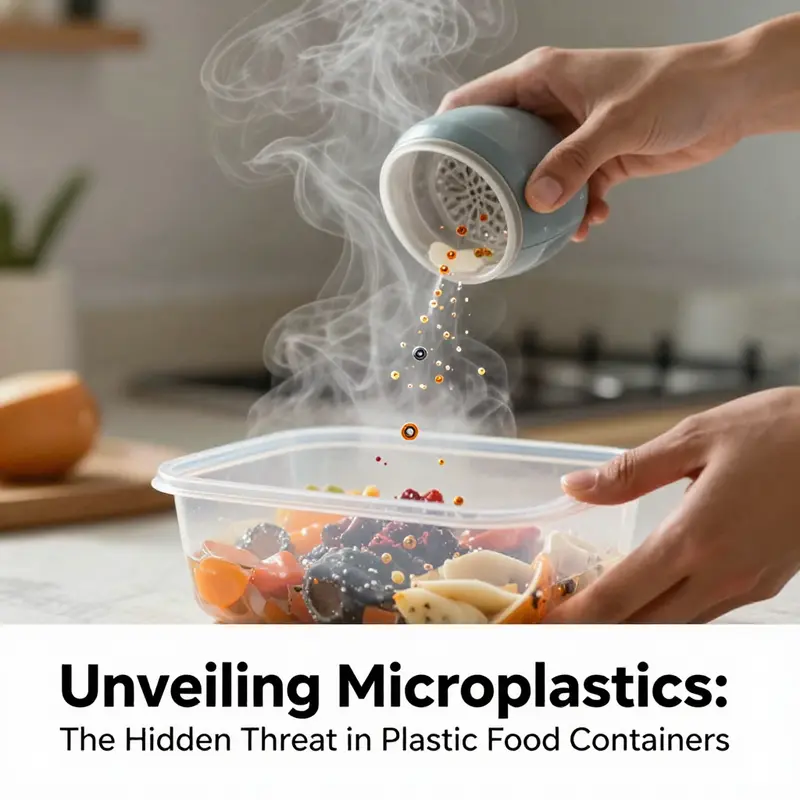
Heating plastic food containers can increase the release of microplastics into food and beverages. Microwaving or exposure to hot liquids raise internal stresses and particle shedding, with common plastics like PP, PS, PE, and PET showing varying susceptibility. To reduce exposure, use glass, ceramic, or stainless steel for heating, inspect containers for wear, and avoid prolonged or repeated heating of aging plastics. These steps support safer storage and cooking practices and help minimize both particle migration and associated chemical exposures.
From Plastic to Purpose: Redesigning Food Storage to Minimize Microplastics and Protect the Planet
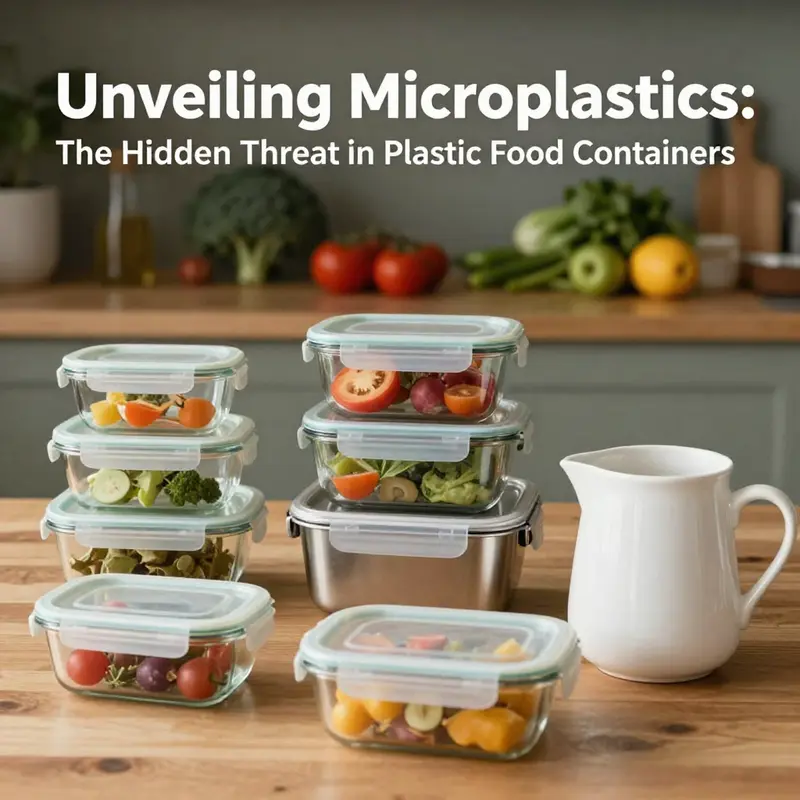
Everyday food containers shape more than our meals; they shape exposure, habits, and the ecology that supports both human health and wildlife. The issue of microplastics in plastic food containers is not merely a statistic in a laboratory. It is a lived reality that unfolds at the kitchen scale: repeated use, heating, washing, and imperfect disposal accumulate a stream of tiny plastic fragments that can migrate into food and drink. A growing body of research has mapped the pathways by which microplastics enter the human body and how these particles traverse the gut and, in some cases, the bloodstream. When containers are warmed, leachants and fragments accelerate their release. A pivotal study in Environmental Science & Technology a few years ago highlighted that heating foods to higher temperatures can release millions of microplastic particles per liter of food, with higher intensities observed when containers are scratched, reused, or degraded. The implication is stark: the act of cooking or reheating inside a plastic vessel becomes a potential contributor to daily microplastic intake. Although the exact risk profile for every particle is still debated, the consensus is that avoiding unnecessary exposure is prudent, particularly for sensitive populations and for foods that are fatty, acidic, or hot and thus more conducive to chemical migration and physical abrasion.
This chapter advances a practical, design-forward argument: by shifting away from plastic containers toward safer, enduring, and recyclable or compostable options, consumers can meaningfully reduce microplastic exposure while also lessening the long-term environmental footprint of our meals. The advocacy is not merely about choosing a single material, but about reimagining a system of storage, transport, and reheating that prioritizes stability, safety, and lifecycle stewardship. The chapter surveys the leading nonplastic alternatives—glass, stainless steel, silicone, ceramic, and emerging plant-based materials—and then considers how each option interacts with real-world use. It also examines the subtle tradeoffs that often accompany sustainability choices, including manufacturing energy demands, transportation costs, durability, and end-of-life management. The practical core remains simple: minimize heating in plastic, reduce reliance on disposable items, and favor vessels that resist leaching and fragmentation whenever feasible. The discussion is grounded in the trajectory of scientific findings, which increasingly show that microplastics can arise not only from traditional plastics but also from some forms of bio-based plastics under common food storage conditions.
One of the most persuasive themes in this evolving landscape is the alignment between personal health and planetary health. When people transition to safer containers, they simultaneously reduce the release of microplastics into the food system and curb the proliferation of waste that burdens land, air, and water ecosystems. Yet this is not a message about denial or fear; it is a call for informed substitution—choosing materials that perform reliably under heat, that resist scratching, and that offer multiple lifecycles of reuse or safe end-of-life processing. This approach recognizes the interconnectedness of kitchen choices and environmental integrity, linking personal daily routines to larger questions about plastic production, recycling rates, and the fate of discarded containers.
The safest and most enduring alternatives begin with glass. Glass behaves as an inert, nonporous barrier that does not shed fibers, and it remains stable when heated or cooled. It can be used in microwaves and ovens and holds up well to repeated washing. Its nonreactive nature means it does not migrate additives, and its long lifespan translates into fewer waste streams over time. Glass also has a well-understood recycling pathway, contributing to a circular economy in which materials are reprocessed rather than discarded. The evidence supporting glass as a default choice is practical as well as scientific: households that embrace glass for storage often experience less reliance on disposable plastic products, reducing the cumulative exposure to microplastics and the volume of plastic waste incinerated or landfilled.
Stainless steel offers another compelling option, especially for portable meals, school or work lunches, and freezer-to-table use. Stainless steel is robust, corrosion-resistant, and chemically inert in typical food storage contexts. It excels for cold or room-temperature storage and can withstand freezing or roasting, depending on the design. The primary caveat is that metal containers are not always suitable for microwaves, which means planning around reheating methods becomes part of the purchasing decision. Yet for many users, the durability and safety profile of stainless steel translate into a superior long-term value, especially when the goal is to minimize plastic contact and the associated microplastic burden.
Silicone storage bags and containers straddle the line between flexibility and safety. Food-grade silicone is adaptable for various food temperatures and is reusable, leak-proof, and easy to clean. Silicone can be a practical alternative to single-use plastics and bags, supporting diverse cooking and storage needs, including sous-vide or stored leftovers. It does require occasional checks for wear and tear and mindful cleaning to avoid residue buildup. While silicone is generally considered inert for many culinary applications, consumers should remain attentive to the broader conversation about additives and life cycle impacts, recognizing that no material exists in perfect isolation from environmental considerations.
Ceramic and glazed ceramic vessels contribute a natural, often aesthetically pleasing storage option, particularly for room-temperature or short-term storage. They can be made from non-toxic glazes and are widely used for dishes and bowls. However, ceramics are heavier and may be more vulnerable to breakage; they are typically less suitable for high-heat reheating in modern kitchen routines. For some homes, ceramics offer an attractive balance between safety and practicality when used thoughtfully—not as an on-the-spot substitute for every reheating scenario, but as a component of a diversified, nonplastic storage strategy.
An emerging axis in the conversation involves plant-based materials and bioplastics designed to align with eco-conscious aims. These materials promise compostability or biodegradability in appropriate conditions, offering a route away from conventional plastics. Yet the evidence base urges caution: even some bio-based plastics can release microplastics or exhibit toxicological effects under conditions that mimic typical food storage and heating. For instance, under certain storage and warming scenarios, bioplastics may shed particles or leach additives, with potential inflammatory or metabolic implications observed in animal studies. Rather than viewing bioplastics as a universal remedy, the prudent stance is to scrutinize product design, end-of-life feasibility, and real-world performance under heat, acidity, or oil-rich foods. This nuanced perspective helps prevent the substitution from becoming a new source of exposure, ensuring that any replacement truly reduces risk rather than shifting it along the lifecycle chain.
Beyond the materials themselves lies a broader infrastructure question: how to integrate safer storage into daily routines in ways that are affordable, practical, and scalable. The shift toward nonplastic containers benefits from consistent design features that support easy cleaning, reliable sealing, and clear labeling about safe heating and storage. The presence of durable seals, leak-proof lids, and compatible dishwasher or oven usage can determine whether a household adopts these alternatives in meaningful ways. In this sense, the transition from plastic to safer containers is not merely a matter of replacing one material with another; it is a redesign of everyday practices that can reduce exposure while promoting a culture of reuse and mindful consumption.
A crucial dimension of this transition concerns the life-cycle narratives attached to each alternative. Glass, stainless steel, and ceramic, though resource-intensive to produce, often outlast multiple generations of use and can be recycled or repurposed to a degree that far exceeds disposable plastics. However, the energy and emissions associated with manufacturing and transporting heavier containers can offset some gains if not managed thoughtfully. The upshot is that the environmental footprint of a storage choice depends on how it is used, maintained, and disposed of. In addition to personal health gains, responsible choices can contribute to reducing the overall flow of plastic waste, which remains a stubborn global problem with limited recovery rates in many regions.
Public health and policy angles reinforce the individual-level decisions. As audiences grow more aware of how microplastics enter foods through heating or improper container use, guidance flows from health professionals, researchers, and environmental advocates toward tangible strategies that people can adopt without sacrificing convenience. A practical implication is to minimize the use of plastic for heated foods and long-term storage of fatty or acidic items. The recommended approach is to favor nonplastic containers for reheating and storage when possible, to select labeling that emphasizes safety over marketing, and to prioritize materials with proven inertness under typical culinary conditions. Importantly, the shift away from plastics does not require abandoning modern conveniences; instead, it invites a reallocation of resources toward durable, reusable, and safer options that can be shared across households and communities.
For households exploring nonplastic options, one pragmatic pathway is to consider biodegradable eco-friendly take-away vessels made from kraft paper and similar substrates. These vessels, designed for single-use or limited reuse, can significantly reduce plastic input at the consumer level when used in appropriate contexts. They also offer a useful bridge for people who are assessing transitions away from conventional plastics, providing a familiar form factor for meals on the go, while aligning with broader sustainability goals. To learn more about these biodegradable options and how they fit into a broader nonplastic storage strategy, readers can explore this resource: biodegradable eco-friendly Kraft paper bowl. The emphasis here is not merely on end-of-life disposal but on choosing materials that are compatible with safe handling, minimal chemical migration, and a lower environmental burden when used responsibly.
A balanced, informed approach also involves acknowledging the limits of current knowledge. While the majority of evidence favors reducing plastic exposure, the complex reality of consumer behavior, supply chains, and end-of-life systems means that absolute elimination is not instantaneous. The best path forward combines cautious use, thoughtful substitution, and improvements in waste management. It includes investing in education about safe reheating practices, selecting containers designed to minimize contact with food during heating, and embracing reusable options that fit into daily life. These steps, though incremental on their own, accumulate into meaningful reductions in both microplastic ingestion and the volume of discarded plastics that accumulate in landfills and the environment. In this sense, choosing nonplastic containers is not only a health decision but a stewardship act—one that recognizes how everyday choices ripple through ecosystems, economies, and future generations.
The narrative converges on a practical takeaway: reframe the kitchen as a site of design and discipline rather than nostalgia or convenience alone. The decision to switch to safer containers is an everyday commitment to health and sustainability, one that can be supported by simple habits—washing methods that reduce abrasive wear, careful selection of reheating techniques, and a preference for materials proven to resist chemical leaching and mechanical fragmentation. As this chapter has argued, the goal is not to chase perfection but to pursue durable alternatives that minimize risk while offering real, measurable gains in environmental integrity. With these considerations in mind, households can make informed swaps that align health protection with ecological responsibility, moving from a reliance on disposable plastics toward a culture of reuse and mindful resource use. The path forward invites curiosity, not fear, and requires a clear vision of how materials behave under real-world cooking and storage conditions.
External reference: https://www.medscape.com/viewarticle/986720
Final thoughts
Microplastics in plastic food containers represent a serious threat to both human health and the environment. As food service professionals, understanding the sources and implications of these contaminants is crucial. By recognizing the risks linked to heating and utilizing plastic materials, businesses can pivot towards safer alternatives that protect customers and the planet. Choosing eco-friendly containers not only reduces microplastic exposure but also aligns with sustainable practices that today’s consumers increasingly value. It’s time to make informed decisions that foster health and sustainability in every aspect of food service operation.