
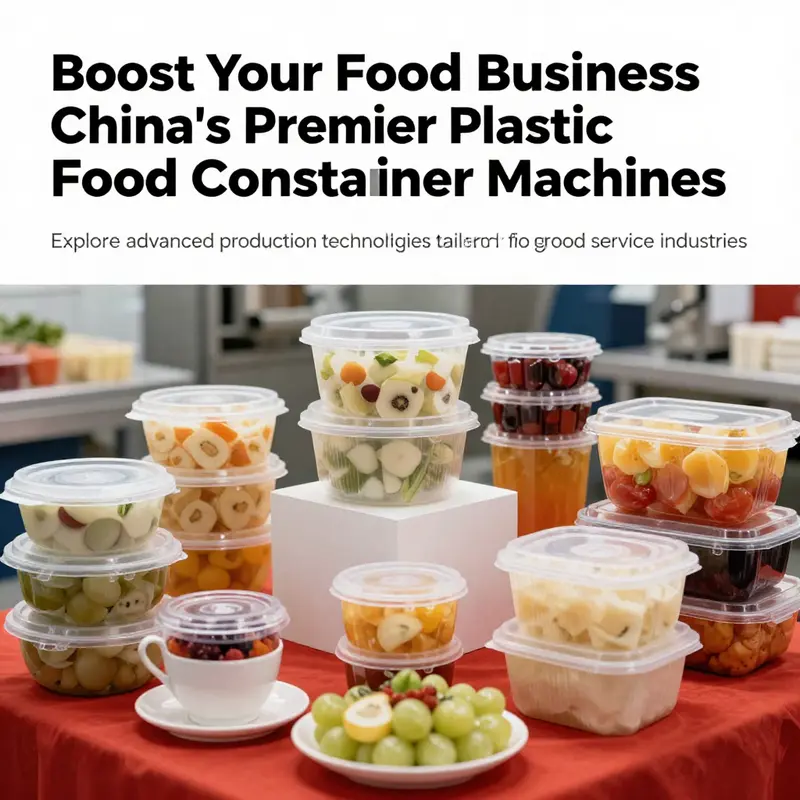
In an era where efficient packaging solutions are crucial, China’s plastic food container making machines stand out as a transformative force in the food service industry. These machines cater specifically to businesses like bubble tea shops, restaurants, food trucks, and catering services, streamlining the production of essential food containers. The variety of machines available not only ensures high-speed production but also supports the unique needs of different food service sectors. In the following chapters, we will delve deeper into the comprehensive features of these machines, the specialized equipment designed for specific products, their types and capabilities, and the current market insights on trends and suppliers to help you make informed purchasing decisions.
Integrated Machinery, Global Demand, and the Edge of Automation: A Chapter on China’s Plastic Food Container Making Machines for Sale
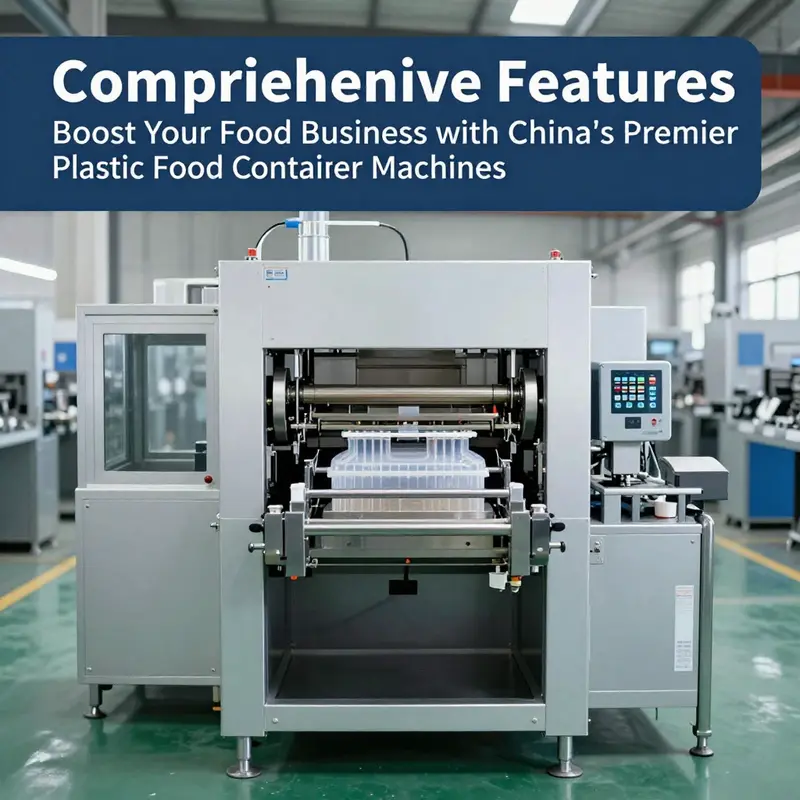
When one surveys the landscape of manufacturing equipment for plastic food containers in China, what stands out is not a single breakthrough but an ecosystem of highly automated, high-speed systems designed to streamline multiple production stages into a single, cohesive operation. The most sophisticated solutions are not just lines that form cups or boxes; they are fully integrated platforms that feed raw sheet material, heat, stretch, vacuum form, cut, and trim with astonishing continuity. In this environment, the modern plastic cup machine embodies more than speed. It embodies an architectural approach to production where consistency, flexibility, and control converge in service of a wide range of container styles and functions. The essence of these machines is a carefully balanced interplay between mechanical design, thermal management, and intelligent control that translates raw resin or film into finished products with predictable geometry and reliable performance. The ability to switch mold sets quickly to accommodate different cup, box, or lid configurations is not a luxury but a strategic necessity, because the market demands both scale and customization at the same time. A typical automated thermoforming line may handle PP, PE, PET, PS, and HIPS with only mold changes required to shift from one family of containers to another. This adaptability enables manufacturers to meet diverse application needs—from lightweight, thin-walled cups for cold drinks to sturdier trays for ready meals—without sacrificing throughput or quality. In practice, this means the lines are designed around continuous operation, with material feeding aligned to the heating cycle and forming stage, followed by trimming, stacking, and in-line quality checks. The result is a streamlined flow that minimizes handling, reduces waste, and improves yield. The emphasis on automation is not merely for labor savings; it is a core driver of product integrity, sanitation, and process reproducibility, all of which are critical in food packaging where safety and freshness are non-negotiable. The contemporary Chinese market for these machines reflects an understanding that packaging must meet evolving standards while supporting rapid, scalable production. Modern vacuum forming and thermoforming platforms often feature PLCs and touchscreens that translate complex process parameters into actionable, real-time control. Operators can adjust heating temperatures, vacuum levels, and cycle times with precision. They can monitor cycle gaps, troubleshoot faults, and implement corrective actions from a single interface. This level of visibility is essential when operating at high speeds, where even a small deviation can propagate into defective parts. It also opens the door to smarter, unmanned production lines, where autonomous systems coordinate with downstream logistics to move finished items through the plant with minimal human intervention. From the perspective of process integration, the potential of these machines extends well beyond their core molding functions. Some models incorporate multi-functional capabilities that blend vacuum forming with stamping or integrated forming, allowing a single line to convert rolled sheets into finished sheets with minimal intermediate handling. The versatility is particularly valuable when the product mix includes items as varied as thin-walled cups, take-away boxes, and microwaveable trays. The materials that these tools can process are equally varied, including PP, PE, PET, PS, HIPS, and even composite films that may feature barrier layers. This broad compatibility is essential, not only to satisfy current demand but to adapt to shifts in packaging trends driven by consumer expectations around safety, shelf life, and sustainability. The ability to form from multiple materials empowers manufacturers to tailor containment properties to specific foods and climates, ensuring that products maintain quality from dock to consumer. In parallel with automation, the role of construction quality cannot be overstated. High-end components crafted from 304 stainless steel and premium aluminum alloys inspire confidence in the long-term reliability and hygienic integrity of equipment operating in food environments. These materials resist corrosion, withstand frequent cleaning, and meet food safety standards that govern contact with consumables. Customizable molds add another layer of value, enabling producers to realize distinctive container geometries—whether rectangular, rounded, or irregular in shape—without sacrificing the efficiency of the forming cycle. This is particularly important for brands that seek to differentiate their packaging aesthetics while maintaining operational efficiency. The production lines themselves are designed with a practical emphasis on performance metrics that matter in real-world production: heating modules with adjustable temperature ranges, vacuum pumps with aggressive gas replacement rates, and programmable vacuum times that allow for precise sealing and forming windows. In many cases, the sealing process is as critical as the forming itself. A strong, leak-proof seal protects contents, preserves freshness, and prevents contamination, all of which are vital for perishable goods, ready-to-eat meals, and pharmaceutical-related packaging where sterility and integrity are paramount. The engineering challenge is to maintain consistency at scale: identical cups, boxes, or trays across thousands of cycles per week, with tolerances tight enough to enable reliable downstream filling and labeling. The resulting quality uniformity supports not only consumer trust but also the efficiency of automated downstream processes, including sealing, labeling, and case packing. The market context for these machines in China reflects a blend of advanced automation with flexible manufacturing capabilities. Leading suppliers emphasize GMP-compliant configurations, reliable after-sales support, and networks that shorten downtime when service or spare parts are needed. A one-year warranty is a common baseline, with remote technical support and rapid response services designed to minimize disruption in production schedules. In high-demand regions such as the east coast and the Yangtze River Delta, manufacturers maintain regional service networks and warehousing that enable prompt parts delivery and technician dispatch. This layer of service is not incidental; it is a core competitiveness metric that determines the total cost of ownership over the machine’s lifecycle. While the dominant narrative remains the swift production of plastic containers, there is also a parallel, increasingly visible movement toward sustainable packaging materials and processes. In response, some producers are nurturing the capability to combine traditional forming lines with options for more eco-friendly materials and more efficient resource use. These trends do not replace the primary technologies but expand their relevance in a market that seeks to balance performance with environmental considerations. The supply ecosystem around these machines is as important as the machines themselves. Platforms that connect buyers and manufacturers provide access to standard configurations and custom-built options. They also offer an avenue to explore the design flexibility needed for non-standard container formats, enabling customers to request aluminum mold components or other specialized tooling. The ability to adapt to non-standard designs broadens the spectrum of possible applications—from everyday disposable cups to specialized containers used in medical or pharmaceutical contexts. In a global sense, the appeal of China-made plastic container machines rests on the combination of speed, adaptability, and cost competitiveness. The capability to achieve speeds of up to around 30 cycles per minute in high-end models translates into tangible throughput gains for plants that operate around the clock. The electrical systems are typically designed for 380V, three-phase power at 50Hz, with customization options to accommodate different national grids or factory constraints. Control systems with PLCs and human-machine interfaces keep the operation approachable while preserving the depth of control required for complex forming cycles. The broader manufacturing narrative is further enriched by the added value that comes with integrated sealing and packaging lines. Fully automatic vacuum sealing machines, for example, consolidate box feeding, material filling, film positioning, and heat sealing into a single continuum. The precise orchestration of these steps minimizes human intervention and supports the hygienic and sterile handling of packaged goods. The inclusion of food-grade stainless steel and robust automation frameworks is not incidental; it is a deliberate design choice that helps ensure regulatory compliance and reduces the risk of contamination in high-speed packaging environments. Regarding the procurement landscape, buyers typically engage with vendors who not only provide the machinery but also deliver ongoing after-sales support and service networks. These relationships are essential for achieving persistent performance, ensuring spare parts availability, and enabling rapid maintenance when needed. The practical reality is that equipment uptime depends as much on service responsiveness as it does on the technical sophistication of the line. On the buyer’s side, this means aligning production goals with supplier capabilities, including the timeline for mold changes, the availability of replacement components, and the potential for process optimization through software updates or hardware upgrades. The combined effect is a production ecosystem that can react quickly to shifting demand, whether for single-serve cups, meal boxes, or other thin-walled packaging formats. In summary, the Chinese market for plastic food container making machines for sale embodies a mature fusion of automation, materials versatility, and process integration. The most capable lines are not only fast but adaptable, able to support diverse container geometries while maintaining stringent quality and sanitation standards. They offer clear advantages in downstream efficiency, yield, and traceability, which are increasingly important as manufacturers push toward end-to-end digitalized packaging lines. As packaging trends continue to evolve—with continued emphasis on safety, shelf life, and sustainability—these machines will evolve in tandem, incorporating smarter controls, better materials, and smarter logistics compatibility. The result is a manufacturing landscape where high-speed productivity and flexible design coexist, enabling a new generation of food containers to move from factory floors to consumers’ hands with reliability and confidence. For readers seeking a concrete touchpoint within this ecosystem, one can explore related packaging offerings in the broader sustainability context, such as disposable kraft paper bowls, which illustrate how packaging choices diverge from plastics while still reflecting the same logistical and manufacturing challenges that high-speed thermoforming lines must manage. See a representative example here: 700ml kraft paper bowl. While this chapter focuses on plastic container machinery, the reference underscores how environments that demand rapid, sanitary packaging solutions are increasingly considering diverse materials and formats as part of an integrated packaging strategy. This cross-pollination of ideas helps explain why equipment suppliers emphasize not only speed and precision but also adaptability and resilience across material families.
External resource for further reading on compliant, high-performance packaging machinery in China: https://www.baonengpack.com/
Inside China’s Engine Room: Specialized Machinery Powering Modern Plastic Food Container Production
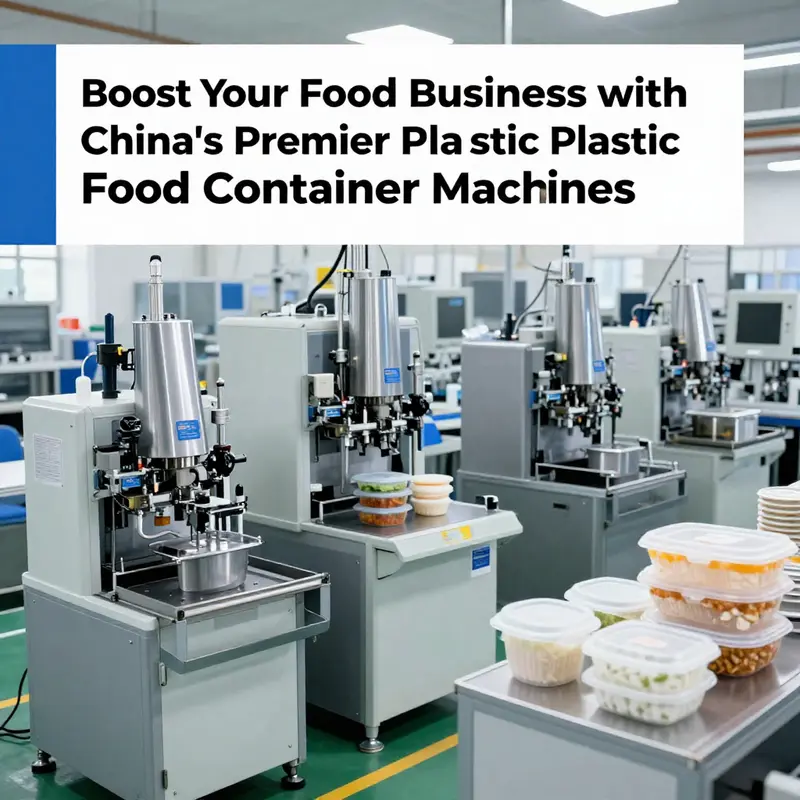
China’s plastic container production ecosystem blends precision engineering with high-speed hygiene to scale demand for cups, bowls, trays, and lids. This chapter traces the flow of operations from resin or sheet to finished packaging, illustrating how injection molding, thermoforming, sheet production, trimming, and sealing work as an integrated line rather than a collection of stand-alone machines. Materials such as PP, PE, PET, PS, and HIPS are processed with tight tolerances to ensure light weight, strength, and food safety at high throughput.
A central pillar is the injection molding segment. High-performance machines provide substantial clamping force, robust platforms, and servo-driven control to maximize cycle times while maintaining dimensional accuracy. The ability to change molds quickly, maintain repeatable wall thickness, and achieve repeat positioning accuracy enables families of products—cups, lids, bowls—within a single platform. GMP-compliant cleanliness and closed-loop temperature and process controls are essential to ensure product safety and consistent quality at scale.
Thermoforming and sheet production run in parallel as efficient, complementary routes for PP and PS-based containers and foam trays. Automatic sheet handling, heating, forming, trimming, and stacking reduce manual intervention and enable rapid product changeovers. Advanced lines offer energy-efficient heating, precise forming cavities, and integrated waste management, with options for biodegradable or compostable films to meet sustainability goals.
The final stages—vacuum sealing, film lamination, and sealing—are synchronized with forming to deliver sealed packages with reliable barrier properties. Stainless steel construction, PLC control, and hygienic design keep lines clean and controllable, ensuring consistent seals across shapes and sizes. The electrical architecture, often PLC-based with touch interfaces, permits real-time monitoring of cycle time, temperatures, and pressures, supporting low downtime and fast changeovers.
Beyond the hardware, the Chinese equipment landscape emphasizes supplier ecosystems: spare parts availability, on-site commissioning, and after-sales service that minimize downtime. Lines can be customized within a standard framework to accommodate product families, regulatory regimes, and evolving materials. This adaptability helps brands scale quickly while maintaining quality and cost competitiveness, even as consumer expectations shift toward sustainability and convenience.
In sum, these specialized machines form an integrated production engine that translates resin or sheet into tens of thousands of containers per hour, while meeting hygiene, regulatory, and environmental requirements. The story is one of orchestration—of equipment, control software, and human operators working in harmony to deliver reliable, safe packaging at global scale.
From Sheet to Seal: Navigating China’s Plastic Food Container Making Machines for a Modern Packaging Market
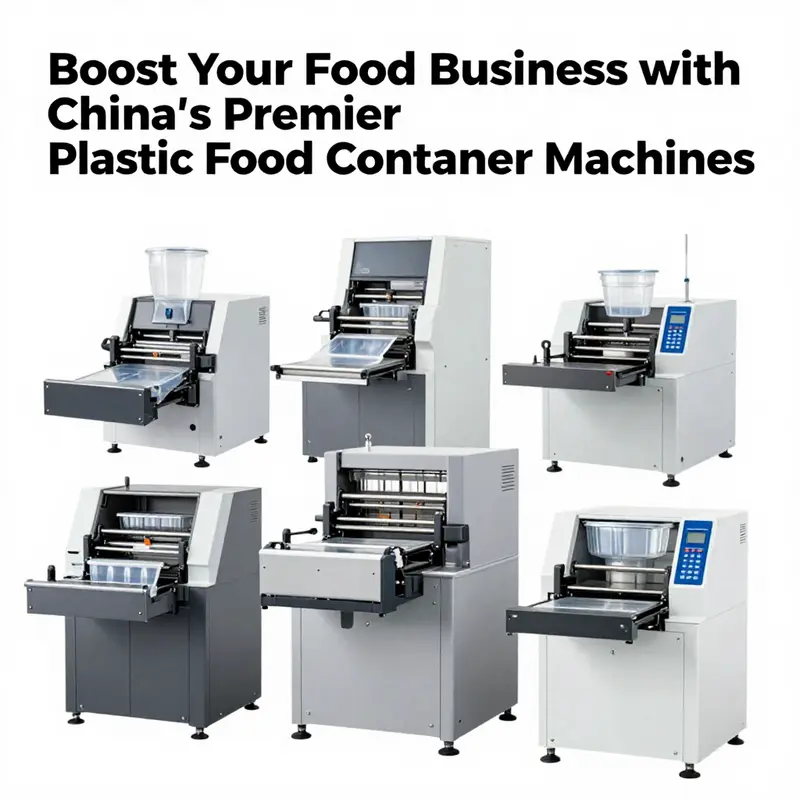
When a packaging line begins with a sheet and ends with a sealed, ready-to-ship container, the production chain becomes more than a sequence of steps. It is a carefully calibrated workflow that reflects the maturity of China’s plastic food container making machinery sector. In today’s manufacturing landscape, the market offers a spectrum of equipment designed to scale from small workshops to full‑scale lines, all tailored to a diversified set of packaging needs. The core distinction among technologies lies in processing method and intended application, yet the common goal remains: to convert resin into reliable, safe, and cost‑efficient packaging at speed. From automated thermoforming systems that handle sheet stock in continuous operation to high‑precision injection molding cells that yield rigid, stackable containers, the equipment ecosystem supports the entire lifecycle of modern food packaging.
At the heart of this ecosystem are automated plastic cup machines and modular manufacturing lines that shape how producers respond to demand. An automated cup system integrates feeding sheet material, heating, forming, and cutting into one seamless operation. Changeovers hinge on mold swaps rather than retooling of the entire line, enabling rapid shifts in product size and material compatibility. Materials range from PP and PE to PS and beyond, including PET and HIPS for specialized applications. The underlying advantage is automation that reduces labor while increasing uniformity and food-contact compliance.
Complementing forming lines are sealing machines that apply films or lidding materials under vacuum or heat. In a typical Chinese setup, these units emphasize modularity, stainless contact surfaces, and PLC-based control with touchscreens to ensure precise temperature, vacuum, and sealing pressure. The capability to seal widely used films—PP, PE, and aluminum composites—extends line reach to fast‑food boxes, cold‑storage packs, and other containers, with some configurations offering inline quality checks and sensor feedback to prevent rejects.
Beyond these core lines, Blow molding and extrusion equipment support related stages, while paper cup options highlight a broader packaging strategy. This breadth reflects a practical path for manufacturers to diversify offerings, optimize logistics, and respond to changing consumer preferences without sacrificing efficiency.
Several mechanical and operational considerations shape equipment choice. High-end forming lines can reach speeds around 30 cycles per minute, with typical power infrastructure of 380V, three‑phase, 50Hz, and customization available for other standards. Control systems rely on PLCs and modern touchscreens to deliver accurate cycle timing, mold positioning, and diagnostics, enabling operators to monitor and adjust without interrupting flow.
The procurement landscape in China reflects a mature ecosystem with abundant resin supplies and a robust supplier network. Buyers often pursue standard lines or custom solutions tailored to product formats, automation levels, and integration needs. The advantage of working with Chinese manufacturers is the ability to tune equipment for exact product mixes, barrier films, and mold geometries, with complete lines that include upstream handling, sheet feeding, and downstream stackers or palletizers. The result is a cohesive, end‑to‑end solution that minimizes integration risk and accelerates time‑to‑market.
Ultimately, the decision rests on product strategy. A high‑volume, uniform packaging operation may favor a single, high‑speed thermoforming line with integrated sealing for consistent quality and favorable unit costs. A diversified operation may benefit from modularity: a core forming line paired with flexible sealing and downstream packaging capable of accommodating multiple films and containment formats. The common thread is standardization of interfaces and tight process control, which matter for scalability and for training of maintenance staff.
In the broader context, modern lines are increasingly integrated into broader manufacturing ecosystems, featuring synchronized material feeding, forming, trimming, sealing, and packing with sensors and touchscreen interfaces. The goal is visibility into cycle times, energy use, and bottlenecks, enabling proactive maintenance and continuous improvement. Suppliers may offer rapid‑response services to minimize downtime and ensure predictable production.
While plastic remains central to many packaging strategies, sustainability considerations are shaping equipment choices. Some manufacturers explore energy‑efficient drives, heat recovery on sealing stations, and closed‑loop material handling to reduce waste. The best solutions emphasize modularity, ease of maintenance, and clear interfaces to support long‑term growth and regulatory compliance.
To illustrate planning, consider mixed product lines including tofu containers, yogurt cups, and meal trays. A thermoforming‑heavy setup balances cost and performance with changeover‑friendly molds, while an injection‑molding backbone plus flexible sealing can support rigid, high‑tolerance items. The procurement brief should emphasize modularity, easy maintenance, and synchronized control to minimize downtime and ensure consistent quality across products.
As sustainability considerations evolve, readers are encouraged to weigh plastic against paper or hybrid options in planning, while recognizing that packaging ecosystems continue to evolve. The core message remains: design lines that align with product families, prioritize automation and reliability, and maintain adaptability for future formats and materials.
For further context on packaging formats and standards, see related resources and ISO quality management references that help frame robust, compliant manufacturing practices.
Market Pulse and Regional Dynamics: How China Shapes the Global Arena for Plastic Food Container Machinery
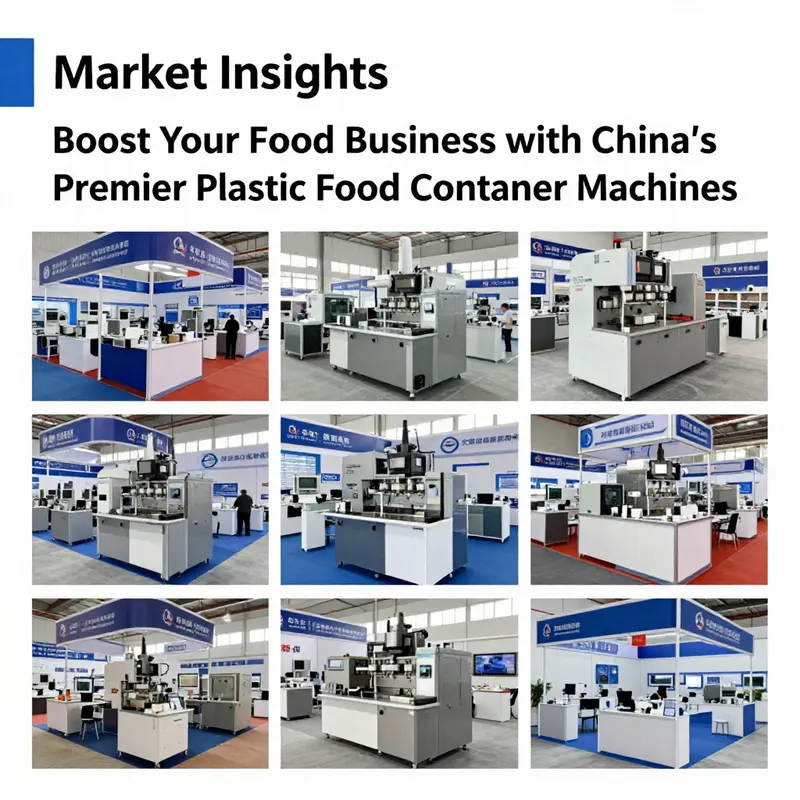
The market for plastic food container making machinery in China reads like a living map of industrial specialization, logistics prowess, and relentless process optimization. It is not a single, monolithic sector but a web of interlocking capabilities that supports both domestic consumption and a broad network of export channels. What emerges from this landscape is a narrative of scale, speed, and smart adaptation. The steel-and-plastic choreography behind forming, sealing, and finishing containers has evolved from basic capacity to an integrated ecosystem where automation, material efficiency, and branding become core differentiators. In this context, the growth engine of the market rests not just on the machines themselves but on the way buyers source, integrate, and sustain these lines within their own value chains. The result is a steady cadence of demand that blends local optimization with global aspirations, a trend that has kept China at the epicenter of plastic food container machinery for years and shows little sign of retreat as packaging demands continue to migrate toward greater hygiene, visibility, and shelf life.
At the heart of the market lies a dual engine: rising domestic consumption of packaged foods and the intensifying need for reliable export-capable lines. A broad sector trend has positioned high-speed, automated thermoforming and multi-process lines as the backbone of modern packaging factories. These systems are designed to feed, heat, form, and cut in a single, streamlined workflow, reducing labor, waste, and cycle times. They are built to handle a spectrum of thermoplastics—from the more rigid, rigid-to-hold packaging resins to lighter, thin-walled formats—by swapping molds rather than overhauling an entire line. The ability to convert a single platform to produce cups, bowls, and clamshell-style containers with little downtime has a clear appeal for manufacturers seeking to diversify product portfolios without incurring prohibitive capital expenditure on multiple dedicated machines. As a consequence, buyers increasingly weigh the total cost of ownership—capital outlay, maintenance, energy consumption, and the speed of changeover—against the incremental revenue potential of new container formats.
A complementary trend is the growing sophistication of feature sets on higher-end machines. UV stabilization, moisture barriers, and integrated printing capabilities have moved from novelty to standard for many premium lines. For food safety and brand integrity, these features translate into longer shelf life for packaged products and more effective consumer engagement at the point of sale. While the upfront investment for such capabilities is higher, buyers frequently justify the cost by reduced post-processing steps, improved yield, and the ability to command premium pricing for branded packaging. The market thus rewards equipment that can deliver not only speed and reliability but also value-added packaging attributes that help products stand out in crowded aisles or online marketplaces.
Strategic sourcing in this sector transcends price alone. A robust evaluation framework emphasizes regulatory compliance, traceability, and post-sale support. Food-grade polymers must meet widely recognized standards, with documentation attesting to BPA-free formulations and adherence to safety regulations relevant to major markets. Buyers increasingly insist on MOQs that align with their growth plans—often negotiating terms as low as a few dozen or a hundred units for trial runs or pilot programs. In such a climate, suppliers that can offer modular configurations, scalable automation, and flexible service agreements tend to secure longer-term partnerships even when competing on price with regional peers. The procurement decision becomes a balance between the speed of delivery, the degree of customization, and the assurance that spare parts and expertise will be accessible when needed. Cleanroom-like operating conditions, specialized maintenance, and technician availability are not mere footnotes but decisive criteria that shape supplier selection and equipment longevity.
Regional specialization in China further shapes buying behavior and project scoping. In the coastal northeast’s broader industrial belt, logistics excellence and proximity to major ports create a compelling case for export-oriented buyers seeking reliable supply streams and shorter lead times. Inland clusters, by contrast, leverage local access to base resins and lower input costs, creating a different value proposition. For example, some inland regions offer resin cost advantages and faster turnarounds for custom orders—an important factor for startups or brands testing new packaging concepts. In the southeast and coastal regions, the balance tilts toward high-capacity lines, automation depth, and the ability to scale to substantial monthly outputs. Such regional dynamics are not merely about price; they influence total cost of ownership, risk exposure, and the speed with which a buyer can respond to shifting market tastes or emergent regulatory requirements.
The most mature manufacturing hubs in the country have cultivated vertically integrated capabilities, where material preparation, forming, trimming, and sealing can occur within a tightly coordinated supply chain. This integration reduces points of friction and fosters more predictable production timelines. Yet maturity does not equate to uniformity. The market rewards those who can align process control with flexibility. A line that can produce a wide range of containers—from simple bowls and cups to more complex thermoformed shapes—without sacrificing cycle time or dimensional accuracy is highly sought after. In practice, this means suppliers that invest in precision molds, robust feed systems, and stable heating controls, while also offering quick-change tooling and automated inspection to minimize rejects. The result is a production floor where changeovers are routine rather than exceptional, enabling brands to adapt to seasonal demand swings or new product launches with minimal downtime.
From a buyer’s perspective, this environment requires careful diligence beyond the machine itself. Material sourcing decisions intertwine with equipment choices. For example, the resilience and compatibility of different resins with forming tolerances, barrier properties, and printability inform which lines are best suited to certain product families. A packaging program that prioritizes freshness and shelf appeal might favor lines with integrated printing or pre-printed film handling, reducing the steps between molding and final packaging. Conversely, programs focused on cost leadership or bulk distribution may prioritize raw material compatibility and ease of maintenance. In every case, the path to a reliable, scalable line passes through a collaborative dialogue with suppliers—the kind that maps out long-term needs, tests alternate configurations, and aligns on post-sale service schedules that minimize downtime.
As the market matured, a realignment of strategic expectations followed. Market analyses have consistently highlighted steady growth in the rigid plastic food container segment, with an annual growth trajectory framed around four percent-plus through a recent horizon. Fresh produce packaging, in particular, has become a driving force as retailers and manufacturers migrate from loose packaging toward more protective, hygienic, and visually consistent formats. This shift increases the demand for automated filling, forming, and sealing systems that can handle delicate items without compromising shape or surface quality. For suppliers, this means evolving product development toward not only higher speeds but also more robust finishing options, such as enhanced heat-seal integrity, improved edge quality, and compatibility with barrier films. The value proposition thus extends beyond machinery into the realm of integrated packaging ecosystems where lines, films, and branding elements work together to extend product viability and market appeal.
Branding and regulatory compliance increasingly shape the conversation around machine selection. Buyers seek lines that can accommodate integrated branding opportunities, enabling on-line printing or pre-printed packaging components. The ability to imprint logos, nutritional information, or promotional graphics directly onto containers reduces downstream handling and helps preserve print fidelity through the entire supply chain. Simultaneously, global buyers demand transparent documentation. Traceability of materials, certifications for food safety, and documented compliance with major regulatory regimes become essential parts of supplier audits. These expectations create a virtuous cycle: as manufacturers invest in certification and documentation, they bolster buyer confidence, which in turn supports higher levels of automation and more ambitious production targets.
Within this evolving landscape, a natural lesson emerges for buyers: plan for flexibility as a core capability. The best-suited equipment is not merely the one with the highest speed or the most advanced features, but the one that can be adapted to shifting product formats, evolving packaging standards, and changing consumer expectations. This often means negotiating with suppliers who can offer modular upgrades, scalable automation, and predictable maintenance packages. It also means recognizing the trade-offs that accompany advanced features—higher initial cost, the need for controlled operating environments, and more complex maintenance regimes. Savvy buyers design their projects with phased capital deployment, aligning high-velocity lines for core SKUs with more flexible, lower-cost lines for experimental formats. In practice, this approach translates into steady, incremental capacity growth rather than abrupt, high-risk jumps in investment.
An undercurrent in the dialogue about market dynamics is sustainability and the shift toward responsible material choices. While plastics remain central to modern packaging due to their light weight, clarity, and barrier properties, buyers increasingly consider end-of-life scenarios, recyclability, and resin footprint. Suppliers respond with materials and process adjustments that favor recyclability, lower energy intensity, and reduced waste. The capacity to implement barrier enhancements, UV protection, and material-efficient forming can align with sustainability goals while maintaining performance. In this context, the relationship between packaging engineers, process technicians, and sustainability teams becomes a critical axis of decision making, shaping which lines are prioritized and how suppliers communicate risk, containment, and long-term value.
For readers seeking a broader framework to compare supplier performance and machine specifications, a regional guide and performance data provide a valuable reference. This external resource offers a structured view of supplier clusters, regional strengths, and the kinds of capabilities buyers should assess when evaluating bids and project timelines. External resource: https://www.china-industrial-sourcing.com/food-container-machine-suppliers-china. Within this landscape, a single insight remains clear: the market rewards clarity, reliability, and the ability to translate technological capability into tangible business outcomes. That translation happens through careful supplier education, disciplined procurement, and a readiness to adapt packaging strategies as consumer expectations evolve. For forward-looking manufacturers, the next horizon is not simply faster machines but smarter, more integrated packaging ecosystems that can respond to changing regulatory regimes, shifting supply chains, and the demand for packaging that supports brand storytelling while protecting product integrity. And it is in China’s dense network of regional clusters, with their unique cost structures and production strengths, that these dual aims—efficiency and adaptability—find their most practical expression. As buyers navigate capacity plans and as suppliers balance customization with scale, the market continues to move toward lines that deliver consistent performance, strong uptime, and the ability to evolve without forcing a wholesale system overhaul.
To illustrate how this ecosystem translates into real-world opportunities, consider the broader packaging environment in which these machines operate. The demand for ready-to-ship, visually appealing containers has grown beyond simple utility. Retailers increasingly expect packaging that communicates quality, supports brand identity, and protects contents across a long, complex supply chain. In many cases, this means lines that can produce a diverse array of shapes and sizes, with flexible changeovers and integrated finishing options. The economic calculations hinge on the balance between capital cost, operating expense, and the incremental revenue generated by product diversification. Buyers who succeed in this environment often build a staged investment plan, starting with scalable lines that secure essential volumes and then layering in automation features and branding capabilities as demand intensifies and as regulatory clarity provides a more predictable operating envelope.
For those exploring partnerships within the packaging ecosystem, it helps to think of the machine not as a discrete piece of equipment but as a doorway to a broader capability set. A line that can be reconfigured to accommodate new container geometries, or a platform that can integrate with sealing, labeling, and printing modules, represents a strategic asset in a highly competitive market. The regional clusters of China, with their specialized suppliers and efficient logistics, offer a practical pathway to such capabilities. The advantage goes beyond price; it spans technology compatibility, supplier responsiveness, and the ability to align on shared risk management, production planning, and after-sales support that keeps lines productive in the long run. In this sense, the Chinese market for plastic food container making machinery continues to mature not only in terms of speed and volume but also in the quality of collaboration and the depth of technical alignment among manufacturers, buyers, and service providers.
As with any significant capital purchase, prospective buyers should approach the procurement process with a clear project brief, a realistic timeline, and a structured due diligence plan. Clarifying regulatory compliance, establishing credible lead-time expectations, and defining the scope for customization are essential steps that reduce risk and accelerate value realization. The conversation with suppliers should cover not only the technical specifications and performance metrics but also maintenance regimes, spare parts availability, and the ability to support adaptation to evolving film and resin technologies. In short, a successful investment in a plastic food container making line is as much about building a durable supplier relationship as it is about selecting the most capable machine. This holistic view—combining technical fit, regional capability, and long-term service—helps ensure that the project delivers sustained productivity, consistent quality, and a competitive edge in an increasingly discerning marketplace. For readers seeking a concrete starting point, one accessible example of related packaging content is the disposable Kraft paper bowl product page, which demonstrates how packaging innovations intersect with consumer preferences and brand differentiation: disposable Kraft paper bowl product.
External resource note: For broader regional data and supplier performance context, explore the official guide at https://www.china-industrial-sourcing.com/food-container-machine-suppliers-china.
Final thoughts
As the demand for high-quality food containers continues to rise, investing in China’s plastic food container making machines represents a significant opportunity for businesses across the food service industry. With advanced technologies that streamline production and cater to specific packaging needs, these machines support efficiency and quality. Whether you’re operating a bubble tea shop, a food truck, or a large-scale catering service, the features, capabilities, and market trends discussed in this article will empower your decision-making. Embrace the future of food packaging with the right machinery that not only meets your production needs but also elevates your brand’s presentation and service quality.