
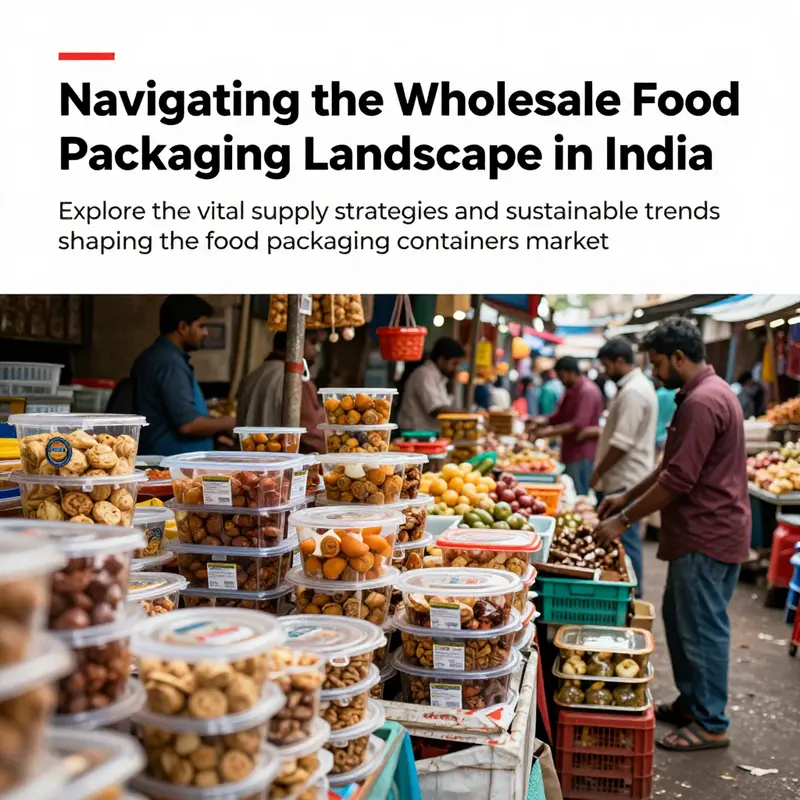
The food packaging container market in India is witnessing a significant boom, driven by the growth of the restaurant industry, food trucks, and catering services. This article delves deep into three crucial areas: the diverse types and applications of packaging containers, effective procurement strategies and supply chain management, and the rise of sustainable packaging solutions. Readers will gain insights tailored for bubble tea shops and beverage chains, offering them guidance on choosing the right packaging, ensuring cost-effectiveness, and embracing environmental responsibility.
The Spectrum of Wholesale Food Packaging Containers in India: Materials, Applications, and Pathways to Sustainability
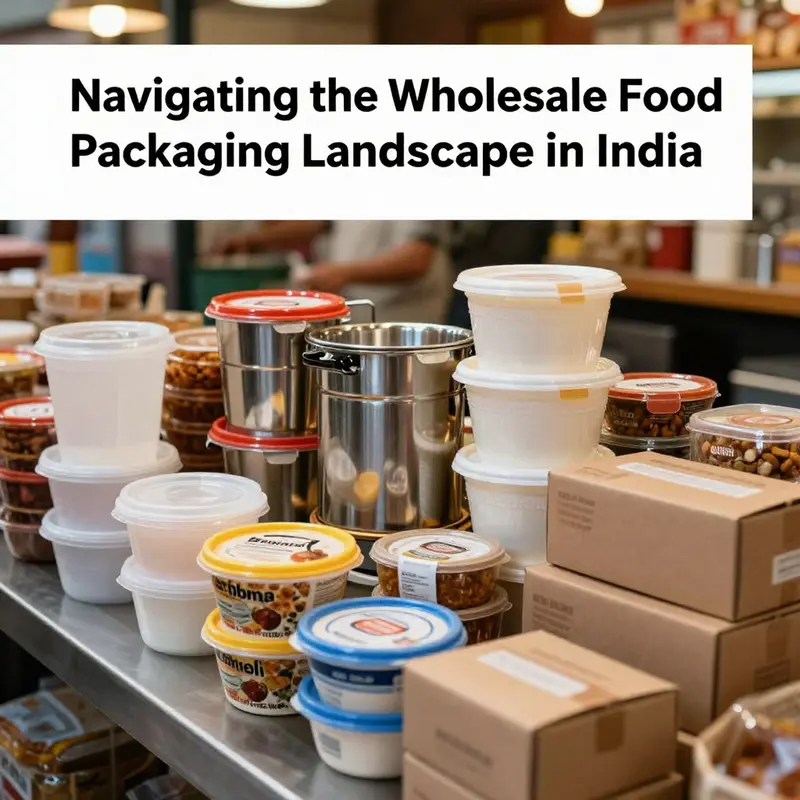
In India, the wholesale landscape for food packaging containers is inseparably linked to the nation’s rapidly evolving foodservice ecosystem. From street-food vendors and cloud kitchens to formal catering and household storage, demand for packaging that protects, preserves, and presents food has never been more dynamic. This chapter traces the main material families and their typical applications in the wholesale market, while weaving in how procurement strategies, regulatory push, and sustainability ambitions shape choice. It builds on a foundation of five broad material streams—metals, plastics, glass, paper and paperboard, and composites—each offering unique advantages, constraints, and opportunities in the Indian context. The discussion also acknowledges the practical realities of wholesale logistics, such as lead times, unit economics, and the risk of supply disruption, and it points toward a future where adaptability and environmental responsibility increasingly determine which containers move from factory floors to kitchen counters and storefronts.
To begin with, metals occupy a storied place in India’s packaging vocabulary. Tinplate, or lightly plated steel, remains a benchmark for products that require robust sealing, excellent barrier properties, and a longer shelf life. In the wholesale sphere, metal containers are widely used for dairy items, baby foods, several processed goods, and beverages that benefit from reliable oxygen and light barriers. The strength of tinplate lies in its predictable performance under a range of storage conditions, which is crucial for distributors serving a network of small and medium-sized manufacturers who value consistency across batches. Aluminum cans, by contrast, are the preferred choice for carbonated beverages and certain alcoholic drinks due to their light weight, formability, and strong barrier properties. In the Indian market, a growing emphasis on food safety and industrial scale production has reinforced metal’s appeal for high-value or longer-storage products, where durability and tamper-evident features offer tangible operational advantages. Government policy that aims to bolster the food processing sector also supports the expansion of metal packaging capacity, as manufacturers seek materials that can withstand more intensive production lines, cold-chain requirements, and export-grade labeling. Wholesale buyers often pursue metal packaging with clear traceability and compliance certifications, because these attributes help ensure consistent quality across large procurement volumes and multiple suppliers.
Plastics continue to dominate the Indian wholesale scene in sheer volume and versatility. The lightness, resilience, and cost-efficiency of plastic containers make them the default choice for a broad spectrum of goods—snacks, confectionery, dried fruits, spices, ready-to-eat meals, and everyday household products. The wholesale logic here hinges on scalable production capabilities, multi-size compatibility, and the ability to tailor packaging for specific distribution channels, from street stalls to modern retail networks. Technology advances have expanded the repertoire of plastic options to include recyclable and biodegradable variants, a development that aligns with rising consumer expectations for sustainability and with policy environments that encourage circular economy practices. For wholesalers, the incremental costs of adopting recyclable plastics often pay off through lower waste management liabilities, simplified logistics, and stronger alignment with environmental, social, and governance (ESG) criteria demanded by many retailers and corporate buyers. Yet, wholesale buyers must balance the allure of low unit costs with longer-term considerations such as the stability of resin supply, regulatory changes around additives, and consumer appetite for materials that minimize chemical migration risk during high-temperature exposure and repeated reheating.
Glass, though frequently outpaced by plastics in terms of price and weight, remains vital in the wholesale catalog for premium segments. Glass containers are prized for their clarity, inertness, and ability to showcase product integrity. In high-value categories—such as jams, preserves, olive oils, honey, and some spirits—glass is the preferred packaging because it preserves flavor profiles and supports premium branding. For wholesalers serving boutique manufacturers, specialty retailers, and gastronomic brands, glass offers a platform for storytelling through presentation. The trade-off lies in cost and logistics: glass is heavier, more fragile, and less forgiving in dense warehousing or last-mile delivery. Yet for certain channels, particularly gifting or luxury food lines, glass remains indispensable. As consumer preferences gradually converge toward sustainable and reusable systems, wholesalers that offer glass alongside options for returnable or refillable programs may carve out a niche with brands seeking to underscore quality and authenticity.
Paper and paperboard containers—boxes, cups, bags, and related composites—occupy a rapidly expanding space in India’s wholesale ecosystem. Paper packaging is frequently chosen for baked goods, confectionery, fast-food meals, dairy drink packaging, and cold beverages where consumer perception of eco-friendliness matters. In addition to its environmental advantages, paper-based packaging benefits from excellent printability, enabling brands to communicate values, ingredients, and provenance in a way that is visually compelling at shelf edge. The structural evolution of paper-based packaging, including improved moisture resistance, barrier coatings, and lightweight yet sturdy designs, has broadened its applicability across food categories that previously leaned toward plastic or metal. Wholesalers increasingly bundle customized, branded paper packaging with value-added services such as design personalization, co-branding opportunities, and support for consumer-facing campaigns. However, it is important to acknowledge that not all paper solutions are suitable for all products. Moisture sensitivity, oil migration, and aggressive contents require careful selection of coatings and board grades, particularly for frozen or wet foods. The wholesale market responds to these constraints with an expanding library of coated papers and laminated structures that balance barrier performance with recyclability and compostability wherever possible.
Composite packaging, the connective tissue that blends strengths across materials, has emerged as a pragmatic response to performance demands that single-material solutions cannot fully satisfy. Multi-layer structures—such as combinations of plastic films with aluminum foil, or paperboard layers with barrier plastics—enable sterilization, long shelf life, and barrier protection crucial for aseptic carton formats and retortable pouches. A widely cited example in the broader discourse is aseptic brick packaging, which supports long shelf life for liquids like milk and fruit juices without refrigeration. In wholesale terms, composites offer suppliers the flexibility to tailor performance characteristics—oxygen and moisture barriers, light protection, sealing integrity—without over-reliance on any single material. The trade-off is often recyclability and end-of-life management, since complex multilayer constructions can complicate post-consumer processing. Nevertheless, for categories where shelf stability dictates cost and supply chain reliability, composite packaging provides a practical balance of performance and scale.
In assembling a wholesale selection that aligns with diverse customer needs, procurement strategy plays a pivotal role. Indian wholesalers frequently engage global supplier networks to achieve volume discounts, standardize quality, and ensure predictable lead times. The typical delivery window for standard orders spans roughly 15 to 25 days, inclusive of production time and ocean freight to Indian ports. The unit cost cited in practical sourcing scenarios can be remarkably low—potentially as little as a few thousandths of a dollar per piece for certain simple containers—though market realities vary with material, size, print customization, and minimum order quantities. A price-first approach, however, carries its own risks. Delays, substandard materials, or inconsistent print quality can undermine relationships with distributors and the brand partners they serve. This is where a robust, multi-criteria supplier evaluation framework becomes indispensable.
A comprehensive framework for evaluating suppliers in this sector should weigh several dimensions alongside price. Reliability and lead-time consistency are paramount, especially for wholesalers serving large and geographically dispersed networks of restaurants, cloud kitchens, and FMCG brands. Customization capabilities—such as print design, logo application, and size variants—should be assessed for scalability and repeatability to avoid process fragmentation across orders. Compliance with food-contact regulations, safety certifications, and end-user labeling practices is non-negotiable for sustained business. Environmental credentials—certifications for recycled content, compostability, and supply chain transparency—are increasingly required both by retailers and by consumers who scrutinize the lifecycle of packaging. In this context, sustainability is no longer a marketing talking point; it becomes a criterion that influences supplier selection, and thus a factor in the long-run total cost of ownership.
The Indian wholesale narrative is also shaped by regional dynamics. Cities like Bangalore—home to a vibrant mix of traditional dining, cloud kitchens, and diversified consumer channels—illustrate a market where scale and speed matter. The wholesale pipelines feeding these operations often rely on global sourcing, yet the ultimate distribution occurs through a dense network of wholesalers, distributors, and manufacturers who can translate bulk supply into local fulfillment with minimal friction. In this environment, the balance between cost efficiency and reliability is continually negotiated. For instance, while the economics of standard orders may favor aggressive per-unit pricing, the risk of late shipments or material non-conformity can produce cascading costs in operations, inventory write-offs, or customer dissatisfaction. Wholesalers who integrate cross-functional teams—quality assurance, logistics planning, and demand forecasting—tend to outperform peers in maintaining consistent service levels across a shifting market.
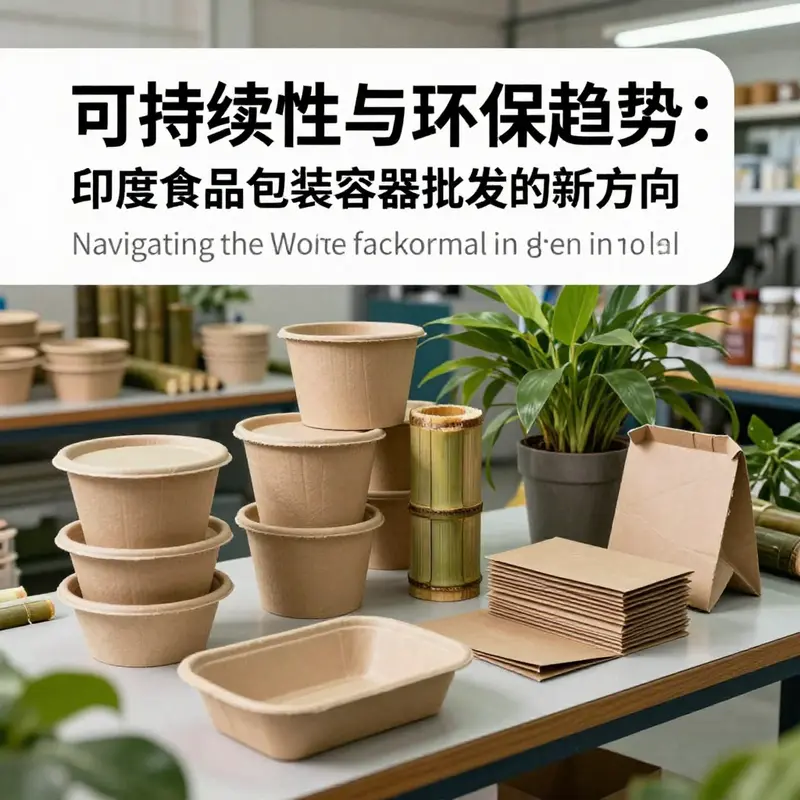
From a sustainability perspective, the Indian packaging landscape is moving toward a dual track: invest in greener materials where feasible, and optimize the supply chain to minimize waste and energy use. Biodegradable and compostable options—such as bagasse, bamboo fiber, and bio-based plastics—are gaining traction, especially among cloud kitchens and brands with explicit sustainability commitments. It is important to note that many of these materials require industrial composting infrastructure to achieve full degradation, which means the wholesale decision must consider the local end-of-life ecosystem as well as consumer behavior and municipal waste management capabilities. As brands in India increasingly communicate a commitment to circularity, wholesalers can play a pivotal role by offering end-to-end solutions that include take-back programs, guidance on proper sorting, and partnerships with recyclers or composters. In practice, this translates to packaging portfolios that not only meet performance requirements but also align with consumer expectations for responsible packaging.
An important nuance in wholesale decision-making is the opportunity to bundle packaging with additional services that strengthen brand value and streamline operations for customers. For example, in the paper packaging space, suppliers can offer customized printing, brand-enhancing graphics, and tailored packaging formats that optimize shelf impact and order fulfillment. The ability to deliver quick-turnaround branding solutions can be a deciding factor for small and mid-sized enterprises seeking to differentiate themselves in crowded marketplaces. Internal capacity for design support, rapid prototyping, and pre-press alignment reduces the risk of misprints and misalignments that can otherwise erode margins. A well-managed bundle approach also supports marketing campaigns and seasonal promotions, enabling brands to scale packaging design in tandem with product launches.
The practical implications for wholesale buyers extend beyond material choice and supplier relationships. In the Indian context, storage conditions, warehouse infrastructure, and last-mile delivery logistics all influence packaging strategy. Heavier metals may impose higher freight costs and require robust handling protocols, while lighter plastics or advanced paper laminates can improve load efficiency and reduce damage risk during transit. For frozen or chilled products, compatibility with freezer storage and cold-chain distribution is a critical factor; certain coatings and barrier layers must withstand temperature swings without cracking or delaminating. Retailers and distributors increasingly expect packaging that performs under varying humidity and heat exposure, particularly in warmer climates or during monsoon seasons. Consequently, a holistic approach to packaging selection emerges—one that weighs material performance, supply chain resilience, environmental impact, and the downstream experience of the consumer.
This integrated perspective is not just theoretical. It translates into concrete procurement practices, from supplier pre-qualification to ongoing performance monitoring. The wholesale market increasingly favors suppliers who can demonstrate end-to-end capabilities: material science know-how, scalable manufacturing, quality control systems, transparent lead times, and credible sustainability claims. Such capabilities reduce the risk of supply disruptions and enable wholesalers to offer consistent, reliable packaging solutions to a diverse set of customers, including cloud kitchens, fast-food chains, dairy processors, beverage producers, and specialty food brands. In a market characterized by fragmentation, large-scale buyers and aggregators can leverage consolidated procurement to negotiate favorable terms while preserving flexibility for customization. The efficiency gains from standardized components, shared specifications, and centralized quality assurance programs can ripple across the supply chain, lowering unit costs and increasing predictability for downstream partners.
The material choices outlined above reflect a broader market trajectory: a transition toward packaging ecosystems that emphasize performance, cost-effectiveness, and environmental stewardship. The Indian wholesale sector is uniquely positioned to influence this trajectory because its scale, diversified customer base, and evolving regulatory framework create both urgency and opportunity. As the country continues to urbanize and consumer expectations rise, packaging becomes more than a protective shell; it becomes a driver of brand identity, logistics efficiency, and sustainability outcomes. Wholesale players who can harmonize these dimensions—delivering reliable metal, plastic, glass, paper, and composite solutions while offering value-added services and sustainability-forward options—stand to gain a durable advantage. The chapters that follow will build on this foundation by examining the downstream applications in foodservice, retail, and home storage, and by exploring how innovative materials and design strategies can further optimize the life cycle of packaged foods across India’s rapidly evolving markets. For readers seeking a practical gateway to sourcing in Bengaluru and other urban centers, consider a comprehensive guide that maps supplier networks, cost structures, and lead times. wholesale-take-away-8oz-12oz-disposable-coffee-paper-cup-with-lids.
For those who wish to extend their understanding beyond the immediate supply chain and into a broader strategic framework, external resources illustrate how global packaging sourcing can be tuned to local markets while maintaining a competitive edge. A recent analysis of global suppliers for Bangalore businesses highlights how wholesalers can optimize vendor selection, cost control, and sustainable practices within a regional context. While the specifics vary by category and geography, the underlying lesson is consistent: successful wholesale procurement in India hinges on a balanced appraisal of price, reliability, customization capability, and environmental responsibility. This perspective complements the material-focused discussion above by anchoring decisions in a broader, forward-looking strategy that aligns with both business objectives and societal expectations.
In sum, the wholesale landscape for food packaging containers in India is characterized by a spectrum of materials, each with distinct roles and appetites in different product categories. Metals offer durability and shelf-life assurance for high-value and long-storage products; plastics provide scale, versatility, and cost efficiency for a wide array of consumer goods; glass preserves premium quality and visual appeal for select segments; paper and paperboard present recyclable and brand-friendly alternatives for baking, ready meals, and beverages; and composites deliver tailored performance for products that demand strong barrier protection and extended shelf life. The most successful wholesale strategies today blend careful material selection with robust supplier qualifications, smart packaging design partnerships, and an eye toward end-of-life sustainability that resonates with manufacturers, retailers, and consumers alike. As India’s food ecosystem continues to expand and diversify, the role of packaging as a strategic asset—rather than a mere cost of goods sold—will only become more pronounced, pushing wholesalers to innovate in ways that unify safety, efficiency, and responsibility across entire value chains.
External reading: For a broader understanding of how global sourcing practices can be adapted to Bangalore’s market dynamics, see an external resource on strategic sourcing for Bangalore businesses at https://www.example.com/sourcing-bangalore-food-packaging.
Sourcing Smarter: Procurement Strategy and Agile Supply Chains in India’s Food Packaging Container Wholesale Market
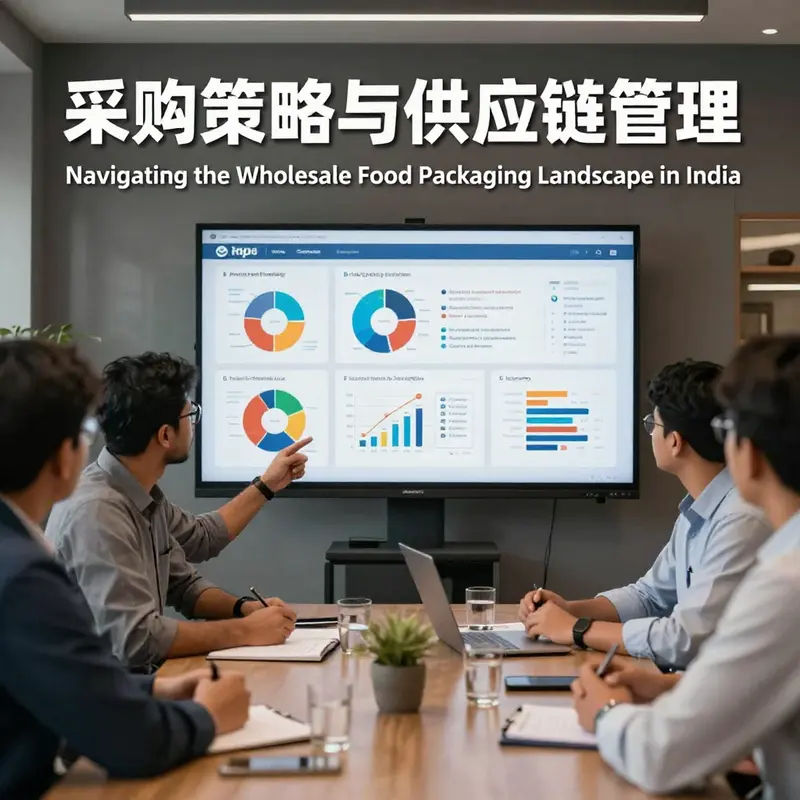
The wholesale arena for food packaging containers in India is evolving at a pace that reflects the complexity and scale of a food economy that ranges from bustling street vendors to polished cloud-kitchens and polished restaurant brands. Growth in demand is not merely about volume; it is driven by a broader set of pressures that include regulatory clarity, shifts in consumer expectations toward sustainability, the need for rapid product customization, and the ongoing push to keep supply chains resilient amid a landscape of fluctuating prices and intermittent logistics disruptions. In this context, procurement strategies and supply chain management must be forward-looking, compliant, and adaptable to the local realities of Indian markets while staying aligned with global supply practices. The chapter that follows threads together regulatory signals, market dynamics, and practical approaches to sourcing and delivery, stitching a coherent narrative that can guide wholesalers, distributors, and large buyers as they navigate the wholesale terrain for packaging containers in India.
To begin with, the regulatory environment is not a passive backdrop but a primary determinant of how procurement is structured and how suppliers are evaluated. The latest adjustments in 2025 to the Food Safety and Standards Authority of India (FSSAI) packaging regulations marked a meaningful inflection point. The revision explicitly clarifies that certain categories of recycled plastics can be used in food-contact packaging, provided they meet defined standards for safety and recyclability. This creates a legal pathway for scalable adoption of environmentally friendlier materials. The implication for procurement teams is not simply to source cheaper or greener materials; it is to cultivate traceable supply networks in which the provenance and processing of recycled content can be demonstrated, tested, and verified across batches. It means assessment criteria for suppliers must expand beyond price and capacity to include the robustness of material provenance documentation, testing regimes, and third-party certifications that attest to compliance with updated norms.
Even as the doors open wider for recycled materials, the regulatory horizon signals a simultaneous tightening of risk factors. There is movement toward new restrictions that will excludehigh-risk chemicals from food-contact materials. PFAS are under scrutiny for future bans, and there is a clear intent to curtail the use of bisphenol-A (BPA) and related derivatives in polycarbonate and epoxy-based packaging. This dual dynamic—expansion of permissible solutions alongside the narrowing of allowable substances—places a premium on upstream material screening and supplier qualification. For wholesale players, the lesson is twofold. First, build a rigorous raw-material sourcing process that traces inputs from supplier to finished resin or compound. Second, embed a testing cadence that covers not just final packaging performance but chemistry screening, migration studies, and retention of documentation across all shipments. In practice, this means supplier audits, validated supplier declarations, and transparent material safety data sheets, all woven into a digital quality-traceability framework that can withstand regulatory scrutiny and consumer scrutiny alike.
Beyond compliance, the design and customization dimension of packaging in India has become intimately tied to local climates and consumer habits. India’s tropical and monsoon-hit regions demand packaging that can resist moisture ingress, while delivering reliable barrier properties to keep foods fresh in transit and on shelf. The trend toward modular, adaptable packaging is not merely about reducing waste; it’s about enabling smaller firms and large brands to respond quickly to changing menus, promotional campaigns, and regional tastes. For cloud kitchens, instant-app cuisine, and big-label distribution alike, the ability to mix-and-match container sizes, lids, and separators enables a single supplier to serve a wide spectrum of customers. Local manufacturers, working in collaboration with wholesalers, have begun to offer modular lines that can be scaled up for large orders or broken into smaller lots for small merchants. This localized design philosophy dovetails with a broader push toward building supply chains that are not only cost-efficient but also agile enough to respond to seasonality, festival-driven surges, and regional preferences.
The local dimension of procurement cannot be overstated. Indian buyers increasingly seek suppliers who can deliver within a day or two for regionally concentrated markets, while still maintaining consistent quality and compliance across the national supply chain. Achieving this requires a network approach—one that balances the safety and efficiency of centralized procurement with the speed and adaptability of regional sourcing. The strategic advantage lies in pairing local manufacturing capacity with internationally sourced raw materials where needed, ensuring that the final product mix fits the diverse needs of the market—from mass-market disposable containers used by quick-service restaurants to more durable, insulating options that support mid- and long-term storage in institutional settings. The practical architecture of such a network involves clear segmentation of suppliers by core capabilities—ranging from high-volume, cost-optimized plastic and paper-based packaging to more specialized materials that emphasize barrier properties, microwave safety, and temperature stability. It also means designing procurement contracts that reward reliability, fast response, and demonstrated environmental compliance, rather than sheer unit price alone.
A crucial lever in this ecosystem is the digitalization of procurement and quality management. The contemporary wholesale operation increasingly relies on integrated systems that connect suppliers, manufacturers, warehouses, and buyers in real time. Digital tools enable end-to-end visibility, from raw-material sourcing to finished packaging delivered at a distribution hub. For procurement teams, this means the ability to track batch-level data, validate certifications, and monitor supplier performance across lead times, defect rates, and responsiveness. In an industry where delivery cycles historically ranged from 15 to 25 days for standard orders, the clarity provided by digital dashboards translates into actionable prioritization—ensuring that scarce capacity is directed toward the most strategic opportunities and the most reliable partners. A well-implemented traceability system should also accommodate the requirements of both FSSAI and other regulatory bodies, enabling customers and regulators to pinpoint a material’s journey from origin to final use. Digitalization thus becomes the backbone of risk management, enabling rapid recall capabilities if needed and supporting continuous improvement in both product quality and sustainability metrics.
Sustainability has moved from aspirational messaging to a core procurement criterion, particularly as brands pursue regulatory compliance and consumer expectations converge around responsible packaging. The push toward recycled content, recycling-friendly design, and reduced packaging volume is not simply about meeting mandates; it is about building resilience into the supply chain. Recycled content must be processed under controlled conditions and audited for consistency, and the use of environmentally preferred materials should be balanced against performance criteria such as moisture resistance, heat tolerance, and sealing integrity. In practice, wholesalers can implement a dual-track strategy: one that preserves the efficiency of conventional packaging for high-volume, cost-sensitive applications, and another that scales up the adoption of eco-friendly solutions for premium brands and cloud kitchens that emphasize brand narrative over convenience alone. This dual track can be reinforced by supplier performance incentives—for instance, reward programs for suppliers who deliver consistently compliant batches with low defect rates and strong raw-material traceability. Such incentives encourage suppliers to invest in compliant, high-quality materials that align with market preferences while preserving competitive pricing.
The market outlook supports the case for sustained investment in agile procurement capabilities. Industry analyses suggest that the Indian packaging market will continue its growth trajectory, with strong gains in both plastic and paper-based solutions, and an expanding footprint for sustainable packaging in response to regulatory and consumer pressures. The forecast growth underscores the importance of reliable supplier networks and proportional risk management. For wholesalers and distributors, the path forward involves cultivating local production capacity in tandem with strategic sourcing from international suppliers to optimize costs and ensure continuity. Participation in trade shows and industry forums—such as major packaging exhibitions—has become an essential component of this strategy. These events provide a venue to identify potential partners, verify capabilities, and align on standards for quality assurance, regulatory compliance, and sustainability performance. The advantage is not only in securing favorable terms but also in creating a pipeline of suppliers who can scale with demand, innovate in response to new regulatory boundaries, and collaborate on product development that meets the evolving needs of Indian customers.
Within this framework, a pragmatic approach to procurement risk emerges. First, implement a rigorous supplier qualification process that includes pre-screening for environmental certifications, migration testing, and evidence of compliance with PFAS and BPA-related restrictions. Second, establish a structured sourcing plan that segments vendors by capability—reliable mass-producers for standard containers, specialized partners for high-barrier or temperature-controlled packaging, and flexible manufacturers capable of rapid changeovers for modular designs. Third, insist on robust lead-time management and contingency planning. In markets where supply constraints are common, agreements should incorporate defined escalation paths, minimum order quantities, and alternative supplier options to prevent disruptions from cascading into production lines. Fourth, align procurement metrics with broader business goals. Rather than measuring success solely by unit price, integrate metrics such as on-time delivery, batch-traceability compliance, defect rates, and sustainability performance. This integrated approach ensures procurement decisions support product integrity, regulatory conformity, and brand value.
To illustrate how these ideas play out in practice, consider the broader supply-chain architecture in major urban centers. For wholesalers serving metropolitan pockets such as Bengaluru and neighboring regions, the emphasis on local production lines translates into shorter shipping lanes, faster replenishment, and reduced exposure to international freight volatility. The regional demand for street-food containers, take-away boxes, and multipack solutions is coupled with a growing appetite for customized branding on packaging. For large F&B brands, standardized packaging formats provide benefits in terms of inventory control and manufacturing efficiency, while for smaller eateries and cloud kitchens, modular options with easy-to-use lids and separators offer the flexibility needed to scale operations with minimal capital expenditure. The procurement strategy, therefore, becomes a balancing act between the efficiencies of scale and the nimbleness of modular design. A well-spread supplier network that includes regional manufacturers can deliver not only on price but also on the reliability and speed essential to a dynamic market.
In this light, the concept of supplier collaboration takes on renewed importance. Rather than a transactional exchange, procurement in wholesale packaging becomes a collaborative journey. Through joint product development projects, suppliers and buyers can explore packaging configurations that address climate challenges, reduce material usage, and improve end-of-life recyclability. For wholesalers, this implies engaging in co-design discussions, testing new materials, and trialing packaging configurations with pilot batches. It also means building long-term relationships with suppliers who demonstrate the capacity to scale production, maintain consistent quality, and show a track record of compliance with evolving standards. The resilience of such a network is magnified when digital tools support collaboration, not just monitoring. Shared dashboards, secure data exchange, and standardized documentation reduce friction and accelerate time-to-market for new packaging solutions that meet regulatory guidelines while satisfying market demand.
A practical note about the customer-facing dimension of procurement should be included as well. Buyers across India are increasingly discerning about packaging that not only protects and preserves but also communicates a brand story. For distributors and wholesalers, this translates into designing packaging mixes that offer both functional reliability and aesthetic flexibility. The availability of customizable options—printed labels, branded lids, and design-ready templates—can create a competitive edge in a crowded market. The challenge is to manage customization without sacrificing throughput or inflating costs. The solution lies in a modular, standardized base platform that can accommodate branding and minor design tweaks at scale. Suppliers that can adapt quickly to such requests—while maintaining tight controls over quality and regulatory compliance—become critical partners in the value chain. When integrated with a digital quality-traceability system, such customization can be delivered with confidence, ensuring that each order not only meets technical specifications but also aligns with the client’s corporate identity and sustainability commitments.
For readers who want a concrete touchpoint in the supplier landscape, a useful reference is a typical internal product catalog page that demonstrates the range of packaging formats common in wholesale procurement. A representative example can be found on a product page that highlights versatile, take-out kraft-based containers; such pages illustrate how standardized lines coexist with options for customization. In the spirit of practical guidance, consider following this link to explore one such category: disposable-700ml-kraft-paper-bowl-take-out-octagonal-rectangle-paper-bowl. This provides a tangible sense of how modular packaging can be structured to meet diverse client needs, from compact single-use units to larger, more durable arrangements that support multi-item meals. It also demonstrates how an internal supplier ecosystem can be curated to emphasize reliability, safety, and a shared commitment to sustainability.
In closing, the best-practice playbook for procurement and supply-chain management in India’s wholesale food-packaging sector blends four pillars: regulatory discipline, local customization, network resilience, and digital-enabled transparency. Compliance is the baseline that unlocks access to evolved material options, including recycled content and ecologically preferable materials, while restrictions on certain chemicals push the industry toward safer alternatives. Localized manufacturing capacity supports rapid replenishment and tailors solutions to climate and consumption patterns, allowing wholesalers to offer modular, scalable packaging that serves both large enterprises and smaller operators. A robust supplier network, buttressed by digital platforms, delivers faster response times, predictable quality, and the agility required in a market characterized by rapid shifts in demand and heightened sustainability expectations. Finally, proactive collaboration between buyers and suppliers—grounded in shared data and joint development—helps create packaging ecosystems that are not only compliant and cost-efficient but also capable of telling a credible brand story through packaging design.
As the sector continues to mature, the wholesale procurement function will increasingly become a strategic enabler of value creation. It will shift from a focus on price to a focus on total cost of ownership, quality assurance, risk mitigation, and the ability to pivot quickly in response to regulatory changes and evolving consumer preferences. In this sense, the Indian market is not simply expanding its capacity for packaging; it is redefining what procurement excellence looks like in a context where materials science, regulatory science, and supply-chain engineering intersect. Wholesalers who invest early in traceable, compliant, and adaptable supplier ecosystems—paired with digital tools that illuminate every link in the chain—will not only weather regulatory transformations and market cycles; they will help set new standards for efficiency, sustainability, and reliability in one of the world’s most dynamic packaging markets. External signals from industry analyses corroborate this trajectory and provide a framework for ongoing strategic planning, particularly when considering the long-term growth trajectory of India’s packaging sector and the evolving regulatory matrix that will shape it in the years ahead. For readers seeking a broader external lens on market size and growth trends, see the following resource: https://www.researchandmarkets.com/reports/651234/india-packaging-market-size-share-growth-report-2032.
null
null
Final thoughts
In conclusion, the wholesale food packaging container industry in India is evolving rapidly, adapting to the needs of modern food service businesses. With an emphasis on diverse product types, strategic procurement practices, and sustainability, it offers numerous opportunities for brands to thrive. By selecting the right packaging solutions, food businesses can not only ensure compliance and efficiency but also contribute to reducing environmental impact. Moving forward, embracing innovation and sustainability will be key to navigating this competitive landscape effectively.