
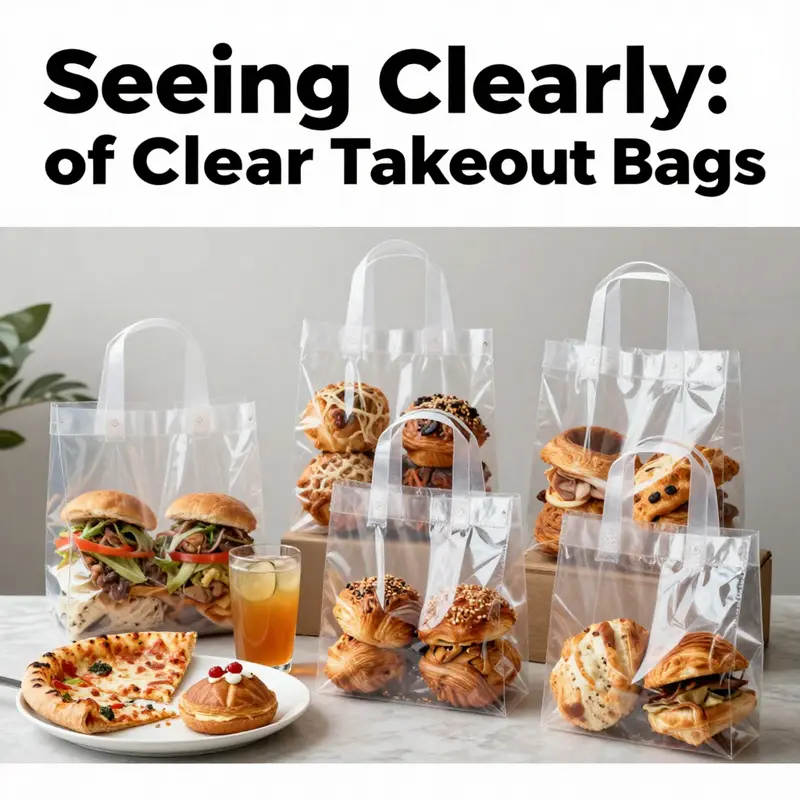
Clear takeout bags have become essential in food packaging, extending their importance beyond aesthetics to functionality and safety. They are particularly beneficial for businesses like bubble tea shops, restaurants, food trucks, and event planners that require reliability and brand visibility. As we dive into this article, the first chapter will unveil the many benefits of clear takeout bags, demonstrating their role in enhancing customer trust and operational efficiency. Next, we will conduct a material analysis comparing polyethylene (PE) and low-density polyethylene (LDPE), a crucial factor in ensuring quality and suitability for food service. Lastly, we will explore the innovative applications of clear takeout bags beyond usual food services, highlighting their adaptability in various scenarios, including events and security. Together, these insights will underline the significance of clear takeout bags in enhancing consumer experience and meeting regulatory demands.
Seeing Through Quality: How Clear Takeout Bags Shape Trust, Efficiency, and Brand Presence in Modern Food Packaging
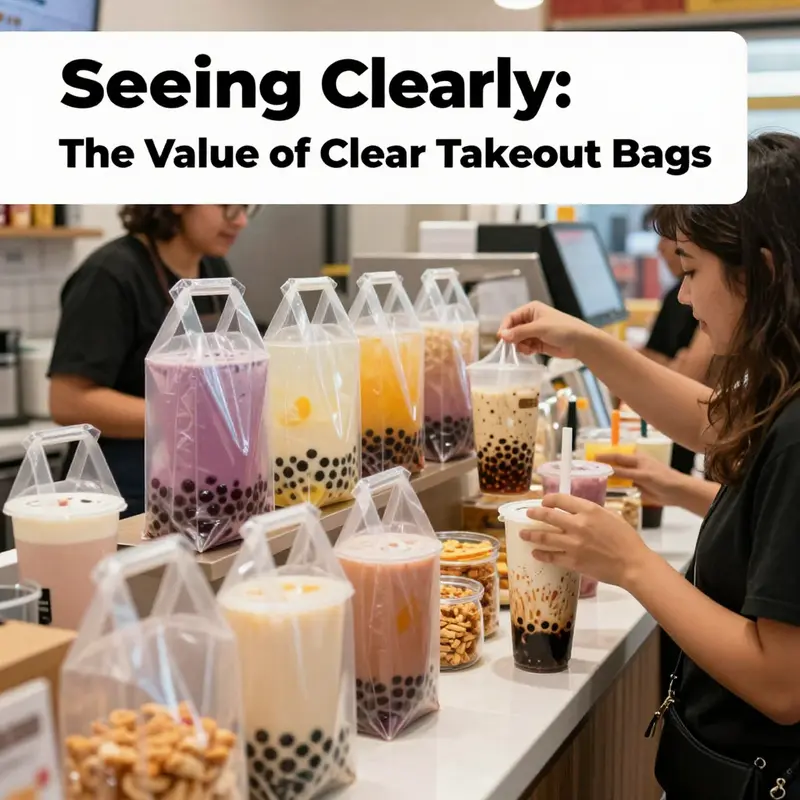
Clear takeout bags are more than a simple wrapper around a meal. They are a deliberate design choice that communicates quality before the first bite and sustains reliability long after the customer has left the restaurant. In a landscape crowded with choices, transparency becomes a statement of accountability. When a customer can visually confirm the contents before tearing into the bag, the path from order to satisfaction narrows. This observable certainty directly reduces miscommunications and helps people feel more confident about what they are taking home. The effect is not merely psychological. It translates into tangible operational benefits because staff can verify meals at a glance, minimizing errors and accelerating pickup lines. The clarity of these bags turns everyday packaging into a small but meaningful act of service, where visibility reinforces trust and speeds service in a busy kitchen or a quick-serve counter.
From a materials perspective, the performance of clear takeout bags rests on a careful balance of safety, durability, and environmental considerations. At their core, many high-quality variants rely on food-grade polymers known for compatibility with a broad range of foods and temperatures. Common options include polyethylene and other clear polymers that comply with food-contact regulations. In practice, this means bags designed to withstand the rigors of transport—handling by staff, stacking during busy shifts, and occasional contact with hot or greasy foods—without compromising safety. A key attribute in this domain is the material’s ability to resist tearing and stretching while maintaining a clean, clear appearance that showcases the contents. Industry discourse often cites a 30 percent improvement in durability over standard low-density polyethylene as a benchmark for robust clear bags, with reinforced seams and vest-style handles that reduce hand fatigue and bag failure during transit. These enhancements matter not just for the packer but for the customer who carries a bag across a lobby, into a car, or through a crowded event.
The material story is nuanced. While some clear bags are rooted in traditional polyethylene formulations, others embrace different plastics or bio-based alternatives that speak to a growing emphasis on sustainability. For instance, PET and PLA variants offer distinct benefits and trade-offs. PET can provide excellent clarity, strong heat resistance, and reliable barrier properties, while PLA, derived from renewable resources, offers compostability advantages in appropriate industrial facilities. The choice between these materials influences not only performance under heat and grease but also end-of-life considerations. In practice, a restaurant or delivery service may choose PET for items that require high visual fidelity and strength, while exploring PLA or other compostable options for menus that prioritize environmental responsibility. The decision is rarely about one single quality but rather about aligning product performance with regulatory expectations, kitchen operations, and customer values.
A critical feature that often accompanies material selection is the bag’s structural design. Gusseted configurations—where the sides of the bag expand—are especially valuable for items with irregular shapes or generous volume, such as layered sandwiches, donuts, or baked goods arranged in stacks. This design accommodates a wider footprint without forcing items to sit awkwardly or press against the bag’s interior walls, which can cause leakage or collapse. When combined with reinforced vest handles, the bag gains added resilience for both customers and staff. The combination of gussets and sturdy handles reduces the risk of tears during handling, makes the bag easier to carry, and helps prevent spills that might otherwise occur when a bag slides around a vehicle or spills onto upholstery. The practical effect is straightforward: fewer incidents of damage and fewer customers contending with messy packaging, which translates into better post-purchase experiences and fewer return or replacement requests.
Beyond raw durability, the bag’s surface serves as a canvas for branding and information that support both marketing and safety. Gravure printing, known for its ability to render intricate designs with high fidelity, enables restaurants and retailers to imprint logos, dietary indicators, or promotional messages directly onto the bag. The ability to convey “Gluten-Free” or “Vegan” claims, for instance, through a clearly printed label on the bag surface, can reduce uncertainty for customers with dietary restrictions and reinforce a business’s commitment to transparency. In this sense, the bag doubles as a portable advertisement, a tiny strip of real estate that travels with the client and becomes a walking billboard in high-foot-traffic areas. The visual impact matters as much as the product inside because first impressions are formed by what is seen long before the bag is opened. In crowded streets, at curbside pickups, or on a commuter train, the bag’s appearance contributes to how a brand is perceived and remembered.
The content’s visibility also supports accuracy at the point of sale. Many establishments find that staff can quickly verify that the right items are being handed to the right customers by looking at the visible contents and the labeling on the bag. This is especially useful for mixed orders, such as a family meal with several items that could easily be swapped or misidentified during busy service periods. A clear bag thus becomes part of the quality assurance process, complementing checks performed at the point of pickup. The efficiency gains stretch beyond accuracy: staff can expedite service by reducing the need for unpacking and rechecking at the counter, which in turn shortens wait times for other customers. In essence, the transparency of the bag dovetails with the speed and reliability that customers expect in contemporary dining and delivery experiences.
The functional advantages of clear bags extend into temperature tolerance and grease resistance, which are essential for hot, cold, oily, or saucy foods. A well-engineered clear bag can handle both steaming meals and chilled beverages without deforming, leaking, or losing its visual clarity. This reliability is not incidental; it rests on material science that emphasizes the right balance of barrier properties, tensile strength, and surface smoothness to resist grease penetration and water vapor transmission. In practical terms, this means a bag can confidently transport a hot pizza slice or a tray of pastries while maintaining its shape and readability. For venues in climates with extremes of heat or cold, the pick-up and delivery process becomes more forgiving when packaging remains intact and legible, no matter the weather. Such resilience matters when customers receive their orders on foot, by bike, or through a drive-thru window.
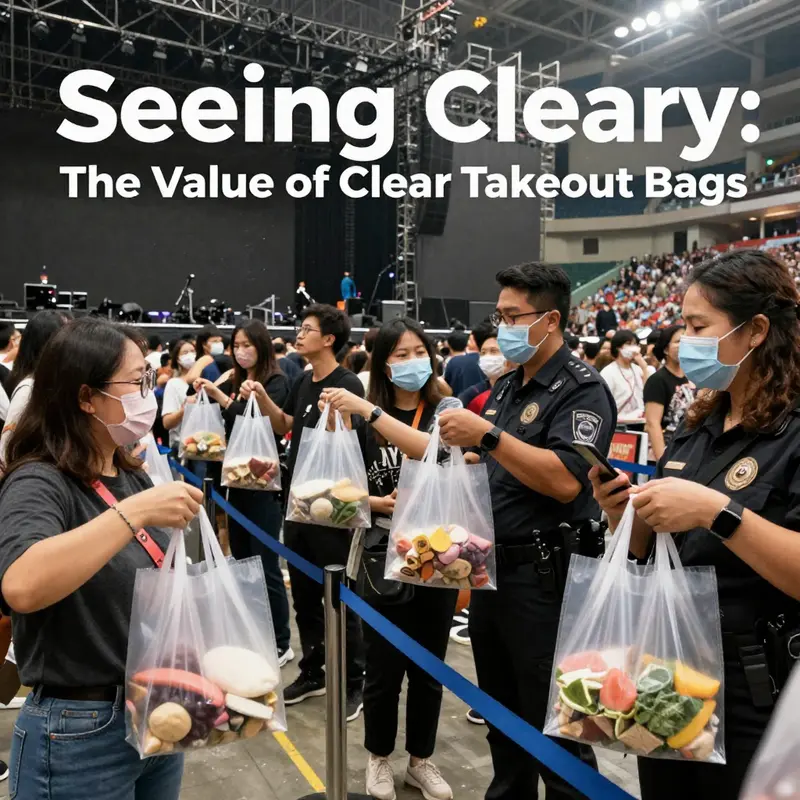
As a result of these technical and design considerations, clear takeout bags have become a versatile solution across foodservice sectors. Restaurants, cafes, bakeries, and even beverage-centric operations rely on clear bags to preserve the presentation of the product while enabling quick visual inspections. The practical outcomes extend to venues where security and compliance are priorities. For example, places that require fully transparent bags at entry points can streamline screening and reduce congestion by letting personnel inspect contents at a glance. In certain settings, security protocols call for clear packaging to expedite checks, promote safety, and speed throughput at entrances. The logic is straightforward: when everything is visible, the process becomes simpler, more efficient, and less fraught with misunderstandings.
Sustainability, of course, remains a central consideration for both providers and customers. The market has responded to consumer demand for more responsible packaging options by introducing biodegradable or recyclable variants alongside conventional plastic formulations. The eco-conscious options aim to balance the advantages of visibility and performance with the imperative to reduce waste and environmental impact. In practice, this means exploring opportunities to incorporate compostable polymers or to design for recycling in a way that aligns with local waste-management infrastructures. Yet there is a trade-off: biodegradable or compostable options may involve higher material costs, different performance characteristics, or more stringent disposal requirements. Businesses that choose these routes often emphasize the long-term benefits—enhanced brand reputation, alignment with sustainability goals, and the potential to appeal to customers who see transparency as both packaging and ethical stance.
This evolving landscape is not just about technology and aesthetics; it is also about aligning packaging with consumer expectations and regulatory frameworks. The health and safety dimension remains paramount. Clear takeout bags must meet food-contact material standards that govern safe contact with food, especially when used with hot or oily items. The regulatory environment, while diverse across regions, generally seeks to prevent substances from migrating into food and to ensure materials do not compromise flavor, odor, or consumer health. For operators, this means staying informed about permissible materials, permitted closures, and labeling practices that communicate dietary information clearly without compromising the bag’s readability or shape. In practice, a restaurant that communicates “Gluten-Free” on the bag surface—visible in the customer’s hand before opening—demonstrates both a commitment to accuracy and a proactive approach to labeling that supports safer, more satisfying meals.
A broader societal trend also informs the adoption of clear bags: transparency as a marker of accountability. In venues like events, schools, or corporate campuses that require visible bag contents for security, the benefits become twofold. First, there is a tangible reduction in delays at entry points because staff can perform quick visual checks rather than handle and inspect each item. Second, the practice signals a cultural norm where safety and openness are valued, and it helps reinforce customer trust. The practical outcomes are not limited to the customer’s experience; they extend to staff and security teams who benefit from streamlined processes and reduced ambiguity. In sum, clear takeout bags are a layered solution that merges food safety, usability, branding, and regulatory alignment into a single packaging choice.
Embedded in the narrative of clear takeout bags is a recognition of how such packaging travels beyond the four walls of a kitchen. The bag becomes an ambassador when customers leave the restaurant and carry their meals into public view, whether at a neighborhood corner or on a crowded transit corridor. This incidental marketing effect should not be underestimated. The bag’s design, print, and clarity contribute to brand recognition in ways that digital campaigns alone cannot achieve. The visual identity travels with the customer into daily life, extending a brand’s presence in the consumer’s environment and, often, prompting conversations about quality and presentation among friends and family. It is in these moments that the seemingly mundane act of carrying a bag becomes part of a larger narrative about how a brand treats its products from the moment of packaging to the moment of consumption.
To illustrate how the packaging ecosystem is evolving toward more sustainable, visible, and efficient solutions, consider the broader ecosystem of packaging options that accompany clear bags. A growing body of packaging materials emphasizes the interplay between visibility and environmental responsibility. Operators are increasingly considering the end-of-life story of the packaging, rather than focusing solely on the immediate performance at point of sale. This shift reflects a deeper consumer interest in understanding how products are disposed of after use and whether the packaging aligns with personal ethics and local recycling or composting capabilities. In practice, this means evaluating suppliers who offer recyclable or compostable clear bag options, ensuring that the chosen materials can be processed by local waste-management facilities, and communicating disposal guidance to customers in a concise, legible way. The resulting packaging system is not just functional; it is a message about how a business views its environmental responsibilities and its willingness to invest in solutions that support a cleaner, more transparent supply chain.
For practitioners who want to see how these concepts cohere in daily operations, the practical takeaway is to view clear takeout bags not as a single item but as a component of an integrated packaging strategy. When a menu, a print, and a bag come together in a way that highlights content visibility, accurate order fulfillment, and brand storytelling, the entire customer journey gains coherence. The design choices—material selection, gusset geometry, print quality, and closure systems—should be guided by the specific context of use: the type of food, the typical distance to customers, the climate, and the security requirements of the venue. A thoughtful combination reduces waste, enhances safety, and elevates customer perception, even before the bag is opened. Moreover, evolving consumer expectations around sustainability push operators to pilot and evaluate options that balance performance with environmental stewardship. The decision matrix is complex but navigable: it requires an ongoing assessment of material science, regulatory compliance, operational practicality, and consumer sentiment.
In keeping with the overarching goal of clarity, a useful example of how this philosophy translates into consumer-facing packaging is the continuous refinement of the bag’s surface with clear, legible dietary labels and logos. The gravure printing process can accommodate high-contrast colors that remain legible even after exposure to moisture and handling. This is crucial for items like salads or desserts where presentation matters as much as content. The end result is a packaging system that communicates essential information at a glance, supports quick decision-making by customers, and reinforces a brand’s dedication to transparency. The customer’s confidence is reinforced not only by what is inside the bag but also by how clearly that information is presented on the bag’s exterior. This alignment of function and form—clarity in content, clarity in messaging—becomes a competitive differentiator in crowded markets where customers weigh numerous factors beyond taste alone.
To connect these threads back to a practical resource that supports ongoing improvements, consider the broader packaging ecosystem that informs decisions about clear bags. A touchstone for design and materials considerations is the growing emphasis on packaging that can be integrated with other eco-conscious solutions. For instance, the option to pair clear bags with recyclable or compostable components minimizes overall waste and demonstrates a holistic approach to sustainability. This approach aligns with the broader consumer demand for transparent supply chains and packaging choices that reflect environmental responsibility. When a business communicates clearly about the materials used, how they are disposed of, and what makes them safe for food contact, it fosters a sense of trust that extends beyond a single purchase. In this way, clear takeout bags become a conduit for values—quality, safety, and accountability—that resonate with modern consumers across a wide range of dining experiences.
For readers who are exploring how packaging choices interface with broader operational goals, a practical takeaway is to view clear bags as part of an end-to-end system rather than as a standalone accessory. The system includes the materials, the printing technology, the bag’s geometry, the handling practices at the point of sale, and the post-purchase experience. Each element influences the others, and improvement in one area—whether it is enhancing strength, reducing potential contamination, or increasing the speed of service at pickup windows—can have cascading effects on customer satisfaction and operational efficiency. The overarching narrative is simple: clear takeout bags, when designed and used thoughtfully, can reinforce a brand’s promise, protect food quality, and contribute to a smoother, more transparent dining experience.
In the end, the story of clear takeout bags is one of convergence. It blends materials science with design thinking, regulatory awareness with brand strategy, and safety with sustainability. It asks operators to consider how packaging communicates with customers at multiple touchpoints—from the moment the order is placed to the moment the consumer consumes the meal and moves on with their day. It asks designers to balance the clarity of the bag with the secure containment of its contents, to provide enough stiffness to resist deformation while remaining friendly to the automated systems that often handle high volumes of orders. And it asks consumers to appreciate the visible signals a bag provides—the assurance that what lies inside matches what was promised, the confidence that the packaging hasn’t introduced unintended flavors or odors, and the sense that the brand behind the bag is accountable for the entire journey.
To acknowledge the eco-conscious option that embodies this balance in a particularly visible way, consider the following resource that discusses sustainable, practical packaging alternatives in a broader sense: eco-friendly recyclable pulp take-away cup holder. This example illustrates how packaging ecosystems can align with environmental goals while preserving the clarity and reliability that customers expect from clear takeout bags. For readers who want to explore related packaging components and consider how to integrate them into a cohesive system, this resource offers a tangible pathway toward responsible, visually engaging packaging solutions. eco-friendly recyclable pulp take-away cup holder.
From a regulatory perspective, the core criterion remains the safety of contact with food and the integrity of the packaging throughout its lifecycle. The FDA’s overview of food-contact materials provides essential guidance on permissible materials, migration limits, and labeling considerations that help ensure products are both safe and compliant. While the precise standards can vary by jurisdiction, the underlying principles are consistent: maintain materials that do not leach harmful substances, ensure packaging maintains its performance under expected use, and provide clear, accurate information to consumers. When these principles guide the selection and design of clear takeout bags, businesses create packaging that not only protects and showcases food but also reinforces trust and responsibility in the eyes of customers and regulators alike. For practitioners seeking authoritative context on these standards, the FDA’s Food Contact Materials resource offers a foundational reference point for materials selection, testing, and compliance.
External reference: FDA – Food Contact Materials provides current guidelines and regulatory context for materials that touch food, helping businesses align packaging choices with safety and compliance requirements. https://www.fda.gov/food/food-contact-materials/food-contact-materials-101
Seeing Through Strength: A Deep Dive into PE and LDPE for Clear Takeout Bags
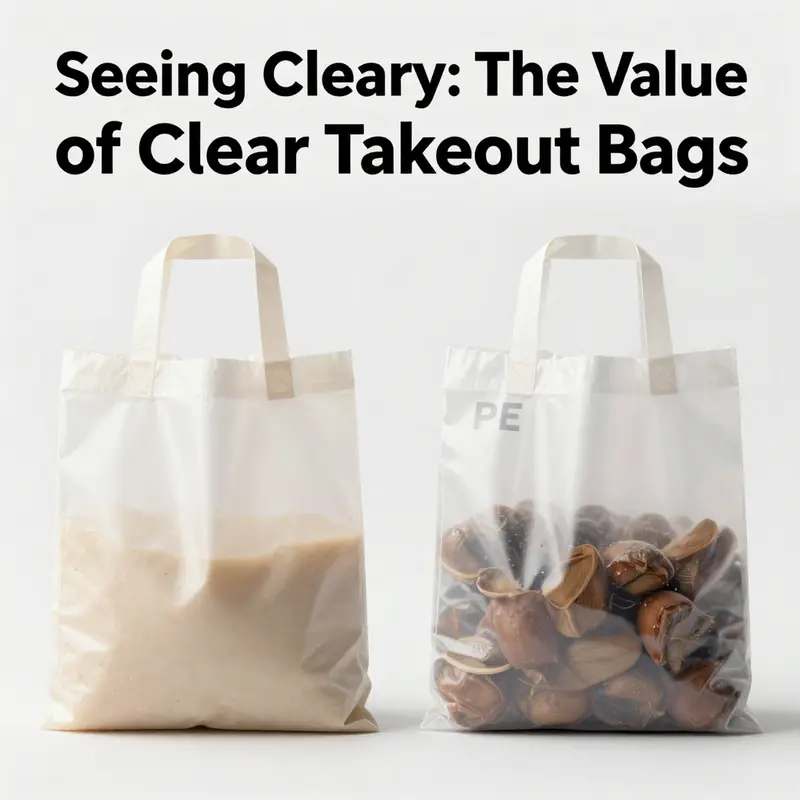
Clear takeout bags occupy a remarkable niche in modern food packaging. They are not merely containers; they are clear signals of quality and safety, delivering visibility that customers rightly expect while preserving the integrity of the food inside. The science behind these bags hinges on a single family of polymers: polyethylene. Yet within that family lies a critical distinction that can influence everything from shelf life to branding: the difference between LDPE, or Low-Density Polyethylene, and the broader category of PE that includes other forms. Understanding LDPE’s molecular structure, its physical properties, and how designers and manufacturers test and apply it reveals why clear takeout bags, trusted by restaurants, bakeries, and delivery services, tend to rely on this specific material profile for everyday use and year-round reliability. The journey from polymer science to practical packaging is not a straight line, but a carefully connected map where material science, processing economics, and regulatory compliance intersect with consumer expectations of transparency and performance.
At the heart of LDPE’s appeal is its unique molecular architecture. LDPE is produced through a high-pressure polymerization process that encourages a high degree of branching in the polymer chains. Those branches prevent the chains from packing tightly together. As a result, LDPE exhibits a lower density, typically in the range of 0.91 to 0.94 g/cm³, compared with higher-density variants. This greater branching manifests in a material that feels softer and more flexible, yet maintains a surprising toughness. The flexibility contributes to an adaptable film that can stretch and resist tearing as a bag is loaded with sandwiches, pastries, or beverages. And because the branching disrupts orderly packing, LDPE often presents a clarity and gloss that are highly valued in clear packaging, where visibility of the product is part of the consumer experience. In contrast, HDPE—High-Density Polyethylene—features far less branching and a higher density, yielding a stiffer, less transparent material that tends to look more opaque and feel less pliant to the touch. For clear, see-through bags designed to visually showcase food while withstanding routine handling, LDPE’s balance of softness, strength, and transparency makes it a natural fit.
However, LDPE cannot be viewed in isolation from the broader regulatory and safety framework that governs food-contact materials. In the United States, for instance, food-contact plastics are regulated to minimize risk to consumers, with standards such as the U.S. FDA 21 CFR 177.1520 guiding the interactions between packaging materials and edible goods. Clear takeout bags made from LDPE often align with these guidelines through FDA-certified polyethylene formulations, ensuring that contact with food is considered safe under typical usage scenarios. The interface between safety and performance extends beyond mere compliance. It influences how manufacturers select resin grades, how suppliers validate batches, and how brands communicate safety and quality through packaging. Transparency, then, becomes not just a marketing attribute but a regulatory and practical guarantee that the product inside is protected without introducing unintended contaminants.
From a processing standpoint, LDPE’s appeal also includes a favorable processing window. The polymer can be melted and extruded at relatively moderate temperatures, with processing ranges typically cited around 140 to 220 degrees Celsius. This flexibility supports efficient manufacturing lines, where speed and consistency are paramount. It also aligns well with the practical realities of food-service environments, where bags must be produced at scale without imposing excessive energy costs or complex equipment requirements. Yet this processing latitude does come with trade-offs. While LDPE can withstand frequent handling and the occasional exposure to hot foods, its intrinsic melting point, generally around 105 to 115 degrees Celsius, means it is not suited for applications that demand high-temperature resistance or repeated sterilization at higher temperatures. In other words, LDPE is optimal for many common takeout items—sandwiches, cookies, donuts, and cold drinks—where temperatures remain within a moderate range. For hot meals, manufacturers may turn to specialized formulations or protective configurations, such as barrier coatings or internal layers, to mitigate heat transfer while preserving the bag’s clarity. Such adaptations illustrate how the material choice informs not only the bag’s appearance but its behavior under real-world service conditions.
The performance profile of LDPE in clear takeout bags is also shaped by mechanical considerations. Tear resistance, puncture resistance, and overall strength determine how well a bag performs under load. In practice, high-quality clear takeout bags crafted from robust PE can safely carry up to about 10 pounds without deformation. This threshold is often sufficient for typical orders involving multiple sandwiches, pastries, or beverages. The strength is further amplified by design features such as reinforced vest handles, which distribute the load more evenly and reduce hand fatigue during transport. The combination of clarity, strength, and ergonomic handling supports a smoother customer experience, reducing the risk of spills, leaks, or bag failures during transit. Importantly, the same material’s durability also contributes to a cleaner, more predictable user experience in the back-of-house setting, where bags are filled repeatedly and stored under varying conditions before pickup or delivery.
In the arena of quality control and material verification, LDPE’s identification is typically supported by a suite of testing methods designed to confirm polymer type and ensure compliance with food-safety regulations. Analytical techniques such as Fourier Transform Infrared Spectroscopy (FTIR) can identify characteristic absorption peaks that distinguish LDPE from other polymers, including HDPE and polypropylene. Density measurements and Melt Flow Index (MFI) testing offer additional layers of confirmation, providing insight into the polymer’s molecular weight distribution and flow characteristics under processing conditions. These tests are not merely academic; they feed into quality assurance programs that safeguard consumer safety and support consistent manufacturing outcomes. When combined with regulatory checks, they help prevent deviations in resin grade that could affect clarity, strength, or safety.
Beyond the laboratory, the practical implications of LDPE’s properties translate into everyday performance and branding opportunities. Clear takeout bags are often used not only for packaging but also as a canvas for messages that matter. Gravure printing, a method capable of reproducing rich graphics on flexible films, enables brands to imprint logos, dietary labels (such as “Gluten-Free” or “Vegan”), or promotional content directly onto the bag surface. This capability enhances product identification and supports marketing initiatives without adding bulk or complexity to the packaging. The result is a packaging solution that is both functional and visually informative, allowing consumers to assess contents at a glance while recognizing the brand at a distance. In this sense, the material choice—LDPE within a PE family—becomes a dual instrument: it provides the mechanical and optical performance customers expect, and it serves as a surface for communication that reinforces trust and transparency.
The environmental dimension is also a facet of LDPE’s story, especially as consumer awareness of sustainability grows. While traditional plastic versions remain popular for their cost, visibility, and proven reliability, there is a clear push toward biodegradable or recyclable variants. The packaging industry is increasingly exploring how LDPE formulations can align with circular economy principles, whether through recyclable resin streams, additive technologies that assist in sorting for recycling, or biobased alternatives that maintain the same clarity and processability. The tension between convenience and environmental responsibility is real, and it requires careful material selection, end-of-life planning, and clear messaging on packaging to guide consumer behavior. In this sense, the LDPE-focused conversation extends beyond chemistry into product stewardship and lifecycle thinking, inviting packaging engineers to balance performance with responsibility.
To appreciate the broader context of LDPE’s role in clear takeout bags, it helps to consider the way these bags operate in settings beyond a fast-casual kitchen. The clarity and durability that LDPE offers make them suitable for venues and operations where speed, visibility, and safety intersect with crowd management. In events and venues, for instance, transparent bags facilitate rapid inspection at security checkpoints, reducing queue times and enabling smoother flows. Meanwhile, survey and industry practice in transport and travel environments show how transparent packaging can shorten screening durations and increase throughput. A 2022 Transportation Security Administration report highlights that clear bag policies and compliant materials can contribute to faster screening experiences, a factor that has influenced how some service programs design their packaging for events, catering, and on-site service. These real-world patterns underscore how material science and design choices ripple outward into operational efficiency and customer perception.
Bringing the discussion back to the practicalities of manufacturing, the choice of LDPE in clear takeout bags is inseparable from the supply chain realities that underwrite modern packaging. The material must be sourced in grades suitable for food contact, compatible with gravure printing and lamination if used, and deliver consistent performance across batches. This is where industry testing, supplier qualification, and regulatory adherence come together to ensure that every bag performs as promised in a busy kitchen or at a crowded event. The transparency of LDPE is not simply an aesthetic attribute; it is a functional feature that enables quick product recognition, accurate labeling, and trustworthy presentation at point-of-sale or pick-up. It also means that any imperfections in clarity or surface defects are readily apparent. As a result, manufacturers invest in rigorous quality control to preserve optical quality, while maintaining the mechanical robustness needed for real-world use.
With this in mind, designers and operators increasingly think of the bag as part of a connected system. The bag works in concert with the container it holds, the packaging lines that produce it, and the brand’s broader packaging ecosystem. An adjacent packaging option, such as an octagonal kraft paper box used for restaurant packaging, can illustrate how different packaging streams reflect shared goals: visibility when it matters, protection of contents, and branding consistency across materials. See for yourself how such packaging choices appear on product pages like this one: disposable octagonal box for restaurant kraft paper packaging. In the end, the LDPE-based clear bag is one thread in a wider tapestry—one that blends material science with design thinking, process efficiency, and consumer trust.
The narrative of LDPE versus broader PE types is not just about which polymer performs better under a heat press or screen of light. It is about the deliberate alignment of material properties with packing goals: visibility that invites inspection, durability that withstands the ride from kitchen to table, and safety conforming to food-contact regulations. It is about a balance of cost, processing ease, and performance that can be tuned through resin selection, thickness, and manufacturing controls. It is about the ability to harness gravure printing and logistic design to convey information that matters to the consumer—whether that information is a brand mark, a dietary note, or a simple promise of cleanliness and care in handling. It is about trust embodied in a transparent film that both reveals and protects.
For researchers and practitioners looking to deepen their understanding, the material science behind LDPE holds many lessons. The ability to identify LDPE using FTIR, confirm its density and MFI, and interpret how these properties translate into real-world outcomes informs everything from the design of new packaging lines to the optimization of existing ones. The literature on LDPE’s optical and mechanical properties, as discussed in the Polymer Journal and related studies, provides a rigorous foundation for interpreting performance in a practical context. This body of knowledge helps explain why certain clear takeout bags resist tearing under heavy loads yet remain visually pristine, even when transported through varied climates and handling conditions. It also helps explain why some brands choose to maintain a simple, intact package design that emphasizes clarity and ease of use, rather than layering on complexity with multiple material interfaces. In the end, the story of LDPE in clear takeout bags is a story about precision and trust—the precision to choose the right polymer form, and the trust that customers place in a package that reveals what it carries and keeps it safe.
External resource for further technical reading: Polymer Journal article.
Beyond the Tray: Expanding the Reach of Clear Takeout Bags Across Industries
Clear takeout bags began as a practical solution for food service, designed to protect a meal while letting the contents speak for themselves. Over time, their transparent surfaces, sturdy materials, and adaptable shapes revealed a broader potential. This chapter explores how the fundamental qualities of clear takeout bags—visibility, reliability, and branding versatility—have enabled their adoption far beyond traditional dining rooms. The same features that reassure a customer picking up a sandwich can reassure a shopper inspecting a small cosmetic item, a traveler receiving a package at a hotel desk, or an event attendee grabbing a party favor. The result is a packaging material that, while rooted in food-service biology—food safety, grease resistance, temperature tolerance—transforms into a multi-industry instrument for presentation, protection, and process efficiency.
The core strength of clear takeout bags lies in their transparency. In a retail setting, visibility is not merely a convenience; it is a marketing moment. When a consumer picks a product off a shelf and slides it into a bag under the watchful gaze of ambient lighting, the bag becomes a moving showroom. The product is visible, the shopper’s eyes travel across the bag, and the brand’s identity—whether manifested in a logo, a color palette, or a simple dietary label—remains legible as the item moves through the store or into a consumer’s cart. This clarity reduces the cognitive load on shoppers. They do not need to lift or unwrap to verify what they are buying, which translates to faster decision-making and a more satisfying shopping experience. In this sense, clear takeout bags function like a visual extension of the product itself, a small window that communicates quality, care, and attention to detail without adding friction to the purchase journey.
Durability is the second pillar supporting cross-industry use. The materials choice—primarily food-grade polyethylene (PE)—is not a cosmetic enhancement; it is a performance requirement. The same properties that enable safe contact with hot meals and cold beverages also translate into resilience when the bag becomes a transit capsule for non-edible goods. In busy retail environments, a bag may be dropped, stuffed into a tote, or carried through crowded aisles. The reinforced vest handles, another feature often found in high-quality clear bags, distribute weight more evenly and reduce strain on the user’s hand. In contexts where small items are grouped—cosmetics alongside accessories, or electronics components packaged with care—the bag’s ability to bear weight without tearing becomes crucial. The prospect of a bag giving way under pressure is not merely a minor inconvenience; it can disrupt workflows, damage merchandise, and erode consumer trust. The robust PE structure, especially when engineered with gussets that expand to accommodate irregularly shaped products, ensures that even bulkier shipments—think a collection of jewelry pieces, a bundle of spa samples, or a set of travel-size products—remain intact and visually accessible.
In addition to safety and strength, the aesthetic versatility of clear takeout bags supports branding in new and unexpected ways. Gravure printing, a technique that yields vivid graphics and durable monograms, allows brands to imprint logos, dietary notices, or promotional messages directly onto the bag surface. This is particularly valuable in cross-channel campaigns where a single design language travels from a storefront display to a takeaway bag and onward to social media posts that feature the bag as part of the customer’s experience. The ability to place branding on a transparent surface means colors can remain true, text remains legible, and the overall impression is cohesive. The bag becomes a mobile advertisement—subtly integrated into daily life rather than added as an afterthought. For many retailers and service providers, this continuity between product packaging and marketing collateral reduces the need for redundant materials while enhancing recognition and recall.
A third element of utility is the bag’s functional adaptability. The gusseted design, which expands along the sides, serves more than a convenience; it is a practical response to real-world packaging challenges. Some items are uneven or bulky—baked goods arranged in layers, for instance, with donuts stacked in a circular pattern or pastries nestled in small boxes. In these scenarios, a gusseted bag creates extra space and helps prevent spillage without forcing the customer to repackage items for transport. This flexibility is increasingly important as retailers diversify their product lines and experiment with combinations such as a baked-goods sampler or a beverage-and-snack bundle. Clear bags that can accommodate a variety of shapes reduce the number of SKUs needed in the back room and simplify the packing workflow, enabling staff to assemble orders more quickly during peak hours.
Temperature resistance is another attribute with broad implications. The same PE formulation that safely contacts hot food also tolerates exposure to chilling temperatures and occasional cold-to-hot transitions without losing integrity. In non-food contexts, this means that a bag used to store cosmetics, small electronics accessories, or medical supplies can withstand daily handling and transit in various climates. The result is not merely a bag that holds a product; it is a trusted transit environment that protects product integrity from the backroom to the customer’s door. This reliability is especially valuable in industries where safety and hygiene are paramount, such as medical supplies or delicate cosmetic samples, where contamination must be minimized and products must remain pristine during distribution.
Beyond performance, clear takeout bags contribute to efficiency across operations. In e-commerce and retail environments that ship small packages, the clear surface eliminates the need for excessive labeling in some cases. A product’s shape and contents are instantly recognizable, reducing the need for multiple layers of packaging or internal dividers. This streamlines the fulfillment process, shortens handling times, and enhances accuracy, all of which translate into cost savings and better customer satisfaction. For online retailers and marketplaces that rely on rapid order processing, such a speed advantage can be a meaningful differentiator. The buyer receives a package that feels straightforward and trustworthy, with visible contents and a clean, minimal presentation that aligns with contemporary consumer preferences for simplicity and transparency.
A practical illustration lies in the way designers and packagers think about cross-category applications. Consider a consumer who purchases a compact beauty kit, a piece of jewelry, and a small electronic accessory in one shopping trip. A clear bag that can present all three items without forcing multiple bags or additional wrapping reduces waste and simplifies the customer’s post-purchase experience. The same bag can participate in a retail environment by becoming a temporary, reusable container for the customer’s own storage needs. In some stores, customers reuse clear bags to organize personal belongings during travel, gym visits, or school days. This additional utility adds to the perceived value of the bag, and it encourages customers to see the packaging as a long-term asset rather than a disposable afterthought. The result is a more favorable brand perception and the potential for repeat purchases across a family of related products.
The chapter’s emphasis on cross-industry applicability also draws attention to the critical role of sustainability. While traditional plastics remain popular for their low cost and durability, the market increasingly explores biodegradable or recyclable variants. Consumers, especially younger shoppers, are more likely to scrutinize packaging choices through a sustainability lens. Clear bags offer a unique opportunity: they can be designed to meet environmental goals without sacrificing visibility or performance. The selection of materials, the labeling of recyclability or compostability, and the lifecycle impact of the bag should be part of a holistic packaging strategy. Brands may choose to communicate these values directly on the bag through gravure prints or to link to digital resources for more detailed environmental data. The conversation around sustainability becomes not only a matter of compliance but also a differentiator, enabling retailers to claim responsibility while maintaining an economical packaging solution that supports efficient operations.
In this broader context, the link between clear takeout bags and branding becomes clearer. When a bag doubles as a branding vehicle across spaces—from the front counter to the checkout line to the customer’s social media feed—it contributes to a consistent experience. A shopper who sees a clearly printed logo, complementary color palette, and legible dietary labels on a bag will recognize the brand in other touchpoints, such as signage, cups, or paper bowls. The transfer of visual identity from one packaging format to another fosters a cohesive brand narrative that travels beyond a single purchase. The implications for merchandising strategy are significant. Stores can coordinate color schemes and typography across multiple packaging SKUs to create a sense of unity, while still allowing each product category, whether cosmetics or snacks, to retain its own identity within the shared framework.
The adoption of clear takeout bags in non-traditional settings also reveals opportunities for event planning and hospitality. At conferences, concerts, and community gatherings, vendors routinely distribute samples, gifts, or promotional materials. A transparent bag can streamline security checks and enhance the attendee experience by accelerating the inspection process and reducing the risk of accidental concealment of prohibited items. In airports and other high-traffic venues, where efficiency and safety are both paramount, transparent packaging can contribute to reduced screening times and smoother throughput. These benefits echo the broader principle that visibility and predictability in packaging reduce friction for both handlers and recipients. The same bag that carries a bite to eat can also carry a gift bag, test samples, or a sponsor packet, creating continuity across the event ecosystem.
In terms of storage and protection, clear takeout bags prove their value in settings like research labs or medical supply depots where sensitive components or sterile items must be kept clean and organized. The greaseproof, moisture-resistant, and non-toxic characteristics of this material align with the guardrails of controlled environments. While the primary audience for these bags remains food service professionals, the underlying chemistry offers a universal appeal: a packaging solution that is inert to common contaminants, stable through handling, and easy to sanitize when necessary. The versatility of these bags, then, is not a purely aesthetic or marketing advantage; it reflects a fundamental engineering principle—design for a broad range of use cases without compromising core performance attributes.
From a procurement perspective, widening the applications of clear takeout bags invites a strategic approach to sourcing. Enterprises can evaluate a single supplier base that offers consistent material quality, reliable delivery times, and scalable customization options. The alignment of gravure printing capabilities with the needs of multiple departments—from marketing to operations—reduces complexity and helps ensure that branding remains consistent across channels. Rather than maintaining separate packaging lines for different product categories, organizations can leverage the same bag architecture to support a spectrum of items. This consolidation can yield cost efficiencies while preserving the flexibility to adapt to seasonal campaigns, limited-edition collaborations, or changes in product mix. The result is a more resilient packaging ecosystem that can weather fluctuations in demand and shifts in consumer preferences.
In sum, clear takeout bags have evolved from a functional packaging choice for sandwiches and salads to a versatile tool that supports presentation, protection, and process efficiency across industries. Their transparency invites trust, their durability ensures reliability, and their design flexibility enables brands to tell a cohesive story. The cross-pollination of use cases—from retail displays to beauty samplings, from e-commerce shipments to event experiences—illustrates how a thoughtful packaging material can transcend its original remit. The next phase of development will likely emphasize sustainability as a guiding principle, while continuing to refine print options, load-bearing capabilities, and compatibility with a widening array of products. As businesses seek to unify their packaging strategies across channels, clear takeout bags stand as a practical and symbolic bridge between in-store encounters and post-purchase moments. They remind us that the packaging surrounding a product is not just a container; it is an ongoing interface with customers, a tangible expression of a brand’s values, and a facilitator of smooth, trustworthy experiences in a busy, interconnected world.
For readers seeking a broader perspective on the material standards and industrial uses of clear plastic bags, a comprehensive overview offers helpful context and deeper technical detail. See Morganchaney’s overview of food service plastic takeout and catering bags for an extended examination of the regulatory and performance considerations that underpin these versatile carriers: https://www.morganchaney.com/food-service-plastic-takeout-and-catering-bags
Final thoughts
Clear takeout bags offer practical solutions for enhancing food safety, visibility, and brand recognition in diverse contexts. Their robust construction, typified by materials like PE, ensures not only durability but also compliance with health standards. The evolving applications of these bags, exceeding traditional food service, underline their utility in events and security. By investing in high-quality clear takeout bags, your business can not only improve customer trust but also streamline operations while adapting to various market needs. Embracing these versatile packaging solutions will undoubtedly enhance customer satisfaction and operational efficiency.