
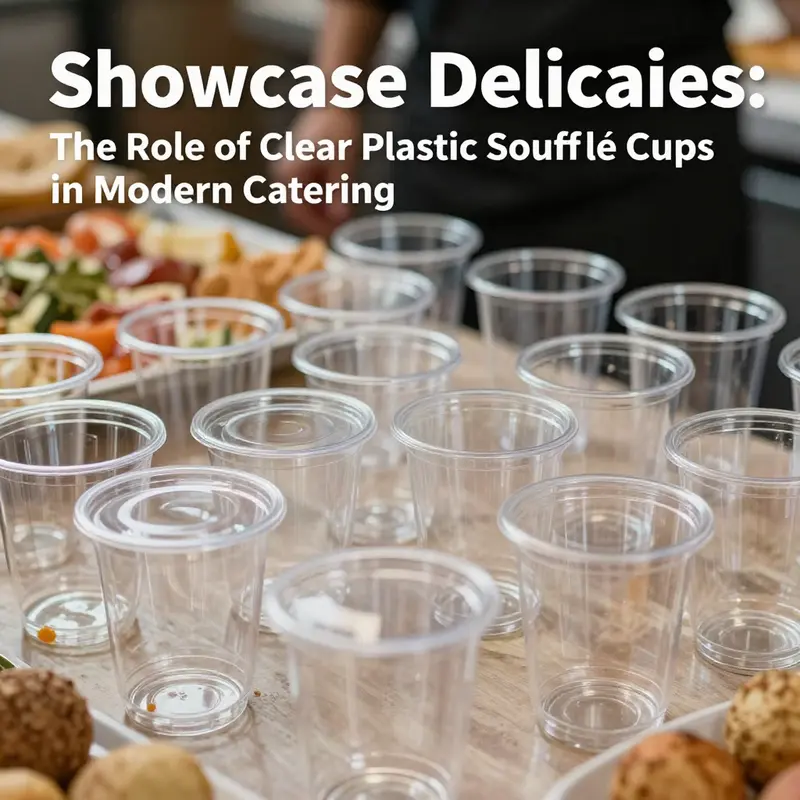
Clear plastic soufflé cups have rapidly become a staple in various food service settings, from bustling bubble tea shops to grand catering events. Their ability to present desserts beautifully while maintaining freshness makes them invaluable across multiple environments. These containers offer an aesthetic appeal that caters to the modern consumer’s desire for visually inviting dishes. Each chapter will explore how these cups can transform service in catering and events, how their material properties ensure safety and durability, and the economic benefits associated with bulk purchasing, ultimately demonstrating their essential role in food and beverage service.
Crystal Clarity at the Table: The Many Roles of Clear Plastic Souffle Cups in Modern Catering

Clear plastic soufflé cups have quietly become a cornerstone of contemporary catering and event aesthetics, not because they shout for attention but because they reveal what is inside with a gentle, precise honesty. When guests approach a dessert station or a tasting display, it is the cups’ transparent elegance that first draws the eye, turning a simple mousse or layered parfait into a study in color, texture, and composition. The cup acts as a stage, and the dessert takes center stage. In this role, clarity is more than a cosmetic feature; it is a practical advantage that unlocks the full sensory potential of each serving. The shimmer of a citrus-curd layer, the sheen of a ganache, the delicate speck of a vanilla bean—these visual cues are not just decorative; they guide the guest’s expectations and set the tempo for the experience. A high-end wedding, a corporate retreat, or a bustling sampling station at a pop-up market all benefit from this clarity that makes the presentation legible and appealing from across a room, even before the first bite is taken.
What makes the presentation so compelling is the way the cups harmonize with the desserts they cradle. The shape and size of a clear soufflé cup are chosen with intention: a compact, tapered form that gently channels a spoonful of glossy mousse or a layered parfait into a neat, accessible portion. The transparency invites the eye to travel from top to bottom, encouraging observers to trace the progression of flavors and textures as if reading a short visual narrative. At a glance, a guest can assess whether a mousse is light or rich, whether a fruit layer is vibrant or muted, whether the top garnish adds a final burst of color. This is not merely about showing off a dessert; it is about communicating the dessert’s character in milliseconds, which is essential in fast-paced catering environments where guests decide quickly and move on.
Beyond the dessert itself, these cups prove their worth across a spectrum of serving scenarios. They are equally at home holding a delicate sauce for dipping, a small bite-sized appetizer, or a petite fruit medley that serves as a palate-cleansing prelude to a larger course. In tasting stations, their small footprint helps station design stay crisp and uncluttered, while the uniform shape ensures that portions are easy to standardize. For caterers, this standardization translates into consistent yield across dozens or hundreds of portions, a detail that matters when timing, staffing, and logistics are all part of the event equation. The cups’ clear walls also invite inventive layering—think a yogurt-and-fruit duo or a coffee-chocolate mousse with a contrasting caramel stripe—where the visibility of each layer enhances comprehension and appetite.
The cups’ versatility extends well beyond the realm of desserts. In the realm of sauces and condiments, a tray of clear cups lines up as a self-serve array that is as functional as it is chic. Dipping sauces, dressings, or flavored oils can be portioned with precision, allowing guests to tailor their plates without the mess of larger containers. The same container that holds a sauce can be repurposed at a bar for sample-sized mixers or a chef’s tasting sauce, enabling a seamless flow between courses and stations. And when placed on a garnish bar, the cups house mis en place components—infused oils, citrus zests, herb sprigs—in a way that preserves their color and aroma until the moment of use. The ability to pre-measure and pre-stage fillings in clear cups reduces on-site complexity, which is an especially valuable advantage for mobile catering or outdoor events where space and time are at a premium.
In the choreography of events, the cups also perform a subtle branding role. While they are not marketing tools in the traditional sense, their design supports a cohesive theme and a moment of branded refinement. The cups’ minimalism provides a neutral backdrop that lets logos, color schemes, and event motifs shine through the contents themselves. For planners who lean into branded experiences, the cups can be integrated into broader design strategies without overpowering the dessert or the station’s overall aesthetic. When used effectively, the cups become a quiet but essential thread that ties the event’s visual language together, supporting a polished impression without stealing the scene from the food. The result is a cohesive experience where presentation and flavor reinforce one another, rather than competing for attention.
From a practical standpoint, the cups’ utility is inseparable from their physical properties. They are designed to be lightweight and stackable, which is a boon for storage and transport. The ability to nest several hundred or thousands of units into a compact footprint saves valuable space in kitchens, trucks, and warehouses. This efficiency translates into lower handling costs and faster setup at venues, where staff must rapidly transform a blank display into a complete, appealing dessert station. When paired with matching lids, these cups offer a reliable solution for transport and service that keeps contents secure and fresh. A lid changes the equation from presentation-only to transport-ready, enabling caterers to stage portions ahead of time and rotate stock without compromising freshness or sanitation. The security of the lid reduces the risk of spills during movement, a practical consideration for events that involve outdoor settings, long shuttles between venues, or busy cocktail hours when movement is constant.
The materials underpinning these cups are chosen with safety and compliance in mind. Food-grade options, commonly made from polymers such as polypropylene or polyethylene terephthalate, ensure safe direct contact with food and beverages. This assurance matters not only for the immediate guest experience but also for health and regulatory frameworks that govern professional kitchens and event operations. The cups’ composition supports a broad range of temperatures and textures, allowing hot desserts and cold fillings to share the same serving platform under appropriate usage guidelines. These materials are engineered to resist warping and maintain clarity even after repeated handling, a quality that matters when cups are passed from server to server, sampled by guests, and stored for later bulk consumption. In every bite, these design choices reveal a careful balance between transparency, durability, and safety.
Capacity variability is another strength. Clear plastic soufflé cups come in precise, designed capacities, enabling planners to tailor servings to course menus or tasting sessions. Small sizes encourage sampling and exploration, while slightly larger options accommodate more generous portions or layered constructions. For a tasting menu or a dessert bar, the ability to pick a size that aligns with the course structure helps maintain a coherent flow and pace, preventing overindulgence while still offering guests a satisfying portion. The standardized sizing also simplifies inventory management and ordering, reducing the guesswork that can complicate event planning. In the hands of a skilled pastry chef or event designer, the cups become a flexible canvas that accommodates a spectrum of recipes, from delicate mousse to robustly textured trifles.
Of course, no tool is without its caveats. A portion of the guest experience hinges on subtle maintenance details. Over time, some users notice that the cups can show minor scratches or fingerprints after repeated handling. This is not a flaw in function but a reminder of the cups’ use in dynamic service environments where speed and elegance are required in tandem. It suggests best practices: pre-cleaning and careful presentation at the point of service, minimal handling after fill to preserve the pristine appearance of the clear walls, and a quick wipe-down before display to reduce the visual impact of fingerprints. These steps help preserve the pristine, glass-like look that makes the cups so effective as a display vessel while remaining mindful of the realities of busy events. Yet even this minor drawback is counterbalanced by the cups’ other strengths: their translucence, their capacity for precise presentation, and their compatibility with a broad range of culinary formats.
Logistics and logistics-informed artistry go hand in hand with choosing how to use these cups at any given event. For caterers, the true value lies not only in the cup itself but in the entire workflow it supports. Pre-portioning, chilling, or pre-setting desserts in these cups can dramatically reduce on-site labor. A well-planned mise en place might involve a dessert station where layers are assembled in a consistent order, then covered with lids for transport and stored in a chilled display at the venue. When the service begins, servers simply remove lids, present the cups with a garnish sweep, and invite guests to enjoy. The streamlined process reduces both wait times and the risk of cross-contamination, while still delivering a superior sensory experience. In this sense, the cups function as a bridge between culinary artistry and event operations—a small but pivotal piece of the logistical puzzle that makes high-quality, hospitality-grade service feasible on a large scale.
Branding and customization, while not the centerpiece of every event, offer a flexible pathway for impact without overpowering the dessert itself. Some teams choose to print subtle logos or event names on the cups or lids, turning a disposable item into a portable, reusable-branding surface for a moment in time. The practice is particularly effective for product launches, themed soirées, or corporate milestones where the dessert becomes part of the broader narrative. Customization can be handled with design considerations that respect the dessert’s visual hierarchy: light, restrained branding that complements rather than competes with the colors and textures of the dessert. The end result is a polished, cohesive presentation that aligns with a brand or event story while maintaining the cups’ essential clarity as the vehicle for flavor and texture.
From a financial perspective, these cups offer cost efficiencies that resonant across event logistics. Their disposability reduces cleanup time, minimizes washing labor, and lowers the risk of breakage that can occur with fragile glassware. In a busy catering operation or at a multi-station wedding reception, these efficiency gains accumulate quickly, freeing staff to focus on guest experience rather than post-event cleanup. The economics extend to storage and inventory as well. Stackable designs maximize warehouse space, and the uniform shape supports straightforward forecasting and replenishment. When combined with well-chosen lids, the cups become a versatile option for both front-of-house service and back-of-house preparation, delivering a reliable balance of presentation, practicality, and cost. The result is a serving solution that scales gracefully from intimate gatherings to large-scale corporate affairs, all while maintaining a level of sophistication that guests perceive as thoughtful and refined.
The cups’ role in event planning also intersects with sustainability considerations that modern hosts increasingly weigh. The disposable nature of the product is paired with the possibility of recycling through appropriate channels, and these cups are often designed with that end in mind. While individual venues and jurisdictions vary in their recycling capabilities, the underlying materials—when disposed of through proper streams—contribute to a broader conversation about waste, composting alternatives, and the lifecycle of single-use serving ware. This is not to imply a universal sustainability fix, but to acknowledge that clear plastic soufflé cups occur within a spectrum of practices that respect both guest experience and environmental responsibility. For planners who want to balance spectacle with stewardship, the cups offer a pathway to create memorable, visually striking experiences without locking in a heavy burden of cleanup or resource use; the key is thoughtful selection, careful handling, and conscientious end-of-life choices for the utensils used at each event.
Capacity and compatibility considerations shape how events are designed around these cups. The choice of sizes—from small 30cc portions for delicate taste explorations to larger 100cc servings for more substantial courses—lets planners calibrate the pace and scale of the tasting experience. The straightforward compatibility with standard portioning tools makes it easy to achieve uniform fills and consistent presentation. The ability to layer ingredients, to showcase contrasting textures side by side, and to deliver a crisp, clean finish at the edge of each cup all contribute to a refined dining narrative that resonates with guests who expect both beauty and precision at a professional level. In this light, the cups become an instrument in a chef’s or planner’s toolkit, enabling controlled portions, elegant displays, and a high standard of service that elevates the event as a whole.
The allure of clear plastic soufflé cups also rests on their universal appeal across contexts. In intimate garden receptions, urban popup markets, or formal gala dinners, they translate a beverage, a dessert, or a small bite into an accessible, shareable moment. Their presence at a dessert bar signals opportunities for social interaction—guests can compare colors, textures, and layers with friends, colleagues, or family, turning the act of tasting into a participatory experience. The cups help orchestrate flow and balance within the guest experience, encouraging guests to explore flavors in manageable, memorable segments rather than bombardment by oversized portions. The result is a dining experience that feels personal and curated, even in the midst of a bustling event. This is the paradox that makes clear plastic soufflé cups so effective: their simplicity invites exploration, and their clarity invites conversation.
As events evolve, so too does the role of these cups within broader design systems. They align with modern minimalist aesthetics—clean lines, transparent walls, and a focus on the dessert itself—while offering practical benefits that are especially valuable in professional settings. The cups are not flashy centerpieces; they are the dependable backbone of a well-executed service model. They enable front-of-house teams to deliver consistent portions, maintain hygiene, and adapt quickly to changing guest counts and menu adjustments. In an industry where every minute matters, the cups deliver predictable performance—easy to fill, easy to transport, easy to present—while still providing opportunities for creative dessert construction, thoughtful garnish, and a polished, cohesive display.
Ultimately, the appeal of clear plastic soufflé cups in catering and events lies in this blend of clarity, versatility, and reliability. They are tools that respect the guest experience, the event’s design goals, and the practical realities of service. They enable chefs and planners to craft moments that are memorable for what guests see and taste, while also delivering on the promises of efficiency and consistency that organizers rely on. The cups do not merely hold desserts; they elevate them, creating a canvas where color, texture, and structure communicate with guests in a language as clear as the glass-like walls themselves. In the evolving landscape of hospitality, such clarity is a powerful asset, one that helps elevate not just a single dish but an entire event experience toward a standard of refined, thoughtful presentation.
For readers seeking a deeper technical understanding of the performance, properties, and types of clear PET plastic cups used in industrial applications, a detailed guide provides further context and insights into material behavior, clarity, and reliability. This external resource offers a thorough look at how these cups behave under varied conditions and how that behavior translates into practical usage in professional settings: https://www.plasticcups.com/16-oz-clear-pet-plastic-cups-guide/.
Crystal Clarity, Steady Form: The Safety and Durability of Clear Plastic Souffle Cups
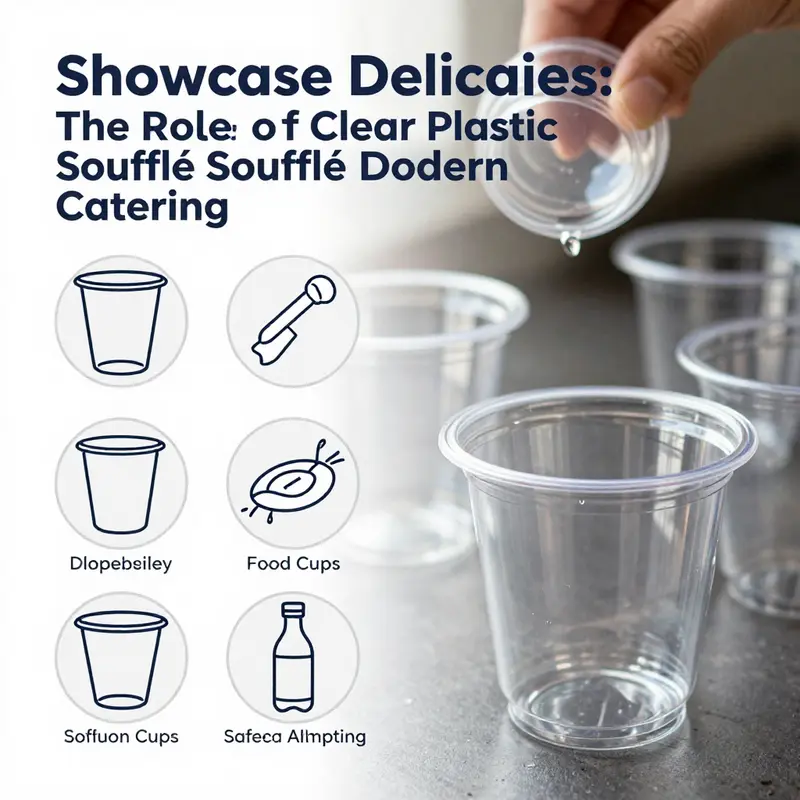
Clear plastic soufflé cups are more than containers; they are small stages where food and imagination meet. The transparency is not merely a surface quality but a design choice that invites the eye to travel from the outer rim to the delicate interior, from the glossy glaze on a dessert to the clean, unmuddied layers inside. When a chef or home cook places a perfectly whipped mousse, a pale vanilla custard, or a fruit-driven layered treat into these cups, the cup becomes part of the dish’s narrative. The viewer does not guess what is inside; the content reveals itself. This is a core reason why the materials used to make these cups—principally food-grade polypropylene (PP) and polyethylene terephthalate (PET)—are selected with such care. Each material contributes a unique blend of safety, rigidity, clarity, and heat tolerance, and together they support a versatile range of culinary applications without demanding compromise between form and function.
The composition of clear plastic soufflé cups centers on two workhorse plastics. Polypropylene offers a robust balance of heat resistance and chemical stability. It can handle hot items without softening or deforming, and it resists the kind of chemical interaction that could color or degrade a dessert. PET, by contrast, is prized for its exceptional clarity and stiffness. It lends a premium, glass-like appearance that showcases the dessert at its best, while keeping the container light enough for easy transport and ergonomic handling. In many designs, manufacturers combine these features by using PET for the body to maximize visibility and PP for lids and rims where higher heat tolerance or tighter tolerance against leakage is beneficial. The result is a container that reads as almost invisible in the hands of a diner, letting the dessert speak for itself through its color, texture, and arrangement of layers.
The value of transparency is not simply aesthetic. In catering, wedding receptions, or retail settings, the ability to present an entire portion clearly can influence perceived quality, portion size, and even appetite. A soufflé’s gentle rise, a mousse’s delicate airiness, or the ripple of a layered parfait can be appreciated in real time as the lid remains sealed. The same clarity that enhances presentation also supports inventory and quality control. In a busy kitchen, managers can quickly assess portion accuracy, topping distribution, and the overall handling of each cup without opening or disturbing the presentation. This is particularly important in high-volume service where speed and consistency are paramount.
From a mechanical standpoint, the cups are designed to maintain structural integrity under normal loads. The walls need to resist deformation as the cup is filled, carried, and stacked. The rim must fit lids securely to prevent leaks during transport, and the base should provide dependable stability when the cup is placed on a surface or stacked in a service setup. These criteria drive the thickness-to-volume ratio and the choice of geometry, which in turn influence manufacturing tolerances. The result is a family of cups that stay true to their shape even after repeated handling, reduces the risk of oil or moisture seepage from the dessert into the lid, and preserves the intended portion size.
Safety and compliance are the backbone of consumer confidence. Clear plastic soufflé cups are widely manufactured from food-grade polymers, and their safety profiles are reinforced by adherence to international standards. In many markets, the materials and finished products comply with regulations that govern food contact materials, including explicit prohibitions on harmful chemical migration. The absence of Bisphenol A (BPA) in these cups is a standard expectation, and the broader regulatory framework in many jurisdictions requires that manufacturers provide documentation of compliance with relevant safety guidelines. This combination of documentation, material choice, and manufacturing controls helps ensure that the cups perform without posing health risks, even when used with warm or acidic components, and that they remain acceptable for a range of desserts and sauces.
In practice, the door between safety and durability is allowed to swing widely enough to accommodate hot and cold items alike. PP’s high-temperature tolerance is well-suited to hot desserts or sauces that might be gently warmed before presentation, without the risk of warping or leaking. PET’s rigidity and low moisture absorption support a crisp, cool serving environment where the dessert’s texture and color can be preserved. Yet real-world use also demands caution. When contents are extremely hot or when the cups are exposed to harsh environmental conditions for extended periods, material properties can shift subtly. In such cases, care should be taken to use appropriate lids and to avoid leaving hot contents within the cups for prolonged durations before service. The practical takeaway is that these cups are versatile across a broad temperature spectrum, but like any disposable packaging, they perform best when used within the design parameters established by manufacturers.
A key consideration in the broader conversation about safety is regulatory transparency. Compliance with food safety standards is not a one-time checkbox but a continual process of testing, auditing, and documentation. Agencies in various regions specify limits for chemical migration, require clean production environments, and enforce labeling and traceability. The upshot for users is confidence: a product that has passed these checks is safer for consumers and easier to trust during the planning of events or daily service. In this context, clear plastic soufflé cups are aligned with the expectations of professional kitchens and home cooks who value safety as much as presentation.
Leak resistance is another essential feature that ties directly to safety and convenience. The combination of a well-designed cup body and a secure lid creates a tight seal that minimizes the risk of leaks during transit. In catered events, this matters for hygiene as much as for mess reduction. The ability to move portions from kitchen to venue without spillage protects both the dessert’s integrity and the event’s cleanliness. A well-designed lid not only prevents leaks but also safeguards against dust, fingerprints, and incidental contamination, preserving the dessert’s appearance through travel. When stacking these cups for storage or transport, their flat, uniform lids contribute to space efficiency. The design is optimized to minimize gaps between cups, which reduces the chances of tipping or jostling during handling. The net effect is a system that supports smooth service workflows while maintaining a clean, appealing display for guests.
Portion control, too, is deeply influenced by the internal geometry of the cup. Many cups are manufactured in standardized capacities such as 30cc, 50cc, 80cc, and 100cc. Such precision is more than a matter of taste; it underpins consistency across a menu and across service channels. In a dessert bar or a tasting station, guests expect uniform experiences, and staff rely on predictable measurements to ensure fair pricing and consistent quality. The consistent volumes also align with tools used in kitchen workflows. Portioning spoons, small pipettes for layers, and small spatulas fit neatly with the cup dimensions, enabling a smooth assembly process for intricate desserts, layered parfaits, or sauces that accompany the main course.
Yet no material discussion is complete without acknowledging practical limitations. Over time, some users notice that minor scratches or fingerprints can become more visible after repeated handling. This is a natural consequence of the high clarity that makes the cups so attractive. Scratches can catch light differently and become more noticeable, particularly where cups are stacked or used in fast-paced service sequences. While these marks do not typically affect safety or function, they can influence perceived quality. Some operations choose to mitigate this effect by rotating stock, redesigning labeling to reduce finger contact on the most visible surfaces, or using a light protective wipe before display. This is a reminder that even with premium materials, the human element—the way handling and presentation occur in real time—shapes the overall guest experience.
The environmental aspect of material choice also enters the conversation. In recent years, there has been a push toward more sustainable packaging options. Manufacturers respond by offering compostable alternatives fashioned from biodegradable polymers such as polylactic acid (PLA). These options can appeal to venues that emphasize environmental responsibility and consumer education about end-of-life choices. However, it is important to be aware of their limitations. Biodegradable options may have lower temperature tolerance compared with traditional PET or PP and often require specific industrial composting facilities to achieve intended outcomes. As a result, while compostable cups can be part of a broader sustainability strategy, they do not always provide a direct one-to-one substitute in all culinary contexts, especially where high heat or extended timeframes of use are involved.
The conversation about durability and safety is incomplete without considering the economic dimension. In bulk purchases, clear plastic soufflé cups are commonly offered in quantities that suit both large-scale events and small bakeries. Options like thousands of units with matching lids create practical economies of scale. The packaging layer matters here as well; matching lids that seal tightly reduce waste from transport and storage, while stackable configurations save valuable kitchen real estate. The cost-per-unit can vary with volume, material grade, and lid design, but the overall value proposition remains compelling: a transparent vessel that preserves presentation, supports portion control, and reduces the risk of contamination during handling and travel.
From a design and manufacturing perspective, quality control translates into predictable performance for end users. Consistency in wall thickness, clarity, and fit of lids is essential. A cup that looks pristine on a shelf but does not seal properly will disappoint customers and complicate logistics. Manufacturers invest in testing that simulates real-world conditions: rapid temperature changes, stacking stress, and repeated grabbing and handling. The result is a demonstration of how a simple product—a clear plastic cup—can deliver reliability across a chain from kitchen to event to consumer’s table. The end-user benefits are clear: fewer disruptions, steadier service, and a presentation that remains faithful to the dish throughout its journey.
The broader takeaway is that the durability and safety of clear plastic soufflé cups are a product of deliberate material choice, precise manufacturing, and a respect for the realities of food service. The combination of PET’s clarity and PP’s heat resistance delivers a container that can showcase, protect, and transport a wide array of delicate desserts. The safety framework underpins consumer confidence, and practical design features—flat lids, tight seals, and standardized portion sizes—support efficient operations in a variety of settings. While no packaging is without tradeoffs, the cups described here exemplify how thoughtful packaging design can elevate the dining experience while maintaining robust performance across the lifecycle of a dessert, from kitchen to café, to event, and finally to the consumer’s table.
For readers who want to explore a complementary packaging option that foregrounds sustainability alongside presentation, consider exploring disposable takeaway solutions that emphasize eco-friendly credentials and customization. For example, you can learn about a disposable takeaway paper cup with a customized logo and lid to align branding across a dessert service without compromising on aesthetics or performance. Disposable takeaway paper cup with custom logo and lid. This kind of cross-category insight helps operators balance the visual appeal of desserts with broader packaging strategies that can support a cohesive brand experience across channels.
In closing, the material properties of clear plastic soufflé cups reflect a careful balance between visibility, safety, and sturdiness. They are designed to be nearly invisible on the plate, yet trusted to hold and protect the most delicate of portions. They enable a chef to present artistry in a way that invites taste and texture to take center stage, while providing the practical assurances that kitchens and caterers depend on every day. When handled with awareness of their strengths and limitations, these cups become an integral part of the culinary storytelling that unfolds with every bite. The choices behind their design—which polymer, which lid, which size—are not merely technical details but strategic decisions that shape how desserts travel from oven to display to table. The result is a seamless harmony between form and function, where clarity serves as an ally to flavor, and durability ensures that every dessert reaches its moment of admiration in pristine condition.
External resource for further reading: https://www.alibaba.com/product-detail/1oz-Plastic-Sauce-Cups-with-Flat-Lids_1600429797642.html
Economics of Bulk Purchasing for Clear Plastic Soufflé Cups
Clear plastic soufflé cups occupy a niche where presentation meets practicality in a field shaped by supply chain dynamics, manufacturing economics, and ongoing operational costs. They are more than a container; they influence perceived value, brand consistency, and the efficiency of service lines that rely on single serve portions.
When buyers evaluate bulk options, appearance is the first hook: crystal clarity, a rim that fits standard lids, and a container that disappears behind the dessert so the contents speak for themselves. Yet the real story sits in the economics that scale with volume across weeks of service, seasonal events, and multi location distribution.
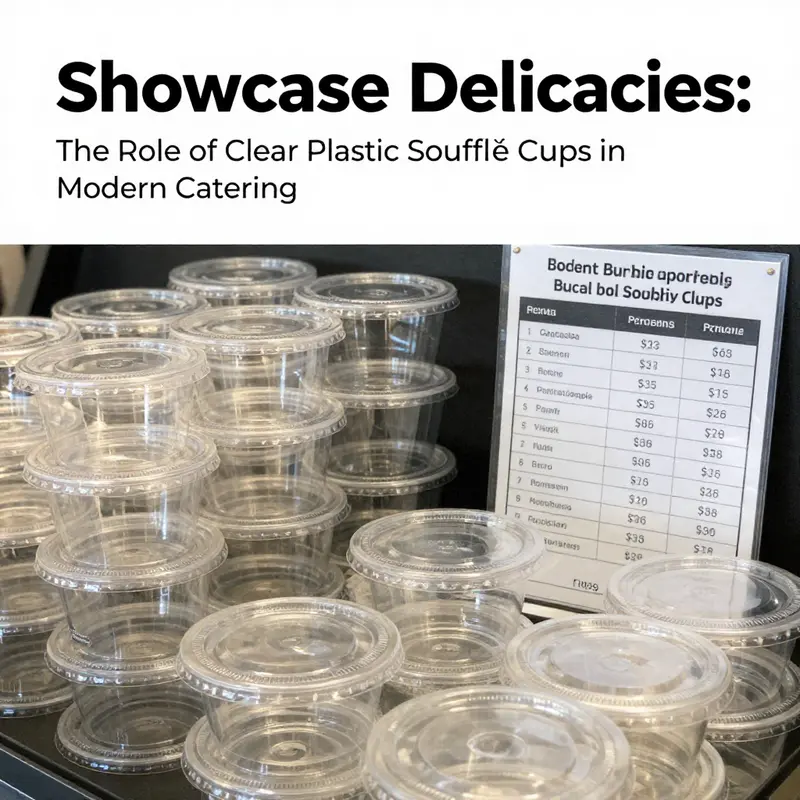
The pricing dynamics of bulk cups reveal a layered reality: fixed upfront costs such as tooling and mold changes, and unit costs that fall as volume rises. The numbers cited by suppliers typically show a wide range: the per unit price drops as orders move from thousands to hundreds of thousands, while shipping, handling, and storage add to total cost of ownership.
In practical terms, a 1,000 piece order may land in the low single digits per unit, whereas a 100,000 piece bulk order pushes the average cost per cup even lower. The leverage comes from amortizing setup costs, optimizing cycle times, and minimizing waste through high yield processes.
Beyond the base cup price, bundled options such as compatible lids, branding services, and packaging configurations can further affect the total cost and the efficiency of service workflows. In bulk programs, suppliers may offer multi item bundles that reduce SKUs and simplify inventory management, attributes that translate into labor savings and faster fulfillment.
The purchasing strategy should balance price with reliability, consistency, and branding opportunities. Long term partnerships can yield favorable payment terms, steady lead times, and better quality control. In regions with multiple plants or distributors, a diversified supplier network can reduce risk and shorten replenishment cycles.
From a sustainability perspective, bulk buying can support packaging optimization, reduction in overpacking, and end of life considerations, as suppliers may offer recyclable or reusable options that align with corporate goals.
In sum, the economics of bulk purchasing for clear plastic soufflé cups hinge on a disciplined approach to total cost of ownership rather than a focus on unit price alone. The best strategies align volume with predictable supply, integrated packaging, and brand consistent presentation that supports a reliable guest experience across venues.
Final thoughts
Clear plastic soufflé cups have proven to be indispensable in catering and food service. Their elegant transparency enhances food presentation while their sturdy, food-safe materials ensure that your dishes remain intact and irresistible. Understanding their applications, material properties, and economic advantages can lead to smarter purchasing decisions, promoting a more efficient and appealing service to customers. Embracing these cups can elevate your brand and improve customer satisfaction significantly.