
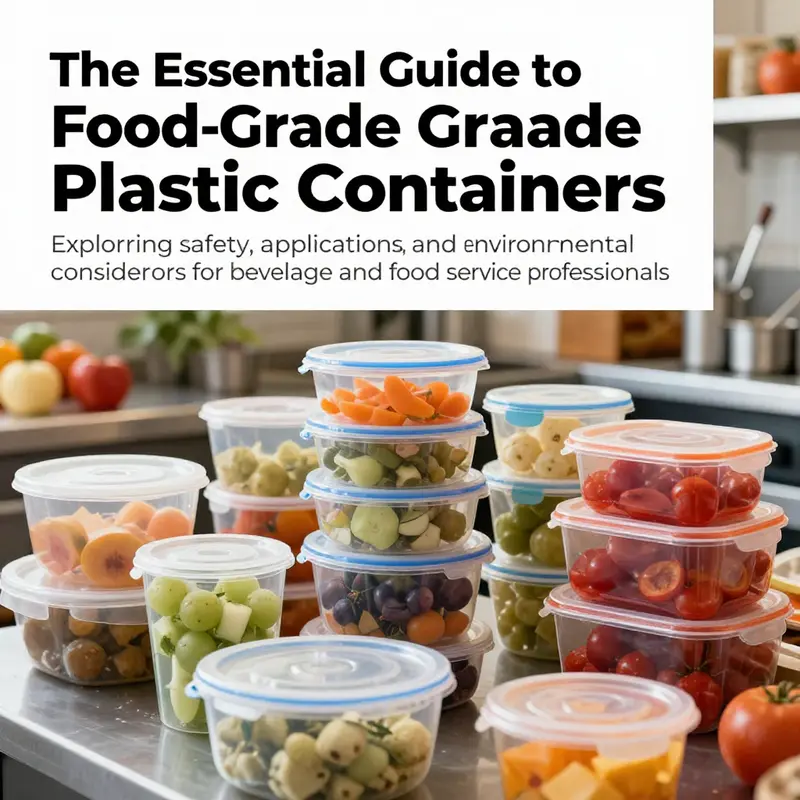
Food-grade plastic containers serve crucial roles in maintaining the quality and safety of beverages and food in a wide array of applications. Understanding their material composition and safety standards is vital for businesses like bubble tea shops, restaurants, and catering services. These containers provide a practical and cost-effective solution for food storage and packaging while helping to meet stringent safety regulations. In this article, we will delve into the materials that make up these containers, various usage scenarios across different sectors, and the environmental impacts associated with their life cycle. By grasping this information, businesses can make informed choices that enhance their service offerings while remaining responsible custodians of the environment.
From Polymers to Plate: How Material Choices Keep Food-Grade Plastic Containers Safe for Everyday Use
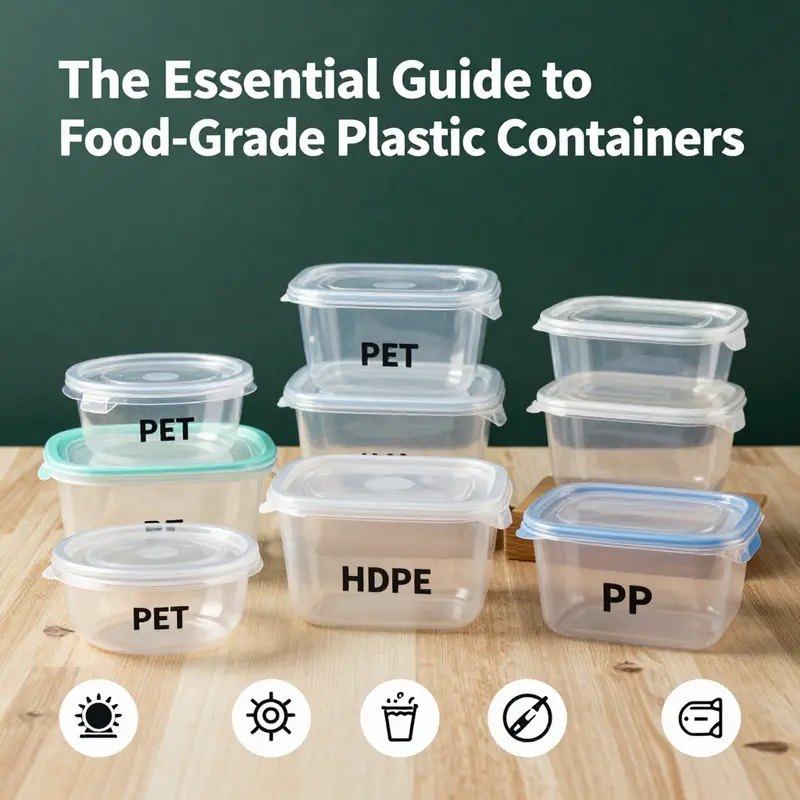
The safety of food-grade plastic containers rests on a careful alignment between material science, regulatory safeguards, and everyday practicality. When a manufacturer designs a container meant to touch food directly, every choice from polymer family to processing method becomes part of a safety conversation with the consumer. The chapter that follows traces that conversation: how the common polymers—polypropylene, high-density polyethylene, and polystyrene, along with others like PET in certain contexts—are selected for distinct roles in food storage, how the concept of migration shapes safety standards, and how consumers can translate these technical assurances into confident everyday use. The aim is not merely to catalog materials, but to illuminate how material composition informs performance, safety, and sustainability across a wide range of food storage and transport scenarios.
At the heart of the matter is the idea of safe direct contact. Food-grade plastics are not generic plastics repurposed for storage; they are materials that, through regulated manufacturing and verification, meet criteria designed to minimize the transfer of contaminants into food. The migration of substances can occur in trace amounts, driven by factors such as heat, duration of contact, acid or fat content of the food, and the presence of processing aids that remain in the finished product. To guard against unsafe migration, standards specify permissible levels for various substances and require labeling that signals compliance with food-contact use. Consumers helpered by these signals can reasonably expect that a container labeled as food-contact approved will perform within defined safety limits under routine household conditions. The practical upshot is that material choice becomes a signal of both safety and suitability for particular storage tasks, whether it is the long-term confinement of dry goods, the cold storage of dairy, or the short-term containment of ready-to-eat meals.
Among the most widely used polymers in food containers are polypropylene (PP), high-density polyethylene (HDPE), and polystyrene (PS). Each of these materials brings a distinct repertoire of properties that make it suitable for specific uses, while also imposing limitations that guide proper usage. Polypropylene is prized for its thermal stability and chemical resistance. It resists softening at higher temperatures relative to many other plastics, which makes it especially well suited for hot-fill processes, autoclaving, and repeated cycles of use in microwaveable or reusable containers. The crystalline structure of PP and its high melting point underpin a resilience that supports durable hinged lids and long service life in households, cafeterias, and food-service operations. Yet durability is not the only virtue; PP’s safety profile—when produced and labeled for food contact—rests on its careful composition and controlled additives. When customers see a container marketed as food contact approved or food-grade, they can reasonably expect that the polymer, additive package, and any stabilizers have been evaluated against migration thresholds relevant to common food scenarios.
HDPE, in turn, is celebrated for stiffness, toughness, and reliable moisture resistance. Its barrier qualities make it particularly well suited to rigid containers for dry goods such as cereals, flour, sugar, and nuts. HDPE’s durability translates into containers that can withstand rough handling, drop impacts, and stacking in storage and during transport, while still offering a favorable barrier profile against moisture and many chemicals. The flipside is that HDPE is generally not designed for oven or broiler use, and its performance under high-heat conditions is more limited than that of PP. This limitation is not a defect; it is simply a reminder that usage guidelines matter. Safety labeling for HDPE often emphasizes the contexts in which the material remains stable and non-migratory, guiding decisions about hot foods, microwaving, or prolonged exposure to heat.
Polystyrene, which is widely known in its foam form as Styrofoam, brings insulation and lightweight characteristics that have historically made it a staple for takeout containers and microwaveable dishes. PS can be a practical choice for short-term use, especially where insulation reduces heat transfer or where cost considerations are paramount. Still, PS has its own caveats. It can absorb odors over time and may not be ideal for prolonged storage of fatty or acidic foods. Because of these attributes, PS containers are typically recommended for short-term storage and clearly labeled for food contact use. The form and processing of PS influence its migration behavior, and thus its appropriateness for particular food types and storage durations.
Beyond PP, HDPE, and PS, other polymers such as polyethylene terephthalate (PET) play a key role in certain applications. PET is renowned for clarity, strength, and barrier properties that help preserve freshness in some beverage and salad container contexts. Its suitability for food contact hinges on manufacturing controls that minimize migration of residual monomers or processing aids, particularly when containers are subjected to temperature fluctuations or contact with acidic or fatty foods. The decision to use PET for a given packaging solution is thus a careful balancing act between transparency, rigidity, barrier performance, and regulatory alignment with the intended food contact scenario.
Each material’s performance is deeply linked to processing, design, and labeling. The design of a container—its wall thickness, its geometric form, the nature of its lids and seals—interacts with the polymer’s intrinsic properties to determine leak resistance, stacking stability, and shelf life. A well-engineered lid with a reinforced seal, for example, reduces the likelihood of spills during transport and storage, a practical benefit that directly supports food safety by minimizing unintended exposure or contamination. The articulation of these features in labeling—such as explicit “food contact approved” statements, material identification codes, and the provision of manufacturing and certification details—gives businesses and consumers a basis for evaluating suitability for specific tasks. In a broader sense, the labeling ecosystem reflects confidence that a product has undergone appropriate testing for migration under realistic use conditions, which is a cornerstone of trust in modern food handling.
The safety standards that govern these decisions are not uniform across the globe, but they share a common emphasis on managing migration and ensuring that containers do not introduce hazardous substances into the foods they touch. In many regions, migration limits are framed in terms of specific substances, cumulative exposure, and practical testing conditions that simulate real-world use. In different regulatory landscapes, testing regimes may focus on different substances, solvents, or simulants, yet the underlying goal remains the same: to ensure that the material, its additives, and any processing residues stay within safe limits during the typical lifetime of the product. The chapter’s results emphasize that compliance is a blend of material science and rigorous oversight. It is not enough to select a polymer with favorable intrinsic properties; the entire system—from resin formulation to the finished container’s labeling—must align with safety expectations.
From a practical standpoint, the best-practice playbook for using these containers in everyday life hinges on understanding both material properties and use-case requirements. For dry goods and fridge storage, HDPE or PP-based rigid containers often deliver the right combination of durability and barrier performance. PP’s higher heat resistance makes it reasonable for hot-fill or reheating tasks in some contexts, though it is prudent to verify microwave or oven compatibility on the product’s labeling. PET may be favored where transparency is important—for example, to display fresh produce or visually inspect contents—but it too must be used within the temperature and contact guidelines established by the manufacturer and regulatory authorities. PS containers, particularly in foam form, can be excellent for short-term takeout and insulating needs, yet their suitability for long-term storage or exposure to heat or fatty foods should be carefully considered.
A common thread across these materials is the importance of avoiding extremes. Exposing food-contact plastics to temperatures beyond their specified ranges or using damaged containers can compromise their barrier properties and potentially increase migration. The consequences may be subtle, such as changes in odor or taste, or more conspicuous, such as staining, warping, or leakage. Staining, for instance, is a cosmetic indicator that the container has interacted with certain foods; it does not automatically imply unsafe contents, but it can reflect the material’s interaction with pigments or acids present in foods such as tomato sauces or curries. Repeated exposure to such foods without proper cleaning can accumulate onto the surface and potentially influence future storage experiences. In short, a stained container remains functional for many purposes, but its aesthetic and hygienic qualities may be diminished, especially if cleaning is incomplete or if residues become hard to remove.
This nuanced landscape also invites attention to sustainability and recycling. The plastics family’s strengths—their lightness, resilience, and barrier performance—also create challenges in end-of-life management. Recycled content can introduce variability in properties, which in turn can influence migration behavior if the material’s prior use involved different substances. For many users, this means that the decision to reuse a container for a longer term or to recycle it should involve an honest assessment of its appearance, odor, and any signs of wear. When in doubt, replacing a worn container with a new, properly labeled product remains a prudent choice. The broader implication is clear: material choices must be made with an eye toward the full lifecycle of the product, including end-of-life considerations, to support a sustainable, food-safe packaging ecosystem that serves both consumers and food-service operations.
The insights from safety standards and material performance converge on a practical, everyday ethic: treat food-grade plastic containers as part of a system designed to protect the food and the consumer. This means choosing the right material for the task—PP for hot-fill or reheating scenarios, HDPE for sturdy cold-storage or dry goods, PS for short-term takeout or insulated applications, and PET in contexts where clarity and barrier needs align with regulatory allowances. It means respecting the temperature and usage guidelines, resisting the urge to reuse containers beyond their recommended lifespan, and ensuring that containers show no signs of damage that could alter their barrier properties. It also means recognizing that while plastics offer significant convenience and efficiency in food storage and transport, they are bound by regulatory standards that require ongoing diligence from manufacturers, retailers, and users alike. When these elements work in concert, the everyday act of storing, transporting, and consuming food becomes a safer, more reliable routine that reduces waste, preserves freshness, and supports a more resilient food system.
To close the loop, consider the broader context in which these materials operate. The science of polymer science, the discipline of regulatory compliance, and the practical realities of households and kitchens intersect in the simple act of choosing a container. The best choices reflect not only the material’s inherent properties but also how those properties align with the intended use, how migration risk is managed through testing and labeling, and how the product’s life cycle interacts with sustainability goals. In a world where direct contact with food is the norm, the integrity of the container’s material composition becomes a quiet but powerful guardian of safety and quality. The result is a packaging landscape that is not only functional and affordable but also trustworthy—an outcome that supports consumers, food businesses, and regulatory bodies alike.
For readers seeking further authoritative guidance on food contact materials and safety standards, the broader body of work and regulatory resources offers deeper detail on migration limits, testing methods, and region-specific requirements. You can explore foundational information through international health and safety authorities that shape these standards and help ensure that food-grade plastics perform as intended under real-life conditions. External reference: https://www.efsa.europa.eu/en
From Field to Pantry: The Broad Reach of Food-Grade Plastic Containers in Modern Food Systems
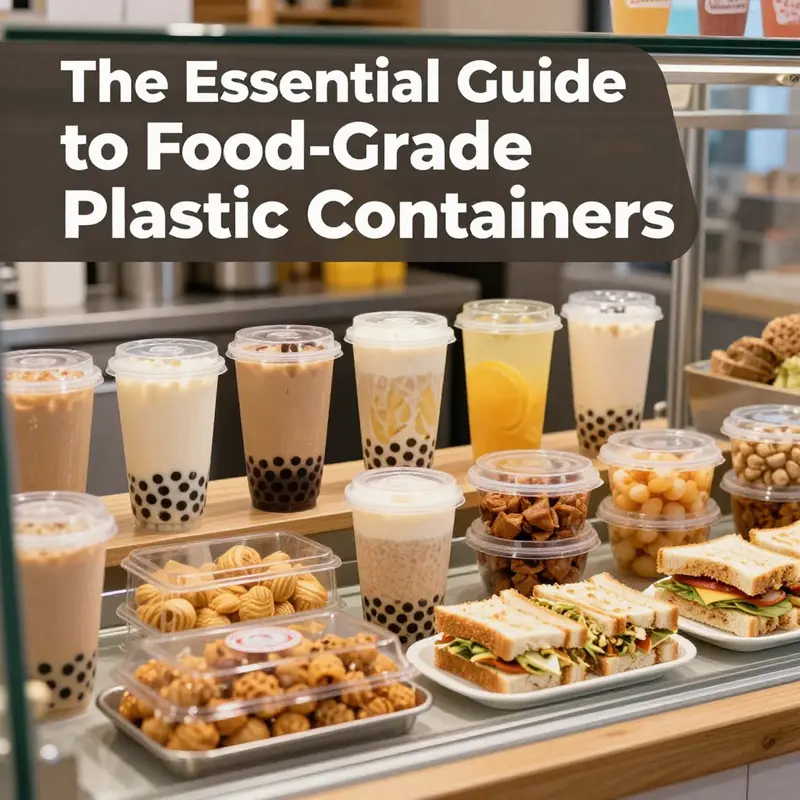
Food-grade plastic containers form a quiet backbone of modern food systems, shaping how raw harvests become shelf-stable ingredients and how meals travel from kitchens to tables across countless contexts. Their design and manufacture respond to a precise set of safety and regulatory standards, ensuring direct contact with food does not introduce unwanted substances or risks. It is not only about keeping contents physically contained; it is about preserving quality, reducing waste, and enabling efficient, traceable logistics from producer to consumer. The underlying materials—primarily BPA-free polymers such as PET, HDPE, and PP—are selected for their balance of safety, barrier properties, and practical performance. These choices translate into containers that are lightweight yet sturdy, clear enough to showcase color and freshness, and capable of withstanding the varied environments in which food moves through the supply chain and into home kitchens. The European and American regulatory landscapes converge on a shared goal: to establish a science-based framework that governs how these polymers contact foods. The European Food Safety Authority and the U.S. Food and Drug Administration both emphasize that polymer substances intended for contact with food must not migrate harmful levels of substances that could pose risks to human health. In practice, this means manufacturers pursue validated, condition-tested materials and assemblies that minimize compound migration under realistic use conditions. When these standards are followed, food-grade plastics can safely serve a wide spectrum of roles, from the most delicate beverages to robust dry goods, all while maintaining performance across a multitude of handling stages. The result is a versatile toolkit that supports not only consistent safety but also operational efficiency in a world of variable demand and diverse distribution networks. Across these networks, PET, HDPE, and PP are deployed for their distinct advantages, aligning with specific needs at each step of the journey. For beverages and high-clarity presentation, PET bottles and trays offer impressive light transmission and an appealing, product-friendly appearance. The optical clarity helps retailers and consumers judge freshness and color, a subtle but important feature for beverages, salad kits, and ready-to-eat meals where appearance influences choice. Yet PET’s advantages come with cautions: it should be kept away from high temperatures and re-use scenarios that go beyond its intended lifecycle because repeated exposure to heat and stress can degrade its integrity and potentially alter its performance. HDPE, by contrast, brings rugged chemical resistance and reliable barrier properties that are well-suited for dairy jugs, oil containers, and sturdy bulk storage solutions. Its resistance to many cleaning agents makes it a dependable choice in industrial kitchens and distribution centers where sanitization protocols are rigorous. HDPE’s opacity can be an advantage in protecting contents from light-induced degradation for some products, while its slightly lower clarity compared with PET is a trade-off that many operations accept for the practical benefits HDPE delivers. PP, prized for its heat resistance and wide temperature tolerance, often becomes the workhorse for microwave-safe containers, meal prep boxes, and reusable storage options that endure repeated cycles of washing, reheating, and stacking. The broader temperature window that PP supports—typically from well below freezing up to roughly hot-food handling ranges—makes it a natural fit for leftovers, frozen ingredients, and ready-to-heat meals. In practice, this means a single facility may rely on a mix of PET, HDPE, and PP to cover diverse tasks: PET for when visual appeal and transparency matter most; HDPE for durability and chemical resilience in bulk handling; and PP for reheating, portioning, and everyday kitchen use. The resulting versatility supports not only large-scale distribution and catering operations but also the everyday routines of home cooks and community kitchens. A crucial thread running through all these applications is the need for reliable seals and closures. The best containers incorporate leak-proof lids, reinforced seals, and stackable designs that reduce spill risk during transport and optimize storage space. In the logistics realm, such features translate into lower losses, more predictable packing densities, and better utilization of pallets and shelving. They also contribute to safety by minimizing cross-contamination risks between different batches and products. The impact of these features extends into emergency preparedness and humanitarian contexts as well. In scenarios where rapid, safe, and scalable food distribution is required, containers that are lightweight, durable, and easy to sanitize become essential. The ability to move large volumes quickly, keep contents secure, and ensure that food remains safe from the point of packaging through transit to distribution centers makes these plastics a pragmatic backbone for supply chains that must respond to fluctuations in demand or unexpected events. The agricultural sector also benefits from food-grade plastics, with crates and baskets made from PP or HDPE used to harvest, sort, and transport fruits and vegetables. Their strength and resistance to moisture help maintain product quality while reducing damage during handling. In markets and supermarkets, these crates and baskets enable efficient bulk display and compact storage, supporting the flow of fresh produce from farm to shelf. In processing facilities, the same materials serve on the line for washing, sieving, and staging raw ingredients. Containers and bins must withstand aggressive cleaning regimes and sanitizers, which demands materials that do not degrade or contaminate surfaces over time. The ability to endure repeated wash cycles is a practical advantage that reduces replacement costs and downtime, allowing facilities to stay productive between batches. At the heart of these varied roles is a shared understanding of safety and compliance. Clear labeling, recognized recycling codes, and adherence to guidelines for use conditions are all part of how professionals manage risk and maintain quality. Consumers, too, benefit from transparent information about what a container can and cannot endure: which plastics are microwave-safe, what temperatures are safe, and how to clean and reuse containers without compromising safety. The conversation around safety also intersects with environmental stewardship. While plastics offer clear logistical and cost advantages, responsible end-of-life management remains essential. Recyclability and reuse are central to sustainability strategies, and many institutions aim to maximize the useful life of containers through robust cleaning protocols and stackable designs that promote reuse. Yet, the trade-offs must be understood: high-frequency reuse can expose containers to conditions that may gradually affect performance, so guidelines on temperature exposure, cleaning agents, and cycle limits are critical. These practices become part of a broader approach to reducing food waste. By enabling safer storage of dry goods like cereals, flours, sugars, and nuts, food-grade plastics help minimize spoilage that would otherwise occur due to moisture ingress or contamination. They also support portion control and inventory management, enabling households and institutions to use what they have more efficiently and reduce discards. The landscape is not static. Advances in material science and manufacturing continue to refine the balance of safety, performance, and sustainability. New formulations and processing methods can improve barrier properties, resistance to staining from tomato-based sauces or curry, and resilience under varying temperature regimes. These improvements reinforce the relevance of plastics in an ever-evolving food ecosystem, where consumer expectations for convenience, safety, and affordability meet producers’ needs for efficiency and compliance. Even as alternative materials such as 18/8 stainless steel attract attention for certain applications—particularly where long-term insulation and extreme durability are priorities—the ubiquity, availability, and affordability of food-grade plastics ensure they remain a cornerstone in many sectors. Stainless steel offers superior insulation for beverages and certain temperature-controlled products, but its higher cost, weight, and production footprint make plastics the practical choice for most mass-market packaging, consumer storage, and logistics. The practical takeaway is that the strength of food-grade plastics lies in their adaptability. For beverages and clear display items, PET delivers visibility and purity of appearance. For dairy, oils, and robust storage scenarios, HDPE provides resilience against chemical exposure and physical wear. For reheating, portioning, and microwave-ready meals, PP offers a safe, versatile option that thrives in modern kitchens. This adaptability extends into the home, where containers for dry goods, seeds, and garden harvests become part of everyday organization and sustainable living. Containers that are easy to clean and store encourage households to reduce waste by extending the usable life of packaging and keeping pantry spaces orderly. They also lend themselves to creative reuse in non-food tasks, which aligns with broader efforts to minimize single-use consumption while maintaining hygiene standards across household activities. The practical implications for industry professionals, culinary teams, and households alike come from understanding when and why to choose a particular polymer, and how to use it responsibly within the defined safety frameworks. The knowledge of which plastics are microwave-safe, which are best kept away from high heat, and which require careful cleaning to prevent staining or odor retention becomes part of daily practice. It also informs procurement decisions, where the total cost of ownership encompasses not just the initial price per container but the lifespan under typical use, the frequency of replacement, and the logistics costs associated with handling, shipping, and storage. In sum, food-grade plastic containers occupy a central place in the interplay between safety, efficiency, and sustainability across food systems. They enable secure packaging, reliable transport, and practical home storage while aligning with regulatory expectations and quality standards. They help ensure the integrity of a vast array of products—from the raw materials that feed processing plants to the ready-to-eat meals that populate retail shelves and household kitchens. As this chapter journeyed through the range of applications—from field operations and wholesale distribution to domestic use and medical-grade considerations—the common thread remained clear: when designed, manufactured, and used with an eye toward safety, cleanliness, and lifecycle impact, these containers support safer food handling, reduce waste, and streamline operations across the entire food chain. The ongoing challenge is to balance performance with stewardship, recognizing that each choice—from material selection to closure design and end-of-life handling—contributes to a system that feeds people while safeguarding health and the environment. External resource: FDA 21 CFR Part 177.1630 – Polymer Substances in Food Contact Surfaces. https://www.federalregister.gov/documents/2023/05/18/2023-10456/food-contact-substances-polymers
From Seal to Soil: The Environmental Footprint and Recycling Pathways of Food-Grade Plastic Containers
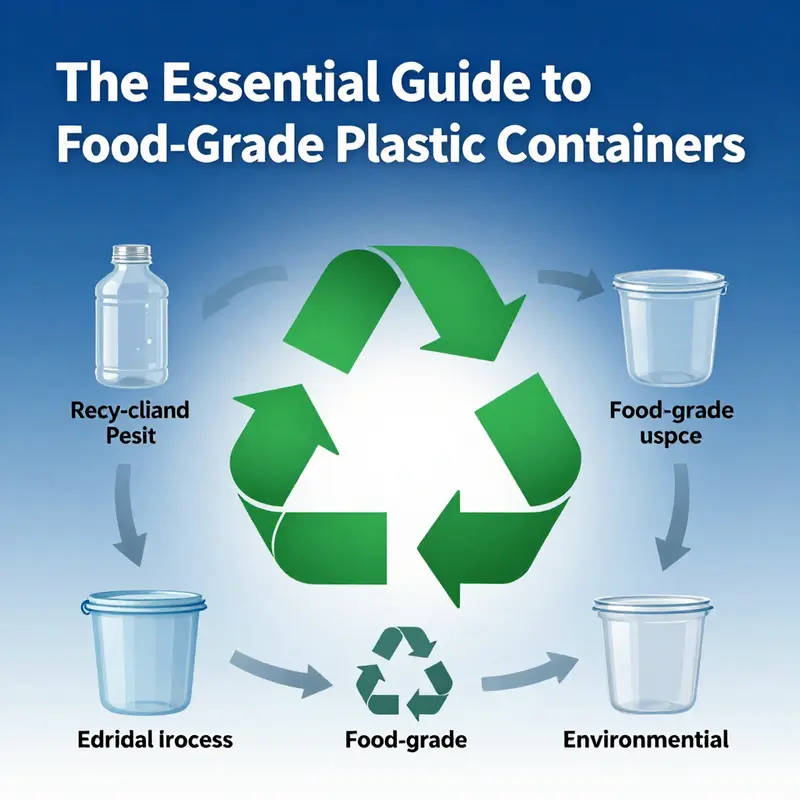
Food-grade plastic containers form a practical interface between raw ingredients and everyday meals, enabling safe direct contact, preserving freshness, and supporting efficient logistics from kitchen to table. They are typically crafted from materials such as PET and PP that meet stringent food contact standards and are designed to minimize migration of contaminants while offering reliable barrier properties against moisture and gases. Their lightweight durability helps reduce breakage, shipping costs, and energy use during transport, while transparent walls allow quick visual checks of contents without opening the package. Yet the very advantages that make these containers indispensable also place them at the center of environmental debates about waste, recycling, and resource use. The sheer volume of plastic packaging used in global food systems contributes to landfills and marine pollution when products are discarded carelessly or through inadequate waste infrastructure. A 2025 review indicates that packaging accounts for the lion’s share of plastic waste, underscoring the need for better end-of-life management even as businesses chase lighter, cheaper, and more convenient designs. The life cycle emissions story adds nuance to that debate. Across many foods, plastic packaging is responsible for less than ten percent of total life cycle emissions, with production, transport, and the agricultural or manufacturing steps representing the larger chunks of carbon, energy, and water use. In other words, while reducing packaging waste remains essential for environmental reasons, the carbon footprint of the packaging itself is often only a fraction of the overall footprint of the foods it contains. This distinction matters when designing strategies for sustainability, because it shifts some attention toward improving recycling rates and reducing contaminant loads rather than assuming every gram of plastic is a climate catastrophe. Recycling, however, is not a straightforward solution, and the challenges are both technical and regulatory. PET and PP are widely recyclable in many regions, yet the actual recycling rate depends heavily on local waste systems, the cleanliness of the container, and whether the recycled material is approved for food contact again. Contamination from food residues can derail the recycling stream by making the material unsuitable for reuse in new food packaging, while labels, adhesives, and mixed-material components complicate sorting and recovery. Even when plastics are technically recyclable, regulatory limits on using recycled content for direct food contact kept in place by authorities can limit circular economy potential. These constraints help explain why the journey from a plastic container to a recycled feedstock for new food packaging is rarely simple. The mono-material design advocates emphasize single polymers to ease processing, reduce contaminant complexity, and improve feedstock quality. But many practical containers employ multilayer structures or blends to achieve the necessary barrier properties, which can defeat straightforward recycling. In such cases, recyclability becomes a function of the end-of-life infrastructure rather than the material alone, making policy decisions, facility investments, and consumer behavior all essential levers in the system. In response to these pressures, researchers and manufacturers are pursuing a spectrum of sustainability innovations. Biodegradable and compostable plastics derived from plant-based materials promise an end-of-life that aligns more closely with biological cycles, but real-world performance, composting infrastructure, and consumer acceptance present hurdles. Some formulations require industrial composting facilities to break down, making municipal composting insufficient, and misplacement can lead to microplastic pollution rather than a safe end of life. Meanwhile, the push toward reusable systems seeks to decouple consumption from single-use waste by enabling returnable containers and refillable supply loops, a model that demands robust logistics, consumer participation, and standardized, tamper-evident seals to maintain safety and hygiene. Design strategies also play a crucial role in reducing environmental impact without sacrificing function. Engineers and product designers can favor mono-material, fully recyclable structures and minimize the use of adhesives and labels that complicate sorting. Clear, legible resin identification codes help recyclers target the right streams, while simple, uniform shapes reduce contamination during processing and improve recovery yields. The balance between durability for transport and recyclability at end-of-life becomes a guiding principle, influencing decisions about wall thickness, lid design, and sealing systems that protect contents but also facilitate disassembly if needed. Beyond the plant floor, the behavior of consumers and the efficiency of waste collection systems determine how much of the potential environmental cost is avoided. Empty containers must be rinsed and dried to minimize food residues, not only to preserve product quality but to maintain the integrity of the recycling stream. Sorting at curbside or in community facilities hinges on straightforward labeling and public awareness so that PET and PP flows remain distinct and recoverable. In some contexts, separate streams reduce cross-contamination and enable higher-quality recycled material that can re-enter food packaging under strict regulatory review. From a policy perspective, frameworks such as those developed by the European Food Safety Authority (EFSA) and national regulators create the safety baseline for what can be recycled into food-contact materials, which in turn shapes the feasibility of reusing plastic residues in new containers. Standards that govern residual contamination limits, migration tests, and the allowable concentration of recycled content directly influence product design and recycling plant operations. As a result, upgrades in waste processing, better sorting technologies, and transparent tracking of material provenance become enabling factors for a genuine circular economy in food packaging. In practice, businesses are exploring compromises that respect safety regulations while pursuing lower environmental footprints. Some products push for extended-life packaging that resists damage and reduces the need for multiple layers of material, while others opt for simpler packaging systems that, while perhaps heavier per unit of food, offer higher recovery rates post-consumer use. The goal is to align packaging choice with end-of-life capabilities in a way that minimizes waste, supports recycling or reuse, and preserves product quality. Even when plastics remain the default choice for many applications, the industry increasingly seeks to demonstrate cradle-to-cradle thinking by prioritizing material purity, traceability, and end-of-life outcomes alongside cost and performance metrics. One practical implication is the continued importance of design-for-recycling thinking, which can translate into concrete decisions at the product development stage. For instance, choosing PET or PP because of their established recycling streams and food-contact safety records may be prudent, but only if the packaging is free of non-recyclable mixtures and is easy to separate from non-food packaging components. This approach also has implications for labeling and consumer education, since clear instructions about rinsing, drying, and recycling can significantly improve the quality of recycled feedstock and the safety of subsequent food-contact uses. There is also space for market-driven innovations that blur the line between waste management and product design. Circular economy pilots increasingly test returnable-shell programs, where restaurants or retailers collect containers for cleaning and refilling, instead of allowing them to become waste after a single use. These pilots depend on reliable logistics, standardized cleaning processes, and consumer trust in the system. While they may not replace single-use plastics overnight, they offer a pathway to dramatically reduce waste in high-volume channels such as catering and meal delivery, while preserving the functional advantages of plastic containers in terms of barrier performance and lightness. Against this backdrop, some designers and supply chains are looking to paper-based or pulp-centric packaging for certain segments of the market, where food safety and shelf life requirements can be met with different material properties. For example, some discussions center on packaging that is easier to recycle or compost and that may be less prone to marine pollution than conventional plastics. A relevant example for readers exploring packaging alternatives is the disposable octagonal box—restaurant food kraft paper packaging, which illustrates how form, function, and end-of-life considerations can align in a single product category while stepping away from plastics for specific applications. Despite these explorations, it is clear that plastic containers will continue to play a central role in the short term because of their combination of barrier performance, durability, and cost-effectiveness. The question is not whether plastics should disappear but how to maximize their value while minimizing environmental consequences. This includes investing in better recycling facilities, reducing contamination, aligning product design with regulatory standards, and supporting consumer habits that treat packaging as a resource rather than waste. In this way, the environmental burden can be mitigated without sacrificing the efficiencies that modern food systems rely on to deliver safe, affordable meals to households, institutions, and businesses around the world. Ultimately, the environmental and recycling challenges of food-grade plastic containers compel a broader view of food packaging that integrates science, policy, and behavior. Life cycle thinking, end-of-life planning, and cross-sector collaboration are necessary to move from a take-make-dispose model toward a more circular regime in which plastics are either retained in high-value cycles or replaced by materials that align with recycling and composting infrastructures. EFSA’s role in evaluating food-contact materials and the ongoing evolution of waste management policies across regions underscores the value of governance in shaping safer, more sustainable packaging choices for a complex global food system. Consumers, manufacturers, and policymakers together must recognize the nuance that a lighter, cheaper plastic container may appear attractive in isolation but can contribute to waste streams if recycling capacity is not matched to production. Conversely, a robust, easy-to-recycle design alone cannot achieve sustainability without the necessary post-consumer infrastructure and the public’s participation in proper disposal. The most successful strategies will blend design choices with reliable waste collection, transparent labeling, and incentives that reward reuse and recycling. In doing so, food-grade plastics can continue to support safe storage and efficient distribution while becoming progressively more compatible with circular economic models over time. For researchers and practitioners, a key takeaway is that the environmental cost of packaging is not fixed at the moment of manufacture or sale; it evolves with how materials are collected, processed, and reintegrated into the economy. This dynamic perspective encourages ongoing measurement and improvement, such as evaluating the impact of transport efficiency, optimizing container geometry to reduce material use, and validating recycled-content approvals for food contact. It also invites a broader conversation about responsible consumption, the design of packaging to minimize waste, and the role of regulators in unlocking safer, more recyclable options. As this field evolves, the dialogue between EFSA standards, national regulations, and local waste systems will remain essential, because harmonized benchmarks reduce confusion and enable scalable, safe circular solutions. The goal remains to optimize safety and affordability for food while ensuring that packaging itself contributes as little as possible to environmental harm over its entire life cycle. Readers seeking deeper data on trade-offs and lifecycle analyses will find the broader literature offers valuable context about how different materials compare across multiple dimensions, including energy use, emissions, and end-of-life outcomes. In particular, studies that examine the lifecycle stages of production, distribution, use, and disposal help frame decisions about when plastics are the best option and when alternatives may be preferable. These insights support a more informed approach to packaging design, procurement, and policy development that aligns with both safety and sustainability objectives. In sum, food-grade plastic containers remain a cornerstone of modern food systems due to their combination of safety, performance, and cost-effectiveness, yet their environmental footprint must be managed through thoughtful design, committed investment in recycling infrastructure, and responsible consumer practices. The path forward will likely blend advances in material science with better waste management, more transparent labeling, and innovative packaging formats that reduce material use and facilitate recovery. By embracing this integrated approach, the food industry can sustain the benefits of plastic packaging while strengthening its commitments to environmental stewardship and circular economy principles. Any meaningful progress will require continued collaboration across sectors, from researchers refining material properties to policymakers shaping standards and incentives, to retailers and restaurants choosing packaging strategies that align with end-of-life capabilities. The European and global regulatory landscapes will continue to evolve, encouraging safer, more recyclable, and more reusable solutions, while consumer demand for sustainable packaging remains a powerful force. As these elements converge, the environmental narrative around food-grade plastic containers can shift from one of caution to one of responsible innovation guided by data, accountability, and shared goals. The conversation is not only about what is possible today but about what is practically achievable within existing systems, and what is feasible as waste management infrastructure expands and improves. By maintaining a clear focus on end-of-life outcomes, we can protect food safety and preserve the practical advantages of plastic containers, while progressively reducing their environmental footprint through design, policy, and behavior that support true circularity. The environmental argument for food-grade plastics is not a simple either/or proposition but a nuanced spectrum that encompasses material science, waste management, consumer behavior, and regulatory design. By considering the full life cycle, stakeholders can identify opportunities to improve recyclability, reduce contamination, and support the shift toward circular packaging systems without compromising safety. The result can be packaging that performs reliably in kitchens and distribution centers today while laying the groundwork for a more sustainable system tomorrow. Ultimately, the conversation about environmental impact and recycling of food-grade plastic containers should be anchored in rigorous science, practical policy, and shared responsibility among producers, consumers, and regulators. Drawing on comprehensive reviews and regulatory guidance helps ensure that claims about recyclability or safety are grounded in evidence. It also provides a framework for evaluating new materials, such as bio-based or biodegradable options, without assuming they will automatically solve the waste dilemma. The goal remains to optimize safety and affordability for food while ensuring that packaging itself contributes as little as possible to environmental harm over its entire life cycle. For readers seeking deeper data on trade-offs and lifecycle analyses will find the broader literature offers valuable context about how different materials compare across multiple dimensions, including energy use, emissions, and end-of-life outcomes. In particular, studies that examine the lifecycle stages of production, distribution, use, and disposal help frame decisions about when plastics are the best option and when alternatives may be preferable. These insights support a more informed approach to packaging design, procurement, and policy development that aligns with both safety and sustainability objectives. In sum, food-grade plastic containers remain a cornerstone of modern food systems due to their combination of safety, performance, and cost-effectiveness, yet their environmental footprint must be managed through thoughtful design, committed investment in recycling infrastructure, and responsible consumer practices. The path forward will likely blend advances in material science with better waste management, more transparent labeling, and innovative packaging formats that reduce material use and facilitate recovery. By embracing this integrated approach, the food industry can sustain the benefits of plastic packaging while strengthening its commitments to environmental stewardship and circular economy principles. For further reading on lifecycle trade-offs and the environmental footprint of different packaging materials, see the external resource link at the end of this chapter: https://www.sciencedirect.com/science/article/pii/S095965262500458X
Final thoughts
In conclusion, food-grade plastic containers represent a cornerstone of food and beverage service, balancing safety, functionality, and cost-effectiveness. From understanding the materials that constitute these containers to recognizing their various applications and environmental considerations, it’s clear that they play a vital role in modern food storage and service industries. By making informed choices about materials and recycling practices, businesses can not only enhance their operations but also contribute positively to environmental sustainability. Investing in high-quality food-grade plastic containers is a step towards improved service quality and environmental responsibility.