
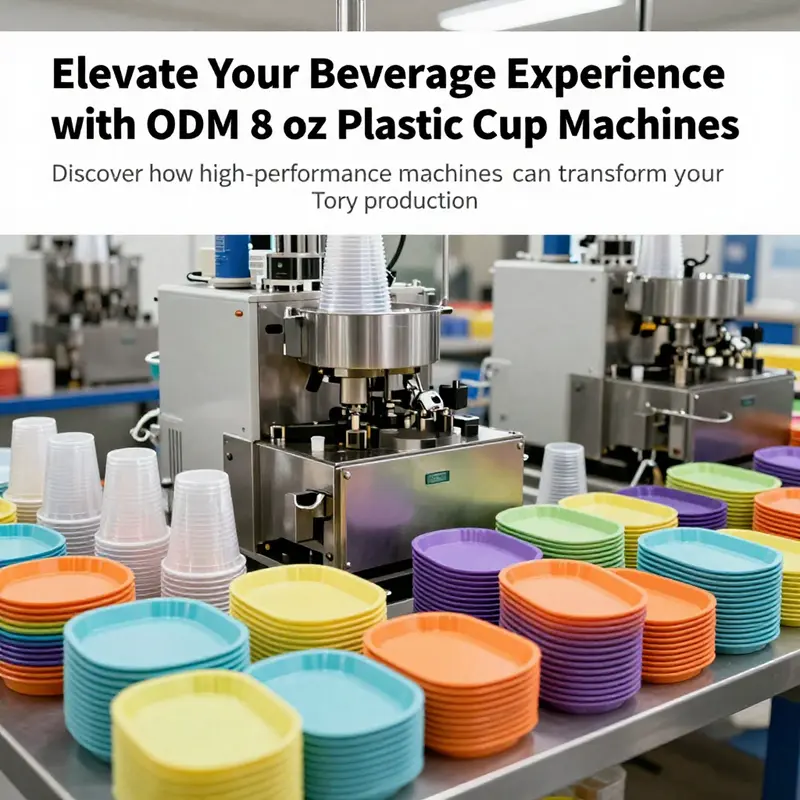
As the demand for disposable plastic containers surges, businesses in the food and beverage industry are constantly seeking efficient solutions to meet their growing needs. The ODM 8 oz plastic cups machine for disposable trays emerges as a vital tool for bubble tea shops, beverage chains, restaurants, food trucks, catering services, event planners, and corporate procurement teams. This article delves into the machine’s design and functionality, production efficiency, and evolving market trends in sustainability. By exploring these aspects, we’ll underline the significant role that ODM plastic cup machines play in enhancing operational efficiency and catering to customer demands with greater flexibility.
Engineered for Efficiency: Unraveling the Design and Functionality of ODM 8 oz Cup Machines for Disposable Trays
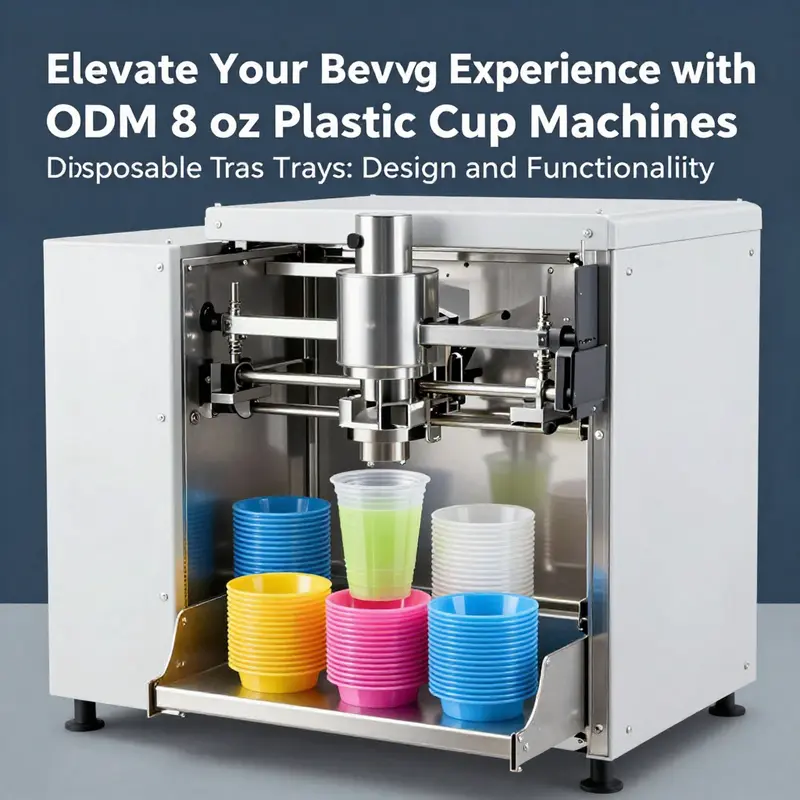
The modern packaging ecosystem increasingly depends on machines that can transform flat sheets of thermoplastics into precise, reliable cups and disposable trays with minimal waste. An ODM 8 oz cup machine tailored for disposable trays is not merely a piece of equipment; it is a carefully engineered interface between material science, mechanical design, and process control. In a world where venues demand quick service, consistent product quality, and the flexibility to switch between sizes and shapes, these machines stand at the intersection of throughput and customization. Their design embodies a philosophy: maximize material efficiency while preserving dimensional accuracy and surface finish, even as demand shifts from standard 8 oz cups to larger volumes or different tray configurations. To understand what makes these machines tick is to glean how each subsystem contributes to a cohesive production narrative that begins with a sheet and ends with a stack of uniform cups and compatible trays, ready for labeling, lids, and packaging. The machines operate on a spectrum of forming techniques, primarily vacuum and pressure forming, where heated plastic sheets are drawn or pressed into molded cavities. The choice between these techniques matters less for the consumer and more for the producer, because it governs cycle time, material distribution, and edge integrity. In many ODM configurations, a modular approach is adopted. A modular frame and segmented heating zones allow the system to be reconfigured for different thicknesses and materials, from polypropylene (PP) and polyethylene terephthalate (PET) to newer bio-based options such as polylactic acid (PLA). This modularity is not only about switching cup sizes; it is about reusing a common architectural skeleton for a family of products. The benefit is twofold: faster time-to-market for new designs and a lower total cost of ownership as continuous lines can be upgraded with plug-in modules instead of full rebuilds. When a plant runs multiple shifts and handles seasonal demand, this adaptability translates directly into reliability and uptime. A robust ODM platform emphasizes stable materials handling as well. Automated feeding systems glide sheets of film from a roll into the heating zones, maintaining tension to prevent skew or wrinkles. The feed path is designed to minimize contact with the finished product until the forming stage, reducing the risk of marring the surface finish. From there, precision heating zones bring the sheet to the precise glass transition and forming temperature range needed for each material. The heaters are individually controlled, enabling fine-tuning across multiple zones and aligning with the geometry of the mold cavity. This becomes essential when producing 8 oz cups that require uniform wall thickness and a smooth, attractive inner surface that resists warping under hot fill or cold fill conditions. The forming process—whether vacuum, pressure, or a hybrid approach—requires carefully balanced pressure differentials and timing. Positive and negative pressure control becomes a critical feature when the goal is to achieve consistent thickness distribution, even at the rim and base. The vacuum draws the sheet into the mold cavity to form the cup shape, while the application of positive pressure can help refine walls and prevent thinning at critical points. The orchestration of vacuum strength, hold time, and cooling rate determines whether a cup has a glossy, stain-resistant surface or a matte finish that hides minor imperfections. An equally important piece of the design puzzle is the machine’s frame and structural integrity. A high-strength steel or cast-iron frame provides rigidity that resists vibration during high-speed cycles. This rigidity is essential for maintaining mold alignment and wall thickness across long runs. Any misalignment at the mold interface translates into flash, edge inconsistencies, or misfit with lids and seals later in the line. The ejection mechanism, seemingly simple, is a carefully choreographed subsystem that ensures smooth product handling without nicking edges or distorting walls. Ejection components are typically synchronized with the forming cycle through a programmable logic controller (PLC). The PLC is the central nervous system of the ODM machine, receiving feedback from sensors and adjusting timing, pressure, and temperature in real time. It offers a safety net for operators by coordinating emergency stops, interlocks, and fault diagnostics. Real-time monitoring is not just about preventing downtime. It enables a data-rich environment where operators can trend cycle times, defect rates, and energy consumption. In facilities with private-label demands or seasonal campaigns, such data supports rapid changeovers with predictable results. The safety architecture of these machines is integral to their design philosophy. Aside from standard emergency stops and guard interlocks, many ODM lines incorporate sensors that monitor temperature zones, mold temperatures, and material tension. If a zone detected an anomaly, the PLC can pause the cycle and alert maintenance personnel before any scrap is produced. This proactive approach reduces waste and extends tool life by preventing overheating, misfeeds, or excessive shear on the sheet. The operational reliability of an ODM 8 oz cup machine also hinges on how well it integrates multiple forming stages. Some configurations bring together forming, trimming, cooling, and ejecting into a seamless loop. The trimming station removes flash with precision knives or laser-guided micro-trim processes, ensuring uniform rims. The cooling stage rapidly reduces temperature after forming to lock the geometry in place and minimize distortion during handling. The integration of these subsystems matters more than any single element because the production line’s rhythm emerges from their harmony. In practice, a well-designed machine balances speed with control. A cited benchmark in the sector shows cycle speeds in the range of 100 to 200 cups per minute for standard cup geometries, with the potential for higher throughput when optimized for simple wall profiles and consistent sheet feeds. However, the exact rate depends on material type, film thickness, and the presence of additional features such as embossed branding or integrated lids. The ability to make quick, small changes—without sacrificing quality—defines a modern ODM 8 oz cup machine. Changeovers between sizes like 8 oz, 16 oz, or 20 oz rely on programmable tooling and repeatable setpoints. In day-to-day operations, the operator models a new product in the machine’s memory, adjusting parameters such as wall thickness targets, heat zone temperatures, and forming pressure histories. The system then performs a dry run to verify alignment before production starts, reducing scrap and tuning cycle times. The branding aspect, historically an afterthought, is now commonly embedded into the forming process itself. Molds can incorporate micro-embossing or subtle logos into the inner or outer surface of the cup. For some customers, this branding is critical for product differentiation in crowded foodservice environments. The ability to blend branding with performance requires sophisticated tooling and careful attention to mold wear. A durable mold with uniform cavity surfaces reduces surface defects that would otherwise require post-processing or rejected batches. Even the texture of the cup, whether it is a high-gloss finish or a more tactile matte, interacts with branding choices and consumer perception. When the ODM platform contemplates eco-friendly trends, the materials palette expands beyond traditional PP and PET. Biobased or compostable options, including PLA blends, are being explored for cups and associated trays. The material selection influences the machine’s heating profile, cycle time, and cooling strategy. PLA, for example, may require different temperatures and dwell times, while ensuring that the end product remains stiff enough to withstand handling and transport. The ability to process these materials without sacrificing yield is a sign of a mature ODM platform. In addition to material versatility, the machine’s design must address the lifecycle economics of disposable packaging. Waste reduction starts at the forming stage. Precision allowables for thickness distribution, if maintained across tens of thousands of cycles, minimize scrap between runs. The modular structure further supports sustainability by enabling upgrades rather than new investment. A mature ODM line design can swap in a new mold set to accommodate a different cup diameter or a binding tray format without changing the core frame. This reduces downtime and preserves the investment in control software, cooling circuits, and feed systems. Maintenance considerations are baked into the design from the outset. Accessible service panels, clearly labeled interfaces, and standardized fasteners help technicians perform routine tasks quickly. Some machines offer remote diagnostics and hotline support from the vendor, enabling engineers to guide on-site teams through troubleshooting steps while maintaining safety protocols. The value proposition of an ODM 8 oz cup machine extends beyond the machine itself. It encompasses the support ecosystem around it: engineering assistance for initial installations, validated changeover procedures, and a robust spare-parts strategy. The most mature ODM producers also provide training modules for operators and maintenance staff, which accelerates the adoption of best practices on the floor. This training can include simulated fault scenarios, enabling teams to respond rapidly to sensor warnings, pressure anomalies, or temperature excursions. The result is less unplanned downtime and a smoother ramp-up to full production. In today’s competitive landscape, quality control is not a luxury but a requirement. Inline inspection systems, either integrated into the ejection path or positioned after the cooling stage, help detect defects before the product leaves the machine. Visual sensors, height gauges, and surface profilometers can identify deviations in wall thickness, corner radii, or surface blemishes. When a defect is detected, the PLC can halt the line or divert the batch to quality-rework streams, preserving overall yield and protecting brand integrity. The broader context of ODM manufacturing for disposable cups and trays sees a convergence of materials science, mechanical engineering, and process intelligence. With changing consumer expectations and regulatory considerations around single-use plastics and recyclability, the demand for adaptable machines that can accommodate new materials and gradient thicknesses is only increasing. The ODM ethos embraces these shifts by designing with upgrade paths, modular tooling, and scalable control architectures. The result is a more resilient supply chain that can absorb shocks from commodity price swings or sudden demand spikes. For operators and business leaders contemplating investment, several practical considerations emerge. First, the total cost of ownership should account for energy use, tooling wear, and the depreciation of molds. Second, the anticipated production mix should inform the choice of modules, particularly the desirability of dual forming heads or the option to switch from vacuum to pressure forming for specific cup geometries. Third, supplier collaboration matters. A partner who can offer on-site engineering support during installation, troubleshooting, and line optimization reduces downtime and accelerates payback. Partnering with an ODM provider who can supply a complete ecosystem—from material suppliers to mold makers and control software developers—offers a more cohesive path to reliable, scalable production. The journey from a flat sheet to a finished, ready-to-stack cup and tray combination is a sequence of carefully choreographed mechanical moves, electrical signals, and material responses. Each stage—the sheet feed, the heating, the forming, the cooling, and the ejection—has the potential to fail if not tightly controlled. Yet when the system is well designed, these potential points of failure become opportunities to refine accuracy and efficiency. The best ODM machines are those that disappear behind the scenes, delivering high-quality parts with little operator intervention. In practice, this means consistent wall thickness within tight tolerances, smooth inner surfaces that support clean release and good downstream print or branding, and reliable rims that form well with lids that may be added later in the line. The cups and trays designed by ODM teams are often integrated with downstream systems for soil-safe sterilization, labeling, and packaging. The more seamless the transition from forming to packaging, the lower the chance of damage and the higher the overall throughput. This integrated vision motivates ongoing research and development in control algorithms, mold materials, and thermal management. It also informs the training philosophy for plant staff, emphasizing preventive maintenance and early defect detection. In sum, the ODM 8 oz cup machine for disposable trays represents a mature synthesis of form, function, and flexibility. It is designed to handle a spectrum of materials, adapt to a range of geometries, and operate with a reliability that supports continuous production. Its modular frame, precise heating zones, and balanced forming mechanics create a stable environment where changes in product design do not require wholesale equipment replacement. Instead, the design invites innovation through modular upgrades, smarter control, and better materials. The result is a line that can keep pace with evolving consumer preferences, regulatory landscapes, and sustainability goals while delivering consistent quality at scale. For readers exploring the vendor ecosystem and learning how to evaluate options, one practical anchor is to review supplier catalogs and technical specifications that detail cycle times, energy consumption, mold life, and compatibility with different film thicknesses. While every plant’s exact configuration may vary, the underlying principles remain consistent: precision in forming, control of material distribution, and a robust, maintainable platform that can grow with demand. As you consider the path from concept to production, remember that the most valuable attribute of an ODM machine is not the speed alone, but the reliability of that speed across dozens of production hours, and the ease with which teams can optimize the line to meet changing requirements. The narrative of these machines is a narrative about disciplined engineering meeting pragmatic manufacturing. It is a story that speaks to the core needs of foodservice, retail, and healthcare environments where disposable cups and trays are not just containers but enablers of service excellence. External resource: https://www.alibaba.com/showroom/disposable-plastic-cup-manufacturing-machinery.html
Efficient Forming at Scale: Optimizing ODM 8 oz Plastic Cup Machines for Disposable Trays
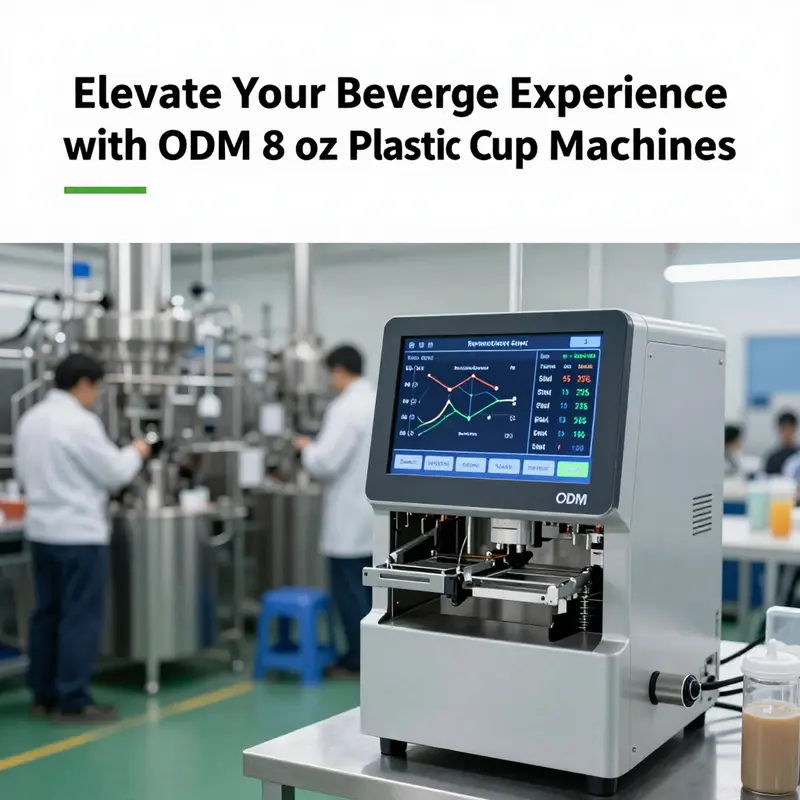
The efficiency of an ODM 8 oz plastic cup machine, calibrated for disposable trays, is not a single numeric target but a holistic performance profile. It blends speed, precision, energy use, and automation into a cohesive capability that can adapt to market demand without sacrificing quality. In a sector where lightweight, single-use containers meet food service, beverage dispensing, and even certain medical applications, the ability to scale production while maintaining uniform wall thickness and smooth surface finish becomes a differentiator. The chapter that follows treats efficiency not as a one-off metric but as an integrated design and operation philosophy. It explains how a machine built for precision forming, when combined with an optimized process flow, can deliver predictable throughput, lower waste, and more agile response to changing orders. The core idea is straightforward: speed matters, but consistency and control matter more when speed is deployed across hundreds or thousands of changeovers in a year. The most successful ODM configurations minimize human variability and maximize repeatable, sensor-driven performance across every stage of forming, cooling, and ejection, all while staying adaptable to materials and cup geometries that the market demands.
At the heart of production efficiency lies speed—the tangible output rate that translates into capacity, lead time, and the ability to service large accounts or private-label programs. In semi-automatic formats aimed at small to mid-sized operations, the usual speeds span roughly 1,000 to 3,000 cups per hour. Those figures reflect a usable range for smaller runs, custom designs, or high-mix situations where human intervention counts for more of the cycle. The advantages are clear: lower upfront capital, easier operator training, and the flexibility to refine cup geometry one batch at a time. However, this approach also introduces a greater element of labor-driven variability. Operator skill and attentiveness play a direct role in the consistency of wall thickness, the uniformity of surface finish, and the rate at which downstream trimming, labeling, or lids can be coupled into a completed package. For businesses maneuvering around seasonal demand, promotional campaigns, or regional preferences, semi-automatic lines remain a viable entry point. They offer the opportunity to scale incrementally as orders grow and as planning assumptions firm up, while still enabling a rapid introduction of new geometries or branding elements through receptive design support from the ODM partner.
Contrast that with fully automated systems, where the manufacturing deck operates with a level of discipline that mirrors the predictability of a factory line designed for medical devices or aerospace components. A high-speed, fully automated forming line can reach much higher throughput while embedding robust control logic into every step of the cycle. In the most capable setups, programmable logic controllers govern feeding and shaping with precise timing, ensuring consistent material placement, uniform heating, and repeatable mold alignment. The advantage here is not simply more cups per hour but steadier overall performance, reduced scrap, and lower variability in item-to-item quality. Modern automation also enables quick and reliable changeovers—critical for ODM work where different cup sizes and shapes must be produced in short cycles. The ability to switch to an 8 oz format, then seamlessly transition to a larger size, without sacrificing cycle stability, multiplies the economic value of the equipment. For manufacturers targeting contract work or private-label programs, automation is the difference between winning a bid on a one-off run and building a reliable, scalable production platform that can absorb demand shocks without an expensive retooling event.
The mechanics of forming are equally important as the control layer that governs them. Most ODM 8 oz cup machines rely on vacuum or pressure-assisted forming of thin plastic sheets—often PET, PP, PS, or HIPS. These materials are chosen for their balance of clarity, rigidity, lightness, and cost. In a well-tuned system, the sheet is heated to a softening temperature, then drawn into a mold cavity. Vacuum draws the sheet into the contours, while positive air pressure can help push the material to the deepest pockets of a cavity or to improve surface finish on the interior. The choice between vacuum and pressure forming is not merely academic. It affects cycle time, energy consumption, and the likelihood of defects such as wall-thickness variation, surface blemishes, or premature necking of the cup walls. For high-volume operations, a well-implemented hybrid approach—where vacuum sets the general shape and pressure fine-tunes the remaining geometry—often yields the best blend of speed and precision. The forming phase is followed by cooling to set the shape, then ejection and, in many cases, a trimming operation to remove any flash and to ensure a consistent rim diameter. Each transition must be controlled, repeatable, and sympathetic to the downstream handling that stacks or lids this cup in a final product flow.
The efficiency narrative, then, hinges on several intertwined factors. First, automation level matters. A fully automated line reduces the percentage of the cycle spent on handling, feeding, and bulk housekeeping. It lowers the risk of human-induced variability, which is particularly valuable in long production runs with many hours between maintenance windows. Second, mold customization plays a central role. ODM providers that offer adaptable tooling—molds and inserts designed for quick changeovers—enable faster switching between cup sizes, branding features, or stacking configurations. In the context of disposable trays, it is advantageous to couple forming with additional features such as integrated rims or lid-compatible profiles. A mold set that supports both cup geometry and functional accessories reduces the number of separate processing steps, cutting cycle time and cutting the risk of misalignment during assembly downstream.
Third, energy efficiency cannot be treated as an afterthought. High-speed lines may draw more power, but modern equipment can include energy-saving features that materially lower operating costs over the life of the machine. For example, servo-driven feeds and closed-loop temperature controls can minimize energy used during heating, while heat recovery streams can reclaim energy from the cooling phase for reuse in other parts of the cycle. In a disciplined production environment, energy per cup becomes a meaningful KPI, used alongside scrap rate, yield, and uptime. Fourth, certifications matter. When a machine carries CE or ISO-compliant design and manufacturing credentials, it signals a higher baseline of safety, reliability, and environmental stewardship. For contract manufacturers who supply with private branding or regional compliance expectations, such certifications translate into lower risk and quicker qualification of lines by customers, smoother audits, and fewer last-minute compliance issues that would otherwise throttle throughput.
To optimize production efficiency in practice, operators and engineers focus on several levers that influence overall performance. Automation level is a primary lever; higher automation tends to reduce cycle time and improve consistency but requires greater capital investment and longer commissioning. The decision to push deeper into automation should be tied to a realistic assessment of demand stability, the cost of labor, and the cost of downtime during changeovers. Mold customization is another critical lever. The ability to switch geometries quickly, with minimal retooling, translates into shorter ramp-up times when order books shift. The best ODM relationships include design-for-change features such as modular mold components that can be swapped with standardized fasteners, as well as software-driven recipe management that allows operators to select a cup size, material, and surface finish from a touchscreen or PLC interface.
Energy efficiency, too, must be built into the process. This includes not only energy-saving hardware but the control logic that orchestrates the cycle. For instance, a forming cycle that optimizes heating ramps to minimize peak energy consumption while maintaining material properties can provide steady throughput without spiking power usage. Heat management around the mold and plenum also helps prevent thermal fatigue in components and reduces maintenance needs. Additionally, uptime and maintenance planning contribute to efficiency. Machines designed with modular components, tool-free adjustments, and remote diagnostic capabilities shorten downtime during inspections or repairs. A robust maintenance schedule—covering mold cleanliness, alignment checks, and sensor calibration—keeps the line in a state where each cup meets the same dimensional tolerances, reducing the need for rework downstream in the packaging line.
In practice, the path to optimizing efficiency begins with a careful alignment of the machine’s capabilities to the product portfolio. An ODM partner that can accommodate a range of cup geometries—8 oz as well as larger or smaller options—and can embed branding features such as embossed logos or integrated rims, enables the production line to respond to market signals with minimal process disruption. The ability to stack or nest cups efficiently after forming, and to provide lids or other accessories as part of a cohesive design, helps to reduce handling steps and consolidate the value chain around a single operating window. The most successful lines are those that minimize the distance from raw sheet to finished cup, with as few handling steps as possible. This drives not only throughput but also surface quality, as fewer transfers mean less opportunity for surface blemishes or misalignment that would necessitate rework later in the process.
A practical way to conceive the optimization is to view the line as a closed loop rather than a sequence of discrete stations. The loop begins with material feeding and sheet feeding tension control, where consistent sheet flatness and tension prevent downstream defects. Heating systems must deliver uniform energy to avoid differential thinning or warping, something that is harder to achieve when sheets vary in thickness. The forming station then leverages vacuum or pressure to draw and shape the cup, with sensors confirming that the mold cavity is fully defined and that wall thickness remains within tolerance bands. After forming, the cooling station forces a controlled temperature drop to lock the geometry in place, preserving dimensional accuracy as the cups travel to the ejection and trimming zone. Finally, the completed cups are stacked, counted, and palletized, with the system tracking production counts, scrap, and changeover progress in real time. If any segment of the loop underperforms, the entire line’s efficiency is compromised. Therefore, improvements are most impactful when they address the bottleneck in the loop, whether that bottleneck is material feed alignment, mold heating uniformity, or end-of-line handling speed.
Changeovers, in particular, deserve close attention. For ODM lines that must switch between 8 oz and other volumes or shapes, the design for change becomes a critical performance driver. The goal is to reduce downtime to the point where a new mold or a adjusted reservoir in the automation sequence does not entail lengthy mechanical re-tuning. This is where thoughtful automation architecture pays dividends: quick-change mold carriers, standardized clamps, and tool-less alignment features allow a technician to reposition components with minimal adjustment. Recipe-driven changes—where an operator selects a cup size and style on a touch panel and the PLC guides feed rates, mold temperatures, and timing—greatly reduce the cognitive load on operators and the risk of human error during transitions. For teams that run private-label programs or seasonal variants, the ability to complete a changeover within a single shift can unlock new customer opportunities and shorten the time-to-market for new designs.
The role of materials cannot be overstated. PET and PP are common for their clarity, rigidity, and recyclability, while PS and HIPS offer cost advantages and favorable forming characteristics for thinner walls. A couple of practical design choices can drive efficiency: optimizing wall thickness distribution to minimize resin usage without compromising structural integrity, and using ribbing or subtle texturing to improve rigidity and stackability without adding process steps. The forming process itself can be tuned to minimize waste by controlling trimming margins and by integrating trimming into the neck region wherever feasible. Waste minimization is not only an environmental and cost concern; it also translates into clearer downstream handling and less contamination risk in food service settings where every gram of scrap must be disposed of or recycled.
Some operations seek to marry efficiency with sustainability by selecting materials and process routes that support recyclability or reuse. In this context, the ODM line should be capable of validating material compatibility with recycled content and ensuring that surface finishes do not degrade if recycled content is used. The trade-offs are real: higher recycled content can alter melt characteristics and surface properties, potentially demanding altered temperatures or longer cycle times. An advanced machine configuration with adaptive control strategies can accommodate these variations, learning from early lots and adjusting heat profiles to maintain consistent output. The aim is to preserve the user experience—the smooth rim, the consistent cup diameter, the transparent or translucent body—while delivering the operational benefits of recycled content. To achieve that balance, manufacturers often rely on data-driven process monitoring, with dashboards that highlight key indicators such as wall thickness variance, surface gloss, and defect incidence across different material lots. This data-driven approach supports a continuous improvement loop, enabling the plant to refine process windows and maintain high yields across a broad range of inputs.
The ROI case for fully automated, high-speed ODM lines rests on several converging factors. First, labor costs are typically the largest operating expense for a high-volume plastics forming operation. Reducing the share of manual handling through automation directly improves unit economics. Second, the predictability of cycle times and the stability of quality across thousands or millions of units reduces waste and rework, which are costly in both money and schedule. Third, the ability to perform rapid changeovers without sacrificing yield means more flexible capacity. In practice, this translates into shorter lead times for private-label customers and a more agile response to seasonal or promotional events when beverage pipelines and catering demand spike around holidays or large gatherings. Finally, the presence of robust service and support networks, plus certifications that assure customers and auditors of ongoing compliance, adds intangible value. It reduces risk for contract manufacturers who must pass due diligence checks and who need to assure clients of continuity of supply and consistent performance.
To stay aligned with these realities, the ODM ecosystem emphasizes collaboration between equipment suppliers, materials providers, and end users. The best partnerships begin with a shared understanding of objectives: the required throughput, the range of cup sizes, the necessity of branding features, and the constraints of the target environment—cleanliness standards, noise considerations, and the footprint available on the factory floor. The design remit then extends to control architecture, with a clear plan for integration with upstream sheet handling and downstream packaging. In this vision, the ODM machine is not a standalone device but a central node in a broader production system, connected to raw material suppliers and customers who expect consistent performance, traceability, and the ability to adapt to evolving packaging trends. The result is a facility that can meet today’s demand for disposable trays while keeping a careful eye on tomorrow’s requirements for recyclability, regulatory compliance, and cost containment.
From a practical standpoint, achieving the level of efficiency described requires disciplined project management during installation and commissioning. It requires clear performance targets, with baseline data gathered from initial runs to benchmark cycle times, scrap rates, and changeover durations. It requires training programs that teach operators not just to run the line but to interpret the data generated by sensors and controllers. It also requires a maintenance philosophy that treats wear parts—such as forming dies, cooling channels, and ejection mechanisms—as strategic assets. Predictive maintenance, backed by vibration analysis and thermal imaging, can extend tool life and reduce unplanned outages. A well-structured maintenance plan helps the plant maintain a stable performance envelope, ensuring that quality and throughput remain consistent as the product mix evolves.
In closing this exploration of production efficiency, the central takeaway is that speed must be married to control. The most efficient ODM lines deliver high throughput without sacrificing wall thickness uniformity, rim integrity, or surface quality. They achieve this through a combination of automation, adaptable tooling, energy-conscious design, and a robust feed-forward loop between process data and operational decisions. The best lines are designed to absorb variations in materials and geometry and to respond quickly to changing orders while preserving the core advantages of high-volume manufacturing: predictable lead times, consistent product quality, and the ability to meet the diverse needs of customers who rely on reliable, cost-effective disposable cups as part of their service proposition.
External resource: https://www.alibaba.com/product-detail/LITAI-Disposable-Plastic-Cup-Making-Machine1600549727533.html?spm=a2700.galleryofferlist.pimage.3.6b2d6e6cNwRiZD&fsb=1&productId=1600549727533
Forming a Sustainable Path: How ODM 8 oz Plastic Cup Machines Shape Eco-Conscious Tray Production

The landscape of disposable plastic cups and trays is changing not just in design but in purpose. Demand now blends speed with responsibility, performance with lifecycle thinking, and customization with clear environmental outcomes. At the center of this shift are ODM 8 oz plastic cup machines, the compact yet capable engines that translate raw sheet stock into lightweight, single-use cups and thermoformed trays. These machines are more than just tooling; they are the linchpin of a manufacturing philosophy that seeks to balance operational efficiency with responsible material choices and end-of-life considerations. In practice, that balance means machines designed for precise forming, adaptable to different polymers, and capable of integrating sustainable design features from the outset. When a producer selects an ODM solution, they are not simply buying a piece of equipment; they are choosing a pathway to faster changeovers, lower waste, and a product family that can be aligned with evolving regulatory and consumer expectations.
Thermoforming, the core process behind most 8 oz cup and tray formations, begins with thin sheets of plastic—typically PET, PP, or PS—being heated and drawn over a mold to create the desired shape. This method is inherently material-efficient. The forming action reduces excess plastic, and the subsequent trimming and ejection steps generate less scrap than various alternative processes, especially when matched to a well-engineered die set. ODM machines extend this efficiency through intelligent sheet handling, precise temperature control, and advanced forming dynamics. The result is a consistent wall thickness and a smooth surface that supports branding, printing, and, when needed, embossed or debossed logos without sacrificing structural integrity. In the modern plant, the forming station is rarely isolated; it sits within an ecosystem that includes feeding systems, heating and cooling loops, and a robust ejection mechanism that minimizes cycle time without compromising part quality. The approach is holistic and data-driven, with sensors and control logic guiding each stage to deliver uniform cups and trays at scale.
Among the performance metrics that matter most are speed, energy efficiency, and the ease of maintenance. For many ODM configurations, production speeds fall into a range that users measure in hundreds of cups per minute, with higher-end lines capable of sustaining rapid throughput without excessive energy draw. This is not just about raw speed; it is about maintaining consistent quality across long shifts. A consistent wall thickness, a defect-free surface, and controlled misfit at the cup lip are critical for downstream packaging, user experience, and stacking functionality. The machines designed for 8 oz outputs often feature modular platforms that can adapt to multiple cup diameters and wall heights, enabling producers to switch between sizes with minimal downtime. The benefits of such versatility extend beyond batch variation. Seasonal promotions, private-label programs, and contract manufacturing arrangements demand quick, low-impact changeovers. An ODM solution that supports automatic or programmable changeovers reduces the risk of human error and lowers the overall cost of ownership by shortening downtime and preserving production energy ceilings during set-up.
A core capability that quietly drives efficiency is the use of positive and negative pressure control within the forming system. In practice, this dual-pressure approach provides finer control of material flow into the mold cavity, helping to prevent flash and reduce surface defects. It also stabilizes the cooling phase, which in turn preserves a smooth exterior surface and a consistent interior wall profile. The net effect is a reduction in scrap and rework, and a corresponding decrease in material waste—an important consideration as brands seek to minimize environmental impact while preserving yield. The trend toward this level of process sophistication is clear in new ODM offerings, where control algorithms, servo-driven forming arms, and modular tooling allow operators to tailor pressure regimes to each polymer and thickness. The same philosophy guides the integration of branding features—embossed logos, matte or glossy finishes, and even integrated stackability—without compromising cycle times. In short, precision forming with intelligent pressure management unlocks higher quality cups and trays while also supporting sustainable material choices.
Material choices themselves are under scrutiny as regulations tighten and consumer expectations evolve. The market increasingly favors polymers and resin systems that align with circular economy principles: bio-based resins such as PLA, recycled PET, and other recyclate-rich inputs are finding a foothold in thermoforming lines designed for small cups and shallow trays. ODMs respond by certifying equipment compatibility with these materials, adjusting temperatures and cycle sequences to account for different melt characteristics, crystallinity, and thermal expansion behavior. The design challenge then becomes twofold: enable robust processing for conventional polymers while ensuring reliable performance with sustainable alternatives. In practice, this means adjustable heating profiles, precise process windows, and compatibility with varying sheet thicknesses. The result is a platform that can produce 8 oz cups and their matching trays from a wider material palette, empowering brands to pursue compostable, recyclable, or partially bio-based solutions without sacrificing throughput or product integrity.
Regulatory influence shapes both product design and production economics. Governments around the world are tightening restrictions on single-use plastics, encouraging the shift toward better end-of-life outcomes and less material waste. ODM partnerships emerge as a strategic response to these regulatory pressures. By collaborating early in the product development cycle, brands can design cups and trays that meet current laws while remaining adaptable to future changes. This collaboration often extends into the material selection and conversion process, ensuring that the chosen resin can be recycled within existing municipal streams or accepted by composting facilities, where feasible. Sustainable design here is not an afterthought but a guiding principle, integrated into geometry, wall thickness, and even labeling so as not to hinder recycling or composting processes. The ODM model supports this integration by providing turnkey paths—from geometry optimization to branding integration and even prototype testing—so that eco-friendly attributes do not come at the expense of manufacturability or cost control.
Sustainability has evolved from a niche concern to a core market driver. Consumers and business customers alike now expect packaging to reflect environmental stewardship. This expectation pressures suppliers and manufacturers to demonstrate concrete lifecycle benefits: lower energy use per cup or tray, reduced scrap rates, and the ability to process bio-based or post-consumer resins without sacrificing performance. The advantage of an ODM approach is clear here. Rather than a single, rigid machine, buyers gain access to a design-and-build partnership that embeds sustainability into the machine architecture itself. Such partnerships can yield solutions where the machine is tuned for minimal waste through optimized trimming, strategic scrap-collection systems, and smart feeder alignment that reduces misfeeds. The broader impact is a reduction in the total footprint of a packaging program, encompassing energy, material, and transportation considerations. In the context of tray formation, this translates into a cohesive system that can deliver a complete eco-conscious stack of products—from a small 8 oz cup to corresponding thermoformed trays—through the same platform, enabling brands to standardize on a single process family while diversifying end-use formats.
Another facet of sustainability is the emergence of modular, portable machine designs. In a world that prizes localized manufacturing and supply chain resilience, portable or modular thermoforming lines offer a compelling value proposition. They allow producers to set up compact operations closer to end markets, reducing transport emissions and enabling rapid response to demand fluctuations. Such modularity does not imply compromise on quality or throughput. Instead, it reflects a design philosophy that anticipates diverse production environments: smaller footprints, easier maintenance, and the ability to upgrade modules as material choices or regulatory requirements evolve. For smaller producers or contract manufacturers, this is especially valuable, because it enables scalable packaging programs that can handle multiple sizes, configurations, and branding requirements without committing to a full-scale, fixed-installation line. In practice, this means a platform that can support a growing family of cups and trays, with changeovers that are intuitive and fast, and with control software that can be updated as new materials or regulatory standards emerge.
The sustainability conversation also touches the lifecycle of the machines themselves. ODMs are increasingly transparent about energy efficiency and maintenance costs, offering features such as energy recovery systems, low-heat-loss insulation, and easily accessible components that simplify servicing. Predictive maintenance and remote diagnostics are becoming more common, enabling operators to anticipate tool wear or heater calibration drift before it affects quality. The practical upshot is a longer useful life for the forming line and a reduced need for redundant equipment either on site or within the supply chain. All of these aspects—material compatibility, process control, modularity, and serviceability—are intertwined in a single strategic objective: to deliver a reliable, efficient, and sustainable production platform for 8 oz cups and their thermoformed trays.
As researchers and industry watchers chart the evolution of 8 oz cup machines designed for disposable trays, a recurring theme is the seamless integration of design, process, and policy. The OEM or ODM partner does not simply furnish a machine; they deliver a turnkey ecosystem that aligns product geometry with material behavior, production tempo with waste reduction, and branding with recyclability. The end result is a package that supports brands seeking to meet ESG goals without sacrificing market competitiveness or customer satisfaction. The capacity to embed eco-conscious materials, coupled with the precision and flexibility of modern forming systems, makes these ODM platforms central to a more sustainable packaging landscape. The implications for small and mid-sized producers are particularly significant: access to adaptable machinery that can be retooled for different markets, different clients, and different regulatory contexts—without a compounding burden of capital expenditure or complex integration challenges.
For readers seeking an actionable example of how sustainability and efficiency converge in this space, consider how branding and product design can be harmonized with material choice to optimize end-of-life outcomes. The same machine capable of forming standard 8 oz cups can be configured to process bio-based resins or recycled content while maintaining the precise tolerances needed for stacking, lid compatibility, and seal integrity. The effect is a more versatile, future-ready production line that can respond to shifting customer demands, new regulatory requirements, and evolving environmental benchmarks. In this sense, ODM 8 oz cup machines for disposable trays are not merely manufacturing assets. They are strategic tools that enable brands to pursue responsible innovation at pace, without surrendering efficiency or reliability. When combined with thoughtful material selection, proactive lifecycle thinking, and alignment with modern packaging standards, these machines help shape a more sustainable, resilient, and responsive packaging ecosystem.
For those exploring the broader ecosystem around these advances, one avenue of practical insight is the integration of sustainable packaging design with turnkey ODM capabilities. Brands that leverage such partnerships can pursue eco-friendly options that remain commercially viable, with a clear path from concept to market. This approach supports not only environmental objectives but also brand storytelling, regulatory compliance, and supply chain agility. In practice, it means you can pursue a program that includes the design and manufacture of 8 oz cups and corresponding trays, with the flexibility to incorporate biodegradable or recyclable materials where feasible, all within a single, cohesive production platform. The overarching narrative is one of intelligent design meeting disciplined manufacturing, where sustainability is built into the core architecture rather than appended as a postscript.
To connect theory with practical sourcing considerations, OEMs and ODMs increasingly provide full design support, including custom cup geometry, branding integration, and functional features such as lids or stackable formats. In many cases, this translates to a turnkey package that covers not just the machine itself but the software, tooling, and process parameters required to achieve consistent results across different materials and formats. The result is a turnkey path that minimizes risk and accelerates time-to-market for new product families. In the context of disposable trays, this means forming lines that can deliver robust, economical solutions for a range of applications—from food service and beverages to medical and laboratory settings—while honoring sustainability commitments. The technology, the economics, and the environmental story converge in a practical, manufacturable solution that resonates with today’s expectations for responsible manufacturing.
In closing, the ODM 8 oz plastic cup machine is more than a piece of hardware. It is a catalyst for a more sustainable supply chain, a bridge between material science and design, and a conduit for responsible growth in a world where packaging choices matter as much as the products they contain. By embracing advanced forming techniques, adaptable process controls, and material flexibility, manufacturers can deliver high-quality cups and trays with lower waste, reduced energy usage, and improved end-of-life performance. The future of disposable packaging hinges on this integrated approach, where sustainability is embedded in the machine, the process, and the materials themselves, enabling brands to meet regulatory demands, satisfy consumer expectations, and maintain competitive advantage in a rapidly evolving market. As the industry continues to evolve, ODM platforms will play a pivotal role in shaping a packaging ecosystem that is not only efficient and scalable but also responsible and resilient for generations to come. For those seeking deeper context on how these shifts are unfolding globally, resources are available that document the current state of materials, process innovations, and supplier capabilities. See the external resource for broader industry insights: https://www.alibaba.com.
To ground the discussion in practical, real-world content, a relevant internal reference that explores sustainability-oriented packaging options is available here: eco-friendly custom paper coffee cups with lid. This example illustrates how brands balance branding, functionality, and end-of-life considerations within an ODM framework, reinforcing the central argument that durable performance and environmental responsibility can converge on a single production platform.
Final thoughts
The ODM 8 oz plastic cups machine for disposable trays serves as a cornerstone in modern beverage service, enhancing production efficiency while addressing the rising demand for sustainable practices. By understanding its design and functionality, optimizing production metrics, and staying informed about market trends, businesses can make well-informed decisions that elevate customer satisfaction and operational effectiveness. Adopting these machines is not just a step towards improved efficiency but also a commitment to sustainable practices that resonate with today’s environmentally conscious consumers.