
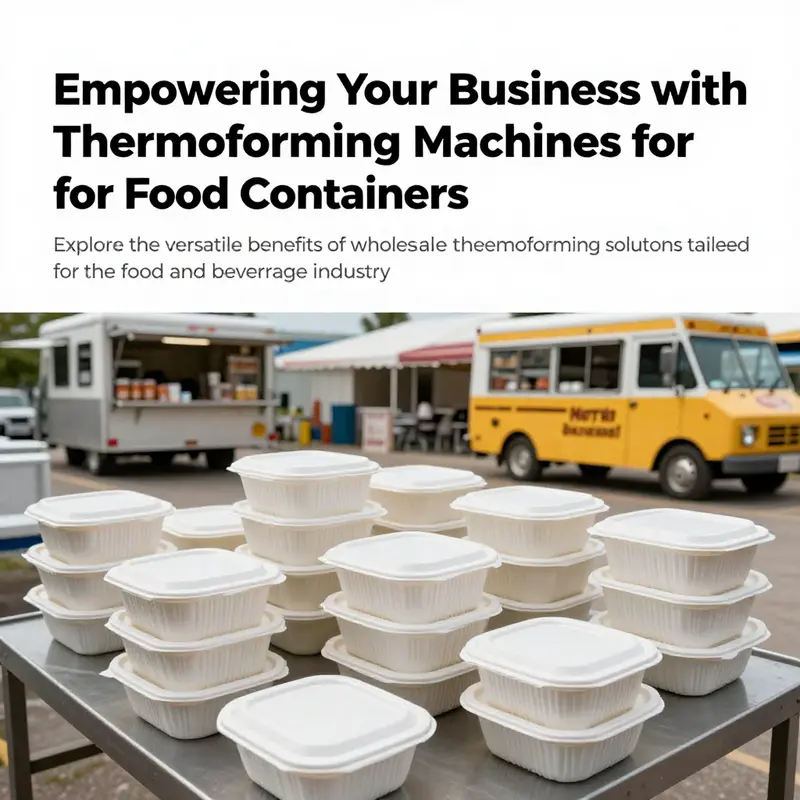
In the evolving landscape of food packaging, thermoforming machines play a pivotal role in producing high-quality containers that meet the diverse needs of businesses. This article invites you to delve into the nuances of thermoforming machines specifically designed for food containers, particularly in a wholesale context. We will explore the varieties of machines available, their applications in different sectors such as bubble tea shops, restaurants, and catering services, and review the advanced features that increase efficiency and productivity. Furthermore, we will highlight the essential technical specifications and standards that ensure compliance and reliability in food safety. By the end, you’ll have a comprehensive understanding of how to choose the right thermoforming solutions and optimize your packaging strategies.
Thermoforming Machines and Wholesale Strategies for Plastic Food Containers
Balancing machine choice, materials, and wholesale sourcing
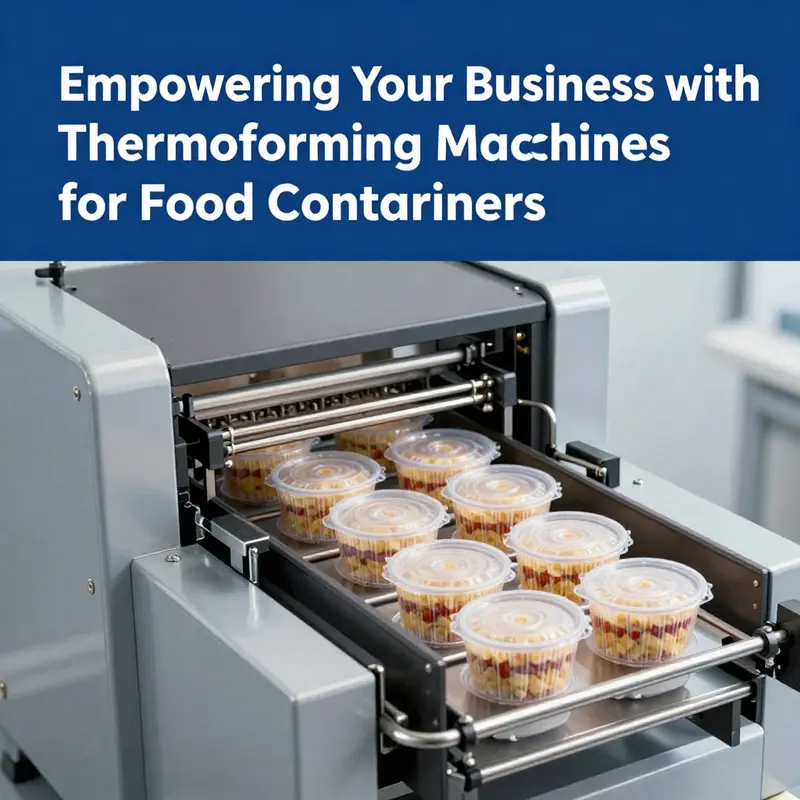
Thermoforming machines are the backbone of high-volume food container production. They convert flat plastic sheets into trays, clamshells, cups, and lids. The process uses heat, molds, and controlled air or vacuum pressure. For wholesalers and manufacturers, understanding how machine type, material, and supplier fit together is essential. This chapter explains those relationships and gives a practical framework for buying, scaling, and operating thermoforming equipment in the wholesale market.
Choosing the right machine begins with the container design and end use. Shallow trays and simple lids often suit single-sided forming. These machines heat a sheet and use a single forming plate. They offer faster cycles and lower capital cost, but they do not produce deep or rigid containers. Double-sided machines form both sides at once. They deliver rigid clamshells and full-depth trays. This format improves product protection and shelf presence. Vacuum and pressure-assisted systems excel at fine detail and consistent wall thickness. They use vacuum to pull softened sheet into mold cavities. Blended positive and negative pressure systems add precise control of wall distribution.
Material choice is equally decisive. Thin-gauge plastics like HIPS, PET, PP, and PS remain common for food contact. Each has distinct advantages. PET gives excellent clarity and barrier properties. PP offers high heat resistance for hot-fill applications. HIPS and PS are cost-effective for disposable trays. Material thickness typically ranges from 0.15 mm to 1.0 mm in many commercial lines. Thicker gauges support more rigid packaging. Wholesalers must match material selection to supply chain needs, regulatory demands, and desired recyclability.
Automation features change the economics of a line. Modern thermoforming systems integrate automatic feeding, precise forming, cutting, and stacking. Robotic stackers reduce labor and increase output consistency. Multi-station and three-station designs boost throughput by staging heating, forming, and trimming. A well-automated line reduces cycle time and improves yield. It also shortens changeover times when shifting between SKU formats. Pay attention to integrated controls, stable hydraulic systems, and modular automation modules. These determine how easily a machine adapts to future products.
Certification and compliance are non-negotiable. If you supply food-contact items globally, you must verify that materials and processes meet regional standards. Look for CE marking for European market acceptance. Also seek documentation that materials meet FDA food-contact criteria and LFGB where German-market claims are needed. Suppliers should supply batch traceability for resins and declarations of conformity. Such documents ease regulatory audits and speed time to market.
Wholesale sourcing has a geographic concentration. Manufacturing clusters in certain provinces have vertically integrated ecosystems. These ecosystems include resin suppliers, mold makers, design studios, and logistics partners. Vertical integration shortens lead times and reduces costs. For international buyers, sourcing from these clusters typically yields better mold pricing and faster tooling cycles. It also supports larger minimum order volumes with competitive pricing. Still, buyers must balance price savings against shipping, customs, and potential language barriers.
Minimum order quantities for finished containers vary by design complexity and material. Simple standard trays often have MOQs in the hundreds or low thousands. Custom, printed, or laminated products can require tens of thousands. For machinery, many suppliers accept single-unit orders, but negotiating better lead times and support is easier with larger purchases. Wholesale machine prices span a wide range. Entry-level sets may start at lower price points, while fully automated lines command higher investments. Budgeting should include tooling, spare parts, installation, and operator training.
Evaluating suppliers requires a structured approach. Prioritize operational reliability and proven uptime. Ask for references and factory visit or video tours. Verify production capacity claims with data. Inspect quality control processes, such as in-line thickness measurement and automated reject systems. Confirm spare part availability and typical lead times. After-sales support is crucial. Request details on warranty coverage, remote diagnostics, and available training. The best suppliers back machines with documented maintenance schedules and clear escalation paths.
Total cost of ownership matters more than the purchase price. Consider energy consumption, maintenance frequency, and tooling wear. Energy-efficient heating systems reduce operating cost in continuous production. Machines designed for quick tool change reduce downtime. Modular mechanical components simplify repairs and part replacement. Also factor in the facility footprint and utilities. Some high-output models require significant floor space, three-phase power, and robust ventilation.
Production planning must align with machine capability. Estimate throughput based on cycle time, cavity count, and defect rate. A three-station or multi-station machine can often increase output by roughly 30 percent compared to single-station models. However, real-world yield depends on operator skill, material consistency, and tool accuracy. Plan for a realistic scrap rate during ramp-up and for seasonal peaks. Keep spare molds for high-volume SKUs to reduce future changeover time.
Mold design is a hidden driver of success. Good molds ensure uniform wall thickness, reduce stress points, and cut material use. Work with experienced mold makers who understand thermoforming behavior. Molds should allow easy cleaning and consistent cooling. Consider interchangeable inserts for rapid product variation. Investing in flexible mold systems pays off when you launch multiple SKUs or when retail customers demand fast iterations.
Sustainability and circularity influence procurement choices. Recyclability and the use of recycled content are increasingly required by buyers and regulators. Choose resins that are accepted by common recycling streams, and avoid multi-material laminates when possible. If compostable or fiber-based alternatives are part of your product mix, maintain separate processing lines to avoid cross-contamination. For hybrid offers, like plastic trays with paperboard sleeves, coordinate suppliers to ensure seamless packaging performance.
Integration with other packaging options is practical for wholesalers. Many customers mix plastic containers with paper-based bowls or lids. Offering complementary items improves order size and customer retention. For an example of an alternative, view this product: disposable kraft paper bowl for food package with lid. This shows how non-plastic formats can coexist in a supplier’s catalog.
Operational discipline ensures consistent quality. Implement standard operating procedures for machine start-up, changeover, and shutdown. Train operators on forming temperatures, vacuum profiles, and trimming alignment. Use checklists for daily checks and preventive maintenance. Track metrics such as OEE, reject rate, and average downtime. Continuous improvement programs can reduce waste and improve yield within weeks.
Logistics and packaging for finished goods are often overlooked. Thermoformed products are lightweight and space-efficient, but some shapes demand protective packing to avoid deformation. Stack counts, pallet patterns, and protective separators save space and reduce damage. Work with logistics partners who understand export packaging and customs requirements for food contact items.
Financing and procurement strategies can accelerate growth. Leasing, staged payments, or supplier financing can spread capital cost. When negotiating, include spare parts kits and training in the contract. Ask for performance guarantees tied to throughput or uptime. A clear warranty and defined acceptance testing protect both buyer and seller.
Technology roadmaps support long-term scalability. Choose vendors with a roadmap for control system upgrades, remote monitoring, and modular automation. Lines that allow retrofits reduce the need for full replacement. Prioritize systems that support data capture for production analytics. Data-driven operations detect trending defects early and improve decision-making.
Finally, build supplier partnerships rather than transactional relationships. Share forecast data and collaborate on continuous improvement. Jointly develop new trays and custom solutions that match retailer or foodservice needs. Strong partnerships shorten development cycles and reduce the total cost of ownership for both parties.
For a practical performance and technical features guide, see this external resource: Price Thermoforming Machines Guide: Performance, Technical Features, and Applications Explained.
Selecting Thermoforming Machine Types: Practical Uses, Materials, and Wholesale Considerations for Food Container Suppliers
Machine Types and Practical Uses
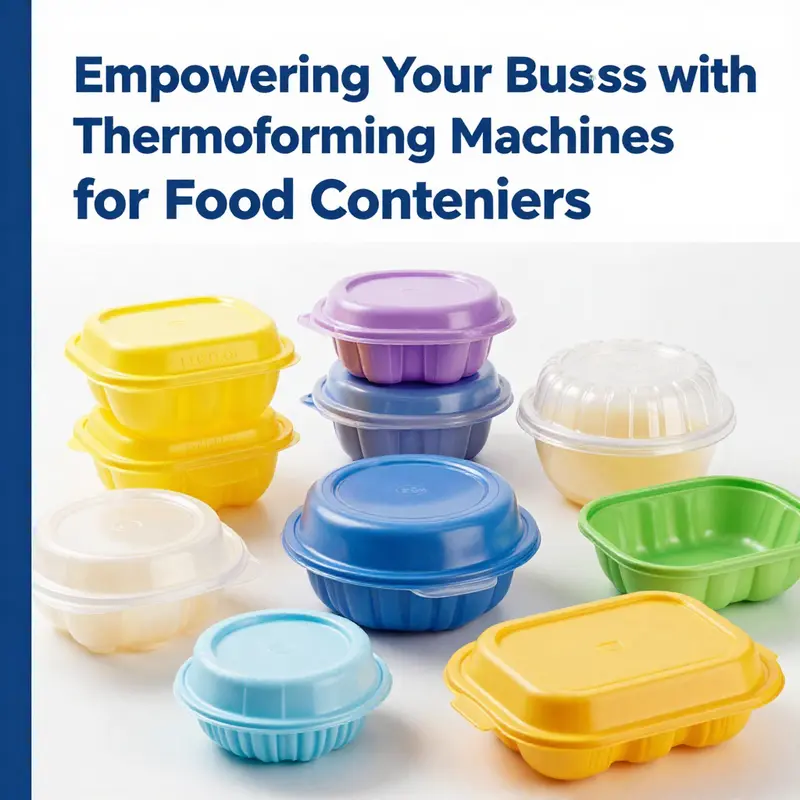
Thermoforming machines turn heated plastic sheets into finished food containers. Choosing the right type starts with matching machine capability to the container design, material, and production volume. Single-sided, double-sided, vacuum, and multi-station automatic machines each fill a distinct role. Understanding their operational differences helps wholesalers advise buyers, and helps manufacturers scale production without overspending.
Single-sided thermoforming machines heat a plastic sheet until it becomes pliable. A single forming plate shapes one side while the opposite side remains flat. This approach is efficient and straightforward. It suits shallow trays, simple lids, and basic takeaway packaging. Applications include salads, fruits, bakery goods, and disposable flat lids. Advantages include low initial cost, fast cycle times, and simple tooling. Limitations appear when deeper draws or structural rigidity are needed. For products that require stacking strength or secure closures, a single-sided machine often falls short.
Double-sided machines use two synchronized forming plates. They mold both top and bottom surfaces simultaneously. The result is a fully formed, rigid package with precise geometry. This method is well suited to clamshells, sealed trays, and multi-cavity packaging. Use cases include ready meals, premium produce, and retail-ready displays where presentation and protection matter. Double-sided forming improves wall uniformity and allows matched-lid systems. The trade-off is complexity. These machines have higher capital costs and demand more careful maintenance. Tooling precision and synchronization are essential for reliable sealing and repeatable results.
Vacuum thermoforming relies on heat and vacuum to draw softened material tightly into molds. This technique removes trapped air and captures fine mold detail. It produces consistent wall thickness and a precise fit, making it ideal for containers that emphasize appearance and dimensional accuracy. Vacuum formed parts can achieve crisp edges and detailed textures, which aids shelf appeal. Vacuum systems pair well with a range of plastics, including PET and PS, and handle moderate complexity at reasonable speeds.
Multi-station automatic machines integrate heating, forming, cooling, and trimming into a continuous line. They often include programmable interfaces and automated handling. These systems minimize manual labor and maximize throughput. Typical applications are high-volume trays, cups, lids, and containers for large-scale food packagers and distributors. Automation features can include indexing stations, robotic stacking, in-line cutting, and conveyor systems. Multi-station designs boost output and consistency, but they require higher upfront investment and a stronger commitment to preventive maintenance.
Beyond these core types, practical decisions depend on material compatibility. Common food-grade plastics include PET, PP, PS, and BOPP. Each offers distinct benefits. PET provides clarity and good barrier properties. PP stands out for heat resistance and microwaveability. PS is inexpensive and easy to form into crisp shapes. BOPP often appears as a film for laminating or sealing. Machine selection must accommodate the material’s forming temperature, draw ratio, and thickness range. Typical sheet thickness for many thermoformed food containers ranges from 0.15 mm to 1.0 mm. Machines capable of handling a broad thickness window provide flexibility for varied product lines.
Design and tooling shape long-term success. Tooling defines wall thickness distribution, draw depth, and sealing surfaces. Properly engineered tools reduce scrap and improve cycle efficiency. For deeper draws, a stepped approach to tool geometry preserves material integrity. Venting and vacuum channels must be carefully designed to avoid wrinkles and thin spots. Wholesalers advising clients should stress the importance of prototype runs and mold adjustments. Early validation saves time and reduces tooling rework costs.
Sealing and barrier performance are central for food safety and shelf life. Thermoformed containers often pair with heat-sealed or snap-fit lids. Matching the forming process to the sealing method avoids leaks and contamination. For example, a rigid clamshell from a double-sided machine may eliminate separate lids, while a tray formed on a single-sided machine often requires an added lid or film seal. When barrier properties matter—such as for greasy foods or extended shelf life—consider materials engineered for improved oxygen and moisture resistance. Specialized films can be laminated or applied in-line during the thermoforming process.
Automation and line integration raise throughput and consistency. Modern thermoforming lines include sensors, PLC controls, and touchscreen interfaces. These systems enable quick recipe changes, help maintain temperature stability, and reduce operator error. Robotic stacking and in-line trimming reduce manual handling and contamination risk. For wholesale buyers, machines offering modular automation let them scale production progressively. Start with a semi-automated line and add robotic stacking or an in-line cutter later to meet demand.
Operational reliability rests on maintenance and spare parts availability. Hydraulic systems, heating elements, vacuum pumps, and tooling components require routine inspection. Wholesalers should prioritize suppliers with established spare parts support and clear maintenance schedules. A good spare-parts agreement shortens downtime and protects production schedules. Similarly, training programs for operators and technicians ensure consistent output and safer operations. Packaging operations benefit from clear commitments on after-sales support, training, and preventive-maintenance plans.
Quality standards and certifications influence market access. Machines certified to recognized safety and environmental standards ease entry into regulated markets. Certification signals a design that meets electrical and mechanical safety norms. For food packaging, certification of material compatibility and hygienic operation is equally important. Buyers targeting international retail chains should verify both machine certifications and the food-grade status of the suggested plastics.
Sustainability choices increasingly shape thermoforming decisions. Recyclable PET and PP sheets allow brands to reduce environmental impact. Some operations also explore mono-material designs that simplify recycling at end of life. However, biodegradables and compostable alternatives may need different processing characteristics. Wholesalers must match the forming method to the chosen sustainable material. Not all compostable materials tolerate the same forming temperatures or draw ratios as conventional plastics. A careful compatibility check prevents wasted runs and production headaches.
Wholesale considerations extend beyond machine type. Price per unit depends on machine complexity, automation, and throughput. Additional cost drivers include tooling, custom molds, and the need for integrated automation. For buyers ordering multiple units, volume discounts and bundled support contracts can lower total cost of ownership. Shipping logistics for bulky machines often add substantial expense. Wholesalers that handle freight coordination and local installation services provide tangible value.
Risk mitigation matters with capital equipment. Evaluate total cost of ownership, not just the purchase price. That includes expected labor, energy consumption, tooling amortization, spare parts, and downtime costs. Machines optimized for energy efficiency and continuous operation yield long-term savings. Similarly, modular designs let buyers expand a line without replacing the core machine.
A practical way to bridge material packaging choices and thermoforming is to consider hybrid systems. For example, paper bowls often pair with clear PET lids to combine an eco-friendly body with a secure transparent cover. This hybrid approach supports consumer demand for sustainable packaging while retaining product visibility. Wholesalers can recommend sourcing options that combine formed paper bodies with thermoformed plastic lids, providing both sustainability and functionality. For an example of a hybrid packaging solution, see a relevant take-away kraft bowl design with a clear lid: custom disposable kraft paper salad bowl with PET lid.
Finally, when advising clients on machine selection, focus on the entire packaging ecosystem. Align container design, material choice, forming method, sealing approach, and after-sales support. Provide real-world throughput estimates based on product geometry. Factor in ramp-up time for tooling optimization. Offer staged automation plans that match business growth. With that approach, suppliers can recommend a thermoforming solution that balances cost, quality, and future flexibility.
For a technical reference on multi-station automatic thermoforming systems suitable for high-volume food container production, see this detailed manufacturer listing: https://www.alibaba.com/product-detail/Fully-Automatic-3-Station-PS-PET-Fast_1600578905722.html
High-Performance Thermoforming: Automation, Precision, and Scalability for Plastic Food Container Wholesalers
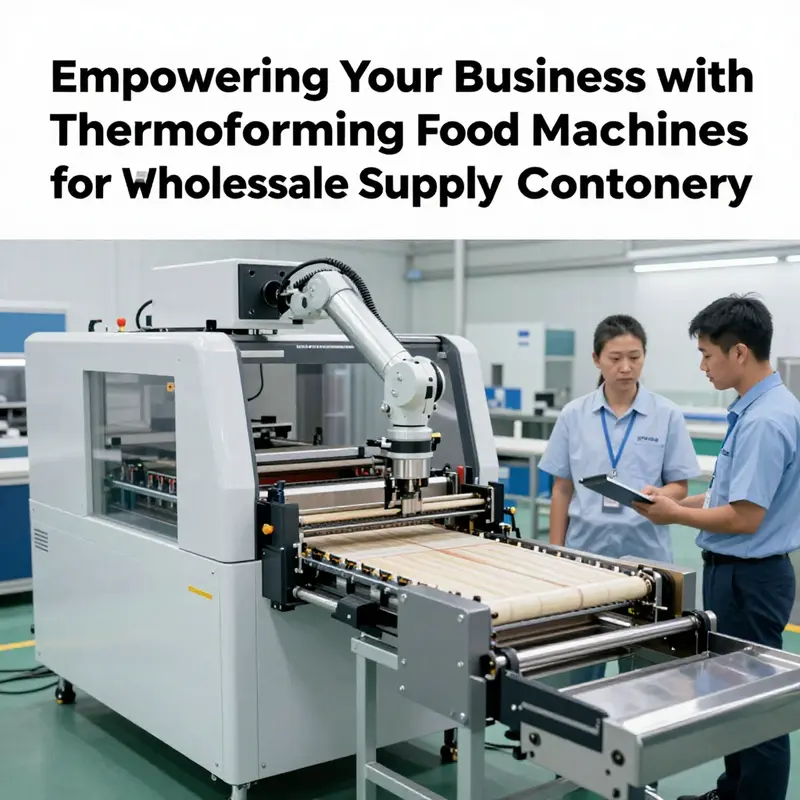
The advanced features built into modern thermoforming machines define the competitiveness of a wholesale plastic food container operation. These machines do more than shape heated plastic sheets. They determine throughput, control material use, and protect product quality across thousands of units. For buyers focused on wholesale supply, the right combination of automation, precision engineering, and diagnostics converts capital investment into reliable, low-cost production. This chapter presents a cohesive view of how those capabilities work together, and what they mean for manufacturers that supply food-grade containers at scale.
Advanced thermoforming begins with station design. Dual- and multi-station configurations allow overlapping processes. While one station forms a fresh part, another cools or trims a previously formed one. That overlap reduces idle time between cycles. The result is higher throughput without proportionally higher energy use. When cycles are synchronized, multi-station lines can achieve output increases of around thirty percent versus single-station setups. For a wholesaler, that efficiency translates directly into more units per shift and lower per-unit production costs.
Automation beyond station count is equally decisive. Fully automated lines eliminate many manual steps. Systems that feed sheet material, heat, form, trim, cool, and stack operate as an integrated sequence. Robotic stacking units remove finished containers and place them in neat, pack-ready piles. Automated labeling or simple packaging integration can follow stacking to produce pallet-ready cartons. This chain reduces labor inputs and cuts human error. It also shortens lead times from production to shipment. For wholesale orders measured in thousands of cartons, automation stabilizes output and ensures consistent delivery windows.
Precision forming technology sits at the heart of quality control. Accurate die design, controlled heating zones, and vacuum or pressure forming deliver uniform wall thickness and dimensional stability. Consistent geometry matters for both product protection and downstream packaging. Uniform walls ensure predictable sealing and nesting behavior. They also reduce material waste by enabling thinner gauges without sacrificing strength. Machines tailored for thin-gauge plastics such as HIPS, PET, PS, and PP offer tight process control. That capability allows wholesalers to optimize material choices for cost, performance, and recyclability.
Real-time monitoring and diagnostics keep the line running and productive. Embedded sensors record temperatures, pressures, cycle times, and servo positions. Software aggregates this data into dashboards. These dashboards let operators spot drift, predict failures, and adjust parameters on the fly. When a forming tool begins to wear, the system flags increased cycle variance. When heaters deviate from setpoints, alerts prompt corrective action before scrap accumulates. Predictive diagnostics thus reduce unplanned downtime and save maintenance costs. For high-volume wholesale runs, even short interruptions carry significant financial consequences. Smart monitoring turns those interruptions into manageable events.
Material handling and changeover speed are central to flexible wholesale production. Modern lines include features that reduce scrap during material changes and speed transitions between product runs. Automated length and waste retractors, precise feed motors, and programmable heating profiles mean that switching from PET lids to PP trays takes far less time. Quick-change tooling systems minimize downtime when new mold cavities are required. The ability to move quickly between SKUs supports diversified wholesale portfolios and enables manufacturers to respond to shifting customer demands.
Energy efficiency and environmental design are no longer optional. High-efficiency heating elements, zoned ovens, and optimized vacuum systems reduce energy per part. Multi-station machines reuse residual heat and recover airflow where possible. Additionally, equipment engineered for thin-gauge forming reduces material consumption. For a wholesaler, lower energy needs and reduced material usage mean improved margins and a leaner environmental footprint. Those gains also enhance attractiveness to retail customers that increasingly seek sustainable packaging suppliers.
Quality control is embedded from forming to final pack. Inline vision systems inspect dimensional accuracy and detect cosmetic defects. Weight and wall-thickness checks can trigger automatic rejection of off-spec parts. Because wholesale customers demand consistent lots across large orders, inline inspection assures repeatable quality during continuous operation. Integrating inspection data with traceability systems also allows every batch to be linked to a production run, a set of parameters, and a specific shift. That traceability helps resolve customer claims faster and supports regulatory compliance for food safety.
Maintenance features and serviceability factor into long-term operating costs. Machines that provide easy access to wear components minimize downtime for routine maintenance. Modular drive systems and standardized spare parts simplify repairs. Remote diagnostics and support reduce the need for on-site specialist visits. For wholesalers operating multiple lines across locations, standardization of parts and serviceability yields predictable maintenance budgets and faster mean time to repair. Contracting planned preventive maintenance rather than chasing failures saves money and preserves output reliability.
Integration with downstream packaging is often underestimated. A thermoforming line that delivers neatly stacked trays to a packaging module avoids manual handling and reduces damage. Robotic pick-and-place arms can be set to feed trays into automated lid sealing or into case erectors for boxing. When stacking and packaging are synchronized, palletization becomes a continuous process. This flow shortens the time from molded part to shipment and improves freight efficiency by enabling compact, stable packing patterns. Wholesale clients benefit from lower logistics complexity and faster fulfillment.
Control systems and user interfaces deserve special attention. Intuitive human-machine interfaces shorten operator training times and reduce errors. Menu-driven recipes store all key parameters for each SKU. Once a recipe is recalled, the oven zones, forming pressures, and cooling times adjust automatically. Secure user access and logging protect production integrity. For wholesalers that run multiple products, recipe management speeds changeovers and reduces the risk of cross-contamination on food-grade lines.
Regulatory compliance and certifications underpin market access. Machines designed to comply with recognized safety and environmental standards ease acceptance across global markets. Food-contact material compatibility and hygienic design choices support safe production. Features such as enclosed trimming stations and dust extraction preserve a clean production environment. For wholesalers selling into regulated retail channels, such compliance is essential for both acceptance and liability management. To review the scope and requirements of a common European conformity mark, see the official guidance here: https://ec.europa.eu/growth/single-market/ce-marking/.
Scalability is the final layer that transforms machine features into business outcomes. The right machine family supports growth without a complete forklift replacement. Modular expansions add stations, integrate additional robots, or upgrade control systems. This modularity spreads capital costs across incremental growth. It lets a wholesaler align production capacity with demand curves. Coupled with predictable per-part costs, modular expansion supports competitive pricing for large contracts.
When evaluating machines for wholesale food container production, buyers should weigh more than just headline throughput numbers. Lifecycle cost is paramount. Consider energy consumption per part, spare parts availability, service network reach, and expected downtime. Examine how easily new tooling can be introduced. Evaluate the software’s capacity for data logging and integration with enterprise systems. Confirm material compatibility and the machine’s ability to sustain consistent output over long continuous runs.
Human factors and training cannot be overlooked. No level of automation removes the need for skilled technicians. Well-engineered control systems reduce the skill threshold for routine operation. However, advanced diagnostics, tooling changes, and maintenance tasks require trained personnel. Suppliers that provide comprehensive training programs shorten the learning curve and protect uptime. For wholesalers, a trained shift team is as important as robust equipment.
Finally, consider the broader supply chain. Reliable machine suppliers provide spare parts, technical documentation, and responsive support. They also offer validated process parameters for common food-grade materials. That documentation accelerates qualification of new containers and shortens time to market. When procurement teams evaluate bids, they should assign value to local support and to the supplier’s ability to deliver consistent spare parts over the machine’s expected lifetime.
These advanced features—multi-station processing, automation and robotic stacking, precision forming, real-time monitoring, modular scalability, hygienic design, and energy optimization—create a coherent platform for wholesale production. They reduce per-unit cost, improve consistency, and enable faster, safer deliveries to customers. Wholesalers that align capital investment with these technical capabilities secure not only higher throughput but also greater flexibility to meet evolving market demands.
For wholesalers balancing price, performance, and reliability, the decision comes down to matching machine capability with business strategy. A well-specified thermoforming line becomes a scalable asset. It turns raw sheet into sellable, food-safe containers at predictable cost and quality. Integrated automation and smart diagnostics ensure that asset delivers day after day, across long production runs and diverse SKUs. When chosen carefully, the equipment does more than form plastic. It underwrites a wholesale operation’s reputation for on-time supply, consistent quality, and competitive pricing.
For a practical example of finished food packaging that pairs well with thermoformed lids, consider a supplier that offers a kraft paper salad bowl with PET lid, suitable for retail and takeaway use. Such combinations illustrate how thermoformed plastic components fit into broader packaging systems and distribution strategies: https://greendispopack.com/product/custom-disposable-kraft-paper-bowl-take-away-kraft-paper-salad-bowl-with-pet-lid/
Understanding advanced features in thermoforming equipment allows wholesale buyers to specify machines that meet throughput, quality, and compliance goals. The right line integrates forming, inspection, stacking, and packaging into a continuous, efficient flow. That integration is what turns sophisticated equipment into measurable business advantage.
Critical Specifications and Compliance for Thermoforming Lines Supplying Food Container Wholesalers
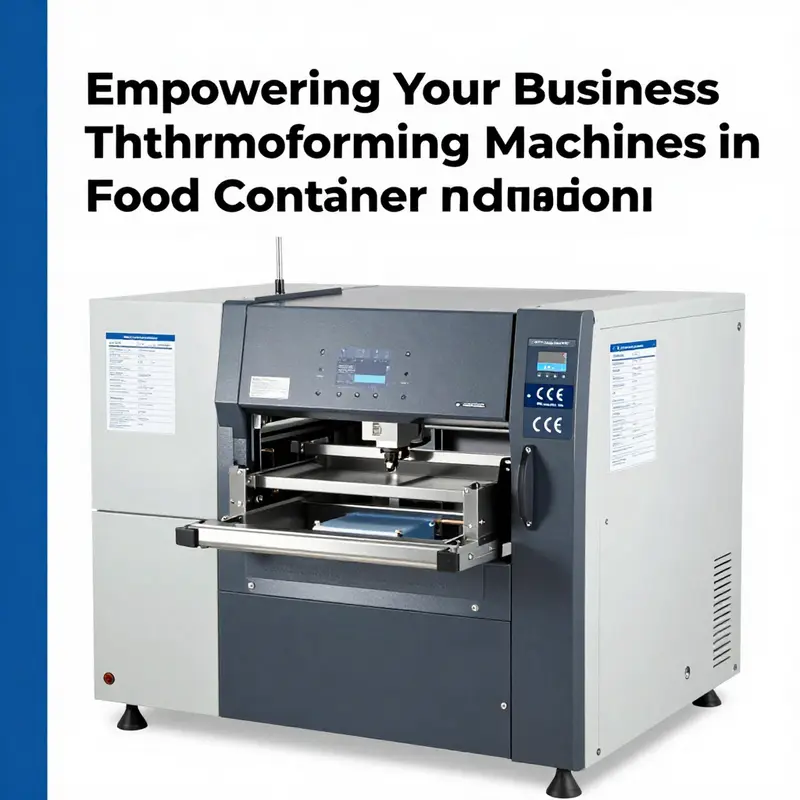
Key specifications and standards that shape buying decisions
Thermoforming machines form the physical bridge between raw polymer film and finished food container. For wholesalers who source containers at scale, understanding the technical specifications and the compliance framework is essential. Machines differ not only by their visible footprint and speed, but also by the materials they accept, the repeatability of their forming and cutting, the degree of automation, and the certifications that allow finished goods to be sold across regulated markets. This chapter explains those technical and regulatory factors in a cohesive way, so purchasing agents, operations managers, and supply chain planners can make informed decisions when evaluating thermoforming equipment for high-volume food container production.
Material compatibility defines the range of products a thermoforming line can produce. Common food-grade polymers include PS, PET, APET, PP, HIPS, and OPS. Each polymer has unique heating and forming windows, stretch characteristics, and barrier properties. Machines with flexible temperature control, adjustable stretch ratios, and adaptable mold geometries make it possible to switch between thin clamshells and deep trays without excessive downtime. For wholesalers who plan catalog diversity, choosing a machine that handles multiple polymers reduces the need for separate lines and supports seasonal shifts in demand.
Production speed and efficiency directly affect unit cost. Modern multi-station lines deliver overlapping operations that dramatically reduce cycle time. Typical high-output machines reach 25–45 cycles per minute, and multi-station configurations can boost output by thirty percent or more versus single-station units. Servo-driven systems provide precise motion control, improving synchronization between heating, forming, cooling, and cutting. That synchronization matters for consistent wall thickness and dimensional accuracy. When throughput targets are tight, consider not only the nominal cycle rate but also real-world availability, changeover time, and how quickly operators can reload rolls and molds.
Forming depth, maximum forming area, and cutting capacity determine what container shapes are feasible. A machine that supports a maximum forming area of roughly 710×520 mm and depths up to 150 mm accommodates most common food trays and clamshells. Cutting systems rated for several dozen tons of force enable long, continuous knives to trim multiple cavities per sheet. Attention to knife length, blade management, and die-cutting tolerances matters when producing large-format lids or segmented trays. For wholesalers producing a range of SKUs, investing in modular tooling and quick-change clamping systems pays off in reduced setup time.
Structural design and user interface influence reliability and operator efficiency. Robust frames weighing several tonnes resist vibration at high speeds, helping maintain registration and cut accuracy. Touchscreen controls with programmable recipes let operators save parameters for different materials and molds, ensuring repeatability across shifts. Automated mold changing and built-in diagnostics reduce downtime and simplify preventive maintenance. When evaluating suppliers, ask about ease of access for routine service, availability of spare parts, and whether the machine includes built-in sensors for predictive maintenance.
Certifications and regulatory compliance are non-negotiable for food-contact products. Machines that carry CE marking demonstrate conformance to European safety and environmental directives. ISO 9001 certification signals consistent manufacturing and quality management. Third-party inspections and certificates from recognized bodies add credibility. Beyond machine-level approvals, finished containers must meet food-safety regulations in target markets. That includes verifying absence of harmful additives and ensuring migration levels are within limits set by relevant authorities. Wholesalers should require documentation that links machine capabilities to the materials and processes used to make compliant containers.
Automation goes beyond speed. Integrated robotic stacking, automatic feeding, and servo-driven trimming minimize manual handling and contamination risk. Automated systems that combine positive and negative pressure molding with integrated punching and stacking eliminate secondary handling steps. This reduces labor costs and lowers the chance of product damage during transfer. For high-variation lines, programmable robots can handle multiple formats with minimal retooling. Evaluate control architectures for interoperability with factory automation systems. Machines that support standard industrial protocols ease integration with upstream extruders and downstream packing lines.
Food-safety and hygienic design should be considered at the machine level. Surfaces that contact formed parts must be easy to clean and resistant to microbial growth. Enclosures around ovens, forming areas, and cutting stations help contain particulates. Filtration of process air and isolated product pathways prevent cross-contamination. If a line will produce both raw-ingredient packaging and ready-to-eat meal trays, plan physical separation and cleaning validation procedures. Documentation for cleaning procedures and material certificates is essential for audits and for customers who require traceability.
Energy consumption and environmental performance are growing purchase criteria. Servo systems, efficient infrared heaters, and optimized cooling circuits reduce energy per part. Some machines include heat recovery or waste minimization features. From a wholesaler perspective, lower energy usage translates to lower production cost and improved margins. Evaluate the total environmental impact by considering material yield, scrap rates, and whether the line supports recyclable polymers. Greater flexibility to run recyclable grades helps position a product portfolio for eco-conscious customers.
Maintenance regimes and spare parts support determine long-term uptime. High-speed thermoforming lines depend on precision bearings, linear guides, and reliably tensioned roll handling. Ask suppliers for spare parts kits, recommended stock levels, and typical lead times. Remote diagnostics and software updates reduce the need for on-site expert visits. Training packages for operators and maintenance teams should cover both routine procedures and troubleshooting. Wholesalers who control multiple sites benefit from standardized spare part lists and cross-trained personnel.
Safety interlocks, guard systems, and emergency stop arrangements protect operators and help meet legal obligations. Machines designed for 24/7 operation should include redundant safety systems and clear lockout/tagout points. Compliance with electrical and machinery safety standards must be proven with documentation. Safety also ties back to productivity: well-designed access panels and ergonomic controls speed maintenance tasks while keeping staff safe.
Quality assurance on the production floor hinges on consistent forming temperatures, calibrated forming pressures, and accurate die-cutting. Inline quality inspection systems monitor part dimensions, wall thickness, and visual defects. Systems that can log quality data per shift support traceability and help identify root causes of variability. For wholesale supply chains, being able to demonstrate consistent quality reduces returns and preserves brand relationships.
Buying decisions for wholesalers balance capital expenditure, production flexibility, and compliance needs. A pragmatic approach is to assess current and projected SKU breadth, expected annual volumes, and the materials hub. Choose a machine with certified performance metrics and modularity, so adding stations or upgrading controls becomes feasible. Consider the vendor’s after-sales support network, the availability of training, and whether the supplier provides validation documentation for food-contact compliance.
Total cost of ownership matters more than purchase price. Evaluate energy use, labor requirements, tooling costs, expected scrap rate, and planned uptime. Warranty terms, service contracts, and guaranteed production rates should be negotiated up front. Financing options can align payments with production ramp-up schedules, smoothing cash flow for wholesalers expanding capacity.
Finally, consider how thermoformed plastic containers fit into broader sustainability strategies. Some buyers supplement plastic offerings with compostable or recyclable paper bowls and lids for selected use cases. If catalog variety includes greener options, link product lines and marketing accordingly. For example, a vendor offering customizable kraft paper salad bowls and matching lids illustrates how alternative materials meet certain customer preferences while thermoformed plastic continues to serve other segments. Learn more about a customizable paper salad bowl option here: custom disposable kraft paper salad bowl with lid.
For detailed technical listings and machine specifications from industry suppliers, consult the product documentation available from major industrial marketplaces. These listings provide nominal dimensions, cycle rates, and compliance claims that should be verified during factory acceptance tests. External reference: https://www.alibaba.com/product-detail/Fully-Automatic-3-Station-PS-PET-Fast_1600727457225.html
Final thoughts
Thermoforming machines are integral to delivering effective packaging solutions that cater to the diverse requirements of the food service industry. Understanding the different types of machines, their applications, and the advanced features available can significantly enhance your operational efficiency. Ensuring compliance with essential specifications and standards further solidifies your product’s market acceptance. Equip your business with the right thermoforming solutions to elevate your food packaging game, ensuring freshness and safety for your customers.