
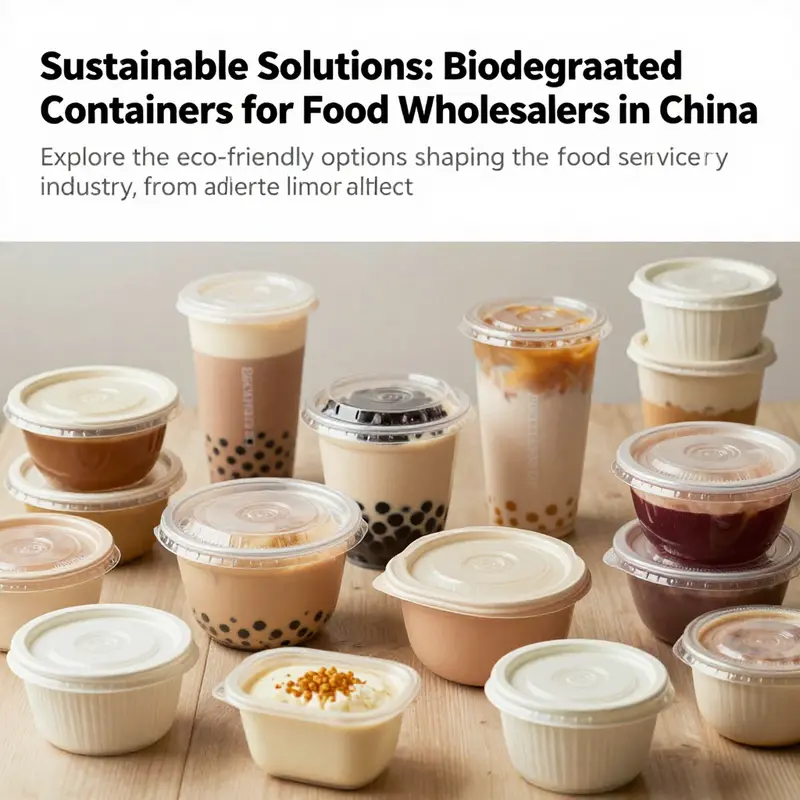
The demand for sustainable practices is rising in the food service industry, and biodegradable containers are leading the way. With growing awareness around environmental issues, businesses are increasingly seeking options that minimize their ecological footprint. In China, a variety of suppliers offer biodegradable food containers crafted from materials like cornstarch and sugarcane bagasse, perfect for bubble tea shops, restaurants, food trucks, catering services, and event planners. This article delves into the current market landscape, the materials and manufacturing techniques used, pricing strategies, the sustainability impact of these containers, and crucial supply chain considerations, providing a comprehensive understanding of this vital area in food service.
Charting a Sustainable Path: The Rising Landscape of Biodegradable Food Containers for Wholesalers in China
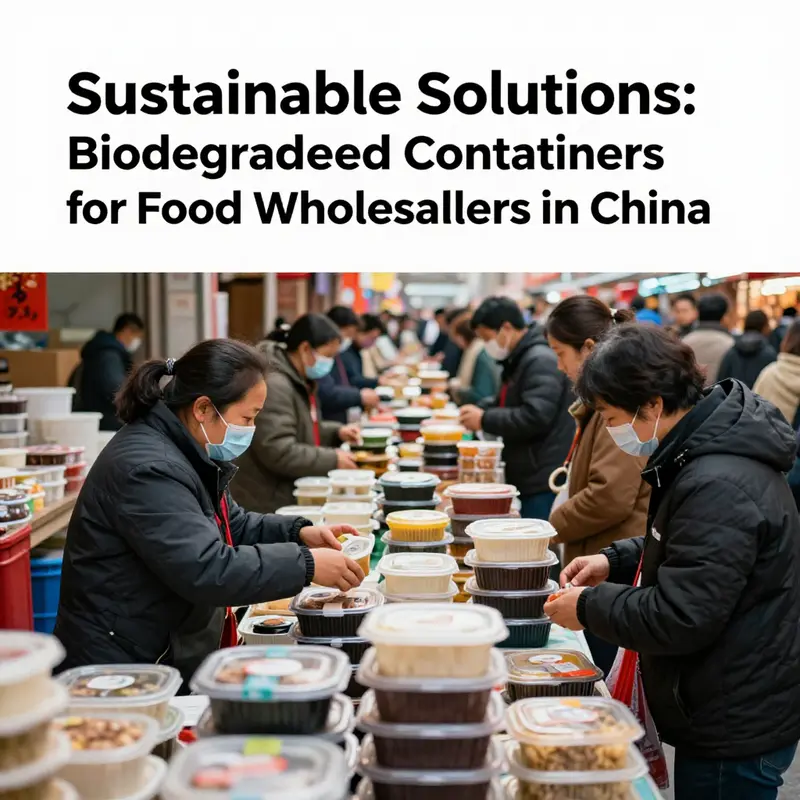
The market for biodegradable food containers in China has moved from a niche alternative to a mainstream pillar of a more sustainable supply chain. Wholesalers who serve restaurants, quick-service concepts, and food-to-go operations are navigating an ecosystem that blends policy momentum, shifting consumer expectations, and rapid manufacturing capability. The trajectory is clear: a robust expansion driven by environmental regulations, brand-driven demand for greener packaging, and the economics of scale that China’s established container clusters can deliver. In practice, this means a market that is not only growing in size but also becoming more sophisticated in materials, quality control, and customization options that wholesalers rely on to meet diverse customer needs across categories and regions.
At the heart of the market’s expansion is a material shift toward plant-based alternatives. Among the leading materials are cornstarch and sugarcane bagasse, both of which offer biodegradability with competitive performance for food contact. These materials enable containers that break down under appropriate conditions while still tolerating the demands of typical takeaway use, such as hot foods, microwave reheating, and everyday handling. The growth in the food container segment underscores a broader trend: manufacturers and suppliers are accelerating the transition from conventional plastics to sustainable inputs without sacrificing reliability or cost structure. This is especially true in wholesale channels where order quantities and delivery reliability are central to customer satisfaction.
The financial dimension of the landscape is striking. In 2024, the China biodegradable packaging market was valued at about USD 10.5 billion and is projected to reach USD 38.0 billion by 2032. Such a leap signals a double or high-single-digit CAGR over the medium term, driven by regulatory frameworks that favor eco-friendly options and by buyers who increasingly require certifications and traceable supply chains. For wholesalers, these dynamics translate into both opportunities and responsibilities. The opportunities lie in expanding volume, improving margins through longer-term contracts, and differentiating offerings with packaging that carries verifiable sustainability credentials. The responsibilities involve maintaining consistent quality, ensuring regulatory compliance across markets, and managing the risk profile that comes with new materials and evolving standards.
Within the market, the food container segment stands out for its rapid expansion. Plants-based materials are gaining traction as primary inputs for trays, boxes, and lids that are intended for takeout and delivery. Cornstarch, in particular, has emerged as a mainstream option, delivering a combination of rigidity, heat tolerance, and biodegradability that suits hot-meal applications. The narrative of material substitution is reinforced by real-world supply dynamics: manufacturers are scaling up production lines, optimizing processes to reduce waste, and investing in R&D to address performance gaps relative to traditional plastics. Sugarcane bagasse offers a complementary path, delivering strength and stability under heat while contributing to a lower carbon footprint. For wholesalers, this diversification of input materials means greater resilience in the supply chain and more flexibility to tailor packaging assortments to the needs of different restaurant concepts and consumer segments.
China’s manufacturing landscape for biodegradable containers is anchored by well-developed regional clusters, with Guangdong Province standing out as a powerhouse of scale and efficiency. These clusters bring together upstream material suppliers, extrusion and thermoforming facilities, converting operations, and finishing services in close proximity. The geographic concentration facilitates rapid production, reduced logistics costs, and shorter lead times—factors that wholesalers value when balancing a broad catalog of SKUs and fluctuating demand. The ecosystems foster a culture of specialization, where facilities develop capabilities around specific formats, weights, and heat-resistance profiles. That specialization, in turn, helps wholesalers secure reliable supply chains and predictable timing for bulk orders, even as the market expands horizontally into new container designs and smaller niche formats.
Beyond the core manufacturing capability, the market is increasingly shaped by the availability of OEM and ODM services. Buyers can commission containers that align with branding and functional requirements, turning sustainable packaging into a marketing touchpoint. This is a critical differentiator for wholesalers that operate across multiple restaurant chains or foodservice concepts, as customized packaging reinforces brand identity while delivering performance benefits. The combination of customization and scale means Chinese suppliers can offer a compelling value proposition for large orders and ongoing replenishment, with the confidence of clear specifications, tested prototypes, and robust quality assurance practices.
Access to reliable suppliers is further supported by digital platforms that connect buyers with verified manufacturers and traders. Platforms that host vetted listings, certificates, and payment protections have become essential for wholesalers seeking bulk quantities with dependable service terms. In practice, these platforms enable a one-stop view of material options, packaging formats, and the associated lead times, making it easier to plan inventory and coordinate procurement cycles. For wholesalers who want to balance cost and quality, online sourcing can be a powerful complement to regional cluster advantages, especially when it helps compare supplier capabilities, MOQs, and customization options across multiple factories. A category frequently encountered in this context includes containers made from kraft-derived materials and other compostable inputs that are suited for a wide range of takeout and deli applications, including bowls and rectangular or hexagonal box formats that are popular in both domestic and export-oriented markets.
For wholesalers exploring these options, one tangible example of the packaging family that aligns with sustainability goals is a disposable kraft paper bowl designed for food packaging with a lid. Such formats demonstrate the practical blend of performance, convenience, and end-of-life management that many buyers now demand. The availability of OEM/ODM arrangements means a buyer can brand the package, specify printing on the surface, and tailor dimensions to fit a specific menu or portion size. The combination of customization, scale, and material flexibility is a recurring strength of the Chinese biodegradable container ecosystem and a key reason why wholesalers are increasingly steering purchasing decisions toward suppliers who can deliver both volume and value in a single workflow. disposable kraft paper bowl for food package with lid
Wholesalers must also think about the broader business environment that supports sustainable packaging adoption. Domestic policies around plastic reduction, extended producer responsibility, and litter minimization are reinforcing demand across urban centers and hospitality clusters. In parallel, consumer preferences are shifting toward brands that communicate environmental stewardship and supply chain transparency. In China, the convergence of policy, industry capability, and consumer expectation is creating a durable demand signal for biodegradable containers that can scale with the growth of takeout and delivery ecosystems. This is especially important for wholesalers seeking to diversify away from single-use plastics while maintaining competitive price-to-performance ratios. The outcome is a marketplace where material innovation is coupled with rapid manufacturing and transparent sourcing options, enabling wholesalers to offer packages that meet regulatory requirements and customer expectations alike.
From a sourcing perspective, the landscape rewards buyers who adopt a holistic approach to supplier evaluation. Certification and traceability matter, as does the ability to test and sample packaging before committing to large runs. The online platforms and regional clusters provide a practical route to verify material performance, observe process controls, and confirm that packaging meets heat resistance, stiffness, and moisture management standards needed for different food types. Wholesalers who leverage these channels can reduce risk and shorten cycle times, ensuring that new formats or branding campaigns land in the market on schedule. The strategy also benefits from ongoing dialogue with material scientists and process engineers who keep pace with evolving standards for biodegradability, compostability, and food-contact safety. In this sense, the market is not only about selling a container but about delivering a packaging solution that aligns with a supplier’s sustainability narrative and a buyer’s operational realities.
Looking ahead, opportunities for wholesalers will extend beyond volume and price. Sustainability credentials—certifications, life-cycle assessments, and clarity around end-of-life options—will increasingly drive procurement decisions. At the same time, material scientists and manufacturers are accelerating new solutions that push biodegradability timelines, enhance heat tolerance, and improve barrier properties for challenging food offerings. The result is a poised market where wholesale channels can capture the benefits of China’s mature production infrastructure while meeting the rising standards of global customers who demand responsible packaging. As the landscape evolves, wholesalers who cultivate robust supplier relationships, invest in credible testing, and maintain a diversified portfolio of plant-based packaging formats will be well positioned to capitalize on both domestic growth and international demand.
For readers seeking deeper market context, the external market study provides a more granular view of drivers, segmentation, and forecast scenarios across the broader Asia-Pacific region and beyond. See external resource: https://www.researchandmarkets.com/reports/6179549/china-biodegradable-packaging-market-2033-key-insights-by
From Plant Fibers to Brand-Ready Packaging: Materials and Methods Behind China’s Biodegradable Containers for Food Wholesalers
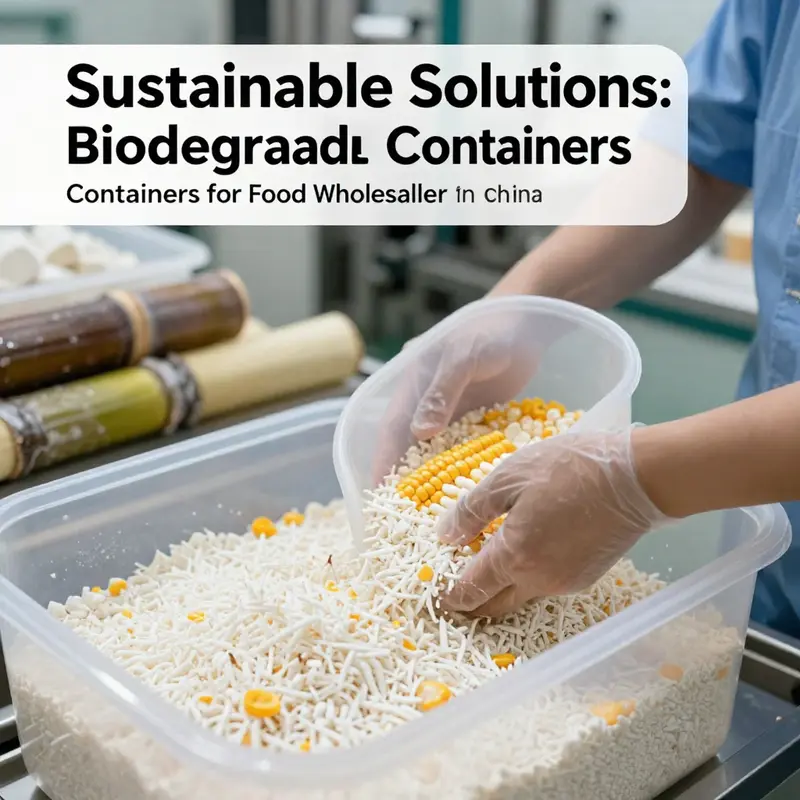
Biodegradable containers in China’s wholesale food sector are increasingly built from renewable plant resources, with cornstarch and bagasse fibers as core feedstocks. Cornstarch-based forms are typically produced by injection molding or thermoforming, where a starch-water-plasticizer blend is heated and shaped into bowls, trays, or boxes that deliver reliable performance and end-of-life compostability. The bagasse route uses pulped fibrous material from sugarcane residues, which is formed under heat and pressure to yield rigid, grease-resistant packaging suitable for hot and fatty foods. Both approaches benefit from process controls that ensure consistent wall thickness and surface quality, enabling scalable supply for distributors while meeting compostability standards. Framing the offering for wholesalers also means flexible OEM/ODM options, alignment with third-party certifications, and surface treatments or coatings that improve moisture management without compromising biodegradability. A robust supplier network with transparent pricing, predictable lead times, and proactive communication helps wholesalers manage large volumes and seasonal demand across diverse retailers and food-service channels. In short, plant-based packaging in China blends material science, scalable manufacturing, and credible certifications to support brand-building and sustainable growth in the wholesale landscape.
Pricing the Future: Strategic Valuation of Biodegradable Food Containers in China’s Wholesale Market
Pricing the future for biodegradable food containers in China demands a careful reading of costs, demand signals, and the sustainability narrative that increasingly defines buyer choice. For wholesalers, price is not a single number but a negotiation across several layers: raw materials, manufacturing advances, certification and labeling, regional supply dynamics, and the willingness of clients to pay for added value. In China, the equation has begun to tilt toward differentiated, value based pricing as advances in materials science and processing create improved performance. The base costs of 100 bagasse takeout boxes have reached a level around 0.10 USD per unit for substantial orders, anchored by robust supply chains and the favorable properties of bagasse in hot-food applications. Meanwhile, cornstarch based options, historically favored for renewability, show a sliding scale that moves from roughly 0.08 USD per unit in mid-volume runs to about 0.07 USD at higher volumes. These price points reflect a market that rewards performance, safety standards, and sustainability storytelling. For wholesalers, pricing strategies should balance cost recovery with the opportunity to differentiate through reliability, speed, and certification rather than competing purely on the lowest unit price.
A practical approach is tiered pricing tied to performance benchmarks and volume. For large orders, price can move toward the lower end of the base-cost spectrum while preserving margins through efficiency and supply certainty. Rebates or better per unit pricing can be offered if buyers commit to multi quarter supplies or early payment terms. The margin becomes a value driven calculation that includes reduced waste, improved hold times, and a credible sustainability pledge.
Geography matters. Guangdong and Zhejiang host mature biobased material clusters that enable faster prototyping, customization, and testing services. Proximity to such ecosystems gives wholesalers a pricing edge when speed and reliability matter. A dual track model with a standard catalog and a premium track for faster delivery and enhanced barrier properties can attract different customer segments while protecting profitability.
From a portfolio standpoint the market is expanding beyond basic biodegradable options. Products with clear life cycle claims and third party verifications are increasingly valued. Eco labels and safety certifications can justify higher price points when a supplier demonstrates stable supply and customization capabilities. The pricing architecture should reflect perceived risk and long term value, rewarding reliability and alignment with a sustainability narrative.
To illustrate a concrete path, consider sample testing and supplier collaboration as a lever to justify higher pricing. When a container carries a credible safety certification and an environmental label, buyers perceive its value as reducing supplier risk and enabling branding consistency. A wholesale buyer may accept higher unit costs if the packaging supports their sustainability pledge and supply reliability.
The strategic takeaway is to work with suppliers from mature clusters who can deliver rapid customization and scalable production. This enables a pricing regime that balances speed, cost, and sustainability, and gives wholesalers a competitive advantage in a growing eco packaging space.
For those exploring supplier evaluation and pricing decisions, engaging with a supplier that provides sample testing, transparent tiered pricing, and clear certifications can help translate cost into value.
Rethinking Waste in China’s Wholesale Food Chain: The Sustainability Payoff of Biodegradable Containers
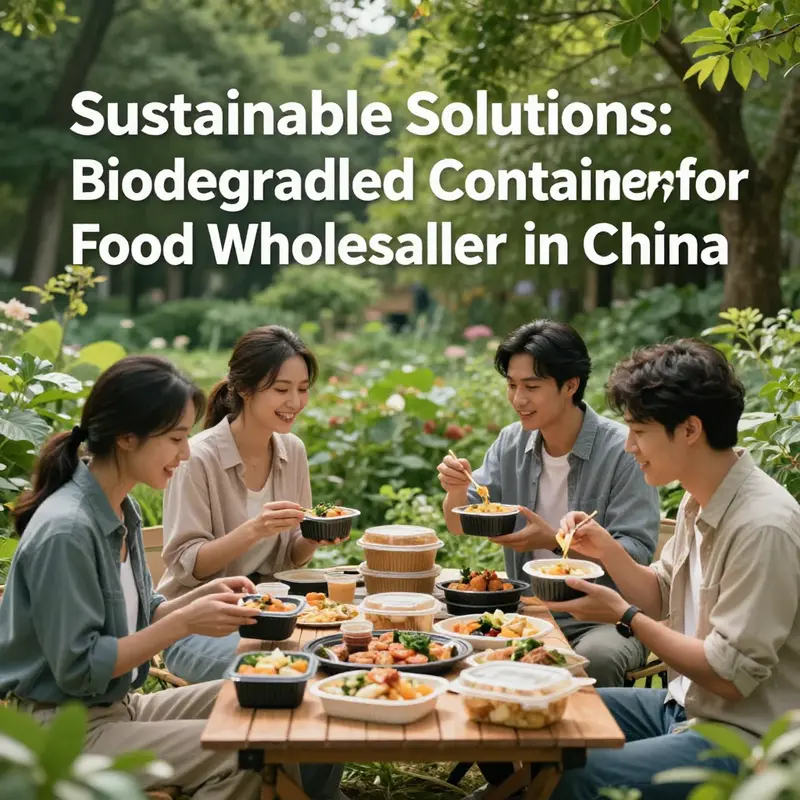
Chinese wholesalers in the food sector stand at a crossroads where environmental responsibility meets operational pragmatism. As urban consumer culture tilts toward convenience, the packaging that supports rapid service must also align with growing expectations for sustainability. In this landscape, biodegradable containers—made from renewable feedstocks such as sugarcane bagasse, cornstarch, or other plant-based polymers—offer a strategic pathway to reduce the environmental footprint of meals prepared for delivery and takeout. The shift is not simply a trend; it reflects a broader policy trajectory and a changing market calculus. Local authorities have intensified efforts to curb plastic pollution, while national aims to peak carbon by 2030 and reach carbon neutrality by 2060. These drivers shape the incentives and risks for wholesalers who manage large, time-sensitive inventories and diverse retailer demands. The sustainability payoff, when pursued judiciously, extends beyond compliance and brand image. It touches cost structures, supply chain resilience, and the capacity to access international markets that increasingly scrutinize packaging life cycles. In practice, the value of biodegradable containers unfolds across several interconnected dimensions—environmental, regulatory, economic, and reputational—each reinforcing the others in a cumulative shift toward responsible packaging governance.
The environmental argument for biodegradable containers rests on their diversion from landfills and their potential to reduce greenhouse gas emissions, compared with conventional plastics and foam alternatives. Containers fashioned from renewable materials tend to decompose more readily under proper industrial composting conditions, with decomposition timelines commonly cited between ninety and roughly two hundred days. This is a meaningful difference when considered alongside the long-lasting presence of petroleum-based plastics in the waste stream. For wholesalers, the environmental benefits translate into measurable outcomes for customers who prioritize sustainability in their own procurement decisions. By offering packaging that aligns with composting or recycling streams, wholesalers enable restaurants, cafeterias, and fast-service chains to close the loop on packaging waste more effectively. Such alignment is particularly relevant in regions where municipal composting programs are expanding and where end users want clear, practical options for disposing of used containers.
Materials used in these biodegradable options also influence the sustainability profile of a product line. Sugarcane bagasse, a byproduct of sugar production, is a renewable resource with favorable strength-to-weight characteristics that support hot-food containment. Cornstarch-based formulations add another layer of versatility, especially for microwave-friendly uses, provided that performance and labeling meet the required standards. A growing subset of biodegradable packaging relies on polylactic acid (PLA) and other biopolymers derived from plant origins. Each material presents distinct advantages and trade-offs in terms of durability, heat tolerance, moisture resistance, and end-of-life processing. For a wholesaler, these technical nuances matter because they affect both product performance in real-world kitchens and compatibility with local composting infrastructure. When a container fails to meet end-of-life expectations, the environmental advantage can be compromised, underscoring the need for accurate product specifications and consumer guidance.
Regulatory dynamics in China play a central role in shaping the practical viability of biodegradable packaging for wholesalers. The country’s Plastic Ban policies and ongoing green development initiatives create a regulatory pressure that pushes suppliers toward more sustainable packaging solutions. At the same time, the dual-carbon goals add a long-horizon mandate for reducing upstream and downstream emissions across the packaging value chain. For wholesalers, compliance is not purely about staying within legal lines; it is about anticipating shifts in import and export requirements, product certifications, and traceability expectations from international customers. The consequence is a market that increasingly rewards packaging that can claim verified environmental performance, whether through third-party certification, disclosure of material content, or documentation of end-of-life pathways. This regulatory environment, in turn, feeds into product development and supplier selection, encouraging wholesalers to partner with manufacturers who can demonstrate robust sustainability credentials and reliable supply regimes.
From an economic perspective, the transition to biodegradable containers involves a nuanced cost calculus. Upfront unit costs for biobased containers can be higher than those for traditional plastics, sometimes by a meaningful margin. However, the total cost of ownership often narrows when one accounts for reduced disposal fees, potential tax incentives, and the value of improved brand affinity—especially among increasingly eco-conscious consumer segments and enterprise buyers who demand responsible packaging. Economies of scale are crucial; major manufacturing hubs in provinces like Guangdong and Zhejiang have been pivotal in driving efficiencies and lowering unit costs through standardized production lines, shared logistics, and bulk procurement of raw materials. Wholesalers can leverage these scale effects by placing steady, multi-year orders with certified suppliers, thereby stabilizing prices and ensuring a reliable supply chain. The ability to offer customized packaging—such as branding through OEM/ODM arrangements—also enhances value. Customization can help a wholesaler differentiate its offerings, attract higher-margin restaurant accounts, and reinforce a narrative of sustainability that resonates with both domestic and international buyers.
Labeling clarity is a critical operational detail that affects how effectively biodegradable packaging delivers its environmental promise. End users often confuse “biodegradable” with “compostable,” and regulators may require explicit disclosures about the conditions under which decomposition occurs. Wholesalers play a pivotal role by selecting packaging options whose labeling clearly communicates end-of-life expectations and by educating customers about proper disposal pathways. Transparent labeling reduces confusion at the point of use, furnitureing the path from consumer behavior to waste management outcomes. In addition, clear labeling supports compliance with international buyer expectations, where packaging certifications and standardized nomenclature carry significant weight in procurement decisions. For a wholesale business aiming to serve both domestic channels and export markets, this attention to labeling is not a nicety but a strategic necessity that helps sustain market access.
Supply chains in China accommodate a broad spectrum of consumer needs and municipal infrastructures. In some regions, robust industrial composting facilities are accessible, enabling a smoother transition to compostable packaging. In others, end-of-life options remain more limited, which means wholesalers should pair product selection with local waste-management realities. This is not a one-size-fits-all proposition; it requires ongoing dialogue with municipalities, recycling and composting facilities, and customers to align product design with regional capabilities. The strategic takeaway is that wholesalers should view the adoption of biodegradable containers not as a single product switch but as a coordinated program that integrates supplier capabilities, regional waste infrastructure, and customer education. Doing so can reduce unused packaging, improve diversion rates, and advance a shared sustainability agenda across the value chain.
Partnering with verified suppliers who can provide documentation, samples, and testing results is essential to managing risk in this evolving landscape. Platforms that curate biodegradable packaging options, plus the possibility of requesting samples, help wholesalers assess quality and performance before committing to large-scale purchases. This due diligence is particularly important when entering new markets or expanding a product line into categories that require higher heat resistance or moisture control. For wholesalers seeking to maintain a competitive edge, supplier reliability and product consistency translate into on-time deliveries, fewer returns, and strengthened trust with customers. An added dimension is the opportunity to leverage supplier networks that offer green certifications, quality assurance programs, and responsive after-sales support. Such features are not ancillary; they are foundational elements of a resilient, sustainable wholesale operation.
Finally, the broader market context offers compelling incentives to embrace biodegradable packaging. International buyers increasingly require environmentally responsible packaging as part of their supplier criteria, and domestic consumers are more likely to choose brands that demonstrate a tangible commitment to sustainability. The chain of benefits extends beyond the warehouse to the restaurant, school, and healthcare settings that rely on consistent, dependable packaging. When wholesalers integrate sustainability into core business strategies, they contribute to a higher-value ecosystem where waste is reduced, materials are reused or recovered, and product quality remains uncompromised. A practical step in this journey is to explore and test packaging options with a focus on end-use performance, end-of-life feasibility, and cost trajectories over time. The careful combination of renewable materials, transparent labeling, scalable production, and solid supplier partnerships can transform biodegradable containers from a regulatory checkbox into a strategic differentiator that strengthens market position, drives customer loyalty, and supports long-term growth. For a practical example of the kind of biodegradable packaging aligned with these aims, see this product: biodegradable eco-friendly take-away odm oem round kraft paper bowl. More broadly, industry observers may consult market summaries and supplier catalogs such as those compiled on major platforms to understand current capabilities and pricing trends across regions. External readers can explore the landscape further through established industry resources that summarize the evolution of biodegradable containers in China and globally: https://www.made-in-china.com/products-detail/362248535023.html
From Certification to Cold Storage: Steering the Biodegradable Food Container Supply Chain for China’s Wholesalers
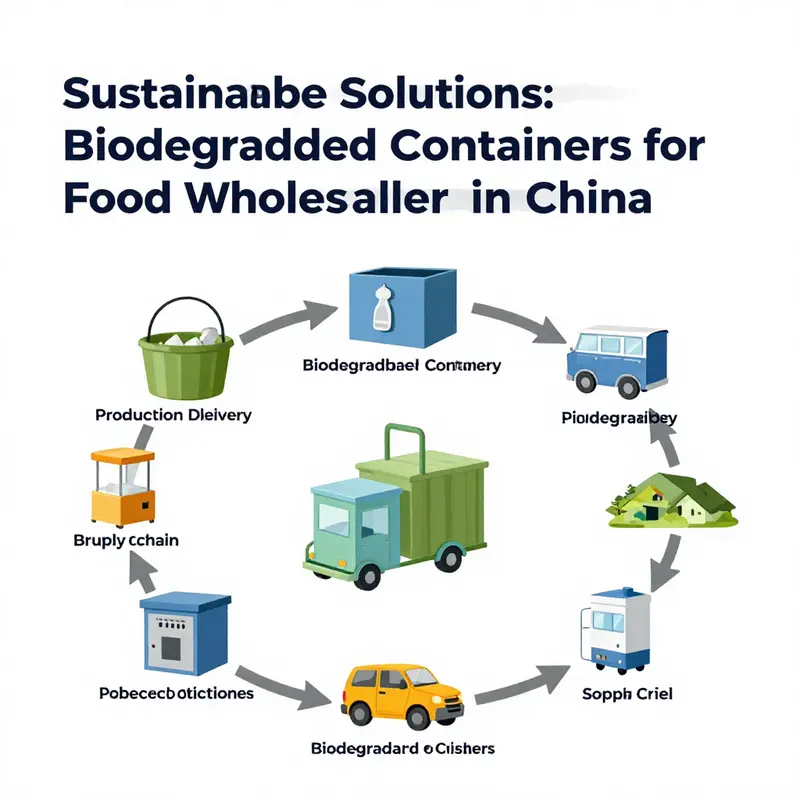
Sustainability is no longer a niche attribute in the business of food containers; it has become a core criterion that shapes supplier selection, product performance, and the long arc of a wholesaler’s reputation. In China, where rapid urbanization and strict environmental policies intersect with a vast network of manufacturers, distributors, and retailers, the supply chain for biodegradable containers must balance eco claims with practical reliability. The journey from raw materials to retail shelves is defined not only by what the product is capable of, but also by how transparently the story of its origin can be traced, verified, and scaled across diverse demand pockets. For a wholesaler, the first barrier and the most decisive hinge point is the material and the regulatory framework surrounding it. Biodegradable containers commonly rely on materials such as PLA derived from cornstarch, cellulose, or starch-based blends, and in some cases sugarcane bagasse. In addition to the raw material chemistry, regulatory expectations are anchored by standards that test both compostability and disintegration behavior under defined conditions. International frameworks like ISO 14855 offer a language for compostability, while local Chinese standards such as GB/T 24620-2009 establish the grounding for how these products should be classified and tested within the domestic market. What this translates to in practice is the need for third-party validation. Wholesalers should actively request test reports and certifications from suppliers—OK Compost, TÜV OK Biodegradable, and other reputable laboratories help substantiate claims of biodegradability rather than leaving them to marketing. This is not a footnote; it is the doorway to credibility with retailers who increasingly demand proof that a container will behave as advertised in a municipal composting stream or a home compost environment, depending on the product’s intended end-of-life pathway. When you see a certificate alongside a batch, you are not merely checking compliance. You are confirming the reliability of supply because certified materials tend to avoid abrupt disruptions caused by inconsistent resin quality or supplier misreporting. Yet certification is only the beginning of a broader, more intricate obligation: supply chain transparency. The modern biodegradable packaging story is strongest when every link—from the farm field or mill to the factory floor, from the pigment supplier to the finished box—can be traced with confidence. Digital traceability is no longer optional. Smart wholesalers are increasingly turning to QR code systems embedded in packaging, or even blockchain-backed ledger entries, to reveal raw material provenance, production dates, batch numbers, and environmental test results. The idea is simple but powerful: in a landscape where counterfeit claims can undermine consumer trust, a verifiable record becomes a differentiator that retailers can rely on when pitching sustainability to their own customers. Recent market analyses echo this shift, noting that firms embracing digital traceability report stronger resilience and more credible sustainability claims. The practical upshot for a wholesaler is clear: invest in a supplier network that can provide verifiable data across the entire supply chain, and build a data-driven risk management approach around supplier performance, material quality, and logistics reliability. Beyond certification and traceability, the physical realities of moving biodegradable containers through the supply chain require careful attention to logistics and storage. Unlike traditional plastics, many of these alternatives are sensitive to humidity, heat, and moisture exposure. The moisture sensitivity can affect dimensional stability, barrier properties, and mechanical strength, which figure prominently in terms of packing integrity during transit and shelf life in warehouses. This makes climate-controlled warehousing and protective packaging essential, especially for bulk orders bound for multiple regional hubs. Wholesalers should seek partnerships with suppliers who offer packaging designed to protect product quality during storage and transport, and who can provide guidance on optimal storage conditions, whether that means maintaining specific relative humidity levels, controlling ambient temperatures, or limiting exposure to sunlight. The goal is to minimize degradation risks and to maintain the intended performance of the container when it is finally used to hold hot foods, chilled meals, or delicate portions that demand sturdy containment. The operational implications of scaling production capacity and managing lead times cannot be overstated. The wave of demand for biodegradable packaging is rising in tandem with tightening environmental rules and shifting consumer expectations. This means wholesalers must gauge supplier capacity, production schedules, and the ability to fulfill bulk orders without compromising on quality or punctuality. A prudent approach combines supplier qualification with proactive demand planning. Work with manufacturers who have demonstrable certifications, who can provide traceability documentation, and who are listed on trusted procurement platforms that emphasize verification, such as Made-in-China.com, where verified suppliers offer a range of biodegradable food containers at competitive prices. When evaluating potential partners, prioritize those who can demonstrate scalable operations, robust quality control, and flexible production timelines that align with promotional campaigns, seasonal spikes, or large contract wins. The procurement process itself should be streamlined and resilient. This includes running controlled sample testing, establishing clear acceptance criteria for material behavior under heat and moisture, and confirming compatibility with standard microwaving or reheating scenarios when relevant. OEM or ODM capabilities can be particularly valuable for white-label strategies, enabling retailers or food service chains to brand containers in ways that reinforce their sustainability positioning without sacrificing consistency. A practical, grounded approach to supplier relationships helps ensure that the chain from raw material to finished product remains coherent, resilient, and transparent. To illustrate how these dynamics play out in the Canadian or Chinese wholesale space, consider the broad product families that wholesalers commonly pursue: containers made from starch-based blends, PLA-based options, and bagasse-derived alternatives. Each category brings its own balance of heat resistance, rigidity, cost, and end-of-life behavior. In a wholesale setting, it is common to find a spectrum of options that enables retailers to choose based on price sensitivity and the level of performance required for different menu items. For instance, a take-away box designed for hot meals may demand higher drip resistance and stronger heat tolerance, whereas a cold-serve cup or lid line could prioritize moisture barriers and stacking efficiency. The selection process, therefore, should be guided not just by unit price but by a comprehensive assessment that includes performance testing, end-of-life feasibility, and the reliability of the supplier’s delivery schedule. Embedded through this decision-making is a thread of brand protection and consumer trust. Wholesalers who can demonstrate transparent sourcing, third-party validation, and consistent product performance are better positioned to secure repeat business with major retailers and foodservice operators who require dependable supply chains. To help anchor these considerations in practical terms, wholesalers can explore a range of product types that embody both biodegradability and scalable production. For example, a biodegradable, OEM-friendly take-away option that accommodates branding while delivering reliable performance can be found in resources such as this page: biodegradable-eco-friendly-take-away-odm-oem-round-kraft-paper-bowl. This kind of product category illustrates how a manufacturer can combine eco credentials with customization to support retailer differentiation without sacrificing supply chain integrity. The broader takeaway for the supply chain is straightforward: enforce a disciplined approach to supplier qualification, insist on independent testing and documentation, invest in traceability, and plan logistics with an eye toward sensitivity to environmental conditions. In doing so, wholesalers build a foundation that supports not only compliance with evolving regulations but also the confidence of retailers who must navigate shifting consumer expectations. The Chinese market for biodegradable packaging continues to evolve, and the latest market intelligence points to ongoing expansion driven by policy incentives, consumer demand, and the global shift toward circular economy principles. For readers who want to dive deeper into market trajectories and the integration of digital technologies in this sector, a recent external resource provides a comprehensive overview. External resource: https://www.made-in-china.com/products-search/hot-products/China-Biodegradable-Packaging-Market-2033-Key-Insights-By.html
Final thoughts
As the food service industry moves towards greater sustainability, using biodegradable containers not only meets consumer expectations but also contributes to environmental preservation. Businesses in China can take advantage of the diverse offerings from local suppliers specializing in these eco-friendly alternatives. Understanding the market landscape, materials, pricing strategies, and sustainability impacts will guide your decision-making, ensuring a positive impact on both your brand and the planet. Embracing these changes positions your business as a leader in sustainability, appealing to a conscientious consumer base.