
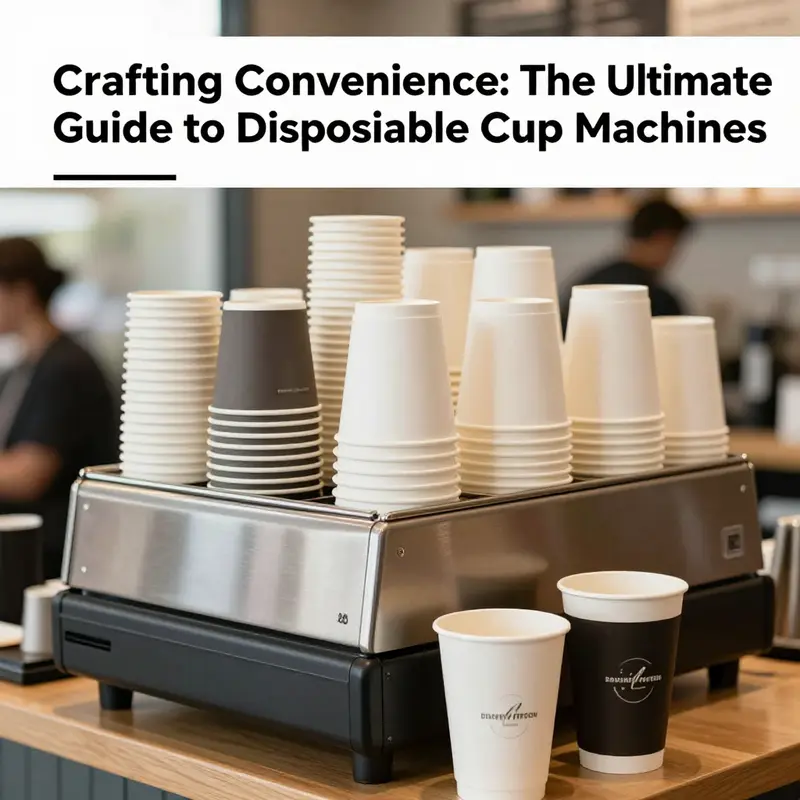
In today’s thriving beverage market, where convenience and sustainability converge, the demand for disposable paper cups is skyrocketing. Whether you’re a bubble tea shop, a large beverage chain, a food truck, or an event planner, the efficiency and reliability of disposable paper cup machines can elevate your service offerings. This guide will dive into the essential features of these machines, the intricacies of their production processes, the leading manufacturers in the field, critical economic considerations, and the environmental impacts of their usage. Each chapter aims to provide valuable insights that equip you to make informed decisions that align with your business goals.
From Blank to Cup: The Precision and Power Behind Modern Paper Cup Making Machines
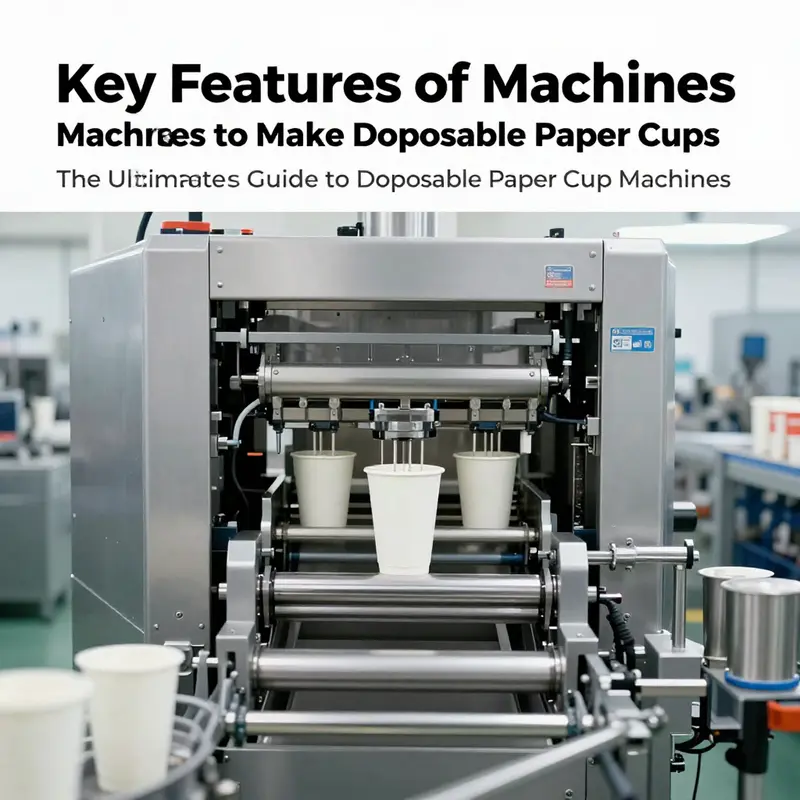
A disposable paper cup is more than a final consumer product. It is the summary result of a tightly choreographed sequence inside a single, highly engineered machine line. In contemporary facilities, these machines are not just faster versions of a manual task; they are integrated systems that convert a flat sheet of food-grade paper into a watertight vessel, ready for hot or cold drinks, in a rhythm that can rival the pulse of a well-tuned factory. The core objective is simple in theory yet complex in execution: maximize throughput while preserving seam integrity, edge comfort, and branding potential, all within a footprint that fits the floor space of modern beverage operations. The best machines balance speed, reliability, and adaptability, so a single line can switch from one cup size to another with minimal downtime yet still deliver consistent quality in every unit. This combination—high output, automated forming, and precise control—defines the contemporary capability set of cup-making technology and marks a clear departure from earlier, more labor-intensive approaches.
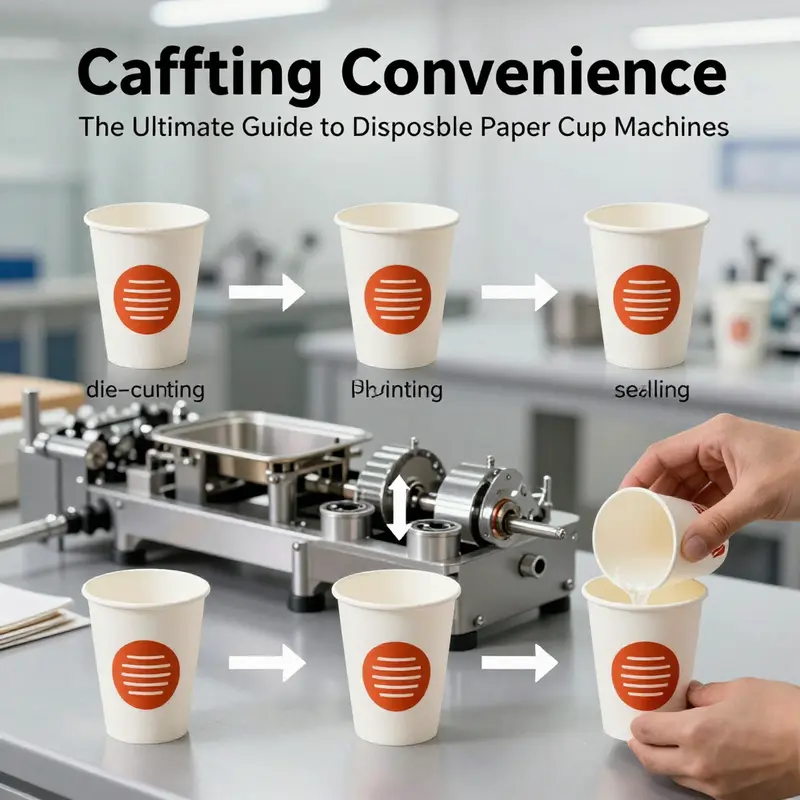
At the heart of the system is the automated forming process, a sequence of interlocking stages designed to minimize human intervention and reduce the likelihood of errors. It begins with the printing stage, where food-grade inks are applied to the chosen paper stock. The inks must be non-toxic and stable through subsequent heating, handling, and transport. Once printed, the sheets move to die-cutting, which transforms the flat, printed sheet into fan-shaped blanks. The accuracy of this step is essential; any deviation can ripple through the rest of the line, affecting both the fit of the seam and the visual fidelity of branding. The fan-shaped blank then progresses to the cup body formation stage, where it is wrapped around a conical mold. Here, controlled heat and pressure melt the inner coating and seal the edges. The seal must be robust yet consistent, creating a watertight body without deforming the rim that later receives the finishing touch.
The bottom of the cup is attached in a subsequent stage, using a pre-cut circular bottom piece that is sealed with a heated press. This bottom-attachment process relies on the same principle as the body seam: a tight bond achieved through heat and an appropriate coating is what keeps liquids from leaking and maintains structural integrity when the cup is filled. The finishing stage rounds the rim inward, a crimping action that smooths the edge and eliminates sharp burrs that could irritate a user’s lip. Each of these stages is not merely a task but a carefully controlled operation with tightly synchronized motion. Small timing mismatches between stages would manifest as thinner walls in some cups and thicker walls in others, compromising both performance and brand perception. In modern systems, this synchronization is achieved through PLC-based controls and a network of sensors that continuously monitor temperature, pressure, and position. A fault detected anywhere in the line can trigger an automatic shutdown to prevent waste and avert more serious damage down the production run. This level of control makes the line resilient, adaptable, and safe for operators who are responsible for loading stock, adjusting molds, and performing routine maintenance.
Beyond the mechanical precision lies material versatility. The paperboard used for disposable cups often comes with a waterproof lining—most commonly a polyethylene (PE) coating, though increasingly engineers are exploring PLA and other barrier coatings to align with sustainability goals. Modern machines are designed to handle a spectrum of materials, including different grades of paperboard and coatings, and sometimes even multi-layer constructions for insulation. The compatibility with double-wall designs is particularly relevant for hot beverages, where insulation reduces heat transfer to hands while maintaining a drink’s temperature. When these materials are heated during forming and sealing, the choice of coating influences both the energy profile of the process and the final cup’s performance in real-world use. A well-tuned machine will not only form and seal the cup but also preserve the coating’s protective functions without creating bubbles, delamination, or weak seams under the stress of hot liquids.
The precision and reliability of these machines are augmented by their ability to deliver consistent dimensional control. Wall thickness, base diameter, and seam placement all must be uniform across thousands of units per hour. Achieving this uniformity depends on rigid tolerances, high-grade tooling, and meticulous calibration of multiple subsystems. It is in these details that brand consistency is safeguarded. For manufacturers who want to translate visual identity into the finished cup, some lines offer branding integration at the point of production. A printing module can be integrated into the flow, enabling logos and designs to be transferred directly onto the cup with minimal setup. This capability supports a tighter marketing feedback loop, since changes in cup appearance can be driven by demand without the need for secondary printing processes after forming. To illustrate the practical potential without naming specific vendors, imagine a unit that can shift between a 6-ounce and a 22-ounce cup with a few mold swaps, while maintaining the same print quality and seal integrity. The same line can handle a variety of styles, from simple single-wall cups to more complex double-wall constructions, if the molds and feed systems are configured correctly.
Energy efficiency and safety are more than conveniences; they are fundamental to modern cup lines. Contemporary machines employ energy-saving drives and efficient heating strategies that minimize power use without sacrificing speed. The control systems—with sensors that monitor every critical parameter—offer real-time diagnostics and fault detection. When a problem is detected, the line can automatically slow, pause, or shut down to prevent waste. This self-protective behavior reduces downtime and prolongs machine life, a critical consideration for factories aiming to maintain continuous output around the clock. Operators benefit from safer work environments as automation reduces the need for repetitive, high-precision handling of hot components and sharp tooling. Regular maintenance routines are simplified by centralized data streams that track wear, heat cycles, and cycle counts, enabling predictive maintenance that guards against unplanned halts.
The discussion above naturally points to the broader strategic value of these machines. For beverage brands and distributors, the capacity to scale production quickly while preserving a consistent cup experience is a powerful competitive edge. The ability to switch effortlessly between cup sizes means a single production line can serve multiple markets or customers, reducing capital expenditure on separate dedicated lines. At the same time, the potential for direct branding during production aligns with integrated packaging strategies. A line that can print a brand’s logo or promotional design onto the cup as it is formed eliminates a step in downstream packaging and reduces handling, which in turn lowers risk of misprints and damage. The approach also supports just-in-time manufacturing concepts, where shorter lead times and on-demand customization help reduce inventory costs and waste. When brands invest in such capabilities, they gain not only throughput but also flexibility—an essential asset in a market that fluctuates with seasonality and promotional campaigns.
From the perspective of material science and process engineering, the challenge is to harmonize speed with quality. Higher speeds demand more robust tooling and tighter tolerances because even small variances in feed rate or cooling can ripple through to the finished cup. The market has responded with advanced servo-driven systems, precision die-cutting, and tightly controlled heat-sealing milieus that ensure the seam remains consistent under the duress of hot liquid and repeated handling. Operators are trained to monitor a handful of critical parameters during each shift, but the line’s built-in sensors provide a safety net, catching anomalies before they become production problems. In practice, this means fewer cups rejected for leakage or deformation and more cups that meet branding and performance specifications on the first pass.
A practical takeaway for buyers lies in balancing production volume with product variety and total cost of ownership. If a business anticipates rapidly expanding demand or the need to support multiple cup styles, a line with quick mold-change capability and a reliable branding module becomes appealing. Conversely, firms prioritizing low unit cost over a broad product range may favor lines that optimize for a single size and a standard branding solution. Regardless of where a plant sits on that spectrum, the best choices are those that provide robust after-sales support, straightforward maintenance, and a clear upgrade path as consumer preferences and equipment standards evolve. In this sense, the most effective cup-making machines are not just fast—they are adaptable, safe, and integrative by design. They are built to respond to changing packaging norms, shifting eco-standards, and the ever-present push toward more efficient manufacturing.
For teams seeking a practical reference as they assess options, consider the broader landscape of capabilities that these lines offer. When a printer or branding module is integrated directly into the forming line, brands can realize a tighter synchronization between design updates and production runs. When the line’s coatings and materials are flexible, product developers can experiment with new barrier technologies that improve recyclability and reduce overall environmental impact. And when energy and safety features are prioritized, operators can work more confidently and consistently, knowing that the equipment will perform as expected under high-volume conditions. These are not abstract advantages; they translate into steadier supply chains, better brand experiences, and the capacity to meet consumer expectations for safe, reliable, and aesthetically consistent cups.
For readers who want to explore further context on technical specifications and industrial applications in a global setting, a comprehensive external resource on paper cup machine specifications and performance is available here: https://www.industryguide.com/paper-cup-machine-turkey-key-specifications-industrial-applications-performance-benefits/ with insights that complement the practical considerations described above. In addition, brands looking to connect with production-ready options in real-world catalogs can browse product pages that showcase integrated branding and customization capabilities, such as the internal page offering a custom logo kraft cup with lid, which demonstrates how branding can be embedded directly into the manufacturing workflow: custom disposable kraft paper cup with lid. This orchestration of technology, materials, and design marks the current state of the art in disposable cup manufacture and points toward a future where lines are even more capable, more sustainable, and more closely aligned with brand storytelling than ever before.
null
null
null
null
Balancing Capital, Capacity, and Cost: The Economic Reality of Machines that Manufacture Disposable Paper Cups
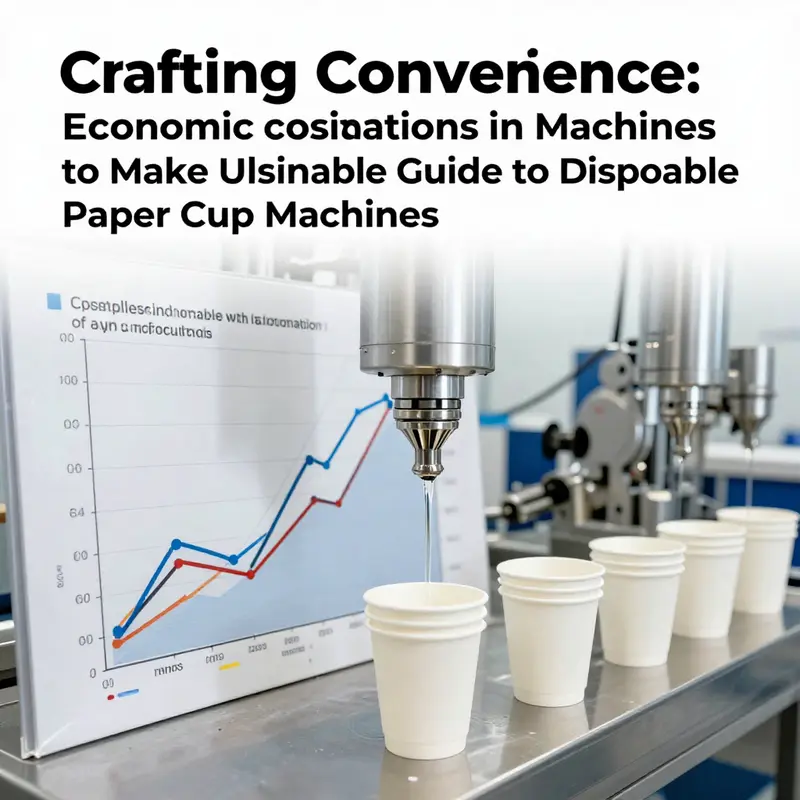
The choice to invest in a machine that fabricates disposable paper cups is a strategic decision as much as it is a financial one. It sits at the intersection where capital budgeting meets operational discipline, where the appetite for scale must be tempered by the realities of energy use, labor deployment, maintenance needs, and the volatile cadence of demand in foodservice. In markets driven by takeout, delivery, and convenience, automated cup-making lines promise not only throughput but consistency, hygiene, and the ability to respond quickly to shifting consumer preferences. Yet underneath that promise lies a set of economic tradeoffs that any thoughtful operator must map with care. The core question is simple in form but complex in execution: how much capital should be committed, and how should a line be configured to align with expected volumes, product variety, and long-term profitability?
On the cost side, the most immediate fork in the road is between semi-automatic and fully automatic configurations. Semi-automatic systems offer a gentler entry price point and a shorter installation horizon. They automate the essential processing steps—forming, sealing, printing, and bottom attachment—yet require manual loading, unloading, and monitoring for portions of the cycle. This hybrid mode translates into lower upfront costs and modest energy draw per hour, making them attractive for mid-sized outfits such as local cafes, craft-focused operations, or regional suppliers who anticipate moderate production targets. However, the flip side is that each incremental increase in demand eventually encounters bottlenecks rooted in labor and handoffs. Per-unit labor costs rise as operators must intervene in several stages, potentially eroding the advantage of the lower capital expense over time. In contrast, fully automatic lines bring end-to-end automation into a single continuous process. Paper feeding, cup formation, bottom sealing, and stacking occur with minimal manual intervention, yielding very high throughput and improved inventory control. The upfront investment is higher, and the decision must account for maintenance contracts, spare parts, and a longer ramp-up period for staffing and process optimization. Yet the long-run economics often favor these systems when the target is thousands of cups per hour, a scale-compatible product mix, and rapid market responsiveness. At scale, the per-unit cost falls as labor requirements shrink, and the predictability of demand aligns closely with the machine’s steady cadence.
Within this framework, the overall economic picture is shaped by market dynamics that are themselves evolving. The disposable paper cup sector has benefited from rising demand in foodservice and takeout, a trend reinforced by consumer expectations for hygienic packaging and disposable convenience. Regulatory and environmental considerations add another layer of complexity. While pressure to move toward biodegradable or sustainably sourced materials can affect raw material costs and process choices, intelligent automation helps manage these pressures. Real-time monitoring, predictive maintenance, and connected sensors reduce unplanned downtime, improve quality, and provide actionable data to optimize energy and material use. The net effect is twofold: the potential for a stronger return on investment (ROI) through higher uptime and lower waste, and a greater need for disciplined capital planning to capture those gains. In other words, technology amplifies both opportunity and risk, making robust feasibility studies and clear performance metrics essential.
A critical element of the economic calculus is capacity utilization. High-throughput lines are not inherently profitable if demand is sporadic or if variety imposes lengthy changeovers. The industry’s move toward flexibility means lines must accommodate a range of cup sizes—from compact 6-ounce servings to larger 22-ounce options—and even varied rim shapes or insulation features. Changeover time becomes a meaningful cost driver because it directly affects uptime and production scheduling. A line designed with quick-mold exchanges, standardized toolkits, and modular components can recover those costs through more efficient production scheduling, reduced downtime, and improved mix agility. The capacity argument becomes richer when considering product-line breadth. Insulated versus non-coated cups, different PE or alternative inner coatings, and the inclusion of lids or sleeves all shape energy use, waste streams, and yield. The more diverse the output, the more important it is to view the line as a system whose components—printing units, forming dies, sealing stations, and trim and finish mechanisms—must harmonize to maintain throughput without sacrificing quality or waste reduction.
Energy efficiency is another pillar of the economic calculation. Modern lines optimize heat usage, minimize idle energy, and employ variable-speed drives to tailor power draw to production needs. In practical terms, this can translate into meaningful savings per hour, particularly when the plant runs near capacity for extended periods. The energy-intensive stages—heating, forming, and sealing—benefit from design choices that reduce heat loss, improve thermal recovery, and align with demand patterns. When evaluating a new machine, buyers should examine not only the peak power rating but also the unit’s energy per cup and the efficiency of its heat management system. Although a line with superior throughput can deliver decisive advantages, those gains are most compelling when the energy cost per cup declines with volume, yielding a healthier margin in high-demand scenarios and maintaining resilience during demand dips.
Labor costs and capability requirements are closely entwined with the machine choice. Automation reduces dependence on a large, low-will, low-skill workforce for repetitive tasks, but it elevates the importance of skilled technicians, maintenance personnel, and line operators who can monitor, troubleshoot, and optimize complex equipment. The economic value of training and a capable maintenance program cannot be overstated. A robust after-sales service network and readily available spare parts reduce downtime and extend the life of the asset. Suppliers that provide comprehensive technical support, remote diagnostics, and scheduled maintenance contribute directly to the reliability of the line and, by extension, to ROI. This is not merely a matter of minimizing expense; it is about maximizing uptime, ensuring product quality, and sustaining the ability to meet tight delivery windows in the most demanding markets.
From a financial perspective, the total cost of ownership (TCO) becomes a more meaningful lens than the sticker price alone. TCO includes the initial capital outlay, installation costs, energy consumption, maintenance and spare parts, labor, downtime, and the overhead of training and system integration. A well-constructed TCO model helps forecast break-even timelines and the long-term value delivered by automation. It also highlights the interplay between scale and efficiency: up-front costs may be high, but the per-unit cost of production, waste reduction, and on-time delivery performance often improve as output climbs. In markets where consumer demand continues to expand and where large-scale takeout channels proliferate, a fully automated line can provide the capex-to-capacity leverage needed to capture a growing share of the market, while for smaller producers, a semi-automatic approach may suffice to establish a foothold and ramp up as volumes rise.
Supply-chain reliability and regulatory compliance further shape the economic equation. Access to spare parts, clarity around maintenance intervals, and responsive engineering support reduce the risk of supply-chain disruptions that can erode margins. At the same time, the choice of materials and processes must consider environmental and health standards, from food-safe inks for printing to the stewardship of coatings and liners. An equipment configuration that favors material efficiency, minimizes waste, and aligns with evolving packaging regulations can mitigate future costs and position a business to ride shifts in the market with agility. This strategic adaptability—embedding environmental compliance and operational resilience into the design—often proves as important as the raw throughput itself.
In assessing the path to profitability, it is useful to imagine a hypothetical continuum rather than a single fixed choice. A smaller operator may begin with a semi-automatic line to validate demand, test product variations, and refine packaging formats. As volumes and confidence grow, the option to pivot to a fully automatic line becomes compelling, unlocking higher throughput, lower unit costs, and faster fulfillment capabilities. The decision should be anchored in scenario planning: anticipated demand, product mix, changeover frequencies, energy pricing, and the regulatory landscape. A robust financial model will account for these dynamics, balancing the immediacy of cash flow needs with the long horizon of asset depreciation, maintenance commitments, and market expansion ambitions. Beyond numbers, the intangible benefits—brand consistency, consumer trust in sanitary packaging, and the ability to meet high-volume service commitments—often translate into competitive advantages that support sustained profitability.
To connect these considerations with practical pathways, it helps to reflect on the end-to-end value chain. A modern cup manufacturing line is not just a piece of equipment; it is an integrated system that interacts with material suppliers, printing houses, and downstream packaging operations. The ability to source high-quality, consistent input materials reduces rejection rates and improves the predictability of output. The demand for customization means that changeover efficiency directly affects the reliability of fulfilling customer needs without sacrificing throughput. The economic lift from automation is amplified when the production system is aligned with the business model—whether that model emphasizes rapid turnover in a bustling urban market or steady output for a regional distribution network. The most compelling opportunities arise when machine selection, process control, and service commitments are orchestrated to deliver reliable quality at predictable costs, enabling businesses to scale with confidence while preserving margin.
For readers seeking further context on market dynamics and policy influences shaping this landscape, an external resource offers perspective on how policy and broader market trends interact with disposable paper cup manufacturing. External resource: https://www.linkedin.com/pulse/disposable-paper-cup-market-policy-impact-analysis-108432657/ . On the internal front, firms exploring scale opportunities can also examine wholesale options that align with volume targets and pricing strategies, such as wholesale-take-away-8oz-12oz-disposable-coffee-paper-cup-with-lids. Wholesale take-away 8oz-12oz disposable coffee paper cup with lids. These links illustrate how strategic purchasing choices and market access considerations feed back into the economics of the capital equipment decision, reinforcing the overarching truth: automation is a tool for aligning production capability with demand, cost discipline, and long-term growth in a sector where efficiency, reliability, and flexibility determine sustainable profitability.
Turning Paper into Footprints: The Hidden Environmental Toll of High-Speed Cup-Making Machinery
The factory floor where disposable paper cups come to life is a study in precision and speed. Beneath the whirr of motors and the synchronized clatter of gears lies a lifecycle story rarely told in consumer-focused chatter about materials or end-of-life waste. The environmental footprint we attribute to a disposable cup cannot be fully understood without pausing at the machine that makes it. These are not mere tools; they are energy sinks and heat engines, designed for relentless duty cycles that push efficiency to the edge while translating electricity into a simple, familiar consumer object. In this chapter, we follow that machine-centric arc, tracing how high-speed cup-making presses, coating systems, and automated packaging lines convert raw paper into a sealed vessel while shaping, whether intentionally or not, the broader environmental ledger of the product itself.
At the core is a sequence of integrated processes that demand substantial power and careful control. Forming the cup body begins with a fan-shaped blank that is wrapped around a conical mold. The edges are bonded by a heat-sealed internal coating, typically a polymer such as PE, which serves as a barrier against leaks. Next comes the bottom, a pre-cut disc that is sealed with a heated pressing action. Finally, the rim is crimped to produce a smooth edge that minimizes user injury and ensures a comfortable drinking experience. Each step is facilitated by technologies designed to minimize downtime: servo motors, high-temperature air, heat-sealing elements, and precisely tuned die-cutting stations standardize the geometry so that millions of cups can be produced per day. This streamlined automation is not incidental; it is the backbone of modern takeout culture, where speed and reliability define a business model and influence the environmental calculus behind every cup that leaves the line.
The energy profile of such operations is dominated by continuous, high-speed activity. A typical modern line operates with a level of throughput that makes human labor viable only at the margins. The energy draw comes not just from the motors but from ancillary systems—coating applicators that lay down the plastic lining, drying or curing equipment that solidifies the barrier layer, and the automated packaging and stacking that keep the workflow seamless. The result is a plant-wide energy footprint that scales with output. When one plant runs near capacity, the per-cup energy demand climbs, and with it the associated greenhouse gas emissions. Across the industry, a widely cited but often overlooked metric links the production process to emissions: approximately 0.24 kilograms of CO2 equivalent per disposable cup. This figure, while simplifying a complex energy balance, underscores a direct line from electricity use on the line to the climate impact of a single cup. In other words, every incremental efficiency gained on the line translates into a measurable dent in the cup’s overall climate burden.
Embedded in this calculation are the realities of energy mix and regional infrastructure. In regions where the grid relies heavily on fossil fuels, the same amount of electricity consumed on the line translates into more CO2e per cup than in areas with abundant low- or zero-carbon energy. The machine’s contribution to the lifecycle footprint extends beyond direct emissions. Its maintenance schedule—cooling circuits, lubrication, and periodic overhauls—consumes water and energy, sometimes in ways that are not immediately visible to plant managers focused on throughput. Hydraulics and pneumatics, cooling loops, and sensor networks require robust, continuous operation, and each of these subsystems has its own energy and water footprint. The result is an environmental toll that compounds with output, not declines, as long as the machines run and the product flows.
The materials embedded in the machinery itself also matter. Modern cup-making lines rely on a mix of metals, plastics, and rare-earth elements in sensors, drive systems, and control electronics. Even when a line is efficient in producing cups, the extraction, processing, and fabrication of these components contribute to the line’s embedded carbon. The lifecycle view of the machine thus extends past energy use during production. It includes the energy and resources required to manufacture, install, and eventually refurbish or retire the equipment themselves. This embedded cost interacts with the operational stage, sometimes masking the broader gains achieved through better control strategies, predictive maintenance, and smarter automation.
A central tension emerges when considering efficiency versus environmental toll. On the one hand, the very goal of a modern cup-making line is to maximize output while minimizing waste and downtime. PLC-based controls, real-time sensors, and automatic shutdown capabilities reduce the incidence of faults and overspeed conditions that would otherwise squander energy or produce off-spec products. The result is a system that can adapt its pace to demand and to detected anomalies, potentially lowering waste and avoiding unnecessary energy draw. On the other hand, the push for higher speeds can drive energy intensity up if it is not matched by advances in motor efficiency, motor cooling, and regenerative or waste-heat utilization. In places where renewable electricity is scarce, the environmental gains from efficiency gains are muted by the carbon intensity of the grid. This paradox—efficiency gains that depend on a cleaner electricity supply—highlights why modernization of cup-making machinery must go hand in hand with broader energy transitions.
If the conversation about the environmental footprint of cup production centers on the raw materials, the transport of the finished cups, or the end-of-life disposal, the machine-centric view adds a necessary layer of nuance. The coating layer that prevents leaks is essential, but it is also a source of potential environmental trade-offs. Coatings operate in a delicate balance between barrier performance and recyclability. Technologies and coatings are evolving, and some operators explore alternatives that reduce the environmental strain without compromising safety and performance. The machine’s role in enabling these alternatives—through adaptable coating heads, rapid-change tooling, and process control that accommodates different material chemistries—can be pivotal. When manufacturing firms adjust their lines to switch from one resin system to another, the flexibility and precision of the machinery determine both the economic viability and the environmental outcomes of such transitions. In short, the on-line capability to pivot materials with minimal downtime is as relevant to sustainability as any energy efficiency measure.
As demand shifts toward greener design, the conversation extends beyond the line into the broader packaging ecosystem. A growing strand of packaging innovation emphasizes end-to-end sustainability: designing cups and their lids for easier recycling, integrating compostable or bio-based barrier layers, and adopting prints and inks that minimize hazardous components. In this space, the lines themselves must be capable of handling new geometries and new materials. The compatibility between machine design and material science becomes a strategic determinant of performance and planet-friendliness. For practitioners, this means that advancing sustainability is not merely a function of choosing a more energy-efficient motor or a lower-temperature seal. It requires a holistic approach that aligns machine capabilities with material chemistry, with process automation, and with energy sourcing. When done well, the results can include lower energy intensity per cup, less waste due to faulty seals or misprints, and greater resilience to shifts in supply chains.
The practical takeaways for operators and policymakers alike hinge on three interrelated priorities. First, optimize energy use through smarter drive systems, better insulation, and heat-recovery strategies that capture waste heat from forming and curing stages. Second, pursue design-for-sustainability practices that allow coatings and barrier layers to be effective while enabling higher recyclability or compostability, all without sacrificing line speed or reliability. Third, invest in data-driven maintenance regimes that reduce downtime, extend machine life, and minimize resource use in lubrication, cooling, and parts replacement. All of these moves hinge on the capability of the machine to be precisely configured, monitored, and adjusted—qualities already emphasized in modern lines and made even more critical as environmental standards tighten.
In the spirit of continuous improvement, manufacturers are also exploring how to embed sustainability into the very architecture of automation. The path forward includes more energy-efficient PLCs and sensors, smarter fault-detection that avoids unnecessary stops, and modular tooling that allows rapid reconfiguration for different cup sizes and formats without loading a new line. When these capabilities are married to greener energy sources and to material innovations, the environmental toll per cup begins to shift downward in a meaningful way. The interplay among machine design, process control, and energy sourcing is not a mere technical detail; it is the hinge on which future progress in disposable cup production will turn. The chapter on the machine as the engine of the product becomes a narrative about choosing pathways that balance throughput with responsibility, ensuring that every cup that travels from press to customer carries a lighter footprint than its predecessors.
For readers who want to see how greener packaging designs interact with the production line, consider the broader ecosystem where greener cup concepts are integrated directly into manufacturing flows. One example of how design and machinery can align toward sustainability is the eco-friendly corrugated ripple-wall paper coffee cup with lid. This approach illustrates how packaging innovations can be paired with adaptable machine configurations to reduce overall waste and energy use. See the linked example for a concrete sense of how design choices translate into production realities: eco-friendly corrugated ripple-wall paper coffee cup with lid.
In sum, the environmental footprint of disposable paper cups is inseparable from the machines that produce them. Energy intensity, material choices, cooling and maintenance demands, and embedded resource use converge to form a lifecycle that is only as sustainable as its least adaptable link. Modern cup-making lines bring powerful tools for efficiency and control, yet they also remind us that sustainability is a system property. The path forward lies in harmonizing machine design with energy transitions, material innovations, and smarter operation practices. When those threads are woven together, the narrative about a single cup becomes a broader story about how industry can meet demand without compromising the health of the planet. This is the essence of responsible manufacturing in a world that increasingly reads every product as a signal about its maker and about the era that produced it.
External resource: https://www.sciencedirect.com/science/article/pii/S0956053X20301876
Final thoughts
As the demand for disposable paper cups continues to grow in the beverage industry, understanding the features and processes of cup-making machines becomes essential for businesses. By focusing on key manufacturers and economic aspects, you can make informed purchasing decisions that not only meet your operational needs but also align with sustainability goals. Investing in efficient paper cup machines can enhance your service offerings while contributing positively to the environment. Elevate your beverage service — the right machinery awaits you.