
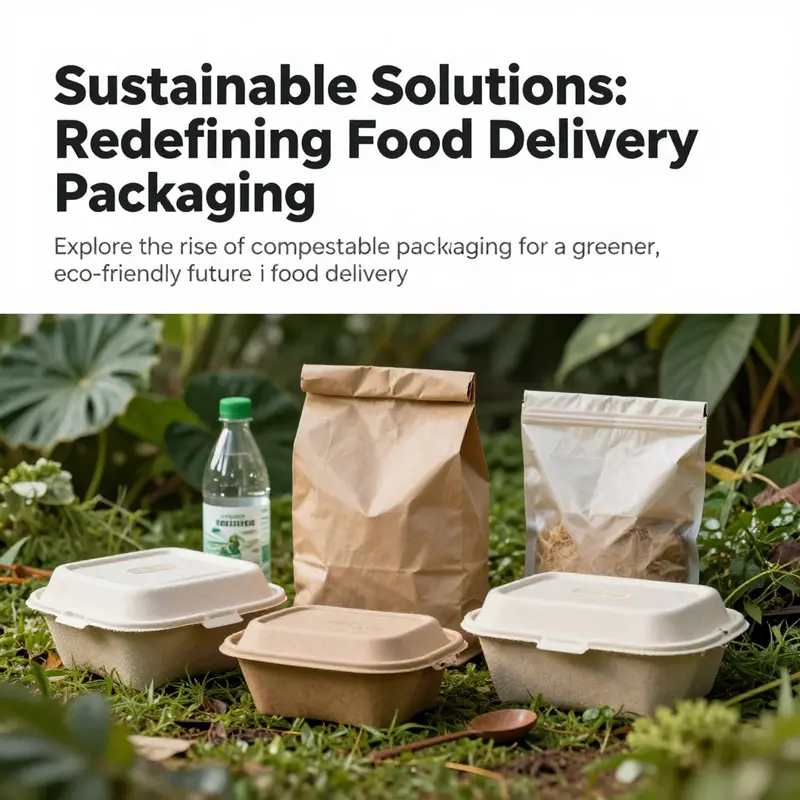
As the world becomes increasingly aware of the environmental impacts of single-use plastics, businesses are being called to re-evaluate their packaging choices. Compostable food delivery packaging offers a viable solution, allowing food service providers—from bubble tea shops to corporate catering teams—to embrace sustainability while enhancing brand loyalty. This article will delve into the adoption of compostable packaging in modern businesses, current sourcing and production trends, and the environmental implications, ensuring readers are well-equipped to make informed decisions that align with both customer expectations and regulatory demands.
How Modern Businesses Are Making Compostable Food Delivery Packaging Work: Strategy, Operations, and Market Impact
How Modern Businesses Are Making Compostable Food Delivery Packaging Work: Strategy, Operations, and Market Impact
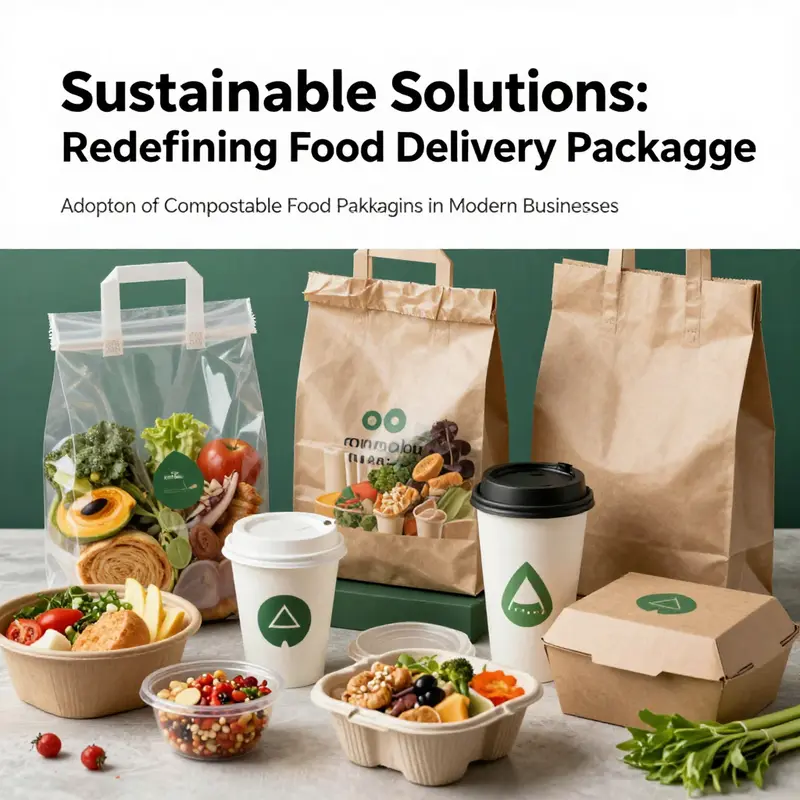
The shift to compostable food delivery packaging is no longer a niche experiment. It is a strategic decision that touches brand positioning, operations, procurement, and customer experience. For companies in foodservice, retail, and hospitality, adoption involves more than swapping materials. It requires intentional choices across sourcing, logistics, communication, and end-of-life management. This chapter examines how modern businesses navigate that transition and what makes the change sustainable, scalable, and defensible.
At the heart of adoption are two powerful forces: consumer preference and regulatory pressure. Consumers increasingly reward brands that demonstrate genuine environmental stewardship. Regulations globally are tightening around single-use plastics, creating both obligation and opportunity. When a business embraces compostable packaging, it signals alignment with those forces. But the promise of better optics must be matched by practical execution. Without it, compostable claims risk skepticism or failure to deliver environmental benefits.
Material selection drives the conversation. Compostable packaging typically originates from plant-based feedstocks such as bagasse, cellulose, cornstarch, or bamboo pulp. Each material comes with performance trade-offs. Some perform well under heat and moisture. Others offer excellent printability, rigid structure, or visual appeal. Choosing the right material depends on product type, expected handling, and customer use patterns. Businesses must balance appearance and strength with compostability requirements. That balance influences supplier selection, packaging design, and cost models.
Certifications and standards matter. Reputable compostable products meet standards like ASTM D6400 or EN 13432. These certifications are proof that a material will break down under industrial composting conditions and will not leave toxic residues. When sourcing, procurement teams should require documented certification and third-party testing. Certifications reduce reputational risk and make it easier to communicate credible sustainability claims to customers and regulators.
Sourcing strategy should account for supply chain stability as well as compliance. Many businesses find that reliable manufacturing hubs are essential to long-term success. Production clusters with strong industrial infrastructure, skilled labor, and supportive policy frameworks deliver consistent quality and lead times. When evaluating suppliers, smart buyers assess production capacity, lead-time variability, and quality controls. They also factor in environmental credentials beyond compostability—such as responsible sourcing of feedstocks and reduced chemical use during manufacturing.
China remains a major manufacturing base for compostable packaging. Its coastal provinces host factories with mature tooling and economies of scale. For B2B buyers, China can offer competitive pricing and rapid scaling. But buyers must perform rigorous due diligence. Verification of certifications, factory audits, and clear contractual terms for quality and timelines are essential. Transparency around raw-material sourcing and the supplier’s environmental management systems will determine whether procurement aligns with corporate sustainability goals.
Adoption workflows must integrate packaging decisions with existing logistics. Compostable materials can differ in weight, stacking behavior, and moisture resistance compared with conventional plastics. Those differences affect packing density, delivery stability, and storage requirements. Operational teams should run pilot batches to test how new packaging interacts with kitchen workflows and delivery handling. Performance in real conditions often reveals friction points that laboratory tests do not.
Labeling and consumer guidance are critical for delivering environmental outcomes. Compostable packaging attains real benefits only when it reaches appropriate end-of-life streams. Many compostable materials require industrial composting, with specific temperature and residence time. If consumers dispose of compostable packaging into landfill or conventional recycling, the expected environmental gains are lost. Clear labeling, user instructions, and educational prompts in-app or on invoices can steer behavior. Partnerships with local composters and municipal programs amplify those instructions with practical collection options.
Partnerships with certified composting facilities transform promise into impact. Businesses should map service availability in their markets before rolling out compostable solutions at scale. Where municipal industrial composting exists, companies can coordinate collection streams from distribution centers or high-volume locations. In markets with limited infrastructure, firms can sponsor or support pilot composting programs. These partnerships often uncover additional benefits, such as reduced waste hauling costs for compliant streams and opportunities for co-branded environmental initiatives.
Operational advantages extend beyond environmental gains. Compostable materials often carry marketing value that premiumizes a product. Packaging that communicates sustainability can increase perceived product worth, boosting customer willingness to pay. In some categories, compostable laminates and biodegradable films can enhance shelf appeal and performance. For example, brands selling dry pet food and specialty items have used compostable laminates to deliver premium look and improved barrier performance. These functional benefits can offset part of the price differential between compostable and conventional packaging.
Cost dynamics are changing. Historically, compostable packaging carried a price premium. That premium has been shrinking as production scales and material innovations reduce costs. Supply chain optimization, bulk sourcing, and design for material efficiency also reduce per-unit costs. Nonetheless, buyers should model total cost of ownership rather than unit price in isolation. Savings can appear in reduced landfill fees, improved brand loyalty, and better regulatory compliance. Financial models that include these factors offer a fuller picture of return on investment.
Design for circularity is a practical lens for adoption. Packaging designers should optimize materials to perform during use while simplifying end-of-life processing. Avoiding multi-material laminates that cannot be composted, minimizing coatings that resist biodegradation, and preferring mono-material constructions improves compostability. Where functional requirements demand complexity, consider reusable options or take-back programs. Clear design choices reduce confusion for consumers and composters alike.
Procurement teams need robust specification documents. Clear specifications define acceptable materials, allowable additives, required certifications, and test methods. They also set packaging tolerances and performance benchmarks. These documents guide supplier bidding and reduce ambiguity. When combined with staged acceptance testing, they help protect quality during scale-up. Regular audit cycles ensure suppliers maintain compliance as production scales and formulations evolve.
Change management within organizations is essential. Frontline staff, from kitchen teams to delivery personnel, must understand how compostable packaging behaves. Training should cover stacking and packing best practices, contamination risks, and labeling protocols. Customer-facing staff must be prepared to explain benefits and handle questions. Internal adoption succeeds when employees feel equipped, not burdened.
Measurement and verification close the loop. Businesses should track metrics such as percentage of deliveries using compostable packaging, the capture rate of compostable material into industrial composting streams, contamination rates, and changes in customer satisfaction. Monitoring these metrics over time reveals whether operational adjustments are needed. Reporting transparently on progress builds credibility with stakeholders and informs continuous improvement.
Brand communication must be honest and precise. Claims should reference specific standards and correct end-of-life pathways. Overstated claims or ambiguous messaging risk greenwashing allegations. Instead, highlight verifiable facts: the materials used, certification bodies, collection programs, and measurable outcomes. When required, third-party verification of claims strengthens trust with customers, partners, and regulators.
Market segmentation informs implementation pace. High-volume urban delivery hubs often offer the fastest impact, because infrastructure and awareness are higher. Premium segments can often absorb higher packaging costs earlier, using sustainable packaging to differentiate. Institutional or contract catering clients may demand specific certifications. Rolling out compostable packaging in phases allows businesses to refine processes, measure impacts, and scale responsibly.
Risk mitigation includes contingency planning. Supply constraints, certification changes, or shifts in composting capacity can interrupt adoption. Businesses should maintain alternative suppliers, maintain buffer stock, and invest in supplier relationships. Legal teams should review labeling and claims to minimize regulatory risk. Scenario planning helps teams respond to sudden changes without undermining service levels.
Innovation continues across materials and collection systems. Advances in compostable polymers and engineered pulp products are improving performance. Simultaneously, new municipal and private compost collection models are expanding capacity. Businesses that keep a close watch on these trends can upgrade materials and reshape logistics in stride. Being an early, but pragmatic, adopter yields both environmental and commercial returns.
Finally, the strategic value of compostable packaging extends beyond immediate waste reduction. It becomes part of a broader corporate narrative that values resource stewardship. When integrated with sustainable sourcing, energy efficiency, and circular economy initiatives, compostable packaging contributes to measurable business resilience. Early adopters who build operational competence around these materials position themselves ahead of competitors and regulatory mandates.
For practical examples and a deeper understanding of the consumer behaviors shaping this shift, see the study in Sustainable Production and Consumption. It offers valuable frameworks for adopting compostable and reusable packaging in food delivery systems: https://www.sciencedirect.com/science/article/pii/S259014722400028X
For a concrete example of a compostable option suited to takeout and delivery workflows, consider a readily available kraft paper bowl designed for food packaging. This type of packaging can be integrated into existing point-of-sale and delivery systems with minimal disruption. See the disposable kraft paper bowl for food packaging for reference: https://greendispopack.com/product/disposable-kraft-paper-bowl-for-food-package-with-lid/
Adopting compostable food delivery packaging is a strategic decision that demands coordinated action. Material selection, supplier verification, logistics adaptation, consumer education, and composting partnerships are all critical. When these elements align, compostable packaging delivers environmental benefits, operational advantages, and brand differentiation. The challenge is not whether to adopt, but how to do it deliberately, measurably, and responsibly.
Sourcing and Production Currents in Compostable Food Delivery Packaging: Global Reach, Local Velocity, and the Rise of Transparent Quality
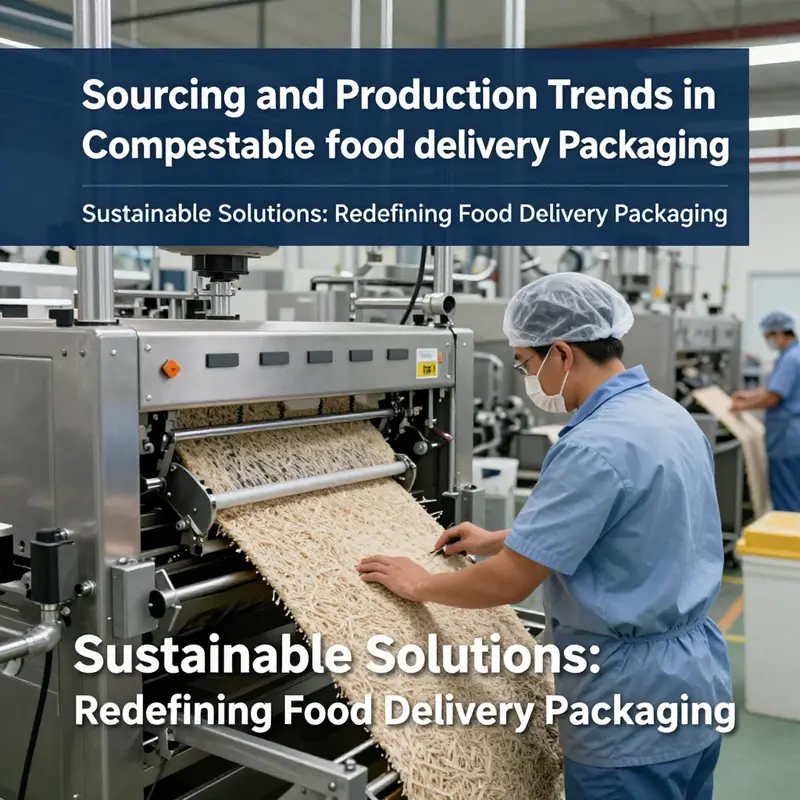
The march toward compostable food delivery packaging is not merely about greener materials; it is a complex orchestration of global supply networks, regional logistics, and rigorous performance standards that must align with evolving regulations and consumer expectations. The sector sits at the intersection of material science, manufacturing efficiency, and traceability, where decisions on sourcing, production geography, and certification ripple through the entire value chain. As demand for sustainable options climbs, so too does the need for packaging that can withstand the practical realities of heat, moisture, friction, and transit, while also dissolving into a controlled end-of-life stream. In this context, the current sourcing and production dynamics reveal a landscape that is simultaneously centralized and dispersed, high-tech and deeply practical, with a growing emphasis on transparency, compliance, and lifecycle storytelling that brands can leverage to differentiate themselves in competitive markets.
At the heart of the supply picture is the remarkable concentration of production capacity in one country that has quietly become the backbone of global compostable packaging. China now accounts for a dominant share of world manufacturing capacity, a position earned through a confluence of established industrial base, scale economies, and proactive government support for green technologies. This combination has created an ecosystem where materials such as polylactic acid derived from cornstarch or bio-based PBAT can be integrated into end products with reliability and at volumes that are difficult to match elsewhere. The result is a manufacturing landscape that can meet rapid demand escalations from rapidly growing markets while maintaining competitive pricing. The footprint extends beyond a single province, weaving through a network of clusters in Guangdong, Jiangsu, Zhejiang, and Fujian that benefit from vertically integrated supply chains. In these regions, the flow from raw material sourcing to final assembly is streamlined, reducing lead times and enabling more predictable production calendars for downstream buyers who must synchronize packaging with seasonal menu cycles and promotional campaigns.
For procurement professionals, this concentration offers a compelling mix of scale and consistency, but it also introduces a need for careful risk management. Scale creates efficiency, yet it can also magnify exposure to regional disruptions, whether those are shifts in trade policy, energy costs, or sudden supplier capacity constraints. Therefore, a growing number of buyers pursue diversified sourcing strategies that blend offshore manufacturing strength with regionalized distribution hubs and domestic pre-assembly steps. The geographic spread matters not merely for cost but for logistical reliability, regulatory alignment, and speed to market. A prime example of this approach is the emergence of hybrid sourcing models that leverage a robust manufacturing backbone in Asia while employing strategic hubs in other regions to shorten transit times and simplify compliance verification for distributors and brand owners operating in high-growth markets. For brands in Dubai, Bangalore, or other dynamic urban centers across Asia and the Middle East, this hybrid model can translate into scalable access to compliant, heat-resistant, and customization-ready packaging that meets local preferences without sacrificing the benefits of offshore production efficiency.
Sourcing trends in compostable packaging increasingly emphasize not just price and capacity but also the ability to demonstrate end-to-end traceability. As regulators tighten standards and consumers demand proof of compostability, manufacturers are bolstering their testing regimes and adopting digital tracking tools that illuminate the lifecycle of a package from feedstock to waste stream. Third-party certifications are no longer a one-off checkbox; they are now integrated into ongoing quality management systems. Certifications such as OK Compost INDUSTRIAL or OK Compost HOME, along with recognized standards like ASTM D6400 and EN 13432, are becoming baseline expectations. Buyers are looking for evidence of consistent performance, including on-time delivery metrics, response times, and the ability to scale reorder quantities without sacrificing quality. In practice, this translates into more robust supplier scorecards, with performance data that can be shared with internal stakeholders and customers who want to understand not just what a package is made of, but how it behaves under real-world conditions—from stacking thickness in delivery bags to the heat exposure of a hot meal during a short taxi ride or a longer ride in warm climates.
Alongside material science and certification, there is a notable shift toward smarter packaging mechanisms that enhance transparency and brand storytelling. Digital twin concepts are making their way into the packaging ecosystem, with QR codes and other linking technologies that enable customers and regulators to access lifecycle data. This trend dovetails with a broader industry push toward circularity, where manufacturers, suppliers, and retailers co-create systems that keep packaging materials in use longer and recover them efficiently at end-of-life. Smart packaging supports not just regulatory compliance but also brand assurance, assuring customers that the packaging they receive contributed to a sustainable supply chain rather than a disposable footprint. It is a subtle but powerful way to translate complex sustainability metrics into tangible consumer trust, reinforcing the value proposition of compostable packaging in a crowded marketplace.
If one thread runs through these developments, it is the strategic value of regional distribution hubs that can bridge the gap between offshore production excellence and local market responsiveness. Dubai, with its sophisticated logistics infrastructure and regulatory alignment with GCC standards, has emerged as a compelling example of how geopolitical and logistical realities shape sourcing choices. For brands expanding across the Middle East and North Africa, the ability to receive compliant, heat-stable solutions with predictable lead times is often as important as the base material or the compostability certification itself. Hybrid sourcing models that integrate a Chinese production base with a regional hub enable faster delivery cycles, easier quality assurance, and smoother customs clearance, all of which reduce the risk of stockouts that can derail promotional campaigns or peak-season menus. In practice, this means buyers can place larger, more complex orders with confidence, knowing that regional dispatches can be configured to match local demand patterns, help maintain consistent branding through custom printing, and support last-mile fulfillment needs without compromising the sustainability narrative.
But the reliability of any sourcing strategy rests on more than capacity and regional routing. It rests on the ability to assess and monitor supplier performance across multiple dimensions. Buyers are increasingly prioritizing partners who can provide transparent performance data—on-time delivery rates, order fill accuracy, responsiveness to inquiries, and repeat reorder frequencies. In a landscape where the cost of a single late shipment can dampen a brand’s launch or create customer dissatisfaction, the credibility of a supplier’s logistics and service levels becomes a differentiator. Manufacturers that couple production excellence with rigorous customer service protocols—rapid issue escalation, proactive downtime communication, and a demonstrated track record of stable throughput—stand out as dependable long-term partners. This operational reliability is not an add-on; it is a core capability that supports the entire supply chain’s resilience, especially as demand for compostable packaging continues to rise across multiple regions with varying regulatory climates.
The emphasis on traceability and certification also intersects with consumer expectations around transparency. As compostability certifications gain visibility, buyers increasingly seek verifiable proof that products actually break down as intended in industrial or home composting streams. This has driven substantial investments in third-party testing and digital tracking systems, which can deliver end-to-end visibility—from raw material suppliers through manufacturing lines to retailers and end users. Consumers have become more discerning about whether a packaging solution truly aligns with composting infrastructure and whether the end-of-life pathway remains clear and reliable. In response, leading manufacturers are adopting standardized testing regimes and working with independent laboratories to validate compostability claims under real-world conditions. The emergence of lifecycle data as a consumer-facing feature represents a notable shift in how packaging is perceived: no longer a passive container, but a data-rich element of a brand’s environmental narrative.
The convergence of these dynamics—China’s manufacturing scale, regional distribution hubs, enhanced traceability, and smart packaging capabilities—drives a strategic imperative for buyers. Integrated sourcing models that combine offshore production depth with localized responsiveness and robust compliance frameworks offer a path to resilience in a market that is both growing rapidly and increasingly scrutinized. The objective is not simply to source a compostable alternative but to build a holistic packaging program that harmonizes material performance with regulatory alignment, supply chain transparency, and a compelling sustainability story. For brands contemplating entry or expansion into compostable packaging, the approach should center on three pillars: reliability of supply and lead-time predictability; confidence in compostability certifications and ongoing validation; and the ability to communicate lifecycle information that resonates with customers seeking verifiable sustainability progress. The best programs will be those that can demonstrate continuous improvement across these dimensions while maintaining cost competitiveness through smart procurement, load balancing across suppliers, and a clear path to end-of-life recovery.
To illustrate how these currents manifest in practical procurement decisions, consider how a consumer brand might balance material choices, certification strategies, and logistics design. Material selection remains a dialogue between performance and sustainability goals. Biobased polymers like PLA from plant feedstocks and PBAT copolymers are often considered alongside traditional barrier materials that need to be compatible with composting streams. The choice is not merely about compostability; it involves understanding how a package behaves in transit and in consumer hands. For hot-delivery scenarios, heat resistance and integrity under steam or condensation become critical design constraints. This is where manufacturing clusters’ efficiencies intersect with regulatory expectations. The packaging must maintain its form and barrier properties during transit while still meeting compostability criteria in an industrial facility or home setting, depending on the target end-of-life pathway. Certification becomes a provable anchor in this process—buyers rely on third-party validation to confirm that the product will compost under specified conditions, with clear declarations of the conditions and timeframes involved. The lifecycle data underpinning smart packaging features can then be used to demonstrate continued performance to retailers and to educate consumers about the benefits and limitations of the packaging solution.
In this context, a notable shift in procurement strategy is the increasing willingness of buyers to source internationally for scale and consistency while localizing distribution and service. The combination reduces risk: offshore production supplies the needed capacity to meet rising demand and achieve cost efficiencies, while regional nodes provide responsiveness, faster replenishment, and easier compliance verification for regional distributors and street-front brands. This approach is particularly relevant for markets characterized by rapid urban growth and tight delivery windows, where the ability to meet replenishment targets helps maintain a steady supply of packaging that aligns with promotional cadence and menu volatility. The result is a supply ecosystem that feels agile without sacrificing the predictability and quality that large-scale production affords. A more resilient supply network in compostable packaging also supports a broader ambition: to move beyond ad hoc sourcing toward strategic partnerships. Buyers increasingly seek suppliers who can prove ongoing investment in sustainability, continuous improvement in process controls, and a shared commitment to advancing compostability standards across regions and market segments. The outcome is a more coherent and credible sustainability program that manufacturers can communicate to investors, regulators, and customers.
For readers seeking practical, real-world insights on how to begin shaping such a sourcing strategy, a recent comprehensive guide highlights vetted suppliers, material innovations, and emergent trends that inform decision-making through 2025 and beyond. While the guide offers a broad landscape, the thread that ties it together is the recognition that sustainability leadership in compostable packaging requires both disciplined process management and innovative energy toward material science breakthroughs. The strategic takeaway is clear: build a sourcing architecture that couples the best available manufacturing capacity with transparent performance data, rigorous certification, and a thoughtful allocation of regional and offshore sourcing to balance risk and speed.
Within this framework, a practical example of how a brand might anchor its packaging program can be found in the specific category of functional, aesthetically adaptable packaging solutions that combine durability with compostability. For instance, certain durable, compostable container formats are designed to perform under hot-delivery conditions while maintaining strong brand visibility through print customization. The design space is broad, ranging from sturdy containers and bags to sleeves and lids that together deliver an intact, brand-consistent experience for customers. Such solutions can be configured to support regional printing and branding needs, ensuring that even as supply chains span continents, the consumer-facing experience remains coherent and recognizable. The ongoing challenge remains ensuring that these designs maintain their compostability credentials across regional facilities and that certifications are actively renewed in step with evolving regulatory expectations. In this sense, the story of sourcing becomes inseparable from the story of product design, testing, and certification.
As the sector continues to mature, the importance of robust supplier relationships cannot be overstated. Buyers benefit from partners who are not only able to deliver high-quality, certifiable packaging at scale but who also demonstrate a willingness to collaborate on lifecycle improvements. Transparent communication about production schedules, compliance status, and any deviations from standard specifications can reduce friction and build trust across the chain. In turn, suppliers gain a clearer demand signal, enabling them to optimize their own operations and invest in capacity, quality controls, and innovation aligned with market needs. This collaborative dynamic is essential for sustaining growth in a sector that is simultaneously technical and pragmatic, where the ability to move quickly without compromising the integrity of compostability is a core differentiator for brands that want to stand out in a crowded field.
Embedded within these conversations is the imperative to keep the end of life at the forefront of decision-making. Compostable packaging holds the promise of reducing long-term environmental impact, but only if the facilities and consumer behaviors necessary to realize that promise are aligned. Certification schemes, standardized testing, and lifecycle transparency provide the scaffolding for this alignment. The more robust the data and the more credible the certification claims, the more likely brands will gain customer trust and foster broader adoption of compostable packaging across food service, retail, and hospitality. In this sense, the sourcing and production currents described here are not abstract trends; they are the operational backbone of a sustainable packaging future that can scale with demand while remaining faithful to its environmental commitments.
To connect with a concrete example of how these ideas translate into an actionable sourcing choice in today’s market, one can explore the growth of practical packaging formats that meet the dual demands of performance and sustainability. For buyers looking to navigate the breadth of available options, a representative category—often featured in supplier catalogs and design briefs—emphasizes flexible, compostable packaging solutions designed for quick-service contexts. These offerings demonstrate how a single packaging family can be integrated into a broader procurement strategy that prioritizes standardized specifications, reliable lead times, and consistent compostability credentials across markets. In evaluating such options, buyers should scrutinize the supplier’s track record for on-time delivery, the stability of raw material supply, and the robustness of their third-party testing regime. These factors collectively influence not only the day-to-day efficiency of operations but also the long-term viability of a brand’s sustainability commitments in a fast-evolving regulatory landscape.
As the chapter closes on current sourcing and production trends, it is clear that the sector’s trajectory will continue to be shaped by a delicate balance of scale and locality, of certification rigor and practical performance, and of innovation in materials and packaging design with equally strong emphasis on end-of-life infrastructure. The most successful programs will likely be those that cultivate a holistic view—one that recognizes the value of offshore production for capacity and cost, while embracing regional adaptability and transparent governance to satisfy regulators, customers, and investors. The resulting packaging ecosystems will not only support the growing demand for compostable solutions but will also contribute to a more resilient, traceable, and credible narrative around sustainability in the food delivery space.
External source for further reading: https://www.sustainablepackaging.com/sourcing-guide-compostable-foodservice-packaging/
Internal reference:
For further context on practical packaging formats that align with the sourcing and production themes discussed, see related product packaging options such as those highlighted in the internal catalog pages. To explore a specific option that aligns with the discussed design and material criteria, you can review the following page: disposable octagonal box kraft paper packaging.
Green Labels, Real Outcomes: The Environmental Footprint and Regulatory Pathways of Compostable Food Delivery Packaging
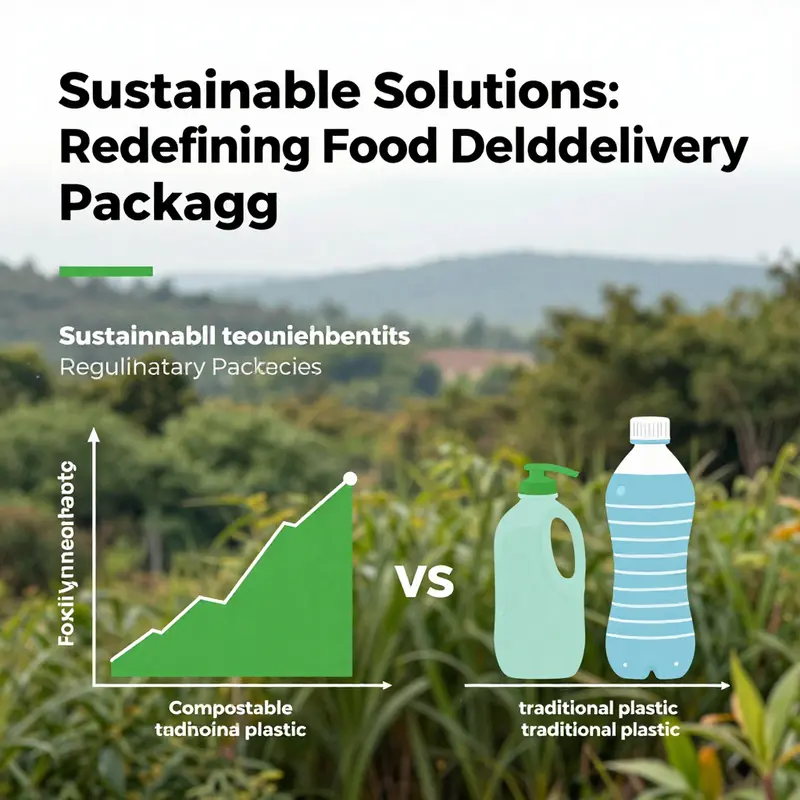
Compostable food delivery packaging sits at the intersection of ecology, policy, and everyday business operations. It is not a single material or a simple substitute for plastic; it is a portfolio of design choices, supply chains, and end-of-life futures that must be aligned to environmental objectives, consumer expectations, and regulatory realities. In practice, compostable packaging draws on plant-based feedstocks such as cornstarch, bagasse, bamboo, or cellulose. These materials promise to reduce fossil fuel dependence and to offer a route to waste streams that recover nutrients rather than bury them in landfills. Yet the pathway from cradle to compost is not automatic. The actual environmental benefits depend on how the packaging is produced, used, disposed of, and managed after use. The story is nuanced, and the policy landscape is evolving as governments respond to plastic pollution and climate pressures with new standards, tests, and labeling rules.
From the production line to the curb, the life cycle of compostable packaging carries trade-offs that can surprise even experienced procurement managers. A rigorous lifecycle perspective reveals that the potential gains depend on specific conditions. When composting facilities exist at scale and capture operating efficiencies, compostable packaging can displace plastics at end of life and reduce certain environmental burdens. But if end-of-life conditions diverge from industrial composting—such as mixed waste streams, insufficient sorting, or landfilling with anaerobic degradation—the expected advantages can erode. Indeed, recent analyses from state-level environmental agencies in the United States demonstrate that materials with compostable or biobased attributes do not automatically yield lower environmental impacts than conventional materials. The decisive factors include production inputs, energy intensity, water use, transport distances, and the effectiveness of recovery systems.
This reality mirrors a broader principle of sustainable materials management. The Oregon Department of Environmental Quality’s 2050 Vision emphasizes reducing pollution and conserving resources across the entire life cycle. It urges policymakers and industry to pursue upstream innovations and downstream recovery options with equal vigor. The message is not that compostable packaging is inherently inferior; rather, it is that the environmental benefits depend on the network that surrounds the material—from feedstock sourcing to composting infrastructure, from supplier transparency to consumer disposal behavior. In practice, that means evaluating packaging options with a full-system lens rather than focusing only on end-of-life claims.
Regulatory frameworks reflect the complexity of this landscape. In the United States, policy trails a patchwork of state-level actions that increasingly connect bans on certain single-use plastics with incentives for composting infrastructure and clearer labeling. California and Oregon have been early movers in using policy levers to shift markets toward materials that can be composted under defined conditions. These moves are complemented by federal guidelines on environmental marketing. The Federal Trade Commission requires truthful green marketing claims anchored in substantiated evidence. In other words, a packaging claim that something is compostable must be demonstrably able to break down under real-world conditions, not merely under ideal laboratory tests. This insistence on verifiable performance helps guard against greenwashing, which would undermine both consumer confidence and true environmental gains.
On the international stage, the European Union has integrated compostable materials into the Single-Use Plastics Directive, while also imposing robust standards for biodegradability and compostability. In the EU, materials must meet defined criteria—often aligned with European and international standards such as EN 13432 and related benchmarking protocols—before they can bear compostable labeling. These rules aim to prevent misrepresentations and to ensure that compostable claims translate into tangible environmental benefits when the material reaches the appropriate industrial composting stream.
For anyone involved in B2B procurement or menu design, the regulatory climate translates into practical actions. First, certification matters. Verifying that packaging materials carry credible certifications—whether EN 13432, ASTM D6400, or other recognized schemes—helps ensure that the product will perform as claimed in real waste-management settings. Second, traceability and transparency become requirements, not luxuries. Buyers increasingly demand data on feedstock sources, energy intensity, water usage, and end-of-life outcomes. Third, ongoing monitoring is essential. As reforms unfold and new standards emerge, suppliers and buyers must stay aligned with updated criteria and updated marketing practices.
The manufacturing landscape for compostable packaging has become deeply global. China, particularly Guangdong Province and other coastal hubs, remains a leading production center. The combination of a strong industrial base, competitive pricing, and targeted government support for green technologies has anchored China’s role in the market. For buyers seeking reliable suppliers, that geography offers both opportunities and risks. On one hand, scale can drive efficiency and innovation; on the other hand, supply chain transparency and compliance scrutiny become critically important. The literature and practitioner guides suggest a disciplined approach to sourcing: verify certifications, assess production capacity, and ensure alignment with international sustainability standards. Strategic sourcing goes beyond cost. It requires ensuring that suppliers can sustain performance across the life cycle and across market cycles.
A practical map for procurement teams is offered by a comprehensive guide from the Sustainable Packaging Alliance. It aggregates vetted suppliers, material innovations, and emerging trends in 2025 and beyond. While no single source guarantees flawless outcomes in every setting, such resources provide actionable intelligence for teams aiming to align packaging choices with broader sustainability goals. They also underscore a modular insight: compostable packaging is not a monolith. The performance envelope varies with material type, barrier properties, heat and grease resistance, and compatibility with the intended dishware and delivery logistics. In the end, the decision rests on how well packaging integrates with the restaurant’s operations, the courier network, and the waste-management ecosystem in target markets.
Within this context, the role of design cannot be overstated. Compostable materials must deliver the necessary functionality—stability during transport, protection of hot and greasy foods, and compatibility with rapid delivery—without compromising composting outcomes. The design decisions influence both environmental performance and user experience. For example, the move toward bagasse-based or cellulose-based materials can improve grease resistance and strength while maintaining compostability. Yet such properties must be balanced with the available composting infrastructure. A packaging solution that performs perfectly in a lab still depends on a waste stream that has access to industrial composting. If a city lacks that infrastructure, a good-faith effort may fail to yield the intended environmental benefits and may even lead to symbolically green but practically ineffective outcomes.
Beyond technical performance, labeling and consumer education play indispensable roles. Consumers need clear guidance on whether to place packaging in composting streams and how to separate it from other waste. Misplaced items can contaminate compost streams, reducing efficiency and sometimes contaminating other recycling streams as well. Clear, standardized labeling reduces confusion and supports higher recovery rates. This is precisely where regulators and industry standards converge with consumer behavior: credible, consistent messaging helps ensure that compostability translates into real-world environmental gains.
The sourcing decision also embeds a broader narrative about supply chain transparency. For B2B buyers, supplier reliability often hinges on the interplay between local manufacturing capability and international logistics. In practice, this means weighing the benefits of domestic or regional manufacturing against the advantages of scale from international hubs. Regardless of geography, responsible procurement requires risk assessment that covers production capacity, supply continuity, material safety data, and compliance records. The Sustainable Packaging Alliance guide suggests that buyers adopt a portfolio approach: diversify suppliers to reduce disruption risk, while maintaining a core set of trusted partners who demonstrate consistent performance, transparent reporting, and a track record of certifications.
A central theme of the environmental analysis is the need for end-of-life infrastructure that actually processes compostable packaging as intended. Industrial composting facilities are not ubiquitous, and municipal composting programs vary widely in their acceptance criteria. When composting capacity is available and properly managed, compostable packaging can be recovered as intended. When it is not, the packaging can end up in landfills or the general waste stream, where its environmental profile changes dramatically. In landfills, the anaerobic decomposition of biobased materials can generate methane, a potent greenhouse gas. This potential underscores the importance of aligning packaging choices with local waste systems and of communicating disposal guidance to customers. It also highlights why regulators insist on performance data and credible certifications. Without credible end-of-life data, environmental claims risk becoming self-serving rather than scientifically grounded.
Industry trendlines point toward innovation that addresses both performance and end-of-life clarity. Material science advances—improved barrier properties, heat resistance, and moisture tolerance—are enabling compostable packaging to keep foods safe during delivery. In parallel, there is growing emphasis on compostable coatings, laminate technology, and optimized fiber blends that maintain structural integrity while enabling efficient breakdown under composting conditions. At the same time, policy pressures are nudging manufacturers toward more rigorous testing and third-party verification. This convergence—technological improvement paired with stricter governance—serves as a catalyst for healthier market dynamics. It pushes suppliers to be more transparent, more accountable, and more attuned to the practical needs of delivery businesses.
The implications for restaurants, meal-prep services, and other food-delivery operators are substantial. A robust compostable packaging program can align with corporate sustainability goals, support waste-diversion targets, and improve brand reputation among environmentally conscious customers. But to realize these benefits, operators must engage in careful planning. This includes selecting materials that match the types of meals served, balancing cost with performance, and ensuring that packaging is compatible with the waste-management ecosystem of the community. It also means collaborating with suppliers to gather life-cycle data, certification details, and end-of-life guidance that can be shared with customers and waste haulers. In practice, the most effective programs treat compostability as part of an integrated strategy that includes packaging design, supplier relationships, labeling standards, and customer education.
For those who need a practical touchstone for supplier evaluation, consider the internal guidance emerging from industry ecosystems that emphasize verified certifications, supply chain transparency, and long-term reliability. A focused approach to sourcing—one that integrates certification checks, capacity assessments, and strategic risk planning—helps ensure that the benefits of compostable packaging do not get lost in translation during procurement cycles. It also supports the broader shift toward sustainable materials management that the Oregon DEQ study and related policy documents advocate. To illustrate how suppliers formalize this approach, a relevant resource in the supplier community highlights categories like heavily tested packaging forms, credible compostability claims, and traceable supply chains. For readers seeking a concrete example of material categories and design considerations in the current market, the octagonal box category provides a useful case study of how packaging can combine form, function, and end-of-life clarity in a single solution. See the octagonal box restaurant kraft paper packaging resource for a practical illustration of these principles in action. octagonal box restaurant kraft paper packaging
Interlinked with these considerations is the knowledge that regulatory and market signals will continue to evolve. Policymakers will refine standards as data accumulates and as waste-management infrastructure expands. Industry associations will publish updated best practices, and certification schemes will adapt to new scientific insights. This dynamic environment means that ongoing education within corporate sustainability teams, procurement offices, and field-facing operations staff is essential. It also means that evidence-based decision-making should be the default: decisions should be guided by credible data on end-of-life performance, supply-chain resilience, and the true environmental costs of production and distribution. In short, compostable packaging offers meaningful opportunities when it is deployed with a clear understanding of its life-cycle impacts and its compatibility with the waste-management ecosystem available to the consumer base.
The chapter does not close with a simple verdict about whether compostable packaging is categorically better or worse than conventional plastics. Instead, it presents a framework for thinking about environmental impact, regulatory alignment, and strategic sourcing in a way that respects both ecological science and the practicalities of modern food delivery. It invites decision-makers to weigh benefits against risks, to demand transparency from suppliers, and to design packaging systems that are fit for the actual waste streams they inhabit. It also invites a broader conversation about how cities, waste-management utilities, and producers can collaborate to create a reliable, scalable pathway to true material circularity. In this sense, compostable packaging is a catalyst for systemic thinking—pushing businesses to map their supply chains, set verifiable performance targets, and partner with communities to turn packaging waste into a resource rather than a problem.
External resource and further reading:
- For a rigorous, science-based comparison of environmental impacts across packaging options, including compostable materials, consult the Oregon DEQ study on Environmental Impacts Of Packaging Options. https://www.deq.state.or.us/waste/management/sustainablematerials/2050vision/Pages/Environmental-Impacts-of-Packaging-Options.aspx
Final thoughts
Embracing compostable food delivery packaging is not just a trend—it’s a crucial step towards environmental responsibility. By transitioning to sustainable packaging solutions, businesses in the food service industry can reduce waste and build a stronger connection with their customers. The move towards compostables aligns with both consumer demand for eco-friendly products and regulatory pressures for sustainability, making it a wise investment for the future. As you contemplate your packaging choices, remember that every small action contributes to a larger movement towards a healthier planet.