
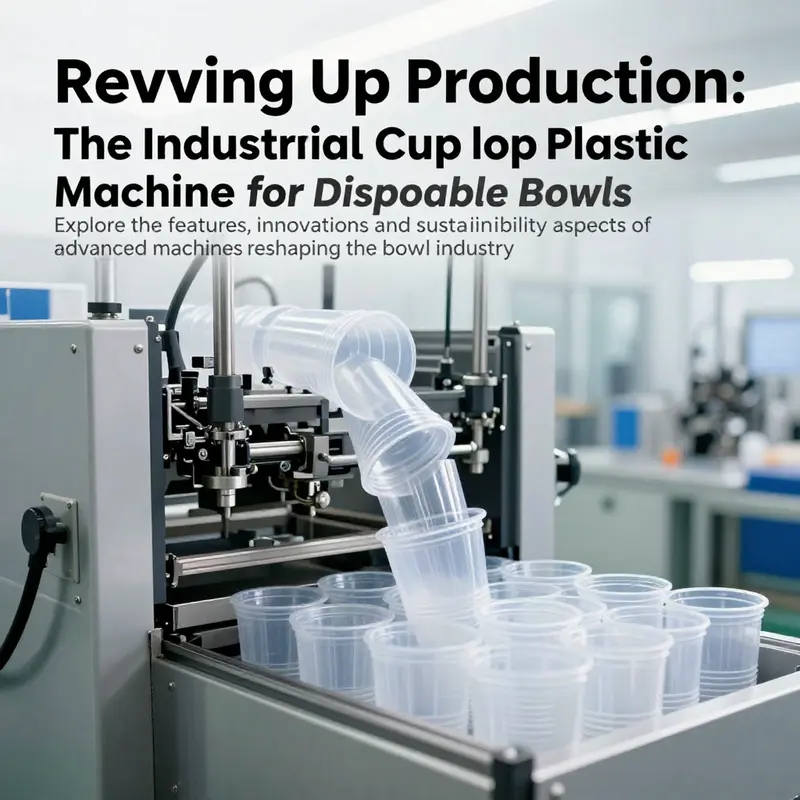
As the demand for disposable food containers continues to rise, particularly among bubble tea shops, beverage chains, restaurants, food trucks, catering services, and event planners, the industrial cup plastic machine for disposable bowls emerges as a crucial asset. This specialized machinery enables businesses to produce affordable, lightweight, and hygienic bowls, meeting the evolving needs of modern consumers. In the forthcoming chapters, we delve into the design features that make these machines efficient and user-friendly, the technological innovations enhancing production speeds and quality, the economic impact that high-capacity machines have on profitability, the sustainability practices which are becoming essential for eco-conscious businesses, and the current market trends that indicate the future of disposable plastic bowls.
Engineering the Line: Core Design Features That Make High-Speed Disposable Bowl Machines Reliable and Flexible
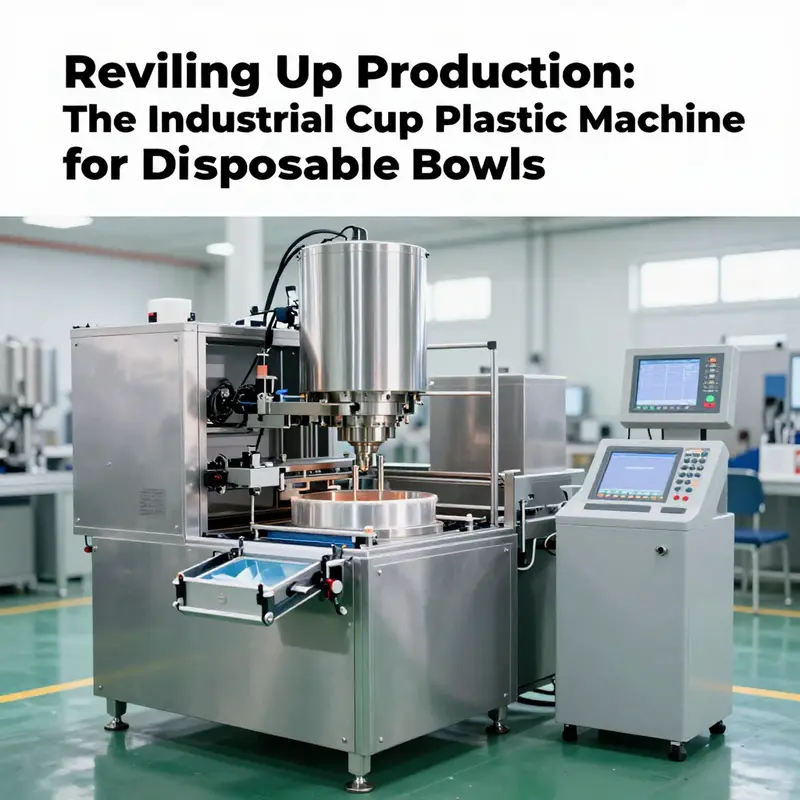
An industrial line that forms disposable plastic bowls must balance speed, repeatability, and adaptability. The design choices engineers make determine whether a machine runs smoothly for years, can switch products quickly, and supports sustainable goals. This chapter walks through the essential design features of a high-performance cup-and-bowl forming machine and explains how those features work together to deliver consistent quality, low waste, and operational efficiency.
At the heart of the machine is a modular mold system. Rather than fixing a single tool to the frame, modern machines use sliding connections and chain-driven transfer mechanisms that allow molds and lower dies to be removed and replaced quickly. That modularity shortens changeover time and supports multiple bowl geometries without heavy tooling work. When a line needs to shift from a shallow salad bowl to a deep soup bowl, the exchange is mechanical and predictable. Quick coupling points and precisely machined locating surfaces preserve registration between top and bottom halves, keeping forming accuracy within the tight tolerances required for nested stacking and lid fit.
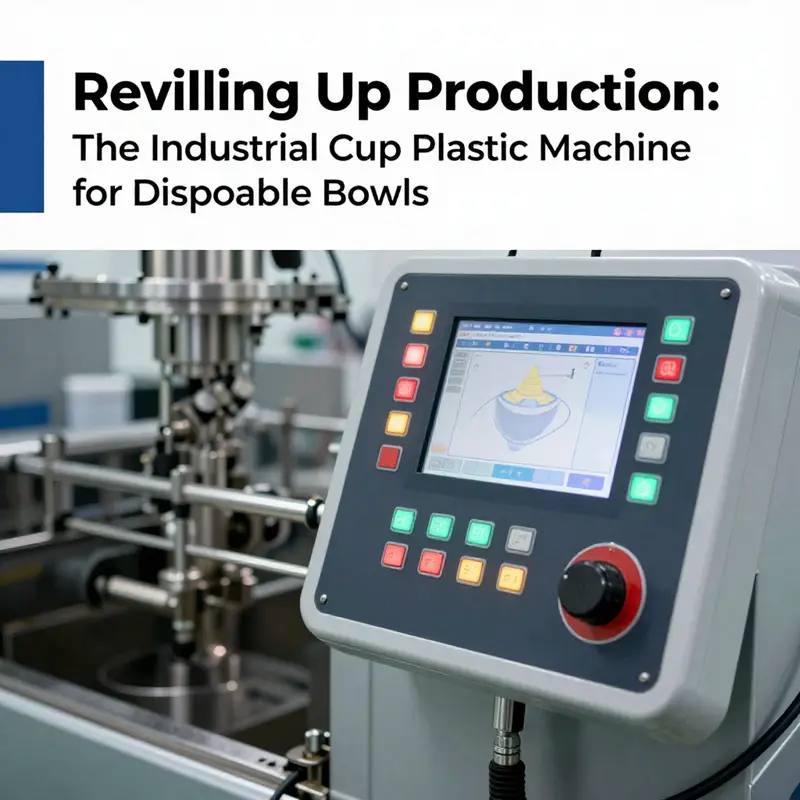
Precision control underpins that mechanical flexibility. Servo-driven axes paired with a PLC and touchscreen HMI give operators fine command over positioning, timing, and motion profiles. Servos deliver repeatable positioning in the hundredths of a millimeter range. The PLC sequences the forming, vacuum, pressure, cooling, and ejection steps while the HMI provides immediate feedback and parameter adjustment. Together these systems reduce reject rates by protecting against cumulative position drift, and they let technicians tune cycle time against product geometry to find the best balance between throughput and part integrity.
Thermal management is another defining element. Uniform heating of the thermoplastic sheet is crucial for consistent wall thickness and feature definition. Ceramic infrared heaters arranged across a stainless steel heating chamber offer stable, concentrated energy. Multiple heating pads of calibrated size ensure even coverage across the sheet width. PID controllers regulate pad temperature to within a degree, preventing hot or cold zones that cause thinning or incomplete forming. Downstream, a controlled cooling stage rapidly stabilizes the formed bowl profile. Enclosed conveyors and targeted air or water heat-exchange circuits remove residual heat while preserving dimensional stability. When temperature control is precise, formed parts have predictable shrinkage and require less post-processing.
Automated feeding and material handling tie the forming process into a continuous production rhythm. Step motors and precision gear trains meter sheet or blank feed with sub-millimeter repeatability. Sensors confirm feed position and trigger forming cycles only when the blank is correctly placed. That reduces wasted material from misfeeds and keeps cycle cadence steady. For facilities testing biodegradable resins, the feeding system can be adapted to accommodate variations in material stiffness and thermal behavior. A well-tuned feeder is the difference between intermittent throughput and sustained, high-yield operation.
After forming, parts must be handled gently and reliably. An integrated stacking and output mechanism avoids manual touch points and reduces contamination. Synchronized drive belts and adjustable guide rails guide bowls into neat stacks. Dual-row, asynchronous stacking systems allow two lanes of parts to be consolidated, increasing throughput without complicating downstream packing. V-shaped inclined belts, positive-pressure air channels, and zero-contact transfer paths protect delicate rims and printed surfaces. These means keep presentation quality high and simplify automated packing.
Robust transmission and structural design provide the foundation that supports all moving systems. Frames built from standard square tubing, sized for the expected loads, reduce flex under high-speed operation. Crank-rocker linkages convert vertical press movements into horizontal actions for extraction and stacking. Critical rotating elements ride on hardened shafts and bearings, often housed within bronze bushings and supplied with automatic lubrication. Those details extend component life, reduce maintenance frequency, and make service tasks faster. When bearings, gears, and bushings are easy to access, planned maintenance becomes a short, predictable activity rather than an extended line stoppage.
Modern lines increasingly include smart monitoring and IoT connectivity. Embedded telemetry can track cycle counts, energy consumption, temperature profiles, and alarm histories. Cloud-based dashboards aggregate that data for analysis and predictive maintenance. Early warning of a bearing degrading, a heater drifting out of setpoint, or a servo losing steps lets maintenance teams intervene before quality or uptime are impacted. Digital traceability also helps with audit and regulatory requirements, linking process parameters to specific production lots for quality investigations.
Designs that target sustainability show two converging threads: reduced process waste and compatibility with alternative materials. Integrated waste reclaimers mill trimmings and offcuts for reprocessing or densification. When the mechanical handling and thermal profiles are engineered to accept compostable or bio-based resins, a line can transition to eco-focused SKUs. However, biodegradable polymers often display different elongation, softening, and shrinkage characteristics. A machine designed with adjustable forming depth, variable vacuum and pressure curves, and flexible cooling rates can handle those materials without sacrificing throughput.
Safety and ease of operation figure into every smart design decision. Safety interlocks, clear guarding, and accessible emergency stops minimize operator risk. Intuitive HMIs and recipe-driven controls lower the skill barrier for changeovers and reduce setup errors. Visible maintenance points and modular subassemblies shorten repair times. When training is focused on a clear interface and predictable mechanical behavior, production staff can manage the line with confidence, keeping up high productivity while maintaining safe operations.
Energy efficiency is not incidental. Servo drives, PID-regulated heaters, and enclosed thermal zones cut power use by avoiding constant full-power operation. Recovering heat from cooling circuits for use elsewhere in the process can further improve energy profiles. Energy meters integrated into the control system allow teams to monitor consumption and make data-driven adjustments to balance speed against cost.
Considerations for long-term value go beyond initial throughput figures. A machine that is easy to retool for different bowl geometries, supports both traditional and biodegradable resins, and supplies detailed process data tends to deliver stronger returns over its lifetime. The right combination of mechanical durability, control precision, and integrated handling minimizes unplanned downtime and reduces scrap. That improves per-unit costs and gives packaging operations the agility to respond to changing market demands.
When evaluating a forming line, assess how the design features align with your production profile. If frequent product changes are expected, prioritize modular molds and quick-change fixtures. If strict dimension control is essential, emphasize servo positioning and thermal management. If sustainability is a goal, insist on waste reclamation and material-handling flexibility. The most effective design packages marry mechanical soundness with intelligent control and thoughtful ergonomics.
A well-engineered disposable bowl forming line is an orchestra of mechanical subsystems, thermal controls, material handling, and digital monitoring. Each design element—from the interchangeable mold system to the cloud-enabled diagnostics—contributes to consistent output, lower waste, and the flexibility to evolve. Machines built with these principles not only meet current production needs but also provide a platform for future upgrades and materials innovations. For more detailed specifications and feature examples, see the industrial product listing referenced below.
External reference: https://www.alibaba.com/product-detail/High-Speed-Plastic-Cup-Machine-For-Disposable-Bowls_1600592234485.html
For businesses exploring more sustainable packaging alternatives, consider inspecting related biodegradable paper bowl solutions such as a biodegradable take-away kraft paper bowl: https://greendispopack.com/product/biodegradable-eco-friendly-take-away-odm-oem-round-kraft-paper-bowl/
Shaping Speed, Precision, and Sustainability: Technological Advances in Industrial Cup and Disposable Bowl Machines
Shaping Speed, Precision, and Sustainability: Technological Advances in Industrial Cup and Disposable Bowl Machines
The industrial systems that produce disposable cups and bowls have evolved from simple mechanical presses into highly integrated production ecosystems. Modern lines blend rapid thermoforming, precise motion control, and closed-loop material handling. The result is higher throughput, tighter tolerances, and a clearer path toward environmental responsibility. This chapter explains how technological advances work together to raise performance, lower costs, and support more sustainable packaging choices.
Thermoforming remains the core process. Sheets of thermoplastic are fed, heated to a ductile state, and then formed in matched tooling. Improvements in each stage of that sequence yield disproportionate benefits. Feeding systems now deliver sheets or blanks with minimal indexing error. Synchronized servo drives align the material precisely at the heating station. That accuracy fixes a primary source of dimensional variation and allows faster cycle times without increasing scrap.
Uniform heating is another area of rapid improvement. Older systems relied on broad, sometimes uneven heaters that required long dwell times. Contemporary machines use segmented heating zones and intelligent infrared arrays. Each zone adjusts heat according to real-time feedback, ensuring the sheet softens uniformly. That consistency permits shorter heating cycles and cleaner draws into complex molds. It also reduces overstretching of polymer films, which improves wall strength and reduces thin spots in finished cups and bowls.
Forming accuracy benefits from two interlinked developments: improved mold engineering and servo-driven motion. Mold cavities are now designed with precise venting and temperature control channels. Dedicated cooling passages shorten the time needed to set the polymer without introducing warpage. Quick-change tooling systems let operators switch cavities rapidly. A line can move from producing shallow soup bowls to deeper salad containers in minutes. This flexibility supports smaller production runs and faster product rotation without the downtime that used to erode profitability.
Servo-driven mechanisms have transformed the machine’s kinematics. Where pneumatic or cam-driven systems once dominated, servo motors now control forming platens, trimming units, and indexing conveyors. Servos deliver precise speeds and repeatable positions. That reduces mechanical shock, extends die life, and minimizes maintenance. Crucially, servo systems allow variable acceleration and deceleration profiles, which makes handling delicate thin-walled products safer at high speeds.
Automation extends beyond the core forming cycle. Robotic arms integrated into the line handle stacking, inspection, and secondary operations with speed and repeatability that humans cannot match. Grippers and vision-guided systems remove finished cups, stack them, and place them in packing trays. Robots also extract trimmed webs for recycling. By automating repetitive tasks, manufacturers cut labor costs and lower the chance of contamination — an important factor where food safety is regulated.
Real-time monitoring systems tie these mechanical advances together. A central control unit collects data from temperature sensors, pressure transducers, and encoder feedback. Machine learning algorithms analyze the flow of variables to detect subtle shifts in process stability. When a trend indicates a rising scrap rate, the system can alert operators or automatically adjust parameters. This predictive capability reduces unplanned downtime and improves first-pass yield.
Energy efficiency is a significant driver behind many upgrades. Heating and cooling traditionally consume the most power on a thermoforming line. New heating elements target only active zones, and are insulated to reduce radiant loss. Cooling systems use optimized channel geometries and closed-loop chillers that recover heat when possible. Paired with servo drives, which consume energy only when moving, modern lines cut power use while maintaining or increasing throughput. Lower energy demand reduces operating costs and supports sustainability targets without sacrificing output.
Material handling and waste management have seen parallel innovations. Trimmings and defective parts are no longer mere waste. Integrated recycling units grind scrap and extrude it into reprocessable pellets. These pellets can be blended back into production for non-food-contact applications or used in ancillary plant products. Closed-loop production reduces raw material needs and avoids disposal fees. Sophisticated separation systems also sort mixed waste streams, enabling higher recovery rates for different polymer types.
Multi-function thermoforming platforms provide a strategic advantage. A single machine capable of producing cups, bowls, and trays reduces capital expenditure and saves floor space. Modular stations allow manufacturers to add or remove capabilities as demand shifts. With quick-change tooling, the same line can fulfill multiple SKUs while keeping changeover time minimal. This flexibility supports just-in-time production and lowers inventory carrying costs.
Control software plays an outsize role in modern lines. Intuitive Human-Machine Interfaces put parameters, alarms, and historical trends at operators’ fingertips. PLCs coordinate complex sequences and facilitate remote diagnostics. Many control packages offer recipe-driven setups, where an operator selects a product profile and the machine auto-configures temperature maps, servo positions, and cycle timing. Those recipes ensure consistent quality across shifts and reduce the expertise required to run different products.
Material compatibility is also expanding. Machines now process a wider range of thermoplastics, including polypropylene, polystyrene, and PET. They are increasingly capable of working with biodegradable polymers such as PLA. Processing eco-friendly resins often requires gentler heating profiles and careful venting. Equipment able to adapt to those needs enables manufacturers to serve green product lines without installing dedicated machinery.
Innovations in mold design support this material diversity. Molds with conformal cooling channels, manufactured using additive techniques, deliver uniform thermal control even for complex cavity geometries. Replaceable inserts let designers refine portions of a cavity without remaking the entire tool. Such modularity speeds iteration and supports customized container shapes needed for branding and ergonomics.
Market access and pricing reflect these technological gains. More capable, automated lines are becoming accessible to mid-sized manufacturers. Entry-level sets now start at price points that reflect a mature technology base. For businesses weighing capital investment against operational savings, the improved energy efficiency, automation, and waste recovery can produce a compelling return on investment. Transparent platforms list technical specifications and starting prices, helping buyers make informed equipment choices.
Looking forward, two converging trends will shape the next generation of lines. First, a stronger emphasis on recyclability and closed-loop production will drive equipment capable of handling mixed feedstocks and producing fully recyclable output. Second, increased connectivity will enable supply-chain integration, where production data informs raw material orders and logistics in near real time. Together, these trends will reduce both material waste and inventory buffers.
The practical impacts are clear. Improved cycle times and better process control raise productive capacity. Quick-change tooling and modular platforms let plants respond quickly to market shifts. Energy-efficient components lower operating expenses. Integrated recycling reduces raw material dependence. And, critically, machines that can process recyclable or compostable resins give manufacturers the means to align with regulatory and consumer expectations.
As manufacturers evaluate capital upgrades, the most successful investments balance performance, flexibility, and environmental outcomes. A production line that forms more parts per hour is valuable. But lines that also reduce energy use, reclaim scrap, and switch products with minimal downtime create lasting competitive advantage. The continuing evolution of control systems, servo mechanics, mold engineering, and material handling is making that balance practical for more producers than ever.
For a deeper look at the technology and current market offerings, see this resource: https://www.made-in-china.com/products/1574986651.html. For manufacturers exploring alternative packaging strategies, consider also how paper-based bowls can complement plastic production lines; a useful reference is the disposable kraft paper bowl for food package with lid: https://greendispopack.com/product/disposable-kraft-paper-bowl-for-food-package-with-lid/.
Measuring the Bottom Line: How Industrial Plastic Cup Machines Reshape Disposable Bowl Economics
Measuring the Bottom Line: How Industrial Plastic Cup Machines Reshape Disposable Bowl Economics
Industrial thermoforming lines that produce disposable cups and bowls do more than churn out containers. They change the economics of packaging across food service, healthcare, and retail. When a manufacturer invests in an industrial cup or bowl machine, the immediate goal is higher throughput and lower unit cost. The broader effect unfolds through leaner operations, stronger market positioning, and new choices about material and product strategy. This chapter follows those economic threads to show how a single line can influence margins, supply chains, and long-term competitiveness.
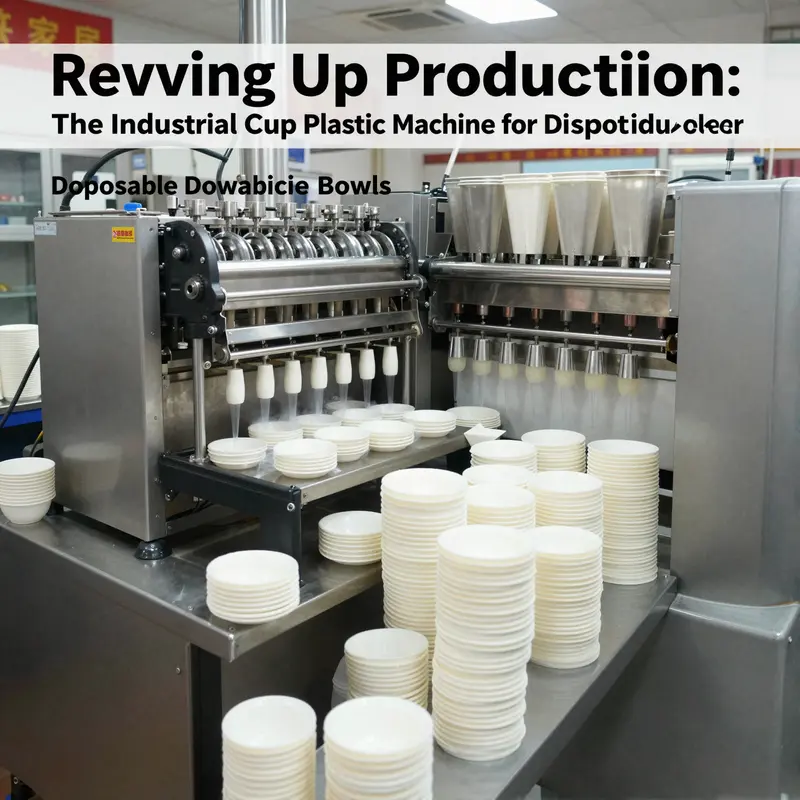
At the heart of the economic shift is automation. Modern lines use programmable controllers, servo drives, and precise heating and forming systems to reduce cycle time. Those improvements shrink labor needs per unit. A single operator can now supervise multi-station machines producing hundreds of items per minute. Labor savings are only part of the story. Automation also improves dimensional consistency and reduces rejects. Fewer rejects mean less rework and lower material waste. Consistency supports premium pricing for branded or custom-printed disposables because buyers value uniform quality in food service and retail.
Material selection strongly determines cost structure. Thermoplastics such as polypropylene, polystyrene, and PET dominate because they balance price, processability, and performance. Machines that can process multiple polymers, including biodegradable options, let manufacturers pivot when raw material prices swing. When resin costs rise, a flexible line can switch to an alternative grade or optimize wall thickness to reduce consumption without sacrificing function. Economies of scale further reduce material cost per unit. Bulk purchasing agreements for resin and sheet feedstock, enabled by reliable high-volume production, lower input costs and stabilize margins during market volatility.
Energy and throughput interplay also matter. High-efficiency servo systems reduce peak electrical demand compared to older pneumatic or hydraulic machines. Lower energy draw per part reduces operating expenses. At the same time, faster cycle times increase output without proportionate increases in energy use. The result is a lower energy cost per bowl or cup. Factoring in reduced downtime from automated diagnostics and predictive maintenance routines, the effective capacity of a line grows. Greater available capacity allows a manufacturer to accept larger contracts or seasonal surges without significant capital additions.
Waste management and recycling systems embedded in the production line further improve economics. Trim scrap can be reprocessed and returned to the feedstock, trimming raw material purchases. Machines that incorporate in-line reclaim and densification lower the amount of off-spec material leaving the facility. That reduces landfill fees and may help meet regulatory targets or corporate sustainability goals. For businesses marketing eco-conscious packaging, being able to demonstrate an integrated recycling loop adds value that can support higher selling prices or access to new customers.
Capital investment and return on investment deserve careful attention. The initial purchase price for a modern thermoforming system can be substantial. Yet detailed cost modeling shows payback periods that are attractive in many scenarios. Savings in labor, material efficiency, and energy, combined with revenue from increased output, create a powerful ROI profile. Financing options and modular expansion paths let companies align capacity with cash flow. When a line is sized to expected demand and includes room for modest scale-up, capital is used efficiently and future upgrades are less disruptive.
Market dynamics amplify the benefits of modern machinery. The demand for single-use containers remains strong in many sectors because of hygiene and convenience requirements. Foodservice, catering, and healthcare continue to rely on disposable bowls and cups for safety and logistics reasons. Manufacturers who can produce consistent, compliant parts rapidly capture larger shares of these stable markets. Access to CE-certified control systems and recognized safety features helps manufacturers reach export markets and institutional clients with strict procurement standards.
There is also a strategic angle in diversifying product portfolios. A line capable of producing different sizes and shapes opens opportunities for private-label contracts and short-run customization. Restaurants, meal-kit companies, and retailers often need varied formats. The ability to switch molds and program runs quickly reduces lead time and increases responsiveness. That flexibility supports higher margins, because customers often pay premiums for fast, tailored supply. For a manufacturer, the mix of high-volume standard products and higher-margin custom work maximizes machine utilization and revenue per hour.
Employment effects extend beyond the factory floor. While automated lines reduce routine labor roles, they increase demand for skilled technicians, mold designers, and sales professionals. Those positions pay more on average and drive local upskilling. The broader supply chain benefits too. Suppliers of feedstock, logistics providers, and maintenance services all see increased demand. For regional economies, a cluster of manufacturers investing in modern lines creates stable employment and attracts related businesses.
Regulatory and sustainability pressures shape choices that influence the bottom line. Customers and regulators increasingly expect evidence of recyclable or compostable options. Machines that process biodegradable polymers or run hybrid materials position manufacturers for future requirements. That capability can be monetized through new product lines or by securing contracts where environmental specifications are mandatory. At the same time, integrating sustainability often requires retooling and process optimization. The manufacturers that plan for these costs and incorporate them into pricing will preserve margins and avoid last-minute capital shocks.
Operational efficiency is not only about throughput. It covers setup times, maintenance, and the flexibility to handle short production runs. Quick-change mold systems and automated trimming reduce downtime. Remote monitoring and PLC-based diagnostics enable technicians to fix issues faster. These gains reduce the time that expensive capital sits idle and increase the effective production window. For companies managing seasonal demand, that improved utilization is a direct contributor to profitability.
Finally, competition and differentiation rely on both cost and capability. Low unit cost wins commodity bids. Advanced features and customization win specialty contracts. Manufacturers must decide where their strengths lie and invest accordingly. For many, the best path is a hybrid approach: maintain lines for high-volume staples while reserving capacity for higher-margin, customized products. This balance drives resilient revenue streams and smooths utilization across market cycles.
Producers who also want to offer an alternative material can link their plastic line strategies to paper-based formats. For example, businesses exploring compostable or recyclable paper bowls can evaluate how those products complement their plastic offerings to serve different customer segments. More information on a compostable paper bowl option is available here: biodegradable eco-friendly take-away round kraft paper bowl.
For further technical details and certification considerations related to automated thermoforming equipment, see this supplier resource: https://www.alibaba.com/product-detail/Disposable-Plastic-Cup-Making-Machine-CE-certified_1600483259813.html.
Closing the Loop: Practical Sustainability for Industrial Cup and Disposable Bowl Machines
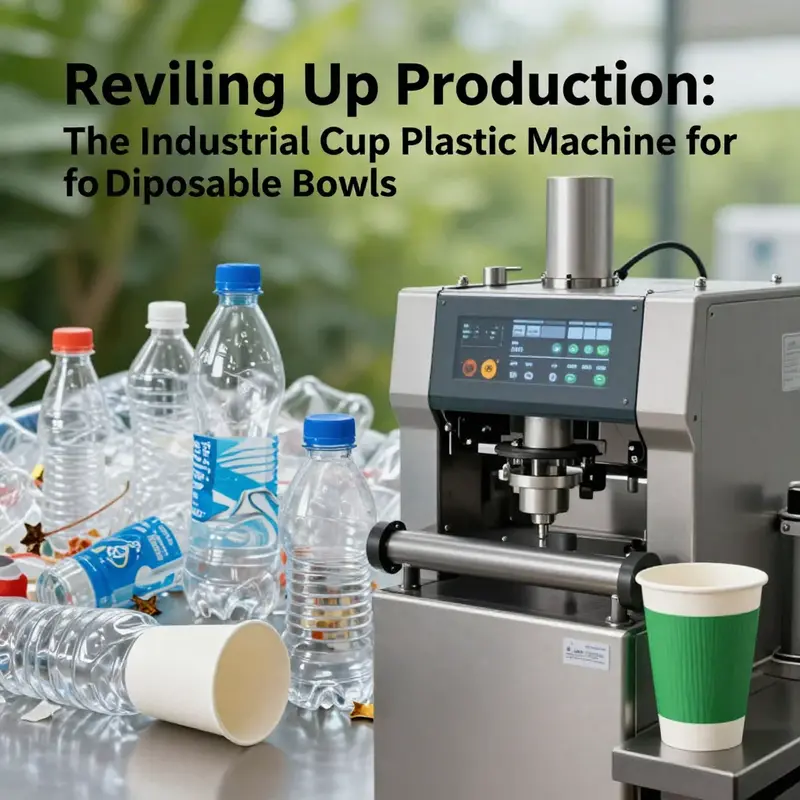
Closing the Loop: Practical Sustainability for Industrial Cup and Disposable Bowl Machines
The environmental impact of disposable cups and bowls has shifted from a peripheral concern to a core business challenge for manufacturers. Thermoforming lines that produce single-use containers must now balance throughput and hygiene with resource stewardship and end-of-life responsibility. Sustainable practice in this sector is not a single technology or marketing claim. It is a systems approach that rethinks material choices, machine design, waste handling, and supply chain relationships so the entire lifecycle yields a lower footprint.
Material choice is the first decisive factor. Traditional petroleum-based resins remain common because they deliver low cost and reliable performance. However, demand for alternatives has grown, and industrial equipment has adapted. Machines can now process compostable polymers such as PLA under tuned thermal profiles to avoid degradation during forming. They can also handle bio-blends and enhanced recyclables when heating zones and clamp times are precisely controlled. Selecting a material requires balancing biodegradability, barrier performance for wet or oily foods, and compatibility with existing municipal waste streams. In many cases, manufacturers benefit from offering multiple lines or modular cells to run both conventional and eco-friendly substrates without cross-contamination.
Energy consumption during production is another area where design matters. Modern thermoforming machines incorporate servo-driven systems that reduce idle power draw and enable faster, smoother cycles. Insulated heating chambers and electronically controlled IR or convection heaters deliver uniform sheet softening while using less energy. Heat recovery systems capture waste heat from cooling circuits and reuse it for pre-heating or facility needs. Variable frequency drives and demand-based heating lower energy use further during partial-load production. These hardware choices cut operating costs and shrink the carbon footprint per unit. When paired with energy monitoring software, manufacturers gain clear metrics to guide continuous improvement.
Minimizing material waste across the line is a practical lever with immediate returns. Advanced nesting algorithms reduce scrap by optimizing part layouts on the sheet. Precision forming and trimming minimize flash and rework, while automated quality inspection reduces rejects. Some lines include on-site granulators and pelletizers that reclaim trimmings and offcuts, converting them back into processable feedstock. When combined with clear separation protocols for different polymer types, this in-line recycling reduces virgin material demand. Integrating a closed-loop recycling approach also simplifies compliance with extended producer responsibility policies and positions a manufacturer as a reliable partner to brands that pledge circularity.
Designing for recyclability goes beyond the resin. Layered constructions, coatings, and additives influence whether a bowl or cup can be mechanically recycled or composted. Single-polymer structures are easier to reclaim. Where barrier layers are necessary, formulations that use compatible polymers or water-based coatings help maintain recyclability. Clear labeling and standardized resin identification further improve end-of-life sorting. Machine builders and material suppliers must collaborate to develop packaging structures that meet food-safety needs while staying within the capabilities of recycling streams.
Closed-loop supply chains extend sustainability beyond the factory gate. Some operations partner with local waste collectors, foodservice customers, or municipal composting facilities to collect post-consumer items. These recovered materials can be cleaned and reprocessed for non-food or even food-contact applications, depending on regulatory limits. Implementing take-back schemes gives manufacturers greater control over material quality and reduces the risk of contamination. It also opens opportunities for differentiated products made from certified recycled content, which are increasingly attractive to corporate buyers and procurement teams focused on sustainability metrics.
Trackability and transparency are essential to demonstrate environmental performance. Lifecycle tracking technologies capture data on energy use, material flows, and emissions for each production batch. Integrating PLCs with manufacturing execution systems and cloud analytics allows real-time visibility into key performance indicators. These systems generate verifiable records for audits and environmental reporting. They also enable scenario modeling—estimating the carbon implications of switching materials, changing cycle speeds, or adopting new recycling measures—so managers can make informed, data-driven decisions.
Regulatory and infrastructure constraints shape many sustainability choices. Industrial compostable materials like PLA require specific temperature and humidity conditions to break down effectively. If regional composting capacity is limited, promoting compostables can lead to lower diversion rates. Likewise, mechanical recycling depends on efficient collection and sorting infrastructure. The most sustainable choice in one region may not be feasible in another. A realistic sustainability strategy assesses local waste systems and develops tailored pathways, whether that means promoting recyclable mono-material designs, investing in collection programs, or choosing certified compostable formats where facilities exist.
Operationalizing sustainability also requires practical process optimization. Process engineers tune forming temperatures and dwell times to improve yield when using new substrates. Tooling may be modified to suit different shrink rates or clarity requirements of bio-based polymers. Staff training is crucial; operators learn to spot early signs of material incompatibility and handle multiple feedstocks without cross-contamination. Preventive maintenance keeps servo drives and vacuum systems running efficiently, which reduces energy spikes and downtime. Continuous improvement practices then lock in gains, moving the line steadily toward lower waste and energy intensity per product.
There are trade-offs and tensions to manage. Biodegradable materials sometimes cost more and may have higher greenhouse gas footprints depending on feedstock and processing. Recyclability and compostability can be mutually exclusive goals for a single product design. Transparent lifecycle analysis helps surface these trade-offs and choose the optimal route for a specific product and market. Companies that commit to sustainability set measurable targets—reduction in virgin resin use, percentage of recycled content, energy intensity per thousand units—and then align their investments in machinery, materials, and partnerships to meet them.
Practical steps that align manufacturing capability with environmental goals are straightforward. Start with a materials audit to identify where mono-material conversions or coating changes can improve recyclability. Retrofit existing lines with servo controls, heat recovery, and granulators to lower energy and material waste. Establish pilot programs for closed-loop recovery with key customers. Implement lifecycle tracking to measure progress and inform procurement. Finally, communicate clearly with buyers about the realistic environmental benefits of different materials and end-of-life options.
Complementary alternatives also have a role. For some applications, well-designed paper-based bowls offer performance comparable to plastics, especially with modern grease- and water-resistant treatments. These options reduce reliance on polymer processing for certain SKUs and can be produced to high standards with fast delivery. Exploring hybrid portfolios that include both advanced polymer systems and certified paper-based items allows manufacturers to meet varied customer needs while reducing overall environmental impact. See an example of a biodegradable kraft paper bowl offering for foodservice here: biodegradable kraft paper bowl.
Sustainability in industrial cup and bowl lines is an evolving practice. It requires technical upgrades, close collaboration across supply chains, and honest assessment of local waste ecosystems. When these pieces align, companies can deliver hygienic, efficient disposable packaging while shrinking their ecological footprint and meeting customer expectations for responsible sourcing. For broader context on industry trends and innovation in packaging sustainability, refer to the European Plastics Industry Association’s work: https://www.european-plastics.org/sustainability/innovation-in-plastic-packaging
Where Demand, Precision, and Sustainability Meet: Market Trends and Future Prospects for Industrial Cup and Disposable Bowl Machines
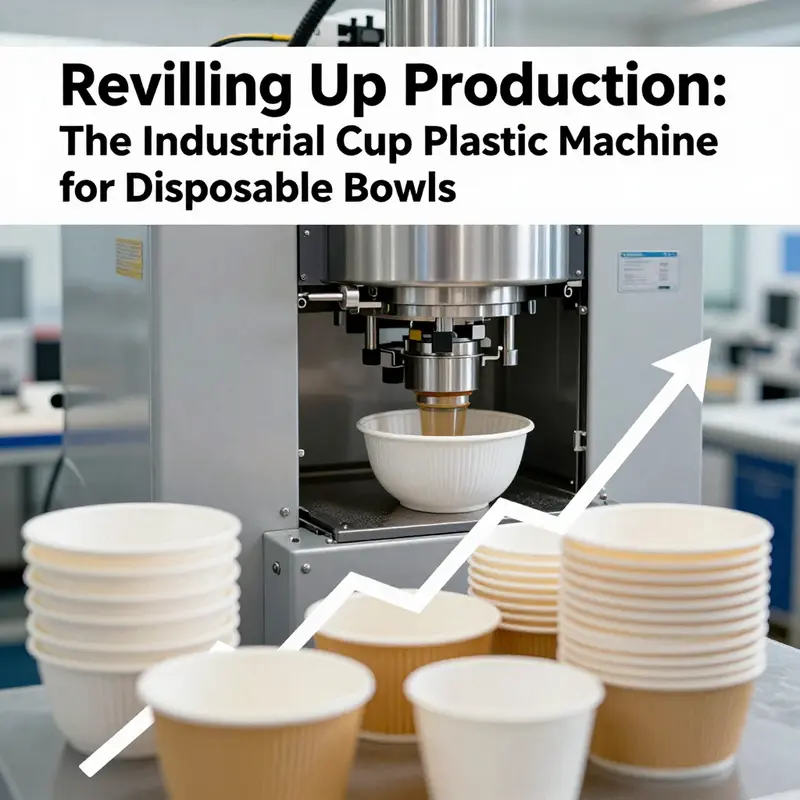
The market for industrial machines that form disposable cups and bowls is moving into a phase defined by higher precision, broader material choice, and stronger sustainability demands. Growth is steady and measurable. Demand for single-use food containers continues to rise across catering, retail, and ready-meal segments. Manufacturers and buyers are balancing three priorities: speed and cost per unit, product quality and design flexibility, and environmental responsibility. Those priorities are shaping machine design, production strategies, and sourcing decisions.
High-precision, multi-functional equipment leads the product development cycle. Thermoforming remains the backbone for many applications, but hybrid technologies are gaining ground. Injection blow molding, for example, produces thin-walled, crystal-clear bowls with consistent wall thickness and excellent finish. This method raises the bar for premium packaging, enabling thinner gauges without sacrificing strength. It also supports more complex geometries and tighter tolerances, which matter for stacked presentation and lid fit. The trade-off is higher capital cost and more specialized maintenance. Smart buyers evaluate lifecycle costs, not just purchase price, since uptime and energy efficiency quickly affect per-unit economics.
Parallel to technical upgrades, automation and control sophistication are transforming lines. Modern systems incorporate PLCs and touch HMI panels with multi-program presets. Servo-driven mechanisms replace older hydraulic systems for repeatability and energy savings. Integrated sensors and closed-loop control improve cycle stability and reduce scrap. These features make it easier to switch between formats and materials during a single production shift. Waste handling also improves. Many lines now reclaim trim and refeed it after in-line granulation, reducing material waste and lowering raw-material spend. For operations prioritizing circularity, these recycling loops are decisive.
Material trends are central to future demand. PP and PET remain top choices where strength, clarity, and heat resistance matter. For clear premium bowls, PET offers superior gloss and stiffness. PP delivers toughness and high-temperature resistance, which is useful for both hot and chilled foods. At the same time, interest in biodegradable and compostable polymers grows. PLA and certain starch blends appeal to buyers seeking lower environmental impact. However, switching to compostable polymers changes processing parameters—temperature windows, draw ratios, and cooling profiles must be adjusted. Machines with broad thickness compatibility and programmable heating profiles simplify this transition.
Supply chain dynamics are reshaping how manufacturers and buyers interact. A concentration of machine production occurs in major industrial regions where suppliers offer vertically integrated capabilities. This setup shortens lead times for prototypes, allows rapid tooling iterations, and cuts logistics complexity. For many buyers, the ability to receive machines within a month or two is a strong advantage. Suppliers in these hubs increasingly pursue international certifications that ease export. Compliance with recognized standards helps buyers meet regulatory and food-safety requirements in diverse markets. When evaluating vendors, purchasers should confirm quality management certifications and inspect service networks for spare parts and technical training.
Market metrics point to sustained expansion. Forecasts indicate mid-single-digit CAGR across the coming decade, reflecting steady appetite for convenience packaging. The wider disposable tableware packaging sector shows similar momentum, underpinning equipment demand. This expansion is driven by urbanization, growth in food delivery, and rising event and catering activities. Yet growth is not uniform: premium segments and custom-shaped containers grow faster, driven by branding and presentation needs. As clients demand more distinctive packaging, machine flexibility to run smaller batches profitably becomes a competitive advantage.
Regulatory and environmental pressures create both constraints and opportunities. Plastic restrictions in certain jurisdictions push some food-service providers toward fiber-based alternatives. At the same time, regions that permit high-grade recyclable plastics foster innovation in recyclable PET and PP containers. Manufacturers that enable dual capability—running both conventional plastics and recyclable or compostable materials—stand to capture a broader customer base. Another strategic response is to pair plastic lines with paper-based solutions. Buyers often choose different materials depending on use case and local regulation. For convenience, operations can source paper-based bowls for some menus and use plastic for other offerings; an example of the paper route is the availability of convenient kraft paper bowls with lids for takeout.
Operational considerations influence purchase decisions as much as headline specs. Cycle time and pieces per minute remain crucial. Multi-head and multi-station lines deliver the highest outputs, often exceeding hundreds of pieces per minute. Single-station machines suit prototyping and small runs. Beyond throughput, machine maintainability matters. Machines with modular tooling, quick-change clamps, and accessible control panels reduce downtime. Remote diagnostics and spare-part kits shorten recovery times. Energy efficiency is also rising in importance: variable-speed drives, servo systems, and improved thermal insulation lower power bills and reduce carbon footprints.
Investment frameworks now emphasize total cost of ownership. Buyers should factor in tooling costs, spare parts, energy, labor, and expected downtime. Training for operators and maintenance teams can accelerate ramp-up. Many vendors bundle technical training and preventive maintenance programs. Choosing a line with standardized electrical and pneumatic components simplifies sourcing replacement parts across multiple suppliers.
Looking forward, smart monitoring and Industry 4.0 integration will be key differentiators. Real-time analytics allow managers to monitor cycle efficiency, reject rates, and energy use. Predictive maintenance algorithms flag bearings and heaters that will fail, reducing unexpected stoppages. Lines connected to procurement systems can automatically reorder critical spares. These capabilities raise initial cost but produce rapid payback through higher yield and lower unplanned downtime.
Sustainability will increasingly drive machine features and material choices. Expect deeper integration of in-line reclaim, lower-temperature processing for compostable blends, and designs that reduce the polymer required per container. Regulatory shifts will spur design adjustments, such as specified recyclability markers and mono-material constructions to ease sorting. Partnerships between equipment manufacturers and resin suppliers will accelerate the validation of new bio-based and recycled resins for high-speed forming.
Risk factors require attention. Feedstock price volatility affects operating margins. Regional bans on specific plastics can shift demand patterns quickly. Concentrated supply chains reduce lead time but raise geopolitical risk exposure. Buyers should weigh supplier diversification and local service presence when making long-term commitments.
For buyers assessing options now, the checklist is straightforward. Prioritize machines that meet current output needs while offering flexibility for format and material changes. Verify energy and automation features that lower operating costs. Confirm compliance with relevant food-safety and quality standards. Factor in service, training, and spare-part logistics. And consider the role of alternative materials in your portfolio; blending plastic and paper options can reduce regulatory exposure and broaden market reach—see an example of a paper-based takeout bowl with lid for contexts where paper makes sense.
Overall, the industrial landscape for cup and disposable bowl forming machines is robust. Innovation in forming technologies, rising automation, and a growing emphasis on recyclable and compostable materials will guide investment choices. As buyers and suppliers adapt, success will come to those who balance production efficiency with material agility and environmental responsibility. For a market overview and projections supporting these trends, refer to this industry analysis: https://www.marketsandmarkets.com/Market-Reports/plastic-cup-making-machines-market-197928983.html
Final thoughts
As businesses increasingly turn to industrial cup plastic machines for disposable bowls, the benefits extend beyond production efficiency. By embracing technological advancements, these machines not only optimize the economic landscape but also contribute significantly to sustainability initiatives. Keeping a finger on the pulse of market trends will enable operators in the food service industry to stay competitive and relevant. Therefore, adopting these machines not only fulfills present needs but prepares companies for future demands.