
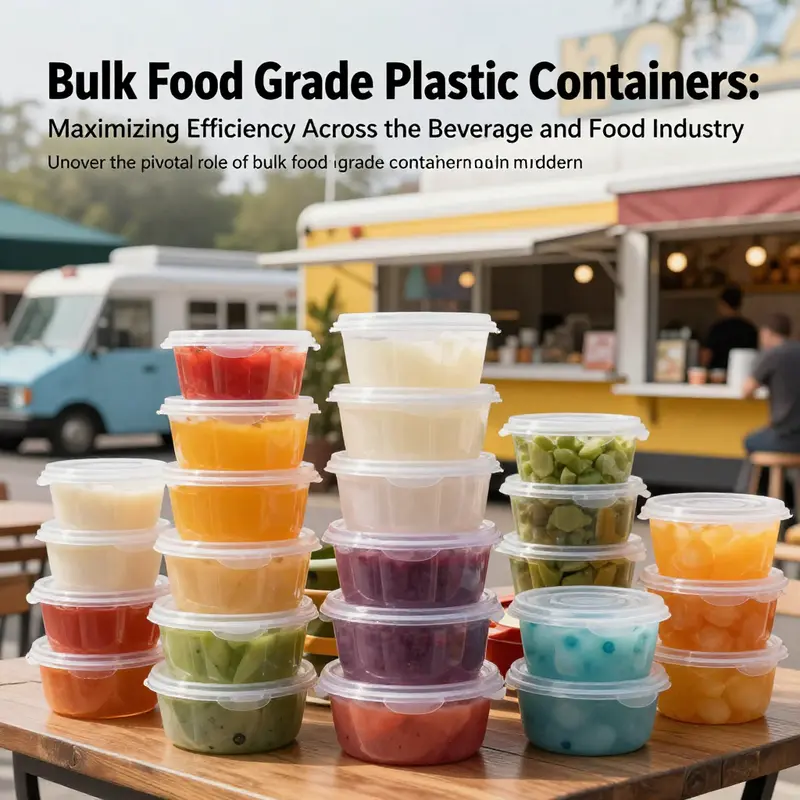
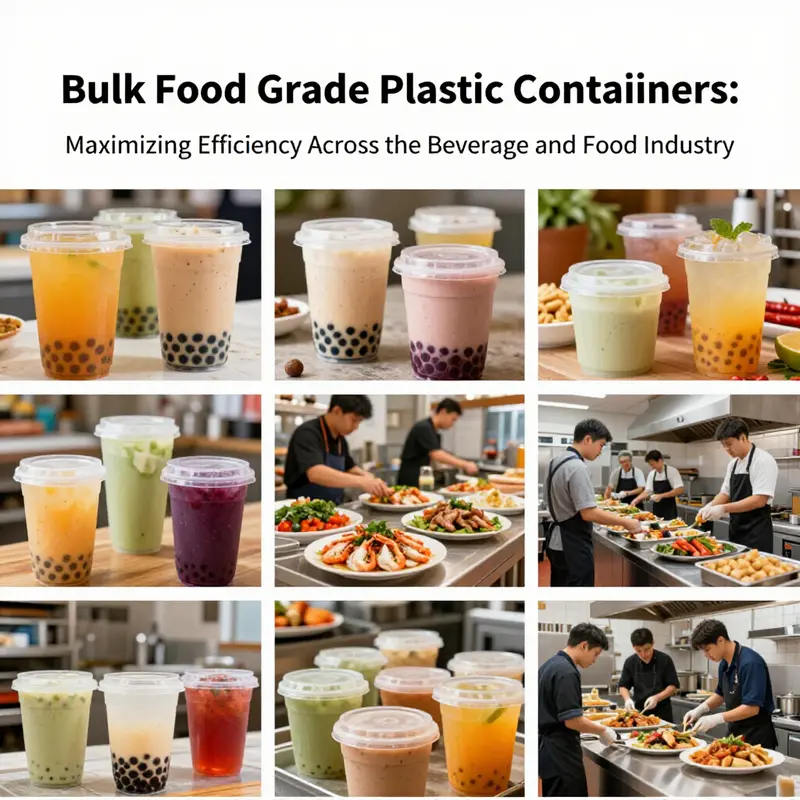
Bulk food grade plastic containers are essential assets for beverage chains, restaurants, food trucks, and catering services. With their unique blend of safety, efficiency, and adaptability, these containers cater to a diverse range of operations, from bubble tea shops to corporate events. In this exploration, we’ll dive into the versatile applications of bulk food grade plastic containers, ensuring compliance with stringent safety protocols, and assessing their economic impact on the supply chain. We’ll also discuss sustainable manufacturing practices and emerging trends shaping the future of these vital storage solutions. By understanding their benefits and versatility, your business can optimize its storage and transportation needs while enhancing operational efficiency.
null
null
Standards as Shield: The Technical Compliance that Powers Bulk Food-Grade Plastic Containers
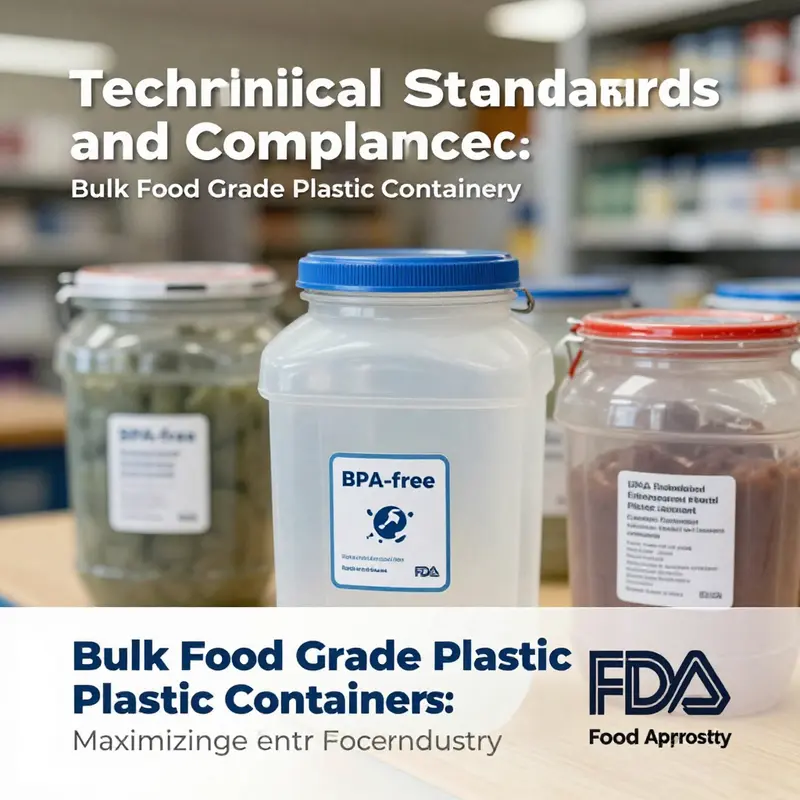
Every bulk operation that handles food products hinges on a quiet, uncompromising layer of safety and reliability. Bulk food-grade plastic containers do more than store; they act as a shield between ingredients and the wide variety of environments they encounter—from a humming warehouse to a ship’s hold, from a cold storage room to a busy retail floor. The chapter that follows treats standards and compliance not as bureaucratic hurdles but as a critical engineering discipline. The safety and performance of these containers rest on a carefully curated ecosystem of regulations, testing protocols, and traceable practices that ensure product integrity, protect public health, and sustain trust across the global supply chain. For buyers and producers alike, understanding this framework is not a luxury but a necessity that informs every decision, from material choice to end-use logistics.
At the heart of bulk bulk-storage packaging is material safety. The most common resins used in food-contact plastics—high-density polyethylene (HDPE), polypropylene (PP), and other polyethylene variants—are selected not only for strength and cost but for inertness and predictability in contact with food and beverages. Compliance with safety standards means the material must be free from contaminants that could migrate into food. Regulations typically dictate permissible additives, processing aids, and the allowable limits of substances that could pose a risk over time. This is not merely about avoiding outright toxins; it is about controlling migration, leaching, and the potential for cumulative exposure in scenarios where containers are stored for extended periods or used across multiple batches of product.
In the United States, the FDA framework for food-contact materials sets the baseline. The 21 CFR Part 174–178 guidance outlines which resins and additives are deemed acceptable for direct contact with food when used under standard conditions. For bulk storage containers, particularly those in the 20-liter, 50-liter, and larger drum family, compliance with these provisions ensures that the container does not empower the stored food to pick up unwanted substances during handling, storage, or transport. The European Union articulates a parallel standard in Regulation (EC) No 1935/2004, which emphasizes the general principle that materials and articles should not transfer harmful substances to food in normal use. Together, these frameworks create a common language that manufacturers can use to design containers that perform consistently across markets, enabling international logistics and reducing the risk of regulatory surprises for food processors and retailers.
Yet standards extend beyond the mere selection of resin. They dictate how the container is built, tested, and labeled. For instance, seal integrity is a fundamental focus: a tight, reliable closure protects against moisture ingress, contamination, and leakage—critical when storing dry goods like powders or nuts, or liquids in bulk. Tamper-evident features have become standard in many markets, serving both product authenticity and consumer confidence. The presence of a tamper-evident indicator, a band or an integrated seal, provides a visible signal that the product has remained under the intended conditions from fill to sale. This feature is not merely cosmetic; it is a functional line of defense that supports regulatory compliance and quality assurance programs.
The physical design of containers also reflects compliance-driven thinking. The square geometry, for instance, is widely adopted because it optimizes storage efficiency and stacking stability, reducing the risk of damage during handling and transit. Space efficiency matters in modern warehouses where every inch of racking and pallet space translates into tangible cost savings. Yet the shape and the structural features must be compatible with the required mechanical demands—drops, pressure from stacking, and the pressure differentials that can arise in transit. That is why UN certification and related transport-specific tests are increasingly part of the compliance conversation for bulk containers intended for international shipping. These tests validate performance under drop, impact, and stacking scenarios, ensuring the container can endure the rigors of cross-border logistics without compromising the packaged product.
Beyond the chain-of-custody and the physical properties, labeling and traceability are central to the compliance conversation. A container must carry clear information about its material, the lot or batch, the intended use, and the regulatory approvals it carries. This visibility enables processors to track compatibility with products across different lots and to respond quickly if a safety concern arises. In practice, this means a robust quality system is embedded in the manufacturing process, with third-party testing and certification verifying that the claimed properties hold true in real-world conditions. Certifications such as FDA-compliant or EU-compliant markings are not performances that can drift; they are attestations earned through rigorous testing and ongoing surveillance. For food processors that operate across continents, the assurance provided by these certifications translates into reduced compliance risk and smoother cross-border fulfillment.
The testing landscape supporting these standards is thorough and multi-faceted. Material safety and purity are validated through migration and extraction studies, where samples are tested to determine whether any substances could migrate into food under specified conditions. This is complemented by chemical resistance assessments that ensure solvents and cross-contact with other materials do not degrade the container or alter the contents. Seals and closures undergo integrity tests to confirm that they remain leak-proof over repeated use cycles or extended storage periods. UV resistance is another practical concern; prolonged exposure to sunlight can embrittle some plastics or compromise barrier properties. When UV stabilizers are incorporated, they are selected to balance optical performance with regulatory acceptability and non-toxicity. In higher-hygiene contexts, ISO 11607 and related guidelines can influence the design and validation of sealed containers used where sterile or semi-sterile handling is a factor, illustrating how even a primarily food-focused application can intersect with medical-grade packaging principles.
All of these considerations converge in the factory floor and the sourcing decision. For manufacturers, the objective is to build a quality system that harmonizes design intent with regulatory expectations and practical performance. For customers—food processors, distributors, retailers, and even importers—the objective is to verify that a container will not thwart product safety or supply chain reliability. That verification often involves third-party audits, documented test results, and a clear chain of custody that accompanies each batch. When a supplier can demonstrate compliance through a consistent trail of test reports and certifications, it becomes easier to predict performance, negotiate risk-based pricing, and plan for international distribution. The outcome is a more resilient supply chain, where containers behave predictably under diverse conditions and across markets.
In practice, this means asking for more than a generic spec sheet. It means requesting a complete compliance package: material certifications showing resin type and additive profiles, evidence of migration testing, confirmation of BPA-free status, and documentation that the design meets local and international sealing, labeling, and packaging requirements. It also means thinking ahead about end-use scenarios. If a bulk container is expected to ride in a flexitank or be used in a high-temperature or high-UV environment, the specification must reflect those conditions and the associated testing regimes. This proactive approach reduces the likelihood of recalls, product exposure incidents, or regulatory frictions that can ripple through a supply chain and affect shelf availability.
The evolving landscape adds a continuous dimension to compliance. As consumer expectations shift toward sustainability, and as regulators push for greater transparency and safer materials, bulk container manufacturers are increasingly asked to demonstrate lifecycle considerations, including recyclability, post-consumer disposal, and the minimization of hazardous additives. HDPE’s recyclability is often highlighted as a key advantage, supporting circular economy goals while preserving the inertness that makes it suitable for food contact. Transparency about the material’s origin, processing history, and end-of-life options helps buyers align their packaging choices with broader corporate sustainability targets without compromising safety or performance.
For readers seeking authoritative guidance on U.S. food-contact regulations, the FDA maintains resources that illuminate substance-specific allowances, testing guidelines, and compliance pathways. These resources anchor practical decisions in a formal regulatory framework and help translate theory into verifiable quality outcomes. The overarching message is simple: when standards are properly understood and applied, compliance becomes an enabler of efficiency, risk reduction, and trust in a product’s journey from producer to consumer.
External reference: https://www.fda.gov/food/food-contact-materials
From Bulk Storage to Global Velocity: The Economic Power of Food-Grade Plastic Containers in Modern Supply Chains
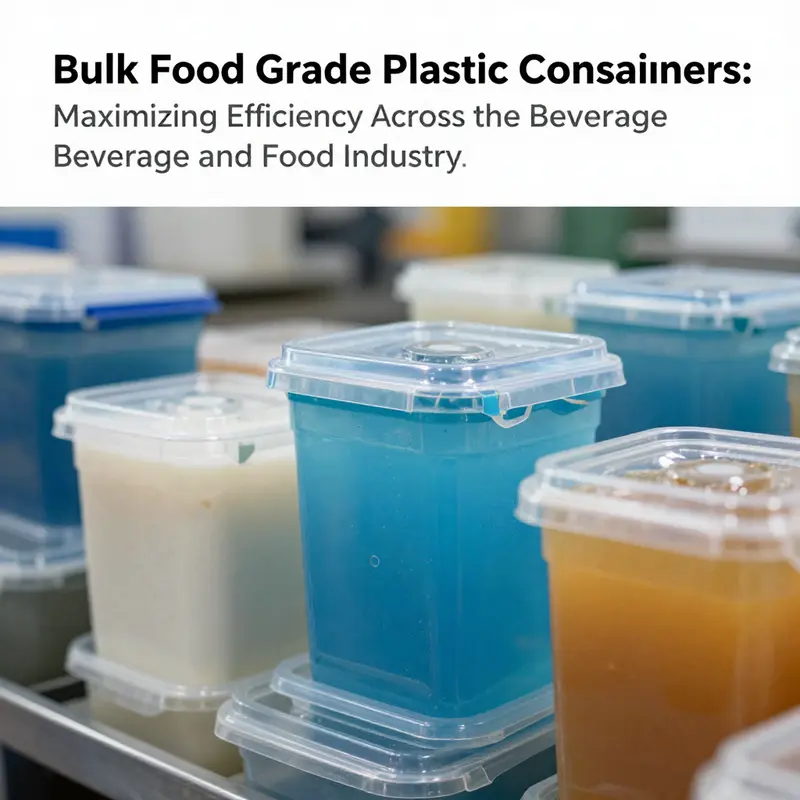
A supply chain lives and dies by the precision of its storage and the reliability of its movements. In this ecosystem, bulk food-grade plastic containers do more than hold product; they align safety, efficiency, and scale into a cohesive operating rhythm. When a warehouse can seal, stack, and transport bulk ingredients with containers designed for food safety, the entire chain behaves more predictably. The economic impact emerges not from a single breakthrough, but from a disciplined combination of durable materials, space-saving geometry, ergonomic handling, and adaptable form factors that withstand daily use across multiple environments. This is the quiet infrastructure that underpins modern food logistics, from central distribution centers to regional retailers, and it is the kind of improvement that compounds over time, translating to lower costs per unit, faster throughput, and more resilient operations in the face of demand volatility and regulatory scrutiny.
At the core of this economic effect is material technology. Food-grade plastics such as polypropylene, polyethylene, and high-density polyethylene are carefully chosen not just for strength, but for chemical inertness, cleanliness, and compatibility with a broad spectrum of consumables. The safety promise is reinforced by certifications and standards that reassure processors, distributors, and end consumers alike. Containers engineered with food-grade plastics are typically BPA-free and FDA-approved, aligning with strict health and hygiene regulations while enabling recyclability. In a climate where sustainability metrics increasingly anchor procurement decisions, recyclable feedstocks and end-of-life reclamation are essential. The result is a packaging ecosystem that minimizes contamination risk while offering a long service life—a dual advantage that lowers the total cost of ownership over multiple supply cycles. The economics of this choice become most evident when viewed across a full season of operations, where the up-front material costs are offset by durability, reduced waste, and improved asset utilization in both storage and transport.
Capacity and space efficiency represent a second axis of economic impact. Containers span a versatile range—from compact 1-liter units to substantial 35-liter square buckets—and the geometry itself is a strategic advantage. The square design, in particular, maximizes warehouse real estate and truck space, improving storage density by as much as 20 percent compared with traditional round options. This improvement matters at scale. In a typical distribution network, higher stacking efficiency translates into fewer pallets needed per shipment, reduced handling time, and more predictable loading plans. When a warehouse can consolidate more product into the same footprint, labor hours compress, forklift cycles shorten, and shrink is reduced. The space gains feed directly into freight planning, reducing the number of trips required and lowering fuel consumption, driver hours, and congestion-related downtime. These are not abstract benefits; they translate into measurable cost savings during peak seasons and steady-state operations alike.
Ergonomic and functional design qualities further amplify economic performance. Containers with sturdy, comfortable handles and secure, leak-proof lids reduce the risk of damage and spillage during manual handling and automated operations. In high-traffic environments—where workers repeatedly lift, seal, and move containers—the ease of use accelerates throughput and lowers the incidence of injury-related downtime. Leak-proof lids protect contents during racked storage and transit, a feature that also reduces cross-contamination concerns and product loss. The combination of durable materials and thoughtful ergonomics supports a leaner labor model: fewer touchpoints to manage, less time spent ensuring seals are tight, and more time allocated to value-added tasks like inventory replenishment and quality checks. In other words, the user experience of handling bulk containers becomes part of the cost calculus, influencing maintenance schedules, training requirements, and long-term asset depreciation.
The multi-scenario adaptability of bulk food-grade containers is another vital economic lever. These containers underpin a wide spectrum of applications—from bulk food packaging in processing facilities to retail display in supermarkets and even large-scale shipping for liquid and semi-liquid products via disposable flexitanks for 20-foot containers. Such versatility means that a single container platform can support multiple revenue streams and logistics strategies across different stages of the supply chain. In practice, this flexibility reduces the capital intensity of packaging programs. Rather than investing in assorted packaging formats for distinct functions, firms can standardize on a family of containers suitable for storage, transport, and display. This standardization lowers procurement complexity, eases supplier management, and improves warranty and maintenance planning. In addition, the broad application base fosters supplier competition and innovation, ultimately driving better prices and improved performance over time.
Safety and certification standards anchor the economic story in trust and reliability. Containers that meet international food safety regulations, while remaining BPA-free and compliant with health and hygiene standards, reduce the risk of recalls, contamination-related losses, and litigation. Certification pathways also simplify cross-border shipping, enabling smoother international operations and compliant distribution to global markets. When safety is built into the product design and manufacturing process, the cost of compliance is distributed across a wide usage horizon rather than being borne by a single shipment or a niche operation. This dynamic helps organizations amortize compliance-related investments and maintain steady cash flow even as regulatory expectations evolve.
Understanding the practical types and applications clarifies how these containers align with the economic goals of different supply chains. Square plastic buckets in the 1–35-liter range serve bulk storage and transport in kitchens and warehouses, where the compact form factor and stackability yield immediate warehouse gains. Transparent display boxes that line supermarket aisles leverage visibility to drive sales while preserving product integrity, illustrating how packaging form can contribute to both efficiency and customer experience. For extraordinarily large-scale needs, rigid HDPE tubs and crates deliver heavy-duty performance and chemical resistance in industrial food operations, providing durable containment that resists abrasion, impact, and solvents. Disposable flexitanks, although a different category, underscore the broader ecosystem’s emphasis on hygiene and efficiency by enabling hygienic bulk loading into shipping containers. In aggregate, these variants illustrate a packaging strategy designed to minimize waste, optimize space, and support safe handling across the supply chain.
The economic narrative grows clearer when we consider insights about reusable plastic intermediate bulk containers (IBCs). In a world increasingly oriented toward sustainability and resilience, the adoption of reusable plastics has surged in meal kit delivery, food processing, and retail distribution. Market insights from 2025 indicate that demand for food-safe IBCs continues to rise amid persistent supply chain challenges, reflecting their critical role in enhancing both cost-efficiency and operational reliability. The durability and reusability of these containers reduce reliance on single-use packaging components and facilitate circular supply models. They enable more predictable inventory flows, lower waste disposal costs, and greater control over product quality en route. The cumulative effect is a chain that is less sensitive to disruptions and more capable of maintaining service levels during shocks, which in turn sustains customer satisfaction and brand trust.
This broader industry context invites a nuanced view of cost structures. While upfront capital expenditure for bulk containers is non-trivial, the long-run savings accumulate through several channels: reduced packaging waste, lower labor costs from simplified handling, higher load efficiency, improved product protection, and less material loss due to damage. The interplay of these factors compounds over multiple cycles, so the payback period can be relatively short in high-volume operations. Moreover, as food safety and environmental requirements intensify, the relative value of containers that satisfy both performance and compliance grows. In practice, this means that choosing the right bulk container system is less a one-time cosmetic decision and more a strategic investment in the reliability and elasticity of the entire supply chain.
To place these trends in a broader packaging ecosystem, consider how other packaging formats interface with sustainability goals. For instance, the packaging landscape increasingly embraces eco-friendly solutions beyond plastics, such as recyclable pulp-based cups and bowls for food service and display. These choices illustrate how material selection can align with broader corporate sustainability commitments, even as bulk plastic containers remain central to bulk storage and transport. For readers exploring a wider packaging ecosystem, a look at eco-friendly recyclable pulp cup holders can provide complementary insights into how different solutions can be integrated to optimize cost, safety, and environmental impact. eco-friendly recyclable pulp cup holder
As the conversation about efficiency continues, it is also useful to anchor the discussion in external market context. The ongoing evolution of plastic intermediate bulk containers is documented in industry analyses that emphasize the resilience and cost advantages of reusable, food-safe IBCs within complex networks. For a detailed market perspective, see external industry exploration here: https://www.marketsandmarkets.com/Market-Reports/plastic-intermediate-bulk-containers-market-1468.html. This resource outlines key developments and trends shaping the demand outlook, reinforcing the chapter’s emphasis on durability, standardization, and scalable logistics as the core drivers of economic value in bulk packaging.
In sum, bulk food-grade plastic containers are not merely passive vessels. They are a strategic asset that enhances safety, space efficiency, handling ease, and cross-functional adaptability. Their robust materials, optimized geometry, and versatile configurations enable leaner operations, lower total costs, and greater resilience in the face of demand volatility and regulatory scrutiny. The economic impact emerges through a synergistic blend of reduced waste, improved asset utilization, and enhanced throughput across the supply chain. As global networks continue to tighten and diversify, the role of well-designed, food-grade plastic containers will remain central to delivering reliable service, protecting product integrity, and sustaining competitive advantage across food enterprises.
null
null
Shaping Tomorrow: Innovation, Efficiency, and Sustainability in Bulk Food Grade Containers
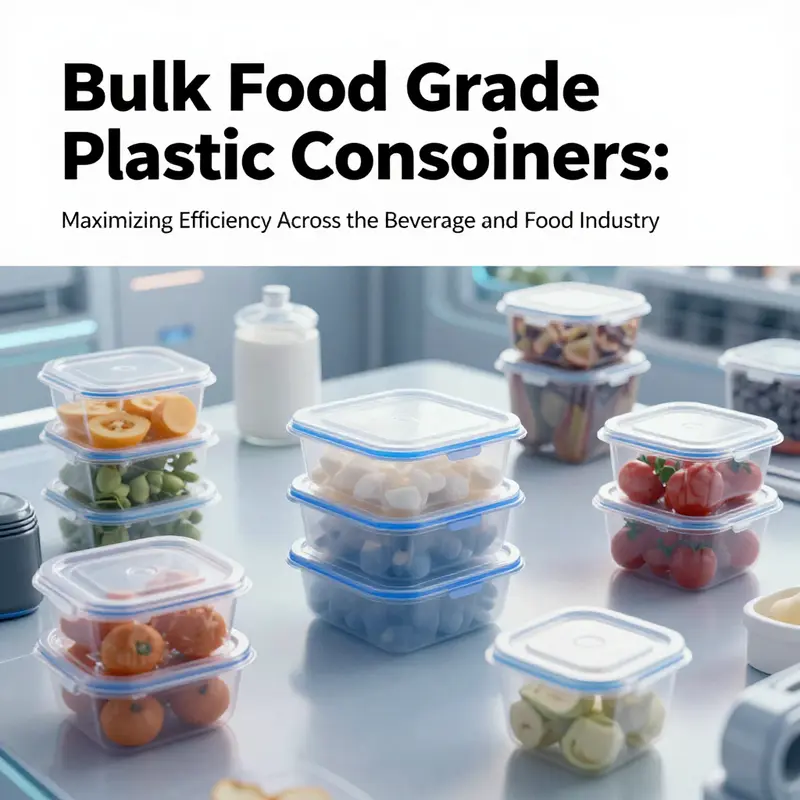
The trajectory of bulk food grade plastic containers is being shaped by three converging forces: rising demand for scalable packaging, rapid advances in materials science, and a strong push toward environmental responsibility. This collaboration is driving a shift from simple storage to integrated systems that improve safety, traceability, and energy efficiency across packaging, warehousing, and distribution.
Key trends include broader adoption of food-grade intermediate bulk containers (IBCs) for liquids and semi-liquids, lightweight and collapsible designs to save material and transport space, and smarter packaging with sensors for real-time visibility and recalls.
Material science remains vital, with polypropylene remaining a mainstay while researchers explore recyclable and bio-based polymers, additives for barrier performance, and lighter composites to extend shelf life without compromising safety.
Challenges persist, including heat exposure, warping in certain processing environments, and end-of-life considerations. The industry continues to test rigorous standards and explore recycling and disassembly to reduce environmental impact.
Looking ahead, success hinges on modular, standards-aligned container platforms that can be reused across products and regions, supported by digital data to optimize forecasting, inventory control, and risk management.
Final thoughts
As we have explored, bulk food grade plastic containers stand as versatile tools in the arsenal of many businesses in the food and beverage industry. Their compliance with safety standards, economic benefits, sustainable manufacturing, and emerging market trends highlight their crucial role in modern operations. By leveraging these containers, establishments can enhance both their service delivery and storage capabilities, ensuring they remain competitive and efficient in a fast-evolving marketplace. Investing in these solutions is not just a practical choice; it’s a strategic advantage for businesses committed to quality and sustainability.