
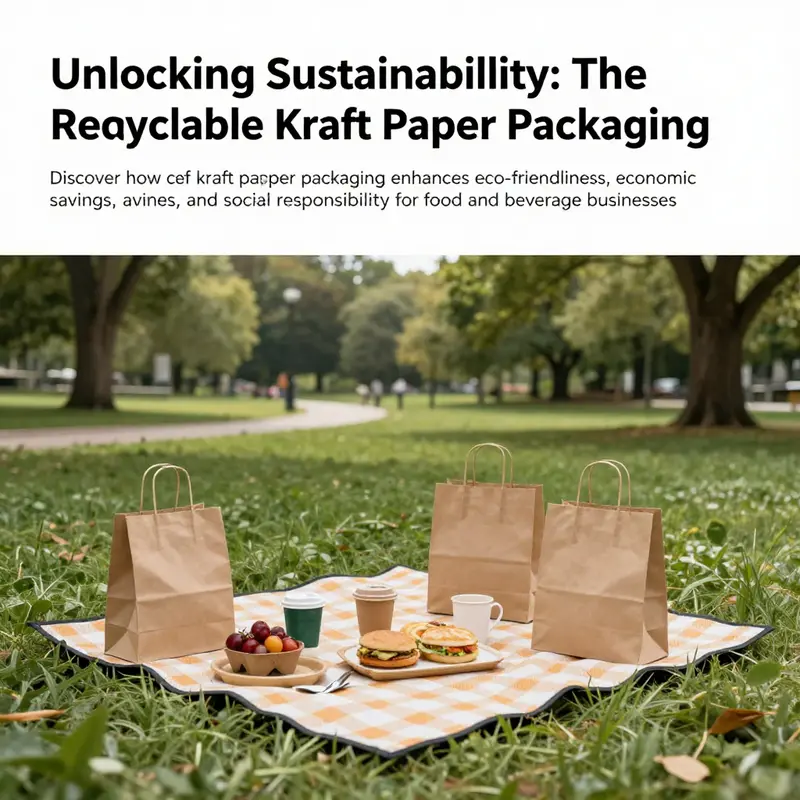
As businesses in the food and beverage sector strive for sustainability, recyclable kraft paper packaging emerges as a compelling choice. With growing consumer awareness and legal regulations advocating for greener solutions, adopting eco-friendly materials is no longer optional. Kraft paper, made primarily from recycled fibers, presents an environmentally conscious alternative that significantly reduces environmental strain. Additionally, its practical benefits can translate into economic advantages for businesses, from reduced material costs to enhanced brand loyalty. This article explores the environmental benefits of kraft paper packaging, the economic advantages it offers, and its profound societal impact—equipping brands in the beverage, restaurant, and event planning sectors with the insights needed to make informed, sustainable packaging choices.
Circular Gains: The Environmental Power of Recyclable Kraft Paper Packaging
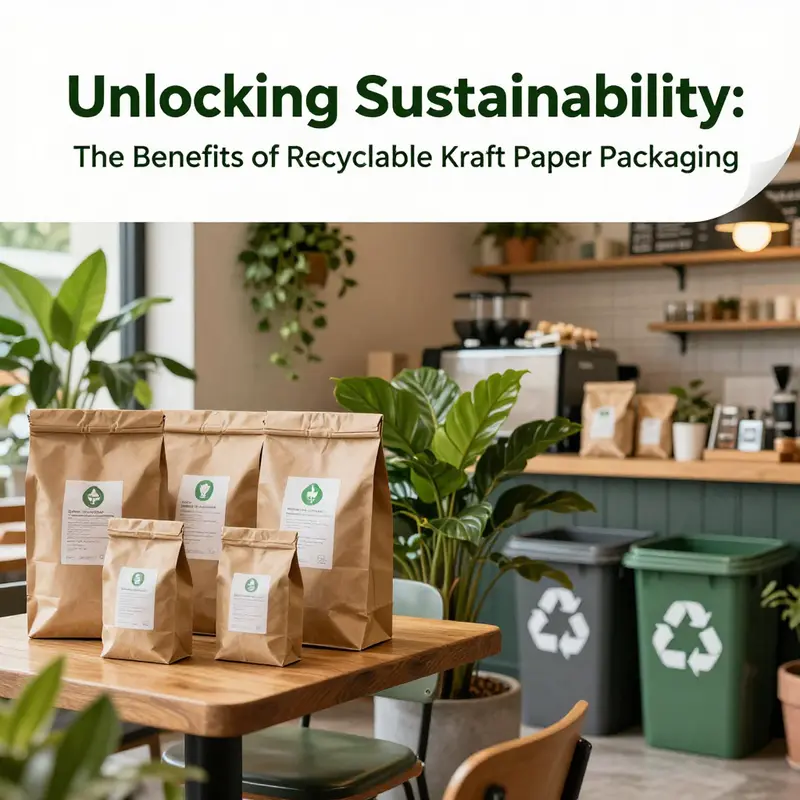
Kraft paper packaging delivers measurable environmental advantages when compared to many alternatives. Its recyclability and biodegradability remain central to those gains. These properties reduce demand for virgin resources, lower greenhouse gas emissions, and simplify end-of-life handling when systems work correctly. Understanding how recyclable kraft paper performs across the full lifecycle reveals why it has become a preferred material for companies seeking both practical performance and environmental integrity.
Kraft paper starts as wood pulp derived from managed forests or recycled fibers. Its natural, brown appearance means manufacturers avoid bleaching and heavy inks. That minimal processing keeps energy and chemical use down. When recycled content is used, production requires substantially less water and energy than virgin fiber manufacturing. Those savings translate into lower greenhouse gas emissions during production. The result is a material that supports a smaller carbon footprint without sacrificing strength or durability.
Recyclability is the core advantage. Kraft paper maintains structural integrity through several recycling cycles. Mixed paper streams often accept kraft fibers easily, so recovery rates can be high where infrastructure is available. Each reuse reduces extraction of fresh wood pulp. That reduction conserves forests and limits the environmental impacts tied to logging and primary fiber processing. Recycling also diverts material from landfills, preventing methane emissions associated with anaerobic decomposition.
Biodegradability complements recyclability. If kraft paper cannot be recovered, it degrades far more rapidly than fossil-based plastics. Under proper composting conditions, it breaks down into organic matter. That process lowers long-term pollution risks in natural environments and reduces persistent litter. Biodegradability is not a license to discard irresponsibly, but it provides a safer fallback in systems where recovery is incomplete.
The combined effect of recyclability and biodegradability supports circular economy aims. A circular approach keeps materials in productive use for as long as possible. Kraft paper fits this model: it can be reused, recycled, and, when necessary, returned safely to soil through composting. This layered end-of-life flexibility is valuable where waste streams vary across regions. Brands that design packaging with recyclability in mind enable better outcomes across different municipal systems.
Energy and water savings are tangible and repeatable. Compared to producing virgin paper or many synthetic packaging materials, kraft paper manufacture consumes less energy and less water. Facilities can achieve efficiency gains through mechanical recycling and optimized pulping. Reduced energy demand means lower fossil fuel consumption and fewer associated emissions. Water conservation eases pressure on local supplies and limits the generation of process wastewater. Together, these efficiencies make kraft paper a lower-impact choice across production stages.
Sustainable sourcing underpins long-term benefits. When wood pulp comes from certified forests, it supports responsible forestry practices. Certification schemes encourage reforestation, protect biodiversity, and ensure soil and water health. Sourcing rules and chain-of-custody systems provide transparency from forest to finished packaging. This transparency matters to buyers and regulators. It verifies that packaging choices do not contribute to forest degradation or illegal logging.
Waste diversion and landfill avoidance deliver further environmental gains. Landfilled materials occupy space and can produce methane. Non-recycled plastics remain intact for decades. By contrast, a recyclable kraft package diverted into paper recycling or industrial composting avoids long-term persistence. Regions with high paper recycling rates therefore see clear environmental improvements when brands switch to kraft-based solutions.
However, outcomes depend on design and collection systems. Not all kraft packaging is equally recyclable. Laminations, grease barriers, or certain coatings complicate recycling. Properly designed kraft paper uses recyclable or compostable coatings and limits mixed-material constructions. Design decisions that favor single-material constructions help maintain recyclability and simplify sorting at material recovery facilities. Collaboration between designers and recyclers reduces contamination and improves final recovery rates.
Contamination remains a practical challenge. Food residues, grease, and non-paper inserts can reduce the recyclability of kraft packaging. Local recycling facilities may reject heavily contaminated loads. Compostable serviceware may be better suited for certain food-contact applications when contamination is unavoidable. Clear labeling and consumer education help ensure that kraft packaging enters the correct waste stream. Packaging that clearly states its recyclability or compostability improves recovery rates.
Infrastructure plays a decisive role in environmental outcomes. Even the most recyclable kraft designs rely on functional municipal or regional recycling systems. Where curbside collection and industrial composting exist, kraft packaging performs well. In areas lacking collection, recovery rates fall, and environmental benefits diminish. Brands and policymakers should therefore consider local infrastructure when choosing materials. Investing in improved collection and sorting capacity amplifies the overall gains from recyclable kraft paper.
Lifecycle thinking highlights where the biggest wins occur. Measuring impacts across sourcing, production, transport, use, and end-of-life demonstrates that material choice matters most when matched with system capacity. For many product categories, moving from multilayer plastic or heavily treated papers to recyclable kraft lowers cradle-to-grave impacts. The benefits are measurable in reduced carbon emissions, lower water use, and decreased reliance on non-renewable resources.
Quantifying benefits can galvanize action. Life cycle assessments indicate that recycled kraft packaging often reduces greenhouse gas emissions by meaningful percentages versus virgin-fiber or plastic alternatives. Water savings and reduced chemical use further strengthen the case. Brands that quantify these improvements can communicate genuine environmental progress to customers, stakeholders, and procurement partners. Transparent metrics build trust and help sustain long-term commitments.
Certification and standards reinforce credibility. Third-party labels and industry guidance validate material claims. Standards ensure that terms like “recyclable,” “compostable,” and “sustainably sourced” meet agreed definitions. Packaging that meets recognized criteria reduces greenwashing risk and simplifies purchasing decisions for buyers. For organizations aiming to meet sustainability goals, certified kraft packaging provides a reliable option that aligns with responsible procurement policies.
The marketing value of kraft paper should not be overlooked. Its unbleached look signals simplicity and authenticity. Consumers often interpret kraft packaging as eco-conscious by default. That perception can influence purchasing choices when other product attributes are equal. When backed by transparent claims and measurable benefits, kraft packaging supports brand credibility with environmentally minded buyers. Visual cues and honest messaging together create a compelling story about responsible materials.
Operationally, kraft paper balances performance and sustainability. It offers high tensile strength and tear resistance, making it suitable for many packaging forms. From bags to bowls, kraft structures protect goods while remaining lightweight. Lower material density reduces transportation emissions per unit. Lightweight, strong packaging helps brands manage logistics costs and reduce carbon associated with shipping.
Policy and procurement influence adoption at scale. Public procurement rules and corporate sourcing policies that prioritize recyclable materials accelerate market shifts. When procurement criteria value recycled content, recyclability, and certified sourcing, suppliers respond with compliant offerings. Policy incentives, such as landfill diversion targets and recycled content mandates, further increase demand for kraft-based solutions. Coordinated policy and market demand can reshape supply chains and scale the environmental benefits.
Circular design also requires end-user engagement. Clear on-pack instructions and standardized labels help consumers sort packaging correctly. Simple guidance about composting or recycling reduces contamination. Educational campaigns increase participation in recovery programs. Brands that invest in consumer-facing clarity improve outcomes and bolster perceived responsibility.
Real-world transitions illustrate feasibility. Food service and retail segments increasingly use recyclable kraft options. When paired with appropriate lids, liners, and closures, kraft containers handle hot or wet foods reliably. Performance tests and industry innovations have produced coatings that balance grease resistance with recyclability. These technical advances remove many earlier limitations, enabling broader substitution of kraft for less sustainable materials. For specific foodservice solutions, see this biodegradable kraft paper bowl as an example of compostable packaging adapted to food handling needs: https://greendispopack.com/product/biodegradable-eco-friendly-take-away-odm-oem-round-kraft-paper-bowl/
Economic considerations matter too. Recycled fiber markets fluctuate, and supply chain disruptions can affect cost. Yet long-term investments in recycling systems and stable sourcing create resilience. Brands that build flexible procurement strategies, and that design packaging for the prevailing recovery infrastructure, reduce exposure to market volatility. In addition, material efficiency and reduced shipping weights often yield cost benefits that offset initial investments.
Measuring and reporting progress sustains credibility. Environmental claims tied to clear metrics allow stakeholders to track improvements. Indicators such as percentage recycled content, reduction in virgin fiber use, and end-of-life diversion rates demonstrate real change. Continuous improvement targets encourage innovation and align internal teams around measurable sustainability outcomes.
Adopting recyclable kraft paper packaging is not a universal solution. It works best when paired with suitable products, compatible coatings, and robust collection systems. Some specialized applications still require barrier films or multilayer constructions. Yet for a wide range of consumer goods and foodservice items, kraft paper offers a practical path toward lower environmental impact.
The strategic choice to use kraft paper aligns environmental performance with operational needs. It reduces reliance on virgin resources, lowers greenhouse gas emissions, and enables safer natural degradation when recovery fails. Combined with thoughtful design and investment in infrastructure, recyclable kraft packaging contributes to more circular material flows. That contribution matters at the scale of individual brands and at the level of entire supply chains.
Finally, collaboration unlocks the full potential of kraft packaging. Designers, manufacturers, waste managers, and policymakers must align to ensure materials are recoverable and markets exist for recycled fiber. Clear standards and consumer education complete the system. Together, these elements create durable environmental benefits that extend well beyond single product lifecycles. For guidance on standards and industry practices related to sustainable packaging, consult the Sustainable Packaging Coalition: https://www.sustainablepackaging.org
The Economic Case for Recyclable Kraft Paper Packaging
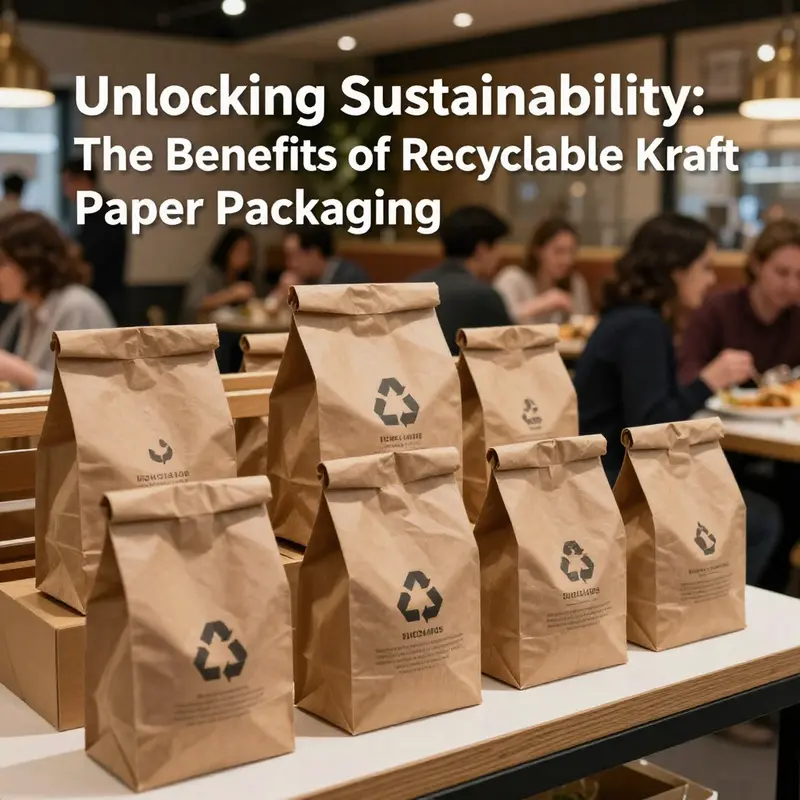
Kraft paper packaging offers more than a green image; it also supports cost stability across the supply chain. Its recyclability reduces virgin fiber demand, lowers raw material costs, and helps procurement teams manage price volatility.
By enabling closed loop recycling, kraft fiber can be recovered and reused many times, spreading capital costs over larger volumes and lowering per unit processing costs. In many markets, policy incentives such as waste diversion credits and landfill fee reductions improve the economics of recyclable kraft packaging.
The overall picture is a lifecycle driven ROI with steady input costs, premium pricing potential, and a resilient circular model that benefits brands, customers, and communities.
Threads of Change: How Recyclable Kraft Paper Packaging Shapes Society and Sustainability
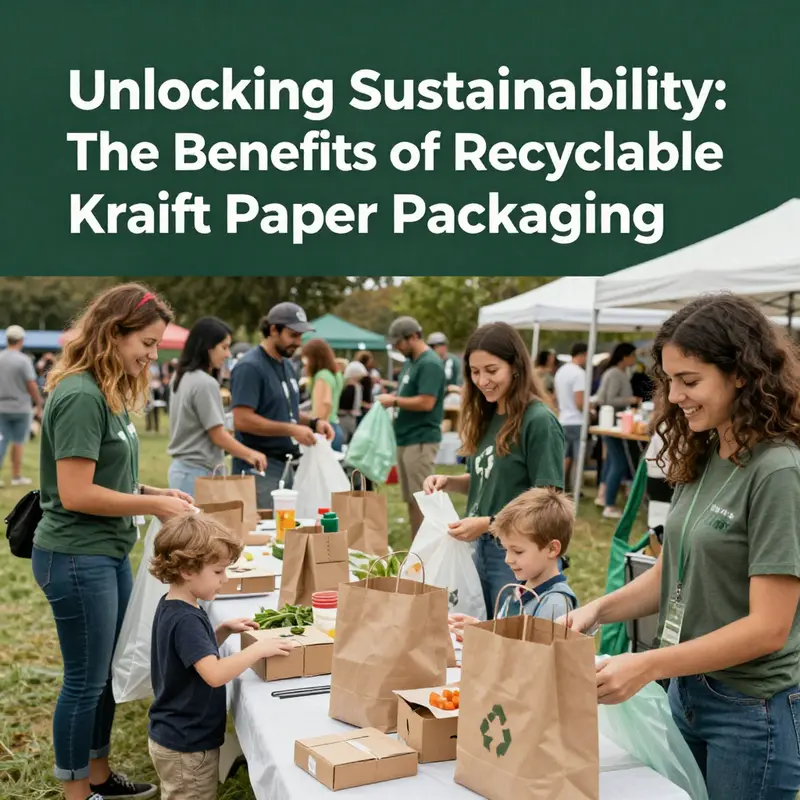
Kraft paper packaging is more than a container; it is a social instrument that quietly redirects how people think about waste, value, and resilience. In the long arc of environmental practice, recyclable kraft paper serves as a bridge between immediate needs—protecting food, preserving product integrity, enabling efficient logistics—and the broader goals of a circular economy, public awareness, and collective responsibility. This chapter follows that thread, tracing how a straightforward material can become a catalyst for behavioral shifts, policy alignment, and economic patterns that reverberate through households, brands, and communities alike. The core idea is simple but powerful: when packaging is designed to be recycled, reused, and eventually reimagined as new material, it lowers barriers to responsible action and elevates the norms by which society measures progress. Kraft paper’s appeal rests not only in its performance but in its narrative—the story of a resource that returns to use rather than vanishing into waste—and that narrative influences decisions at every level, from the consumer’s kitchen to the boardroom.
Kraft paper packaging draws its strength from a blend of materials and a processing philosophy that prioritizes recyclability and a lower environmental footprint. It is derived primarily from recycled paper fibers and unbleached wood pulp, a combination that yields a naturally durable, brown-toned material with minimal chemical treatment. This composition matters in multiple ways. First, it signals authenticity and ecological responsibility through its uncoated, uncolored appearance, allowing brands to communicate sustainability without relying on elaborate dyes or finishes. Second, the reliance on recycled fibers reduces the demand for virgin resources, helping to ease pressure on forests and the energy demands associated with primary fiber production. Third, the lower processing intensity—compared with some bleached or heavily coated papers—translates into reduced energy and water use in production. Taken together, these factors cultivate an industry narrative in which packaging is not waste but a continuous resource loop, a message that resonates with a public increasingly aware of environmental stewardship and the need to conserve finite materials.**
The environmental benefits of kraft paper packaging are inseparable from its societal implications. Recyclability and biodegradability work in tandem to reduce landfill burden and pollution, while also offering a practical alternative to plastics in many consumer contexts. In the realm of food packaging—sandwich wraps, trays, and retail boxes—the shift toward fiber-based packaging changes everyday habits. Consumers encounter packaging that invites recycling, and in some cases composting, under proper conditions. This alignment between material performance and end-of-life pathways helps to normalize responsible disposal as a standard expectation rather than a niche preference. When households see recyclable kraft packaging in routine use, the behavior change extends beyond one purchase; it signals a broader ethos of resource stewardship that can influence future choices across categories. Beyond households, public awareness grows as businesses proclaim their commitment to sustainable packaging. When a restaurant or retailer chooses kraft, they’re broadcasting that resource efficiency and environmental accountability are core to their brand story. In turn, customers respond not only with gratitude for reduced plastic waste but with an increased willingness to support businesses that live up to stated environmental commitments. The result is a social climate where responsible consumption becomes a shared, visible practice rather than an abstract ideal.**
The societal impact of recyclable kraft packaging intersects with the circular economy in a way that provides tangible benefits to waste streams, job markets, and local governance. In a circular model, materials are kept within the economy for as long as feasible, with fiber-based packaging designed for reuse, recycling, and eventual remanufacture. Kraft paper’s recyclability supports this loop by preserving fiber quality across multiple cycles and by allowing end products to re-enter the production cycle with reduced energy input and emissions. While no material is perfect in isolation, kraft packaging tends to fit better with existing recycling infrastructures than many alternatives, which simplifies collection and sorting and reduces contamination risks. This, in turn, lowers processing costs and strengthens program outcomes for municipalities and private waste managers. The economic ripple effects extend to local communities as well. Recycling facilities need skilled labor, technicians, and steady feedstocks; kraft packaging contributes to demand for these roles, reinforcing regional economies that may be sensitive to fluctuations in virgin material markets. In practical terms, when brands invest in recyclable kraft packaging, they help create a market signal that encourages more sustainable design, better recycling technology, and a more predictable supply chain. The combined effect is a more resilient economy where resources circulate with less inherent waste, and where communities gain from cleaner neighborhoods and more efficient handling of post-consumer materials.**
From a design perspective, kraft paper offers a distinctive blend of practicality and authenticity that can influence consumer perception and behavior. The natural brown finish, achieved through minimal processing, communicates honesty and environmental mindfulness without requiring extra colorants or coatings. This aesthetic aligns with consumer desires for products that feel responsible and trustworthy, particularly in sectors like food service and retail, where packaging communicates first. The material’s compatibility with common printing techniques enables brands to convey essential information and branding clearly while preserving recyclability. Importantly, this synergy matters because consumer perception often hinges on packaging as much as on the product itself. When packaging conveys responsibility, shoppers frequently interpret the brand as more conscientious and values-driven, which can translate into stronger loyalty and willingness to pay a premium for products that match their environmental beliefs. In practical terms, designers and procurement teams working with kraft packaging face a balancing act: maintain barrier properties, moisture resistance, and durability required for food contact while ensuring that inks, adhesives, and coatings do not compromise recyclability. This balance becomes a collaborative design challenge across the supply chain, encouraging cross-functional teams to optimize materials, weights, and architectures that preserve performance while extending the life of the material through recycling. For brands, the payoff is not only compliance with environmental expectations but also a more coherent narrative that ties product integrity to a plainspoken, durable material with a clear lifecycle. As an example of how the design conversation can translate into tangible options, some suppliers offer recyclable kraft packaging formats such as octagonal or rectangular takeaway options, which can demonstrate the practical versatility of the material while maintaining recyclability. Specifically, the option showcased at disposable-octagonal-box-restaurant-food-kraft-paper-packaging illustrates how form follows function in a way that reinforces the life-cycle logic behind kraft packaging.**
The social dimension of kraft paper packaging also extends into education and civic engagement. When schools, libraries, and community groups encounter packaging that embodies recycling values, opportunities arise for experiential learning—projects that connect materials science, life-cycle thinking, and environmental responsibility. This educational potential strengthens public understanding of how everyday choices matter, empowering people to participate more fully in local recycling programs and to advocate for improved waste management infrastructure. Businesses that embrace kraft packaging frequently participate in community sustainability initiatives, which can cultivate social capital, trust, and collaboration. These activities help build a culture of stewardship that ripples beyond the immediate commercial sphere, encouraging volunteers, workers, and residents to contribute to a shared objective: a cleaner environment and a more resource-efficient society. The social outcomes manifest in many ways, from enhanced local employment in recycling and processing facilities to greater discipline in waste sorting at the household level. Over time, these improvements reinforce a sense of collective efficacy, a belief that everyday actions—such as choosing recyclable packaging—contribute to a larger, meaningful transformation.**
Policy and standards shape the trajectory of kraft packaging in ways that reinforce social benefits and industrial viability. When municipalities and nations articulate clear guidelines for recyclability, labeling, and waste streams, the path of kraft fiber-based packaging becomes more predictable for producers and consumers alike. Well-defined standards help prevent misclassification as contaminated or non-recyclable, a problem that can undermine recycling rates and project outcomes. At the same time, the natural, unbleached character of kraft material can ease compliance with fiber-based recycling rules that discourage heavy coatings or mixed materials. Yet the durability that makes kraft packaging attractive also requires attention to inks, adhesives, and barrier coatings that could complicate sorting and recycling if not designed for recyclability. The design challenge is to maintain high performance while preserving end-of-life options, a balance increasingly reflected in corporate sustainability reporting and investor considerations. When brands disclose recyclability rates, waste diversion figures, and energy savings, stakeholders gain confidence and trust. That confidence often translates into market advantages, as customers reward transparency and alignment with social expectations around stewardship. The societal arc, then, is not a single act of choosing kraft; it is a continuous practice of aligning production with circular principles and communicating outcomes openly to the public. To deepen understanding, a respected external reference offers a detailed framework for standards, grades, and applications—an important resource for practitioners seeking to strengthen the integrity of recyclable kraft packaging.**
In the closing reflection, the story of kraft paper packaging emerges as part of a broader cultural shift toward transparency and accountability. When brands articulate the materials they choose, the recycling streams they support, and the measurable outcomes they achieve, they invite dialogue with customers, workers, and communities. This dialogue fosters a shared comprehension of the tradeoffs involved in packaging decisions and clarifies the role individuals play in sustaining resources. The behavioral shifts prompted by kraft packaging—careful disposal, preference for recyclable options, and willingness to invest in responsibly produced goods—are incremental but consequential. They accumulate into a societal norm that elevates resource stewardship and resilience in the face of environmental uncertainty. The practical implication is clear: packaging is not an afterthought but a strategic asset that can drive social and environmental progress when designed and deployed with care. As production scales and recycling networks mature, kraft-based packaging becomes not only feasible but expected as part of a cleaner, more circular economy. The chapter remains a living account of how everyday materials influence collective outcomes, inviting ongoing attention from researchers, practitioners, and communities. For further detailed insights, consider reviewing this authoritative source: https://www.packaging-planet.com/kraft-paper-food-packaging/.
Final thoughts
In a world where environmental consciousness is increasingly vital, adopting recyclable kraft paper packaging provides a pathway to sustainability for food and beverage businesses. By reducing landfill contributions through recyclable and compostable materials, enhancing brand perception with eco-friendly practices, and potentially lowering costs, businesses can simultaneously thrive economically and socially. As you consider your packaging choices, remember that every small step towards sustainability can result in broader positive impacts on the environment and society at large.