
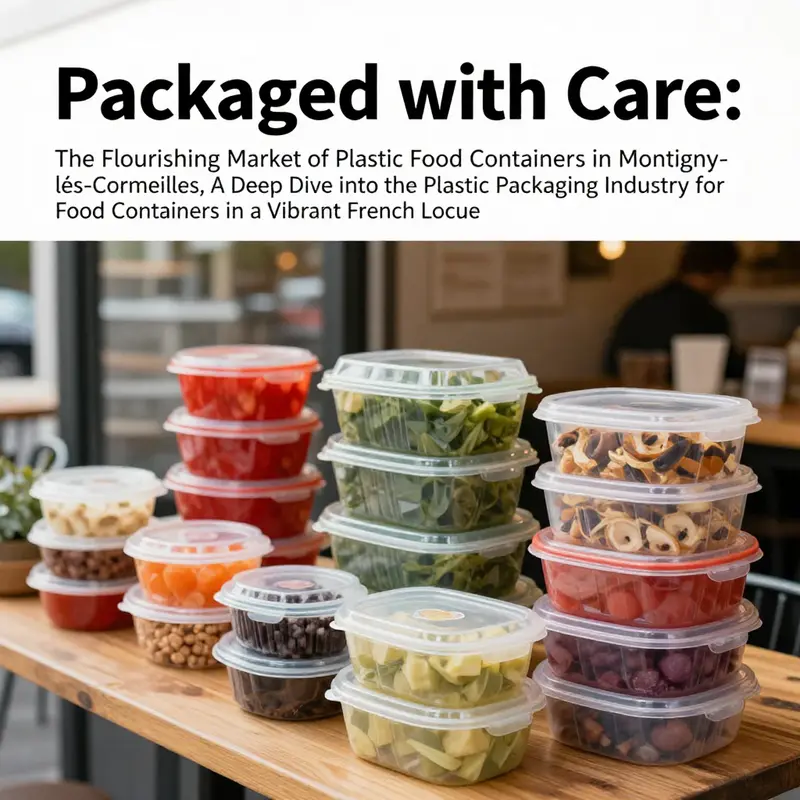
In Montigny-lès-Cormeilles, France, the plastic packaging food container industry is rapidly evolving, catering to diverse needs from bubble tea shops to catering services. This article explores the industry’s landscape, highlighting key enterprises and delving into its economic impact on the locale. With Paris nearby, Montigny-lès-Cormeilles offers a strategic position filled with opportunities for businesses in food and beverage packaging. Each chapter provides insights into various facets of the industry, including its current dynamics, notable companies contributing to growth, and the significance of this sector to the local economy.
Near Paris, a Quiet Hub: Montigny-lès-Cormeilles and the Suburban Route of Plastic Food-Container Packaging
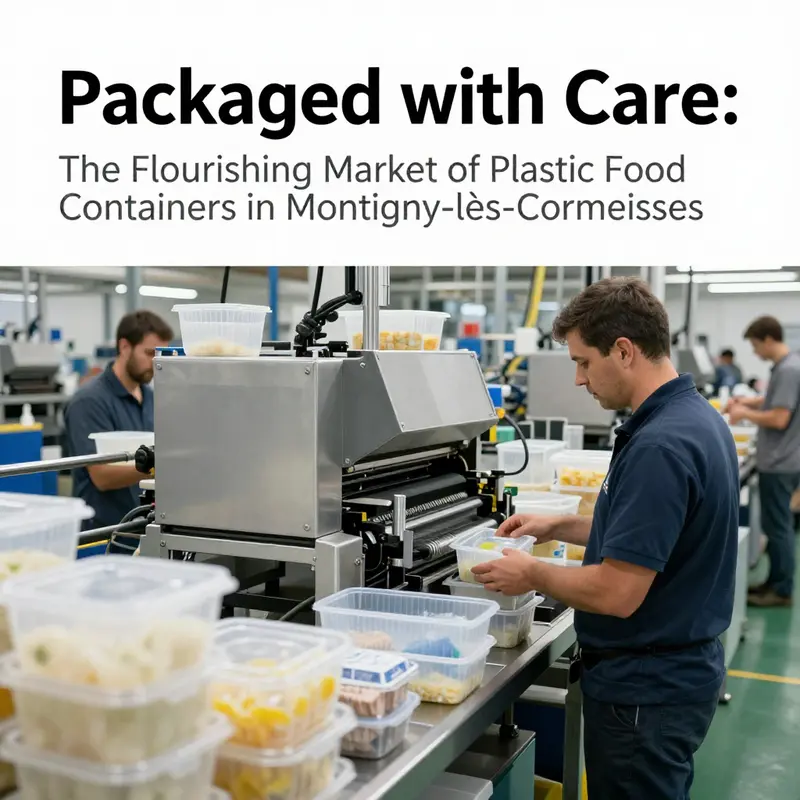
Montigny-lès-Cormeilles sits on the northern edge of the Île-de-France region, where the urban energy of Paris converges with the more open and mixed-use landscapes of the Val-d’Oise. It is not a heavyweight manufacturing site zoned for high-volume extrusion or blow-molding of plastic food containers, yet its geographical position makes it a meaningful node in a densely interconnected packaging ecosystem. In regions like this, the economy often reveals its character not through a single production complex but through the choreography of logistics, services, design, and distribution that sustain the broader supply chain. The juxtaposition of near-market access with relatively lighter industrial footprints creates a dynamic environment in which packaging decisions are as much about speed, reliability, and compliance as they are about material performance. The story of Montigny-lès-Cormeilles, then, is less about mass production on site and more about the role suburban zones play in connecting demand to supply across a continental market that prizes efficiency, traceability, and sustainability.
Publicly available data for the municipality itself show a familiar pattern: a mix of residential zones, commercial activity, and service-oriented functions that support the adjacent urban economy. There is no obvious, large-scale producer of plastic food containers within the town’s immediate footprint. Instead, the local economy tends to revolve around a constellation of small to medium-sized enterprises and service providers that facilitate distribution, procurement, customization, labeling, and after-market support for a network that stretches into Paris and beyond. INSEE statistics for the broader Val-d’Oise area illustrate the kind of industrially adjacent, supply-chain-oriented landscape that characterizes many peri-urban zones around major capitals. This is a region where the physical infrastructure—warehousing space, road and rail access, and proximity to a dense consumer base—translates into a competitive advantage for firms that need rapid, cost-efficient access to large metropolitan markets. Montigny-lès-Cormeilles thus functions more as a conduit and a contact point within a larger packaging economy, enabling firms to anchor design and distribution activities close to their customers while outsourcing heavy manufacturing to other facilities that can achieve scale.
Viewed through the lens of the broader French and European packaging industry, Montigny-lès-Cormeilles is emblematic of a logistical and commercial centrality that underpins the movement of plastic packaging materials, finished containers, and related services. The Paris metropolitan area generates consistent demand for food-contact packaging—containers, closures, liners, and ancillary components—that must be delivered with high reliability to retailers, restaurants, and institutional kitchens. The challenge for a suburb like Montigny-lès-Cormeilles is not merely to host warehouses; it is to host the connective tissue that makes the network work. This involves the coordination of suppliers and buyers, the alignment of regulatory expectations with product design, and the capacity to adapt quickly to shifting consumer preferences and policy directions. In practical terms, the local ecosystem often centers on distribution centers that receive plastics and paper-based packaging from regional manufacturers, repackaging and labeling for local clients, and providing a suite of services—from small-batch customization to quality assurance and packaging optimization—that enable a fast-moving Parisian market to function smoothly. While the area may not boast the high-capital footprint of industrial parks dedicated to plastics extrusion or thermoforming, its strategic relevance is real: closeness to major consumer markets, the agility to respond to small orders with short lead times, and the ability to mobilize a flexible workforce for design, sampling, and light assembly activities.
This reality sits within a broader European policy and market context that increasingly highlights sustainability and responsible packaging design. The global conversation around plastics in agriculture and food systems has expanded into practical considerations for packaging used by retailers and foodservice operators. The United Nations and the FAO have issued guidance and codes of conduct aimed at balancing the benefits of plastics—such as barrier properties, light weight, and hygiene—with environmental concerns. In Europe, directives and policy initiatives that promote recyclability, recycled content, and circular economy principles are steadily reconfiguring how packaging is sourced, tested, and disposed of. The Voluntary Code of Conduct on the Sustainable Use of Plastics in Agriculture (VCoC) is one example of a broader effort to ensure that plastics used in food production and packaging are managed in a way that mitigates environmental risk without compromising consumer safety or food integrity. For Montigny-lès-Cormeilles, these macro-level trends translate into tangible local implications: packaging buyers increasingly demand materials and designs that can be recycled or reused, suppliers seek to minimize waste in the value chain, and service providers must demonstrate compliance with stringent food-contact standards while delivering cost-effective solutions.
Within this policy and market frame, the suburban packaging ecosystem around Paris tends to emphasize three core capabilities: speed, compliance, and collaboration. Speed is essential because the Paris market is fast-moving, with retailers and restaurants operating on tight replenishment cycles. A distribution hub in or near Montigny-lès-Cormeilles must execute orders quickly, ensure accurate labeling and custody of packaging materials, and coordinate last-mile delivery with minimal disruption. Compliance matters because food-contact packaging must meet safety standards, chemical restrictions, and traceability requirements that are increasingly data-driven. Operators in the region build their competitive edge by investing in standardized processes, robust supplier qualification, and digital tools that track material provenance, lot information, and shelf-life considerations. Collaboration—across designers, recyclers, and end-users—is perhaps the most crucial of the three. The value of a well-coordinated network becomes evident when a single change in a design, a shift in recycled-content targets, or a new recycling partner triggers a cascade of adjustments across multiple firms. Montigny-lès-Cormeilles, with its networked mix of small service providers and larger logistics players, is well positioned to benefit from such collaborative dynamics, even if it does not host the largest extrusion lines or blow-molding machines.
The role of local service providers in this ecosystem deserves attention. Small-to-medium enterprises in and around Montigny-lès-Cormeilles often specialize in activities that complement manufacturing by others: labeling and packaging customization, quality checks, sorting and repackaging for return or reuse programs, and the consolidation of orders from multiple suppliers into a single shipment. These tasks, though modest in scale individually, collectively contribute to a reliable, efficient supply chain that can accommodate the volatile, demand-driven nature of food retail and foodservice markets. The capacity to offer flexible, demand-responsive services is a key asset in peri-urban zones, where large factories may be sited away from dense consumer bases but where the ease of access to major markets allows for rapid, responsive operations. In such settings, the economic advantage rests less on scale and more on the speed of turnover, the quality of service, and the ability to adapt packaging solutions to changing requirements—whether that means stricter labeling rules, new material specifications, or evolving consumer expectations for sustainability.
At the same time, Montigny-lès-Cormeilles—with its proximity to Paris—enjoys the advantage of a dense pool of logistics and design talent. The region can attract design-oriented firms and packaging consultants who can work with customers to optimize container formats for transport efficiency, storage density, and waste minimization. The potential to co-locate test labs, sample rooms, and small-scale prototyping facilities near a busy metropolitan market is an asset in a sector where minute design adjustments can yield meaningful savings in material usage, energy, and emissions over time. This convergence of design capability and distribution capability makes the suburb a plausible site for pilot programs that explore alternatives to conventional plastics, such as paper-based or compostable packaging alternatives, while maintaining the safety and performance standards demanded by food packaging. Indeed, the industry’s gradual diversification toward recycled-content plastics and biobased materials benefits from proximity to both design talent and consumer markets; Montigny-lès-Cormeilles can play a facilitating role in bringing these elements together, coordinating pilot tests, and helping translate policy-driven targets into concrete supply-chain actions.
The sustainability narrative intersecting with the practical needs of local businesses also points toward the value of a blended packaging approach. The market has not abandoned plastics, given their performance advantages in barrier protection, weight reduction, and cost per unit. Yet there is increasing appetite for solutions that reduce overall environmental impact by increasing recyclability, enabling circular flows, and offering viable alternatives where appropriate. In Montigny-lès-Cormeilles, this translates into a steady demand for services that enable packaging optimization, material substitution where feasible, and improved end-of-life handling. A practical outcome is the growth of cross-functional collaborations among distributors, packaging designers, and recycling partners, designed to deliver a full lifecycle approach rather than a one-off purchase decision. When such collaborations are well-integrated, they can help the local economy withstand regulatory shifts and price volatility by presenting customers with tested configurations that balance performance with sustainability objectives.
For readers seeking concrete examples of how packaging options might be diversified in a region like Montigny-lès-Cormeilles, it is instructive to consider how alternative materials and formats coexist with plastics in today’s market. While plastics remain foundational for many containers—thanks to barrier properties and hygiene performance—paper-based and compostable options are increasingly positioned as complementary tools in the packaging toolkit. The existence of suppliers and service providers who can facilitate this diversification is a valuable asset for the suburban packaging landscape. To illustrate the type of material diversification that is gaining traction in markets adjacent to Paris, one can explore online packaging offerings that emphasize eco-friendly, recyclable, or compostable options. See the kraft-paper bowls page for an example of how paper-based options are positioned within a market that also uses plastic packaging. This resource highlights a broader trend toward material blending and design flexibility that regional packaging networks can harness to meet evolving regulatory and consumer expectations without sacrificing efficiency or scale: eco-friendly kraft-paper bowl page.
The Montigny-lès-Cormeilles story thus reflects a broader European packaging economy where peripheral zones gain strategic value through connectivity, adaptability, and close alignment with urban demand. The area’s value lies not in oversized manufacturing capacity on a single site but in its ability to orchestrate a complex set of relationships that accelerate product-to-market cycles. The region’s infrastructure—its roads, its access to logistic corridors, its proximity to Paris’s markets—and its network of SMEs and service providers create a flexible platform for packaging innovation that can be scaled up or down as needed. In this sense, Montigny-lès-Cormeilles embodies a modern packaging economy in which resilience arises from diversified capabilities, collaborative ecosystems, and an emphasis on sustainable design. As policy pressures toward recycled content and circularity continue to intensify, the region’s role as a connector—between raw material suppliers, design studios, recyclers, and end-users—should not be underestimated. It is precisely this kind of connective tissue that enables a more resilient and adaptive packaging system that can navigate the complexities of food safety requirements, supply chain disruptions, and evolving consumer expectations.
To conclude this chapter’s arc without recapitulating every detail, Montigny-lès-Cormeilles illustrates how suburban locales contribute to a modern, sustainability-minded packaging economy. The site’s strength lies in its ability to support a dense, multi-faceted network—one that can rapidly translate policy direction into practical packaging solutions, coordinate across diverse firms, and serve a market that demands both efficiency and responsibility. While the city itself may not host a large-scale production facility for plastic food containers, its value emerges in the way it anchors a broader ecosystem that makes the packaging chain more agile, transparent, and capable of aligning with European sustainability priorities. As packaging policy continues to push toward recyclability, reduced material intensity, and smarter end-of-life management, Montigny-lès-Cormeilles offers a glimpse of how perimeters around major capitals can evolve into crucial hubs of coordination and innovation—places where the future of food containers takes shape not just in factories but in networks, collaborations, and design choices that reverberate across the region and beyond.
External resource: FAO Voluntary Code of Conduct on the Sustainable Use of Plastics in Agriculture (PDF): https://www.fao.org/3/ca6975en/ca6975en.pdf
Between Paris’s Edge and the Factory Floor: The Suburban Dynamics of Plastic Food-Container Packaging in Montigny-lès-Cormeilles
Montigny-lès-Cormeilles sits at a delicate intersection of proximity and production. It is a town that doesn’t shout its significance from a single marquee, yet its geographic position—near Paris, at the edge of the Val-d’Oise landscape—gives it a pivotal role in the movement of goods, including the kind of plastic packaging that holds and protects food as it travels from factory floor to kitchen and marketplace. The story of plastic packaging for food in this part of Île-de-France is less about a single dominant enterprise and more about a distributed ecosystem that stretches across manufacturing, logistics, design, and compliance. It is a story of how a suburban industrial fabric can sustain a globally connected supply chain while contending with local constraints, regulatory pressures, and evolving consumer expectations. In this sense, Montigny-lès-Cormeilles embodies a broader regional dynamic: a cluster where small and medium operations coalesce with larger distribution networks to keep food safe, portable, and affordable, even as they navigate a world increasingly attentive to sustainability and circularity.
There is no single list of “key enterprises” that define this locale in the way one might expect for a landmark industrial campus. Instead, what emerges from the region’s industrial complexion is a web of activities that together sustain the plastic packaging sector for food services, retailers, and manufacturers upstream. In towns like Montigny-lès-Cormeilles, small- to mid-sized plastic converting facilities, contract manufacturers, and tooling shops often operate alongside more expansive logistics hubs. The French economic context, and the broader European trade ecosystem that surrounds Paris, supports this arrangement: firms frequently specialize in particular stages of the packaging value chain—some in the molding and shaping of containers, others in closures and lids, and still others in the finishing touches that make packaging compatible with food safety standards and retail requirements. While the exact corporate names may be distributed across enterprise registries and supply chains, the functional landscape is recognizable: extrusion and thermoforming lines, injection-molding cells, quality-control laboratories, and warehousing with cross-docking for rapid replenishment.
From the outside, the aesthetic of a suburban industrial area can seem modest compared with larger metropolitan clusters. Yet the scale, density, and connectivity of the local infrastructure matter immensely for plastics used in food containers. Road networks and rail links enable just-in-time deliveries of blank or finished parts to food-service distributors, supermarkets, and institutional kitchens. The geography matters because packaging for food is not merely a box or a lid; it is a controlled interface between a product and the consumer. Regulations, food-safety standards, and traceability requirements demand a level of process discipline that is well aligned with a region that hosts quick transit corridors into the capital, millisecond-tolerant distribution schedules, and a workforce accustomed to the precision demanded by a high-throughput manufacturing environment.
As with many European packaging ecosystems, the manufacturing footprint near Paris is undergoing a quiet but definite evolution. The public conversation around plastic use has intensified, with policymakers pushing for lighter, more recyclable, and better-designed packaging that minimizes waste and enhances circularity. This shift does not uniformly translate into a simple brand-to-business pivot; rather, it initiates a gradual reconfiguration of material choices, supply chains, and process technologies. In Montigny-lès-Cormeilles, this reconfiguration is experienced as a spectrum of changes: ongoing modernization of equipment to improve energy efficiency, investments in better material handling to reduce scrap, and a growing emphasis on design-for-recyclability that respects both the constraints of mass production and the expectations of end users who encounter packaging in everyday life.
The life story of a plastic food container in this region begins with raw materials—polymers chosen for their processability, barrier properties, and compatibility with food-contact regulations. In many plants across the Parisian corridor, suppliers provide resins suitable for blow-molded or thermoformed containers, with performance properties tuned for moisture and gas barriers, stiffness, and heat resistance. The conversion lines transform these polymers into containers that can withstand the rigors of transport, display, and brief shelf life. The equipment often operates in cells dedicated to specific product families: one cell may focus on clamshell-style trays, another on bottle-like containers, and a third on lids and closures that must engage reliably with a base part without compromising seal integrity. Each cell embodies a balance of speed, precision, and quality checks. In this environment, even minor improvements in cycle time or yield translate into meaningful efficiency gains across thousands or millions of units.
Quality control in such facilities is not cosmetic; it is foundational. The food-contact status of packaging materials requires rigorous testing, including barrier performance, heat resistance, and chemical compatibility. Operators conduct regular inspections for dimensional accuracy, surface defects, and leakage performance. The traceability of materials, batch records, and lot-level documentation are embedded into daily routines so that a packaging solution can be linked back to its raw materials and processing parameters. This traceability is more than compliance; it is a competitive advantage in a market where manufacturers, retailers, and food-service operators demand consistent performance. In addition, many plants invest in certifications that underscore their capability to handle sensitive products and to manage safety-critical processes—certifications that have become standard currency in the European packaging economy. The practical upshot is that Montigny-lès-Cormeilles functions not merely as a production site but as a node in a broader system that prioritizes reliability, food safety, and logistical readiness.
The surrounding logistics and distribution infrastructure are equally critical. Packaging containers do not exist in isolation; they must move efficiently from manufacturing lines to warehouses, to distribution centers, and finally to points of sale or service. The proximity to Paris amplifies access to large markets, but it also imposes competitive pressure: customers expect bottom-line cost discipline, consistent quality, and rapid replenishment cycles. In a suburban setting like Montigny-lès-Cormeilles, this means that factories often maintain tight coordination with transport operators and logistics hubs to minimize handling and transit times. Cross-docking operations, regional distribution centers, and a web of supplier relationships help ensure that containers arrive at their destination in the right condition and within the required time window. When one considers the chain in its totality, the value of the local manufacturing ecosystem emerges not as a collection of isolated lines but as an interdependent system where material science, engineering, and logistics talk to one another in real time.
In this context, the environmental footprint of packaging is never far from the daily conversation. French and European policy frameworks increasingly steer decisions toward recyclable materials, simplified packaging formats, and improved end-of-life outcomes. Local operators respond by adopting more accurate material specifications, retooling lines to handle different resins, and exploring designs that optimize both performance and recyclability. The practical implications include ongoing trials with different plastics blends, modifications to tool geometry to reduce scrap, and iterative design changes that preserve integrity while enabling easier separation at the recycling stage. The emphasis is not only on meeting current standards but on building a design-and-manufacturing culture that anticipates evolving requirements. In Montigny-lès-Cormeilles, as in other parts of the Paris region, this translates into a workforce that is comfortable with rapid prototyping, rigorous testing, and close collaboration with suppliers who provide updated resins and processing aids designed to improve yield and cycle efficiency. The net effect is a packaging ecosystem that remains robust in the face of change, capable of delivering consistent performance across a spectrum of consumer needs and retail formats.
The human dimension of this industrial landscape is worth noting. The people who operate, maintain, and improve plastic packaging lines bring together engineering know-how, quality mindset, and practical problem-solving. Their days are shaped by the rhythm of the machines, the push of deadlines, and the constant vigilance required by food safety standards. Training programs, apprenticeships, and on-the-job learning pathways are essential for sustaining this capability in a suburban setting where talent pools may be spread across multiple towns within the region. The social architecture that supports these plants includes collaborative networks with technical schools, supplier partners, and local logistics providers. Together, they form a resilient system that can absorb fluctuations in demand, respond to regulatory updates, and support the modernization of equipment and processes without compromising the reliability that customers rely on.
The topic of plastic packaging for food inevitably intersects with broader questions about material alternatives and sustainability. Across the European market, companies in similar regions have started to experiment with reducing overall plastic weight, increasing recycled content, and sometimes substituting traditional plastics with more recyclable or compostable materials for certain applications. The practical trade-offs, however, are nuanced. While lighter, more recyclable formats can offer environmental benefits, they may also impose higher costs, require new processing capabilities, or demand changes in the packaging design that impact performance in the field. In Montigny-lès-Cormeilles, these considerations translate into measured, project-based explorations rather than sweeping shifts. Firms may run pilots to compare performance across multiple material choices, assess end-of-life performance in collaboration with local recycling facilities, and calibrate their offerings to align with the preferences of retailers and food-service operators who seek reliable, cost-competitive packaging solutions.
Even as these conversations unfold, the actual packaging ecosystem remains deeply connected to everyday realities. A consumer purchasing a prepared meal, a school cafeteria receiving trays for lunch, or a corner shop restocking shelves all rely on containers that can endure transport, display, and handling with minimal failure risk. In Montigny-lès-Cormeilles, the design and production decisions behind these containers reflect a philosophy that values both practicality and compliance. The containers must be sturdy enough to withstand stacking and transit, yet light enough to optimize shipping efficiency. They must prevent leaks and protect contents from contamination, while also being accessible to end users who expect straightforward opening and reliable resealing options. They must meet food-safety standards across different regulatory environments should the product cross borders, and they must fit into existing retail fixtures and storage workflows. In this sense, the packaging produced near Paris is not merely a material artifact; it is a carefully engineered interface that supports the entire ecosystem of food distribution—from farm to table.
Within this broader frame, a chapter of the local story is the way packaging designers and manufacturers in the area respond to consumer expectations and environmental accountability without losing sight of the realities of production. The market increasingly values transparency around material sources, recycling compatibility, and end-of-life outcomes. Firms in or around Montigny-lès-Cormeilles often invest in process documentation, supplier audits, and laboratory testing capabilities to demonstrate compliance and performance. This insistence on traceability and reliability helps to maintain trust with customers and end users at a time when concerns about plastic waste are both urgent and vocal. It is a reminder that the value of packaging extends beyond the container’s physical shell; it encompasses the systems of accountability, performance, and continuous improvement that keep the food supply chain secure and efficient.
For readers who want to explore adjacent dimensions of packaging beyond the plastic-centric lens, the dialogue about alternatives—such as paper-based or composite materials used in take-out and ready-meal packaging—offers a useful counterpoint. In practice, many food-service operators and retailers are seeking a hybrid approach: leveraging rigid plastics for heavy-duty applications or where barrier properties are essential, while adopting paper-based or pulp-derived solutions for lighter, display-friendly, or compostable segments. In this transitional landscape, the local economy around Montigny-lès-Cormeilles can play a facilitating role by hosting pilot projects, hosting workshops with suppliers of alternative materials, and providing the logistics infrastructure necessary to compare performance across different packaging formats. The net effect is a packaging ecosystem that remains grounded in the realities of mass production and distribution while embracing the possibility of more sustainable options where feasible. The conversation, therefore, is not about replacing one material with another overnight, but about building a portfolio of packaging solutions that meet different needs across the value chain while aligning with evolving environmental and regulatory expectations.
As the chapter turns toward the future, several threads emerge that illuminate what lies ahead for plastic packaging in this corner of the Paris metropolitan area. The first is continued optimization of manufacturing processes. Even modest gains in cycle times, defect reduction, or energy efficiency can ripple through the supply chain, lowering costs and enabling more competitive products. This is particularly important in a region where demand cycles are driven by retail promotions, seasonality, and the shifting tastes of a diverse urban consumer base. The second thread concerns material science and product design. Innovations that improve barrier performance, enable better recycling, or facilitate easier disassembly at end of life will likely influence local plant configurations and capabilities. Third, the regulatory and public-policy dimension will keep exerting influence. France and the European Union are moving toward more harmonized packaging regulations, better reporting on material flows, and stronger incentives for circularity. Local operators who anticipate these moves—through investments in testing, certifications, and supplier collaboration—will be better positioned to adapt without compromising delivery reliability. Finally, the social and logistical infrastructure supporting the industry must continue to mature. A suburban region thrives when it can attract and retain skilled labor, provide avenues for continuous learning, and maintain the kind of multimodal connectivity that keeps products moving efficiently from plant to point of use. Montigny-lès-Cormeilles, with its combination of industrial assets, proximity to a major urban market, and a networked supply chain, stands as a useful lens for observing how this balance is negotiated in practice.
In closing, the chapter of plastic packaging in Montigny-lès-Cormeilles is not a tale of dramatic shifts or headline breakthroughs, but a narrative of steady, layered change—an ongoing calibration between efficiency, safety, and evolving sustainability expectations. It is a reminder that packaging is more than a container; it is a critical node in the food system, shaped by the places that produce it, the channels that move it, and the communities that rely on it daily. For those who read the landscape with attention, the suburban corridors near Paris reveal how industrial zones can sustain complex, high-stakes manufacturing while remaining responsive to social concerns and environmental responsibilities. The work underway in this corner of Île-de-France demonstrates that modern packaging, even when rooted in plastics, can coexist with a broader commitment to responsible material use, end-of-life clarity, and a resilient regional economy that keeps supply chains robust in an ever-changing world. As markets evolve and policy landscapes shift, Montigny-lès-Cormeilles will likely continue to adapt, weaving together the threads of engineering rigor, logistics fluency, and sustainability deliberation into a coherent and durable model for the packaging of food in a densely connected, high-demand urban region.
Plastic Food Packaging in Montigny-lès-Cormeilles: Local Economic Risks, Adaptation, and Opportunity Pathways
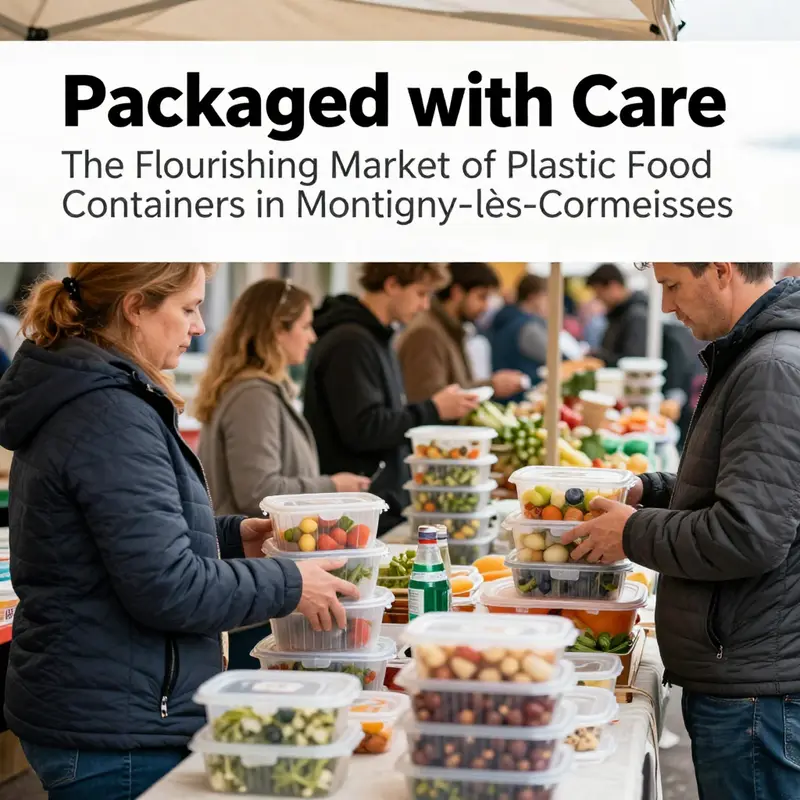
Montigny-lès-Cormeilles sits within the dense economic web of Greater Paris. Its economy depends on services, retail, light industry, and logistics. Plastic food packaging is not the headline industry of the town. Yet regional supply chains and consumer markets make packaging decisions relevant. Packaging choices ripple through costs, employment, municipal budgets, and local business strategy. This chapter examines those ripples. It synthesizes global trends with local realities, and it maps clear pathways for firms and policy makers in Montigny-lès-Cormeilles.
The starting point is simple. There is no authoritative, local-level report tying plastic food containers to a quantifiable economic effect in Montigny-lès-Cormeilles. That absence does not mean the connection is weak. Rather, it shows impacts are distributed across sectors. Manufacturers, distributors, retailers, restaurants, and municipal services all experience different pressures from packaging choices. Many of those pressures are subtle. They arrive as changes in procurement costs, logistics patterns, waste fees, consumer expectations, and regulatory compliance obligations.
For businesses in and around Montigny-lès-Cormeilles, plastic remains attractive. It is lightweight, inexpensive, and efficient for mass handling. These attributes translate into lower transport costs and reduced breakage. For local bakeries, grocery stores, and takeaway services, plastic containers can cut the time and labor needed to package food for sale or delivery. That saves operating costs and supports modest margins in a competitive suburban market.
Yet the economic calculus is shifting. At the European and national levels, policy frameworks increasingly penalize certain single-use plastics. Extended producer responsibility schemes and new taxes raise the effective cost of plastic packaging. Compliance demands more administrative effort from small firms. Montigny-lès-Cormeilles-based retailers and food outlets therefore face two kinds of economic pressure: higher purchase costs and increased regulatory overhead. When policies are phased in, small businesses feel transitional shocks more intensely than large firms. Many local businesses operate with thin cash buffers. Sudden cost increases may force choices: raise prices, absorb costs, or switch materials.
Consumer preferences compound these pressures. In suburban communities near Paris, awareness of environmental issues grows steadily. Shoppers and diners increasingly identify with sustainable choices. Local supermarkets and cafés respond by offering alternatives. Reusable containers, biodegradable options, and recycled-material packaging appear more often on local shelves. This demand shift creates market niches. Firms that adapt early can differentiate their brands and attract environmentally conscious customers.
Adapting, however, requires investment. Switching from inexpensive plastic trays to compostable or recyclable alternatives often raises unit costs. Many alternatives need different storage or handling practices. Compostable bowls might need immediate removal from mixed-waste bins to reach organic waste streams. Recycled-material packaging can vary in strength, altering shelf life. For Montigny-lès-Cormeilles enterprises, those operational changes can mean new equipment, staff training, and revised supplier relationships. Local suppliers with flexible inventories are valuable in this context.
Beyond immediate business costs, packaging choices influence municipal budgets. Waste management systems in the Val-d’Oise department collect and process household and commercial refuse. The composition of that refuse affects sorting, recycling rates, and disposal costs. Plastics that are technically recyclable but contaminated by food often cannot be recovered. Contamination increases processing costs and lowers the revenue municipalities receive from recyclables. Where recycling markets weaken, local authorities may face higher landfill or incineration expenses. Those costs are ultimately borne by taxpayers and businesses through local fees.
Employment effects are complex and largely indirect. A shift away from certain plastic products could reduce jobs in manufacturing segments. Conversely, it can create new jobs in recycling, repair, and sustainable packaging manufacturing. In Montigny-lès-Cormeilles, where logistics and services employ many residents, the most immediate labor effects are likely to be found in distribution centers, retail hubs, and food service outlets rather than in primary plastics manufacturing. Training programs and workforce transition measures can smooth the change. Local vocational centers and business associations can play a role in matching skills to emerging needs in circular packaging and material recovery.
Supply chain stability is another critical dimension. Montigny-lès-Cormeilles benefits from proximity to Paris and excellent transport links. That position supports just-in-time deliveries and reduces warehousing expenses. However, reliance on imported plastic materials or on distant suppliers makes local businesses vulnerable to global price swings. Energy prices, petrochemical market shifts, and international trade disruptions can suddenly raise plastic costs. For small enterprises in Montigny-lès-Cormeilles, unpredictable material costs can erode margins quickly. Diversifying suppliers and considering local or regional packaging partners can mitigate that risk.
The transition to sustainable packaging offers clear business opportunities. Entrepreneurs can design and supply compostable containers suited to local needs. Recycling and collection services can be tailored for suburban lifestyles. A local circular-economy initiative might collect used packaging from restaurants, sort it, and supply recovered material to nearby manufacturers. Such local loops reduce transport footprints and keep value within the regional economy. They also create jobs in sorting, cleaning, and small-scale remanufacturing.
Public policy can accelerate those opportunities. Local councils and economic development agencies can implement targeted incentives. Reduced business rates for shops that adopt verified sustainable packaging can nudge behavior. Pilot programs for reusable container schemes in municipal markets and festivals can demonstrate viability. Training vouchers for staff who learn new packaging handling procedures can lower the barrier to adoption. When public procurement favors sustainable options, it creates guaranteed demand and helps local suppliers scale.
Financial mechanisms matter too. Small firms often lack capital to invest in new equipment or supplier contracts. Microgrants, low-interest loans, or cooperative buying arrangements allow dozens of independent food outlets to pool purchasing power. Shared cold-storage or packaging-preparation spaces can reduce individual investment needs. Montigny-lès-Cormeilles has the spatial advantage to host such shared infrastructure near transport links, enabling efficient service to numerous small businesses.
An overlooked lever is branding. A coordinated local branding campaign that highlights Montigny-lès-Cormeilles’ commitment to greener packaging can attract conscious consumers and small food startups. Town-level sustainability certificates for restaurants and food retailers create market signals. Tourists and visitors who prioritize low-waste options may choose establishments with clear packaging policies. Over time, branding raises the perceived value of local offerings and supports price resiliency for businesses that adopt higher-cost sustainable packaging.
Recycling infrastructure is core to any realistic transition. Municipalities must invest in sorting technologies and in partnerships with processors. For Montigny-lès-Cormeilles, regional collaboration is sensible. Waste flows rarely respect municipal boundaries. Joint investments with neighboring communes increase processing scale and improve bargaining power with recyclers. Moreover, clear labeling and public education reduce contamination rates, improving recycling yields and municipal revenues.
Innovation is not limited to materials. Business models can also reduce packaging demand. In-store bulk refilling, deposit-return systems for durable containers, and aggregation of takeaway orders to reduce single-use packaging are practical measures. Digital platforms that aggregate nearby takeaway orders can coordinate reusable-container logistics. Local delivery services can standardize container types for efficient returns. Such system-level design reduces waste and creates recurring service revenue.
Financially, the timeline of costs matters. Short-term costs of switching packaging are often higher than maintaining status quo. But medium-term gains can offset those early expenses. Reducing waste disposal fees, capturing a premium from eco-conscious customers, and lowering exposure to volatile petrochemical markets all build long-term resilience. For policy makers, demonstrating attractive payback periods for local firms makes behavior change more likely. Transparent case studies from comparable suburban towns help build trust.
Equally important is social equity. Sustainable transitions must avoid imposing disproportionate burdens on small operators or low-income consumers in Montigny-lès-Cormeilles. Subsidies, phased regulations, and technical assistance can ensure smaller businesses keep pace. Community engagement in policy design reduces unintended consequences. When residents see clear benefits, such as cleaner public spaces and lower municipal costs over time, support for green regulations increases.
The technological landscape keeps evolving. Compostable pulp bowls, paper-based containers with barrier coatings, and advanced recyclable polymer blends offer multiple paths. For takeaway food, sturdy, grease-resistant paper bowls and cups are now common. Local suppliers that stock such alternatives reduce lead times and encourage uptake. For example, many eco-friendly paper bowls designed for takeaway food are available with lids suitable for salads and soups. Embedding an internal supplier link helps local businesses explore those options and compare costs. See an example of an eco-friendly disposable kraft paper bowl with lid to consider as a practical option for local food services: https://greendispopack.com/product/disposable-kraft-paper-bowl-for-food-package-with-lid/.
Risk management calls for monitoring and agile planning. Town authorities and business groups should track policy developments at national and EU levels. Regularly updating procurement guidelines and providing clear timelines reduces uncertainty. Encouraging pilot projects with measurable outcomes—reduced waste tonnage, lower disposal costs, or increased sales for participating firms—provides evidence for scaling.
Finally, Montigny-lès-Cormeilles can position itself as a test-bed for suburban transitions. The town’s logistics assets, mixed economic structure, and proximity to metropolitan markets create an environment conducive to innovation. With the right public-private partnerships, it can host trials in reusable deliveries, shared packaging cooperatives, and local recycling loops. These initiatives create local employment and keep more economic value within the community.
The global push toward sustainable agricultural and food plastics underscores the need for local action. International guidance, such as the FAO’s voluntary code on sustainable use of plastics in agriculture, signals the direction of future norms and consumer expectations. Montigny-lès-Cormeilles is not isolated from these forces. The town’s firms and civic leaders must weigh immediate operational realities against long-term economic resilience. By coordinating procurement, investing in infrastructure, and supporting small businesses through the transition, the town can transform a potential cost pressure into a local advantage.
For Montigny-lès-Cormeilles, the path forward is pragmatic. Maintain supply chain flexibility. Build local supply options for eco-friendly containers. Invest selectively in waste processing. Support small firms with finance and training. Promote local branding that rewards sustainable choices. These measures minimize downside risk while capturing new market opportunities. In the end, packaging is both a cost and a signal. Handled wisely, it can help the town safeguard jobs, reduce municipal costs, and attract customers who value sustainability.
For broader context and guidance on sustainable plastic use in food systems and agriculture, refer to the FAO’s Voluntary Code of Conduct on the Sustainable Use of Plastics in Agriculture: https://www.fao.org/3/ca9758en/ca9758en.pdf
Final thoughts
The plastic packaging food container industry in Montigny-lès-Cormeilles serves as a pivotal component of the local economy, influencing businesses from bubble tea shops to catering services. As the demand for innovative and safe packaging solutions continues to rise, so does the importance of local enterprises committed to quality and sustainability. Understanding this sector not only equips businesses with better procurement strategies but also fosters a closer connection to the economic vitality of Montigny-lès-Cormeilles.