
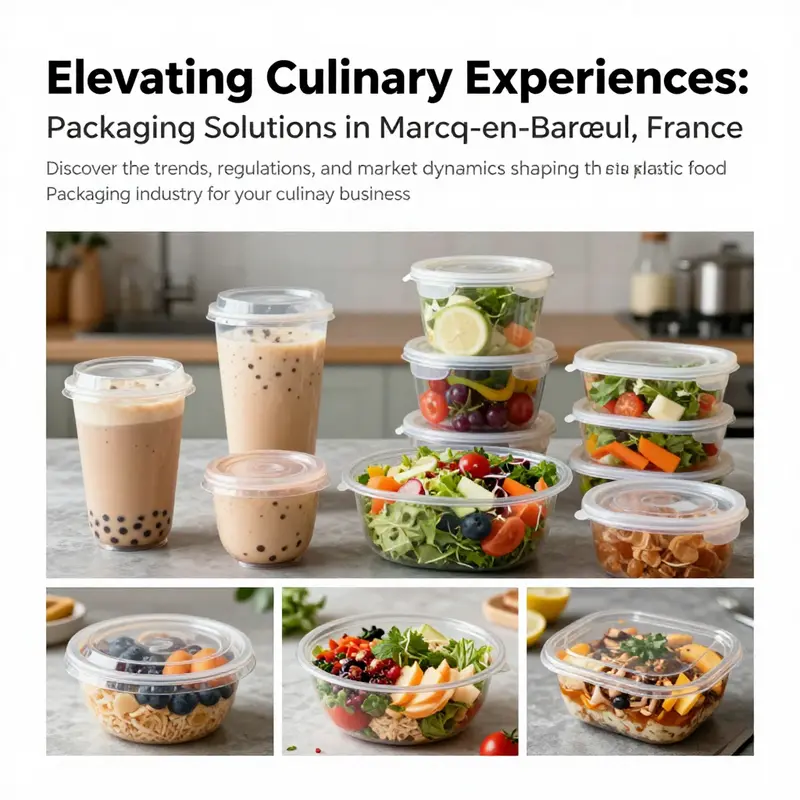
In the heart of Marcq-en-Barœul, France, the realm of plastic food packaging is thriving, profoundly impacting how culinary businesses operate. From bubble tea shops and restaurants to food trucks and catering services, understanding the evolving landscape of plastic packaging can enhance operational efficiency and customer satisfaction. This article explores the latest manufacturing trends, navigates legal regulations, and examines market demand for plastic food containers. Each chapter contributes insightful perspectives into how these elements intertwine to create packaging solutions that are both functional and compliant, ultimately supporting your business goals and sustainability efforts.
From PETE to rPET: How Manufacturing Trends Are Redrawing Plastic Food Containers in Marcq-en-Barœul
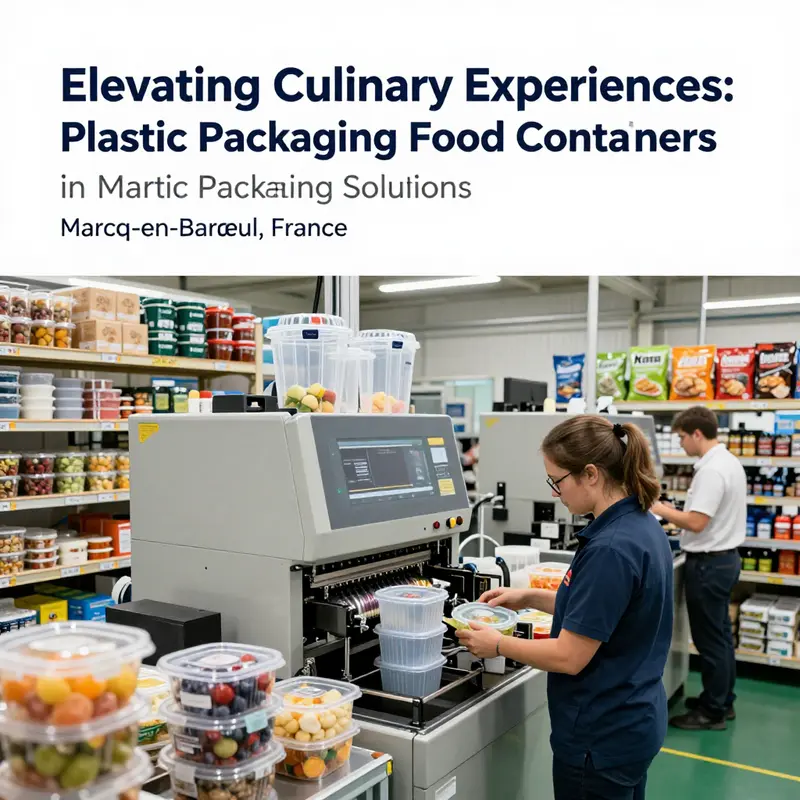
Manufacturing trends shaping plastic food containers in Marcq-en-Barœul
Marcq-en-Barœul sits within a dense industrial network that serves northern France and broader Europe. The town’s logistical links and skilled workforce make it attractive for companies that produce food packaging. Local manufacturers benefit from proximity to distribution hubs, component suppliers, and testing laboratories. Those advantages let them respond quickly to shifting retailer demands, regulatory changes, and customer preferences. The result is a cluster of activity where material science, process innovation, and regulatory compliance intersect.
Manufacturing in the area is guided by several clear forces. First, market growth in food packaging continues. Demand comes from supermarkets and food service alike. Packed meals, ready-to-cook items, and fresh-prepared foods push requirements for safe, visible, and convenient containers. Second, regulation tightens the specifications for food-contact plastics. Rules demand documented migration testing, material traceability, and proof of absence for certain contaminants. Third, sustainability has moved from marketing to manufacturing strategy. Producers are changing material recipes, production methods, and supply chains to meet circular economy goals. These three forces operate together, shaping what is made and how it is made.
Material selection has become a strategic decision. Many manufacturers still use PETE for its clarity, chemical resistance, and barrier properties. Transparent PETE containers work well for products that rely on visibility, such as fresh-cut potatoes or ready-to-eat salads. PETE can also withstand sterilization and hot-filling in certain grades, which broadens its application. However, single-use virgin plastics now face scrutiny. That spurs adoption of reclaimed or recycled PET content. Incorporating rPET reduces virgin resin demand and improves a product’s life-cycle profile. Producers evaluate rPET by assessing color, mechanical integrity, and barrier performance. Blending rPET with virgin material can preserve function while improving sustainability metrics.
Design-for-recyclability guides both material choices and part geometry. Mono-material containers are preferred because they simplify sorting and recycling. Multi-layer laminates, while excellent for barrier performance, complicate recycling streams. Manufacturers are therefore rethinking lamination, using compatible polymer layers or co-extruded structures that are recyclable. Lids, closures, and labels are redesigned to avoid mixed material assemblies. Minimizing additives and pigments also improves recyclability and regulatory compliance. Where labels are required, manufacturers increasingly use removable or easily separable label systems.
Production process investments reflect these material shifts. Injection stretch blow molding and thermoforming remain common for rigid food containers. ISBM produces lightweight, strong bottles and jars with excellent surface finish. The process supports high-speed production while enabling part weight reduction. For thin-walled trays and tubs, thermoforming with in-line trimming offers rapid cycle times. Advances in tooling and mold cooling reduce cycle time and scrap. Local tooling networks reduce lead times and cost. Manufacturers near Marcq-en-Barœul can iterate designs faster because molds are developed locally and adjusted to customer feedback quickly.
Automation and digital process control are central to operational efficiency. Modern lines incorporate real-time sensors for cavity pressure, temperature, and cycle time. These sensors feed manufacturing execution systems that provide traceability. Traceability is critical for food contact materials. Serial numbers and batch codes let manufacturers link a container back to raw material lots and production parameters. When a quality event occurs, the ability to perform rapid root-cause analysis limits recalls and protects brands.
Quality control workflows are more rigorous than ever. Migration testing, extractables analysis, and particulate monitoring occur regularly. Manufacturers partner with accredited laboratories to verify compliance to EU food contact material legislation and to the testing benchmarks used by exporting markets. Internal lab capabilities are expanding, too. Onsite screening for heavy metals and plasticizers reduces turnaround time. Validation protocols include simulated use tests such as hot-filling, microwave exposure, and prolonged storage to verify long-term safety.
Health and safety are non-negotiable in food packaging. Producers certify that materials are free from certain substances of concern. Documentation plays a large role in market access. Suppliers maintain detailed technical files that show compliance, migration values, and processing advice. These files travel with shipments, assuring customers and regulators. In some cases, manufacturers provide statements of good manufacturing practice and manufacturing flow charts to support audits.
Small and medium customers now influence how production runs are structured. Traditionally, manufacturers favored large batches to lower per-unit costs. The shift toward product experimentation and niche offerings has changed that. Low minimum order quantities are now viable because modern tooling and flexible lines allow frequent changeovers. Digital printing on containers enables short runs with unique designs. This gives smaller food producers and retailers the ability to test packaging concepts with reduced financial risk.
Supply chain strategies are also adapting. Local sourcing of polymers and components reduces lead times and transport emissions. Consolidated shipments and integrated logistics reduce costs and environmental footprints. Manufacturers use networked warehouses and just-in-time delivery models for higher inventory efficiency. These logistics improvements benefit perishable food producers, which need packaging delivered to tight schedules.
Sustainability extends beyond recyclable plastics. Manufacturers explore bio-based polymers and compostable options for specific applications. Such materials may suit single-use scenarios where recycling is impractical. However, producers assess end-of-life outcomes carefully before adopting alternatives. Compostable materials require appropriate municipal infrastructure to realize their benefits. Where recycling systems are strong, recycled plastic often yields a lower environmental impact than alternative polymers.
Lifecycle analysis informs material choices. Producers and their customers compare carbon footprints, water use, and energy consumption. These assessments account for raw material extraction, resin production, forming, transport, and end-of-life treatment. Lightweighting containers reduces material use and shipping weight. But lightweight structures must maintain barrier performance and mechanical strength. Engineers use finite element analysis and prototyping to validate reduced-weight designs. The net result is less material per product and reduced transport emissions.
Regulatory complexity affects export strategy. Companies that serve both domestic and international buyers need harmonized compliance documentation. EU regulations on food contact materials require specific declarations and supporting data. Export markets may request different tests or certifications. Maintaining an up-to-date regulatory library and testing schedule helps manufacturers respond quickly to customer audits. This capability matters in a competitive market where lead time and compliance reassure major buyers.
Traceability and serialisation are becoming value-added services. Buyers increasingly ask for end-to-end traceability that tracks materials from source to finished container. Digital documentation, blockchain pilots, and cloud-based supply chain platforms make record-keeping more efficient. These systems also help validate circularity claims, showing the percentage of recycled content and the origin of that material. Transparent reporting supports sustainability commitments and marketing claims.
Manufacturers invest in worker training and hygienic design. Clean-room compatible lines and easy-to-sanitation tooling reduce microbial risks. Hygienic design lowers contamination risk during forming, filling, and sealing. Staff are trained in hygiene protocols and preventive maintenance. These practices reduce product loss and protect consumer health.
Packaging design now balances functional needs with consumer perception. Clear containers allow shoppers to inspect contents. Secure resealable features maintain freshness and convenience. Tamper-evident designs protect both safety and brand integrity. When aesthetics are important, printing and labeling add value. But additional decorations must not hinder recyclability. Digital and water-based inks offer decoration alternatives that reduce solvent use and simplify recycling.
Cost pressures remain constant. Resin price volatility and energy costs influence margin management. Manufacturers mitigate these risks through long-term resin contracts, strategic stockpiles, and process energy optimization. Energy-efficient chillers, variable-speed drives, and thermal recovery systems reduce operating costs. Waste reduction programs reclaim trim and off-spec material for recycling back into non-food applications or reprocessing, when permissible.
Collaboration across the value chain accelerates innovation. Material suppliers, converters, brand owners, and recyclers coordinate to develop packaging that meets functional and environmental goals. Trials with recycling partners ensure containers can be recovered and reprocessed. In some cases, closed-loop initiatives keep high-quality scrap within a regional ecosystem. Those programs reduce reliance on virgin feedstock and strengthen local circular markets.
Facility layout and regional advantages matter for rapid response. Marcq-en-Barœul companies can leverage local transport corridors and accessory industries. Shorter transport distances reduce lead time and carbon footprint. Local partnerships for mold making and label production give manufacturers agility. Rapid prototyping services and nearby testing labs shorten development cycles and accelerate time to market.
The consumer voice shapes product attributes. End users now expect packaging that communicates safety and sustainability clearly. Labels prominently display recycling instructions and percentages of recycled content. Retailers favor packaging that reduces shelf waste and fits in-store merchandising systems. For ready-to-eat items, resealable closures and microwave resistance are often required. Manufacturers must align technical feasibility with user expectations.
Retailers often set specific packaging requirements. They define acceptable materials, size standards, and barcoding formats. Compliance with retailer specifications is essential to win shelf space. Large buyers may also require sustainability credentials, extended producer responsibility participation, and reusable packaging pilots. Flexible manufacturers that can meet these demands gain a competitive edge.
Innovation also appears in barrier technologies and coatings. Improved barrier layers extend shelf life for oxygen-sensitive foods without heavy weight penalties. Coatings that replace multi-material laminates make containers easier to recycle. These coatings undergo rigorous testing to ensure they do not migrate into food. Where coatings are used, compatibility with recycling streams is a key design criterion.
For specialty applications like hot-filling or microwaveable trays, thermal stability is crucial. Some polymer grades must endure high temperatures briefly. Manufacturers validate performance across expected use cases. They simulate real-world stresses to ensure containers remain safe and functional.
Looking ahead, the region’s manufacturing base must continue evolving. Investment in recycling infrastructure, advanced processing lines, and digital traceability will determine long-term competitiveness. Manufacturers that combine regulatory knowledge, process efficiency, and sustainable credentials will find more opportunities. Collaboration with local research centers and logistics providers will unlock further gains.
Alternatives to traditional plastic packaging also play a role. In some instances, paper-based bowls and compostable trays provide viable replacements. When alternative substrates are suitable, they lower plastic use and can simplify consumer disposal. For example, producers often evaluate disposable kraft paper bowls for take-out and prepared foods. Those options offer different end-of-life pathways and require their own quality controls and certification.
Overall, manufacturing trends in Marcq-en-Barœul and its surroundings reveal a pragmatic transition. The shift is neither abrupt nor uniform. Producers balance functionality, cost, and environmental impact. They adopt recycled content, refine processes for efficiency, and improve traceability. This approach preserves the essential benefits of plastic packaging—safety, shelf life, and convenience—while addressing growing demands for circularity. The companies that adapt fastest will meet buyer expectations and strengthen regional supply chains.
For further information about facility verification in the region, refer to the external verification portal: https://www.fda.gov/food/food-plant-verification-program.
For alternatives and complementary packaging formats, see the disposable kraft paper bowl options: https://greendispopack.com/product/disposable-700ml-kraft-paper-bowl-take-out-octagonal-rectangle-paper-bowl/.
From Lab to Lunchbox: Legal Pathways and Circular Duties for Plastic Food Containers in Marcq-en-Barœul
Navigating the legal framework for plastic food packaging in Marcq-en-Barœul requires clear knowledge and steady processes. Businesses in this northern French town must meet obligations set at European and national levels. The result is a layered system that covers material safety, migration testing, labeling, traceability, waste responsibility, and evolving circular-economy targets. This chapter lays out the practical legal landscape. It shows the compliance steps food packaging producers, brand owners, and retailers must follow. It also explains how to translate legal texts into daily procedures that keep products on shelves and consumers safe.
The core legal structure for food-contact plastics in France builds on European law. Broad rules require that materials do not transfer harmful substances to food. These rules provide the legal baseline for safety testing and declarations. On top of that baseline, France enforces specific bans and additional controls. That combination shapes how a maker of transparent, resealable PET containers for fries or ready meals must operate. The manufacturer must evaluate materials, prove migration limits, mark packaging properly, report to authorities when required, and plan for end-of-life handling.
At the material level, regulatory demands are straightforward but thorough. A supplier must show that plastic formulations comply with migration limits. That means conducting overall and specific migration testing. Overall migration determines the total mass of substances that can move from packaging into food simulants. Specific migration targets individual substances of concern. Tests use standard food simulants that mimic water, acidic foods, fatty foods, and alcoholic or oily matrices. They also apply defined time-and-temperature conditions. Businesses must choose conditions that reflect intended use. For example, packaging meant for hot, freshly cut fries requires tests at higher temperatures. Records must document the chosen simulants and the rationale for test conditions.
Testing must come from accredited laboratories. Results must be traceable to batches and formulas. That traceability is essential during inspections, supplier checks, and when addressing consumer complaints. Test reports should include details on analytical methods, detection limits, and uncertainty. When a packaging uses an additive or a new polymer, an updated risk assessment is necessary. If the assessment identifies untested substances, companies must submit migration data before placing the packaging on the market. Authorities expect complete technical dossiers when they ask for them.
French regulations sometimes go beyond EU minima. A notable example is the national ban on certain endocrine-disrupting substances in food-contact materials. Producers must therefore monitor the national list of restricted compounds. Regulatory agencies at the national level publish updates that affect allowable concentrations and usage conditions. Local laboratories and compliance consultants in the region can help interpret those announcements. Companies in Marcq-en-Barœul should subscribe to official regulatory feeds to stay current.
Labeling and information duties are equally important. Packaging must be marked with the polymer identification, recycling code, and any specific warnings. For instance, if a container is unsuitable for microwave heating, a clear notice must state that. Labels must also avoid claims that mislead consumers about safety or recyclability. French enforcement officers focus on accurate consumer information during routine checks. Marking also aids traceability. Batch numbers, production dates, and supplier codes help authorities trace products during inspections and recalls.
Traceability is not limited to visible labels. It includes documentation throughout the supply chain. Suppliers must provide declarations of compliance (DoC) for raw materials. These declarations should reference the legal framework and, where appropriate, cite migration test results. Brands and packagers should include contract clauses that require suppliers to update DoCs when formulations change. Internal procedures must link incoming raw-material certificates to finished-product batches. That linkage reduces the time needed to demonstrate compliance in case of an incident.
Audits and internal controls are a practical necessity. A well-designed compliance program includes scheduled supplier audits, review of test reports, and periodic product sampling. Audit checklists should verify that DoCs are current, labels meet national requirements, and storage conditions prevent contamination. Records must be maintained for a legally specified period. In the event of a regulatory inquiry, well-kept documentation often decides the outcome. Businesses in Marcq-en-Barœul should design audits to reflect their product portfolio. Ready-to-eat meals, chilled foods, and products that undergo heating have different compliance priorities.
Sustainability and waste management are now central regulatory themes. France’s Anti-Waste for a Circular Economy Act places obligations on packaging producers. These obligations are not theoretical. They translate into extended producer responsibility fees and concrete recyclability targets. Businesses must assess whether their plastic containers can be recycled in existing systems. If not, they must plan for higher EPR contributions. The law points firms toward lighter materials, mono-material design, and detachable components that facilitate recycling.
To adapt, companies often redesign packaging to use a single dominant polymer. That simplifies separation and recycling. It also reduces EPR fees in many cases. Businesses should test recyclability using established criteria. They must consider local collection and sorting realities in France. In regions around Marcq-en-Barœul, municipal sorting rules and available recycling streams affect final outcomes. Good commercial practice involves testing the design against real-life recycling plants and obtaining evidence that recyclers accept the format.
Beyond recyclability, the law encourages reusable and refillable systems. The trend toward reuse changes supply chain design. It adds requirements for cleaning, sanitization, and durability testing. Reusable systems must include processes that guarantee food safety over multiple cycles. Those processes require validation, monitoring, and recordkeeping. For companies considering returnable containers in the local food service market, the legal bar covers both material integrity and traceability across reuse cycles.
Enforcement and sanctions are practical realities to plan for. French authorities inspect manufacturing sites, warehouses, and retail outlets. Inspections seek proof of compliance with labeling and migration limits. They may involve on-site testing or requests for technical dossiers. Non-compliance can trigger administrative fines, recall orders, or temporary bans on sale. Therefore, companies should build a rapid response plan. That plan must include steps for sample isolation, consumer communication, and recall logistics. Pre-defined templates for communication save time and reduce legal exposure.
Product recall planning should focus on rapid traceability and clear consumer messaging. The plan should define roles and responsibilities for internal teams and external partners. It must include contacts for logistics providers who can collect and quarantine affected batches. Messaging should avoid legal language and deliver clear guidance to consumers. Effective recall practice minimizes harm and demonstrates proactive compliance to authorities.
One practical area that often causes missteps is the translation of legal requirements into procurement contracts. Contracts should require suppliers to provide up-to-date DoCs, batch-level test evidence, and prompt notification of formulation changes. Contracts for custom printing or secondary packaging should also cover compliance with labeling and recyclability targets. Adding audit rights and indemnity clauses provides legal recourse when a supplier delivers non-compliant material.
In many cases the supply chain crosses borders. For a company in Marcq-en-Barœul that imports plastic components, it is crucial to ensure that foreign suppliers recognize French-specific bans. Importers have an active legal duty to ensure compliance. Relying solely on a supplier’s country-of-origin certification is insufficient. Importers must verify the applicability of national restrictions. They must also ensure that language requirements for consumer information are met in French when products reach the local market.
Product design decisions influence regulatory risk. Choosing materials with established safety records reduces the need for extensive testing. Yet, many innovations rely on new additives or bio-based polymers. When adopting new materials, the risk-management approach requires preliminary toxicological screening, migration modeling, and targeted testing. A stepwise introduction, combined with pilot production, helps control legal exposure. It allows companies to gather real-world data without exposing the entire product line to unknown risks.
For smaller businesses in Marcq-en-Barœul, practical compliance can feel resource-intensive. However, a pragmatic compliance program lets them meet legal demands with manageable effort. Key elements include maintaining a clear supplier map, requiring DoCs, conducting annual product sampling, and keeping a central compliance file. Joining collective schemes for EPR can also reduce the administrative burden and provide industry guidance. Local business associations often run shared training sessions on compliance topics.
Communicating compliance to consumers adds another layer. Packaging should clearly state safe use instructions. Use instructions reduce misuse and lower legal risk. When containers are intended for single use, guidance on disposal and recycling helps consumers act appropriately. Labels that direct consumers to local sorting guidelines can improve recycling rates and demonstrate corporate responsibility.
Local authorities in Marcq-en-Barœul can provide practical support during inspections and queries. Maintaining open communications with municipal environmental and consumer protection offices reduces friction during checks. When companies proactively engage with local regulators, they can clarify interpretations and receive practical guidance about local expectations. That cooperation helps avoid surprises and builds public trust.
Inspection readiness means more than the right paperwork. It includes staff training, production control, and quality checkpoints. Employees should understand what to present during an inspection. Quality control must verify labeling, production records, and batch traceability. For companies that contract manufacturing, regular audits of contractors and random product sampling are essential parts of inspection readiness.
Finally, the regulatory landscape is dynamic. Laws evolve as science advances and as public policy priorities shift. Businesses should monitor updates to the Union list of authorized substances for plastics and follow national advisories. Planning for change means building flexibility into formulations and packaging designs. It also means maintaining funds for updated testing and redesign if necessary.
As a practical resource, the French Ministry of Ecological Transition publishes authoritative guidance and the latest obligations for packaging, waste, and EPR schemes. Refer to the ministry for current regulatory texts and official interpretations: https://www.ecologique-solidaire.gouv.fr
For businesses in Marcq-en-Barœul, meeting legal obligations is both a compliance task and a business opportunity. Clear procedures reduce risk. Thoughtful design and supplier management lower costs linked to EPR fees. Good labeling helps consumers sort packaging correctly. And transparent traceability protects brands when issues arise. Firms that combine legal diligence with sustainable design meet both regulatory demands and evolving market expectations. They keep food safe, packaging compliant, and move toward the circular future mandated by law.
For companies exploring alternatives to conventional plastics, viable options exist in recyclable and compostable formats. Firms can trial mono-material designs and test recyclability with local processors. For small food-service operators, choosing well-proven eco alternatives can reduce future liabilities. One example of an alternative accessory is an eco-friendly recyclable pulp cup holder that supports better end-of-life outcomes for beverage packaging. Adopting such components can make it easier to meet circularity targets and reduce EPR costs. eco-friendly recyclable pulp cup holder
Overall, compliance for plastic food containers in Marcq-en-Barœul is achievable with structured processes. Companies must align material science, testing, labeling, supply-chain contracts, and waste strategy. They must document each step and be ready for audits. That approach protects consumers and builds resilience against regulatory changes. It also positions local businesses to meet France’s circular-economy goals while keeping products available in the market.
null
null
Final thoughts
As explored, the vibrant world of plastic packaging food containers in Marcq-en-Barœul plays a pivotal role in the culinary landscape. By understanding manufacturing trends, navigating legal regulations, and recognizing market demands, culinary entrepreneurs can make informed decisions that elevate their offerings. The dynamic interplay between these elements not only influences operational aspects but also enhances customer satisfaction and sustainability efforts. Embracing the opportunities presented by innovative plastic packaging can lead your business to new heights in service and presentation.