
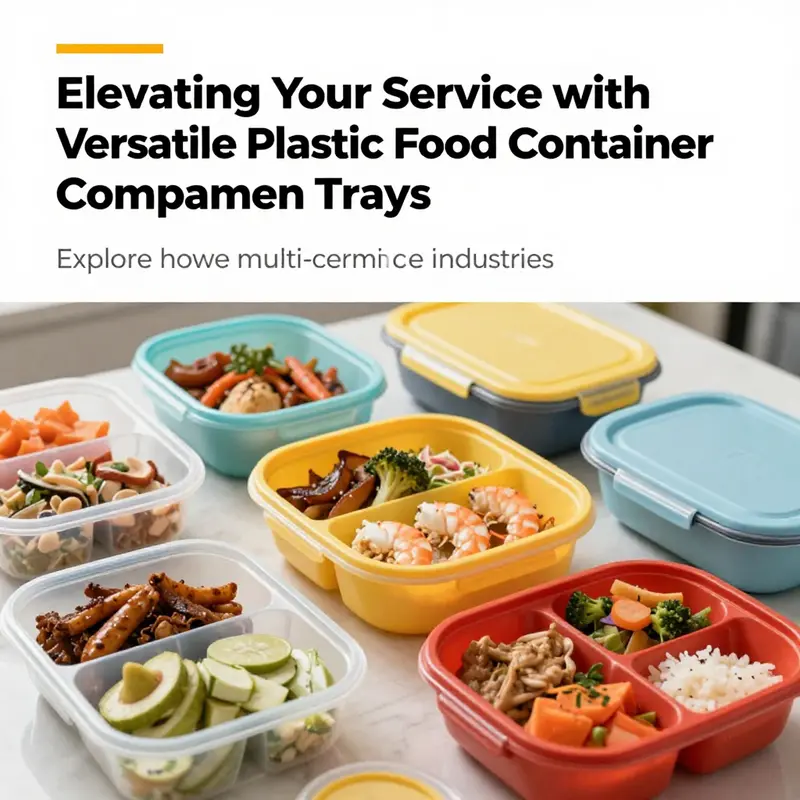
As the demand for efficient and hygienic food storage solutions continues to rise, plastic food container compartment trays have emerged as essential tools for various industries, including bubble tea shops, restaurants, and catering services. These trays not only streamline food transportation but also enhance presentation and customer experience. This article delves deep into the multi-compartment designs, material functionalities, market trends, diverse applications, and the growing emphasis on sustainability in packaging solutions. Readers will find invaluable insights into how adopting these versatile solutions can foster better service delivery and support environmental goals.
Organized Meals and Smart Storage: The Practical Power of Multi-Compartment Plastic Food Trays
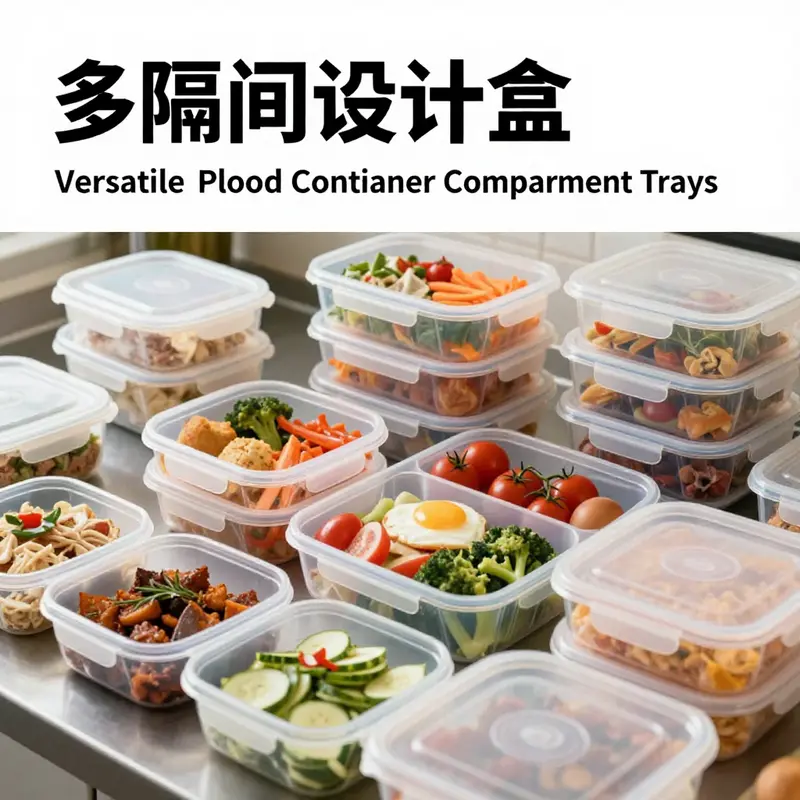
多隔间塑料食品容器盒分隔托盘将储存、分装与运输功能融为一体,解决了餐饮、家庭和外卖行业对食品分类管理的核心需求。凭借多格内部分离的直观优势,这类托盘可以同时容纳多种食材而不混合味道。制造上通常选用食品级塑料,如聚丙烯(PP)或高密度聚乙烯(HDPE),它们能在低温到中等热度下保持形状和安全性。材料的选择决定了托盘的耐温范围、可回收性和清洁方式,这些要素直接影响使用场景与维护成本。
多隔间设计并非简单地把空间划分为几格,而是通过合理的格局、尺寸和连结方式提升功能性。常见的配置有四格、六格到八格等多种形式。每个分格的容量与形状,可根据常见菜肴、配菜或小食尺寸优化。较深的分格适合含汤汁的菜品,而浅而宽的格子便于放置水果或冷食。合理的通边和斜角设计便于取放和清洗,同时降低残余食物滞留。这些细节体现了设计对日常使用便捷性的影响,也决定了托盘在商业环境中的接受度。
带盖设计为多隔间托盘增添了重要的保鲜和便携功能。透明的可拆卸盖能做到物品可视化,便于分发与盘点。密封性能良好的盖子能有效延缓氧化与串味,尤其在需要通过配送网络运输时,密封性关系到食品的完整性。与此同时,一些款式在盖子上增设可开合的呼吸阀或蒸汽孔,支持微波短时加热后蒸汽排放,避免容器因内部压力积聚而变形。这类细节使托盘既适用于储存,也适合作为便携午餐盒或旅行食品集装器。
在商业厨房与外卖服务中,多隔间塑料托盘的标准化设计带来效率优势。厨房可按菜品类型和份量,对托盘进行预装,便于快速装箱与配送。若托盘支持堆叠,它们能显著节省冷藏柜和运输空间。工业版托盘则可以通过加强筋或外部钢管支撑来提升承重性,配合货架与叉车作业,适应仓储管理需求。设计上还应考虑与现有包装系统的兼容性,例如是否能与外卖袋、保温箱或一次性餐具配套,从而实现流程无缝衔接。
卫生与食品安全是多隔间托盘设计的基石。食品级树脂需满足国家与地区的接触食品材料法规。托盘表面应采用光滑成型,减少细菌藏匿点。加厚转角、圆弧过渡和便于拆卸的格板,可缩短清洗时间并降低化学残留风险。对餐饮机构而言,托盘是否能耐受高温洗碗机消毒,会影响其重复使用策略。以PP或HDPE为例,适当厚度的产品通常可承受常规洗碗机温度,但长期高温或强酸碱清洗会缩短使用寿命。
从材料循环利用与环保趋势出发,市场对可回收与可降解选项需求不断增加。PP与HDPE在许多地区都有成熟的回收体系,但回收率受地区和产业链影响。设计者可以通过统一材质、减少复合材料使用来提升回收可行性。同时,开发可降解改性材料或使用再生塑料,也是应对监管与消费者期望的方向。对于希望降低塑料依赖的餐饮商户,混合使用可回收多隔间托盘和一次性纸质餐具是常见策略。比如,商户可以用可重复托盘盛装主菜,同时为汤品或沙拉选择纸质容器,以便于最终回收或堆肥处理。有关纸质容器的替代方案可参考这款关于外带沙拉纸碗的产品页面,了解不同材料在外带服务中的实际表现。take-away food kraft rectangular salad paper bowl
定制化能力是多隔间托盘对商业客户的吸引点。厂商通常提供不同颜色、隔断布局和表面纹理的选项,以符合品牌识别。个性化的隔间组合还可满足特定菜品的布局需求,提升陈列效果。小批量定制与大型量产之间的平衡,影响交货周期与成本。采购时,了解最小订购量、样品周期和模具费用对成本评估至关重要。采购方应要求样品进行实地测试,包括耐热、耐冷、密封性能和清洗耐久度测试。
多隔间托盘也在新零售与即食经济中发挥作用。预制菜、本地餐饮与超市即食柜常用此类容器进行分装销售。为了减少泄露和延长货架期,设计师会加入防溢边、密合盖缝和独立封条等元素。对于需要冷链的产品,托盘材料和厚度需保证低温下不脆裂,且在解冻或短时加热时不释放有害物质。
创新设计正在推动此类托盘多方向发展。模块化隔板允许用户按需调整格局,提高适应性。可拆卸插片则支持清洗和替换,延长整体使用寿命。表面涂层或抗菌添加剂能抑制微生物生长,不过需确保这些添加剂符合食品接触规范。另一个趋势是智能标签和扫码系统集成,帮助餐饮企业追溯餐品、统计销售并优化备货。
最后,实际应用常常要求权衡多项指标。理想的多隔间托盘应兼顾密封性能与便利性、耐用性与可回收性、成本与美观。选择时应以用途为核心:是在家庭使用、午餐便携、冷链配送还是仓储管理。只有明确使用场景,才能在材料、设计和配套服务之间做出最优选择。有关市场上具体款式与规格的参考,可查阅相关产品展示页面,那里提供了典型的多隔间托盘实例和技术参数。https://www.alibaba.com/product-detail/Plastic-Food-Separation-Tray-with-8-Compartments_1600472293325.html
Material and Performance Essentials for Plastic Compartment Trays: What Determines Safety, Strength and Suitability
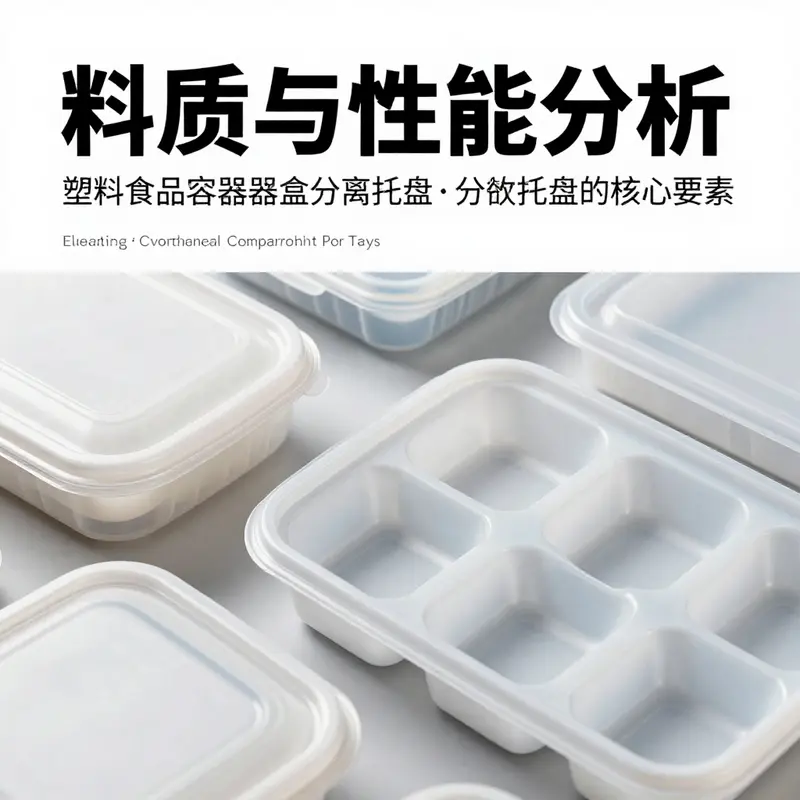
Choosing the right material and understanding performance metrics are the practical core of selecting a plastic food container box compartment tray. Material choice is not aesthetic only. It determines thermal behavior, chemical resistance, structural integrity, cleaning tolerance, recyclability, and ultimately food safety. Decisions made at this stage affect daily handling, storage and transport, as well as long-term cost and environmental impact. This chapter examines the key polymers used, their performance attributes, and how design and processing influence real-world results.
Polypropylene (PP) stands out where heat resistance and dimensional stability are priorities. With a continuous-use temperature up to about 120°C, PP resists deformation during steam sterilization and microwave reheating. It offers a good balance of stiffness and toughness, so compartment walls keep shape under load. For trays that must withstand hot food, repeated sanitation, or brief oven exposure, PP is often the right baseline. However, PP loses some toughness at very low temperatures and can become brittle. Insulation, wall thickness and ribbing can mitigate this, but the polymer choice must match expected temperature cycles.
High-density polyethylene (HDPE) excels where low-temperature performance and chemical resistance matter. HDPE retains ductility to very low temperatures and resists acids, alkalis and most detergents. That makes it well suited to frozen food logistics, cold-chain transport and environments where chemical cleaning agents are used frequently. Its impact resistance reduces breakage in handling. HDPE’s heat tolerance is lower than PP, so it’s less suitable for repeated high-temperature sterilization or microwave reheating. For frozen-to-reheat workflows, designers often pair HDPE storage with separate microwave-safe liners.
Polystyrene (PS) offers a different set of trade-offs: high stiffness, excellent clarity and a refined surface finish. This combination suits display and presentation trays where visibility and a crisp retail look are important. But PS is brittle compared with PP and HDPE and cannot tolerate high temperatures. It is generally reserved for single-use display packaging or cold items that benefit from transparency. Where impact resistance or repeated thermal cycles are required, PS is a poor fit.
Crystalline polyesters and copolyesters, such as CPET, address the gap between rigid, heat-resistant trays and oven-safe performance. CPET tolerates higher oven temperatures and provides a stable platform for oven-to-table convenience. For prepared meals intended for conventional oven reheating, CPET compartment trays can be an effective choice. Their processing and recyclability differ from polyolefins, so supply chain and end-of-life handling must be considered.
Beyond base polymer selection, material grade and additive content shape performance. Food-grade certification is essential. Only materials that meet recognized regulatory standards should be used. Certification bodies and regulations define acceptable additive lists and migration limits. These standards reduce the risk of harmful migration into food during heating or long contact times. Surface smoothness and non-porous structure also limit microbial entrapment and make cleaning effective. Trays with dense, glossy surfaces clean easily and dry quickly, which improves hygiene between uses.
Structural design interacts with material properties to determine strength and load capacity. Wall thickness, corner radii, and reinforcing ribs raise flexural strength without adding excessive material. Designs such as cross-bracing on the base or a multi-footed bottom distribute load and enable stable stacking. For handling and palletized transport, both static stack strength and dynamic load resistance matter. Static load is the weight a stacked column of trays supports; dynamic load is the impact and shifting forces during movement. Safety margins on load capacity prevent collapse under real-world conditions. Typical specification practices require trays to handle loads well above expected payloads to account for misuse and uneven stacking.
Manufacturing method influences microstructure and performance. Injection-molded trays achieve precise wall thickness and complex rib geometries. Thermoformed trays cover larger flat areas with thinner walls, which can suit single-use or lighter-duty applications. The chosen process affects residual stresses, dimensional tolerances, and how well a tray resists cracking under repeated bending. It also affects cost and recyclability: thicker sections and multi-material constructions are harder to recycle.
Recyclability and material purity are crucial for durable, reusable trays. Trays made from 100% virgin polymer maintain consistent color, mechanical properties and hygiene performance over many cycles. Recycled content lowers cost and environmental footprint but may introduce variability in mechanical strength, odor, and appearance. Recycled materials can also contain contaminants that raise migration risks during heating. Where repeated food contact and high temperatures are expected, prioritizing high-purity or certified post-consumer recycled streams helps manage risk.
Thermal performance matters beyond maximum use temperature. Thermal conductivity, heat capacity and heat distribution determine how evenly food heats in a compartment tray. A material with poor thermal distribution creates cold spots and hot spots, affecting reheating quality and food safety. Tray design can assist with heat distribution; thinner walls near the food contact area and ventilation paths in lids can improve reheating without sacrificing structural strength.
Barrier properties influence freshness and shelf life. Oxygen and moisture transmission rates determine how well a tray preserves perishable foods. Pure polyolefins generally offer moderate barrier properties. If extended shelf life is required, designers often add a barrier layer or select laminated constructions. Such multi-layer systems increase performance but can complicate recycling. Balancing barrier needs with end-of-life considerations is now a frequent design constraint.
Hygiene and cleaning compatibility must match the intended reuse cycle. Trays intended for daily reuse should resist repeated dishwashing, alkaline detergents, and occasional high-temperature sanitizing. Chemical resistance of the base polymer and any coatings is essential. Coatings that provide anti-fog or anti-glare effects must also withstand cleaning without degrading or leaching. Where automation is used, trays should resist mechanical abrasion from conveyors and stacking machinery.
Design for circularity is increasingly central. Clear resin identification and mono-material construction simplify recycling. When multi-materials or coatings are unavoidable, making components separable aids end-of-life processing. For single-use applications, compostable paper-based options may be considered. For example, a well-designed paper bowl with lid can serve display and short-term hot food needs while offering a different end-of-life pathway. See an example product for alternative disposable packaging disposable kraft paper bowl for food package with lid.
When assessing a compartment tray, inspect material certification, confirm maximum and minimum service temperatures, request mechanical test data for static and dynamic loads, and verify cleaning and chemical resistance. Ask for long-term aging data if reuse is expected. Check if the tray retains dimensional stability after repeated thermal cycling. Where food safety is critical, demand migration testing and certifications aligned to the relevant market jurisdiction. These checks align product selection with operational reality and regulatory obligations.
Material and performance choices are trade-offs. PP delivers heat tolerance and rigidity. HDPE offers toughness at low temperatures and chemical resistance. PS shows clarity for display. CPET supports oven use. Structure and processing shape how these materials behave under load and over time. Balancing food safety, performance, cost and environmental outcomes leads to the best fit for each use case.
For deeper perspective on how material selection affects food safety and environmental trends, consult this industry report that examines plastic tray safety and sustainability in detail: https://www.sohu.com/a/694876543_121483
从全生命周期看塑料食品容器盒分隔托盘的采购经济性与市场机遇
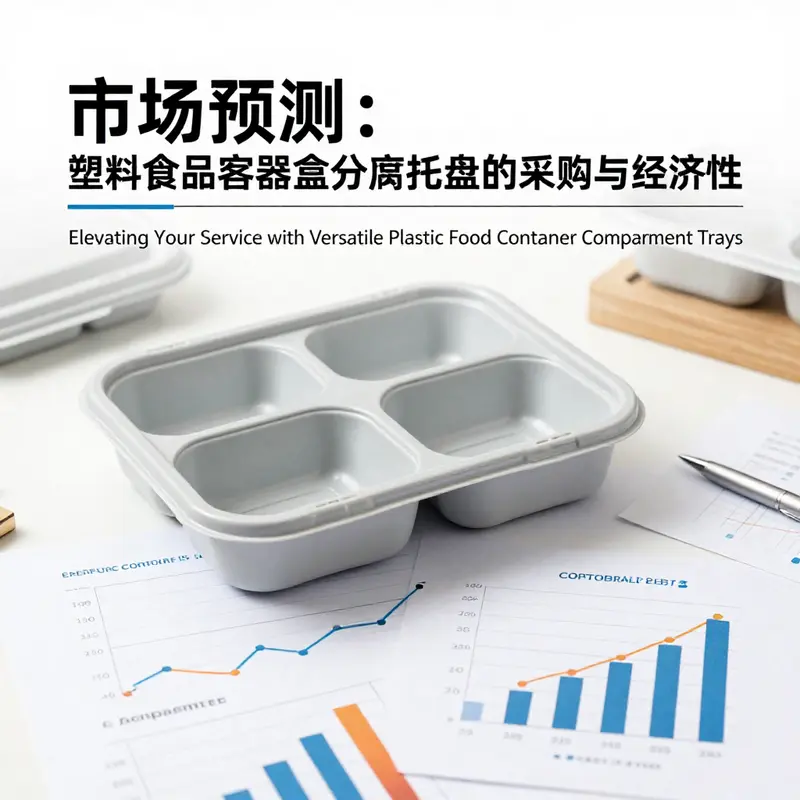
塑料食品容器盒分隔托盘在现代食品供应链中的作用,愈发显现为一个不可或缺的“隐形资产”。这些托盘以其耐热、耐用、便携和可重复使用的特性,被广泛应用于家庭日常、餐饮业、冷链运输与自动化仓储等场景。多隔间设计不仅提升了食品分装的效率,也在运输与上架过程中减少混混装、避免交叉污染的风险。随着需求多样化和场景化需求的上升,市场正在从简单的功能性工具演进为设备化、标准化与智能化的综合解决方案。对企业而言,这样的转变并非单纯的采购决策,而是一种将托盘转化为运营效率与成本控制的系统性投资。企业在制定采购策略时,必须以全生命周期成本(TCO)为核心框架,而不是仅仅关注初始单价的高低。初始投入的差异,往往在托盘的使用寿命、维修维护、清洁效率以及货损率等环节被放大,从而改变长期的成本曲线。换言之,一次看似微小的价差,若错过了高质量材料与工艺的长期保障,最终可能在数年内累积成为显著的成本负担。正因如此,市场研究中强调,优先选择全新料、食品级材料生产的托盘,尽管单价略高,但在8到10年的使用周期内,其综合成本往往显著低于以回收料为主的低价选项。这样的对比不仅涉及材料本身的耐用性,还涵盖对承重、抗疲劳和抗化学清洗剂的表现。简言之,采购决策应由“能否安全地承载与循环使用”来驱动,而非仅以价格为唯一评估维度。在当前环境下,企业若要在激烈的市场竞争中维持竞争力,还需在场景适配与标准化之间找到平衡。托盘尺寸的标准化、接口一致性与供应链的可追溯性,成为提升运营鲁棒性的关键要素。正因如此,行业内推动的并非单一材质的竞争,而是跨场景、跨环节的协同优化。对食品医药车间、冷链物流、自动化仓储以及田间与市场端的分拣配送等不同场景,托盘的设计应当提供多维度的应对能力。比如,在食品医药车间,托盘不仅需要耐蒸汽灭菌的顶面、四向进叉的高效搬运能力,还需要对湿度和清洁流程有更好的适配性;在冷链运输中,则要求在低温环境下不易脆裂、表面易清洁、且在多次冷冻解冻循环中保持稳定性;在自动化仓储场景,托盘的尺寸公差控制、可嵌套与可堆叠性对提升物流密度和自动化搬运效率至关重要。因此,市场趋势越来越清晰地指向“场景化、标准化、可持续性”的三位一体解决方案。为实现这一目标,企业通常会在采购策略层面做出几项关键取舍。首先是尺寸与接口的统一:采用国际标准尺寸,有助于与现有货架、托盘堆垛系统、AGV小车以及叉车路径实现高效对接,从而降低组合误差与装载损耗。其次是材料与认证的优先级:食品级、无熏蒸、符合HACCP/GMP等认证要求成为大型超市、加工厂及医药企业的准入门槛,这也是降低合规风险、保障货品安全的基础。再次是生命周期服务的引入:选择提供租赁、回收与维修的闭环服务的供应模式,可以将一次性资本投入转化为可控的运营支出,并通过回收再利用降低闲置成本。对企业而言,这不仅是成本管理的方法,更是一种供应链责任的体现。为了帮助企业理解这一变革带来的具体收益,仍需以场景为单位进行“成本-收益”对比分析。以食品医药车间为例,采用高品质托盘后,清洁与消毒时间的整体节约成为可量化的收益之一,货损率的下降带来合规性与生产连续性的改善;在冷链场景,低温材料的耐久性直接关系到货物新鲜度与报损率,投资高质量托盘往往在一年内就能体现出明显的成本节约。对于自动化仓储,尺寸精准、可嵌套设计不仅提升仓储空间利用率,还能显著降低设备摩损和维护成本,从而提升整体物流效率。更广泛地说,标准化尺寸的广泛应用让系统集成变得更容易,企业能够以“可重复使用、可回收、可追溯”的框架来支撑供应链的可持续性目标。与此相伴的,是对供应商关系的再定义。企业倾向于与源头制造商建立长期框架协议,通过规模采购获得价格稳定性,同时通过共同的质量与性能标准来减少变体。比起零散采购,框架协议带来的价格锁定与供货稳定性,是抬升运营效率、降低材料风险的重要手段。在全生命周期视角下,租赁-回收-维修的服务模式也在实践中得到越来越多的验证。此类模式降低了初始投入,缩短了投资回收期,同时通过旧托盘的回收价格提升了资源利用率。为了帮助读者在现实世界中更好地理解这套框架,许多企业已经开始通过统一的规格与场景映射来驱动采购策略的转型。例如,统一采用的国际标准尺寸不仅提升了装载率,还使得配套设备的采购更加高效,避免了因尺寸差异带来的反复调整和停产风险。与此同时,企业在选择材料时亦应坚持“全生命周期成本优先”的原则。以往以低价为导向的采购模式,往往隐藏着更高的后续成本,如因材料强度不足导致的破损、因清洁与灭菌流程不兼容导致的停产、以及更换周期缩短带来的再采购成本。这些因素综合起来,会使得最初的“省钱”策略在实际运营中反而成为成本的源头。与此同时,行业对环保与合规的要求日益严格。双碳目标和低碳物流的政策环境推动了对可回收、可降解及无害化材料的偏好。食品级、经认证并且可追溯的托盘,成为大型商超、食品加工与医药企业采购清单的核心要素。这一趋势不仅提升了企业的社会责任形象,也对供应链的稳健性提供了保障。将注意力从单一产品转向“解决方案集成”,企业开始把托盘设计与仓储系统、自动化设备、运输网络与清洁体系相整合,形成以场景为驱动的采购逻辑。这样的逻辑要求托盘制造商在材料、结构、表面处理、耐久性和互操作性方面提供更多的标准化选项,从而实现跨系统的协同与成本优化。针对不同场景的定制化需求,企业也需要在供应链协同层面进行更深的协商:如何在维护严格卫生标准的同时提升重复使用效率,如何在暴露于不同温度和湿度条件下维持结构稳定性,以及如何让托盘在自动化系统中实现精准的对位和高效堆叠。为了在竞争中获取优势,企业还需要把采购决策与品牌承诺、循环经济与供应链韧性结合起来。这包括对托盘租赁与回收能力的评估、对回收价格与再加工成本的估算,以及对供应商在材料安全性、清洁与消毒兼容性方面的持续承诺的评估。在这一点上,行业的研究与数据提示,我们正处在一个由“买产品”向“投资解决方案”的转型阶段。通过将托盘视作供应链的协同载体,而非单一货架上的物件,企业可以通过标准化与长期合作实现更高的装载密度、稳定的供货和更低的总拥有成本。对采购团队而言,这意味着要构建一个以数据驱动的决策框架,将场景需求、材料性能、成本结构、合规要求与供应商能力进行系统化评估,从而在未来的三到五年内实现更低的单位成本和更高的运营弹性。为进一步拓展对这一主题的理解,读者可以参考行业对标准化与可持续性的相关实践与案例,尤其是在跨区域物流与冷链管理中的应用路径。与此同时,关于材料选择与环境合规的国际标准也在不断完善,企业在设计与采购过程中的前瞻性投入,将直接转化为供应链的稳健性与市场竞争力。外部参考链接将提供行业层面的标准化框架及环境管理的最新要点,帮助企业在变动的市场环境中保持合规与创新并行的节奏。外部资源参考: https://www.iso.org/iso-14001-environmental-management.html。并且,若您对具体场景的尺寸匹配与堆叠设计有深入需要,亦可参考行业内的定制与标准化协作案例以获得灵活的解决路径。最后,持续关注材料科学与回收技术的进展,将使托盘系统在未来更具韧性、成本更具可预测性,并更好地服务于从生产到消费环节的全链条效率优化。值得强调的是,环境与合规的要求并非单向约束,而是推动创新的关键驱动。通过以标准化、可追溯、可回收为核心的设计理念,塑料食品容器盒分隔托盘不仅能在当前经济环境中实现成本控制,更能在长期市场波动中保持可持续的竞争力。若将目光放得更远,托盘系统的升级将成为整条供应链数字化转型的一部分,帮助企业在自动化、智能分拣和精准配送的浪潮中稳步前进。
分隔托盘的适用画面:家庭、餐饮、冷链与医药环境中的实用策略
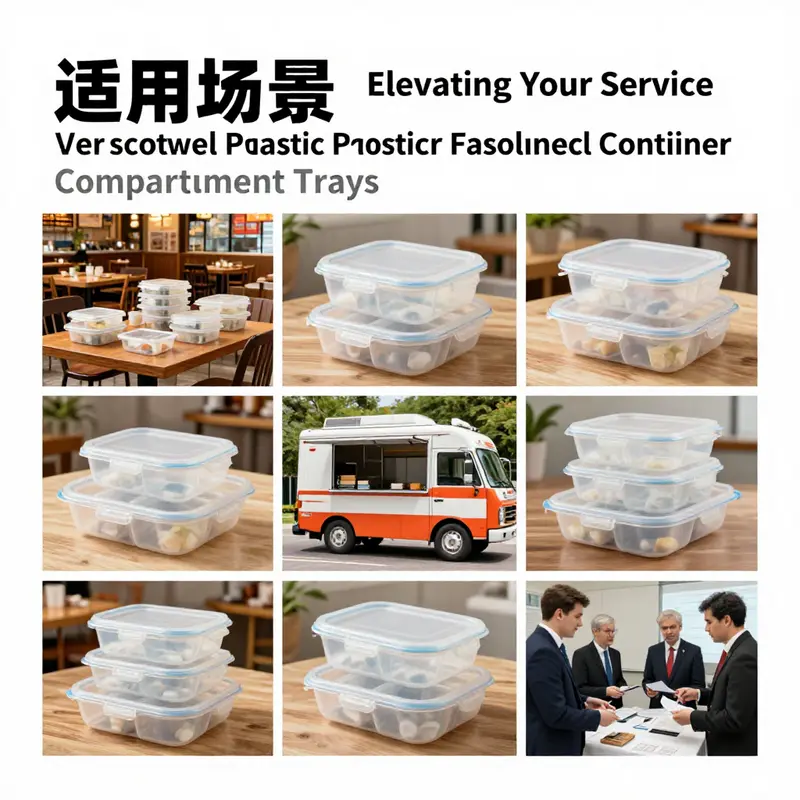
塑料食品容器盒分隔托盘并非单一用途配件。它在不同场景中承担着分类、保护、卫生与运输四项核心功能。家庭厨房将其用作储存与便当分装的利器。餐饮与中央厨房借助其标准化尺寸与无死角结构提高生产效率。冷链物流依赖其防潮与堆码稳定性保护生鲜品质。医药与洁净车间则利用食品级材质与抗静电处理,确保无害接触与低污染风险。以下将以连贯的叙述,说明这些场景中分隔托盘的实际角色与挑选要点,便于在各自应用中实现更高效、更安全的运作。
在家庭场景中,分隔托盘的优势体现为整理与保鲜并重。多格设计允许同时容纳主食、配菜与酱料,避免串味,便于配餐者快速搭配。对于备餐与冷藏储存,平板型托盘可直接放入冰箱抽屉,托起食物远离冰霜与溢出液体,延长食材新鲜度。对于需要加热的便当,耐热PP与CPET类型支持微波或烤箱加热,减少中间转器皿的使用。选择时应关注材质耐温范围、密封盖设计与是否易拆洗三项要素:材质决定加热安全性,盖型决定泄漏与保湿能力,而可拆式结构则便于彻底清洁。家庭用户若注重环保,则可优先考虑可回收PP材质或标注可回收编码的产品。
餐饮业与食品加工场合要求的是规模化、标准化与洁净度。中央厨房与连锁餐厅常常以分隔托盘实现半成品的标准配比与流水线对接。一款合适的托盘需满足机器与人工双重操作:托盘尺寸与隔间规格要能适配自动分装设备、传送带及洗消设备;承载强度则要满足层叠运输与叉车搬运。川字平板结构的设计在这一类场景中尤为常见。它不仅提升承重与稳定性,还能实现表面无缝清洁,适应高压水枪与蒸汽消毒。操作规范中,托盘的抗菌性能与微生物残留控制至关重要。食品生产车间通常要求托盘能承受121℃蒸汽消毒,并将微生物残留量控制在行业更低水平,从而降低潜在交叉污染风险。此类托盘在选购时需要查看是否满足GMP或HACCP等认证要点,并注意托盘材质是否会在高温下释放有害物质。
冷链物流中的应用强调防潮、防冻与堆码安全。相比传统网格托盘,平板型分隔托盘减少缝隙,降低冷库地面冰霜对包装的直接影响,从而防止生鲜蔬果或冷冻肉品在运输与储存过程中受潮或破损。四向进叉的托盘设计能兼容多种搬运设备,提升仓储周转效率。对于冷链环节,选择材质时应关注低温脆裂温度、抗冲击性与表面防滑处理。冷冻运输中,托盘的接触面若能隔离直接冷气侵入,将有助于保持包装完整性,减少霜冻再结与表面水分迁移。堆码特性也不容忽视:托盘需在堆垛时保持稳定,防止上层重量压坏下层易碎包装。
在医药与高洁净需求的行业,分隔托盘的角色更偏向于安全与防污染。食品级HDPE或PP经常用于药品短时存放与包装周转。对于易吸附微粒或对静电敏感的产品线,表面进行抗静电处理的托盘能将表面电阻控制在10⁶–10⁹Ω范围内,从而降低灰尘吸附与静电放电带来的损伤风险。化妆品、电子元件生产车间亦受益于此类设计。选择这类托盘时,除了确认材质无毒无味外,还需关注其是否能承受常规清洗与高温消毒流程,且其表面涂层不会在反复消毒中剥落或释放有害物质。
跨场景的通用考量有助于采购与运营决策。首先是尺寸与模块化:标准化的托盘尺寸便于建立库内货位、优化叉车路径并兼容自动化设备。其次是耐用性与维修性:优质材料与合理的结构设计延长托盘使用寿命,降低更换频率与长期成本。再次是清洁与认证:托盘应能承受工业清洗设备、蒸汽消毒或化学消毒剂的处理,且最好通过相关卫生认证。最后是环保与回收链路:越来越多终端用户倾向于可回收与再生塑料制成的托盘,同时希望供应商能提供回收或再利用方案。运营方在制定采购策略时,应平衡一次性成本、全生命周期成本与环保责任。
实际应用中,有效的操作细节能显著提升托盘价值。例如,将分隔托盘与透明盖组合使用,可实现即时盘点与减少频繁开盖操作,从而降低污染风险。分隔格设计应依据上游食品体积与下游配餐频率定制;对外卖或外带场景,格深要防止运输振动导致溢出;对中央厨房的批量分装,格位应便于标准化分配与机械化抓取。托盘与配套标签系统的结合,也能支持快速追溯与批次管理,提升食品安全可控性。
综上所述,分隔托盘在不同场景中的应用并非孤立操作,而是一个系统性的选择问题。正确评估场景需求、明确清洁与温控要求、兼顾搬运与堆码特性,加上对材质与回收策略的前瞻考量,将使托盘发挥最大价值。对于选择配套一次性或环保纸质外带容器的商家,可参考外带沙拉纸碗等可回收包装的组合策略,以减少整体包装复杂度并提升顾客体验(外带沙拉纸碗)。
更多关于川字平板托盘在食品与医药洁净场景的标准与性能分析,可参阅相关行业指南:食品医药冷链自动化场景塑料托盘推荐指南。
Rethinking Compartments: Pathways to a Sustainable, Smart Future for Plastic Food Container Boxes and Trays
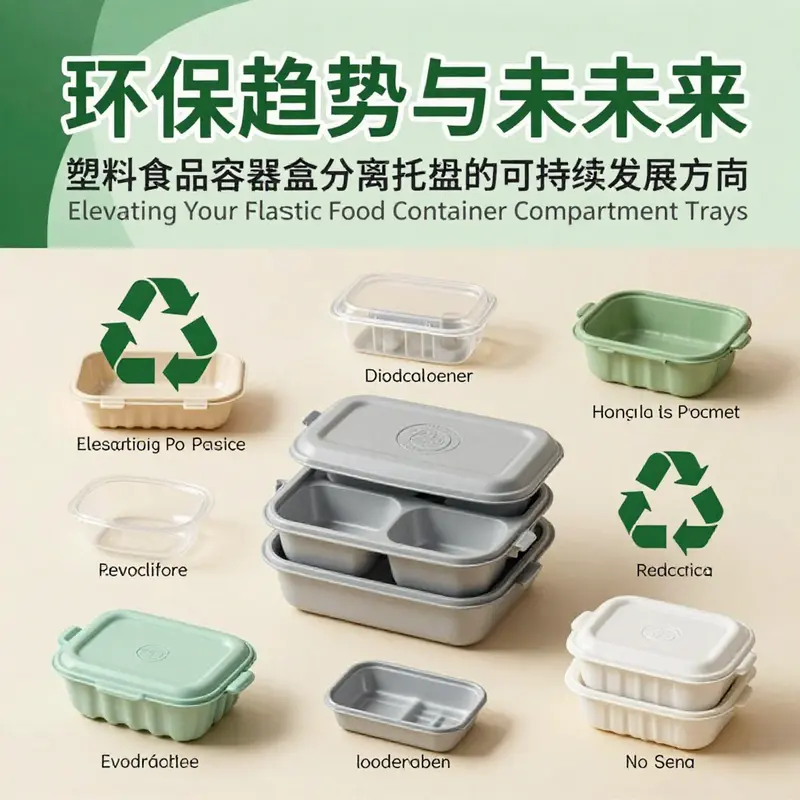
Plastics have long carried a paradox: remarkable versatility and efficiency on the one hand, and rising concerns about environmental impact on the other. The plastic food container box with compartments, a centerpiece in kitchens, restaurants, and logistics, sits squarely at the intersection of convenience and responsibility. In that small but highly visible unit—separate yet part of a single box—the story of modern packaging unfolds: how we store, transport, heat, and reuse meals while balancing cost, performance, and footprint. Today, a confluence of market expectations, policy signals, and technical breakthroughs is nudging this sector toward a sustainable horizon. The future will not be defined by a single material or a single policy; it will emerge from a holistic shift in materials, design, and management that redefines what the container can do, not just what it is made of. This is a chapter about direction—the long arc of evolution from traditional, disposable plastics to a packaging ecosystem that minimizes waste, extends service life, and integrates with digital networks to drive smarter use of resources.
At the heart of this transition is materials innovation. The research community and industry players are increasingly exploring biobased and biodegradable polymers that are compatible with food contact and high-temperature processing. Materials drawn from renewable resources—not fossil carbon—promise to cut reliance on nonrenewable feedstocks while opening avenues for lower net carbon footprints. Polymers such as polylactic acid and polyhydroxyalkanoates enter the dialogue as potential alternatives or complements to conventional petrochemical plastics in specific applications. While each material comes with trade-offs in strength, heat resistance, barrier properties, and cost, the overarching aim remains clear: to preserve or even enhance performance while reducing environmental persistence. In parallel, the industry is examining the life cycle benefits of fully bio-based formulations that may offer not only renewable feedstocks but also compatibility with more sustainable end-of-life pathways. A notable signal from the broader materials community is the push toward bio-based formulations that can significantly lower overall carbon footprints, illustrating a pathway from “reducing plastic use” to “replacing plastic material altogether” in some contexts.
A second pillar is the design for a circular economy. The sustainable future for compartment trays hinges on the ability to recover, sort, and recycle materials efficiently after their first life. Designers are increasingly favoring single-polymer architectures, avoiding complex multi-material composites that complicate disassembly and recycling. When a tray is made from a single polymer like PP or PE, it becomes much easier to reclaim it through existing recycling streams. Beyond material selection, the geometry of the tray can be optimized to use less material without sacrificing strength, enabling lighter packaging that still protects the food during transit. The ultimate aim is a closed-loop system where used trays re-enter the manufacturing stream with minimal energy input and high material integrity. This requires not only thoughtful design but also robust logistics and standardized sorting practices that keep the material within a jurisdiction’s recycling loop. In practice, this means better cooperation among producers, retailers, and waste management providers to establish reliable collection and processing pathways, sometimes supported by shared pallet and return systems so that trays can be washed, inspected, reconditioned, and reintroduced into service with little downtime.
A third dimension is the integration of intelligence and digitalization. Smart packaging concepts—embedding sensors, RFID tags, or QR codes—are transitioning from novelty features to essential tools for lifecycle management. When a tray or a tray system carries a digital identity, stakeholders can track its location, usage state, and maintenance needs across the supply chain. In a networked food system, this information reduces the likelihood of misplaced pallets, minimizes empty trips, and informs more accurate demand planning. For food service operators, digital traceability supports compliance with safety regulations, enables better inventory control, and helps optimize cleaning and sanitization cycles, all of which matter for sustainability. The convergence of artificial intelligence with the internet of things—AIoT—signals a future in which the tray itself becomes a responsive node in a broader logistics and operations network. The practical implication is simple but powerful: smarter trays that last longer, travel more efficiently, and contribute to a leaner carbon footprint.
Finally, customization and multi-functionality respond to the diverse demands of modern food systems. The industry has moved beyond one-size-fits-all designs toward modular, configurable trays that can accommodate different food types, temperatures, and portion sizes. For fresh foods, coatings that offer anti-microbial properties, improved thermal management, or leakage resistance can be integral to safeguarding quality and safety. For takeout and delivery, modular stacking and interlocking features enable flexible meal combinations, reducing plate waste and enabling efficient packing. Such features do not merely improve user experience; they extend the tray’s usable life by making it adaptable to evolving menus, packaging formats, and service models. As consumer expectations shift toward reuse and reusability, the most resilient designs will balance ease of cleaning, durability, and retrofit potential to keep pace with changing logistics and retail practices. In this light, the future tray is less about a single form factor and more about a family of compatible, durable building blocks that can be reconfigured for different contexts while maintaining a consistent standard for safety and recyclability.
These interwoven trajectories reflect a broader shift in how “sustainability” is understood in packaging. It is not a slogan or a one-off material upgrade. It is a system-level transition that touches every stage of the product’s life—from feedstock choices to end-of-life processing and beyond. The consumer is not merely a user of the tray; they are an active participant in a circular loop that relies on clarity of labeling, accessibility to recycling streams, and the availability of reuse opportunities. In this sense, consumer behavior matters as much as material science. When households and food service operations adopt responsible disposal practices, the potential environmental benefits multiply. And when regulations align with advanced materials and design for recycling, the probability of achieving meaningful reductions in waste saturates the system with momentum.
The practical implications of these developments extend to the business models that underlie packaging ecosystems. A move toward bio-based or biodegradable materials does not only change the choice of polymer; it reorients cost structures, supply reliability, and environmental reporting. Companies may need to invest in new processing capabilities, adjust their procurement strategies to secure sustainable feedstocks, and reconfigure their packaging lines to accommodate different heat tolerance or sealing properties. The shift to a circular design invites new forms of collaboration, such as shared tooling, standardized components, and even pallet or container pooling systems that optimize utilization and reduce capital expenditure. The net effect is a packaging landscape in which the tray becomes a versatile platform rather than a disposable artifact. This platform can host not only meals but also data, enabling better alignment with retailers’ sustainability targets and with public policy goals that seek to moderate waste and emissions.
Amid this evolution, the role of credible, science-based references remains crucial. The conversation is anchored by demonstrations of real-world impact, such as material innovations that cut carbon footprints and new design approaches that ease recycling. For practitioners seeking a concrete signal of ongoing progress, the field points to credible research and industry partnerships that quantify life-cycle benefits and set shared performance benchmarks. An authoritative source in the broader materials community highlights the potential for bio-based materials to reduce environmental impact, underscoring a movement beyond mere plastic reduction toward thoughtful substitution with renewables. This line of evidence supports a nuanced view: sustainable packaging will often involve a blend of strategies—biobased content where effective, recyclable designs where feasible, and intelligent systems to manage the flow of trays through their life cycle. The aim is not a single silver bullet but a coherent, adaptable framework that organizations can apply across markets and product families.
In the end, the sustainable development direction for plastic food container box compartments is about balancing performance, affordability, and environmental responsibility within an evolving ecosystem. It is about designing trays that can withstand heat and handling, yet be recovered and reused or safely degraded at the end of life. It is about enabling a circular flow that keeps materials in circulation and minimizes waste. It is about embedding digital tools that bring visibility and accountability to every journey a tray makes—from factory floor to consumer table, from restaurant kitchen to recycling plant. It is about crafting modular, multi-functional solutions that can adapt to a fast-changing food landscape without compromising safety or quality. In pursuing these aims, the industry takes incremental steps that compound over time: better feedstocks, cleaner processing, smarter logistics, and more resilient business models. The result is a packaging system that supports not only a growing appetite for food but also a growing commitment to the planet that bears that appetite.
For readers seeking a broader context on the materials and sustainability signals driving this shift, a detailed external resource offers a compelling synthesis of bio-based materials and environmental impact reductions. This body of work complements the chapter’s examples by illustrating how research translates into practical advantage in real-world applications. As the sector continues to mature, headlines will increasingly reflect the emergence of truly low-carbon, high-performance packaging platforms that can meet the demanding needs of households, food service, and delivery networks alike.
Internal reference: for an example of how packaging can leverage eco-conscious design in related food-contact formats, see the discussion of disposable eco-friendly custom paper cups with lids. These designs highlight how standardization, material choice, and lifecycle thinking can converge in practice to minimize waste while preserving usability. disposable-eco-friendly-custom-paper-coffee-cups-with-lid
External resource: a deeper, authoritative look at bio-based materials and their environmental benefits can be found at https://www.basf.com/global/en/press-releases/2025/bio-based-uramid.html. This source documents advances in bio-based formulations and their potential to reduce carbon footprints in industrial applications, reinforcing the trend toward substituting conventional plastics with renewables where appropriate.
Final thoughts
Incorporating plastic food container compartment trays into your service offerings not only enhances functionality but also aligns with customer expectations for convenience and sustainability. By understanding the multi-faceted advantages and market trends associated with these solutions, businesses can make informed procurement decisions that support both operational efficiency and environmental responsibility. As the industry progresses, it is essential to stay updated with innovations that cater to the evolving demands of consumers and the planet.