
Understanding the landscape of plastic food packaging in Salon-de-Provence is crucial for bubble tea shops, restaurants, food trucks, and catering services. With growing environmental concerns and stringent regulatory standards, businesses must navigate the balance between cost-efficiency and sustainability in their packaging choices. This article delves into key aspects of plastic food containers, including market dynamics, cost analysis, environmental impacts, regulatory requirements, and emerging trends in sustainable alternatives. Adapting to these factors will not only enhance operational practices but also align with consumer values in a competitive market.
Between Convenience and Compliance: The Plastic Food Container Market in Salon-de-Provence
Salon-de-Provence sits at a quiet crossroads where tradition meets the modern rhythms of food service and retail. In its markets and cafés, every choice of packaging is a small but meaningful decision about safety, convenience, and the local economy. Plastic packaging for food containers is part of that decision matrix. It offers clear advantages for vendors and consumers alike: lightweight transport, durability, the ability to seal and preserve freshness, and the ease with which products can be stacked and displayed. In a town known for its markets, bakeries, and bustling street-food culture, plastic containers help move pre-packaged salads, fruit portions, desserts, and ready-to-heat meals from kitchen to customer with predictable performance. Yet they do not exist in a vacuum. They sit against a backdrop of European packaging standards, French consumer expectations, and a growing emphasis on sustainability that has begun to reshape how local businesses think about materials, waste, and end-of-life options.
From a market perspective, the trajectory of plastic packaging in France— and by extension in Salon-de-Provence—follows broader national dynamics. France operates within a regulatory and competitive environment that rewards reliability and safety while pressuring operators to consider environmental impacts. The country’s rigid plastic packaging market has been projected to grow at a compound annual rate of about 3.5 percent, reaching several million metric tons by 2030. This growth reflects persistent demand from food and beverage sectors, as well as personal care and industrial applications, all of which rely on rigid containers to store, display, and transport products that must endure handling, temperature variations, and the rigors of the supply chain. In parallel, the disposable food packaging segment—an arena where white plastic containers are especially common for dry goods like cereals, flour, and nuts—has been expanding more rapidly, driven by convenience, hygiene, and the speed that modern dining and takeout demand.
Numbers tell a story that local operators in Salon-de-Provence feel in their balance sheets as much as in their shelves. The broader French disposable packaging market is forecast to reach well into the billions of dollars by the end of the decade, with a notable uptick in demand tied to takeout services, fast-casual dining, and organized catering operations that have become fixtures in the region’s hospitality economy. The appeal is straightforward: a container that is inexpensive, easy to mass-produce, and suitable for short-term use without compromising the perceived hygiene of stored foods. The practical benefits are visible in the streets of Salon-de-Provence as vendors, farmers markets, and small eateries push products from kitchen to customer with minimal friction. The market’s appeal lies not only in the initial price point but also in the logistics of distribution, where lighter, stackable packaging reduces transport costs and frees up shelf space in a way that matters to retailers and food service operators alike.
But alongside this pragmatic vitality sits a current of environmental consideration that is stronger than ever. Globally and within France, recycling rates remain a challenge, and the roughly coastal chorus of voices calling for sustainable packaging grows louder. The reality is stark: only a fraction of plastic packaging is recycled, with the vast majority ending up in landfills or in the environment. European and French authorities are responding with policies and standards intended to reduce waste, improve recyclability, and encourage the use of alternative materials when feasible. For Salon-de-Provence’s food businesses, this means evaluating not just the price and performance of a given container, but also its life cycle, end-of-life options, and compatibility with local recycling streams. The push toward sustainability often translates into concrete design decisions—favoring materials that can be recycled, or made from renewable feedstocks, or at least capable of composting in appropriate facilities—without sacrificing the reliability customers expect from takeout packaging.
Within this context, the French market is steering a large share of its packaging decisions toward what one might call a practical balance: packaging that meets safety and hygiene standards while offering recyclability or compostability where possible. France’s approach aligns with European food-contact regulations that set strict safety and hygiene requirements for materials that touch food. In Salon-de-Provence, as in other communities across Provence and beyond, business owners increasingly seek containers that perform reliably in display cases, during transport, and in heating scenarios. The ability to vent, seal, and shield contents during microwaving, when appropriate, becomes a practical feature that can differentiate a product on a crowded shelf. The design language of these containers often reflects a broader consumer desire for transparency of content, ease of inspection, and a neat, hygienic presentation that resonates with the rustic charm of Provençal markets and the modern, image-conscious dining culture that has grown around them.
What does this mean for the day-to-day decisions of a shop, bakery, or casual eatery in Salon-de-Provence? It means balancing the cost of packaging against the value of reliable performance. It means recognizing that the end user—whether a household kitchen or a busy street food vendor—expects a container that can protect freshness, resist leakage, and stack efficiently for both storage and display. It also means acknowledging that packaging is not merely a container but a communication tool: it signals cleanliness, safety, and a certain respect for the consumer’s time. In a locale where seasonal tourism can swell demand, the packaging choices of the moment ripple through the supply chain, influencing stock orders, refrigeration needs, and the pace at which vendors can move volumes with confidence.
In Salon-de-Provence, as in much of France, the market’s momentum is reinforced by the diffusion of packaging alternatives that seek to reduce environmental impact without compromising function. Producers and retailers alike are exploring materials that can be recycled in existing streams, or that originate from renewable sources. Some operators weigh the aesthetics of natural materials—where a compostable fiber or cellulose-based box might stand in for a plastic container in a seasonal exhibit or a premium-economy lineup. Others lean into the durability and long-standing performance of traditional plastics, calibrated with improved recycling labels and clearer guidance on disposal. The tension between convenience and conscience is not a problem to be solved once; rather, it is an ongoing dialogue that shapes procurement, menu design, and even how a storefront presents its offerings.
Local procurement strategies reflect both scale considerations and regional sensibilities. For a town of Salon-de-Provence’s size, bulk purchasing often drives price advantage, particularly for general-use white plastic containers that suit dry goods and salad preps. However, as consumer expectations shift toward greener options, many operators are piloting recyclable or compostable containers in targeted lines or seasonal offerings. They may also experiment with packaging that combines a sturdy exterior with a clear emphasis on recyclability, making it easier for end users to sort it correctly. Such strategies require coordination with suppliers who can provide bulk options, consistent supply, and clear labeling that aligns with EU and French guidelines. They also require communication with customers—education about proper disposal, the importance of recycling, and the role of packaging choices in reducing environmental impact.
The practical takeaway for Salon-de-Provence’s food packaging ecosystem is that the market is not a monolith. It is a spectrum that ranges from proven, cost-efficient plastic containers to innovative, eco-conscious alternatives. Businesses that navigate this spectrum successfully do so by assessing three pillars: safety and hygiene, supply chain resilience, and environmental responsibility. Safety and hygiene remain non-negotiable in any packaging choice. Containers must be designed to minimize contamination risks, withstand typical handling, and maintain food integrity through distribution and storage. A robust supply chain matters just as much as the container’s material—predictable lead times, consistent quality, and responsive service reduce the risk of stockouts that disrupt a vendor’s operations and a customer’s experience. Environmental responsibility, increasingly a determinant of brand perception, translates into transparent material disclosures, clear recyclability instructions, and a willingness to adopt certifications or standards that reassure consumers and regulators alike.
In this evolving landscape, the chapter on Salon-de-Provence’s plastic packaging for food containers intersects with broader market narratives. The region’s hospitality economy—composed of markets, cafés, bakeries, and takeout stalls—operates as a microcosm of the national trajectory: steady demand for reliable packaging, tempered by a swift and growing concern for sustainability, and aided by policy signals that encourage better end-of-life outcomes. Operators who succeed in this environment recognize that packaging is both a functional tool and a signal about values. They understand that the most effective packaging solutions are not only chosen for price and performance but also for how well they align with a consumer base that increasingly equates packaging choices with ethical responsibility and environmental stewardship.
This integrated view—where market growth, regulatory rigor, consumer expectations, and local culture converge—offers a nuanced understanding of how plastic food containers function in Salon-de-Provence today and how they may evolve tomorrow. As the market continues to grow, the retailers and food-service operators who best balance durability, cost, and recyclability will set examples for how small municipalities can adapt to global trends without sacrificing the regional character that makes Salon-de-Provence unique. The conversation surrounding packaging in this region is thus not merely about material selection; it is about sustaining a culinary culture that values both practicality and responsibility, ensuring that the shelves and street fronts of Salon-de-Provence can continue to delight customers while fitting into a more sustainable European framework.
For readers seeking a concrete entry point into this discussion, consider that there are viable, well-documented alternatives to plastic containers. These options can meet a range of needs from takeout to prep-to-serve, and they demonstrate that sustainability and practicality are not mutually exclusive. When evaluating options, it helps to study the full life cycle of a container—from production and transport to use and end-of-life—so decisions account for both immediate costs and longer-term environmental outcomes. This holistic view aligns with the ambitions of many local operators who want to preserve the town’s culinary vitality while embracing responsible packaging practices. As Salon-de-Provence continues to balance its storied markets with modern packaging demands, the choice of containers will remain a visible marker of how the community negotiates convenience, safety, and sustainability in everyday life.
Internal link reference: For an example of an alternative packaging option discussed in the broader packaging landscape, see the Kraft paper take-out solutions here: Kraft paper bowls. This reference illustrates how a shift toward recyclable or compostable paper-based packaging can coexist with the ongoing use of plastics in an evolving market.
External resource: Further insights into the broader French plastic packaging market dynamics can be found at Grand View Research: https://www.grandviewresearch.com/industry-analysis/plastic-packaging-market-france
Weighing the Costs of Plastic Food Packaging in Salon-de-Provence, France: A Local Lens on a European Shift
In Salon-de-Provence, a town steeped in Provençal charm and a bustling local economy, the daily choices of how food is packaged carry more weight than convenience alone. The research materials for this chapter reveal a gap: there is no readily available, city-specific cost analysis of plastic food packaging for Salon-de-Provence. Yet the absence of granular local data does not imply an absence of economic consequence. It invites a careful synthesis of broader European trends, supply chain realities, and regulatory environments to construct a plausible cost framework for a place where tourism, local markets, and small businesses intersect with national packaging mandates. What emerges is a nuanced picture of how costs are formed, what externalities shape them, and how a small city in southern France might navigate a shifting terrain toward more sustainable packaging without losing the economic competitiveness that keeps groceries, delis, and eateries accessible to residents and visitors alike.
At the macro level, Western Europe ends up consuming far more plastic packaging per capita than the global average. Data points from general market analyses show roughly 150 kilograms of plastic consumption per person annually in Western Europe, a stark contrast to the global average around 60 kilograms. In practical terms, this means local shops in Salon-de-Provence, from market stalls to neighborhood supermarkets, operate in an environment where plastic packaging is not only common but deeply integrated into the logistics of daily food distribution. The cost structures that underpin this reality extend beyond the price of the container itself. They cascade through material selection, manufacturing, packaging design, transport, storage, waste handling, and the compliance costs tied to food safety and environmental regulation. The consequence is a chain of costs that, when aggregated, influence the end price of foods sold in town centers and on the markets that attract both residents and seasonal visitors.
The economic weight of plastic is inseparable from its recycling profile. Across global production, only about 9 percent of all plastic ever produced has been recycled. The rest tends toward landfill, incineration, or leakage into the environment. This global statistic is not merely a distant abstraction; it translates into local costs through several channels. France and the broader European context have begun to internalize some of these externalities via waste management fees, extended producer responsibility schemes, and regulatory encouragement of circular economy practices. In Salon-de-Provence, these dynamics can influence packaging decisions on the shop floor. Businesses may confront higher residual waste disposal costs when the packaging used is difficult to recycle or to sort within local facilities. They may also face future regulatory costs or remediation expectations as policy makers accelerate mandates for recyclability, compostability, or landfill diversion. In practical terms, a shopkeeper in a sunlit street in the town must balance the well-known advantages of plastic—low cost, light weight, excellent barrier properties, and ease of stacking—with the prospect of rising disposal costs and tighter compliance regimes in the years ahead.
From a cost-formation standpoint, the packaging choice is a composite decision. Material costs represent perhaps the most visible portion of the equation: the raw polymer, stabilization additives, and the manufacturing process all contribute to the unit price of a container. But the story does not end there. In a region like Provence with pronounced seasonal variation in demand, the cost of packaging is also sensitive to capacity utilization and supplier competition. Large orders may secure favorable unit prices, but the advantages can be unevenly distributed across small, local buyers who purchase in smaller lots. This is an essential consideration for Salon-de-Provence, where the mix of large supermarkets, independent grocers, and street vendors can create a mosaic of purchasing patterns. The data point cited in the overview—pricing for transparent plastic containers—offers a rough benchmark: about 0.16 dollars per 100,000 units, with bulk orders potentially bringing the per-unit price down to roughly 0.145 dollars. Interpreting these numbers requires caution. They reflect a supplier’s listed pricing for mass production and do not automatically translate into the local small-business procurement costs. Still, they illuminate a scale dynamic: unit costs in mass production can be extremely low, but the actual landed cost for Salon-de-Provence retailers depends on arrival logistics, minimum order quantities, broker fees, and payment terms.
Transportation and logistics in a Mediterranean supply landscape also shape the total cost picture. Even when the container price itself is low, the transport mode, fuel costs, and inland distribution within France influence final costs. For a town like Salon-de-Provence, near major distribution corridors in the Provence-Alpes-C-Côte d’Azur region, the choice of packaging that reduces weight and bulk can complement efficient routing and reduce per-unit transport costs. The same logic applies to storage and handling: lighter, stackable containers improve warehousing density, lower handling time, and can reduce shrinkage through better containment. In short, the cost of plastic packaging is not merely what the supplier charges. It is also how the packaging performs in the logistics chain from factory floor to consumer shelf.
Beyond the direct price per unit, there are implicit costs tied to the environmental footprint and potential regulatory exposure. The packaging lifecycle includes production emissions, energy use, and end-of-life management, all of which carry economic implications. In Western Europe, and particularly in France, there is a growing cultural and regulatory emphasis on reducing plastic waste and promoting recyclability or compostability. This is not just a moral or environmental imperative; it is a potential cost lever. For instance, if a municipality elevates waste-diversion targets or introduces fees for non-recyclable packaging, businesses that continue to rely on non-recyclable plastics may experience higher per-unit disposal charges or face mandatory changes in packaging design to avoid penalties. For Salon-de-Provence, the implication is clear: packaging decisions must be resilient to rising waste-management costs and to evolving consumer expectations that increasingly favor sustainable options.
The material alternatives in play today include accelerated development of bio-based or cellulose-derived packaging that can be compostable or recyclable. These options carry their own cost structures, often higher in upfront material costs but potentially offset by savings in disposal fees, brand value, and consumer willingness to pay for greener packaging. A nuanced approach may favor hybrid strategies that balance performance, cost, and sustainability. In the local context, this balance may also reflect the tourism economy surrounding Salon-de-Provence, where visitors may be attracted to eco-conscious branding and packaging that aligns with a heritage town’s aesthetic and gastronomic culture. The design of packaging—its shape, its visibility, and its compatibility with the types of foods offered in cafés, markets, and street stalls—adds another layer to the cost discussion. For example, a simple but effective packaging design that is easy to label and compatible with cold or room-temperature foods can lower additional costs associated with temperature control, branding, and compliance labeling. One practical reminder from the broader packaging landscape is that a single container type cannot capture the full cost spectrum. The total cost of ownership includes not only the purchase price but also the lifecycle costs that accrue during use, transport, and end-of-life processing.
In considering the local context of Salon-de-Provence, a few practical steps emerge for a precise, city-specific cost analysis. First, gather municipal and regional data on packaging waste, recycling rates, and disposal fees. While such data may not be readily packaged for the exact town, nearby municipalities often publish environmental and waste-management reports that can be scaled to estimate local costs. Second, conduct a supplier survey that captures not just unit prices but volume discounts, minimum order quantities, and logistical terms for the Provence region. A rough benchmark can be derived from the global or European price ranges for transparent plastic containers, but the real value in pricing comes from aligning those ranges with local procurement patterns, the seasonality of demand, and the makeup of the local food service ecosystem.
Another dimension worth recognizing is the aesthetic and functional compatibility of packaging with local consumer preferences. In Provence and Salon-de-Provence more broadly, there is a growing tolerance for eco-friendly packaging that also respects cultural and culinary presentation. A packaging choice that suits a fruit market display, a take-away salad stand, or a traditional papeterie-style cafe may differ in its cost implications. A container that is robust enough to withstand transport and brief exposure to heat, yet compatible with compostable liners or plant-based materials, might command a premium price relative to a conventional plastic container. The challenge for local businesses is to weigh this premium against potential gains in customer satisfaction, repeat business, and the marketing value of sustainability. A balanced approach suggests a phased adoption: pilot a switch for a subset of items, measure public response and waste streams, and then scale up if the financial and reputational benefits justify the step.
To illustrate how real-world packaging choices can align with sustainability goals while keeping costs transparent, consider a packaging option in the broader market that emphasizes recyclable or compostable materials without sacrificing performance. A disposables ecosystem that favors kraft paper bowls or paper-based take-out packaging can align well with consumer preferences for natural aesthetics and recyclability. The packaging landscape offers concrete examples of how cost and sustainability can be reconciled in practical terms. For instance, one option in the broader packaging catalog highlights a disposable octagonal kraft paper packaging design that balances sturdiness with recyclable credentials and a design that translates well into a street-food or market setting. This example is not a product pitch but a reference point for thinking about how a local Salon-de-Provence vendor might orient its packaging strategy toward materials that support circular economy goals while remaining mindful of unit costs and supply chain reliability. disposable-octagonal-box-restaurant-food-kraft-paper-packaging This link illustrates how packaging design can influence both the cost structure and the user experience in a way that resonates with regional preferences and business models.
The cost analysis for Salon-de-Provence, then, is not about identifying a single price tag for a plastic container. It is about mapping a landscape of costs and incentives—material and manufacturing costs, transport and handling efficiencies, end-of-life fees, regulatory compliance, and consumer expectations—that together shape the true price of plastic packaging in this locale. It is a reminder that data gaps in a specific town can be bridged by a careful aggregation of regional statistics, supplier pricing cues, and an understanding of local waste-management practices. As local authorities and businesses in France continue to push toward sustainability, the cost calculus will inevitably evolve. The town’s packaging decisions will be judged not only by the bottom line but by how well they balance practicality, safety, and environmental responsibility in a way that preserves the vitality of Salon-de-Provence’s markets and eateries for residents and visitors alike.
In closing, the precise cost of plastic food packaging for Salon-de-Provence remains an area ripe for localized study. What is clear from the broader data is that plastics bring undeniable short-term convenience and cost advantages, yet they also entail long-term environmental and regulatory costs that can rise over time. A prudent local approach is to couple tactical cost management with strategic investments in sustainable alternatives and packaging designs that meet food safety requirements while appealing to the town’s eco-conscious consumer base. A well-executed cost analysis will support decisions that keep small businesses competitive, while also aligning with France’s evolving packaging standards and the broader European move toward a circular economy. The path forward for Salon-de-Provence involves careful cost accounting, thoughtful material selection, and a willingness to experiment with packaging formats that respect both the town’s heritage and its future.
External resource: https://www.alibaba.com/product-detail/Plastic-Clear-Food-Container-Packaging-for_1600578382461.html?src=rss
Breathing Life into a Packaging Dilemma: The Environmental Footprint and the Quest for Sustainable Solutions in Salon-de-Provence
Salon-de-Provence sits at the crossroads of everyday life and a growing awareness of planetary limits. In a town where farmers’ markets hum with seasonal fruit and locals linger over coffee in shaded plazas, the humble plastic food container quietly travels between kitchens, counters, and households. The chapter that follows uses this setting not to celebrate or condemn a single material, but to illuminate how a small Provençal town reflects a larger European conversation about the environmental footprint of plastic packaging and the path toward sustainability. The physical footprint is easy to see: plastic containers are light, inexpensive to produce, and durable enough to protect perishable foods during transport. They enable short supply chains and reduce food waste by extending shelf life and simplifying logistics. Yet the environmental cost lingers in every discarded cup and clamshell, every lid that slips into a municipal recycling stream or escapes into a countryside hedgerow. In western Europe, the scale of plastic consumption remains striking. The region averages around 150 kilograms of plastic use per person per year, more than twice the global average. Salon-de-Provence residents participate in this pattern through daily routines that include buying unpackaged produce and choosing takeout meals, often wrapped or housed in plastic. The consequence is a complex ecological equation: convenience today, long-term consequences tomorrow. The sobering arithmetic is widely cited by researchers and policy makers alike. Only a small fraction of plastics is recycled—about 9 percent globally—while a larger portion ends up in landfills, is incinerated, or leaks into soils and waterways. Microplastics, formed by the breakdown of larger items or shedding from surfaces, have turned up in soils, freshwater, and even some seafood that crosses European plates. The provincial landscape of Provence cannot insulate Salon-de-Provence from these realities; it only refracts them through local choices and municipal capacities. The town’s experience becomes a microcosm of a broader struggle to reconcile the benefits of plastic packaging with the urgent need to curb waste and pollution. Against this backdrop, national and regional initiatives in France have begun to shift the ground under plastic packaging. France has enacted tighter rules on single-use plastics and has pushed for a circular economy approach that encourages recycling, reuse, and the substitution of materials where feasible. Those policy directions are not mere abstractions. They shape what shops stock, how restaurants package grab-and-go meals, and how households sort and dispose of packaging. The practical implications ripple through the entire supply chain: from farmers and fishmongers who supply fresh goods to street vendors who serve prepared foods, and to the hotels, bakeries, and supermarkets that act as the region’s packaging hubs. In Salon-de-Provence, as in many French towns, the shift manifests in modest, yet meaningful, changes. Restaurants and cafés are experimenting with refillable containers and reduced plastic wraps for food preparation and service. Grocery retailers, even on small scales, are reassessing packaging choices to prioritize recyclability and to minimize non-recyclable types. These moves are not only about compliance or cost; they are also about communicating a new value to customers. When a local eatery reduces single-use plastic and clearly explains why, it invites patrons to participate in a broader project: keeping local air and water cleaner, supporting waste streams that loop materials back into use, and choosing products that align with a sustainable footprint. The long arc points beyond the town’s borders. Europe’s packaging policy increasingly emphasizes design for recyclability, use of recycled content, and the reduction of unnecessary packaging. In France, these aims align with a broader public shrewdness about the realities of plastic waste. Yet there is no silver bullet. The transition requires coordinated action across sectors and sustained investment in recycling infrastructure, waste management, and consumer education. Designers and manufacturers face the challenge of creating packaging that is functional for food safety and shelf life while also being easier to recycle or compost. This often means rethinking packaging formats, opting for materials that can be effectively collected, sorted, and processed in the existing municipal systems. In practical terms, Salon-de-Provence’s households and businesses can contribute by selecting packaging that is either reusable or designed to be widely recycled. Reusable beverage containers, washable food storage, and packaging that can be easily separated into recyclable components improve the odds of the material circulating back into the economy rather than becoming waste. The shift to sustainable packaging is also a test of how communities organize around waste. Sorting at the source, efficient collection routes, and clear guidance on what can and cannot be recycled help reduce contamination, a major barrier to recycling rates. Local education campaigns—short, informative messages in markets, cafés, and schools—can empower residents to make better choices. The interplay between policy and practice matters because regulations alone rarely shift behavior. Compliance becomes meaningful only when accompanied by practical options and visible benefits for residents. In this sense, Salon-de-Provence serves as a lens into a larger movement: the move from disposable, fossil-fuel–based plastics toward materials that harmonize with local ecosystems and with European standards for safety, hygiene, and environmental responsibility. The French emphasis on safe food-contact materials adds another layer of diligence. Packaging used for foods must meet stringent standards that ensure safety and hygiene from the point of packaging to the moment it reaches the consumer. This focus helps protect public health while also guiding manufacturers toward safer and more sustainable formulations. It is not a passive standard; it shapes research, investment, and product development. When planners and entrepreneurs in Salon-de-Provence consider future packaging needs, they weigh several factors. Durability and performance remain essential for preserving the quality and safety of foods. Yet the environmental footprint, including the energy used in production, the fossil-fuel basis of the resin, and the end-of-life options, must be part of the decision. Life-cycle thinking—an approach that assesses environmental impact from cradle to grave—moves packaging decisions from a single-stage cost calculation to a broader, more nuanced analysis of materials, energy, emissions, and waste streams. In practice, this means that a container chosen for salads may be evaluated not only for its capacity to protect freshness but also for how easily it can be cleaned and recycled, whether it is sourced from recycled content, and whether it can be disposed of in local composting or recycling facilities. The potential for alternative materials is never far from the conversation. Biodegradable and compostable options, wood-based or plant-fiber composites, and other innovative formats offer pathways to reduce long-lived plastic waste. These options sometimes come with trade-offs—higher cost, different handling requirements, or variable performance under heat and moisture—but they are increasingly part of thoughtful packaging portfolios in hospitality and retail. The cultural dimension matters as well. In Provence, as in many regions with strong culinary and artisanal traditions, packaging is part of the sensory experience. The aesthetic of food containers—whether simple and clean, or with a nod to regional craftsmanship—contributes to consumer perception of quality and sustainability. Crafting packaging that respects local sensibilities while advancing environmental goals requires collaboration among suppliers, designers, and end users. The idea is to design systems that feel natural to residents and tourists alike: packaging that is easy to use, easy to recycle, and aligned with the region’s commitment to environmental stewardship. For Salon-de-Provence, the practical steps toward a more sustainable packaging ecosystem include choosing materials compatible with available recycling streams, encouraging reuse where feasible, and supporting innovations in packaging design that reduce material intensity without compromising safety. A key element is supplier choice: selecting packaging that enables circular use—containers that can be recycled in municipal programs or returned and reused where systems permit. The decision to incorporate such packaging is not merely strategic for local businesses; it signals to customers that sustainability is a shared value. It also creates a feedback loop that strengthens the local market for recycled materials and supports job creation around waste management and product stewardship. To illustrate a tangible pathway without naming specific brands, consider the concept of octagonal kraft paper packaging options that combine practical functionality with a clearer end-of-life trajectory. The idea of using a design that facilitates compact stacking, easy sealing, and compatibility with recycling streams can help reduce contamination and improve the efficiency of collection and processing. This approach does not pretend that plastic is a villain, but it does acknowledge that, in a region like Salon-de-Provence, a balanced portfolio of materials—where plastic is used when necessary and where alternatives or recyclables are favored when possible—offers the most resilient route forward. The town’s progress will hinge on policy clarity, investment in infrastructure, and the willingness of businesses and consumers to participate in loops of reuse and recovery. It will also depend on transparent communication so residents can see the tangible benefits of sustainable choices—from cleaner streets and waters to better health outcomes and possibly even cost savings over time. In this light, Salon-de-Provence becomes a model not of perfection, but of process: a community learning how to integrate safety, economy, and environment in everyday packaging choices. External support from national and European guidance, along with local leadership and practical solutions, will continue to shape the available options and the pace of change. The overarching aim remains clear: to reduce reliance on fossil-fuel–based plastics and to transition toward a system where materials flow back into the economy rather than accumulating as waste. This requires ongoing policy enforcement, continued material innovation, and active community engagement. The journey is iterative, with lessons learned in one season feeding improvements in the next. As populations grow, as tourism expands, and as consumer awareness deepens, Salon-de-Provence will likely see more deliberate packaging decisions, more sophisticated waste separation, and more visible demonstrations that sustainability can align with convenience, taste, and economic vitality. The broader European context reinforces this trajectory, reminding readers that while local actions matter, they are part of a continental commitment to cleaner resources and healthier environments. External resource: Plastic Pollution in Europe offers a comprehensive overview of how packaging waste, recycling rates, and policy shifts unfold across regions, including France, and serves as a call to retain momentum in the face of growing consumption. For further reading, see Plastic Pollution in Europe.
Safe by Design in Salon-de-Provence: EU and French Standards Governing Food Contact Materials
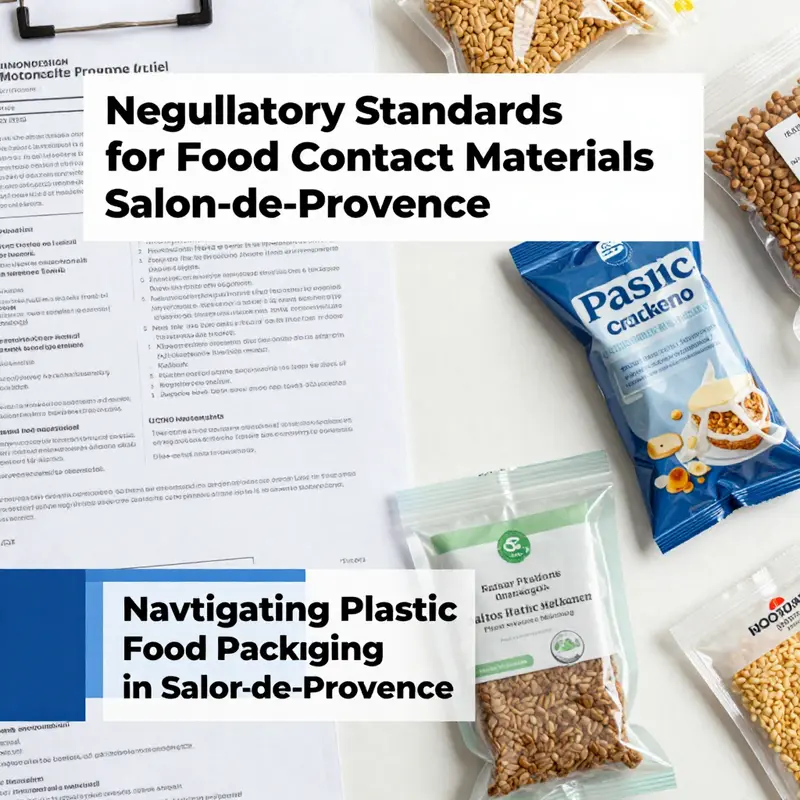
In Salon-de-Provence, a town shaped by markets and cafés, the packaging that carries and protects food sits at the intersection of health, trade, and sustainability. Local buyers and manufacturers navigate a web of rules that ensure what touches food is safe and transparent for inspectors. The chapter explains how European Union regulations, reinforced by national guidance from France, translate into practical choices for plastic packaging and alternative materials used in and around Salon-de-Provence. The core premise is that materials in contact with food must not migrate substances that could endanger health or alter the food s taste, odor, or composition. This is the baseline for decisions from plastic clamshells to paper bowls used for hot soups at a neighborhood stand. The EU framework fosters innovation within safety limits and supports the sustainable packaging transition in France. France complements EU rules through national bodies like ANSES, which issues practical recommendations and testing protocols that help local businesses implement compliance without hindering efficiency or market access. For businesses, compliance is a continuous discipline: maintain documentation that demonstrates conformity with general safety rules and with product specific rules for plastics, paper and board, ceramics, and metals. This includes migration testing, supplier declarations, and traceability data. Transparent labeling and information about materials and end of life options help retailers connect with customers who value safety and sustainability. The regulation portfolio in France and the EU makes cross border procurement easier by harmonizing standards, while still allowing material choices based on migration characteristics and intended use. Buyers at markets consider material performance, testing, and end of life. They review migration results to avoid off flavors in delicate ingredients and to ensure compatibility with local recycling streams. As new materials such as bio based plastics or recycled content polymers enter the market, compliance remains the constant reference point that guides design, testing, and supplier selection. In Salon-de-Provence, the practical path from design to sale is supported by migration testing, authorized substance lists, and traceability records. The result is packaging that enables safe consumption and aligns with the region’s sustainability goals. For readers seeking examples, kraft paper based packaging illustrates how design can balance functionality with recyclability. External resources from the European Commission provide ongoing context for substances, migration limits, and testing methods in food contact materials.
Seaweed Coatings and Refill Lanes: Reimagining Plastic Food Containers in Salon-de-Provence
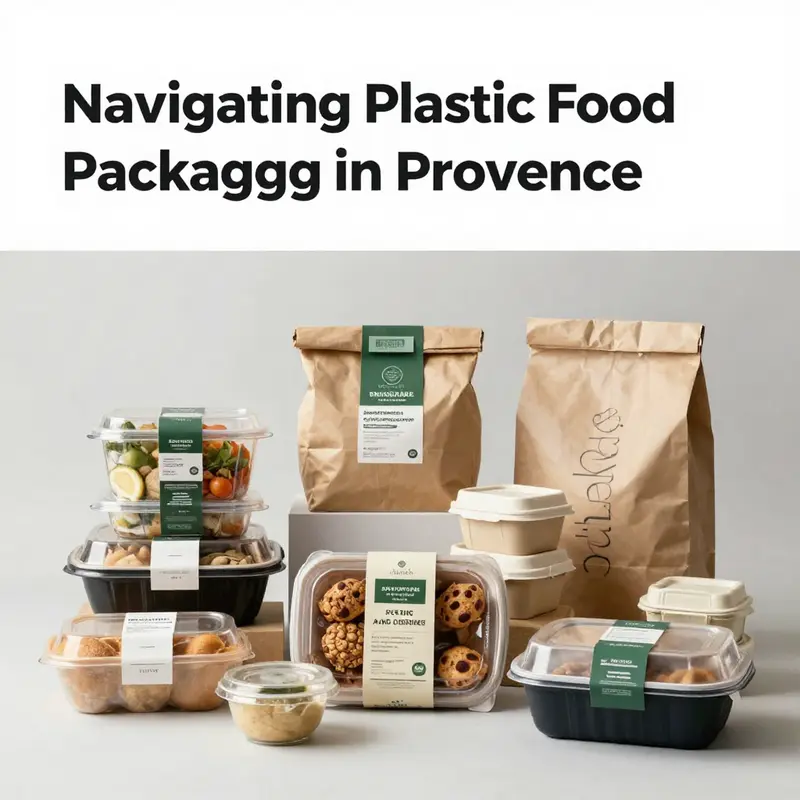
In Salon-de-Provence, the conversation about plastic food containers has moved beyond simple materials to a broader question of how a town can stitch sustainability into daily routines without sacrificing convenience. The chapter that follows threads together the visible shifts on shop shelves with the less visible transformations in consumer habits and policy, offering a cohesive picture of a community negotiating its own path toward a circular economy. The town sits within a landscape where markets, eateries, and lodgings are increasingly attentive to what ends up in a waste stream and how far a community is willing to bend toward more sustainable options. The result is a balanced narrative of progress, friction, and practical ingenuity that resonates beyond Provence and speaks to wider debates about packaging in French towns and European supply chains.
At the heart of the changing packaging story is a willingness to experiment with materials that decouple convenience from plastic waste. A notable development is the emergence of plastic-free food packaging coated with seaweed. This Notpla-inspired approach uses a coating derived entirely from natural seaweed, without chemical alterations, creating a biodegradable surface that can encase food while remaining compatible with the public appetite for safe, sanitary packaging. In the Mediterranean climate and bustling markets of Salon-de-Provence, such seaweed-coated films offer a compelling option for fruit, salads, and pre-packed foods that habitually rely on clear, stackable plastic containers. The core advantage is simple and powerful: a functional packaging solution that breaks the plastic habit without asking consumers to abandon the ease of grab-and-go meals. As shoppers handle baskets and trays, the absence of a familiar plastic sheen reframes expectations about freshness, aroma, and cleanliness. The seaweed coating embodies a philosophy of packaging that is less about erasing packaging waste and more about reimagining the life cycle of a food container from production to disposal.
This shift toward natural, biodegradable alternatives does not occur in a vacuum. It sits alongside a broader national movement toward reducing single-use packaging in France, a country that has embraced the idea of zero waste zones, refill stations, and community-driven approaches to consumption. In recent years, the federation of supermarkets and smaller retailers has experimented with designated spaces where customers bring their own containers, weigh basic staples, and fill jars or bags with grains, pasta, dried fruits, and other staples. In Salon-de-Provence, these zero packaging zones are not just a temporary experiment but part of a broader awareness: packaging is not just a product but a system that defines how households manage waste, how retailers source materials, and how municipalities allocate recycling infrastructure. When shoppers return to a high street marked by farmers’ markets, street stalls, and family-owned shops, the act of refilling and reusing becomes as familiar as picking up fresh bread. The initiative reduces single-use packaging, but its true value lies in cultivating a culture of responsibility. People learn to value the container as a shared resource, and retailers sense that the market for durable, reusable options is expanding. The practical logistics—how to calibrate scales, how to ensure food safety with reusable jars, how to maintain hygienic processes in busy hours—are significant. Yet these challenges also stimulate innovation: smart labeling, standardized tare weights, and clear guidance for customers all become part of the new packaging grammar.
The town’s approach to sustainability is not confined to the market; it also threads into the hospitality sector, transport, and tourism. In Salon-de-Provence, accommodations and eateries increasingly integrate sustainability into their identities, presenting a model where eco-conscious choices coexist with comfort and convenience. Lodgings and dining venues highlight energy efficiency, waste reduction, and responsible sourcing as core elements, signaling to visitors that sustainable practices are not an afterthought but a defining feature of the local experience. This alignment between lodging and dining creates a feedback loop: guests who value environmental stewardship are more likely to support a local economy that prioritizes recyclable or compostable packaging, while vendors respond by expanding options that align with these values. The result is a hospitality ecosystem in which guests re-engage with everyday choices—like accepting a take-out container that is recyclable or biodegradable—without sacrificing the warmth and hospitality of a Provençal stay.
Another strand shaping Salon-de-Provence’s packaging discourse is the careful attention to safety standards for materials that contact food. France’s regulatory framework, aligned with European Union rules, maintains strict requirements for materials that touch edible products. This fosters consumer confidence in new packaging forms, including seaweed-based coatings and other bio-based films. The emphasis on safety does not hinder experimentation; rather, it channels it. Innovators and retailers work within a clear boundary that ensures any alternative packaging materials meet hygienic standards while offering improvements over conventional plastics. In practice, this means that not all seaweed-coated or compostable options are suitable for every food type, and retailers must assess shelf-life, moisture resistance, and leak protection. The dialogue between regulators, suppliers, and retailers is active, pragmatic, and oriented toward scalable, compliant solutions that can be deployed in multiple towns across the region.
The practical implications for local producers and consumers are wide-ranging. For retailers, the shift toward alternatives to plastic containers translates into changes in procurement, storage, and shelf presentation. Recyclability and compostability become selling points, not merely compliance metrics. For suppliers, the demand for bio-based materials or seaweed coatings prompts a rethinking of supply chains, sourcing, and quality control standards. The logistics of transporting and stocking alternatives—such as biodegradable films or reusable containers with standardized lids and tare weights—require new partnerships and improved inventory systems. Shoppers, meanwhile, are adjusting to a more hands-on approach: reading labels, understanding life cycles, and adopting a mindset of reuse or careful disposal. The social texture of the town changes as people engage in conversations about waste, stewardship, and the responsibilities that come with choosing packaging that aligns with environmental values.
In this evolving landscape, even seemingly small choices can signal a larger shift. For example, the familiar act of grabbing a ready-made, plastic-encased snack can gradually give way to selecting a simple, reusable container or opting for a biodegradable option that preserves freshness without leaving a stubborn afterlife in landfills. The transition is incremental, with wins that accumulate over time: a cleaner street, less litter along the Cours Mirabeau, more efficient recycling streams, and a market that rewards packaging innovations through steady demand. It is not about erasing plastic overnight but about building a resilience that combines tradition with innovation. Local producers and retailers learn that sustainability can be compatible with economic viability, especially when packaging choices are aligned with consumer preferences and regulatory clarity.
As a practical example of shifting norms, retailers in Salon-de-Provence are increasingly considering alternatives to plastics for take-out and display. One promising option is the use of kraft paper bowls and similar recyclable packaging for certain foods. This approach is grounded in the same logic that informs the town’s broader strategy: reduce plastic where it is not essential, preserve food safety and quality, and provide clear, accessible paths to disposal or reuse. The availability of a simple, disposable option like kraft paper bowls—captured in the reality of a take-out environment—illustrates how substitution can progress without sacrificing service levels. For readers interested in exploring practical options, a commonly referenced resource is the availability of disposable kraft paper bowls for take-out, which can be found here: kraft paper bowls. This link points to a category that highlights a range of sizes and designs that can fit diverse menu needs, while offering a tangible example of how substitute packaging can look in practice on a Provençal street corner or a village bistro.
The narrative of Salon-de-Provence is therefore not a single headline about a single solution. It is a living case study of a community that is embracing both material innovation and behavioral change. Seaweed coatings reduce reliance on petrochemical-derived plastics, while zero packaging zones redefine the consumer experience from passive acceptance to active participation. The town’s hospitality sector, educated by safety standards and reinforced by consumer demand, embodies a model in which sustainability is woven into daily routines rather than appended as an afterthought. In this sense, Salon-de-Provence becomes a microcosm in which the European impulse toward a circular economy—where materials are reused, recycled, repurposed, or returned to the biosphere with minimal harm—plays out in small, tangible ways on streets and in storefronts. The experience for residents and visitors alike is one of gradual normalization: packaging that is visible in its care for the environment, and shopping and dining experiences that demonstrate how a community can balance convenience with responsibility without sacrificing the warmth of a local culture.
To sum up, the emerging trends and alternatives in Salon-de-Provence are less about replacing plastic than about reconfiguring its role. Seaweed-based coatings point toward real, scalable plastic-free options. Zero packaging zones convert a regulatory concept into everyday habit. Eco-conscious accommodations and a hospitality ethos articulate a broader social contract that values sustainability as a core feature of the visitor experience. The town’s path is iterative, collaborative, and deeply practical: a reminder that toward sustainable packaging, there is no single magic material, only an ecosystem of choices—each with its own trade-offs and opportunities—that together can reshape how a community nourishes itself and preserves its surroundings.
External resource: https://www.duni.fr/fr/produits/notpla-alga-packaging-coated-with-seaweed
Final thoughts
As the food and beverage industry evolves in Salon-de-Provence, the use of plastic packaging presents both challenges and opportunities. Business owners must adapt to changing consumer preferences, regulatory standards, and sustainability pressures. By making informed choices about packaging materials, considering cost implications and environmental impacts, and exploring alternatives, businesses can improve their operations and appeal to a more conscious customer base. The future of food packaging in Salon-de-Provence is bright for those willing to innovate and invest in sustainable practices.