
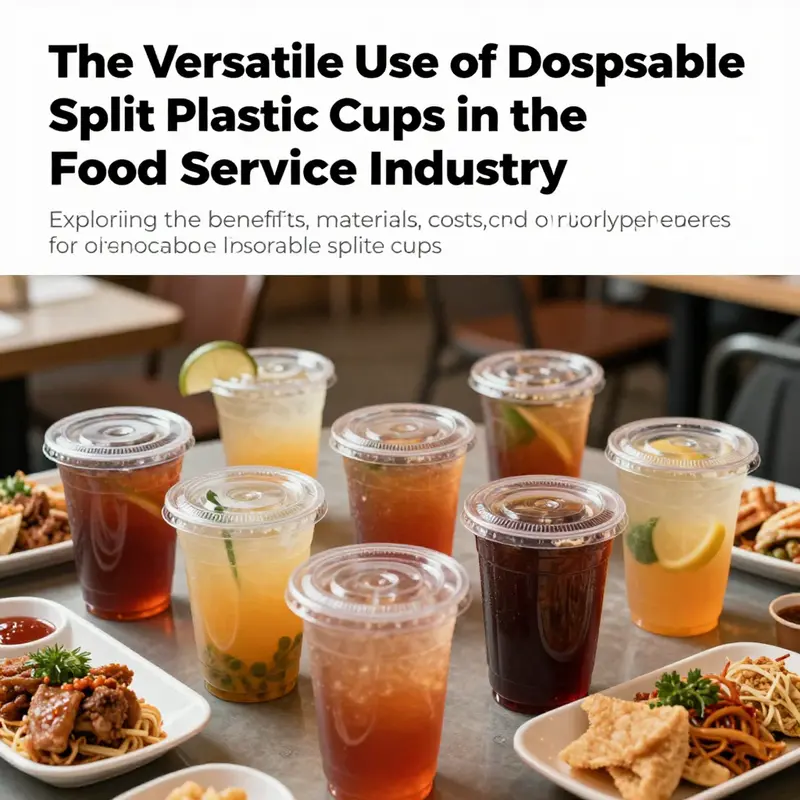
Disposable split plastic cups are becoming a staple in various food service sectors, including bubble tea shops, restaurants, food trucks, and catering services. These innovative containers, designed for convenience, efficiency, and hygiene, accommodate multiple dips or beverages while simplifying service and enhancing customer experience. In this article, we delve into the wide array of applications these cups serve, the materials that contribute to their functionality, an economic analysis of their cost-effectiveness, and their environmental impact amidst rising sustainability concerns. Additionally, we examine evolving consumer preferences in relation to these practical products, empowering businesses to make informed choices that align with market trends and customer demands.
Two Compartments, One Mission: The Quiet Efficiency of Disposable Split Cups in Modern Food Service
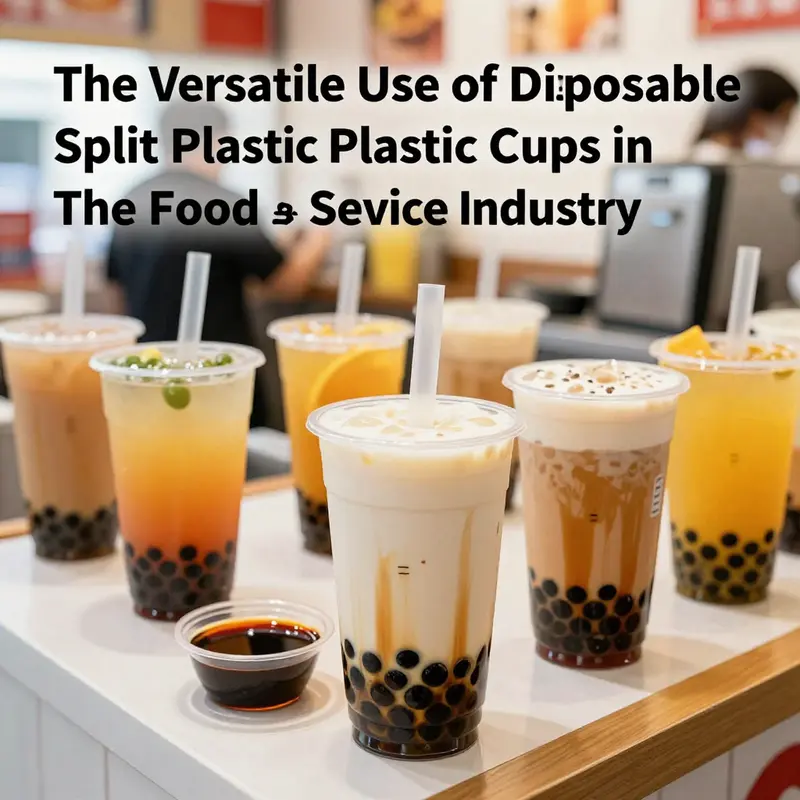
A single-use cup can often go unnoticed in a busy kitchen, but the disposable split plastic cup is designed to be noticed for the right reasons: it provides two separate chambers in a single vessel, enabling portioning, dipping, and sharing without cross-contamination. In fast-paced environments such as cafes, bubble tea shops, and event catering, the split cup becomes a practical workhorse. It is not merely a vessel; it is a compact logistics solution that helps streamline service, maintain presentation, and manage costs. The concept rests on a simple truth: when a cup can hold two distinct items without risking mix, the flow of a service—how sauces travel from station to table, how dressings stay crisp in a salad, how a drink remainsSegmented yet cohesive—becomes smoother, faster, and more predictable for both staff and customers. With this design, a server can greet a customer with a single cup that holds a beverage in one compartment and a side in the other, or a chef can present a dipping sauce beside a main component without the need for separate containers. In essence, two small spaces are leveraged to reduce the number of separate items on a tray, and that reduction translates into tangible benefits across the entire operation.
The most common size of these cups centers around a total capacity of 700 milliliters, split equally into 350 milliliters per compartment. This dimension strikes a balance between portion control and usability. It suits beverages that arrive with a partner pairing—tea and tapioca pearls, juice and a fruit topping, coffee or cocoa with a complementary sauce or foam. It also serves savory uses, where a container might hold a portion of salad in one half and a gel or jelly in the other, preserving shape and texture. The design’s versatility is a key driver of its adoption across the food service spectrum, from quick-service counters to mobile vending carts.
Materials are chosen for reliability in the hectic realities of service. Polypropylene (PP) and polystyrene (PS) have emerged as standard choices because they offer clarity when needed, robust stiffness, and satisfactory barrier properties. A lid, when paired with the cup, adds leak resistance and keeps contents secure during transit or delivery. The single-use nature of these cups provides a hygiene-focused advantage: surfaces are fresh for every customer, and cleanup after a rush is expedited. In a world where speed is a prerequisite, the ability to dispose of used containers quickly and move on to the next order matters as much as the cup’s physical integrity. The twice-used concept—two compartments sharing a single core—translates into less handling, fewer spills, and fewer opportunities for cross-contact between items.
Operationally, the nested form of these cups is a quiet marvel. When empty, they nest neatly, collapsing into a compact stack that minimizes storage footprint in backrooms, delivery vans, and prep zones. For operators juggling limited space, this nesting capability reduces the space required for stock, allowing more units to be carried in the same footprint and enabling a more efficient rotation. The same design also contributes to transportation logistics. A stack of split cups can be packed more densely than two separate containers, improving palletization and reducing the number of trips needed to restock a service desk or kitchen line. This efficiency extends to inventory management: fewer line items to track, less confusion during busy periods, and a straightforward path from shelf to service counter to table.
From a consumer perspective, the split design offers tangible benefits in presentation and control. Dips and sauces remain accessible without taking up extra table space or requiring a second dish. For beverages that arrive with add-ons or toppings, the compartments keep components separated until the moment of consumption, preserving texture and freshness. In bubble tea shops and juice bars, where toppings and mix-ins are common, this separation helps ensure even distribution once the cup is handed to the customer, reducing the likelihood of soggy or unevenly mixed drinks. The small but meaningful improvement in user experience can influence repeat visits, as customers appreciate the convenience along with clean, easy-to-handle packaging.
Cost considerations also drive the adoption of disposable split cups. The price spectrum commonly cited by suppliers ranges from a few hundredths of a dollar to under a dollar per unit, depending on volume and customization. For operators who order in bulk, cost effectiveness becomes a decisive factor. The split cup’s value proposition is anchored in its multipurpose use: one container can serve dual purposes, reducing the number of SKUs on a menu and simplifying training for staff who must manage multiple product presentations. In practice, the price per unit becomes a lever for menu creativity, enabling operators to test new pairings and promotions without a large upfront investment in separate dipping bowls or additional packaging.
Among the practical advantages, durability remains central. The materials chosen resist standard daily wear—from cold beverages to warm sauces—while maintaining integrity under typical transport conditions. A well-designed lid fits securely, forming a near-seal that mitigates leaks and accidental spills. This leak resistance is crucial in takeout and delivery workflows where the cup travels from point of sale to customer dwell time on the road. In hot beverages, the materials are selected to tolerate temperature differentials without warping or becoming overly soft, ensuring safe handling throughout the service cycle. The balance between rigidity and flexibility is essential: a cup must feel sturdy enough to withstand stacking and transport, yet lightweight enough to remain cost-effective for single-use distribution.
Sustainability concerns are increasingly shaping procurement choices, even for packaging designed for single-use. While the core cup body might be PP or PS, several variants explore more eco-friendly directions. PLA, a biodegradable option, is sometimes used for cups or components in an effort to appeal to environmentally conscious consumers. Likewise, some packaging systems incorporate food-grade paperboard bases or coatings that allow for compostable or recyclable pathways for parts of the cup system. For operators, this means there are opportunities to align packaging choices with brand values and customer expectations around waste. The practical reality is that not all facilities can process all materials; thus, choosing a cup with a compatible disposal stream remains a critical consideration when selecting a packaging solution for a given operation.
Beyond the core physics of two compartments and the chemistry of plastic, the supply chain context matters. Retailers and caterers seeking disposable split cups often negotiate bulk options that begin in the thousands of units. Bulk orders reduce the per-unit cost and simplify the procurement process, while customization possibilities—such as printed logos or color-coded lids—allow operators to maintain brand consistency across all packaging stages. The capacity to tailor lids and prints can be attractive for events or venues where branding visibility matters, balancing cost with marketing impact. In practice, a venue might pair a split cup with a lid that complements its branding, creating a cohesive takeout experience that feels deliberate and polished rather than utilitarian.
From a design and packaging strategy perspective, the split cup occupies a unique space. It sits at the intersection of convenience, hygiene, and presentation. The two-chamber concept accommodates the modern demand for multi-component offerings—dips, dressings, or toppings—without forcing customers to juggle multiple containers. It also syncs well with the rise of self-serve and to-go formats, where minimizing dishware and maximizing speed translate into better throughput and customer satisfaction. The design invites operators to rethink portioning strategies, exploring how to balance generous servings with waste control. Portion control can be supported by the 350 ml per compartment configuration, providing a consistent measure that helps manage costs and customer expectations alike. As a practical matter, this consistency reduces the variability inherent in hand-filled portions, contributing to a smoother service line during peak hours.
In the broader narrative of packaging evolution, disposable split cups reflect a trend toward intelligent single-use systems that still respect the realities of busy operations. They demonstrate how a simple physical arrangement—a pair of compartments connected by a shared mouth—can influence workflow, inventory, and customer experience. The cups are not a flashy innovation; rather, they are a deliberately engineered response to the daily needs of fast-service environments. They embody the idea that efficiency can be embedded in form as readily as in function: stackable, leak-resistant, easy to dispose of, and adaptable to a wide range of food and beverage pairings. When venues think about pairing the cup with compatible containment solutions, such as a corresponding kraft paper bowl with a lid for certain takeout formats, a cohesive packaging ecosystem emerges that supports both operational performance and sustainability goals. disposable-kraft-paper-bowl-for-food-package-with-lid
As operators plan for the next season of service, the decision to deploy disposable split cups should be anchored in a careful assessment of menu needs, service tempo, and disposal pathways. They are most effective where the menu consistently pairs two components that customers want together but prefer to keep separate until consumption. They excel in settings that prize speed, hygiene, and portion control, while still offering a clean, presentable look that aligns with contemporary takeout dining norms. The result is a packaging option that quietly supports the broader goals of a modern food service operation: deliver quality, maintain control over cost and waste, and provide a dependable customer experience that travels well from counter to table, or from kitchen to curbside pickup.
External resource for standards and deeper properties can be found here for further reading: https://www.plasticcups.com/understanding-disposable-plastic-split-cup-standards-properties-and-applications/ .
Choosing the Right Material: Performance, Safety, and Sustainability in Disposable Split Plastic Cups
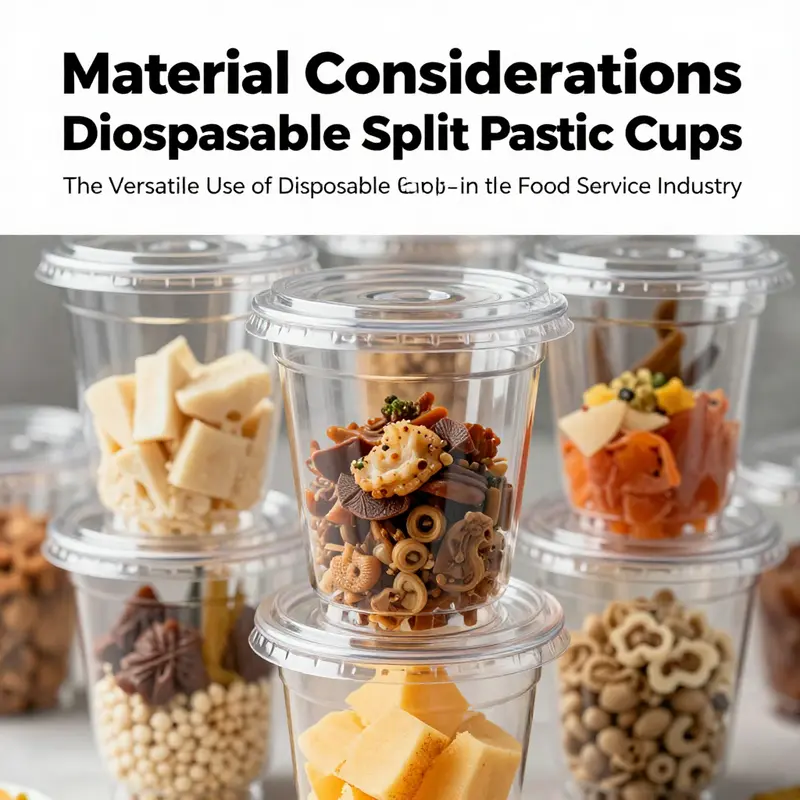
A single, well‑chosen material can define the whole experience of a disposable split plastic cup. It shapes not only how the cup performs under heat, cold, or rough handling, but also how a business communicates its values to customers who care about safety, transparency, and the footprint left behind after an event or meal. In the world of two‑compartment cups, where sauces, dressings, or shared beverages ride side by side in a single vessel, material decisions become even more consequential. The choice affects everything from leak resistance and temperature tolerance to clarity and recyclability, and it ultimately threads through the practicalities of storage, transport, and the consistent delivery of portion control that many foodservice operations rely on when serving items like condiments, dips, or shared beverages such as bubble tea and juice.
The most common materials used for disposable split plastic cups sit along a spectrum. Polystyrene (PS) stands out for its clarity and low unit cost. When visibility of contents is a priority—think vividly colored sauces or dressings that benefit from a clean, transparent backdrop—PS offers an appealing presentation. Yet clarity comes with a caveat: PS generally has limited heat resistance and can become brittle under UV exposure or when subjected to higher temperatures. In environments like a bustling buffet line or an outdoor catering setup, where sun and heat may be unavoidable, that brittleness can translate into cracks, leaks, or compromised lid seals. This is not merely a cosmetic issue; brittle cups can disrupt service with unexpected breakages, leading to waste and shorter shelf life.
Polypropylene (PP) offers a more balanced equation. It brings superior thermal stability, impact resistance, and chemical inertness. For cups designed to hold both hot and cold items, PP maintains structural integrity across a broad temperature range, which is essential when a cup might be used for hot sauces one minute and a cold drink the next. Its chemical inertness provides a degree of reassurance that no flavorful transfer or leaching will occur within the typical temperature and contact time of a serving scenario. PP is also more durable than PS in everyday handling and is frequently accepted by many municipal recycling programs, aligning with broader sustainability goals that are increasingly important to consumers and operators alike. The trade-off is that PP, while versatile, may not offer the same level of visual clarity as PS in some formulations, though advances in technology have narrowed that gap considerably.
HDPE, or high‑density polyethylene, adds another layer of strength to the decision matrix. It is known for its rigidity and chemical resistance, making it a sensible choice for cups that must withstand rough handling and potential chemical exposures from sauces and dressings. HDPE cups can deliver excellent leak resistance and structural stability, which matters in the two‑compartment format where lid integrity and seal performance are part of a chain of dependability. Visibility, however, is typically reduced with HDPE compared with PS or PP, which can affect the perceived appeal of the contents in a display or buffet scenario. When a business prioritizes durability and chemical resistance, and the presentation of the contents is less critical, HDPE stands as a robust option that is broadly recyclable in many programs.
Biodegradable or compostable plastics, such as PLA, have emerged as a response to environmental concerns. PLA is derived from renewable resources like cornstarch and can offer a more favorable end‑of‑life profile under the right conditions. For operations aiming to signal a commitment to sustainability, PLA provides an appealing narrative and a potential reduction in traditional plastic waste. However, there are practical constraints. PLA can exhibit reduced heat resistance and shorter shelf life in certain conditions, and it may require specialized industrial composting facilities to meet its environmental promises. In hot or lengthy service scenarios, PLA may not perform as reliably as PP or HDPE. This makes PLA a thoughtful choice for cold servings or condiments that are kept cool, rather than for hot sauces or soups that demand higher thermal resilience.
The decision across these materials is rarely about a single property in isolation. It is a balancing act that must consider how the cup will be used, what it will hold, and the broader operations surrounding storage, transport, and service. The two‑compartment design intensifies this balancing act. When liquid from one side could mingle with the other, or when the lid must maintain a tight seal across two separate chambers, the material’s barrier properties and integrity become critical. A material that performs well in a standard single‑compartment cup may need reinforcement or a different formulation to cope with the added complexity of a split design. For example, durability and lid compatibility are not merely about the cup’s body; they extend to how the lid interfaces with the rim, whether a bar‑coded or printed design is feasible, and how reliable the seal remains during nestable stacking and transit.
With these technical considerations in mind, the practical questions operators ask often revolve around temperature tolerance, flavor and aroma protection, and consumer perception. Temperature tolerance informs choices for hot sauces, soups, or beverages that might be served warm. PP and reinforced PS formulations offer resilience to temperature fluctuations, ensuring that the cup won’t warp or deform during a busy service window. Clarity and presentation factor in when sauces, dressings, or dipping items are displayed in open formats or under heat lamps. In such contexts, PS’s optical properties may be beneficial, but operators must weigh the risk of brittleness and potential impact on lid performance during long service periods. Environmental and regulatory considerations also weigh in. Recyclability and potential for reuse or composting influence how a business positions its product in markets with variable waste management infrastructure. The ability to nest empty cups during storage and transport is a practical benefit that reduces space requirements and associated costs; this feature is more readily realized with certain materials and wall thicknesses that promote compact stacking without compromising integrity in use.
From a safety perspective, material choice aligns with compliance and consumer trust. Food safety standards require that the material not leach hazardous substances into food or beverages under normal use. PP’s inert character and broad temperature tolerance make it a common baseline for many foodservice applications. The Food Contact Substances Database maintained by regulatory authorities provides guidance on approved materials and their limitations, helping operators avoid materials that may pose safety concerns under specific conditions. For instance, while PS is valued for its clarity, its known heat resistance limitations and potential brittleness under sun exposure can raise concerns in hot, bright service contexts. PP’s stability and chemical inertness often provide a reassuring baseline for most cold and warm items alike, while HDPE’s strength supports robust handling and storage conditions where leaks must be minimized. Biodegradable options, while promising, require careful alignment with service conditions and end‑of‑life capabilities, as their environmental benefits depend on appropriate disposal pathways.
In practice, material selection is most effective when it reflects a holistic view of the operation. A cafe that handles high‑volume cold beverage service and expects rapid turnover might favor PP for its mix of clarity, temperature tolerance, and resilience, especially when paired with a dependable lid system. A catering outfit that moves across venues with varying access to waste streams might opt for HDPE for its durability and robust leak resistance. A boutique event with a focus on sustainability might experiment with PLA for cold items, while transparently communicating end‑of‑life strategies to guests who appreciate responsible sourcing. The final choice often culminates in a careful cost–benefit analysis: unit price versus performance, planned lifespan of the cup within the service workflow, and alignment with branding and customer expectations.
As with any material decision, it is also essential to consider compatibility with adjacent components. Lids, nestability features, and the fit between compartment rims and sealing mechanisms determine how well a cup performs in practice. A lid that seals reliably with a PP or HDPE body, for instance, reduces spill risk during busy service and transport. In some cases, suppliers offer customization or bonding options that reinforce leak resistance and ensure a snug interface with the lid, a factor that can be pivotal for cups that hold sauces or dressings alongside beverages. The ability to customize with branding or messaging, while not strictly a material property, intersects with material choice through printability, clarity, and surface finish, all of which influence the perceived value and quality of the product.
Beyond performance, material choice also speaks to the sustainability narrative that many operators cultivate. Recyclability and compatibility with local waste streams matter. PP and HDPE tend to be accepted into a broad range of recycling programs, though local rules vary. Consumers increasingly expect clarity around end‑of‑life options, and the choice of material can support or undermine a brand’s environmental commitments. Operationally, nestability remains a practical advantage. When empty, well‑designed cups of the right material can nest tightly, saving storage space and reducing fuel consumption during distribution. This logistical benefit is part of the broader life cycle assessment that operators weigh when selecting a material for a disposable split cup. The bottom line is that the best material choice balances safety, performance, cost, and alignment with environmental goals, while also supporting the practical realities of storage and transport in a fast‑moving service environment.
In closing, the path to a well‑suited disposable split plastic cup is less about chasing a single superior material and more about harmonizing the cup’s thermal behavior, clarity, strength, and environmental footprint with the specifics of the service context. The decision should reflect not only the physical demands of the items being served but also the operational rhythms, storage realities, and regulatory landscape that shape modern food service. Businesses that take a thoughtful, data‑driven approach to material selection will likely enjoy fewer unexpected breakages, steadier lid performance, clearer presentation, and a more coherent sustainability story that resonates with guests who value safety and responsibility just as much as convenience.
For readers who want to explore related cup options as part of a broader catalog of take‑away packaging, see the disposable takeaway cup with lid options for custom branding and practical compatibility. This resource offers insight into how lid compatibility and branding strategies interact with material choices in real‑world settings.
External resources for further context and standards are available through regulatory references, which provide authoritative information on approved materials for food contact. For a detailed, regulator‑level view, consult the FDA’s Food Contact Substances Database, which outlines acceptable materials and related considerations for food packaging and contact surfaces: https://www.fda.gov/food/food-contact-materials/food-contact-substances-database
Two Compartments, One Bottom Line: The Economic Logic of Disposable Split Plastic Cups
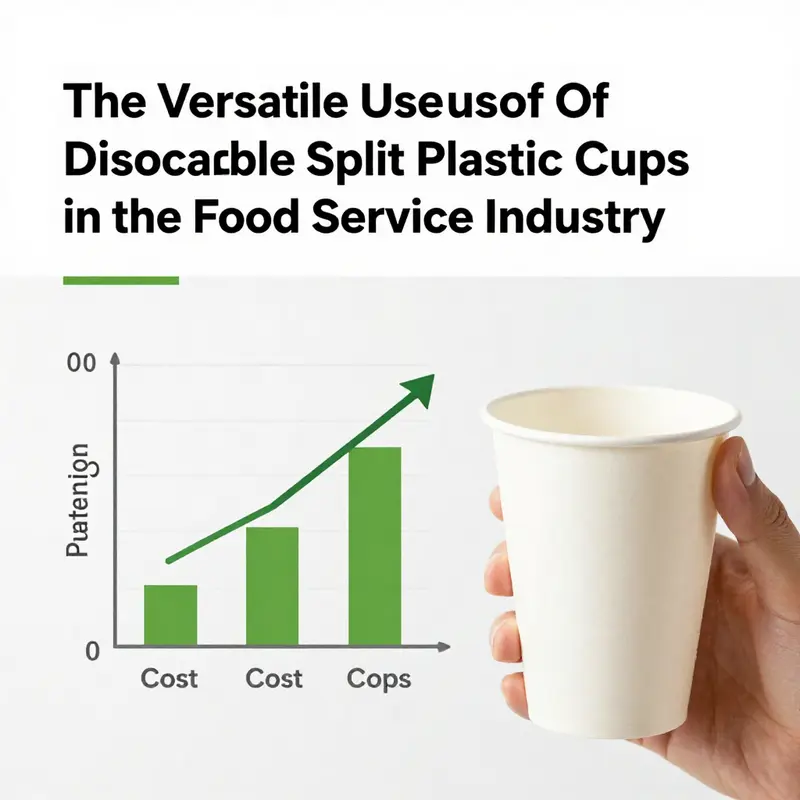
The economic logic behind disposable split plastic cups unfolds like a well-engineered supply chain puzzle, where each feature is a deliberate choice aimed at saving time, space, and money. These containers, designed with two or three compartments, sit at the intersection of practicality and throughput. Their value proposition is not just about keeping sauces separate or enabling shared beverages; it is about how a simple design can reshape handling, storage, and consumer experience across multiple touchpoints in foodservice ecosystems. The clarity and robustness of the material choices—commonly polypropylene (PP) or polyethylene terephthalate (PET)—anchor a cost-performance proposition that scales from a single cafe to a nationwide catering operation. The resulting economics emerge from a blend of nesting efficiency, high-volume manufacturing, and the labor savings that come from removing cleaning and reassembly steps from the daily workflow.
From a logistical standpoint, the compact, nestable form factor is more than a feature; it translates into tangible savings in warehousing and transportation. Empty cups stack tightly, occupying far less space than a comparable full tray of single-compartment vessels. This space efficiency reduces warehouse footprint, freight weight, and attributable carbon emissions per delivered unit. In markets where delivery density and cold-chain considerations dominate operating costs, every cubic foot saved in storage can reduce forklift time, loading dock congestion, and energy use in climate-controlled environments. For event-driven businesses, skip-the-cleanup advantages compound the savings. When a single-use design eliminates post-event washing and sanitizing, staff can reallocate labor to guest service and throughput, a shift often measured in minutes per shift and dollars per hour rather than mere convenience.
The cost side of the equation is anchored in material choices and the automation of production lines. PP and PET balance price, clarity, and durability in ways that can be tuned to the expected shelf life and consumer handling patterns. PP generally offers low-to-moderate material costs with excellent heat and chemical resistance, while PET provides superior clarity and stiffness, which can support better product presentation and perceived value. The production process for these cups is highly scalable and can operate with high degrees of automation, enabling mass production at low unit costs. The single-use nature of the product adds another layer of efficiency: there is no need to maintain costly sanitation cycles, sterilization dependencies, or return logistics that accompany durable-cup systems. In a high-turnover setting, the economics tilt toward throughput—more units in the same time frame at a predictable cost curve.
Volume economics also play a central role. Bulk orders, often in the tens or hundreds of thousands, unlock steep unit-price reductions that can eclipse many other packaging costs. The accommodation of customization—such as printing logos or using lids—fuels a tiered pricing structure that rewards scale but must be carefully managed against potential impacts on production speed and yield. For a business with heavy daily throughput, the incremental cost of customized printing can be amortized across a large number of units, making a modest per-unit premium highly economical in aggregate terms. In practice, procurement teams weigh the marginal cost of customization against anticipated lift in brand recognition, drive-through efficiency, and impulse purchases, all of which contribute to a stronger bottom line over the product’s lifecycle.
A crucial, often-underappreciated mechanic of the split cup’s economics is its impact on inventory management. Because the cups nest when empty, stock rotates more quickly and with lower space requirements. This translates into lower air freight costs for replenishment and reduced risk of obsolescence in the face of changing seasonal demand. The risk profile of single-use packaging in this context becomes more favorable as the product scales; supply interruptions in downstream markets can be absorbed more readily when a large, flexible supplier base can quickly reroute or substitute with minimal disruption. The strategy of near-term demand forecasting, supported by flexible manufacturing lines, becomes a core capability for maintaining price stability and service levels in busy periods.
The market dynamics surrounding disposable split cups are shaped by a broader consumer preference for hygiene and convenience. In fast-paced or on-the-go dining environments, customers expect quick assembly and clean handling. The two-compartment format supports portion control and shared consumption without cross-contamination, which in turn reduces waste and improves perceived value. From a supplier perspective, this translates into a reliable demand stream across diverse venues—from quick-service restaurants to large-scale catering and corporate events. The cups must perform under various handling conditions: stacking during transport, rapid dispensing at the point of sale, and stable presentation on tables or concessions counters. The material and design choices that enable leak resistance when paired with lids become part of a total quality package that keeps service lines moving and customers satisfied.
Lifestyle and regulatory considerations increasingly influence this cost calculus. On one side, consumer emphasis on convenience drives demand for ready-to-use packaging. On the other, environmental scrutiny pushes for recyclability and waste reduction strategies. The economics of PP vs. PE-coated alternatives depend on regional recycling infrastructure and policy incentives. In some regions, PP-based cups benefit from relatively efficient mechanical recycling streams and lower energy intensity during production compared with other single-use plastics. In others, PET’s rigidity and clarity can attract reuse-oriented programs or higher-value applications, albeit with a careful assessment of end-of-life routing. The lifecycle assessment literature suggests that while PP cups consume more resources than some materials in the early stages, their overall environmental impact can be lower than that of certain paper-based options that require coatings or specialized disposables. This nuanced picture helps explain why PP-based split cups can be a sustainable choice within the single-use category when paired with responsible end-of-life programs.
For readers seeking a deeper dive into performance and technical features of similar disposable products, a comprehensive industry analysis offers a broader context. It discusses how material choices, production methods, and market conditions interact to shape cost structures and environmental outcomes across the broader disposable cup segment: https://www.plasticcupsindia.com/disposable-plastic-cups-pakistan-guide-performance-technical-features-and-applications-explained/
In practical terms, the chain from raw resin to finished, shelf-ready cups involves several moving parts. Resin prices affect unit costs, but so do conversion yields, mold costs, and tooling efficiency. Modern plastics manufacturing employs automated, scalable processes that can adjust to demand without sacrificing consistency, a capability that helps keep prices stable during peak seasons. The two-compartment architecture also influences mold complexity and cycle times. While more intricate than single-compartment designs, well-optimized tooling can maintain high production throughput with acceptable defect rates. This balance between design complexity and manufacturing efficiency is a central driver of the unit economics that operators monitor when negotiating supplier contracts and planning multi-location rollouts.
From a business-model perspective, the split-cup proposition aligns naturally with multi-channel distribution. In cafes, catering firms, and event venues, standardized packaging supports predictable inventory planning, streamlined ordering, and reduced training overhead for staff. The nested geometry, low waste during transport, and quick-dispense capability contribute to a more resilient supply chain, one that can ride demand volatility with fewer operational frictions. In this sense, the economic appeal of the split cup is not simply procedural; it reinforces the spatial and temporal efficiency that modern foodservice ecosystems demand. While the environmental conversation remains essential, the economic argument remains strong for many operators who seek reliable, scalable packaging that complements a fast-paced service model.
Ultimately, the choice to adopt disposable split plastic cups rests on a calculated trade-off: the immediate cost savings and efficiency gains versus the long-term considerations of end-of-life management and regulatory alignment. The economics favor scalable production, material versatility, and the space-saving advantages that improve throughput and reduce overhead. When suppliers and retailers coordinate around volume, customization, and logistics, the overall cost of serving meals, snacks, and sauces in a two-compartment format becomes a compelling lever for profitability and operational resilience. As markets continue to evolve, the continued refinement of materials, recycling options, and closed-loop initiatives will further sharpen the bottom line for this familiar, two-pocket packaging solution. To those watching the cost curves, the lesson is clear: small design choices can yield outsized economic returns when they align with scalable production and disciplined logistics.
Readers interested in related sustainable packaging options may explore related products that emphasize eco-friendly design and recyclability, such as pulp-based cup holders and other waste-reducing take-away solutions. For a concise example of how sustainability considerations interface with cost and performance, see the linked product resource: eco-friendly recyclable pulp cup holder.
Finally, the broader narrative of disposable packaging economics benefits from cross-industry insights that trace the lifecycle of these containers from resin to final disposal. This perspective helps explain why the two-compartment format can be particularly compelling in environments where speed, hygiene, and logistics converge. Accessible industry analyses and comparative studies provide a backdrop for evaluating future developments—whether new materials, revised recycling streams, or evolving consumer expectations—that will shape the cost structure and strategic value of split plastic cups in the years ahead. External references offer deeper technical and performance context to support this evolving assessment: https://www.plasticcupsindia.com/disposable-plastic-cups-pakistan-guide-performance-technical-features-and-applications-explained/
Rethinking a Common Convenience: The Environmental Toll and Hidden Trade-offs of Disposable Split Plastic Cups
Disposable split plastic cups embody a paradox of modern food service: a compact, two-compartment design that can streamline portion control, sauce service, and shared beverages, all while promising neat storage when empty. In theory, the two distinct compartments—each holding sauces or drinks separately—reduce cross-contamination and simplify assembly for busy counters. The nestable, space-saving nature of these cups is touted as a logistical win for cafés, catering teams, and vendors at events where every inch of storage matters. But behind the convenience lies a set of environmental consequences that ripple from the moment the cup is produced to the moment it finally leaves the hands of a consumer and enters a waste stream that may or may not be properly managed. Those consequences are not merely abstract numbers; they shape pollution, energy use, and the health of ecosystems in ways that customers rarely see, and they press businesses to weigh the trade-offs between efficiency and responsibility.
Material choices sit at the heart of this trade-off. The two most common materials—polypropylene and polylactic acid—offer very different profiles in production, use, and end-of-life outcomes. Polypropylene is a petroleum-based plastic that shines in durability and cost. It resists cracking, tolerates heat, and keeps its shape under pressure, qualities prized in a fast-service context where leaks and spills must be minimized. Yet durability comes with a glaring drawback: PP is not biodegradable in any practical sense, and it can persist in landfills or the environment for hundreds of years. In litter, it fragments into microplastics that infiltrate soils and waterways, complicating waste management and potentially entering the food chain indirectly through the wider ecosystem. When PP is incinerated, the process can release toxic fumes, including dioxins and furans, underscoring a direct air-quality concern associated with disposal, especially in regions without advanced emission controls.
Polylactic acid, or PLA, enters the narrative as a renewable-resource alternative. Derived from corn starch or other starch-rich feedstocks, PLA is marketed as biodegradable and compostable, a messaging that resonates with sustainability claims that many buyers find appealing. However, the environmental reality is more nuanced. PLA requires industrial composting facilities operating under controlled temperatures and humidity to break down effectively. Those facilities are not universally available, and municipal waste streams rarely provide the conditions needed for swift degradation. In natural environments—oceans, soil, or landfills—PLA behaves much like conventional plastics, breaking down slowly or not at all. The misalignment between consumer expectations of true in-home or municipal compostability and the on-the-ground disposal infrastructure represents a critical gap that undermines potential environmental benefits. The lifecycle story thus hinges on local waste systems as much as on the material itself.
A 2025 lifecycle assessment summarized in the research results suggests polypropylene cups can exhibit lower environmental impacts than PLA cups when considering production energy use and greenhouse gas emissions. This finding, while meaningful in policy and industry terms, does not erase the broader ecological harm linked to single-use plastics. Microplastics, wildlife exposure, and long-range ecosystem disruption persist as inherent risks of disposable packaging. The contrast between the two materials highlights a broader point: evaluating an environmental footprint is not a single metric decision. It requires looking at how a product is used, how waste is collected and treated, and what happens after disposal. In the context of split cups, the focus on ease of use, stackability, and portion control must be weighed against system-wide implications for waste management and resource depletion.
Beyond the cradle and the grave of the cup itself, the lifecycle narrative also invites scrutiny of the infrastructure that surrounds disposal. The convenience of nestable design is real, but it interacts with a separate set of questions about whether the cups end up in recycling streams, whether facilities separate polypropylene from other plastics, and whether contamination from sauces and additives interferes with downstream processing. In many regions, recycling streams are optimized for certain materials and product geometry. A two-compartment design can complicate recycling if the cups are not cleaned properly or if lids and films become mixed surrogates for the material in question. The upshot is that even a well-intentioned business choice, made for operational efficiency, can become a roadblock to effective waste management if disposal streams are not aligned with the product’s material composition.
What emerges from this examination is a narrative not of simple good or bad but of trade-offs and context. The split cup’s two-compartment structure offers precise portioning and a reduction in cross-contact between sauces and beverages, which has overt food-safety benefits in high-volume settings. It also delivers a measurable advantage in storage efficiency; when empty, the cups nest, reducing transport volume and the space required in a warehouse or on a delivery truck. Yet the environmental calculus does not automatically tip in favor of single-use conveniences simply because they save space or streamline operations. The real-world consequences depend on how resources are managed after use and whether consumers and businesses are connected to systems that can transform waste into something recoverable rather than perpetually wasteful.
In practice, sustainable considerations extend beyond choosing PP or PLA at the point of purchase. They invite a broader strategic conversation about reducing overall consumption, a principle that remains foundational even as we explore every nuance of materials and disposal. Reusable alternatives—such as stainless steel or glass cups—offer a path to diminishing the environmental footprint per use when those items are employed frequently enough to offset their higher upfront production costs. Reusables benefit from durable construction and the potential to close the loop through repeated use, but their success hinges on reliable, consistent washing, safe handling, and a culture of return. In venues with high turnover and limited dishwashing capacity, the practicalities can be daunting. This tension underscores the need for integrated solutions—designs and processes that make reuse feasible without sacrificing speed or food safety. The dialogue also extends to product design itself. Packaging that is easy to recycle, free from multilayer composites, and compatible with standard municipal recycling facilities can shift the needle in favor of environmental outcomes when adoption scales across a business or a city.
Business leaders seeking to navigate this terrain can look to design choices that align with existing waste-management ecosystems and consumer expectations. Some facilities are beginning to offer alternatives that blend eco-friendly aspirations with practical operation. For instance, when considering cup designs and lids, companies explore options that reduce material complexity, improve recyclability, or enable easier cleaning and reuse. The selection of packaging that minimizes contaminant exposure during recycling can dramatically influence the efficiency and effectiveness of the waste-management stream. For readers exploring a spectrum of eco-conscious packaging options, there is a useful reference to more sustainable cup designs that emphasize reduced material intensity and cleaner end-of-life pathways: eco-friendly-printed-logo-single-wall-paper-cup. Although this specific link focuses on a different format, the underlying principle—minimizing environmental impact through smarter material choices and lifecycle-conscious design—remains central to the conversation about disposable split plastic cups.
If the industry wants to reconcile convenience with stewardship, it must also engage with policy and consumer education. Clear labeling that communicates end-of-life expectations can help set accurate expectations about compostability versus home recycling versus industrial composting. Encouraging or incentivizing return programs, where feasible, can transform a one-off disposal decision into a small commitment that alters a consumer’s behavior toward reuse or proper sorting. In settings such as bubble tea shops, juice bars, or catering events, this may translate into practical steps: provide visible, accessible recycling and waste-sorting stations, train staff to guide customers toward correct disposal, and adopt a modest deposit or loyalty incentive to encourage customers to reuse cups or containers where possible. The bottom line is that the cups themselves are only one piece of a larger system. The collective impact of use, disposal, and the availability of appropriate waste-processing infrastructure ultimately determines the environmental footprint of these split cups in everyday life.
The environmental conversation about disposable split plastic cups is thus a reminder that efficiency and sustainability can coexist, but only when decisions at the point of purchase are matched by deliberate choices in use, disposal, and system design. The nesting and portion-control advantages should be evaluated alongside the actual waste streams they produce. If a business opts to continue using single-use units, it can still pursue meaningful reductions by targeting a clear set of improvements: favor materials with the best-end-of-life prospects in a given locale, minimize non-recyclable additives, design for compatibility with local recycling facilities, and pair usage with strong consumer education and waste separation. The result is not a single silver bullet but a coherent strategy that honors both operational needs and environmental responsibilities. In the end, the goal is to transform a common convenience into a more deliberate, sustainable practice that supports healthier cities, cleaner waterways, and a more accountable relationship between what we buy, what we throw away, and what we reuse.
External resource: https://www.sciencedirect.com/science/article/pii/S095965262401587X
Two-Chambered Temptation: Consumer Preferences, Convenience, and the Evolving Life of Disposable Split Plastic Cups
Two-chambered, disposable split plastic cups inhabit a small but telling corner of modern food service. They are simple objects with a twofold mission: keep components separate until the moment of consumption and do so in a way that feels effortless for both the server and the guest. When you walk through a busy cafe or a bustling event, these cups are less a novelty and more a quiet amplifier of preferences that shape how people eat, drink, and share. The most common configuration, a total capacity around 700 milliliters, split evenly into two compartments, speaks to a pragmatic balance. It suits portion control for sauces, dressings, or dips, and it also accommodates shared beverages. In social settings, the dual-chamber design invites a tiny moment of collaboration—two friends, two different flavors, one convenient vessel. The shape and structure send a message about efficiency, cleanliness, and sociability all at once, and that message resonates with a broad spectrum of consumers and venues alike.
A central driver behind these cups is the clarity and resilience of the materials. Made primarily from food-grade polypropylene or PET, they offer visibility that is particularly advantageous for layered drinks and color-rich concoctions. When beverages stack with fruit fibers, multiple syrups, or bright additives, the two separate compartments showcase the layers rather than muddle them. Lids complete the package, sealing in aroma and preventing spills in transit. The practical value is reinforced by a design feature that often goes underappreciated: nestability. When the cups are empty, they nest tightly, saving significant storage space for busy kitchens and mobile vendors. This simple efficiency translates into lower handling costs and easier logistics—a practical benefit that adds up across meal periods, catering events, and large outdoor gatherings.
From a consumer standpoint, the appeal of the 700ml dual-chamber cup lies not only in utility but in the opportunity for visual storytelling. Beverages that exhibit layered colors or distinct textures in each chamber become social media-ready moments. In an era where a photo can define a product almost as powerfully as taste, the cup doubles as a stage for display. A two-color smoothie, a bi-layered juice, or a split cocktail becomes an experiential post rather than a mere drink. This aesthetic value complements the functional advantage, creating a synergy between form and function. As a result, venues that rely on eye-catching presentation—weddings, birthday parties, and corporate events—often gravitate toward this design for its ability to elevate a moment of consumption into a memory worth sharing.
The consumer landscape surrounding these cups also reflects a nuanced calculus of cost, convenience, and care for the environment. Price points in bulk can range broadly, from a fraction of a cent to a few tenths of a dollar per unit, depending on volume, customization, and packaging. In the world of catering and quick-service, that variance is not a trivial detail; it directly influences menu pricing, portion control, and the likelihood of repeat purchases. The efficiency story extends beyond the cup itself. The ability to source in bulk, print custom branding, and select compatible lid options offers operators a degree of control that can harmonize with a shifting consumer mood toward personalization without sacrificing practicality. A well-chosen two-chamber cup can therefore function as a small but meaningful lever for brand consistency and guest experience, aligning with broader service standards that many venues strive to maintain during peak hours or large-scale events.
Yet consumer preferences do not exist in a vacuum. They are continually recalibrated by experiences with convenience and impressions of sustainability. On one hand, the dual-compartment format supports experiences that feel effortless and staged for delight. On the other hand, the growing chorus of environmental awareness presses operators to consider the lifecycle of the materials and the possibility of alternatives that minimize waste. While innovative designs focus on reducing wall thickness to conserve plastic and enhance recyclability, the fundamental tension remains between single-use convenience and the push toward responsible consumption. Policy interventions in various markets, including charges or deposits that discourage disposable cup usage, have entered the consumer frame as meaningful signals. These external pressures shape what guests tolerate and what they expect from vendors, nudging them toward reusable systems or at least toward higher rates of recycling where possible.
Despite these tensions, the current market reflects a robust demand for the split-cup concept, especially in settings that prize quick turnover and vivid presentation. The dual-chamber format is prominently used in celebrations and social occasions where sharing is part of the ritual. Its design supports a visual theater of color and texture, allowing hosts to curate experiences that look deliberate and feel easy. This is particularly true in venues that host weddings, birthday parties, and seasonal gatherings, where the aesthetic of the display matters as much as the taste. The stackable nature of the cups also supports logistics at events that require rapid setup and teardown. When catering teams can move more units in fewer pallets, not only are costs reduced, but the guest experience gains a reliable rhythm: seats filled, beverages flowing, and cleanup that keeps pace with the pace of a party.
From a research-informed perspective, consumer trends also reveal a desire for choices in how products are produced and presented. The popularity of 700ml dual-chamber cups, as highlighted in supplier platforms, points to a preference for a certain scale that works well with portion sharing and layered beverages. The design signals a willingness to pay for a polished presentation that is still anchored in practicality. For operators, this means a careful balancing act: delivering an attractive product experience while maintaining margins, ease of use, and a sense of responsibility toward the environment. The possibility of customization—logos, colors, and lid configurations—adds a branding dimension that can turn a simple cup into a carrier of identity. In markets where brand distinction matters, the ability to imprint a design or message on the cup can translate into higher perceived value and a more cohesive consumer journey.
If the conversation leans toward sustainability, the chapter of consumer preferences broadens to include questions about recyclability and material choice. In some discussions, paper-based or bio-based alternatives are positioned as future-ready options because they speak to a segment of consumers who equate eco-friendliness with ethical responsibility. Yet at present, many consumers still value the immediate convenience and sensory appeal of plastic in a form that remains familiar and versatile. The challenge for designers and suppliers is to reconcile this present demand with an evolving expectation that products be more durable, more recyclable, and more transparent in their environmental footprint. In response, the industry is testing thinner walls, more efficient molding processes, and clearer labeling that helps consumers sort products correctly after use. The result is a gradual transformation of what counts as responsible design in a two-compartment cup, rather than a sudden pivot away from the format altogether.
This tension between convenience and responsibility has a practical implication for procurement decisions. For venues seeking to optimize both guest experience and operating efficiency, a two-chamber cup can be a strategic asset when paired with the right lids and seals. Lids that offer reliable spill resistance without adding excessive bulk encourage take-out and delivery workflows, where guests value predictability and reliability. The ability to nest cups when empty reduces warehouse footprint and simplifies restocking, which, in turn, supports sustainability goals by lowering handling energy and transport costs. In short, consumer preferences and operational realities intersect most strongly where visual appeal, portion control, and logistics converge. The two-chamber cup becomes more than a container; it becomes a deliberate choice that communicates a brand ethos to guests and a practical workflow to staff.
For readers exploring sustainable alternatives while keeping the benefits that consumers currently prize, there is a practical pathway. Consider sustainable options in tandem with the two-chamber design rather than as a wholesale replacement. A focus on recyclable materials, improved wall thickness, and robust lid systems can yield a product that maintains the social and aesthetic advantages while reducing the environmental burden. In markets where policy levers are being pulled to discourage disposable cups, the balance tips toward a hybrid approach: maintain the convenience and social value of the split cup while accelerating the shift to materials and processes that maximize recyclability and minimize waste. This approach respects consumer desires for sharing and presentation and aligns with broader industry movements toward circularity and responsible packaging.
From a strategic perspective, the consumer profile that favors these cups tends to be diverse and dynamic. Younger consumers, who often drive trends in food presentation and social media sharing, show openness to innovative packaging formats when they perceive a clear value—whether in the form of enhanced aesthetics, improved portion control, or a more engaging sharing experience. Yet this openness coexists with a vigilant awareness of waste and resource use. Brands and venues that acknowledge both sides of this equation—delight and responsibility—stand to gain the most from the evolving conversation around disposable split plastic cups. As the market continues to respond to consumer expectations and policy signals, operators that marry performance with sustainability will likely shape the next chapter of this format. For those curious about sustainable packaging companions to this concept, a related avenue is the use of disposable kraft paper bowls for take-out. disposable kraft paper bowls for take-out.
External resource for further context on market listings and product specifications can be found in industry platforms that showcase dual-chamber designs. External researchers and practitioners may consult the following listing for a sense of scale, material options, and typical price bands in wholesale contexts. External resource: the Alibaba product listing for 700ml dual-chamber cups, which illustrates a broad range of applications and pricing that align with the consumer-facing trends described above.
External resource: https://www.alibaba.com/product-detail/700ml-disposable-plastic-share-cups-frozen-drink_1600594837788.html
Final thoughts
Disposable split plastic cups prove to be an invaluable tool in the food service industry, providing versatility and convenience for both businesses and their customers. As trends evolve, understanding their applications, the materials involved, economic considerations, environmental implications, and consumer preferences will be essential in leveraging these products effectively. By choosing the right disposable options, businesses can enhance customer experience while aligning with sustainability goals and operational efficiencies.