
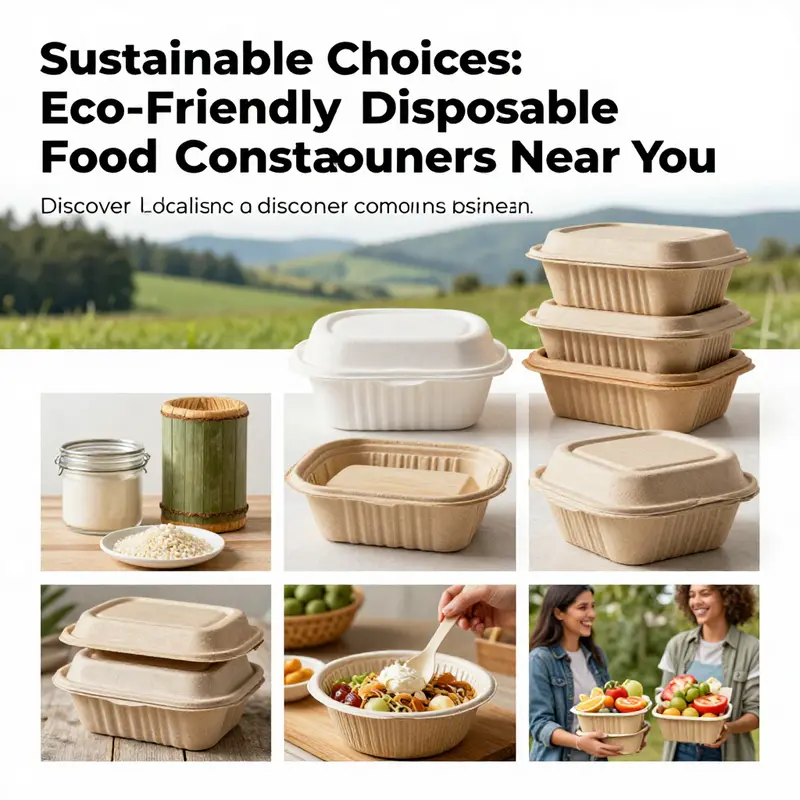
As conscientiousness about environmental impact grows, businesses in the food and beverage industry are increasingly seeking sustainable options. Eco-friendly disposable food containers are becoming vital for bubble tea shops, restaurants, food trucks, catering services, and event planners. Not only do these containers align with consumer preferences for sustainability, but they also help businesses manage waste responsibly. This article explores how to find eco-friendly disposable food containers near you, delving into local stores, accessible online options, and understanding the materials and certifications that ensure these products are truly sustainable.
Locating Green, Near-You: How to Find Eco-Friendly Disposable Food Containers in Your Neighborhood
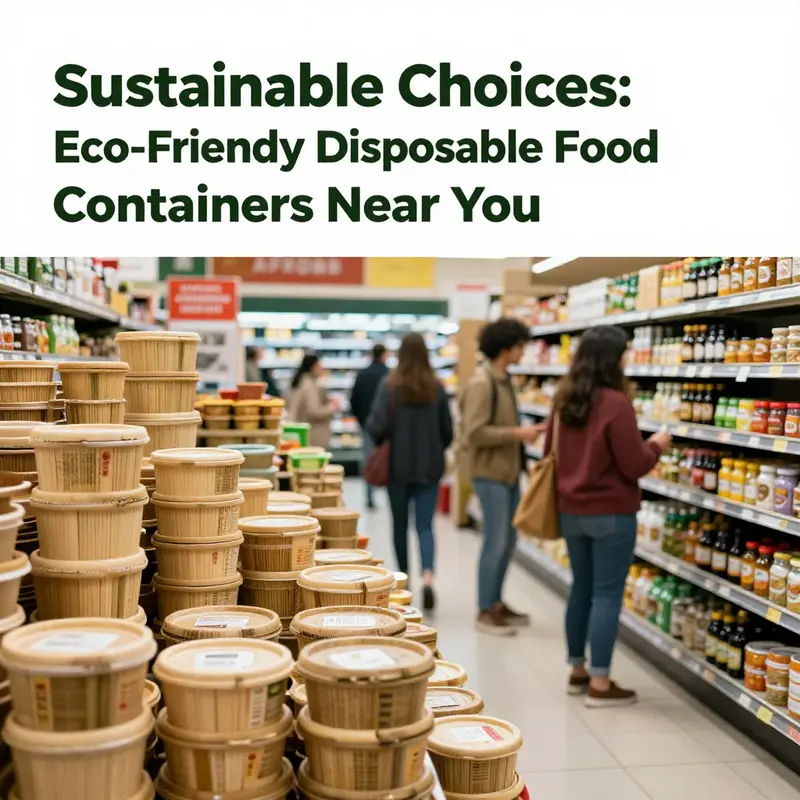
In a world where waste reduction has moved from a niche concern to a daily consideration, the search for eco-friendly disposable food containers near you has become a practical habit for households, caterers, and small businesses alike. The quest is less about finding a single perfect option and more about weaving together a resilient set of local choices that perform well, align with waste streams, and tell a credible story about environmental responsibility. This chapter follows a steady, grounded path through the local landscape, offering a framework for evaluating nearby options, verifying end-of-life pathways, and integrating responsible packaging into everyday routines without overhauling routines or inflating costs.
One helpful starting point is to understand the material options that dominate the eco-friendly segment. Bamboo and sugarcane bagasse are common plant-based materials that often appear in compostable forms. Plant-based plastics, known as polylactic acid or PLA, offer a clearer plastics option that can still be compostable under the right conditions. Each material carries its own set of trade-offs. Bamboo can be resource-intensive to process in some regions, while bagasse generally hinges on the availability of sugarcane processing by-products. PLA, by contrast, requires compatible industrial composting facilities to achieve true end-of-life outcomes. The key is not to declare one material universally superior but to assess how its lifecycle, transportation, and end-of-life fit your local waste infrastructure. Strong performance in the kitchen matters as much as a lower footprint, because a container that leaks or warps undermines a sustainable plan just as surely as any other misstep.
Finding options near you begins at the intersection of retail shelves and service providers. Local shops that specialize in sustainable goods, small zero-waste retailers, and bulk or party-supply outlets are increasingly common in many communities. They often stock a curated range of compostable and recyclable disposables designed for takeout meals, events, or office use. For households, this means you may be able to pick up a few containers for a weekend project or a family dinner without waiting for online fulfillment. For small businesses, distributors that focus on eco-friendly packaging can deliver a steady stream of sizes and shapes suitable for a rotating menu or changing service formats. The advantage of local sourcing is not only convenience; proximity supports faster replenishment, easier in-person quality checks, and a feedback loop that helps suppliers tailor products to your climate, your customers, and your waste stream.
A practical rule of thumb emerges from the field: verify end-of-life pathways before you buy. A robust eco-friendly claim should be accompanied by credible indicators. Look for third-party certifications or explicit references to industrial composting facilities. In many communities, industrial composting is a well-supported route for degrading plant-based and compostable packaging, but not all programs accept all compostable plastics or coatings. If a product is labeled compostable, ask whether it is certified for industrial composting or suited for home composting, and confirm whether your local program accepts it. This diligence prevents the mismatch that can occur when a product is marketed as compostable but ends up in a landfill because no compliant facility is available nearby.
In the world of certifications, a trusted resource list is invaluable. While many brands cite certifications, a neutral directory maintained by an independent standard is more reliable. The Biodegradable Products Institute provides a directory of certified compostable packaging suppliers and manufacturers. Checking such resources helps you differentiate marketing language from verifiable environmental performance. Relying on certified products helps protect against greenwashing and ensures the packaging meets a defined standard in terms of material composition and disintegration under appropriate conditions. If your locale has an established composting program, products carrying recognized certifications are more likely to align with the facility’s acceptance criteria, reducing the chance of contamination in the compost stream.
As you embark on the near-me search, consider the broader ecosystem that makes or breaks sustainability in packaging. Local waste systems influence what is practical and what is aspirational. Some communities have comprehensive curbside composting, others offer drop-off programs, and a few have limited capacity. If composting is not a viable end-of-life option in your area, focus on packaging that is highly recyclable or designed for reuse, and work with suppliers who can provide clear instructions on sorting and disposal. The aim is to harmonize your sourcing with the municipal reality, not to chase a standard that cannot be realized locally. In this sense, sustainability becomes contextual rather than absolute. What works well in one city may be less effective in another, and the right near-me choice will reflect that local context.
The local supply network extends beyond the shelf. Wholesale distributors that serve restaurants, cafes, and event planners can offer bulk containers, shaped to meet typical service formats, while also delivering consistent performance and predictable pricing. The advantage of a wholesale relationship is not merely lower unit cost; it is the potential for consistent stock, easier forecasting, and fewer last-minute substitutes that compromise quality. A capable distributor can also offer value-added services such as branding, customization, and support for waste-communication strategies—capabilities that help turn packaging choices into a tangible part of a restaurant or venue’s sustainability narrative. Some suppliers emphasize transparency about sourcing, with details on fiber origins and production methods that help buyers convey a credible environmental message to customers.
The sustainability calculus also invites a design-minded view. Material selection intersects with container design to determine performance and end-of-life options. For instance, packaging designed with a tight temperature tolerance, strong moisture resistance, and a secure lid can maintain food quality while reducing the likelihood of leaks or soggy edges that lead to waste or customer dissatisfaction. The temperature range and moisture exposure a container will experience during transport and service should guide material choice and thickness. In practice, this means looking for designs that recognize the realities of takeout kitchens and delivery logistics, such as grease resistance for fried foods or heat retention for soups and stews, while still enabling compostability or recyclability after use.
From a consumer’s perspective, the near-me search is also a learning journey. It invites a shift from purchasing out of habit to making informed, values-driven choices. People frequently underestimate how much packaging can influence waste streams, customer experience, and resource use over time. So, when you are selecting near-me options, you can think in terms of use cases, volumes, and service formats. A coffee shop that relies on compostable cups and lids will benefit from a reliable supplier who can provide consistent stock and clear end-of-life instructions to customers. A small caterer preparing a weekend market booth will appreciate bulk packaging that combines strength with compostability and straightforward disposal guidance. A family hosting a neighborhood potluck will benefit from containers that are robust, stackable, and easy to transport, with clear labeling that helps guests sort waste at the end of the event.
The practicalities of procurement extend to the moment of choice in the store. When you stand in the aisle, scan for indicators of material origin and waste-path compatibility. If a product advertises compostability, assess its test standards and the availability of appropriate facilities. Ask staff to point you toward lines that offer clear documentation on material source, manufacturing energy, and end-of-life pathways. In many markets, staff are increasingly trained to discuss sustainability narratives with customers, which can streamline your decision-making and reduce the risk of misinterpretation. In this process, your role as a consumer becomes part of a broader feedback loop that encourages suppliers to maintain credible labeling and to invest in improvements when needed.
Local examples of the near-me eco-friendly container landscape reveal a diverse spectrum of offerings. Some suppliers focus on a broad range of sizes and shapes designed for to-go service, while others emphasize specialty lines such as sturdy takeout boxes or portion-controlled trays that meet specific restaurant or event needs. A crucial distinction arises between consumer-facing packaging sold in retail channels and wholesale packaging intended for commercial kitchens. Retail products are often optimized for ease of purchase and immediate use, whereas wholesale lines can be tailored for branding, customization, and large-volume stability. The best near-me approach blends accessibility with reliability; it ensures you can source what you need when you need it and that the packaging performance aligns with your food safety and operational standards.
The end goal of this search is not a single miracle option but a sustainable ecosystem that supports ongoing reductions in waste, better customer experiences, and stronger alignment with local waste management realities. It is entirely possible to build a near-me network of compostable or recyclable containers that meets the daily demands of a cafe, the seasonal peaks of an event business, or the varied needs of a household that regularly hosts gatherings. The path to that network is iterative and collaborative: test, measure, adjust, and expand as capacity grows. Each purchase informs the next, and each conversation with a supplier adds nuance to how packaging choices translate into real-world outcomes.
A practical mental model helps you stay focused while exploring options. Start by clarifying the end-of-life path most feasible in your area. If industrial composting is common, prioritize materials that perform well in that environment. If recycling is the principal path, choose items that comply with local recycling streams and have minimal contamination risk. If reuse is part of your strategy, consider durable alternatives or refillable programs and partner with suppliers who can support that approach with compatible containers and lids. Then assess performance attributes such as moisture resistance, heat tolerance, lid reliability, and stackability. Finally, factor in total cost of ownership, including storage, shelf life of stock, and the potential waste-management savings that come from choosing a more efficient packaging system.
This is not a solitary journey. It thrives on practical collaboration—the conversations you have with shop staff, the feedback you collect from customers, and the lines of communication you build with suppliers. The more you cultivate transparency about material choices, end-of-life options, and performance criteria, the more capable you become of shaping a near-me solution that truly works in your community. When a network of local retailers and wholesalers shares a commitment to sustainable packaging, the entire ecosystem gains momentum. Waste streams become more predictable, which in turn makes it easier for waste-management services to optimize collection and processing. Businesses can plan more accurate procurement schedules and reduce the risk of stockouts or substitutions that compromise environmental goals.
Ultimately, the journey to finding eco-friendly disposable containers near you is about turning awareness into action. It is about translating a general concern for the planet into concrete, localized choices that fit everyday life. It is about respecting the constraints of your local waste system while striving for packaging that performs reliably and earns customer trust. It is about building a neighborhood-wide practice where sustainability is normalized through consistent supply, honest labeling, and clear end-of-life guidance. In this sense, the near-me landscape is not just a shopping map; it is a practical framework for integrating responsible packaging into the rhythm of daily life, one decision at a time.
To bring this home with a concrete nod to how the local market can present choices, consider a representative catalog of packaging categories commonly found near communities that prioritize sustainability. A focus on takeout packaging, bowls, lids, and containers in sizes that accommodate various meals can showcase the kind of breadth you should expect. An illustrative example would be a range of paper-based bowls and corresponding lids designed for hot and cold foods, with options that balance strength, moisture resistance, and compostability. When you encounter such lines, pause to review the materials, coatings, and end-of-life claims. If a label claims compostability, ensure it clearly states whether the item is intended for industrial composting or home composting, and check whether your local facilities accept such materials. If the labeling is ambiguous, ask for documentation or consult the supplier’s certifications. The goal is to leave the store with a clear understanding of how the packaging fits the local waste system and how it supports your sustainability aspirations.
For a practical illustration of the kind of packaging categories and designs you might encounter near you, you can explore the general product line that emphasizes compostable and recyclable options. An internal reference that demonstrates the breadth of design choices in this space highlights shapes and sizes optimized for different food types and service contexts. To explore this in a neutral, non-brand-specific way, you can follow a path to a catalog page that demonstrates the design options available for eco-friendly takeout packaging, including boxes and bowls crafted from kraft paper and other plant-based materials. This kind of resource helps you visualize how a near-me network can support a diverse menu of offerings while maintaining a coherent sustainability message. For a broader sense of packaging categories and materials involved, see the linked catalog entry here: eco-friendly kraft paper packaging.
As you refine your local search, you may also find it valuable to keep a short list of questions handy for conversations with suppliers. Ask about material origin, whether coatings affect compostability, and the exact certification status of the product. Inquire about the end-of-life pathway at local facilities and whether the supplier can provide documentation or a certificate of conformity. If you handle events or catering, discuss your typical event size, expected temperatures, and throughput so the supplier can suggest containers that meet your performance requirements without over-engineering the solution. These conversations build trust and enable a more resilient supply relationship that extends beyond a single purchase. They also help you align procurement with broader organizational goals, such as waste reduction targets, green branding, and customer education on proper disposal.
In practice, near-me eco-friendly containers are as much about relationships as about products. The most dependable packaging programs arise when buyers and suppliers collaborate with a shared understanding of local waste realities, a commitment to transparent labeling, and a willingness to adjust as systems evolve. In this sense, the near-me landscape becomes a cooperative network rather than a marketplace of one-off purchases. It offers a practical path to reduce plastic waste, support local economies, and deliver on the promise of sustainable service without sacrificing the quality or reliability customers expect. The result is a routine that makes eco-friendly disposal a manageable, repeatable part of daily life rather than an occasional initiative.
For those who want a clear external point of reference on certifications, an authoritative resource is the Biodegradable Products Institute, which maintains a directory of certified compostable packaging suppliers and manufacturers. This external resource can help you verify claims and make informed decisions that stand up to scrutiny in the real world. By staying aligned with credible standards, you strengthen your ability to source near-me options that truly perform as advertised and contribute to constructive waste management in your community. As you continue to explore, remember that sustainability is a gradual practice built through repeated, thoughtful purchases, honest discussions with suppliers, and a willingness to adapt when local conditions change.
End of content. For those who want to verify compostable certifications and explore additional details about end-of-life options, you can consult the official directory at the Biodegradable Products Institute: https://www.bpiworld.org/.
Green Choices at Your Doorstep: Navigating Online Marketplaces and Local Stores for Eco‑Friendly Takeout Containers Near You
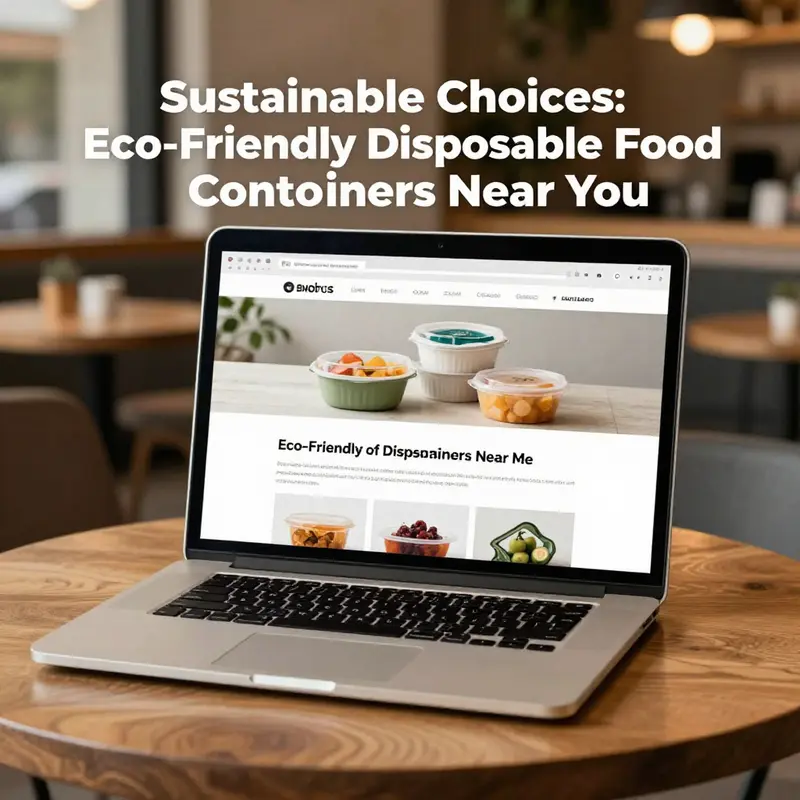
Choosing eco‑friendly disposable food containers near you is more than a search query. It is a practical act of aligning everyday logistics with a broader responsibility to the planet. The modern consumer wants packaging that protects food, keeps it safe during transport, and, ideally, returns to the earth with as little harm as possible. Yet this is not a simple choice. It involves understanding material science, local waste streams, and the realities of how products are manufactured, shipped, and disposed of. When you marry these considerations with the convenience of online shopping and the immediacy of local stores, you begin to see how the pathways to greener packaging form a network rather than a single destination. This network, in turn, reveals how communities can support sustainable packaging practices in practical, everyday ways that add up over time.
In many places, the first step is locating options that are readily available in nearby shops. Local grocery chains and specialty suppliers increasingly carry compostable and recyclable takeout containers that go beyond the traditional foam and petroleum‑based plastics. These options often come in familiar forms—bowls, clamshells, and cups—but with materials that are designed to break down more readily under appropriate conditions. The most common materials you will encounter include bagasse, which is derived from sugarcane fiber; PLA, a plant‑based plastic often marketed as compostable; bamboo fibers; and recycled paper products. Each material has its own set of benefits and end‑of‑life considerations. Bagasse, for instance, is sturdy, moisture‑resistant, and widely used for hot and cold foods, but its compostability can depend on whether the local waste stream has access to industrial composting. PLA, while derived from plants, still requires specific facilities to break down efficiently and is not always compatible with home composting. Recycled paper products reduce virgin material use, but their barrier properties and heat tolerance can vary. Understanding these nuances helps shoppers make choices that align with their local composting capabilities and waste management programs.
The beauty of the local approach is the ability to inspect packaging firsthand and ask questions about material composition, certifications, and suitability for various foods. Zero‑waste shops, community cooperatives, and farmers’ markets often carry packaging tailored for takeout and small events that emphasizes reuse or compostability. Shopping locally also supports community initiatives that educate businesses and residents about responsible packaging practices—efforts that tend to yield better, longer‑lasting changes than a single product purchase. When you combine this local lens with a wider search, you begin to understand the real power of proximity: near‑me options that work with your municipal program and that staff can discuss with you in person.
But the near‑me landscape is not limited to brick‑and‑m mortar outlets. Online marketplaces and delivery services have dramatically expanded the set of sustainable options available to both individuals and small businesses. The online sphere provides access to a broader range of materials and sizes—things not always stocked by local stores. You can discover containers made from bagasse or PLA that come in various shapes and capacities, suitable for hot soups, cold salads, or multi‑item meals. Online catalogs also often include detailed product specifications, such as heat resistance, leak‑proof performance, and whether the item is certified compostable. This information is critical because it helps you make informed choices about how a container will perform under real‑world conditions—during transport, storage, and delivery, as well as in the end‑of‑life stage.
A common barrier, when shopping online, is distinguishing truly compostable products from those that are only marketed as such but may not perform as claimed in real waste streams. Certifications matter here. Recognized standards provide a third‑party assurance that a product will break down under defined conditions. In the broader sustainability conversation, such certifications act like a seal of trust, helping avoid “greenwashed” claims and ensuring that what you buy behaves as promised in appropriate facilities. For readers seeking a reliable compass, looking for certifications and checking with trusted bodies can save time and disappointment. A widely cited reference in this space is a standards organization that maintains a directory of certified compostable packaging suppliers and manufacturers, which helps identify environmentally responsible options. While exploring, you will encounter a spectrum of packaging forms: from simple paper‑based bowls to more engineered designs that incorporate structural features like leak resistance or vented lids to accommodate hot contents. In online catalogs, you will often see multiple sizes in the same material family, allowing you to tailor packaging to the meal size and transport distance. The flexibility of online options is especially valuable for small businesses experimenting with takeout menus or for event planners seeking sustainable alternatives for catering.
For immediate availability and practical decision making, an efficient approach is to perform a location‑based search in your preferred browser, querying something like near me for eco‑friendly disposable food containers. The results typically surface both local retailers and national online platforms that ship quickly. The benefit of this approach is twofold: you gain a feel for what local stores stock, and you can compare the online options those stores carry. Delivery services, in particular, can be a game changer for eco‑conscious users who wish to minimize trips while still supporting greener packaging. When a delivery service lists compostable or otherwise eco‑friendly packaging as an option, it often signals that the retailer or restaurant is committed to reducing packaging waste and to providing end‑of‑life options that align with sustainable waste programs. The logistics of delivery—how packaging is bundled, whether containers are fully compostable or requires facility processing, and whether the service offers recycling or composting options—are all pieces of the puzzle that influence the eco‑friendliness of a takeout experience.
From a procurement lens, the online and offline channels also present different advantages for different users. A local consumer might prefer the tactile experience of handling packaging before making a choice, especially for sensitive foods where leak resistance and insulation are critical. A restaurant or event organizer might lean toward suppliers who offer scalable production and options for private labeling or customization. In either case, the question often reduces to a few core criteria: the material’s environmental profile, the packaging’s performance for the intended foods, the availability of end‑of‑life options within the user’s geographic waste system, and the overall cost per use, including shipping or transit time if purchased online. By holding these criteria in mind, shoppers can make choices that are not only greener but also more consistent with their operational realities.
On the matter of practical examples and narratives, one way to visualize a sustainable path is to consider an item that appears modest but plays a pivotal role in the takeout ecosystem: the container itself, especially when designed to function effectively across a spectrum of foods. A practical line of inquiry involves containers designed to accommodate different food types—hot soups, salads, sauces—without compromising integrity or presentation. A container that balances strength with lightness, and that offers a reliable lid to prevent leaks during transit, can dramatically reduce the occurrence of spills, waste, and customer dissatisfaction. When this kind of packaging is integrated into both local shops and online catalogs, you begin to see how a simple change in packaging can ripple outward, influencing consumer behavior, food safety practices, and waste management outcomes.
To illustrate how these packaging options can be embedded into a real‑world system, consider the following example as a practical anchor. There exists a disposable octagonal box designed for kraft paper packaging—a design that reflects both aesthetics and function. This type of packaging demonstrates how form and material choice can support a brand’s ecological story while delivering performance during takeout and delivery. While the exact product name is not the point here, the concept embodies a packaging philosophy that emphasizes sturdy construction, compostable or recyclable materials, and a shape that can accommodate a diverse range of foods. You can explore similar options within a company catalog that highlights eco‑friendly, kraft‑based containers and boxes, which often come with lids designed to secure contents during transport. This type of packaging is exactly the kind of item you would encounter when browsing a supplier’s online catalog or a local supplier’s showroom, and it serves as a tangible example of how green packaging can be both visually appealing and practically sound. For readers curious about this type of option, you can view a related internal example here: disposable-octagonal-box-restaurant-food-kraft-paper-packaging.
Beyond the containers themselves, the decision to buy eco‑friendly packaging intersects with questions about end‑of‑life and community waste systems. A central caution is that not all compostable packaging will break down in home composting setups. In many jurisdictions, industrial composting facilities equipped to process bagasse, PLA, or other compostable feedstocks are the ones that deliver the intended environmental benefits. This is why certifications and local guidelines matter. When a product carries a credible certification, it signals that it has undergone testing to meet established criteria for compostability, typically under industrial conditions. The practical implication for households and businesses is straightforward: if your municipality provides industrial composting or accepts packaging materials at takeout centers, you can choose products that are labeled accordingly and plan for proper disposal. If a community has limited composting infrastructure, you may opt for recyclable paper containers or reusable options as a more reliable path to reducing landfill waste.
In the online sphere, where options proliferate and supply chains span continents, it can be easy to become overwhelmed by the sheer number of shapes, sizes, and materials. The key is to maintain a disciplined approach to selection that balances performance with environmental impact. Start by defining the use case: Will the container hold hot liquids, or is it primarily for cold items? Does the user plan to eat on the go, or will the packaging sit in a car for an extended period before consumption? How important is a leak‑proof lid? Then align those criteria with material capabilities. Bagasse containers deliver solid heat resistance and moisture control, but their compostability hinges on access to industrial facilities. PLA may be acceptable within specific programs, but its environmental benefits depend on energy inputs in production and the end‑of‑life stream. Recycled paper options can be very effective for cold foods and salads, yet may require careful handling to prevent moisture damage. The overall goal is to reduce the packaging’s environmental footprint while preserving the quality and safety of the food it protects.
From the consumer side, the near‑me search is also a doorway into a larger conversation about circular economy practices. When you choose containers that you can reuse a few times before disposal, you begin to create a habit of mindful consumption. This approach often pairs well with local initiatives that encourage reuse, such as community kitchens or rental programs for eventware. For households that frequently order takeout, it makes sense to keep a small stash of reusable containers and lids. Restaurants can also adopt a hybrid approach, offering customers a discount or incentive to use reusable packaging or to recycle packaging through a municipal program. The social aspect matters here: when neighbors and local businesses discuss packaging choices, the conversation remains anchored in real‑world constraints and possibilities, rather than abstract ideals. Over time, these conversations accumulate into practical patterns—patterns that push suppliers, retailers, and waste programs to think in broader, more collaborative, and more resilient ways.
The overarching arc of online and local sourcing within eco‑friendly packaging is not about a single purchase; it is about building a network of choices that reinforce sustainable habits. Each container inspected at a local shop or each item selected in an online catalog becomes a data point in a broader system of responsible consumption. The more consumers demand transparency—clear material composition, honest labeling, and accessible disposal options—the more likely it is that manufacturers and retailers will invest in packaging that is not only functional but also aligned with environmental goals. In this sense, the act of shopping becomes a form of stewardship, a daily practice that, when repeated across many households and businesses, scales into meaningful environmental impact.
To summarize how to approach eco‑friendly disposable containers near you, imagine a simple guiding framework. First, identify your local waste realities: what facilities exist for composting or recycling, what materials are accepted, and whether home composting is feasible for some items. Second, compare materials with practical performance: heat tolerance, leak resistance, and suitability for different foods. Third, verify certifications and labels that indicate real scientific testing and credible end‑of‑life outcomes. Fourth, balance price and accessibility with environmental goals, recognizing that the cheapest option is not always the most sustainable when disposal costs and facility limitations are factored in. Fifth, leverage both local and online sources to diversify your options, while maintaining a steady focus on end‑of‑life feasibility. Finally, integrate packaging decisions with broader waste reduction strategies, including bulk purchasing, reuse programs, and partnerships with local waste management initiatives. Taken together, these steps reveal a pragmatic path to greener packaging that respects the realities of food service and delivery while supporting a healthier environment for the communities that host us.
As you explore the catalogues—whether you are strolling through a neighborhood shop or scrolling through an online storefront—keep in mind the subtle but powerful idea that packaging is part of the meal experience. It shapes perceptions of quality, influences how food travels from kitchen to consumer, and determines the environmental footprint of a dine‑in, takeout, or delivery event. When designed and chosen with care, eco‑friendly disposable containers can strengthen trust with customers, support local economies, and reduce waste without compromising convenience. And while no one option is perfect in every situation, the combined effect of thoughtful local choices and well‑curated online selections moves us toward a future where sustainable packaging is the norm rather than the exception.
If you’re curious to see how a particular packaging category is represented in a supplier catalog, you can explore an illustrative internal example of kraft paper packaging here. This link points to a listing that demonstrates how an octagonal, kraft‑paper container concept can be integrated into a restaurant or event setting. disposable-octagonal-box-restaurant-food-kraft-paper-packaging.
For those seeking independent guidance on compostable standards and credible certifications, an external reference provides a broader framework for evaluating products. External resource: https://www.bpiworld.org/.
From Fiber to Certification: Navigating Eco-Friendly Disposable Food Containers Near You
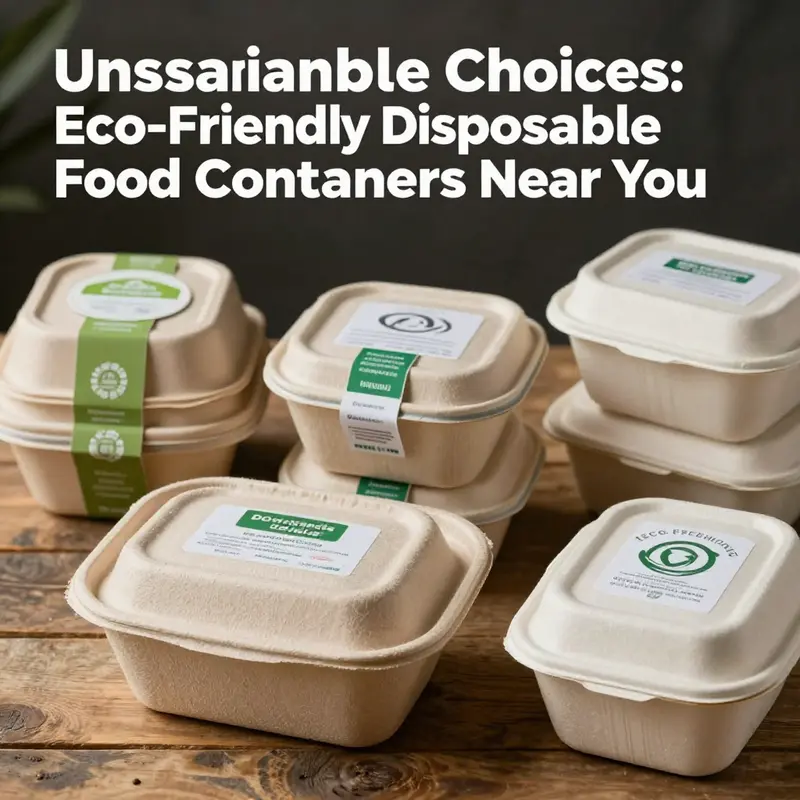
When you begin to map the landscape of eco-friendly disposable food containers near you, you quickly discover a spectrum that stretches beyond a single glossy label or a simple claim of “green.” The goal of these containers is not merely to keep food warm or intact; it is to reduce the footprint of takeout, fast-casual service, catering, and event packaging without compromising safety, quality, or convenience. The journey from raw material to retail shelf—through processing, certification, and finally the hands of a consumer—reveals a set of choices that are as much about system design as they are about material science. In this chapter, we travel that path in a way that centers locality and practicality. We will look at the core materials that power eco-friendly disposables, unpack what certifications mean in real terms, and explore how to locate responsibly produced options near you. The aim is not to persuade you to abandon all conventional packaging, but to illuminate how choices at the point of purchase can shift demand toward packaging that behaves well in the world after use, while still serving the needs of restaurants, events, and households today.
First, consider the range of materials that often appear in eco-friendly disposable containers. Sugarcane fiber, commonly termed bagasse, is one of the most frequently cited examples. The pulp left after juicing sugarcane is pressed into durable shapes for bowls, plates, and clamshells. Bagasse-based containers are typically 100% compostable and plastic-free, which makes them appealing to venues that want a clean separation between food waste and other refuse. The appeal here lies not only in the compostability of the material itself but in its performance profile: bagasse can provide a stiff, resilient container that tolerates moisture without turning soft or collapsing under moderate heat. For takeout or catering where sauces, gravies, or dressings are involved, bagasse cartons and bowls can be a practical choice when a credible composting stream is available to receive them.
Another widely discussed option is bamboo. As a fast-growing, renewable resource, bamboo has become a symbol of sustainability in many packaging narratives. Bamboo-based containers blend strength with light weight and can be shaped into a range of forms—from simple bowls to more elaborate rectangular or octagonal designs. The material’s natural resilience helps resist denting and soaking, though like all plant-derived fibers, there are limits when exposed to extended high heat or very oily foods. Bamboo packaging often carries the appropriate compostability claims, but the critical qualifier remains the availability of industrial or municipal composting facilities that can process these materials at scale. This is a reminder that “eco-friendly” depends as much on what happens after the consumer places the container in the bin as it does on how the container is made.
Paperboard with plant-based coatings represents another common family within the eco-friendly category. These containers use corrugated or coated paperboards designed to resist moisture and grease while remaining compostable under suitable conditions. The coatings are formulated to keep liquids from seeping through while still allowing the entire unit to break down in an industrial composting stream. The trade-offs here include performance under heavy sauces, microwave use, and the need for careful disposal if a regional composting option is not available. In places with robust composting infrastructure, these coated paperboard containers perform well for soups, stews, and salads.
Molded fiber, made from recycled paper, cardboard, or agricultural fibers, offers another pathway to compostable disposables. Molded fiber products can be surprisingly sturdy and are particularly popular for hot foods and takeout bowls. Their strength often comes from the way the material is molded into thicker walls and a hollow interior, which helps resist bending and leakage. The compostability story for molded fiber is straightforward in ideal conditions, but, as with other plant-based options, it relies on the presence of an industrial facility that can handle the material efficiently. The good news is that many manufacturers of molded fiber emphasize cradle-to-cradle thinking—designing products to return to the soil or a composting stream when the life of the product ends.
Then there is PLA, or polylactic acid, a plant-based polymer derived from sources like cornstarch or sugarcane. PLA-based containers bring strong oil and water resistance and are often compatible with cold foods and some hot applications, depending on the product’s specific formulation. They can be designed to withstand temperatures up to moderate levels and are frequently marketed for use in microwaves and refrigerators under controlled conditions. Yet PLA tells a tale that is more nuanced than “plant-based and biodegradable.” While it can be compatible with industrial composting, not all PLA products break down in home compost piles, and not all municipal programs will manage PLA efficiently unless they are explicitly equipped to process bioplastics. The public conversation about PLA often centers on its dual identity as both a plant-derived material and a packaging option that requires appropriate end-of-life handling to realize its environmental promise.
The materials above are not mutually exclusive in the real world. A single product line may blend several of these inputs—bagasse fibers in the bowl body with a PLA-coated surface for moisture resistance, or a molded-fiber tray paired with a PLA lid for sealability and heat tolerance. Each combination aims to balance user experience, safety, and end-of-life outcomes. In practice, that balance hinges on the local waste ecosystem. A consumer can pick a technically compostable option, but if there is no nearby facility willing to process it, the container’s ultimate fate may become less favorable than expected. Consequently, the conversation about eco-friendly packaging must always include a pragmatic assessment of local infrastructure, not merely the merits of the material alone.
Crucially, the conversation about materials and end-of-life is anchored in certification and standards. Credible certifications provide a bridge between what a product claims and what actually happens to it after disposal. Among the standards most widely recognized in this space are the Biodegradable Products Institute (BPI) certification and compliance with ASTM D6400. BPI certification is built on a rigorous set of criteria that test whether a product can break down in a composting environment within a defined timeline and without leaving behind persistent residues or microplastics. When a container bears BPI certification, it offers a level of assurance that the compostability claim has been independently vetted against a recognized standard. ASTM D6400 further contributes to the clarity around industrial compostability. This American standard specifies that a product should disintegrate and biodegrade within a certain period under controlled composting conditions, and it sets expectations about the absence of harmful residues. Collectively, these certifications function as a trust mechanism for buyers and as practical guardrails for waste management programs that must determine which packaging they can process.
In addition to these benchmarks, some manufacturers pursue newer or regionally tailored standards and labels. The landscape can include labels indicating home-compostability in some contexts or blanket claims that require verification through a supplier’s documentation. What matters is transparency. A credible supplier should be able to provide documentation showing the product’s formulation, its certification status, and, where relevant, guidance on appropriate disposal streams. This is not merely a marketing exercise; it is about enabling waste managers to plan, restaurants to source responsibly, and households to dispose of items in a way that aligns with local infrastructure. To buyers, the practical implication is that any claim of compostability should be grounded in tested standards rather than marketing language alone.
Sourcing locally adds another layer of complexity—and opportunity. For anyone trying to inventory eco-friendly options near a specific location, the path starts with understanding what is available in regional markets, wholesalers, and distributors who can provide bulk orders and consistent supply. Local sourcing can reduce transportation emissions and support smaller suppliers who are often more attuned to the needs of nearby waste streams. In many communities, regional producers of bagasse, bamboo, molded fiber, or coated papers maintain relationships with local restaurants, event planners, and caterers, offering not only packaging but a line of related accessories such as lids, sleeves, and compatible liners that help streamline operations. Engaging with a regional supplier can also facilitate access to certified products and may enable customization, such as adding a restaurant’s branding while preserving a compostable or recyclable end-of-life outcome.
For individuals and businesses trying to locate eco-friendly disposables near them, practical steps come into focus. Start with a location-based search using a clear, material-focused vocabulary rather than a broad “green packaging” query. For example, search for keywords like “compostable bagasse bowls near me” or “PLA-coated paper containers near me” to surface options more aligned with end-of-life goals. Beyond search engines, consider reaching out to local waste programs or municipal environmental offices to learn about accepted materials and any recommended suppliers who regularly stock certified compostable options. Community-based organizations that promote zero-waste events or sustainable dining practices can be valuable sources of guidance on where to purchase and which materials perform best for particular food types or service formats.
If you are shopping online, the landscape broadens to retailers and marketplaces that curate compostable or eco-friendly packaging. In online catalogs, you will often see filters for “compostable” or “eco-friendly” that help distinguish products aligned with industrial composting programs. While online listings can simplify access, they also demand careful scrutiny of the product’s documentation. A careful buyer will request or review the product’s certification status, confirm the type of composting facility required, and examine any manufacturer-supplied guidelines regarding heat tolerance, grease resistance, and shelf life. A well-vetted supplier will present clear documentation, including the product’s material breakdown and its certification footprint, so that customers can align their orders with their local waste streams.
The conversation around end-of-life is not abstract. It translates into real choices for restaurants that aim to maintain a certain dine-in or takeout experience while reducing waste. For hot foods, the material’s heat tolerance, strength, and oil resistance become critical. For soups, stews, or gravies, lids and seals must work with the chosen material to prevent leaks and ensure safe handling. For salads, dressings, or fruit, moisture resistance becomes paramount. The same substrate may be used to package a cold salad in one setting and a hot noodle dish in another, but its performance will depend on the precise design and the intended end-of-life path. This is why certifications rooted in standardized tests matter so much: they provide a consistent yardstick for comparing different product lines and help a buyer distinguish a high-performing option from a marketing claim that lacks驗 proof.
In practice, a careful procurement approach looks for several indicators at once. A credible label or certification printed on the packaging should be traceable to a recognized standard body. The supplier should be able to produce documentation showing the exact composition of the container, including any coatings or liners, and the facility types that can process it. If the product is advertised as compostable, there should be guidance about whether it is compatible with home composting or only with industrial facilities. If the packaging uses a plant-based polymer like PLA, the supplier should clarify whether it is intended for use in microwaves or for cold applications, and what intervals of heating are safe. These details matter because consumer habits vary widely. A takeout service that frequently warms foods in a microwave needs a different packaging solution than a cold-bento-style offering that relies on refrigeration and cold-chain delivery.
To help locate credible options near you, consider asking the supplier for a short, concrete sample plan. A working plan might outline the product’s primary applications, the temperatures it can withstand, the expected decomposition conditions, and the end-of-life pathway recommended by the manufacturer. Such information can empower a business to plan for the appropriate waste streams with municipal partners or private waste processors. It can also help a consumer understand why a seemingly similar container from two different suppliers may behave very differently in practice. The layering of materials, coatings, and certifications is not merely a numbers game; it is a system-level design that implicates food safety, waste management, and even branding consistency. As a matter of strategy, many hospitality operators find value in cultivating supplier relationships that emphasize not only price and availability but the robustness of the end-of-life story behind each packaging choice. The result can be a more resilient packaging program that remains aligned with evolving municipal policies and consumer expectations about responsible consumption.
Beyond the technicalities, the social dimension of eco-friendly disposables deserves attention. Local access to certified, compostable containers can influence community waste habits, support regional manufacturing ecosystems, and encourage venues to adopt more sustainable operations. When containers meet the right certification standards and when local facilities can process them, the environmental benefit is amplified. In some communities, the implementation of robust composting streams has helped reduce the volume of waste in landfills and has even supported soil restoration programs through the return of organic matter to the community. The network effect matters: suppliers push for better end-of-life pathways, waste programs adapt to new materials, and restaurants discover ways to minimize waste by leaning into packaging that aligns with the local waste framework.
Still, there are practical constraints to acknowledge. Not every region offers industrial composting facilities that can handle every type of plant-based container. Some municipalities have yet to expand their composting capacity or to clarify which materials are accepted. In these cases, a “compostable” label may be more aspirational than actionable. The most prudent approach is to verify with local waste management authorities what materials they accept and to confirm that any chosen packaging option is compatible with those streams. In places where composting remains limited, alternatives such as recyclable paper-based containers with certified recyclable coatings or reusable containers with a take-back program can offer meaningful reductions in overall waste. The objective is not nostalgia for an ideal system but a pragmatic path that reduces harm within the constraints of the local infrastructure while preserving food safety and consumer convenience.
For those who want to connect with credible, certified options locally, there is a practical step you can take right away. Look for suppliers who can provide documentation of BPI certification or ASTM D6400 compliance for the products you intend to purchase. When in doubt, ask for a copy of the certification or a reference to the facility where the material has been tested. This diligence pays off not just in environmental outcomes but in the operational clarity it provides to kitchens, catering teams, and waste crews. And for practitioners who need to brand their sustainability story, the ability to point to verifiable certifications and well-documented end-of-life pathways can be a decisive advantage in a market that increasingly rewards responsible packaging practices.
As you gather knowledge and begin to translate it into action, you may also want to explore the range of shape, size, and design options that can support your service model. From octagonal and rectangular bowls to round and square lids, the design vocabulary in eco-friendly packaging is expanding to accommodate a variety of food formats. Some producers offer customizable designs that carry branding while preserving the integrity of the compostable or recyclable material. The potential for custom designs to align with brand identity—without compromising end-of-life performance—is an important trend for events and restaurants that want to distinguish themselves while staying true to sustainability goals. Even small details, such as the choice of lid type or the presence of a grease-resistant barrier, can influence the user experience and the downstream waste handling requirements.
Finally, a note on practical sourcing: prioritize materials and suppliers that can demonstrate consistent supply, transparent certification, and clear disposal guidance. Consistency matters for operators who need to forecast inventory, manage costs, and deliver reliable service during peak periods. Transparent labeling and accessible documentation help avoid confusion at the point of sale and at the point of disposal. In regions where local producers are active, choosing locally sourced, certified options can also reduce transportation-related emissions and support a more circular economy. This approach fosters resilience in the supply chain and strengthens community knowledge about sustainable packaging choices. The path to near-me packaging is not a one-off purchase but a continuous alignment of product design, end-of-life infrastructure, and consumer behavior.
For readers who want a tangible starting point on this journey, consider examining a practical example of a kraft paper-based line that aligns with the principles described here. Such a line often includes disposable bowls and containers with a natural fiber composition and a compostable coating designed to resist moisture and grease. The packaging is typically offered with lids and sleeves that maintain food integrity during transport and storage. If you navigate to an online catalog that features this type of product, you will likely see a range of sizes and shapes designed to accommodate soups, salads, and hot entrees while preserving the overall compostability of the system. When contemplating quantity, consider not only the per-unit cost but also the logistics of waste separation and the anticipated rate of use. A thoughtful procurement plan integrates product performance, end-of-life considerations, and the practical realities of local waste facilities. Such an approach ensures that the environmental benefits of choosing eco-friendly packaging are realized in everyday operations rather than only in theory.
In sum, the eco-friendly disposable food containers available near you are part of a larger, evolving system that links materials science, waste management, consumer behavior, and policy. The right choice depends on a careful assessment of three intertwined elements: material properties and their compatibility with the foods you serve, the certification status that verifies compostability or recyclability, and the practical ability of your community to receive and process those materials after use. When these elements align, the packaging you choose can reduce environmental impact without compromising the service quality your customers expect. And as the network of certified suppliers grows, so too does the opportunity for businesses and households to participate in a circular approach to packaging—one that values performance, transparency, and accountability as much as it values convenience.
If you want a concrete example of how these principles translate into a real product category, explore a range of options that respond to the common needs of takeout and catering while keeping certification and disposal pathways clear. Look for containers designed to handle moisture and grease without leakage, with a body that degrades predictably in the appropriate composting stream, and with labeling that leaves no ambiguity about how to dispose of them. The next time you place an order or plan a catered event, you can assess the packaging not only by its appearance or price but by the strength of its end-of-life story. That story—backed by credible standards and reinforced by local infrastructure—will determine how effectively a packaging choice reduces waste and contributes to a cleaner environment over the long run.
For readers who want to investigate specific product lines that fit these criteria, a practical entry point is to examine disposable kraft-paper bowls and related takeout packaging that are designed with eco-friendly materials and a focus on end-of-life performance. This category often features a range of sizes and shapes that can be customized with branding while maintaining compostability or recyclability. The alignment of material choice, design, and certification makes it possible to create packaging that not only supports business needs but also sends a clear signal about environmental responsibility to customers and partners. By approaching packaging decisions through the lens of materials, standards, and local waste ecosystems, you empower your organization to make choices that are genuinely sustainable in practice, not only in theory.
External resource for further reading: for an authoritative overview of compostability standards and certified suppliers, consult the Biodegradable Products Institute (BPI) at https://www.bpiworld.org/.
Internal reference for a practical example of a kraft-paper packaging option: a disposable kraft-paper bowl line that emphasizes both durability and compostability can be explored here: disposable kraft paper bowls.
Final thoughts
Choosing eco-friendly disposable food containers not only demonstrates a commitment to sustainability but also resonates with a growing customer base that values environmental responsibility. By utilizing local retailers, exploring online options, and understanding the materials and certifications available, you can find the perfect solutions for your food service needs. The push towards greener alternatives is not just a trend; it’s a necessity for a healthier planet and a smarter business strategy. Take the next step in your sustainability journey today.