
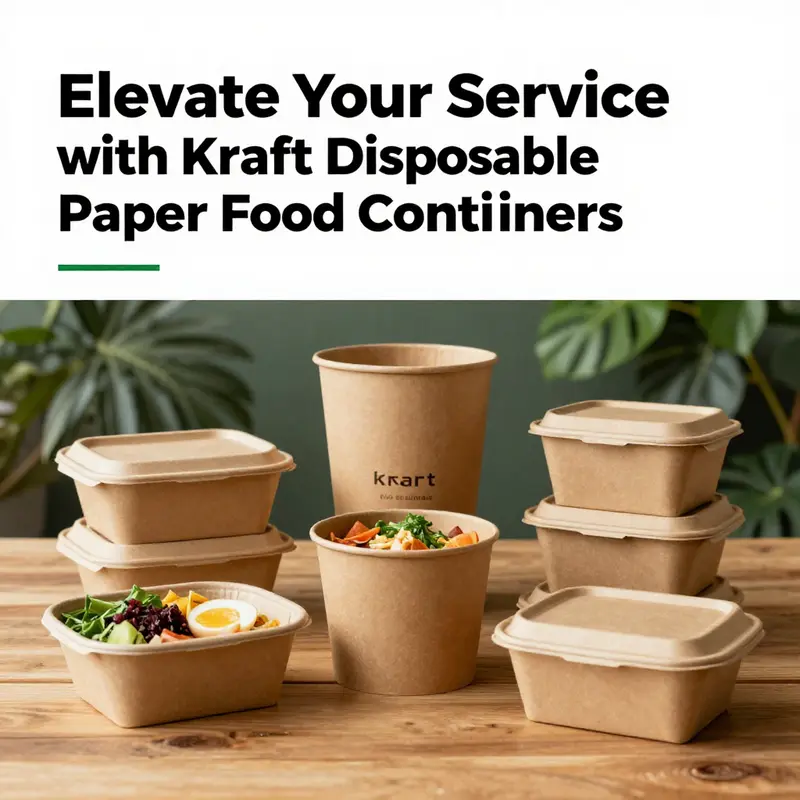
Kraft disposable paper food containers have emerged as a pivotal solution for businesses in the food service industry, including bubble tea shops, restaurants, food trucks, and catering services. As consumers increasingly seek sustainable options, these containers offer an ideal blend of functionality and environmental responsibility. The following chapters will delve into the unique features and benefits of kraft containers, explore effective sourcing strategies and pricing, highlight their environmental impact, discuss customization options for branding, and showcase the versatile applications across various food service contexts. By understanding these elements, businesses can make informed decisions that enhance their service while aligning with sustainability goals.
Earth-Friendly, Brand-Ready: The Practical Power of Kraft Disposable Paper Food Containers
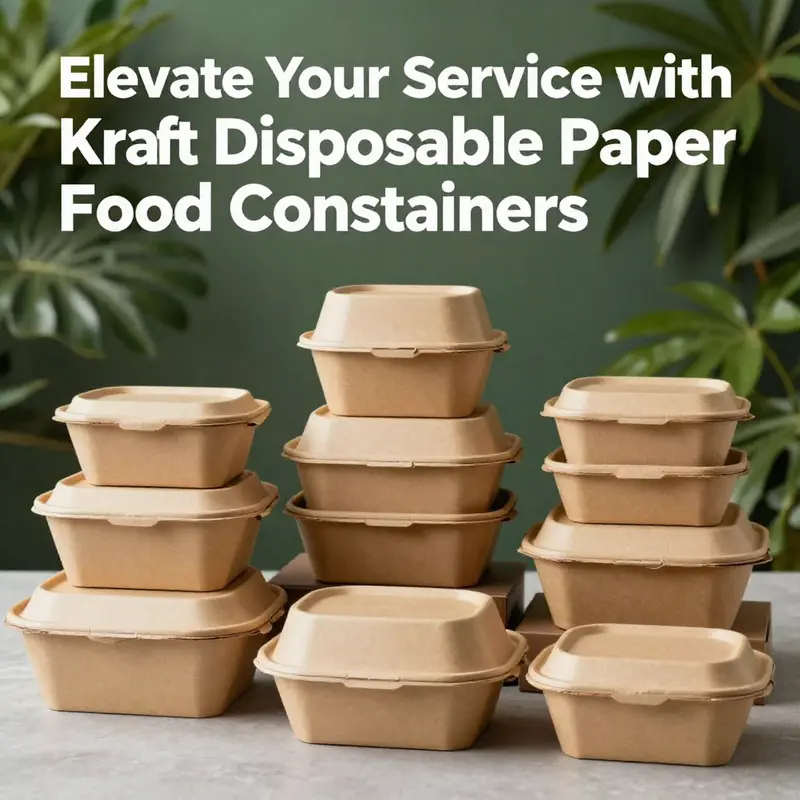
Kraft disposable paper food containers sit at a crucial crossroads in modern food service. They are more than mere receptacles; they are a compact package that carries the promise of sustainability without compromising performance. Made from natural kraft paper, these containers draw their character from a brown, unbleached surface derived from wood pulp. The look itself signals a grounded, earthy approach to packaging that resonates with consumers who want their takeout to align with environmental values as clearly as it aligns with flavor. This chapter explores how that simple material choice—earthy and sturdy—translates into real-world advantages for restaurants, delivery services, and households alike, weaving together safety, reliability, branding, and end-of-life considerations into a cohesive narrative about what kraft containers can actually do in practice.
Eco-friendliness is not just a marketing line; it is a practical outcome of the way kraft containers are designed to move through the lifecycle. For many products in this category, the appeal rests on three pillars: biodegradability, compostability, and recyclability. Kraft paper containers are typically biodegradable and compostable, meaning they can break down in soil over time and contribute less to landfill mass when disposed of properly. At the same time, they are often recyclable, allowing the material to be recovered and repurposed rather than ending up as waste. This combination makes kraft packaging a meaningful component of broader waste-reduction strategies, especially when a business commits to source reduction, responsible use, and consumer education about disposal options. The narrative here is not that one packaging choice will end all waste problems, but that kraft containers can play a constructive role in a well-considered sustainability program. For businesses considering their packaging roadmap, the environmental profile of kraft options can align with a brand’s stated commitments and with shopper expectations that are increasingly shaped by climate and resource concerns.
Durability and function are essential when the packaging is entrusted with hot meals, cold salads, or delicate desserts. Kraft containers are engineered to handle a range of contents, aided by protective coatings—often a layer of PLA or a water-based barrier—that prevent moisture from seeping through while preserving integrity. This moisture management is crucial for holding both dry foods, like grains and vegetables, and wetter items, such as soups or dressings, without soaking the paper and compromising form. The result is a container that remains rigid enough to prevent collapse during transport while still delivering a lightweight, recyclable alternative to plastic or foam. A robust design reduces leaks and spills, a practical benefit that translates into cleaner delivery experiences and fewer branded mishaps on the ride between kitchen and customer.
Temperature resistance is another strength. Many kraft containers are designed to withstand a spectrum of temperatures, enabling them to perform from prep to plate. They can be used for reheating in microwaves and for short-term storage in freezers, supporting a consumer workflow that values convenience. This flexibility matters for meal-prep services and takeout operations, where customers may reheat meals at home or store portions for later. The ability to move naturally from hot to cold to reheated scenarios reduces the need for multiple packaging layers and streamlines the customer experience. In practice, this translates to fewer container changes, simpler inventory management for kitchens, and a more predictable performance during peak service times.
Customization is where kraft containers begin to function as more than packaging. The capability to print logos, colors, and messaging directly onto the container transforms packaging into a branding tool. When a customer sees a distinctive design on the box or cup, it reinforces recognition and trust, turning a simple takeout moment into a remembered brand touchpoint. The branding potential is not just about visibility; it is about consistency of message. A well-executed design can convey quality, sustainability, and care, even before the first bite is taken. This is why many operators treat packaging as part of the product experience, not merely as a container. For those who want to explore how design can upgrade a kraft package, there are options like customized-design eco-friendly kraft soup-salad paper bowl with lid, a path that combines practical performance with a distinct visual identity.
The versatility of kraft containers is remarkable. They come in a broad range of sizes and shapes to accommodate diverse foods, from compact snack boxes to larger meal carriers and specialized configurations for fries, salads, sushi, sandwiches, and desserts. Some models feature vented lids or specialized shapes that optimize space, ventilation, and containment during transit. This adaptability is especially valuable for operators who rotate menus or offer niche items, because it reduces the number of different packaging lines required. A single family of kraft boxes can cover many service scenarios, simplifying procurement while maintaining a cohesive brand presence.
From a practical operations perspective, the sustainability and performance of kraft containers are closely tied to manufacturing standards and supply chain realities. Many suppliers emphasize high production capacity and adherence to international standards, ensuring reliable availability even during periods of heightened demand. This reliability matters to businesses that rely on consistent packaging supply to keep service running smoothly. The economics of bulk orders also come into play. While the per-unit cost may be higher than disposable plastics, the total cost of ownership can be favorable when considering shipment efficiency, waste disposal costs, and the value of a strong brand impression. The narrative here is not a simplistic cost comparison but an alignment of ecological goals, operational practicality, and consumer expectations. In markets where customers increasingly value responsible packaging, kraft containers may offer a compelling balance of price, performance, and purpose.
A final but essential thread in this story is end-of-life management. Kraft paper containers are designed to be disposed of in ways that reflect their nature as paper products. Yet, the reality of municipal waste streams means facilities vary in what they accept. Encouraging customers to compost or recycle where facilities exist, and providing clear disposal guidance on packaging, can amplify the environmental benefits. In this sense, kraft packaging becomes part of a larger consumer education effort. The more transparent a brand is about disposal options, the more likely customers will participate in sustainable practices. And because packaging often becomes a visible signal of an organization’s values, the interplay between material choice, design, and consumer behavior becomes a tangible component of a business’s reputation.
The journey from raw kraft paper to a finished, branded, user-friendly container involves choices at every step. Material sourcing, coating technology, printing capabilities, and the breadth of sizes and shapes all contribute to a final product that can support a broad spectrum of food experiences. As businesses evaluate their packaging strategies, kraft disposable paper containers offer a compelling mix of environmental responsibility, functional reliability, and brand-building potential. They are not a single solution planted at the edge of the plate; they are a connected part of the dining experience—from the moment a customer places an order to the moment they dispose of the container after savoring a meal. This integrated view helps explain why many operators look to kraft options as a core element of sustainable service models rather than a secondary convenience.
For readers who want to explore how customization can further enhance value, consider the example of a design-focused option that blends eco-friendly materials with a tailored look. [customized-design eco-friendly kraft soup-salad paper bowl with lid](https://greendispopack.com/product/customized-design-eco friendly-1300ml-kraft-soup-salad-paper-bowl-with-lid/) demonstrates how branding and practicality can align in a single package. Such choices illuminate a path where packaging becomes a deliberate, strategic asset rather than an afterthought. And for a broader understanding of eco-friendly packaging options and their environmental implications, the Environmental Protection Agency provides a useful overview at the end of the lifecycle: https://www.epa.gov/sustainable-management-food-waste/eco-friendly-food-packaging-options.
From Mill to Menu: Sourcing and Pricing Kraft Disposable Paper Containers in a Global Food Service Era
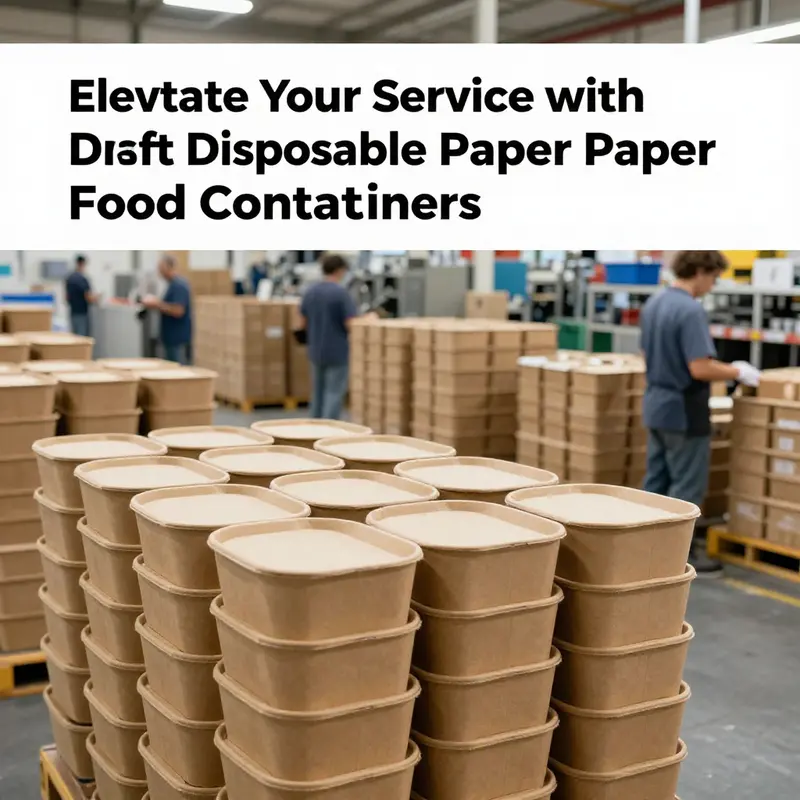
Sourcing kraft disposable paper containers is a journey that begins long before a consumer ever sees a takeout box. It starts on the factory floor, where thick kraft fibers are transformed into sturdy, food-grade shells that can survive the rigors of a busy kitchen, a crowded delivery route, and a consumer’s microwave. For many food enterprises, the path to reliable packaging runs through a tightly coordinated network of mills, converters, and suppliers who know that the smallest detail—paper thickness, lid fit, or liner grade—can influence everything from shelf life to brand perception. In this landscape, China has emerged as a central node. Its manufacturing backbone supports a vast array of sizes, shapes, and configurations used across snack boxes, fries containers, salad bowls, lunch boxes, and soup cups. The drive is not only volume but also versatility: the ability to produce a wide mix of formats at scale, often with the option to tailor products to distinct market demands. That combination—scale plus customization—shapes the pricing and the choices available to buyers, from global chains to regional cafes experimenting with new menus and service models.
At the heart of the supply story is material quality. Kraft disposable paper containers rely on food-grade kraft, with alternatives such as white paper or bamboo-based options feeding different performance and sustainability profiles. Lids vary as well, with a spectrum that includes polymer-based closures like PP and PS, and more environmentally tuned options such as CPLA. Each choice brings a balance of heat resistance, moisture management, and structural integrity. This is crucial since containers must withstand hot foods without warping, cold storage without becoming brittle, and transport without leaking. The result is a family of packaging that can be trusted for hot noodles, cold salads, or dessert assortments, while still projecting a brand’s identity through surface finishes and printing.
A key driver of sourcing decisions is the breadth of sizes and configurations available. Sectors as diverse as snack service and gourmet takeaway demand formats from compact 150 ml cups to large 1200 ml boxes, with possibilities for octagonal, rectangular, round, and square shapes tailored to the food item. The ability to combine different configurations with precise lids, window openings, and branding surfaces opens room for cross-category packaging strategies. For brands seeking to tell a consistent story across their menus, consistent standards across sizes and materials matter just as much as the visual identity printed on the sleeves or cartons. The design language thus extends beyond aesthetics to ensure a reliable customer experience from first glance to final bite.
Pricing, naturally, reflects this complexity. Basic kraft paper containers can be astonishingly affordable when bought in bulk. For example, when order volume climbs into the millions, unit costs can fall to a fraction of a cent per piece. The most favorable price tier often arises at or beyond a million units, where the per-piece price can be quoted as low as a few thousandths of a dollar. Between the bulk tier and smaller batches, prices shift noticeably. For orders in the tens of thousands to low hundreds of thousands, price bands typically span from a few dozen to a few tens of cents per unit, depending on size, configuration, and any feature adds like windows, reinforced bottoms, or special coatings. The math is straightforward but consequential: the more you print and customize, the more you pay per container, even as the base material cost remains relatively small.
Customization darkness and brand impact add another layer of cost. Branded or customized containers carry higher price points, reflecting setup, printing, and design work. The additional fees cover not only the imprint but also the prepress testing, color matching, and the packaging logistics required to deliver contiguous runs with consistent color and placement. In practice, a branded project on 50,000 pieces can push the per-piece price toward a half dollar or more, depending on the complexity of the design and the number of printing surfaces. Packaging specifics, such as how many pieces per sleeve or the carton layout, also factor into overall landed cost. These variables mean that brands must weigh the incremental visibility against the marginal increase in unit cost, especially when margins are tight in competitive food-service landscapes.
Within the same ecosystem, there are higher-value items that command premium pricing because they deliver additional performance. Insulated or reinforced models, skillet- or soup-oriented containers, and larger-capacity takeaway boxes can carry higher price points. The premium comes from materials and engineering that sustain temperature, maintain shape under heavy packing, and resist leaks when soups and sauces travel the distance from kitchen to car trunk to customer door. Even among these premium formats, the pricing logic remains consistent: higher material quality and more sophisticated lid systems translate into higher base costs, but they can unlock new menu formats and service models that customers value.
Quality control and compliance underpin every step of the sourcing process. Suppliers commonly highlight certifications such as SGS, RoHS, and ISO 9001:2008, signaling adherence to safety, environmental, and management-system standards. These credentials reassure buyers who operate under strict regulatory regimes or who want to align with corporate sustainability commitments. The ability of manufacturers to sustain production at scale—sometimes boasting hundreds of thousands of pieces per day—helps ensure continuity of supply even during peak seasons or color runs that demand large, synchronized lots. Experience serving international brands provides another layer of credibility, offering insight into standardized lead times, packaging integrity across geographies, and the ability to adapt to high-volume orders without compromising performance.
For buyers who want to move from concept to order, the process is straightforward yet disciplined. Most suppliers welcome samples and direct quotes as first steps, enabling purchasers to validate material quality, lid fit, and print fidelity before committing to a full run. Platforms that connect buyers with manufacturers often facilitate this process, letting buyers compare options across size, material, and customization level while keeping total cost transparent. The practical route involves specifying the exact sizes needed, the preferred material profile, and the desired branding direction, then requesting a quote for the intended quantity. It is common to see a separate pricing track for non-branded basic containers and another for branded or windowed versions, with a fast lane for standard configurations and a longer timeline for complex designs.
Beyond the numbers, the act of sourcing kraft containers is a negotiation about reliability, service, and flexibility. Buyers frequently seek suppliers who can accommodate changing forecasts, offer partial shipments, and provide quality certificates with each batch. The ability to request reworks or adjust colors mid-production without derailing timelines becomes a meaningful asset in a fast-moving food service context. And while price matters, it is the combination of cost, lead times, print accuracy, and downstream packaging that ultimately determines the value of a supplier partnership. In this ecosystem, a well-chosen supplier is not merely a price point but a critical partner in maintaining brand standards, protecting food safety, and delivering a consistent customer experience.
For those who want a concrete example of the packaging family in action, consider a disposable kraft paper bowl designed for food packaging with a lid. Its form demonstrates the balancing act between cost efficiency and consumer-grade performance. A product like this can illustrate how a standard container and lid pair functions across the supply chain, from raw pulp to finished packaging ready for retail shelves or restaurant backrooms. It is the emblem of a broader capability: the ability to offer a coherent range of sizes, lid options, and branding opportunities that align with a brand’s menu strategy while staying faithful to the sustainability narrative that many customers now expect. In practice, this means choosing a supplier with a balanced portfolio and a willingness to tailor both form and finish to the brief, so that every box carries a consistent story as it travels from kitchen to consumer.
Ultimately, sourcing and pricing kraft disposable paper containers comes down to aligning business goals with supplier capabilities. The decision matrix includes volume commitments, the breadth of sizes required, the level of customization, the need for packaging efficiency in cartons and sleeves, and the sustainability profile that resonates with customers. It is about choosing a path that preserves quality and safety while enabling creative menus and efficient service. When buyers navigate this landscape well, they gain more than packaging; they gain a reliable partner who can scale with their business and help them tell a consistent, responsible story on every plate and in every bag. For those seeking real-world supplier listings, the door to current pricing and options is easy to open through established sourcing platforms, where live quotes and MOQs reflect ongoing market dynamics. For a practical starting point in supplier listings and pricing, see the kraft disposable paper container pages on a major sourcing platform and compare the options that best fit your needs. disposable kraft paper bowl for food package with lid
External resource: https://www.alibaba.com
From Forest to Footprint: Tracing the Environmental Arc of Kraft Disposable Paper Food Containers
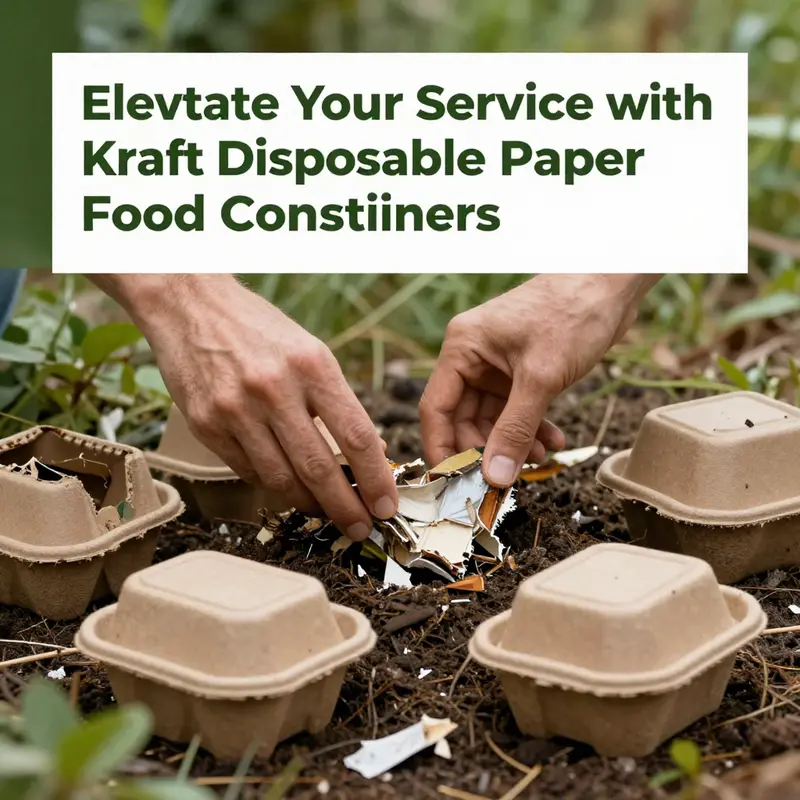
The shift from petroleum-based and foam packaging to kraft disposable paper food containers marks a deliberate pivot in how the food service ecosystem thinks about waste, energy, and the lifecycle of a single meal. What begins as a simple, seemingly modest container unfolds into a web of choices about materials, production, end-of-life pathways, and the wider environmental cadence that shapes restaurant brands, delivery platforms, and consumer habits. At the heart of kraft containers lies a careful balance between durability, performance, and a reduced ecological footprint. These containers are typically crafted from thick kraft paper—often sourced from 100% recycled fibers or from sustainably managed wood pulp—paired with plant-based coatings that stand in for conventional plastics. The result is a packaging system that, when used correctly, can align with circular economy principles while preserving the quality and safety of the food it shields. The environmental advantages begin long before a container ever meets a customer. The paper-derived material demands less energy and emits fewer greenhouse gases during production when chemical pulping is avoided and mechanical pulping or alternative, less energy-intensive processes are employed. The cellulose fibers, long and sturdy, enable a container that is both light and strong, reducing the amount of material needed to achieve reliable containment. This strength translates into less bulk and weight in transit, which, in turn, helps lower fuel use and logistics emissions across distribution networks. Such efficiency is not merely a matter of convenience; it affects the overall burden that packaging adds to the supply chain. In a world where every kilometre and kilowatt matters, the ability to use thinner still resilient sheets without compromising performance carries real environmental significance. A central technical feature of kraft containers is the plant-based coating, frequently a polylactic acid (PLA) layer derived from renewable resources like corn starch. PLA provides a reliable moisture and grease barrier, which is crucial for containing hot soups, oily sauces, or sticky salads. While it performs like a barrier in many settings, its compostability relies on the right disposal stream. PLA-coated kraft products are designed to be commercially compostable, a distinction that matters greatly for waste processors and municipal programs. When streams are properly sorted, these materials can break down in industrial composting facilities rather than lingering in landfills or contaminating recycling streams. This separation is essential because combining biodegradable coatings with traditional recyclables can undermine the integrity of recycling systems. In practice, the ecological gains of kraft containers hinge on disciplined end-of-life behavior. The European regulatory landscape has increasingly emphasized end-of-life responsibility, with Extended Producer Responsibility (EPR) systems setting high standards for recyclability and waste management. Germany and France, for example, have instituted certification schemes and reporting requirements that reward packaging designed to be recycled or composted with minimal environmental residue. For manufacturers and buyers alike, the presence of EPR-like certifications signals a product designed with its afterlife in mind, not merely its initial utility. A thoughtfully designed kraft container often incorporates reinforced seams and thoughtful geometry to prevent leaks and collapse during transport, even when holding wet or heavy contents. Such structural integrity reduces the need for secondary packaging or bulky inner liners, thereby trimming the material footprint of a takeout order. When disposed of correctly, and under the right industrial conditions, the container can contribute to a regulated waste stream that returns nutrients to the soil or re-enters manufacturing cycles as raw materials. The ideal outcome is a closed or near-closed loop where the container’s journey finishes with minimal toxins and maximum reuse or reuse-possible density. Yet the practical realization of this outcome depends on infrastructure and consumer behavior as much as on chemistry and design. Home composting, though increasingly common in households, is not reliably capable of handling PLA-coated kraft products. Industrial facilities provide the controlled conditions—temperatures, moisture, and microbial activity—needed to break down these coatings and fibers efficiently. Without access to such facilities, the environmental story may stall or regress. This dynamic makes clear that the environmental impact of kraft paper containers is not a fixed attribute but a function of local waste management practices and the transparency with which brands communicate disposal guidelines to customers. The branding potential embedded in kraft packaging also contributes to its environmental narrative. Customization options enable a business to broadcast its commitment to sustainability through color, logos, and messaging that resonate with eco-conscious consumers. A well-executed design can lower the perceived burden of a disposable product by reinforcing responsible consumption and encouraging customers to participate in proper disposal. This alignment between packaging aesthetics and the sustainability narrative strengthens brand trust and can differentiate a restaurant at the point of sale. In a broader sense, the rise of kraft containers mirrors a shift in the industry toward more deliberate material selection and lifecycle thinking. Suppliers describe kraft options as scalable across a spectrum of sizes and configurations, from compact bowls to larger takeout boxes, even specialized shapes engineered for fries, salads, or desserts. The modularity of kraft packaging, coupled with the durability of the base paper, supports a wide array of foods and service models, including dine-at-home meal kits and curbside pickups. This versatility reduces the likelihood that multiple packaging formats will be needed for a single operation, thereby limiting packaging complexity and waste. The environmental logic also extends to supply chain practices. Kraft paper containers can be produced from recycled fibers or from responsibly harvested wood pulp, often in facilities that minimize chemical usage and energy consumption. As a result, the overall life-cycle emissions profile tends to be lower than that of many conventional plastics and foams. The industry’s movement toward plant-based barriers further aligns with a global appetite for renewable resources and reduced petroleum dependence. Still, the ecological promise of kraft packaging rests on more than materials and processes. It rests on a disciplined approach to end-of-life handling, clear disposal guidance for customers, and collaboration among manufacturers, municipalities, and waste processors to ensure streams are sorted and treated appropriately. When a consumer disposes of a kraft container in the correct channel—industrial composting or recycling where feasible—the material can reenter production cycles, contributing to a circular economy rather than accumulating as inert waste. Beyond the environmental metrics, there is a practical dimension worth noting: the performance reliability of kraft containers under varied usage conditions. Food safety certifications ensure that these materials are suitable for contact with both hot and cold foods, an important assurance for any restaurant model. Temperature resilience helps avoid deformation during hot deliveries, while the tear resistance and robust seams prevent leaks and post-use messes. Such reliability reduces the need for fragile secondary packaging, which, in turn, reduces packaging waste. The environmental calculus is not without its complexities. Codes of practice and local recycling capabilities determine the real-world impact of switching to kraft packaging. Buyers benefit from engaging with suppliers who can demonstrate compliance with international standards, share transparent life-cycle data, and offer guidance on disposal. In practice, sourcing decisions often involve balancing cost, performance, and sustainability claims, while recognizing that the end-of-life environment will shape the ultimate environmental benefit. For readers who want to explore concrete supplier examples and product choices, one can browse representative kraft options that illustrate how design choices translate into environmental outcomes. See, for instance, a product page illustrating a kraft paper bowl with lid and octagonal geometry, which demonstrates how brandable, leak-resistant packaging can be paired with compostable barriers while remaining compatible with widely used waste streams. Disposable-700ml-kraft-paper-bowl-take-out-octagonal-rectangle-paper-bowl. This kind of page helps connect the theoretical advantages of kraft packaging with tangible examples that buyers encounter in procurement discussions and vendor selections. For those seeking further verification of the material and regulatory landscape, external resources offer a broader look at how global suppliers frame the environmental narrative of kraft-based packaging. See the external reference that analyzes the environmental performance and end-of-life considerations for disposable kraft boxes used in food packaging: https://www.alibaba.com/product-detail/Disposable-Kraft-Paper-Box-for-Food-Packaging_1600579438221.html. As the story of kraft disposable containers unfolds, the chapter of environmental impact reveals itself not as a single verdict but as a spectrum of outcomes shaped by material choices, processing methods, and, crucially, the systems that handle waste after the meal is consumed. The ongoing evolution—toward more sustainable coatings, smarter designs, and tighter integration with recycling and composting infrastructure—suggests that these containers can remain a practical and lower-impact option for takeout, meal prep, and delivery. The ultimate measure lies in how readily customers and communities can participate in responsible disposal and how easily producers can demonstrate credible, verifiable improvements in every step of the container’s journey. In that sense, kraft disposable paper containers become not just packaging solutions but catalysts for a more conscious and connected food system.
Turning Kraft into Brand: Packaging as a Portable Marketing Canvas
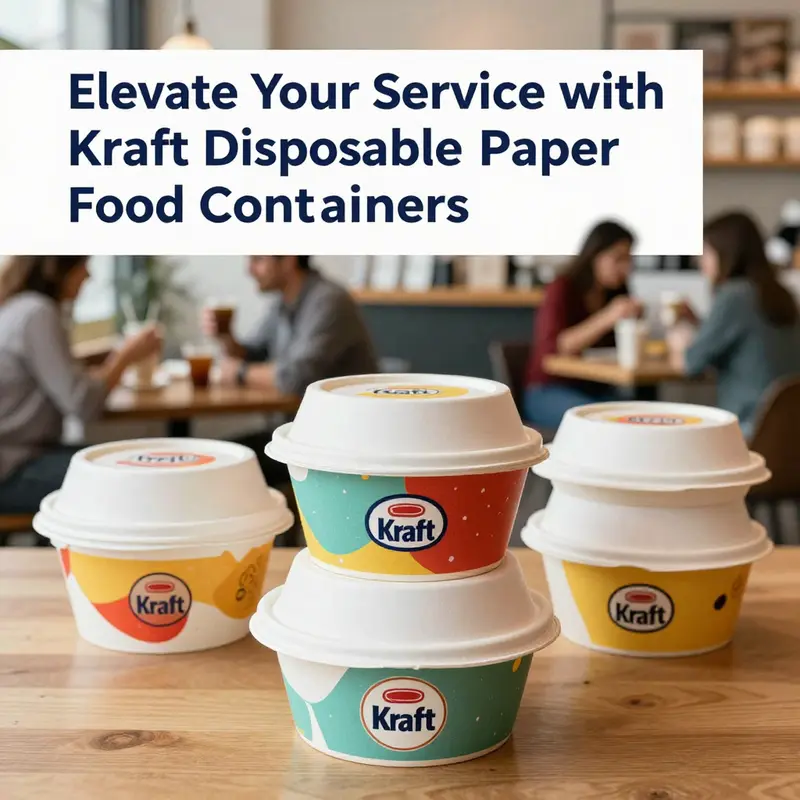
Every takeout container carries a story. Kraft disposable paper containers transform packaging from a utilitarian vessel into a portable brand canvas. The natural texture and warm tone of kraft reinforce values like authenticity, sustainability, and quality, while modern printing and coatings enable high-fidelity logos, color, and messaging directly on the surface. The result is a cohesive brand touchpoint that travels with the customer from storefront to doorstep.
Printability and compatibility matter: kraft stock accepts sharp images, bold typography, and readable copy on exterior and interior surfaces, and even on lids where feasible. A single design language can scale across bowls, boxes, and wraps, supporting consistent branding across menu items. Custom sizes reduce wasted packaging and reinforce perceived value, while window cutouts paired with clear, compostable barriers let customers glimpse the meal inside.
Beyond aesthetics, branded kraft packaging serves as a marketing channel. Logos, seasonal motifs, QR codes, and promotional messages can be embedded directly on the package, removing or reducing the need for separate inserts. When color fidelity and print durability are maintained through reheating and storage, the brand impression endures through every stage of the order.
Operationally, suppliers offer MOQs and tiered programs to accommodate small menus and large chains alike. A thoughtful approach balances volume with flexibility, enabling pilots with samples and low-commitment runs. A scalable design system using a single core shell with regionally adapted artwork delivers consistency while allowing regional campaigns.
Finally, sustainability remains integral. Transparent disclosures about coatings, recyclability, and end-of-life options help brands meet consumer expectations and regulatory requirements. A kraft-based packaging strategy that communicates responsibility at every touchpoint can build trust, drive repeat business, and differentiate a brand in a crowded market.
From Takeout to Brand Identity: The Broad Reach of Kraft Disposable Paper Containers
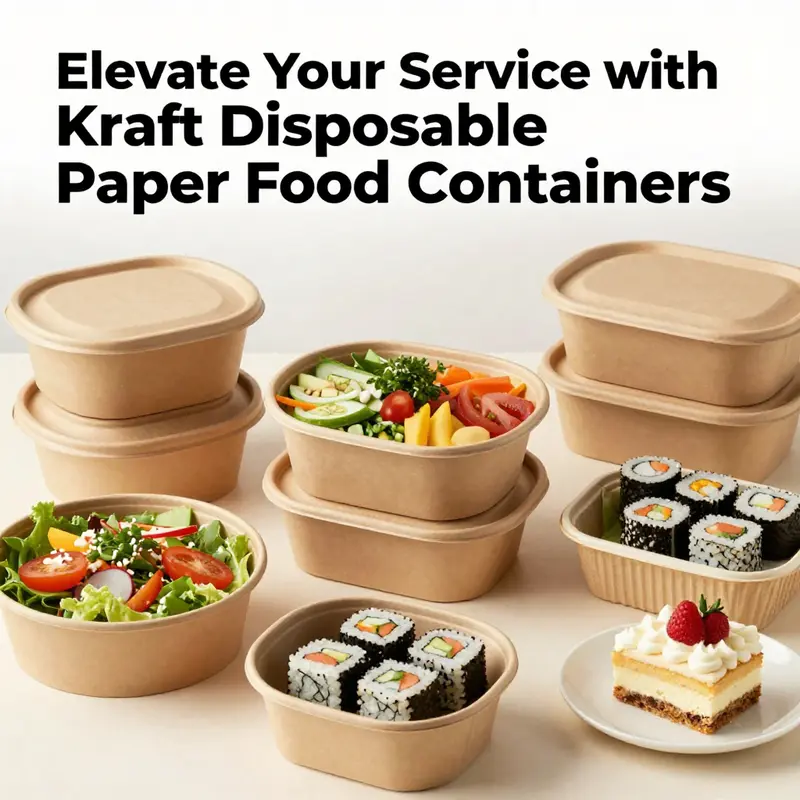
The kraft disposable paper container is more than a simple receptacle for food; it is a flexible, everywhere-present medium that quietly shapes how meals travel, how brands communicate, and how people perceive sustainability in daily choices. In contemporary food service, where speed, safety, and storylines collide, these paper vessels have earned a place at the center of operational strategy. They are designed to withstand the demanding realities of takeout culture—hot soups that steam through a lid, crisp fries that travel across town, delicate sushi or salads kept fresh and intact—without sacrificing the integrity of the contents or the consumer’s experience. The core strength of kraft paper lies in its combination of durability and gentleness: thick, rugged fibers provide structure, while a natural, unbleached appearance evokes a sense of earth-friendly practicality. This duality makes kraft containers remarkably versatile, capable of handling hot meals, cold salads, and everything in between, in a way that plastics or foams often cannot. The result is packaging that supports the meal, rather than competing with it for attention. Food-grade safety remains a foundational priority. These containers are designed to contact food directly, even when heated, and they carry certifications that reassure both operators and customers. The material’s resilience is not limited to heat tolerance; it extends to humidity and grease resistance, enabling items with sauces, oils, or dressings to travel without compromising texture or presentation. In practical terms, this means a bowl of miso soup retains its warmth and clarity, while a sandwich or pasta dish emerges with its toppings intact rather than a soggy bottom. And because the containers are engineered to be both freezer- and microwave-safe, they offer a seamless bridge from kitchen to consumer’s fridge to plate, enabling efficient meal prep, storage, and reheating with minimal fuss. In an age of convenience where customers expect to reheat leftovers without compromising quality, this compatibility becomes a tangible value proposition for operators who want to extend the life of a dish beyond the moment of purchase. A hallmark of kraft paper’s versatility is its capacity to adapt across diverse food formats and service models. The same basic material can be shaped into multiple geometries—rectangular, round, square, and specialized octagonal designs—that align with the particular needs of a dish or the workflow of a business. For instance, a rectangular or octagonal box may optimize stacking and transport for a set of fries or a sushi assortment, while a round or square bowl can better accommodate a hearty salad or pasta. The broad size range—from compact 500ml options to substantial 2000ml containers—ensures that a single packaging platform can accommodate a spectrum of menu items, reducing the need for multiple packaging streams. This streamlining is not merely a matter of convenience; it also simplifies inventory management, reduces waste from mismatched components, and supports a cleaner, more predictable supply chain. The design language of kraft containers extends beyond function into form and branding. Their natural aesthetic—often with a matte, unbleached finish—offers a rustic authenticity that resonates with contemporary consumer desire for sustainability without appearing flashy or gimmicky. Yet the surface is not merely decorative; it is highly adaptable for customization. Operators can imprint logos, color schemes, and messaging directly onto the container, turning a practical item into a powerful branding channel. The ability to print branding directly onto the packaging creates a cohesive brand experience from the first moment of touch to the final bite, reinforcing recognition and perceived value. In this way, packaging ceases to be a passive wrapper and becomes a live extension of the brand narrative—one that customers subconsciously track as they move through a restaurant, food hall, or street-food stand. In practice, the versatility of kraft containers supports a broad menu ecology. Salads and bowls travel well in mid-sized to large formats, where crisp textures and generous portions are preserved by reliable containment and secure lids. Sushi rolls and delicate noodle dishes benefit from the rigidity of a sturdy container that prevents tipping and keeps garnishes in place. Fries and chips require a design that minimizes grease transfer while still offering accessibility—folded edges, precise lids, and an interior moisture barrier work together to meet those demands. Soups and stews demand leak-proof seals; the combination of a robust lid mechanism and tight-fit edges reduces the risk of spills, which is a crucial consideration for both delivery and curbside pickup. For warmer meals, the insulation and structural integrity ensure a comforting experience rather than a fragile packaging moment. Beyond hot meals, these containers extend to cold desserts, nuts, and dried fruits—items that benefit from a durable, operable vessel that can be sealed and stored with confidence. A deeper economic logic supports the widespread adoption of kraft packaging. The scale of production, particularly at facilities with high capacity and international reach, makes these containers a cost-effective option for many operators. Bulk pricing can be compelling, enabling businesses to balance price with performance while maintaining margins in a competitive market. The strategic value grows when one considers the options for customization. A brand can achieve a distinctive look without resorting to expensive, bespoke packaging lines. When a single packaging system is capable of handling a wide variety of dishes and formats, the result is a leaner procurement process, less waste, and a more predictable supply chain. What may seem like a simple material choice thus becomes a lever for efficiency, branding, and sustainability across a business’s entire food service operation. Sustainability is never far from the conversation around kraft paper. The material’s biodegradable and compostable properties align with growing consumer expectations and regulatory trends toward lower waste and greener life cycles. As a disposable option, kraft containers appeal to customers who still want to participate in sustainable practices, provided the product is properly discarded—ideally through composting or recycling streams designed for paper-based packaging. This alignment matters not only for end consumers but for operators who wish to demonstrate environmental stewardship through visible choices. In a marketplace where customers view packaging as a statement about a business’s values, kraft containers serve as a tangible, credible signal of commitment to the planet. The aesthetics of the packaging—its natural brown tones and minimalism—also echo a larger cultural shift toward authenticity and restraint, reinforcing brand narratives that emphasize responsible sourcing, end-of-life stewardship, and practical, no-nonsense design. For operators, the sourcing landscape offers both challenge and opportunity. Much of the manufacturing capacity for kraft paper containers is located in regions with mature supply chains and robust quality controls, enabling consistent performance across large-volume orders. Suppliers emphasize compliance with international standards and the ability to fulfill bespoke OEM orders, which means brands can align their packaging with corporate identity without sacrificing efficiency. In practice, this translates to shorter lead times, reliable stock levels, and the possibility of rapid scaling as a business grows or menus expand. The logistics of sourcing become part of the value proposition: a packaging partner can help an operation optimize costs, manage seasonal demand, and coordinate with other components such as lids and sleeve systems to deliver a complete, cohesive solution. The story of kraft disposable paper containers is not merely about material science or cost per unit. It is about how packaging supports the broader mission of food service—delivering warmth, flavor, and satisfaction while honoring commitments to people and the planet. When a customer opens a takeout box and sees a dish that looks as fresh as it tastes, the experience transcends the food itself. The packaging becomes a facilitator of trust, a signal that the meal was prepared with care and delivered with reliability. It is this blend of practical performance and narrative potential that keeps kraft packaging at the core of modern food service, linking the kitchen to the customer with a seamless, sustainable thread. As brands continue to refine their offerings and expand into new formats, the kraft container remains a stable platform for innovation, a canvas for branding, and a promise that convenience and responsibility can travel together. For those exploring specific packaging configurations, a representative example of the versatility on offer can be seen in octagonal and other specialty designs that optimize stacking, transfer, and visual impact without compromising function. For broader context on how these containers are shaping the future of sustainable food packaging, see the external resource below. The next chapter will delve into the practical considerations of selecting the right kraft container system for different menus, service models, and environmental goals, building a bridge from the present capabilities to emerging trends in packaging design and consumer engagement. To explore related design options and customization possibilities, you can also review a range of practical case studies and product configurations at the internal resource linked here: disposable octagonal box for restaurant Kraft paper packaging. External reference on the future of sustainable packaging: https://www.made-in-china.com/products-detail/637984945322/2026-01-15/Why-Kraft-Paper-Food-Containers-Are-the-Future.html
Final thoughts
Kraft disposable paper food containers not only meet the rising demand for eco-conscious packaging but also provide practical features that enhance service delivery across various food businesses. Their benefits range from reliable food safety and convenience to effective branding opportunities, underscoring their versatility in food service applications. By choosing these containers, businesses can align with sustainability goals while also appealing to a customer base that values responsible consumption. The future of packaging is green, and kraft disposable paper food containers stand at the forefront of this movement.