
The rising concerns over microplastic contamination have brought the use of plastic food byproducts and containers in cattle feed into sharper focus. As Bubble Tea Shops, restaurants, food trucks, catering services, event planners, and corporate procurement teams navigate the complexities of food waste management, understanding the implications of microplastics becomes crucial. From the initial processing of food waste to the final consumption of animal products, every step bears significance. This article will walk you through the nuances of microplastic contamination, the processing of food waste, the health impacts on livestock, the regulatory landscape, and the broader environmental implications, illuminating how stakeholders can contribute to safer food systems.
When Plastic Touches the Feed: Microplastic Pathways from Containers to Cattle Health
In the quiet routines of modern cattle operations, a peril often hides in plain sight: microplastic fragments shed from plastic food byproducts containers that store, transport, and house feed byproducts. This is not just a packaging worry; it is a feed safety concern with potential repercussions that ripple from barn to table. The chapter that follows threads together what current research reveals about how microplastics enter the feed chain through plastic containers, how they behave under storage and processing conditions, and why their presence matters for animal health, farm economics, and environmental stewardship. The core arc is straightforward, but its implications are complex. If feed contains microplastics, ruminants may ingest them repeatedly, and with that repeated exposure comes the risk of microbiome disruption, altered fermentation in the rumen, and impaired nutrient uptake. Over time, such disturbances can affect growth, milk yield, and overall well-being, while also leaving a trace in manure and soil that extends the problem beyond the farm gate. The evidence is not merely theoretical. Reported concentrations in livestock feeds have ranged from dozens to hundreds of particles per kilogram, a magnitude that is nontrivial when scaled across a herd and a production cycle. The pathways are clear and the stakes are high: the same plastics that shield and preserve feed byproducts can become sources of contamination if not properly managed through all stages of the value chain. To understand these pathways, it helps to consider the major plastic families most often implicated in feed containers—polypropylene, polystyrene, and polyethylene—and the way they shed particles under realistic conditions of heat, agitation, and aging. Polypropylene, widely used for durable containers, tends to release microfragments when stressed by repeated mechanical handling or elevated storage temperatures. Polystyrene containers, especially those with rough internal textures, have shown higher leakage rates in certain consumer packaging studies and thus pose a comparable risk in industrial settings where byproducts are stored or repackaged. Polyethylene, another common packaging material, can degrade gradually under sun exposure, heat, or friction, contributing fine particles that may escape into the feed matrix during depackaging or handling. When we say depackaging, we refer to the process that removes packaging residues before the feed reaches the animals. In theory, depackaging should slough off most of the packaging debris, but in practice, trace amounts of particles can persist. The orientation of the problem is important: microplastics do not merely slip in as a one-off contaminant but accumulate as feed moves through depackaging lines, mixing tanks, and storage bins. A further vector is atmospheric fallout, a reminder that the farm environment itself can introduce particles into feed or onto exposed surfaces, which then transfer during handling. These multiple routes create a scenario in which even well-managed operations face challenges. The magnitude of detected microplastics in feed—ranging from roughly 36 to 300 particles per kilogram in some studies—speaks to a pervasive, not incidental, occurrence. It is easy to imagine that such levels could accumulate across a production cycle, particularly in operations that rely on recycled or repackaged byproducts. The sources of contamination often align with the materials used for storage and transport. When byproducts travel through containers made of PP, PS, or PE, the potential for surface shedding increases under heat, friction, or prolonged contact. The case for PS becomes especially salient when we consider containers with rough surfaces. PS, in particular, has been shown to release more microplastics when its internal structure lacks smoothness, a characteristic that echoes observations from take-out packaging research where rough PS interiors shed particles more readily. The transfer from packaging to feed is not strictly a mechanical event; it is also a matter of time and environment. Microplastics can migrate from degraded container material into the feed, a process accelerated by exposure to heat during storage or processing, mechanical stress during handling, and extended time in contact with feed matrices. Once within the animal, these particles traverse the digestive tract and interact with gut surfaces. In ruminants, microplastics can disrupt the gut microbiome, alter the delicate balance of microbial populations, and interfere with rumen fermentation processes. If fermentation is perturbed, the digestion of fibrous forages and the breakdown of nutrients can slow, reducing energy efficiency and nutrient absorption. Chronic exposure poses a broader concern: even if the plastic fragments themselves are inert in terms of chemical toxicity, their physical presence can change the physical microenvironment of the gut. This may influence microbial diversity, gas production, and motility, with downstream effects on appetite, weight gain, and milk composition. The implications extend beyond animal health. When microplastics pass through the animal and appear in manure, soil, or water, they re-enter the broader ecosystem. Manure can be a conduit for microplastics, and agricultural lands often return those materials to fields to support productivity. This creates a feedback loop, wherein the environmental reservoir of microplastics can re-enter the feed chain through contaminated forages, bedding, or soil organisms, reinforcing concerns about cumulative exposure across generations of livestock and crops. The broader health narrative also includes the potential for bioaccumulation along the food chain. If microplastics reach meat or dairy products in meaningful quantities, or if they alter animal health in ways that reduce productivity, the implications for human consumers escalate beyond contamination alone. While direct transfer of microplastics through milk or meat is an area of ongoing inquiry, the plausibility of such transfer, especially with chronic exposure, underscores the need for robust controls at the production level and across supply chains. The environmental angle compounds the urgency. If animals are fed contaminated diets, the resulting manure contains detectable microplastics. This establishes a cycle in which plastics are dispersed into soil and water systems, potentially influencing soil microbial communities, nutrient cycling, and the health of non-target organisms. The cumulative burden in the landscape can undermine sustainable agricultural practices and erode the gains achieved through nutrient recycling and waste valorization. Against this background, researchers advocate moving away from plastic-centric packaging for feed byproducts toward more sustainable, non-plastic options. Biodegradable films, paper-based composites, and reusable metal or glass containers offer pathways to cut plastic shedding at the source. Each alternative carries its own considerations. Biodegradable films must balance degradation rates with shelf-life and feed safety. Paper-based composites need to demonstrate resistance to moisture and storage conditions while ensuring that no additional contaminants leach into feed. Reusable metal or glass containers must be designed to withstand routine cleaning and depackaging processes without becoming sources of contamination themselves. The practical implications for farms, processors, and waste handlers are clear: a transition to non-plastic packaging reduces the risk of microplastic leaching during storage and processing, and it aligns with broader goals of a circular economy in agriculture. In this regard, the shift is about more than substitution; it is about redesigning the supply chain to minimize contamination pathways, improve sorting and decontamination during processing, and sustain a safer, healthier feed environment for livestock. For those considering the practical steps, the narrative of plastics in the feed pathway suggests several leverage points. First, strengthening depackaging and cleaning stages can reduce residual plastics entering the feed stream. Second, instituting tighter storage controls—lower temperatures, reduced mechanical agitation, and shorter storage durations—can limit fragmentation. Third, adopting non-plastic alternatives where feasible can dramatically reduce the potential for microplastic release at the source. Such a transition would require coordinated efforts across producers, waste processors, and equipment manufacturers, along with clear regulatory guidance and economic incentives to encourage investment in non-plastic solutions. The dialogue around packaging choices is not merely about packaging aesthetics or convenience; it is about safeguarding animal health, consumer safety, and ecosystem integrity. When farms measure the cost of microplastics in feed, they must account for hidden expenses—potential declines in feed efficiency, elevated veterinary costs, and the need for more intensive management to compensate for subclinical gut disturbances. They must also consider the environmental costs of plastics that accumulate in soils and waterways, and the reputational risks associated with negative perceptions about food safety. The synthesis from current research emphasizes that microplastic contamination in plastic food byproducts containers for cattle feed is a measurable, actionable challenge. It invites a proactive stance: invest in better depackaging, ensure robust pre-processing controls, and pursue non-plastic packaging alternatives where possible. This is not a remote risk. It is an immediate concern for feed safety programs, farm management plans, and environmental stewardship initiatives. As the agricultural sector evolves toward greater sustainability, the commitment to minimize plastic shedding at every stage—from container to cow—will define not only the health of animals but the confidence of consumers who rely on safe, responsibly produced food. For readers seeking a deeper dive into the analytical methods and broader implications of microplastics in livestock systems, the MDPI Sustainability article provides a comprehensive frame: MDPI Sustainability article on Microplastics in Livestock Feed and Manure: Sources, Analytical Methods, and Implications. On the practice side, consider the packaging alternatives that reduce plastic exposure; for example, the option discussed in the feed packaging context highlights how non-plastic designs can still meet operational needs while lowering risk. To explore one avenue of non-plastic packaging that has shown promise in related consumer-facing scenarios, see a representative example of eco-friendly, paper-based packaging solutions such as disposable-eco-friendly-printed-logo-single-wall-paper-cup. This reference is an illustration of how design and material choice can influence contamination risk, even in domains separated from livestock feeds. For those who want to see how such design choices translate into real-world packaging and reuse strategies, these concepts connect to ongoing research and industry practice in packaging alternatives that aim to close the loop on waste and reduce microplastic emissions into the food chain.
Practical Alchemy: Safeguarding Cattle Feed by Removing Plastics from Food Waste
The move toward circular agriculture has brought food waste into the realm of cattle nutrition, offering a practical solution to waste management while supplying nutrients to a growing herd. Yet this transformation hinges on a stubborn barrier: plastic contaminants embedded in food waste streams. Even when plastic packaging is removed from the chain, tiny fragments and residues can linger. In the worst cases, these microplastics travel from storage through processing to the final feed and, ultimately, to the animal. The potential for bioaccumulation in meat and dairy products raises questions that touch on food safety, animal health, and consumer trust. The challenge is not merely about removing visibly obvious packaging; it is also about intercepting the micro-scale residues that escape casual screening. The stakes are high because every link in the supply chain—from waste collection to farm gates—can influence the purity of the feed and the safety of the products that reach diners.
Processing food waste into cattle feed begins with the recognition that not all waste is equal in risk. Food waste streams vary dramatically in their composition. Some days bring relatively clean organic matter, while others carry diverse remnants of prepared meals, single-use packaging, or mixed materials. The depackaging steps employed at many facilities are designed to strip away plastics, fibers, and aluminum before the organic fraction proceeds to milling and blending. When depackaging is performed with rigor, the resulting feed ingredients resemble conventional feed in texture and nutritional value, yet carry a far lower chance of introducing plastics into the animal’s diet. The process, however, is not a guarantee. Even with robust depackaging, trace amounts of microplastics can persist, especially if plastics become adherent to foods or break down during processing. The risk is not static; it changes with the source of the waste, the age of the packaging, storage conditions, and the physical stresses of handling and heating during processing. In short, plastic removal is a dynamic challenge rather than a one-time checkpoint.
To address this challenge, modern facilities increasingly deploy a suite of plastic removal techniques that operate in concert rather than in isolation. At the heart of these techniques is advanced sorting technology. Near-infrared spectroscopy, a core component of optical sorting systems, can differentiate plastics from organic matter by detecting chemical signatures that are invisible to the naked eye. When integrated with mechanical separation stages, optical sorting becomes a multi-layered filter: heavier organic matter is guided toward processing streams while lighter plastic fragments are diverted to waste handling or recycling streams. The result is a marked reduction in plastic carryover at the early stages of feed production. But sorting alone cannot guarantee plastic-free feed. Some plastics have refractive properties that complicate detection, and plastics can be partially degraded or masked by residue. Therefore operators complement sorting with density-based and air classification steps. In these stages, lighter plastics may float in air or water while heavier organic matter sinks or settles, enabling a second line of separation that captures plastics that escaped the optical screens. The synergy between optical sorting and physical separation dramatically reduces contamination loads, turning what could have been a hazardous input into a feed ingredient with a far more predictable safety profile.
Even as machines perform admirably, a parallel line of inquiry explores biological and enzymatic avenues for reducing plastics. The idea is ambitious: to harness microbes or enzymes that can degrade common plastics such as polyethylene or polypropylene. Though still largely experimental, this approach offers a potential pathway to convert plastics into harmless byproducts during the feed production process, rather than simply removing them. If scaled, such biological treatments could complement traditional methods by addressing plastics that are difficult to detect or extract. They promise a greener alternative to energy-intensive mechanical or chemical processes, but they also pose questions about process compatibility, byproduct safety, and regulatory acceptance. For now, the industry leans on robust sorting, precise depackaging, and targeted decontamination to deliver feed that aligns with safety expectations and performance needs for cattle.
A critical layer that underpins these physical and chemical interventions is the regulatory framework that governs feed safety and waste sorting standards. Governments and agricultural authorities are increasingly explicit about allowable levels of contamination and the conditions under which recycled feed ingredients may be used. The aim is not to stifle innovation but to ensure traceability, repeatability, and accountability across the entire value chain. Certification schemes, third-party audits, and clear documentation of depackaging performance create a record that producers, regulators, and customers can trust. In practice, this means that facilities must document the source of their food waste, the types of contaminants detected, the technologies employed for removal, and the residual levels measured in the final feed ingredient. It is a comprehensive approach that recognizes the complexity of the waste stream while offering a path to safe, sustainable cattle nutrition.
The biological and regulatory strands converge on a shared concern: microplastics. While large plastics are conspicuous and easier to screen out, microscopic fragments can persist despite careful processing. Laboratory studies and early field observations have shown microplastics interacting with cells, potentially triggering inflammatory responses or other cellular changes. In the context of livestock, repeated exposure could, in theory, lead to accumulation in animal tissues, though the extent of risk is a topic of ongoing research. The precautionary logic is clear: minimize any plastic ingress into feed, monitor precisely what makes it through, and maintain transparent records that support safe product narratives. The practical consequence for farmers and feed manufacturers is a heightened emphasis on quality control—more frequent sampling, more sensitive analytical methods, and a culture of continuous improvement that treats plastic removal as a core safety parameter rather than a box-checking exercise.
From a farm management perspective, the journey of food waste into cattle feed is a chain that requires disciplined, cross-functional collaboration. Waste collection teams, depackaging technicians, quality control personnel, nutritionists, and veterinarians must share a common language about what constitutes an acceptable feed ingredient. The alignment is not merely about avoiding fines or complying with standards; it is about safeguarding animal welfare and the integrity of the food system at large. When feed ingredients meet stringent plastic-reduction targets, the downstream benefits accrue in meat and dairy quality, consumer confidence, and market resilience. Farmers benefit from predictable feed costs and dependable nutritional profiles, while processors gain efficiency through reduced rework and lower risk of contaminant-related recalls. Yet the path is not a simple one; it requires investment in equipment, staff training, and robust testing regimes that can detect even trace levels of contamination.
Within this landscape, there is also a quiet, ongoing evolution in consumer-facing messaging. As public awareness of microplastics grows, the demand for transparency in how food waste is converted into cattle feed intensifies. Producers who can demonstrate robust plastic removal, traceability, and evidence of safety testing are better positioned to earn trust. In tandem, some producers are exploring packaging strategies and supply chain changes that reduce upstream plastic inputs, thereby simplifying downstream decontamination. For example, a shift toward eco-friendly packaging solutions can reduce the burden on depackaging operations and lower the likelihood of plastics adhering to food products. See an example of such packaging innovation at this resource: eco-friendly-recyclable-pulp-2-4-cups-coffee-take-away-cup-holder.
As the science of plastic removal advances, it remains essential to anchor practice in credible, accessible knowledge. The broader literature on food waste processing and the latest advances in sorting and decontamination provide a reservoir of insights that feed into policy, farm management, and device development. For researchers and practitioners seeking a deeper dive into how these processes are studied and implemented, scholarly resources and industry centers offer valuable perspectives. One such resource that informs safety assessments and investigation into foodborne risk is hosted by the University of California, Davis. It provides context on how foodborne risks are evaluated and managed within the food supply chain, including considerations relevant to recycled feed inputs. External readers may consult this resource for a broader understanding of safety investigations and evidence-based practices: https://foodborneillness.ucdavis.edu/.
In sum, processing food waste into cattle feed is a field where ambition meets pragmatism. The objective is to achieve a reliable balance: maximize the nutrient value of organic waste while minimizing the risk that plastics, even at trace levels, will enter the animal or the human food chain. The current trajectory emphasizes integrated sorting, meticulous depackaging, and rigorous quality assurance. It remains a dynamic area—one where advances in sorting technology, the exploration of enzymatic degradation, and evolving regulatory expectations continue to shape both practice and policy. The outcome is not a perfect solution but a steadily improving one, anchored in careful engineering, transparent governance, and a commitment to the health of cattle, farm communities, and consumers alike.
From Waste Streams to Grazing Grounds: Tracing Microplastics Through Food Byproducts Used in Cattle Feed
Across the globe, there is a growing interest in turning food waste into livestock feed as a way to reduce waste and extend the value of edible resources. Yet within this hopeful reclamation lies a stubborn, increasingly studied risk: microplastics. These tiny plastic particles, often less than 5 millimeters in size, can enter the feed supply not only through the waste itself but also through the packaging and handling systems that accompany it. The tension between waste valorization and animal health sits at the center of contemporary discussions about feed safety and public health, demanding a careful, evidence-based approach that embraces both innovation and precaution. In this chapter, we follow the throughline from how food byproducts are depackaged and processed into rations to how microplastics interact with animal biology and what this means for regulators, producers, and consumers. The narrative is not a single, isolated problem but a chain of events, each link fragilized by imperfect separation, exposure, and biological response, all of which reverberate through the food system that ultimately feeds people.
The starting point is the depackaging and processing line that separates valuable nutrients from the plastics, metals, and other inert residues found in food waste. In principle, modern depackaging aims to remove packaging fragments and non-nutritive materials before the mash of food scraps becomes feed. Operators rely on a combination of mechanical separation, optical sorting, and sometimes chemical treatments to reduce contaminants. Yet even with rigorous protocols, trace amounts of microplastics can persist. Some plastics shed particles during storage, transit, heating, or mechanical stress, and films or multi-layer packaging fragments can escape capture in the later stages of processing. The result is a feed that is largely safe in its nutrition profile but not perfectly free of microplastics. The persistence of these particles is a reminder that depackaging is not a single event but a process with inherent limits.
The risk profile of microplastics in feed hinges on several interacting factors. First, the origin of the plastics matters. Particles derived from packaging are more likely to carry adsorbed chemicals, including polycyclic aromatic hydrocarbons, plasticizers, and heavy metals. These contaminants can migrate into the animal’s digestive tract or accumulate in tissues over time. Second, the physical interaction between the microplastics and the animal’s gut matters. Once ingested, microplastics can cause physical irritation to the mucosa, alter gut transit, and disrupt the microbiome that governs digestion and immune defense. The microbiome is not a mere passenger; it orchestrates nutrient breakdown, absorption, and barrier protection. When microplastics nudge this ecosystem out of balance, animals may experience altered feed efficiency, slower growth, and reduced disease resistance. Third, there is the chemical dimension. Microplastics often serve as carriers for hazardous compounds; as particles traverse the gut, these chemicals can desorb and interact with gut tissue or be absorbed and circulated systemically. Some of these compounds are known endocrine disruptors or immunomodulators, raising concerns about reproductive performance and long-term health.
What this means for cattle is not a simple yes-or-no answer about safety, but a spectrum of risk that depends on exposure levels, particle size, plastic type, and the animal’s physiology. Ruminants—those with stomachs divided into compartments capable of complex fermentations—present unique considerations. Their rumen and subsequent digestive compartments host a diverse microbial ecosystem essential for fiber breakdown and nutrient extraction. Interference with this microbiome can diminish the animal’s ability to utilize feed efficiently, which translates to slower weight gain in beef cattle or reduced milk yield in dairy systems. The cumulative effect across a herd can manifest as measurable economic consequences for producers, even when individual animals appear clinically healthy. Moreover, the presence of microplastics in feed intersects with ethical and welfare concerns: chronic, subclinical inflammation or immune activation can lead to poorer welfare outcomes and higher susceptibility to infections.
The feed safety dimension extends beyond animal health into consumer confidence and public health policy. If microplastics or the chemicals they carry bioaccumulate in edible tissues or are excreted into products like milk and meat, they become a human exposure concern. The literature to date suggests plausible transfer routes, though quantifying risk is complex and requires careful extrapolation across species, diets, and processing methods. Contemporary reviews underscore the importance of robust monitoring frameworks, traceability, and risk-based thresholds that reflect real-world conditions rather than idealized laboratory scenarios. In other words, policy must be adaptable as detection technologies improve and as production practices evolve. To date, multiple international bodies emphasize that feed safety cannot rely on a single control point; rather, it requires an integrated system that begins with source separation of packaging, continues through depackaging and decontamination, and culminates in ongoing surveillance of animal health and product quality.
One practical implication is the prioritization of source materials and packaging design. If waste streams are to serve as feed inputs, primary prevention becomes the most effective intervention. Reducing plastic waste in the first place, selecting packaging that sheds fewer particles under typical processing conditions, and improving end-of-life handling can all contribute to lower microplastic loads reaching depackaging lines. In the same breath, it is essential to acknowledge the realities of today’s supply chains, where mixed inedible packaging and food residues are sometimes unavoidable. In such cases, refining the depackaging and cleaning steps remains a critical lever. Operators can intensify mechanical shredding, optical sorting accuracy, and targeted cleaning to reduce residual plastic presence. However, this is not a panacea. Even with state-of-the-art depackaging, some microplastics may escape into the feed, particularly those embedded in fibrous or composite materials that resist easy separation.
The science community is actively advancing methods to detect, quantify, and characterize microplastics in feed. Techniques range from microscopic analysis to spectroscopic methods that identify polymer types and associated chemicals. Yet there is a gap between analytical capability and actionable risk assessment. Regulators seek not only to detect but also to translate findings into thresholds that protect animal health without stifling beneficial waste-to-feed practices. The call is for risk-based frameworks that consider exposure duration, species susceptibility, and the dynamics of digestion. In the meantime, the practical takeaway for producers is to reinforce a culture of precaution: invest in better sorting technologies, maintain rigorous documentation of waste streams, and implement periodic audits of feed material quality.
Beyond the farm gate, the implications for public health press upon our collective appetite for safe food systems. Consumers increasingly expect that the food they eat originates from systems that minimize contaminants and safeguard animal welfare. The connection is not superficial. If microplastics and their bound toxins accumulate in meat or dairy, the downstream effects could challenge public health systems and regulatory agencies, prompting updates to food safety standards and monitoring programs. International collaboration becomes essential here, as feed materials move across borders and regulatory regimes vary. A science-based, harmonized approach helps avoid a patchwork of rules that could otherwise create gaps in protection or distort trade.
The dialogue about mitigation must be continuous and evidence-driven. It should involve researchers who quantify exposure risks, veterinarians who observe health outcomes at the herd level, feed producers who design and operate depackaging lines, and policymakers who translate science into actionable standards. One facet of this dialogue involves practical, scalable improvements in packaging stewardship. For example, the integration of reflective, durable packaging and clearer labeling can aid sorting and minimize contamination during processing. Where packaging cannot be eliminated, better waste separation at the source—households and businesses choosing to separate recyclables from organics—can substantially reduce the burden on depackaging systems. The ethos is not to cast blame on waste streams but to acknowledge the system-level nature of the challenge and to pursue improvements that collectively lower microplastic exposure.
In weaving these threads together, it becomes clear that the issue of microplastics in feed derived from food byproducts is not merely a laboratory curiosity but a real-world problem with economic, welfare, and health dimensions. The path forward likely involves a blend of precautionary practice and technological enhancement: stricter pre-processing sorting, more precise depackaging protocols, improved detection methods, and an adaptive regulatory framework that can keep pace with new findings. The chapter connects with a broader narrative about how society handles waste, design for recycling, and the ways we manage the life cycle of materials that touch almost every part of our food system. Indeed, as we strive to repurpose food byproducts for the good of animals and people, we must remain vigilant about microplastics and the subtle ways they travel through the chain—from packaging to processing to pasture and, ultimately, to plate.
To illustrate how packaging waste intersects with this dialogue, consider the wider ecosystem of disposable packaging and its end-of-life pathways. In many contexts, the packaging that accompanies food remnants is designed for convenience and short-term use, not for long-term integration into human or animal diets. This mismatch underscores the need for packaging policies that support safe waste-to-feed practices while maintaining product safety. A concrete example from packaging conversations—the practical side of materials science and waste management—appears in the discourse around kraft paper packaging as a potential alternative to more densely plastic-laden options. The discussion of such packaging in industry resources highlights the tension between material performance, consumer expectations, and environmental responsibility. For readers interested in seeing how packaging design fits into the broader waste stream and its implications for feed safety, one relevant discussion can be found at the following resource: disposable-octagonal-box-restaurant-food-kraft-paper-packaging.
The scientific literature continues to emphasize the importance of comprehensive, transparent risk assessment. A robust approach would couple routine screening of feed inputs with ongoing research into the fate of microplastics within the animal digestive system and the potential for transfer to edible tissues. It would also require clear communication with farmers and processors about what is known, what is uncertain, and what steps are recommended to reduce risk. As researchers map the interactions between diet, microbiota, and particle exposure, policymakers will need to translate these insights into enforceable standards that are scientifically defensible and practically doable at scale. The ultimate aim is to protect animal health and welfare while maintaining the viability of sustainable waste valorization strategies that can contribute to food security and circular economy objectives.
In closing, the issue of microplastics in feed sourced from food byproducts is not a finished story but an evolving field. It demands a steady commitment to improved processing, rigorous monitoring, and policy responsiveness. The chain—from source materials and packaging to depackaging, feed formulation, animal health, and human food safety—requires each link to be strengthened. The research and policy community must continue to illuminate how microplastics interact with biological systems and to define thresholds that are protective yet practicable. Only then can we realize the promise of turning waste into feed without compromising the integrity of the food system that feeds societies. For readers seeking to explore the cutting edge of this topic, a peer-reviewed study that synthesizes current evidence and outlines risk assessment considerations is available in Environmental Science & Technology. It offers a rigorous, policy-relevant lens on microplastics in animal feed and their implications for public health and food safety: Microplastics in Animal Feed: Implications for Food Safety and Public Health.
The Regulatory Tightrope: Safety, Standards, and Microplastics in Plastic Food-Byproduct Containers Used for Cattle Feed
Circular economies imagine waste streams becoming feed for new life, a loop that promises resource efficiency and reduced environmental burden. Yet when the stream includes plastic food-byproduct containers, the same loop becomes a regulatory and health fault line. The allure of diverting food waste into cattle rations rests on the premise that processing steps will remove non-feed materials and safeguard animals and end consumers. In practice, however, plastics—whether pristine or recycled—carry additives, dyes, and microplastics that can persist through depackaging, heating, and mechanical stress. The result is a delicate balance: a policy landscape that seeks to promote sustainable feeding while vigilantly guarding animal health and, ultimately, human health. The tension is not merely technical; it is procedural, jurisdictional, and increasingly data-driven, demanding a harmonized approach that acknowledges variability across regions while anchoring decisions in robust risk assessment. The story of plastic food-byproduct containers in cattle feed thus unfolds as a regulatory tightrope, where the steps of sorting, decontamination, and testing must align with clear safety standards, transparent traceability, and precautionary foresight.
At the heart of the regulatory conversation is the question of what materials may legally enter animal feeds. In many jurisdictions, the Feeds Act and related regulations set the baseline for safety and composition, defining permissible ingredients and the quality controls required for feedstuffs. These frameworks often presuppose conventional feed materials with well-characterized safety profiles. Plastic containers, even those marketed as food-grade or derived from recycled materials, complicate that calculus. Additives, colorants, and processing aids can linger or migrate into the feed matrix, particularly when containers are damaged during depackaging or subjected to elevated temperatures during processing. The consequence is more than policy blemish; it is potential exposure for animals and, through the animal product supply chain, for people. Microplastics, microscopic fragments shed from degraded packaging, have emerged as a conspicuous concern. Their very small size facilitates interaction with cells and tissues, raising questions about inflammation, cellular stress, and cumulative exposure across lines of animals and human consumers. Although direct, long-term causal links in livestock health and human risk are still under investigation, the precautionary principle has sharpened regulators’ expectations for careful screening and, where possible, elimination of plastic-derived contaminants from feed streams.
In this regulatory calculus, Europe’s framework—embodied in Regulation (EC) No 1935/2004—appears explicit about the principle that materials in contact with food must not transfer hazardous substances. Yet the application of such rules becomes murkier when plastics are repurposed as feed ingredients. The regulation envisions safety from packaging materials in contact with foods, but it does not always translate neatly to a second life as a feed component. Differences in how authorities interpret “transfer of hazardous substances” and how rigorously they enforce depackaging standards can lead to uneven protections across borders. The result is a patchwork in which some jurisdictions prohibit or severely restrict plastic-byproduct containers from entering feed systems, while others tolerate limited usage under stringent controls. The literature reflects this divergence, highlighting the lack of standardized testing protocols for plastic-derived feed materials and the data gaps that hinder confident risk characterization. Even when depackaging removes visible packaging elements, trace amounts of plastics and associated chemicals can survive the process, silently re-entering the feed and, with it, the animal and human food chains.
A parallel dimension of the regulatory challenge concerns the operational realities of depackaging and decontamination. Depackaging technologies are designed to separate wrappers, films, and container fragments from actual by-products intended for feed. But no system is perfect, and residual microplastics can accompany the feed residue into storage, handling, and ultimately consumption by ruminants. The physics of processing—compression, agitation, heat—creates stress on plastics, increasing the likelihood of fragmentation and the release of microplastics. When animals ingest these particles over weeks, months, or years, questions about bioaccumulation and tissue distribution arise. The potential for microplastics to move from feed into meat and dairy products introduces a public-health dimension that intensifies regulatory scrutiny, especially as consumer concerns grow and as the scientific literature accumulates evidence of MPs in diverse food items. Regulators therefore face a dual mandate: ensure that depackaging and decontamination steps are sufficiently robust to minimize MPs, while maintaining practical feasibility for food-waste diversion programs that aim to improve sustainability.
The regulatory discourse is further complicated by the global nature of feed-supply chains and the diversity of waste streams. Some regions emphasize stringent, precautionary controls, requiring comprehensive risk assessments that quantify the likelihood and magnitude of contaminants in each feed batch. Others adopt a more compartmentalized approach, focusing on clear prohibitions for certain plastics or packaging types and relying on case-by-case risk assessments for borderline materials. In both cases, the absence of universally accepted testing standards for plastic-derived feed materials creates a grey zone that can delay or deny entry, affecting producers who seek to valorize food waste while navigating compliance costs. The result is a tension between advancing circularity and maintaining consistent protections across the feed system. Scientific input—particularly from toxicology, material science, and exposure assessment fields—becomes indispensable, guiding regulators on where a material is clearly unacceptable and where a risk-based, data-driven approach may be warranted. In the interim, regulators tend to converge on two core requirements: rigorous depackaging and decontamination processes, and traceability that can demonstrate the absence or minimization of contaminants across the feed’s journey from waste source to animal stomach.
Yet even with robust processes, the evidentiary bar for approving any use of plastic-byproduct containers as feed remains high. This is partly because plastics are not inert. Additives intended to enhance durability or appearance can migrate under feed-processing conditions, and recycled plastics may carry a mosaic of previously used additives whose identities and concentrations are uncertain. Regulations increasingly call for transparent ingredient disclosures, validated testing, and independent verification of process performance. The practical implication for feed manufacturers and farmers is the need to embed a culture of quality control that integrates material provenance, packaging integrity, and process validation into every batch. This is not merely compliance; it is risk management, ensuring that the environmental objective of recycling does not come at the expense of animal or human health. Given the data gaps, regulators often require post-market surveillance or phased approvals to monitor real-world outcomes, a mechanism that positions regulation not as static gatekeeping but as a living safeguard that adapts to new knowledge about microplastics and chemical exposures.
From a policy perspective, these challenges argue for harmonized, risk-based frameworks that can accommodate regional differences while providing clear guardrails for plastic-derived feed materials. Harmonization does not erase national sovereignty or local context; it seeks to reduce non-tariff barriers by offering common definitions of what constitutes safe depackaging, standardized testing protocols, and consistent thresholds for contaminants. A robust policy environment also recognizes the role of waste-management choices in shaping risk. For instance, where packaging design emphasizes recyclability and limits additive leaching, the downstream feed risk profile improves. Conversely, heavy reliance on complex, multilayer packaging can complicate depackaging and raise MPs exposure. In this sense, policy-making can influence behavior well before a feed enters the farm by shaping packaging design, collection, and sorting incentives that reduce contamination at the source. This systemic view helps align the goals of waste reduction, feed safety, and public health protection.
To connect theory with practice, practitioners in the field must balance sustainability with safety. The evidence base—while growing—still leaves critical questions open: How much microplastic exposure is likely to occur from a given batch of repurposed packaging? What are the long-term health and welfare implications for cattle, and what are the downstream effects on meat and dairy products? How can depackaging technologies be optimized to achieve consistently low contamination while remaining economically viable for waste-handling facilities? The answers will shape both regulatory guidance and industry standards, as stakeholders push for clearer, data-driven criteria and for feasible implementation pathways. In the meantime, the prudent path is transparent risk communication, rigorous process controls, and strict adherence to the principle that any use of plastic-derived feed materials must demonstrably minimize contamination and protect animal well-being and public health.
As part of broader efforts to minimize reliance on plastic packaging in waste streams, there is growing emphasis on alternative materials and packaging designs that support safer waste-to-feed processes. For instance, substituting plastic packaging with more easily separable or recyclable formats can reduce the burden on depackaging operations and lower microplastic release during processing. The broader waste-management landscape increasingly promotes such shifts, reinforcing that packaging choices upstream can influence downstream risk. A practical illustration of this trend can be seen in the adoption of eco-friendly, disposable paper cups and other paper-based packaging options, which exemplify how design choices can align with environmental and safety goals. For readers looking to explore packaging options that support safer waste handling and reduce plastic contamination risks, see the eco-friendly disposable paper coffee cups with lids project, which offers a concrete example of alternative packaging that aligns with sustainable waste strategies. eco-friendly disposable paper coffee cups with lids
In sum, the regulatory treatment of plastic food-byproduct containers as cattle feed sits at the intersection of safety science, waste-management pragmatism, and policy design. The Feeds Act and related regulations provide the scaffold for safety and composition, but the unique challenges posed by plastics—additives, degradation under processing, and microplastics—demand a nuanced, evidence-based, and harmonized approach. Depackaging and decontamination are essential, yet not foolproof, necessitating ongoing validation, traceability, and post-market vigilance. The absence of universal testing protocols underscores the need for collaborative research, standard-setting, and transparent risk communication. As data accumulates on microplastics and their potential to interact with animal biology, regulators will likely refine thresholds, testing frameworks, and approval pathways. In this uncertain yet navigable landscape, the priority remains clear: safeguard animal health and the integrity of the food system while advancing responsible reuse of resources through robust, science-informed regulations and practical, scalable processing solutions. External science and policy communities will continue to illuminate the path forward as stakeholders seek solutions that honor both environmental ambitions and public health commitments. External resource: https://www.ncbi.nlm.nih.gov/pmc/articles/PMC8765254/
Hidden Threads of Plastic in Cattle Feed: Environmental and Health Cascades from Food Byproducts
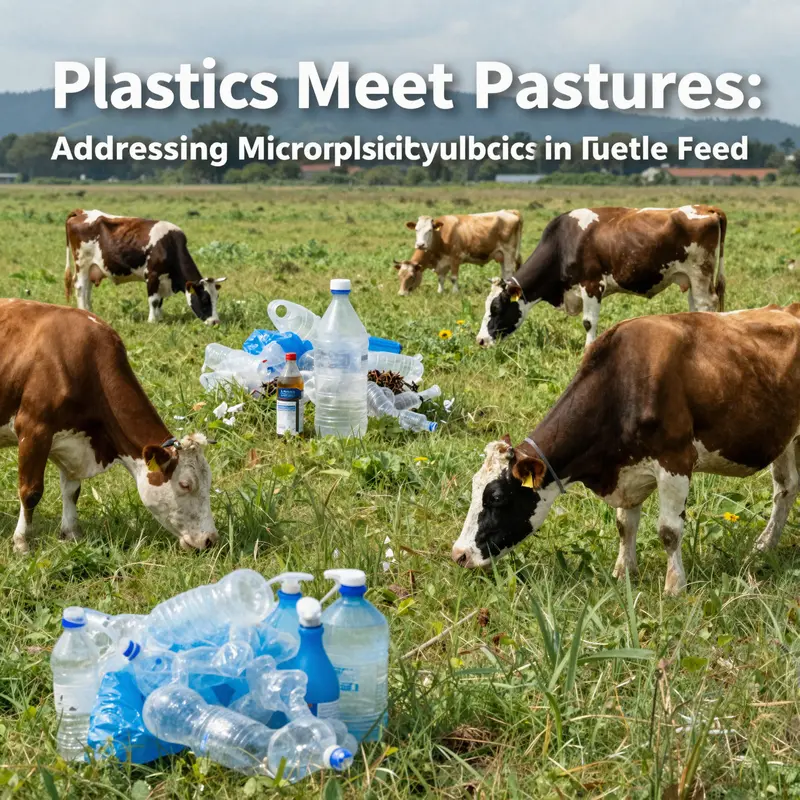
The promise of a more sustainable, circular approach to food waste hinges on transforming what might be discarded into value for livestock, and ideally, for the broader food system. Yet the path from repurposing food byproducts to feeding cattle is not a straight line. It runs through a landscape where packaging and residual plastics can ride along with nutritious leftovers, only to emerge later as microplastics in the animal’s digestive system and, by extension, in dairy and meat products. The transition from recyclables and residues to ruminant feed is therefore a chokepoint in sustainability: it offers potential gains if managed with exacting care, but it also amplifies environmental and health risks when plastics escape depackaging and contaminate the feed chain.
The core concern lies in microplastic and nanoplastic contamination. When plastics are present in food byproducts, they can shed fragments under storage, heating, or mechanical processing. In the rumen, these particles interact with digestive fluids, cellular membranes, and the complex microbial communities that drive fermentation and nutrient breakdown. Even tiny particles can traverse barrier systems and release adsorbed or embedded chemicals. These chemicals, though not always present in high concentrations, can accumulate over time in the animal’s bloodstream and, ultimately, in milk and meat. The biochemical interplay here is not simply a matter of physical irritation; it involves potential inflammatory responses, metabolic disruption, and shifts in gut microbiota that can compromise nutrient absorption and overall health. Viewed through a longer lens, the concern is not only the welfare of individual animals but the downstream consequences for animal products that reach households and food processing facilities. The presence of microplastics in feed can thus be seen as a subtle, persistent stressor that, over the lifetime of a herd, translates into measurable changes in body condition, productivity, and resilience to disease.
In practical terms, these dynamics translate into observable effects on cattle health. Livestock consuming feed contaminated with plastics may exhibit a decline in body condition scores, reduced appetite, and slower weight gain. In dairy herds, subclinical stressors can suppress milk yield and alter milk composition, with potential implications for cheese and dairy product quality. In beef operations, diminished growth rate and feed efficiency compound the cost of production and can challenge profitability under tight margin conditions. The economic thread is inseparable from the health thread; when animals are stressed by contaminants, the efficiency of feed utilization declines, and the pressure to expand or maintain production can overshadow welfare considerations. These outcomes echo beyond the farm gate, influencing regional food security by lowering output during times of rising demand and price volatility. The environmental dimension deepens this concern: reduced productivity implies more land use, more resources per unit of product, and a heavier ecological footprint per ton of meat or liter of milk. The cycle thus becomes self-reinforcing, where suboptimal practices in depackaging and sorting magnify losses and environmental impact.
The environmental implications extend beyond the farm. Plastics in feed contribute to a wider contamination narrative that touches soil, water, and biodiversity when waste streams are not managed properly. Depackaging technologies aim to strip feed of non-nutritive packaging and contaminants before inclusion in rations. Yet no system is perfect, and trace amounts of microplastics can slip through even the best depackaging lines. Once these particles enter the animal, they can be excreted in feces, ultimately entering manure management systems and potentially cropping cycles if manure is applied to fields. Over time, this creates a broader feedback loop where microplastics circulate through agricultural ecosystems. The persistence of these particles in soils and water bodies raises questions about long-term ecological health and the stability of farming systems that reuse waste streams as inputs. In a tightly coupled agri-food system, small leaks in one segment propagate through soil health, water quality, and biodiversity, affecting the resilience of rural landscapes and the ability to sustain production without escalating environmental costs.
From a governance perspective, the chapter’s thread converges on sorting, depackaging, and decontamination as critical control points. Regulatory bodies and industry standards emphasize thorough sorting to remove plastic film, PET bottles, and mixed-material packaging before feed enters the production line. The challenge is twofold: ensuring the depackaging process is robust enough to remove or fragment plastics to sizes unlikely to be ingested, and maintaining continuous monitoring to prevent accumulation of microplastics in feed inventories. The science supports a precautionary stance: even low-level, chronic exposure to plastics and associated chemicals can alter rumen function and systemic health. This perspective reframes feed safety not only as a concern for immediate animal health but as a broader public health issue, given the potential for contamination to carry into animal products destined for human consumption. The precautionary logic thus binds animal welfare, product safety, and environmental stewardship into a single governance imperative.
The intersection of waste management and food safety becomes a test bed for innovation. On one hand, technologies that enhance depackaging efficiency—such as advanced sorting, optical separation, and targeted decontamination—offer meaningful reductions in the likelihood of plastic fragments entering the feed. On the other hand, the imperfect reality of supply chains, varied waste streams, and fluctuating feed compositions means that residual microplastics will persist in some cases. The chapter therefore argues for a layered risk management approach: strong depackaging at the source, validated through regular auditing; transparent traceability from waste to feed supply; and independent monitoring of livestock health and product safety indicators. Such an approach aligns with broader trends in sustainable agriculture, where the objective is to minimize environmental harm while maintaining productivity and quality. It also requires investment in infrastructure, trained personnel, and standardized procedures that can adapt to diverse waste streams and evolving packaging technologies. The ethical dimension is also foregrounded: producers bear a responsibility to protect animal welfare and consumer health by prioritizing feed purity, even when marginal gains from low-cost, low-adulteration inputs seem attractive in the short term.
Embedded in this discussion is a reminder that the packaging life cycle matters. The internal link to broader packaging choices and waste management discussions helps illustrate how decisions at the design and consumer-use phases influence the feasibility of safely repurposing food byproducts as cattle feed. The path from waste to feed is not merely a technical challenge; it is a systems issue that requires alignment across producers, waste processors, veterinarians, policymakers, and feed formulators. A safe, sustainable path depends on a robust culture of reporting, auditing, and continuous improvement. It also demands a cautious stance toward assumptions about “all waste can be repurposed.” When plastics are present in packaging, their behavior under storage, processing, and digestion becomes a material risk. In many cases, safer alternatives—whether more selective upstream waste streams or improved packaging formats that minimize detachable fragments—may offer better long-term outcomes than attempting to salvage contaminated streams through depackaging alone. The underlying message is pragmatic: the environmental and health costs of microplastics in cattle feed are not hypothetical. They are measurable risks that require deliberate, science-based management and investment.
As the discussion moves forward, it invites readers to consider the broader implications for food security and sustainable agriculture. Reducing microplastic exposure in feed is not only about mitigating a contaminant; it is about safeguarding the integrity of the food system itself. If feed becomes a vector for plastics, the credibility of sustainable feeding practices erodes, and consumer confidence in animal products may wane. Conversely, committing to rigorous depackaging, robust contamination control, and transparent reporting can transform the practice from a potential liability into a model of responsible innovation. The environmental costs associated with plastic byproducts in cattle feed deserve this rigorous treatment because they touch soil, water, animal health, productivity, and the safety of milk and meat. The challenge is not simply to prevent harm but to build a resilient framework that anticipates new packaging technologies and new waste streams while preserving animal welfare and human health.
For researchers and practitioners seeking practical avenues, the chapter points toward a blended approach that integrates monitoring, policy alignment, and technical improvements. The science base continues to grow, offering empirical insights into how microplastics behave in ruminant systems and how feed processing can limit exposure. This is a field where incremental improvements compound over time, reinforcing the idea that sustainable feeding transcends mere waste reduction. It becomes a disciplined commitment to safeguarding the health of animals and people, protecting environmental resources, and ensuring that agricultural systems can endure under changing economic and climatic conditions. In this sense, the environmental implications of using plastic food byproducts in cattle feed become a mirror for the broader ambitions of sustainable livestock production: a careful balance of innovation, precaution, and accountability that keeps the food system both productive and trustworthy. As policies and technologies converge, stakeholders can take practical steps now—strengthening depackaging protocols, expanding contamination surveillance, and pursuing design choices that minimize plastic release in future waste streams. This is not a single intervention but a continual refinement of processes that will determine how we nourish cattle while preserving the ecosystems on which farming depends.
To anchor these considerations in the wider literature, one can consult analyses focused on microplastics in ruminant feeds and their implications for food safety. For a more technical synthesis of contamination routes, exposure pathways, and mitigation strategies, see the external resource that frames these concerns with empirical rigor. In the meantime, practitioners can begin by incorporating robust depackaging and sorting checks into standard operating procedures, validating them with independent audits, and engaging stakeholders across the supply chain to ensure transparency and continuous improvement. The approach outlined here foregrounds precaution and resilience, recognizing that environmental stewardship and animal health are inseparable when plastics drift into the feed cycle.
Internal reference note: for a broader perspective on waste packaging and sustainable packaging choices, see the related discussion in eco-friendly packaging options. eco-friendly single-wall paper cup
External resource: for a detailed empirical treatment of microplastics contamination in ruminant feeds, see the ScienceDirect article referenced in the detailed findings: https://www.sciencedirect.com/science/article/pii/S030147972500048X
Final thoughts
Addressing the challenges posed by plastic food byproducts in cattle feed is essential for ensuring livestock health and food safety. As stakeholders from various sectors, including restaurants, catering services, and beverage chains, navigate this landscape, their role in advocating for better practices is crucial. By prioritizing proper waste management and adhering to regulatory standards, the food industry can mitigate the risks associated with microplastics, safeguarding both animal and human health while contributing to a healthier planet. Ultimately, informed actions today will pave the way for a sustainable future in food production.