
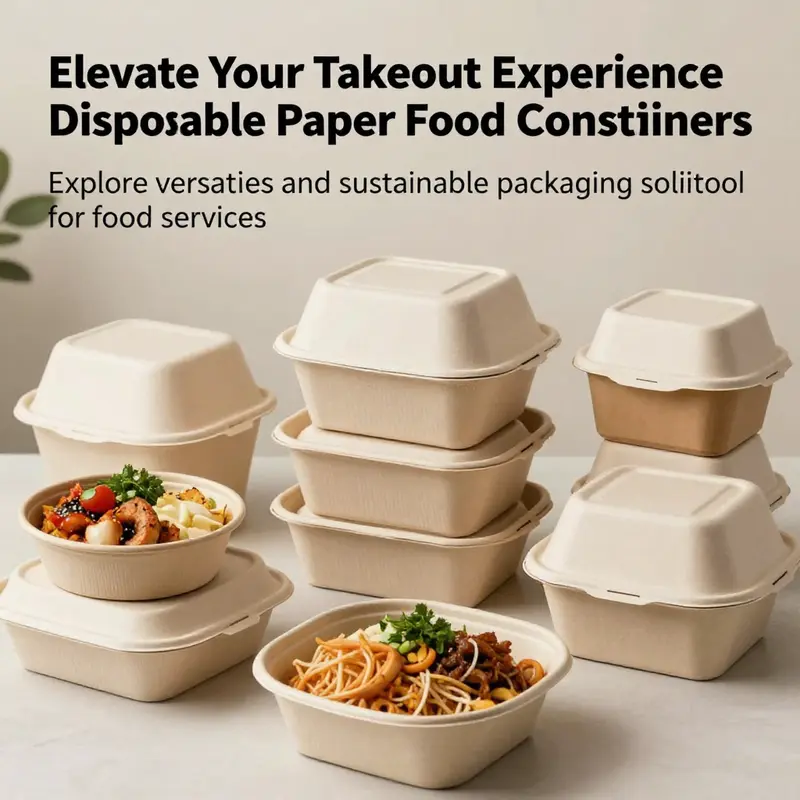
The rise of disposable paper food containers has reshaped the food service industry, offering an ideal solution for businesses from bubble tea shops to catering services. With their eco-friendly attributes and remarkable versatility, these containers not only meet the demands of modern consumers but also cater to the growing emphasis on sustainability. This exploration delves into various types of disposable paper containers, highlighting the kraft paper options beloved for their versatility, the biodegradable sugarcane bagasse alternatives, innovative paper pulp solutions, and current market trends shaping these essential food service items. Together, these insights provide a comprehensive understanding of how disposable paper food containers can enhance customer satisfaction while supporting eco-conscious operations.
Kraft Paper, Infinite Uses: The Versatility and Sustainability of Disposable Food Containers
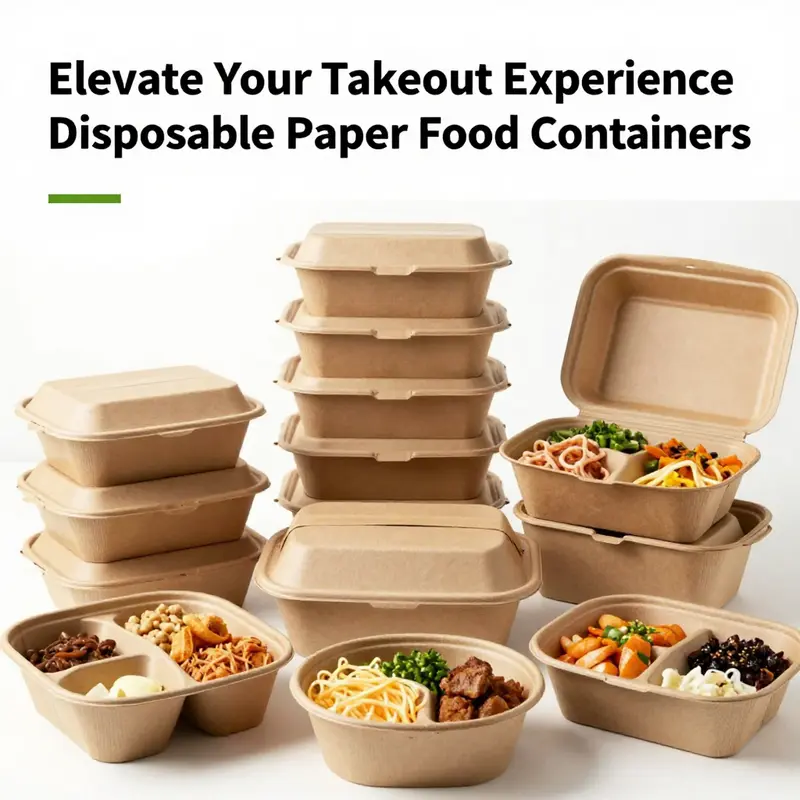
A quiet revolution has been unfolding in the realm of takeout and casual dining, and it centers on a material as old as paper itself: kraft. Kraft paper containers have emerged as a practical, adaptable solution for feeding people on the go, yet they carry with them much more than convenience. They symbolize a broader shift in how we think about disposability, value, and the environmental footprint of everyday choices. The kraft option is not merely a substitute for plastic or foam; it is a platform for resilience, customization, and responsible packaging that can cater to hot soups and cold salads with equal poise. When we unpack the virtue of kraft paper containers, we discover a blend of renewable origin, design flexibility, and user-friendly performance that aligns with the demands of modern food service and the expectations of eco-conscious consumers. In its simplest form, kraft paper is a sturdy, biodegradable canvas. It is typically derived from spruce or pine fibers processed in a way that preserves a natural, earthy tone. That color—an honest, unbleached brown—serves a practical purpose beyond aesthetics. It provides a ready-made branding backdrop that many operators leverage through printing or labeling, turning a functional box into a recognizable touchpoint of a restaurant’s identity without the need for additional coatings or plastics. Yet the appeal of kraft goes deeper than looks. The material’s renewability means it can be sourced from responsibly managed forests, and when paired with appropriate coatings and adhesives, it can achieve barrier properties that keep moisture and oils from compromising the container’s integrity. This is where the conversation about sustainability becomes nuanced. Kraft paper containers are often presented as a green alternative to single-use plastics because they are designed to be recyclable through standard municipal streams and, in many cases, compostable in industrial facilities. Biodegradability, however, is not a blanket attribute; it hinges on the nature of the coatings, inks, and closures used in production. The environmental benefits multiply when manufacturers pursue closed-loop thinking—that is, designing boxes that can be recycled or accepted by local composting programs, and selecting inks and laminates that do not hinder end-of-life processing. Consumer education plays a critical role here. People want to know that their noodles, their curry, or their layered salads won’t leave a greasy footprint in landfills; they also want to know that the packaging is sturdy enough to withstand a brief journey from counter to car or from buffet line to kitchen station. Kraft paper containers with dividers, for instance, can be configured in multiple compartments—ranging from a single pocket to a five-compartment arrangement. This versatility is not just about portion control; it’s about preserving the integrity of different foods during transport. Sauces stay where they should, dry items remain separate from wetter components, and the overall experience remains appetizing rather than a muddle of flavors. The design possibilities extend beyond compartments. A leak-resistant profile can be engineered with careful choices about the sealing system, the geometry of the container, and the performance of the lid. Lightweight is another advantage. Kraft paper boxes and bowls retain a sense of ease for staff and diners alike: they are comfortable to hold, easy to stack, and efficient to restock. They also adapt to a broad spectrum of cuisine styles. In cafes, kraft containers cradle pastries and coffee accompaniments with a clean, crisp presentation; in fast-casual settings, they handle hot soups, stews, or ramen broths without collapsing under heat. In catering and buffet service, their modular shapes and sizes simplify logistics, enabling organizers to curate varied assortments without overburdening transport and setup crews. The flexible nature of kraft packaging also invites branding opportunities that resonate in a crowded marketplace. Because the natural hue provides a neutral yet visually compelling surface, operators can customize with logos, color accents, or messaging that aligns with their brand palette. The result is a packaging solution that is not only practical but also expressive. From a production standpoint, the journey from raw kraft fiber to finished container is supported by automated equipment designed to maintain uniform quality across high-volume outputs. Modern carton erecting machines and related inline systems ensure consistent folding, sealing, and stacking. The efficiency gains translate into lower unit costs, faster turnaround times, and more predictable lead times for operators who rely on daily deliveries to keep kitchens stocked. These machines are particularly valuable when demand spikes during lunch rushes or special events, helping to maintain reliability without sacrificing the environmental intent of the packaging. For manufacturers and suppliers, the opportunity to offer customization—whether through OEM or ODM arrangements—turns kraft containers into a business differentiator. A restaurant or caterer can specify exact dimensions, dividers, and lid configurations, and producers can incorporate branding elements such as subtle embossed patterns or a restrained color scheme that communicates a commitment to sustainability. A thoughtfully designed kraft container can function as a portable billboard for a brand, while remaining fully compatible with the practical demands of transport and service. The evolving landscape of disposable paper containers includes complementary forms that broaden the appeal and utility of kraft-based solutions. Sugarcane bagasse bowls represent a complementary trajectory within the same sustainability frame. These bowls are marketed as 100% compostable and resilient against oil and water up to substantial temperatures, offering an appealing alternative for oilier or heavier menu items. They are microwave-safe and freezer-safe, expanding the possibilities for meal-prep services and quick-service outlets seeking a wholly compostable lineup. The sugarcane material, derived from a renewable agricultural byproduct, emphasizes the broader shift toward materials that leverage agricultural residues rather than virgin fossil-based inputs. Similarly, paper pulp tableware and recycled paper containers demonstrate a growing interest in non-toxic, sanitary, and recyclable options that fit within a circular economy framework. The market is increasingly welcoming disposable paper containers with handles that enhance user experience during transport, particularly for noodle and pasta packaging in certain culinary traditions. When shoppers turn to online marketplaces to compare options, they encounter a spectrum of materials and designs. Plastic deli containers with airtight lids remain popular for their resealability and moisture barriers; however, they are not biodegradable. The balance, for many operators, rests on selecting packaging that offers both performance and a credible path to end-of-life processing. In this context, kraft paper containers occupy a compelling middle ground: they deliver dependable performance, align with sustainability goals, and offer branding potential that plastic alone cannot match. The lifecycle considerations extend into the supply chain itself. Automated production lines, including carton erecting and related converting processes, enable consistent, scalable output that supports large-scale distribution networks. Operators can source standardized sizes or request custom dimensions that suit specialized menus or service formats. The ability to customize is important not only for branding but also for operational practicality. For instance, a container with a built-in divider may reduce the need for separate sauces or side dishes, simplifying packaging procedures and enhancing the consumer’s experience once they reach the table or return to work for lunch. The practical implications of material choice touch everyday realities: the need for reliable heat resistance, the ability to control moisture, and the capacity to keep items from shifting during transit. Kraft containers meet these criteria through careful engineering and compatible lid systems, which can incorporate venting features to manage steam or condensation. In handling the shift from plastic to paper, many operators look for reassurance that the transition won’t compromise safety or compliance. The discussion often turns to regulatory and environmental dimensions. Kraft paper containers are typically designed to be recyclable, and in some cases compostable, while also offering non-toxic printings and adhesives. The nuances of recycling streams and composting infrastructure mean that the environmental benefits are maximized when brands work with suppliers who understand regional end-of-life options. In addition to environmental considerations, there is a practical and sensory dimension to kraft packaging. The natural color and texture of kraft can convey a story of simplicity, honesty, and earth-friendliness that resonates with today’s consumers who want products and experiences aligned with their values. This aesthetic, coupled with functional design, creates a cohesive packaging solution that supports menu storytelling—from the choice of ingredients to the manner in which food is presented and carried home. The potential for cross-disciplinary collaboration between designers, sustainability officers, and kitchen teams is significant. A design brief might specify not only the dimensions and barrier requirements but also the way a container communicates a brand’s environmental commitments. Colors, finishes, and even the manner in which the paper is sourced can reflect a company’s corporate social responsibility goals. The promise of kraft-based packaging lies not in a single innovation but in a continuum of improvements: more efficient coatings that protect against moisture without impeding recyclability, smarter lid systems that minimize leakage, and more durable yet lightweight structures that reduce overall material use. There is also room for shape innovation, as illustrated by the growing interest in specialized geometries such as octagonal or rectangular configurations that optimize space in delivery bags and reduce empty volume during transport. A practical example of this versatility can be found in packaging options designed for restaurant and takeout use, where a refined form factor supports both conveyance and presentation. For those exploring the intersection of function and branding, the octagonal kraft paper packaging concept embodies the balance between aesthetics and utility. It demonstrates how the shape can enhance grip, distribute weight more evenly, and accommodate side sauces or toppings within a comfortable, single container. The concept can be realized through a design approach that integrates durability with a clean, modern silhouette, making it a compelling option for operators seeking distinctive yet practical packaging. To see a concrete representation of this principle, consider an example such as an octagonal kraft paper packaging option that embodies these ideas in a single, cohesive form. octagonal kraft paper packaging. While the focus here remains on kraft’s central role, the broader ecosystem—include sugarcane-based alternatives, recycled paperboard, and pulp-based tableware—offers complementary pathways for brands to diversify their sustainability profiles without losing core performance characteristics. This diversification is not only about reducing plastic dependency; it is about strengthening the resilience of food-service operations by widening material choices in response to supply chain realities and consumer expectations. Research and practical testing continue to underpin these decisions. Operators are encouraged to experiment with different combinations of materials, coatings, and lid technologies to identify what works best for their specific use cases, whether that involves hot dishes, cold meals, or mixed offerings. With thoughtful design and careful material selection, kraft paper containers can serve as a durable, attractive, and responsible backbone for a broad array of meals. They are capable of sustaining heat and flavor while supporting branding, ensuring that food arrives in a condition that respects both diners and the environment. For a deeper dive into the environmental considerations of disposable food containers, see the Understanding the Impact resource from the EPA: https://www.epa.gov/sustainable-management-plastics/understanding-impact-disposable-food-containers
From Fiber to Footprint: Sugarcane Bagasse and the Redefinition of Disposable Paper Containers
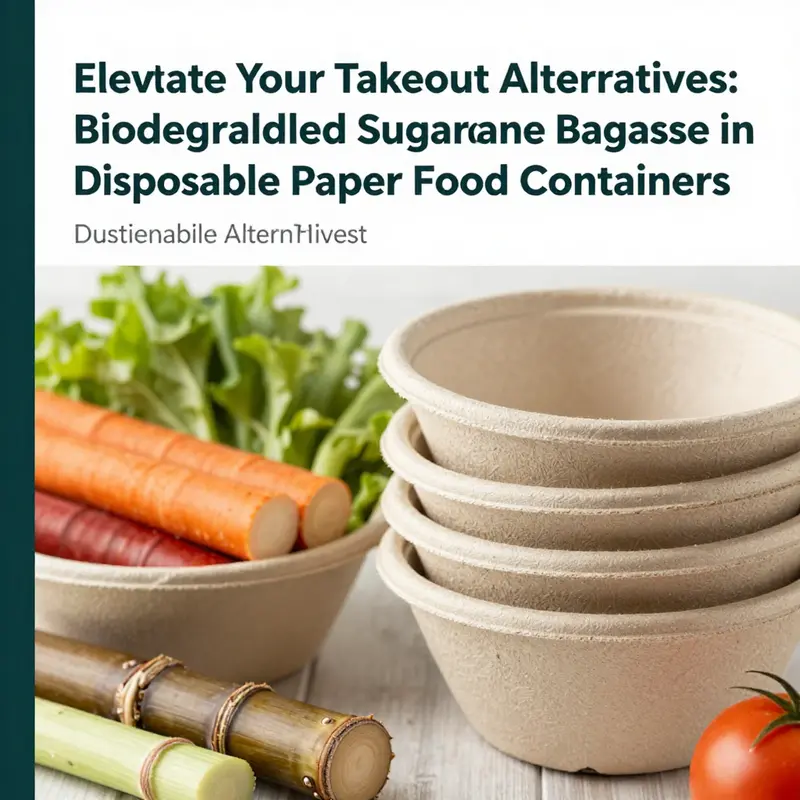
The shift from conventional plastics and polystyrene to paper-based solutions has always hinged on a simple question: can packaging that feels ordinary enhance sustainability without compromising performance? Biodegradable sugarcane bagasse answers that question with a quiet confidence. Bagasse is the fibrous byproduct left after extracting juice from sugarcane. It is renewable, abundant, and often treated not as waste but as a resource ready to be transformed into high performance, compostable tableware. The material’s appeal lies not only in its origin but in what it can do once shaped into containers that cradle hot noodles, steaming bowls, or crisp salads. In markets where regulations tighten and consumer expectations tilt toward responsibility, bagasse-based disposables offer a compelling bridge between convenience and stewardship. Their rise signals a broader reimagining of takeout culture—one that seeks to preserve practicality while reducing the long tail of waste associated with single-use packaging.
What makes bagasse distinct in the crowded field of disposable containers is a combination of natural properties and compatible processing. The pulp that remains after sugarcane juice is extracted carries inherent moisture-wicking and oil resistance traits, which translate into plates, bowls, clamshells, and multi-compartment meal containers that can perform in real-world food service conditions. When engineered correctly, these products resist leaks from sauces, gravies, or moisture-rich fillings, and they do so without sacrificing the lightweight convenience customers expect from disposable ware. Many bagasse containers are rated to withstand temperatures that food service encounters, with heat resistance enabling use for items served hot while remaining safe in typical microwaving scenarios. This combination of heat tolerance, leak resistance, and a compostable end-of-life profile helps bagasse-based packaging align with industrial composting streams, reducing landfill burden and supporting circular economy goals.
The product range for bagasse-based disposable containers is surprisingly diverse, reflecting the needs of modern food service—from bustling catering operations to quick-serve counters. Clamshell boxes remain a staple, offering sturdy lids and secure seals that keep contents intact during transit. Lunch boxes and multi-compartment meal containers demonstrate how form can follow function, separating components like rice, sauces, and vegetables into clean, compartmentalized spaces. Salad bowls and sushi trays address the demands of portability and presentation, ensuring that delicate items stay intact without becoming soggy. What unites these designs is an emphasis on complete, leak-proof performance while maintaining a natural aesthetic that signals sustainability to the consumer. In many markets, the color palette leans toward natural white or light brown, underscoring the material’s origin and the ecological message it carries.
A core advantage of bagasse packaging is its suitability for both hot and cold items. A common complaint about some paper-based containers is that they buckle under heat or become soggy under heavy sauces. Bagasse has been engineered to resist such issues, a factor that broadens its applicability across diverse menus—from noodle-based meals that generate steam to salads dressed with flavorful oils. This resilience makes bagasse containers a practical choice for takeout service, buffet settings, and even some catering scenarios where reliability during transport matters as much as the initial visual appeal. For operators, this translates into fewer product failures and a more predictable user experience, two elements that support brand consistency even as the menu changes.
From the perspective of sustainability claims, bagasse-based disposables offer tangible advantages, particularly in relation to oil and water resistance and end-of-life pathways. The material’s compostability is typically framed within industrial composting environments, where specialized facilities can maintain conditions that break down bagasse into organic material within a defined timeframe. While this does not always equate to home composting, the distinction is increasingly understood within consumer education efforts and policy frameworks that encourage proper disposal. In parallel, bagasse products are generally non-toxic and non-psychoactive in terms of chemical migration, aligning with safety standards applicable to food-contact packaging. Certifications that demonstrate compliance with safety and quality standards—such as FDA or equivalent regulatory marks in various regions—help reassure both institutions and diners that the packaging is designed to meet stringent expectations for contact with hot or oily foods.
Manufacturing ecosystems for bagasse packaging have evolved to meet growing demand with a balance of scale and adaptability. Producers often run dedicated lines capable of high-volume output, while also offering customization options that extend beyond the raw material to include sizes, shapes, and surface finishes. This flexibility enables brands to tailor packaging to specific meals and brand aesthetics without sacrificing performance. What makes this ecosystem robust is not just the ability to produce at scale but the capacity to integrate branding through printing or embossing, aligning the packaging with a company’s visual identity at a time when packaging is increasingly a visible part of the brand promise. In practice, this means operators can maintain consistent messaging around sustainability while still delivering the practical features customers rely on, such as clear labeling, portion guidance, and branding that communicates eco-conscious choices at the point of sale.
Markets across the globe have shown a growing appetite for bagasse-based containers, driven by environmental regulations, corporate sustainability commitments, and consumer preference for greener options. Supply chains have adapted to deliver reliable streams of bagasse products to diverse territories, including regions with well-developed waste management infrastructure and others that are building capacity for industrial composting. The ability to export and distribute bagasse packaging at scale is connected to a carefully choreographed mix of raw material sourcing, manufacturing capacity, and logistics networks that can move thousands of tons or millions of pieces per week when needed. In such a system, the material’s feedstock—the sugarcane byproduct—has a domestic and agricultural cycle that helps reduce waste streams. This byproduct, rather than being discarded, becomes a resource that supports value creation within agricultural sectors and packaging manufacturers alike. The result is a packaging story that is not merely about substituting one material for another, but about reimagining how the supply chain can generate value while lowering environmental footprints.
For food-service operators, the practical implications of adopting bagasse packaging extend beyond the material’s environmental profile. The packaging often supports a wide range of configurations, including the possibility of multi-compartment designs that help maintain meal integrity and reduce cross-contamination. This is particularly relevant for takeout and delivery, where transport stability and user-friendly handling are critical. The inclusion of multiple compartments can help organize meals that combine hot and cold components, sauces, and sides, all while minimizing the risk of leaks and spills. The functional advantages—paired with the material’s oil and water resistance—contribute to a reliable user experience that can translate into repeat orders and improved customer satisfaction.
Design flexibility plays a central role in how bagasse packaging is adopted across different use cases. Manufacturers offer a spectrum of sizes and shapes to accommodate varied portions, from compact bowls to larger lunch boxes. The natural color of bagasse, along with options for minimal or subtle branding, can support a retailer’s sustainability narrative without compromising readability or legibility of product information. Printing and embossing capabilities allow companies to deploy logos, meal information, or decorative flourishes while preserving the container’s structural integrity. For operators who want more than a simple vessel, bagasse packaging can become a component of the dining experience itself, shaping perceptions of quality, care, and environmental responsibility.
The economic side of bagasse packaging is nuanced, with price points influenced by scale, specification, and regional market conditions. In bulk scenarios, suppliers can offer cost advantages that reflect the efficiency of modern manufacturing lines and the availability of raw material. The economies of scale make it possible to price bagasse products competitively in markets where plastic and foam alternatives have dominated for years. At the same time, firms pursuing bagasse packaging must balance cost with performance, ensuring that the chosen design delivers leak resistance, heat tolerance, and a satisfactory consumer experience. This balancing act often involves iterative testing and supplier collaboration to refine the product to a specific set of operating conditions, whether in a high-volume fast-food kitchen or a boutique takeout counter that emphasizes sustainability in every dimension.
The regulatory and standards landscape also influences how bagasse packaging is adopted. Besides safety certifications, environmental claims may be supported by third-party verification of compostability or lifecycle assessments that quantify the container’s environmental footprint relative to conventional disposables. These assessments help translate a packing choice into a broader narrative about resource use, waste diversion, and greenhouse gas impacts. For food-service operators, being able to articulate a credible environmental story can differentiate a brand in crowded markets, while also aligning with stakeholder expectations—from investors to customers to local communities. In this context, the bagasse option becomes more than a material choice; it is a strategy for sustainable growth that integrates procurement, operations, and communications into a cohesive stance on packaging responsibility.
To underscore the design and procurement potential, consider the ecosystem of customization that accompanies bagasse packaging. Size, color, and finish can be tailored to match product lines, and even the packaging’s interior can be engineered to enhance heat retention or reduce condensation. The ability to offer OEM and ODM services means brands can collaborate with manufacturers to translate a concept into a finished product ready for market launch. This level of collaboration is particularly valuable for food programs that want to preserve brand recognition while signaling environmental stewardship. It also enables a smoother transition for operations that must adjust portion sizes or menu items seasonally, giving them a packaging partner capable of adapting in step with the business.
In the broader narrative of disposable paper containers, bagasse represents a practical, scalable route to greener packaging that does not force a compromise on performance. It couples the comfort of familiar disposable ware with a sophisticated approach to end-of-life management and resource use. The growing availability of bagasse-based options means restaurants, caterers, and retailers can align their packaging choices with evolving consumer expectations and regulatory climates without sacrificing reliability during peak service periods. As the industry continues to experiment with new shapes, finishes, and functional features, bagasse packaging stands out as a material that respects both the dining experience and the planet.
For readers curious about how this material evolves from raw byproduct to market-ready container, a closer look at practical design examples can be instructive. An accessible reference point is a category of packaging that demonstrates how the form and function of kraft-based, leak-resistant, and heat-tolerant options can be harmonized in a single takeout solution. The evolution is not only about material substitution but about integrating sustainability into the daily rituals of food service—how meals travel, how sauces travel with them, and how end users perceive the choices they make with each purchase. The more operators understand the underlying advantages of bagasse, the more confidently they can plan menus, renovate packaging lines, and communicate the environmental story to customers who are increasingly mindful of where their meals come from and where they go after consumption. In this sense, the bagasse story is not a niche trend but a pathway toward a more intentional future for disposable paper containers.
To illustrate how packaging decisions intersect with branding and user experience, consider the design opportunities that emerge when packaging is treated as an extension of the meal itself. Eco-conscious consumers respond not only to the material but to the overall packaging narrative—how the container reflects care, how it performs during transport, and how easily it can be disposed of responsibly after use. When brands optimize for leak resistance and heat retention, they reduce the likelihood of messy spills and waste, which in turn lowers the need for additional protective packaging. The result is a more streamlined takeout experience that still preserves the performance of single-use items. The intersection of design, sustainability, and practical performance is where bagasse-based containers gain their strongest appeal, turning a simple vessel into a meaningful component of a brand’s environmental commitment.
For readers seeking to explore suppliers or deepen their sourcing knowledge, a global market context is helpful. The landscape includes producers capable of large-scale output with flexible customization options, alongside a network of logistics providers that can move material and finished goods around the world. The scalability and export readiness of bagasse packaging support a diverse set of market needs, from U.S. and European markets with stringent packaging requirements to rapidly expanding regions in Asia and Africa adopting eco-friendly packaging standards. In practice, this means potential buyers can source bagasse containers that meet international safety requirements, while also negotiating terms that support consistent supply and reliable lead times. The story is not only about materials and machines; it is about building partnerships that sustain innovation and ensure that greener packaging becomes a practical, everyday choice for food service.
The narrative around sustainable alternatives in disposable paper containers, therefore, extends beyond the material itself. It is about how design, manufacturing, certification, and logistics converge to deliver a credible, scalable, and appealing solution for takeout culture. Sugarcane bagasse exemplifies this convergence. As more operators adopt this material, the packaging ecosystem will continue to evolve—driven by consumer demand, regulatory momentum, and a shared commitment to reducing plastic waste without compromising the dining experience. The chapter on sustainable alternatives would be incomplete without acknowledging that this evolution is ongoing. New compositions, new finishes, and new processing techniques will refine bagasse packaging further, extending its reach and improving its performance. Yet the core message remains clear: bagasse-based disposable containers offer a tangible, scalable path toward a packaging future that respects both people and the planet.
For readers who want a tangible entry point into the broader ecosystem, one practical option is to explore existing references in related packaging communities, where examples of eco-friendly, paper-based solutions illustrate the potential of bagasse in everyday service. To investigate further the potential scale, customization, and market reach of bagasse packaging, you can review supplier profiles and product ranges that discuss options such as sizes, colors, and printing capabilities, all designed to meet diverse consumer expectations while supporting environmental stewardship. This exploration helps bridge the gap between concept and implementation, guiding decisions that align with sustainability goals and operational realities. As the conversation about disposable packaging continues to mature, bagasse will likely remain a central figure in how industries reframe convenience around responsibility, ensuring that the convenience of a takeout container does not come at the expense of the environment.
External reference: https://www.made-in-china.com/products?keyword=sugarcane+bagasse+food+container
Pulp Progress and Planet-Friendly Packaging: How Recycled Paper and Paper Pulp Are Redefining Disposable Containers
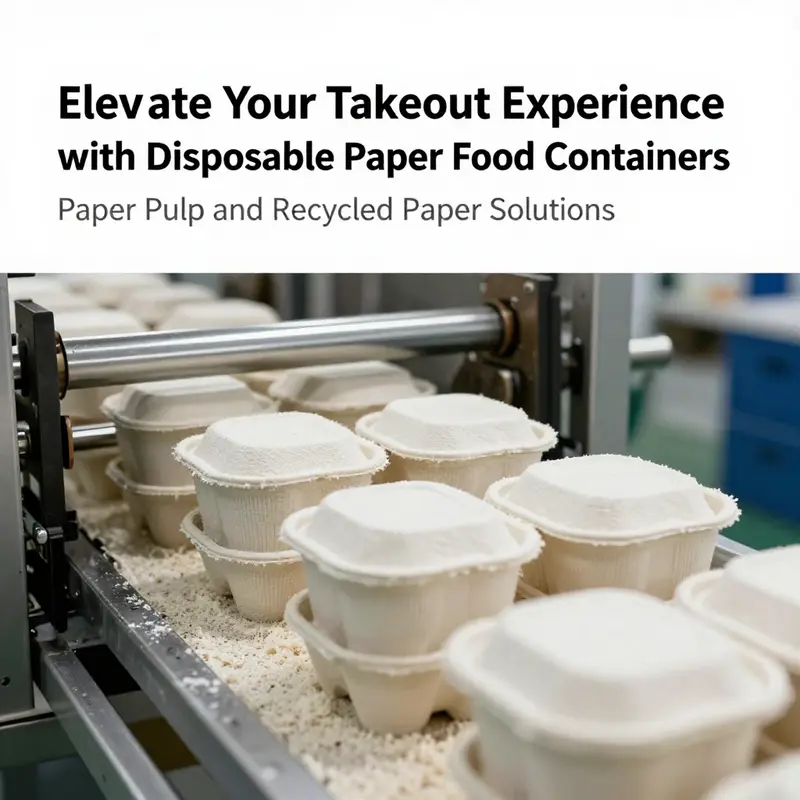
The shift toward paper-based disposable containers marks a convergence of practicality, performance, and responsibility. As fast-casual dining, meal kits, and street-food service increasingly rely on single-use packaging, the pressure to reduce plastic waste has grown from niche advocacy to mainstream expectation. In this context, innovations centered on paper pulp and recycled fiber are not merely incremental improvements; they represent a redesign of the entire packaging lifecycle. The modern paper container blends renewable resources with engineered durability, delivering containers that can cradle hot soups, stews, and sauces as reliably as cold desserts and salads, all while offering the potential for compostability and recyclability that aligns with circular economy goals. The narrative here is less about a single breakthrough and more about an ecosystem of material choices, coatings, and production methods that, when combined, redefine what a disposable container can be and what it can do for the planet and the business that uses it.
At the heart of this evolution is material composition. Containers fashioned from virgin or post-consumer recycled paperboard and molded fiber stand as evidence that renewables can shoulder the demands of modern food service. Molded fiber, born from paper pulp, enables a versatile range of shapes and sizes. Its fibrous network provides strength without relying on synthetic polymers, which translates into lighter-weight packages that still hold their form under the pressure of hot meals and dense contents. The choice between virgin pulp and recycled pulp is not a mere preference but a strategic decision tied to supply chains, cost, and environmental accounting. Virgin pulp can offer uniform brightness and stiffness, while post-consumer fibers prioritize the closing of material loops and the reduction of virgin resource consumption. In practice, many manufacturers blend fibers to optimize performance, balancing barrier properties with end-of-life outcomes. The result is a family of containers that can be tailored for everything from single-serve bowls to multi-compartment vessels designed to separate sauces from solids without cross-contamination.
Coatings have emerged as another pillar of progress. Historically, many paper containers relied on wax or polyethylene-based coatings that delivered moisture and grease resistance but created barriers to recycling. Today, the trend is toward plant-based biopolymers, with polylactic acid (PLA) and similar bio-based coatings taking a more prominent role. These coatings improve moisture and grease resistance while preserving the recyclability or compostability of the base fiber. The environmental calculus becomes more favorable when these coatings are designed to be removable or compatible with industrial composting streams. Still, the broader sustainability picture depends on local facilities: industrial composting infrastructure matters, and consumer education on end-of-life choices remains essential. In addition to coating innovations, some researchers are exploring smart barrier systems that combine micro-structured fibers, surface energy management, and thin durable layers to keep contents separate and fresh without adding weight or compromising recyclability. The chemistry is evolving, but the guiding principle is clear: protect the integrity of hot and oily foods without locking the packaging into a landfill-bound fate.
Production advances have kept pace with material and coating innovations. In regions renowned for paperboard and molded-fiber packaging—areas with well-developed supplier ecosystems and skilled workforces—manufacturers are adopting automated lines that couple precision forming with rapid, scalable finishing. The picture is not only about speed; it is about consistency, quality, and customization. Automated carton erection and related lines enable standardized dimensions across tens of thousands of units, while allowing bespoke features such as logo printing, color accents, and product-specific dividers. The integração of closed-loop recycling considerations into production lines is a notable trend. Water usage, energy efficiency, and waste minimization become design criteria rather than afterthoughts. Closed-loop systems can collect fiber scrap, reclaim coatings, and reintroduce material back into the same production cycle, reducing the environmental footprint while sustaining supply chain resilience. In a global context, regions like Quanzhou in Fujian Province—an acknowledged hub for paperboard and molded-fiber packaging—illustrate how geographic specialization accelerates both mass production and customization. Here, proximity to raw materials, coating suppliers, printing specialists, and converting equipment supports rapid iteration of new designs that restaurants and food services actually adopt.
From a market perspective, consumer demand for eco-conscious packaging is no longer a niche concern; it is a mainstream criterion that shapes procurement decisions and brand perception. Businesses seeking to reduce real-world emissions and landfill waste find in paper pulp and recycled-paper options a credible path forward. The compostability narrative, when coupled with credible certifications and transparent labeling, helps customers feel confident about disposal, even as they rely on a system in which industrial composting facilities play a crucial role. It is worth noting that compostability is not a universal guarantee; it hinges on the availability of appropriate facilities and clear guidance for end users. Likewise, recyclability hinges on municipal streams capable of handling paperboard with coatings and additives. The conversation thus moves beyond the question of “Is it possible?” to “How do we implement a system that is practical, scalable, and transparent for consumers and waste managers alike?” In this sense, these containers become not just packaging but a communication tool—signaling a company’s commitment to sustainable practices while educating customers about correct disposal and material recovery.
Material science continues to push the envelope. Researchers and manufacturers are exploring the microstructure of recycled fibers to improve durability and heat tolerance without sacrificing biodegradability or recyclability. Enhanced barrier properties emerge from multi-layered designs that combine cellulose fibers with targeted, plant-based coatings. Tailored heat resistance expands the application range—from piping hot soups to microwavable snacks—without requiring performance-compromising substitutes. Each incremental advance—be it in fiber recycling efficiency, coating adhesion, or barrier performance—builds toward a class of containers capable of meeting rigorous commercial demands while staying faithful to environmental commitments. The result is a product that can withstand the rigors of takeout and delivery, survive the journey from kitchen to customer, and still be treated in a responsible end-of-life system.
The consumer experience is another dimension that has benefited from these innovations. Paper pulp and recycled-paper containers often feature improved rigidity, better leak resistance, and more comfortable handling than earlier iterations. Dividers, lids, and integrated handles are not mere conveniences; they are design choices that reduce spillage, preserve food integrity, and facilitate transport for customers on the move. The industry’s ongoing experimentation with form factors—from round to rectangular, from nesting-friendly to multi-compartment layouts—reflects a broader goal: to deliver simplicity and reliability in a product that must work in a variety of real-world scenarios. In this context, even distinctive configurations such as an octagonal kraft paper packaging design illuminate how form can harmonize with function. The result is a packaging ecosystem where a single container can perform multiple roles: a hold for hot liquids, a shield against grease, and a portable vessel for a cohesive meal. For readers who want to see a concrete example of such design versatility, a notable option is the disposable octagonal box, which demonstrates how packaging design can balance strength with aesthetic appeal while remaining compatible with sustainable fiber bases. See the discussion here: disposable-octagonal-box-restaurant-food-kraft-paper-packaging.
The logistical and regulatory landscape also matters. Governments around the world are tightening restrictions on single-use plastics and encouraging alternatives that fit within extended producer responsibility frameworks. Paper-based solutions align well with policy shifts that reward compostable or recyclable packaging and that require clear labeling for end-of-life pathways. In this environment, investors and operators alike weigh not only material performance but the availability of recycling and composting infrastructure, supply reliability, and the capacity to scale production without eroding margins. The economic reality remains nuanced: while recycled fiber and fiber-based composites can be more expensive upfront, the total cost of ownership may be lowered through waste diversion incentives, reduced plastic usage, and improved buyer goodwill. As such, the strategic appeal of paper pulp and recycled-paper containers grows when producers can demonstrate a transparent value proposition that encompasses environmental impact, performance, and lifecycle costs.
The design and manufacturing narratives are increasingly intertwined with branding and customization. Modern paper containers can be printed with eco-friendly inks, decorative patterns, and branding elements without compromising recyclability. Automation enables consistent color and print quality on high-volume runs, while still allowing a business to lean into limited-edition packaging for special events or seasonal menus. The ability to customize shapes, sizes, dividers, and coatings means that foodservice operators can tailor packaging to menu formats, portion sizes, and service models—drive-throughs, delivery, and dine-in takeout—without swapping to an entirely different packaging family. In this sense, innovations in paper pulp and recycled-fiber packaging do more than reduce environmental impact; they enable a more agile, responsive, and customer-centered approach to packaging strategy. The result is a powerful alignment between sustainability goals, operational efficiency, and brand storytelling, a synergy that helps restaurants and caterers stand out in a crowded, eco-conscious market.
For readers seeking a practical window into the technical specifics underpinning these advancements, Benjamin Ross’s comprehensive guide offers a detailed map of paper container specifications, performance, and common uses. It provides depth on fiber content, coatings, barrier properties, and end-of-life considerations that complement the narrative of this chapter. All About Food Paper Containers: Specifications, Performance, and Common Uses can serve as a technical companion as businesses evaluate supplier options, test new designs, and plan for scale. External resource: https://www.benjaminross.com/guides/food-paper-containers-specifications-performance-common-uses
As this chapter closes, the trajectory is clear. Disposable paper containers rooted in paper pulp and recycled-fiber sources are evolving from simple alternatives to plastics into robust, capable, and responsible packaging platforms. They embrace the circular economy through improved recyclability and compostability, supported by coatings that leave less trace of fossil-based polymers in the waste stream. They leverage automated production to deliver consistent quality at volume, while embracing design flexibility that helps brands connect with customers across diverse service models. The path forward will continue to hinge on the interplay between material science advances, system-level waste management capabilities, and consumer understanding of disposal options. In the end, the success of these innovations rests not only on the performance of the container in the kitchen or on the counter, but on a broader stewardship of materials—from the forests and mills that supply the pulp to the facilities that accept the fibers back into new life. Each breakthrough in fiber optimization, each breakthrough in plant-based coatings, and each progression in closed-loop production brings that stewardship closer to reality, turning disposable packaging into a trusted, responsible component of today’s foodservice ecosystem.
Greener Takeout: Market Currents and Innovations Driving Disposable Paper Food Containers in Global Food Service
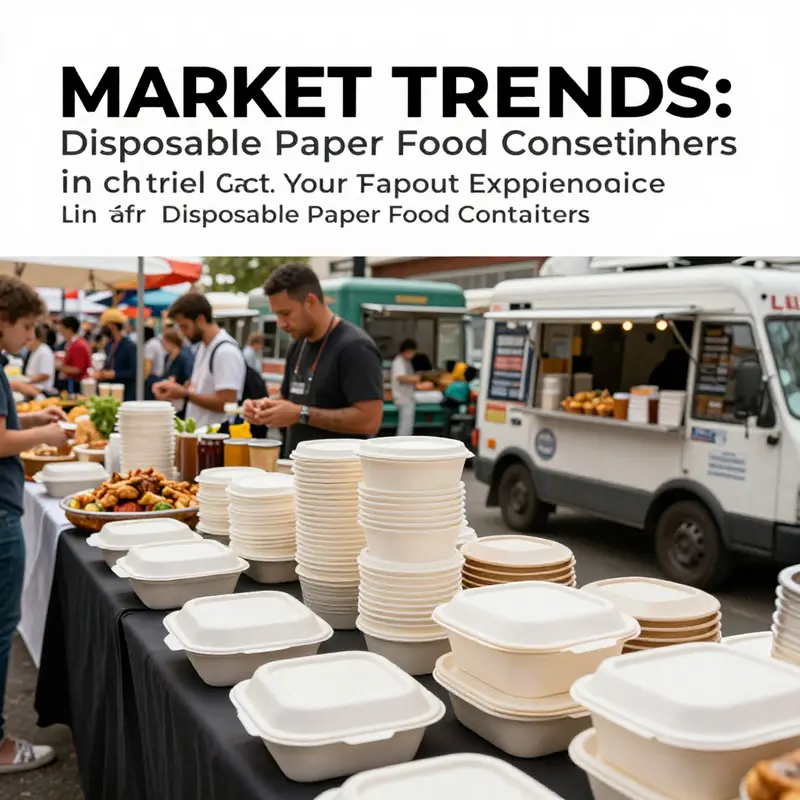
A shift is underway in the world of food service, where convenience, cost, and responsibility collide at the moment a takeout bag is handed to a customer. Disposable paper food containers, once a simple alternative to plastic, have become a central platform for evolving business strategies, consumer expectations, and regulatory landscapes. The market is not just growing; it is redefining what a packaging solution must do. It must withstand heat and moisture, protect the integrity of the food, support brand storytelling, and, crucially, align with a broader commitment to sustainability. In this sense, the apparent simplicity of a paper box or a paper bowl belies a dynamic, highly engineered ecosystem where material science, manufacturing efficiency, and circular economy principles converge to shape long-term value for both operators and their diners.\n\nAt the core of this transformation is a broad understanding that consumers are increasingly attentive to the environmental footprint of the food they order, whether for a quick lunch, a family dinner, or a catered event. The shift away from single-use plastics toward biodegradable and compostable materials is not a fringe trend; it has become a mainstream expectation in many markets. This pressure comes from multiple directions—the rising awareness of plastic debris in urban and rural environments, the visibility of packaging waste in restaurant waste streams, and a growing willingness among diners to choose brands that demonstrate environmental stewardship. As a result, paper-based solutions have moved beyond being a niche option to becoming a strategic platform for sustainability, branding, and operational practicality.\n\nThe regulatory environment is a powerful accelerant in this transition. Regions around the world are tightening rules on single-use plastics, restricting certain types of packaging, and promoting or mandating recyclability and compostability. For food service operators, the regulatory signal is clear: packaging choices matter not only to the bottom line but also to compliance and reputation. Paper containers offer a versatile path forward because they can be designed to be compostable under industrial conditions or recyclable within established waste streams, depending on the material and coating choices. This regulatory backdrop fuels a practical appetite for packaging that can perform across a range of foods—from greasy noodles to saucy curries and moist salads—without compromising safety or user experience.\n\nMaterial science has become a central driver of capability. Kraft paper remains a foundational material, prized for its strength, printability, and perceived naturalness. Yet the field has grown far beyond plain kraft. Sugarcane bagasse, a fibrous byproduct of the sugar industry, and recycled paperboard are emerging as viable, lower-impact alternatives that can reduce virgin fiber demand and divert waste from landfills. Each material brings unique advantages. Kraft paper with a robust, grease-resistant coating can handle both hot and oily foods with minimal leakage. Bagasse-based solutions emphasize compostability and natural appearance, appealing to consumers who value cradle-to-cradle thinking. Recycled paperboard, when carefully engineered, offers a balance of mechanical performance and recyclability that fits many food service workflows. These options are increasingly selected not only for their environmental attributes but also for their compatibility with modern supply chains and customization capabilities.\n\nCoatings, once a minor technical footnote, now play a pivotal role in performance and sustainability. Modern coatings are designed to resist grease and moisture, enabling containers to hold a broader menu range—from fried items to moist pastas without soaking through. Importantly, these coatings are being developed with end-of-life in mind. Innovative formulations are aimed at preserving recyclability and, in some cases, advancing compostability where industrial facilities exist. The coatings’ impact extends beyond performance; they influence cost structures, consumer trust, and regulatory compliance. For operators, this means a packaging solution can be more than a container—it becomes a reliable partner in the daily rhythm of the kitchen, the drive for faster delivery times, and the aspiration to reduce plastic waste without sacrificing food quality.\n\nDelivery and takeout have become enduring staples of the modern food service landscape. The proliferation of meal delivery platforms and the growth of meal-prep services have pushed packaging to the foreground as a critical.\n\nIn this context, the design of disposable paper containers has evolved into a synthesis of practicality and aesthetics. Compartments and dividers, once a simple convenience for separating sides and sauces, now serve to reduce cross-contact and preserve the integrity of multi-component meals during transit. This is particularly important for cuisines that blend hot, dry, and saucy elements, where leakage or temperature drop could spoil the experience. Handles, if included, are not merely ergonomic additions; they influence user perception, handling comfort, and the likelihood of spill-free transport. The trend toward stackable, lightweight designs reduces shipping costs and waste while optimizing counter space in crowded kitchens. The market’s appetite for customization is also surging. Operators want containers that reflect their brand identities, ensuring that a takeout experience—down to the packaging—tells a story about quality and responsibility. The pathway to customization is increasingly through OEM/ODM arrangements that allow logos, colors, and shapes to be integrated into packaging designs without sacrificing performance.\n\nIn this bustling backdrop, a notable and accessible design trend is the octagonal kraft paper packaging option. These containers merge form and function in ways that resonate with dining habits across cultures, offering multi-compartment layouts, robust stacking stability, and a distinctive silhouette that stands out in a crowded marketplace. The design carries practical benefits: the shape can accommodate even, modular dividers that separate various components, while the kraft material communicates a grounded, eco-friendly image that aligns with consumer expectations. For operators exploring this approach, the packaging design does more than hold food; it reinforces service quality, aids in portion control, and supports efficient packing and delivery workflows. The shift toward such designs is a concrete signal of how form factors are evolving in tandem with sustainability and performance.\n\nThe supply chain for disposable paper containers reflects a broader trend toward resilience and agility. Automated production lines, including carton erecting machines, enable high-volume output with consistent quality. These lines convert raw paperboard into finished boxes, bowls, and trays with precision and speed, ensuring that manufacturers can meet upward demand without compromising safety or environmental standards. At the procurement level, operators recognize the value of flexible sourcing and customization options. The ability to select materials by performance needs—grease resistance for fried foods, moisture barriers for saucy dishes, or compostable coatings for end-of-life processing—offers a strategic toolkit for menu design, pricing, and sustainability reporting. In practice, this translates into leaner inventories, shorter lead times, and a more predictable packaging supply during peak periods, such as holidays or promotional campaigns.\n\nFrom a lifecycle perspective, the market is increasingly aligned with circular economy principles. Recyclability and compostability are not mutually exclusive; a well-considered combination of material choice, coatings, and processing can yield a paper container that fits a city’s waste system. In some markets, compostability is a strong selling point, especially where industrial composting infrastructure exists and consumer education supports correct disposal. In others, recyclability may be the practical target, supported by robust curbside programs and clear labeling. The choice between compostable and recyclable pathways affects everything from equipment investments in recycling facilities to the messaging the brand uses on its packaging. Operators who successfully navigate these choices tend to see higher consumer trust, stronger brand affinity, and more favorable regulatory alignment.\n\nThe regional dimension of this market tells an equally important story. In parts of Asia-Pacific, for example, rapid urbanization, dense consumer bases, and growing food delivery networks have accelerated demand for sturdy, heat-resistant, easy-to-carry containers. In Europe and North America, stringent plastic-use regulations and high consumer expectations for sustainability drive a dual emphasis on compostable and recyclable solutions, with a premium placed on design for convenience and brand differentiation. Across regions, cultural dining habits and the balance between dine-in and takeout influence container shapes, sizes, and packing configurations. A meal that travels well in one city may require a different approach in another, and manufacturers are increasingly adept at tailoring ranges to regional preferences while preserving global production efficiencies.\n\nFor many operators, the financial calculus of switching to disposable paper containers begins with the recognition that long-term costs are not limited to the purchase price of the container. They include waste disposal, potential regulatory fines or penalties, and the reputational value of aligning with sustainability goals. Paper-based options may command a modest premium over traditional plastics, but this premium can be offset by savings in weight, shipping efficiency, and the potential for consumer loyalty tied to environmental responsibility. In a market where margins are often tight, packaging becomes a strategic lever rather than a mere cost center. The capacity to customize packaging—through branding, messaging, and even shape—adds an intangible but meaningful dimension to the value proposition, supporting both incremental sales and differentiated customer experiences.\n\nThis evolving landscape has implications for suppliers and manufacturers as well. The push toward sustainable, customizable, and high-performance paper containers has spurred innovation in product development and in production processes. Suppliers are investing in safer, more efficient coatings and barrier technologies that improve shelf life and food-safety performance without compromising recyclability. The result is a more resilient supply chain that can respond to shifts in consumer demand, regulatory updates, and the ebbs and flows of the restaurant cycle. As brands seek to harmonize sustainability metrics with practical food-service needs, packaging becomes an integral part of the story—an enabler of menu strategy as much as a vessel for food.\n\nAs this narrative unfolds, it is helpful to consider the broader market intelligence that frames these developments. Industry analyses point to sustained growth in the disposable paper container segment, driven by a convergence of consumer preferences for eco-friendly packaging, regulatory dynamics, and ongoing innovations in materials and coatings. The forces shaping the market are not isolated; they interact in ways that compound opportunities and challenges. A robust market outlook underscores not only the scale of demand but also the complexity of delivering on it—balancing performance with end-of-life considerations, managing supply chain risk, and maintaining brand integrity in a crowded competitive space. For stakeholders who want a comprehensive view, recent market studies offer a detailed breakdown by material type, application, and region, revealing where growth is strongest and which segments may mature next.\n\nThe practical takeaway for practitioners is clear: success in disposable paper containers rests on an integrated approach. This means selecting materials and coatings that meet the performance needs of the menu, choosing designs that optimize packing and delivery, and aligning packaging choices with sustainability goals and regulatory expectations. It also means embracing adaptability—being ready to adjust materials, coatings, and shapes as consumer preferences evolve and as waste management infrastructures change. In this sense, the packaging decision becomes inseparable from the business strategy, shaping and being shaped by the restaurant’s approach to procurement, branding, and customer engagement. The narrative is not simply about what is inside the box; it is about how the box itself amplifies the restaurant’s commitment to quality, safety, and responsibility.\n\nFor those who want to explore specific packaging designs and supplier options, there is a growing ecosystem of resources and samples that help translate these trends into tangible choices. A widely cited development among packaging designers is the balance between performance and perception—the idea that a container should perform flawlessly in transport while conveying a story of sustainability and care to the consumer. The decision to offer custom designs, including print-ready branding or logo integration, reflects a broader shift toward packaging as a communication channel, not merely a protective barrier. This shift reinforces the idea that packaging can be a differentiator in a crowded market, influencing perceived value and repeat business as much as it influences shelf life and transport safety.\n\nIn sum, the market for disposable paper food containers is not a simple tale of rising volumes or greener credentials. It is a narrative about the modernization of a fundamental service element—the way meals travel from kitchen to consumer. It is about harnessing material science to deliver better performance, about using coatings and barrier technologies to expand the menu range that can confidently be offered in takeout, and about aligning all of this with the circular economy ambitions that increasingly define responsible business practice. It is about seeing packaging as a strategic asset that can strengthen brand reliability, streamline operations, and support sustainable growth. This is where the future of disposable paper containers lies: at the intersection of execution, ethics, and experience, with rising demand rewarding those who can deliver all three with consistency and clarity.\n\nTo readers who want a working glimpse behind the numbers, a practical takeaway is to consider how design choices align with your operational realities. If your menu leans heavily on sauces and oil-rich items, you’ll prioritize coatings and barrier properties; if your reach includes remote delivery or third-party aggregators, you’ll value stackability, weight, and branding flexibility. If sustainability figures prominently in your corporate strategy, you’ll weigh compostable versus recyclable pathways, ensuring your waste streams align with local infrastructure. And if you are seeking design inspiration, the market offers compelling configurations that merge form with function—like the octagonal kraft paper packaging option mentioned earlier, which demonstrates how shape can support both practical handling and a distinctive brand presence. The broader market context, including regulatory and consumer drivers, underscores that such design choices are not cosmetic but strategic investments in service quality, environmental accountability, and long-term profitability.\n\nFor readers seeking deeper market insights, refer to the comprehensive market analysis that details material types, regional dynamics, and forecasted growth trajectories. This external perspective complements the narrative here by providing a data-driven sense of where the market is headed and which factors most consistently shape success in the disposable paper container space. See the industry analysis for a fuller picture of the market size, shares, and directional signals that underpin strategic planning in the food service packaging sector. Grand View Research Market Analysis
Final thoughts
Disposable paper food containers are not just a passing trend—they are a practical and sustainable choice for food service businesses aiming to meet modern consumer expectations. By understanding the unique features and benefits of kraft paper containers, biodegradable alternatives, and innovative packaging solutions, businesses can enhance the takeout experience while contributing to environmental preservation. Investing in quality disposable paper food containers not only signifies a commitment to sustainability but also enhances the overall customer experience, making them a wise choice for any food service operation.