
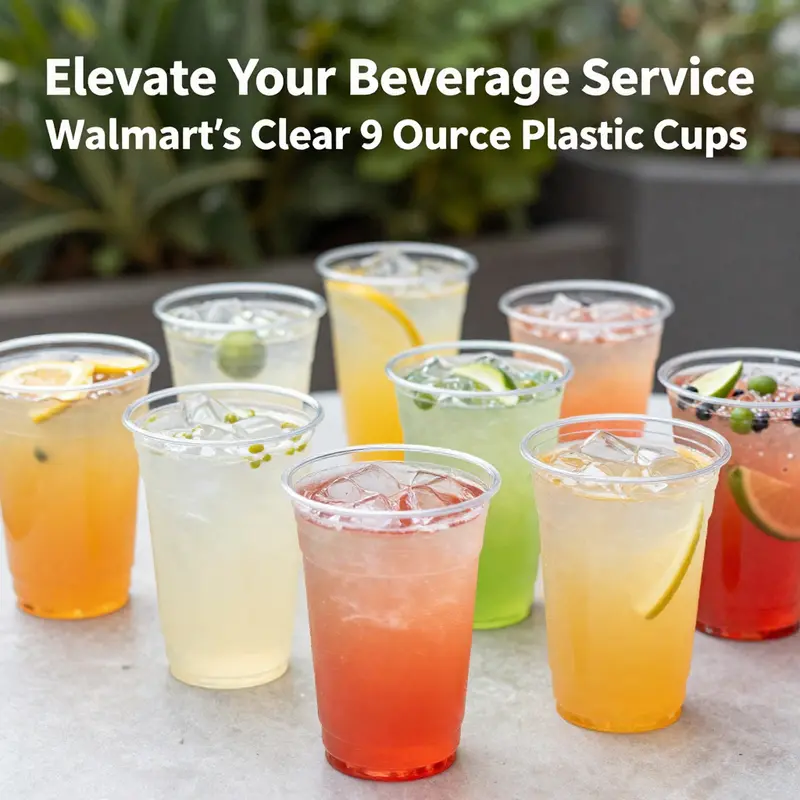
When it comes to serving beverages in style and efficiency, Walmart’s clear 9-ounce plastic cups are an outstanding choice for bubble tea shops, restaurants, food trucks, catering services, and event planners. These cups not only offer visual appeal but also practicality for various occasions. This article explores the top options available at Walmart, examines their benefits, addresses the environmental impact, showcases application scenarios, and provides a detailed cost comparison. Understanding these facets will help businesses make informed decisions and enhance customer experiences with reliable disposable tableware.
Clear, Countable, and Convenient: A Deep Dive into Walmart’s 9-Ounce Clear Plastic Cups
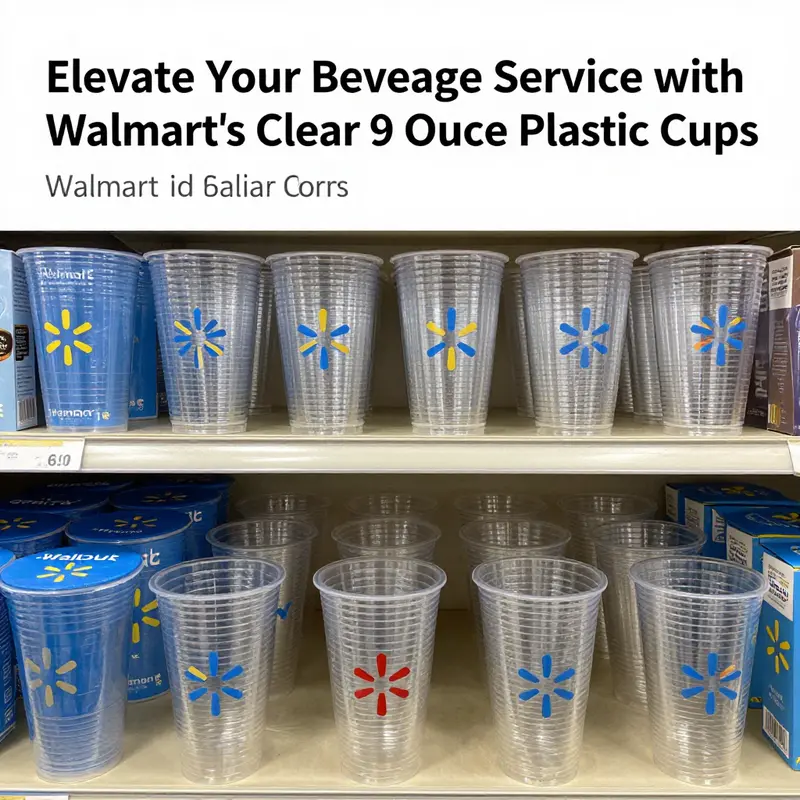
When planning a gathering, a picnic, or a quick-service event, the right cups can quietly shape the flow of the day. Walmart’s offering of clear, 9-ounce plastic cups has become a dependable option for a wide range of occasions, from casual family barbecues to informal office meetings. These cups are designed to be practical, disposable, and unobtrusively reliable, so the host can focus on the event itself rather than the logistics of serving beverages. The appeal lies less in flash than in a quiet, everyday efficiency: a cup that disappears into the moment, letting the drinks do the talking. In this context, the 9-ounce size sits at a sweet spot for cold beverages, tasting portions, and guest portions that don’t overwhelm a table or a tray. The design philosophy behind these cups is straightforward but meaningful. They must be sturdy enough to hold a cold drink without cracking or bending under the weight of ice and condensation, yet light enough to be handled in large numbers without fatigue. The material choice—typical PET plastic—delivers a balance of transparency and strength that satisfies both practical needs and aesthetic expectations. When you set a tray of beverages in clear view, the contents look inviting, and the glass-like clarity of the cups helps drinks appear vibrant and appealing. This visual appeal matters, especially in settings where presentation complements the guest experience, from a family gathering to a community event. The 9-ounce capacity is a practical in-between size: large enough for a full serving of juice, iced coffee, or a chilled cocktail, yet modest enough to reduce waste when guests move on to other beverages. The cups are designed for cold drinks, with a rim that remains comfortable to sip from and a body that resists warping under typical refrigeration or outdoor heat. In these small, everyday choices, the user experience becomes a quiet thread that runs through the event, affecting flow, service speed, and overall satisfaction without drawing attention to itself. The success of Walmart’s clear 9-ounce cups rests on a simple premise: the product should disappear into the setting so that guests can enjoy their drinks without distraction. To meet that expectation, several practical features come into play. The cups are typically offered in a range of package sizes, from modest bundles destined for intimate gatherings to larger, high-volume options designed for venues or catering setups. A standard 50-count pack can serve as a reliable baseline for a small family dinner or a neighborhood potluck, while larger packs—often reaching into hundreds—address the needs of bigger crowds or recurring events. This scalability matters because it reflects how hosts plan, budget, and restock for future occasions. The economics of these cups are oriented toward value without compromising essential quality. The larger the pack, the lower the unit cost, which makes them attractive for recurring use at meetings, clubs, or seasonal celebrations. Yet even in smaller quantities, the clarity and sturdiness of the cups remain consistent, which helps maintain a tidy, efficient service line. In practice, the cups are designed to be easy to handle, with a comfortable grip and a stable base that minimizes spills when lines form or when guests walk to a serving station. The shape and thickness are calibrated to support a comfortable grip while resisting the kind of flexing that can occur when ice is included in the beverage. And because many gatherings rely on cold drinks, the PET material is chosen for its cool, crystal appearance that makes beverages look appetizing while maintaining a functional edge against bubbling or condensation. In short, these cups are built to perform quietly in the background, so hosts can concentrate on flavor, temperature, and presentation rather than on the mechanics of cup quality. The shopping experience around Walmart’s 9-ounce clear plastic cups often centers on three practical considerations: quantity, durability, and convenience. For a larger event, the 200-pack option can become an indispensable asset, ensuring that the logistics of serving—whether at a school fundraiser or a community fair—do not become a bottleneck. For everyday use at home or in small venues, the 50-count or 80-count configurations offer flexibility and ease of storage. The variety in packaging is not merely about numbers; it is about how hosts balance planning with spontaneity. A well-chosen set of cups can reduce last-minute runs to the store, lower the risk of mid-event shortages, and provide guests with a consistent drinking experience that feels polished rather than improvised. Beyond packaging and quantity, the safety profile of these cups plays a quiet but important role. The BPA-free designation is a common assurance found with modern disposable drinkware, and it is a meaningful signal for guests who may be particular about materials in contact with beverages. This aspect aligns with a broader consumer expectation that products designed for food and drink should avoid substances linked to adverse health effects when used as intended. The transparency of the cups is more than just an aesthetic feature; it also serves a practical function. Clear cups enable quick visual checks of the beverage’s color and freshness, which can be especially helpful in buffet or self-serve contexts where several options are available. The glass-like clarity is achieved through the optical properties of PET, a material known for its clarity and rigidity. While the cups are disposable, their design also supports thoughtful service. They stack neatly for storage, which makes them a convenient fit for small storerooms and larger backrooms alike. The ability to stack reduces clutter and contributes to a streamlined service area. In environments where speed matters, such as a bustling canteen or a rapid-service coffee counter, the predictable, uniform shape of the cup speeds up the process of dispensing beverages and restocking supplies. When selecting among the different pack sizes, it is practical to consider the typical guest count, the expected turnover rate of drinks, and the planned duration of the event. A family gathering might lean toward a smaller, simpler pack that reduces waste, whereas a community event or office function with steady flow could justify the cost efficiency of a larger, bulk option. The decision also hinges on storage: large packs require more shelf or closet space, but they pay off in reduced shopping frequency. For hosts who want to maintain a cohesive, uncluttered presentation, the cups’ design supports a consistent look across beverages. The 9-ounce size lends itself to a wide array of cold drinks without forcing guests to refill too frequently, which helps maintain a smooth service rhythm. It also keeps the beverage portion visually aligned with other elements of the event, from ice to garnish to cup presentation, contributing to a unified aesthetic. In discussing these cups, it is natural to consider how they compare with other disposable drinkware options. Options with broader rims or different capacities can alter the sipping experience, while alternatives designed for hot beverages may carry a different set of safety considerations. The choice here tends to favor the clarity, cold-drink suitability, and cost-effectiveness of the 9-ounce, PET-based design. For hosts who entertain regularly, the question becomes not only what to buy for the next event but how to plan for recurring need. The answer often lies in building a simple inventory approach: estimate the number of guests per gathering, predict the average drinks-per-guest, and multiply by the number of anticipated events in a given period. In this framework, a bulk pack becomes less a one-time purchase and more a fixture of ongoing operations. The eventual takeaway is practical rather than flashy: these cups deliver dependable performance at a comfortable price point, without complicating the guest experience. They are meant to be one of the quiet workhorses of hosting—familiar, reliable, and unobtrusive. They enable people to focus on the beverage itself, or on the conversation, the music, or the games that define the event. As you move from one setting to another, the same cup can cross from a casual backyard drink to a small catered gathering with equal ease. This adaptability is part of what makes the 9-ounce clear plastic cup a staple in many households and small businesses. The next logical step in this exploration is to consider the broader ecosystem—how to pair these cups with lids, securing solutions, or sleeve options to address spill prevention and convenience. It is worthwhile to explore how close attention to this small piece of the serving system can elevate the overall guest experience. For those who want a deeper dive into practical product listings and specifications, a close look at the official Walmart product page provides concrete details on sizing, packaging, and assurances around material safety. External resource: Walmart product page for 9-ounce clear cups.
Crystal-Clear Convenience: How Walmart’s 9-Ounce Clear Plastic Cups Elevate Everyday Drinking

Every event, large or small, hinges on a simple, reliable detail: the cup that holds the beverage. Walmart’s 9-ounce clear plastic cups offer a practical convergence of presentation, practicality, and price that makes them a dependable choice for households, gatherings, and quick-service environments. The value lies not in novelty but in consistency. These cups are designed to be unobtrusive vessels that let the drink shine, while still delivering the kinds of features a host or a busy household relies on. In a world where hosting duties pile up, having a standard, trusted cup stocked in bulk eliminates the guesswork at the last minute. The result is a smoother flow from fridge to table, with less time wasted hunting for the right size or worrying about compatibility with ice, straws, or lids. Walmart’s clear 9-ounce option sits comfortably at the intersection of everyday practicality and flexible usage, ready to adapt to juice sippin’, iced coffee mornings, or a casual toast at a backyard gathering.
The most immediate advantage is the cup’s design. A clear, glass-like appearance elevates the visual appeal of any beverage. When the liquid is bright and true, the cup itself becomes a nearly invisible frame that showcases the drink’s color, clarity, and texture. This matters whether you’re serving water with slices of citrus for a family dinner, a sparkling mocktail at a birthday party, or a beer with a frothy head at a casual get-together. The transparency helps guests gauge portions and keeps the focus on the beverage, not on the container. In a crowded buffet line or a crowded kitchen, that clarity speeds service, reduces hesitation, and supports a more relaxed serving rhythm. It’s a small design choice with a surprisingly large impact on the overall experience of drinking, socializing, and even photographing a moment worth sharing.
The 9-ounce capacity is tailored to a broad spectrum of drinks without forcing compromise. It’s large enough to hold a generously poured soft drink or iced tea, yet compact enough to avoid overwhelming guests who prefer smaller servings. The size also suits beverages that benefit from a generous ice-to-liquid ratio—think a refreshing mojito, a citrus-forward spritzer, or a hardy iced coffee—without risking overfilling or spills. For kids’ parties and family meals, this capacity offers a familiar, kid-friendly portion while still aligning with adult portions for adults who prefer a lighter serving. The versatility of this size becomes evident as days unfold from casual weekdays to weekend celebrations, making it a go-to option for planning and execution alike.
A central practical benefit is the disposable nature of these cups. In daily life, cleanup time is often the most unromantic part of hosting. With disposable cups, the chore of scrubbing, soaking, and drying disappears, replaced by straightforward disposal or recycling where facilities permit. For busy households juggling work, school, and after-school activities, that simplification is more than convenience; it’s a logistical relief. Outdoor gatherings, picnics, and impromptu barbecues gain an extra layer of ease when people can focus on the occasion rather than on cleansing up. The disposable feature aligns with the realities of spontaneous entertaining, large crowds, or quick-turnaround events, where the pace of hosting can otherwise feel overwhelming. It’s the kind of practical detail that quietly reduces stress and keeps the emphasis on connection rather than cleanup.
Durability is the quiet backbone behind the ease of use. Made from a sturdy PET plastic, these cups resist leaks and maintain form when filled with cold beverages, even with generous additions of ice. The material blends the sturdiness of a glass-like exterior with the practical benefits of plastic, providing reliable performance for a wide range of drinks. They’re designed to be leak-resistant and robust enough to handle icy contents without warping, which matters when you’re serving beverages that rely on temperature and freshness for flavor. The combination of a firm wall and a secure rim helps prevent accidental spills during transport or handling, a frequent concern when cups are passed around at a party or stacked for a crowded event. In short, you get the clean appearance of glass with the resilience and convenience of plastic, a pairing that resonates with anyone who wants reliable drinkware without the fragility of real glass.
Storage and stacking play a subtle but important role in everyday use. The cups are designed for easy nesting, which means they take up minimal space in cupboards, pantries, or event setups. When you’re stocking up for a season of entertaining, that space-saving feature translates into tangible savings on storage and organization. It’s one of those details that compounds over time: more cups per bin, less clutter, quicker access, and a smoother flow when you’re setting up multiple tables or serving stations. The stackable design also simplifies transport to venues, yard parties, or church events, where efficiency in setup and breakdown matters as much as the presentation on the table.
Affordability is a cornerstone of Walmart’s 9-ounce clear cups. In bulk packaging—often sold in 100-count or larger sets—the per-unit cost drops significantly, making them practical for regular use rather than reserved solely for large occasions. This price structure supports spontaneous hosting moments, weekly family gatherings, and recurring events without forcing a choice between economy and quality. The ability to purchase in bulk means you stock up once and enjoy the peace of mind that comes with knowing you won’t run out mid-assembly or mid-party. The balance between cost, quantity, and quality is a key part of why these cups have become a staple in many households and venues. They reconcile everyday needs with occasional spikes in demand, which is the essence of smart, reliable disposable drinkware.
Beyond the basics, Walmart offers decorative variants that let you tailor the mood of an event without sacrificing the practical advantages of disposability and durability. While these cups are primarily designed for everyday use, a festive touch—such as silver accents or other subtle embellishments—can elevate a simple gathering into something with a more polished look. The ability to mix function with a touch of style makes it feasible to host a casual family dinner, a birthday milestone, or a small celebration with a visually pleasing presentation that won’t derail the budget. The result is a seamless blend of practicality and a sense of occasion, where the cups support the beverage presentation while also contributing to a curated, cohesive table setting.
To get the most out of Walmart’s clear cups, consider how they fit into your broader hosting toolkit. Lids, straws, and color-coordinated napkins can complement the clean lines and transparency of the cups, creating an organized, intentional table that remains effortless to manage. For brands or events that rely on branding or a cohesive look, some retailers offer eco-friendly, logo-printed options that align with branding goals without compromising the convenience these cups provide. See this related option for a practical example of the kind of packaging and customization that can accompany dispose-ready drinkware: eco-friendly-printed-logo-cold-beverage-cup-paper-cup-with-lid. This approach demonstrates how the same disposable format can be adapted to suit different settings, from casual home gatherings to small-scale corporate events, while preserving the essential benefits discussed above.
In the end, the appeal of Walmart’s 9-ounce clear plastic cups rests on a straightforward equation: clarity plus capacity plus convenience, delivered at a price that makes bulk buying sensible. They make it easy to pour, serve, and celebrate, whether you’re hosting a family dinner or coordinating a community gathering. The cups don’t demand attention or complicate logistics; they simply fulfill a practical need with a dependable, polished presence. They are a quiet backbone of everyday hospitality, a small but meaningful contributor to the rhythm of hosting—one cup at a time. External references can provide a quick snapshot of comparable options in the market, such as a widely available Walmart listing that showcases similar disposables. For quick context, you can review a related listing here: https://www.walmart.com/ip/Solo-Party-Disposable-Plastic-Cups-Clear-9-oz-50-Count/116256545
The Hidden Footprint of Clear 9-Ounce PET Cups: Unpacking Environmental Realities and Everyday Choices

Clear 9-ounce disposable cups are a familiar sight at gatherings, break rooms, and quick-service venues. Their transparency, light weight, and convenience make them a staple for cold drinks ranging from juice and iced coffee to sparkling beverages. Yet beneath their glass-like clarity lies a web of environmental trade-offs that complicate any simple judgment about their sustainability. This chapter examines the lifecycle of these cups, the nuances of curbside recycling and industrial composting, and the broader context of how individual choices intersect with systemic waste management. The aim is not to indict everyday use but to illuminate how the materials and end-of-life pathways shape the overall footprint and, in turn, how readers can navigate future purchases with a more informed, systems-aware mindset.
Most clear 9-ounce disposable cups in the market today are fabricated from PET, a thermoplastic resin recognizable by the recycling code #1. PET is prized for its clarity and strength, attributes that suit the quick-service and hospitality sectors well. In many communities, PET cups are technically eligible for curbside recycling, and this eligibility is often cited as a reason to treat them as a simple, recyclable choice. The reality, however, is more complex. Recycling rates for plastic, in general, have remained stubbornly low. Across the United States, only a fraction of plastic ever produced has been recycled, with estimates commonly cited around the 9% mark. This disparity is driven by contamination from liquids and food, the difficulty of sorting mixed streams, limited processing capacity, and economic factors that can make recycling financially unattractive to municipalities and facilities alike. When a cup is deemed recyclable but is contaminated or not properly sorted, it ends up in a landfill or as litter, where even well-intentioned recycling efforts fail to realize their full potential.
The lifecycle begins long before the cup touches a drink. Petroleum-based feedstocks are transformed into PET resin through polymerization processes that require energy, water, and specialized handling. The cup itself is then formed through molding or thermoforming, often with minimal additional materials beyond the cup, a sleeve, a lid, and sometimes a straw—if those accompaniments are included in a service scenario. Packaging adds another layer, typically small quantities of plastic film wrap or cardboard, and distribution follows a path that can be long and energy-intensive, depending on the distance from production to point of sale. Each of these stages contributes to the cup’s embodied energy and greenhouse gas emissions. From a climate perspective, the sheer convenience of single-use plastic is offset by the energy and material inputs required to produce, transport, and eventually dispose of the item.
Within the environmental conversation, two alternative end-of-life narratives consistently surface: recycling and composting. PET’s recyclability is real in a technical sense; it is widely accepted by curbside programs in many regions. Yet the practical reality—98% of PET bottles and containers ending up as waste somewhere along the line, with much of it diverted from recycling streams due to contamination and market dynamics—casts a shadow over the simple equation of “recyclable means recycled.” In the context of clear 9-ounce cups, contamination from residual liquids and coatings can impede recycling. Even when a cup is collected, the local recycling facility must be equipped to handle thin-wall PET products, and the market for post-consumer PET must be robust enough to justify the energy spent in collection and processing. This is why some cycles of disposal programs do not capture the full benefits that one might expect from “recyclable” labeling.
Another pathway that some cups advertise is compostability, often associated with plant-based materials such as PLA (polylactic acid) blends. Industrial composting facilities can break down PLA-based products, but only under controlled conditions—high temperatures, specialized composting infrastructure, and appropriate handling. Home composting, by contrast, rarely achieves meaningful degradation for these materials, and if the cups end up in ordinary landfills, the advantages over conventional plastic can evaporate. The environmental logic behind compostable options hinges on a correctly matched system: if consumer waste is directed to industrial facilities designed to process PLA and similar polymers, there can be a positive outcome. If not, the cups behave much like conventional plastics, persisting in the environment and contributing to microplastic pollution over time. This dichotomy underscores a broader truth: the ecological benefits of “compostable” claims are contingent on end-of-life infrastructure and consumer behavior, not on a label alone.
A further ethical and health-related dimension sometimes surfaces in discussions about PET cups: the lure of BPA-free claims. While many clear cups marketed for single-use are BPA-free, the replacement additives or potential leachates in alternative polymers can still pose questions for some consumers. The science on these issues continues to evolve, and regulatory scrutiny varies by jurisdiction. What remains clear is that material safety labels do not automatically translate into universal environmental benefits. A single-use item can carry a nuanced portfolio of trade-offs, including resource extraction impacts, energy intensity during manufacturing, and post-use fate in the waste stream. These layers of complexity mean that even seemingly straightforward packaging choices deserve careful consideration beyond surface-level claims.
Against this backdrop, it is useful to juxtapose these disposable options with the most sustainable alternative: reuse. Reusable cups—made from durable plastics, glass, stainless steel, or other enduring materials—offer a path to dramatically lower lifecycle emissions when used repeatedly. The math changes when a single cup survives dozens or hundreds of uses, amortizing the energy and materials invested across multiple events. This doesn’t mean discarding the value of single-use options in every context; there are situations where portability, hygiene, and convenience are paramount. Still, recognizing the trade-offs embedded in the disposables helps shift the conversation from a binary “recyclable or not” to a more holistic assessment that weighs frequency of use, infrastructure, and the local waste management reality.
The practical implications for consumers, retailers, and policymakers emerge most clearly when we connect the dots between product design, waste management systems, and consumer behavior. For retailers, offering clearly labeled options that align with available disposal infrastructure is critical. If a brand or retailer markets a cup as recyclable but the local system lacks adequate sorting or a market for reclaimed PET, the expected environmental benefit may fail to materialize. This mismatch can erode consumer trust and complicate corporate responsibility narratives. For policymakers, the challenge is to strengthen recycling streams through standardized labeling, improved sorting technology, and investments in processing capacity. A more transparent emphasis on end-of-life outcomes—what happens to a product after use—can help close the loop and reduce the leakage of plastics into natural environments.
Finally, it is worth recognizing the evolving landscape of consumer guidance and corporate responsibility. Some manufacturers and retailers respond to growing demand for lower-impact packaging by exploring recyclable PET lines or urging diversion to industrial composting where appropriate. Others emphasize design choices that minimize the use of coatings or adhesives that complicate recycling. And still others promote reusable cup programs that incentivize customers to bring their own containers. While no single choice is a panacea, every incremental step—whether improving post-consumer collection, refining product formulations, or encouraging reuse—contributes to a broader shift toward more sustainable packaging ecosystems. Readers who want to explore practical options can discover resources on eco-friendly disposables and reusable alternatives within related product pages that discuss how to align packaging choices with environmental goals. For instance, see the page on eco-friendly printed-logo cold beverage cups that illustrate how design can reflect environmental considerations while serving practical needs.
In the end, the environmental footprint of clear 9-ounce PET cups reflects a tension between the benefits of convenience and the realities of waste management. Their recyclability is real in principle but uneven in practice, their compostability is conditional on infrastructure, and their ultimate fate depends on the systems we build to collect, sort, and process post-use materials. The most durable solution remains clear: prioritize reuse where possible, support transparent, robust end-of-life pathways, and insist that every disposable choice is accompanied by a plan for responsible disposal. Alongside this, communities and businesses can invest in education about proper rinsing, sorting, and the importance of keeping recycling streams clean, which helps maximize the likelihood that a cup’s journey ends where we intend. For those seeking deeper context on how disposal guidelines operate in practice, the Environmental Protection Agency’s recycling resources offer foundational guidance on what to recycle and how to participate effectively in local programs. https://www.epa.gov/recycle
null

null
Counting the Cost: A Close Look at Walmart’s Clear 9-Ounce Cups
When planning a party, a catered event, or even a weekend gathering, the choice of cups can shape the bottom line more than you might expect. The cost per cup, the packaging size, and the practicality of a given set all combine to influence how many you buy and how often you’ll reach for a fresh stack during service. In the Walmart ecosystem, a family of clear 9-ounce disposable cups illustrates how the same product family can span a spectrum—from thrifty bulk buys to more specialized, design-forward options. The pricing snapshot below reflects current listings as of February 26, 2026, and shows how subtle differences in pack size and design translate into meaningful per-unit costs. The most economical choice, by a wide margin, comes from a straightforward, bulk-pack option that emphasizes value above novelty. Yet the story of cost is not purely about the sticker price; it is also about reliability, ease of use, and how well a given cup fits the beverage service you have in mind.
Across the portfolios, the math is almost always a function of two levers: pack size and unit price. For a 9-ounce clear PET cup—a size well suited to juice, iced coffee, soft drinks, or even wine at casual gatherings—the bulk 200-pack option tends to sit at the lower end of the price spectrum. The current listing starts at about 11.97 dollars for 200 cups, which translates to roughly six cents per cup. That is the kind of per-unit figure that makes bulk purchases appealing for organizers who expect steady demand over a weekend or a few social events in close succession. In contrast, a 200-pack labeled at 34.95 dollars climbs toward roughly 17 cents per cup. The difference is substantial in the aggregate, especially if the event budget skews toward quantity rather than specialty design. The sharp contrast between roughly six cents and around seventeen cents per cup underscores a central truth: the smallest price delta, multiplied by hundreds of servings, has a real impact on totals.
Smaller packs tell a different story. A 50-count set priced at about 24.99 dollars costs roughly 0.50 dollars per cup. That higher unit price reflects a balance of convenience and reduced bulk: you pay for the ease of having fewer cups on hand and the ability to restock with less inventory at a time. Another compact option, the 80-count set priced at 8.99 dollars, hovers around 11 to 12 cents per cup. In this tier, the gap between bulk value and moderate-size convenience narrows, but the math still favors the bulk option when the goal is to minimize waste and ensure service continuity over several events. A 50-count set priced at 4.65 dollars is a further variation, yielding a unit cost just under 10 cents in many listings. Though slightly more expensive per cup than the largest bulk option, this smaller package can be a prudent choice for venues that host frequent, modest gatherings where maintaining a steady supply is essential but a larger upfront investment isn’t practical. Finally, even a 100-count pack at about 17.73 dollars lands at roughly 18 cents per cup, positioning it between the smallest and the bulk allocations in terms of cost per unit. Taken together, the price architecture across these options creates a spectrum that lets buyers tune their purchase to expected demand, storage capacity, and the pace of service.
In practical terms, the math matters most when you translate it into your own event logistics. For a university fair, a neighborhood potluck, or a small business meeting, the decision isn’t just about the lowest price per cup in isolation; it’s about how many cups you need, how quickly you’ll go through them, and how much space you have for storage. A bulk option can deliver sustained savings but demands adequate storage and the foresight to estimate total usage. A smaller pack, while pricier per unit, reduces the risk of excess inventory that never gets used, cutting both waste and the pressure to manage a large restocking operation in the middle of service. The balance point varies with the scale of the event, the duration of beverage service, and the reliability of your supply chain.
Beyond the economics, there are practical quality and safety considerations that influence the choice. The bulk and mid-size options are commonly manufactured from PET plastic, and many of these products are BPA-free. The clarity of the material—often described as glass-like—matters not only for aesthetics but for the perception of drink temperature and quality. In many service contexts, cups with strong clarity help beverages look more appealing, encouraging guests to enjoy a full serving without hesitation. For events that lean toward a more festive impression, some lineups offer decorative features, such as gold accents or glitter rims. These design details may raise the price per cup but can align with the event theme and contribute to the overall guest experience. For those prioritizing simplicity and neutrality, a plain clear cup can be the most versatile choice, pairing with any beverage color and avoiding any design biases that might clash with service ware or table decor.
As a shopper, the decision framework often comes down to projected consumption and flexibility. If you anticipate a steady stream of beverages over multiple days or events, the bulk option provides a straightforward path to cost efficiency. If your usage is sporadic or you need to adjust quickly to fluctuating headcounts, the smaller packs offer a way to calibrate inventory without overcommitting. The important thing is to consider the total cost of ownership, not just the upfront price. Storage space, potential wastage from uneven usage, and the ease of restocking all feed back into the final calculation. For readers who want to explore related take-out and packaging options, a nearby resource catalog in the same ecosystem offers a range of kraft paper bowls suitable for quick, portable meals. See this related product page for a practical example: disposable 700ml kraft paper bowl take-out octagonal rectangle paper bowl. The link illustrates how paper-based serving ware complements disposable cups, providing a broader view of how households and venues assemble their on-the-go dining kits.
From the vantage point of event planning and food-service operations, the bulk option’s cost advantage sometimes carries a caveat. It demands space, inventory discipline, and a forecast that turns on the cadence of service. If a venue tends to host back-to-back events, the ability to draw from a large, uniform stock can reduce the risk of last-minute substitutions or substitutions that could disrupt the guest experience. On the other hand, a smaller pack can mitigate storage concerns, reduce the chance of surplus waste, and allow a team to respond quickly to changing headcounts without overcommitting capital to inventory that may not be needed. In this sense, price-per-cup is a compass, but it must be used alongside practical realities of how a space operates and how a service team schedules its workflow.
Another layer to consider is the relative importance of presentation versus practicality. Clear 9-ounce cups strike a balance between visibility of the drink and the convenience of single-use ware. They stand up well to cold beverages and can be easily stacked for quick service. The glass-like clarity enhances the visual appeal of layered drinks, iced beverages, and even simple lemonades. Yet not every event requires the same level of presentation. Some gatherings call for a more decorative touch—patterns, rims, or glitter accents—that can justify a higher per-unit cost for the sake of ambiance. For organizations prioritizing sustainability, the decision may also hinge on the recyclability and end-of-life handling of PET cups in their local recycling streams. These considerations do not erase price differences; they simply add a layer of nuance to the overall value proposition of each option.
In practical terms, a conservative approach for budgeting might begin with the bulk option, paired with a forecasted usage model that accounts for peak service periods and potential spillage. If usage exceeds expectations, restocking can be planned as a controlled expense rather than a rushed, premium-priced emergency purchase. If a planner anticipates a limited beverage program, a smaller pack could minimize storage costs and prevent overbuying. The key is to align choice with the event’s scale, the expected beverage variety, and the pace of service. In this way, the cost comparison becomes less about chasing the lowest price per cup in isolation and more about orchestrating a reliable, efficient, and visually coherent beverage service.
As readers move through this analysis, it’s useful to remember that the figures cited here reflect a snapshot in time. Prices shift with promotions, stock levels, and regional variations, so recalculating unit costs at the moment of purchase remains important. The same logic applies across different retailers, where bulk packaging typically delivers the strongest per-unit savings, but availability and shipping considerations can tilt the balance. For readers who want a quick reference to the latest listing in the Walmart ecosystem, external benchmarks can provide further context and help validate the shopping decision. External resource: https://www.walmart.com/ip/VPLUS-200-Pack-9oz-Clear-Plastic-Cups-Disposable-Crystal-Drinking-Cups-PET-Plastic-Party-Cups-for-Wine-Juice-Iced-Coffee-and-Cold-Drinks/556452529
Final thoughts
In conclusion, Walmart’s clear 9-ounce plastic cups provide a practical, affordable, and versatile solution for a variety of beverage services. By exploring the best options available, understanding the benefits, considering environmental impacts, and reviewing application scenarios and cost comparisons, businesses can confidently incorporate these cups into their service. Choosing the right disposable tableware not only enhances customer experience but also supports sustainable practices. Make sure to consider these cups for your next event or daily operations to elevate your beverage offerings and customer satisfaction.