
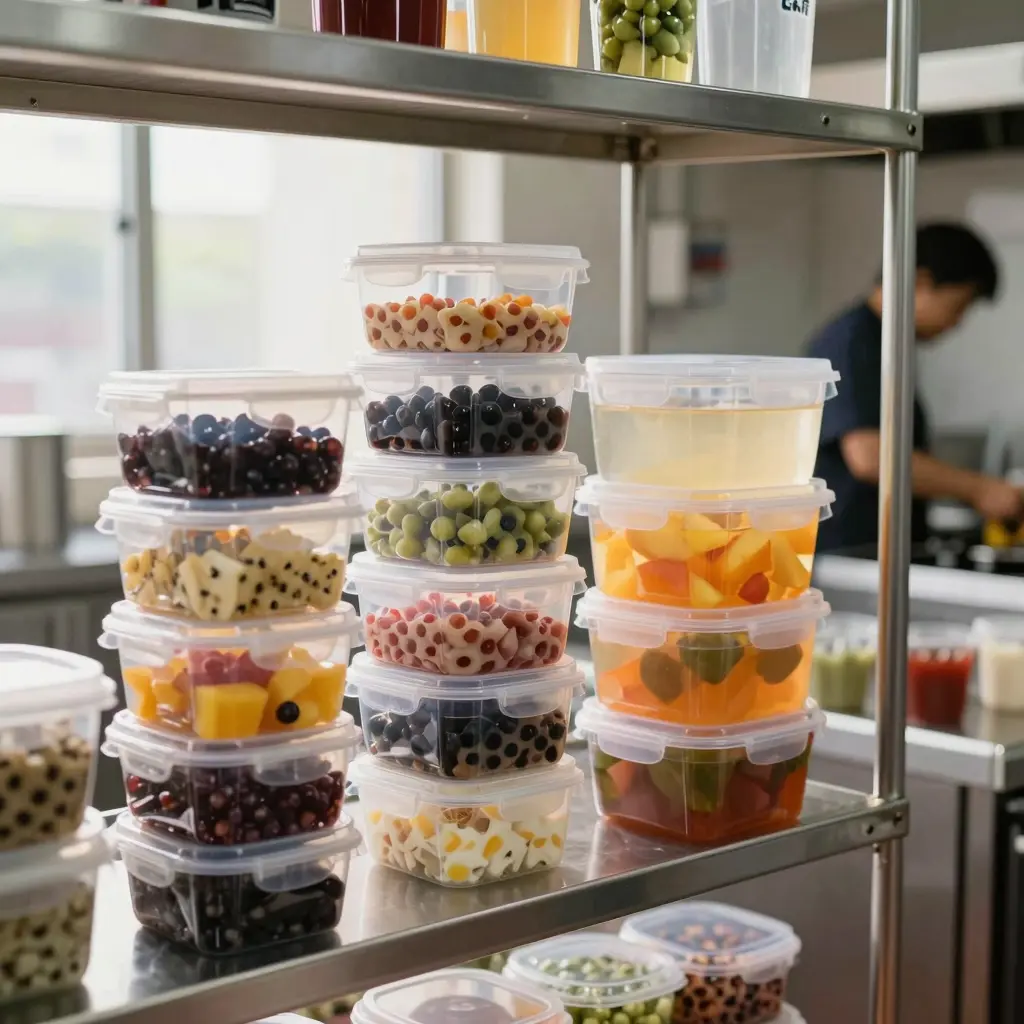
The 3:00 PM bubble tea rush is in full swing. The blenders whir, tapioca pearls cascade into cups, and your staff moves like a well-choreographed dance behind the counter. Every second counts. In this high-stakes environment, plastic containers for food storage aren’t just an option-they’re the backbone of your operation. From pre-portioned boba syrup to refrigerated fruit toppings, plastic containers keep your ingredients fresh, visible, and accessible at a moment’s notice.
Walk into any bustling commercial kitchen, food truck, or beverage chain, and you’ll notice the same thing: stack upon stack of translucent plastic containers, neatly organized and ready to deploy. Why has plastic become the undisputed champion of food storage in high-volume settings? It’s not by accident. The industry’s overwhelming preference for plastic is rooted in a trifecta of practical necessity, food safety compliance, and bottom-line economics.
Plastic containers offer something that glass, metal, and even some alternative materials simply can’t match at scale: lightweight durability, crystal-clear visibility, airtight sealing, and cost efficiency that scales with your volume. When you’re serving hundreds-or thousands-of customers daily, every operational advantage counts. The container you choose affects your prep speed, your storage space, your food waste, and ultimately, your profit margins.
In this article, we’ll explore the real-world reasons why plastic containers have become the go-to choice for food businesses large and small. We’ll unpack the practical advantages that keep kitchens running smoothly, the safety standards that protect your customers, and the economic factors that protect your bottom line. Whether you run a bubble tea chain sourcing plastic lids or a food truck looking for reliable storage solutions, understanding these dynamics will help you make smarter purchasing decisions.
Let’s dive into the benefits that make plastic containers the workhorse of the food service industry.
Plastic containers dominate commercial food storage due to their lightweight durability, cost-effectiveness, airtight sealing, stackability, shatterproof safety, and transparency for inventory checks. They are ideal for busy kitchens and food service operations.
Material Comparison: Choosing the Right Food Container
When selecting food storage for your business – whether you run a bubble tea shop, a bustling restaurant, or a catering service – understanding how different materials stack up is essential. Below is a side-by-side comparison of the four most common food container materials to help you make an informed decision.
| Material | Durability | Cost Per Unit | Best For | Eco-Friendliness |
|---|---|---|---|---|
| Plastic Containers | High – shatterproof, lightweight, impact-resistant | Low ($0.10-$0.50) | High-volume storage, takeaway, beverages, bubble tea shops | Moderate – widely recyclable (PET, HDPE) but petroleum-based |
| Glass Containers | Moderate – breakage risk during transport and handling | Medium-High ($0.50-$2.00+) | Premium retail displays, high-end deli, refrigerated storage | High – infinitely recyclable with no loss of quality |
| Metal Containers (Aluminum/Tin) | High – resists breakage but prone to denting; opaque storage | Medium ($0.30-$1.00) | Canned goods, shelf-stable products, non-perishable storage | High – highly recyclable; recycled aluminum saves 95% energy |
| Paper / Cardboard | Low-Moderate – limited reusability; moisture-sensitive; can soak through | Low ($0.05-$0.30) | Dry goods, single-use takeaway boxes, bakery items, quick-service | High – biodegradable, compostable, renewable resource |
Summary: Plastic containers offer an unbeatable combination of shatterproof durability and low cost, making them a go-to choice for high-volume beverage chains and food service operations. However, for businesses looking to reduce environmental footprint while maintaining functionality, paper-based and sugarcane food container alternatives from Green Dispo Pack provide excellent eco-friendly options without sacrificing performance, and our paper cup collection is ideal for serving hot and cold beverages sustainably.
What the Experts Say: Are Plastic Food Containers Safe?
Concerns about chemical leaching from plastic containers are common among food business owners, but the science offers clear reassurance. The U.S. Food and Drug Administration (FDA) maintains one of the most rigorous regulatory frameworks in the world for food contact materials, and it has a clear message:
“Food-grade plastics such as HDPE (high-density polyethylene), PP (polypropylene), and PET (polyethylene terephthalate) have undergone extensive safety evaluations through the FDA’s Food Contact Substance Notification program. When used as intended-meaning at appropriate temperatures and for their designated purposes-these materials do not pose a health risk from chemical migration. The FDA sets strict migration limits based on comprehensive toxicological data, and approved food contact substances consistently meet these safety thresholds.”
- U.S. Food and Drug Administration, Food Contact Substances Program
What does this mean for your business? If you’re sourcing food-safe plastic containers from reputable suppliers who use FDA-approved resins, your packaging is tested and proven safe for everyday use. The key is correct usage: PET containers are designed for cold beverages and room-temperature storage, HDPE excels for dairy and acidic foods, and PP handles hot contents up to moderate temperatures without degrading. For restaurant and beverage chain owners, this means you can confidently use these materials for takeout containers, bubble tea cups, sauce portion cups, and prep storage without worrying about chemical leaching-as long as you follow manufacturer guidelines. If you’re looking for reliable plastic options, explore our plastic lid and container accessories or learn about innovative new material alternatives for eco-conscious operations.
Global Food Container Market Growth in Food Service
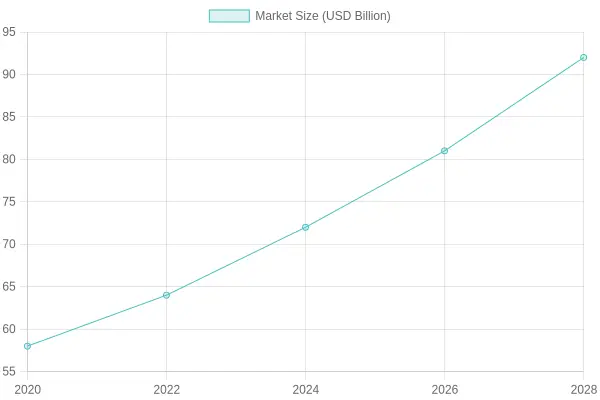
Chart: Projected growth of the global food container market from 2020 to 2028 (USD Billion).
This upward trajectory tells a compelling story for food service businesses. The global food container market is projected to surge from $58 billion in 2020 to $92 billion by 2028 – a robust CAGR of roughly 6% – signaling strong and sustained demand across the industry. For bubble tea shops, restaurants, food trucks, and event caterers, this growth reflects a massive shift toward takeout, delivery, and on-the-go dining that shows no signs of slowing down. Plastic containers are driving much of this trend thanks to their lightweight durability, leak-resistant seals, and cost-effectiveness for high-volume operations – qualities that make them indispensable for busy kitchens. That said, many businesses are now balancing performance with sustainability by exploring sugarcane-based food containers and recyclable plastic lids as smarter alternatives that keep pace with both market growth and eco-conscious consumer expectations.
Business-Specific Benefits of Plastic Food Containers
Let’s be real-different food businesses face very different challenges. What works for a bustling bubble tea shop won’t necessarily solve the headache of a food truck operator packing for a lunch rush. That’s exactly why plastic food containers have become such a versatile staple across the food service industry. They adapt to your needs. Here’s how.
For Bubble Tea Shops & Beverage Chains
If you run a bubble tea shop, you already know the struggle: tapioca pearls, jellies, and toppings need to stay put while your drink makes its journey from the shaker to the customer’s hands. The number one pain point? Leaks. A leaky cup doesn’t just ruin a drink-it ruins the customer experience, creates sticky messes, and slows down your team.
Plastic containers solve this with two powerful advantages:
-
Leak-Proof Lid Performance – High-quality plastic cups paired with tight-sealing plastic lids create a near-watertight seal. No more angry customers finding boba juice in their bag. Whether it’s a classic milk tea or a trendy fruit refresher, you get confidence that every cup stays sealed from store to destination.
-
Crystal-Clear Visual Appeal – Clear plastic lets your colorful layers-taro purple, matcha green, brown sugar swirls-shine through. Customers want to see what they’re drinking, and clear plastic food containers act as your best marketing tool, making every drink Instagram-worthy without needing an extra photo sleeve.
-
Heat & Cold Resistance – Plastic containers handle both hot tea and iced blended drinks equally well, without cracking, sweating excessively, or losing structural integrity. That’s one SKU that does double duty.
For Restaurants
Serving takeout isn’t just about throwing food in a box anymore. Your customers expect their meal to look and taste exactly the way it would in your dining room. That’s a high bar-especially when food has to travel 15, 20, or 30 minutes before it’s opened.
Here’s how disposable food packaging made from quality plastic makes your life easier:
-
Portion Control & Compartmentalization – Multi-compartment plastic containers keep mains, sides, and sauces separate. No more soggy fries touching a saucy curry. Your customers get the full experience-crispy stays crispy, saucy stays saucy.
-
Durability That Builds Trust – Unlike materials that can tear, warp, or get crushed in a delivery bag, plastic containers offer robust protection. They resist crushing, stacking stress, and accidental drops. For high-volume nights, that reliability means fewer remakes, less food waste, and happier diners.
-
Microwave-to-Table Convenience – A huge number of plastic containers are microwave-safe, letting customers reheat leftovers without transferring to another dish. That’s a small feature that creates a big impression of thoughtfulness. Pair these with a paper box with clear lid for a premium presentation your regulars will notice.
For Food Trucks & Catering Services
Space is everything when you’re operating out of a truck or packing for an off-site event. Every square inch matters, and every pound you carry affects your fuel efficiency and setup speed. You need containers that work as hard as you do.
Plastic containers rise to the challenge in these key ways:
-
Lightweight by Design – Plastic weighs significantly less than glass or ceramic alternatives. For food trucks, that means you can carry more inventory without maxing out weight limits. For caterers, it means fewer heavy boxes to load, unload, and haul across event venues. Your back will thank you.
-
Stackable, Nesting Efficiency – Quality plastic containers are engineered with tapered shapes and secure stacking rims. You can nest dozens of empty containers in a single small bin, freeing up precious counter and storage space. During service, stacked filled containers stay stable and accessible.
-
Break-Resistant & Travel-Ready – No shattering, no chipping, no cracked corners. Plastic absorbs bumps and jostles during transit. If you’re catering a wedding at a park or running a lunch shift at a construction site, you need packaging that won’t fail you when the road gets rough.
For Event Planners & Corporate Procurement Teams
You’re not serving one customer-you’re serving 50, 200, or 500 all at once. Your challenges revolve around scale, budget, and logistics. Every decision you make impacts both the bottom line and the attendee experience.
Here’s why plastic containers are a smart choice for large-scale events:
-
Cost-Effective Bulk Pricing – Plastic disposable food packaging is among the most affordable options when purchased in volume. For corporate lunches, festival concessions, or conference catering, you get reliable performance at a per-unit cost that keeps your budget on track.
-
Uniform Presentation at Scale – When you serve hundreds of meals, consistency matters. Plastic containers deliver the same look, same portion size, and same secure seal every single time. No warping, no variation, no surprises. That makes inventory planning easy and keeps your event looking polished.
-
Lightweight Logistics – Cases of plastic containers weigh less than paperboard or compostable alternatives, saving on freight costs. Your team can set up faster, tear down faster, and haul less weight. For multi-day events or venues with limited loading access, that efficiency is a game-changer.
What About the Environment?
We just walked through all the practical reasons plastic containers work so well for your business-the leak-proof seals, the lightweight portability, the cost efficiency at scale. But we know what you might be thinking next: \”This sounds great for my operations, but what about the planet?\”
That’s a completely fair question, and it’s one the food service industry is actively answering. In fact, the conversation around food packaging has evolved beyond a simple \”plastic vs. eco-friendly\” debate. More businesses are discovering that high-quality plastic containers can be part of a responsible packaging strategy-especially when paired with recycling programs, post-consumer recycled content, and proper waste management.
In the next section, we’ll dive into the environmental side of things: how plastic compares to other materials, what’s happening with recycling innovations, and how you can make choices that are good for both your business and the planet. Because you shouldn’t have to choose between operational efficiency and environmental responsibility.
Environmental Considerations & Recycling: Doing Right by the Planet
We get it – when you hear the words “plastic food containers,” you might picture waste floating in the ocean or overflowing landfills. And honestly? Those concerns are valid. But here’s the good news: the story doesn’t end there. Today’s recyclable plastic containers are part of a much brighter, more sustainable picture – and the industry is stepping up in impressive ways.
The Reality Check We All Need
Plastic waste is a real challenge, and transparency matters. That’s why it’s important to acknowledge that not every plastic container finds its way into a recycling bin. However, the types of plastic most commonly used for food storage – HDPE (High-Density Polyethylene) and PET (Polyethylene Terephthalate) – are among the most recyclable materials on the market. In fact, HDPE and PET boast some of the highest recycling rates of all plastics.
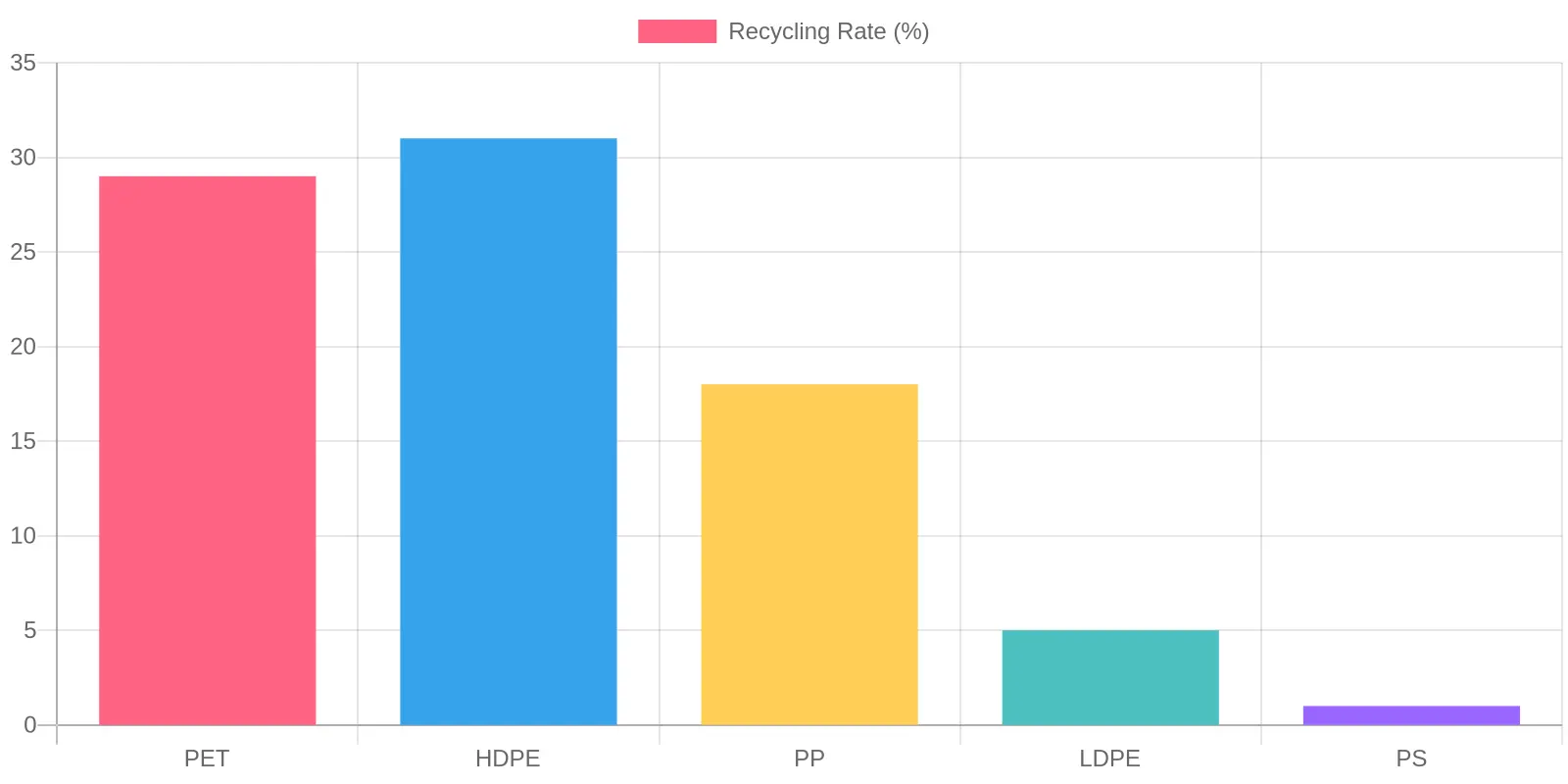
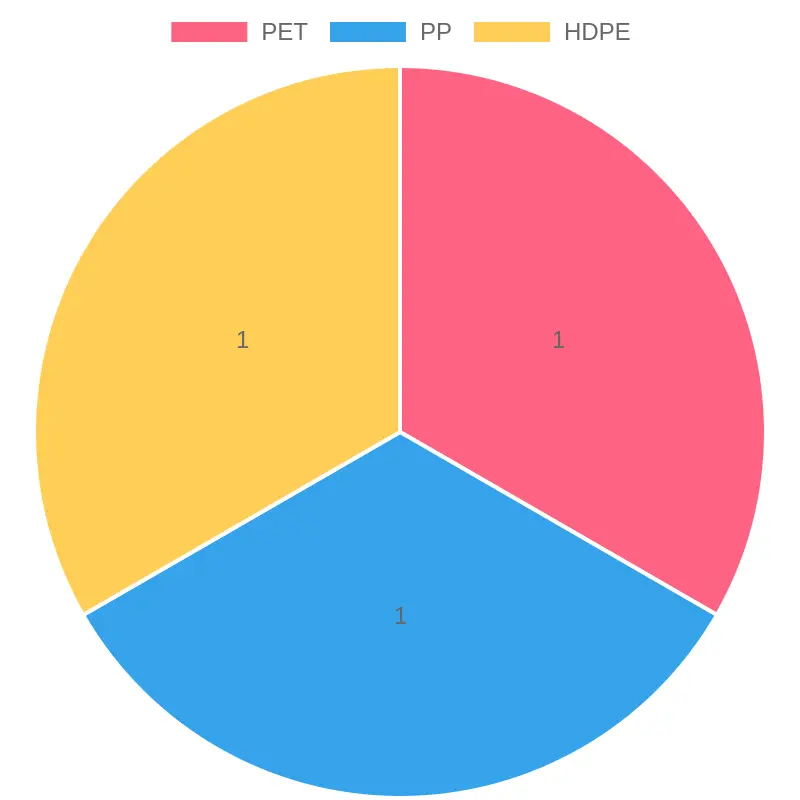
PET and HDPE lead the pack when it comes to recyclability among common food packaging plastics.
Lightweight by Design = Lighter Footprint
Here’s something that often goes unnoticed: plastic is remarkably lightweight. That’s not just good for shipping costs – it’s a win for the planet, too. Lighter packaging means fewer trucks on the road, less fuel burned, and significantly lower carbon emissions during transportation. When you compare plastic to heavier alternatives like glass or metal, the carbon savings throughout the supply chain are substantial. Choosing eco-friendly food packaging made from lightweight, recyclable plastic is a practical way to shrink your business’s environmental footprint without compromising on food safety or freshness.
Innovation Is Accelerating
Perhaps the most exciting development? The rise of recycled content in new plastic containers. Advances in recycling technology now allow manufacturers to incorporate significant percentages of post-consumer recycled (PCR) material into new food-grade packaging – without sacrificing clarity, strength, or safety. Bottles made with 50% or more recycled PET are already commonplace, and the industry continues to push toward fully circular solutions. Innovation isn’t a buzzword here – it’s the engine driving a cleaner future.
What Your Business Can Do
Choosing responsible plastic packaging is easier than you might think:
| Action | How It Helps |
|---|---|
| Select HDPE & PET containers | These grades are widely accepted in curbside recycling programs |
| Look for recycled content | Support the circular economy by choosing containers made with PCR materials |
| Educate your customers | Clear labeling on bins helps ensure proper sorting and recovery |
| Partner with responsible suppliers | Work with companies committed to sustainable sourcing and production |
At Green Dispo Pack, we’re proud to be part of the solution. We actively source and supply packaging solutions that align with eco-conscious values, and we encourage every business – from bubble tea shops to corporate catering teams – to implement proper recycling programs. Because when you combine smart material choices with smart waste management, plastic becomes not just a practical choice, but a responsible one too.
Interested in exploring more sustainable options? Check out our selection of innovative new materials and high-quality plastic lids designed with recyclability in mind. Together, we can keep serving up great food – and a healthier planet.
Food Safety Standards and Compliance: What Bubble Tea Shops & Restaurants Need to Know
When you’re running a busy bubble tea shop, restaurant, or food truck, the last thing you want to worry about is whether your food-grade plastic containers meet health department regulations. The good news? Understanding the key certifications doesn’t have to be complicated. Let’s break down the three most important standards you need to know.
Key Certifications Explained
Here are the essential food safety certifications that reputable food storage containers should carry:
-
FDA Approval (21 CFR Standards) – The U.S. Food and Drug Administration (FDA) regulates materials that come into contact with food under Title 21 of the Code of Federal Regulations (21 CFR). When a plastic container is FDA-approved, it means the materials have been tested and deemed safe for food contact – meaning no harmful chemicals will leach into your ingredients, even with hot liquids or acidic foods like fruit syrups and tea bases.
-
BPA-Free Certification – Bisphenol A (BPA) is a chemical historically used in polycarbonate plastics that has raised health concerns due to its potential as an endocrine disruptor. BPA-free food storage containers are manufactured without this compound, giving you and your customers peace of mind. Many health authorities now recommend BPA-free packaging, and several states have restrictions on BPA in food containers – making this certification a must for compliant operations.
-
HACCP Compliance – Hazard Analysis Critical Control Point (HACCP) is a systematic, preventive approach to food safety. While HACCP is primarily a management system for food handling processes, using containers from HACCP-compliant manufacturers ensures that every step – from raw material sourcing to production – follows strict protocols to prevent contamination. This is especially important for businesses that undergo health inspections.
Why Our Products Meet the Grade
At Green Dispopack, we take food safety seriously. Our range of packaging solutions, including our plastic lids and innovative new material options, are manufactured under strict quality controls that align with FDA guidelines and HACCP principles. We use BPA-free materials across our product lines, ensuring that whether you’re serving bubble tea, soups, or prepped ingredients, your containers won’t compromise on safety. Our commitment to compliance means you can focus on what you do best – serving delicious food – while we handle the regulatory heavy lifting.
This is a test
Some content.